Monday, October 02, 2023

AZERBAIJAN
Lawsuit Says NH Guv’s Family May Profit Off Humanitarian Crisis

BLOOD MONEY


A Sununu-linked mining company prepares to exploit resources in a disputed region as ethnic Armenians flee, according to legal docs and other public records.


William Bredderman

Senior Researcher
DAILY BEAST
Published Oct. 02, 2023

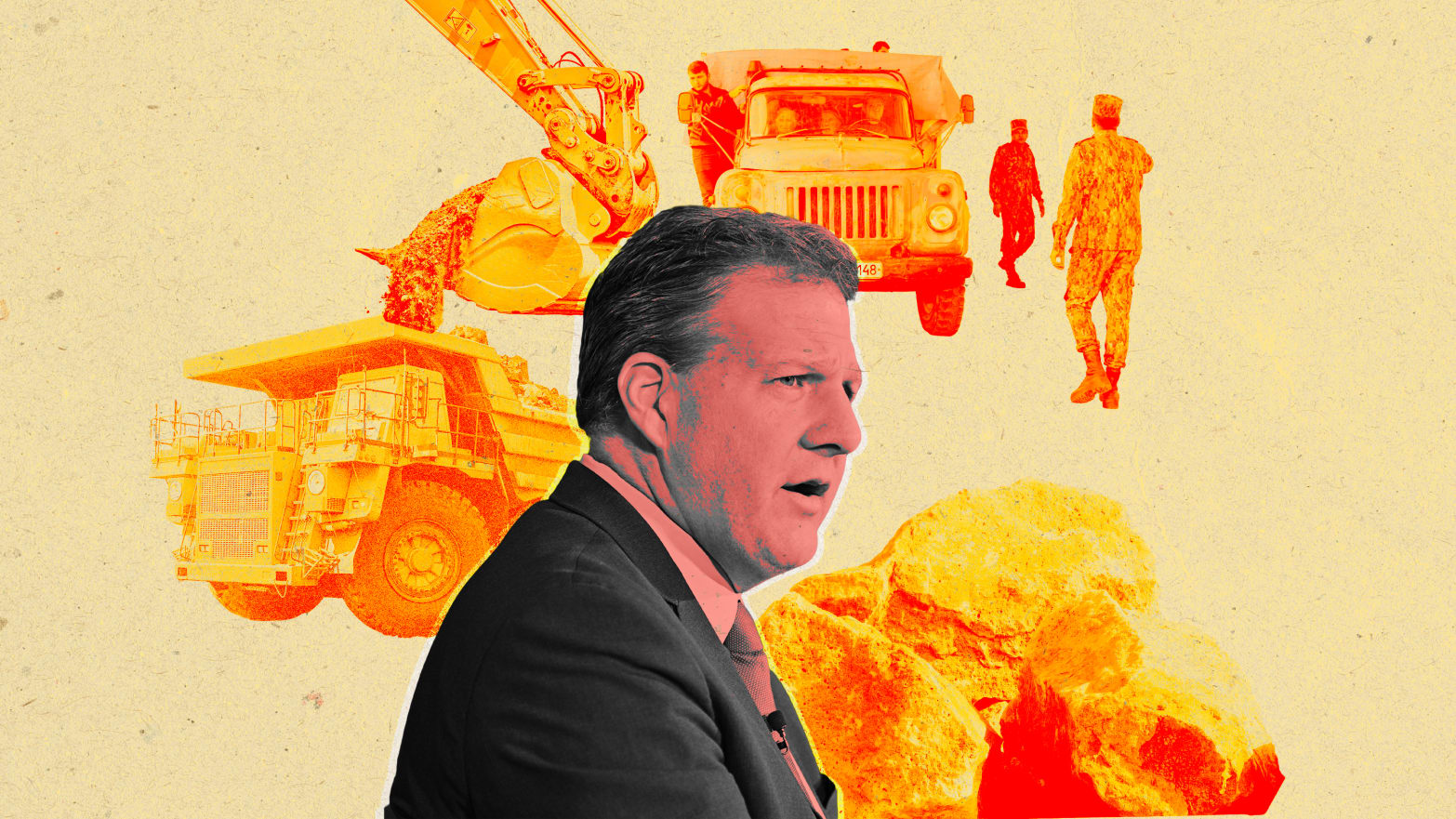
Photo Illustration by Thomas Levinson/The Daily Beast/Getty

As thousands of ethnic Armenians swarm toward the border amid Azerbaijan’s attacks on the enclave of Nagorno-Karabakh, a lawsuit filed in D.C. federal court lays out how a leading U.S. political dynasty—one that includes a sitting governor—stands to profit from the humanitarian disaster.

Azerbaijan assaulted the breakaway region earlier this month, after long obstructing the main aid corridor from Armenia, in violation of a Russia-brokered 2020 ceasefire. The Daily Beast provided an exclusive eyewitness account this past week of the unfolding exodus of Nagorno-Karabakh families attempting to escape violence.

The attack marked the latest stage of a long-running Caucasus conflict that dates to the early 20th century and which erupted amid the dissolution of the Soviet Union, when the province declared independence and gained autonomy from Azerbaijan with the help of Armenia. Nonetheless, the international community regards the area as part of Azerbaijan, despite its ethnic Armenian majority.

A lawsuit filed in July describes how, in the intervening years, the Sununu family—led by patriarch John Sununu, the former New Hampshire governor and ex-White House chief-of-staff—held stakes and positions in a U.K.-based firm that secured mining rights within the province from Baku, rights only an Azerbaijani reconquest could guarantee. Public records, news reports, and corporate filings support many of the suit’s factual assertions.

What’s more, according to federal filings that NBC News unearthed while investigating the dynasty’s interests in the Amazon, a family investment vehicle has historically held some of the shares in the U.K. company—a vehicle from which sitting New Hampshire Gov. Chris Sununu still derives income. The Granite State chief executive was the only member of the Sununu family to comment for this story.

“The governor has absolutely no involvement in the operations of Anglo Asian Mining or the operations of Sununu Holdings,” the present governor’s press team wrote to The Daily Beast in answer to questions about both the gold and copper extractor and the clan’s eponymous holding entity.

But the Republican, beloved to some for his criticism of ex-President Donald Trump, did not answer repeated queries about what financial benefits he might derive from Anglo Asian’s activities. His office also would not pledge that the governor would forfeit any potential returns from the company’s prospective business in Nagorno-Karabakh, so as not to profit from Azerbaijan’s alleged ethnic cleansing. Meanwhile, his 84-year-old father controls almost 10 percent of the metal miner, according to the most recently available corporate reports, making him the second largest shareholder in the operation.
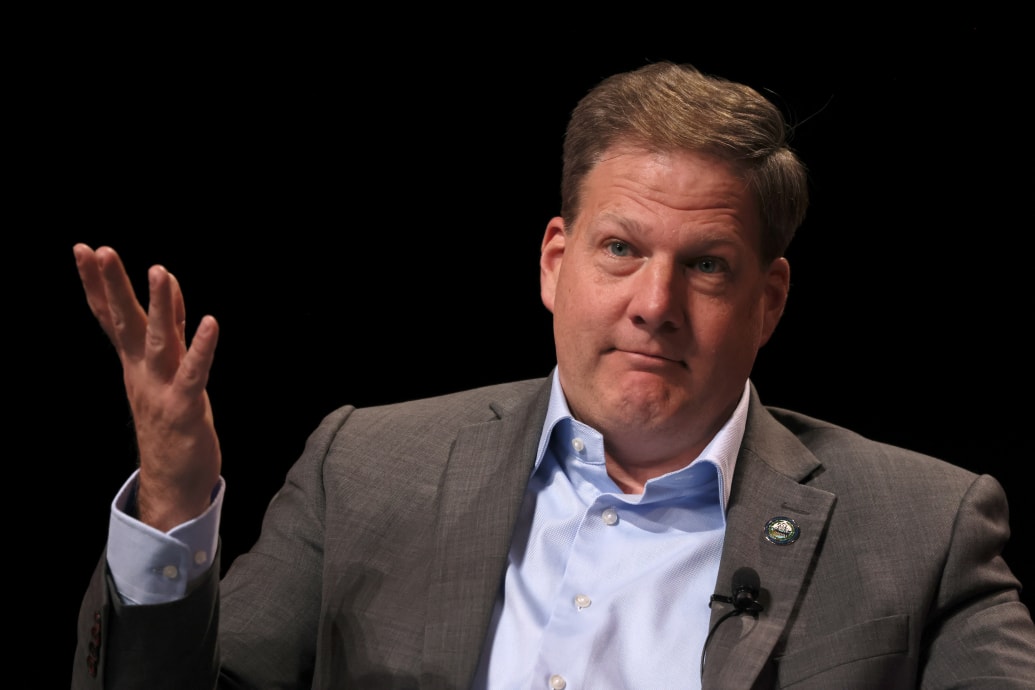
New Hampshire Gov. Chris Sununu.
Jemal Countess

The largest is president and CEO Mohammad Reza Vaziri, the defendant in the suit, which a Nagorno-Karabakh resident brought with assistance of an Armenia-aligned U.S. foundation. Neither Vaziri nor his attorneys replied to repeated requests for comment, and Anglo Asian declined to remark other than to point The Daily Beast to the company’s filings with the London Stock Exchange. Although Vaziri is the focus of the litigation, the complaint refers by name not just to John and Chris but to Michael Sununu, brother to the sitting governor and a local New Hampshire politician.

The suit dates the Sununu paterfamilias’ involvement in Vaziri’s Azerbaijani adventures to 1997, when the company first struck a deal with the authoritarian state to gain access to its metal reserves. News reports from that year listed the GOP statesman among Baku’s suitors for extractive opportunities, but the earliest document that The Daily Beast could find of a direct holding in Anglo Asian dates to 2005, when he joined its board of directors. The lawsuit further asserts that Sununu has a stake in at least one of Vaziri’s private companies, which The Daily Beast could not independently confirm.

From the start, the lawsuit notes, Anglo Asian sought and received mining concessions within Nagorno-Karabakh—concessions it could not access due to the territory’s autonomous status. Its interest intensified in January 2016 with the completion of an Armenian-owned copper and molybdenum processing plant in the province’s town of Demirli. An image from the site soon adorned the cover of Azerbaijani government report on Yerevan’s economic presence in “the occupied territories.”

The lawsuit highlights several subsequent events: on March 31 of that year, Azeri President Ilham Aliyev met with John Sununu while he was visiting Washington, D.C., and the next day, Azeri forces attacked Nagorno-Karabakh, an advance the lawsuit suggests aimed at Demirli. After four days of fighting, Aliyev’s forces withdrew.

But Azerbaijan grabbed back some of the territory four and half years later, prompting Anglo Asian to applaud in a statement to stockholders what it described as the “liberation” of one of its mining concession zones. After a month and a half of fighting, Moscow intervened to end the bloodshed, resuming its traditional role as security guarantor in its old imperial dominions.

Weeks later, the lawsuit highlights, Anglo Asian appointed Michael Sununu—founder of Sununu Holdings, the entity from which Chris Sununu draws income—to its board. This means that of the company’s five directors, two today are members of the Sununu family.

Almost exactly one year after the 2020 conflict began, Anglo Asian obtained initial Azerbaijani approvals to exploit two sites within the still-autonomous portions of Nagorno-Karabakh, including the Demirli installation.

“The recent cessation of hostilities with Armenia has presented an opportunity for Anglo Asian to develop its remaining contract areas,” Vaziri told Mining Weekly at the time. “Following extensive negotiations, we are very pleased to have secured two additional highly strategic mining properties.”

In December 2022, Azerbaijan demanded access to one of the mines as a condition for restoring Nagorno-Karabakh’s food, medicine, and fuel route from Armenia. The move came precisely one week after Anglo Asian penned missives to the U.S., U.K, United Nations, and the European Union complaining of “illegal mining” at its concession locations in the disputed region.

Despite these efforts, as of June of this year, Anglo Asian reported it was unable to access these locations, and the blockade of the corridor has persisted despite international condemnation and allegations of genocide.

However, on Sept. 26, Anglo Asian had good news for its shareholders.

“There have been reports in the press that the Azerbaijan Government has taken back control of the Demirli/Kyzlbulag mine, which is located in our contract areas,” an executive wrote in a London Stock Exchange report. “I would like to extend my sincere gratitude to all Anglo Asian employees, partners and the Government of Azerbaijan for their continued support in what continue to be challenging times.”

The lawsuit against the firm has yet to make headway, and Vaziri’s attorneys have so far not filed a response to the complaint. Michael Sununu declined to comment for this story. His father did not respond to repeated calls and emails.

Sununu Family Continues to Support Azerbaijan through Mining in Karabakh Region

JUNE 4, 2021
by Aram Arkun

CONCORD, N.H. – As the Mirror-Spectator reported last November, the Anglo Asian Mining company, in which Republican politician John Henry Sununu, father of current New Hampshire governor Chris Sununu, is the second largest shareholder, plans to resume mining gold in Zangelan province and possibly two other areas that were previously under Armenian control.
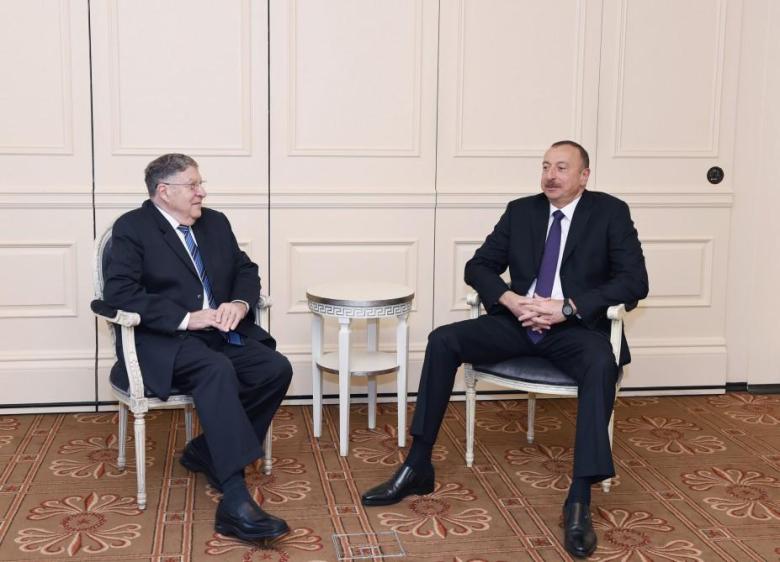
Azerbaijani President Ilham Aliyev with former Governor John H. Sununu pictured at a meeting in Washington, DC in March 2016 (Photo: trend.az)

John Sununu, a former governor of New Hampshire and former chief of staff to President George H. W. Bush, owns a 9.38 percent stake in the company. After the end of the 2020 Artsakh War, the Sununu family increased its direct involvement in the company, when in December of last year, Anglo Asian Mining welcomed Michael Sununu to its board as a non-executive director. Michael is the son of former governor John Sununu and is a founder and manager of Sununu Enterprises and Sununu Holdings.

Anglo Asian Mining’s predecessor company, controlled by the same CEO, Reza Vaziri, signed an agreement with the Azerbaijani government for rights in 1997 to six mines, including three which were then under Armenian control. As a result of the recent Artsakh war, two of these areas are under full Azerbaijani control. A third area, Sotk/Soyudlu, is on the border between Armenia and Azerbaijani controlled Kelbajar.

In the company’s quarterly report of April 13, 2021, CEO Vaziri states: “A recent visit to the Vejnaly [Kovsakan] contract area in Zangilan has identified some high grade ore stockpiles and the feasibility of transporting this ore to Gedabek for processing is being evaluated.” A May 20, 2021 Anglo Asian Mining report further elaborates: “However, due to safety and security concerns, access to Vejnaly and the other restored areas by company personnel remains somewhat restricted. The determination of their final status continues to be reviewed by the government of Azerbaijan.”

Anglo Asian Mining also has an eye on the Kashen deposit with molybdenum and copper in northern Martakert (Kyzlbulag), part of the territory of the Artsakh Republic, which at present is under the control of Russian peacekeepers. As the company website states, “our access to Kyzlbulag will depend on the final resolution of the status of Nagorno Karabakh.”

Non-executive chairman Khosrov Zamani in the May 20 report concludes, “The restoration of the three contract areas in the formerly occupied territories and Karabakh opens up further opportunities for the Company. The contract areas cover a total of 900 square kilometers and contain existing mines and have exceptional exploration potential. Our production sharing agreement is in good standing and will be reset to ‘year zero’ for each of these contract areas once access has been granted. The political situation is still developing and the Company is closely monitoring events. The Government of Azerbaijan has also commenced building infrastructure in the areas such as roads, railways and airports.” The same report also notes, “Development will commence when the Company receives notice in accordance with its PSA [Production Sharing Agreement] that the Organisation on Security and Cooperation in Europe (‘OSCE’) (or comparable international organisation) has acknowledged a liberation of the previously occupied territories and the Company is satisfied the districts are secure.”

Significantly, the government of Azerbaijan takes a hefty cut of Anglo Asian Mining’s profits due to the existing PSA, while the economic ties of the Sununu family with Azerbaijan naturally lead to political consequences. John Sununu serves as a member of the Honorary Council of Advisors of the United States-Azerbaijan Chamber of Commerce and in 2017 received an award of appreciation from this organization for his “contribution to US-Azerbaijani diplomatic relations.”

Anglo-Asian’s own website attempts to present Azerbaijan in a good light. For example, it glosses over the many problems of Azerbaijan’s undemocratic and authoritarian government with statements like “Azerbaijan is a multiparty democracy and presidential republic with a separation of the executive and legislative bodies. It is among the region’s most stable countries.”

The Azerbaijani connection with the Sununu’s is apparently not one way. BGR Government Affairs, which lobbied for the Republic of Azerbaijan, donated $1000 to Chris Sununu’s campaign for governor in 2017 and hosted a fundraising reception.

A campaign by the Armenian National Committee of America (ANCA) calling on Governor Chris Sununu to divest his family’s shares in this company, calling this investment “blood money,” has not received any response so far, according to the ANCA’s Washington D.C. office. Attempts this May by the Mirror-Spectator to contact Michael and Chris Sununu also received no response and it does not appear that in general Governor Sununu has made any public comments on the Artsakh war.

Mining Company With Ties To Sununu Family Poised To Profit After Peace Deal

New Hampshire Public Radio | By Josh Rogers
Published November 10, 2020 

Via Steelguru.Com

A mining company with ties to the family of Gov. Chris Sununu is poised to gain financially after a brokered settlement of an armed conflict between the nations of Armenia and Azerbaijan.

The company, Anglo Asian Mining, is partially owned by former Gov. John H. Sununu, father of the current governor. 

Anglo Asian has been mining gold, silver and copper in Azerbaijan since 2009.

The peace deal announced this week ends the Armenian-Azerbaijan conflict and clears the way for Anglo Asian to exercise rights to mine in Nagorno-Karabakh, the region under dispute which ethnic Armenians claimed as their own but was internationally recognized as a part of the nation of Azerbaijan.

Armenian groups were angered when Anglo Asian mining recently referenced the “liberation” of the disputed region where it enjoys mining rights.

In a statement published by the website Mining.com, Anglo Asian said it “complies with all international laws and with laws in the countries in which it operates.”

The company has also said it plans to mine in the disputed area only when the government of Azerbaijan confirms all hostilities have ended there.

The settlement has boosted the stock price of Anglo-Asian. Former Gov. Sununu, a director of the company, owns a 9 percent stake in it. That holding is now worth more than $16 million.

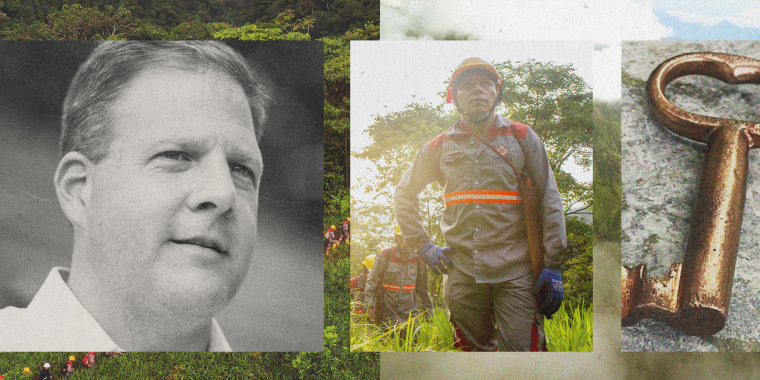
A powerful U.S. political family is linked to copper mining in the Colombian rainforest

The family of N.H. Gov. Chris Sununu has been in mining for decades. Their latest project would build a mine in the Colombian Amazon, raising ethical and ecological concerns.

Chris Sununu's father and brother sit on the boards of a company conducting exploratory drilling next to a protected forest reserve in Colombia and its largest shareholder.NBC News; Getty Images; Courtesy Libero Copper & Gold

June 14, 2023, 
By Adiel Kaplan, Andrés Bermúdez Liévano and Andrew W. Lehren

This article was produced in partnership with the Pulitzer Center’s Rainforest Investigations Network and the Latin American Center for Investigative Journalism (CLIP).

MOCOA, Colombia — Angel Pasuy stood on his tribe’s land in the Colombian cloud forest, listening to a symphony of birdsong. An Indigenous land-use planner from the Kamentsá Biya de Sibundoy reservation, Pasuy and his people have called the steep slopes of the Mocoa area home for centuries.

His reservation borders a nationally protected forest reserve that connects the Amazon basin to the Andes mountains, home to hundreds of plant and animal species and the origin of dozens of waterways.

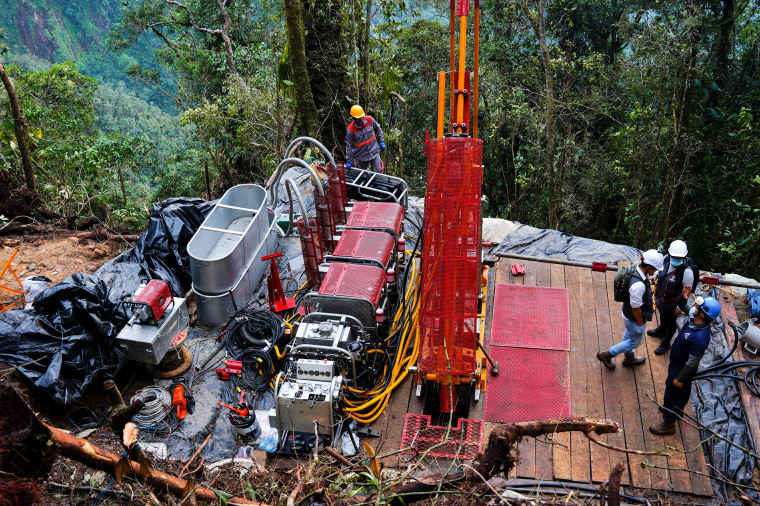
But Pasuy now worries about the forest’s future. In the past year, exploratory drilling for a prospective copper mine has picked up just outside the reserve’s eastern border, 2 miles from his reservation’s boundary. A Canadian mining company, Libero Copper & Gold, holds the rights to conduct exploratory mining in a 30-square-mile area that overlaps partially with the reserve, his reservation and another.

“The area where Libero’s [rights] are located is an area of special environmental and cultural value for us,” said Pasuy, an architect by training who works for several local reservations. “It is very clear to us that mining will affect the territory.”

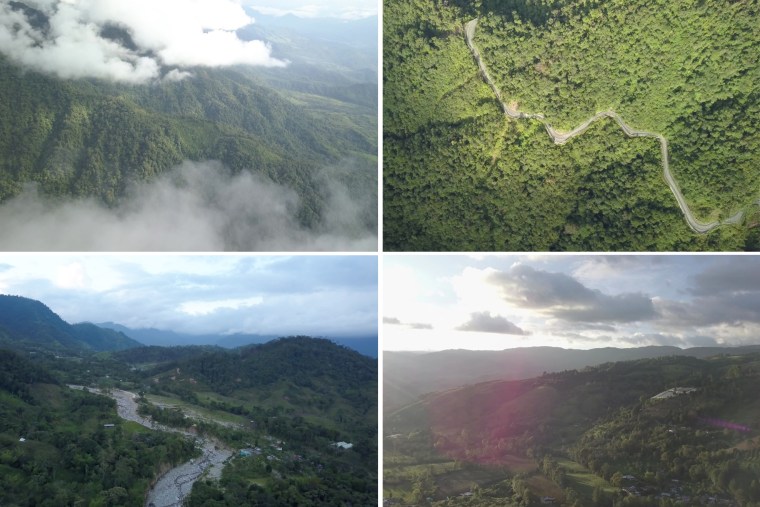
The Mocoa region, where the Andes meet the Amazon, is home to immense biodiversity, dozens of headwaters and multiple Indigenous reservations.Pedro Samper / NBC News

The proposed mine would be the first legal metals mine in the country’s Amazon, part of Colombia’s push to become a major copper producer. Its development is being fueled by the global drive for metals for green energy, and in part by the family of New Hampshire Gov. Chris Sununu.

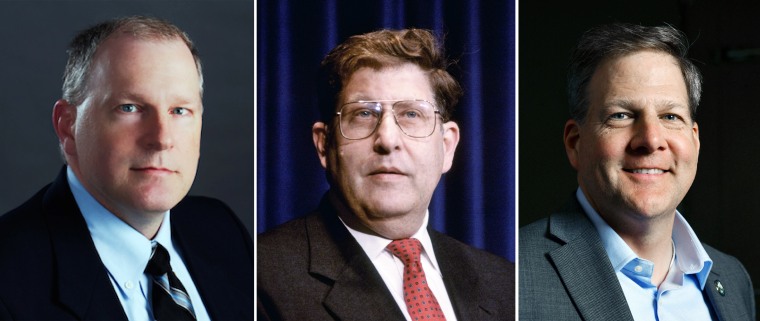
Sununu’s politically connected, climate change-denying father, John H. Sununu, and brother, Michael Sununu, are more than just investors in Libero Copper & Gold. Michael is a board member of Libero, and he and his father sit on the board of the company’s largest shareholder, Anglo Asian Mining PLC, which operates in Azerbaijan. John Sununu is the second-largest shareholder of that company, with a nearly 10% stake. He and Michael Sununu both declined to comment and referred all questions to Anglo Asian Mining.

The push to unearth copper in the Colombia rainforest is part of an accelerating effort around the world to find metals crucial for electric cars, lithium ion batteries and other green energy components.

After a change from a conservative to a left-wing national government in Colombia last year, Libero Copper & Gold announced it is designing a plan for a carbon neutral mine, with help from Anglo Asian Mining, focused on “reducing environmental impact” of the operation.

CEO Ian Harris told NBC News the company does not plan to do large-scale mining, instead building a small, ethically sourced supply chain that “specifically supplies a green economy.”

Libero has sought to partner with farming and Indigenous communities in the area, but that’s done little to ease concerns for the bordering Indigenous reservations, their leaders said. Still in the early stages of its project, Libero has yet to release planning documents about the size of the mine or its potential environmental impact, but has repeatedly said in shareholder reports that it plans to petition the Colombian government to shrink the forest reserve.

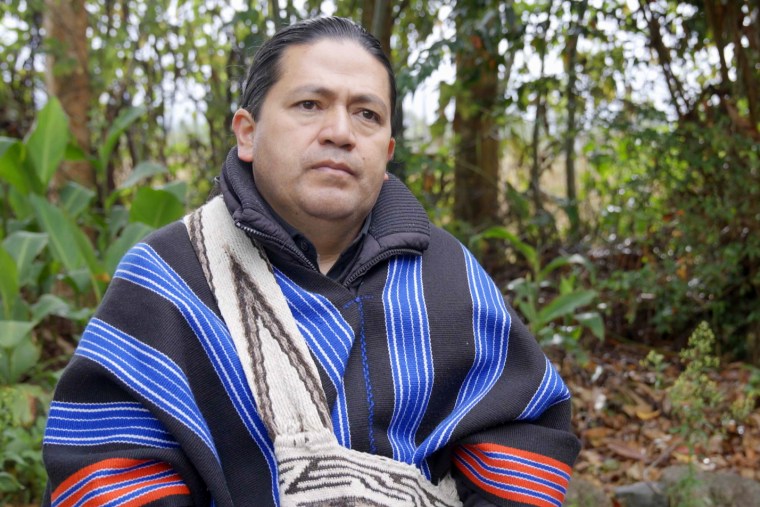
Leaders of the surrounding Indigenous reservations, like Pasuy’s, said they are concerned about the amount of land Libero has the rights to explore on, its overlap with the protected forest, the much larger additional area it has submitted permit applications for, and what they call the company’s minimal efforts to consult them.Angel Pasuy of the Kamentsá Biya de Sibundoy reservation.Pedro Samper / NBC News
While the territorial and environmental concerns surrounding the Mocoa mine echo those in many resource-rich areas around the world, the involvement of members of an American political family in a startup foreign mining company is unusual.

Chris Sununu, 48, who explored a campaign for the 2024 the Republican presidential nomination earlier this year before deciding not to run, has not disclosed any direct involvement with either company, and has no involvement in their operations, according to his office. But his relatives’ role on the two boards raise potential ethical concerns, good government groups said. If he is ever elected to federal office, his decisions could impact the foreign governments that regulate those companies.

“This is really a black box in terms of how well we’re able to judge the level of involvement in foreign interests [for family members] and how that might affect decision making in the U.S. political system,” said Alex Baumgart, a researcher with OpenSecrets, a nonprofit that tracks money in American politics.
The Sununus

Libero Copper & Gold is one of more than a thousand small Canadian exploratory or “junior” mining companies — essentially startups in the mining sector. They typically spend years searching for and developing deposits around the world to sell off to larger mining companies for production. Harris said Libero differs from most junior mining companies in that it plans to mine the copper from the Mocoa deposit itself. The company’s pursuit of copper is part of an industry trend, though. As demand for “green energy” metals has increased, many junior mining companies pivoted away from metals like iron to exploring those deposits.

Junior mining is a speculative industry — the vast majority of exploratory projects fail, but those that succeed can be a financial jackpot for investors. As national and global agendas have increasingly highlighted the growing need for more green energy metals, incentives for finding those successful projects have increased, according to the Prospectors and Developers Association of Canada, the advocacy group that represents junior mining companies based in Canada, the country with the highest concentration of them.

Workers on a drill pad for Libero Copper & Gold's Mocoa project.
Libero Copper & Gold

“There’s urgency as people are recognizing the intrinsic link between those metals and minerals that are required to reach that [carbon zero] goal,” said Alex Christopher, the immediate past president of the association. As a result, “the base of investors in the junior mining space is broadening.”

A class of investors once largely made up of Canadian venture capitalists now includes battery producers, automakers and — in this case — a politically powerful U.S. family with a history of hostility toward carbon reduction policies and technologies.

The Sununus have held political sway in the GOP since the 1980s, when family patriarch John H., 83, was elected New Hampshire governor. He later became a power player in Washington, serving as President George H.W. Bush’s chief of staff before co-hosting CNN’s “Crossfire” for six years in the 1990s, and then occasionally lobbying in D.C. on energy issues for much of the next decade. Half of his eight children have also held elected office. One is the governor; another, John E., 58, served in the House and Senate for over a decade; and two — Michael and James —are New Hampshire town selectmen.

The family has had a wide range of business interests in the past two decades — mostly in New England — from real estate, banking and biotech to running a ski resort.

The Libero mine is not the Sununus’ first mining project. In the ՚90s, John H. was among several former high-level administration officials, mostly Republicans, who went into business in post-Soviet countries or lobbied on their behalf in the U.S. While many were focused on the region’s oil and gas resources, Sununu went into mining.

Michael, John H. and Chris Sununu.Courtesy Michael Sununu; Getty Images

He was a founding adviser to the U.S. Azerbaijan Chamber of Commerce, and went into business with the head of that organization, Reza Vaziri, a high-ranking pre-revolution Iranian official, according to his company biography. They acquired rights to mine in Azerbaijan in 1997 in partnership with the country’s government, before being absorbed in 2005 by a British company, Anglo Asian Mining PLC.

Vaziri became the CEO of Anglo Asian, and Sununu joined the board. A Sununu family trust also owned more than $50,000 of stock in the company as recently as 2009, the last time a member of the family held a federally elected office requiring a financial disclosure listing its assets. According to Anglo Asian’s latest annual report, Vaziri and Sununu remain the company’s largest shareholders.

Over the years, Anglo Asian Mining expanded its operations in Azerbaijan, and now holds the rights to mine gold, copper and silver deposits in eight contract areas across the country. It has lost and gained access to some due to Azerbaijan’s decadeslong conflict with Armenia. The company has largely steered clear of the conflict, but was criticized by the international Armenian community after it celebrated the “liberation” of a mining site through a 2020 peace deal between the two countries. One U.K.-based Armenian organization accused Anglo Asian of “exploiting” the conflict for financial gain.

“Anglo Asian Mining has a strong track record of operating its mines and production facilities with a commitment to best practices,” a company spokesperson said. “The company works with its stakeholders at the local and national levels to maintain its high level of environmental and social stewardship — and will continue to do so as it expands its operations.”

It was after Michael Sununu, who runs several New Hampshire-based family companies with brother James, joined the Anglo Asian board in late 2020 that the company got involved in mining outside Azerbaijan. It became the largest shareholder of Libero Copper & Gold as the Canadian company was seeking funding to ramp up its exploration at the Mocoa site, earning John H. a nearly 2% stake in Libero. As part of the deal, Michael joined the Libero board.

Many political families have sprawling business interests, said Virginia Canter, chief ethics counsel for Citizens for Responsibility and Ethics in Washington, but it is international investments, particularly board memberships, that can raise the most ethical concerns for public officials.

“Foreign entanglements potentially give rise to questions about favoritism, bias, undue influence, and the potential for corruption,” she said. “As the world became more globally connected, these family opportunities have escalated, and their significance has probably escalated in turn.”

The U.S. is a prime market for green energy metals, as the country looks to ramp up imports and secure its supply to meet its climate goals. A company presentation posted on Libero’s website in March emphasized the potential of the U.S. as a major export market for the copper it hopes to produce at the Colombian mine.

“[Board membership] suggests an increased level of involvement and profit connection than just someone who owns some random amount of shares,” said Baumgart of OpenSecrets. But the extent and influence of those ties is difficult to trace because financial disclosure requirements differ by type of elected official, and most American financial disclosures only require officials to include information about spouses and dependents, not parents, siblings or other family members.

The father and son Sununu board members also share another interest — they are both outspoken critics of the scientific consensus on human-caused climate change. John’s efforts in the White House in the late 1980s have been credited as one of the key reasons the U.S. did not sign an early binding climate agreement. Michael has argued against climate science-based policy and legislation at the state level, as well as in op-eds and in a research paper published by a free market think tank where his father and a brother serve on the board.

Both John H. and Michael declined to comment on their views on climate change or their business holdings, referring NBC News to the statement provided by Anglo Asian Mining.

Harris, the Libero CEO, said that while he cannot comment on anyone’s beliefs, climate-change denial has not come up in any of Libero’s board meetings. “I don’t think it’s had a significant influence on the strategy of the company, if any,” he said, adding that he has never met John H. Sununu and never heard Michael Sununu “share those feelings.”

Chris is the only family member currently serving as an elected official above the local level. In his 13 years holding New Hampshire public office, six as governor, he has charted a unique energy approach for the region, opposing a variety of climate change initiatives adopted by neighboring states and vetoing energy transition legislation. In 2019, a New Hampshire Public Radio podcast devoted an hour to examining the governor and his family’s relationship to climate change.

“Governor Sununu recognizes that human behavior has contributed to climate change,” said Brandon Pratt, his deputy communications director. “He has supported several clean energy bills throughout his tenure as governor and has been a vocal supporter of hydro and solar development projects that protect ratepayers from burdensome subsidies.”

The governor’s investments are opaque. His New Hampshire financial disclosures show that for the last four years, he has made more than $10,000 in income annually from Sununu Holdings, the same family trust that held stock in Anglo Asian Mining in 2009. But New Hampshire does not require him to list the trust’s assets, so there is no public record that would show whether he personally holds a small stake in either mining company.

“Governor Sununu has no involvement in the operations of Anglo Asian Mining or the operations of Sununu Holdings, and files all financial disclosures required by law,” Pratt said.

After hinting at and taking initial steps for a potential presidential run, the governor announced in early June that he would not enter the 2024 race. Sununu did not rule out a later bid for the nation’s highest office. He remains on the national stage — as the governor of the first primary state, he is a coveted adviser to candidates in the crowded Republican primary field. Should he run in the future, he would have to submit a federal disclosure that would include more details of his assets within 30 days of being deemed a candidate by the Federal Election Commission.
The mine

Mocoa is the only active copper mining project in the Colombian Amazon, putting it in conflict with the country’s other major environmental goal: preserving the rainforest.

The land which Libero has the rights to explore on includes nearly 7 square miles of the forest reserve, called the Upper Mocoa River Basin Protected Forest Reserve, and 5.7 square miles of two Indigenous reservations, including Pasuy’s. Two square miles of Libero's area of exploration rights overlap with the reserve and one of the reservations.

Harris told NBC News that Libero plans to create a small, underground mining operation that would slowly mine the roughly 100 hectares (247 acres) of the deposit outside the forest reserve boundary, and that it might take a century to extract everything from the site. The long-term operation would have a small footprint, create far less waste than more common open-pit mining and cause little to no additional deforestation, he said. Libero is currently studying how to use “innovation and technology to minimize the project’s environmental footprint,” according to a May press release.

The company has also supported reforestation projects in the region, which has suffered one of the country’s highest rates of deforestation in recent years. It is exploring on private land in a small farming community, which has been working closely with the company, Harris said, but an operating mine is still probably four to 10 years away.

Libero has stated in shareholder reports that it plans to petition the government to allow mining under the forest reserve, as half of the minerals it could access in the deposit are underneath it. “Libero believes they will gain access to the Forest Reserve for mining purposes as part of the environmental permitting phase of the project,” an April filing said. “However, should the Colombian Government decide not to grant access into this area, this would significantly restrict the size of the resource-constraining pit shell and have a significant impact on the size of the mineral resource.”

A Libero Copper & Gold worker walks down an access path to the company's Mocoa camp and drill pads.Libero Copper & Gold

It is unclear whether Libero’s request would succeed. The Upper Mocoa Basin is one of 59 nationally protected reserves. Colombia has several different types of forest reserves, some of which allow for mining activities or boundary changes for those purposes, but nationally protected reserves are not among them, according to the country’s environment ministry.

Harris said that Libero has not yet submitted that petition and may never do so, as the plan the company is developing would involve only underground mining outside the reserve.

While it has yet to file detailed reports to the Colombian government or shareholders about what its mine would look like and how it would affect the environment, Libero has applied for 31 additional exploration permits in the area, according to the national mining database, which would expand its rights to 11.5 times the current area, a third of it overlapping with Indigenous land belonging to 11 reservations. A March company presentation highlighted those applications as part of a “regional opportunity.”

According to the company, 13 of those applications were recently rejected, though the national mining agency database showed 20 had been, as of June 8. The remaining 11 pending applications would still expand Libero’s current area by six times, with 40% of the pending permit area overlapping nine reservations.

In response to questions about Libero’s permit applications, Harris noted that there is no restriction to apply for a permit based on Indigenous land. He added that the company has no plans to explore in the areas it submitted permit applications for, and that it only did so to avoid nearby competition. “To be very frank, it was to stop anyone else from coming in,” he said.

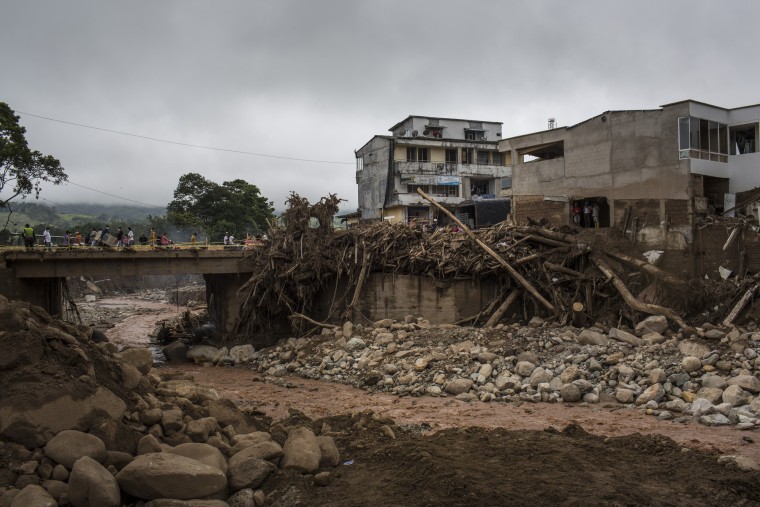
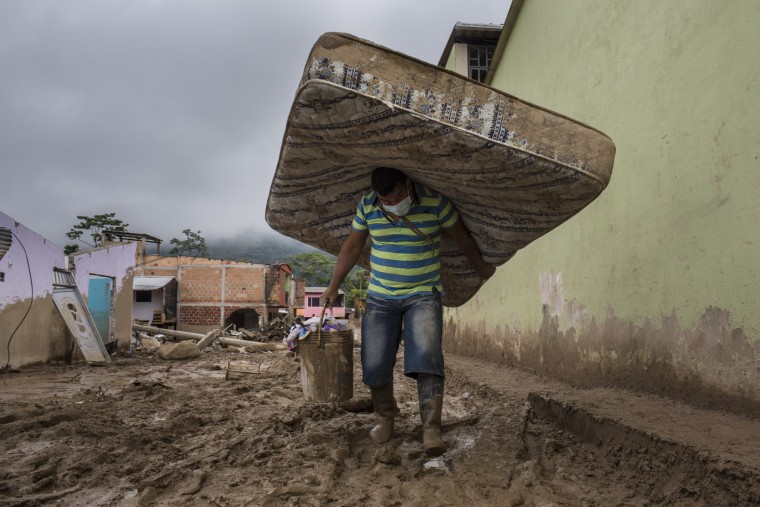
That hasn’t stopped local communities from worrying. The exploration site is just over 6 miles from Mocoa, the region’s largest city, where a deforestation-related mudslide killed more than 330 people six years ago. The project sparked a protest in the city in 2021 after Libero announced it was beginning to prospect in the area.

Displaced residents walk across a bridge over the Mocoa River after a landslide in Mocoa, Colombia, in 2017. 
A displaced resident carries a mattress and a bucket of supplies after a landslide in Mocoa, Colombia, in 2017. 
Nicolo Filippo Rosso / Bloomberg via Getty Images

According to the company, Libero has been contacting communities throughout the city and Indigenous groups in the region and is taking efforts to boost the local economy through hiring and contracting with small businesses. But there is a dispute over whom the company has to contact and when.

Libero has stated its current exploration is close to only one community — Montclar, a small farming village. The community signed a mutual benefit agreement with the company last year that includes commitments to cultural preservation, employment and water protection, according to a press release.

Colombian law requires mining companies to consult with Indigenous communities in their “zone of influence” before opening a mine. Libero has said in press releases that there are no Indigenous communities in that zone for its current exploration, and noted the company is going beyond what is currently required of it.

Libero employs an Indigenous coordinator to conduct outreach to local reservations and has had a relationship “with all our Indigenous communities in Mocoa from the very beginning,” according to a spokesperson.

But leaders of the two Indigenous reservations whose land overlaps with the company’s current mining titles said they were not satisfied with the limited information they had heard from Libero. A 2017 government assessment found that the two reservations and one other are in the zone of influence for any project within those mining titles. As a result, they must be consulted before mining operations begin.

The Inga de Condagua reservation, which has more overlap, filed a protection action against Libero in April 2022, arguing that they should also be consulted during the current exploration phase. After a judge ordered the ministry to assess the petition, the government agency agreed.

Residents of the village where Libero is currently exploring then appealed the decision. They said it infringed on their rights as private landowners and demanded that they be included in all consultations. A Libero spokesperson said the company is talking to both the farming and Indigenous groups and “we will do whatever decision the law states.”

Zoraida Chindoy of the Inga de Condagua reservation.
Pedro Samper / NBC News

Zoraida Chindoy, the environmental leader of the Condagua reservation, fears how mining exploration could compound the effects of erosion. “During the dry season the land loosens, and even more so when people come to perform studies on it. It’s logical to assume they might leave some damage behind,” she said.

Chindoy survived Mocoa’s deadly mudslide in 2017, sheltering with family on the top floor of her three-story home as its lower levels were destroyed. “It could happen again, and I think Mocoa would disappear,” she said.

Andrés Bermúdez Liévano reported from Mocoa, Colombia. Adiel Kaplan and Andrew W. Lehren reported from New York.

Adiel Kaplan

Adiel Kaplan is a reporter with the NBC News Investigative Unit.
Andrés Bermúdez Liévano

Andrés Bermúdez Liévano is a reporter with the Latin American Center for Investigative Journalism (CLIP).
Andrew W. Lehren

Andrew W. Lehren is a senior editor with the NBC News Investigative Unit.
Anna Schecter, Jiachuan Wu and Randi Selvey contributed.
Striking UAW members say they want benefits they gave up in 2007-2009 back: What they lost

Phoebe Wall Howard and Jamie L. LaReau, Detroit Free Press
Mon, October 2, 2023 

When walking the UAW picket line, on any given day at any location, autoworkers say their sacrifices in the past informed 2023 contract discussions with the Detroit Three automakers.

These UAW members say auto executives have seen a surge in benefit packages more recently, and it's time they share more with workers who build the vehicles.

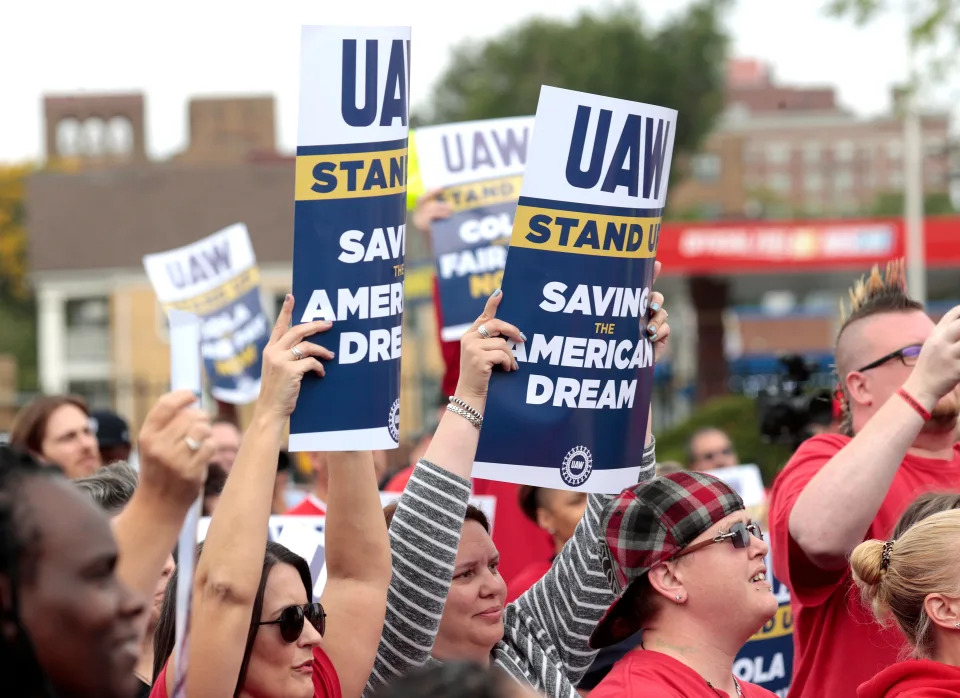
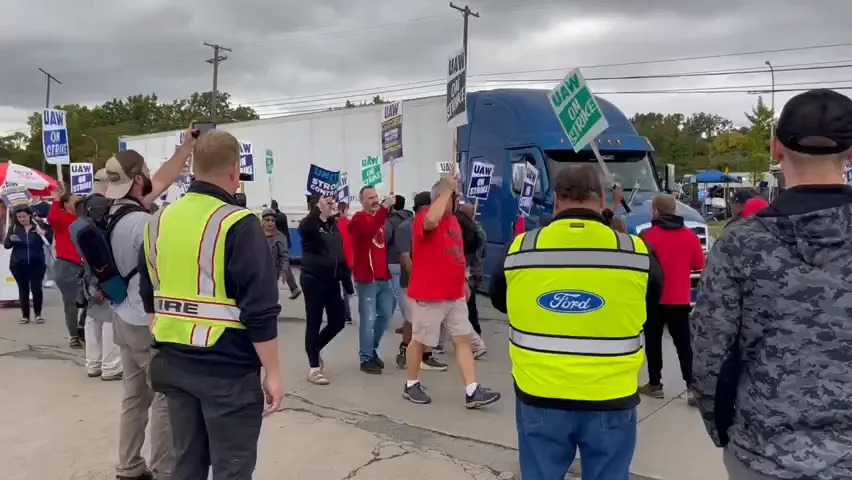
A strike entering its third full week currently involves some 25,000 workers or about 17% of Detroit Three UAW members on picket lines outside factories and parts warehouses nationwide, and that doesn't include the collateral damage of closures triggered by a supply chain ripple effect.

The sacrifices autoworkers are referring to are benefits they gave up in 2007-09 during the Great Recession, a time of historic economic struggle and even bankruptcy at General Motors and Chrysler (now owned by Stellantis).

According to a list created by the UAW and obtained by the Detroit Free Press, major concessions in the 2007 collective bargaining agreement to slash overall company costs included:

Creation of a new wage and benefit structure for entry level "tiered" wages.


Reducing start rate of $14.20 and top rate of $15.34 for new “non-core” workers, with the top production rate for existing workers at the time at approximately $28.


Replacing traditional pension and retiree medical insurance with a 401(k) program.


Providing less comprehensive medical, dental and vision insurance coverage.


Stopping general wage increases for traditional employees during the life of the contract, which started a pattern of no wage increases until 2015.


Major concessions continued in the 2009 collective bargaining agreement modifications included:

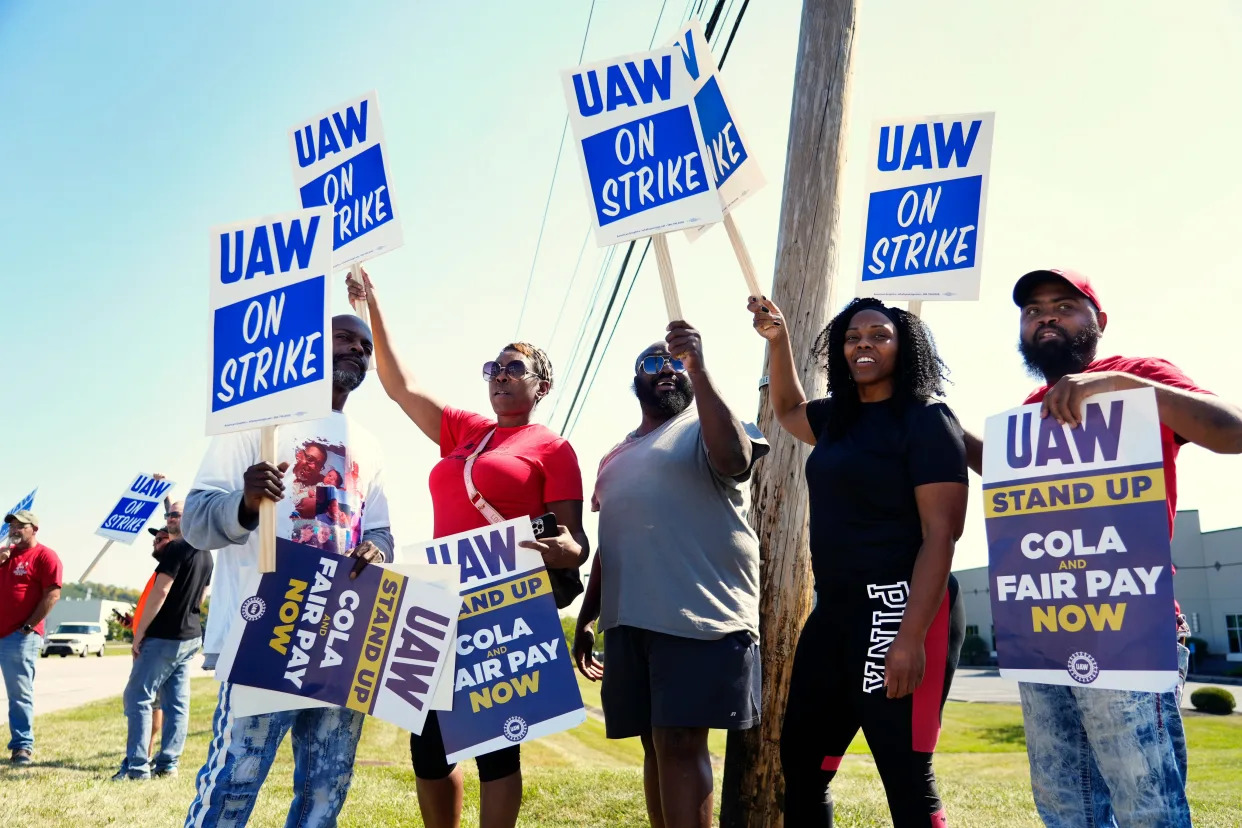
Suspending cost-of-living adjustments (COLA).


Suspending bonuses.


Suspending profit sharing.


Suspending Easter Monday holidays.


Discontinuing payment for unused vacation time.


Reducing break time.


Expanding use of temporary employees.


Allowing skilled trades workers to be used for production positions.


Eliminating the jobs bank.


Layoff protection (with SUB pay) reduced.


Implementing a no-strike clause (GM/Chrysler).
Retiree legacy costs were 'draining' balance sheets

In 2007, all three automakers created a Voluntary Employee Beneficial Association (VEBA) and eliminated the defined benefit plan (pension) for new hires. A VEBA is an independent trust that is financed by the companies and the union. It funds retiree health care.

Many UAW retirees work decades for automakers and retire prior to qualifying for Medicare.

The reason the companies had to end offering a pension and put a VEBA into effect to pay for the retiree health care was simple: “Their liability sheets were exploding,” said Marick Masters, professor at the Mike Ilitch School of Business at Wayne State University.

Masters said the liability for Ford’s pension was $44 billion and GM’s was $85 billion in 2007. He noted that a GM document in the 2007 contract shows that GM’s retiree health care liabilities for hourly workers totaled $46.7 billion.

“They knew their pensions were unfunded and they would have to make increasing annual payments to fund those pensions, which would drain their capital,” Masters said. “So you had billions of dollars eroding the working capital of the company.”


Today, none of the automakers would want to return to pensions or retiree health care obligations because it would “balloon their costs,” Masters said.

These so-called legacy costs are what startups such as Tesla and Rivian do not have, and analysts often point to as obligations that make newer competitors more of a financial threat to the Detroit Three.

“These things create lifetime liabilities and you don’t have enough active workers to defray those costs,” Masters said. “Everybody after 2007 has been in a defined contribution plan. It’s a huge amount of money to bring back pensions and retiree health care … all those things are what got them into trouble.”

Government assistance came with strings

The union agreed with the companies to eliminate retiree health care and defined benefit pension plans for new hires in their 2007 contracts, he said. To obtain government assistance before bankruptcy, the union and the companies had to agree to additional labor cost savings and massive corporate restructuring, which continued into bankruptcy.

In 2009, the parties also agreed to terminate cost of living allowances and the jobs bank.

"From the union's perspective, these concessions represented suspensions of hard-won benefits in prior negotiations, not necessarily permanent givebacks," Masters said. "But the companies, at least with respect to retiree health care and defined benefit plans, had no intention of reintroducing these benefits given the enormous drain on their balance sheets."

A defined benefit plan guarantees a specific payment every month, and all workers after 2007 have defined contribution plans.

"In fact, the union at the time agreed to not ever negotiate retiree health care benefits again," Masters said, citing the 2007 contract document from GM that says: "Agreement is permanent; UAW may not negotiate further future retiree health care benefits."

In addition, COLA was something that they banned with no restoration date, he said. "They ended up giving lump sum payments in lieu of general wage increases because that's what the economics at the time required. And they couldn't give profit sharing checks because the companies weren't making profits during those years."

Economics are different now, experts say

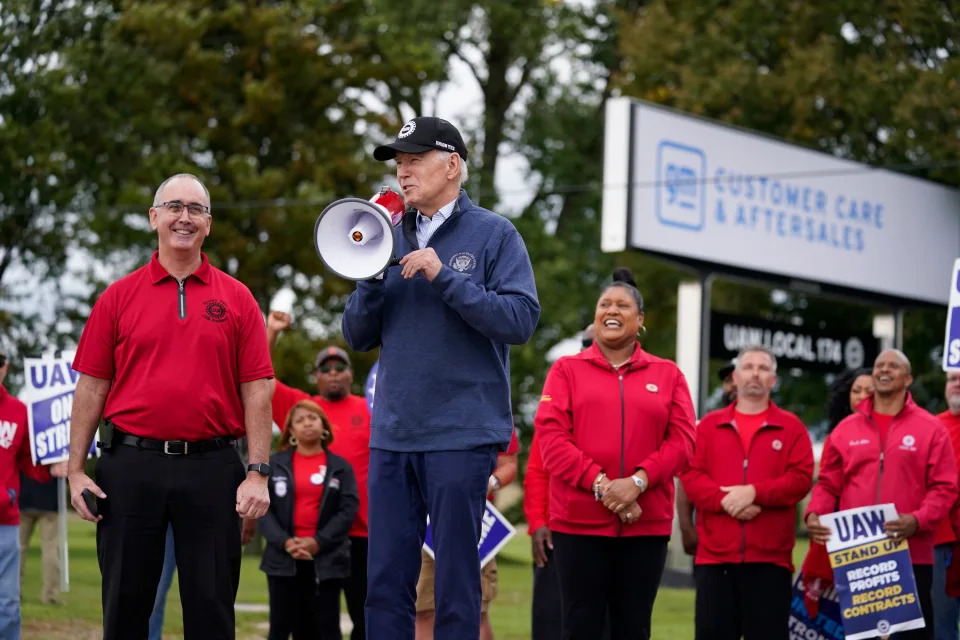
When UAW President Shawn Fain and his members on the strike line tell reporters they want restored what they gave up voluntarily, it fails to reveal the whole story, said Erik Gordon, a professor at the Ross School of Business at the University of Michigan.

"What really happened was a negotiated trade was made in return for plants staying open," he said.

At the time, GM had fired a significant number of executives and managers and said in its regulatory filings that it may be unable to compete for top management talent, Gordon said. "A lot of people gave up a lot of stuff."

What makes sense today, separate and apart from the past, is that the UAW members do deserve pay increases because the automakers have a lot of cash and they're making big profits, Gordon said. But the economics are different now than they were a decade ago and some benefits, such as pensions, have changed forever.


"What made sense at the time is not necessarily a continuation of what made sense then," Gordon said. "The industry faces different conditions and different risks. But I think it's a given that workers end up with substantial wage increases."
A factory worker's perspective

A UAW member who has worked in a Ford factory for more than two decade told the Free Press that the UAW is faced with negotiating on behalf of retired workers upset about negotiated losses, near-retired workers worried about negotiated losses and current manufacturing workers who feel they deserve more.

Still, most UAW workers understand there can't be a full restoration of past benefits, said the Ford worker, who asked not to be identified for fear of backlash from the union. The workers dismissed the idea of debating CEO compensation packages. "But the companies have made money and we deserve substantial raises."

This article originally appeared on Detroit Free Press


Opinion

UAW wants back concessions that saved automakers | Opinion

Ben Brady
Mon, October 2, 2023
Cincinnati.com | The Enquirer


On Sept. 14 at 11:59 p.m., the 2019 contract between the UAW and Ford, GM and Stellantis (formerly Chrysler) expired and a new tentative contract agreement has not been reached. The International UAW called for a historic strategic, targeted strike on all three automakers, a first in the UAW’s 88-year history. As of Sept. 26, the UAW and Ford have made progress on contract negotiations, unfortunately GM and Stellantis have not, requiring additional UAW Locals to join the picket lines on Sept. 22, including UAW Local 674 in West Chester (GM Distribution).

I want to take a moment to provide some clarity to the general public on how important the negotiations are between the UAW and Ford, GM and Stellantis, as what we bargain for in our contracts, have direct and indirect consequences for the autoworkers, working men and women in the small businesses in the communities where we work and live, and our local, state and federal government budgets.

In 2009, the Big 3 − Ford, GM and Chrysler − were on the ropes, and while Ford did not require a government bailout, GM and Chrysler each took a bailout from the federal government. But for each company to survive long-term, UAW members made steep concessions in pay, gave up cost of living inflation pay, loss of benefits, loss of pensions for anyone hired after 2009 and other quality of life issues such as scheduled shift hours, overtime requirements and the ability for each company to place a two-tier wage structure which required any new employees to start at roughly half the wages of the legacy employee with a longer term to make top-out pay.


Since then, Ford, GM and Stellantis have made $164 billion in combined profits, $24 billion in the first six months of 2023 alone. The three CEOs of each company have also enjoyed a 40% to 70% wage increase, hefty stock options and the ability to have flex hours and the option to work from home. While the CEOs' quality of life has improved, UAW members in parts, production, powertrain and assembly plants have poured time and sweat into making the companies profitable with limited profit sharing and modest improvements in some workplaces. Unfortunately, UAW members have never fully recovered the concessions made since the 2009 contracts.

In a March 24, 2014 interview on CNBC "Squak Box," Bill Ford stated that the UAW (2009 concessions) saved Ford Motor Company. Because GM and Stellantis both were bailed out by the federal government through their bankruptcies, neither GM or Stellantis have ever recognized that the concessions also saved them as well. On August 31, 2023, the UAW filed a lawsuit against GM and Stellantis for failure to negotiate in good faith on the 2023 contract.

What are the UAW members demands for the 2023? To receive back many of the concessions that have made these companies billions. Those demands include a double digit pay raise, return of pensions and retiree health care for new hires, increases in vacation time and restorations of quality of life issues that have created hardships for families and communities across the nation, including the shuttering of plants in Lordstown, Ohio, Belvidere, Illinois and the closing of the Ford Batavia Transmission Plant in June of 2008 which impacted 800 jobs and left Clermont County looking for ways to make up the lost revenue for small businesses and the county budget.


The communities where UAW members work and live, enjoy the security autoworkers jobs provide. Most of these auto plants are in rural communities where small businesses rely on the workers spending their money in the grocery, auto parts, car washes, hardware and medical care facilities. While it is estimated that six jobs in small parts plants are a direct result of one job at an automotive plant, 20 jobs are created in the community for each autoworker job. Their jobs include teachers, waiters, retailers and local EMT, police and firefighters, which also rely on the tax dollars that come from the autoworkers in the form of payroll, property and sales taxes. The quality of life issues UAW members win in contract negotiations also filter into the overall national workforce including the 40-hour work week, weekends off, company provided health insurance, overtime pay and retirement plans. Autoworkers also are often some of the most generous in our communities through donations to sports teams, school functions and holiday drives. They also participate in local events that support the communities.

UAW members have a long history of being the workforce that keeps America moving. Today we are just asking for the companies to recognize our work in building quality vehicles our country depends on. We ask them for a true fair day's pay for the fair day's work we have always given. Most importantly, we ask for your community support as we continue to negotiate for a fair contract for all workers.

Ben Brady is chairman of the Greater Cincinnati UAW CAP Council.


This article originally appeared on Cincinnati Enquirer: UAW wants back concessions that saved automakers
SMALL VICTORIES
US Supreme Court rebuffs dispute over videos targeting abortion providers

Andrew Chung
Mon, October 2, 2023 

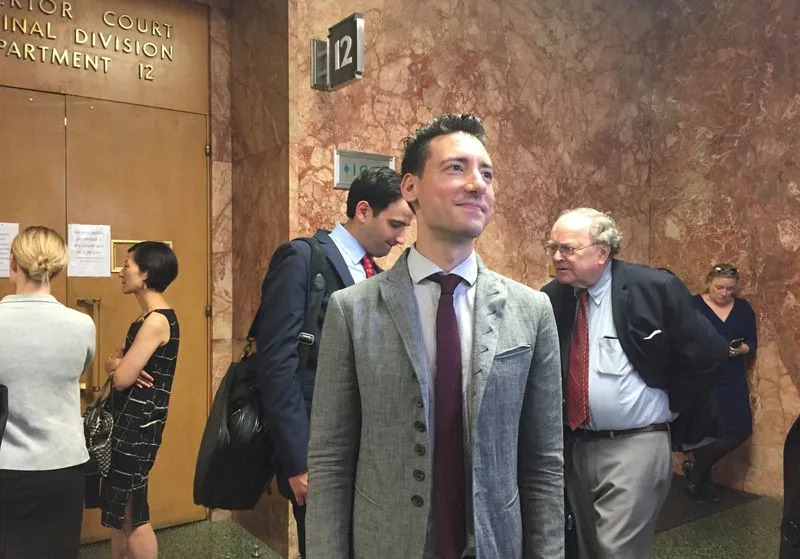
 Anti-abortion activist David Daleiden, waits outside Superior Court in San Francisco

By Andrew Chung

WASHINGTON (Reuters) -The U.S. Supreme Court on Monday declined to hear a bid by anti-abortion activists to throw out more than $2 million in damages they were ordered to pay Planned Parenthood after secretly recording video of abortion providers in a scheme to try to show the illicit sale of aborted fetal tissue for profit.

The justices turned away the appeal by David Daleiden and his group, the Center for Medical Progress, of a lower court's decision in 2022 upholding most of the damages in a lawsuit by Planned Parenthood, a women's healthcare and abortion provider, accusing the defendants of conspiracy, eavesdropping and other claims. The lower court rejected the argument made by the defendants that with the secret recording they were exercising their right to free speech under the U.S. Constitution.

The justices announced their action on the first day of their new nine-month term.

Planned Parenthood filed suit in 2016 against Daleiden and his California-based organization in federal court in San Francisco seeking monetary damages, accusing them of violating the Racketeer Influenced and Corrupt Organizations Act (RICO) and engaging in fraud, trespassing, breach of contract and illegal secret recording.

The case before the Supreme Court centered on whether Planned Parenthood, even though it did not sue for defamation, should have to overcome strict limits that the justices through past rulings have placed on damages that public figures may recover for alleged harms related to a publication.

Various activist groups on the left and right conduct undercover operations often involving secret recording. Daleiden and his team portray themselves as investigative journalists and have said that the judgment against them in the suit threatens undercover reporting, a technique that can help expose wrongdoing and corruption.

Planned Parenthood has said the defendants are "ideological activists" - not journalists - whose videos were heavily edited as part of a smear campaign aimed at destroying the organization.

Using a shell company and fake identification, the activists gained access to Planned Parenthood and National Abortion Federation conferences and other locations where they recorded staff using hidden cameras.

The Center for Medical Progress released videos in 2015 purporting to expose Planned Parenthood officials trafficking in aborted fetal parts, sparking controversy, congressional inquiries and investigations in various states.

Planned Parenthood denied profiting from fetal tissue donation for medical research. Lower courts concluded that the videos did not contain evidence of wrongdoing.

A jury sided with Planned Parenthood in the lawsuit, and a judge awarded $2.4 million in damages - including for security costs to prevent future infiltration and targeting of doctors and staff - as well as more than $13 million in attorneys' fees and costs that are the subject of a separate appeal.

The San Francisco-based 9th U.S. Circuit Court of Appeals upheld most of the award last year, concluding that the First Amendment did not protect the defendants.

Noting that damages had been awarded for harms related to the infiltration, not to Planned Parenthood's reputation, the 9th Circuit said, "Invoking journalism and the First Amendment does not shield individuals from liability for violations of laws applicable to all members of society."

Daleiden and another activist also face an upcoming criminal trial in California in connection with the secret recordings.

(Reporting by Andrew Chung; Editing by Will Dunham)

Supreme Court declines to take up appeal from anti-abortion group that secretly recorded clinics

Ariane de Vogue, CNN Supreme Court Reporter
Mon, October 2, 2023 


Kent Nishimura/Los Angeles Times/Getty Images

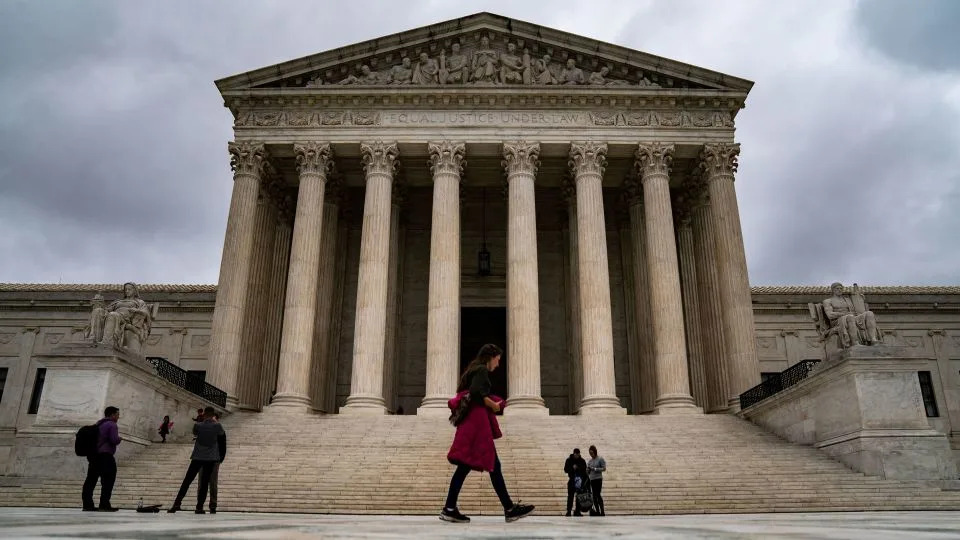
The Supreme Court declined on Monday to take up an appeal from an anti-abortion group known for releasing secretly recorded footage of abortion providers, leaving in place a lower court ruling that went in favor of Planned Parenthood.

The anti-abortion group had argued that its actions were protected by the First Amendment and sought to reverse millions of dollars in damages awarded to the abortion providers.

The case involved David Daleiden, a longtime anti-abortion activist who partnered with other like-minded activists, Troy Newman and Albin Rhomberg, to start a group called the Center for Medical Progress, meant to infiltrate organizations like Planned Parenthood.

According to court papers, they created a tissue procurement company they called BioMax. Such companies obtain human tissue samples, including fetal tissue, and provide them to medical researchers.

Although the company had a website and promotional materials, it was not involved in any business activity. Daleiden, using a false name, posed as the company’s procurement manager and vice president of operations.

According to court papers, employees used fake driver’s licenses and other means to infiltrate conferences that Planned Parenthood hosted or attended, and they arranged and attended lunch meetings and with Planned Parenthood staff, visiting health clinics. During these meetings, they recorded Planned Parenthood staff without their consent over a year and a half and then released on the internet edited videos of the conversations.

Planned Parenthood brought suit in January 2016 asking for monetary damages and other relief.

A district court ruled in favor of Planned Parenthood and awarded the group statutory, compensatory and punitive damages.

A panel of judges on the 9th circuit agreed that the damages were allowed under the First Amendment but rejected the claim under the Federal Wiretap Act.

“The First Amendment right to gather news within legal bounds does not exempt journalists from thaws of general applicability,” the court held.

“The First Amendment is not a license to trespass, to steal or to intrude by electronic means into the precincts of another’s home or office,” the court said in its opinion.

For more CNN news and newsletters create an account at CNN.com
The UAE holds a major oil and gas conference just ahead of hosting UN climate talks in Dubai

JON GAMBRELL
Updated Mon, October 2, 2023 


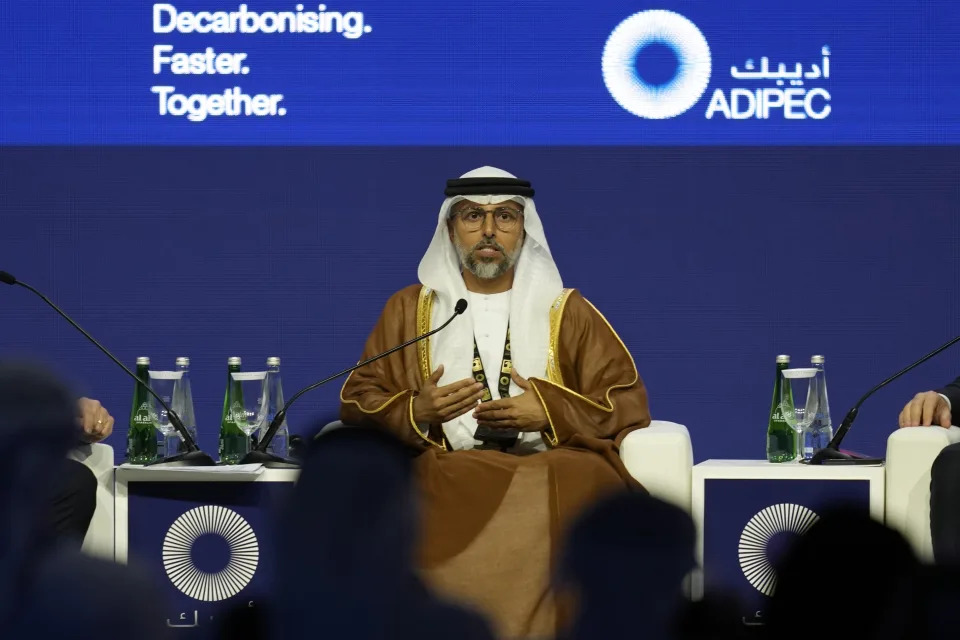
United Arab Emirates Energy Minister Suhail al-Mazrouei talks during the ADIPEC, Oil and Energy exhibition and conference in Abu Dhabi, United Arab Emirates, Monday Oct. 2, 2023. 
(AP Photo/Kamran Jebreili)

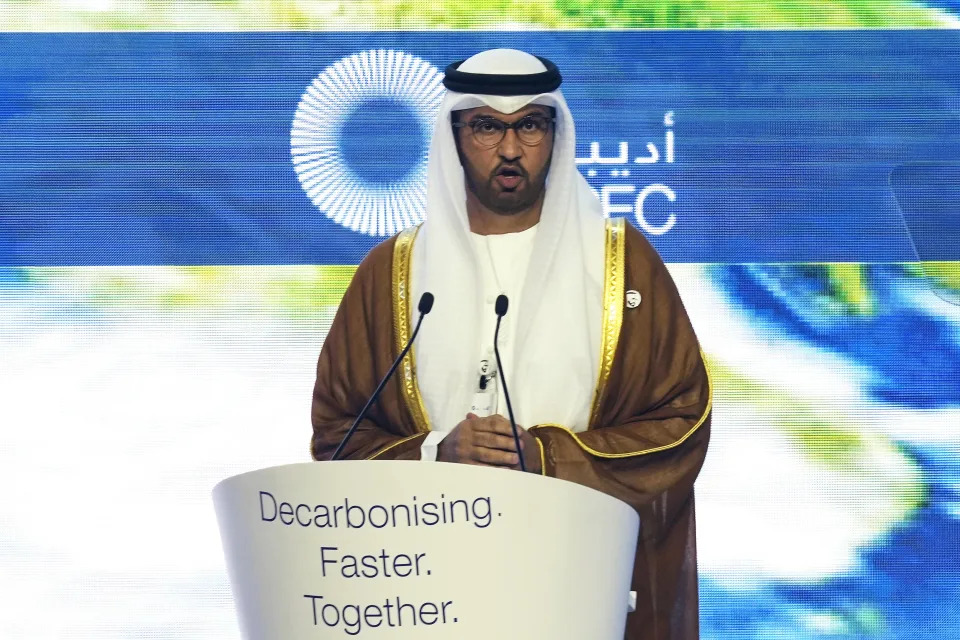
ABU DHABI, United Arab Emirates (AP) — The Emirati president-designate of the upcoming United Nations COP28 climate talks urged oil and gas companies Monday to be “central to the solution” for climate change, a message delivered even as the industry boosts its production to enjoy rising global energy prices.

The appeal by Sultan al-Jaber highlights the gap between climate activists suspicious of his industry ties and his calls to drastically slash the world's emissions by nearly half in seven years to limit global warming to 1.5 degrees Celsius (2.7 degrees Fahrenheit) compared with pre-industrial times.

While addressing a major international concern, his remarks came at a marquee oil industry event highlighting the state oil company he oversees — feeding the concerns of those already critical of his appointment while also drawing applause from the same energy firms he wants to court at the upcoming COP28 talks starting in November.

“That is our North Star. It is, in fact, our only destination,” al-Jaber said. “It is simply acknowledging and respecting the science.”


However, he added: “We must do this while also ensuring human prosperity by meeting the energy needs of the planet’s growing population."

Al-Jaber serves as the CEO of the state-run Abu Dhabi Oil Co., which has the capacity to pump 4 million barrels of crude oil a day and hopes to reach 5 million barrels a day. He also made the call to the annual Abu Dhabi International Petroleum Exhibition and Conference, known by the acronym as ADIPEC, which brings together the largest players in the oil and gas industries.

While this year's conference has been described as focusing on “decarbonizing faster together,” the event is primarily about the drilling, processing and sale of the same carbon-belching fuels driving climate change — which cause more-intense and more-frequent extreme events such as storms, droughts, floods and wildfires. And al-Jaber himself has repeatedly said the world must rely on oil and gas for the near-term to bridge that gap.

“A phase-down of fossil fuels is inevitable. In fact, it's essential,” al-Jaber said. “Yet, this must be part of a comprehensive energy transition plan that is fair, that is fast, just, orderly, equitable and responsible.”

But on the business side, the oil industry is on the rebound. After prices briefly went negative during the lockdowns of the coronavirus pandemic, benchmark Brent crude now trades around $92 a barrel.

Diesel prices also are expected to rise as Russia has stopped its exports of the fuel, which likely will worsen global inflation through boosting transportation prices that will get passed onto consumers.

Gazprom, the state-owned natural gas company that is a pillar of Russia’s economy, had a major stand at the conference despite facing U.S. sanctions over Moscow's war on Ukraine. Russian officials took part in Abu Dhabi's major arms fair earlier this year, showing the UAE's deepening financial ties to Moscow despite its long ties to the American military and hosting thousands of U.S. troops.

The conference highlights the challenge the United Arab Emirates has faced in trying to convince already-critical climate scientists, activists and others that it can host the U.N. Conference of the Parties — where COP gets its name.

Though all smiles at Monday's conference, al-Jaber has acknowledged the withering criticism he's faced. On Saturday, he offered a full-throated defense of his country hosting the talks he's slated to lead, dismissing critics who “just go on the attack without knowing anything, without knowing who we are.”

“For too long, this industry has been viewed as part of the problem, that it’s not doing enough and in some cases even blocking progress,” al-Jaber told the conference. “This is your opportunity to show the world that, in fact, you are central to the solution.”

Following immediately after al-Jaber, OPEC Secretary-General Haitham al-Ghais praised his speech and defended the oil industry.

“We see calls to stop investing in oil. We believe this is counterproductive,” al-Ghais said. “The cornerstone of global economic prosperity today is energy security.”

Al-Jaber said 20 oil and gas companies had pledged to be “net zero” by or before 2050 and eliminate routine gas flaring by 2030. However, the industry would still be producing the oil and gas that release the carbon dioxide that traps heat in the atmosphere.

Al-Jaber, a 50-year-old longtime climate envoy, has been behind tens of billions of dollars spent or pledged toward renewable energy by this federation of seven sheikhdoms on the Arabian Peninsula. Al-Jaber and his supporters — including U.S. climate envoy and former Secretary of State John Kerry, who is on a trip to the UAE this week — say that's a sign he can lead the COP28 talks.

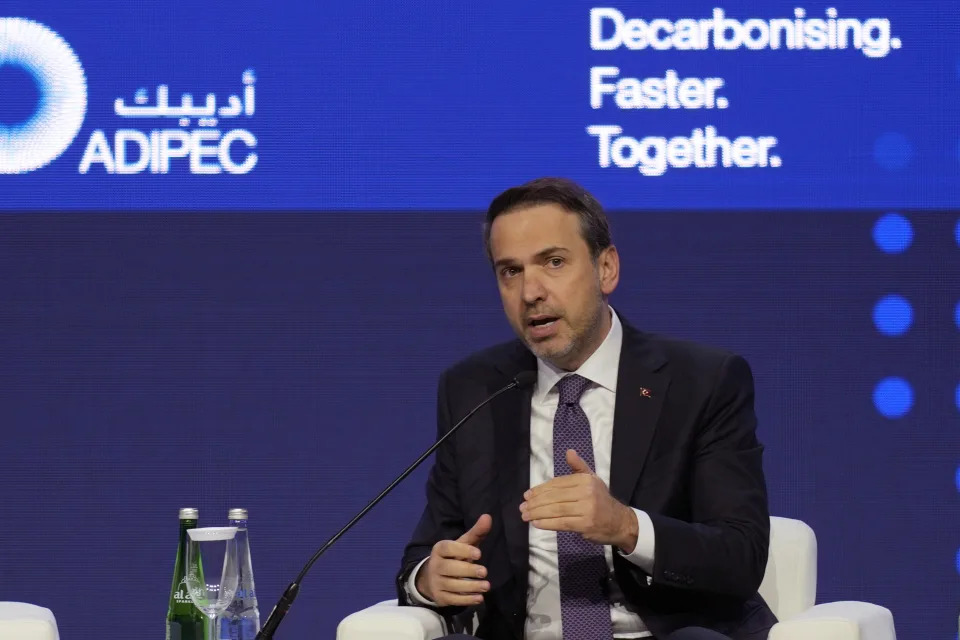
Meanwhile, Turkish Energy Minister Alparslan Bayraktar said at the Abu Dhabi conference that an Iraqi-Turkish oil pipeline that had been halted for months would see its flow restart this week.

“As of today, the pipeline is ready to operate,” he said. “And within this week we will start operating the Iraqi-Turkey pipeline, which after the resuming of oil operations, will be able to supply half a million barrels to the oil market.”

He did not elaborate on what the terms would be for the 970-kilometer (600-mile) pipeline, which is Iraq's largest. In March, Iraqi officials won an international arbitration case to halt oil exports from the semiautonomous Kurdish region to Ceyhan, Turkey, on the Mediterranean Sea.

Iraqi and regional Kurdish government officials did not immediately acknowledge the pipeline reopening, though Iraq's oil minister has said it was anticipated, without elaborating. Gulf Keystone Petroleum Ltd., which operates Shaikan oil field in Kurdish region of Iraq, saw its stock jump up by over 20% in trading Monday on the London Stock Exchange on news of the pipeline restarting.

Bayraktar said the pipeline also sustained damage in the recent earthquake and flooding in Turkey that had been repaired.

___

Follow AP's coverage of the climate and environment: https://apnews.com/climate-and-environment


Oil Latest: Industry Is Part of Energy Change, Executives Say

Anthony Di Paola and Salma El Wardany
Mon, October 2, 2023


(Bloomberg) -- Ministers and oil industry chiefs are gathering for the biggest energy conference in the Middle East as crude heads toward $100 a barrel. Whether prices can hold at these levels and the outlook for OPEC+ supply cuts are among topics that will be discussed from Monday.

But this year, climate is looming large over the forum. Delegates at the annual Adipec summit in Abu Dhabi, which has been dominated by oil in its long-running history, will devote a lot of their time to the energy transition. The meeting comes just two months ahead of the United Arab Emirates also hosting the crucial COP28 conference.

All times UAE

Oil Firms Must Be Heard in COP28, Executives Say (5:04 p.m.)

The oil industry is part of the energy transition and its voice should be heard at COP28, executives including Halliburton Co. CEO Jeff Miller, Liam Mallon of Exxon Mobil and Gordon Birrell of BP, said in a panel discussion.

Companies need to upgrade downstream operations to lower emissions, while a transformation of upstream operations is also required, they said.

Electrification of operations, carbon-capture and emissions detection can support the decarbonization process, they said.

Shell CEO Says Investors Will Decide If Low Carbon Is Viable (2:50 p.m.)

Shareholder needs to make a judgment on whether the low-carbon energy options that Shell Plc is pursing are viable, Chief Executive Officer Wael Sawan said.

“We need to be able to cover our cost of capital and make a return for our shareholders,” he said.

Oil Industry Is Central for Energy Transition: COP28 Chief (4:23 p.m.)

Large swathes of the global oil industry will pledge to eliminate methane emissions and gas flaring by the end of the decade, the president of the COP28 climate summit said.

More than 20 private and state oil and gas producers have made the commitment alongside setting targets to reach net zero by 2050, Sultan Al Jaber said. He did not name the companies.

Adnoc Testing Geothermal Energy for Cooling (3:24 p.m.)

Adnoc, the main oil producer in the United Arab Emirates, is testing using geothermal energy for district cooling in a preliminary program, as the country seeks to diversify energy sources.

The company is also studying capturing carbon in acquifers, said Musabbeh Al Kaabi, executive director of low-carbon solutions and international growth. Adnoc said Sunday it is doubling its carbon-capture target in a push toward net zero emissions.

UAE Warns About Lack of Oil Investment as It Boosts Own Capacity (2:30 p.m.)

The global oil industry has been losing capacity in the last few years due to a lack of investment, said United Arab Emirates Energy Minister Suhail al Mazrouei.

The minister rebuffed concerns about rising oil prices, arguing that crude needs to be high enough to justify making new investments. The UAE will expand its own capacity to 5 million barrels a day by 2027, Mazrouei said. From 2025, OPEC+ output quotas will be based on the latest capacity numbers, not outdated figures, he said.

Non-OPEC+ Oil Supply Is Outstripping Demand Growth: Yergin (2:11 p.m.)

Oil production in countries that are not part of the OPEC+ alliance, such as the US and Canada, is growing faster than demand, Dan Yergin, vice chairman at S&P Global Inc., said in a Bloomberg TV interview. Still, continued supply curbs by Saudi Arabia can be worrying because of concerns over global economic growth.

India Is Telling Oil Producers That Prices are Too High (1:54 p.m.)

India has “a constant dialogue with all producing countries where we keep raising this point” that crude prices are too high, Pankaj Jain, secretary at the Ministry of Petroleum and Natural Gas, said in an interview.

His country isn’t comfortable with current oil prices, which are near $93 a barrel in London, and “we need more production now,” Jain said. While India acknowledges OPEC’s right to decide how much they produce, the group’s cuts have increased prices.

“High prices lead to demand destruction,” Jain said. “Our viewpoint is we are finding these prices difficult to pass, difficult to continue to meet our energy needs.”

BP’s Interim CEO Reiterates No Change in Strategy (1:30 p.m.)

There will be no change in BP Plc’s strategy that was laid out in February, following the abrupt departure of Bernard Looney as head of the company, interim CEO Murray Auchincloss said.

“That’s a strategy that’s endorsed by the management team and endorsed by the board and a person leaving does not change the strategy,” he said. “We remain firmly committed to it.”

Looney resigned last month after admitting he had not fully disclosed relationships with colleagues. BP’s head of US operations, David Lawler, has also quit to pursue other opportunities outside the company.

Also read: BP Ends Its Week of CEO Chaos With Many Unanswered Questions

Iraq Official Says Ceyhan Pipeline Can’t Restart Yet (1:11 p.m.)

An Iraqi official cast doubt on a statement from Turkey that a key pipeline bringing oil from northern Iraq to the Mediterranean coast can resume this week.

Flows can’t restart until commercial and financial issues have been resolved, the official said, speaking on condition of anonymity. Earlier on Monday, Turkish Energy Minister Alparslan Bayraktar said the pipeline will resume operations this week. The oil conduit, which can carry almost half a million barrels of crude a day, has been offline since March amid a payment dispute between Ankara and Baghdad.

OPEC+ Has ‘Right Policy’: UAE Energy Minister (11:22 a.m.)

OPEC+ currently has the “right policy” for the oil market, the UAE’s Mazrouei said in an interview at the Adipec conference in Abu Dhabi.

Prices will increase if there’s no further investment in the industry, he said, adding that OPEC isn’t setting a price target.

Iraq Oil Pipeline Will Resume This Week (11:08 a.m.)

A crude oil pipeline running from Iraq’s Kurdistan region to the Mediterranean coast of Turkey will resume operations this week, Turkish Energy Minister Alparslan Bayraktar said.

The pipeline was shut earlier this year after an arbitration court ordered Ankara to pay about $1.5 billion in damages to Iraq for transporting oil from Kurdistan without Baghdad’s approval.

Citi Says Oil to Collapse to Low $70s in 2024 (9:53 a.m.)

Brent crude will collapse to the low $70s a barrel next year as the global market swings back to a surplus, according to Citigroup Inc. The shift reflects “more oil coming into the market,” analysts including Ed Morse said in a quarterly report.

“Higher prices in the near term could make for more downside for prices next year,” the Citi analysts said.

Oil Markets Will Continue to Tighten, Halliburton Says (9:18 am)

There’s a lot of support for oil prices and the market will continue to tighten, Halliburton Co. Chief Executive Officer Jeff Miller said in a Bloomberg TV interview at the Adipec conference.

The company is returning cash for our shareholders, he said.

Also read: Halliburton Sees US Gas Glut Freeing Up Gear for Oil Explorers

Deeper OPEC+ Production Curbs Unlikely: Eni (9:00 am)

The Organization of Petroleum Exporting Countries and its allies are unlikely to deepen their production cuts, Eni SpA CEO Claudio Descalzi said in a Bloomberg TV interview. Crude prices in London rose almost 10% last month as ongoing supply curbs squeeze the market.

A lack of investments in projects is the main issue for oil, while demand remains strong, Descalzi said.

--With assistance from Nayla Razzouk, Ben Bartenstein, Leen Al-Rashdan, Salma El Wardany and Yousef Gamal El-Din.

Bloomberg Businessweek


3 Oil Companies Leading in Renewable Energy Investment

Nilanjan Banerjee
Mon, October 2, 2023 


Economies across the world are gradually transitioning to cleaner energy sources. There has been a steady increase in pressure on energy companies to act on climate change on multiple fronts. Most analysts believe that although renewable energy will meet future energy needs, oil and natural gas demand will not be completely wiped out.

The U.S. Energy Information Administration, in its Annual Energy Outlook 2023, revealed that through 2050, renewables will increasingly match power demand. Thus, there are abundant opportunities for energy companies with a footprint in oil and gas resources or transporting commodities and the renewable energy space. Three such companies are Shell plc SHEL, Eni SpA E and Enbridge Inc ENB, which are well-poised to gain in the long run.
3 Stocks

Growing renewable business at a rapid pace is among the core strategies of Shell. In the renewable energy front, Shell has roughly 50 gigawatts (GW) of renewable generation capacity, considering projects either in operation, under construction or in the pipeline. Thus, for renewables and energy solutions, SHEL is investing actively in solar energy, wind energy, electric vehicle charging and others.

To implement the production of renewable energy, Plenitude, a benefit company, was established and is being controlled by Eni. To counter the decarbonization challenge, renewable energy generation is among the key strategies of Eni. This is reflected in its ambitious goal for more than 15 GW of installed renewable energy generating capacity by 2030.

Enbridge has been investing in wind farms, solar energy, geothermal projects and power transmission developments, reflecting the company's strong focus on renewables. Considering all the renewable energy projects that are either operational or under construction, Enbridge boasts a net of 2,173 megawatts of zero-emission energy generating capacity.