Unequal Before the Law
Native Americans serve astoundingly longer prison sentences—because they are Native.
STEPHANIE WOODARD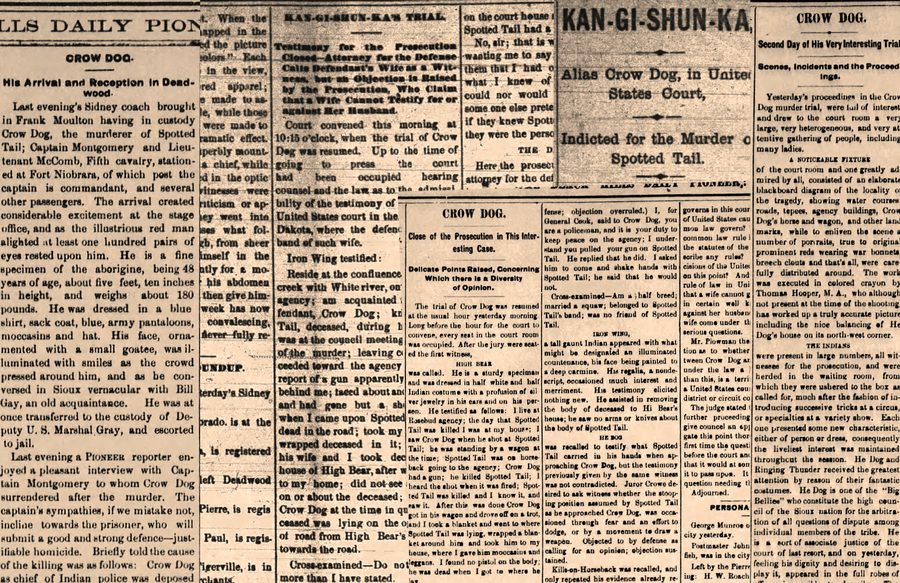
Federal charges ordinarily cover matters of national reach: immigration, voting rights, racketeering. Not in Indian Country. Tribal members frequently find themselves in federal court for all sorts of allegations— not just serious crimes, such as murder, but lesser offenses, like burglary. Once in federal court, they face sentencing guidelines that are stiffer than if they were tried in state court, where non-Native cases are generally heard. Diversion, probation and other mitigation actions, typical of state courts, are also less common, as is a jury that includes their peers, which is to say, other Natives.
As a result, Native Americans receive significantly longer sentences than non-Natives for similar crimes and many sources have cited a statistic indicating they are 38% more likely to be behind bars than anyone else. Native detainees are also, on average, younger, more likely to be women and have less criminal history than the federal prison population at large.
More than two decades ago, the U.S. Sentencing Commission — the independent agency within the Department of Justice (DOJ) that defines sentencing policies and practices for federal courts — first met to address these disparities. The differences are baked in by laws and Supreme Court decisions that date back more than a century — in particular, to the Major Crimes Act of 1885.
Still on the books, the Major Crimes Act established federal jurisdiction over a swath of on-reservation crimes — if the defendant is Native. This jurisdiction, which results in many crimes by Natives on reservations being tried in federal court, effectively ensures greater sentences for Natives than non-Natives committing similar crimes. It’s one of the clearest manifestations of the U.S. government’s long and ongoing efforts to dominate Indigenous nations.
The Sentencing Commission found, for example, that, on average, an assault conviction in a South Dakota state court that carried a 29-month sentence got 39 months in a federal court. The spread in New Mexico was wider: six months versus 54. Similarly, the state court sentence for a sexual-abuse conviction in South Dakota could be 81 months, as opposed to 96 in federal court. In New Mexico, it averaged 25 months versus 86.
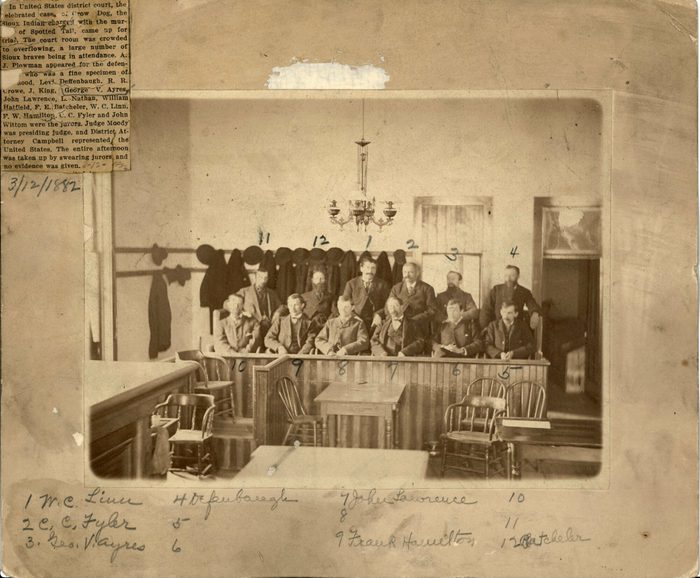
A rare image of the jury in Crow Dog’s trial in Deadwood, S.D.
Native Americans serve astoundingly longer prison sentences—because they are Native.
STEPHANIE WOODARD
MARCH 11, 2024
Federal charges ordinarily cover matters of national reach: immigration, voting rights, racketeering. Not in Indian Country. Tribal members frequently find themselves in federal court for all sorts of allegations— not just serious crimes, such as murder, but lesser offenses, like burglary. Once in federal court, they face sentencing guidelines that are stiffer than if they were tried in state court, where non-Native cases are generally heard. Diversion, probation and other mitigation actions, typical of state courts, are also less common, as is a jury that includes their peers, which is to say, other Natives.
As a result, Native Americans receive significantly longer sentences than non-Natives for similar crimes and many sources have cited a statistic indicating they are 38% more likely to be behind bars than anyone else. Native detainees are also, on average, younger, more likely to be women and have less criminal history than the federal prison population at large.
More than two decades ago, the U.S. Sentencing Commission — the independent agency within the Department of Justice (DOJ) that defines sentencing policies and practices for federal courts — first met to address these disparities. The differences are baked in by laws and Supreme Court decisions that date back more than a century — in particular, to the Major Crimes Act of 1885.
Still on the books, the Major Crimes Act established federal jurisdiction over a swath of on-reservation crimes — if the defendant is Native. This jurisdiction, which results in many crimes by Natives on reservations being tried in federal court, effectively ensures greater sentences for Natives than non-Natives committing similar crimes. It’s one of the clearest manifestations of the U.S. government’s long and ongoing efforts to dominate Indigenous nations.
The Sentencing Commission found, for example, that, on average, an assault conviction in a South Dakota state court that carried a 29-month sentence got 39 months in a federal court. The spread in New Mexico was wider: six months versus 54. Similarly, the state court sentence for a sexual-abuse conviction in South Dakota could be 81 months, as opposed to 96 in federal court. In New Mexico, it averaged 25 months versus 86.
A rare image of the jury in Crow Dog’s trial in Deadwood, S.D.
COURTESY OF DEADWOOD HISTORY, INC., ADAMS MUSEUM COLLECTION, DEADWOOD S.D.
CROW DOG AND THE MAJOR CRIMES ACT
On Aug. 5, 1881, gunfire rang out on the Rosebud Sioux Indian Reservation, Dakota Territory, as Kangi Sunka, or Crow Dog, shot dead rival tribal leader Sinte Gleska, or Spotted Tail, as the latter was leaving a tribal council meeting. Local newspapers covered the story continuously — and in great detail — from the initial incident through the final court decision two years later.
After the shooting, the tribe directed Crow Dog to re-establish community harmony by giving Spotted Tail’s family horses, money and a blanket. When federal officials called for his arrest, Crow Dog, accompanied by a Rosebud chief, turned himself in at a nearby Army fort and was arraigned in Territorial Court in the town of Deadwood.
Prosecutors alleged Crow Dog ambushed Spotted Tail, shooting him from the cover of his wagon. For his part, Crow Dog testified he was behind the wagon because he was fixing its undercarriage. Spotted Tail apparently thought Crow Dog was lying in wait and aimed his pistol. Crow Dog saw this, grabbed his rifle and fired.
Meanwhile, Crow Dog’s wife and baby were on the wagon’s seat during the incident — which raises the question: Who brings their family to a gunfight?
Crow Dog’s lawyer, who worked most of the case in return for a few ponies, filed a plea of self-defense. He also challenged the Territorial Court’s jurisdiction over on-reservation offenses committed by tribal members. How the trial ended and the ensuing political maneuvers reverberate to this day.
As Crow Dog’s trial progressed, many Deadwood residents came to believe that Crow Dog had not set out to kill Spotted Tail. Instead, they thought the two men had defended themselves simultaneously in a confusing and fast-moving event. Crow Dog was simply faster. They thought he would be acquitted or, at worst, found guilty of manslaughter. Instead, Crow Dog was convicted of murder and sentenced to hang.
Meanwhile, the Bureau of Indian Affairs and other federal officials had been case-shopping, according to City University of New York law professor Sidney L. Harring in the American Indian Law Review. In particular, they wanted a situation that would give the United States control of tribal justice. A few cases were considered, but Crow Dog’s seemed most likely to spur Congress to act: Spotted Tail was a prominent tribal leader who was widely understood to support negotiation with the federal government on important matters, and his death could be sold as a loss to the United States.
At the same time, the United States was looking for cheaper ways than war to separate Indigenous people from their land. By the estimate of Carl Schurz, a Union Army general who became Interior Department secretary in the late 1800s, the government spent $1 million per death in training, equipping and fielding an army for its battles against Natives. The 1883 Congressional Record shows Congress allocated just $1,000 for the Crow Dog case. After this minimal outlay, the confinement, incarceration and execution of Natives would be established in federal law.
Though 19th-century Deadwood was a tiny frontier town on the western edge of present-day South Dakota, it was well acquainted with celebrities and celebrity trials. Calamity Jane, Wild Bill Hickock and other notorious gunfighters lived, loved and shot each other there. In 1876, a drifter named Jack McCall was tried in Deadwood for killing Wild Bill in a poker game. Five years later, local newspapers were ready — and eager — for Crow Dog’s trial.
About a month after the shooting, the Black Hills Weekly Pioneer reported “at least one hundred pairs of eyes” had gathered to watch Crow Dog arrive at the Deadwood jail. Weeks of thrilling “fake news” in the Weekly Pioneer and Black Hills Daily Times postulated just how the killing could have — must have — occurred. Both tribal leaders were given disparaging nicknames, “the old dog” and “old spot.” Onlookers were expecting a fearsome scoundrel.
Then, Crow Dog appeared. Immediately described by the media as handsome with a pleasant smile, he was quickly re-labeled the “distinguished Sioux” and lauded as brave, reliable and honest. His good looks should impress the jury, confided the Black Hills Daily Times. Held in the Deadwood lockup, Crow Dog enjoyed ample meals “well cooked and cleanly served” and was allowed dinner guests, according to the newspaper. He whiled away his time by making scrapbooks and issuing much admired Deadwood weather predictions.
In a prequel to today’s red-carpet coverage, readers learned that one day Crow Dog wore to court a Native-style shirt, leggings and matching blanket. On another, he sported an outfit fashionable today — dark blue sports jacket over dark blue shirt and trousers, no tie. The newspapers carefully recounted the testimony, attorneys’ objections and judge’s rulings, along with overtly racist comments from the jury. One jurist declared the testimony of one white man was worth more than “one hundred Indians.” Another said he had “been pretty badly scared by them.”
Some courtroom attendees were pleased that Crow Dog would pay for the shooting with his life. Others hoped the verdict would establish federal jurisdiction and hasten the Dakota Territory’s transition to statehood. Many were shocked by what they saw as double jeopardy, which the Constitution’s Fifth Amendment forbids. The tribe had already resolved the tragedy according to its own law with Crow Dog’s restitution to Spotted Tail’s family. How could the United States try Crow Dog again?
After Crow Dog was sentenced to hang, his lawyer filed an appeal. In 1883, the Supreme Court vacated the conviction, opining that tribes retained the right— as an attribute of their sovereignty — to be governed by their own laws. When Crow Dog was released, he walked through Deadwood, shaking hands with his many well-wishers and accepting gifts: winter boots, woolen socks, a heavy coat and more. He dined with his lawyer and the lawyer’s wife.
None of them saw the trap. Deadwood had little communication with the East Coast in those days, and officials in Washington felt free to falsely claim there had been a “public outcry” when the Supreme Court freed Crow Dog, according to Harring. Interior Department officials lobbied Congress for more power over tribal nations, describing them as lawless and ruled by “blood revenge,” according to Chickasaw tribal citizen Kevin Washburn, dean of the University of Iowa College of Law and former assistant secretary of the Interior for Indian Affairs. They claimed federal legal oversight would provide tribes with increased public safety. “Though this justification was based on false and misleading information, it has proven the most durable,” Washburn explains in an article in the North Carolina Law Review.
When the Major Crimes Act became law, in 1885, it let the federal government reach deep into tribal nations, control their judicial systems, degrade public safety and destabilize their communities. The list of crimes covered has lengthened through the years, and the law has been bolstered by Supreme Court decisions declaring that Natives have no jurisdiction over non-Natives.
THE ONGOING STRUGGLE
The aggressive attempt to assimilate tribal members that followed the Ex parte Crow Dog decision “ranks as one of the great legal atrocities in the United States, equal to the Dred Scott case and the internment of U.S. citizens of Japanese descent in concentration camps,” writes Harring. A high-profile example of the vast disparities in sentencing that result, cited by the Sentencing Commission and others, followed the death of a baby on a North Dakota reservation in the late 1990s. The baby’s mother was convicted of second-degree murder and received a 10-year federal-prison sentence, which was affirmed on appeal — but not unanimously.
In dissent, Judge Myron Bright, of the 8th Circuit, argued passionately that the circumstances surrounding the child’s mother — who wrestled with mental illness and had endured constant and even near-deadly physical and sexual abuse since age 5— meant the death should not have been charged as “murder,” but as “neonaticide,” a crime that takes the mother’s state of mind into account. “Now her lifetime of travail becomes magnified by an unjust and improper prison sentence,” Bright wrote.
Bright also insisted that, had the child and mother not been Native and the death not occurred on a reservation, the mother would not have gone to prison. Indeed, a nonNative North Dakota college student, who was convicted in state court for her role in her child’s death at about the same time and did not appear to have suffered many of the extreme experiences the Native mother had, received a sentence of three years’ probation. “I find it gut-wrenching when I am asked by a family member of a [Native] person I have sentenced why Indians [receive] longer sentences than white people who commit the same crimes in the same location,” says Judge Ralph R. Erickson, the chief District Court judge in North Dakota, who helped lead the Sentencing Commission’s research efforts in 2015. But, he wrote in a later report, “differences between state and federal sentencing law mandate the difference.”
The U.S. justice system has long operated differently for different groups. The Black Lives Matter movement put that issue on the national agenda, asserting that people of color and those from marginalized populations face separate and unequal judicial hurdles and impacts. It stands true for Indigenous communities, whose history of exclusion is so little understood, whose contemporary struggles are so little covered in the media, and who have the law applied to them in such complicated ways. For Native Americans accused of crimes, like Black Americans and others, the judicial system is punitive, capricious and unrelated to conventional notions of justice.
Mind-boggling jurisdictional convolutions, along with lack of data, help drive the confusion around Indigenous sentencing. Laws regarding Indian Country justice accreted over the centuries such that who is in charge of a case (the federal government, a state or a tribe) now depends on the Native or non-Native status of the alleged offender and victim, the type of offense and where it is said to have occurred, among other factors. Fair, impartial and clearly defined judgments are absent, and judges openly acknowledge it. “Ask virtually any United States District Judge presiding over cases from Indian Country whether the Federal Sentencing Guidelines are fair … and I believe the answer would largely be the same: No,” U.S. District Court Judge Charles B. Kornmann wrote in an article in the Marquette Law Review.
“I find it gut-wrenching when I am asked by a family member of a [Native] person I have sentenced why Indians [receive] longer sentences than white people who commit the same crimes in the same location,” says Judge Ralph R. Erickson.
CASES IN POINT
Attorney Charles Abourezk, now chief judge of the Rosebud Sioux Tribe Supreme Court in South Dakota, was part of a legal team that successfully defended tribal council members of the nearby Pine Ridge Indian Reservation. U.S. authorities had charged the council members in the early 2000s with “felony failure to pay rent,” arrested them very publicly, and dragged them out in ankle chains, Abourezk said. If convicted, each faced as many as 25 years in federal prison. At issue was how the council members had calculated rent for on-reservation properties, some of which they rented themselves. The members calculated prices according to market value, but the federal government claimed they should have figured the charges based on a renter’s income. If they had, they would have likely owed more for the properties they were renting. According to the federal government, they were in arrears and should be imprisoned.
To non-Natives, the melodrama of the charges, threatened sentences and arrests may sound preposterous. They’re not, says Joseph Holley, chairman of the Te-Moak Tribe of Western Shoshone Indians in Elko, Nev. Because a tribe’s reservation is held in trust by the federal government, Holley explains, something seemingly innocuous can be magnified into a federal offense. After years of drama, a judge dismissed the charges against the Pine Ridge tribal council members, noting the United States abolished debtors’ prisons long ago. The U.S. Attorney’s Office in South Dakota declined to comment, according to victim witness specialist Ace Crawford.
In a 2021 report from DOJ, “Indian Country Investigations and Prosecutions,” Attorney General Merrick Garland declares the department is “committed to partnering with Tribal communities, governments, courts, and law enforcement agencies to help reduce crime and support victims.” To this end, DOJ has given tribes grants, access to national information resources and more. The DOJ report also describes the impossibility of accurately documenting the efforts or determining their impact on Native people. When the Sentencing Commission met recently, it noted that crafting solutions required data it didn’t have— especially from states with large Native populations. So it would be impossible “to complete a robust comparison of the sentences received or served by non-Indian and Indian defendants in federal and state courts,” according to the commission’s Tribal Issues Advisory Group.
Addressing sentencing disparities would also require addressing the justice system’s vengeful approach to Indigenous people. Consider the cases of Lezmond Mitchell and Leonard Peltier. After a trial beset by investigative and procedural failures, the federal government convicted Navajo Nation citizen Mitchell of “carjacking resulting in death” in 2001. In August 2020, the United States executed Mitchell. Mitchell’s tribe opposes the death penalty on cultural grounds and had asked for Mitchell to be sentenced to life without parole. Instead, he was caught up in the Trump administration’s execution binge. In resuming federal executions after a 17-year hiatus, the administration killed more prisoners than any other administration in the previous 120 years.
The case of prominent Native activist Leonard Peltier is another debacle. With fabricated evidence and shifting charges, Peltier was convicted in 1977 of aiding and abetting murderers who had themselves been acquitted. Peltier, who is of Anishinaabe, Lakota and Dakota descent, was sent to federal prison. He has remained there for nearly half a century. Pope Francis, the late Archbishop Desmond Tutu, the Dalai Lama and others worldwide have called for Peltier’s release.
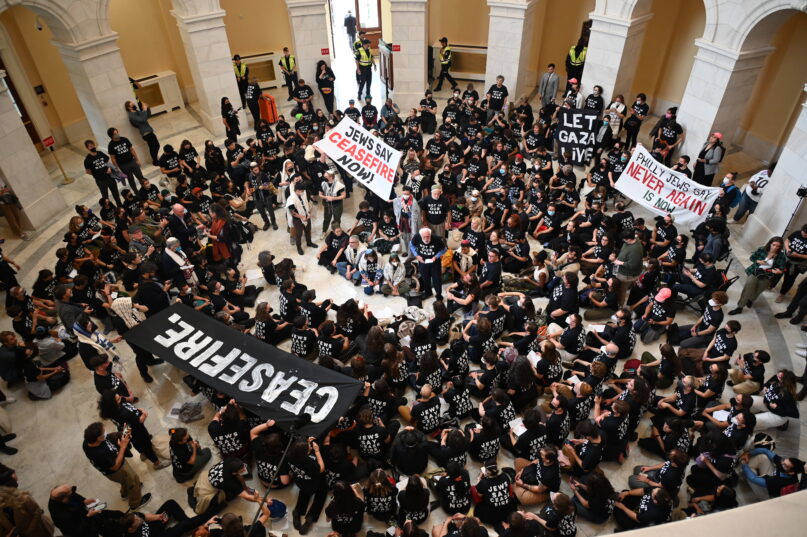
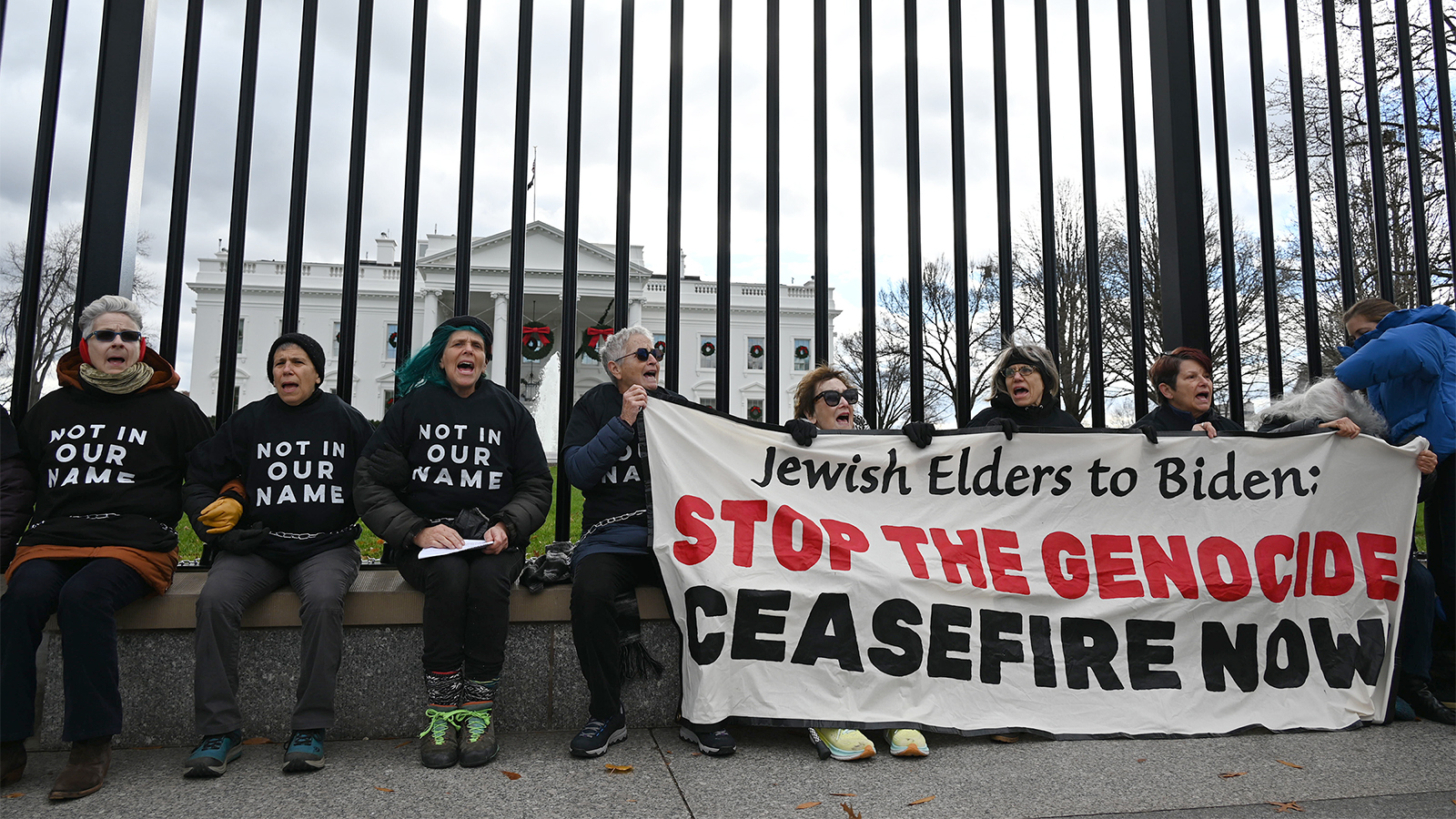
In 2021, retired U.S. Attorney James Reynolds, who prosecuted Peltier, wrote to President Joe Biden, saying he now realizes Peltier’s conviction was shaped by “the prevailing view of Native Americans at the time.” He urged the president to grant Peltier clemency and “take a step towards healing a wound that I had a part in making.” Peltier’s petition for clemency is again under review, according to DOJ’s Office of the Pardon Attorney. Peltier’s attorney, Kevin Sharp, says he is “more hopeful than ever that something positive will happen.” Sharp credits his optimism to recent public outcries for clemency, along with publicity for gatherings outside the White House in September 2023 for Peltier’s 79th birthday.
JURISDICTIONAL ANOMALIES
While the federal government pursues Natives with allegations of even minor crimes, it ignores many serious crimes occurring on their homelands. Joseph Holley of the Te-Moak Tribe of Western Shoshone Indians puts it plainly: “There’s no definitive line about how [Native] people are going to be treated by the law.” This unpredictability destroys confidence in the justice system, says Tanya Reynolds, council member of the Te-Moak Tribe’s South Fork Reservation, in Spring Creek, Nev.
Restrictions on tribal jurisdiction have made Native nations into crime magnets, attracting non-Native criminals expecting to operate without scrutiny. American Indians and Alaska Natives are more than twice as likely as all other races to be victims of violent crime, often at the hands of non-Natives, according to the Association of American Indian Affairs and the National Institute of Justice. Amnesty International has found that about 30% of Native women are raped in their lifetime and are more than twice as likely to be raped as white women; about 86% of the perpetrators are non-Native men. Wyn Hornbuckle, deputy director of DOJ’s Office of Public Affairs, wrote in an email to In These Times that the justice department’s “efforts to enhance public safety and sovereignty of Native Americans … accelerated significantly after the passage of the Tribal Law and Order Act in 2010 and continue today.” That law aims to, among other things, increase the number of law enforcement officers on tribal lands.
Luella Brien, the Apsáalooke founder and editorin-chief of Four Points Press, covers news on her Crow Reservation, in southeastern Montana. She knows of dangerous non-Native perpetrators — drug dealers, human traffickers and more — hiding out on reservations. Thanks to limits on tribal jurisdiction, she says, “Non-Native criminals feel safer on the reservation.” William Main, of the Aaniiih and a former chairman and tribal-court lay advocate of the Fort Belknap Indian Community in north-central Montana, reports that non-Natives tell him, “reservations are havens for criminals.” He agrees, explaining “It’s not the Indians [they’re] a haven for.” There aren’t enough federal agents, says Main, and they are slow to respond to emergencies. The Oglala Sioux Tribe, of the 3.1-million-acre Pine Ridge Indian Reservation, sued the Bureau of Indian Affairs (BIA) in 2023 over inadequate policing for its 30,000 members. Only about 30 officers and seven criminal investigators patrol an area nearly the size of Connecticut. The business committee of the Ute Tribe, of the Uintah and Ouray Reservation, tells In These Times that, at most, three BIA officers patrol its 4.5 million acres in Utah.
The Supreme Court upheld the limitations on tribal jurisdiction in 2021 in United States v. Cooley. The lawsuit was based on the events of a cold February night, when a tribal police officer came upon a truck stopped on a lonely Crow reservation highway. The officer wondered if the vehicle’s occupants needed assistance. What he found was a non-Native driver with red eyes, slurred speech, bags of meth, wads of cash, loaded guns and a toddler. The officer contacted state and federal officials, and the driver was eventually charged in federal court with drug trafficking. His lawyers convinced lower courts that the tribal officer had exceeded his authority. The Supreme Court disagreed, saying the tribal officer could apprehend the driver — as long as he handed him over for further investigation. In sum, the federal government doesn’t protect tribal communities, and the tribes aren’t allowed to, according to attorney Brett Lee Shelton, responsible for the Indigenous Peacemaking Initiative of the Native American Rights Fund. “Undoing the Major Crimes Act and related laws and court decisions is essential,” says Shelton, who is from the Oceti Sakowin Oyate (Great Sioux Nation) and enrolled in the Oglala Sioux Tribe. Getting the federal government to reverse course will not be easy. For decades, it has supported tribal self-determination in education, healthcare, environmental regulations and more — but not criminal law, Shelton says, adding that determining the needed resources for that would be a massive, community-by-community effort.
Amnesty International has found that about 30% of Native women are raped in their lifetime and are more than twice as likely to be raped as white women; about 86% of the perpetrators are non-Native men.
CIRCLES OF TRADITIONAL JUSTICE
The way the Rosebud Sioux Nation handled the killing of Spotted Tail — before the U.S. government got involved — is an example of Indigenous justice. Also known as peacemaking, Shelton says these approaches prioritize healing. They were once emblematic of Native communities worldwide, and many — in the United States, Canada, Australia, New Zealand and beyond — are reviving them as far as national law allows. “We tend not to throw people away — to throw them into prison,” says Shelton. He adds that Indigenous cultures understand that a misdeed arises from imbalance, which can be corrected through restitution, apologies and community service. “We ask what we can all do together to help each of the people involved.” The goal is healing perpetrator, victim and community.
The success of this approach is apparent when comparing recidivism rates between recipients of federal sentencing and of traditional Indigenous justice. The Federal Bureau of Prisons reports 45% of released prisoners are back in custody within a few years. In contrast, Shelton says, compliance rates in the United States for peacemaking participants tend to be in the 90% range. Laurie Vilas is a peacemaker with the Mille Lacs Band of Ojibwe in Minnesota. A citizen of the White Earth Nation, also in Minnesota, Vilas welcomes those involved in a case into a circle. This approach is based on time-honored Indigenous talking circles, in which each person talks in turn, uninterrupted, then the group seeks consensus. She encourages participants to craft their collaborative decision making with essential Indigenous values — love, respect, courage, honesty, humility, wisdom and truth. By holding onto their traditional values, Indigenous communities have endured unimaginable depredations. “They’ve tried in every way, shape and form to get rid of Natives,” says Reynolds of South Fork. “They have not succeeded.”
The Native American Rights Fund and Indigenous Peacemaking Institute provided source material for this article.
Please consider supporting our work.

STEPHANIE WOODARD is an award-winning human-rights reporter and author of American Apartheid: The Native American Struggle for Self-Determination and Inclusion.
CROW DOG AND THE MAJOR CRIMES ACT
On Aug. 5, 1881, gunfire rang out on the Rosebud Sioux Indian Reservation, Dakota Territory, as Kangi Sunka, or Crow Dog, shot dead rival tribal leader Sinte Gleska, or Spotted Tail, as the latter was leaving a tribal council meeting. Local newspapers covered the story continuously — and in great detail — from the initial incident through the final court decision two years later.
After the shooting, the tribe directed Crow Dog to re-establish community harmony by giving Spotted Tail’s family horses, money and a blanket. When federal officials called for his arrest, Crow Dog, accompanied by a Rosebud chief, turned himself in at a nearby Army fort and was arraigned in Territorial Court in the town of Deadwood.
Prosecutors alleged Crow Dog ambushed Spotted Tail, shooting him from the cover of his wagon. For his part, Crow Dog testified he was behind the wagon because he was fixing its undercarriage. Spotted Tail apparently thought Crow Dog was lying in wait and aimed his pistol. Crow Dog saw this, grabbed his rifle and fired.
Meanwhile, Crow Dog’s wife and baby were on the wagon’s seat during the incident — which raises the question: Who brings their family to a gunfight?
Crow Dog’s lawyer, who worked most of the case in return for a few ponies, filed a plea of self-defense. He also challenged the Territorial Court’s jurisdiction over on-reservation offenses committed by tribal members. How the trial ended and the ensuing political maneuvers reverberate to this day.
As Crow Dog’s trial progressed, many Deadwood residents came to believe that Crow Dog had not set out to kill Spotted Tail. Instead, they thought the two men had defended themselves simultaneously in a confusing and fast-moving event. Crow Dog was simply faster. They thought he would be acquitted or, at worst, found guilty of manslaughter. Instead, Crow Dog was convicted of murder and sentenced to hang.
Meanwhile, the Bureau of Indian Affairs and other federal officials had been case-shopping, according to City University of New York law professor Sidney L. Harring in the American Indian Law Review. In particular, they wanted a situation that would give the United States control of tribal justice. A few cases were considered, but Crow Dog’s seemed most likely to spur Congress to act: Spotted Tail was a prominent tribal leader who was widely understood to support negotiation with the federal government on important matters, and his death could be sold as a loss to the United States.
At the same time, the United States was looking for cheaper ways than war to separate Indigenous people from their land. By the estimate of Carl Schurz, a Union Army general who became Interior Department secretary in the late 1800s, the government spent $1 million per death in training, equipping and fielding an army for its battles against Natives. The 1883 Congressional Record shows Congress allocated just $1,000 for the Crow Dog case. After this minimal outlay, the confinement, incarceration and execution of Natives would be established in federal law.
Though 19th-century Deadwood was a tiny frontier town on the western edge of present-day South Dakota, it was well acquainted with celebrities and celebrity trials. Calamity Jane, Wild Bill Hickock and other notorious gunfighters lived, loved and shot each other there. In 1876, a drifter named Jack McCall was tried in Deadwood for killing Wild Bill in a poker game. Five years later, local newspapers were ready — and eager — for Crow Dog’s trial.
About a month after the shooting, the Black Hills Weekly Pioneer reported “at least one hundred pairs of eyes” had gathered to watch Crow Dog arrive at the Deadwood jail. Weeks of thrilling “fake news” in the Weekly Pioneer and Black Hills Daily Times postulated just how the killing could have — must have — occurred. Both tribal leaders were given disparaging nicknames, “the old dog” and “old spot.” Onlookers were expecting a fearsome scoundrel.
Then, Crow Dog appeared. Immediately described by the media as handsome with a pleasant smile, he was quickly re-labeled the “distinguished Sioux” and lauded as brave, reliable and honest. His good looks should impress the jury, confided the Black Hills Daily Times. Held in the Deadwood lockup, Crow Dog enjoyed ample meals “well cooked and cleanly served” and was allowed dinner guests, according to the newspaper. He whiled away his time by making scrapbooks and issuing much admired Deadwood weather predictions.
In a prequel to today’s red-carpet coverage, readers learned that one day Crow Dog wore to court a Native-style shirt, leggings and matching blanket. On another, he sported an outfit fashionable today — dark blue sports jacket over dark blue shirt and trousers, no tie. The newspapers carefully recounted the testimony, attorneys’ objections and judge’s rulings, along with overtly racist comments from the jury. One jurist declared the testimony of one white man was worth more than “one hundred Indians.” Another said he had “been pretty badly scared by them.”
Some courtroom attendees were pleased that Crow Dog would pay for the shooting with his life. Others hoped the verdict would establish federal jurisdiction and hasten the Dakota Territory’s transition to statehood. Many were shocked by what they saw as double jeopardy, which the Constitution’s Fifth Amendment forbids. The tribe had already resolved the tragedy according to its own law with Crow Dog’s restitution to Spotted Tail’s family. How could the United States try Crow Dog again?
After Crow Dog was sentenced to hang, his lawyer filed an appeal. In 1883, the Supreme Court vacated the conviction, opining that tribes retained the right— as an attribute of their sovereignty — to be governed by their own laws. When Crow Dog was released, he walked through Deadwood, shaking hands with his many well-wishers and accepting gifts: winter boots, woolen socks, a heavy coat and more. He dined with his lawyer and the lawyer’s wife.
None of them saw the trap. Deadwood had little communication with the East Coast in those days, and officials in Washington felt free to falsely claim there had been a “public outcry” when the Supreme Court freed Crow Dog, according to Harring. Interior Department officials lobbied Congress for more power over tribal nations, describing them as lawless and ruled by “blood revenge,” according to Chickasaw tribal citizen Kevin Washburn, dean of the University of Iowa College of Law and former assistant secretary of the Interior for Indian Affairs. They claimed federal legal oversight would provide tribes with increased public safety. “Though this justification was based on false and misleading information, it has proven the most durable,” Washburn explains in an article in the North Carolina Law Review.
When the Major Crimes Act became law, in 1885, it let the federal government reach deep into tribal nations, control their judicial systems, degrade public safety and destabilize their communities. The list of crimes covered has lengthened through the years, and the law has been bolstered by Supreme Court decisions declaring that Natives have no jurisdiction over non-Natives.
THE ONGOING STRUGGLE
The aggressive attempt to assimilate tribal members that followed the Ex parte Crow Dog decision “ranks as one of the great legal atrocities in the United States, equal to the Dred Scott case and the internment of U.S. citizens of Japanese descent in concentration camps,” writes Harring. A high-profile example of the vast disparities in sentencing that result, cited by the Sentencing Commission and others, followed the death of a baby on a North Dakota reservation in the late 1990s. The baby’s mother was convicted of second-degree murder and received a 10-year federal-prison sentence, which was affirmed on appeal — but not unanimously.
In dissent, Judge Myron Bright, of the 8th Circuit, argued passionately that the circumstances surrounding the child’s mother — who wrestled with mental illness and had endured constant and even near-deadly physical and sexual abuse since age 5— meant the death should not have been charged as “murder,” but as “neonaticide,” a crime that takes the mother’s state of mind into account. “Now her lifetime of travail becomes magnified by an unjust and improper prison sentence,” Bright wrote.
Bright also insisted that, had the child and mother not been Native and the death not occurred on a reservation, the mother would not have gone to prison. Indeed, a nonNative North Dakota college student, who was convicted in state court for her role in her child’s death at about the same time and did not appear to have suffered many of the extreme experiences the Native mother had, received a sentence of three years’ probation. “I find it gut-wrenching when I am asked by a family member of a [Native] person I have sentenced why Indians [receive] longer sentences than white people who commit the same crimes in the same location,” says Judge Ralph R. Erickson, the chief District Court judge in North Dakota, who helped lead the Sentencing Commission’s research efforts in 2015. But, he wrote in a later report, “differences between state and federal sentencing law mandate the difference.”
The U.S. justice system has long operated differently for different groups. The Black Lives Matter movement put that issue on the national agenda, asserting that people of color and those from marginalized populations face separate and unequal judicial hurdles and impacts. It stands true for Indigenous communities, whose history of exclusion is so little understood, whose contemporary struggles are so little covered in the media, and who have the law applied to them in such complicated ways. For Native Americans accused of crimes, like Black Americans and others, the judicial system is punitive, capricious and unrelated to conventional notions of justice.
Mind-boggling jurisdictional convolutions, along with lack of data, help drive the confusion around Indigenous sentencing. Laws regarding Indian Country justice accreted over the centuries such that who is in charge of a case (the federal government, a state or a tribe) now depends on the Native or non-Native status of the alleged offender and victim, the type of offense and where it is said to have occurred, among other factors. Fair, impartial and clearly defined judgments are absent, and judges openly acknowledge it. “Ask virtually any United States District Judge presiding over cases from Indian Country whether the Federal Sentencing Guidelines are fair … and I believe the answer would largely be the same: No,” U.S. District Court Judge Charles B. Kornmann wrote in an article in the Marquette Law Review.
“I find it gut-wrenching when I am asked by a family member of a [Native] person I have sentenced why Indians [receive] longer sentences than white people who commit the same crimes in the same location,” says Judge Ralph R. Erickson.
CASES IN POINT
Attorney Charles Abourezk, now chief judge of the Rosebud Sioux Tribe Supreme Court in South Dakota, was part of a legal team that successfully defended tribal council members of the nearby Pine Ridge Indian Reservation. U.S. authorities had charged the council members in the early 2000s with “felony failure to pay rent,” arrested them very publicly, and dragged them out in ankle chains, Abourezk said. If convicted, each faced as many as 25 years in federal prison. At issue was how the council members had calculated rent for on-reservation properties, some of which they rented themselves. The members calculated prices according to market value, but the federal government claimed they should have figured the charges based on a renter’s income. If they had, they would have likely owed more for the properties they were renting. According to the federal government, they were in arrears and should be imprisoned.
To non-Natives, the melodrama of the charges, threatened sentences and arrests may sound preposterous. They’re not, says Joseph Holley, chairman of the Te-Moak Tribe of Western Shoshone Indians in Elko, Nev. Because a tribe’s reservation is held in trust by the federal government, Holley explains, something seemingly innocuous can be magnified into a federal offense. After years of drama, a judge dismissed the charges against the Pine Ridge tribal council members, noting the United States abolished debtors’ prisons long ago. The U.S. Attorney’s Office in South Dakota declined to comment, according to victim witness specialist Ace Crawford.
In a 2021 report from DOJ, “Indian Country Investigations and Prosecutions,” Attorney General Merrick Garland declares the department is “committed to partnering with Tribal communities, governments, courts, and law enforcement agencies to help reduce crime and support victims.” To this end, DOJ has given tribes grants, access to national information resources and more. The DOJ report also describes the impossibility of accurately documenting the efforts or determining their impact on Native people. When the Sentencing Commission met recently, it noted that crafting solutions required data it didn’t have— especially from states with large Native populations. So it would be impossible “to complete a robust comparison of the sentences received or served by non-Indian and Indian defendants in federal and state courts,” according to the commission’s Tribal Issues Advisory Group.
Addressing sentencing disparities would also require addressing the justice system’s vengeful approach to Indigenous people. Consider the cases of Lezmond Mitchell and Leonard Peltier. After a trial beset by investigative and procedural failures, the federal government convicted Navajo Nation citizen Mitchell of “carjacking resulting in death” in 2001. In August 2020, the United States executed Mitchell. Mitchell’s tribe opposes the death penalty on cultural grounds and had asked for Mitchell to be sentenced to life without parole. Instead, he was caught up in the Trump administration’s execution binge. In resuming federal executions after a 17-year hiatus, the administration killed more prisoners than any other administration in the previous 120 years.
The case of prominent Native activist Leonard Peltier is another debacle. With fabricated evidence and shifting charges, Peltier was convicted in 1977 of aiding and abetting murderers who had themselves been acquitted. Peltier, who is of Anishinaabe, Lakota and Dakota descent, was sent to federal prison. He has remained there for nearly half a century. Pope Francis, the late Archbishop Desmond Tutu, the Dalai Lama and others worldwide have called for Peltier’s release.
In 2021, retired U.S. Attorney James Reynolds, who prosecuted Peltier, wrote to President Joe Biden, saying he now realizes Peltier’s conviction was shaped by “the prevailing view of Native Americans at the time.” He urged the president to grant Peltier clemency and “take a step towards healing a wound that I had a part in making.” Peltier’s petition for clemency is again under review, according to DOJ’s Office of the Pardon Attorney. Peltier’s attorney, Kevin Sharp, says he is “more hopeful than ever that something positive will happen.” Sharp credits his optimism to recent public outcries for clemency, along with publicity for gatherings outside the White House in September 2023 for Peltier’s 79th birthday.
JURISDICTIONAL ANOMALIES
While the federal government pursues Natives with allegations of even minor crimes, it ignores many serious crimes occurring on their homelands. Joseph Holley of the Te-Moak Tribe of Western Shoshone Indians puts it plainly: “There’s no definitive line about how [Native] people are going to be treated by the law.” This unpredictability destroys confidence in the justice system, says Tanya Reynolds, council member of the Te-Moak Tribe’s South Fork Reservation, in Spring Creek, Nev.
Restrictions on tribal jurisdiction have made Native nations into crime magnets, attracting non-Native criminals expecting to operate without scrutiny. American Indians and Alaska Natives are more than twice as likely as all other races to be victims of violent crime, often at the hands of non-Natives, according to the Association of American Indian Affairs and the National Institute of Justice. Amnesty International has found that about 30% of Native women are raped in their lifetime and are more than twice as likely to be raped as white women; about 86% of the perpetrators are non-Native men. Wyn Hornbuckle, deputy director of DOJ’s Office of Public Affairs, wrote in an email to In These Times that the justice department’s “efforts to enhance public safety and sovereignty of Native Americans … accelerated significantly after the passage of the Tribal Law and Order Act in 2010 and continue today.” That law aims to, among other things, increase the number of law enforcement officers on tribal lands.
Luella Brien, the Apsáalooke founder and editorin-chief of Four Points Press, covers news on her Crow Reservation, in southeastern Montana. She knows of dangerous non-Native perpetrators — drug dealers, human traffickers and more — hiding out on reservations. Thanks to limits on tribal jurisdiction, she says, “Non-Native criminals feel safer on the reservation.” William Main, of the Aaniiih and a former chairman and tribal-court lay advocate of the Fort Belknap Indian Community in north-central Montana, reports that non-Natives tell him, “reservations are havens for criminals.” He agrees, explaining “It’s not the Indians [they’re] a haven for.” There aren’t enough federal agents, says Main, and they are slow to respond to emergencies. The Oglala Sioux Tribe, of the 3.1-million-acre Pine Ridge Indian Reservation, sued the Bureau of Indian Affairs (BIA) in 2023 over inadequate policing for its 30,000 members. Only about 30 officers and seven criminal investigators patrol an area nearly the size of Connecticut. The business committee of the Ute Tribe, of the Uintah and Ouray Reservation, tells In These Times that, at most, three BIA officers patrol its 4.5 million acres in Utah.
The Supreme Court upheld the limitations on tribal jurisdiction in 2021 in United States v. Cooley. The lawsuit was based on the events of a cold February night, when a tribal police officer came upon a truck stopped on a lonely Crow reservation highway. The officer wondered if the vehicle’s occupants needed assistance. What he found was a non-Native driver with red eyes, slurred speech, bags of meth, wads of cash, loaded guns and a toddler. The officer contacted state and federal officials, and the driver was eventually charged in federal court with drug trafficking. His lawyers convinced lower courts that the tribal officer had exceeded his authority. The Supreme Court disagreed, saying the tribal officer could apprehend the driver — as long as he handed him over for further investigation. In sum, the federal government doesn’t protect tribal communities, and the tribes aren’t allowed to, according to attorney Brett Lee Shelton, responsible for the Indigenous Peacemaking Initiative of the Native American Rights Fund. “Undoing the Major Crimes Act and related laws and court decisions is essential,” says Shelton, who is from the Oceti Sakowin Oyate (Great Sioux Nation) and enrolled in the Oglala Sioux Tribe. Getting the federal government to reverse course will not be easy. For decades, it has supported tribal self-determination in education, healthcare, environmental regulations and more — but not criminal law, Shelton says, adding that determining the needed resources for that would be a massive, community-by-community effort.
Amnesty International has found that about 30% of Native women are raped in their lifetime and are more than twice as likely to be raped as white women; about 86% of the perpetrators are non-Native men.
CIRCLES OF TRADITIONAL JUSTICE
The way the Rosebud Sioux Nation handled the killing of Spotted Tail — before the U.S. government got involved — is an example of Indigenous justice. Also known as peacemaking, Shelton says these approaches prioritize healing. They were once emblematic of Native communities worldwide, and many — in the United States, Canada, Australia, New Zealand and beyond — are reviving them as far as national law allows. “We tend not to throw people away — to throw them into prison,” says Shelton. He adds that Indigenous cultures understand that a misdeed arises from imbalance, which can be corrected through restitution, apologies and community service. “We ask what we can all do together to help each of the people involved.” The goal is healing perpetrator, victim and community.
The success of this approach is apparent when comparing recidivism rates between recipients of federal sentencing and of traditional Indigenous justice. The Federal Bureau of Prisons reports 45% of released prisoners are back in custody within a few years. In contrast, Shelton says, compliance rates in the United States for peacemaking participants tend to be in the 90% range. Laurie Vilas is a peacemaker with the Mille Lacs Band of Ojibwe in Minnesota. A citizen of the White Earth Nation, also in Minnesota, Vilas welcomes those involved in a case into a circle. This approach is based on time-honored Indigenous talking circles, in which each person talks in turn, uninterrupted, then the group seeks consensus. She encourages participants to craft their collaborative decision making with essential Indigenous values — love, respect, courage, honesty, humility, wisdom and truth. By holding onto their traditional values, Indigenous communities have endured unimaginable depredations. “They’ve tried in every way, shape and form to get rid of Natives,” says Reynolds of South Fork. “They have not succeeded.”
The Native American Rights Fund and Indigenous Peacemaking Institute provided source material for this article.
Please consider supporting our work.
STEPHANIE WOODARD is an award-winning human-rights reporter and author of American Apartheid: The Native American Struggle for Self-Determination and Inclusion.