Independent Trade Union of Miners of Ukraine leader Yuriy Samoilov: ‘More than war fatigue, what we have is apathy. Most people no longer expect anything.’
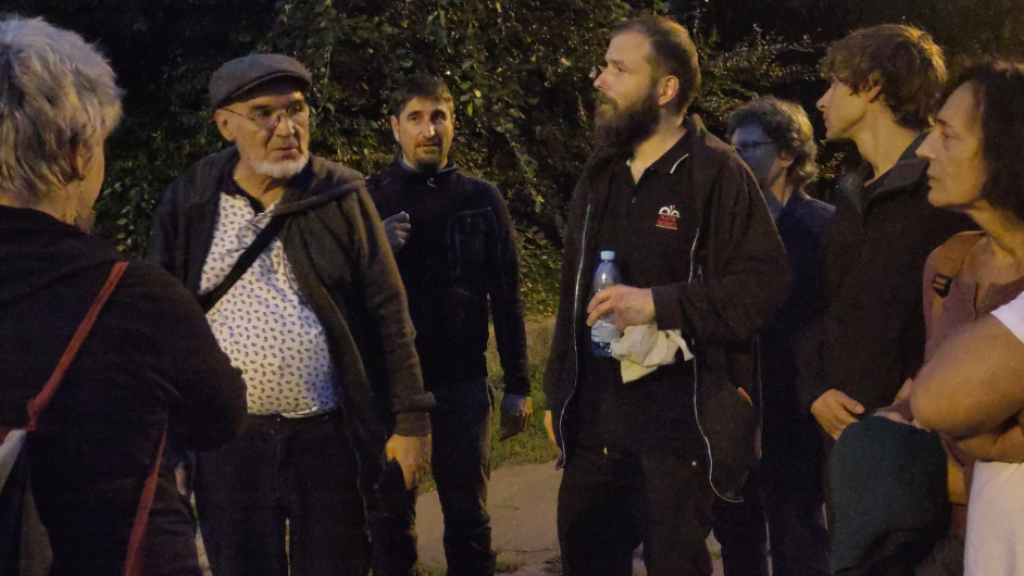
Yuriy Samoilov is an Independent Trade Union of Miners of Ukraine (NPGU) leader in Kryvyi Rih and an activist with the Ukrainian left-wing organisation Sotsialnyi Rukh (Social Movement). In this interview with Federico Fuentes for LINKS International Journal of Socialist Renewal, conducted with the help of Serhii Shlyapnikov, Samoilov provides a left-wing and trade union perspective on the Russia-Ukraine war. He discusses how unions are dealing with the twin challenges of foreign occupation and domestic attacks on workers rights, as well as the need for international solidarity with Ukrainian workers.
What have been the effects on people’s morale of Russia’s relentless attacks on energy infrastructure?
There were numerous attacks on energy infrastructure during summer [June-August]. Everyone is stocking up on generators and batteries. Heating has not yet been turned on in large buildings, yet it snowed yesterday [November 13], so people are already freezing and fear the coming winter, especially the elderly and those with children.
In Kryvyi Rih, Russian attacks now concentrate on residential areas and hotels. Four hotels, of which we do not have many, have been destroyed, along with several residential buildings. Civilians, entire families, have been killed. Just a few days ago, there was a strike near our trade union office. A large five-story building was destroyed. Several people died, including a mother and her three young children — the youngest just seven-months old. The father only survived because he was at work. Children have to study in basements or online. Everyone is afraid of further attacks.
As for energy facilities, the Russians have bombed everything they could. The only remaining targets are nuclear power plants, but hitting those would represent a whole different situation. If a nuclear plant was bombed, radiation would also spread to the West. If a missile hit the Rivne Nuclear Power Plant, all of Poland, Slovakia, Hungary and the Czech Republic would be covered by radiation. They may start bombing certain distribution substations near nuclear plants; we are used to this because they did it last year.
How have the government and unions reacted to the attacks on people’s houses?
The government pays people compensation for the loss of their homes. Where homes can be repaired, local authorities carry out restorations. From what I see this is done quite quickly. As for trade unions, when a member’s house is destroyed, we provide temporary housing.
Trade unions, especially local branches such as the Kryvyi Rih miners, have played important roles in Ukraine’s resistance. How have unions contributed to defending Ukraine’s sovereignty?
Half of NPGU members joined the front as soon as the war started. They either signed up for the Territorial Defence or were drafted into the army. Today, about 70% of those who were trade union members at the start of the war are fighting. Trade unions provide strong support to those who are fighting because they remain union members. But trade union membership has decreased because of the war.
We cover workers in large enterprises, where it is easier for military recruitment. Now, there are exemptions that mean workers cannot be conscripted into the army. But in general, everyone feels pressure to go and fight. The Territorial Defence training centres are very harsh and operate in a provocative manner. Recruiters enter enterprises such as ArcelorMittal, but trade unions oppose this.
How has the war affected the normal work of unions? Have unions had to put aside their own demands and actions, such as strikes to maintain wages, in order not to be seen as undermining the war effort?
Currently, at the Kryvyi Rih Iron Ore Plant, we are involved in a labour dispute. Despite the war, we are demanding a 20% salary rise. We are negotiating within the legal framework available to us. Before the war, strikes and protests were recognised by the courts as legal. Now we continue to push our demands without resorting to protests or strikes. We are indeed limited in what actions we can take to protect our rights.
How have trade unions reacted to moves by Ukraine’s parliament, the Verkhovna Rada, to restrict worker’s rights?
The working class and trade unions have no party in the Verkhovna Rada that represents their interests. The only MP from a trade union is Mykhailo Volynets, who is from the Confederation of Free Trade Unions of Ukraine and is a member of the Batkivshchyna (Fatherland) parliamentary faction.
Riding the wave of hope that Volodymyr Zelensky represented in 2019, several parties without any real ideology entered the Verkhovna Rada. Trade unions do not know how to work with these parties. They also haven’t found ways to amend legislation in parliament because of the war.
In contrast, trade unions previously defeated attempts to pass a new Labour Code. In Ukraine, the Labour Code adopted during the period of the Soviet Union is still in force [unlike in Russia, where it was abolished at the start of Vladimir Putin’s presidency in 2001]. And despite all the decommunisation laws, they have not yet managed to decommunise the Labour Code. This was due to the work of trade unions and the intervention of international trade union organisations.
There have been reports in the West of increasing war fatigue in Ukraine. How do people in Ukraine feel about speculation over what would most likely be an unfair peace deal?
More than fatigue, which has already passed, we now have apathy. Apathy is worse. Most people no longer expect anything.
I feel like this is a repeat of 1943 [when half of Ukraine was under Nazi occupation and the prospects for victory seemed uncertain]. I feel that Western support for Ukraine will disappear and we will be left alone to deal with Russian imperialism.
Do many share your fears regarding a drop in Western support?
We are in a situation similar to Czechoslovakia in 1938 — those who know history will understand what I mean. The leaders of Europe and the United States view the situation just as they did then, when Europe sought ways to appease Hitler.
Just like many other countries in the world, Ukraine is not considered part of the “civilised” world. In this sense, there is no distinction between us and the nations of Latin America, Asia or Africa — the West treats us all the same way.
Western countries have used military aid to Ukraine as a pretext to cut back on social spending at home. What would you say to governments who seek to use Ukraine’s just war of self-defence to carry out regressive attacks against their own workers and unions?
In Ukraine, the social rights of workers and trade unions are also being cut back. Several laws have been passed that significantly reduce the rights of workers’ and military personnel. Pensions have been cut: before the war, it was unheard of for pensions to be cut, but now they are targeting retirees. Even people with a disability are being targeted, with a bill being discussed that will strip them of the right to claim damages from their employer in case of injury or loss of ability to work. This will also apply to military personnel.
Governments of other countries look at this and see if they can follow the same path. They seek any excuse to cut social benefits for workers. We should not listen to such excuses.
How have trade unions responded to Zelensky’s recently announced “Victory Plan”?
A plan cannot just be five words on a page. A plan requires a complete set of actions to be carried out throughout the country. We do not have this.
For example, we do not have a full-scale military mobilisation. It is true that we are waiting for support from the West but, internally, we are poorly organised. Ukraine has huge military-industrial potential, especially in terms of competent people capable of developing modern weapons. But even now, mining and metallurgy enterprises are not receiving orders for iron ore or metal from within the country. There are many industrial enterprises in Ukraine that could be functioning, but are not operating right now.
How can trade unions best help their Ukrainian counterparts?
Though they say that I should not raise this topic, it is important to point out that international trade unions have only suspended the membership of Russian trade unions that support military aggression against Ukraine. The only confederation to have excluded their Russian trade union affiliate for supporting the war is the IUF [International Union of Food, Agricultural, Hotel, Restaurant, Catering, Tobacco and Allied Workers' Associations]. No other trade union structure has expelled Russian trade unions supporting military aggression.
Since 2014, the property of trade unions in Crimea and the occupied territories have been handed over to yellow trade unions based in Russia. These same trade unions are deeply embedded in European and global trade unions. I do not know the full situation, but I would like to know how global and European trade unions can accept money from an aggressor that is stained in blood. Part of the dues these unions collect are from bloodied regions of Ukraine.
I could say something similar about the United Nations. Recently, [UN Secretary-General António] Guterres went to a BRICS summit in Kazan, where a photo was taken of him shaking Putin’s hand with his head bowed. Where else have we seen such a photo before? When the last president of the First Czech Republic shook hands with Hitler. The same posture. The same photo.
The least we should expect from international organisations is they do not dirty their hands with the blood of Russian imperialism.
I heard there is also dissatisfaction with the Red Cross.
I think it would be good if trade unions could protest at Red Cross headquarters in various countries, because the Red Cross’s current policy is evidently facilitating aggression. The Red Cross comes and inspects the camps and prisons where Russian prisoners of war are held in Ukraine. Yet, there has not been a single report on the condition of Ukrainian prisoners of war in Russian prisons, despite many Ukrainians dying in Russian prisons, as documented by the Ukrainian prosecutor's office, along with many more being killed while surrendering on the battlefield.
Do you feel that help is not currently being provided by international trade unions and left-wing organisations?
It is important to say that help is being provided. For example, our city was left without clean water. This created a situation I have not seen anywhere else, where stores are only selling clean water. In Kryvyi Rih, such stores are numerous, selling cleaning water at $2.50 a litre. In response, trade unions from Europe and across the world, as well as some left-wing groups, raised funds to buy filters so we could distribute water for free to certain parts of the population.
But many left-wing groups continue holding pro-Russian positions. They believe there is only one imperialism, US imperialism, and claim Russian imperialism does not exist. Yet there are many imperialisms.
Independent left-wing groups and trade unions can help us by telling the world about the independent left in Ukraine and the fact that there are left-wing Ukrainians fighting on the front and organising among workers. This is important because many see left-wing politics as tied to Russia’s imperialism. Instead, we need to build an internationalism within the labour movement that seeks to unite all the workers of the world — in Europe, the US, Latin America, Africa, Asia and Ukraine.
Trade unions, deregulation and social dialogue: An interview with Ukrainian labour lawyer Vitaliy Dudin
First published at Commons.
Vitaliy Dudin is one of those lawyers for whom the idea of fighting for justice defines his professional practice. This shouldn’t surprise us, as it is the foundation of any legal profession. However, what makes Vitaliy an outstanding lawyer is his understanding that achieving individual justice is impossible without a collective struggle for rights. As he himself says, labor rights are collective rights.
Vitaliy not only defends workers’ rights but also teaches them to advocate for their rights through the LABOR DEFENSE course. Moreover, he actively contributes to strengthening and expanding the movement of independent trade unions in Ukraine as part of his work in the Sotsialniy Rukh (Social Movement).
Our conversation with Vitaliy was rich and insightful. In the first part, we discussed what can conventionally be called the past: how the idea of deregulating labour relations developed and, along with it, the entrenchment of the notion of employer dominance over employees. The second part of our discussion focuses on current issues: trends in labour relations after the start of the Russian full-scale invasion of Ukraine in the context of European integration; attempts to leave workers to face employers alone through the individualisation of labour relations; and social dialogue as a complex yet necessary alternative.
Before 2022, for over a decade and a half, government officials made persistent efforts to deregulate the labour market, aiming to make it as “free” as possible and radically reform labour legislation. There was constant rhetoric about how Ukraine’s labour laws were relics of the Soviet Union, making them ineffective, inflexible, and in need of replacement, with society allegedly demanding new labour legislation. I’d like to ask a few questions about this period: first, who lobbied for radical deregulation? Who opposed this idea? What was the logic behind these debates? And what prevented the complete deregulation of the labour market?
The employment sector in Ukraine has been in decline for quite some time. This is tied to the process of deindustrialisation, which began in the 1990s and has continued at varying rates since. As the number of people employed in the real sector of the economy shrank, calls grew louder to “deregulate everything and simplify the legislation to meet the needs of existing employers.”
The most active employers in this regard were, on the one hand, large enterprises owned by oligarchs, and on the other, a growing number of small business owners, particularly in the service sector, who were not inclined to create large labour collectives. Both groups wanted to minimise their social obligations. For oligarchs, one major challenge was the relatively strong influence of trade unions at the time. Large enterprises often had numerous trade unions and collective agreements. When these enterprises were privatised, new owners often had to take on social investment obligations. A notable example is ArcelorMittal Kryvyi Rih, a company privatised with promises from its owner to invest in workers’ healthcare, health facilities, and improved working conditions.
So, the new owner was expected to invest not only in production facilities but also in supporting the workers?
Yes, they took on the obligation to improve social and living conditions, and it was the trade unions' responsibility to monitor this. For medium and small business owners, the issue was labour legislation itself. They did not want to comply with rules regulating the hiring process and sought full freedom in matters of employee dismissal. These two groups — the industrial oligarchy and medium and small businesses — aggressively pushed for the deregulation of labour legislation, particularly for the adoption of a new Labour Code of Ukraine.
Since the early 2000s, the first drafts of the new Labour Code of Ukraine were developed to replace the 1971 Labour Code of Ukraine. In my opinion, these drafts were created under the influence of the Russian and Belarusian models. They were detailed, hefty tomes that included some familiar worker guarantees. The adoption of these drafts was intended to be supported by the largest trade union association — the Federation of Trade Unions of Ukraine. At that time, there was a certain configuration of class relations: major oligarchs, who sought to influence politics using the experience of Russian reforms, and trade unions, which were not in confrontation with them but cooperated with them.
So, these first drafts of the Labour Code were primarily inspired by Russian and Belarusian models and, in general, were acceptable to the largest trade unions, which, in fact, were no longer performing their function of protecting workers?
Exactly. The trade unions that existed mostly served as another arm of the administration, catering to the interests of capital and trying to conceal the “friction” between workers and management. But, to jump ahead a bit, I will say that the situation with trade unions is gradually changing.
I didn’t know that discussions about the Labour Code began in the 2000s. I always thought that the development of the Labour Code was associated with progressive young people who came to power after 2014.
It all started earlier. Personally, I began actively following this process from 2008. By 2010, a new configuration of power was forming: Viktor Yanukovych came to power, consolidated authority, and declared the implementation of market reforms, including the adoption of a new Labour Code. However, the general critical attitude of the population towards the ruling team prevented these plans from being realised. The government was seen as oligarchic, corrupt, anti-Ukrainian, and so on, which meant that any laws were passed with significant opposition, affecting the prospects of adopting the Labour Code.
But in 2014, the Maidan took place, and many people came to power who were fanatically committed to the ideas of the free market, neoliberalism, and deregulation. Since then, these same ideas of labour deregulation were presented under the guise of “renewing Ukraine” simply because their proponents came to power in the wake of revolutionary events. Essentially, these reforms weren’t very different from what Yanukovych had proposed. One could say that this “continuity” was one of the factors that hindered the new government from making changes. A new factor also emerged: the connections between the Federation of Trade Unions of Ukraine and the government weakened significantly. For the first time in a long while, the Federation began to voice protest against the government, demanding an increase in the minimum wage, which was extremely low at the time. The government made some concessions and raised the minimum wage to 3200 UAH in 2017. As a result, plans to adopt the Labour Code were not a top priority on the agenda, as social and economic tensions were already high. So, there were no major changes until Volodymyr Zelensky came to power, accompanied by a team of new neoliberal reformers. These people distanced themselves as much as possible from the previous government’s legacy and were perceived as the “voice of reason” — though, of course, this is debatable.
I am referring primarily to Tymofiy Mylovanov, who headed the Ministry of Economy and immediately at the end of 2019 crafted a conceptually new draft of the Law of Ukraine “ On Labour.” This marked a new stage in the confrontation between the government and trade unions: since 2019, almost all trade unions in Ukraine have opposed the government’s initiatives in labour relations. The new draft law was based on the idea of individualising labour relations. It made it possible to reach an individual agreement on the grounds for overtime and extended working hours, and allowed the employer to recall an employee from vacation or even dismiss him or her without specific reasons. In effect, a person could be fired at any moment convenient for the employer, provided the employer met a few conditions, such as paying severance. This situation greatly exacerbated the conflict between the government and trade unions and appeared extremely dangerous, as in 2019, Zelensky’s team had a parliamentary majority and could easily pass any law. However, it was thanks to mass protests that these new provisions were blocked.
I consider it a great victory for the trade unions and all Ukrainian workers that this draft labour law was not adopted. This was, in part, helped by Mylovanov's resignation in early 2020. As a result, Ukraine faced February 24, 2022, with labour legislation that offered people significantly greater protection. This factor, it seems to me, helped prevent the complete collapse of the Ukrainian economy and preserved the labour collectives that directly ensure the functioning of society.
Can it be said that the association with the EU was another reason why the new Labour Code was not adopted, and why deregulation did not take place either after 2014 or in 2019, when Mylovanov came to power?
The more Ukraine declared its alignment with the EU, the easier it became for trade unions to appeal to specific labour standards supported by the EU and the International Labour Organisation. It also became easier to ask for help from international trade unions, particularly the International Trade Union Confederation and the European Trade Union Confederation. The attention from these powerful organisations, which represent millions of people worldwide, poured cold water on some of the initiatives of our government. International statements were made, and visits to Ukraine took place—this reminded our politicians of their obligations, including MP Halyna Tretyakova, who is undoubtedly one of the ideologists and practitioners of labour law deregulation in Ukraine.
By 2022, there were, however, many changes to labour legislation: specific, often unsystematic ones. In which direction did they move the system — towards deregulation or worker protection?
It was certainly deregulation, meaning the desire to eliminate rules that seemed unfavourable to employers and hindered their freedom. Of course, in employment relations, there is no equality — the employer will always be stronger. So, the removal of rules and state control, along with the diminishing influence of trade unions, leads to the workers suffering, with their vulnerability becoming much more acute. For the Commons journal, in 2021, I prepared a piece called “ Chronicles of Deregulation,” dedicated to the 50th anniversary of the adoption of the Labour Code. It shows, in an interactive form, how the rights of Ukrainians were being eroded — there have been many changes. This piece makes it clear how worker protections were sacrificed in favor of greater flexibility in managerial decision-making.1
I often hear that small and medium-sized businesses not only don’t want to officially employ workers, but also can’t do so because it would destroy their business. How can we respond to this claim? Is it really the case? Are the mechanisms of worker protection provided by current legislation truly unsustainable for small businesses?
The claim that labour legislation is unsustainable or even harmful to small businesses is too abstract. It’s necessary to study practices and real facts. We need to understand what kind of small business is being discussed. Of course, there are self-employed individuals, where the business owner is directly involved in the work. But there are also cases where large capitalists use a network of private entrepreneurs to save on taxes and avoid regulatory requirements. This applies to retail chains, restaurants, other food establishments, and so on.
Concerns about the negative impact of regulation on the economy and employment are highly debatable. In 2017, when the minimum wage was doubled and the State Labour Service was granted new powers to combat undeclared labour, there were no significant negative consequences for employment levels in Ukraine. On the contrary, employment increased! Perhaps for many businesses, such steps were a shock, but at the same time, most Ukrainian entrepreneurs adapted, began officially registering their employees, and paid them at least the minimum wage due to the fear of sanctions. I believe that strengthening requirements can only contribute to transparency and motivate workers to take on specific responsibilities and work diligently. One can debate the interpretation of certain provisions of labour legislation, but manifesting complete disregard of regulations and working “off the books” is something that moves us further away from the prospects of EU membership. The Association Agreement provides clear guidelines: the need for worker protection, social dialogue, ensuring equality, fighting social exclusion, and countering various forms of abuse by businesses.
Tell us more about the European integration obligations of Ukraine. Does the idea of deregulating labour relations align with the principles of European integration?
I believe that deregulation contradicts European integration because the foundation of European integration lies in the primary and secondary European laws, which advocate for the relentless fight against social exclusion and the promotion of social cohesion within society. If we are on the path of integration into the European Union, rather than, say, integrating into the United States, we must remember this.
In 2014, Ukraine signed the Association Agreement with the EU, which already includes certain provisions, particularly in Articles 419 and 420, regarding general priorities in the field of employment. It is not about unchecked flexibility in favour of employers, but about supporting the well-being of workers. At the same time, Ukraine committed to implementing about a dozen EU directives regarding labour relations. These directives address issues such as combating discrimination, creating favourable conditions for working mothers and underage employees, occupational health and safety, labour inspection oversight, and clarity regarding the terms of employment contracts. One of the directives also concerns the alignment of professional and family responsibilities. This is a social democratic package aimed at making working conditions more predictable.
The issue is that over the 10 years since the signing of the Agreement almost none of these rules have been implemented into Ukrainian legislation. During these 10 years, several additional directives were adopted at the EU level that provide even greater protection for workers, but we are not yet obligated to implement directives passed after 2014. However, the logic suggests that if we are heading towards the EU, we should adopt new laws based on advanced European standards.
And, of course, no reform can be adopted without the agreement of trade unions. What was done in 2019 is an example of how it should not be done. In the EU, the adoption of any laws in the field of labour relations without the consent of social partners is considered disgraceful. If countries embark on certain risky reforms and depart from established provisions, there must be exceptional circumstances for this. If these reforms are driven by factors such as a financial crisis, they must be backed by a strong socio-economic justification. So, in the European Union, despite its heterogeneity and the presence of neoliberal ideas, a balance is maintained thanks to certain procedural rules. It is inconceivable that reforms harming workers would be adopted without discussions, protests, and attention from supranational bodies. We have no illusions about the nature of the EU, but we know that there are tools there that can balance the situation.
You mentioned that if EU countries deviate from the adopted standards, there must be exceptional grounds for this. I understand that for Ukrainian officials, the war became such a ground. How have officials changed the regulation of labour relations in the context of the introduction of martial law?
Under normal democratic conditions, the proposals developed by Halyna Tretyakova would not have passed. She contributed to the development of various deregulation initiatives both before 2022 and after the declaration of martial law in Ukraine. Here, attention should primarily be paid to the Law of Ukraine No. 2136 of March 15, 2022, on the Organisation of Labour Relations in Wartime Conditions, which introduced a series of harsh, although temporary, restrictions on the rights and guarantees of workers and trade unions. Of course, it is very close to the ideal of labour relations espoused by libertarian-minded businesspeople. They truly believe that employers owe nothing to anyone, the state should not interfere in labour relations, and trade unions should play a symbolic role. Such decentralisation of regulation led to chaos and abuse of workers’ rights.
Regarding the deviation from certain rights during martial law: international acts, such as the European Social Charter (revised) of 1996, provide for the possibility of deviating from certain rights in the event of a threat to national security. War is certainly a circumstance that requires the consolidation of all state resources to resist the aggressor and preserve independence. At the same time, the Charter states that restrictions on rights must be implemented to the extent necessary to avert aggression. That is, we must critically assess each of the imposed restrictions—whether it meets the criterion of social necessity. As a rule, restrictions on rights are permissible when they pursue a legitimate aim, use legitimate means, and maintain a reasonable degree of proportionality between the means and the goal. Proportionality is the key principle that lawmakers must rely on when restricting certain rights and freedoms. In our case, it seems to me that this criterion has been disregarded.
In March 2022, Ukraine’s situation was extremely dire. Every day was a struggle for survival. Millions of people were fleeing from the combat zones and moving to safer regions or abroad. Public oversight of Parliament was not even a topic of discussion. Parliament convened without public announcements, and citizens could learn only much later about the decisions made. It seems to me that Tretyakova took advantage of this moment to implement her libertarian fantasies. So, in March 2022, a law that worsened the situation for workers was submitted for consideration by the Verkhovna Rada, and within just a few days, it was passed in a closed session. It is still unknown who voted for it. The law was passed immediately in the second reading. This means that all factions represented in Parliament gave their consent to its adoption both in principle and in full.
Of course, the justification provided in the explanatory note was very vague. Many questions arose, such as: why promote private employers in increasing working hours, simplifying the dismissal process without union consent or during sick leave, and abolishing collective agreements? There are still no clear answers to these questions. Therefore, serious doubts arise regarding the legality and justification for adopting the law. In my opinion, in a democratic country, the government and parliament should prepare an annual report or assessment explaining why these restrictions remain necessary.
You mentioned that the European Social Charter allows deviations from its provisions in the case of a national security threat. Can it be said that, in the view of our officials, national security now means business security? It seems that through this deregulation, they primarily sought to save the private sector, rather than, for example, jobs.
I agree that in this matter, there was a false conflation of the interests of employers, particularly private employers, with the interests of the Ukrainian people as a whole. I am convinced that establishing a wartime economy during a full-scale conflict requires full employment. We must ensure that all human resources are used to bring us closer to victory. This priority is lacking in our case. Instead, measures were introduced that pursue short-term economic interests at the expense of workers’ rights, such as reducing wages, cutting jobs and vacation time — these were done to save business costs. A logical question arises: will workers want to stay in such enterprises if they are treated unfairly? This law created an incentive for employers to take advantage of such unpopular decisions, making them without the consent of social partners, even though achieving unity in society has become more important than ever.
Moreover, the strict limitation on unemployment benefits—no more than three months and at a level no higher than the minimum wage—effectively deprived many people of the incentive to register at employment centres. This led to a situation where the state could not offer these individuals work that could be performed in the interests of society. There are various categories of socially useful work, which become especially important during wartime: from assisting defence enterprises and clearing debris to caring for the wounded and supporting the victims of war. Therefore, this “public works” tool is not functioning in Ukraine as it did in the United States during Franklin Roosevelt’s time.
There is a clear contradiction between, on one hand, the interests of deregulation, reducing employer costs, and implementing strict austerity measures, and, on the other hand, the long-term interests of the Ukrainian people. Allow me to share a recent example of how the state is trying to save money on people, undermining trust in governmental institutions as such. The Law of Ukraine No. 2980, on One-Time Financial Assistance for Harm to Life and Health Caused to Employees of Critical Infrastructure Facilities, State Officials, and Local Government Officials as a Result of Military Aggression by the Russian Federation Against Ukraine, was adopted on March 20, 2023, but the Pension Fund of Ukraine, through its bodies, is trying to avoid paying compensation to energy workers, defence industry employees, and transport workers affected by the aggressor state, using loopholes in the legislation. For example, they claim that certain enterprises do not belong to critical infrastructure facilities due to their absence in the classified register.2 Yes, they are saving money today, but the question arises: Will people want to work in these socially important sectors in the future?
You devote a lot of time to protecting critical infrastructure workers and others. Can you talk about the trends in labour relations that you are currently observing?
The main result of my observations regarding what is happening in the socio-labour sphere has been the creation of a so-called “Black List of Employers” on the website of the Sotsialnyi Rukh (Social Movement). There, one can read about those employers who dared to take advantage of the shameful innovations provided by law No. 2136 during the state of martial law. Judging by the analysis of judicial practice, other open sources, and communication with certain labour groups, the most common abuses are the suspension of labour contracts, where the employee is deprived of the ability to work and is not paid a salary. I know that approximately 50% of these suspensions are contested. Fortunately, the courts here analyse each case meticulously. Additionally, there are frequent cases of changing essential working conditions without giving a two-month notice. This means that an employee is informed the day before about a halving of their working hours, and if they do not agree, they are dismissed with severance pay. Especially many such cases have occurred in state and municipal sectors, particularly in healthcare. People are faced with the fact of worsening working conditions, being forced to resign.
It is also common for employers to suspend the application of certain provisions of collective agreements. This has been exploited by companies such as Ukrzaliznytsia (Ukrainian Railways), Chernobyl Nuclear Power Plant, many Ukrainian hospitals, and Nova Poshta. There are very few successful cases of contesting these actions in court, except for lawsuits against Ukrainian Railways, where the Free Trade Union of Railway Workers of Ukraine has achieved recognition of the unilateral actions of the bosses as unlawful. Additionally, it is quite common for employees to be denied leave, which employers justify by claiming that their enterprise or institution belongs to critical infrastructure. Employers often deceive in this regard and do not provide evidence of their inclusion in the relevant Register. For example, employees of educational institutions were deprived of such leave. Frequently, it concerned unpaid leave when people travelled abroad to find safety for themselves and their families.
You mentioned the individualisation of labour relations and social dialogue. Could you tell us how individualisation threatens the labour market and employment? There is a perception that “this is a good thing; everyone will be able to negotiate as they see fit.” This is on the one hand, but on the other, how does social dialogue relate to all this? How can it help each individual worker?
Individualisation in labour relations creates the illusion that the employee can influence working conditions just as much as the employer. This may work for Hollywood stars or top football players, but not for ordinary nurses, teachers, and railroad workers whose work is extremely important to society. If the employer is allowed to introduce additional grounds for dismissal, overtime or recall from vacation with the consent of the employee, this will mean that the employer will have to obtain such consent in each individual case when hiring, and the worker will feel obliged to consent. It is very difficult for an employee to “bargain for a fair contract” when they are interested in getting a job. Therefore, this can lead to favouring the rights of the employer.
In Ukraine, such individualisation is partially implemented. For example, in July 2022, a law was passed on employment contracts with non-fixed working hours, which allow for work to be provided not permanently, but only when the employer needs it. In such contracts, the employee’s salary may be even lower than the minimum wage. Further, additional grounds for dismissal that are not provided for by labour law may be included in the employment contract, which contradicts ILO acts. Also, for the period of martial law, a “simplified regime of regulation of labour relations” has been introduced for enterprises with up to 250 employees. I don’t know how widely this regime is used, but it looks attractive to employers, as many conditions, such as overtime or liability for disclosure of trade secrets, can be agreed upon at the level of an individual employment contract.
I don't see that such measures have led to a significant breakthrough in the economic sphere or to the creation of a large number of jobs. Everything remains roughly at the same level as at the end of 2022: many unfilled vacancies and a very modest number of officially employed individuals — around 8 million. At the same time, the share of those receiving the minimum wage or earning less than the minimum wage is increasing. In other words, deregulation, this encouragement for more flexible hiring conditions, has not led to soaring employment growth figures. This raises the question of whether such a strategy really works when we leave everything "to its own devices".
Let’s talk about social dialogue. War is a challenge for society as a whole, meaning that society should bear the brunt of the war and determine the direction of economic change. To expect that the government, together with its close business circles, can find any systemic solutions would probably be a utopia. Therefore, social dialogue is a practical necessity in the context of a full-scale conflict, if we want the decisions made by the authorities to be perceived as legitimate, lawful, and just. Unfortunately, what takes shape are innovations like the introduction of economic reservation from mobilisation. These provoke division within society because they were developed without considering the opinions of trade unions.
The need for social dialogue is objectively determined by the current conditions and the imperatives of European integration. For the EU, consultations between social partners regarding decision-making are the number one priority. Meanwhile, what is happening here is directly the opposite. A recent example is the development of the 2025 budget proposal, which includes freezing the minimum wage and the subsistence minimum for three years, until 2027. Such a decision undoubtedly further undermines people’s willingness to work in Ukraine and shows that the government is blatantly disregarding the opinions of trade unions. The gulf between society and the government is deepening.
How can an ordinary worker engage in social dialogue?
There are three levels of social dialogue — local, sectoral, and national. Of course, it is easiest for an ordinary worker to get involved in these processes at the local level, by joining a trade union. And I can assure you that there are cases when social dialogue at the local level really works and brings certain benefits to workers. For instance, I will mention enterprises like Ukrzaliznytsia, where there are many trade unions trying to resist the owner’s desire to cancel certain benefits provided by the collective agreement at this large company with many thousand employees. There is also Energoatom, which is directly related to ensuring the stability of Ukraine’s economy, and they also have a powerful union that monitors every decision made by the administration. This dialogue between the parties makes it harder to adopt decisions that could worsen the situation for employees.
If we talk about smaller rather than nationwide enterprises, I would point to a hospital in the Derazhnia district of Khmelnytskyi region. They have a very active union that is affiliated with the nurses’ movement “Be Like Nina.” Thanks to strong procedural guarantees written into their collective agreement, the union demands that any decision affecting substantial changes in working conditions be agreed with them. For example, this includes shifting part of the staff to part-time work. The employer is, of course, trying to push through certain decisions to save on salaries, but the collective agreement remains in force, and the union and the workers' council make use of this. I also heard about a case at the Leoni factory, which is involved in the automotive industry in Stryi, Lviv region. At the start of the war, the employer took actions that worsened the situation for employees, including attempting to suspend certain benefits under the collective agreement. However, the union managed to bring the employer to the negotiation table outside of court and succeeded in preserving certain guarantees for its members.
Do you see any prospects for the development of social dialogue in Ukraine?
Finally, I want to say that over these almost three years, a cohort of quite strong trade union leaders has emerged in Ukraine, both men and women, who have got used to working in conditions of complete uncertainty and state support for employers. I think that if these people survive these difficult times, then, during the post-war reconstruction period, they will be able to create strong structures that will demand improvements in working conditions and equalize wage levels with those in Central Europe. Currently, the average salary in the EU is about 2,000 euros, and it seems to me that at least Ukrainian workers in critical infrastructure and export sectors should receive at least half of that amount — no less than 1,000 euros per month.
If we want to make progress on labour conditions, we need to impose certain obligations on companies that participate in public procurement of goods and services through the tender mechanism. We should require that tender agreements include measures to minimise workplace accidents, involve employees in decision-making, and align salaries with European standards. This is what I understand by changes that will benefit broad segments of society.
- 1
To learn more about the development of the narrative about the deregulation of labor relations and the destruction of the social state, you can watch Vitaliy's lecture on the subject: https://www.youtube.com/watch?v=dO4e_M3iMLs
- 2
To receive such a one-time payment, the enterprise or institution where the affected employee worked must be included in the Register of Critical Infrastructure Objects of the Pension Fund of Ukraine. Interpreting the legislation narrowly, payments were frequently denied if, at the time of the tragedy, the organisation was not listed in the Register. More details about this situation can be found in Vitaliy’s article: https://rev.org.ua/garanti%d1%97-dlya-pracivnikiv-kritichno%d1%97-infrastrukturi/