Monday, February 03, 2025


Ørsted Proceeding with Construction of Baltic’s Largest Wind Farm
offshore wind farm
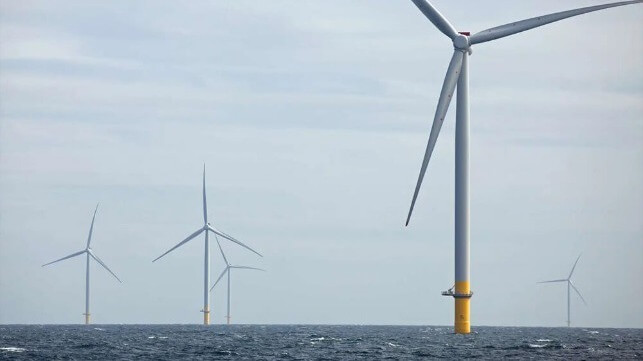
Baltica 2 will be the largest wind farm built in the Baltic and a key part of Poland's energy plan (file photo)

Published Feb 2, 2025 11:44 AM by The Maritime Executive


The project to build what is being billed as the Baltic’s largest wind farm received final approval with first power targeted for 2027. The project will be jointly developed by Ørsted in partnership with Poland’s largest power group, the state-controlled PGE.

“With today’s announcement, we’re ready to build Baltica 2, a flagship project for offshore wind in Poland,” said Rasmus Errboe, Deputy CEO and Chief Commercial Officer for Ørsted. “We’re satisfied with the value creation of the project, which has an attractive risk-reward profile.”

Baltica 2 will be located approximately 40 kilometers (25 miles) off the Polish coast near Ustka, which is located west of Gdansk in central Poland. The project which will consist of 107 Siemens Gamesa 14 MW turbines, will have a capacity of 1.5 GW and is one of two planned by the partnership.

The companies highlighted that Poland’s energy policy singles out offshore wind to be developed until 2040 to be a key technology to make Poland a low-emission economy. Poland has committed to 5.9 GW of offshore wind capacity by 2030 and 11 GW by 2040.

“The Baltica 2 offshore wind farm, the largest renewable energy project currently under development in the Baltic Sea, will diversify Poland’s energy production, enhance energy security, and provide cleaner and more affordable energy,” said Dariusz Marzec, CEO of PGE.

Helping to support the financial case for the development, Baltica 2 has a 25-year inflation-protected contract for difference (CfD) in place with the Polish state. The initial price was set in 2021 and is being adjusted to inflation. The price per MWh will be annually adjusted to inflation. After the CfD ends, Baltica 2 will receive the market price for electricity or enter new power purchase agreements.

Announcing that they had taken the final investment decision, the companies reported all major component and vessel contracts had been signed. The wind farm has obtained all permits and has signed a grid connection contract with the Polish transmission system operator PSE.

A broad team of contractors has been aligned to implement the construction. It will be installed by Cadeler and Fred. Olsen Windcarrier, while Van Oord will be installing foundations and offshore substations.


Product Tanker Towed to Marseille After Engine Room Fire

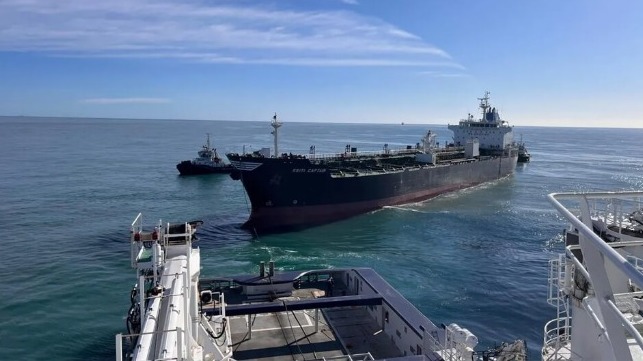
tanker being towed
French rescue vessel towing the disabled tanker (Prefet Maritime de Mediterranee)

Published Jan 29, 2025 1:55 PM by The Maritime Executive


France’s Mediterranean maritime authority is reporting that a tow of a disabled product tanker was completed this afternoon, January 29, after the vessel suffered an engine room fire. The decision was made to move the tanker to Marseille where it can be offloaded and a survey completed.

The Greek-operated product tanker Kriti Captain (37,434 dwt) had docked in Port-la-Nouvelle on January 25 after a trip from Augusta, Italy where it departed on January 22. It was loaded with 25,000 tonnes of diesel fuel for shipment to France.

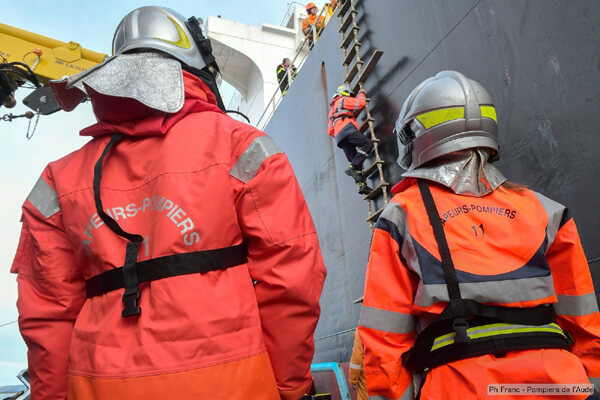
Late night on January 25, the captain of the tanker requested the assistance of the local authorities to battle a fire aboard the vessel. The Aude Prefect reported that 55 firefighters were involved in the effort to locate the fire in the engine room and then extinguish the fire. By 0700 on January 26, the fire was extinguished, but crews were still working to detect possible hotspots. No injuries were reported during the fire.


Firefighters battling the engine room fire on the tanker (Prefet Aude)


The Kriti Captain was built in 2007. It has been operating since 2022 for Avin International of Greece and the tanker is registered in Liberia.

The French rescue tug Abeille Mediterranee arrived in the port on January 28 and at 1500 began a tow of the disabled tanker.  Prefet Maritime de le Mediterranee reported that the safety conditions for a tow at low speed had been met. The regional operational center however was carefully monitoring the tow. By 1400 today, January 29, the report was that the tanker had been secured at the Marseille seaport.

The next step is to unload the ship’s cargo. The tanker will also undergo a full inspection to prepare it for necessary repairs.


Captain Claims Bulker's Anchor System Was Sabotaged by Russians

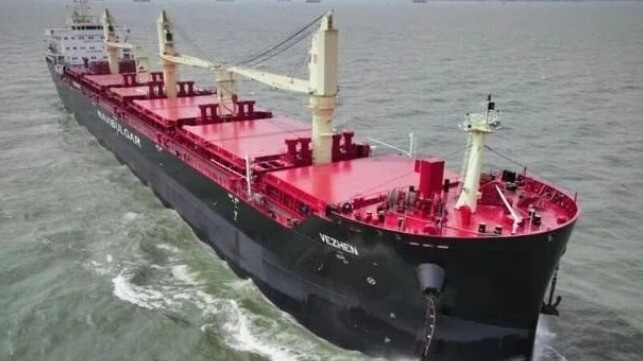
Vezhen with her anchors cleared (Navibulgar)

Published Jan 29, 2025 6:27 PM by The Maritime Executive


The head of Bulgarian shipping company Navibulgar maintains that the bulker Vezhen accidentally "leaked" anchor chain out past the chain stopper in rough weather, and that any damage that the vessel may have inflicted to a subsea cable between Gotland and Latvia was not an act of sabotage. Another mariner, "long distance" Captain Donyo Dachev, had a different perspective: he told Bulgarian outlet Fakti that there is as of yet no proof that the Vezhen was involved at all, and that if it was, its anchor system could have been sabotaged by Russians during the previous port call. 

"In the Russian port [Ust-Luga], there were all possibilities for malicious actions to be committed. When loading, there is no one from the crew who is constantly standing on the deck, but there is always a person from the Russian side who manages the loading," Capt. Dachev told Fakti. "The Bulgarian ship is a victim of sabotage, which is supposed to cover up real Russian sabotage."

He emphasized that the Vezhen's crewmembers were well trained and would never jeopardize their careers "for such ridiculous things as sabotaging a cable." 

Multiple maritime experts have suggested that the odds of an accidental, unnoticed anchor release are relatively low. "You wonder why the speed is decreasing and why the engines are working so hard and why you have difficulty steering. There are many indicators. It's impossible to miss," said Peter Sigray, a researcher at the Faculty of Marine Systems at KTH, speaking to SVT. "Either it is very poor seamanship and poor training, or they did it on purpose. But I am not making any assessment as to which it is, experts must come in and make the assessment."

However, Bulgaria's far-right, ultranationalist Vazrazhdane (Revival) Party has called on the Bulgarian government to immediately demand an apology from Sweden for detaining the Vezhen

"We demand that the Bulgarian state, represented by the Prime Minister and the Minister of Foreign Affairs, immediately condemn the pirate actions of the Swedish government and demand an apology," said Vazrazhdane leader Kostadin Kostadinov on Wednesday. "If what they claim has actually happened, the guilty parties will face the deserved punishment. But if it turns out that everything was completely unintentional, will the government of the Kingdom of Sweden offer an apology? Because something that is not requested is not given."

Bulgaria's ambassador to Sweden is currently awaiting permission to go aboard the ship and meet with the crew. None have been formally charged or detained, and as of Tuesday, Navibulgar said that they had not been questioned by Swedish police. 

The cable damage incident was the fourth in a year, defying the low odds of accidental, unnoticed anchor dragging mid-voyage. Baltic nations are on edge about the possibility of Russian sabotage attacks on subsea infrastructure, and NATO has deployed a substantial patrol presence to help monitor and protect subsea cables from attack. This comes at considerable expense, and possible hardening measures - like encasing or burying cables - would cost even more. 

On Wednesday, Estonian Defense Minister Hanno Pevkur told Reuters that the region's stakeholders may have to begin charging an access fee for Baltic shipping. He said that coastal states would have to agree on a mechanism, but did not address the legal question of how to charge foreign merchant shipping for access to treaty-protected straits and international waters - nor the precedent this could set for authoritarian states to justify their own claims of control over high seas shipping. 

"When you go to an airport, you pay landing and airport fees, which are included in ticket prices," Pevkur told Reuters. "In the future, we might see a similar charge for vessels passing through the Danish straits — essentially an insurance fee against cable damage."


India Plans to Spend $3 Billion to Support its Maritime Sector

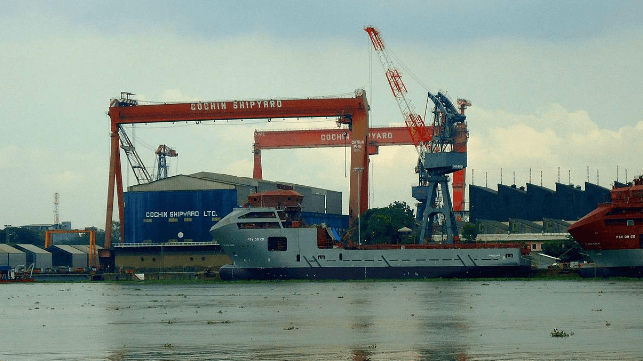
Cochin Shipyard
File image courtesy Cochin Shipyard

Published Feb 2, 2025 3:31 PM by The Maritime Executive


India has firmed up its ambition to become a global maritime powerhouse, with the government allocating around $6 billion to the shipping sector in the 2025-26 fiscal year. On Saturday, India’s Finance Minister Nirmala Sitharaman presented to Parliament budget documents, revealing billions of dollars the government intends to spend in upgrading the country’s maritime infrastructure.

The government has proposed financial assistance of $3 billion to help set up a Maritime Development Fund (MDF). The government will contribute 49 percent of the fund with the remaining balance to be contributed by port authorities and the private sector. The fund will be accessed via equity or debt options. Primarily, the fund is targeted in financing ship acquisitions, consistent with the government policy of boosting Indian-flagged ships’ share in the global market by up to 20 percent by 2047. In addition, an indigenous fleet will reduce India’s dependence on foreign ships, improving the balance of payments. The government believes that by 2030, the MDF will be generating up to $17 billion in investment in the shipping sector.

“It is reassuring to see that the budgetary initiatives for India’s marine sector are focused on unlocking its vast potential and enhancing existing assets through upgrades, modernization and automation,” said the Minister of Ports, Shipping and Waterways (MoPSW), Sarbananda Sonowal.

Support to domestic shipbuilding is another key highlight of the budget. Recently, MoPSW announced the development of shipbuilding clusters to be established in five states. Each cluster will have capacity for up to 1.2 million gross tonnes per year. This initiative is in line with the government’s goal of making India a top-10 player in the global shipbuilding market by 2030.

To support this scheme, the 2025-26 budget will provide capital for facilitating the creation of breakwaters and dredging at the designated clusters. Further, the government has proposed a 10-year rent holiday for the land, if not provided at a nominal rate. There is also an additional allocation of $700 million to existing shipyards for upgrades and automation.

Meanwhile, the budget has extended the Shipbuilding Financial Assistance Policy (SBFAP) with an allocation of $2 billion. The SBFAP initiative provides financial subsidies to Indian shipyards, helping to offset operational cost disadvantages.

Notably, the budget will support the Shipbreaking Credit note. This scheme is intended to incentivize ship scrapping by issuing a credit note of 40 percent of the scrap value, which can be reimbursed to buy a new modern vessel built at a domestic yard.


Asyad Shipping Expands With Addition of 33 New Vessels

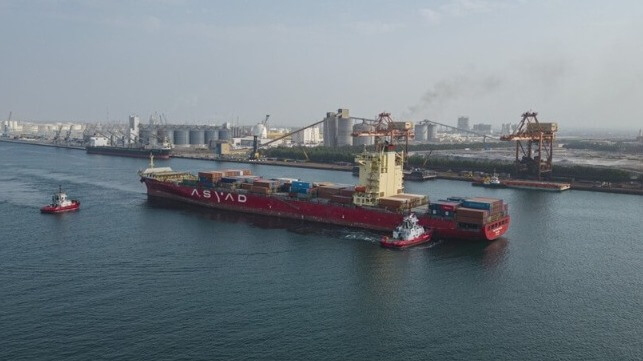
Asyad Shipping
Courtesy Asyad Shipping

Published Feb 2, 2025 2:12 PM by The Maritime Executive


The Asyad Group, Oman’s state-owned integrated logistics group, is planning to acquire an additional 33 vessels to add to the mixed fleet operated by its subsidiary Asyad Shipping.

Asyad Shipping currently operates 22 crude tankers, 34 product tankers, 10 gas carriers, and 23 dry bulk carriers, plus five container ships on its network in the Gulf, South Asia and Southeast Asia. The fleet expansion will help extend Asyad’s offering to Japan and South Korea in the East and to Europe in the West.

Asyad Shipping already has a strong position in the LNG market, with almost all its existing carrying capacity allocated on long-term contracts, and with the fleet expansion is now also being positioned to handle Oman’s fast-growing LNG production. Oman’s gas production rose to 55 bcm in 2024, up five percent on last year’s output, and Asyad enjoys a privileged position as the national shipper. It is also well-positioned to benefit from Oman’s projected growth in green hydrogen production, powered by solar and wind energy, which is also largely forward-sold.

The expansion is budgeted for up to $2.7 billion, to be borrowed in medium-term loans from local and international banks.  As part of a broader IPO program for the wider group, Asyad intends to offer 20% of the shares in Asyad Shipping on the local Muscat Securities Market in February, raising $1 billion, and then expects to pay out $150 million in dividends this year.

Since being founded in 2003 as part of Oman’s Sovereign Wealth Fund, Asyad has climbed steeply to be rated by Forbes as the fourth largest logistics company in the Middle East North Africa region. The announced expansion will enhance this position further. 

Asyad enjoys economies of scale because of base domestic demand, and thus additional carrying trade elsewhere can be offered at better rates. The group plays on Oman’s historic sea-faring tradition, unique in the Gulf, but has not been frightened to take on international partners. Its Salalah Port is partnered with APM Terminals; Sohar Port (soon to be connected with the UAE by rail) with Hutchinson and the Port of Rotterdam; and Duqm with Consortium Antwerp Port. As distribution hubs, these ports offer the benefit of being on the direct route between Suez and Asia, saving three days’ sailing and higher insurance premiums necessitated by passage through the Straits of Hormuz. As an integrated logistics company, Asyad also offers free zone, local distribution and air cargo facilities. 

 DRONE WARS


Russian Drone Aircraft Destroys Ukrainian Drone Boat

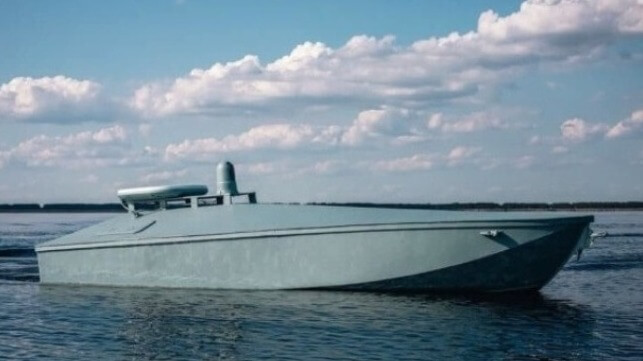
SBU
Ukraine SBU

Published Feb 2, 2025 5:17 PM by The Maritime Executive


Drone-on-drone warfare is a major component of the Russia-Ukraine war, and social media posts from both sides of the conflict are filled with videos of airborne drones destroying the other side's drones on land and in the skies. For the first time, Russian forces have released footage of what appears to be an unmanned aerial vehicle destroying a Ukrainian sea drone with a missile - possibly the first time that this has ever been done in combat. 

Ukraine's drone forces have plagued the Russian Navy for the last two years, and have essentially driven most Russian surface combatants out of the western half of the Black Sea. After multiple losses to Ukrainian "Magura" drone boats and Western-supplied cruise missiles, the Black Sea Fleet has largely abandoned its spiritual home in Sevastopol and retreated to the relative safety of Novorossiysk, near the Kerch Strait. 

Even this bastion is within range of Ukraine's drone forces, so Russia has deployed helicopter patrols to find and destroy inbound Magura boats. Ukraine's operators countered by mounting simple, self-guided air-to-air missiles on their drones, and one Magura successfully damaged or destroyed two helicopters in one engagement in December. It was the first known instance of a drone boat destroying an aircraft. 

Russia has many other options to patrol the Black Sea, including armed unmanned drones (UCAVs), which are less costly to lose. A newly-released video from the Russian Ministry of Defense appears to show a Kronshtadt Orion / Inokhodets UCAV attacking and destroying a Magura suicide drone boat in the Black Sea - a rare instance of a drone aircraft destroying a drone boat.

(It may be the first such engagement, but U.S. forces may have gotten there first. U.S. Central Command destroyed more than a few Houthi drone boats near Yemen last year, and it is possible that U.S. Air Force drones were responsible for some of those strikes.)

Russia's Orion drone has seen little use in the intense front-line combat in Eastern Ukraine, likely because it is not able to survive long against Ukrainian air defenses. Instead, Russian forces have relied heavily on low-altitude, short-range loitering munitions, which fly below the radar and do not need to survive past one engagement. Instead, the Orion has been deployed where air defenses are thin - and the Black Sea is a prime candidate. 


Brazilian Navy Confirms Wreck of Lost WWII Troop Transport

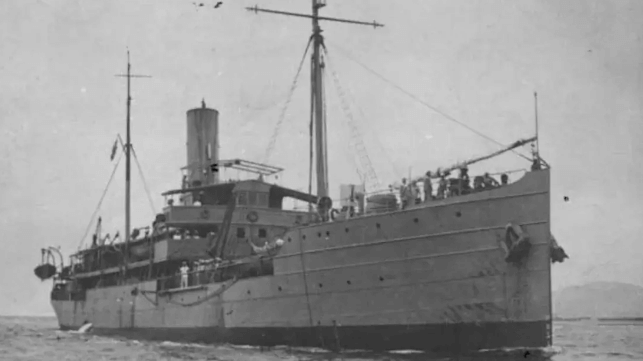
Vital de Oliviero (Brazilian Navy)

Published Feb 2, 2025 7:05 PM by The Maritime Executive


Archeologists in Brazil have finally resolved the mystery of a World War II military ship that was torpedoed and sunk by a Nazi submarine, killing 100 of her 270 crew members. The Brazilian Navy reports that after more than eight decades, the wreck of Vital de Oliveiro has been identified by sonar imaging lying some 65 kilometers off the coast of Rio De Janeiro.

The Vital de Oliveiro was a troop transport built in 1910 and originally called Itauba. The ship joined the Navy’s fleet in 1931, and during the war, she was active in transporting military personnel and supplies along the Brazilian coast.

The ship met her fate on the night of July 19, 1944 when she was torpedoed by German submarine U-861, causing her sinking and the deaths of 100 crewmembers. Vital de Oliveiro was the only Brazilian military ship to be wrecked by enemy forces during the war.

For decades, the final resting place for Vital de Oliveiro remained a mystery until 2011, when it was discovered by divers Jose Luíz and Everaldo Popermeyer Meriguete. The two brothers were responding to a call by a fisherman whose net had been stuck at the bottom of the ocean. They sought the help of deep-sea diver Domingos Afonso Jório, who established the net was entangled in a cannon and notified Brazil's navy.

On January 15, archeologists aboard an oceanographic research vessel were able to conclusively identify the wreck of the ship using multibeam and side-scan sonar, making it possible to visualize the hull and other structural elements of the wreck.

“Shipwrecks and other submerged structures are material records of Brazil’s maritime history. This evidence allows us to understand trade routes, naval strategies, technological advances and episodes such as military confrontations and maritime disasters,” said Brazilian Navy Lieutenant Capitan Caio Cezar Pereira Demilio.

In addition to Vital de Oliveiro, the Brazilian Navy lost two other warships during WWII. These were Camaquã, a corvette that capsized in a storm in 1944 with the loss of 23 crew members; Bahia, a cruiser that sank in 1945 after accidentally detonating its own depth charges during gunnery practice, killing 333.

 CRIMINAL CAPITALI$M


Trafigura Found Guilty in Angolan Chartering Bribery Scheme

Cash

Published Feb 2, 2025 10:24 PM by The Maritime Executive


In a precedent-setting corporate corruption case in Switzerland, commodity trading house Trafigura has been convicted on charges related to a $5 million bribery scheme in its operations in Angola.

According to Swiss prosecutors, Trafigura paid off an Angolan oil official in exchange for his signature on eight lucrative ship charter contracts and one bunkering contract. 

Over the course of 2009-11, prosecutors said, the Angolan official received a cash bribe of $600,000 and an additional $4.3 million that Trafigura paid into a shell company in the Virgin Islands. The payments were made through a Swiss contractor - a former employee who only did business with Trafigura and was known as "Mr. Non-Compliant," prosecutors said. 

Over the course of the Angolan chartering and bunkering contracts, the arrangement netted Trafigura $144 million in profits - a return of nearly 3,000 percent on the $5 million bribe. 

Trafigura denied wrongdoing, but prosecutors showed the court an extensive collection of memos and emails detailing the network of shell companies used to route the payments. Ultimately the court found Trafigura guilty and sentenced the firm to pay about $150 million in fines and compensation - nullifying its profit from the contracts. 

Former COO Mike Wainwright was also convicted of orchestrating the corrupt scheme, and was sentenced to 32 months in prison (including at least 12 months before probation). He plans to appeal, and that process will place the sentence on hold. 

"The court found Mr. Wainwright guilty based on general assumptions and disregarded key evidence that shows he was not involved in any bribery scheme," Wainwright's lawyer said in a statement. 

The Angolan official and one other individual were also found guilty, but were not named due to Swiss privacy rules. 

The Problem With Heritage: An Open Letter to US Military Members

Joy Metzler, 2nd Lt, USAF

FEBRUARY 3, 2025


The views expressed are those of the author and do not reflect the official policy or position of the US Air Force, Department of Defense or the US Government.

Have you ever noticed that the military tends to surround itself with stories of grandeur, daring missions, and larger-than-life heroes? From young ages, we’re taught to thank veterans for their service. Big department stores like Hobby Lobby are swamped with cheap decorations with messages such as, “Land of the free because of the brave.” My mom got one of these when I first joined the military, and I believe it continues to sit above the microwave, even as I’ve come to question how much the military contributes to freeing our land.

This idea of military heroes isn’t just limited to little tchotchkes and vague sayings on Veterans’ Day; it was also a foundational idea at the US Air Force Academy, unsurprisingly.

One particular rule I remember from basic and Doolie year was to never allow your uniform to touch the ground. Doing so – dirtying the uniform in any way – was disrespectful, and it is because of the actions of those who came before that we should respect and honor the uniform, as people have given their lives while wearing it. This idea of heritage, that we belong to something larger than ourselves, is what I believed made serving in the military so special. It was the opportunity – perhaps even the challenge – to be something more than you could achieve individually.

But lately, this heritage that the military holds so dear seems to be weaponized against critics as a guarantee that the military and the government we fight for can do no wrong, rather than used as a standard to always work towards or lessons to learn from. We are distracted from asking questions about our role as military members with tales of individual heroism, cherry-picked to best appeal to passion. This is a dangerous sentiment, especially as the policies of the current administration align more and more with the policies of a government our country fought against in the 1940s.

It is time to stop parading people around in the name of heritage, and it is time to start listening to the lessons they teach.

How can we claim the heritage of men and women like the Tuskegee airmen when we stay silent as racial injustice – from police brutality to mass, privatized incarceration to even the rolling back of DEI policies – pervades and festers in the very foundation of our country? How can we celebrate the return of Vietnam veterans while thousands of veterans still have no homes to return to? How can we declare ourselves a bastion of freedom while so many countries – the Congo, Palestine, Sudan, to name a few – suffer as a result of our country’s greed and interference? While we cruelly deport people searching for freedom from oppression and danger in a new land? Not to mention that we also deport veterans after they have volunteered to serve this country, many of whom have honorable discharges.

We are brought to near worship of our veteran and military communities, and we lift them beyond reproach. We don’t remember our military’s own war crimes. We don’t remember the civilians killed in Vietnam, Iraq, Afghanistan, and even during WWII. Like blinders on a horse, our heritage cloaks our ability to see injustice around us, replacing the reality of war with larger-than-life figures for whom we might be willing to die – or kill.

It is time for this generation of fighters to decide what is worth fighting for, regardless of whether you believe some past militaries may have been on the right side of history. I’m talking about here and now. The excuse of following orders was the defense presented by those who perpetrated the My Lai Massacre. It is what the Nazis used to defend themselves at the Nuremberg trials. And military members still throw this sentiment around with abandon.

We, as military members, have the unique responsibility to understand the conflicts we are in and may take part of, just as Lt Ehren Watada did when he concluded the US war on Iraq was illegal.. And it is our obligation to do all we can to be honest about the true costs of war and stem its spread, even if it means standing against our own government’s policies.

After all, it must be the most patriotic thing to uphold the values that formed this country – true freedom, life, liberty – even when those who are supposed to safeguard those values seek to tear them down.


Lt. Joy Metzler is currently on active duty, waiting for her conscientious objector package to be approved.
Underestimating Americans: A Coming Plunge of Dictator Donald

Ralph Nader
February 3, 2025


Image by Alejandro Cartagena.

Convicted felon Donald Trump has declared war on Americans. In less than two weeks, he has become the dictator, a role he celebrated in his campaign. He is using illegal executive orders as poisoned spears against just about every program the federal government administers to advance the health, safety, and economic well-being of all Americans.

Until temporarily enjoined by a federal court, Trump pushed to cut all monies that fund schools, housing, nutrition programs, and health care—especially Medicaid for over 80 million children, women, and men and the Low Income Home Energy Assistance Program (LIHEAP). Essentially, he and his minions are going berserk, smashing the law, tearing up our Constitution, and inviting lawsuits which they can delay, with your tax dollars, until they reach Trump’s handpicked corrupt U.S. Supreme Court cronies.

The media can scarcely keep up with just listing the vicious cruelty of Der Fuhrer driven by vengeance and greed arising out of his deeply unstable egomania. Trump’s abuses of power can be divided into three categories: 1) Driving to destroy the historic safety net leads to a collective homicide. Yes, without food, health care and safety initiatives, Americans will die or get sick, whether they voted for Trump or not; 2) Omnicide coming from directly shutting down federal agencies and their cooperation with other nations (quitting the Paris Climate Accords) from continuing the fight against climate violence and the accelerating intensity of wildfires, floods, droughts, hurricanes, extreme heat waves and rising sea levels, and subordinating renewable energy to greenhouse gas-producing fossil fuels. Trump also quit the World Health Organization and froze federal programs working to foresee and forestall deadly pandemics (3) Genocide by continuing Biden’s co-belligerency with mass killer Netanyahu and adding support for the expulsion of the remaining survivors in Gaza to their death in the desert. Add these criminal mayhems to the censorship or persecution of anyone who opposes Trump.

With his fascistic henchmen (assured of Trump’s pardons for any criminal actions) to head the FBI and other crackdown agencies, he is unleashing a police state the likes of which American history has not seen since the days of slavery. The Trumpsters are also enabling expansion of private corporate prisons to incarcerate his enemies.

Together with Elon Musk, the Trump administration is moving to turn the civil service back into the spoils system. Musk is also going berserk, offering out-of-nowhere two million federal employees buyouts with pay until September. This is totally crazy, illegal and dictated by a private mega-billionaire. You may remember the former Musk who warned about global warming and lethally out of control robots (A.I.).

These moves are part of a purge of experienced public servants, who serve people every day, to be replaced by the tribunes and agents of the corporate state or the final takeover of our government, by big business, with Trump at its head.

Right now, Trump, the failed gambling czar in the White House, and his minions think they are invincible. The GOP in Congress is cowed. The courts are Trump’s at the top level, and if they balk, he issues pardons. Who’s going to stop him and the rampaging Trumpsters?

In a word, The People. Already his polls are dropping. Under direct threat by Trump, the mass media is not all going to turn into Fox News. The stories of the pain, deprivation, and chaotic sadism imposed on totally innocent American families and workers will generate spontaneous resistance that translates into lower consumer buying amidst higher inflation and the instability that small businesses dread. Even Chambers of Commerce will recoil at yet more tax dollars being unavailable for public infrastructure and instead going for more weapons of mass destruction to enlarge the military state.

All of this is to say that the demented Trump is deeply un-American as he touts America seizing the Panama Canal and Greenland, together with his designs on Canada.

Unless he changes course, he will be brought down by corruption throughout his ranks, plunging polls, resistance by many states and their Attorneys General and finally by a Congressional GOP realizing that it is their political skin or Trump’s. They will choose their own political survival.

Remember, during the Watergate scandal in 1974, a delegation of Republican Senators went to the White House and told Richard Nixon that his time was up and that he had to resign for far, far fewer transgressions.

Trump knows no boundaries, no self-restraint and has often declared that he will do whatever he wants, meaning operating in massive violation of the laws of our land. He is now ruling by dictates that are getting more sweeping and penetrating by the day. He should read a history book.


Ralph Nader is a consumer advocate, lawyer and author of Only the Super-Rich Can Save Us!