Monday, February 03, 2025

 The Geopolitics and Energy Potential of Greenland


By Felicity Bradstock - Feb 02, 2025

Greenland boasts significant hydropower, rare earth elements, and potential oil and gas reserves.

The island's future energy development is uncertain due to a moratorium on fossil fuels and environmental considerations.

The US interest in acquiring Greenland for its resources and strategic location faces political opposition.


Most people aren’t very knowledgeable about the geography, history, and politics of Greenland, given its reputation as an icy landmass with a small population of fewer than 57,000. However, since President Donald Trump announced plans to take control of Greenland, global interest in the Arctic country has grown. So, what’s Greenland’s energy potential; what is the likelihood that the U.S. will take control of the country; and what are the possible risks of developing its energy sector?

Greenland is the world’s largest island, lying in the North Atlantic Ocean. It is part of the Kingdom of Denmark, although its national government is responsible for most domestic affairs. Two-thirds of the island lies within the Arctic Circle and the country’s population is largely Inuit, owing to the harsh, icy terrain, which is difficult to inhabit.

Greenland's electricity generation totaled around 600 megawatt-hours in 2021. Hydropower contributed approximately 83 percent of the country’s electricity mix in 2021, with oil accounting for the rest. The Government of Greenland says, “Greenland’s enormous untapped hydropower resources exceed our domestic demands many times over, and Greenland has the potential to become a net energy exporter.” The country is currently developing new hydropower plants to eventually reduce its carbon emissions to net-zero, as one of the countries most affected by climate change.

There is significant potential for rare earth elements (REE) mining in Greenland, as the global demand for REEs grows. The global demand for critical minerals is expected to quadruple by 2040 as they are widely used for the production of batteries for electric vehicles, wind turbines, and solar panels. A 2023 survey of Greenland’s resource potential suggested there were deposits of 38 raw materials on the island, including the REEs graphite, niobium, platinum group metals, molybdenum, tantalum, and titanium. However, it remains unclear whether mining for critical minerals in Greenland is economically viable due to the expense associated with drilling into ice, not to mention the potential environmental repercussions.

Greenland is also home to significant quantities of oil and gas. The Arctic Circle may contain as much as 160 billion barrels of oil and 30 percent of the planet's undiscovered natural gas, including Norway, Russia, Sweden, Finland, Iceland, the U.S., Canada, and Denmark / Greenland, according to the U.S. Geological Survey. However, in 2021, the Inuit Ataqatigiit-led government signed a moratorium to ban all future fossil fuel extraction. The government said in a statement, “The future does not lie in oil. The future belongs to renewable energy, and, in that respect, we have much more to gain.”


In December, then-President-elect Donald Trump stated that U.S. ownership of Greenland was “an absolute necessity.” He had previously stated aims to take over Greenland in his first presidency, although this was overshadowed by other policy aims. Trump deems ownership of the Arctic country necessary for U.S. security. Greenland is located closer to the U.S. than to Denmark and is viewed as strategically important to ward off any threat from Russia. However, it is important to note that the Danish government, with support from the EU, has emphatically rejected Trump’s push to acquire Greenland, and a recent survey suggested that around 85 percent of Greenlanders oppose the move.

This is not the first time the U.S. has shown interest in Greenland. In 1867, President Andrew Johnson bought Alaska and considered purchasing Greenland. Meanwhile, after World War II, the Truman administration reportedly offered Denmark $100 million for Greenland. While neither attempt was successful, a 1951 defence treaty provided the U.S. with the Pituffik Space Base air base, in northwest Greenland, halfway between Moscow and New York.

In recent years, China and Russia have expanded their influence in the Arctic region, with Russia having reopened former Soviet military bases across the Arctic since 2015. Kalus Dodds, a professor of geopolitics at Royal Holloway, University of London, stated, “Greenland is almost a kind of ground zero for how the Arctic has become more and more geopolitically and strategically significant.”

However, it is not only foreign security that is driving President Trump’s interest in Greenland. An analysis by the U.S. Geological Survey suggests that Greenland “contains approximately 31,400 million barrels oil equivalent of oil” and other fuel products, including around 148 trillion cubic feet of natural gas. While there would be technical difficulties in extracting the fossil fuels, if these reserves were discovered anywhere else in the world there would be great enthusiasm around potential development.

Other than obvious geopolitical concerns, environmentalists fear what a U.S. takeover of Greenland could mean for climate change. The International Energy Agency has repeatedly stated that there must be no new oil, gas, or coal development if the world is to reach net zero by 2050. Much of Greenland’s ice is already thawing at an alarming rate, leading to rising sea levels and harm to flora and fauna. Any new mining or fossil fuel projects would have an extremely detrimental effect on both Greenland and the rest of the world. However, with Trump’s promise to “drill, baby, drill”, when it comes to oil and gas, it is unlikely that the President is concerned about the potential repercussions of developing Greenland’s fossil fuel sector should he take power.

By Felicity Bradstock for Oilprice.com


Cracks in Greenland Ice Sheet grow more rapidly in response to climate change


Durham University
Crevasses at Store Crevasses at Store Glacier 3 

image: 

Crevasses at Store Glacier, a marine-terminating outlet glacier of the western Greenland Ice Sheet.

view more 

Credit: Tom Chudley (Durham University)


-With pictures-

The Greenland Ice Sheet is cracking open more rapidly as it responds to climate change.

The warning comes in a new large-scale study of crevasses on the world’s second largest body of ice.

Using 3-D surface maps, scientists led by Durham University, UK, found crevasses had significantly increased in size and depth at the fast-flowing edges of the ice sheet over the five years between 2016 and 2021. 

This means the increases in crevasses are happening more quickly than previously detected. Crevasses are wedge-shaped fractures or cracks that open in glaciers where ice begins to flow faster. The researchers say that crevasses are also getting bigger and deeper where ice is flowing more quickly due to climate change, and that this could further speed up the mechanisms behind the loss of ice from Greenland.

They hope their findings will allow scientists to build the effects of ice damage and crevassing into predictions of the future behaviour of the Greenland Ice Sheet.

The research is published in the journal Nature Geoscience.

Greenland has been behind approximately 14mm of sea level rise since 1992. This is due to increased melting from the ice surface in response to warmer air temperatures, and increased flow of ice into the ocean in response to warmer ocean temperatures, which are both being driven by climate change.

Greenland contains enough ice to add seven metres (23 feet) of sea level rise to the world’s oceans if the entire ice sheet were to melt. Research has shown that Greenland could contribute up to 30cm (one foot) to sea level rise by 2100.

For this latest study, the Durham-led researchers used more than 8,000 3-D surface maps, created from high-resolution satellite imagery, to identify cracks in the surface of the ice sheet and show how crevasses had evolved across Greenland between 2016 and 2021.

The research found that, at the edges of the ice sheet where large glaciers meet the sea, accelerations in glacier flow speed were associated with significant increases in the volume of crevasses. This was up to 25 per cent in some sectors (with an error margin of plus/minus ten per cent).

These increases were offset by a reduction in crevasses at Sermeq Kujalleq, the fastest-flowing glacier in Greenland, which underwent a temporary slowdown in movement during the study period.

This balanced the total change in crevasses across the entire ice sheet during the study period to plus 4.3 per cent (with an error margin of plus/minus 5.9 per cent). However, Sermeq Kujalleq’s flow speed has since begun increasing again – suggesting that the period of balance between crevasse growth and closure on the ice sheet is now over.

Study lead author Dr Tom Chudley, a Leverhulme Early Career Fellow in the Department of Geography, Durham University, UK, said: “In a warming world, we would expect to see more crevasses forming. This is because glaciers are accelerating in response to warmer ocean temperatures, and because meltwater filling crevasses can force fractures deeper into the ice. However, until now we haven’t had the data to show where and how fast this is happening across the entirety of the Greenland Ice Sheet.

“For the first time, we are able to see significant increases in the size and depth of crevasses at fast-flowing glaciers at the edges of the Greenland Ice Sheet, on timescales of five years and less.

“With this dataset we can see that it’s not just that crevasse fields are extending into the ice sheet, as previously observed – instead, change is dominated by existing crevasse fields getting larger and deeper.”

Increased crevassing has the potential to speed up the loss of ice from Greenland.

Study co-author Professor Ian Howat, Director of the Byrd Polar & Climate Research Center at The Ohio State University, USA, said: “As crevasses grow, they feed the mechanisms that make the ice sheet’s glaciers move faster, driving water and heat to the interior of the ice sheet and accelerating the calving of icebergs into the ocean.

“These processes can in turn speed up ice flow and lead to the formation of more and deeper crevasses - a domino effect that could drive the loss of ice from Greenland at a faster pace.”

The research used imagery from the ArcticDEM project, a National Geospatial-Intelligence Agency (NGA) and National Science Foundation (NSF) public-private initiative to automatically produce a high-resolution, high-quality digital surface model of the Arctic. ArcticDEM imagery was provided by the Polar Geospatial Center.

Professor Howat added: “The ArcticDEM project will continue to provide high-resolution Digital Elevation Models until at least 2032. This will allow us to monitor glaciers in Greenland and across the wider Arctic as they continue to respond to climate change in regions experiencing faster rates of warming than anywhere else on Earth.”

The research team also included Dr Michalea King from the University of Washington and Dr Emma MacKie at the University of Florida, both USA.

The study was funded by a Leverhulme Trust Early Career Fellowship, NASA, and the National Science Foundation Office for Polar Programs.

ENDS

Crevasses at Store Glacier, a marine-terminating outlet glacier of the western Greenland Ice Sheet.

Photographs taken from a helicopter in 2006 of crevasse fields on Sermeq Kujalleq, Greenland, the world’s fastest glacier.

Credit

Prof Ian Joughin, University of Washington


chudley_store_crevasses_3 [VIDEO] 

Deep crevasses form in fast-flowing ice at Store Glacier, an outlet glacier of the west Greenland Ice Sheet.

Chudley_Store_icebergs_2 [VIDEO] | 

Icebergs originating from the Greenland Ice Sheet make their way down the fjord near the Greenlandic town of Uummannaq.

Credit

Tom Chudley (Durham University)

Dr Tom Chudley, Leverhulme Early Career Fellow, Department of Geography, Durham University, who led on the research.

Credit

Durham University (North News & Pictures)

ICYMI

Court Quashes Hopes for New Oil, Gas in UK’s North Sea

By Irina Slav - Feb 02, 2025

A Scottish court ruled that the UK government’s approval of Equinor’s Rosebank and Shell’s Jackdaw oil and gas projects was unlawful.

The ruling, combined with higher windfall taxes, is accelerating the decline of the UK’s domestic oil and gas industry.

Shell and Equinor plan to challenge the decision.


A Scottish court has ruled the government approval of two new oil and gas projects in the North Sea was unlawful, putting an end to hopes there was still a future for hydrocarbons in the UK. It might be temporary, or it might be permanent—making the UK’s transition experiment purer.

The saga began when the previous Tory government gave the go-ahead to the Rosebank and the Jackdow projects, led by Equinor and Shell, respectively. Climate activists immediately filed a lawsuit against the projects. They won. The court battle moved to a higher instance. That higher instance, the Scottish Court of Session, ruled that the approvals granted to the companies for field development had failed to account for the effect that burning oil and gas extracted from the fields would have on the climate. The judge presiding over the case said the projects had to undergo a more detailed assessment of that effect before production could be allowed.

The ruling comes after the previous UK government admitted last year that it had not included “the effects on climate of the combustion of oil and gas to be extracted from the fields” in its assessment of the Rosebank and Jackdaw projects. These effects are called Scope 3 emissions and are among the most controversial aspects of the energy transition because they refer to emissions generated from the use of a certain product that is quite difficult to track, monitor, and, consequently, reduce. Activists are nevertheless demanding all of the above actions as a necessary part of companies’ transition efforts.

Regarding Scope 3 emissions, last June, the UK’s Supreme Court issued a landmark ruling on another case involving oil and gas, setting the stage for the Scottish court ruling. The so-called Finch ruling concluded a case brought against the Surrey County Council for its approval of production expansion at a local oil field. The activists argued that the council had not considered Scope 3 emissions from the well and the court sided with them, creating a precedent for all other cases on the subject that followed.

“It is an agreed fact that, if the project goes ahead, it is not merely likely but inevitable that the oil produced from the well site will be refined and, as an end product, will eventually undergo combustion, and that that combustion will produce greenhouse gas emissions,” the Supreme Court judges wrote.

This is indeed the fate of most petroleum, both locally produced and imported for lack of enough domestic supply. It appears that despite its still substantial reserves in the North Sea, the UK is choosing imported hydrocarbons, possibly in the belief that the greenhouse gases they would generate are less controversial than domestic greenhouse gases from Rosebank and Jackdaw—or any other field in the North Sea, really. Because this court ruling may well spell the beginning of the end for the UK oil and gas industry.

First, there was the windfall profit tax. Then, that tax got higher when the Starmer government came into power. They need the additional money to finance the energy transition. Now, the court has banned new oil and gas production from two major projects, effectively cutting future supply, although Shell, for one, has vowed it would fight for Jackdaw. The UK is becoming increasingly dependent on imported energy even as its government argues that it is building “homegrown” energy that would boost the country’s independence from imports.

“We are developing a key piece of national infrastructure that could potentially provide heat to 1.6mn British homes rather than importing it. It is a no-brainer. We hope the government is able to urgently support this project, while recognising that it has to go hand in hand with their very bold agenda on renewables. It is not an ‘or’, it has to be an ‘and’,” Shell’s chief executive Wael Sawan told the FT in comments on the court ruling on Jackdaw, which is a gas field.

Equinor’s comment was, “We will continue to work closely with the regulators and Department for Energy Security and Net Zero to progress the Rosebank project.”
Both companies will be allowed to continue work on the fields but without producing any oil and gas until such time as the government finds grounds to grant them a new approval, with Scope3 emissions taken into account. This sounds like a slim prospect, but Shell and Equinor appear to be counting on it—and on a more favorable court ruling from the Supreme Court where Shell threatened to take the case. That would be the same Supreme Court that issued that ruling on the Surrey oil well case, so the prospect of a Shell win there are also quite slim.

While activists celebrate the court’s attitude to climate change and Scope 3 emissions, Britons seem set for further record high energy bills—international oil and gas prices are certainly volatile. If only there was a way to hedge against this volatility with local supply, that would have been wonderful.

By Irina Slav for Oilprice.com


Tariffs on Oil Are a Major Problem for U.S. Refiners

  • US tariffs on Canadian and Mexican imports will add to the financial burden of US refiners struggling with declining profit margins.

  • Canada may divert oil exports to Asia due to the tariffs, while Mexico could retaliate with limitations on oil supplies to the US.

  • Industry leaders warn that the tariffs could ultimately benefit Asian refiners while harming US consumers with higher fuel prices.

Tariffs on imports from Canada and Mexico will further weaken the position of U.S. refiners who are already facing headwinds due to declining refining margins, Energy Aspects director of research Amrita Sen told Bloomberg on Monday.

On Saturday, the U.S. Administration announced that additional tariffs would be implemented on Canada, Mexico, and China this week. Canada and Mexico face 25% tariffs, with Canadian energy slapped with a lower, 10%, tariff.

The 10% tariff on Canadian oil imports doesn’t break U.S. refining, but it will add to the costs of refiners in the Midwest and the West Coast, although a weakened Canadian dollar would absorb some of that tariff, Sen told Bloomberg.

Canada could send more of its oil to Asia from its Pacific Coast after the expansion of the Trans Mountain pipeline, while the U.S. has to pay up for alternatives, Sen said.

The bigger problem for U.S. refiners would be the 25% tariff on imports from Mexico. Refiners in the U.S. Gulf Coast face much higher costs for 400,000 bpd of Mexican crude and another 200,000 bpd of fuel oil imports.

Essentially, the tariffs “are a boon to Asian refiners,” Sen told Bloomberg.

“It’s a win for a lot of the rest of the world, just a massive loss for US refining,” she added.

It will be an unintended consequence “but that is absolutely how it’s going to play out,” Sen said.

Commenting on the tariff announcement, American Fuel & Petrochemical Manufacturers (AFPM) President and CEO Chet Thompson said, “We are hopeful a resolution can be quickly reached with our North American neighbors so that crude oil, refined products and petrochemicals are removed from the tariff schedule before consumers feel the impact.”

“American refiners depend on crude oil from Canada and Mexico to produce the affordable, reliable fuels consumers count on every day,” Thompson added.

American Petroleum Institute President and CEO Mike Sommers commented that API would continue to work with the Trump administration “on full exclusions that protect energy affordability for consumers, expand the nation’s energy advantage and support American jobs.”

By Charles Kennedy for Oilprice.com


The Art of the Transit Deal: Canada Holds Trump Card on Great Lakes Trade

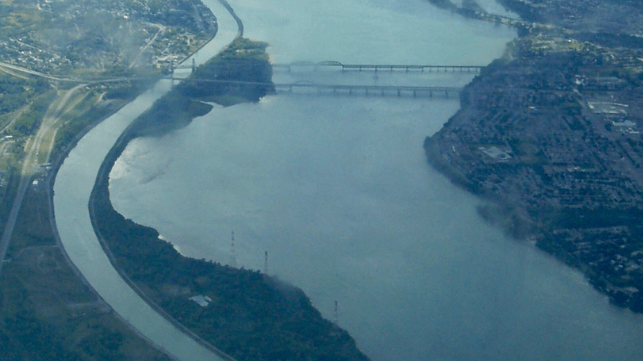
The separate seaway navigation channel (left) near Montreal (public domain)

Published Feb 2, 2025 6:30 PM by Harry Valentine


US President Donald Trump has imposed a 25% tariff on Canadian Goods entering the USA. Canada holds a trump card in that the economy of several American states benefit from trade carried aboard ships that sail through Canada, between the Atlantic Ocean.

Introduction

Prior to taking the oath of office, then president-elect Donald Trump commented on the trade imbalance between the United States and both Canada and Mexico. He seeks to remedy the situation by imposing a 25% tariff on imports that enter the USA from both Mexico and Canada, America’s largest foreign supplier of oil. He has also suggested that Canada and Greenland become American states and has even proposed to take back the Panama Canal due to high transit tariffs. Trump’s tariffs will reduce the volume of freight that moves from Canada into the USA.

The tariffs would likely reduce the value of the Canadian dollar against the American dollar, raising the price of American goods in Canadian markets. Canadian markets would likely seek identical goods from alternative overseas suppliers, in turn reducing the volume of freight that would move north from the USA into Canada. During an earlier era, international cross-border cooperation between the USA and Canada resulted in the construction of the St. Lawrence Seaway and an international hydroelectric power dam. Ocean-going ships gained access to the Upper Great Lakes and the power dam provided electricity to both nations.

Canadian Energy Exports

 Canada is America’s largest foreign supplier of oil and natural gas, both of which might be subject to a tariff of 10%. Some 85% of electric power imported into the USA comes from Canada. During winter month overnight hours and as a result of excess winter time generation of nuclear electric power, the Province of Ontario has actually paid American utilities with energy storage capacity, to take delivery of their excess electric power. The northeastern USA is dependant on hydroelectric power from Quebec, that in turn provides energy to operate high-speed passenger trains between Boston and New York City.

 American refineries import Canadian oil that they process into transportation fuel. A tariff on that oil would translate into higher fuel prices in several regions across the USA, in turn raising domestic transportation costs. Americans who live in the northeastern region and who own battery-electric cars, consume electric power from Canada when they recharge their vehicles during the overnight hours. The cumulative effect of Trump’s tariffs on Canadian imports into the USA would reduce cross-border trade as well as reduce the number of trucks and shorten trains that cross the border each day.

Transportation Sector

Trump’s tariffs have the potential to increase fuel costs while reducing market demand for cross-border railway and truck transportation, in turn reducing earnings for the America commercial transportation sector. During his first term in office, President Trump committed to rebuilding the navigation locks at the east end of Lake Superior. He recognized the monetary value of domestic maritime transportation and its contribution to the economic strength of multiple states. A segment of the American economy located around the Great Lakes depends on a waterway that passes through Canada, to export their productive output to foreign overseas markets.

 The St. Lawrence Seaway is of economic value to American exporters located around and near the Upper Great Lakes. If President Trump seeks to bypass the Gulf of St. Lawrence and the St. Lawrence River while exporting to overseas markets, he would need to rebuild the Erie Canal to transit much larger vessels between Buffalo NY and Port of Newark. In addition, he would need to extend navigation locks along the Upper Mississippi River to handle larger barge tows.

Transit via USA

Trucks and trains travel through the USA carrying trade between Mexico and Canada. If border officials reject paperwork pertaining to shipments, a tariff has potential to impact trade passing through the USA, delaying shipments and possibly even requiring payment of import taxes. The alternative would be to transfer trade moving between Mexico and Canada from truck and rail to maritime transportation and air freight. Western Canadian agricultural producers export bulk carried inside shipping containers that are loaded aboard ships that sail from Port of Duluth to overseas ports.

 The manner in which US Customs officials interpret Trump’s tariff on Canadian goods entering the USA would determine whether Western Canadian producers would be able to continue exporting dry bulk inside containers shipped via Port of Duluth. Overseas customers prefer delivery inside containers. Unlike Duluth, the Port of Thunder Bay in Canada exclusively exports agricultural dry bulk being loaded directly into bulk carrier ships. Ships sailing from Port of Duluth to overseas destinations presently pass through a Canadian navigable waterway located downstream of the international hydroelectric power dam on the St. Lawrence Seaway.

The Art of the Transit Deal

 In the event that Trump’s tariff impedes trade between Mexico and Canada that passes through the USA, Canada could seek to negotiate the art of the transit deal with the Trump administration. If Mexico – Canada trade cannot through pass the USA via road and/or rail, Canada could respond by impeding overseas bound American trade that originates from around the Great Lakes region and especially if Canadian producers cannot export via Duluth. While he has suggested “taking back the Panama Canal”, taking full control over the navigable waterway between the Atlantic Ocean and Great Lakes would be problematic.

Canada could suggest that Trump make America great again by developing the Erie Canal to transit much larger waterway vessels, also extend the length of the navigation locks along the northern sections of the Mississippi River to transit extended length barge tows. Such action would create employment for Americans and American businesses, as Trump said he would do during his campaign for office. When proposing tariffs, Trump publicly stated about Canada that “America does not need their oil or their wood”. Would he be willing to state that America does not need Canada’s inland waterway?

Smuggling Trade

During the 1920s era of prohibition, the smuggling trade carried a plentiful supply of booze from Canada into the USA. Tariffs represent a subtle form of prohibition which in turn makes smuggling lucrative. Over a period of decades, wild animals and farms animals have regularly walked across the US – Canada border, with farm animals being sent back. Trump’s tariffs could result in remuneration being sent back. Over the decades, the smuggling trade has proven to be quite innovative and ingenious as to how they have been able to transport goods across international borders.

Conclusions

President Trump’s initiative to rectify America’s trade imbalance with its trading partners by imposing tariffs on goods entering the USA, has the potential to impact the freight transportation sector, provoke political retaliation and promote smuggling. Tariff issues that reduce shipping between the Upper Great Lakes and the Atlantic Ocean via the Canadian waterway would likely require the Trump administration to redevelop and upgrade American inland waterways.

The opinions expressed herein are the author's and not necessarily those of The Maritime Executive.

What Effects Will Trump's New Tariffs Have on Trade?

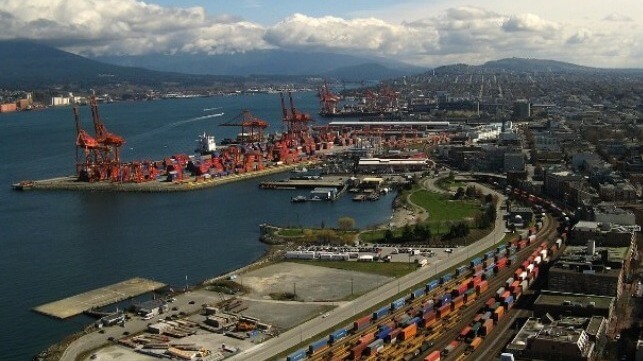
Port of Vancouver
File image courtesy Port of Vancouver

Published Feb 2, 2025 4:26 PM by The Conversation


It’s official. On February 1, US President Donald Trump introduced a sweeping set of new 25% tariffs on imports from Canada and Mexico. China will also face new tariffs of 10%.

During the presidential campaign, Trump threatened tariffs against all three countries, claiming they weren’t doing enough to prevent an influx of “drugs, in particular fentanyl” into the US, while also accusing Canada and Mexico of not doing enough to stop “illegal aliens”.

There will be some nuance. On Friday, Trump said tariffs on oil and gas would come into effect later, on February 18, and that Canadian oil would likely face a lower tariff of 10%.

This may only be the first move against China. Trump has previously threatened the country with 60% tariffs, asserting this will bring jobs back to America.

But the US’ move against its neighbors will have an almost immediate impact on the three countries involved and the landscape of North American trade. It marks the beginning of what could be a radical reshaping of international trade and political governance around the world.

What Trump wants from Canada and Mexico

While border security and drug trade concerns are the official rationale for this move, Trump’s tariffs have broader motivations.

The first one is protectionist. In all his presidential campaigning, Trump portrayed himself as a champion of US workers. Back in October, he said tariff was “the most beautiful word in the dictionary."

Trump hasn’t hidden his fondness for protectionist trade measures. This reflects the ongoing scepticism toward international trade that Trump – and politicians more generally on both ends of the political spectrum in the US – have held for some time.

It’s a significant shift in the close trade links between these neighbours. The US, Mexico and Canada are parties to the successor of the North American Free Trade Agreement (NAFTA): the United States-Mexico-Canada Agreement (USMCA).

Trump has not hidden his willingness to use tariffs as a weapon to pressure other countries to achieve unrelated geopolitical goals. This is the epitome of what a research project team I co-lead calls “Weaponized Trade.”

This was on full display in late January. When the president of Colombia prohibited US military airplanes carrying Colombian nationals deported from the US to land, Trump successfully used the threat of tariffs to force Colombia to reverse course.

The economic stakes

The volume of trade between the US, Canada, and Mexico is enormous, encompassing a wide range of goods and services. Some of the biggest sectors are automotive manufacturing, energy, agriculture, and consumer goods.

In 2022, the value of all goods and services traded between the US and Canada came to about US$909 billion (A$1.46 trillion). Between the US and Mexico that same year, it came to more than US$855 billion. One of the hardest hit industries will be the automotive industry, which depends on cross-border trade. A car assembled in Canada, Mexico or the US relies heavily on a supply of parts from throughout North America. Tariffs will raise costs throughout this supply chain, which could lead to higher prices for consumers and make US-based manufacturers less competitive.

There could also be ripple effects for agriculture. The US exports billions of dollars in corn, soybeans, and meat to Canada and Mexico, while importing fresh produce such as avocados and tomatoes from Mexico. Tariffs may provoke retaliatory measures, putting farmers and food suppliers in all three countries at risk.

Trump’s decision to delay and reduce tariffs on oil was somewhat predictable. US imports of Canadian oil have increased steadily over recent decades, meaning tariffs would immediately bite US consumers at the fuel pump.

We’ve been here before

This isn’t the first time the world has dealt with Trump’s tariff-heavy approach to trade policy. Looking back to his first term may provide some clues about what we might expect.

In 2018, the US levied duties on steel and aluminium. Both Canada and Mexico are both major exporters of steel to the US. Canada and Mexico imposed retaliatory tariffs. Ultimately, all countries removed tariffs on steel and aluminium in the process of finalizing the United States-Mexico-Canada Agreement.

Notably, though, many of Trump’s trade policies remained in place even after President Joe Biden took office. This signaled a bipartisan skepticism of unfettered trade and a shift toward onshoring or reshoring in US policy circles.

The options for Canada and Mexico

This time, Canada and Mexico’s have again responded with threats of retaliatory tariffs. But they’ve also made attempts to mollify Trump – such as Canada launching a “crackdown” on fentanyl trade.

Generally speaking, responses to these tariffs could range from measured diplomacy to aggressive retaliation. Canada and Mexico may target politically sensitive industries such as agriculture or gasoline, where Trump’s base could feel the pinch.

There are legal options, too. Canada and Mexico could pursue legal action through the United States-Mexico-Canada Agreement’s dispute resolution mechanisms or the World Trade Organization (WTO). Both venues provide pathways for challenging unfair trade practices. But these practices can be slow-moving, uncertain in their outcomes and are susceptible to being ignored.

A more long-term option for businesses in Canada and Mexico is to diversify their trade relationships to reduce reliance on the US market. However, the facts of geography, and the large base of consumers in the US mean that’s easier said than done.

The looming threat of a global trade war

Trump’s latest tariffs underscore a broader trend: the widening of the so-called “Overton window” to achieve unrelated geopolitical goals. The Overton Window refers to the range of policy options politicians have because they are accepted among the general public.

Arguments for bringing critical industries back to the US, protecting domestic jobs, and reducing reliance on foreign supply chains gained traction after the ascent of China as a geopolitical and geoeconomic rival. These arguments picked up steam during the COVID-19 pandemic and have increasingly been turned into actual policy.

The potential for a broader trade war looms large. Trump’s short-term goal may be to leverage tariffs as a tool to secure concessions from other jurisdictions. Trump’s threats against Denmark – in his quest to obtain control over Greenland – are a prime example. The European Union (EU), a far more potent economic player, has pledged its support for Denmark.

A North American trade war – foreshadowed by the Canadian and Mexican governments – might then only be harbinger of things to come: significant economic harm, the erosion of trust among trading partners, and increased volatility in global markets.

Markus Wagner is Professor of Law at the University of Wollongong School of Law. 

This article appears courtesy of The Conversation and may be found in its original form here

The Conversation

The opinions expressed herein are the author's and not necessarily those of The Maritime Executive.


US aluminum industry urges Trump to exempt Canada from tariffs

Bloomberg News | February 2, 2025 |

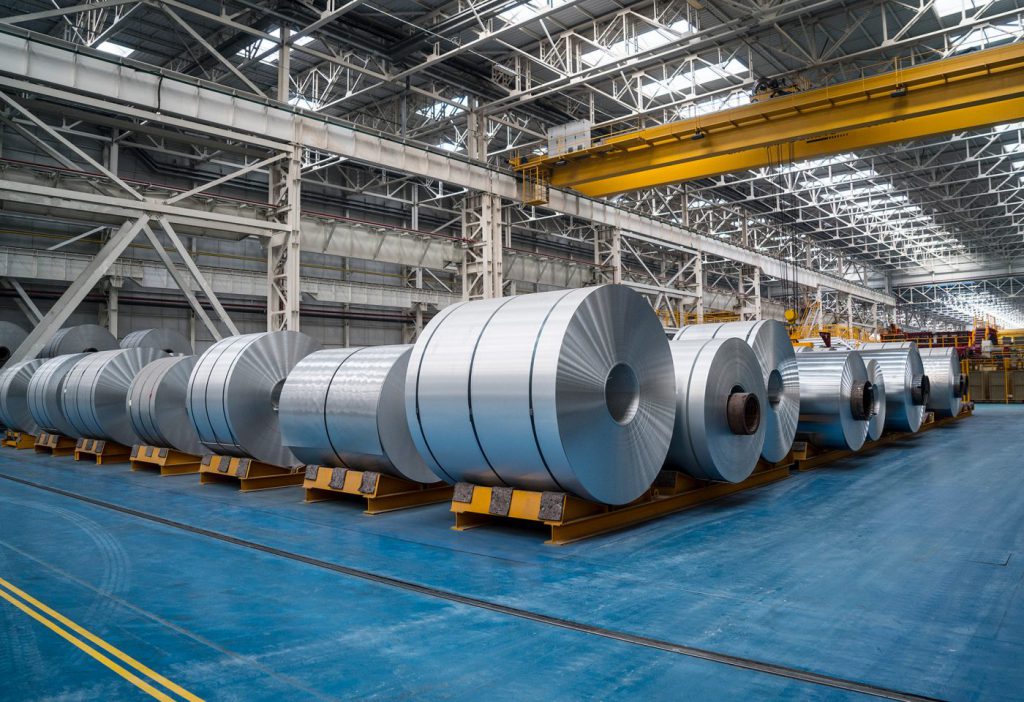
Aluminum steel rolls. Credit: Canada West Foundation

The US aluminum industry called on President Donald Trump to exempt Canadian imports of the raw metal from his planned tariffs to help protect jobs and domestic manufacturers.


Trump announced Saturday 25% tariffs on imports from Canada and Mexico and 10% from China.

The US is heavily reliant on imported aluminum, which is used in construction and a wide range of manufactured goods from car components to food packaging. Shipments of the lightweight metal from other countries accounted for 44% of the approximately 4 million tons consumed in 2023. Canada was the source of more than half those imports, according to Morgan Stanley.

“To ensure that American aluminum wins the future, President Trump should exempt the aluminum metal supply needed for American manufacturers, while continuing to take every possible action at the US border against unfairly traded Chinese aluminum,” the Aluminum Association said in a statement Saturday.

(By Simon Casey)

INSIGHT: How two former employees are driving Mali’s hardball talks with Barrick

Reuters | February 1, 2025 

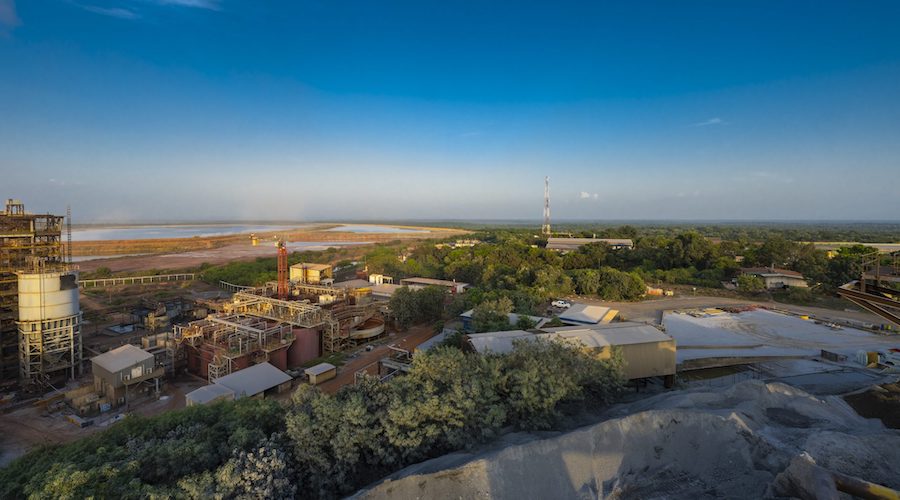
Loulo-Gounkoto complex. (Image by Barrick Gold).

Two former company executives with inside knowledge of Barrick Gold’s operations in West Africa are helping to drive Mali’s demands for a payment of around $200 million from the Canadian miner, according to people familiar with the talks.


Mamou Toure and Samba Toure, key members of the government’s negotiating team, both used to work in Mali for Randgold, a mining company that is now part of Barrick.

Mali’s military-led government, which in December seized three metric tons of gold from Barrick worth about $245 million, has given the miner until Saturday at midnight to respond to its demands.

It wants Barrick to pay 125 billion CFA francs ($199 million) in back taxes, according to a source familiar with the situation.


If a deal is finalized, Mali would return the seized gold and release four Barrick executives detained since late November, the source said.

Barrick has publicly rejected the charges against its employees, without specifying what they are. According to a court document reviewed by Reuters, they include money laundering and financing of terrorism.

Barrick did not answer questions about the status of the talks and Mali’s mines ministry did not respond to a request for comment.

The dispute has ramifications for global miners and other foreign investors who poured billions of dollars into West Africa and are now forced to play by a new set of rules as the military governments of Mali, Niger and Burkina Faso seek a bigger share of mining revenues.

“The standoff with Barrick is a snapshot of just how far military-led governments in the Sahel are willing to go to compel foreign operators to comply with new regulations that align with their pursuit of resource nationalism,” said Beverly Ochieng, senior analyst for Francophone Africa at Control Risks.

Reuters spoke to more than 20 people – including mining executives, consultants, diplomats and people with direct knowledge of the talks – to form a picture of the negotiations. The sources requested anonymity because of the sensitivity of the situation.

The two Toures are among a small group of key players on the Malian side, which also includes junta leader Assimi Goita and Minister of Finance and Economy Alousseini Sanou, according to nine people familiar with the matter.

The men, while they share a surname, are not related. Samba Toure, the older by decades, was the more senior of the two at Randgold, where he was West Africa operations director. Mamou was underground manager for the Loulo mine.

But it is Mamou who is now the more influential negotiator for Mali, due in part to his close relationship to the powerful finance minister Sanou, the sources said.

It was Mamou’s consultancy Iventus that won the contract to audit foreign mining companies in Mali, which led to a new mining code in 2023 and renegotiations of the miners’ contracts. Samba now works for him at the consultancy.

“It’s Mamou who is currently the boss,” said one person who formerly worked with them both, adding that Samba’s experience and technical knowledge was nevertheless crucial in decision-making. “The decisions come much more from Samba than from Mamou.”

In response to Reuters‘ detailed questions, Mamou said that for decades gold production had not benefitted the people of Mali as it should have. Mali is Africa’s second-largest gold producer.

“It is only natural that the state ask for a rectification,” he told Reuters. “The state has made a great effort to reach an agreement, which is why all the other companies have reached an agreement with the state.”

Samba Toure did not respond to a request for comment.
Acrimonious talks

While other Western miners – including Canada’s B2Gold, Allied Gold and Australia’s Resolute – have struck deals with Mali in recent months, Barrick’s negotiations have dragged on acrimoniously.

The military governments in Mali, Niger and Burkina Faso are using legal disputes, arrests and nationalizations, as well as threats to deepen their ties with Russia, to assert greater control over their gold and uranium wealth.

But Ochieng of Control Risks said that did not mean Western operators were unwelcome. “Several Western mining companies have been allowed to expand operations and take on new assets provided they comply with the latest regulations and taxation demands,” she said.

After seizing power in 2020, Mali’s junta pledged to scrutinize its mining sector so the state would benefit more from gold prices running at all-time highs.

Some companies, like B2Gold, reached an agreement swiftly. Others, like Australia’s Resolute, whose CEO was detained while in Mali for talks, took longer.


B2Gold told Reuters it was proceeding with planned investments this year at its Fekola gold complex after reaching the deal. Resolute on Thursday told an investor call that it hoped its deal paved the way for better collaboration with Mali’s government as it develops the Syama mine.

Relations with Barrick, however, deteriorated last year. After authorities arrested four Malians working for Barrick in September, the company paid 50 billion CFA francs ($80 million) and they were released. But Mali, which is seeking a total of around $350 million, demanded further payments.

Mali represents 14% of Barrick’s gold output and the company generated $949 million in revenue from its operations there in the first nine months last year.

In early November, Bristow told Reuters the company had offered Mali 55% of the economic benefits from its Loulo-Gounkoto mine complex – similar to an agreement the miner struck with Tanzania about five years ago.

But when Barrick did not pay a second tranche, Mali accused the company of breaking its commitments and demanded the remaining sum be paid at once rather than in tranches. It began blocking Barrick’s exports in early November.

Discounting VAT credits, Mali says Barrick has 125 billion CFA francs left to pay.

When no payment came, four employees were detained again in late November and Mali issued an arrest warrant for Barrick CEO Mark Bristow on Dec. 5.

Nevertheless, contacts continued behind the scenes. One source who spoke to Barrick senior management told Reuters on Dec. 6 that Barrick was close to paying a second tranche of 50 billion CFA. But no payment was made and the conversations stalled. Formal talks resumed on Tuesday.

Freddie Brooks, metals & mining analyst at BMI, a FitchSolutions company, said that under Bristow’s leadership Barrick had probably the highest tolerance for operational risk of any major miner.

“If they can’t negotiate a compromise with Mali’s military junta, it won’t be for lack of trying,” he said.
Clashes with Bristow

Samba Toure quit Randgold around nine years ago after a quarrel in an online meeting with Bristow, who was CEO of that company at the time, according to someone who has worked with both Toures.

The rift deepened after Samba handed in his resignation and was not allowed to dispose of his vested Randgold share options, domiciled in London.

Mamou Toure had already left Randgold in 2015, following a dispute with Bristow over the use of foreign contractors, one of the sources said.

Barrick did not respond to a request for comment on the circumstances of the Toures’ departures.


When the government announced its plans to audit the mines, Mamou won the consultancy contract with his firm Iventus Mining. It was Samba Toure who directed the audits, two sources said.

After Mali created a state-owned mining company, SOREM, in 2022, Samba was named chairman of the board, with Mamou appointed as a director.

The influence of the Toures is not unchallenged, however. Last summer, junta leader Goita grew frustrated with the negotiations and brought in the director of state security, Modibo Kone, one of the five colonels-turned-generals who lead the junta, one source said. A second source confirmed Kone’s involvement in the talks.

On at least one occasion, the finance minister has also taken over negotiations and instructed Mamou to stand down after he went too far in his demands, according to one source familiar with the talks.

Five sources said that the mines minister, a technocrat with no ties to the military, has been sidelined. However, Mamou denied that, noting the ministry has two representatives on the negotiating commission. The commission takes its orders from the mines ministry as well as the finance ministry, he said.

Mali’s finance ministry and presidency did not respond to requests for comment. It was not possible to reach the state security service.
Special forces raid

With exports banned and Barrick’s mines producing up to half a ton of gold weekly, stockpiles were rising in its secure “gold room” at the Loulo-Gounkoto mine complex.

As of Dec. 27, Barrick held just over 3 tons in its vaults, according to a Jan. 2 court order seen by Reuters, which authorized its seizure.

At mid-morning on Jan. 11, a helicopter landed at the mine complex’s landing strip unannounced. Four special forces soldiers, a customs agent, two officers of the state mining directorate, and other plainclothes officials disembarked and presented paperwork to Barrick staff authorizing them to seize the gold, one of the sources said.

“They shipped a first quantity and came back in the evening for a second shipment,” the source said, adding that it was all over by 7:00 pm.

For now, the gold seized from Barrick’s mines is sitting in the vaults of the state-owned Banque Malienne de Solidarite in Bamako. The bank declined to comment.

Barrick, which confirmed the seizure of the gold, says it has suspended operations at Loulo-Gounkoto.

The Jan. 2 order said the seizure was a preventative measure as part of the charges of money laundering and other unspecified financial crimes that have been levelled at Bristow and other Barrick employees under Mali’s laws.

Barrick is resisting the government’s demand to migrate to the new 2023 mining code largely because of increased taxes under the code, two sources said.

Pending next year is the renewal of Barrick’s mining permit. The government has signalled it could refuse it.

One source, who has consulted for the Malian government, said the government was seeking leverage for that negotiation, while the company wanted to clinch a long-term renewal under favourable terms.

“I think they don’t trust each other, but no one has an interest in a break-up,” the person said.

Some investors, however, are anticipating a tough road ahead for Barrick in Mali, including the possibility the company could lose its assets.

“The market has already factored in all the risks on Barrick shares, and the possibility that not much of production is going to come from Mali anytime soon,” said Martin Pradier, materials analyst at Toronto-based Veritas Investment Research Corporation, which covers Barrick.

($1 = 626.7500 CFA francs)

(By Portia Crowe, Divya Rajagopal, David Lewis, Tiemoko Diallo and Fadimata Kontao; Editing by Silvia Aloisi, Veronica Brown and Daniel Flynn)


Mali gold mine accident kills more than a dozen, including women and children

Reuters | February 1, 2025 |

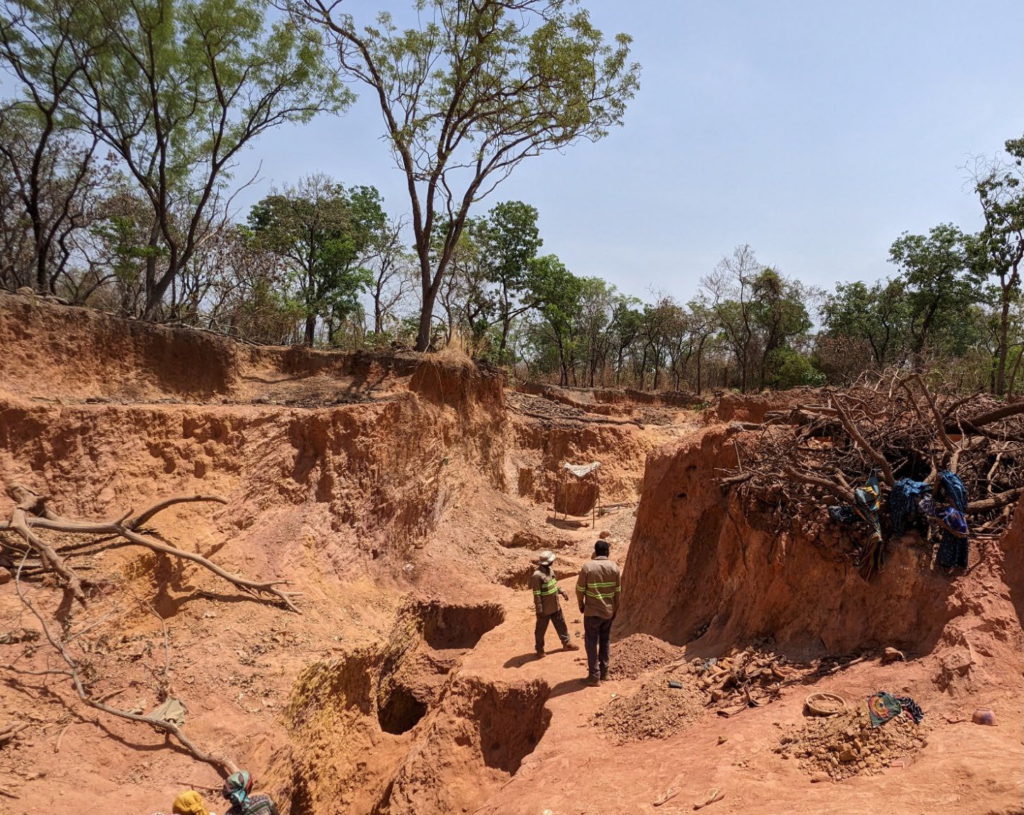
Legacy artisanal workings at Compass Gold’s Tarabala prospect in Mali. Credit: Compass Gold

Thirteen artisanal miners, including women and three children, were killed in southwest Mali on Wednesday after a tunnel in which they were digging for gold flooded, the national union of gold counters and refineries (UCROM) said on Saturday.


The incident occurred at an open-pit gold mine near the village of Danga in the Kangaba Cercle in Mali’s southwestern Koulikoro region, UCROM Secretary General Taoule Camara said via telephone.

The sluice gates of a muddy water reservoir broke and spilled into a tunnel in which women and children were digging out earth to search for leftover gold particles.

“It is serious. There were a lot of women. We spent all day yesterday clearing away the water to start looking for the bodies,” Camara said earlier this week, when a death toll was still unavailable.

Artisanal mining is a common activity across much of West Africa and has become more lucrative in recent years due to growing demand for metals and rising prices.

Deadly accidents are frequent as the artisanal miners often use unregulated digging methods.

More than 70 people were killed in January last year after a shaft collapsed at an artisanal gold mining site in the Kangaba Cercle.

(By Tiemoko Diallo and Sofia Christensen; Editing by Jan Harvey)


Resolute Mining CEO quits following detention in Mali

Cecilia Jamasmie | February 3, 2025 

Terry Holohan. (Image courtesy of Resolute Mining.)

West Africa-focused gold producer Resolute Mining (ASX: RSG) announced on Monday the resignation of its chief executive officer, Terry Holohan, who was detained in Mali for 10 days in November.


Holohan, along with two other Resolute employees, was held in Bamako, the country’s capital, amid negotiations with Mali’s military government over operational terms. The detentions ended after the miner agreed to pay $160 million in installments to settle a tax dispute. Holohan subsequently took a temporary leave of absence in December.

Resolute said Holohan’s resignation was effective immediately. Acting CEO Chris Eger will now assume the role on a permanent basis, while interim chief financial officer, Dave Jackso,n has also been appointed full-time, the company said.

Eger said last week that the ordeal in Mali was “the most challenging [time] the company has ever faced”. He added that the settlement agreement was a step toward “paving a path forward” for the company. However, efforts to reengage with the Malian government have been hindered, as officials remain preoccupied with discussions involving other mining companies, Eger noted.

West Africa squeeze

Mali, under military control since a 2021 coup, has intensified demands on international miners such as Barrick Gold, B2Gold, Allied Gold, and AngloGold Ashanti. The 2023 mining code introduced by the government grants preference shares in mining projects and requires an annual “foundation payment” to support community development.

Despite these challenges, Resolute remains focused on optimizing operations. In 2024, the company ramped up production at its flagship Syama mine and initiated the second phase of the operation’s development, which is expected to come online this year.

However, Resolute has delayed some planned investments, including a $100 million sulphide conversion project aimed at doubling processing capacity from 2.4 million tons per annum (Mtpa) to 4Mtpa

.
Syama gold mine. (Image courtesy of Resolute Mining.)

The Malian government holds a 20% stake in the project, which processes approximately 2.4 million tons of ore annually.

Beyond Mali, Resolute is prioritizing opportunities in Guinea and the Ivory Coast, while navigating the increasingly complex political environment in West Africa. The company stated that its priorities for 2025 include “creating value in Guinea and the Ivory Coast and actively managing an increasingly complicated political landscape.”

Shares in Resolute closed 0.7% lower on Monday at 38 Australian cents, giving the company a market capitalization of A$789 million ($486 million). The stock has fallen by more than 50% since October 2024, when Mali’s fiscal and regulatory environment began to deteriorate.


Report: Targeted Subsidies, Hefty GHG Levy Needed to Ensure E-Fuel Adoption

containership
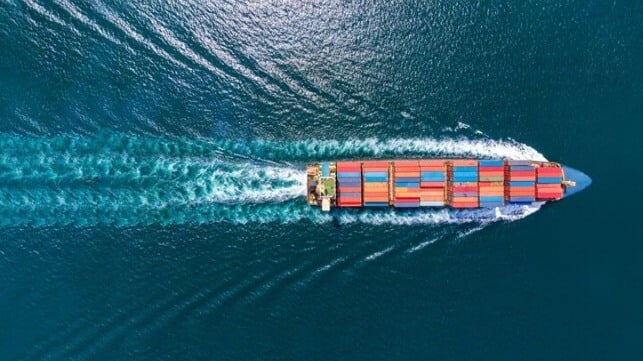
Study calls for a levy and subsidies to spur the adoption of e-fuels (file photo)

Published Jan 30, 2025 5:20 PM by The Maritime Executive


A new report looking at what will be needed to spur the transition to e-fuels and the early adoption in the maritime sector concludes that targeted subsidies and a hefty GHG levy are needed to close the gap between scalable zero-emission fuels and other compliance options. The analysis was timed to the International Maritime Organization’s upcoming negotiations ahead of the Maritime Environment Protection Committee (MEPC) meeting this summer to adopt the second phase of the strategy for the decarbonization of the shipping industry.

“The path the sector is on now requires urgent and drastic correction from both commercial and policy actions to avoid significant risks to the sector and global trade,” warns the report presented by the UCL Energy Institute and maritime consultancy UMAS.  “Without maximum efficiency,” the report warns, “the transition will be more expensive, more difficult and disruptive, and more prone to failure and delay.”

The research set out to explore how the transition can be stimulated, coordinated, and delivered, not just by the IMO, but also national governments, regional bodies, and industry stakeholders. They analyzed the viability and costs of the IMO’s Revised Strategy targets released after the 2024 MEPC session. 

The study concludes that the transition from fossil fuels in shipping has much in common with other transitions but that current policies of fuel standards and a flexible financial mechanism, even with a multiplier that boosts credits for e-fuel, are unlikely to start an e-fuel transition before 2040. Further, they warn the industry risks becoming locked into alternatives that could make long-term decarbonization goals more difficult.

“This new analysis shows that the market will struggle to make an e-fuel business case before 2040, and therefore e-fuels such as green ammonia will not be available for shipping’s use in any volume,” says Dr. Tristan Smith, Professor of Energy and Transport at the UCL Energy Institute. “Some suggest that the role of a GHG levy is only for addressing equity, this study shows that it is not the only role, it is also a critical enabler of shipping’s energy transition and for minimizing the long-run costs to trade.”

GHG pricing starting at $30 per tonne of CO2e, the research warns looks unlikely to provide certainty of support to enable the energy transition to start and scale through the 2027-2035 period, and certainly would be unable to additionally support a just and equitable transition. They conclude that GHG pricing starting at $150 per tonne of CO2e, could generate sufficient revenue to support both the energy transition and ensure a just and equitable transition for affected communities. 

Using the total cost of ownership approach, the study modeled a 14,000 TEU container vessel with different technology and fuel options. They used this to evaluate the effects of policy combinations (including a GHG Fuel Intensity (GFI) requirement, flexibility mechanism, and a levy and subsidy/reward mechanism) currently under discussion at the IMO.

They believe the early low-cost routes to compliance could become uncompetitive within a decade. The study says that early action is needed to support e-fuels to bridge the gap between e-fuels and low-cost early compliance options such as LNG, biofuels, and carbon capture and storage. They believe that a GHG levy and targeted incentive for e-fuels, such as a subsidy/reward that would be derived from the GHG Levy, is critical to ensure the industry is moving quickly on the correct transition course. The report says that there are political, technical, economic and commercial requirements to deliver on the goals for decarbonization. 
 

Feasibility Studies ID Technology to Address Fugitive Methane Emissions

LNG bunkering
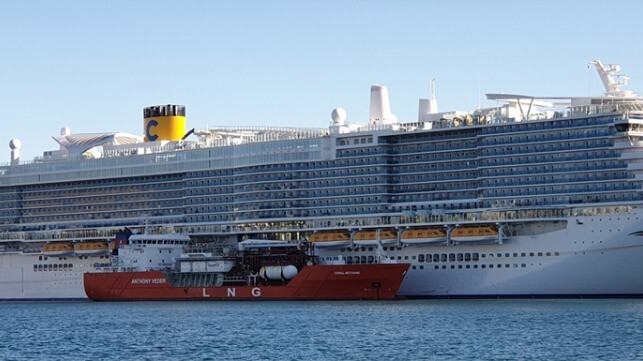
Fugitive emissions happen along the supply chain such as during bunkering (Port of Marseille Fos))

Published Jan 26, 2025 12:43 PM by The Maritime Executive


An industry collaboration known as the Safetytech Accelerate reports its latest round of supported feasibility studies has shown strong potential to cut fugitive methane emissions in the maritime industry. They report after the successful studies efforts are now underway to advance these research projects to on-ship trials as soon as possible.

Fugitive emissions happen across the LNG supply chain ranging from loading to engine delivery. While short-lived they represent another source of harmful unburnt methane entering the environment in addition to the more widely discussed methane slip where unburnt methane enters the exhaust during the combustion problem.

The Safetytech Accelerator launched its flagship Methane Abatement Maritime Innovation Initiative (MAMII) in September 2022 bringing together industry leaders, technology innovators, and maritime stakeholders with a focus on measuring and mitigating methane emissions in the maritime sector and also seeks to promote the adoption of solutions to reduce and eliminate methane emissions. This latest effort involved industry leaders Chevron, Carnival Corporation, Shell, and Seapeak as well as three technology supplies.

The group reports that identifying, quantifying, and mitigating fugitive emissions is another element of the effort. It says that it is another essential element to achieve industry-wide decarbonization goals.

Three companies and their technologies were the focus of the completed technology feasibility studies. Xplorobot which provides handheld devices and an AI-powered platform to detect and measure fugitive emissions studied the warm side of the gas fuel line evaluating the efficacy of the technology in detecting and quantifying methane emissions. For this technology, the next step is to deploy the kit in the field to further validate and optimize the technology.

A second study explored acoustic cameras from Sorama evaluating the viability for monitoring on LNG carriers. Strategically placed and handheld cameras detect the emissions by visualizing sound and vibration fields in 3D. A six-month pilot scoped the use of four fixed cameras aboard. They believe it demonstrated a capability to quickly identify the source of emissions and would provide a cost-effective option for ship operators.

Framergy studied its technology which would be used to store and purify methane to significantly reduce emissions during planned and unplanned venting events. The methane would be captured and stored at a lower pressure than conventional methods using the company’s filtering membrane made of a metal-organic framework material. Captured methane has the possibility of reuse or sale.

The Safetytech Accelerator reports the three studies show the potential to detect, measure, and mitigate methane emissions on LNG-powered ships. While methane slip – the unburnt release of methane during combustion – remains the largest source of methane emissions, they believe this work adds another critical element to the overall effort addressing methane emissions. The group is also supporting efforts to reduce emissions from engine exhausts. 

The Anchor Partners for the MAMII effort total more than 20 leading shipping and energy companies. Beyond the four companies that participated in these studies, others working with the effort include MSC, Lloyd’s Register, GTT, NYK, Mitsui O.S.K., CMA CGM, and others. 


Navigating Uncertainty: Shipowners Grapple With Decarbonization Challenges

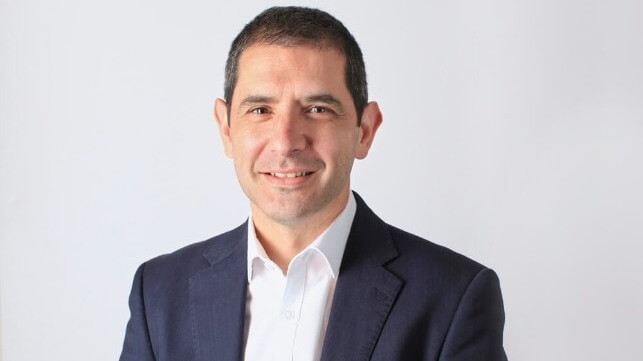
Jonathan Strachan

Published Feb 2, 2025 10:44 AM by Jonathan Strachan


The shipping industry stands at a crossroads, faced with an "uncertainty dilemma" as it seeks to navigate the complexities of the decarbonization challenge. This dilemma and challenge is underscored by a qualitative survey from Houlder, a London-based design and engineering consultancy. Jonathan Strachan, Houlder’s Chief Technical Officer, shares findings of his discussions with shipowners, which highlight the difficult decisions they face amid tightening environmental regulations and shifting global policies.

A spotlight on uncertainty

The survey, which engaged shipowners across sectors including container, tanker, bulk, cruise, and ferry, reveals that uncertainty is a significant obstacle to the industry’s energy transition. With regulations evolving rapidly and often lacking clarity, shipowners find themselves torn between taking decisive action and waiting for more concrete guidance. As one passenger shipowner remarked, key questions remain unanswered, such as the definition of domestic shipping – and the potential phased implementation of policies like those seen in the European Union.

Complicating matters further, the political landscape adds another layer of unpredictability. In 2024, elections in 64 countries, including the United States, had shipowners closely monitoring potential policy shifts. Decisions from the new U.S. administration could significantly influence sustainability strategies, while a lack of clear direction from transport departments globally has delayed progress for many.

The regulatory compass

Despite the murky political waters, regulatory developments provide some direction. Compared to two years ago, shipowners report greater certainty regarding regulations such as the EU Emissions Trading System (ETS). Smaller owners see the ETS as increasingly impactful, while larger operators view it as a manageable component of their strategies, offering a reference price for carbon that informs daily operations and business planning.

FuelEU Maritime, however, looms larger in the minds of shipowners. With penalties for non-compliance as high as €2,400 per tonne of very low-sulfur fuel oil equivalent, this regulation has prompted more urgent action. According to one respondent, the stringent penalties have shocked businesses into prioritizing energy efficiency and future fuel adoption. “From an R&D point of view, these have helped secure support and budget,” they added.

Waiting for the right time

Inaction is not an option – we can’t let uncertainty become an alibi for inaction on decarbonization. Hardly headline news, but with regulations such as FuelEU Maritime, owners are running out of time. They need to accurately simulate scenarios with information available today to enable informed decision-making now. The industry’s predicament can be likened to navigating through fog: without navigational aids, progress slows to a crawl.

Arguing that waiting for perfect clarity is a strategic misstep. 100% certainty is neither possible nor necessary for shipowners to navigate the decarbonization maze. The leading shipowners are already starting the journey with the help of partners, staying agile to adapt, and remaining informed about the technological pathways available to them.

Charting a course forward

Two years after its last survey, Houlder’s findings highlight the persistence of uncertainty as a central theme. Shipowners are navigating challenges ranging from verifying clean technology performance to scaling green alternative fuels. What emerges clearly is that uncertainty, while daunting, need not be paralyzing.

By embracing adaptability, leveraging partnerships, and acting on the best available information, shipowners can move forward despite the fog. The outcome of this research is clear: progress on decarbonization is possible, but it requires bold decisions, informed risk-taking, and a willingness to change course as new challenges arise. The stakes are high, and time is running out. Yet with the right tools and strategies, the industry can stay on course toward a sustainable future.

Jonathan Strachan is Houlder’s Chief Technical Officer.

The opinions expressed herein are the author's and not necessarily those of The Maritime Executive.