Tuesday, February 25, 2025

Fukushima Pollution Solution: Spread Radioactivity Far and Wide


 February 24, 2025
Facebook

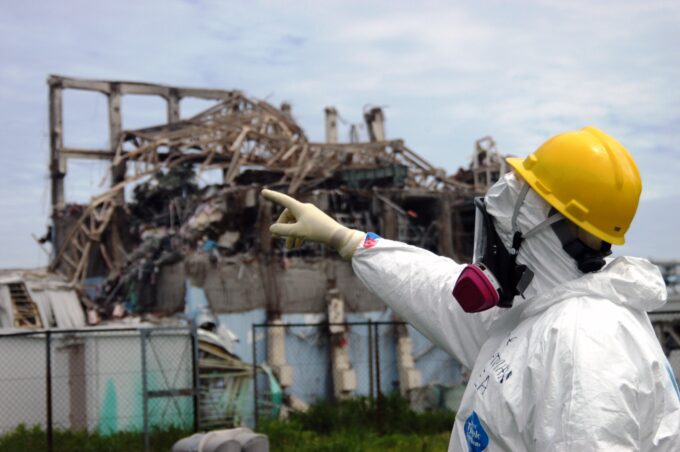
Photograph Source: IAEA Imagebank – https://www.flickr.com/photos/iaea_imagebank/5765324940/ – CC BY-SA 2.0

The dispersal of radioactive wastewater from the Fukushima-Daiichi reactor disaster site to the Pacific Ocean is “in line with international safety standards” according to a task force set up by the International Atomic Energy Agency (IAEA), the UN’s nuclear power advocacy program, in a December 24, 2024 report.

Ever since the Tokyo Electric Power Co., or Tepco, first proposed pumping wastewater left from cooling Fukushima’s three hot piles of melted reactor fuel into the Pacific, the IAEA has supported, encouraged, and endorsed the plan, in spite of its own formal published guidelines which advise against it.

In June 2023, Dr. Arjun Makhijani of the Institute for Energy and Environmental Research, published a scathing critique of the IAEA’s approval, finding the oceanic pollution violates essential provisions of the agency’s own General Safety Guide.

The IAEA’s first 2023 report on the dumping scheme said the plan was “consistent” with its standards, and it claimed even before the first major release of the radioactive water that it would have a “negligible radiological impact to people and the environment.” Now the IAEA’s onsite laboratory in Japan has analyzed the first ten discharges that have been conducted between August 2023 and October 2024, Nuclear Engineering International reported.

The bulk of the radioactivity in the wastewater being pumped into the ocean is from tritium, the radioactive form of hydrogen, and carbon-14, neither of which can be filtered from water they contaminate. However, analyses of 1.3 million tons of waste coolant now stored in tanks shows a complex mix of other highly radioactive isotopes, including strontium-90, cesium-134 and -137, cobalt-60, americium, technetium, and even tellurium-127. In 2018, Tepco apologized for the failure of its giant filter system to separate all the materials it promised to, and has said it would repeatedly re-filter the contaminated water to try and remove 62 different reactor-borne isotopes before dumping it into the world’s largest ocean.

IAEA approval is license to copy bad actors

Japan’s oceanic radioactive pollution was supposed to have been banned with the 1972 Convention on the Prevention of Marine Pollution by Dumping of Wastes and Other Matter. This monumental international law against disposing of hazardous and radioactive wastes at sea prohibits dumping “from vessels, aircraft, platforms or other man-made structures.”

Yet the use of major undersea pipelines at Fukushima-Daiichi in Japan, at La Hague in France, and at Sellafield in the UK have been granted exemptions — as if the massive pumping systems were not “man-made.” On a yearly basis, the La Hague plutonium processing system discharges some 1.4 million barrels worth of liquid radioactive waste into the North Sea, Greenpeace reports.And the UK’s Sellafield site pumps 24 million barrels of radioactive liquids into Irish Sea every year.

When the IAEA says that Japan’s ocean dumping is “in line with international safety standards,” this is the globalized radioactive polluting that is being referenced and endorsed.

Radioactive soil to be spread nationwide as construction fill

In spite of obvious risks to workers who handle it and the threat of surface water contamination caused by rain runoff and winds, the Japanese government has approved plans to allow 14-million metric tons of radioactive soil — and 300,000 metric tons of radioactive ash from incinerators — to be used in public works projects like road and railway construction, and even agriculture “nationwide,” according to the international news reports.

The government calls the plan “recycling,” and it’s been consistently opposed by critics who point to federal regulations that forbid any use of radioactive materials that are contaminated with more than 100 becquerels of cesium-137 per kilogram (Bq/kg). Waste that’s “hotter” must be disposed of as radioactive waste.

Yet the government intends to allow the use of soil (scraped from thousands of square kilometers that were hit with fallout from the three meltdowns) containing up to 8,000 Bq/kg of cesium, 80 times the federal limit. Radioactive cesium was spewed in large quantities from the triple meltdowns of March 2011 and it persists in the environment for up to 300 years. (Mountain forests in the fallout zones west of Fukushima cannot have topsoil removed and so remain contaminated with cesium which is spread downhill by heavy rains.)

Watchdogs with the Citizens Nuclear Information Center in Tokyo point out that government rules would be violated if the 8000 Bq/Kg limit is allowed. Yumiko Fuseya wrote in CNIC’s newsletter, “Despite the Nuclear Reactor Regulation Act stating that only waste of 100 Bq/kg (becquerels/kilogram) or less can be recycled, [the plan says] ‘removed soil’ of up to 8,000 Bq/kg can be recycled, and this is a double standard.”

Fuseya complained that Japan’s Ministry of Environment, “claims that ‘disposal’ includes ‘recycling,’ even though Article 41 of the Act on Special Measures Concerning the Handling of Materials Contaminated by Radiation does not include ‘recycling.’

The daily Yomiuri Shimbun reported December 5 that about 75% of some 14 million tons of bagged soil has a radioactive cesium count of 8,000 becquerels or less per kilogram.

CNIC also reports that the government has conducted hair-raising agricultural experiments in Fukushima Prefecture, such as growing and harvesting cucumbers and radishes “in fields where the [contaminated] soil has been covered with normal soil.”

Just as the International Atomic Energy Agency has approved of dispersing contaminated wastewater into the Pacific Ocean, the agency last September gave final approval to Japan’s plan for using the radioactive soil and fly ash (now piled in 14 million 1-tonne bags) for public works projects, saying that the scheme is “consistent with IAEA safety standards.”

Ongoing earthquakes & aftershocks

As if accidents with wastewater pumping, Pacific Ocean poisoning with radioactive wastewater, and spreading millions of tons of cesium-tainted soil around the public commons weren’t hazardous enough, routine earthquakes and their aftershocks off northeast Japan relentlessly rock the Fukushima disaster site and threaten to crack open giant tanks now holding 1.3 million tons of highly radioactive wastewater. Relentlessly frequent quakes also endanger the means of water cooling the 880 tons of molten reactor fuel (or ‘corium’) still thermally hot and radioactively unreachable somewhere beneath the three smashed reactors.

On January 23, after a 5.2 magnitude quake hit the Fukushima Prefecture’s Aizu area, the government warned of possible aftershocks and urged people to “stay vigilant” against landslides and avalanches. Last April 4, a 6.1 magnitude quake rattled Fukushima’s coastline just 47 miles off the site of the three meltdowns — far closer than the super quake of March 2011, the biggest in Japan’s recorded history, which was 80 miles offshore.

Clean-up workers increasingly fear contamination

Following a string of clean-up related radiation accidents at the devastated station, Tepco workers have grown more concerned about their safety. The daily Asahi Shimbun reports that a Tepco survey its workers found that over 40 percent of the workforce was worried about jobsite “radiation issues.” Of this group, 52% said “physical contamination” was their main concern, seven percentage points higher than its 2023 survey. Tepco said that the repetition of exposure accidents on site have likely increased workers’ worries.

In October 2024, two workers were hospitalized after being splashed with highly radioactive liquid wastes bursting from a hose that disconnected inside a wastewater treatment building. And in February 2024, about 5.5 cubic meters, or 5.5 metric tonnes, of highly radioactive liquid waste gushed from the a “cesium absorption apparatus” in an incinerator building before a worker noted it and closed a valve.

The Citizens Nuclear Information Center in Tokyo keeps close track of the routine accidents taking place at Fukushima and across Japan’s nuclear industry here.

New documentary: “Unfogging Fukushima”

The China Global Television Network (CGTN) has produced an English language documentary on the three simultaneous reactor meltdowns and their massive radioactive releases which premiered December 31, 2024.

The network announced the debut noting, “Despite extensive efforts over the past 13 years, problems such as discharging nuclear-contaminated water into the sea still exist. CGTN visited the worst-hit area, measured nuclear radiation, and investigated the truth behind the enduring consequences of the accident.” The film is available here.

John LaForge is a Co-director of Nukewatch, a peace and environmental justice group in Wisconsin, and edits its newsletter.

AMERIKA

Are We All Soon to Be ‘Fugitive Slaves’ If Birthright Citizenship Is Killed?”


Kary Love


February 25, 2025


Image by Brett Jordan.

Soon unelected co-President Musk may “own” us all as he buys elections with his “free speech” (money is speech per Citizens United).

After his “investment” in the Presidency in 2024, Musk now moves into states: “Musk’s attempt to buy Wisconsin’s Supreme Court is a red alert that his attack on democracy isn’t limited to gutting the federal government,” said Wisconsin Democratic Party Chair Ben Wikler.

If successful, I suspect Musk’s “love of money” will propel him to buy up or seek to use government to control all jobs effectively rendering him the Massa of the Big Plantation formerly known as the USA. Government of the people may be our last best hope preventing us all from being reduced to Fugitive Slaves. Let me explain.

I have practiced civil and Constitutional law for more than 45 years, and until now never worried about being made a “non-citizen” (though the Bill of Rights protects “people” so that remains in force, somewhat).

The Constitution as originally adopted assumes that there is citizenship of the United States, and of the States, but does not explicitly state the law of what makes one a citizen of either (other than by giving Congress the power to naturalize). Under Article III the federal courts were granted jurisdiction over controversies between citizens of different states, and thus assumes that some people have state citizenship.

Article II requires that only a natural-born citizen of the United States, or a citizen of the United States at the time of the adoption of the Constitution, may be President, and thus assumes that some people have national citizenship.

Nowhere, however, does the original Constitution lay down a clear legal rule about either kind of citizenship. Not, that is, until adoption of the 14th Amendment, which grants citizenship to anyone born in the USA. That includes me, and probably you. But if it can be taken away, then we are all reduced to the same legal status as Fugitive Slaves before the Civil War and the adoption of the 14th Amendment.

Before the Civil War black people held in slavery in the south were condemned to a “Twilight Zone” due to the so-called Fugitive Slave Clause in the Constitution. Found in Article IV, Section 2, Clause 3, it required a “Person held to Service or Labour” (usually a slave, apprentice, or indentured servant) who flees to another state be returned to his or her master in the state from which that person escaped. (Ironically, this mess resulted because the authors of the Constitution desperately wanted to avoid using the word “slave” in a “charter of freedom” while still reaching a “compromise” that would allow states in which slavery was legal under state law to ratify the Constitution; thus the evil of slavery was a cancer on the Constitution from the beginning.)

The enactment of the Thirteenth Amendment which abolished slavery except as a punishment for criminal acts, has made the fugitive clause mostly irrelevant. (Note: there is no exception for the type of slavery known as “the Military Draft”). The US Supreme Court made the black persons’ status worse in the infamous “Dred Scott” decision that held black slaves were not citizens and were “property” (some argue therefore they were not even “people.”)

Despite this state of the “law” enslaved people from the south sought freedom, as though they were people despite the “law,” both by massive uprisings or rebellions as well as fleeing the south as “runaways.” Note this was like those white migrants who ran from serfdom, or peasanthood, or indentured service or whatever second-class status to white “aristocrats” was called in England, Russia, France, and other nations, seeking freedom from rule by their “betters.” I guess migrants have long been a problem. Surely the aborigines agree though they often granted sanctuary, and there was no was no such thing as “illegal migrant,” and citizenship was yet to be invented.

In the north lived many free black persons who joined with white abolitionists to oppose this apparent violation of the principles of the nation. The Declaration of Independence proclaimed that all humans “were created equal” and endowed with certain “inalienable rights” that could not be taken away by government. Further it declared that if any government tried to take those rights away then the people had a “duty to alter or abolish” such “illegitimate” government. Additionally, many argued from their religious beliefs that since god had created all people in his likeness, all people were equal before the law of god, and that the “higher law” foundation of American law required rejection of slavery, period.

Resistance mounted in the north and congress adopted a Fugitive Slave Act (“FSA”) law enabling recapture of persons escaped from such bondage. The FSA was born evil in opposition to freedom and unsurprisingly incorporated more violations of freedom in its execution:

1) it required Americans to assist actively any attempts by law enforcement to arrest accused runaways; (not unlike the current DHS efforts to attack “sanctuary cities or churches”),

2) it made the law an uneven playing field by rewarding US Marshals more money when they declared a person captured a “runaway” rather than declaring them to be free;

3) it ran roughshod over the Bill of Rights by denying trial by jury (despite being required expressly by the Constitution in two places);

4) it violated millennia of even the Common Law human right to habeas corpus by excluding habeas corpus from the FSA cases;

5) other unfair requirements also existed such as requiring two white witnesses to testify to identity of a black claiming to be “free;” (very difficult to find in the south and those in the north not knowing the person while they were in the south could not so testify) and a presumption a person claimed to be a runaway slave was; in any event these were not fair trials nor intended to be.

In addition to these fundamental violations of American law, many Christians who interpreted Jesus’s teachings about treating strangers with kindness (in case they turn out to be Jesus or an angel in disguise to test their faith); among other Biblical commandments, rejected the FSA as contrary to God’s law.

One New York convention convened by the people to consider the FSA declared the FSA: “is in direct and impious opposition to those laws of God which command deeds of humanity and mercy” in addition to identifying the foregoing violations of the Constitution rendering the FSA odious.

A lucrative business sprang up with entrepreneurs charging top dollar to hunt down and recapture runaways. The “slave hunters” were not circumspect about the free or slave status of those they captured with many free blacks being wrongfully identified as runaway slaves.

Inevitably as in all fights for freedom, violence often resulted during such captures which many called kidnapping. Frederick Douglass noted the reality was “we are all at the mercy of a band of blood-hound commissioners” handling the FSA cases and usually siding with the kidnappers. In the face of such tyranny blacks and whites rose up in resistance and, besides providing “illegal sanctuary,” (under the laws of man though arguably required by the laws of God) began fighting FSA cases in the courts.

When criminal cases were brought under the FSA many juries refused to convict based on such arguments and over time even judges in nonjury cases refused to return escaped persons to bondage, finding that a violation of both law and scripture. However, many refugees and migrants seeking freedom, as well as formerly free persons improperly identified and kidnapped, were returned to bondage.

Ultimately a “civil” war with more than 750,000 dead Americans of all colors settled the question, at least until today, when 14th Amendment “birthright citizenship” enshrined that right in the Supreme Law—that no person, president, congress or court can violate.

Today, with the move to overturn “birthright citizenship,” I ask: If denial of “birthright citizenship” is successful what is the anchor of my own (and your, and my and your children’s) citizenship? If not inviolate for all born in America, and there being no other “citizenship” conferred by the Constitution, then arguably at some point anyone’s birthright citizenship may simply evaporate by executive order.

The current ruling junto seems capable of seeking the end of “citizenship” because pesky citizens are a bar to some of the power usurping plans they embrace. So far their king-like pretensions indicate a dream of perhaps replacing it with “the aristocracy and the serfs” of our great past. Should that succeed, a new FSA is probably on the horizon. The for-profit prison industry may already be lobbying for one with the financial reward payable to them rather than US Marshals as formerly the case. If DOGE does not eliminate the expense of for-profit prisons along with its other cost-cutting that will be some evidence that as sanctuary retreats for-profit prisons will be our new plantations for former citizens.

Either we all stand together, and live up to the nation’s motto, “e pluribus unum,” or we all “Born in the USA” risk losing our citizenship. Whether as a person who has sworn an oath the defend the Constitution against all enemies foreign and domestic (in my judgment the domestic are the priority) or as a religious duty—resistance to the FSA was declared by abolitionists to be “the greatest Christian movement of the age” —any American claiming birthright citizenship (there being no other kind but naturalization) must resist its destruction.

As for me, whatever others may do, I will defend by word and deed “birthright citizenship” for all.


Kary Love is a Michigan attorney.

Challenging US Labor Bureaucracy


 February 25, 2025
Facebook

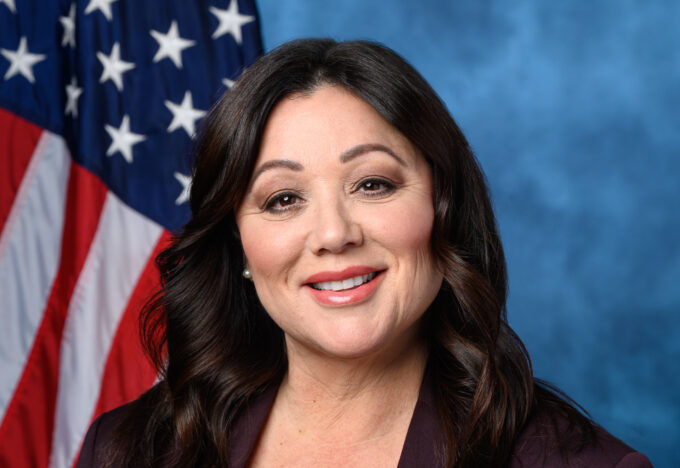
Rep. Lori Chavez-DeRemer official photo, 118th Congress – Public Domain

US politics is often defined by populism in rhetoric and elitism in practice. This is especially evident with the so-called “realignment” within the two major parties, as large swaths of working class voters flee the Democratic party and switch to the Republicans, whose own form of right-wing populism succeeded in the 2024 elections. However, voters may feel a sense of buyer’s remorse, as the Trump Administration has gone full-speed ahead into its anti-worker, anto-democracy agenda. From widespread layoffs and budget slashing to his unqualified support for tax cuts for the wealthy, Trump appears to be nothing more than a wolf in sheep’s clothing for the working class.

These contradictions are especially evident in his choice for Labor Secretary, Lori Chavez-DeRemer. As a congressman from Oregon, she supported the Protecting the Right to Organize Act and the Public Service Freedom to Negotiate Act, or the PRO Act, which is the most significant piece of labor legislation out of congress since the Wagner Act 90 years ago. It would dramatically improve the rights of workers to create, join, and strengthen unions. During her confirmation hearings, she distanced herself from the PRO Act and even agreed with Senator Rand Paul that “right-to-work” laws, which are fundamentally about dismantling rights for workers to collectively bargain, should be protected. As the Trump administration builds its state apparatus to immiserate workers and the poor, his Labor Secretary nominee is backing away from her (nominally) pro-worker positions to fall in line with the new orthodoxy.

We’ve seen this time and time again from the labor movement in the United States— from the racial segregation of the AFL in its early years to the later AFL-CIO’s complicity in purging socialists and communists from its ranks and collaborating with the CIA. As Adam Barrington writes in Jacobin, “In 1962, the AFL-CIO established the American Institute for Free Labor Development (AIFLD) to continue disrupting international left-wing labor movements.” AIFLD provided Brazilian students with courses in anti-communism that proved essential in the overthrow of the democratically elected government of President João Goulart and the installation of a military dictatorship.

Today, we see the larger unions like the AFL-CIO, the Teamsters, and others dampen their militancy in the service of the American Empire. Sean O’Brien, the head of the Teamsters, spoke at the Republican National Convention in 2024 and has decided to work closely with the Trump Administration and is backing Chavez-DeRemer’s nomination, despite his initial criticism of Trump. While there is no doubt that workers are better off belonging to a union rather than having no protections at all, it is evident that the large, mainstream unions are more interested in maintaining their relative power than actually using it to challenge ruling-class policies.

What is needed now, more than ever, is for unions to fight back against Trump’s extreme, authoritarian policies, using any leverage they have in stopping his most egregious, anti-worker policies. We see the militancy that can emerge even from larger unions, such as Shawn Fain’s UAW to Sara Nelson’s Association of Flight Attendants-CWA (which is a part of the AFL-CIO, but definitely not like it) as an example of challenging Trump’s assault on the American workforce. Unions should stay independent, not endorsing politicians unless they agree to certain demands and holding them accountable if they renege on said promises. For the fight ahead for democracy and the working class, unions should care less about preserving their bureaucracy and more about supporting the rank-and-file. A strong, class-conscious labor movement is essential to the development of a genuine resistance to Trump and his unadulterated destruction of workers rights.

Justin Clark is a public historian and serves as the Digital Initiatives Director for the Indiana Historical Bureau, a division of the Indiana State Library. A specialist in intellectual history and digital history, his writing has appeared on the Indiana Historical Bureau’s Untold Indiana blog and in The Sower and the Seer: Perspectives on the Intellectual History of the American Midwest. He is also the co-host of Red Reviews.