Wednesday, April 02, 2025


UK


Patriotic Millionaires member perfectly sums up why a wealth tax would be fair


31 March, 2025 
Left Foot Forward


"No matter what the lobby groups who don't want to tax wealth will tell us, it is not going to be a problem for wealthy people to pay that."


Julia Davies, a member of Patriotic Millionaires UK, pushed back against right-wing claims that a wealth tax would be unfair, summing up why a wealth tax is needed and would not punish the super-rich.

Patriotic Millionaires UK, is a non-partisan group of millionaires who argue that the economic system should be reformed to end extreme wealth.

Speaking on Sunday Morning Live yesterday, Tom Clougherty, Research Director and Head of Tax at Thatcherite think tank The Institute of Economic Affairs, argued that people often support a wealth tax because they don’t understand how significant a 2% tax on wealth would be.

Freelance journalist Angela Epstein, who writes for the Daily Mail and Telegraph, said “I’m really sick of wealth being treated like a dirty word in this country” and said she thinks it’s “predicated on the politics of envy”.

In response, Davies, who would have to pay a 2% wealth tax, said: “Suggesting that asking for fair taxation of wealth is treating wealth as something that is a dirty word is just nonsensical.”


She said “What’s not fair is the concentration of wealth into the hands of fewer and fewer people in the UK.”

“It might sound like wealthy people are paying a lot in tax, that’s because they disproprionately have more of the wealth of the UK.”

Davies stressed that “asking for fair taxation of wealth is not punishing anyone. Asking working people to pay more national insurance and income tax, that is punishing people.”

Davies also pointed out that investment in the NHS has to come from somewhere, arguing that wealth is a “vastly untapped resource”.

The proposed wealth tax would introduce a 2% tax on wealth over £10 billion.

“No matter what the lobby groups who don’t want to tax wealth will tell us, it is not going to be a problem for wealthy people to pay that.”

A 2023 YouGov poll found that 78% of voters support an annual wealth tax on individuals with assets exceeding £10 million, including 77% of Conservative voters and 86% of Labour voters.

Olivia Barber is a reporter at Left Foot Forward


UK 
New research illustrates how teachers’ pay lags considerably behind other professions

Yesterday
Left Foot Forward


The National Education Union say this research illustrates the need for its demands for significant pay improvements

\

New research has found that pay for teachers is considerably below that of people working in other similar professions.

According to the research, conducted by Incomes Data Research, teachers’ earnings consistently rank lower than those for most other professional cases. This is particularly the case for primary school teachers.

Looking at average basic weekly earnings across 13 different professions, the research found that primary school teachers earnt the least. Secondary school teachers were the fifth lowest earners, ahead only of pharmacists, chartered surveyors, chemical scientists and primary school teachers.

Additionally, increases in teachers’ earnings over the latest period have generally been smaller than for most other professional groups. This is despite improved pay awards for teachers in recent years, which have nonetheless lagged behind those in other areas of the economy for most of the past 17 years.

The National Education Union (NEU) says that this supports the union’s case that fully funded and significant pay improvements for teachers are needed.

Responding to the research, Daniel Kebede, general secretary of the NEU, said: “This research is damning. It underlines the damage to the competitiveness of teacher pay and to recruitment and retention, following years of pay cuts against inflation. It explains why so few teachers feel their pay reflects their growing expertise or the additional responsibilities they undertake.

“We need a major pay correction with teacher pay significantly improved against inflation and other professions – but the Government’s planned unfunded 2.8 per cent increase from September will be below inflation and way behind earnings growth in the wider economy.

“The crisis in our schools is worsening and it won’t be solved without urgent action. We urge the Government to pay attention to the facts and change course now on teacher pay.”

Chris Jarvis is head of strategy and development at Left Foot Forward

Image credit: Fotologic – Creative Commons
UK


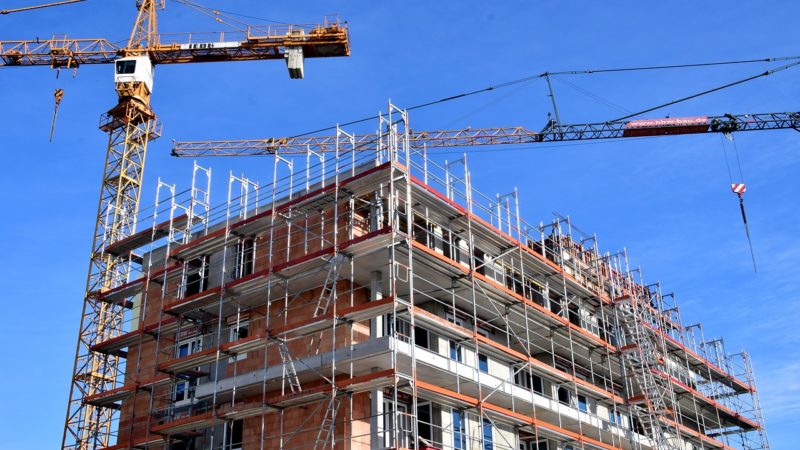
The 91% fudge: How planning delays are being spun to hide a broken system

Opinion
Chris Worrall 
Yesterday


MHCLG's latest figures say 91% of planning applications were decided on time in the last quarter of 2024. Housing columnist Chris Worrall explains why that figure hides the real story


By any reasonable measure, the English planning system is in crisis. And yet, if you believed the Ministry of Housing, Communities & Local Government (MHCLG) latest quarterly statistics, you’d think everything was ticking along nicely.

The headline claim? A reassuring-sounding 91% of major planning applications were “decided on time” in the last quarter of 2024.

But that figure is a complete fudge.

Statistical deception

Dig a little deeper and you discover that only 19% of those applications were actually decided within the statutory 13-week deadline.

The remaining 72% were “within time” only because councils negotiated extended deadlines with applicants — effectively moving the goalposts to suit their overloaded, allegedly under-resourced planning departments.

Departments that will eventually be met with some relief following Labour’s introduction of 300 new planning officers across the country. But let’s call this what it is: bureaucratic sleight of hand, masking systemic failure with tick-box compliance.

If councils and central government departments think the public is buying that 91% as a success story, they’re sorely mistaken.

Because out here in the real world, the impact of this inertia is painfully visible. We are in the midst of a housing crisis where young people can’t afford to live in the towns they grew up in, families are stuck on endless housing waiting lists, and renters are forced into bidding wars over mouldy flats.

Not to mention migrant hotels operating at full occupancy, up 8,000 in number despite Labour’s best intention to reduce government spending in this regard opting to return to using long-standing dispersed accommodation “as soon as is practicable“.

Worse still, many local authorities are operating without up-to-date Local Plans.

According to Planning Resource’s data dashboard only a third of councils currently have an up-to-date plan in place. Some of these plans are decades out of date, meaning developers, residents and planners are left working with outdated policies that bear little relation to the realities of housing need today.
Speed when it suits

And yet — when it suits them — councils can move at lightning speed.

Smith highlighted the remarkable burst of activity seen at the end of 2024: in the last quarter alone, 14 local plans were submitted to the Planning Inspectorate, more than any quarter since early 2019.

In total, 28 were submitted across the year — more than double the number in 2023. The highest-level in more than five years.

Why the sudden surge? Because local authorities he argues were racing to get their plans in before new housing targets took effect.
Fast-tracking plans to avoid stricter targets

Let that sink in. Councils that couldn’t be bothered to update plans for years suddenly found the time, staff and consultants to push them through — not to meet local housing need, but to duck responsibility for delivering more homes.

Yes, Labour’s new housing targets, which it is already on track to miss, took effect immediately from their introduction on the 30 July 2024.

But it does not always mean such policies instantly carry full legal or material planning weight. There is often a lag in how local authorities interpret and apply the new policy.

And how planning inspectorates assess local plans already in motion before new targets are announced.

This is hypocrisy at its finest. Many of these local plans currently being submitted were drafted or consulted on before new targets came into force.

Prior to being rushed for submission in mid-2024, many of which in order to avoid being judged against stricter targets.

This is because there is often a ‘transitional grace period’ where older plans or drafts are still assessed under the previous framework – especially if they’ve been already consulted on or submitted.

It is where local authorities hope that inspectors might take what one could call a ‘pragmatic view’, depending on which way you look at it.

In short, these local authorities are gaming the system by fast-tracking under old assumptions – but from a legal perspective those plans may still be valid if they’re submitted before new guidance is enforced in examinations.

The fact of the matter is that plans submitted before 12th March 2025 can have their plans examined under the previous NPPF guidelines.

However, if these plans propose housing targets of less than 80% of the standard local housing need, they are expected to begin work on a new plan under the updated system to address any shortfall, as explained by Zack Simons here.

It exposes a deeply cynical approach to planning: councils will act swiftly when it’s politically advantageous, or when it helps them avoid scrutiny.

But when it comes to approving new homes — especially ones that might upset vocal NIMBY
constituents — the gears grind to a halt.
Planning consultants benefitting from a dysfunctional system

This foot-dragging is compounded by the rise of the planning consultant industrial complex — a growing network of private consulting firms feeding off the dysfunction of the public system.

Councils, stripped of in-house expertise, now spend millions outsourcing tasks they once handled themselves.

Developers, meanwhile, must also shell out for consultants, just to navigate the ever-shifting web of local policy, design codes, heritage assessments, biodiversity net gain calculations, and the latest fashionable planning buzzwords.

Planning barristers? No doubt having a field day in consulting and advising on how and where the proposed changes may or may not be advantageous. Depending on whether you want to block or propose development.

The result is a bloated, adversarial, and expensive process that delivers too few homes, too slowly, in the wrong places. And when the numbers look especially bad — as they did this quarter — statistics can be framed in a way that makes the situation look better than it is in reality.

But government statistics need to be presented in a way that accurately reflects the reality.
Introducing a YIMBY stick

It is time to stop tolerating decades-old local plans and councils that deliberately stall decisions to placate a vocal minority.

That means publishing not just the proportion of applications “decided within agreed timescales”, but
rather assessing the average length of these timescales, which were likely extended reluctantly.

It means not just naming and shaming councils that are failing to update their plans, but to introduce a meaningful YIMBY stick like the Builder’s Remedy.

One that would emulate successful policies seen implemented in California. Where areas that do not put plans in place on time and based on updated housing targets, feel the wrath of Housing Accountability Act that prevents non-compliant jurisdictions from rejecting any housing project that meets affordability requirements.
Moving towards meaningful statistics

The current system, in which applications are delayed for months, sometimes years, while civil service departments cite hitting meaningless 91% “on time” stats, needs to change.

While local plan submissions must be welcomed, more needs to be done to continue to increase the number of which are submitted for examination.

We need to ensure local authorities do not shy away from submitting Local Plans on new housing targets. Only can we then have any hope major applications will be approved within statutory timeframes. We need this, without doubt, alongside meaningful statistics that transparently measure performance, in order to avoid feet-draggers feigning that they are delivering major applications on-time.

The numbers don’t lie. But the way they’re spun? That’s another matter entirely. And one the MHCLG needs to address quickly.


Chris Worrall is a housing columnist for LFF. He is on the Executive Committee of the Labour Housing Group, Co-Host of the Priced Out Podcast, and Chair of the Local Government and Housing Member Policy Group of the Fabian Society.


Cost to build multifamily housing in California more than twice as high as in Texas


Higher costs driven by long permitting times and larger local development fees


RAND Corporation


Building multifamily housing in California is more than twice as expensive as it is in Texas, with much of the difference driven by state and local policies that contribute to long permitting and construction timelines, and higher local development fees, according to a new RAND report based on cost information from more than 100 completed apartment projects. 
 
The high cost of housing and its associated effect on homelessness is a defining policy issue in California. 

The cost of building multifamily housing is 2.3 times higher in California than Texas and 1.5 times higher than in Colorado, the states examined by researchers. 

The time to bring a project to completion in California is more than 22 months longer than the average time required in Texas. Municipal impact and development fees average $29,000 per unit in California, compared to less than $1,000 per unit on average in Texas and $12,000 per unit in Colorado.  
 
Costs vary significantly among California’s metropolitan areas. San Diego has the lowest average cost for privately financed apartments at roughly twice the Texas average. Costs in Los Angeles were 2.5 times the Texas average, while costs in the San Francisco Bay Area were three times the Texas average. 
 
The RAND report details how higher housing costs in California are driven, in part, by regional factors such as higher land costs, more-expensive labor and seismic safety standards. But researchers found that most of the higher costs can be attributed to factors such as the lengthy approval timelines and prescriptive building requirements that are policy decisions.  
 
“California is significantly more expensive than both Colorado and Texas in every cost category that we examined,” said Jason Ward, lead author of the report and an economist at RAND, a nonprofit research organization. “One way to address California’s high housing costs is to look for lessons from states where it is easier and less expensive to build new housing.” 
 
For decades, California has ranked second only to Hawaii in housing and rental costs, and the state has seven of the 10 most expensive metropolitan areas in the nation. 
 
Researchers say the new supply of apartments in a region is likely the largest single factor affecting affordability. Areas with the greatest level of new supply in recent years, including the Texas cities of Austin and Dallas, have seen notable rental price declines, a remarkable development during a period characterized by inflation levels not seen since the 1980s.  
 
The RAND report also found that California’s publicly subsidized affordable housing costs are substantially higher than new, high-end market-rate projects in the state. On a square footage basis, such projects in California are 1.5 times the average cost of market-rate housing in the state and more than four times the average cost in Texas. 
 
Key drivers of the remarkably high costs of publicly subsidized affordable housing production in California include requirements for affordable housing developers to pay substantially above-market wages and unusually large architectural and engineering fees that are likely related to prescriptive design requirements placed on these projects by funding programs. 
 
“In Los Angeles, for example, these fees on affordable housing projects average twice the cost of those for high-end market-rate housing in the state,” Ward said.  
 
The report recommends that California policymakers consider adopting rules similar to a Texas state law that requires local jurisdictions to approve or deny a proposal for a housing development within 30 days or else it is presumed to be approved. 
Another recommendation is to create policies mandating synchronized construction inspections, which commonly occur sequentially, as a way to reduce the 7-month average gap in construction time between California and Texas. 
The report also recommends that policymakers reconsider the effects of municipal impact and development fees that are roughly 10 to 40 times the level observed in Texas. While local governments depend on these fees, their negative effects on housing production reduce potential property tax revenue and other benefits from more new housing production. 
 
Additionally, the report recommends that environmental gains from new housing subjected to California’s strict energy efficiency requirements should be weighed against the negative effects of lower levels of new housing construction due to these costly requirements, since new housing built to less demanding environmental standards would still create average efficiency gains compared to California’s aging housing stock, according to the report. 

“Within the state, policymakers can look to San Diego for positive lessons since that region has the lowest average housing production costs among the three metro regions we examined,” Ward said. 
 
The RAND report uses a large sample of multifamily housing production cost data for both privately funded market-rate housing and publicly subsidized affordable housing built between 2015 and 2024 in California, Colorado and Texas. The study is the first to use detailed cost data on privately funded market-rate housing to estimate the costs of new multifamily housing construction.  
 
The information on market-rate housing developments was obtained from Trammel Crow Residential, a national builder with substantial operations in at least five states. Cost data on publicly subsidized developments were obtained through state agencies that allocate funding from the federal Low Income Housing Tax Credit Program, the largest source of public subsidies for affordable housing production in the U.S. 
 
The report, “The High Cost of Producing Multifamily Housing in California: Evidence and Policy Recommendations,” is available at www.rand.org.  
 
Support for the project was provided by a gift from Dennis Wong to the RAND Center on Housing and Homelessness. Assistant policy researcher Luke Schlake coauthored the report. 
 
The RAND Social and Economic Well-Being division seeks to actively improve the health,  social and economic well-being of populations and communities throughout the world.  


Program takes aim at drinking, unsafe sex, and sexual assault on college campuses


Journal of Studies on Alcohol and Drugs
Red solo cup in gutter 

image: 

Red solo cup in gutter

view more 

Credit: Journal of Studies on Alcohol and Drugs


PISCATAWAY, NJ – A prevention program that teaches college students about the links between risky drinking and sexual assault—and how to protect themselves and their friends—has shown early promise, according to a new report in the Journal of Studies on Alcohol and Drugs.

It’s well known that alcohol and sex can sometimes be a dangerous mix for young adults. Alcohol intoxication raises the odds of having unprotected sex and, possibly, contracting a sexually transmitted disease or having an unplanned pregnancy. Drinking can also increase the risk of falling victim to sexual assault or becoming the perpetrator.

Yet college prevention programs have traditionally addressed those closely connected issues separately, essentially “siloing” them, said Lucy Napper, Ph.D., one of the lead authors on the new study and an associate professor of psychology at Lehigh University, in Bethlehem, Penn.

So a team of researchers at Lehigh University and Brown University, led by Napper and Shannon Kenney, Ph.D., designed an all-in-one program aimed at reducing college students’ problem drinking and their risks of unsafe sex and sexual victimization. First, it addressed students’ misperceptions around their peers’ drinking and sexual behaviors (busting the myth that heavy drinking and casual unprotected sex were rampant on campus). Then it taught them practical skills they could use to protect themselves and their friends when they were out at parties or bars.

For example, Napper explained, students can have a plan for checking in with friends while they’re out, have a plan for getting home and decide that no one in their friend group will be left behind. The program also covered “bystander intervention” skills—how to step in when a friend may be drinking too much or in danger of being sexually victimized. That kind of intervention, Napper said, doesn’t have to be confrontational; there are also “subtle” ways to interrupt a potentially dangerous situation and change the dynamics.

For the study, the researchers randomly assigned 217 college students to either take part in the program, dubbed SPLASH (for Sex Positive Lifestyles: Addressing Alcohol and Sexual Health), or attend a nutrition-and-exercise program. Students in the SPLASH program met in small groups, for two 90-minute sessions. The sessions were led by “facilitators,” but much of the time was devoted to students discussing the issues and learning from each other, Napper said.

Overall, the researchers found, SPLASH was a hit: Upwards of 90% of participants said it was helpful and they would recommend it to a friend. And compared with their peers in the nutrition-and-exercise program, SPLASH participants also showed more realistic perceptions of on-campus drinking, sexual behavior and their fellow students’ openness to bystander intervention—differences that were still apparent six months later.

That’s important, Napper said, because whether we’re aware of it or not, our perceptions of what other people are doing, or approve of, can often influence our own behavior.

“So being able to shift those perceptions may also shift students’ behavior over time,” Napper said.

Larger studies are needed to confirm whether the SPLASH program can, in fact, create those changes. But the initial findings are promising, according to Napper. Ultimately, she said, the goal is to help create campus cultures where “we’re all supporting and looking out for one another.”


Inability to pay for healthcare reaches record high in U.S.


Affordability gap widens for low-income households, Black and Hispanic Americans


West Health Institute

Lack of Access to Quality, Affordable Care Reaches New Recorded High of 35 percent 

image: 

Lack of Access to Quality, Affordable Care Reaches New Recorded High of 35 percent

view more 

Credit: West Health-Gallup Healthcare Indices Study, Nov. 18-Dec. 27, 2024


WASHINGTON, D.C. – April 2, 2025 – The inability to pay for healthcare in the U.S. has reached a new high, with more than one-third of Americans (35%), or an estimated 91 million people, reporting that they could not access quality healthcare if they needed it today, according to the latest West Health-Gallup Healthcare Affordability Index. The Index has been tracking healthcare affordability and access in the U.S. since 2021.

Rates were higher among Black and Hispanic Americans, with 46% and 52%, respectively, reporting that they would be unable to afford quality healthcare. Americans in higher-income households remained relatively stable in their ability to access affordable care, but the rate of unaffordability increased significantly among lower-income households. About two-thirds (64%) of people earning less than $24,000 and 57% of households with annual incomes between $24,000 and $48,000 reported difficulties with affordability, an 11- and 12-point increase from 2023, respectively.

“The rising trajectory in the inability to pay for healthcare is a disturbing trend that is likely to continue and even accelerate,” said Tim Lash, president of West Health Policy Center, part of a group of nonprofit organizations focused on healthcare and aging. “Policy action at both the state and federal level is urgently needed, or even more Americans will have to go without treatment or be forced to make painful tradeoffs between paying for medical care or paying for other necessities. The human and economic costs are enormous.”

The West Health-Gallup Healthcare Affordability Index categorizes Americans into one of three groups:

  • Cost Secure: faced no recent difficulty accessing or affording care or paying for prescription medicine
  • Cost Insecure: recently unable to access care or afford either care or prescription medicine
  • Cost Desperate: recently unable to access care and afford care and prescription medicine

Based on these criteria, just over half of Americans (51%) are considered Cost Secure, the lowest level since 2021. Hispanic adults saw the greatest declines in security over the four-year period, dropping 17 points to 34%, followed by Black adults, who dropped 13 points to 41%. Overall, about 29 million Americans, or 11% of U.S. adults, are classified as Cost Desperate, a record high.

The healthcare affordability gap has widened since 2021, particularly among Hispanic adults (up eight points to 18%), Black adults (up five points to 14%) and lower-income households earning under $24,000 per year (up 11 points to 25%), while there was little to no change in status among White adults or Americans in middle- to high-income households. The percentage of Americans age 65 and above who moved into the Cost Desperate category edged up just one point to 4%, while rising three points to 11% among those aged 50-64, and four points for people 50 and under (now 14%).

“Healthcare affordability and access continue to erode nationally, and this issue is especially acute among Black, Hispanic, and lower-income adults. White adults and those in higher-income households, in contrast, remain largely insulated from these worsening trends," said Dan Witters, senior researcher at Gallup. "Among these groups, this is the widest gap in access to care we have recorded thus far, with many Americans experiencing increased hardship year over year.”

Methodology

The West Health-Gallup Healthcare Indices Survey was conducted by web and mail Nov. 18-Dec. 27, 2024, with 6,296 adults aged 18 and older living in all 50 U.S. states and the District of Columbia as a part of the Gallup Panel. For results based on the full sample, the margin of sampling error at the 95% confidence level is ±1.6 percentage points for response percentages around 50% and ±1.0 percentage points for response percentages around 10% or 90%, design effect included. Reported sub-groups will have a larger margin of error, typically ±3 to 5 percentage points.

About West Health

Solely funded by philanthropists Gary and Mary West, West Health is a family of nonprofit and nonpartisan organizations including the Gary and Mary West Foundation and Gary and Mary West Health Institute in San Diego, and the Gary and Mary West Health Policy Center in Washington, D.C. West Health is dedicated to lowering healthcare costs to enable seniors to successfully age in place with access to high-quality, affordable health and support services that preserve and protect their dignity, quality of life and independence. Learn more at westhealth.org and follow @westhealth.

About Gallup

Gallup delivers analytics and advice to help leaders and organizations solve their most pressing problems. Combining more than 80 years of experience with its global reach, Gallup knows more about the attitudes and behaviors of employees, customers, students and citizens than any other organization in the world.


Science ‘storytelling’ urgently needed amid climate and biodiversity crisis


University of Exeter


Scientists should experiment with creative ways of communicating their work to inspire action to protect the natural world, researchers say.  

Scientists primarily publish their work in academic journals, where writing is expected to be technical, objective and dispassionate – making it unlikely to appeal to, or be easily understood by non-experts.

The researchers – from the University of Exeter – argue for science “translated into stories”, with benefits both for science and wider society.

They suggest ways that scientists can tell powerful, passionate stories without compromising the objectivity of science.

“As environmental scientists ourselves, we feel frustration, a sense of loss, fear and sometimes helplessness at the lack of action to protect the planet,” said Professor Karen Anderson, from the Environment and Sustainability Institute on Exeter’s Penryn Campus in Cornwall.

“But researchers are expected to be rational – not emotional – for fear of being seen as less objective and trustworthy.

“This prevents scientists from using their knowledge, passion and creative skills to fully communicate the work.”

Dr Katherine Crichton said the current method of academic writing emerged in the 17th and 18th centuries, with “gentleman scientists” writing for each other.

“That form of writing clearly has its place – but we’re not only debating technical aspects of science for academic interest,” Dr Crichton said.

“Everybody should be interested in the climate and biodiversity crisis – we are talking about our home, and that subject is too important to be confined to academic journals.”

Professor Angela Gallego-Sala, an expert in peatlands, added: “We study these ecosystems because we love them – but we are expected to be removed from our subjects.

“In almost all communication of our work, the scientist remains ‘masked’ – a dispassionate source of data and analysis.

“In fact, as scientists we all have stories to tell about ourselves, the people we work with and the places we work in – and these stories could be vitally important.” 

The researchers propose ways to communicate environmental science that would appeal to humans – or “storytelling chimpanzees”, as the author Sir Terry Pratchett described us.

These methods include embracing the “art of storytelling”, with platforms for publication alongside traditional scientific writing.

They also argue that scientists should share the “hidden” side of their work: how things are done behind the scenes (as in nature documentaries, such as “into the blue” at the end of each episode of Blue Planet II).

And they encourage scientists to try new ways of “feeding science into normal human life” – for example, author biographies that go beyond factual CVs, enabling authors to share personal stories, motivations and connections to their subjects.

Dr Crichton said: “Existing methods of communication haven’t worked: the destruction of our climate and the natural world continues.

“We need to try something different.

“Humans are inspired by stories. By telling better stories, scientists can help inspire meaningful action to protect ourselves by protecting our environment and the planet.” 

Professor Anderson concluded: “There is plenty of other academic work that advocates for scientific storytelling. 

“The problem is that these other pieces don’t demonstrate how this can be done.

“Our piece tries to showcase different ways that scientists can experiment with more creative communication methods.

“We understand that it might feel strange to do this, but we hope that other scientists are willing to give this a try.

“It’s the start of a different type of experiment – an experiment with stories.”

The paper, published in the journal People and Nature, is entitled: “We are storytelling apes: experimenting with new scientific narratives in a time of climate and biodiversity collapse.”