Wednesday, April 02, 2025


Callous cuts cost lives – austerity is the wrong choice


By Michael Calderbank

In last week’s Spring Statement, Rachel Reeves made a clear political choice to embrace a second round of austerity. She aims to balance the books on the backs of the sick and disabled, by cutting benefit entitlements to levels which even the Government’s own impact assessment indicates will push a further 250,000 (including 50,000 children) into poverty.   

It wasn’t the only choice she could have made. Few would dispute the difficulty of the inheritance Labour received following the disastrous Tory years of austerity, the challenges posed by the US’s withdrawal of military support for Ukraine and the impact of Trump’s damaging tariffs on trade. But given that the ‘world has changed’ since Reeves set her own self-imposed fiscal rules, it would only have been prudent to revisit these strictures to allow for greater levels of borrowing in the short term. Even a moderately social democratic Chancellor would surely have taken the opportunity to raise taxes on the super-rich. Oxfam and Tax Justice UK calculate that a 2% wealth tax on assets exceeding £10 million in the UK could potentially raise around £24 billion annually.

Reeves and Welfare Secretary Liz Kendall present further welfare reform as some kind of liberation for people trapped by a ‘broken system’ into subsisting on state handouts rather than enjoying the benefits of a fulfilling career. It’s basically the same ‘workers versus shirkers’ rhetoric we saw from George Osborne and Iain Duncan-Smith under the Tories. It ignores the reality of people’s lives, the spiralling mental health crisis amid inadequately funded mental-health services and the profoundly depressing, stressful and exhausting reality of trying to eke out a living on low paid, insecure jobs. Coercing sick people back into the labour market by slashing their minimal support payments is cruel and callous. It’s not exactly the change people voted Labour for.

But if the Government thinks it can implement these attacks without paying the political price, it is surely delusional. Activists from Disabled People against the Cuts (DPAC) have already proved themselves a formidable fighting force, ending ATOS’s contract for delivering the Work Capability Assessment. Just months ago, DPAC member Ellen Clifford won a judicial review against the Department for Work and Pensions’ attempt to cut nearly £5,000 a year from almost half a million disabled people. And while disabled people and their organisations will be at the forefront of the fightback, they won’t be alone.      

“Labour is the party of work…the clue is in the name,” ministers argue, as though workers don’t have sick and disabled family members or neighbours. Or as though workers don’t value security in the event that we fall sick ourselves or become disabled? The campaign against benefit cuts is a class issue. Eleven trade union General Secretaries from the Trade Union Coordinating Group – the vast majority of which are affiliated to no political party – have written an open letter to Starmer and Reeves to commit their support to the campaign to reverse the cuts.  Significantly, this includes the PCS union – whose members work for the Department for Work and Pensions, including in the job centres. They know all too well what distress results from such policies.    

Nor are campaigners without allies inside the Labour Party, whatever the leadership might say. Already at least 25 MPs have said they will rebel rather than back the Government’s plan, with more speaking out by the day. With many areas facing local elections in May, reports are feeding back that the mood on the doorstep towards Labour is becoming utterly toxic. Angry local councillors will be pressuring MPs, many of whom – even at this early stage in the Parliament – will be starting to worry about their own future electability. A serious coalition of resistance is building, outside and inside the Labour Party, and now is the time to build maximum pressure on MPs to defy the whips and force through a change of direction.

The Trade Union Coordinating Group is holding an online discussion with Arise tomorrow (Wednesday April 2nd from 6.30pm) to review the Spring Statement and discuss building a coalition against the next wave of austerity cuts – with John McDonnell MPEllen Clifford and Paula Peters from DPAC and Fran Heathcote (PCS General Secretary), chaired by Sarah Woolley (BFAWU General Secretary). 

Register here.  

Michael Calderbank is Political Education Officer of Tottenham CLP.


Say No to welfare cuts!

MARCH 30, 2025

At least 25 Labour MPs are already planning to vote against the Government’s welfare cuts, announced last week. This number is set to grow and may well become the largest rebellion against Keir Starmer’s Government to date.

The cuts to benefits to disabled people in particular has unleashed a storm of protest, which has seen prominent members, including former Scottish Labour MSP Neil Findlay, resign from the Party.

Many Labour MPs who have not previously been critical of the Government have delcard their opposition. It’s good to see MPs speak out, but more must be urged to take a stand. To that end, Momentum are urging members to use its lobbying tool to write to their Labour MP urging them to vote against any cuts to welfare if they go to a vote – and to oppose through any other channels.

Ian Byrne MP at yesterday’s event

Speaking at yesterday’s packed Socialism or Barbarism event organised by Arise -A festival of Ideas, anti-poverty campaigner Ian Byrne MP said this was “a hugely important pivotal moment for our movement and we’ve got to make the Labour Government see sense.”

Former Shadow Chancellor John McDonnell MP agreed, saying the cuts to disability benefit were barbaric and that “you cold cut the disillusionment with a knife.”

Speaking about the Arise event, he tweeted: “There’s something definitely building. Every session at the numerous workshops at the Arise festival of Left Ideas is packed but more importantly the strength of feeling against the disability benefit cuts is mobilising people and forging new alliances to demand a change of policy.”

He added: “There’s a growing consensus across all wings of Labour Party, combined with deep anxiety  in the trade union movement and our political base in communities across the country that the disability cuts are wrong and there has to be a U-turn sooner rather than later.”

Tempting though it may be for members to walk out in disgust, now more than ever, it’s vital socialists stay in the Labour Party and join forces with trade unions to challenge the Labour right’s betrayal of the fundamental principles of the Party. Momentum have produced a briefingWhy Socialists should be in the Labour Party, to persuade comrades to stay in, join, or rejoin Labour.

Photo of Ian Byrne MP by Bryn Griffiths


‘Welfare reforms threaten to alienate Labour’s own voting coalition’


Photo: Kirsty O’Connor / Treasury

No Chancellor wants to be compared to Kwasi Kwarteng’s short-lived time at the Treasury.

But unfortunately, that’s increasingly the position Rachel Reeves finds herself in.

Ipsos’ snap-polling conducted immediately after this week’s Spring Statement shows half the public (51%) thinks Rachel Reeves is doing a bad job as Chancellor. Concerningly for her, this is up 7-percentage points from last month. Even worse, this is now just short of the verdict they delivered to Kwarteng after his infamous “mini-Budget” when he registered a 53% disapproval rating.

Reeves faced no easy challenge in reassuring the public. She was boxed in by her determination to stick to her fiscal rules and avoid extra borrowing, while also being locked into commitments to not raise taxes.

With limited options, she also had to contend with the doom music of the OBR halving their 2025 growth predictions to 1%.

It’s a classic polling story

But the public’s reaction shows she’s failed in her newly found mission to inspire optimism. Three in five (57%) say the Statement has left them more concerned about Britain’s economy than reassured. This is 12-percentage points higher than the proportion who said the same after her first Budget last October.

It’s a classic polling story as most of her spending announcements are popular when asked about individually, but collectively voters fear the overall package. Over half are in favour of spending more building affordable homes, training more construction workers and increasing defence spending next year. Besides boosted military spending, however, many of these polices haven’t cut through, with more people saying they haven’t heard of them than have.

Welfare reform is the announcement which voters most recall hearing something about (unsurprisingly given it was trailed a week prior). It’s these policies where opinion is most divided. Around one in three (36%) support reducing welfare spending by changing disability, sickness and universal credit benefits, while the same proportion oppose it (35%). That’s not a recipe for a well-received fiscal event.

More widely these reforms pose a narrative issue for the Government. Ministers argue it’s a Labour value to encourage people back into work, but most now say “working people” are treated worse than they should be by the government (55%), while believing the opposite about “people on high incomes” (54% saying better than they should be). The welfare reforms also garner far more support from 2024 Conservatives than from Labour voters (48% vs. 36%).

At some point, you need to remind your own voters why they backed you

Here lies the electoral risk for the future. As well angering Labour MPs, welfare reforms threaten to alienate the government’s own voting coalition. Reducing poverty is among the top three priorities for 2024 Labour voters, but slightly more say they are doing a bad than good job in delivering (33% vs. 24%). Assessments that welfare changes could result in 250,000 more people overall living in relative poverty, including 55,000 children, will do little to convince them otherwise.

At some point, you need to remind your own voters why they backed you. If you don’t, they won’t return. That is a real challenge Labour is facing right now. Immediate reactions are not always the final word on how the public remember political events, but first impressions count, and Labour now need to get on with delivering.

A partial silver lining for the “securonomics” Chancellor is that these savings meant protecting her “fiscal headroom”. Unfortunately, this buffer was wiped out by President Trump within hours of her being at the dispatch box, with his announcement of 25% tariffs on UK car manufacturers (and potentially more to come).

Unless a trade deal is secured between the UK and USA, then Reeves is already back at square one and looking for more difficult savings ahead of her Autumn Budget. It could be then that the pressure reaches boiling point.


LABOUR AUSTERITY IS STILL AUSTERITY

Welfare reform: List of Labour MPs prepared to rebel against benefit changes


Photo: House of Commons

More than 25 Labour MPs have said publicly that they will not back the government when proposed welfare reforms are voted on in Parliament.

Last week, Work and Pensions Secretary Liz Kendall unveiled the “biggest shake up to the welfare system in a generation” in a bid to cut the country’s benefits bill by around £5bn.

However, measures to restrict eligibility for personal independence payment and cutting and freezing the health element of Universal Credit for new claimants have proved controversial among some Labour MPs.

Following the publication of an impact assessment into the reforms by the Department of Work and Pensions, at least eight Labour MPs have said they will vote against the reforms to the welfare system, with several more signalling their opposition to the plans.

Speaking on the Today Programme, Chancellor Rachel Reeves defended the government’s reforms to welfare and said: “This is about reforming the system, to get more people into work, to have fulfilling careers and have more money in their pocket.”

Several of those who have publicly said they will oppose changes to welfare are on the left of the party, including Nadia Whittome, Brian Leishman, Kim Johnson and Richard Burgon.

More than a dozen others, including Stella Creasy and Steve Witherden, have posted publicly about their opposition to the changes but have not explicitly said they would vote against the proposals when they come to a vote in the Commons.

Outside of Parliament, Greater Manchester Mayor Andy Burnham has said that the government is making “the wrong choice” by restricting eligibility for disability benefit.

We are keeping a rolling list of MPs who have said they are prepared to rebel against the government over the changes to health-related benefits – if you see an MP who should be on our list, please email us at mail@labourlist.org.


Labour MPs who have said they will rebel against the government

Zarah SultanaApsana Begum and John McDonnell, who remain suspended from the Labour Party, have also said they will not vote in favour of the government’s welfare reforms.

Labour MPs who have expressed opposition to welfare reforms

Spring Statement: List of councillors quitting over welfare amid further cuts

Photo: DWP

The deputy leader of Rotherham Council has become the latest Labour councillor to quit the party over the government’s welfare reforms and cutbacks, with ministers expected to confirm another £500m in cuts today.

Welfare reforms unveiled by Work and Pensions Secretary Liz Kendall aim to save £5bn  as part of today’s Spring Statement – with measures including restricting eligibility to personal independence payments for disabled people.

Discontent is likely to flare up further today as ministers are expected to unveil a further £500m in cuts, with universal credit incapacity benefits thought likely to be frozen until 2030 and the basic rate of universal credit reduced in 2029.

Meanwhile the government impact assessment on reforms is expected to be a flashpoint if released as expected alongside the Chancellor’s statement, laying bare the potential human impact of the changes.

One backbench MP told LabourList ahead of the statement they were “keeping my fingers crossed that more welfare cuts aren’t coming” as reported.

READ MORE: MPs on Spring Statement: ‘Let’s soothe the nation, not kick it in the teeth’

Rotherham Council deputy leader and lifelong Labour member David Sheppard described the changes as “unconscionable” this week, and hit out at the government for “targeting people who need support the most”.

He said: “I have always held the belief that government should do what it can to equalise the injustices within society.

“Sadly, this and other recent announcements have led me to conclude that this is currently not the case.”

Council leader Chris Read described Sheppard’s decision to quit the party as “deeply disappointing”, calling him a “hardworking Labour councillor for the last nine years”.

Spring Statement: The four Labour achievements Reeves will trumpet amid fresh welfare cuts

Sheppard’s resignation from the party is the eighth in recent weeks in reaction to the government’s welfare reform proposals, which include five Labour councillors in Dudley. Former Labour MSP Neil Findlay also announced his resignation from the party, claiming the changes to benefits “punish and stigmatise the weak, poor and the vulnerable”.

The government has defended the reforms, arguing they are needed to get people who are on long-term sick leave back into work and to cut Britain’s ballooning benefits bill.

Ahead of today’s Spring Statement, we are compiling a rolling list of Labour councillors who have quit the party over the government’s benefit reforms. If you know of any councillors to add to this list, email us at mail@labourlist.org.

Following resignations in Dudley, a West Midlands Labour spokesperson said: “Labour inherited a broken welfare system from the Conservatives, which risked a generation of young people being written off and millions of people who want to work not getting the support they need.

“Labour will deliver a social security system that is fit for the future.”


Pete Lowe (March 19)

Councillor Pete Lowe, who served as leader of the Labour group in Dudley, resigned from the party after more than 40 years of membership. He described his decision to quit as “heartbreaking but unavoidable”.

Lowe also reportedly played an important role in Richard Parker’s campaign to become the West Midlands’ first Labour mayor last year.

In a letter of resignation addressed to the Prime Minister, he said: “I have finally concluded, and it’s heartbreaking to say so, that my party has left me behind, found new friends and priorities in the city and the markets, whilst the very people who look to the party for a real alternative, good honest working-class people in the Black Country and beyond have been abandoned.

“I am not leaving the Labour Party – the Labour Party left me some time ago.”

He has since formed a new breakaway group of councillors with others who have also resigned from the Labour Party.

Karl Denning (March 20)

Councillor Karl Denning quit claiming that the national party had “left me behind”.

Denning, who was blinded in a workplace accident and is assisted by a guide dog, said that comments made by Wes Streeting “sealed the fact that Labour were not the party I joined to fight for a fair more just country”.

In a letter to the Prime Minister, he said: “I have been asked how I can be a member of a party that is willing to turn on disabled people so easily, and if ‘I’ll be able to sleep at night’.

“After much heart searching and thought, I do not think I can remain a member of the Labour Party. It is one of the most difficult decisions I have had to make.

“I joined the Labour Party fighting for disabled [people] and those without a voice and it seems I leave the Labour Party doing the same thing.”

Denning has since joined Lowe’s breakaway group of councillors.

READ MORE: Spring Statement: ‘Why not draft in Martin Lewis to fill the fiscal hole?’

Peter Drake (March 20)

Dudley councillor Peter Drake said that he could not defend a Labour government “which does not and will not represent the working class and ordinary people,” as he resigned from the Labour Party.

Drake, who had been a member of the party since 2015, said: “All I have ever wanted to do is help working-class people; but the sad reality I have woken up to is that the national Labour Party is no longer the voice of the working-class.

“Since winning the general election, Keir Starmer and his Labour government have shown no real interest in improving the lives of normal working people. That is a facade they used to win votes from people who desperately wanted change.

“I cannot and will not defend the indefensible. I will not tolerate the punitive, uncompassionate, downright idiotic policies that we see from Keir Starmer’s government. They have betrayed the Labour movement and offer no alternative to permanent austerity.”

Drake has since joined Lowe’s breakaway group of councillors.

Matt Cook (March 20)

Dudley councillor Matt Cook quit the Labour Party after claiming the party had “moved away from their founding principles”.

In a statement, Cook, who was elected as a councillor last year, said: “I feel it has become increasingly disconnected from the needs of the people it was meant to represent, and I can no longer in good conscience remain a part of it.”

Cook told the Birmingham Mail that his family had always voted Labour, but that the changes to the welfare system would affect some of them.

“I have put my heart and soul into being a Labour member and councillor but it is just not working.”

Cook has since joined Lowe’s breakaway group of councillors.

READ MORE: Spring Statement: Reeves ‘confident’ civil service could cut 10,000 roles as Blunkett decries fiscal rules

Karen Constantine (March 22)

Deputy leader of the Labour group on Kent County Council Karen Constantine quit the party after more than 40 years of membership, citing the welfare reform announcement as part of the reason for her decision.

She wrote to Keir Starmer to express her concerns about the impact of the changes on the most vulnerable.

Constantine said: “The party has strayed from its core values, abandoned hope, and forsaken the democratic principles that I and many others hold dear. It has lost its way, it has left members like me.

“The recent proposed cuts to welfare have already instilled deep concern and will only further exacerbate the struggles of our society’s most vulnerable. This includes the disabled and many young people who are already facing significant hardship and difficulty in my division of Ramsgate.

“While Labour speaks of getting people back to work, it offers no viable solutions for the dire employment opportunities in my area.”

She also expressed anger at the “ongoing refusal to apologise for historic forced adoptions”.

Luke Hamblett (March 22)

Dudley councillor Luke Hamblett announced he would be leaving the Labour Party “with a heavy heart” following decisions from the government, including the winter fuel allowance and changes to health-related benefits.

In a statement shared on social media, Hamblett said: “Last year, I was full of optimism when I was elected to serve Quarry Bank and Dudley Wood. Like the rest of the country, I believed change was on the way.

“With dismay at first and then disgust, I watched as a ‘Labour’ government kept the two-child benefit cap, removed winter fuel payments from millions of pensioners and are now targeting people with disabilities. Enough is enough.”

READ MORE: Spring Statement: ‘The Chancellor must not make foreign aid cuts worse’

John Warmisham (March 23)

Veteran councillor John Warmisham accused Labour of “losing its moral compass” under Keir Starmer’s leadership as he resigned from the party. Warmisham, who has served as a Salford councillor for 34 years, said in a letter to the city’s mayor that Labour “no longer represents the communities that it was set up to serve”.

He said: “Cutting the welfare benefits to the disabled, the sick, the poor and the vulnerable, whilst committing billions of pounds to arms and supporting wars is immoral, as well as government ministers pushing pensioners, families and children further into poverty.”

David Sheppard (March 25)

Deputy leader of Rotherham Council David Sheppard, who was first elected in 2016, resigned from the Labour Party in protest over the government’s welfare reforms. While he said he supports the work Labour is doing at a local level, Sheppard said the government had “chosen to target people who need support the most”.

Matt Renyard (March 26)

Southampton councillor Matt Renyard, who had been involved with the Labour Party for 15 years, announced his defection to the Green Party after claiming it is “becoming increasingly difficult to speak honestly” within the party locally and nationally.

Renyard, a former council cabinet member, said: “Labour have broken my heart. They used to be the party that represented everyday ordinary people, fighting for the poor, the vulnerable, and both the working and middle classes. Following the first nine months of this newly elected Labour government, it is clear that Labour has lost its way.”

Majella Anning (March 27)

Greenwich councillor Majella Anning quit the party, saying she “cannot look residents in the eye” following the government’s welfare reforms.

In a statement, Anning said: “I cannot support a party which accepts gifts from millionaires only to enact policies that take away vital funds from the disabled.”

She now sits on the council as an independent councillor.

Chris Kane (March 28)

Bolsover councillor Chris Kane has quit the party and become an independent in protest over the direction of Labour under Keir Starmer’s leadership.

Emma Stevenson (March 28)

Emma Stevenson, also a councillor in Bolsover, resigned from the Labour Party for similar reasons and sits as an independent.

Sandra Peake (March 28)

Bolsover councillor Sandra Peake quit the Labour Party after more than 30 years of membership and cited concerns over changes to welfare, along with a lack of support for Waspi women and the victims of the Post Office Horizon scandal.

She told the BBC: “The rich are getting richer and the poor are getting poorer.”

Gary Ferguson (April 1)

Tameside councillor Gary Ferguson resigned the Labour Party in part in protest at the government’s welfare reforms.

He told the Tameside Correspondent that the changes to health-related benefits would have “a devastating effect on some of the most vulnerable within our community”.

“In principle, I find myself in dispute with many aspects of our national policy including Labour’s recently announced welfare cuts.”

Ferguson now sits on the council as an independen

Read more of our Spring Statement news and analysis:

And read more commentary on the Spring Statement:


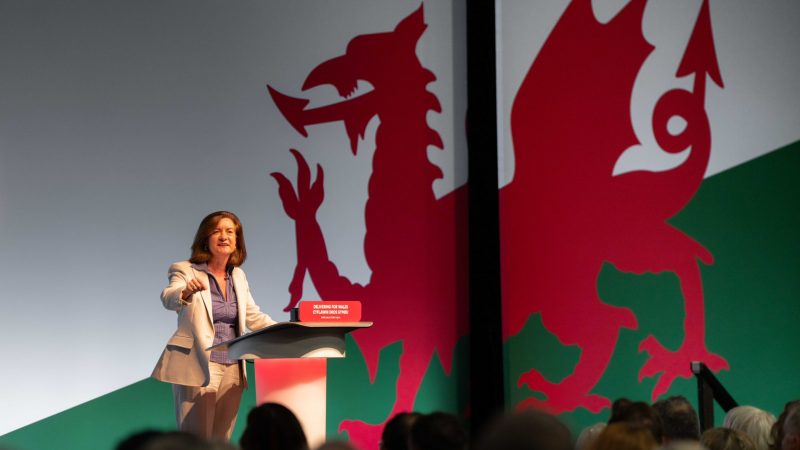
‘Will Welsh Labour’s new candidates embrace radical change or status quo?’


Photo: @Eluned_Morgan

As the Old Guard steps aside, a new generation of Labour candidates prepares for a defining Senedd election – one that will reshape Welsh politics for a generation.

The 2026 Senedd elections mark one of the most significant political shifts in Wales since devolution 13 out of 30 Welsh Labour Senedd members so far now stepping down. With the departure of key Labour figures – including former First Ministers Mark Drakeford and Vaughan Gething – and an expansion from 60 to 96 seats, Welsh Labour is set for a generational transition unlike any before.

Mick Antoniw, the long-serving and widely respected MS, summed up the moment in his resignation statement, calling for “fresh blood, new energy, and new progressive ideas” to shape the next era of Welsh politics. But those stepping up to fill the void face an unenviable in-tray. Fourteen years of austerity have left public services including the NHS, dentistry, and schools struggling, while Labour’s relationship with Westminster over further devolved powers remains uncertain.

READ MORE: Welsh Labour has a record of successes, but challenges remain ahead of 2026

One of the reasons I began writing about Welsh politics – particularly from within Labour – was the influence the party has on Wales’ governance. As new candidates emerge over the coming months, they will shape not just the party, but the country in the years to come. These are the people who will not only drive Wales’ recovery from the pandemic but also confront the economic and political crises of the coming decade.

Will the next generation of MSs come from Labour’s traditional pathways – local government, trade unions, and party staffers – or will this expansion bring in a more diverse and unconventional set of candidates? Will they seek greater autonomy for Wales, pushing for control over policing and the Crown Estate, or align more closely with Labour’s more notionally devo-sceptic Westminster leadership?

Above all, will this new cohort remain united, or will the same political shifts reshaping the UK – working-class areas moving toward Reform, cities becoming more progressive – fracture Welsh Labour’s traditional base? Will this new generation push the party’s focus toward their key concerns like cost of living, housing, and the environment?

With so many new Labour MSs likely to take office, the question isn’t just who they are, but what they stand for. To find out, I spoke to candidates themselves both on and off the record as well as former political figures about the direction of the party and the country in the years ahead.

Over the Top: The Battle for Selection

As the contest for these newly expanded seats begins, candidates are already making their case to party members. While some remain private about their ambitions, and in all likelihood will until the last possible moment, others have wasted no time in setting out their stall.

One of the first to declare in Wales, Owain Williams, an early figure in this cycle running for one of the coveted Cardiff seats, made his pitch clear: “We have to get Wales and Labour set up for the 2030s and 40s – we cannot just muddle along.”

What stood out in my conversations with potential candidates was their urgent desire for change – not just in ideological terms, but in the day-to-day realities of governance. Many of them, like the voters they seek to represent, have lived experience of the pressures facing working people.

READ MORE: Welsh Labour prepares to fight or fall in the culture war as Reform threat looms

“I understand the pressures that working parents, renters, and underrepresented communities are under, and I want to ensure that those perspectives are represented in the Senedd,” says Jen Burke, a senior Cardiff Councillor and Cabinet Member who is one of the declared candidates.

“I hope I represent a generation of candidates who are ambitious for Wales but also realistic about the challenges we face—whether on public services, cost of living, or devolution.”

Lived experiences define political careers. First Minister, Eluned Morgan, often speaks of her foundations as a vicar’s daughter in a deprived part of Cardiff. The new generation of candidates, have struggled through many of the age-defining issues of the post-financial crisis and post-pandemic world. This desire to address the big issues of the day is a theme throughout my conversations with potential candidates. Jobs, housing and energy, childcare and rising costs, chief among them.

Looking at last year’s new intake in Westminster, there is reason to believe that a new Senedd cohort could push intergenerational issues further up the agenda.

In Parliament, newly elected Labour MPs continued the age-old habit within the Labour Party of forming factions to influence policy and wasted little time in doing so. Groups like Labour YIMBY (the pro-housing Yes In My Back Yard group) and the Labour Growth Group are pushing Keir Starmer for planning reform to deliver housing, green energy projects, and critical national infrastructure. Their ability to communicate through social media more directly also provides a channel outside the typical broadcast round has drawn in fanatical online followings both from within and outside the party on these issues.

If my conversations are any indication, this generation seemed far more concerned with civil service and planning reform, rather than constitutional change.

Millennial Ministers?

According to election modelling I have seen, the present polling for Labour would point to, in all likelihood, a renewal of some sort of co-operation agreement with Plaid Cymru or a formal coalition.

This raises a tricky question of who gets to govern. If Labour forms the next administration, there will be roughly 17 returning MSs yet 14 ministerial positions to fill. With co-operation deals rather than formal coalitions being the norm, there’s a strong chance that Labour will control all these roles if they are the largest party, meaning some first-time MSs could be fast-tracked into Cabinet.

If so, some first-time MSs will be thrust into ministerial roles. Will they bring fresh ideas and energy to government? Or will they not only have to wrestle with the weight of responsibility, while navigating a civil service system, and bottlenecked legislative process that prefers caution over radical change?

System of a Down

Fresh energy and ambition will define this new intake but will soon collide with the entrenched realities of Welsh governance. Former Climate Change Minister Lee Waters warned in his podcast “The Fifth Floor” that the current legislative process and Welsh government itself is already stretched, raising questions about how much real change can be delivered.

Will the euphoria of victory fade into frustration once the reality of governing sets in? As co-operation deals, Senedd scrutiny committees, and the grind of legislative processes slow the desired pace of change, how will the new intake respond?

Candidate Owain Williams acknowledged this challenge: “This stuff has to be done quickly to make a difference […] A lot of things are in our control already, and we need to pull every lever we have to make them happen. […] You can’t just pass a law saying ‘deliver economic growth’—you have to be more creative with what you’ve got.”

Indeed, could this frustration lead to the formation of a more assertive internal grouping within Welsh Labour, as in Westminster?

Could a similar movement emerge in Wales, instead with newly elected MSs challenging the slow-moving bureaucracy and the boundaries of devolution?

The Battle for the Future of Welsh Labour

As the Senedd expands and new faces enter the fold, the future of direction of Welsh Labour remains uncertain. Experiencing not just a generational shift but an ideological one, that determines whether Labour embraces radical reform or maintains a certain level of status quo. One that still has to deal with political disruptors like Nigel Farage and Reform, and the increasingly uncooperative Plaid Cymru under Rhun ap Iorwerth while retaining their own base of support during a period of political polarisation.

This influx of new voices has the potential to reshape the party’s priorities in government, from devolution and economic growth to housing and climate policy. It remains to be seen just how radical that grouping could be and how much disruption there could be in a party grouping typically renowned for ‘iron rod discipline’.

This new generation has the opportunity to reshape Welsh Labour and by extension, Wales, but only if they can overcome the entrenched barriers. The real question is: will they push through, or will the system push back?


Right-Wing Watch – GB News’ outrage over teaching union’s apparent comments about Reform UK

30 March, 2025 
Left Foot Forward

It doesn’t take much for Nigel Farage’s loyal employer GB News to jump to the defence of the Reform UK leader.


It doesn’t take much for Nigel Farage’s loyal employer GB News to jump to the defence of the Reform UK leader.

‘Nigel Farage vows ‘WAR’ as teachers told educate children that Reform UK is ‘far right and racist,’ headlined the channel this week.

The article claims that Farage’s party is being unfairly vilified by educators who are allegedly encouraging students to adopt the view that the party is a ‘far-right’ and ‘racist’ organisation.

In its coverage, GB News presents Farage as a victim of some kind of ideological assault, framing the National Education Union’s (NEU) upcoming conference as an attempt to indoctrinate students with an anti-Reform agenda.

The report asserts that next month’s NEU conference will involve educators discussing whether groups like Reform UK have weaponised social issues — such as refugees, asylum seekers, Muslims, and Jews — to advance political aims.

The focus of the conference, as described by GB News, will be on “educating and challenging” students who show interest in “racist beliefs and far-right activity.” Teachers are reportedly being urged to create and implement anti-racist resources to prevent the spread of extremist ideologies. Yet, GB News treats this as a deliberate campaign to suppress free speech, conveniently overlooking the fact that teachers have a responsibility to prevent the spread of hate speech and extremism.

The report goes on to emphasise that Reform has continually denied claims of being far-right, citing a BBC apology for earlier labelling the party as such. It quotes Farage decrying the “endless propaganda” aimed at his party by educators, as well as Reform MP Lee Anderson, who accuses the NEU of abandoning their legal duty to political neutrality by “indoctrinating our youth, silencing free speech and spreading hateful rhetoric.”

Such framing ignores the responsibility that educators have to teach critical thinking and expose students to various perspectives, including those that challenge harmful ideologies.

The report also focuses on Reform’s growing popularity, particularly among younger voters. The party’s performance in mock elections conducted by the Hansard Society and the Association for Citizenship Teaching is presented as evidence of a surge in support among youngsters. But it then takes a swipe at schools apparently trying to downplay the party’s success in mock elections.

“However, certain schools were accused of being “embarrassed” of the results as the elections were initially widely publicised but faded into obscurity as school leaders attempted to dodge announcing the faux election frontrunner.”

This sensationalist reporting gives undue weight to Reform’s claims of victimhood, without even touching on the dangerous ideologies that educators are attempting to counteract. Teachers, after all, are not supposed to remain neutral in the face of hate speech and discriminatory rhetoric, their duty is to challenge and educate against it.

At least you’d hope that was the case.
UK

As the right continues its assault on remote work, researchers urge policy protection for disabled workers
30 March, 2025
Left Foot Forward

Amid the criticism, one key group is being overlooked - disabled workers.


Many on the right have long been critical of working from home, a trend that has surged since the Covid-19 pandemic.

In 2021, Rishi Sunak suggested that staff will quit their jobs if they can’t use the office, while Jake Berry joked that civil servants weren’t working from home but “woke-ing.”

But the most memorable dig came from Jacob Rees-Mogg who, in 2022, left condescending notes on government workers’ vacant desks mocking them for working from home.

Now, as employers consider returning workers to the office, right-wing media outlets are ramping up the anti-remote working rhetoric.

“British workers are the second most reluctant in the entire world to go into the office with just TWO days a week on average,” headlined GB News this week. The report cited a study by the property firm JLL, which surveyed 12,000 workers in 44 countries and found that only workers in the Philippines are less likely than UK employees to head into the office.

However, amid the criticism, one key group is being overlooked – disabled workers.

Remote and hybrid work have proven to be lifelines for many living with disabilities or long-term health conditions, new research has revealed.

The study was carried out by researchers from Lancaster University, the Work Foundation at Lancaster University, Manchester Metropolitan University, and Universal Inclusion. It was funded by the Nuffield Foundation.

It found that 6.64 million people work from home in Britain – one in five – and nearly a fifth of them are disabled (1.16 million).

In a survey of more than 1,200 people with disabilities, 80% said that working from home has a positive impact when it comes to managing their health. 85 percent of those surveyed said they feel working from home is essential or very important when looking for a new job, and nearly one in three who already work in hybrid roles would like to spend more time working from home.

Rebecca Florisson, lead analyst at the Work Foundation at Lancaster University, explained how rather than being an ‘optional extra,’ remote work is vital in enabled many disabled people get into and stay in work.

Florisson points to a recent government study that showed a quarter of those out of work and claiming health and disability benefits state they might be able to work if they could do so remotely.

“Yet recent calls by employers to return to the office overlook the critical perspectives and experiences of disabled workers who now account for almost one in four working age people in the UK,” she said.

The researchers examined the roles available to job seekers through the Department for Work and Pension’s Find a Job portal in the month from December to January this year. It found 94,827 new jobs were advertised but only one in 26 adverts had the option of hybrid or remote working (3.2% of the roles were hybrid and 0.6% were fully remote).

A quarter of these roles were available in London and the South East, with fewer opportunities elsewhere in the UK.

“This new evidence clearly tells us that if a job isn’t advertised as hybrid or remote, the vast majority of disabled workers who require access to homeworking won’t even apply,” said Florisson. “This may be non-negotiable for them so they can better manage their health and stay in work.”

The researchers are now calling for urgent policy reforms. These include increasing the availability of remote and hybrid work opportunities, potentially through legislation requiring employers to publish flexible working options in job adverts.

They are also advocating for strengthened support for disabled workers in accessing remote roles, particularly through the Department for Work and Pensions’ Access to Work scheme, which could be improved with better funding and increased awareness.

Further recommendations include overhauling the Disability Confident Scheme and aligning it with the proposed Equality (Race and Disability) Bill, including better tracking of disabled workers’ employment levels and reasonable adjustment rates.

Lancaster University’s Dr Paula Holland, lead investigator in the study, said:

“Employers should consider the needs and preferences of disabled workers when planning and implementing remote and hybrid working models, as workers currently face a lottery as to whether they are appropriately consulted before changes are made. To start to close the disability employment gap, policymakers and employers must commit to the design of inclusive, high-quality jobs that remove barriers for disabled workers.”