Monday, May 12, 2025

Carbon ostrich of climate change economics: Trump administration denying reality, experts say

'It is no longer federal government policy to maintain a uniform estimate of the monetised impacts of greenhouse gas emissions', Jeffrey B. Clark, the acting administrator of the White House office of information and regulatory affairs, wrote in a May 5 memo


Lisa Friedman
 Published 12.05.25


The White House has ordered federal agencies to stop considering the economic damage caused by climate change when writing regulations, except in cases where it is “plainly required” by law.

The directive effectively shelves a powerful tool that has been used for more than two decades by the federal government to weigh the costs and benefits of a particular policy or regulation.

The Biden administration had used the tool to strengthen limits on greenhouse gas emissions from cars, power plants, factories and oil refineries.

Known as the “social cost of carbon”, the metric reflects the estimated damage from global warming, including wildfires, floods and droughts. It affixes a cost to the economy from one ton of carbon dioxide pollution, the main greenhouse gas that is heating the planet.

When considering a regulation or policy to limit carbon pollution, policymakers have weighed the cost to an industry of meeting that requirement against the economic impact of that pollution on society.

During the Obama administration, White House economists calculated the social cost of carbon at $42 a ton. The first Trump administration lowered it to less than $5 a ton. Under the Biden administration, the cost was adjusted for inflation and jumped to $190 per ton.

But “it is no longer federal government policy to maintain a uniform estimate of the monetised impacts of greenhouse gas emissions”, Jeffrey B. Clark, the acting administrator of the White House office of information and regulatory affairs, wrote in a May 5 memo.

In his memo, Clark doubted the scientific consensus that pollution from things like transportation and industry is heating the planet.

He argued that there were too many “uncertainties” in calculating the figure, including “whether and to what degree any supposed changes in the climate are actually occurring as a consequence of anthropogenic greenhouse gas emissions”.

Scientists and environmental groups say that the Trump administration is denying reality.

“It’s very clear that climate change is causing harms to people in the US and around the world, and that these harms are growing worse with increasing warming,” said Robert E. Kopp, a climate scientist at Rutgers University. “By effectively saying the social cost of carbon should be treated as zero, this policy arbitrarily and capriciously ignores the science and economics of climate change.”

Michael Greenstone, an economist at the University of Chicago who first came up with the idea of the social cost of carbon as a justification for climate policy, said the new guidance means “feelings, not facts” would guide federal policy.

“The decision is like Alice in Wonderland’s Humpty Dumpty, who said ‘Words can mean whatever I choose them to mean’,” Greenstone said. “So, yes, it is possible to have policies that assume climate change will have no impacts, but that does not make it so.”


It remains unclear whether environmental groups will sue the administration fornot considering the social cost of carbon.


New York Times News Service
Radio Free Asia’s Uyghur service in danger following Trump’s decisions: “Without RFA, China will truly become a black hole for information”


Anne Bocandé
Editorial Director RSF
Organisation:  RSF_en

Reporters Without Borders (RSF) is alarmed by the announcement that the Uyghur service of Radio Free Asia (RFA), the world’s only independent Uyghur-language news service, will close at the end of May due to US President Donald Trump’s executive order to dismantle the United States Agency for Global Media (USAGM), which distributed funding to the international broadcaster. Gulchehra Hoja, Senior Journalist for RFA’s Uyghur service,⁩ explained to RSF what this means for the public’s access to reliable information in one of China’s most restricted regions. RSF urges US Congress to take action to restore RFA and honour its commitments to press freedom worldwide.


“Despite constant threats, RFA’s Uyghur journalists have tirelessly and courageously broken stories that revealed the true extent of the atrocities committed by the Chinese regime. Without RFA Uyghur, the international community will lose its only window into one of China's most restricted regions, while Uyghur people will suffer the loss of their only independent outlet. RSF calls on the US Congress and the international community to take action in response to this alarming situation and support the outlet's journalists so they can continue their vital work.
Anne Bocandé
Editorial Director RSF


In early May 2025, US international broadcaster Radio Free Asia (RFA) announced that by the end of the month, half of RFA’s language services, including the world's only independent Uyghur language news service, will no longer produce or publish new content. As RFA can no longer rely on the US Agency for Global Media (USAGM) to disburse the funds approved by Congress, the outlet began mass layoffs affecting half of its services. The cuts follow an executive order signed on 14 March by US President Donald Trump, which terminated federal funding for the USAGM, effectively paralysing the agency that supports vital media outlets such as RFA.

In China — a country that sits at the bottom of the RSF World Press Freedom Index 2025 and is the world’s biggest prison for journalists — RFA is one of the few outlets documenting the violent campaign of repression against the Turkic ethnic groups in Xinjiang Uyghur Autonomous Region, and the world’s only independent news service producing content in Uyghur language. In an interview with RSF, the service’s senior journalist Gulchehra Hoja how the closure of RFA’s Uyghur service will impact access to information in one of the world’s most closed-off regions.

RSF: Could you tell us about the work of RFA Uyghur journalists?

Hoja: For 26 years, RFA journalists have been exposing the human rights abuses suffered by Uyghurs and other Turkic peoples at the hands of the Chinese regime, providing the world with reliable facts, first-hand evidence and news. We have been reporting on the oppression, suppression, and unjust policies of the Chinese authorities in Xinjiang. Our news has been used as reference material by the US government for setting policies towards China, as well as by international human rights organisations and research centres.


RSF: What impact will the closure of RFA have on Uyghur people if their only access to factual and independent media is gone?

Hoja: 20 million Uyghurs had only one reliable international news source and radio station that could convey their voice to the world: Radio Free Asia. It is a very regrettable decision by the Trump administration to erase the voice of the Uyghurs, especially when the regime’s genocide continues and China has intensified its false propaganda to normalise it. The effect this will have on the Uyghurs is nothing less than “giving up.” It brings deep despair.


RSF: What RFA journalists endured for their reporting on China?

Hoja: RFA journalists have always been victims of China’s transnational repression tactics. I have become a target of China since the day I first spoke on the radio under my own name. In November 2001, China issued a ‘Red File’ on me, destroying my videos, photographs, and audio files from before I came to the United States. They held my family hostage. They pressured my parents. Since then, I have not been able to return home. In February 2018, I learnt that 25 of my direct relatives had been taken to the so-called re-education camps. Additionally, 50 family members of six journalists from our radio station had been kidnapped. We did not bow to these threats, and continued reporting.


RSF: Can the potential closure of RFA’s Uyghur service be weaponised by the Chinese regime to further their propaganda?

Hoja: China has previously invested heavily in blocking Radio Free Asia’s broadcasts and set up special jamming stations. It has also used [propaganda] media outlets to falsify our news. Now, by shutting down our radio station on its own, the US government is giving the Chinese government a reward. Without RFA, China will truly become a black hole for information. I still can’t understand the motive behind it. Losing our radio station has become a sign that the United States has failed to keep its promise of democracy and human rights. I think it is also harmful to the US. Nothing can replace Radio Free Asia.


RSF: What is your reaction to the fact that, after the outlet’s closure, Uyghur voices might lose their platform in the democratic world?

Hoja: The closure of such an important media outlet is not only a matter of unemployment for us journalists, but also a blow to our spirit. I spent 24 years devoting not only my mind but also my heart and life to this broadcaster. As a result, I became a target of the Chinese regime, labelled as a “terrorist.” I used to not be afraid of these open threats, but rather proud, as I had the utmost confidence that the American government valued our work and would support us. At a time when China is torturing and killing my people, as Uyghur journalists in the United States, we need protection [from China’s transnational repression] more than ever. I cannot imagine our future. But what worries us most is the hopelessness of our voiceless people.


RSF: What will the future bring for RFA journalists?

Hoja: For 24 years, our people have been hearing that Radio Free Asia is the voice of the drowned, the voice of the free press… This was also our promise to our people. It was our mission to broadcast their voice to the world. We will not abandon our mission to be their voices, as we can also make our reporting heard through social media. I express my deep respect to my fearless journalist friends who are fighting for justice against oppressors. Being a voice for the voiceless requires a price, and standing up for justice against oppressors requires courage. We are proud to be journalists.


China’s repression of Uyghur journalists

Since 2016, Beijing has been conducting a violent campaign of repression in Xinjiang province in the name of the “fight against terrorism,” which international observers characterise as a “genocide.” According to the latest count by RSF, 79 journalists and press freedom activists are being held in Xinjiang, including Sakharov Prize winner Ilham Tohti. At the same time, China exerts transnational repression against Uyghur journalists who continue to report on the regime’s atrocities.

Ranked 178th out of 180 countries and territories in the 2025 RSF World Press Freedom Index, China is the world's largest jailer of journalists and press freedom defenders.
Trump tariffs and US Imperialism
MAY 12, 2025
AFRICA IS A COUNTRY


Trump’s April 2025 tariff blitz ignited market chaos and deepened rifts within his own coalition. Beneath the turmoil lies a battle between technocrats, ultranationalists, and anti-imperial populists, all vying to reshape—or destroy—American global power.


Newsapaper stand in Nottinghamshire, UK April 2025. 
Image © Steve Travelguide via Shutterstock.


On April 2, 2025, Donald Trump declared a “Day of Liberation” and slapped massive tariffs on most countries—excluding Russia but including a 50% tariff on Lesotho. The standard Left argument is that Trump’s tariffs represent capital’s warfare against the working class in response to the crisis of global capitalism. Of course, there’s some validity to that view, but it tends to operate at an excessively high level of abstraction.

More immediately, it doesn’t explain the ferocious backlash to tariffs from multiple fractions of capital, both within and beyond the Trump coalition. After the tariff tsunami, Elon Musk called Trump’s economic advisor Peter Navarro “a moron and dumber than a sack of bricks.” Meanwhile, liberal mainstream media outlets screamed bloody murder, portraying Trump not only as dumb but deranged. The frenzy only intensified when the stock market meltdown carried over into the bond market, which, as financial orthodoxy tells us, isn’t supposed to happen.

Trump responded by postponing most of the tariffs for 90 days, even as he ramped up the trade war with China. In just over a week, Wall Street went ballistic, the dollar rapidly devalued, Trump’s approval ratings tanked, and much of the Republican Party—and key fractions of capital—went into panic mode, even as they remained terrified of crossing him. These dynamics remain ongoing.

Trump’s tariffs are not merely erratic protectionist gestures. Rather, they form part of a blunt and confused arsenal aimed at dismantling post-Second World War US imperialism and replacing it with a brutal new form of nationalist global domination—one stripped of the trappings of “soft power” such as USAID. This multi-sided project emerges from factions within the New MAGA Coalition, and takes different—and often contradictory—forms.

Understanding these contradictions in their specificity is essential, not just for critique but for posing questions about new possibilities for organizing and alliance-building—not only in South Africa, but working towards a concrete internationalism, a topic to which we’ll return later.
The new MAGA coalition

So, what is this New MAGA Coalition behind Trump 2.0? First, it includes fractions of capital that extend well beyond those who underwrote Trump 1.0—most notably Elon Musk and the South African “PayPal mafia,” along with the tech broligarchy so grotesquely on display at the inauguration: Zuckerberg, Bezos, and other billionaires.

It also encompasses elements of the petty bourgeoisie and working class that go beyond Trump’s earlier mostly white cross-class base, as the late Mike Davis described in Catalyst in 2017. Most notably, sizable Latino communities in some US regions have come to identify with MAGA—vividly documented by Paola Ramos in her recent book on the Latino far right. Another notable addition in 2024: disaffected, mainly young Black men who joined the MAGA coalition.

What knits this awkward coalition together is a powerful anti-woke sentiment and a ferocious opposition to liberal DEI (Diversity, Equity, Inclusion) initiatives that proliferated after the nationwide Black Lives Matter uprisings of 2020. David Walsh describes “woke” as a “catch-all specter that could variously connote the ravages of state planning, the anarchism of street protests, or the godlessness of modern secular society—not an empty vessel, exactly, but a foil and common enemy against which a political coalition of often diametrically opposed interests could congeal,” as he writes in Boston Review.

Also traveling under the anti-woke banner is unfiltered racism, patriarchy, and vicious heteronormativity—especially targeting trans people—all of which underscore the limits of elitist liberalism, as discussed on The Dig. These brutalities are now wrapped in a (mostly white) Christian Nationalist package that stretches back to Trump 1.0, but is being significantly re-elaborated in Trump 2.0.

What also distinguishes Trump 2.0 is its rooting in a far more coordinated and organized project of dismantling and privatizing the state, one that’s been in formation for several years. Its blueprint is a 920-page document titled “Mandate for Leadership: The Conservative Promise,” published in 2023 by the Heritage Foundation. It has come to be known as Project 2025: Presidential Transition Project.

During the campaign, Trump denied having read it (probably true), but the steaming pile of executive orders he gleefully signed post-inauguration came straight out of it and continues to do so. Unlike Trump 1.0, Trump 2.0 has determined and coherent operatives behind it. They’re driving the juggernaut of destruction—most notably Russell Vought, head of the powerful Office of Management and Budget—despite the clown-car nature of most of Trump’s cabinet. Even if Musk were to depart for Mars brandishing his chainsaw, the scaffolding of Project 2025 appears firmly in place, at least on the surface.

But look a little closer and you’ll find that this scaffolding had a fatal weakness from the start. Scroll down to Chapter 26 on Trade, and two sharply opposed visions emerge.

In the section on “Fair Trade,” Navarro—Trump’s key pro-tariff advisor in both administrations—concludes that “America gets fleeced every day in the global marketplace, both by a predatory Communist China and by an institutionally unfair and nonreciprocal WTO.” Focusing on the large trade deficit by which the US imports significantly more than it exports, he asks: “Might America even lose a broader hot war because it sent its defense industrial base abroad on the wings of a persistent trade deficit?” The answer, for Navarro, is clear: tariffs are imperative to “restore American greatness, both economically and militarily,” by bringing manufacturing back home.

In the opposing section, “The Case for Free Trade,” Kent Lassman presents the classic conservative argument against protectionism. Declaring that “American manufacturing is currently at an all-time high,” he slams tariffs as a lose-lose-lose scenario: the tariff raiser loses access to affordable goods, the target country loses export markets, and retaliatory tariffs punish the instigator yet again. He also warns of the hidden costs of tariff dodging. For Lassman, recent departures from free trade have damaged the US economy and “weakened alliances that are necessary to contain threats from Russia and China.” He calls for reaffirming “openness, dynamism, and free trade” as the pillars of continued US dominance into the next century.

These splits and contradictions have carried over into the tariff wars erupting within the MAGA coalition itself. There are now two distinct pro-tariff projects, both aimed at reconfiguring US imperialism. One is the so-called Mar-a-Lago Accord, led by Treasury Secretary Scott Bessent. The other is a far more radical vision pursued by Steve Bannon and the wide array of popular forces he continues to mobilize.

Before unpacking these competing projects and their wider implications, it’s important to sketch briefly the key contours of US imperialism. The main pillars of American global power are a specific configuration of finance capital—with the US dollar as global reserve currency—backed by overwhelming military force.

Because key commodities such as oil and gold are priced in US dollars, all countries must hold dollars. Small open economies like South Africa operate at a distinct disadvantage. Meanwhile, the US can accumulate massive debt by issuing Treasury Bonds—a privilege no other country enjoys. Since the end of the Cold War, the US has spent over $30 trillion more than it has taken in.

China has played a key role in underwriting this system, using export earnings to purchase US debt, thereby lowering the cost of borrowing. At the same time, shrinking employment, stagnant wages, and rising inequality since the 1980s pushed much of the US population into a frenzy of consumption and spiraling personal debt. This dynamic relies on large trade deficits—precisely what significant factions of the MAGA coalition see as the greatest threat to American power.

Back in 2019, historian Adam Tooze asked, “Is this the end of the American Century?” His answer: not quite. Financial and military power remained intact. But what had collapsed was any claim that American democracy could serve as a political model. What we were facing, he wrote, was “a radical disjunction between the continuity of basic structures of power and their political legitimation.” When Joe Biden took office in 2021, he sought to resuscitate the liberal international order—an order whose cruel hypocrisies are now starkly exposed in US support for Israel’s war on Gaza, as Adam Hanieh has brilliantly analyzed. Trump 2.0, through its tariffs and trade wars, is in effect attacking the financial pillar of US global power with a sledgehammer—even if this is not quite what some of his pro-tariff advisors intended.
Tariffing the end of empire?

Unlike Navarro and others who see the trade deficit as the central existential threat to the US, the authors of the so-called Mar-a-Lago Accord are primarily concerned with what they regard as the gross overvaluation of the dollar. Their aim, per a New York Times report, is to use:

tariffs and other strong-arm tactics to force the world to take a radical step: weakening the dollar via currency agreements. This devaluation, the theory goes, would make U.S. exports more competitive, put pressure on China, and increase manufacturing in the United States.

In addition to Treasury Secretary Bessent, a key figure is Stephen Miran, who Trump appointed as Chair of the Council of Economic Advisors in March 2025. Just after the 2024 election, Miran published “A User’s Guide to Restructuring the Global Trading System.” In dense, economistic language that Trump has almost certainly never read, the 41-page document lays out the justifications and strategies for devaluing the dollar using threats of tariffs and defense pact withdrawals—country by country.

In short, Bessent and Miran envisage tariffs as part of a coercive negotiation strategy: to pressure countries into raising their currency values relative to the dollar, and to relocate key industries to the US. These include sectors deemed vital to national security, such as semiconductors, pharmaceuticals, and military equipment. While the “User’s Guide” insists the dollar must remain the dominant currency, it also acknowledges growing efforts to find alternatives, such as the Chinese renminbi or a potential BRICS currency. Though such efforts are deemed doomed to fail, Miran asserts, “alternative reserve assets like gold or cryptocurrencies will likely benefit.”

The Mar-a-Lago Accord, when read alongside the “User’s Guide,” affirms the substantial advantages of the US’s reserve currency status—cheap borrowing and global power projection among them. But it argues that the costs are now outweighing the benefits. “As the economic burdens on America grow with global GDP outpacing American GDP,” Miran writes, “America finds it more difficult to underwrite global security, because the current account deficit grows and our ability to produce equipment becomes hollowed out.” Hence, the push for policies that “recapture some of the benefit our reserve provision conveys to trading partners and connect this economic burden sharing with defense burden sharing.”

Even so, the “User’s Guide” issues a sharp warning against disruption and volatility: “There is a path by which the Trump Administration can reconfigure the global trading and financial systems to America’s benefit, but it is narrow, and will require careful planning, precise execution, and attention to steps to minimize adverse consequences.”

Naturally, the preposterous tariffs that Trump unveiled on April 2 (reputedly dreamed up by Navarro) run directly counter to these cautious recommendations—leaving Bessent and Miran to bluster about the President’s “extraordinary negotiating skills.” As the markets melted down and Trump threatened to sack the chair of the Federal Reserve while ramping up attacks on China, Bessent increasingly found himself in the awkward position of having to leash the rampaging orange bulldog.

In the ensuing economic, political, and military chaos, the technocratic pipe dream of an orderly reconfiguration of US imperial power has imploded, leaving the remains of the Mar-a-Lago Accord scattered across the manicured grounds of the White House. What persists, however, is a hard core of MAGA support for a far more radical popular project: one aimed at dismantling US imperialism as we’ve known it.
Nationalist-populist opposition to US Empire

In a striking profile from October 2024, James Pogue shows how Stephen Bannon “has turned his immensely influential War Room show … into a cross between a daily troop muster and a policy training school, which he uses to tutor millions of “peasants,” as he likes to phrase his target demographic, on how this global power structure actually functions.”

He quotes Bannon insisting, “To be serious, you’ve got to be anti-imperial.” People are waking up, he claims: “Once you talk about how the system is financed, they are fucking furious. A working-class audience can understand that something’s not right with the system, but they can’t put their finger on it.” Calling his listeners “the army of the awakened,” Bannon has made it his mission to lay it all bare, Pogue reports.

Before unpacking the substance of this anti-imperialism, some context matters. Bannon is not best understood as a singular “great man” but as a figurehead within a global network of right-wing Christian nationalist forces, rooted in the US and deeply embedded in the MAGA bloc. He’s also closely allied with Peter Navarro—both were jailed in 2024 for contempt after refusing to testify in the January 6 congressional inquiry. While Navarro maintains Trump’s ear despite mockery from parts of MAGA, Bannon is far more articulate and intellectually potent, and actively shapes the movement’s populist base.

In an article from 2020, I outlined how Bannon was instrumental in constructing the popular forces that helped propel Trump’s 2016 victory. First, he hijacked the anti-Obama Tea Party from the Koch brothers and delivered it to Trump. Second, he played a major role in stoking backlash to bipartisan immigration reform efforts in 2013—linking xenophobia to anti-trade sentiment and mobilizing it before these issues had fully entered the political mainstream. In a 2017 interview, Bannon recalled saying:

I said, look, trade is number 100 on the list of issues, nobody ever talks about it, and immigration is like two or three, but if we ran a campaign that really focused on the economic issues in this country and really got people to understand how trade is so important, and immigration are inextricably linked… we could really set this thing on fire.

Trump, he claims, became the mouthpiece for these ideas by “[deploying] a very plain-spoken vernacular.”

Third, Bannon seized control of key media outlets—including Breitbart News, massively funded by the Mercer family—which he used to destroy enemies both inside and outside the GOP, while pushing his conservative, anti-globalist, traditionalist nationalism. By the 2016 election, Breitbart had far outstripped Fox News, dominating the right-wing media ecosystem. Today, Bannon reportedly believes he wields more power through War Room than he ever did as Trump’s campaign architect or White House strategist.

The “anti-imperial common sense” Bannon communicates to his “peasant” audience includes—but far exceeds—Navarro’s tariffs, which he supports. It also goes well beyond the Mar-a-Lago Accord. Rather than merely twisting global systems of finance and military power in America’s favor, Bannon and his fellow hyper-nationalists seek to obliterate altogether the post-1980s form of US imperialism.

What exactly does this anti-imperialism consist of? It has a solid—and glittering—material base. Bannon’s worldview is reportedly detailed in a multi-volume report titled The End of the Dollar Empire, available only via the Birch Gold Group, a firm that offers not just a gold-backed ETF but actual physical gold. Downloading the report requires entanglement with Birch Gold, so I passed. But listening to War Room podcasts, one can’t miss the constant exhortations to secure your IRA with Birch Gold in anticipation of a dollar collapse.

Bannon isn’t focused on trade deficits or dollar valuation alone. He’s obsessed with the entire dollar-based global order. As Pogue notes, it creates a perverse military incentive: “It lets us finance huge expenditures on hypercomplex weapons and allows us to toss off hundreds of billions of dollars to support Ukraine’s and Israel’s wars”—even as it hollows out America’s ability to manufacture basic war matériel. Biden’s attempt to weaponize the dollar during the Ukraine war failed to crush the ruble, and raised a new alarm: that others might now see it’s possible to abandon the dollar entirely.

Pogue also interviews Samuel Finlay of the IM-1776 project, whose views align with Bannon’s. Finlay emphasizes “rootedness” and “tradition,” which he connects to a hatred of global capital and resistance to the military-industrial complex—a position that directly contradicts decades of Republican orthodoxy. People like Finlay, Pogue writes, have come to the same “awakening” Bannon is fomenting: that the system has betrayed those who believed in and served it—leaving them with NAFTA, fentanyl, and an elite that views their values as backward and dangerous.

War Room weaves these insights into a broader narrative. Disaffected veterans and others are fed a critique of “the lords of Wall Street” and “the apartheid state of Silicon Valley.” The message: elites own everything and have sold out to the Chinese Communist Party—thus funding the very forces attacking America. According to Bannon, we are now in a “Time of War,” one that dwarfs debates over trade, inflation, or price hikes.

So, how do the wild gyrations of post–Liberation Day fit into the Bannon-Navarro worldview? From their perspective, the unraveling of the “Dollar Empire” since April 2 looks like progress. As Pogue notes, Bannon and fellow populists across the West have come to embrace a multipolar world modeled on Russia’s strategic vision—one that displaces the American-led order Bannon believes has ravaged the US. On an April 25 episode of War Room Battleground, Bannon claimed that we are “moving toward a new geopolitics of blocs.”

Yet the very Americans Bannon sees as crushed by the Dollar Empire are also most exposed to its chaotic dismantling. First, prices for the cheap imports that sustain the US economy—and low-income Americans in particular—are spiking. Second, as the dollar declines as reserve currency, government spending will be slashed. And who bears that burden? Early signs include proposals to gut Medicaid to help fund tax breaks for the rich. Third, rising automation will sharply undermine promises that reindustrialization will yield secure, high-wage jobs and revive devastated regions.

In short, the idea that a protectionist, isolationist, national capitalism—mashing up xenophobia, anti-globalism, Christian nationalism, and anti-elite rage—can deliver liberation is just as much of a pipedream as the Mar-a-Lago Accord.

Which brings me back to the central claim: understanding Trump’s tariffs as blunt weapons aimed at either reconfiguring or shattering US empire matters deeply for the Left, both in the US and globally. What we need is not nostalgia for the collapsing liberal order, nor Kamala-style “politics of joy” in the face of atrocities in Gaza. Instead, we need what Stefan Kipfer calls “concrete internationalism.” He develops the analysis with reference to current conditions in Canada, but with much broader transnational relevance. Distinguishing between nationalism and national-popular democratic projects, he insists that “left national-popular projects can offer alternatives to nationalism only if they are components within larger internationalist strategies” that reject the tendency of all nationalisms “to demote emancipatory social questions of class, gender, and race.” In South Africa, we are, of course, sharply aware of these dangers.

Trump’s tariff debacle and the ensuing meltdown have exposed the fragilities of the liberal international order, the absurdities and devastations of global capitalist dynamics, and the dangers of resurgent nationalisms and forms of fascism. Grappling with the limits and contradictions of a Bannonite “anti-imperial common sense” can help, I hope, to make space not only for protest and resistance, but also for envisaging and building toward a very different project of concrete socialist internationalism.

Revised version of a presentation to the Zabalaza for Socialism Conference on Coming to Terms with Trumpism: What Should the Global South Do? April 13, 2025.
The hidden costs of Trump's 'madman' approach to tariffs

The downsides of his trade policies are symptoms of a larger strategic flaw


quincyinst.org
Joshua Schwartz
May 12, 2025

Is the trade war launched by Donald Trump the act of a madman or a mad genius? To the extent Trump’s tariffs are a “negotiating strategy,” as Treasury Secretary Scott Bessent has claimed, are critics missing that they are simply part of the “art of the deal” that will enable America to gain coercive leverage over other states? According to the madman theory of international politics, it is possible Trump’s gambit has a strategic logic. However, there is a crucial flaw with this strategy that will likely cause it to fail.

The madman theory was developed in the nuclear weapons era by the scholars Daniel Ellsberg(the famous, or infamous, leaker of the Pentagon Papers) and Thomas Schelling (who won the Nobel Prize in economics). Its logic is that some threats, such as launching a nuclear attack against a nuclear-armed opponent, inherently lack credibility because carrying them out would be irrational in that it would cause both the target state and the threatening state great pain. However, if the leader making the threat is perceived as irrational or crazy, then the threat may actually be believable, and the target could decide that backing down to avoid punishment is the prudent option. As Richard Nixon said in a private oval office discussion with his chief of staff in 1968:

“I call it the Madman Theory, Bob. I want the North Vietnamese to believe that I’ve reached the point that I might do anything to stop the war. We’ll just slip the word to them that ‘for God’s sake, you know Nixon is obsessed about Communism. We can’t restrain him when he is angry—and he has his hand on the nuclear button’—and Ho Chi Minh himself will be in Paris in two days begging for peace.”

Trump’s tariff strategy may follow a similar logic. According to the Yale Budget Lab, Trump’s tariffs could increase prices for the average American household by almost $5,000 just this year. Given the mutual costs Trump’s tariffs involve, his threats may lack credibility on their face, just as many nuclear threats do.

However, to the extent Trump is perceived of as at least somewhat crazy, his threats may be more believable than if he was viewed as rational. In fact, like Nixon, Trump is a self-professed fan of the madman strategy. For example, in a discussion with top cabinet officials regarding the U.S.-South Korea trade deal in 2017, Trump reportedly told Robert Lighthizer, the U.S. Trade Representative:

“You’ve got 30 days, and if you don’t get concessions then I’m pulling out.” “Ok, well I’ll tell the Koreans they’ve got 30 days,” Lighthizer replied. “No, no, no,” Trump interjected. “That’s not how you negotiate. You don’t tell them they’ve got 30 days. You tell them, this guy’s so crazy he could pull out any minute…You tell them if they don’t give the concessions now, this crazy guy will pull out of the deal.”

Trump’s plan to end the U.S.-South Korea Free Trade Agreement in his first term was ultimately foiled by Gary Cohn, his chief economic advisor, who reportedly stole from Trump’s desk a letter that would have made the withdrawal official after Trump signed it. However, with a team of more loyal and pliant advisors installed in his second term, Trump has been able to follow through on his trade war strategy based on the madman theory.

Trump also seems to believe that this strategy is having the intended effect: “I am telling you, these countries are calling us up, kissing my ass. They are dying to make a deal…‘Please, sir, make a deal. I’ll do anything. I’ll do anything sir.’” Indeed, the European Union and countries like Vietnam and Israel have offered to lower trade barriers on American goods in return for the removal of Trump’s tariffs. The U.S. and Britain also just struck a trade deal that ostensibly involves some real, even if limited, concessions by the United Kingdom.

Despite some advantages, however, the madman strategy is far from a panacea and entails significant drawbacks that will likely limit what Trump is able to achieve. One major issue (for which I provided evidence in a peer-reviewed study that conducted surveys of the American public) is that a leader who is perceived as mad is likely to face increasing levels of disapproval among their own domestic public. This can then undermine their bargaining leverage with foreign leaders.

The madman strategy is generally unpopular domestically because the public values competence in leaders, and thus is unlikely to look kindly on a leader it perceives of as actually or potentially crazy. Alexander Hamilton made this argument about John Adams, a member of his own Federalist Party, when discussing the “great and intrinsic defects in his character, which unfit him for the office of Chief Magistrate.” Richard Nixon said much the same in a private Oval Office conversation in 1973, when he said, “We are never going to have a madman as president, in this office…Ours [system] throws them out…about every four years, if a guy shows that he’s [unclear phrase], out!” That is one key reason why Nixon kept his own attempt to use the madman strategy to convince the Soviets and Vietnamese he was crazy and might use nuclear weapons to win the Vietnam War secret from the American public.

This reasoning helps explain why Trump’s trade war is unpopular domestically. Moreover, well-known psychological biases make average citizens more averse to losses than they are attracted to gains. In the case of a trade war, this means the public is likely to be wary of paying higher prices than they were previously in return for the theoretical promise of greater domestic production in the future. This is especially the case given that Trump’s promises to tame inflation was one of his campaign’s most effective selling points in winning the presidency last fall.

The domestic unpopularity of the madman strategy can undermine a leader’s leverage in negotiations with other states, as foreigners may doubt the leader will have the political capital to enact or maintain the threatened policies in the short, medium, or long term. This is what appears to be happening in the case of Trump’s tariffs, as the strongly negative reaction among the U.S. public and business community—the fact that that, in Trump’s words, “they were getting a little bit yippy, a little bit afraid”—forced the president to dramatically reverse course and pause the tariffs for 90 days before even a single deal was struck, undermining his bargaining leverage. Some foreign governments may now question whether Trump will be willing to reimpose the tariffs even if his terms are not met. As a New York Times article put it, “[Chinese leader] Xi [Jinping] learned that his adversary has a pain point.” By backing down, Trump may also have revealed that he is less crazy than he would like adversaries to believe, which was also the fatal flaw of Nixon’s attempt to use the madman strategy to win the Vietnam War.

In sum, while critics who claim the madman theory has zero utility are somewhat overstating the case, it does have crucial flaws that will severely undermine what Trump will likely be able to achieve in the realm of international trade. Moreover, the harsh economic costs of this strategy and its blatant inconsistency with long-held American values championed since World War II make it a clearly unwise course to pursue moving forward.


Joshua Schwartz
Joshua A. Schwartz is an assistant professor at the Carnegie Mellon Institute for Strategy & Technology. He holds a PhD from the University of Pennsylvania and was previously a grand strategy, security, and statecraft fellow at the Harvard Kennedy School and Massachusetts Institute of Technology.

The views expressed by authors on Responsible Statecraft do not necessarily reflect those of the Quincy Institute 
Chinese companies bought up European ports — and now Brussels is starting to worry

Chinese firms own stakes in about 30 European ports, and that’s raising security concerns.


Chinese giants COSCO and China Merchants, as well as Hong Kong-based Hutchison now hold stakes in more than 30 terminals across the EU. | Stephanie Lecocq/EPA-EFE


May 9, 2025 
By Martina Sapio
POLITICO EU

Europe is getting twitchy about who owns its ports, with mounting anxiety driven by the outsized footprint of Chinese firms across the bloc’s maritime gateways.

Transport Commissioner Apostolos Tzitzikostas on Thursday told industry leaders that Europe’s ports must “reconsider security … and examine foreign presence more carefully.” It was one of the clearest signals yet from Brussels that what once was seen as a benign investment is now starting to look like a security liability.

The Commission’s recent defense white paper echoed that concern by floating the idea of stricter controls on foreign ownership of “critical transport infrastructure.”

That unease is mirrored in a draft paper from the Socialists and Democrats in the European Parliament, seen by POLITICO, which calls for tougher rules in the upcoming overhaul of the EU’s foreign investment screening regulation.

Neither Tzitzikostas nor the S&D mentioned China by name, but the subtext wasn’t exactly subtle. Simon Van Hoeymissen, a researcher at Belgium's Royal Higher Institute for Defense, said the language likely nods to Beijing’s expanding hold over key European ports — from Antwerp-Bruges and Rotterdam to Piraeus in Greece.

Chinese giants COSCO and China Merchants, as well as Hong Kong-based Hutchison now hold stakes in more than 30 terminals across the EU.

‍“The reality is clear,” said Ana Miguel Pedro, a Portuguese MEP with the center-right European People's Party. A member of the Parliament’s Seas, Rivers, Islands & Coastal Areas Intergroup, she warned that “foreign state-driven actors like Beijing are operating with a level of coordination and intent that far exceeds the fragmented response of individual countries.”

Pedro argued COSCO isn’t behaving like a typical market actor but is taking orders from the Chinese Communist Party. “Its growing presence in ports is not just an economic concern,” she said. “It’s a strategic vulnerability.”

The EU is starting to see it that way, too.

"Russia’s invasion of Ukraine and China’s unofficial support for Russia have only heightened concerns about the security of the EU’s ports," says a recent report from the Warsaw-based Centre for Eastern Studies think tank.

Transport Commissioner Apostolos Tzitzikostas on Thursday told industry leaders that Europe’s ports must “reconsider security … and examine foreign presence more carefully.” | Marcin Obara/EPA

One example of the kind of strategic entanglement the EU is now confronting is playing out in Poland, at the Gdynia Container Terminal, where Hutchison has held a stake for over 20 years.

That situation could change. Under pressure from U.S. President Donald Trump, who wants Chinese-linked companies out of the Panama Canal, Hutchison is negotiating a $23 billion sale of port properties worldwide, including 14 in Europe, to a consortium led by BlackRock and including Mediterranean Shipping Company. However, that deal hit a wall in March after Beijing intervened.

What makes Gdynia especially revealing isn’t just the trade it handles — it’s what sits next door: a naval base, a shipyard, and the headquarters of Poland’s elite naval special forces, meaning that whoever runs the terminal holds a front-row seat to European and NATO military logistics and defense operations.

Recognizing the strategic significance, the Polish government has listed the terminal as critical infrastructure, meaning the operator has to work closely with the government on security.

This high-stakes backdrop sharpens the edge of Pedro’s warning — and underscores why the EU is now reassessing foreign involvement in its ports with renewed urgency.

“If a foreign adversary exploits a vulnerability in one European port, it jeopardizes all of us,” she said. “In today’s world, we cannot afford strategic blindness while others act with full visibility and intent.”
This US-owned factory in China made toys bound for Walmart. Tariffs put it on life support


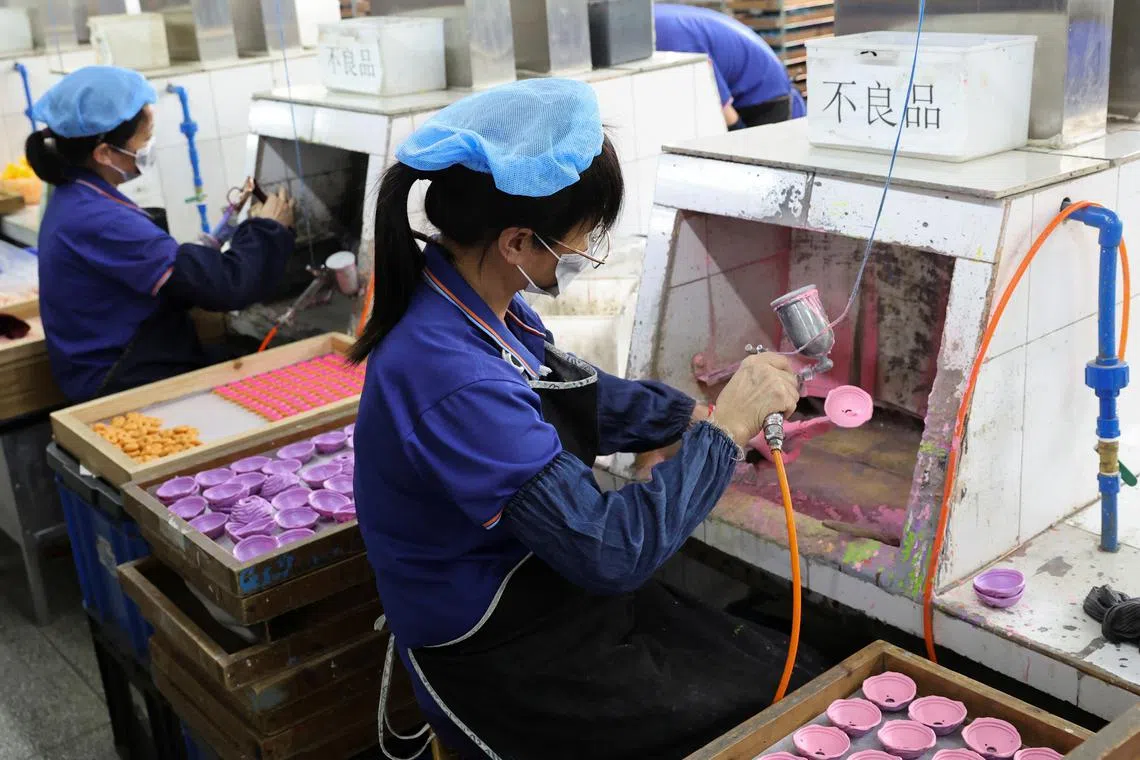
Employees of Shaoguan Guanghua Plastic & Hardware Products Co., Ltd spray paint on toy parts in the factory in Shaoguan, Guangdong province, China May 9, 2025. REUTERS/Go Nakamura

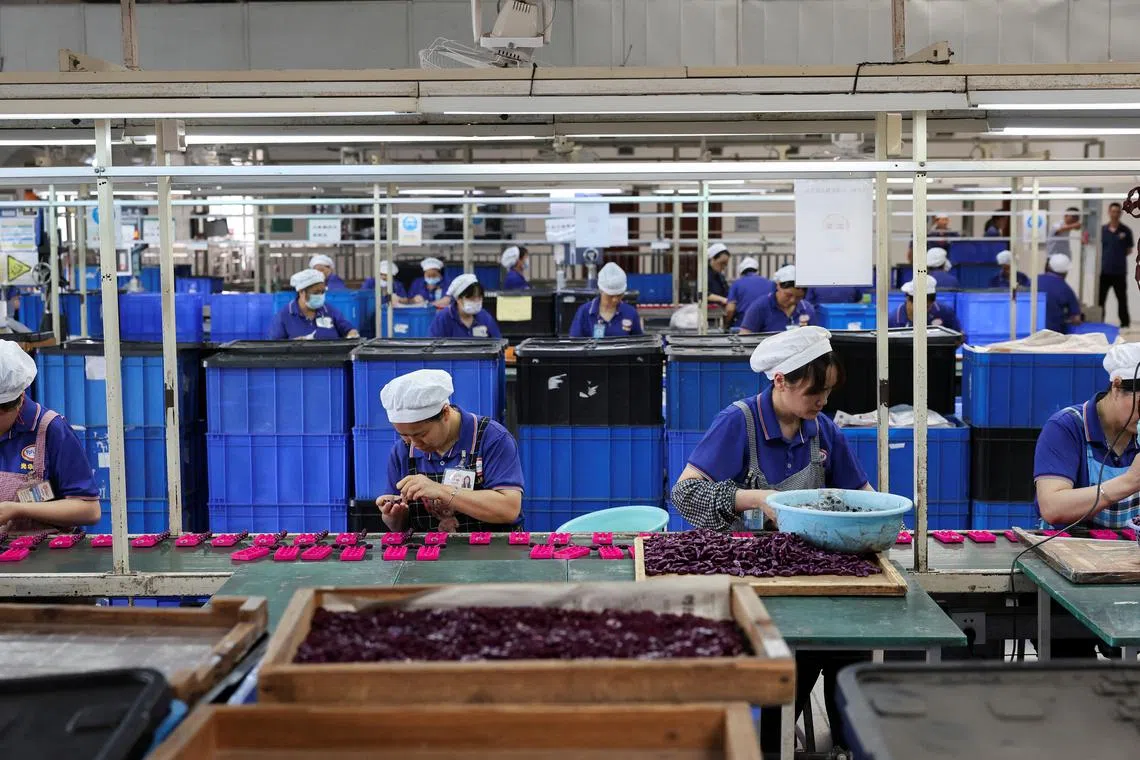
Employees of Shaoguan Guanghua Plastic & Hardware Products Co., Ltd work to assemble toy parts in the factory in Shaoguan, Guangdong province, China May 9, 2025. REUTERS/Go Nakamura

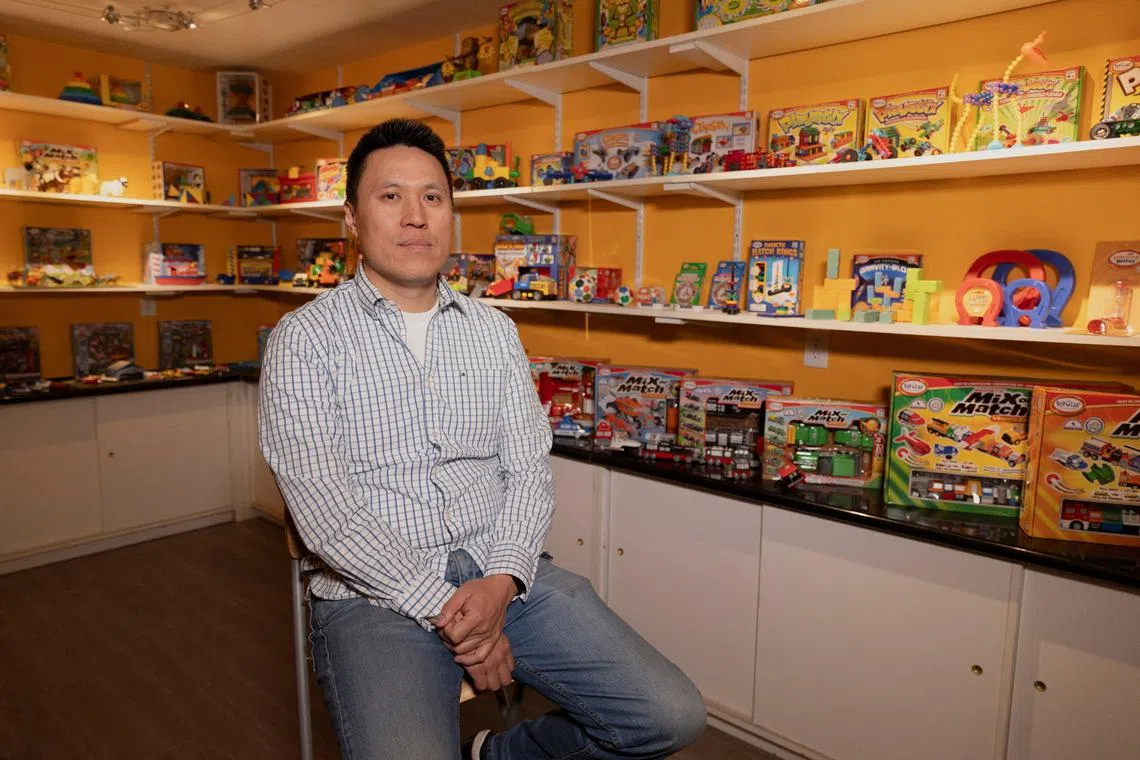
on Cheung of toy manufacturer Huntar Company Inc poses at his U.S. office in Union City, California, U.S. May 8, 2025. REUTERS/Brittany Hosea-Small

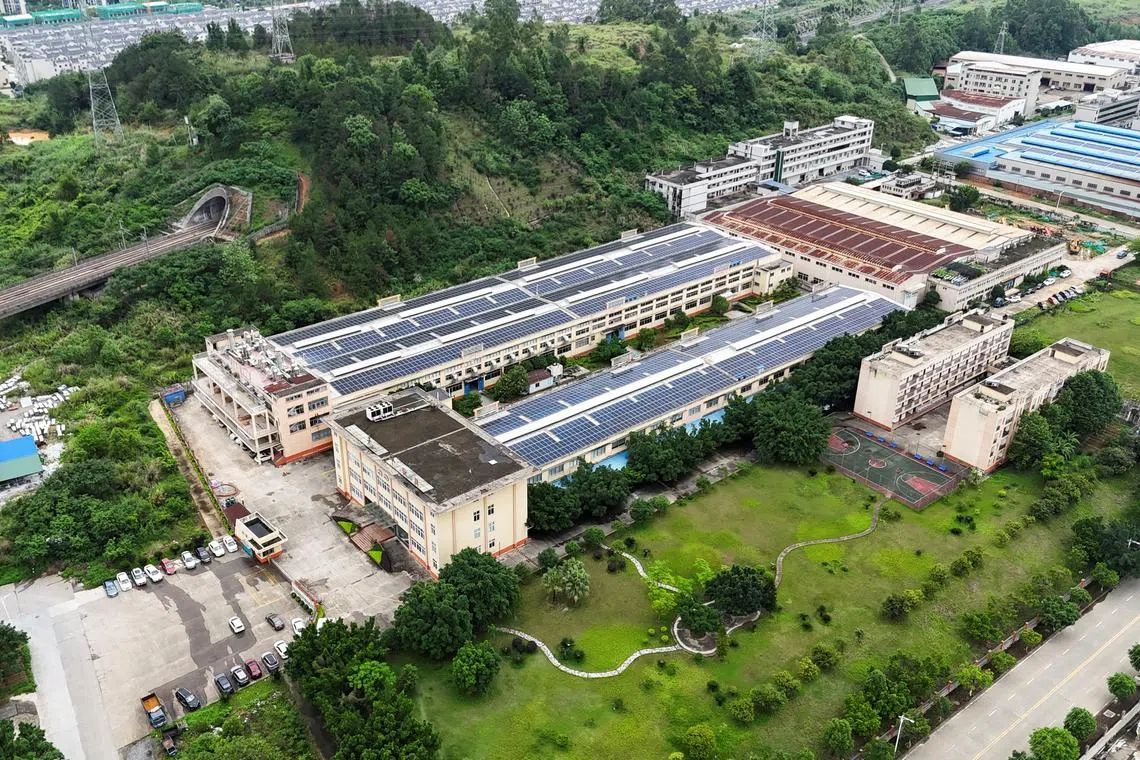
Buildings of Shaoguan Guanghua Plastic & Hardware Products Co., Ltd are pictured in Shaoguan, Guangdong province, China May 9, 2025. REUTERS/Go Nakamura

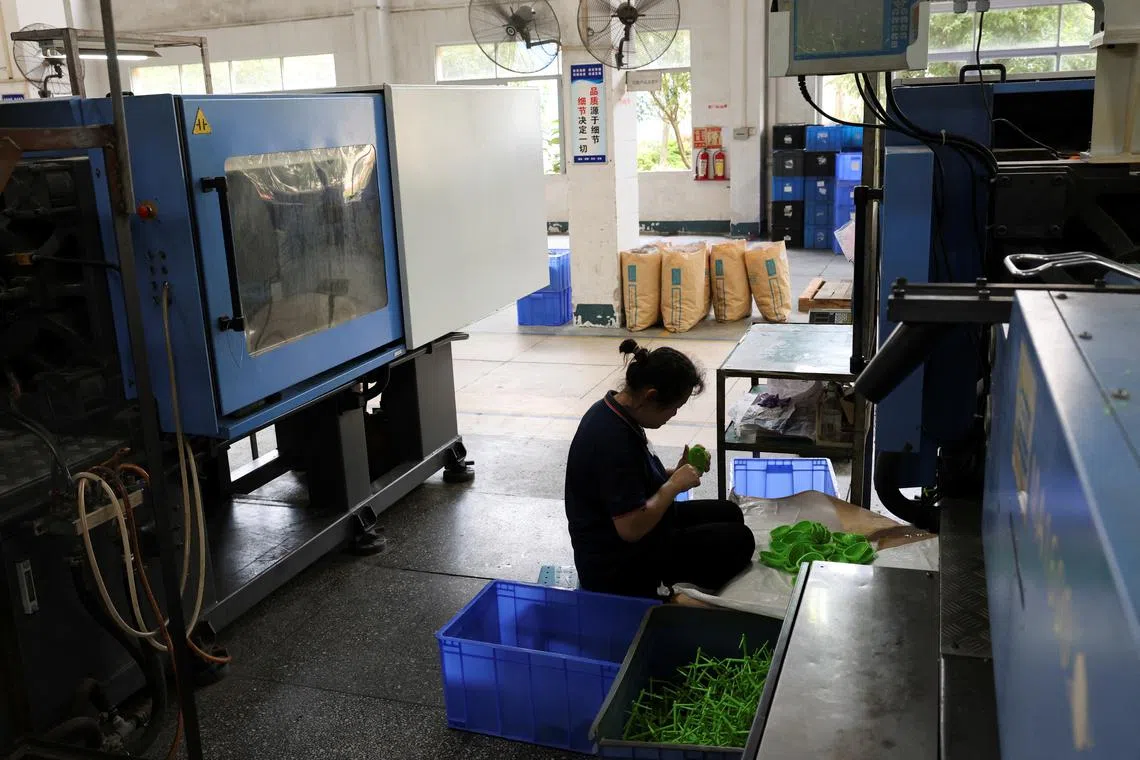
An employee of Shaoguan Guanghua Plastic & Hardware Products Co., Ltd removes excess plastic from toy parts which came out of the automatic plastic injection molding machine in the factory in Shaoguan, Guangdong province, China May 9, 2025. REUTERS/Go Nakamura››

 May 12, 2025

The emails started pouring in on April 9, the day President Donald Trump’s 145% tariff on Chinese imports took effect. Clients were canceling orders for toys from Huntar Company Inc.’s factory in Guangdong Province, China.

But Huntar CEO Jason Cheung, 45, had already halted production at the 600,000-square-foot facility in Shaoguan. He saw the tariff for what it was: an existential threat to his company, which manufactures educational toys bound for the shelves of Walmart and Target, like Learning Resources Inc's Numberblocks, which help teach kids math.

“I needed to start saving money as soon as possible,” Cheung said. In the four weeks since, he has cut production by 60% to 70%, laid off a third of the factory’s 400 Chinese workers, and reduced hours and wages to those still employed.


Now, he’s pursuing a frantic, long-shot effort to move his operation to Vietnam before the company his dad founded 42 years ago runs out of money.

He figures he has about a month.

Huntar’s plight typifies a crisis facing countless factories in China, where about 80% of toys sold in the U.S. are manufactured, according to trade group The Toy Association. New orders have fallen sharply amid a brutal trade war with the United States that threatens to devastate the sector in both countries.

Huntar is also unique in one key way: based in the U.S., it straddles both sides of the trade war.

On paper, Cheung is Trump’s bogeyman, the Chinese factory owner taking American jobs. But he’s also the U.S. small business owner tariffs were meant to protect. He's the American son of a Chinese immigrant, running a second-generation family-owned business that employs 15 people in the U.S. - people who would lose their jobs if Huntar falters.

Trump has said tariffs will incentivize companies to reshore manufacturing, or, at least, drive it out of China.

Huntar illustrates why economists say that’s unlikely: a dearth of facilities and workers with toy making expertise in other countries; heavy equipment that’s hard to move and would cost millions of dollars to replace; and, most acutely, no time to solve those hurdles before coffers run dry.

More likely, factories like Cheung's will simply shut down, a prospect that drove Beijing to the negotiating table with U.S. officials in Geneva over the weekend, three sources familiar with the Chinese government's thinking told Reuters.

Realistically, China cannot replace U.S. market demand for product categories like toys, furniture, and textiles, which are already feeling the impact of tariffs, one of the officials said. As trade talks began, Trump signaled he was open to cutting China tariffs to 80%.

That wouldn't help Huntar, Cheung says, noting that any tariff rate over about 50% will make survival difficult. On a practical level, there's no difference between 80% and the 145% tariffs he's currently facing.

Crises have hit Huntar before, Cheung says, but not like this. The 2008 recession brought a steady slowdown, one he could plan around. And the COVID pandemic dealt a blow, but his volume of production remained high enough to keep him afloat through a temporary slump.

This time, he says, “our manufacturing business essentially halted overnight.” Cheung is starting to feel like his only hope is just that - hope.

“I refresh my ‘tariff’ Google search five or six times a day, hoping something's changed,” he says.

A DREAM AND A LUCKY DESK

Huntar manufactures toys for U.S., Canadian and European sellers, like Learning Resources Inc and Play-a-Maze, which distribute them to retailers or sell directly to consumers.

It also makes its own educational toys under its Popular Playthings brand, which it has had to stop shipping to the U.S., costing the company hundreds of thousands of dollars so far, Cheung estimates.

American-owned factories in China are uncommon, as Chinese law makes it difficult and costly for foreign entities to own them, says attorney Dan Harris, a partner at Harris Sliwoski who focuses on international manufacturing law.

But Huntar has roots in a business Cheung’s father set up in 1983, a few years after escaping communist China and settling in California’s Bay Area.

Cheung grew up in San Francisco's Inner Richmond district, he says, in a small house whose broken door you could simply kick open. His father would sell clothes and furniture at a flea market to augment his janitor’s wages, with Cheung tagging along, bored to tears.

As the operation matured, Cheung’s father set up a factory in China, to exert more control over quality. Cheung, who joined the company in 2004, still uses the desk his father set up in their living room decades ago.

“We think maybe it’s lucky or something,” he says.

The last few weeks have been anything but lucky. The factory is sitting on $750,000 in canceled shipments - value Cheung couldn't fully recover even if the trade war ended, because his shipping costs would surely spike as factories raced to clear backlogs. That's what happened after COVID, Cheung recalls, when shipping costs ballooned from $2,000 per container to more than $20,000.

“They don’t deserve this,” said Rick Woldenberg, CEO of toy company Learning Resources, and a client of Cheung's since his father was in charge more than 20 years ago.

Woldenberg has canceled future production in China, saying his annual tariffs would jump from $2 million to $100 million. “It’s not who we want to be,” Woldenberg said, “but they know we have no choice.”

According to an April survey by the Toy Association, more than 45% of small and mid-sized toy companies in the U.S. say China tariffs will put them out of business within weeks or months.

Learning Resources, which employs 500 people in the U.S. and manufactures 60% of its products in China, has sued the U.S. government, asking a federal judge to stop tariffs from taking effect.

"If nothing changes, we'll be crippled," Woldenberg said.

‘CANNIBALIZE MYSELF’

Cheung has been scouring his contact list, calling factories in Vietnam in hopes of finding a new home for Huntar.

Moving to the U.S. is out of the question. Wages here are so high that manufacturing stateside would be even more expensive than staying in China and absorbing the tariffs, Cheung says.

Even in Vietnam, financial and logistical hurdles are proving too tall.

Few factories have enough space to handle his operation, and competition is high among others looking to move. Even if he found a good spot, Cheung would have to train a new staff and run safety and quality control checks that could easily take months.

There’s also the question of infrastructure. Cheung’s factory is solar-powered, helping ensure profitability in a thin-margin business. It has specific HVAC and wastewater systems designed to negate the environmental risks of spray paint and chemicals used to decorate toys. And it owns more than 30 injection machines, each weighing several tons, which craft toys by pumping molten plastic to steel casings. These likely can’t be moved, and Cheung says he’s not sure where he’d find the money - well over $1 million - to buy new ones.

A more realistic move would be to outsource certain operations and shutter others. Cheung could cut losses by finding a Vietnamese factory to take Huntar's Popular Playthings proprietary line, while ditching the business of manufacturing toys for third party clients.

Going all-in - that is, keeping his factory intact in China in hopes the trade war is resolved - is a higher-risk, higher-reward gambit. If tariffs came down quickly, his company would survive, but if they didn't, he'd lose everything. The costs of keeping a large factory running, and paying employees, while producing just a fraction of his normal output, would sink him within several weeks, he says.

“I’m approaching this moment where I have to choose basically to cannibalize myself,” he says.

It’s hard to pare down a business that once embodied the American dream. Cheung’s father came to the U.S. in 1978, after escaping China by swimming across the Shenzhen River into Hong Kong - all for a shot at freedom. He “wanted to see this business continue through me and hopefully his grandkids,” Cheung says.

His dad, he says, is feeling hopeless these days. Though grateful for the life he built here, America's sheen as a land of milk and honey has worn off. "His idea of the U.S. has definitely changed," Cheung says. REUTERS
ANOTHER BDS SUCCESS

Norway wealth fund divests from Israel's Paz Retail and Energy due West Bank activities

This divestment comes after the fund's ethics watchdog, the Council on Ethics, adopted in August a tougher interpretation of ethics standards for businesses that aid Israel's operations in the Palestinian territories


Reuters|Yesterday | 

Norway's sovereign wealth fund, the world's largest, has sold all of its shares in Israel's Paz Retail and Energy (PAZ.TA), opens new tab because it owns and operates infrastructure for the supply of fuel to Israeli settlements in the West Bank.\

The divestment, announced on Sunday, is the second after the fund's ethics watchdog, the Council on Ethics, adopted in August a tougher interpretation of ethics standards for businesses that aid Israel's operations in the Palestinian territories.

The first divestment was from Israeli telecoms firm Bezeq (BEZQ.TA), opens new tab, in December.

The fund, which owns 1.5% of listed shares across 9,000 companies globally, operates under guidelines set by Norway's parliament and is seen as a leader in the environmental, social and governance field.

It is the latest decision by a European financial entity to cut back links to Israeli companies or those with ties to the country since the outbreak of the war in Gaza in October 2023.

Paz is Israel's largest operator of gas stations and has nine stations in the occupied West Bank.

"By operating infrastructure for the supply of fuel to the Israeli settlements on the West Bank, Paz is contributing to their perpetuation," the Council on Ethics said in its recommendation to divest. "The settlements have been established in violation of international law, and their perpetuation constitutes an ongoing violation thereof."
Paz was not immediately available for comment outside of regular business hours.
The U.N.'s highest court last year said Israel's occupation of Palestinian territories and settlements there were illegal and should be withdrawn as soon as possible, in a ruling that Tel Aviv rejected as "fundamentally wrong" and one-sided.

Divestments

The watchdog makes recommendations to the board of the Norwegian central bank, which has the final say on divestments.

The fund has now sold all its stock in the company. It was not immediately clear if more divestments would happen.

In March, the fund's watchdog said it had cleared most of the companies it had reviewed over their activities in the occupied Palestinian territories after it launched a fresh review following the outbreak of the Gaza war.

The watchdog said at the time that it had made two recommendations to divest - Bezeq in December and now Paz - but did not say whether it had made more recommendations to divest.

Overall, the watchdog assessed around 65 companies in the fund's portfolio working in sectors including energy supply, infrastructure construction, travel and tourism and banking, among others.