It’s possible that I shall make an ass of myself. But in that case one can always get out of it with a little dialectic. I have, of course, so worded my proposition as to be right either way (K.Marx, Letter to F.Engels on the Indian Mutiny)
Monday, May 12, 2025
Death and despair on Kanchenjunga: French climber dies, Briton rescued after first summit of season
Yogendra Tamang of Peak 15 Adventure confirmed that Margareta Morin from France died at 7,800 metres while attempting to climb the world’s third-highest mountain on May 10
Our Web Desk Published 12.05.25, Representational image Shutterstock
A French climber died and a British mountaineer was rescued from above Camp IV on Mt Kanchenjunga during the first successful summit of the season, according to expedition organisers.
Yogendra Tamang of Peak 15 Adventure confirmed that Margareta Morin from France died at 7,800 metres while attempting to climb the world’s third-highest mountain on May 10.
“The 63-year-old female climber was taken ill while attempting to climb the world's third highest peak on May 10,” Tamang quoted mountain guide Tendi Sherpa as saying from Camp III, reported The Himalayan Times.
Margareta, who attempted her first 8000er without prior experience, couldn't be rescued due to unfavorable weather conditions, Tamang said.
“The French Embassy in Kathmandu and her family were informed about the incident,” Tamang added, according to The Himalayan Times. Discussions with her insurance company were underway to bring her body down from the high camp.
Mt Kanchenjunga
Meanwhile, Sherpa climbers rescued a British national who fell ill above Camp IV while descending from the summit.
“Adrian Michael Hayes, who suffered from severe altitude sickness is being rescued,” Chhang Dawa Sherpa, Expedition Director at Seven Summit Treks, said, reported The Himalayan Times.
Adrian is now at Camp IV as rescuers brought him down last night, he added. “Once weather allows, we will evacuate him from the lower camps,” he said.
Hayes had reached the summit earlier on May 10 before becoming unwell.
According to The Himalayan Times, Sherpas brought him down to Camp IV and were waiting for improved conditions to evacuate him further.
Reports suggest that the summit push began from Camp IV on Friday evening, with the team reaching the peak at 2.15 p.m. the next day. The climb took approximately 20 hours.
Morin was among the 13-member team on the Kanchenjunga expedition this spring season. The group consisted of six foreign climbers and seven Nepali Sherpas. Ten climbers, including Hayes, reached the summit.
The expedition team also included climbers from Kosovo, Iran, and the United Arab Emirates. Another Sherpa team had moved ahead to prepare the route.
This incident follows the recent death of Tom Howard, who was killed by a falling boulder while hiking on the Triund Trek in India. The 27-year-old data analyst from Surrey was on a snow-covered trail with a friend when the accident occurred.
Mt Kanchenjunga
First group of white South Africans leave for US after Trump offers refugee status
The South African government said it is ‘completely false’ that Afrikaners are being persecuted
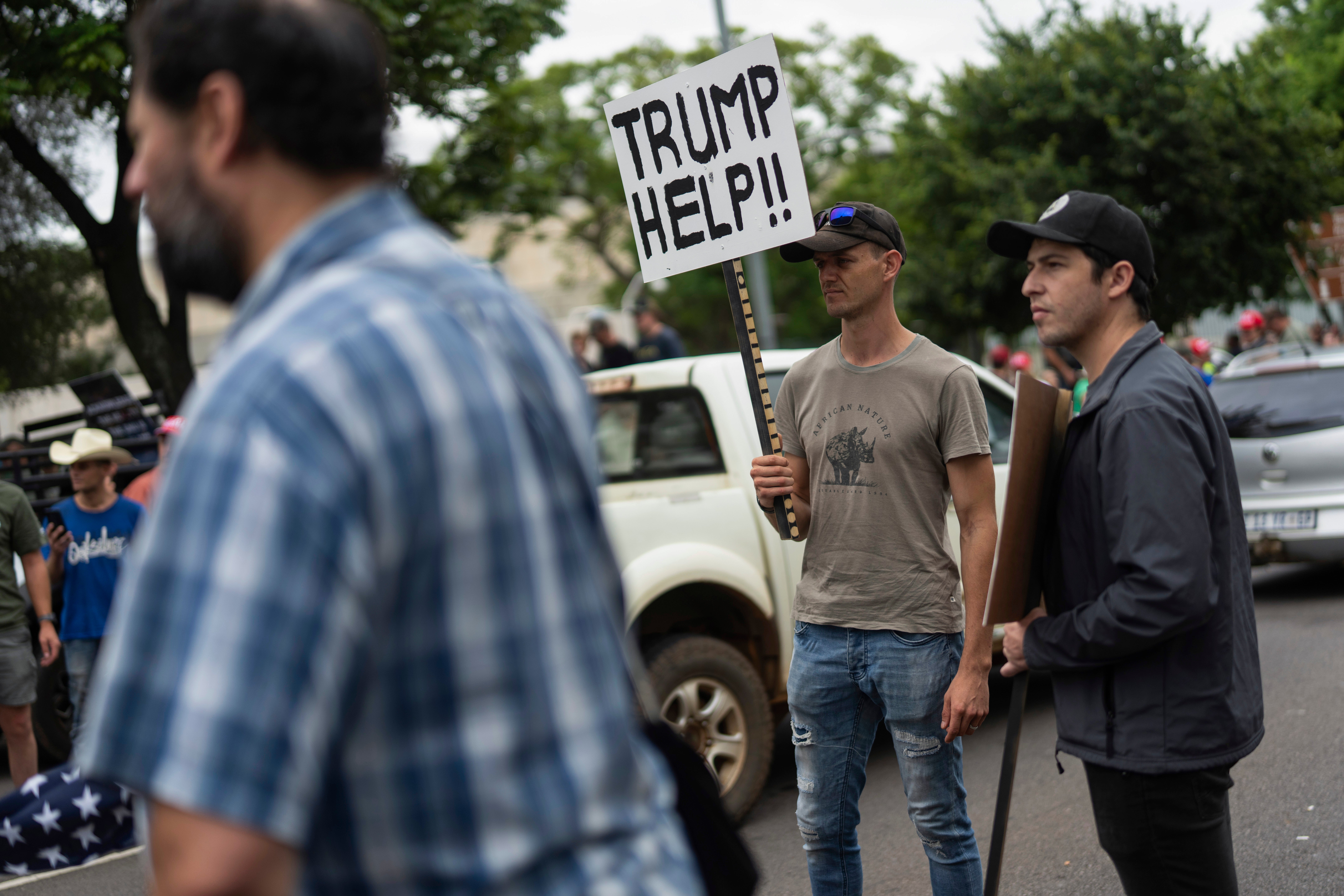
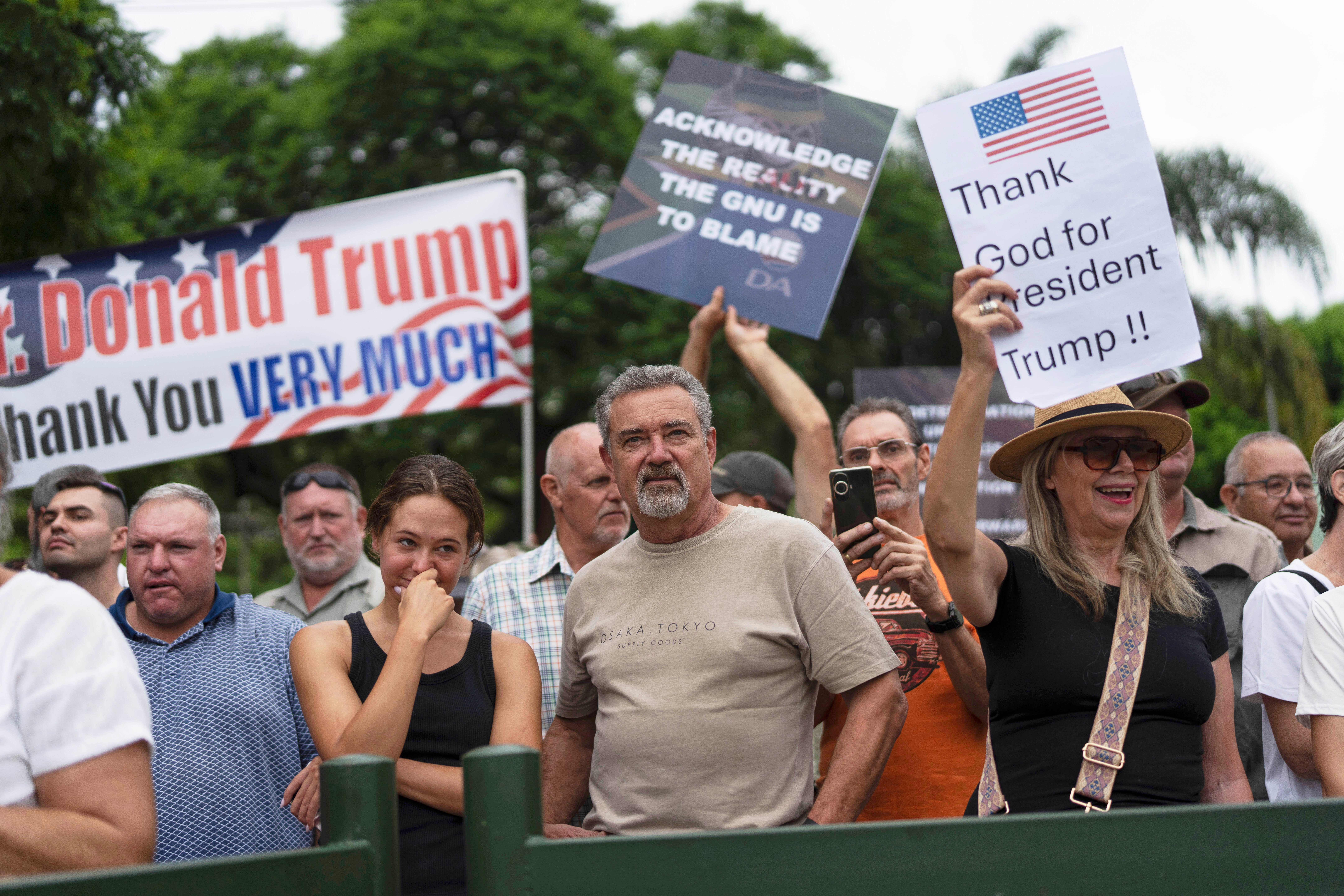
White South Africans demonstrate in support of U.S. President Donald Trump in front of the U.S. embassy in Pretoria, South Africa, Saturday, Feb. 15, 2025. (AP Photo/Jerome Delay, File) (Copyright 2025 The Associated Press. All rights reserved.)
Forty-nine white South Africans, granted refugee status by the Trump administration, left their homeland Sunday on a privately chartered flight to the United States.
The group, comprising families and young children, was expected to arrive at Dulles International Airport outside Washington D.C. on Monday morning, according to Collen Mbisi, a spokesperson for South Africa's transport ministry. T
his marks the first relocation of Afrikaners – a white minority group in South Africa – since President Trump's February 7 executive order.
The order accused South Africa's Black-led government of racial discrimination against Afrikaners and established a program offering them relocation to America.
The South African government said it is “completely false” that Afrikaners are being persecuted.
The Trump administration has fast-tracked their applications while pausing other refugee programs, halting arrivals from Afghanistan, Iraq, most of sub-Saharan Africa and other countries in a move being challenged in court.
Refugee groups have questioned why the white South Africans are being prioritized ahead of people from countries wracked by war and natural disasters. Vetting for refugee status in the U.S. often takes years.
The Trump administration says the South African government is pursuing racist, anti-white policies through affirmative action laws and a new land expropriation law it says targets Afrikaners' land. The government says those claims are based on misinformation and there is no racism against Afrikaners and no land has been expropriated, although the contentious law has been passed and is the focus of criticism in South Africa.
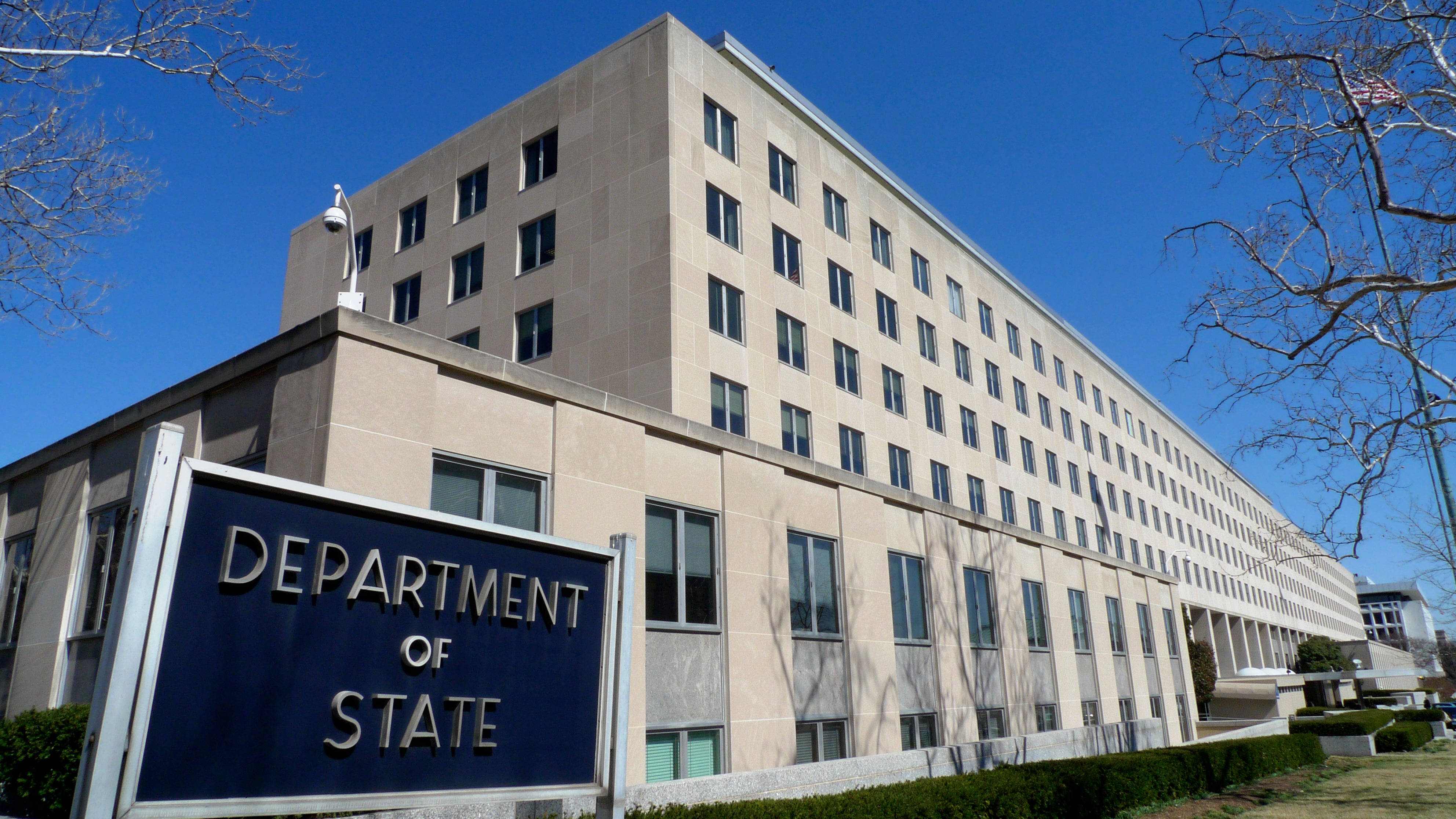
The Harry S. Truman Building, headquarters for the State Department, is seen in Washington, March 9, 2009. (AP Photo/J. Scott Applewhite, File) (AP2009)
South Africa also denies U.S. claims that Afrikaners are being targeted in racially motivated attacks in some rural communities. Instead, the South African government said Afrikaners — who are the descendants of Dutch and French colonial settlers — are "amongst the most economically privileged" in the country.
The first Afrikaner refugees were traveling on a flight operated by the Tulsa, Oklahoma-based charter company Omni Air International, Mbisi said. They would fly to Dakar, Senegal and stop there to refuel before heading for Dulles.
They departed from OR Tambo International Airport in Johannesburg, where they were accompanied by police officers and airport officials when they checked in. Mbisi said they would have to be vetted by police to ensure there were no criminal cases or outstanding warrants against them before being allowed to leave.
The South African government said there was no justification for them being relocated but said it wouldn't stop them and respected their freedom of choice.
They are expected to be greeted at Dulles by a U.S. government delegation, including the deputy secretary of state and officials from the Department of Health and Human Services, whose refugee office has organized their resettlement.
US White South Africans demonstrate in support of U.S. President Donald Trump in front of the U.S. embassy in Pretoria, South Africa, Feb. 15, 2025. (AP Photo/Jerome Delay, File) (Copyright 2025 The Associated Press. All rights reserved.)
The flight will be the first in a “much larger-scale relocation effort,” White House deputy chief of staff Stephen Miller told reporters on Friday. Miller said that what was happening to Afrikaners in South Africa "fits the textbook definition of why the refugee program was created.”
“This is persecution based on a protected characteristic — in this case, race. This is race-based persecution,” he said.
The HHS Office for Refugee Resettlement was ready to offer them support, including with housing, furniture and other household items, and expenses like groceries, clothing, diapers and more, a document obtained by The Associated Press said. The document said the relocation of Afrikaners was "a stated priority of the Administration.”
There are around 2.7 million Afrikaners among South Africa’s population of 62 million, which is more than 80% Black. They are only one part of the country's white minority.
Many in South Africa are puzzled by claims that Afrikaners are persecuted and meet the requirements to be relocated as refugees.
They are part of South Africa’s everyday multi-racial life, with many successful business leaders and some serving in government as Cabinet ministers and deputy ministers. Their language is widely spoken and recognized as an official language, and churches and other institutions reflecting Afrikaner culture hold prominence in almost every city and town.
The Trump administration has criticized South Africa on several fronts. Trump's February executive order cut all U.S. funding to South Africa over what it said was its anti-white stance and also accused it of pursuing an anti-American foreign policy. It cited South Africa's ties with Iran and its move to lodge a genocide case against U.S. ally Israel over the war in Gaza as examples of it taking "aggressive positions towards the United States."
PKK agrees to disband as part of peace process with Turkey
Armed group made announcement after it held long-awaited congress PKK fighters training to use pistols in the fight against ISIS in 2015. Photo: Getty Aveen Karim Lizzie Porter Abu Dhabi │Istanbul May 12, 2025
The Kurdistan Workers' Party (PKK), which has been in armed conflict with the Turkish state for more than four decades, announced it was agreeing to disband and dissolve as part of a peace process with Ankara.
“The PKK’s 12th Congress decided to dissolve the PKK’s organisational structure and end the armed struggle, with the practical process to be managed and carried out by Leader Apo [Abdullah Ocalan], and ended the work carried out under the PKK name,” Firat news agency, affiliated with the group, said on Monday.
The group, classified as a terrorist organisation by Turkey, the US, and the European Union, on Friday said it had held a congress to heed the call of its jailed leader to lay down arms, disband and enter a peace initiative with the Turkish state.
Omer Celik, spokesman for Turkish President Recep Tayyip Erdogan's Justice and Development Party (AKP) said the PKK's decision was, “an important stage in terms of the goal of a 'terror-free Turkey'” – a phrase Turkish government officials have used to describe overtures to the PKK.
Ocalan’s call in February ordering the dissolution came after a months-long process initiated by an ally of Mr Erdogan, the ultranationalist politician Devlet Bahceli, for greater freedoms for Abdullah Ocalan in exchange for the PKK’s dissolution.
The PKK said it believes Kurdish political parties will fulfil their responsibilities in developing Kurdish democracy and “ensure democratic Kurdish nationhood.”
Kurdish officials, including those in northern Iraq's semi-autonomous Kurdistan region, have framed the talks with Turkey as aimed at peace and dialogue, and about ensuring rights for Turkey's ethnically Kurdish citizens, who make up around one-fifth of the population. Turkey has continued striking the group's positions in the Kurdistan region.
Foreign Minister Hakan Fidan on Friday said disarmament alone was not sufficient, while Mr Erdogan has continued to publicly call for the group's eradication.
The PKK had previously said it would not heed any calls to disarm unless Ocalan was released from jail and a meeting could take place in person. Many questions remain about how the PKK disarmament process will work in practice. It remains unclear if members will be granted an amnesty, and if those in Iraq and Syria will be allowed to return to Turkey.
The fate of imprisoned Kurdish politicians and militants also remains unclear.Ocalan is serving a life sentence on the island of Imrali in the Sea of Marmara, south of Istanbul, where he has been imprisoned since he was captured in Kenya in February 1999.
Turkish politicians have indicated that the disarming and dissolution process will not happen overnight, and have said that it must extend to all branches and offshoots of the PKK.
“This decision must be implemented in practice and realised in all its dimensions. The concrete and complete implementation of the 'dissolution' and 'surrender of arms' decision, which will close all branches and extensions of the PKK and its illegal structures, will be a turning point,” Mr Celik added. “This process will be meticulously monitored in the field by our state institutions.”
The PKK was founded by Ocalan in 1978 and has waged an insurgency against the Turkish state for four decades, with about 40,000 killed on both sides. In recent years, the group's activity has been more limited to the mountainous areas of the Kurdish region of northern Iraq, and Syria, where PKK offshoots developed a presence in the country's north-east.
The pro-Kurdish People's Equality and Democracy Party, also known as DEM Party, which played a crucial role in mediating between the PKK and Ankara, welcomed the congress.
On Sunday, the party announced the formation of the Democratic Unity Initiative, describing it as a “civil society platform” aimed at uniting Kurds across Iraq, Syria, Turkey and Iran to “build a democratic life”.
Updated: May 12, 2025
Kurdish militant group PKK announces plans to disband after four decades of armed conflict
12 May 2025, 07:57
Kurdish youths holds a poster of jailed PKK militant group leader Abdullah Ocalan during Newroz celebrations on March 21, 2025. Picture: Getty
By Henry Moore
A Kurdish militant group has confirmed it will disband and disarm as part of a new peace initiative with Turkey, ending four decades of armed conflict.
The Kurdistan Workers’ Party, usually referred to as the PKK, comes just days after it convened a party congress in northern Iraq.
The group said that "historic" decisions taken at the congress would be shared with the public soon.
In February, its leader Abdullah Ocalan, who has been imprisoned on an island near Istanbul since 1999, urged his group to convene a congress and formally decide to disband, marking a pivotal step toward ending the decades-long conflict that has claimed tens of thousands of lives since the 1980s.
A Kurdish man wearing a mask flashes the v-sign. Picture: Getty
The report also said a statement by PKK leader Abdullah Ocalan outlining his "perspectives and proposals" were read during the congress.
In February, Ocalan called on his group to lay down arms and dissolve itself in a bid to end the conflict that has claimed tens of thousands of lives since the 1980s.
The outlawed PKK, which is listed as a terrorist organization by Turkey and most Western states, announced a ceasefire days later but had set conditions to disband, including the establishment of a legal mechanism for peace talks.
The latest peace initiative was launched in October by Devlet Bahceli, a far-right Turkish politician who suggested that Ocalan, who is imprisoned on an island off Istanbul, could be granted parole if his group renounces violence and disbands.
Previous peace efforts between Turkey and the group have ended in failure, most recently in 2015.
Kurdish PKK disbands and ends insurgency against Turkish state
The Kurdistan Workers Party (PKK) militant group, which has been in conflict with the Turkish state for more than four decades, has decided to dissolve itself and end its armed struggle, a news agency close to the group reported on Monday.
The PKK decision is set to have far-reaching political and security consequences for the region, including in neighbouring Syria where Kurdish forces are allied with U.S. forces.
The Firat news agency published what it said was the closing declaration of a congress that the PKK held last week in northern Iraq, in response to a call in February from its jailed leader Abdullah Ocalan to disband.
Turkish President Tayyip Erdogan's office and the foreign ministry did not immediately comment on the announcement.
More than 40,000 people have been killed in the conflict since the PKK launched its insurgency in 1984. It is designated a terrorist group by Türkiye and its Western allies.
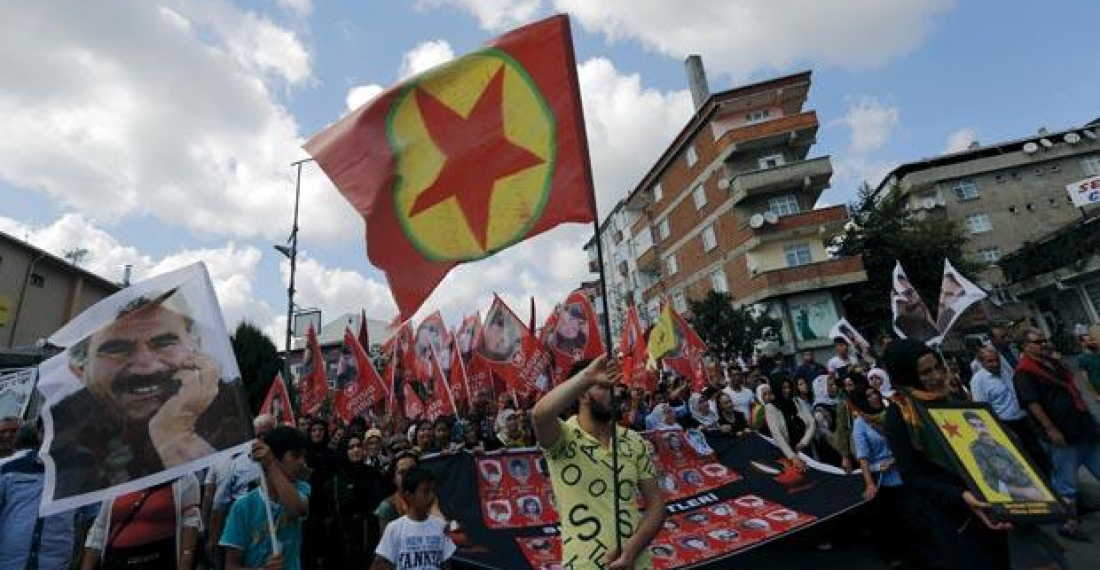
Source: commonspace.eu with agencies. Photo: People march in Istanbul with flags and banners of pictures of victims who were killed in a 2015 bomb attack in Suruc.The flag in the foreground belongs to the Kurdistan Workers Party (PKK). PKK leader Abdullah Öcalan is featured on the poster.
Reuters
Kurdish militant group PKK says disbanding, ending armed struggle
Abdullah Ocalan founded the PKK in the late 1970s and it began its armed insurgency in 1984 - Copyright AFP Money SHARMA
Hazel WARD and Burcin GERCEK
The Kurdistan Workers’ Party (PKK) on Monday announced its dissolution, saying it was ending its armed struggle against the Turkish state and drawing a line under its bloody four-decade insurgency.
Founded in the late 1970s by Abdullah Ocalan, the PKK carried out attacks aimed at defending Kurdish autonomy in Turkey that cost more than 40,000 lives.
“The 12th PKK Congress has decided to dissolve the PKK’s organisational structure and end its method of armed struggle,” the group said in a statement published by the pro-Kurdish ANF news agency.
The move was welcomed by President Recep Tayyip Erdogan’s AKP party as an “important step”, saying the implementation of the process would be “meticulously monitored” by the government.
The historic announcement came after an appeal by Ocalan, who on February 27 urged his fighters disarm and disband in a letter from Istanbul’s Imrali prison island, where he has been held since 1999.
He also asked the PKK to hold a congress to formalise the decision, which the call and declared a ceasefire, holding its congress early last week in Iraq’s Kandil mountains.
There its leader took “decisions of historic importance concerning the PKK’s activities”, ANF had reported on Friday.
AKP spokesman Omer Celik said if the decision were “implemented in practise and realised in all its dimensions” it would open the door to a new era.
“The PKK’s decision to dissolve itself and lay down its arms following the call from Imrali is an important step towards a terror-free Turkey,” Celik said.
“The full and concrete implementation of the decision to dissolve and surrender arms… will be a turning point,” he added, saying the process would be “meticulously monitored” by the government.
– ‘Huge win for Erdogan’ –
The declaration was the culmination of seven months of work to renew long-stalled talks that began in October when Ankara offered Ocalan an unexpected olive branch.
“If the PKK announces it is disbanding and finalises the process without any road accidents, that will be a huge win for Erdogan,” Gonul Tol of the Washington-based Middle East Institute told AFP.
She said seeking a rapprochement with the Kurds was very much related to domestic politics, coming just months after Erdogan’s AKP suffered a blow at the ballot box.
Analysts say a deal with the Kurds could allow Erdogan to amend the constitution and extend his term in office, while simultaneously driving a wedge between pro-Kurdish parties and the rest of Turkey’s opposition.
“The main driver behind this Ocalan opening has always been about consolidating Erdogan’s rule. Because if this whole process succeeds, he will go into the 2028 elections as a stronger candidate who is facing a divided opposition,” Tol said.
In a weekend speech, Erdogan hinted the dissolution could be announced at any moment, saying that “We are advancing with firm steps on the path toward the goal of a terror-free Turkey”.
The PKK, designated a terrorist group by Ankara, Washington and Brussels, has waged an insurgency against the Turkish state since 1984.
Its original aim was to carve out a homeland for Kurds, who make up about 20 percent of Turkey’s 85 million people.
Kurdish militants PKK to disband after four-decade insurgency against Türkiye
By Middle East correspondent Eric Tlozek and wires
Kurdish militant group PKK agrees to disband
In short:
The militant Kurdistan Workers' Party, which fought a four-decade insurgency against Türkiye, has reportedly agreed to disband and lay down its weapons.
The revelation comes after the group's jailed leader, Abdullah Öcalan, had called for the disbanding as part of a deal offered by the Turkish government for his release.
What's next?
The future of the PKK — a listed terrorist organisation in Türkiye, Australia, the US and Europe — and its fighters remains uncertain, including whether they may be relocated.
A Kurdish militant group that fought a four-decade insurgency against Türkiye has reportedly agreed to disband and lay down its weapons.
A news agency linked to the Kurdistan Workers' Party (PKK), which is a listed terrorist organisation in Türkiye, Australia, the United States and Europe, says it resolved to disband at a meeting in eastern Türkiye last week.
"The PKK has completed its historic mission," the group said, according to the Firat news agency, which published what it said was the closing declaration of a congress that the PKK held in northern Iraq, where it is based.
Abdullah Öcalan, who has been jailed since 1999, has called for the group's disbandment in recent months. (AP: Metin Yoksu)
The group's jailed leader, Abdullah Öcalan, had called for the disbanding as part of a deal offered by the Turkish government for his release.
The PKK began its insurgency in pursuit of a Kurdish state, then later, greater Kurdish rights and autonomy.
Kurdish militants who have waged a 40-year insurgency in Türkiye declare a ceasefire two days after their imprisoned leader called for the group to disarm.
The conflict between Türkiye and the PKK has spilled over into northern Iraq and northern Syria.
In the statement published by Firat News, the PKK announced its decision to end its "organisational structure," suggesting that its armed struggle has successfully challenged policies that sought to suppress Kurdish rights.
The congress assessed that the PKK's struggle had "brought the Kurdish issue to the point of resolution through democratic politics, thus completing its historical mission," according to the statement.
"As a result, activities carried out under the name 'PKK' were formally terminated," the statement said.
In February, news of talks, supported by the government, with Öcalan sparked protests by the Turkish Youth Union. (Reuters: Umit Bektas)
Details of the peace initiative have not been made public and it was not clear how the process would proceed, including how weapons would be disposed of and who would monitor the procedures.
The future of PKK fighters remains uncertain, including whether they may be relocated to third countries. Any concessions the PKK might obtain in exchange for its decision to disband have not been disclosed.
"The PKK struggle has broken the policy of denial and annihilation of our people and brought the Kurdish issue to a point of solving it through democratic politics," the statement said.
The PKK's decision will give President Tayyip Erdoğan the opportunity to boost development in the mainly Kurdish south-east, where the insurgency has handicapped the regional economy for decades.
Ömer Çelik, a spokesperson for President Erdoğan's ruling AK Party, said the PKK's decision to dissolve was an "an important step toward a terror-free Türkiye".
The decision to dissolve is significant for Kurdish people and the Middle East as a whole, the deputy co-chair of the pro-Kurdish DEM Party Tayip Temel said.
"The PKK's decision to end its existence and embark on a new transformation will also necessitate a major shift in the official state mentality of Türkiye, and compel the adoption of a new paradigm," Mr Temel told Reuters
Previous peace efforts between Türkiye and the group — most recently in 2015 — have ended with failure.
Photo shows Three men in military gear walk on a footpath as an armoured vehicle drives past on the road.
Türkiye's relationship with Kurdish nationalists is the political problem that won't go away.
The announcement by the PKK comes against a backdrop of major changes in the region, including the coming to power of a new administration in Syria, the weakening of the Hezbollah militant movement in Lebanon and the Israel-Hamas war in Gaza.
In recent years, the PKK has been limited to isolated attacks inside Türkiye as the Turkish military, backed by armed drones, has pushed PKK insurgents increasingly across the mountainous border into Iraq.
The latest peace initiative was launched in October by Mr Erdoğan's coalition partner, Devlet Bahçeli, a far-right politician who suggested that Öcalan could be granted parole if his group renounces violence and disbands.
Around 40,000 people are estimated to have died in the conflict, which devastated some large eastern Turkish cities and spilled into Iraq and Syria.
ABC/wires
Key facts on Kurdish PKK that has ended its insurgency in Turkey
UPDATED May 12, 2025
ISTANBUL - The Kurdistan Workers Party (PKK) militant group, which has formally dissolved itself according to a report by a news agency close to the group on Monday, has battled the Turkish state for more than four decades.
In February, Abdullah Ocalan, the PKK's founder who is jailed in Turkey, appealed for it to disarm and dissolve. The decision opens the door to ending a conflict that has ravaged southeastern Turkey, and will also have significant implications for Syria and Iraq.
Here are details about the PKK:
WHAT IS THE PKK?
The PKK is a militant group founded by Ocalan in southeast Turkey in 1978 with an ideology based on Marxist-Leninist ideas.
WHAT DOES THE GROUP WANT?
The PKK launched its insurgency against Turkey in 1984 with the aim of creating an independent Kurdish state. It later moderated its goals to seeking greater Kurdish rights and limited autonomy in southeast Turkey.
More than 40,000 people have been killed in the conflict, most of them militants. Much of the fighting was focused in rural areas of mainly Kurdish southeast Turkey, but the group also conducted attacks in urban areas including Ankara and Istanbul.
The PKK is listed as a terrorist organisation by Ankara, the United States, the European Union and some other countries.
WHAT IS THE GROUP'S HISTORY?
The PKK operated in Syria until 1998 when Ocalan had to flee amid growing Turkish pressure. He was captured by Turkish special forces several months later in Kenya and sentenced to death by a Turkish court in 1999. The sentence was commuted to life imprisonment in October 2002 after Turkey abolished the death penalty and he is still imprisoned on an island near Istanbul.
Fighting dwindled after Ocalan's capture, which led to the withdrawal of rebel fighters from Turkey.
After a flare-up in violence, Turkey and the PKK became involved in peace talks from late 2012. That process collapsed in July 2015, unleashing the bloodiest period of the conflict and resulting in extensive destruction in some urban areas of southeast Turkey.
In October of 2024, Devlet Bahceli, the Nationalist Movement Party (MHP) leader and President Tayyip Erdogan's political ally, shocked Ankara when he suggested Ocalan could be released if he announced an end to his group's insurgency.
Erdogan's ruling AKP backed the proposal and leaders of the opposition pro-Kurdish DEM party, which seeks greater Kurdish rights and autonomy, has held talks with Ocalan at his prison.
The PKK, declared an immediate ceasefire following the call and said it was ready to convene a congress, as Ocalan urged, but the necessary security conditions should be established for him to "personally direct and run" it.
WHERE HAS THE CONFLICT BEEN FOCUSED MORE RECENTLY?
In recent years the conflict shifted to neighbouring northern Iraq where the PKK has mountain bases and Turkey has dozens of outposts. Ankara has launched operations against the militants there, including air strikes with warplanes and combat drones, which Baghdad has said violates its sovereignty.
Yet Iraq and Turkey had agreed to boost anti-PKK cooperation, and Baghdad labelled it a banned organisation for the first time.
Turkey also targets the YPG militia in Syria, regarding it as a PKK affiliate, and has conducted cross-border operations alongside allied Syrian forces to push it back from its border. However the YPG spearheads the SDF, the primary ally of the U.S.-led coalition against Islamic State.
Washington's support for the SDF has been a source of U.S.-Turkey tension for years.
The ouster in December of former Syrian President Bashar Al-Assad - whom Ankara long opposed, backing Syrian rebels - bolstered Turkey's position and influence there. It called for the YPG to be disbanded and its leaders expelled from Syria, and threatened a Turkish military operation to "crush" the group if its demands were not met.
Turkish, U.S., Syrian and Kurdish officials have sought an agreement on the future of the Syrian Kurdish fighters.
REUTERS
US and China cut tariffs dramatically
U.S. cuts China tariffs to 30 percent, China slashes levies on imports from U.S. to 10 percent.
Top U.S. officials said Monday that America and China will both substantially cut reciprocal tariffs targeting each other.
The announcement goes some way toward deescalating U.S. President Donald Trump’s huge tariff war that has upended global trade and caused economic aftershocks around the world.
The U.S. will cut tariffs on Chinese imports from 145 percent to 30 percent, while the Chinese side will drop measures from 125 percent to 10 percent.
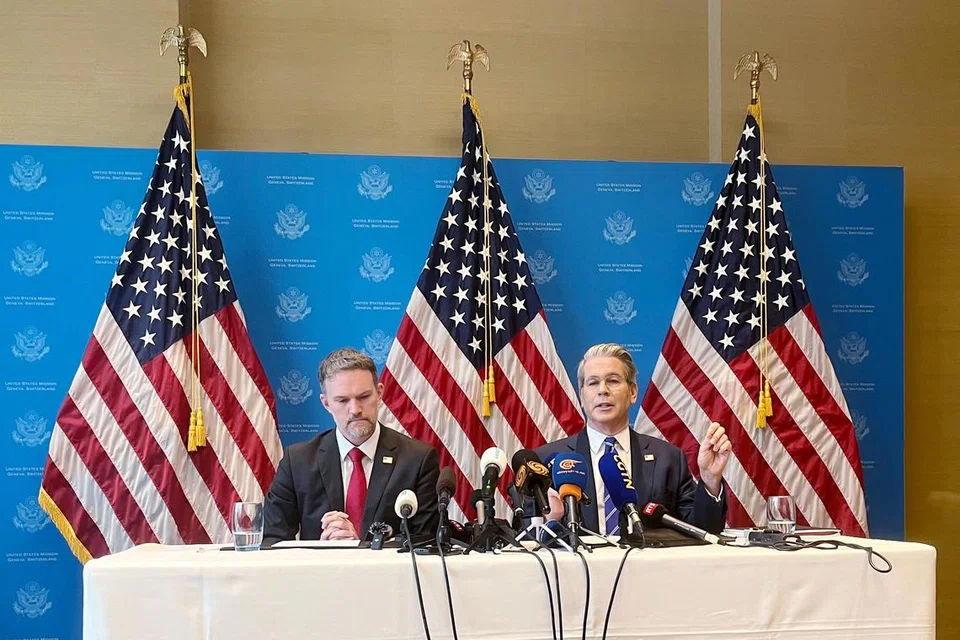
“We have a mechanism for continued talks,” U.S. Treasury Secretary Scott Bessent said at a press conference after U.S.-China talks in Geneva over the weekend.
Full text: Joint Statement on China-U.S. Economic and Trade Meeting in Geneva
GENEVA, May 12 (Xinhua) -- China and the United States on Monday released a joint statement on China-U.S. Economic and Trade Meeting in Geneva.
The following is the English translation of the full text of the joint statement:
Joint Statement on China-U.S. Economic and Trade Meeting in Geneva
The Government of the People's Republic of China ("China") and the Government of the United States of America (the "United States"),
Recognizing the importance of their bilateral economic and trade relationship to both countries and the global economy;
Recognizing the importance of a sustainable, long-term, and mutually beneficial economic and trade relationship;
Reflecting on their recent discussions and believing that continued discussions have the potential to address the concerns of each side in their economic and trade relationship; and
Moving forward in the spirit of mutual opening, continued communication, cooperation, and mutual respect;
The Parties commit to take the following actions by May 14, 2025:
The United States will (i) modify the application of the additional ad valorem rate of duty on articles of China (including articles of the Hong Kong Special Administrative Region and the Macau Special Administrative Region) set forth in Executive Order 14257 of April 2, 2025, by suspending 24 percentage points of that rate for an initial period of 90 days, while retaining the remaining ad valorem rate of 10 percent on those articles pursuant to the terms of said Order; and (ii) removing the modified additional ad valorem rates of duty on those articles imposed by Executive Order 14259 of April 8, 2025 and Executive Order 14266 of April 9, 2025.
China will (i) modify accordingly the application of the additional ad valorem rate of duty on articles of the United States set forth in Announcement of the Customs Tariff Commission of the State Council No. 4 of 2025, by suspending 24 percentage points of that rate for an initial period of 90 days, while retaining the remaining additional ad valorem rate of 10 percent on those articles, and removing the modified additional ad valorem rates of duty on those articles imposed by Announcement of the Customs Tariff Commission of the State Council No. 5 of 2025 and Announcement of the Customs Tariff Commission of the State Council No. 6 of 2025; and (ii) adopt all necessary administrative measures to suspend or remove the non-tariff countermeasures taken against the United States since April 2, 2025.
After taking the aforementioned actions, the Parties will establish a mechanism to continue discussions about economic and trade relations. The representative from the Chinese side for these discussions will be He Lifeng, Vice Premier of the State Council, and the representatives from the U.S. side will be Scott Bessent, Secretary of the Treasury, and Jamieson Greer, United States Trade Representative. These discussions may be conducted alternately in China and the United States, or a third country upon agreement of the Parties. As required, the two sides may conduct working-level consultations on relevant economic and trade issues.
(Web editor: Zhang Kaiwei, Zhong Wenxing)
Key takeaways from China-U.S. high-level economic and trade meeting
, 12-May-2025
CGTN
The two-day China-U.S. high-level meeting on economic and trade affairs concluded in Geneva, Switzerland.
Chinese Vice Premier He Lifeng, who also serves as the Chinese lead on China-U.S. economic and trade affairs, met with U.S. lead person Treasury Secretary Scott Bessent and U.S. Trade Representative Jamieson Greer, over the weekend.
Focusing on the implementation of the important consensus reached by the two heads of state during their phone call on January 17, the two sides held candid, in-depth and constructive discussions. They reached a series of major consensus and made substantial progress during the talks.
They also agreed to establish an economic and trade consultation mechanism to maintain communication on their respective concerns in the economic and trade fields.
This marks the first round of talks since the U.S. imposed heavy tariffs on Chinese goods.
A press briefing held by the Chinese side following the China-U.S. high-level meeting on economic and trade affairs in Geneva, Switzerland, May 11, 2025. /Xinhua
In-depth, candid and constructive
The Chinese delegation held a press conference following the high-level meeting with the U.S. side.
The meeting was candid, in-depth and constructive, said He, adding that China and the United States have also agreed to establish an economic and trade consultation mechanism.
The two countries, He said, will finalize the relevant details as soon as possible and release a joint statement on Monday summarizing the outcomes of the talks.
Through the joint efforts of both sides, the talks were fruitful, he said, adding that this marks an important step towards resolving differences through equal dialogue and consultation. It has laid the foundation and created conditions for further narrowing differences and deepening cooperation.
Economic and trade relations between China and the United States are not only of great significance to both countries but also have a major impact on the stability and development of the global economy, said He.
Speaking at the press conference, Li Chenggang, the international trade representative with the Chinese Ministry of Commerce and vice commerce minister, said the two countries conducted the talks based on mutual respect, equality and mutual benefit, in a professional and efficient manner.
Both sides, he said, have accommodated each other's concerns and development interests, creating favorable conditions for the stable, sound and sustainable development of China-U.S. economic and trade relations.
A view of a terminal at Shanghai Port in east China's Shanghai, May 11, 2025. /VCG
Finding solutions, extending list of cooperation
As two major countries at different stages of development and with different economic systems, it is natural for China and the United States to have differences and frictions in economic and trade cooperation, He said during the meeting, stressing that the key is to find proper solutions to these issues based on the principles of mutual respect, peaceful coexistence and win-win cooperation.
There are no winners in a trade war, He said, adding that China does not want a trade war but is not afraid of one. If the U.S. side insists on infringing upon China's rights and interests, China will resolutely retaliate and respond accordingly.
He urged both sides to explore more potential areas for cooperation, extend the list of cooperative initiatives, expand the scope of mutual benefits, promote the continuous and new development of China-U.S. economic and trade relations, and inject greater stability and certainty into the development of the world economy.
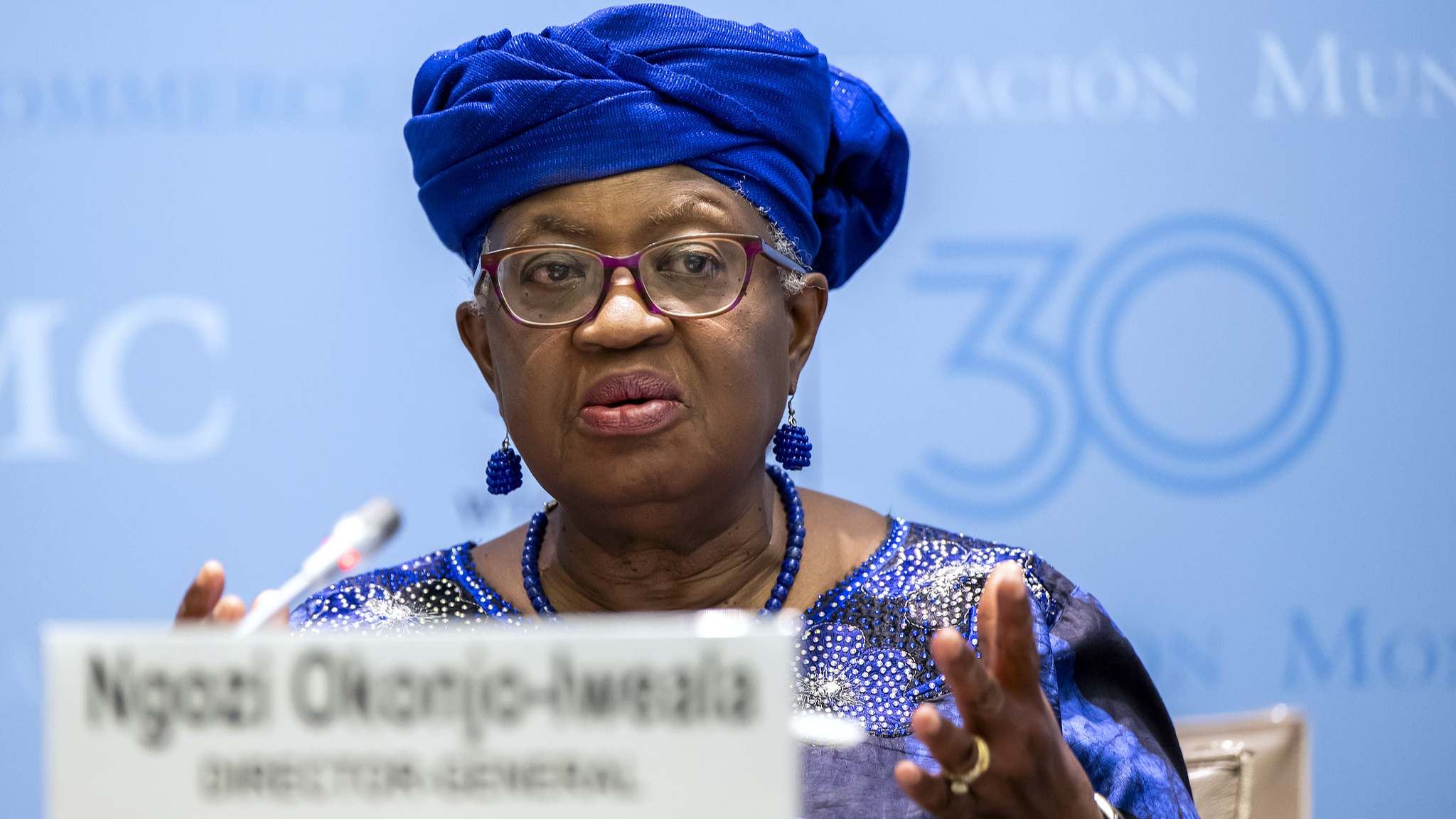
During a meeting with World Trade Organization (WTO) Director-General Ngozi Okonjo-Iweala on Sunday, He called on all parties to resolve differences and disputes through equal dialogue within the WTO framework, to jointly uphold multilateralism and free trade, and to push for the stable and smooth functioning of global industrial and supply chains.
Okonjo-Iweala said WTO members should work together to defend an open and rules-based multilateral trading system, strengthen dialogue and cooperation on international trade issues, and enhance the WTO's role in promoting trade liberalization, improving trade efficiency, and achieving global sustainable development.
WTO chief welcomes positive outcomes from China-U.S. talks
Politics14:53, 12-May-2025
CGTN
A file photo of WTO Director-General Ngozi Okonjo-Iweala. /VCG
World Trade Organization (WTO) Director-General Ngozi Okonjo-Iweala on Sunday said she was pleased to see positive outcomes achieved during the high-level meeting on economic and trade affairs between China and the United States.
In a statement, Okonjo-Iweala said the talks marked an important step forward, adding that amid the current global situation, such progress is critical not only for both countries, but also for the rest of the world, including the most vulnerable economies.
Instant View: US-China agree to cut tariffs,
90-day pause
U.S. Secretary of the Treasury Scott Bessent and U.S. Trade Representative Jamieson Greer attend a news conference after trade talks with China, in Geneva, Switzerland, May 12, 2025. REUTERS/Emma Farge
UPDATED May 12, 2025
LONDON/SHANGHAI - Stocks and the dollar surged on Monday after the United States and China said they had agreed on a 90-day pause on tariffs and reciprocal duties would drop sharply, giving investors some confidence that a full-scale trade war may have been averted.
U.S. Treasury Secretary Scott Bessent, speaking after talks with Chinese officials in Geneva, told reporters the two sides had reached the deal that was outlined in a joint statement and that reciprocal rates would drop by 115 percentage points.
This weekend's meetings were the first face-to-face interactions between U.S. and Chinese officials since U.S. President Donald Trump returned to power and launched a global tariff blitz, imposing particularly hefty duties on China.
MARKET REACTION:
STOCKS: Futures on the S&P 500 and Nasdaq jumped to trade up 2.8% and 3.5%, respectively, from gains of 1.5-2% previously, while in Europe, the STOXX 600 rose 0.7% in early trading.
FOREX: The dollar extended gains, with the euro down 1.2% at $1.1164, having traded down 0.2% on the day earlier, while the yen weakened, leaving the U.S. currency up 1.6% at 147.715, from a 0.5% gain earlier.
BONDS: Benchmark 10-year U.S. Treasury yields rose 7 basis points on the day to 4.44%, having traded up 5 bps before the joint statement.
COMMENTS:
JAN VON GERICH, CHIEF MARKET ANALYST, NORDEA, HELSINKI:
"Markets have taken it at face value, I personally am a bit sceptical, if you want to end up with low tariffs then why do it like this? It’s still bouncy, and uncertainty is elevated.
"I’m still worried that there will be a last word, that now they’ve come to an initial conclusion the details won’t satisfy both sides, and there will be something else but, of course, time will tell. I would not take everything we hear at the moment at face value, that’s what we saw on ‘Liberation Day’ (April 2 tariff announcement), and now, and it still bounces both ways."
JANE FOLEY, HEAD OF FX STRATEGY, RABOBANK, LONDON:
"The market reacted already overnight in anticipation of this, and we’ve got a bit more details now, and it's continuing the tone it set overnight, where it’s buying back the dollar. We have this scenario where the dollar is now being treated as a risky asset and is making gains.
"We’ve had reassurance from the U.S. that negotiations will continue and that the tone of the negotiations have been positive and US and China don’t want to decouple, so there is a lot more optimism that the tariffs won’t have the devastating impact that perhaps they could have done, and there is a collective sigh of relief in markets.
"That doesn’t mean that we’re back to where we were before the Trump inauguration, the 10% baseline tariff still exists everywhere, the 90 pause is there and the clock is starting to tick. The overall scenario is not as bad as it could have been, but we still have a fair amount of uncertainty about where these tariffs will settle, their impact on world growth and central bank policy."
KENNETH BROUX, SENIOR STRATEGIST FX AND RATES, SOCIETE GENERALE, LONDON
"There is a de-escalation between China and U.S. resulting in a reduction of tariff on Chinese goods to 30% and Chinese tariffs on US goods to 10%. It's a clear vote by the market in favour of riskier assets. It's a step in the right direction and a positive of U.S. assets and U.S. economy."
"The dollar was lagging other markets in the recovery from the April lows. We had equities up back to April 2nd levels, we had bond yields up to those levels and the dollar was actually lagging that move. Now the conditions are falling into place for a deeper adjustment and a bigger recovery of the dollar to catch up with equities and bond yields."
ZHIWEI ZHANG, CHIEF ECONOMIST, PINPOINT ASSET MANAGEMENT, HONG KONG:
"This is better than I expected. I thought tariffs would be cut to somewhere around 50% and this is much lower. Obviously, this is very positive news for economies in both countries and for the global economy, and makes investors much less concerned about the damage to global supply chains in the short term.
"But we also need to keep in mind this is only a three-month temporary reduction of tariffs. So this is the beginning of a long process. The two sides will spend months probably, to come up with a resolution, or reach a final trade deal, but this is a very good starting point."
ARNE PETIMEZAS, DIRECTOR RESEARCH, AFS GROUP, AMSTERDAM:
"Such a sharp U-turn by the US on tariffs on a Monday morning is quite the surprise. It seems that tariffs on China will fall to manageable levels, albeit temporary. Markets should rally on this. How can Trump credibly raise tariffs when the 90-day pause ends? He has toned down his tariffs faster than anyone thought he could, and April 2 will soon be forgotten. Granted, he told you to buy the dip."
WILLIAM XIN,CHAIRMAN OF HEDGE FUND SPRING MOUNTAIN PU JIANG INVESTMENT MANAGEMENT, SHANGHAI:
"The result far exceeds market expectations. Previously, the hope was just that the two sides can sit down to talk, and the market had been very fragile. Now, there's more certainty. Both China stocks and the yuan will be in an upswing for a while." REUTERS
China firmly supports multilateralism, free trade and WTO's greater role: vice premier
GENEVA, May 12 (Xinhua) -- China will continue its support for the World Trade Organization (WTO) to work as a stabilizer of global trade and to make greater contributions in addressing global challenges, Chinese Vice Premier He Lifeng said here on Sunday.
During his meeting with WTO Director-General Ngozi Okonjo-Iweala, He said that the multilateral trading system, with the WTO at its core, is the cornerstone of international trade and plays an important role in global economic governance.
He urged all parties to resolve differences and disputes through dialogues on an equal footing within the WTO's framework, to jointly uphold multilateralism and free trade, and push for the stable and smooth functioning of global industrial and supply chains.
China will continue to participate comprehensively and deeply in the reform of the global trade body, safeguarding the legitimate rights and interests of developing members, said the Chinese vice premier.
He, the Chinese lead person for China-U.S. economic and trade affairs, also briefed the WTO chief on the high-level China-U.S. economic and trade meeting held over the weekend in Geneva.
Okonjo-Iweala said that the current global economic and trade growth faces severe challenges, noting that WTO members should work together to defend an open and rule-based multilateral trading system, strengthen dialogue and cooperation on international trade issues, and push for a greater WTO role in facilitating trade liberalization, improving trade efficiency, and achieving global sustainable development.







The two-day China-U.S. high-level meeting on economic and trade affairs concluded in Geneva, Switzerland.
Chinese Vice Premier He Lifeng, who also serves as the Chinese lead on China-U.S. economic and trade affairs, met with U.S. lead person Treasury Secretary Scott Bessent and U.S. Trade Representative Jamieson Greer, over the weekend.
Focusing on the implementation of the important consensus reached by the two heads of state during their phone call on January 17, the two sides held candid, in-depth and constructive discussions. They reached a series of major consensus and made substantial progress during the talks.
They also agreed to establish an economic and trade consultation mechanism to maintain communication on their respective concerns in the economic and trade fields.
This marks the first round of talks since the U.S. imposed heavy tariffs on Chinese goods.
A press briefing held by the Chinese side following the China-U.S. high-level meeting on economic and trade affairs in Geneva, Switzerland, May 11, 2025. /Xinhua
In-depth, candid and constructive
The Chinese delegation held a press conference following the high-level meeting with the U.S. side.
The meeting was candid, in-depth and constructive, said He, adding that China and the United States have also agreed to establish an economic and trade consultation mechanism.
The two countries, He said, will finalize the relevant details as soon as possible and release a joint statement on Monday summarizing the outcomes of the talks.
Through the joint efforts of both sides, the talks were fruitful, he said, adding that this marks an important step towards resolving differences through equal dialogue and consultation. It has laid the foundation and created conditions for further narrowing differences and deepening cooperation.
Economic and trade relations between China and the United States are not only of great significance to both countries but also have a major impact on the stability and development of the global economy, said He.
Speaking at the press conference, Li Chenggang, the international trade representative with the Chinese Ministry of Commerce and vice commerce minister, said the two countries conducted the talks based on mutual respect, equality and mutual benefit, in a professional and efficient manner.
Both sides, he said, have accommodated each other's concerns and development interests, creating favorable conditions for the stable, sound and sustainable development of China-U.S. economic and trade relations.
A view of a terminal at Shanghai Port in east China's Shanghai, May 11, 2025. /VCG
Finding solutions, extending list of cooperation
As two major countries at different stages of development and with different economic systems, it is natural for China and the United States to have differences and frictions in economic and trade cooperation, He said during the meeting, stressing that the key is to find proper solutions to these issues based on the principles of mutual respect, peaceful coexistence and win-win cooperation.
There are no winners in a trade war, He said, adding that China does not want a trade war but is not afraid of one. If the U.S. side insists on infringing upon China's rights and interests, China will resolutely retaliate and respond accordingly.
He urged both sides to explore more potential areas for cooperation, extend the list of cooperative initiatives, expand the scope of mutual benefits, promote the continuous and new development of China-U.S. economic and trade relations, and inject greater stability and certainty into the development of the world economy.
During a meeting with World Trade Organization (WTO) Director-General Ngozi Okonjo-Iweala on Sunday, He called on all parties to resolve differences and disputes through equal dialogue within the WTO framework, to jointly uphold multilateralism and free trade, and to push for the stable and smooth functioning of global industrial and supply chains.
Okonjo-Iweala said WTO members should work together to defend an open and rules-based multilateral trading system, strengthen dialogue and cooperation on international trade issues, and enhance the WTO's role in promoting trade liberalization, improving trade efficiency, and achieving global sustainable development.