Monday, May 12, 2025

EMOLUMENTS AND GRIFT

Syria 'seeking to charm' US president for sanctions relief with 'Trump Tower Damascus'

Sources are saying that Syria's al-Sharaa is attempting to meet with Trump over its US policy on the country, and may woo him with a potential Trump Tower.

The New Arab Staff & Agencies
12 May, 2025


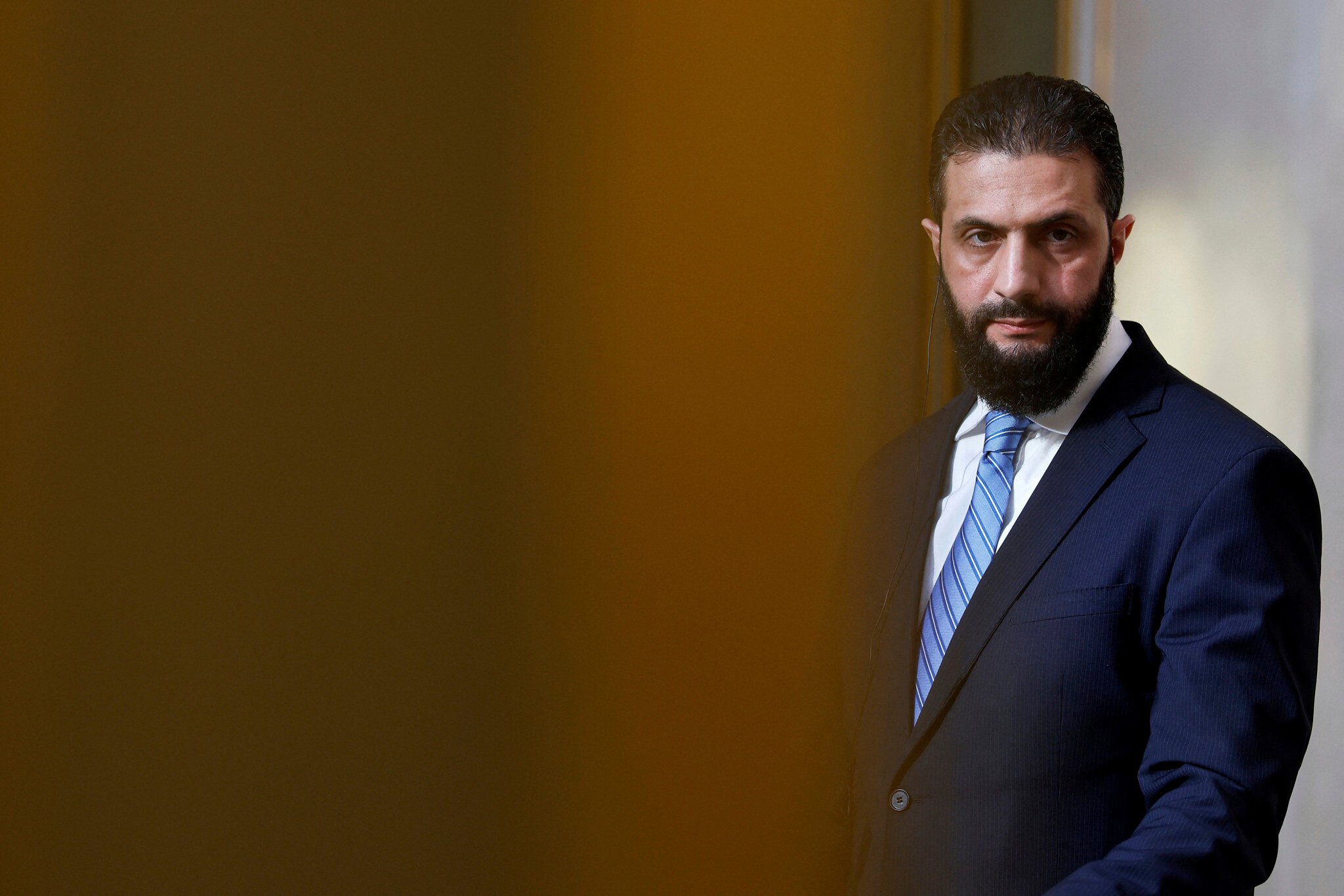
Ahmed al-Sharaa is seeking to lift US and Western-imposed sanctions on the country [Getty/file photo]

A Trump Tower in Damascus, a detente with Israel and US access to Syria's oil and gas are part of Syrian leader Ahmed al-Sharaa's strategic pitch to try to get face time with US President Donald Trump during his trip to the Middle East, according to several sources familiar with the push to woo Washington.

Jonathan Bass, an American pro-Trump activist, who on 30 April met Sharaa for four hours in Damascus, along with Syrian activists and Gulf Arab states has been trying to arrange a landmark - if highly unlikely - meeting between the two leaders this week on the sidelines of Trump's visit to Saudi Arabia, Qatar and the United Arab Emirates.

Syria has struggled to implement conditions set out by Washington for relief from US sanctions, which keep the country cut off from the global financial system and make economic recovery extremely challenging after 14 years of grinding war.

Bass hopes that getting Trump into a room with Sharaa, who still remains a US-designated terrorist over his al-Qaeda past, could help soften the Republican President and his administration's thinking on Damascus and cool an increasingly tense relationship between Syria and Israel.

Part of the bet for the effort is based on Trump's history of breaking with longstanding US foreign policy taboos, such as when he met with North Korean leader Kim Jong Un in the demilitarised zone between North and South Korea in 2019.


"Sharaa wants a business deal for the future of his country," Bass said, noting it could cover energy exploitation, cooperation against Iran and engagement with Israel.
"He told me he wants a Trump Tower in Damascus. He wants peace with his neighbours. What he told me is good for the region, good for Israel," said Bass.

Sharaa also shared what he saw as a personal connection with Trump: both have been shot at, narrowly surviving attempts on their lives, Bass said.

Syrian officials and a presidency media official did not respond to a request for comment.

Sharaa spoke with Saudi Arabia's de facto ruler Crown Prince Mohammed bin Salman on Sunday, according to the Syrian presidency.

A person close to Sharaa said afterwards a Trump-Sharaa meeting remained possible in Saudi Arabia, but would not confirm whether Sharaa had received an invitation.

"Whether or not the meeting takes place won't be known until the last moment," the person said.

'Push underway'

To be clear, a Trump-Sharaa meeting during the US president's visit to the region is widely seen as unlikely, given Trump's packed schedule, his priorities and lack of consensus within Trump's team on how to tackle Syria.

A source familiar with ongoing efforts said a high-level Syria-US meeting was set to take place in the region during the week of Trump's visit, but that it would not be between Trump and Sharaa.


"There is definitely a push underway," said Charles Lister, head of the Syria Initiative at the Middle East Institute.

"The idea is that getting to Trump directly is the best avenue because there are just too many ideologues within the administration to get past."

Washington is yet to formulate and articulate a coherent Syria policy, but the administration has increasingly been viewing relations with Damascus from a perspective of counterterrorism, three sources including a US official familiar with the policy-making said.

That approach was illustrated by the make-up of the US delegation in a meeting last month between Washington and Syrian Foreign Minister Asaad al-Shaibani in New York, which included a senior counterterrorism official from the State Department, two of the sources said.
US officials conveyed to Shaibani that Washington found steps taken by Damascus to be insufficient, particularly on the US demand to remove foreign fighters from senior posts in the army and expel as many of them as possible, the sources said.

The US Treasury has since conveyed its own demands on the Syrian government, bringing the number of conditions to more than a dozen, one of the sources said.

The US State Department declined to disclose who attended the meeting from the US side and said it does not comment on private diplomatic discussions.

White House National Security Council spokesperson James Hewitt said the actions of Syria's interim authorities would determine the future US support or possible sanctions relief.

'Olive branch'

A key aim of Syria's overtures to Washington is communicating that it poses no threat to Israel, which has escalated airstrikes in Syria since the country's rebels-turned rulers ousted former regime leader Bashar al-Assad last year.


Israel's ground forces have occupied territory in southwestern Syria while the government has lobbied the US to keep Syria decentralised and isolated.

Israel has said it aims to protect Syrian minority groups. Syria has rejected the strikes as escalatory.

Sharaa last week confirmed indirect negotiations with Israel aimed at calming tensions, after Reuters reported that such talks had occurred via the UAE.

In a separate effort, Bass said Sharaa told him to pass messages between Syria and Israel that may have led to a direct meeting between Israeli and Syrian officials.

But Israel soon resumed strikes, including one near the presidential palace, which it framed as a message to Syria's rulers to protect the country's Druze minority amid clashes with Sunni militants.

"Sharaa sent the Israelis an olive branch. Israel sent missiles," Bass said.

"We need Trump to help sort this relationship out."

Trump Tower Damascus? Syria seeks to charm US president for sanctions relief

With Gulf help, Sharaa launches bid to get face time with Trump during his Mideast visit with a pitch that includes a detente with Israel and US access to Syria’s oil and gas
Today


Syria's interim President Ahmad al-Sharaa listens during a joint press conference with French President Emmanuel Macron after a meeting at the Elysee Palace in Paris, May 7, 2025. (Stephanie Lecocq/Pool via AP)

DAMASCUS/WASHINGTON (Reuters) — A Trump Tower in Damascus, a detente with Israel and US access to Syria’s oil and gas are part of Syrian leader Ahmed al-Sharaa’s strategic pitch to try to get face time with US President Donald Trump during his trip to the Middle East, according to several sources familiar with the push to woo Washington.

Jonathan Bass, an American pro-Trump activist who on April 30 met Sharaa for four hours in Damascus, along with Syrian activists and Gulf Arab states has been trying to arrange a landmark — if highly unlikely — meeting between the two leaders this week on the sidelines of Trump’s visit to Saudi Arabia, Qatar and the United Arab Emirates.

Syria has struggled to implement conditions set out by Washington for relief from US sanctions, which keep the country cut off from the global financial system and make economic recovery extremely challenging after 14 years of grinding war.

Bass hopes that getting Trump into a room with Sharaa, who still remains a US-designated terrorist over his al-Qaeda past, could help soften the Republican president and his administration’s thinking on Damascus and cool an increasingly tense relationship between Syria and Israel.

Part of the bet for the effort is based on Trump’s history of breaking with longstanding US foreign policy taboos, such as when he met with North Korean leader Kim Jong Un in the demilitarized zone between North and South Korea in 2019.

“Sharaa wants a business deal for the future of his country,” Bass said, noting it could cover energy exploitation, cooperation against Iran and engagement with Israel.


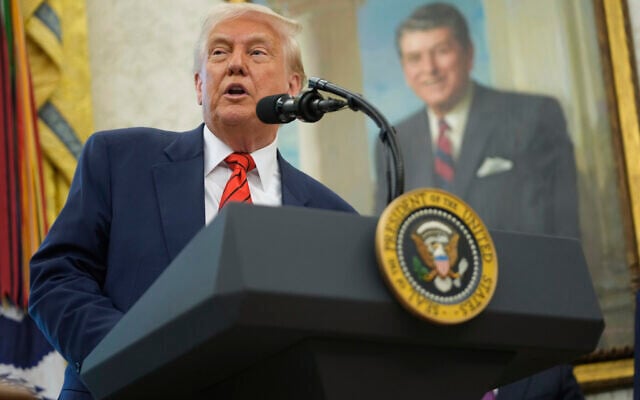
US President Donald Trump speaks before Steve Witkoff is sworn as special envoy in the Oval Office of the White House, May 6, 2025, in Washington. (AP/Mark Schiefelbein)

“He told me he wants a Trump Tower in Damascus. He wants peace with his neighbors. What he told me is good for the region, good for Israel,” said Bass.

Sharaa also shared what he saw as a personal connection with Trump: both have been shot at, narrowly surviving attempts on their lives, Bass said.

Syrian officials and a presidency media official did not respond to a request for comment.

Sharaa spoke with Saudi Arabia’s de facto ruler Crown Prince Mohammed bin Salman on Sunday, according to the Syrian presidency.

A person close to Sharaa said afterwards a Trump-Sharaa meeting remained possible in Saudi Arabia, but would not confirm whether Sharaa had received an invitation.

“Whether or not the meeting takes place won’t be known until the last moment,” the person said.
‘Push underway’

To be clear, a Trump-Sharaa meeting during the US president’s visit to the region is widely seen as unlikely, given Trump’s packed schedule, his priorities and lack of consensus within Trump’s team on how to tackle Syria.

A source familiar with ongoing efforts said a high-level Syria-US meeting was set to take place in the region during the week of Trump’s visit, but that it would not be between Trump and Sharaa.

“There is definitely a push underway,” said Charles Lister, head of the Syria Initiative at the Middle East Institute.

“The idea is that getting to Trump directly is the best avenue because there are just too many ideologues within the administration to get past.”

Washington is yet to formulate and articulate a coherent Syria policy, but the administration has increasingly been viewing relations with Damascus from a perspective of counterterrorism, three sources including a US official familiar with the policy-making said.

That approach was illustrated by the make-up of the US delegation in a meeting last month between Washington and Syrian Foreign Minister Asaad al-Shibani in New York, which included a senior counterterrorism official from the State Department, two of the sources said.

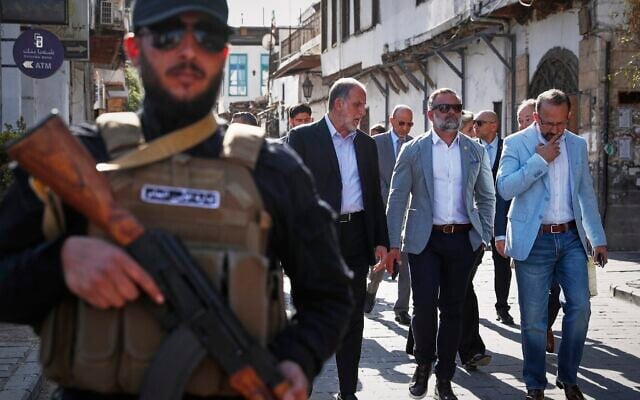
Accompanied by unidentified members of the delegation, US congressman Cory Mills (Republican of Florida), second from right, walks in the Old City of Damascus, April 18, 2025. Mills is in Damascus in an unofficial visit organized by a Syrian-American nonprofit, the first visit by US legislators since the fall of Syrian president Bashar al-Assad in December.(AP Photo/Omar Sanadiki)

US officials conveyed to Shibani that Washington found steps taken by Damascus to be insufficient, particularly on the US demand to remove foreign fighters from senior posts in the army and expel as many of them as possible, the sources said.

The US Treasury has since conveyed its own demands on the Syrian government, bringing the number of conditions to more than a dozen, one of the sources said.

The US State Department declined to disclose who attended the meeting from the US side and said it does not comment on private diplomatic discussions.

White House National Security Council spokesperson James Hewitt said the actions of Syria’s interim authorities would determine the future US support or possible sanctions relief.

‘Olive branch’

A key aim of Syria’s overtures to Washington is communicating that it poses no threat to Israel, which has escalated airstrikes in Syria since the country’s rebels-turned rulers ousted former strongman Bashar al-Assad last year.

Israel says the strikes were largely aimed at destroying Syria’s military and chemical arsenal to stop them falling into the hands of the new regime.

Israel’s ground forces have also occupied a buffer zone in southwestern Syria along the border, while the government has lobbied the US to keep Syria decentralized and isolated.

The IDF described its presence in southern Syria’s buffer zone as a temporary and defensive measure, though Defense Minister Israel Katz has said that troops will remain deployed to nine army posts in the area “indefinitely.”

Israel has also said it aims to protect Syrian minority groups. Sectarian violence in Syria has escalated in recent weeks, as Islamist supporters of the country’s new regime have targeted Druze communities in clashes in southern Syria. Reports have put the death toll from the fighting at around 100.
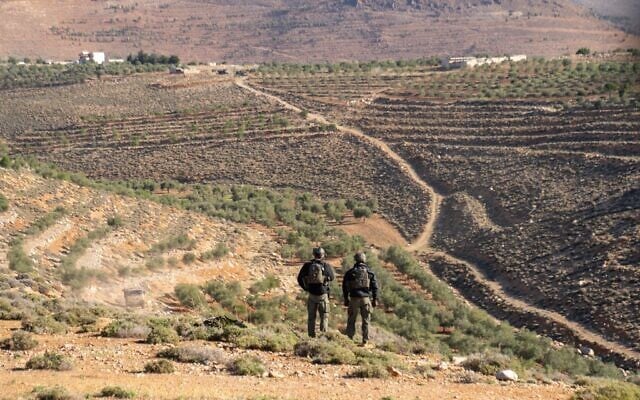

Troops of the 810th “Mountains” Regional Brigade operate in southern Syria, in a handout photo issued on May 5, 2025. (Israel Defense Forces)

Israel has vowed to protect the Syrian Druze community from threats, and the IDF has struck targets in the country as a “warning” to the new regime.

Syria’s government has condemned Israel’s strikes as escalatory and as foreign interference, and says the new government in Damascus is working to unify the country after 14 years of civil war.
Advertisement

Sharaa last week confirmed indirect negotiations with Israel aimed at calming tensions, after Reuters reported that such talks had occurred via the UAE.

In a separate effort, Bass said Sharaa told him to pass messages between Syria and Israel that may have led to a direct meeting between Israeli and Syrian officials.

But Israel soon resumed strikes, including one near the presidential palace, which it framed as a message to Syria’s rulers to protect the country’s Druze minority amid clashes with Sunni militants.

“Sharaa sent the Israelis an olive branch. Israel sent missiles,” Bass said.

“We need Trump to help sort this relationship out.”

Times of Israel staff contributed to this report.

Donald Trump plans to accept luxury 747 from Qatar to use as Air Force One

The luxury plane, which would be one of the most valuable gifts ever received by the U.S. government, would eventually be donated to Trump's presidential library after he leaves office

LIBRARY ON A PLANE, FILLED WITH ALL HIS OWN BOOKS

Reuters Published 12.05.25

U.S. President Donald Trump's administration intends to accept a Boeing 747-8 plane as a gift from the Qatari royal family that would be outfitted to serve as Air Force One, according to a source briefed on the matter.

The luxury plane, which would be one of the most valuable gifts ever received by the U.S. government, would eventually be donated to Trump's presidential library after he leaves office, the source said. A new commercial 747-8 costs approximately $400 million.

In a post on his social media site Truth Social late on Sunday, Trump appeared to confirm the proposal.

"So the fact that the Defense Department is getting a GIFT, FREE OF CHARGE, of a 747 aircraft to replace the 40 year old Air Force One, temporarily, in a very public and transparent transaction, so bothers the Crooked Democrats that they insist we pay, TOP DOLLAR, for the plane," he wrote.


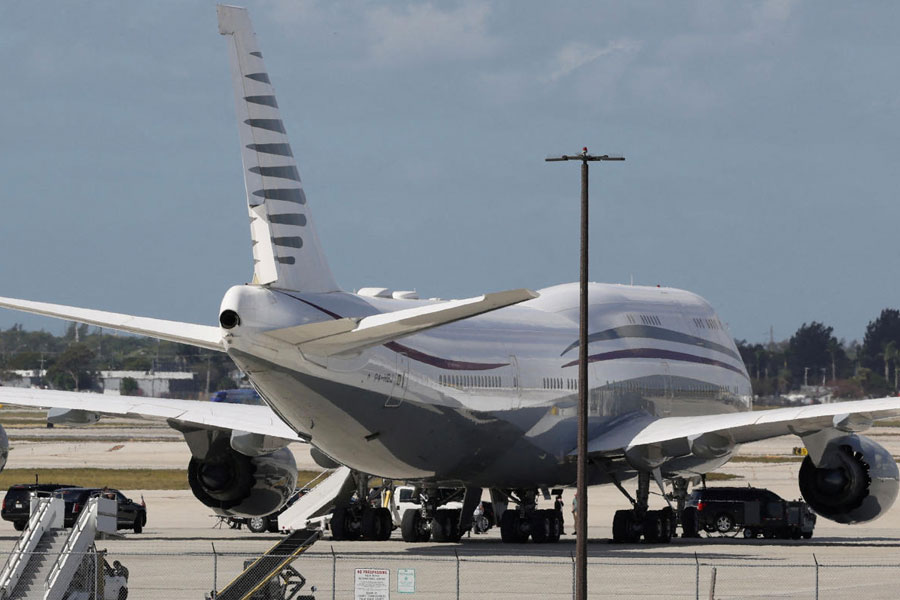
The motorcade of U.S. President Donald Trump is parked next to a 12-year old Qatari-owned Boeing 747-8 that Trump was touring in West Palm Beach, Florida, U.S., February 15, 2025.Reuters

Democrats and good government advocates said it was unethical and likely unconstitutional for Qatar to make such a gift.

"Nothing says 'America First' like Air Force One, brought to you by Qatar," Senate Democratic Leader Chuck Schumer wrote on X. "It's not just bribery, it's premium foreign influence with extra legroom."

White House press secretary Karoline Leavitt said in a statement, "Any gift given by a foreign government is always accepted in full compliance with all applicable laws. President Trump's administration is committed to full transparency."

A Qatari spokesperson, Ali Al-Ansari, told the New York Times that the possible transfer of the aircraft was still under consideration and "no decision has been made," the newspaper reported.

ABC News was first to report the planned gift on Sunday.

Trump has expressed frustration at the delays in delivering two new 747-8 aircraft to serve as an updated Air Force One. During his first term, Trump had reached a deal with Boeing to deliver the jets in 2024. A U.S. Air Force official told Congress last week that Boeing had proposed finishing the planes by 2027.

Trump toured the Qatari-owned 747-8 in February when it was parked at Palm Beach International Airport in Florida, near his Mar-a-Lago resort. At the time, the White House said the president did so to get a better understanding of how the updated Air Force One planes would be configured.

In a statement, a spokesman for Citizens for Responsibility and Ethics, a good government organization based in Washington, questioned whether the transfer might violate the Constitution's ban on U.S. officials accepting gifts from foreign governments absent congressional approval.

"This sure looks like a foreign country that the president has personal business dealings in giving the president a $400 million gift right before he meets with their head of state," the spokesman, Jordan Libowitz, said.

Trump is set to visit Qatar during a trip to the Middle East this week. The airplane will not be presented or accepted while Trump is in Qatar.

ABC reported, citing sources, that lawyers for the White House counsel's office and the Department of Justice had prepared an analysis concluding that it would be legal and constitutional for the Defense Department to accept the plane as a gift and later transfer it to Trump's presidential library.

Trump ‘plans to accept’ $400,000,000 luxury plane gift from Qatar royal family

Craig Munro
Published May 12, 2025

Top left, the plane at Palm Beach airport and below, the interior (Pictures: Reuters/AFP/AMAC Aerospace)

Donald Trump is expected to accept one of the most generous foreign gifts ever offered to a US President – a $400 million jumbo jet.

Qatar’s royal family dangled the enormous ‘flying palace’ in front of the luxury-loving leader in Florida earlier this year, suggesting it could replace the aging Air Force One.

The aircraft would reportedly be donated to Trump’s presidential library after he completes his term in office, allowing him to make use of it in a personal capacity.

In a post on his Truth Social site, the president suggested the arrangement would be temporary and called Democrats ‘losers’ for criticising the move.

He wrote: ‘So the fact that the Defense Department is getting a GIFT, FREE OF CHARGE, of a 747 aircraft to replace the 40 year old Air Force One, temporarily, in a very public and transparent transaction, so bothers the Crooked Democrats that they insist we pay, TOP DOLLAR, for the plane.

‘Anybody can do that! The Dems are World Class Losers!!!’

But the donation has led to criticism beyond just Democrats, with influencer and die-hard Trump fan Laura Loomer writing she ‘would take a bullet’ for the president but he ‘cannot accept’ the plane.

She accused the Qataris of funding ‘Iranian proxies’ who have ‘murdered US Service Members’, and said acceptance would be ‘such a stain on the admin’.

ABC News reported the US Attorney General Pam Bondi and top White House lawyer David Warrington had concluded the deal would be ‘legally permissible’ as long as it is handed to the presidential library before the end of the president’s term.

Trump previously toured the plane when it visited Florida’s West Palm Beach International Airport near his Mar-a-Lago property in February.

A conference room inside the new plane (Picture: AMAC Aerospace)

A new Boeing 747-8, of the type being offered, would cost around $400 million.

The US Government has been seeking a replacement for Air Force One – actually two planes, though the designation is only given to the one carrying the president at a particular time – for more than 15 years.

They have been in use since George HW Bush’s administration in the early nineties, and the interiors were designed by former first lady Nancy Reagan.

By contrast, the interior of the new plan was designed by renowned French firm Alberto Pinto Cabinet.

It features staterooms, dining rooms and conference rooms with plush carpets and leather couches.

White House press secretary Karoline Leavitt said: ‘Any gift given by a foreign government is always accepted in full compliance with all applicable laws.’

She added: ‘President Trump’s Administration is committed to full transparency.’


TSMC: The Enduring Silicon Shield of Taiwan’s Economy

Written by Min-Hua Chiang.

Image credit: CHIPS-TSMC by 李 季霖/ Flickr, license: CC BY-SA 2.0.

Why did TSMC’s US$100 billion investment pledge in the US not remove Taiwan from President Trump’s plan for higher tariffs on foreign goods? Can Taiwan still use TSMC as leverage in future negotiations with the US for bilateral economic relations?

The immediate answer to the first question is that TSMC’s investment will not reduce the US trade deficit right away. It takes a few years before the chip plants can mass produce. In addition, semiconductors accounted for only 2.5% of America’s total imports in 2024, according to the Bureau of Economic Analysis. Given the chips’ small portion in the US total imports, even though TSMC’s investment might reduce America’s demand for foreign semiconductor chips, it will not shrink the overall US trade deficit noticeably.

As such, Taiwan’s economy will continue to face challenges from the US tariff threat in the near term, despite the investment commitment. Notably, Taiwan’s exports to the US could be severely harmed if the import levies were extended to information and communications technology (ICT) products, such as smartphones, computers, tablets, and so on. In the first quarter of 2025, over one-third of Taiwan’s exports were ICT goods, and around half of them went to the US, according to Taiwan’s Ministry of Finance.

Unlike the tariffs on ICT goods, President Trump’s tariff on semiconductor goods, if imposed, might not have a significant impact on Taiwan, as the US only accounted for 4% of Taiwan’s total exports of electronic components (including semiconductor chips) in the first quarter of 2025.  

However, Taiwan’s semiconductor exports could be impacted by the US’s extra import duties on final consumption goods manufactured in East Asia. Data from Taiwan’s Ministry of Finance reckons that in 2024, 52% of Taiwan’s electronic components were exported to China and Hong Kong, followed by 24% to Southeast Asian countries. Taiwan exported over 90% of its electronic components to all Asian countries. Those electronic components are mostly used for manufacturing final consumption goods in the region, which are later exported to the global market, particularly in the US.

Challenges from the new tariff policy are not for Taiwan alone, but for the entire global economy. Decades of investments from manufacturers around the world have built up the full global division of labour that provides the most production efficiency. Even if all trade barriers, non-trade barriers and tariffs between the US and Asian countries were eliminated, relocating manufacturing production back to the US would remain unappealing for businesses due to the significantly higher labour costs in America. Instead, freer trade would likely strengthen existing trade relationships based on each country’s comparative advantages. For example, with zero tariffs and trade barriers, firms would still favour Vietnam as a labour-intensive final assembly location whilst positioning the US as a key provider of chip design and innovation.

How the global economic structure will turn out in the end still relies on the outcome of tariff negotiations between the US and other countries. Despite the uncertainties, the benefits of TSMC’s investment in America still stand true so far. First and foremost, the investment will enable TSMC to capitalise on the “First-mover advantage” in the emerging AI industry in the US. Less than one month before the TSMC released its investment plan, OpenAI, SoftBank, and Oracle announced the largest AI infrastructure project in the US. Other tech giants, such as AppleMicrosoft, and Nvidia, have also committed to investing in the AI industry in the country. The chip plants in the US will facilitate TSMC’s advanced chip supply to the local customers in the AI industry.

Expanding chip fabrication in the US will help TSMC to develop an economy of scale, thus bringing down the overall production cost. Moreover, setting up an R&D centre in America will also help TSMC to advance its technology since the US has a much larger number of talents from all over the world in high-tech industries.

TSMC’s promising business prospect in the US, driven by the booming AI industry, will also benefit its largest shareholder—the Taiwanese government. The company’s annual report indicates that the Executive Yuan (6.38%) and Labour Pension Fund (1.31%) account for 7.69% of TSMC’s shares.

Greater investment in the US over the last few years has increased America’s importance in TSMC’s business. In the first quarter of 2025, 77% of the company’s net revenue is from North America, rising from 62% in 2018. The company’s global foundry market share also grew from 58% in Q2 2023 to 67% in Q4 2024, while the shares of other competitors diminished, according to the data from Counterpoint. The benefits from this investment extend beyond TSMC alone. The long-term positive impact on the American economy should be emphasised to the US government. For instance, TSMC’s investment in the US could create additional job opportunities in high-value-added manufacturing sectors—precisely what the country needs most. The fabrication of advanced chips might not only satisfy domestic demand but also boost America’s potential exports of chips and other high-tech goods to international markets, thereby helping to reduce the US trade deficit. Thanks to TSMC’s investment, the US is expected to hold 28% of the global advanced chip fabrication capacity by 2032from 0%  in 2022.

Even though the US will fabricate more advanced chips, more than 80% of TSMC’s advanced chips will still be fabricated in Taiwan in the next five years. Overall, Taiwan will still hold nearly 60% of global advanced chip fabrication by 2030. Therefore, the global reliance on made-in-Taiwan chips could continue to protect the island from China’s military invasion. On the one hand, the US might have to intervene in the military conflict in the Taiwan Strait due to the potential disruption of the global supply chain network and the impact on the world economy. On the other hand, China might restrain its military actions as the war with the island could sabotage its domestic economy, which also relies on chips made in Taiwan.

In the long term, the shrinking population on the island implies that there is a limit to how many advanced chips Taiwan can fabricate for the whole world. A small island like Taiwan will always need a larger business territory to sustain its domestic economy. For example, China’s abundant and cheap labour force and much larger export platform allowed Taiwanese firms to expand their global sales. Taiwan’s export-oriented economy also benefited from supplying key components and capital equipment to China for the final assembly. The US market today, the largest one in the world, will provide Taiwanese firms with new business opportunities if properly approached.

In sum, President Trump’s tariff policy will hurt TSMC only when manufacturers in East Asia can no longer afford to export final consumption goods to the US and thus reduce the industrial input from the company. If that is the case, the US economy will suffer from hyperinflation due to a severe shortage of supply. So far, the worst scenario has not happened yet. Instead, the policy has encouraged numerous countries, including Taiwan, to try to strike a new deal with America. TSMC is still Taiwan’s best chip in negotiating with the US. The question is how to properly place the company, the key player in the industry, on the global chessboard.

TSMC’s significant role in the global supply chain network should give Taiwan leverage. For example, its investment in America is likely to encourage both Taiwanese and foreign companies to follow suit. Therefore, the company will be key to kick-starting the global economic reshuffle and benefiting the US manufacturing revival as well as America’s national interests.

Min-Hua Chiang is a non-resident fellow at the Taiwan Research Hub, University of Nottingham.

This article was published as part of a special issue on ‘Trump’s Tariffs: What does it mean for Taiwan?‘.

No closer to the truth about antisemitism

Rachel Shabi’s new book, Off-White: The Truth About Antisemitism, erases efforts by Jewish leftists to tackle the problem.

12 May 2025
DECLASSFIED UK


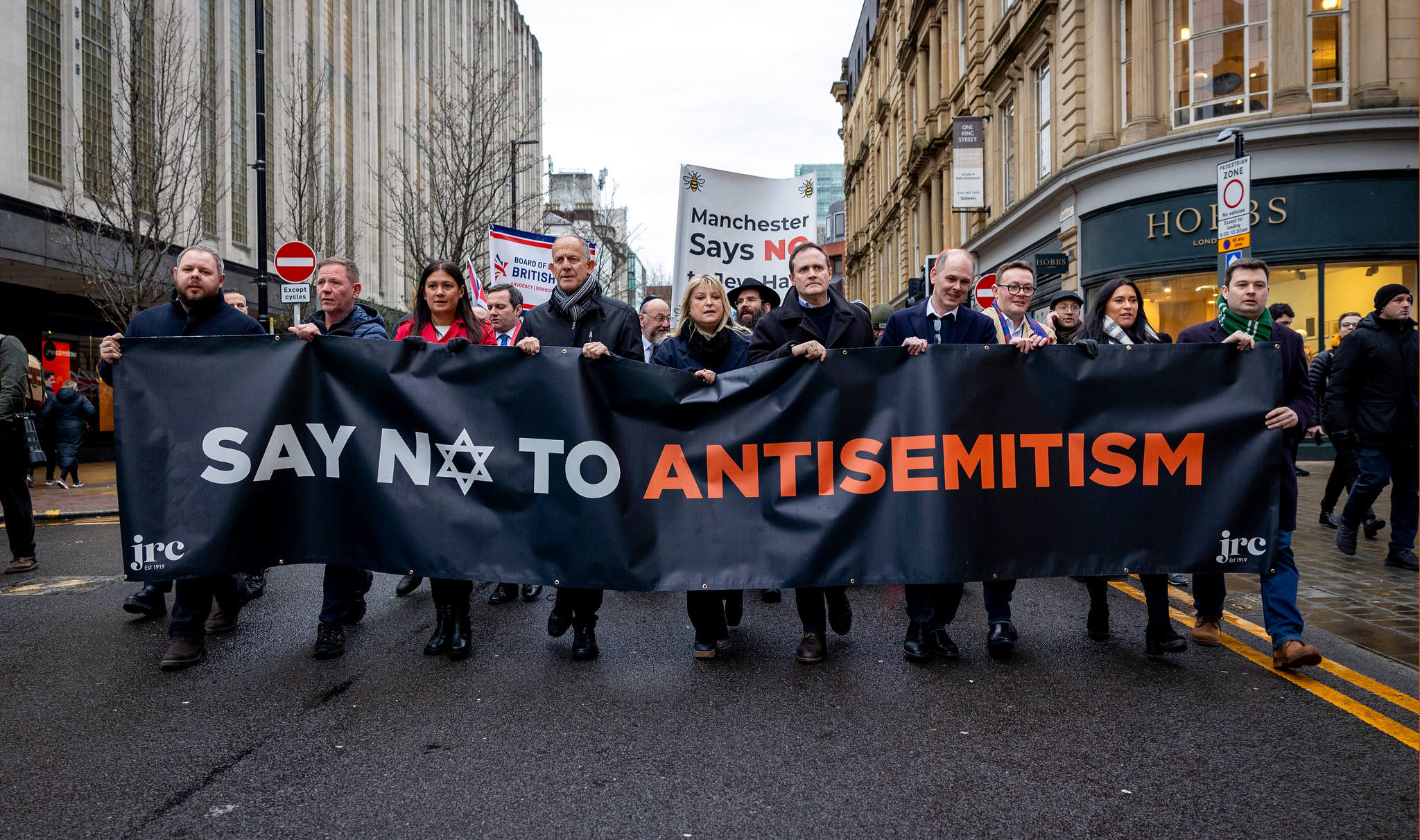
A protest in Manchester against antisemitism. (Photo: Home Office / Flickr)

Brave? Or foolhardy? Calling your book ‘The Truth about Antisemitism’ sets the bar very high, given that the field is a crowded one, characterized by bitterly opposing views. Almost all of these opinions are expressed by writers ranging from impressively qualified academics to stand-up comedians who claim, in one form or another, to be telling us the truth about Jew-hatred. Shabi presumably knows this and believes that she will bring us new insights, fresh enlightenment to which we have yet to be exposed.

In many respects she is well placed to do this. Shabi is an experienced journalist who was a prominent observer and commentator on the antisemitism furore that engulfed the Labour Party during Jeremy Corbyn’s tenure as its leader. She acknowledges that she has ‘skin in the game’. Her parents are Iraqi Jews, forced to leave their country and emigrate to Israel, where she was born in 1973. She was brought up in Britain but has reported extensively from the Middle East. 

Her encounter with antisemitism is by no means just second-hand. As a self-declared leftist, she is troubled that the left has not “taken up the fight against [antisemitism] as a left-wing cause”. While she states that “in different ways and to varying degrees we are all bad at talking about antisemitism” she singles out the “protesting against the clear weaponisation of antisemitism” particularly as a means of getting rid of Corbyn, as “[bleeding] into a posture of indifference about antisemitism at best, and outright denials of it at worst”. 

The central contention and project of the book is that “the left has forgotten to apply to antisemitism the frames of analysis already available within our movements….A true understanding of what has gone wrong with this discussion—and how to put it right—will not just fortify the left, consolidate our antiracist endeavours and yield inclusiveness, moral clarity and cohesion. It will help us make sense of the alarming, divisive and destructive rightwards shift of the world we are all in—because only then do we stand a chance of changing it.”

Really? This is breathtakingly ambitious. Especially in light of the fact that the appalling state of discourse about antisemitism was being flagged by leading scholars of antisemitism long before Shabi faces it in her book. Take, for example Professor David Feldman (Director of the Birkbeck Institute for the Study of Antisemitism): “when it comes to antisemitism many of us literally don’t know what we’re talking about and are happy to admit it. And as for the rest of us who think we know what antisemitism is, we are congenitally unable to agree among ourselves”. That was in 2017.  In 2018, Professor Jonathan Judaken (Rhodes College) described the study and discussion of antisemitism as “a dialogue of the deaf waged as a battle to the death”. 

RELATED

Weaponising antisemitism: The gift that keeps on giving

READ MORE 

Shabi doesn’t attempt to disentangle the mess they identified. She just ignores it. She contends that “post-war Western societies welcomed Jewish people into whiteness, ushered us in to help maintain it as a social construct.” It is the phenomenon of what she calls “Jewish not-whiteness” and it’s the supposed lack of attention to it that she emphasises.

This is where Shabi takes us to the less considered ground encapsulated in the title of the book: Off-White. Its importance for Shabi is clear from the fact that Off-White is the title. Her concern is that “amid European Jewish communities, there is a lingering ambivalence over whiteness. The sense of this being a category error. White Jews aren’t not white. But we aren’t really white either. We are off-white.” 

Shabi believes that “post-war Western societies welcomed Jewish people into whiteness, ushered us in to help maintain it as a social construct.” She suggests that the history of it “could open up more meaningful understanding of whiteness itself”. The absence of this history, she seems to be saying, is what has led to “British antisemitism get[ting] weirdly sanitised treatment.”

Shabi clearly wants us to understand this analysis as profound and original, but she brings woefully little evidence to support it. The argument is no more than a series of assertions. Who are the historians, the sociologists, the researchers of contemporary antisemitism, the public intellectuals backing the allegations that British Jews are in any significant way exercised by whiteness/non-whiteness? Historians of British antisemitism will surely not thank her for implying that their work treats antisemitism in a “sanitised” fashion.

Crucially, what does this tell us about the actual state of antisemitism today and how Jews are experiencing it in the UK (which is her main geographical focus)? Does discussion about whiteness really relate in any meaningful way to revealing the truth about antisemitism? It is hard to believe that Shabi is offering any more than a sense of resignation and platitudes: “we’re going to have to make peace with that state of ambiguity about Jewishness and whiteness. Get beyond the boxes. Embrace the complexity. Because apart from anything else, cleaving to a categorisation system imposed by racism itself is simply absurd.” This is all very well, but what are we to do with it? Put both Jews and antisemites on the psychologist’s couch?

Media storm

When she shifts gear and places this approach in the wider historical context, she follows a familiar and well-trodden path: seeing antisemitism as the defining feature of Jewish existence. So we should not be surprised by the current Jewish predicament. The picture has always looked dire. “In Europe more broadly Jews were being racialised, scapegoated by Christians, subject to pogroms, and then ultimately subjected to ‘mass [genocide]’. The Holocaust wasn’t a blip, but a grotesque culmination in a landscape saturated with antisemitism.” 

What Shabi seems to be saying in this exposition of the eternalist understanding of antisemitism is that for Jews, the promise of the Enlightenment brought no lasting benefit. Antisemitism was so deeply embedded in European societies, integration and absorption was always fragmentary, contingent, no matter how far Jews came to be seen as ‘white’.

Whether you are convinced or not about the significance of the notion of ‘Jewish not-whiteness’, it would be very hard to sustain the idea that the vast quantity of news and comment about real or alleged antisemitism prompts Jews to ask themselves first and foremost how white they are. And it is equally hard to give credence to her claim that “As antisemitism hit the UK headlines, Jews across the country felt this issue crash into their lives unexpectedly: at work, down the pub or within political organising spaces”—a bizarre choice of real world contexts to choose without any polling evidence to back it up. 

Given that the left is supposed to be at the heart of this book, if anything crashed into the lives of Jewish people it was surely the media storm about Labour and antisemitism, and its confected nature that we must highlight. But how does Shabi characterise this? “Broadly, much of the Corbyn-supporting left minimised the problem, while the right hyperbolised it”. 

Frankly, this is a stunning piece of oversimplification, and loaded to boot. It is not insignificant that Jewish Voice for Labour (JVL) is not referred to anywhere in the book. In the forefront of pushing back against antisemitism accusations against Corbyn personally and the party in general was JVL, a new grouping set up specifically to support the Corbyn leadership. 

Their contributions to discussions on antisemitism were often nuanced, a corrective to the lies and character assassination to which Corbyn-supporting Jews were subjected. And also forthright in arguing that the exaggerated attention paid to Jews was “taking up space and jostling out more pressing or deserving issues, not least those concerning structural racism in the party.” I quote Shabi’s words here, but she does not endorse the “taking up space” argument. While you might not have agreed with all the JVL members’ interventions published on the JVL website, where free speech and independence of thought prevailed, no serious study of the truth about antisemitism during this period can ignore JVL’s role and presence.

Erasure

One of the factors leading to this erasure is Shabi’s problematic emphasis on and understanding of the role of Jewish leftists. For example, she writes: “By the early 2000s Jewish leftists within racial justice spaces”—whatever they are—“would be no more inclined to discuss antisemitism than they would, say, the idea of Britain leaving the EU. It wasn’t on anyone’s radar.” 

She is wrong. In 1994 the left-leaning think tank, the Runnymede Trust published the results of a commission it set up, of which I was a member, investigating antisemitism. The report was titled: A Very Light Sleeper. The Jewish Socialist Group (JSG) in the mid-1990s had manipulation of antisemitism in its sights. Rising antisemitism in former communist countries was an issue attracting increasing attention. At the same time, the relationship between antisemitism and criticism of Israel and Zionism was subject to growing discussion, with many left-thinking Jews expressing increasing scepticism about any equivalence. 

Moreover, a new generation of British scholars of antisemitism, including the late Professor David Cesarani, Professor Tony Kushner and Professor David Feldman, were making their mark with incisive research on antisemitism within the wider context of racism in general, and that of a broader focus locating antisemitism within the wider area of Jewish/non-Jewish relations.

Why does Shabi not factor this into her narrative? In part I believe it’s because ambivalence over whiteness had no significant role in these narratives. And further, it disrupts the eternalist understanding of antisemitism that guides her thinking. We saw this already in her flawed summation of the Holocaust as effectively inevitable. 

This sense of being predetermined, which goes hand in hand with the understanding of antisemitism as an eternal phenomenon—that it was bound to happen, and that it can happen again— emerges in her view that “deep down we know that [a civilised, cultured society] can go in a blink…. So often in European Jewish history, everything was just fine right up until the moment it suddenly was not. Antisemitic violence operates in cycles by its very nature, with some Jewish people elevated in status precisely so that the entire community can be used to deflect attention from the powerful when necessary. That is why the history of antisemitism in Europe cycles between periods of calm and episodic persecution”. 

Shabi emphasises this highly contentious idea: “As we have seen throughout European history, Jewish people had to be first elevated to be then reviled, so they could act as a buffer community between the ruling powers and the masses”. Imagining Jews as a “buffer class” is not something Shabi says is confined to the past. Together with some other Jewish leftists (especially in the USA), she sees Jews fulfilling this function today. And she uses this contention in part to explain why Jews post-7/10 have become a “trauma nation”, and why apparently “Jewish people are freaking out”. 

If this is cyclical, as she argues, it seems to imply that we Jews, because of our unique historical experience, are psychologically predisposed to see ourselves as victims and continue to fulfil the role of being a “buffer class”. She regrets the manipulation of Holocaust memory to explain Jewish reaction to 7/10, and yet seems to blame the left for not acknowledging “Jewish anguish”.

This anguish is inextricably linked to the “Israel-Palestine conflict steeped in suffering built into its genesis, with the horrors of the Holocaust leading to the creation of a state that would bring catastrophe on another people.” It is unfortunate to say the least that this sounds like Shabi is blaming the Nazis for the fate of the Palestinians. It’s playing fast and loose with both Holocaust and Zionist history. The Israeli state was in an advanced stage of coming into being before the Holocaust made its impact on the timing of statehood. 

RELATED

Morgan McSweeney’s ‘plot without precedent in Labour history’

READ MORE 

Historical assumptions

The author of a book that boldly claims to tell us “the truth” about antisemitism, but shows little willingness to check her historical facts and be clear about her historical assumptions, is skating on thin ice. The idea of “eternal antisemitism” as an unbroken continuity of persecution of Jews beginning at the end of the Roman Empire and continuing into the twentieth century is a dangerous and discredited fallacy.  

Whether intentionally or not, Shabi is basing her “truth about antisemitism” on a deeply troubling Jewish exceptionalism. And this emerges in the wider context of her central contention that failure to understand and deal with the problem of antisemitism is somehow exclusively the fault of “the left”, an entity she never clearly identifies. “The left has ceded the space on antisemitism—responding to accusations of it, sure, but not taking up the fight against it as a left-wing cause.”

For Shabi then, a tremendous amount rests not only on the left making a screeching handbrake turn by taking up and winning the fight against antisemitism as a left-wing cause using tools (unspecified) already at its disposal. But by clearing up the antisemitism mess, the door will also open to bringing about revolutionary change in achieving the widest of anti-racist goals and a change of “the world we are all in”.

Shabi does not set out to marginalise the fate of the Palestinians. She acknowledges that Zionism is settler colonialism, and quotes from the writings of the early Zionist leaders to support the point but then is far too quick to repeat the argument that Zionism has its “roots in the Jewish experience of centuries of exclusion and persecution”. So where does this leave the Palestinians? Shabi then fails to clarify that Palestinians are not responsible for the fate of the Jews. 

Nor does she allow for it being a Jewish imperative to work tirelessly setting right the injustice Palestinians have faced – a central task essential not only on its own terms but also because it would have a major impact on the hostility and antisemitism facing Jews today. Instead, it’s back to the argument she has already made that “[we] must build a universal anti-racist movement—fusing together our currently siloed understandings of oppression, Islamophobia, racism and antisemitism …. get past a sides-based narrative not of our making [and] build a collective narrative more rooted in historical and geographic reality of all the people who live in the region”.

Regrettably, this sentiment, however well-meaning, takes us no closer to the truth about antisemitism or to any practical way in which the left can take-up and win the fight against it—if indeed one accepts the logic of her claim that responsibility for this must be shouldered by the left.

It is all very well speaking of building a collective narrative rooted in historical reality, but if your own narrative is singularly deficient in understanding historical reality when it comes to current antisemitism, the collective narrative will lack credibility.

Debates over definitions

Shabi knows well-enough that in seeking the truth about antisemitism today one must account for the central significance of the so-called ‘new antisemitism’ and its codification in the International Holocaust Remembrance Alliance (IHRA) working definition of antisemitism. But her grasp of the significance of the notion of ‘new antisemitism’ and its deliberate creation as a weapon to undermine the struggle for justice for Palestinians and to brand them as the new Nazis is seriously flawed. 

She shows no awareness of the role the Israeli government formally took upon itself in 1988 to head-up the global Jewish fight against antisemitism (although she appears to be drawing here on sources that clearly set this out). Israel’s subsequent interventions in the two decades after 9/11, which contributed to the drive to produce a new definition of antisemitism—in other words a codification of ‘new antisemitism’ (such as Natan Sharansky’s ‘3 Ds’)— are regularly linked to her uncritical acceptance of reports of spikes in antisemitism for which little hard evidence is provided. 

For example, she writes of “this terrible degradation of the term antisemitism [coming] at exactly the moment when awareness of it is most needed… when antisemitism is globally surging”—validating this claim by quoting only UK Community Security Trust (CST) statistics, the reliability of which has been subject to authoritative critique. (CST is the independent body monitoring antisemitism for the official representative bodies of British Jewry.)

This inadequate treatment of ‘new antisemitism’ is followed by a very unsatisfactory account of the origins of the IHRA working definition, a proper understanding of which is crucial to any serious attempt to tell the truth about antisemitism. For IHRA was a political project designed to codify ‘new antisemitism’ in the form of a new definition that would become internationally accepted, clamping down on criticism of Israel and Zionism and turning Palestinians and advocates of Palestinian human rights into the main disseminators of the eternal hatred of Jews.

But Shabi does not seem to understand the consequences of crying out to the left to deal with the problem of the antisemitism ‘mess’. It is right to locate this fight within the realm of politics, yet she offers no practical political pathway to achieving this. On the contrary, it seems clear to me that the more psychology-based ‘truths’ about antisemitism, which she gleans from many unnamed individuals, as well as a very few named ones, provide the ‘practice’ which Shabi feels the left must adopt—thereby sidestepping the complexity and intractability of the problem about which she claims she is telling us the truth. 

I am not seeking to devalue her journalistic propensity to rely on recording peoples’ experiences and testimonies. But a book that purports to be telling us the truth about antisemitism must surely be assessed against a higher standard than you might require if it were an extended article for a magazine. 

And I think it is only reasonable to expect a substantive summing up, especially because Shabi seeks to cover many bases in the quest for this truth, which is why this reader found it deeply disappointing to reach the final chapter titled ‘Conclusion’ only to discover it consisted of less than five pages. Even in this short space, problematic assertions are made, for example: “When we get right down to it, very little of our conversation is actually about Jewish people or their lived experiences, so much as it is about ‘The Jews’, as the antisemitic conspiracy and as the victims of it”.  But we are told earlier in the book of the necessity to understand why Jews are “freaking out”. Isn’t that lived experience?

Shabi also reminds us of the truth about “leftist movements of all kinds [needing] to stop ceding the fight against [antisemitism] and start reclaiming it as an antiracist cause, [and that] the next truth is that this is one hell of a task”. Such a comment does nothing to add to the seriousness of her ‘truths’. Then she asserts “we should be confident in the necessity of understanding and overcoming antisemitism right now”. Really? Does such a statement actually bring you nearer to your objective?

And one further deeply troubling assertion: “the vital need for thoughtful definitions of antisemitism that provide clarity without trampling over Palestinian rights”. I found nothing in this book supporting the conclusion indicating that this contributes to identifying truths about antisemitism. Academic debates about definitions are a lost cause. They will never result in the replacement of IHRA, the formulation process for which was a political act. And they will certainly do nothing to bring an end to the trampling over Palestinian rights. The fates of Palestinians and Jews today have never been more fully intertwined. Such that the path to the truth about antisemitism runs through the absolute necessity of relentlessly fighting for and securing Palestinian rights.

TAGGED: 
Death and despair on Kanchenjunga: French climber dies, Briton rescued after first summit of season

Yogendra Tamang of Peak 15 Adventure confirmed that Margareta Morin from France died at 7,800 metres while attempting to climb the world’s third-highest mountain on May 10

Our Web Desk Published 12.05.25, 

Representational image Shutterstock

A French climber died and a British mountaineer was rescued from above Camp IV on Mt Kanchenjunga during the first successful summit of the season, according to expedition organisers.

Yogendra Tamang of Peak 15 Adventure confirmed that Margareta Morin from France died at 7,800 metres while attempting to climb the world’s third-highest mountain on May 10.

“The 63-year-old female climber was taken ill while attempting to climb the world's third highest peak on May 10,” Tamang quoted mountain guide Tendi Sherpa as saying from Camp III, reported The Himalayan Times.

Margareta, who attempted her first 8000er without prior experience, couldn't be rescued due to unfavorable weather conditions, Tamang said.

“The French Embassy in Kathmandu and her family were informed about the incident,” Tamang added, according to The Himalayan Times. Discussions with her insurance company were underway to bring her body down from the high camp.


Mt Kanchenjunga

Meanwhile, Sherpa climbers rescued a British national who fell ill above Camp IV while descending from the summit.

“Adrian Michael Hayes, who suffered from severe altitude sickness is being rescued,” Chhang Dawa Sherpa, Expedition Director at Seven Summit Treks, said, reported The Himalayan Times.

Adrian is now at Camp IV as rescuers brought him down last night, he added. “Once weather allows, we will evacuate him from the lower camps,” he said.

Hayes had reached the summit earlier on May 10 before becoming unwell.

According to The Himalayan Times, Sherpas brought him down to Camp IV and were waiting for improved conditions to evacuate him further.

Reports suggest that the summit push began from Camp IV on Friday evening, with the team reaching the peak at 2.15 p.m. the next day. The climb took approximately 20 hours.

Morin was among the 13-member team on the Kanchenjunga expedition this spring season. The group consisted of six foreign climbers and seven Nepali Sherpas. Ten climbers, including Hayes, reached the summit.

The expedition team also included climbers from Kosovo, Iran, and the United Arab Emirates. Another Sherpa team had moved ahead to prepare the route.

This incident follows the recent death of Tom Howard, who was killed by a falling boulder while hiking on the Triund Trek in India. The 27-year-old data analyst from Surrey was on a snow-covered trail with a friend when the accident occurred.


Mt Kanchenjunga
First group of white South Africans leave for US after Trump offers refugee status

The South African government said it is ‘completely false’ that Afrikaners are being persecuted

Gerald Imray
Sunday 11 May 2025
THE INDEPENDENT UK


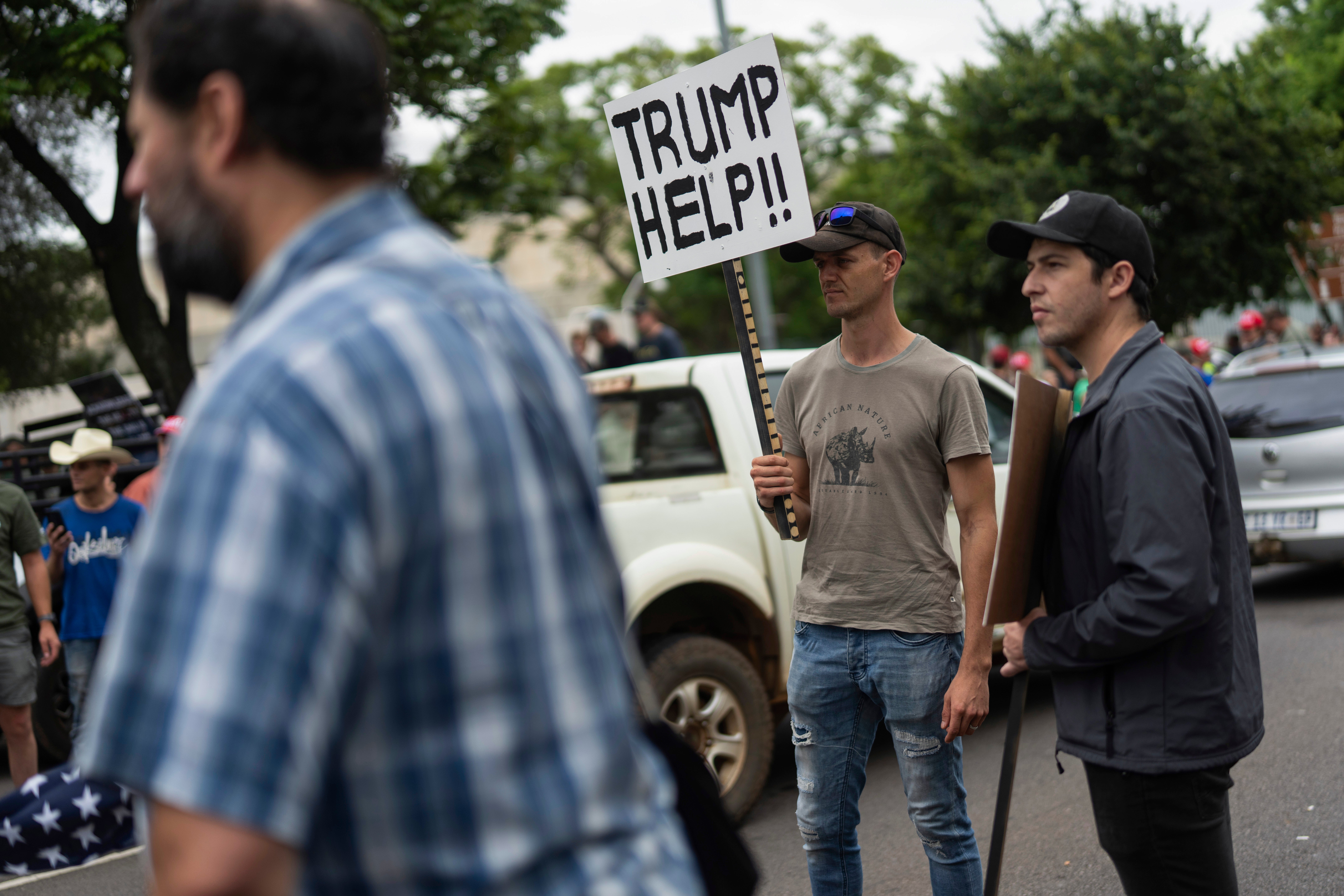
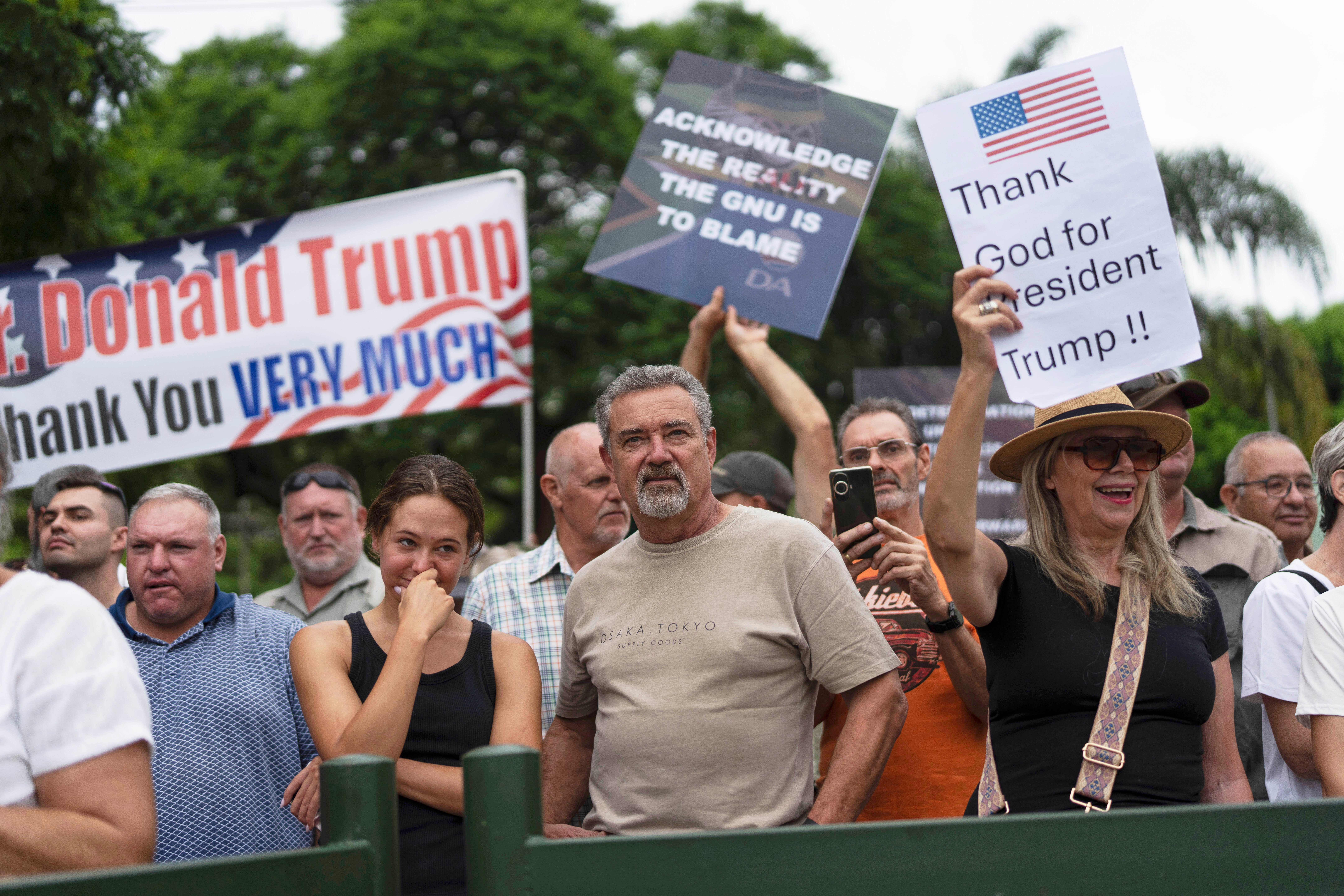
White South Africans demonstrate in support of U.S. President Donald Trump in front of the U.S. embassy in Pretoria, South Africa, Saturday, Feb. 15, 2025. (AP Photo/Jerome Delay, File) (Copyright 2025 The Associated Press. All rights reserved.)

Forty-nine white South Africans, granted refugee status by the Trump administration, left their homeland Sunday on a privately chartered flight to the United States.

The group, comprising families and young children, was expected to arrive at Dulles International Airport outside Washington D.C. on Monday morning, according to Collen Mbisi, a spokesperson for South Africa's transport ministry. T

his marks the first relocation of Afrikaners – a white minority group in South Africa – since President Trump's February 7 executive order.

The order accused South Africa's Black-led government of racial discrimination against Afrikaners and established a program offering them relocation to America.

The South African government said it is “completely false” that Afrikaners are being persecuted.

The Trump administration has fast-tracked their applications while pausing other refugee programs, halting arrivals from Afghanistan, Iraq, most of sub-Saharan Africa and other countries in a move being challenged in court.

Refugee groups have questioned why the white South Africans are being prioritized ahead of people from countries wracked by war and natural disasters. Vetting for refugee status in the U.S. often takes years.

The Trump administration says the South African government is pursuing racist, anti-white policies through affirmative action laws and a new land expropriation law it says targets Afrikaners' land. The government says those claims are based on misinformation and there is no racism against Afrikaners and no land has been expropriated, although the contentious law has been passed and is the focus of criticism in South Africa.


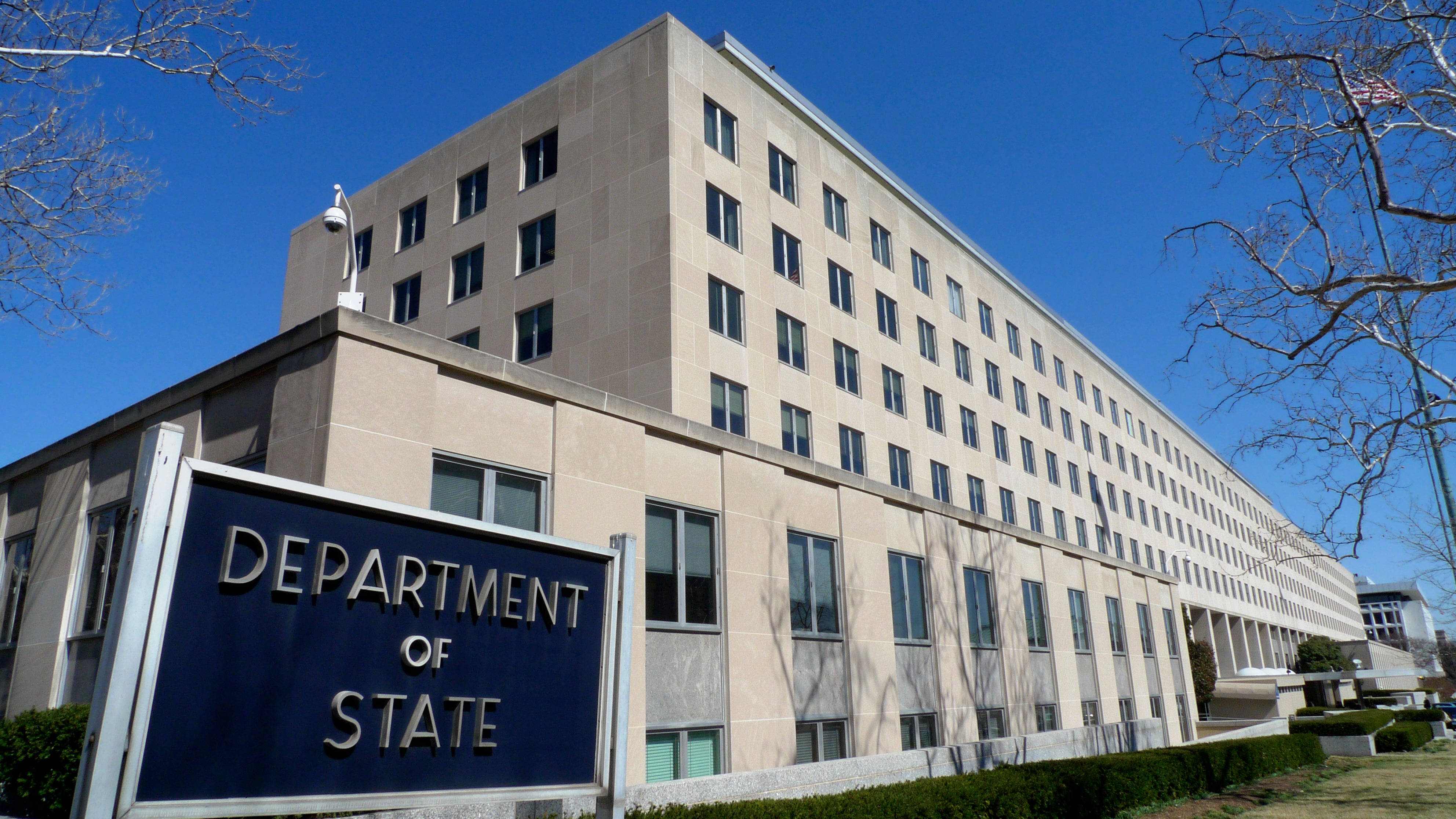
The Harry S. Truman Building, headquarters for the State Department, is seen in Washington, March 9, 2009. (AP Photo/J. Scott Applewhite, File) (AP2009)

South Africa also denies U.S. claims that Afrikaners are being targeted in racially motivated attacks in some rural communities. Instead, the South African government said Afrikaners — who are the descendants of Dutch and French colonial settlers — are "amongst the most economically privileged" in the country.


The first Afrikaner refugees were traveling on a flight operated by the Tulsa, Oklahoma-based charter company Omni Air International, Mbisi said. They would fly to DakarSenegal and stop there to refuel before heading for Dulles.

They departed from OR Tambo International Airport in Johannesburg, where they were accompanied by police officers and airport officials when they checked in. Mbisi said they would have to be vetted by police to ensure there were no criminal cases or outstanding warrants against them before being allowed to leave.

The South African government said there was no justification for them being relocated but said it wouldn't stop them and respected their freedom of choice.

They are expected to be greeted at Dulles by a U.S. government delegation, including the deputy secretary of state and officials from the Department of Health and Human Services, whose refugee office has organized their resettlement.


US  White South Africans demonstrate in support of U.S. President Donald Trump in front of the U.S. embassy in Pretoria, South Africa, Feb. 15, 2025. (AP Photo/Jerome Delay, File) (Copyright 2025 The Associated Press. All rights reserved.)

The flight will be the first in a “much larger-scale relocation effort,” White House deputy chief of staff Stephen Miller told reporters on Friday. Miller said that what was happening to Afrikaners in South Africa "fits the textbook definition of why the refugee program was created.”

“This is persecution based on a protected characteristic — in this case, race. This is race-based persecution,” he said.

The HHS Office for Refugee Resettlement was ready to offer them support, including with housing, furniture and other household items, and expenses like groceries, clothing, diapers and more, a document obtained by The Associated Press said. The document said the relocation of Afrikaners was "a stated priority of the Administration.”

There are around 2.7 million Afrikaners among South Africa’s population of 62 million, which is more than 80% Black. They are only one part of the country's white minority.

Many in South Africa are puzzled by claims that Afrikaners are persecuted and meet the requirements to be relocated as refugees.

They are part of South Africa’s everyday multi-racial life, with many successful business leaders and some serving in government as Cabinet ministers and deputy ministers. Their language is widely spoken and recognized as an official language, and churches and other institutions reflecting Afrikaner culture hold prominence in almost every city and town.

The Trump administration has criticized South Africa on several fronts. Trump's February executive order cut all U.S. funding to South Africa over what it said was its anti-white stance and also accused it of pursuing an anti-American foreign policy. It cited South Africa's ties with Iran and its move to lodge a genocide case against U.S. ally Israel over the war in Gaza as examples of it taking "aggressive positions towards the United States."