Monday, May 12, 2025

I ran NATO - now we need a new alliance against Trump


INTERVIEW UK and economic allies should retaliate against 'autocratic' Trump in trade wars, argues former Nato secretary general Anders Fogh RasmussenAnders Fogh Rasmussen, the former Nato chief, says democracies must protect themselves from economic coercion by Donald Trump 

(Photos: Getty Images)

Rob Hastings
Special Projects Editor
May 13, 2025 
I NEWS

For decades, the Nato alliance has protected the UK and other members through a simple bond – any act of war against one nation counts as an attack on all of them. Thirty-two countries would automatically unite to fight back.

Now, a former leader of the defence organisation is calling for a new pact among liberal democracies to deter economic bullies from launching trade wars – even if that means “retaliating” against Nato’s most powerful member, the US.

Anders Fogh Rasmussen, who served as Nato’s secretary general from 2009 to 2014, is rallying for the UK to club together in a “D7” pact with the EU, Canada, Australia, Japan, South Korea and New Zealand.

It would primarily be aimed at facing down any threats from China, which has potential strangleholds on global supplies of critical minerals, tech hardware, energy components and even life-saving medicines.

However, this body could also prompt Britain and its partners to confront the “autocratic” Donald Trump in unison if he tries to extort allies, the former Danish prime minister told The i Paper in an interview.

“If we come under pressure from China or maybe the US – through tariffs or whatever – then we should help each other,” said Rasmussen, who remains an influential figure in defence and diplomatic circles.

“Economic coercion against one of the D7 members should be considered an attack on all of us, so we should respond collectively.

“This group of solid democracies would represent 30 to 40 per cent of the global economy – that’s a formidable force… We should also engage in free-trade agreements, investment agreements, and help each other on delivering critical minerals.”

Anders Fogh Rasmussen will be advocating his idea of a D7 alliance with influential political figures at his Copenhagen Democracy Summit this week (Photo: Ida Marie Odgaard / Ritzau Scanpix / AFP)

Asked if this risks angering Trump, Rasmussen replied: “That’s actually the purpose: to provoke him. To tell the Americans: if you want to become isolated in the world, so be it, you’re welcome, but we can do without you.”

“I would still love to see the US as the leader of the free world. But Trump has declared a trade war against the whole world, so we have to find an appropriate response… to show they will pay the price with their America First nationalist policy.”

Rasmussen’s strident views may heighten senses in the Foreign Office that ultimately Britain will be forced to decide between closer relations with either the US or the EU.

Still, a more combative approach is highly unlikely to be backed by the UK Government right now, especially it reached a trade agreement with the US last week.

Sir Keir Starmer has sought to charm and placate Trump, to maintain strong and respectful relations. Rasmussen thinks these tactics will only work for so long. “In the long run, you will be a loser if you think that the right strategy would be flattering Trump.”

The D7 concept will be supported by Britain’s former chief trade negotiations adviser, Sir Crawford Falconer, who has been calling for a global alliance of liberal economies. Falconer told The i Paper last month: “You need to work with the EU, Japan, Australia… Beyond China and the US, there are a number of large economies that are prepared to join together.”

The proposed D7 alliance would help the UK, EU and other leading liberal democracies protect themselves from trade wars by Donald Trump or Xi Jinping (Photo: Qilai Shen/Bloomberg/Getty)


Using drones to protect infrastructure from Russia

Rasmussen will be advocating his idea to the EU’s foreign affairs chief Kaja Kallas at the Copenhagen Democracy Summit starting on Tuesday.

The annual conference, which he founded in 2018, will hear speeches from former prime ministers Lord Cameron and Boris Johnson this week, plus the veteran US congresswoman Nancy Pelosi and the Croatian PM Andrej Plenković, among many others.

The former Nato leader is also urging Europe to use new squadrons of drones – both in the air and at sea – to defend sites of national importance from surreptitious Russian attacks using so-called “hybrid warfare”.

“Russia’s military doctrine explicitly mentions Europe’s critical infrastructure as a legitimate target. We have seen the attempt to place bombs on cargo planes, and we have seen the sabotage of subsea cables,” he said.

“We should reinforce the protection and surveillance of critical infrastructure… We should use new and more sophisticated technology to defend ourselves.”

Donald Trump is said to have been on the brink of withdrawing the US from Nato during his first term as President (Photo: Sean Gallup/Getty)

Western security services are confident that Vladimir Putin’s agents have been behind a series of explosions at DHL freight warehouses across Europe last year. Rasmussen believes operations like these are intended “to test the threshold of activating Article Five,” when Nato would activate its collective defences and strike back. “He should be kept in uncertainty about what would trigger a response.”

Rasmussen hopes that Nato members will double their defence spending targets to 4 per cent, perhaps even going up to 5 per cent.

“Defence investment in Russia now exceeds the total defence investment in the rest of Europe. That’s a major concern. If we are to deter Putin, then we will have to invest much more than him.”

Rasmussen has been vocal in calling for European support of Volodymyr Zelensky while his country has been under attack. He wants the continent to “arm Ukraine to the teeth.”

Questioned about the chances of Washington securing a fair and trustworthy deal with Moscow to end the invasion, he says bluntly: “There will be no peace deal with Putin. The US has weakened its own negotiation position by giving concessions to Putin even before talks started.”

Britain’s former Prime Minister Lord Cameron, seen here on the left in 2014, will be speaking at Anders Fogh Rasmussen’s Copenhagen Democracy Summit this week (Photo: Luke MacGregor/Getty)


Autocrats – including Trump – need a firm response

Next month, Nato will host its first leaders’ summit since Trump moved back into the White House. During his previous term, he considered withdrawing US support for the alliance, according to former aides.

Rasmussen thinks a widening transatlantic split is the biggest security threat facing its members, and lays the blame squarely on Trump.

“I think we can force the Americans to return to a more reasonable policy. It’s my experience from 50 years in public life that autocrats need a firm response. The only thing they respect is power and unity and a strong adversary. Any concession will be considered a weakness they can exploit.”

Is Trump himself an autocrat? “Yes. He has clearly autocratic features, and his rhetorics are similar to those of Putin and Xi Jingping.”

A survey of 110,000 people in more than 100 countries by Rasmussen’s think tank, the Alliance of Democracies, has revealed this week that the US is now less popular globally than China.

The Trump administration, including Vice President JD Vance, has refused to rule out seizing Greenland from Denmark by force (Photo: Jim Watson/Getty Images)

And what if Trump carries out his threat to seize control of Greenland, which belongs to Rasmussen’s homeland of Denmark? The US President has consistently suggested that the vast island should become American, and refused to rule out using force to make this happen.

“I don’t think it will happen through a military takeover,” he says. “We are as concerned as the Americans regarding Russian and Chinese activities in the Arctic.” Plus, under a longstanding agreement, “they can just establish more bases in Greenland if it’s their wish.”

Pointing to the example of bitter rivals Greece and Turkey, he adds: “It’s not unprecedented to have tensions between Nato allies.

Nevertheless, he has been alarmed at “leaks from the Trump administration that they will enhance their intelligence activities in and around Greenland.” So has the Danish government, leading to the US ambassador in Copenhagen being summoned for a meeting last week.

“That was an extraordinary step,” says Rasmussen. “Usually you do it between adversaries, but here it was necessary to have this conversation between allies.”

There could be a lot more conversations like that over the next four years.

@robhastings.bsky.social
Xinhua Commentary: China and LatAm join hands to draw blueprint for next decade of cooperation


Source: Xinhua
Editor: huaxia
2025-05-13 13:20:45
by Xinhua writers Zhao Kai, Meng Yifei

MEXICO CITY, May 12 (Xinhua) -- Amid the accelerating changes in the global landscape, the 4th ministerial meeting of the China-Community of Latin American and Caribbean States (CELAC) Forum opened Tuesday in Beijing.

The return to Beijing 10 years after the forum's debut ministerial meeting marks a significant milestone. It is expected to further advance the vision of a China-Latin America community with a shared future and enhance cooperation among the developing countries of the Global South.

United by a commitment to multilateralism and self-improvement as Global South nations, China and Latin America have achieved plenty over the past decade. Against this backdrop, the forum has grown into a vital platform that enhances mutual political trust, aligns development strategies, and strengthens people-to-people bonds.

Over the past years, close high-level contacts and strategic communication have guided China-LAC relations through a shifting international landscape, paving the way for a new stage of equality, mutual benefit, innovation, and openness, with tangible benefits for both peoples.

Deepened political trust was evident when Panama, El Salvador, the Dominican Republic, Nicaragua, and Honduras established or restored diplomatic ties with China, and when Venezuela, Uruguay, Colombia, and Nicaragua upgraded or established a strategic partnership with China.

Notably, relations between Brazil and China have been elevated to foster a community with a shared future for a more just world and a sustainable planet. The China-proposed Belt and Road Initiative (BRI) is contributing to development in more than 20 economies in the LAC region, highlighted by multiple landmark cooperation projects currently underway.

China is now Latin America's second-largest trading partner, and the region has become the second-largest destination for overseas Chinese investment, with 600.8 billion U.S. dollars in stock by the end of 2023. Currently, China has five free trade partners in the region. The country has been the largest market for Chilean cherries for years, and Chinese companies account for 37 percent of automobiles sold in Ecuador.

The China-LAC cooperation is also expanding into new sectors, such as renewable energy, digital technology, and transnational e-commerce, with dynamics driven by successful bilateral forums on science and technology innovation, digital technology cooperation, and space cooperation, all under the framework of the China-CELAC Forum. China's cloud computing, big data and AI technologies have widely empowered local industries to facilitate digital transformation.

High-level BRI construction is also helping advance the region's industrial upgrade, such as fully equipping Trinidad and Tobago's Phoenix Park Industrial Estate with a state-of-the-art 5G network.

The deepening of China-LAC relations has boosted employment, including the creation of higher-income jobs through BRI projects. Among recent examples is the April reopening of the Mexico City Metro's key Line 1, a project assisted by Chinese expertise aimed at improving residents' transit experience.

Meanwhile, a wide range of programs have strengthened cultural exchanges and the people-to-people bonds. These include Chinese government scholarships and vocational training programs for CELAC member countries, the China-LAC Youth Development Forum, the China-LAC Cultural Exchange Year, and China's foreign aid projects aimed at improving livelihoods.

Standing at a new historical starting point, China-LAC relations and cooperation are expected to build on the previous accomplishments and enter a new era replete with opportunities and broader prospects.

The China-CELAC Forum meeting in Beijing is sending a strong message of unity from the Global South, particularly in response to the increasing uncertainty and unpredictability stemming from rising unilateralism, protectionism, and bullying actions.

Undoubtedly, enhancing China-LAC relations and collaboration will contribute to stability and foster positive momentum in a tumultuous world. ■

China’s Xi slams ‘bullying’ in veiled swipe at US as Beijing hosts Latin America leaders


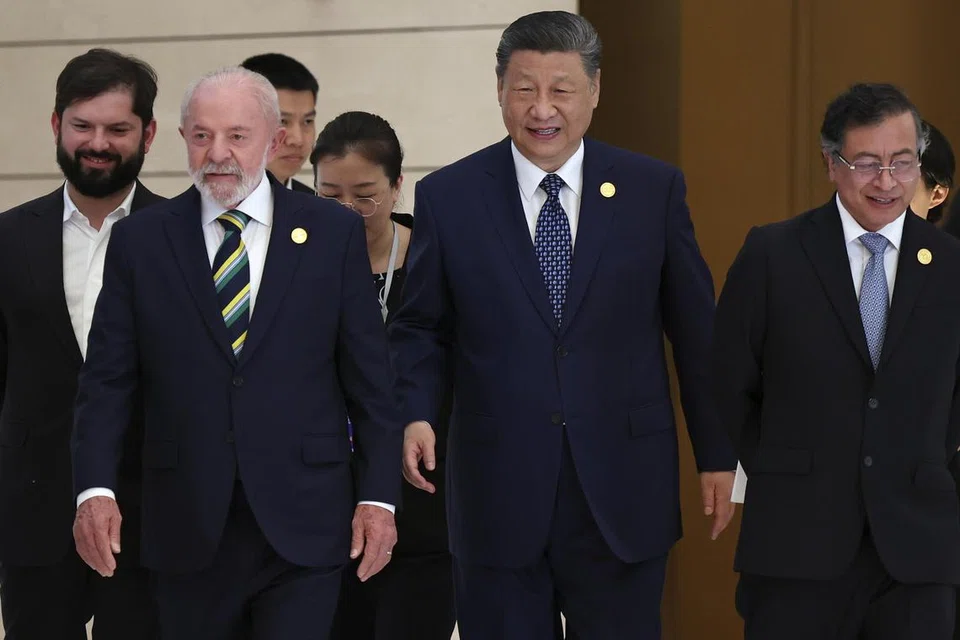
Leaders and officials from Latin America and the Caribbean have descended on the Chinese capital for the China-CELAC Forum.PHOTO: EPA-EFE

UPDATED May 13, 2025

Beijing - Chinese President Xi Jinping vowed on May 13 to deepen ties with Latin America and condemned “bullying” in a thinly veiled swipe at the United States, as he addressed regional leaders in Beijing.

Leaders and officials from Latin America and the Caribbean have descended on the Chinese capital for the China-CELAC (Community of Latin American and Caribbean States) Forum.

Beijing has stepped up economic and political cooperation with Latin American nations in recent years and has urged a united front against US President Donald Trump’s recent maelstrom of tariffs.

Addressing leaders on May 13, Mr Xi hailed China’s burgeoning ties with the region.

“Although China lies far from the Latin American and Caribbean region, the two sides have a time-honoured history of friendly exchanges,” he said at the opening ceremony, likening the summit to a “great, sturdy tree”.

“Only through unity and cooperation can countries safeguard global peace and stability and promote worldwide development and prosperity,” Mr Xi said, pledging US$9.2 billion (S$12 billion) in credit towards “development” for the region. He also warned of “bloc confrontation”.

Mr Xi’s remarks come a day after the United States and China announced a deal to drastically reduce tit-for-tat tariffs for 90 days, an outcome Mr Trump dubbed a “total reset”.

Under that agreement, the United States agreed to lower its tariffs on Chinese goods to 30 per cent while China will reduce its own to 10 per cent.

The deal marked a major de-escalation of a gruelling trade war between the world’s two largest economies which threw global markets into turmoil.

Mr Xi told delegates on May 13: “There are no winners in tariff wars or trade wars.”

“Bullying and hegemony will only lead to self-isolation,” the Chinese leader warned.

“The world today is undergoing accelerated transformations unseen in a century, with multiple risks intertwined and overlapping,” Mr Xi said.

Among notable attendees at the forum is Brazilian President Luiz Inacio Lula da Silva, who arrived in Beijing on May 10 for a five-day state visit.

Also present is Colombian President Gustavo Petro, who last week said he intends to sign an accord to join Beijing’s Belt and Road Initiative during his visit.

Two-thirds of Latin American countries have joined Beijing’s trillion-dollar BRI infrastructure programme, and China has surpassed the US as the biggest trading partner of Brazil, Peru and Chile, among others. AFP
More on this Topic
Detained in The Hague, Duterte wins mayoral election


Supporters of the arrested former Philippine President Rodrigo Duterte chant his name during a solidarity rally on his birthday, in Davao City, Philippines on March 28.
PHOTO: Reuters file

PUBLISHED ON May 12, 2025 

MANILA — Former Philippine President Rodrigo Duterte was almost certain to be elected mayor of his home city by a landslide on Monday (May 12), unimpeded by his detention at the International Criminal Court (ICC) on charges of murder as a crime against humanity.

With 80 per cent of votes counted in an unofficial tally, Duterte, who was brought to The Hague in March over his bloody "war on drugs" that killed thousands of people, was winning the Davao mayoral contest with eight times more votes than his nearest rival.

The victory during nationwide midterm elections is testament to the 80-year-old's enduring influence in the southern city, owing to his reputation as a crime-buster that earned him the nicknames "Duterte Harry" and "the Punisher".

Duterte's old Facebook account was flooded with congratulatory messages from supporters, with some calling for his return to serve his people.

"Congratulations, Tatay (father) D! Let's bring him home," read one of the comments.

Duterte could become the first Asian former head of state to go on trial at the ICC.

His surprise arrest by Philippine police at the request of the ICC caused outrage among his army of supporters, who called it a kidnapping at the behest of a foreign court.

He has defended the anti-drugs crackdown and his legal team says his arrest was unlawful. The ICC maintains it has jurisdiction to prosecute alleged crimes committed before Duterte withdrew the Philippines from its founding treaty in 2019.

Despite the ICC's case also including alleged killings of criminal suspects by a "death squad" in Davao while Duterte was mayor — which he has denied — analysts have said his arrest has only hardened support for him and his family, in Davao and beyond.

The former president's two sons were also set to win posts on Monday, one reelected congressman and the other winning the contest for Davao vice mayor and likely to serve in his father's absence.

The family's political resilience and dominance in Davao could prove pivotal as Duterte's popular daughter, Vice President Sara Duterte, faces an impeachment trial that could see her banned from politics for life if convicted, killing off any hopes of a presidential run.

Asked earlier on Monday about her father's likely victory, she said plans would be made for him to be sworn in as mayor.

"The ICC lawyer said once we get proclamation papers, we will discuss how he can take oath," she said.

Dutertes outperform in Philippine midterm elections in blow to Marcos

Ex-President Rodrigo Duterte looks set to become mayor of Davao City despite his detention

Last updated: May 13, 2025 | 08:50
Bloomberg


Impeached Vice President Sara Duterte saw allies win at least four of the 12 Senate seats up for grabs.AFP

Philippine voters have delivered a blow to President Ferdinand Marcos Jr. and a boost to the controversial Duterte clan, whose members and allies outperformed expectations in Monday’s midterm elections.

Ex-President Rodrigo Duterte looks set to become mayor of Davao City despite his detention by the International Criminal Court for alleged crimes against humanity, according to election results released by GMA News. His two sons lead other races.

Impeached Vice President Sara Duterte, who faces a July Senate trial for alleged misdeeds including an apparent threat to assassinate Marcos, saw allies win at least four of the 12 Senate seats up for grabs. That was more than surveys had indicated and gives her a core bloc of supporters in the 24-member chamber.

“It will be more difficult to get a conviction,” Maria Ela Atienza, a professor of political science at the University of Philippines said in an interview with Bloomberg TV. “There will be a lot of negotiations now.”

Philippine stocks rose 0.8% in early trade and the peso dropped as much as 0.7% after markets were closed Monday, though the main driver was news of the 90-day truce in the US-China trade war.

The Senate trial still holds perils for the vice president, but two-thirds of the chamber would need to vote for her conviction, which would remove Sara Duterte from office and block her from a 2028 run for the presidency. But Marcos-endorsed candidates look set to win just six Senate seats, fewer than anticipated, amid widespread concerns about the cost of living and the dispute with his deputy.

“The results reflect the declining popularity of Marcos Jr., the resurgence of the Duterte brand, and the readmission of the traditional liberal opposition back into high politics,” said Anthony Lawrence Borja, an associate professor at De La Salle University in Manila. “It is a welcome surprise for liberals and an unwelcome one for the administration.”

Those liberals are Bam Aquino and Kiko Pangilinan, who are on course to return to the Senate after getting backed by Leni Robredo, a former vice president who ran against Marcos in 2022.

The results, which may not be officially confirmed for days, raise questions about the ability of Marcos to press his agenda in his last three years in office, especially as the president tries to attract investors and expand the economy by at least 6% this year after first-quarter growth missed estimates.

The president’s sister, Imee Marcos, is on course for re-election as a senator after casting off her brother to join Sara Duterte on the campaign trail.

Congresswoman Camille Villar, daughter of the Philippines’ richest man, Manuel Villar, is set to win election to the Senate. But while she is part of the Marcos slate, she also sought the backing of Sara Duterte late in the campaign to boost her chances. But she didn’t publicly quit the president’s team.

While neither the president nor the vice president were on the ballot, they campaigned extensively across the archipelago of 114 million people.

After running on a joint ticket in 2022, the Marcos-Duterte relationship fractured, and last November Sara Duterte said that if she was murdered, she had arranged for revenge killings of Marcos and his wife. Her father, Rodrigo Duterte, who had bragged of using a “death squad” to execute criminals, then called on the military to intervene to fix the nation’s “fractured” governance.

The vice president’s remarks, along with her alleged misuse of public funds, led to her impeachment by the House of Representatives. She denies the allegations.

Relations worsened in March, when Marcos allowed the arrest of Rodrigo Duterte and his transfer to the ICC in the Netherlands, accused of a role in the deaths of thousands during his war on drugs. The ex-president, now aged 80, is fighting the charges, and some voters liked his hard line.

“Duterte tackled the drug problem,” Jennifer Yandoc, a 44-year-old mother of four, said as she voted in San Fernando City north of Manila on Monday.

Rodrigo Duterte’s youngest son and incumbent Davao mayor, Sebastian, is leading in the race to be his father’s deputy mayor. His eldest son, Paolo, is on course to keep his congressional seat.

Also Read:Philippine May 12, 2025 elections: By the numbers

More than 18,000 other national and local positions were contested. Voting was mostly peaceful, though at least one person died and several collapsed in stifling temperatures.

Widespread vote-buying and fake voters mar Philippine midterm elections

Widespread vote-buying and fake voters mar Philippine midterm elections
/ Bangko Sentral ng Pilipinas - PD
By bno - Jakarta Office May 13, 2025

Massive vote-buying and the re-emergence of fraudulent voters have cast doubt over the integrity of the recent midterm elections in the Philippines, with reports surfacing from various provinces across Mindanao, Visayas, and Luzon, Inquirer reported.

In Buluan, Maguindanao del Sur, authorities apprehended 80 men—some of them minors—before polling began on May 12. Each had reportedly been promised PHP1,500 ($26.9) to vote illegally. The group, believed to have travelled from areas including General Santos City, Sultan Kudarat, and Bukidnon, admitted to being paid participants, though they declined to identify their sponsors. Officials believe more would have followed had the group not been intercepted. Due to a spate of violence during the campaign, Buluan was placed under the control of the Commission on Elections.

Throughout Mindanao, financial incentives were used to drive voter turnout. In Zamboanga del Sur, people queued from as early as 4 a.m., with reports of voters receiving up to PHP5,000 before voting and an additional PHP5,000 after, referred to locally as “backing”. In some towns, vote-buying reportedly reached PHP8,000 to PHP10,000 per person.

Similar practices were observed in Cagayan de Oro (PHP1,000–PHP6,000), Lanao del Norte (cash plus rice), and Surigao del Sur (PHP4,970–PHP11,690). In Eastern Visayas, the practice—called “badil”—ranged from PHP50 to PHP15,000 ($269), depending on the post contested.

Police in Central Luzon are currently investigating 35 online reports of vote-buying. Church leaders have condemned the practice, calling it a betrayal of democratic values.

While these practices are hardly new, they are an alarming sign that, despite ongoing reforms, money continues to have an undue influence over the electoral process. This raises concerns about the true value of votes and whether the democratic system is truly functioning in the best interests of all citizens.


Junta airstrike kills 20 children at Myanmar school


Tue, 13 May 2025 

A Myanmar junta airstrike hit a school Monday, killing 22 people, including 20 children, witnesses told AFP, despite a purported humanitarian ceasefire called to help the nation recover from a devastating earthquake.

The strike hit a school in the village of Oe Htein Kwin – some 100 kilometres (65 miles) northwest of the epicentre of the March 28 quake – at around 10:00am (0330 GMT), locals said.

“For now, 22 people in total – 20 children and two teachers – have been killed,” said a 34-year-old teacher at the school, asking to remain anonymous.

“We tried to spread out the children, but the fighter was too fast and dropped its bombs,” she added.

An education official from the area of the village in Sagaing region gave the same toll.

AFP said it couldn’t reach the Myanmar junta spokesman for comment.

Myanmar has been riven by civil war since the military deposed a civilian government in 2021, with the junta suffering stinging losses to a myriad of anti-coup guerrillas and long-active ethnic armed groups.

The military pledged a ceasefire throughout this month “to continue the rebuilding and rehabilitation process” after the magnitude 7.7 quake in Myanmar’s central belt that killed nearly 3,800 people.


Opinion

Are We Ready to Accept Our Alternative History?


Eyad Abu Shakra
Tuesday - 13 May 2025
Asharq Al-Awsat

Whenever I am feeling nostalgic, I listen to the remarkable late Iraqi poet Lamia Abbas Amara’s poem about Beirut... a city she came to adore after residing there for a time. Beirut loved her back, even more.

The poem begins with this beautiful verse:

"I focus my eyes in doubt to ask them:

Has Beirut left me so that I return?

Where do I begin? There are heaps my lips,

Brimming with chaos... that cannot be sequenced."

Two entire generations of Lebanese citizens have no memories of this Beirut that Lamia loved with a passion decades ago. Two generations who physically escaped the monstrous war that devoured tens of thousands, but who remain culturally and psychologically scarred to this day.

Memory, along with truth and innocence, was among the first casualties of this war. And today, the truth lies in shame as Lebanese people from all walks of life complain, trade suspicions and accusations, and find comfort in blaming all these sins on the politicians of the past.

There is no doubt that politicians bear much of the blame for the calamities that have unfolded in Lebanon since 1975. Nonetheless those same politicians, in one way or another, were also victims, or rather products, of a culture shaped by deals bigger than them and their small country located in a region that has long been - and remains - among the most volatile in the world.

In Lebanon, contradictory identities and allegiances are evident even in casual conversations and turns of phrase. Conceptions of nationalism, extremism, consensus, sovereignty, and coexistence remain contested, with interpretations diverging in accordance with the values and conditions of the community one was raised in.

I would argue that this state of affairs is by no means unique to Lebanon, although it is most apparent there because Lebanon has never been subjected to the kind of "totalitarian rule" seen for decades in neighboring countries. Totalitarian regimes became accustomed to suppressing diversity and silencing dissent with iron and fire and in the dark dungeons of intelligence services!

I recall, for instance, that when former Syrian President Bashar al-Assad criticized the "sectarianism" of Lebanese society, fools applauded him and the wise were left stunned because they knew that a volcanic eruption had been awaiting him.

The sectarianism of the Lebanese was "visible" because of their excessive indulgence in freedom, which went so far as to engender chaos. Meanwhile, millions of their Arab brothers, especially in Syria, knew that every breath they took was being accounted for so much so that they came to lose trust in even their closest relatives.

That all belongs in the past, which must be remembered if we are to avoid repeating it. In theory, this is a valid claim. However, the present and future have not been guaranteed...

Most Arab countries have young populations. Our people are still new to managing differences, dealing with diversity, and navigating responsible and mature democracy. However, if we examine what the "social media revolution" has done (and the challenges that artificial intelligence could present) we might find that, even in the most advanced countries with long-established democracies, things are not necessarily going much better. The rules of the game have changed entirely.

We are not the only ones who have to contend with the attacks of bots and trolls that spread disinformation, twist concepts, fuel the fires of fanaticism and racism, and poison the relationship among the communities of our society, using anonymous accounts, propaganda tools, and dangerous campaigns run by intelligence agencies.

In the United States, Britain, the Netherlands, Germany, and elsewhere, the past decade has made the dangerous role that social media can play in spreading lies, fabrications, slander, incitement, and character assassination, strengthening extremist and racist political parties.

In Lebanon, Syria, Iraq, and several other Arab countries, unrestrained (there is no effective legislation) social media websites have effectively become tools of sedition and civil war.

Yet even so, it seems that our journey has just begun! Artificial intelligence could present even more insidious and terrifying threats, not only in terms of shaping the present and manipulating the future, but also in rewriting the past.

In its January 28, 2024 issue, The New York Times published an investigative piece under the striking headline: "AI Is Coming for The Past Too!"

On March 12, American website "The Hill" reported that the American Edge Project had released a report warning that China could manage to rewrite history through artificial intelligence in order to dominate the world. Former US Congress members Loretta Sanchez and Greg Walden introduce the article with a warning: "Imagine waking up to a world where entire chapters of history have quietly disappeared and key facts about important news are simply nowhere to be found..."

"Fortunately for those of us living in the United States, such a scenario remains a catastrophic nightmare - but for hundreds of millions living under authoritarian regimes, it is a daily reality," they then add.

The authors go on to unpack the study’s findings. China is currently seeking to harness artificial intelligence to rewrite history, erasing its human rights violations and any criticism of the Chinese Communist Party.

Elsewhere, an April 10 Australian report explains that AI-generated images by "Facebook/AAP" can blend reality and fiction. That is, it can be used to rewrite history and manipulate images of everything from the Nazi Holocaust to the September 11 attacks and the events in Gaza and Ukraine.

Now, can we imagine what this means for us in the Levant? Can we wrap our heads around what Israel, a technologically and cybernetically advanced state, could do to "rewrite" our history and tailor this history to its narrative, as it is already doing? It knows far more about us than we know about ourselves or it.

Are we not, we who know so little about ourselves (to say nothing about other citizens) easy prey? What protects us from being chewed up and discarded without even noticing?


Tobago's coral reefs brace for ‘imminent threat’

Brain coral photo via Canva Pro.

From hotter temperatures that contribute to ocean acidification and coral degradation to instances of coral bleaching caused by a combination of warmer oceans, overfishing and pollution, Caribbean reefs have been facing some serious challenges. Now, Trinidad and Tobago's Institute of Marine Affairs (IMA) has warned of another threat — Stony Coral Tissue Loss Disease (SCTLD), which it says “wreaking havoc on coral reefs in the Caribbean.”

Since it was first noticed in Florida in 2014, SCTLD has spread to several other regional territories, including The BahamasThe Cayman Islands, Jamaica, the Dutch Caribbean, and even islands in the Lesser and Greater Antilles. This is because the SCTLD pathogen is both highly transmissible and easily spread through direct contact with infected coral, water currents, and ballast water, making ports a common “early site of infection.”

Infected corals have lesions in spots where there is dead tissue. These areas get bigger as the disease advances — and it's a fast mover, killing coral within weeks to months. The cause of the disease may be wholly bacterial, or perhaps a combination of bacteria and a virus. In an effort to save regional reefs, infected corals are being treated with antibiotics, with some even being moved to to land-based facilities in the short term for a better chance of survival.

Of the 45 stony coral species found in the Caribbean, the IMA reports that SCTLD has infected over 20 of them, including the maze, mountainous and brain corals that are abundant in tourism-focused Tobago, long known as a dive location. According to the IMF, “even the world-renowned, giant brain coral found in Speyside is a species that is highly susceptible to the disease.”

Should there be an outbreak of the disease in Tobago's coral populations, it could be devastating for the island. In a June 2008 research paper titled “Coastal Capital – Economic Valuation of Coral Reefs in Tobago and St. Lucia by Lauretta Burke, Suzie Greenhalgh, Daniel Prager and Emily Cooper, the annual value of Tobago’s coral reefs was cited as anywhere between USD 120–160 million.

While SCTLD does not appear to have yet reached Tobago, affected reefs in other areas have been dying quickly, which has been raising local concerns. Citing a study conducted by William Precht on coral reef sites in southeast Florida, the IMF blog post noted that some heavily impacted species were reduced to less than three percent of their initial population; others, like the brain coral so dominant in Tobago, to less than 25 percent. SCTLD has already been confirmed in neighbouring Grenada and some Dutch Caribbean islands, however, leading the IMA to predict that it will be “only a matter of time until it arrives.”

How, then, to be prepared? “Survival is most probable when there is action from authorities, education of the public, and built capacity to strengthen defences against the threat,” the post continued. From the IMA perspective, a grant it received in 2024 from the Specially Protected Areas and Wildlife Regional Activity Centre (SPAW RAC) for a one-year project focused on building preparedness and resilience against coral disease, will prove valuable.

In January of this year, IMA coral reef ecologists received training in January 2025 from the Perry Institute of Marine Science (PIMS) in San Andres, Colombia, to assess coral disease, identify SCTLD, and prepare and apply the antibiotic treatment to infected corals. By strengthening their capacity, the IMA is now better equipped to raise SCTLD awareness, as well as implement strategies to monitor coral reefs and spare them from the vagaries of the disease.

The organisation is educating local sea-goers as to what to look for to spot SCTLD in coral, which they can report by using the IMA's seaiTT app. It has also urged snorkellers and divers not to touch corals — good advice even with healthy reefs — but if there is an infection, touching corals hastens the potential spread. In the same vein, divers should make sure to sanitise their gear, just in case they have come into contact with infected coral; bilge water in boats should also be routinely disinfected — small steps that can make a big difference when it comes to controlling spread.

“We must […] work together to be guardians for our coral reefs,” said the IMA. Charged with “the duty to preserve the ecological and economic services of our reefs,” it sees only one way to minimise the potential devastation SCTLD can bring: to be proactive in responding to the threat.

UN Aviation Body Finds Russia Responsible For Downing Of Passenger Jet Over Ukraine

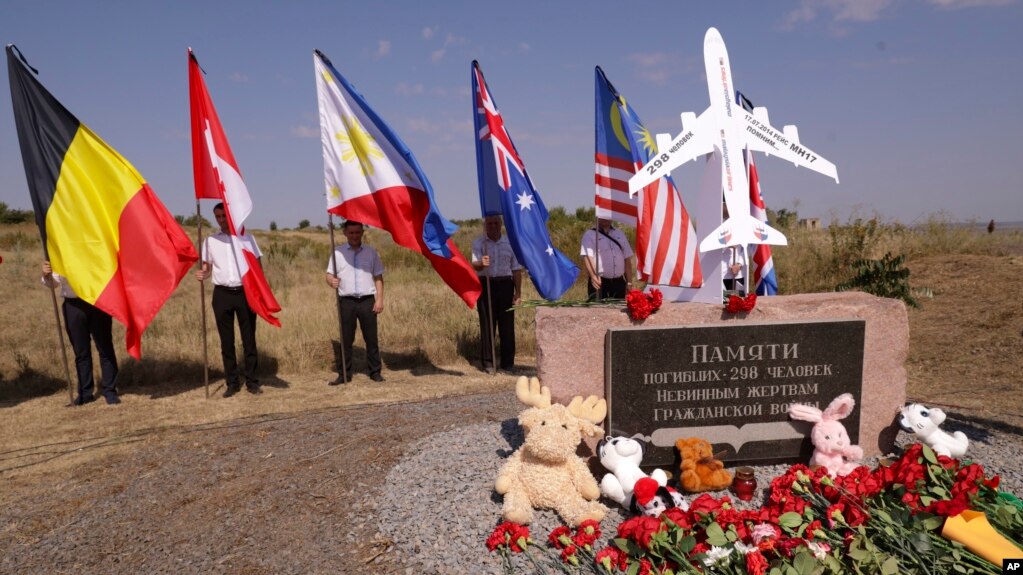
A memorial at the crash site of Malaysia Airlines Flight 17 in the Russia-controlled Donetsk region of eastern Ukraine. (file photo)

May 13, 2025
By RFE/RL

The UN aviation council on May 12 found that Russia was responsible for the downing of a Malaysian commercial jet over Ukraine that killed all 298 passengers and crew.

The Council of the International Civil Aviation Organization (ICAO) said in a statement that Russia “failed to uphold its obligations under international air law” in the downing of Malaysia Airlines Flight MH17 on July 17, 2014.

The council agreed that claims brought to the ICAO by Australia and the Netherlands as a result of the shooting down of the airliner were “well founded in fact and in law.”

The ICAO added it was the first time in its history that the council had made a determination on the merits of a dispute between member states.

Malaysian Airlines Flight MH17 departed from Amsterdam for Kuala Lumpur and was hit by a surface-to-air missile over eastern Ukraine as fighting raged between pro-Russian separatists and Ukrainian forces. Among the people killed were 196 Dutch citizens and 38 Australian citizens or residents.

Dutch judges in November 2022 convicted two Russian men and a Ukrainian man in absentia of murder for their role in the downing of the aircraft. Moscow called the ruling "scandalous" and said it would not extradite its citizens.


SEE ALSO:
Dutch Court Sentences Two Russians, One Ukrainian To Life In Prison In MH17 Shoot-Down


Dutch Foreign Minister Caspar Veldkamp said the vote of the ICAO Council “is an important step towards establishing the truth and achieving justice and accountability for all victims of Flight MH17, and their families and loved ones."

The decision also sends a clear message to the international community that states cannot violate international law with impunity, Veldkamp said in a Dutch government statement.

Australia Foreign Minister Penny Wong said her government welcomed the decision, calling it a "historic moment in the pursuit of truth, justice and accountability for the victims" and urged ICAO to move swiftly to determine remedies.

"In reaching its decision, the ICAO Council has upheld the fundamental principle that weapons should not be used against civil aircraft," she said in a statement.

"We call upon Russia to finally face up to its responsibility for this horrific act of violence and make reparations for its egregious conduct, as required under international law," Wong said.

The Montreal-based ICAO will consider what form of reparation is in order in the coming weeks, the Dutch government statement said.

The Netherlands and Australia want the ICAO Council to order Russia to enter into negotiations over reparations, Veldkamp said.

ICAO is a UN body with 193 member states that decides whether countries have violated the Convention on International Civil Aviation, which requires that member states "refrain from resorting to the use of weapons against civil aircraft in flight."

A large majority of the council voted in favor of the Netherlands’ and Australia’s position in the decision reached on May 12, the Dutch government statement said, but it did not provide a breakdown of the vote.

With reporting by AFP and Reuters
Physicists at the Large Hadron Collider turned lead into gold – by accident


THE CONVERSATION
Published: May 12, 2025 

Medieval alchemists dreamed of transmuting lead into gold. Today, we know that lead and gold are different elements, and no amount of chemistry can turn one into the other.

But our modern knowledge tells us the basic difference between an atom of lead and an atom of gold: the lead atom contains exactly three more protons. So can we create a gold atom by simply pulling three protons out of a lead atom?

As it turns out, we can. But it’s not easy.

While smashing lead atoms into each other at extremely high speeds in an effort to mimic the state of the universe just after the Big Bang, physicists working on the ALICE experiment at the Large Hadron Collider in Switzerland incidentally produced small amounts of gold. Extremely small amounts, in fact: a total of some 29 trillionths of a gram.

How to steal a proton

Protons are found in the nucleus of an atom. How can they be pulled out?

Well, protons have an electric charge, which means an electric field can pull or push them around. Placing an atomic nucleus in an electric field could do it.

However, nuclei are held together by a very strong force with a very short range, imaginatively known as the strong nuclear force. This means an extremely powerful electric field is required to pull out protons – about a million times stronger than the electric fields that create lightning bolts in the atmosphere.

The way the scientists created this field was to fire beams of lead nuclei at each other at incredibly high speeds – almost the speed of light.
The magic of a near-miss

When the lead nuclei have a head-on collision, the strong nuclear force comes into play and they end up getting completely destroyed. But more commonly the nuclei have a near miss, and only affect each other via the electromagnetic force.

The strength of an electric field drops off very quickly as you move away from an object with an electric charge (such as a proton). But at very short distances, even a tiny charge can create a very strong field.

So when one lead nucleus just grazes past another, the electric field between them is huge. The rapidly changing field between the nuclei makes them vibrate and occasionally spit out some protons. If one of them spits out exactly three protons, the lead nucleus has turned into gold.

Counting protons

So if you have turned a lead atom into gold, how do you know? In the ALICE experiment, they use special detectors called zero-degree calorimeters to count the protons stripped out of the lead nuclei.

They can’t observe the gold nuclei themselves, so they only know about them indirectly.

The ALICE scientists calculate that, while they are colliding beams of lead nuclei, they produce about 89,000 gold nuclei per second. They also observed the production of other elements: thallium, which is what you get when you take one proton from lead, as well as mercury (two protons).

An alchemical nuisance

Once a lead nucleus has transformed by losing protons, it is no longer on the perfect orbit that keeps it circulating inside the vacuum beam pipe of the Large Hadron Collider. In a matter of microseconds it will collide with the walls.

This effect makes the beam less intense over time. So for scientists, the production of gold at the collider is in fact more of a nuisance than a blessing.

However, understanding this accidental alchemy is essential for making sense of experiments – and for designing the even bigger experiments of the future.


Author
Ulrik Egede
Professor of Physics, Monash University

Wolves Have a Bad Reputation. One Yellowstone Naturalist Is Trying to Fix It.

Wildlife guide Audra Conklin Taylor shows the beauty, value, and character of the park’s packs.


BY LINA ZELDOVICH
MAY 12, 2025
ATLAS OBSCURA 


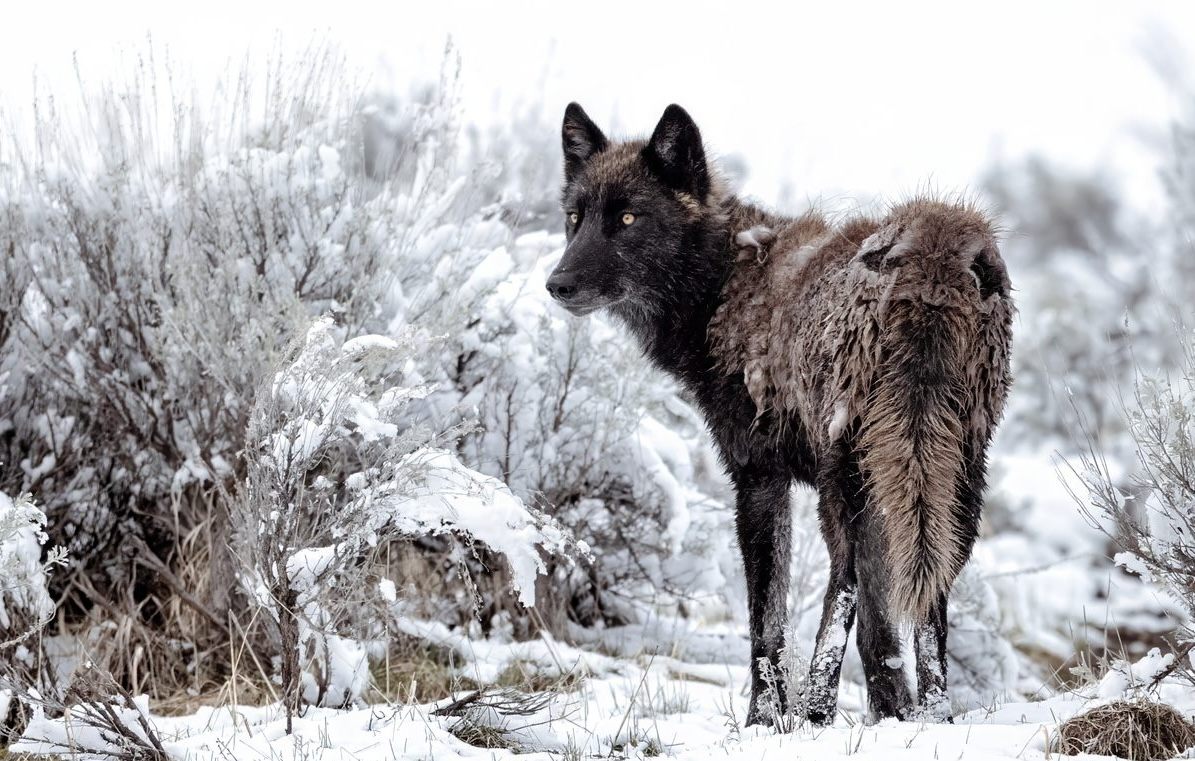
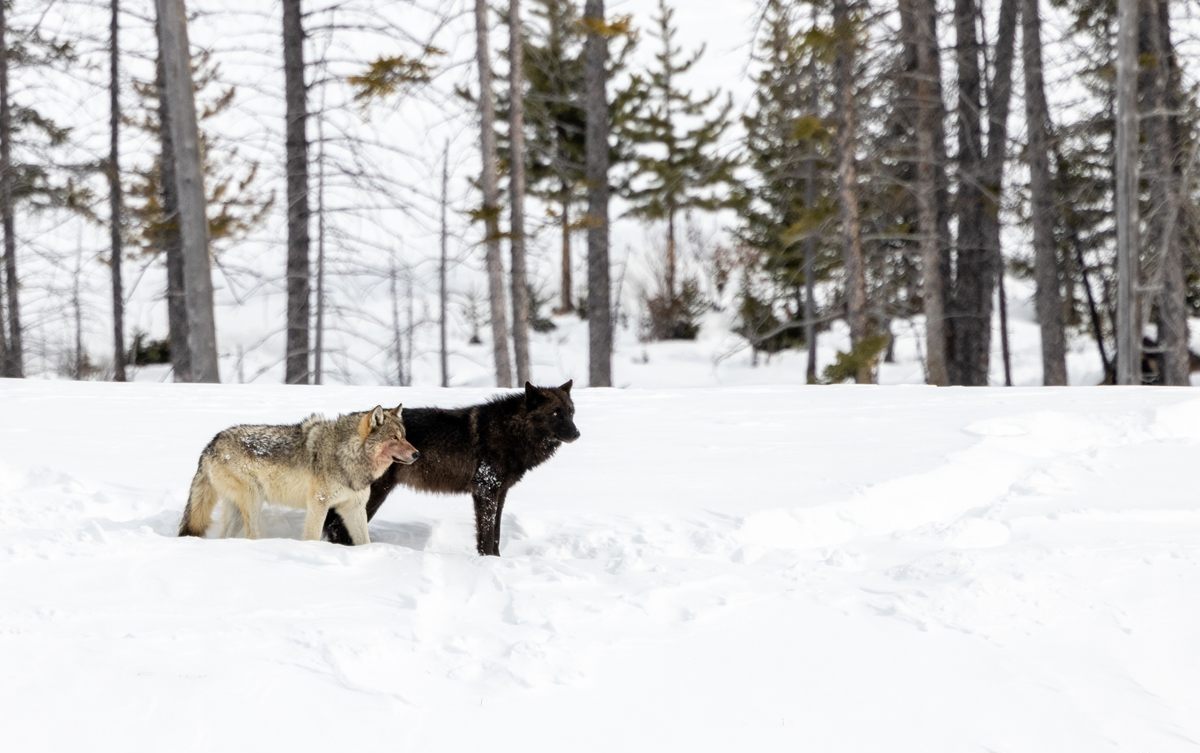
Though they’re protected inside the park, wolves can be killed when they cross its borders. JULIE ARGYLE


In This Story

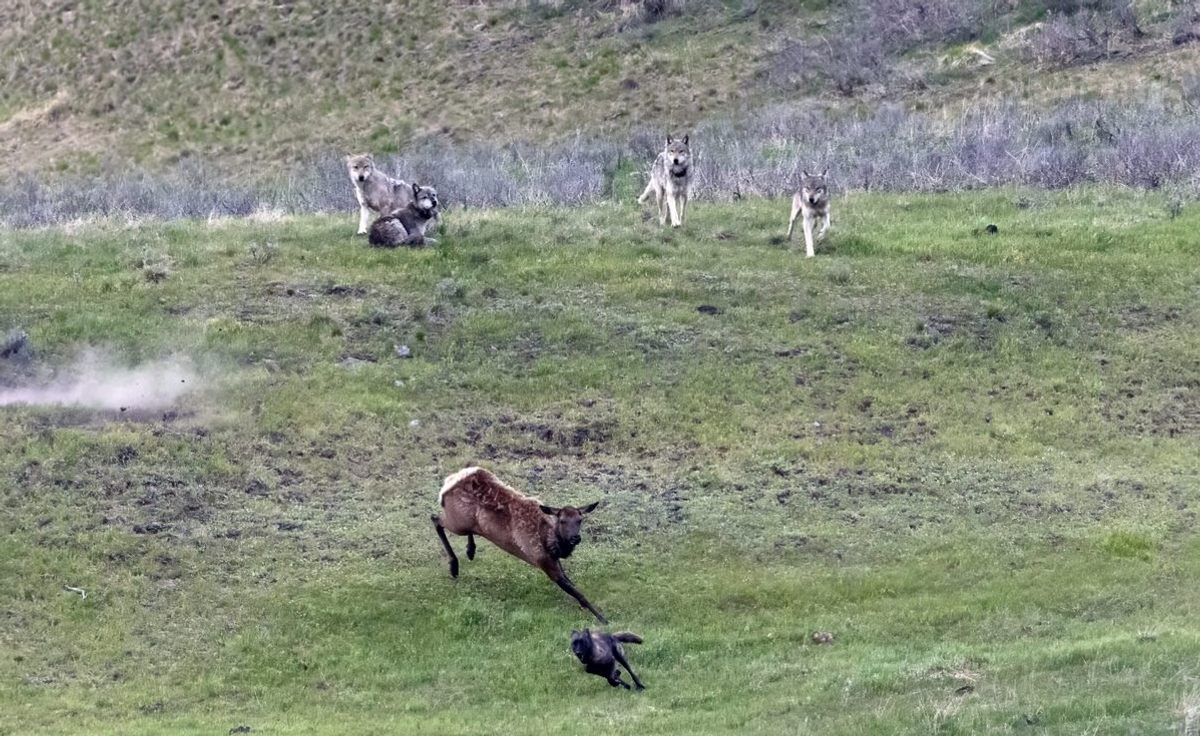
THE WOLVES TROT OUT OF the morning fog and settle around a bison herd that had overnighted in the Lamar Valley of Yellowstone National Park. There are a couple hundred bison and only four wolves, but the herd immediately becomes agitated—they begin to move around, and the wolves follow. A human family of four, we watch them from a hill across the valley, sometimes through the scopes that our guide, Audra Conklin Taylor, has brought along, sometimes just squinting in the morning sun. “The adult bison are too big for them so they’re after the calves,” she explains.


“Poor things,” we gasp, imagining one of the fluffy, light-brown creatures becoming breakfast. But as Taylor explains the complexity of the Yellowstone ecosystem, our perspective shifts. As apex predators, wolves are vital for Yellowstone ecology and health: They keep the herds in check, preventing overgrazing. After wolves had been killed off here in the 1920s, the elk, bison, and deer populations exploded, destroying trees, valleys, and riverbanks.

“When wolves were reintroduced in 1995, scientists watched the entire park rebound,” Taylor says. It was a result of the “trophic cascade of ecological change”—a ripple effect of removing or introducing a top predator into a food web—which first brought back the trees, followed by beavers and birds, who rely on trees for their living environment.

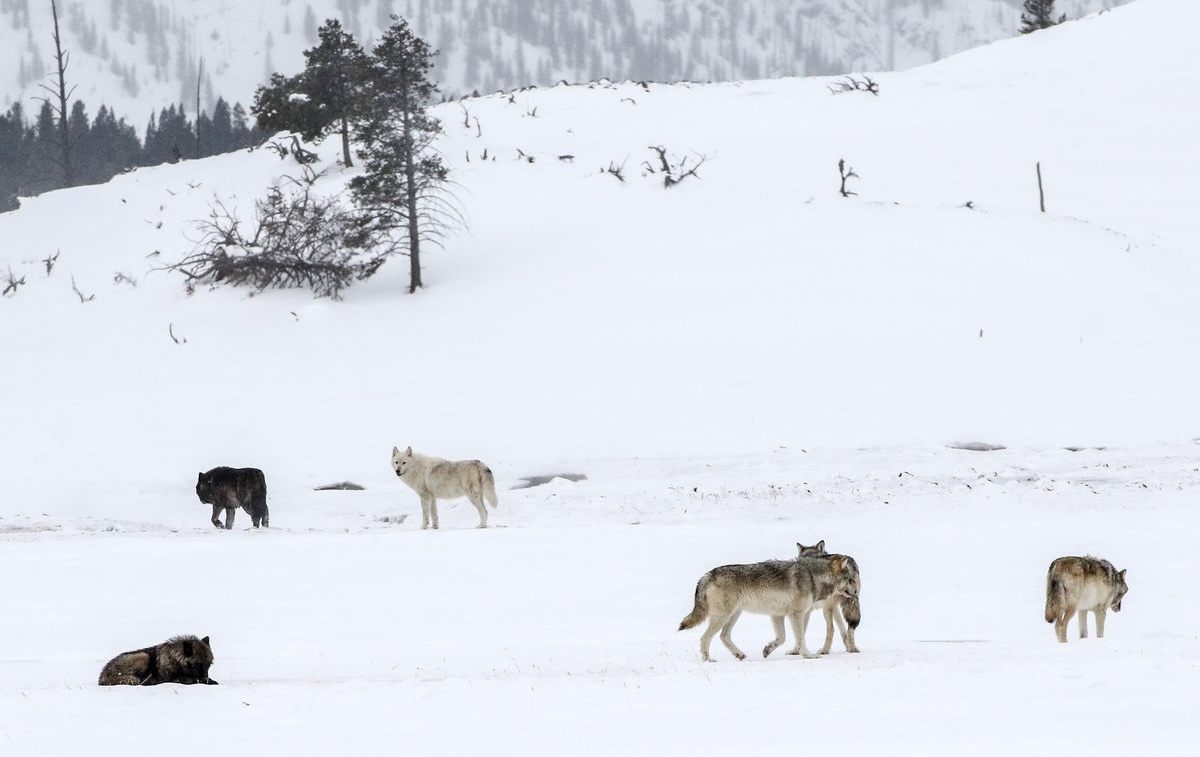
Without wolves, Yellowstone’s elk, bison, and deer populations reach levels that are destructive to trees, valleys, and riverbanks. JULIE ARGYLE

Culturally and historically, wolves have earned a bad rep because they preyed on farmers’ cows. Written records ascribe all kinds of evil qualities to them. The Bible refers to wolves as metaphors for greed and destructiveness. Fairy tales like “Little Red Riding Hood” portray them as preying on humans. Some stories even assign paranormal qualities to them, such as werewolves. And modern media still perpetuates wolves’ negative image in cartoons and movies.

“They have been demonized to us since we were children,” Taylor points out. In reality, however, wolf attacks on humans are extremely rare, which differs drastically from, say, grizzlies. “If you were to walk up on a grizzly bear eating a carcass, that grizzly bear is going to come after you full force,” Taylor says. “If you walk up on a carcass and there are wolves, they are likely going to run away. They are afraid of us. They want nothing to do with us.”

Part of Taylor’s job is restoring wolves’ reputation. She has spent her life caring for orphaned and injured wildlife, and describes herself as a naturalist. Originally from Massachusetts, Taylor fell in love with Yellowstone after she vacationed there in 2010 with her mother. Four years later, she sold her company and decided to come back to spend three months in nature.

“And three months turned into 12 years,” she says. At first, she was volunteering, shadowing wildlife biologists and working with park guides. Then, she started to take groups to see the park’s spectacular wildlife and launched her own company, Lamar Valley Touring, based in Gardiner, Montana.

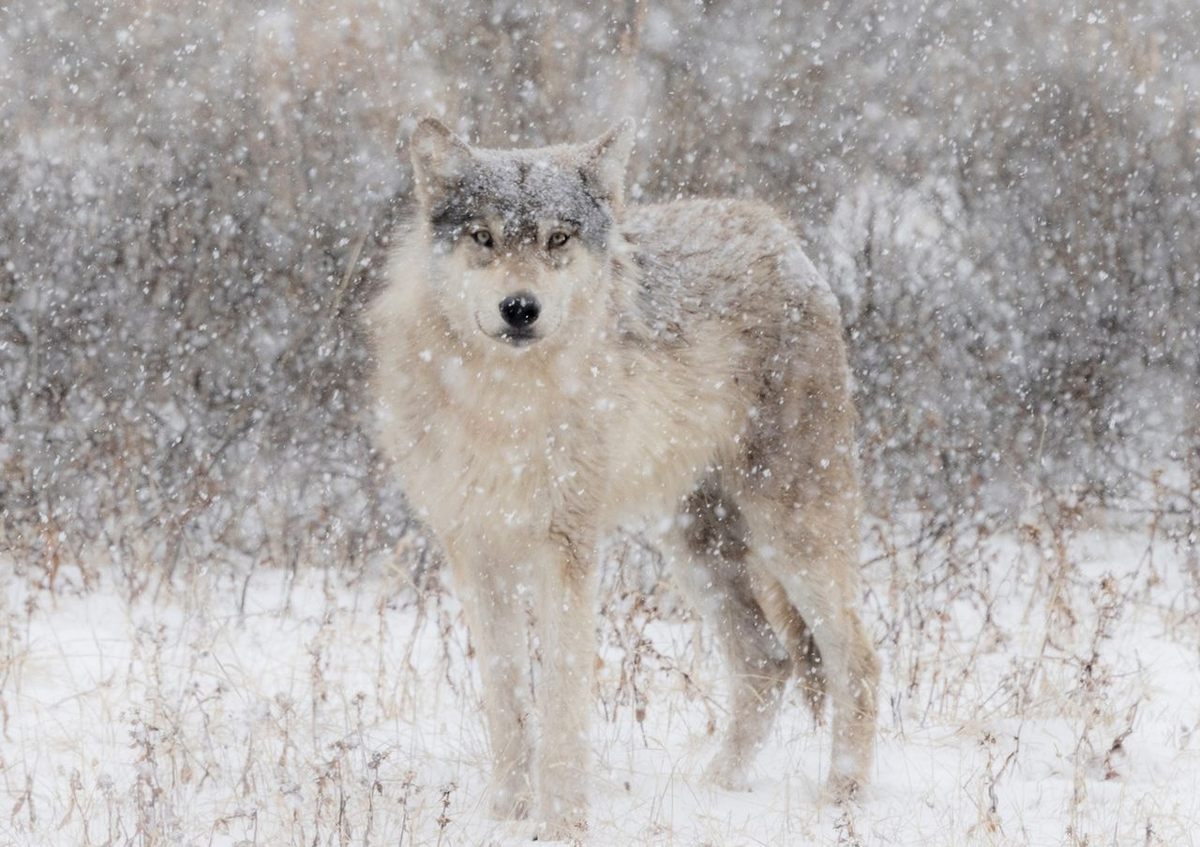
Taylor’s work highlights the value and unique personalities of wolves. JULIE ARGYLE

We’re on one of her tours that morning at Yellowstone. As we watch, the hunting scene in front of us escalates. The wolves single out a parentless calf and give chase. The calf gallops, the wolves circle, the calf turns back, skids, careens, loses speed—but just as one wolf leaps for the kill, a huge bull cuts in between. The wolves miss. “Poor things, now they’ll go hungry,” we say as the foursome leaves the battlefield. After everything we’ve learned about their role in the ecosystem, we now see the importance of a successful hunt.

“They are used to being hungry,” Taylor says, adding that wolves are resilient and adaptable. “Most hunts aren’t successful. These four look young. They’re juveniles, so it’s not surprising they missed.”

Wolves occupy a special place in Taylor’s heart. “They’re so incredibly misunderstood and so incredibly parallel to us humans,” she says. A wolf pack is a family unit, sometimes with “friends” who join in for genetic diversity, “because wolves are too smart to interbreed,” she says. Packs usually have an alpha male and an alpha female, who sire pups, some of which may stay with the pack while others may leave. Sometimes, a pack is run by an old matriarch, a grandma who keeps pups in check. Sometimes more than one female in a pack gives birth, so they rear the pups together, taking turns babysitting. Young female or male wolves may babysit, too, just like older human cousins do.

Although protected inside Yellowstone, wolves can be hunted once they leave the park. In 2022, NPR reported that a record number of wolves were shot outside the park—25, which amounted to 20 percent of the wolf population. In 2025 so far, about 10 wolves that ventured beyond Yellowstone’s borders have been killed. Although the park rangers and biologists aren’t yet sure of the exact numbers, they no longer see the pack members they used to see, says Rick McIntyre. McIntyre is a world-famous wolf expert and author of a book series about Yellowstone wolves, including Thinking Like a Wolf, which features Taylor’s work. McIntyre started working for the U.S. National Park Service in 1975 and specifically at Yellowstone in 1994, where his responsibilities included explaining the wolf reintroduction program to visitors and studying the animals.

A wolf pack is a family unit, with every member playing a role. JULIE ARGYLE

Over the years, McIntyre has had over 100,000 sightings of wolves—more than any other person in history. “I’m out with the wolves every day, and I have seen so much over the years,” he says. He’s watched wolves wage wars over territory, form lifelong partnerships, risk their lives by leading enemy packs away from their offspring, and die in battle to save their pups.

Taylor’s work advocating for wolves involves educating people about wolves’ importance to the ecosystem and their characters. But she feels that sometimes human animosity toward wolves runs too deep to mend, particularly with farmers and ranchers who believe that wolves threaten their cattle. “I’ve never had a rancher or a farmer on a tour with me,” she says. “They don’t want to talk to me. I’ve been advocating for 12 years now; they don’t care.”

McIntyre says he understands ranchers and farmers who retaliate when they believe wolves take or threaten their cattle. “I am sympathetic to their situation,” he says, because they put a lot of work into raising the animals, and losses affect their business. “So if it’s a rancher that feels, rightly or wrongly, that wolves have killed some sheep or calves, I can understand how they would feel that way.”

But Taylor says people sometimes kill wolves just for fun. She shares a story of the Lamar Canyon pack, whose matriarch was killed in 2018. “She used to keep watch on the pups and their older ‘teen’ siblings while their parents went hunting,” Taylor says. But a local hunter had been stalking her for months and finally caught her when she wandered about a mile outside the park. “I was burying her scat and covering her tracks, trying to keep the hunter from finding her,” Taylor says. But he was determined. “He wound up getting her when I wasn’t around.”

Wolves are essential to Yellowstone’s ecosystems. JULIE ARGYLE

He brought her body back to his house, and her grandchildren followed the scent all the way to town, Taylor says. Upset and distraught, they were howling nearby. “They knew she was there, and they were howling and crying,” she says. Eventually they killed someone’s dog, which only brought more wrath to their pack, which eventually disbanded. “I think a couple of them wound up getting killed because they were out of the park,” Taylor says. “Basically, because he killed the matriarch, the entire pack fell apart.”

Notably, living wolves are worth a lot more than dead ones—to their packs, to ecosystems, and even to human livelihoods. “Having wolves in Yellowstone is contributing $82 million to our local economy, because people come to Yellowstone to see the wolves,” McIntyre says. “So that’s $82 million to the local businesses, which obviously creates a lot of jobs for people.”

For Taylor, it’s simply the joy of watching the animals form families, have pups, and raise their young year after year that makes it worthwhile. “I love watching wolves just being wolves,” she says. “And I love showing people how much humans and wolves have in common.”
Malaysians call for more wildlife protection measures after elephant tragedy


A video circulating online shows the mother elephant with her head pressed against the side of the lorry, as if to free her calf which lay unmoving beneath the vehicle. PHOTOS: SCREENGRAB FROM BULETIN MALAYSIA/FACEBOOK

UPDATED May 12, 2025

PETALING JAYA - Malaysians are urging for increased wildlife protection after a mother elephant refused to leave her calf, which was killed by a lorry on the East-West Highway.

A video of the incident went viral on Mother’s Day, moving many netizens to tears.

Some tagged Transport Minister Anthony Loke, Natural Resources and Environmental Sustainability Minister Nik Nazmi Nik Ahmad, and Works Minister Datuk Seri Alexander Nanta Linggi in their posts.


“To the driver, it is just an accident; he will move on with his day-to-day job, but to the mother elephant, she just lost her baby,” wrote Mr Titanium Samarium Wong on Facebook, noting elephants’ intelligence.

“They have feelings; just imagine a mother losing her child. I felt so sad to see the mother elephant staying at the scene, refusing to leave.

“Authorities really have to do something to minimise this kind of incident. For the sake of humanity, I can’t bear to see things like this again,” he added.


“My heart aches every time I watch this in the media,” wrote Ms Zue Razak, adding a crying emoji.


The elephant had “attacked” the lorry trying to free its calf, which was pinned by the vehicle, and had to be sedated and removed by wildlife officials.

English daily New Straits Times reported that the mother elephant has since returned to the forest and that the male calf’s carcass has been buried.

The Gerik-Jeli stretch on the highway is known for wildlife crossings, especially elephants, with signboards reminding drivers to slow down.

Ms Evelin Ruman urged the authorities to build highways or overpasses for wildlife crossings, while Ms Lau Sook Mei called for speed limits in areas with elephant crossings.

“In areas where wild animals are known to roam and cross, why not build a crossing and install railings so the animals won’t stray onto the road?” wrote Mr M Tirmizi MY, urging ministers to “do something”.

Ms June Thien YC suggested installing more speed cameras near wildlife areas.

“What action will be taken to prevent such incidents in the future? What steps are being taken to reduce animal-vehicle collisions or even stop them?” asked Ms Vemanna Appannah.

Many also called for action against the driver, who claimed the calf had suddenly darted out of the forest.

 THE STAR/ASIA NEWS NETWORK