Tuesday, May 27, 2025


India: Maoists’ Crippled Movement – Analysis
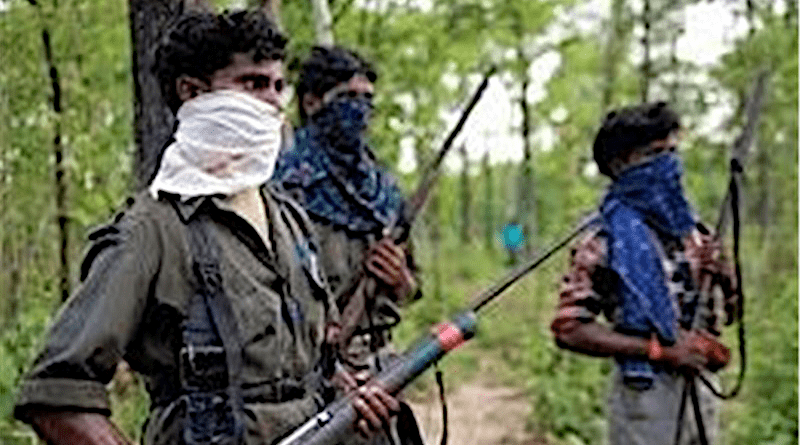
File photo of Maoist cadres in India. Photo Credit: Tasnim News Agency


By 

By Deepak Kumar Nayak


On May 21, 2025, in a major tactical blow to the Communist Party of India-Maoist (CPI-Maoist), Nambala Keshava Rao aka Basava Raju aka Ganganna aka Krishna aka Vijay aka Prakash (70), the ‘general secretary’ of the party (the highest executive post), a ‘Politburo member’, ‘Central Committee (CC)’ member, and Central Military Commission (CMC)’ member, was killed along with 26 other Maoists, in an encounter with Security Forces (SFs) in the dense jungles between the Abujhmad Forest and the Indravati National Park in the Narayanpur District of the Bastar division of Chhattisgarh. One supporter (informer) of the Police was also killed in the encounter. During the operation, one District Reserve Guards (DRG) jawan Khotluram Korram (38), was killed in an Improvised Explosive Device (IED) blast. 

During a combing operation along the border of Dantewada, Narayanpur and Bijapur Districts, in the Abhujmadh area, following intelligence inputs about the presence of senior cadres of the Maoists’ ‘Maad division’, coincidentally, on the night of the encounter, both Basava Raju and the DRG personnel unknowingly camped within a radius of 1 to 1.5 kilometres. At dawn, a chance firing took place between Basava Raju’s sentry and a DRG trooper, which led to the fierce gun battle, which lasted for about 30 to 40 minutes, with over 300 rounds fired by both sides. The identity of Basava Raju was confirmed by a DRG trooper, who was a former Maoist and had worked with him.

Two women bodyguards of Basava Raju, Sangeeta and Bhoomika, both aged around 35, active members of Peoples Liberation Guerrilla Army (PLGA) Company No. 07, carrying a bounty of INR 1 million each, were also reportedly killed in the encounter. Also killed was Jang Naveen akaMadhu (45), a high-ranking strategist, a member of the Dandakaranya Special Zonal Committee (DKSZC) and part of the Central Committee’s strategic team, with a bounty of INR 2.5 million; as well as Ugendra aka Vivek (30), a member of PLGA Company No. 07 and affiliated with the People’s Party Committee (PPCM), carrying a bounty of INR 800,000. The identities of the other slain cadres were still being ascertained at the time of writing. 

Significantly, the killing of Basava Raju who had a cumulative bounty of INR 30 million [including INR 10 million each from Chhattisgarh government and the Union Ministry of Home Affairs (UMHA), INR 5 million from the National Investigation Agency (NIA) and INR 2.5 million each from Andhra Pradesh and Odisha] was a “major success”. Originally from Vizianagaram District in Andhra Pradesh, Basava Raju joined the Maoist movement during his student years in Warangal, where he was active in the Radical Students Union (RSU). He joined the People’s War Group soon after and rose through the ranks over 35 years. An experienced military strategist, he had received guerrilla and explosives training from the Liberation Tigers of Tamil Eelam (LTTE) in 1987. He was known for his tactical ruthlessness, and played key roles in several deadly ambushes and IED attacks. Some of the most infamous incidents under his command included: the 2010 Dantewada massacre, in which 75 CRPF personnel and one State Policeman were killed; the 2013 Jheeram Ghati ambush, which left 28 persons dead, including senior Congress leaders and the head of the Salwa Judum, Mahendra Karma; the 2018 Sukma IED blast that killed nine CRPF personnel; the 2019 Gadchiroli landmine attack, in which 15 SF personnel of the Quick Response Team (QRT) wing of C-60, the Maharashtra Police counter-insurgency commando unit, and a civilian driver were killed; the 2021 Sukma-Bijapur ambush that killed at least 22 SF personnel; the 2023 Dantewada IED explosion, killing 10 DRG personnel and a civilian driver; and the 2025 Bijapur IED attack, which killed eight DRG personnel and one civilian driver. 

Chhattisgarh Chief Minister (CM) Vishnu Deo Sai, addressing a press conference in Raipur on May 22, 2025, stated that the Maoist movement was “breathing its last” in the Bastar region, adding, “In three decades, this is the first time that a ‘general secretary’-rank person has been killed. It’s a huge success and a huge shock to the Naxal since it has broken their spine. With folded hands, I greet and appreciate the courage and bravery shown by our forces. We’re proud of them.”


Further, speaking about the importance of the killing of Basava Raju, RK Vij, a former Director General of Police (DGP), who played a significant role in the formation of DRG unit of Chhattisgarh Police in 2015, observed, “This was no ordinary kill. Basavaraju, an engineering dropout from Andhra Pradesh, was not just a guerrilla commander. He was the ideological and military head of India’s most potent insurgent force. He succeeded Ganapathy in 2018 and brought a militant edge to the party, shifting focus from political mobilisation to aggressive militarisation.” 

The killing of Basava Raju comes at a crucial time for the Maoists, at a time when the central and state forces are tightening pressure across all the residual Maoist-dominated zones. Indeed, a May 14, 2025 report revealed that SFs had killed 31 CPI-Maoist cadres in an anti-Maoist operation that lasted for about three weeks in the Karregutta Hills of Bijapur District, on the border of Chhattisgarh and Telangana. According to an unnamed senior officer in the Union Ministry of Home Affairs (UMHA), the operation started on April 21, 2025, after multiple agencies received inputs that top Maoist leaders and ‘commanders’, including Hidma Madvi (51), were spotted in the Karregutta Hills. Six Maoists were reportedly killed on April 24; one was killed on May 5; 22 were killed on May 7; and two Maoists were killed on May 12.

While speaking on the operation, the Chhattisgarh Police on May 14, disclosed, “The Maoist senior leaders, including Hidma, managed to escape. Initially, there was a plan to keep this operation on, but it is their hardcore area. It’s not safe for security personnel to wait there during this weather, so we decided to end the operation for now. “

The current aggressive operations against the Maoists are part of the ‘renewed strategy’ to ‘end’ the Maoist threat by the target date of March 31, 2026, set by Union Home Minister (UHM) Amit Shah. It is useful to note that, on January 21, 2024, UHM Shah asserted that the country would be freed of the menace of Naxalism within the next three years, and directed the states to expedite development activities in remote areas affected by the ultras. 

Conspicuously, since January 21, 2024, at least 416 Maoists have been killed in 47 major incidents (each involving three or more killings) carried out against the Maoists across the country, according to the South Asia Terrorism Portal (SATP) database (data till May 25, 2025). 

At least 4,816 Maoists have been killed since March 6, 2000, when SATP started documenting LWE-related violence across the country (data till May 25, 2025). 

Meanwhile, following the killing of Basava Raju, the CPI-Maoist is left without direction or a unified voice. Speculation points to two senior leaders as contenders to “fill the leadership void”. Mallojula Venugopal aka Abhay aka Bhupati aka Master aka Sonu (69), a Brahmin from Peddapalli in Karimnagar District, Telangana, with a B. Com degree, is viewed as a seasoned ideologue. He is a ‘Politburo’ and ‘CMC’ member and served as official ‘spokesperson’ of the CPI-Maoist after the death of Cherukuri Rajkumar (Azad) in 2010. He was the Chief of the Maoist’s Dandakaranya Special Zonal Committee (DKSZC) which includes the Gadchiroli area of Maharashtra. He was tasked with the formation of a new guerrilla zone in South India, to control areas on either side of the Western Ghats, from Goa to Idukki in Kerala. He also took charge of the party’s publication division. Police intelligence also suspect he is one of the brains behind the April 2010 Maoist attack in Dantewada, in which 75 CRPF personnel and one State Policeman were killed. After the death of Mallojula Koteswara Rao aka Kishenji, the party appointed him to lead the Lalgarh area movement in West Bengal against Operation Green Hunt. He is the younger brother of late Maoist leader ‘Kishenji’. 

The second contender is Thippari Tirupati aka Devji aka Devuji aka Deoji aka Sanjiv aka Sanjeev aka Chetan aka Ramesh aka Kumma aka Shankar aka Sheshu aka Jagan aka Sudharshan aka Devanna (60), hailing from Ambedkar Nagar village under Kurtula City Police Station in the Karimnagar District of Telangana. He is from the Madiga scheduled caste community and is the ‘CMC’ member who guides the Central Regional Bureau (CRB) of the CPI-Maoist in military issues. Tirupati’s name is on the National Investigation Agency’s (NIA) most wanted list, with a bounty of INR 1 million. Police believe that Tirupathi is also one of the masterminds of the April 2010 Maoist attack in Dantewada (mentioned above).

An unnamed senior Telangana Police officer thus observed, “There was growing pressure within the organisation to ensure caste diversity in leadership. It now remains to be seen whether the party sticks to that line or opts for a more politically seasoned figure like Venugopal.”

Interestingly, according to a May 22, 2025, media report, two other names in circulation include Kadari Satyanarayana Reddy aka Kosa (63), a ‘Central Committee (CC)’ member whose influence is limited, and Malla Raji Reddy (73), considered too old and previously arrested. 

In a related development on the leadership change, according to a February 1, 2025, report, the Maoists shifted Hidma Mandvi from the PLGA battalion No. 1, the group’s most lethal military formation, and replaced him with Maoist leader Patiram Manjhi aka Toofan Da aka Anal Da aka Patiram Marandi aka Taru Manjhi (54). Manjhi has a bounty of INR 10 million on his head and was given charge of battalion No. 1, was appointed to the CC as well. Hidma, who had narrowly escaped capture during the exchanges of fire with CoBRA, CRPF and other security personnel between Nuapada, bordering Gariabandh and Malkangiri bordering Bijapur, was retained as a member of the ‘central committee’ and was given charge of collecting arms and ammunition, as well as to chalk out major plans. 

The leadership attrition in CPI-Maoist has been catastrophic. The status of the list of 2014 ‘Politburo’ and ‘CC’ members, for instance, has been discussed earlier. As of May 24, 2025, at least five ‘Politburo’ & ‘CC’ members were Muppalla Laxmana Rao aka Ganapathi (75), former ‘general secretary’, who resigned from the post on November 10, 2018; Sumanand Singh aka Sujith Da aka Sumith; Mallajula Venugolpal aka Bhupathi (60); Mishir Besra aka Bhaskar aka Sunirmal (63); and Akilesh Yadav aka Prabodh aka Satish aka Prashant, arrested on June 12, 2011, and acquitted in 2015. The whereabouts of these five are not known. Of the 18 additional members of the ‘CC’, the whereabouts of at least three – Chandari Yadav aka Prayag aka Pralay; Mohan aka Mahesh; and Thippari Tirupati aka Devji – are not known. Of the five alternate ‘CC’ members, the whereabouts of only four members – Pulluri Prasad Rao aka Chandranna; Kadari Satyanarayana Reddy aka Kosa aka Sadhu aka Gopanna (63); Modem Bala Krishna aka Bhaskar (57); and Pankaj – are not known. Thus, only 13 members, five ‘politburo’, three ‘CC’, and four ‘alternate CC’ members, and Hidma (51), remain elusive, and some of them could currently be ‘operational’. 

The Maoists are fighting a desperate battle, and are on the verge of collapse following the mammoth loss of their ‘supreme’ leader. Irrespective of the succession, the movement is in disarray at this critical juncture, and any ‘revival’ is most unlikely. It remains to be seen how the security agencies and political establishment carry forward their aggressive campaign against the Maoists, to meet the March 2026 deadline.

  • Deepak Kumar Nayak
    Research Associate, Institute for Conflict Management

SATP

SATP, or the South Asia Terrorism Portal (SATP) publishes the South Asia Intelligence Review, and is a product of The Institute for Conflict Management, a non-Profit Society set up in 1997 in New Delhi, and which is committed to the continuous evaluation and resolution of problems of internal security in South Asia. The Institute was set up on the initiative of, and is presently headed by, its President, Mr. K.P.S. Gill, IPS (Retd).


Cambodia’s Democratic Mirage: Power, Repression, And The Struggle For Change – Analysis

Sunset in Phnom Penh, Cambodia.

By 

By Pragati Madhogarhia


On 7 January 2025, Lim Kimya, a former Member of Parliament for the Cambodian National Rescue Party (CNRP) was shot dead in Bangkok, Thailand. His colleagues, members of the Cambodian opposition, say they have suffered dozens of arrests, imprisonments, violent attacks, and assassinations for standing up against the former Prime Minister Hun Sen.

On paper, Cambodia is a constitutional monarchy supported by a parliamentary form of government elected through a multiparty system. In reality, political power has been monopolised by the Cambodian People’s Party (CPP) under its leader, Hun Sen. He served as the prime minister for 38 years, and currently serves as the head of the Cambodian Senate. In 2023, he passed the baton to his son, Hun Manet. For decades, Cambodia has been under the grip of this regime through electoral manipulation, media censorship, restrictions on civil society, and violent suppression of political dissent, even beyond borders. 

Electoral Manipulation

 The CPP (formerly Kampuchean People’s Revolutionary Party) has been at the forefront of Cambodian politics since 1979, after the turbulent Cambodian-Vietnamese war, and an internal uprising against the Khmer-Rouge. Over the years, CPP has undermined the integrity of electionsthrough various means including elimination of the opposition, amendments to election laws, and widespread voter manipulation.

In 2017, the CPP-led government dissolved the main opposition party, CNRP, which had gained popular support. This was done through a Law on Political Parties banning over 100 members and revoking their parliamentary impunity. Meanwhile CPP won all 125 National Assembly seats in 2018. With increased control over judicial and executive powers, the same government facilitated the disqualification of the Candlelight Party from the 2023 elections despite appeals. Furthermore, an amendment of the electoral law stated that all Cambodian citizens who didn’t vote in the 2023 elections and ones who had dual citizenship would be prohibited from running as candidates in future elections. As a result, the CPP emerged victorious, again, with 120 of the total 125 seats.

Media Censorship

 Independent media in Cambodia faces severe restrictions and continues to be intimidated by the government. The public mainly has access to large media houses such as the National Television of Cambodia, National Radio of Cambodia, and Kaoh Santepheap, which are state-owned with pro-government coverage. The Cambodia Daily, a non-partisan outlet, was forced to close its print edition in 2017 over a tax bill dispute with the government. Its website was later blocked, and the chief correspondent Sarada Taing was threatened for his coverage of Cambodian politics. Similarly, The Phnom Penh Post announced its closure in March 2024, citing “declining advertising revenue.” Other outlets like KemnotraVoice of Democracy, and Radio Free Asia were confronted with similar fates.


According to the UN Human Rights Office, over 80 per cent of journalists experience unfair surveillance, restrictions, and attacks. Recently, journalist Mech Dara was arrested for reporting on government officials’ involvement in human trafficking and cybercrimes. He was then released after international outrage. In 2023, the government also threatened to block Facebook and proposed a sub-decree inspired by China’s system (National Internet Gateway) to curb internet freedom and user privacy. If passed, this would further tighten the government’s grip on the media, user privacy, and freedom of expression.

Restrictions on Civil Society, Peaceful Assembly, and Freedom of Expression

The CPP, in power for four decades, has continually restricted democratic attempts by civil societies. The 2025 World Report by Human Rights Watch highlighted the legal actions and imprisonment that civic groups and their leaders bear. In May 2023, Chhim Sithar (Labour Rights’ Supported Union) was found guilty of “incitement to disturb social security” and imprisoned for two years; meanwhile eight other union leaders faced up to a year and a half of prison time. Amnesty International, ACTU, and Human Rights Watch argued that it is “a state obligation to protect rights of workers.”

Environmental groups including Wildlife Alliance and Mother Nature have also been systematically weakened since over a decade. Most arrests come under accusations of political dissent, a direct result of their advocacy for protection of natural resources and conservation of forests. Yorm Bhopa, a woman land right activist, was wrongfully convicted and imprisoned for three years in 2012. Her sentence was later dismissed when authorities failed to produce compelling evidence. In another case, the Phnom Penh Capital Court convicted 10 activists from Mother Nature, all facing six-eight years in prison on the basis of “defamation, insult, and incitement to commit a felony.” 

Suppression of Political Dissent

When legal, judicial, and economic oppression haven’t been enough, the CPP-led government has often resorted to violent tactics to suppress political dissent. In 2017, leader of CNRP, Kem Sokha, was arrested and charged with treason and espionage for organising protests against the ruling party. He was later convicted and sentenced to 27 years of house arrest. In 2023, two activists, Yim Sinorn and Hun Kosa, were charged with incitement for suggesting Hun Sen was the real ‘King of Cambodia’, but were acquitted after apologising and deleting their posts. In July 2024, Teav Vannol was fined US$ 1.5 billion for “defaming” the government in foreign media.

Another prominent opposition leader, Sam Rainsy, has lived in exile since 2015 and accused the government of the political assassinations of his colleagues, including Chea Vichea (trade union leader) in 2004, Chut Wutty (environmental activist) in 2012, and Kem Lyn (political activist and commentator) in 2016, among many other assaults. These cases illustrate the government’s intolerance for dissenting voices and its efforts to silence critics, even through extrajudicial killings as seen in Lim Kimya’s case.

Conclusion

The assassination of Lim Kimya is a sobering testament to the extreme lengths Cambodia’s ruling party will go to silence dissent, even beyond its borders. Despite the facade of constitutional democracy, the Cambodian political landscape is tightly controlled by the Cambodian People’s Party, reinforced through a mix of electoral manipulation, media suppression, and harsh crackdowns on civil society. This deeply entrenched system of control has left little room for genuine political competition or free expression. As long as these authoritarian regimes in the region remain unchallenged, their legitimacy will strengthen. So the international community must remain vigilant, supporting those who risk their lives to uphold the values of democracy, freedom, and human rights.

  • About the author: Pragati Madhogarhia is a Research Intern with IPCS’ South East Asia Research Programme (SEARP).
  • Source: This article was published by IPCS

IPCS

IPCS (Institute for Peace and Conflict Studies) conducts independent research on conventional and non-conventional security issues in the region and shares its findings with policy makers and the public. It provides a forum for discussion with the strategic community on strategic issues and strives to explore alternatives. Moreover, it works towards building capacity among young scholars for greater refinement of their analyses of South Asian security.
Struggling German steel giant Thyssenkrupp plans major overhaul


By AFP
May 26, 2025


Steel giant Thyssenkrupp has struggled in the face of fierce competition
 - Copyright AFP SIMON WOHLFAHRT

Sam Reeves

Thyssenkrupp said Monday it planned a major overhaul that will split the vast conglomerate into several standalone businesses, fuelling fears about further job losses and a looming break-up of the historic German industrial titan.

Once a symbol of German manufacturing might, Thyssenkrupp has fallen into crisis in recent years as high costs at home, falling prices for its products and fierce competition from Asian rivals hammered its traditional steel business in particular.

The conglomerate, which traces its history back to the early 19th century, had already announced massive job cuts at the steel division and was in the process of seeking to spin off some parts of the business.

The plan announced Monday goes further however, and involves gradually making all segments of the group — ranging from auto parts to green technologies — into standalone businesses and opening them up for outside investment.

The current Thyssenkrupp group would be transformed into a holding company with stakes in the individual businesses.

Chief executive Miguel Lopez said the plan, to be presented to the supervisory board before the end of September, will help the group continue on its “chosen course”.

“The future independence of our current segments… will increase their entrepreneurial flexibility, strengthen their investment plans and earnings responsibility, and improve transparency for investors,” he said in a statement.

The move principally affects the group’s automotive technology and green technology units as well as one that deals with supply chain management.

The aim is for them to become independent businesses in the coming years, with Thyssenkrupp to retain a controlling stake.

Efforts were already ongoing to spin off its lucrative submarine-making unit, and Czech billionaire Daniel Kretinsky has taken a 20-percent stake in the steel business, with the goal of increasing this to 50 percent.


– ‘Dramatic situation’ –


Investors cheered the news, with Thyssenkrupp’s shares up more than eight percent in afternoon trading on the Frankfurt Stock Exchange.

But there was anger at what some viewed as the looming demise of a well-known German manufacturing giant, which has almost 100,000 employees worldwide, as well as fears about more job cuts.

“Germany’s industrial icon faces being dismantled, thousands of jobs are at risk,” said the tabloid newspaper Bild.

It reported that the number of staff at the group’s Essen headquarters would be slashed from 500 to 100. Thyssenkrupp declined to comment on the report.

Politicians voiced anger at the potential impact in North Rhine-Westphalia state, where Germany’s biggest steelmaker has major operations and is a big employer.

Dennis Radtke, a European Parliament lawmaker from Chancellor Friedrich Merz’s CDU party, warned of a “dramatic situation for the entire value chain in the steel industry” if the restructuring plan goes ahead.

Radtke, originally from the region, told Stern magazine that swift action was needed to “avoid carnage that would make us even more dependent on China… the chancellor must make the issue a top priority”.

China has become a major competitor to traditional European steelmakers in recent years.

A spokesman for the North Rhine-Westphalia state said it was “closely monitoring” the latest developments at Thyssenkrupp.

The state government’s “actions are focused on securing jobs at ThyssenKrupp… and throughout the steel industry and related value chains”, he told AFP.

Thyssenkrupp has reported massive annual losses for the past two years running. In November last year it announced plans to cut about 11,000 jobs at the steel division — over a third of the workforce.
Fire halts production at Ecuador’s biggest oil refinery

ByAFP
May 26, 2025


Workers were evacuated from Ecuador's biggest oil refinery after a fire broke out - Copyright AFP Antony Quintero

A fuel tank fire on Monday halted production at Ecuador’s largest oil refinery, sparking the evacuation of nearby residents as a giant plume of smoke billowed from the facility.

Operations at the plant in Esmeraldas province, which can refine 110,000 barrels per day (bpd), were suspended “to safeguard the security of the facilities and personnel,” state oil company Petroecuador said.

It said no one was injured in the blaze, and five people received medical attention for minor effects of smoke inhalation.

Workers were evacuated from the site that was cordoned off by soldiers and refinery staff, an AFP journalist observed.

Ecuadoran police said it was evacuating residents of the area, without specifying how many.

The cause of the fire at the refinery near Ecuador’s border with Colombia was not yet known.

Writing on X, Energy Minister Ines Manzano said the situation was “under control,” but the assurance did little to quell the concerns of residents.

Ramiro Medina, a plant worker, said “a loud noise” was heard, “and we all started running.”

“What is happening now is quite worrying,” added community representative Edgar Romero.

“We smelled something and thought it was coming from the Jaime Hurtado school, which was being fumigated today…. (but then) we smelled gasoline… We hope that the authorities will take action.”


– Fuel supply ‘guaranteed’ –


Petroecuador, which operates the facility, did not specify the amount of fuel that was in the tank when the fire broke out.

Ecuador is one of South America’s top oil producers and is heavily reliant on its petroleum exports for revenue.

In 2024, the country produced about 475,000 barrels of crude per day, of which it sold nearly three-quarters, earning $8.6 billion in oil exports.

But production last year was disrupted by recurring power cuts linked to the worst drought in 60 years, which reduced the level of hydroelectric reservoirs to historic lows.

In March this year, a massive fuel pipeline leak saw more than 25,000 barrels of crude spill into three rivers, in an incident that also forced a suspension of oil exports.

Ecuador has two other refineries, with respective capacity for 45,000 and 20,000 barrels per day.

The government said in a statement Monday that “the supply of fuel is completely guaranteed throughout the country” despite the fire.
Developing nations face ‘tidal wave’ of China debt: report

By AFP
May 26, 2025


Part of the rail line linking China to Laos, a key part of Beijing's 'Belt and Road' project across the Mekong - Copyright AFP/File 

Aidan JONES

The world’s poorest nations face a “tidal wave of debt” as repayments to China hit record highs in 2025, an Australian think tank warned Tuesday in a new report.

China’s Belt and Road Initiative lending spree of the 2010s has paid for shipping ports, railways, roads and more from the deserts of Africa to the tropical South Pacific.

But new lending is drying up, according to Australia’s Lowy Institute, and is now outweighed by the debts that developing countries must pay back.

“Developing countries are grappling with a tidal wave of debt repayments and interest costs to China,” researcher Riley Duke said.

“Now, and for the rest of this decade, China will be more debt collector than banker to the developing world.”

The Lowy Institute sifted through World Bank data to calculate developing nations’ repayment obligations.

It found that the poorest 75 countries were set to make “record high debt repayments” to China in 2025 of a combined US$22 billion.

“As a result, China’s net lending position has shifted rapidly,” Duke said.

“Moving from being a net provider of financing — where it lent more than it received in repayments — to a net drain, with repayments now exceeding loan disbursements.”

Paying off debts was starting to jeopardise spending on hospitals, schools, and climate change, the Lowy report found.

“Pressure from Chinese state lending, along with surging repayments to a range of international private creditors, is putting enormous financial strain on developing economies.”

The report also raised questions about whether China could seek to parlay these debts for “geopolitical leverage”, especially after the United States slashed foreign aid.

While Chinese lending was falling almost across the board, the report said there were two areas that seemed to be bucking the trend.

The first was in nations such as Honduras and Solomon Islands, which received massive new loans after switching diplomatic recognition from Taiwan to China.

The other was in countries such as Indonesia or Brazil, where China has signed new loan deals to secure battery metals or other critical minerals.
Ancient town and its manuscripts face ravages of the Sahara


By AFP
May 26, 2025


Oualata in Mauritania is one of a UNESCO-listed quartet of ancient, fortified towns or 'ksour' - Copyright AFP Darren Staples

Eléonore SENS

From his roof, Sidi Mohamed Lemine Sidiya scans the mediaeval town of Oualata, a treasure that is disappearing under the sands of the Mauritanian desert.

“It’s a magnificent, extraordinary town,” said Sidiya, who is battling to preserve the place known as the “Shore of Eternity”.

Oualata is one of a UNESCO-listed quartet of ancient, fortified towns or “ksour”, which in their heyday were trading and religious centres and now hold jewels dating back to the Middle Ages.

Doors crafted from acacia wood and adorned with traditional motifs painted by local women still dot the town.

Centuries-old manuscripts, a rich source of cultural and literary heritage handed down through the generations, are also held in family libraries.

But the southeastern town near the border with Mali is vulnerable to the ravages of the Sahara’s extreme conditions.

In the punishing heat, piles of stone and walls that are ripped open bear witness to the impact of the latest, especially heavy, rainy season.

“Many houses have collapsed because of the rains,” Khady said, standing by her crumbling home, which she inherited from her grandparents.

An exodus of people leaving Oualata only compounds the problem.

“The houses became ruins because their owners left them,” said Sidiya, a member of a national foundation dedicated to preserving the region’s ancient towns.


– Encroaching sands –


For decades, Oualata’s population has been dwindling as residents move away in search of jobs, leaving nobody to maintain the historic buildings.

Its traditional constructions are covered in a reddish mudbrick coating called banco and were designed to adapt to the conditions.

But once the rains have stopped, the buildings need maintenance work.

Much of the old town is now empty, with only around a third of the buildings inhabited.

“Our biggest problem is desertification. Oualata is covered in sand everywhere,” Sidiya said.

Around 80 percent of Mauritania is affected by desertification — an extreme form of land degradation — caused by “climate change (and) inappropriate operating practices”, according to the environment ministry.

More plants and trees used to grow in the desert, Boubacar Diop, head of the ministry’s Protection of Nature department, said.

“The desert experienced a green period before the great desertification of the 1970s caused the installation of sand dunes,” Diop said.

By the 1980s, Oualata’s mosque was so covered in sand that “people were praying on top of the mosque” rather than inside it, Bechir Barick, who teaches geography at Nouakchott University, said.

Despite being battered by the wind and sand, Oualata has preserved relics attesting to its past glory as a city on the trans-Saharan caravan trade route and centre of Islamic learning.

“We inherited this library from our ancestors, founders of the town,” Mohamed Ben Baty said, turning the pages of a 300-year-old manuscript in a banco-covered building that remains cool despite the outside temperature.

Like his forebears, the imam is the repository of almost 1,000 years of knowledge, descending from a long line of scholars of the Koran.


– ‘Valuable’ for researchers –


The family library has 223 manuscripts, the oldest of which dates to the 14th century, Ben Baty said.

In a tiny, cluttered room, he half-opened a cupboard to reveal its precious content: centuries-old writings whose survival might once have seemed in doubt.

“These books, at one time, were very poorly maintained and exposed to destruction,” Ben Baty said, pointing to water stains on sheets slipped into plastic sleeves.

Books in the past were stored in trunks “but when it rains, the water seeps in and can spoil the books,” he said.

Part of the roof collapsed eight years ago during the rainy season.

In the 1990s, Spain helped to fund the setting up of a library in Oualata which holds more than 2,000 books that were restored and digitally copied.

But lack of financing now means their continued preservation depends on the goodwill of a few enthusiasts, like Ben Baty, who does not even live in Oualata all year round.

“The library needs a qualified expert to ensure its management and sustainability because it contains a wealth of valuable documentation for researchers in various fields: languages, Koranic sciences, history, astronomy,” he added.

Oualata has no real tourism to rely on — it has no hotel and the nearest town is two hours away travelling on just a track.

It is also in an area where many countries advise against travelling to due to the threat of jihadist violence.

Faced with the encroaching desert, trees were planted around the town three decades ago but it was not enough, Sidiya said.

Several initiatives have sought to save Oualata and the three other ancient towns, which were inscribed on the UNESCO World Heritage List in 1996.

An annual festival takes place in one of the four to raise money for renovations and investment to develop the towns and encourage people to stay.

Once the sun drops behind the Dhaar mountains and the air cools, hundreds of children venture out into the streets and Oualata comes to life.
Opposition’s Lee leading South Korea presidential race: poll


By AFP
May 26, 2025


Polling indicates South Korean opposition leader Lee Jae-myung is the clear frontrunner to win next week's election - Copyright AFP Pedro Pardo

A Gallup poll released Tuesday indicates South Korean opposition leader Lee Jae-myung is the clear frontrunner to become the country’s next president, with less than a week to go until the elections.

South Koreans go to the polls on June 3, capping months of political turmoil triggered by ex-leader Yoon Suk Yeol’s ill-fated effort to suspend civilian rule in December.

Gallup put Democratic Party leader Lee as the clear frontrunner, with 49 percent of the respondents stating they saw him as the best candidate.

Trailing behind is conservative former labour minister Kim Moon-soo of the ruling People Power Party at 35 percent.

In third place is Lee Jun-seok of the Reform Party — running a campaign targeting South Korean youth — with 11 percent.

The poll, conducted by Gallup Korea over the phone, surveyed 1,004 respondents over the weekend, with a stated margin of error of 3.1 percentage points.

The poll suggested the Democratic Party leader would win handily in almost all of the country, securing the most populous regions of capital Seoul, Incheon and Gyeonggi.

Third place Lee Jun-seok has faced growing pressure from conservatives to abandon his presidential bid to stop left-leaning Lee Jae-myung from winning.

But the 40-year-old has remained firm, declaring that his name will be “clearly visible” on the ballot on election day.

Tuesday’s poll indicated Lee Jae-myung would win even if he faced a unified conservative candidate.

Around five percent of those polled said they had no preference or that they did not know who would be the best candidate.

The survey is one of the last to be released before next week’s vote, with further polls in the run-up banned.

Conservative candidate Kim shot to public attention in the aftermath of Yoon’s martial law debacle, when he declined to bow in apology to the public for failing to prevent the suspension of civilian rule.

After trailing behind Lee Jae-myung for weeks, he is slowly catching up.

A poll by Next Research released Monday suggested the gap between the two candidates had narrowed to just nine percentage points nationwide, and in Seoul to a mere 3.2 points.

Lee lost the 2022 presidential elections to Yoon by the smallest margin of any vote in the country’s history.
Thief of famed Churchill photo sentenced to jail: Canadian media


By AFP
May 27, 2025


The 'Roaring Lion' portrait of Winston Churchill is arguably the most recognized image of the wartime British leader, even appearing on the British five pound note 
- Copyright POOL/AFP STEFAN WERMUTH

A Canadian man who stole the famed portrait of a scowling Winston Churchill in a brazen international art heist was sentenced to jail Monday, according to local media.

The “Roaring Lion” portrait of the late British prime minister had been gifted to the Fairmont Chateau Laurier hotel in Ottawa by the late Armenian-born Canadian photographer Yousuf Karsh.

Taken by Karsh after the wartime leader addressed the Canadian parliament in 1941, Churchill’s scowl becoming a symbol of British defiance in World War II.

In August 2022 hotel staff noticed the photograph, hanging in a reading room next to the main lobby, had been replaced with a forgery, and Ottawa police in 2024 announced they had found the culprit.

According to Canada’s public broadcaster CBC, the man, Jeffrey Wood, pleaded guilty to forgery, theft, and trafficking property obtained by crime in March.

He was sentenced to jail for a duration of two years less a day on Monday at an Ottawa courthouse.

CBC reported that Justice Robert Wadden told Wood that he was guilty of stealing a “cultural and historical” portrait that was a “point of national pride.”

In 2024, Ottawa police said that with the help of public tips and forensic sleuthing, they had found Wood living just west of Ottawa while the stolen portrait was in Italy.

The portrait had been sold through an auction house in London to a buyer in Italy, both of whom were unaware it was stolen, police said then.

It was returned to the hotel last September.

The image is arguably the most recognized of Churchill and widely circulated, even appearing on the British five pound note.

In an account posted on his official website, Karsh said making the portrait “changed my life.”

He had captured Churchill’s churlish expression immediately after plucking a cigar out of the British leader’s mouth.

“By the time I got back to my camera, he looked so belligerent he could have devoured me,” Karsh said. “It was at that instant that I took the photograph.”
Tesla EU sales slump 52% in April: trade group


By AFP
May 27, 2025


The logo of US company Tesla displayed at the Paris Motor Show at Paris Expo Porte de Versailles in Paris on October 16, 2024 - Copyright AFP JULIEN DE ROSA

Taimaz SZIRNIKS

Sales of cars made by Elon Musk’s Tesla slumped by more than half in April as Chinese electric carmakers saw their share surge, the continent’s manufacturing association said Tuesday.

While sales of electric cars rose overall in the 27 European Union nations, Tesla’s share fell dramatically amid the spotlight on Musk’s work with US President Donald Trump and the US company’s ageing range.

The European Automobile Manufacturers’ Association (ACEA) said Tesla sales in April fell to 5,475 cars, down 52.6 percent from the same month last year.

In the first four months of 2025, Tesla sales have fallen 46.1 percent against the same period last year to 41,677 cars.

Once the standout leader in electric car sales, Tesla was overtaken in April by 10 rivals including Volkswagen, BMW, Renault and Chinese maker BYD, according to JATO Dynamics consultants.

Tesla announced in April that its worldwide sales in the first quarter had fallen 13 percent, increasing pressure on Musk, though the company partly blamed lost production amid an upgrade to its Model Y standard-bearer.

Musk has since announced he will reduce his work helping Trump slash US government spending and last week said that Tesla sales are “doing well”.


– Hybrid leaders –


Skoda’s new Elroq led electric car sales while Tesla’s Model Y, the former frontrunner, came ninth.

Sales of electric cars overall rose 26.4 percent from last year to take a 15.3 percent share of the market in April, according to the ACEA.

The rise is uneven across Europe as different governments and manufacturers give different incentives to buy electric. Germany, Belgium, Italy and Spain have seen a major rise while electric car sales in France have fallen.

“The share of battery-electric vehicles is slowly getting momentum, but growth remains incremental and uneven across EU countries,” said Sigrid de Vries, ACEA’s director general.

“In order for battery-electric vehicles to become a mainstream choice, it is essential that governments continue to implement the necessary enabling conditions, such as purchase and fiscal incentives, recharging infrastructure and electricity prices.

“The sustained popularity of hybrid vehicles among consumers also shows the merit of keeping a technology-neutral approach,” she added.

Sales of hybrid cars with a small electric battery still dominate the European market, rising 20.8 percent since the start of the year, while petrol-only cars have fallen 20.6 percent over the same time.

The Volkswagen group remains the top brand in Europe, with sales up 2.9 percent in April.

But Chinese brands were a major factor in the popularity of electric and hybrid cars, according to JATO and have 7.9 percent of the European market.

The BYD, MG, Xpeng and Leapmotor brands saw sales rise 59 percent over the year in electric and hybrid sales, while other manufacturers put on 26 percent.

JATO expert Felipe Munoz said it remains to be seen whether the European Union imposes tariffs on Chinese hybrid cars as it has for electric vehicles.


Study: Emotional responses crucial to attitudes about self-driving cars


Washington State University


PULLMAN, Wash. -- When it comes to public attitudes toward using self-driving cars, understanding how the vehicles work is important—but so are less obvious characteristics like feelings of excitement or pleasure and a belief in technology’s social benefits.

Those are key insights of a new study from researchers at Washington State University, who are examining attitudes toward self-driving cars as the technology creeps toward the commercial market—and as questions persist about whether people will readily adopt them.

The study, published in the journal Transportation Research, surveyed 323 people on their perceptions of autonomous vehicles. Researchers found that considerations such as how much people understand and trust the cars are important in determining whether they would eventually choose to use them.

“But in addition, we found that some of the non-functional aspects of autonomous vehicles are also very important,” said Wei Peng, an assistant professor in the Edward R. Murrow College of Communication at WSU.

These included the emotional value associated with using the cars, such as feelings of excitement, enjoyment or novelty; beliefs about the broader impact on society; and curiosity about learning how the technology works and its potential role in the future, Peng said.

In addition, they found that respondents would want to give the technology a test drive before adopting it.

“This is not something where you watch the news and say, ‘I want to buy it or I want to use it,’” Peng said. “People want to try it first.”

The new paper is the latest research on the subject from Peng and doctoral student Kathryn Robinson-Tay. In a paper published in 2023, they examined whether people believed the vehicles were safe, finding that simply knowing more about how the cars work did not improve perceptions about risk—people needed to have more trust in them, too.

The new study examined the next step in the decision-making chain: What would motivate people to actually use an autonomous vehicle?

Answering that question is important as the technology moves toward becoming a reality on the roads. Already, carmakers are adding autonomous features to models, and self-driving taxis have begun operating in a handful of U.S, cities, such as Phoenix, San Francisco and Los Angeles. Fully self-driving vehicles could become available by 2035.

It is estimated they could prevent 90% of accidents while improving mobility for people with limited access to transportation. However, achieving those benefits would require widespread, rapid adoption—a big hurdle given that public attitudes toward the cars have been persistently negative and the rollout of “robotaxies” have been bumpy, with some high-profile accidents and recalls. In a national survey by AAA released in February, 60 percent of respondents said they were afraid to use the cars.

Widespread adoption would be crucial because roadways shared by self-driving and human-driven cars may not bring about safety improvements, in part because self-drivers may not be able to predict and respond to unpredictable human drivers.

One surprise in the study is that respondents did not trust vehicles more when they discovered they were easy to use—which opens a new question for future research: “What is it about thinking the car is easy to use that makes people trust it less?” Robinson-Tay asked.

Attitudes about self-driving cars depend heavily on individual circumstances, and can be nuanced in surprising ways. For example, those with a strong “car-authority identity”—a personal investment in driving and displaying knowledge about automobiles—and more knowledge about self-driving cars were more likely to believe the cars would be easy to use.

But respondents with more knowledge were less likely to view the cars as useful—a separate variable from ease of use.

Other considerations also play a role. Those who can’t drive due to disability or other reasons may have a stronger motivation to use them, as might drivers with significant concerns about heavy traffic or driving in inclement weather.

“If I really worry about snowy weather, like we experience in Pullman in winter, is it going to help?” Peng said. “If I really worry about weather, I might get a car like that if it would help me steer clear of dangerous weather conditions.”