Tuesday, May 27, 2025


Climate Change Slashes Wind Power Potential, New Forecasts Show


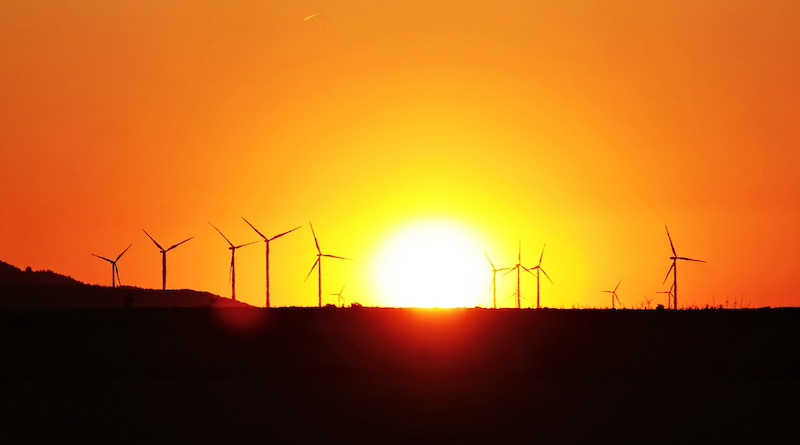
Sunset Pinwheels Environmental Engineering Wind Power Energy Turbine

By 

A new study warns that climate change will significantly reshape wind energy potential across the Middle East. While surface winds may intensify in some regions, wind speeds at turbine height are projected to decline—posing challenges for energy planners across the region. Using high-resolution climate modeling, the research highlights the urgent need to factor future wind dynamics into sustainable energy strategies.


A new study published in the journal Climatic Change highlights significant shifts in wind patterns across the Middle East due to climate change, with critical implications for the region’s wind energy potential. The research, led by Melissa Latt from the Karlsruhe Institute of Technology (KIT), Germany, and Dr. Assaf Hochman from the Fredy and Nadine Herrmann Institute of Earth Sciences at the Hebrew University of Jerusalem, utilizes high-resolution climate modeling to project changes in summer wind fields up to the year 2070.

The study, employing the COSMO-CLM regional climate model at a high spatial resolution of 8 km, reveals a complex picture. While median surface winds are projected to increase by up to 0.7 meters per second, driven primarily by land-sea temperature contrasts, wind speeds at wind turbine height (150 meters) are projected to decrease significantly across much of the region. This decline is linked to changes in the Persian Trough, a dominant summer synoptic system in the Middle East.

The study found that these upper-level wind reductions could lead to a regional drop of up to 7 gigajoules (GJ) of wind energy over six hours, with important consequences for renewable energy planning and infrastructure investment.

Key Findings:

  • Surface Winds Increasing: Median surface wind speeds are projected to rise by up to 0.7 m/s by 2070, especially near coastal areas. These increases may help mitigate extreme heat stress.
  • Upper-Level Winds Decreasing: At 150 meters above ground, median wind speeds are expected to drop by up to 1.0 m/s, resulting in a measurable reduction in potential wind energy production—particularly inland and over the Mediterranean Sea.
  • Regional Hotspots and Declines: The Red Sea emerges as a wind energy hotspot, showing potential increases, while inland areas like the Syrian Desert, the Mediterranean coastline, and the Judean Mountains are projected to see notable declines.
  • Climatic Complexity: The findings emphasize the complex interplay between regional topography, atmospheric circulation, and land-sea temperature gradients, which together shape the region’s unique summer wind systems.

“These findings provide essential insights for policymakers and planners across the Middle East,” says Dr. Hochman. “Wind energy is a critical component of the region’s sustainable future, and understanding how climate change reshapes wind patterns is key to smart, long-term investment. Our research also underscores the need to differentiate between wind patterns at the surface and at turbine-relevant heights,” he adds. “Neglecting this vertical dimension can lead to over- or underestimations of a site’s true wind energy potential.”

The study calls for more comprehensive, multi-model research to better capture local wind variability, especially in areas with complex geography. It also highlights the urgent need to incorporate future wind projections into national and regional energy strategies, especially in regions—like the Red Sea coast—where potential remains strong.

Eurasia Review

Eurasia Review is an independent Journal that provides a venue for analysts and experts to disseminate content on a wide-range of subjects that are often overlooked or under-represented by Western dominated media.


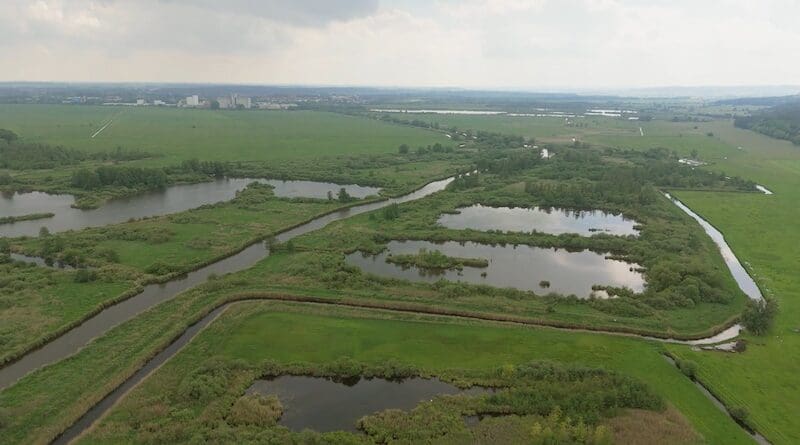
Navigating Transformation: Perspectives On Peatland Futures In Mecklenburg-Vorpommern

Photo Credit: youris.com

By 

Mecklenburg-Vorpommern is home to approximately 300,000 hectares of peatland, much of which was drained between 1960 and 1990 for intensive agriculture. Peatlands are the largest terrestrial carbon sinks on Earth and provide vital ecosystem services, yet their degradation has long-term environmental costs.

Since 2021, the regional government and local organizations have taken significant steps toward restoring these ecosystems. However, the process of rewetting peatlands is not without challenges—particularly in spatial planning and reconciling diverse stakeholder interests.

The BioValue project, funded by the European Union, has created an Arena for Transformation—a space for dialogue, collaboration, and forward-thinking solutions. Although the project does not implement rewetting directly, it plays a key role in exploring pathways for change by fostering cross-sectoral engagement and knowledge exchange.

This is not a story of quick fixes, but of navigating transformation. Through collaboration, local knowledge, and shared vision, Mecklenburg-Vorpommern is taking meaningful steps toward a sustainable future for its peatlands.

About BIOVALUE

The BioValue project, which began in July 2022, is approaching its conclusion. The project focuses on leveraging transformative change to enhance the value of biodiversity in spatial planning processes. It employs a research framework built on three key perspectives: spatial planning, environmental assessment, and economic and financing instruments.

This framework is being tested through three case studies, known as “Arenas for Transfomation”: Rewetting Peatlands and reforestation in Mecklenburg-Vorpommern, Germany; Municipal spatial planning in Mafra, Portugal; and Urban planning in Trento, Italy. By driving systemic changes in spatial policymaking, BioValue supports the integration of biodiversity into EU strategic actions.


Eurasia Review

Eurasia Review is an independent Journal that provides a venue for analysts and experts to disseminate content on a wide-range of subjects that are often overlooked or under-represented by Western dominated media.


Reciprocity Between Humans And Nature: Key To Safeguarding Planetary Health

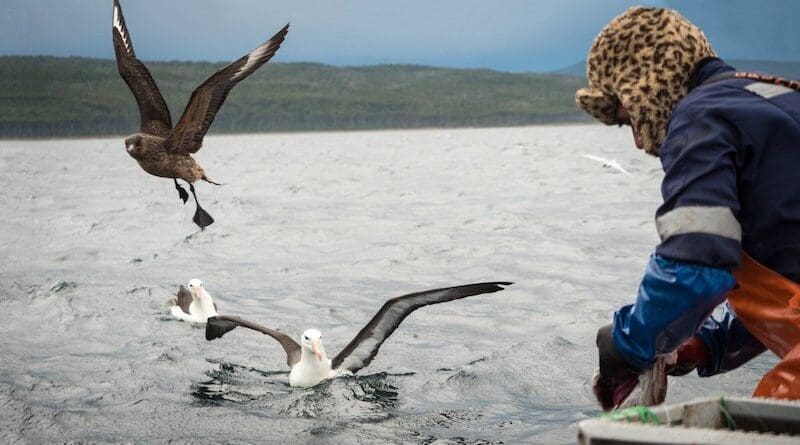
Artisanal fisherman Luis Levil cleaning a southern hake (Strait of Magellan, Patagonia, Chile). After completing the fishing operations, fish offal is discarded and consumed by various seabird species. Photo Credit: Katrina Pyne ICTA-UAB

By 

Practicing reciprocity between humans and nature—namely caring relationships between people and nature when they perceive benefits from nature—can contribute positively to both the planet and societies. This is the main conclusion of a comprehensive international study that explores the different ways in which this concept is understood and enacted worldwide, providing evidence of its impact on sustainability and social well-being.


Human activities are the root causes of global change, yet current societies are far from effectively mitigating and adapting to the effects of industrialization and capitalism. However, a newly released Special Feature in the journal People and Nature of the British Ecological Society highlights the existence of numerous cultural practices that foster reciprocity with nature, revealing that there is still room for optimism.

The study, conducted by the Institute of Environmental Science and Technology at the Universitat Autònoma de Barcelona (ICTA-UAB), the French National Research Institute for Sustainable Development, and the University of Victoria (Canada), stems from the need to promote alternative ways of living in the world. This Special Feature brings together scientific case studies from across five continents that showcase the myriad ways of living in reciprocity with nature. “These wonderful examples of the multiple ways people and nature benefit each other provide hope for the future because they illustrate that there are better paths,” says Natalie Ban, co-editor of the Special Feature.

After more than two years of work, the Special Feature demonstrates that reciprocity is core to the lifeways of Indigenous and local Peoples, illustrating the diverse and beneficial ways in which people and nature support each other. Arising from direct experiences and interactions with species and spaces, grounded on a culture of gratitude and respect, and often experienced as a moral duty, enacted reciprocity can result in positive social and ecological outcomes. “Many of the articles demonstrate that humans can care for ecosystems in ways that sustain biodiversity,” explains Irene Teixidor-Toneu, co-editor of the Special Feature.

“This Special Feature is a heartfelt compilation of 18 scientific articles from different corners of the world and features rich accounts of the pathways through which ideals and values of reciprocity are applied in the everyday practices of Indigenous Peoples and other local communities,” explains Álvaro Fernández-Llamazares, researcher at ICTA-UAB and co-editor of the Special Feature.

The case studies compiled are highly diverse in nature, including works on palm management in the Ecuadorian Amazon, protection and gathering of abalone along the Northwest Pacific coast of North America, and seabird nest construction and egg collection in Estonia, among others. “These studies highlight the strong emphasis on cultivating positive, reciprocal, and responsible relationships among humans and their non-human kin,” he adds.


For example, food gathering for community sharing in Cameroon, the creation of intertidal habitats that facilitate fish spawning and reproduction in Chile, or the return of fish offal to the sea to feed seabirds in the Chilean Patagonia are just a few examples of simple yet beneficial practices for both people and the planet.

Additionally, the Special Feature highlights that reciprocity stands in stark contrast to unilateral, exploitative, and growth-oriented globalized capitalist societies. By offering an alternative way of relating to and being in the world—one that seeks fair resource distribution—reciprocity holds great potential for transformative change.

“Reciprocity can be a cultural norm for a certain culture, but it can also be the result of accurate observations of the consequences of trespassing ecosystem boundaries. People can learn from their immediate actions and change their relation with their environments for more sustainable outcomes rather quickly,” reflects Irene Teixidor-Toneu.


Eurasia Review

Eurasia Review is an independent Journal that provides a venue for analysts and experts to disseminate content on a wide-range of subjects that are often overlooked or under-represented by Western dominated media.


7 Tonnes Of Plastic Waste End Up Along Barcelona Coastline Every Year

The study included a citizen science initiative in which groups of volunteers collected microplastic samples on various beaches in Barcelona

By 

A research team from the Universitat Politècnica de Catalunya – BarcelonaTech (UPC) and the Universitat de Barcelona (UB) has spent two and a half years monitoring the Barcelona coastline to quantify the scale of floating marine litter and to identify transport flows and accumulation zones for plastic waste.

The concentration of floating microplastics on some Barcelona beaches is very high, reaching up to 44 fragments per square metre—levels higher than those recorded in major marine litter accumulation zones such as the South Pacific Gyre.

It is estimated that, in recent years, the amount of micro- and macroplastics entering the sea from the Llobregat and Besòs rivers and from combined sewer overflows (CSOs), which discharge both rainwater and wastewater into the sea, totals around 40 billion particles per year, equivalent to approximately 7 tonnes. Most of this waste comes from the Llobregat River, which contributes around 28 billion particles annually (4.4 tonnes), followed by the Besòs River, with 11 billion particles (1.7 tonnes). Another 550 million particles (1.2 tonnes) come from CSOs.

Approximately 90% of the litter discharged by rivers and CSOs returns to the coastline within roughly 28 days. Currents, wave action and coastal orientation determine how this waste is transported and where it accumulates on beaches. A large quantity of floating litter is also observed depending on discharge flow rates, meaning more waste is detected after episodes of heavy rain, when river and sewer flows are higher.

The most common types of plastic found are transparent fragments and films, mainly made of polyethylene and polypropylene. Other identifiable sources include wet wipes and fibres from artificial grass, which together represent about 12 million particles per year.

These are some of the findings of a study carried out by researchers from the Maritime Engineering Laboratory (LIM) of the Universitat Politècnica de Catalunya – BarcelonaTech (UPC) and the Marine Geosciences research group of the University of Barcelona (UB), as part of the project TRACE (Tools for a better management of marine litter in coastal environments to accelerate the tRAnsition to a Circular plastic Economy).


The project is funded by the Ministry of Science and Innovation and by the Spanish Agency for Strategic Projects Aimed at the Ecological and Digital Transition. Its aim is to develop prediction and monitoring tools for floating litter to support the conservation, sustainable use and management of coastal areas. To this end, Barcelona has been used as a case study.

Over the course of two and a half years, the research team conducted sampling campaigns along the Barcelona coastline using drifting buoys, water turbidity sensors and specially designed nets for collecting micro- and macroplastics. Samples were also collected at the mouths of the Llobregat and Besòs rivers and at the outlets of several CSOs.

A citizen science project

The study included a citizen science initiative in which volunteer groups collected microplastic samples on various Barcelona beaches, both directly from the sand and using microplastic trawl nets deployed from paddle boards or kayaks. The sampling was coordinated with the Spanish delegation of Surfrider Europe.

The samples were analysed in the laboratories of the University of Barcelona, where the waste was categorised by plastic type, colour and shape to help trace its origin.

Based on the collected data and the analysis of variables such as wave conditions, currents and beach type, UPC researchers developed a numerical modelling tool to simulate the journey of plastic waste from river mouths and outfall points into the sea, and to identify the areas where it is most likely to accumulate.

The final results of the project were presented at an event held in the auditorium of the Vèrtex building on the UPC’s North Diagonal Campus on 20 May. 


Eurasia Review

Eurasia Review is an independent Journal that provides a venue for analysts and experts to disseminate content on a wide-range of subjects that are often overlooked or under-represented by Western dominated media.
Nuclear option: Indonesia seeks to grow energy, cut emissions


By AFP
May 26, 2025


Indonesia is hoping going nuclear can help it meet soaring energy demand while taming emissions - Copyright AFP/File DEVI RAHMAN

Eric Bernaudeau and Marchio Gorbiano

Indonesia is hoping going nuclear can help it meet soaring energy demand while taming emissions, but faces serious challenges to its goal of a first small modular reactor by 2032.

Its first experiment with nuclear energy dates to February 1965, when then-president Sukarno inaugurated a test reactor.

Sixty years later, Southeast Asia’s largest economy has three research reactors but no nuclear power plants for electricity.

Abundant reserves of polluting coal have so far met the enormous archipelago’s energy needs.

But “nuclear will be necessary to constrain the rise of and eventually reduce emissions”, said Philip Andrews-Speed, a senior research fellow at the Oxford Institute for Energy Studies.

President Prabowo Subianto has promised to ensure energy security while meeting a pledge to eliminate coal-powered electricity generation within 15 years.

Coal accounts for around two-thirds of electricity generation in Indonesia, which targets net-zero by 2050.

The government wants 40-54GW of the 400GW it projects will be generated nationwide by 2060 to come from nuclear.

It hopes to kickstart capacity with a reactor on Borneo “by 2030 or 2032”, according to Energy Minister Bahlil Lahadalia.

It will be a small modular reactor, which has a lower capacity than traditional reactors but is easier to assemble and transport.

The total number of plants planned has not been detailed, but the government has begun scouting locations — a challenge for a country located on the seismically active “Ring of Fire”.

“Currently, 29 potential locations have been identified for the construction of nuclear power plants,” Dadan Kusdiana, acting secretary general of the National Energy Council (DEN) told AFP.

All are outside the country’s biggest island of Java, in line with government goals to develop the archipelago’s centre and east.

The sites would also put facilities near energy-hungry mining sites.


– Ring of Fire –


While Japan’s quake and tsunami-triggered Fukushima disaster has stalled nuclear progress in some parts of Asia, proponents say nuclear can be done safely in Indonesia.

“North Java, East Sumatra, West Kalimantan and Central Kalimantan are considered as low-risk zones,” said Andang Widi Harto, a nuclear engineering researcher at Yogyakarta University.

“These low seismic risk regions also coincide with low volcanic risk regions,” he added.

Countries from Vietnam to Belgium are also growing or retaining nuclear capacity as they struggle to meet net-zero goals to combat climate change.

While Indonesia may not be alone in the nuclear pivot, it has little domestic expertise to draw on.

It will look abroad for help, said Kusdiana, citing “serious interest” from providers including Russia’s Rosatom, China’s CNNC and Candu Canada.

The Indonesian subsidiary of US company ThorCon is already seeking a licence for an experimental “molten-salt reactor”.

It wants to use shipyards to build small reactors that will be towed to coastal or offshore locations and “ballasted” to the seabed.

Kusdiana said DEN has also visited France’s EDF SA to explore possible cooperation.

French President Emmanuel Macron is due in Indonesia this week as part of a Southeast Asia tour.

EDF said there were currently “no discussions underway on nuclear with Indonesia,” though its CEO Bernard Fontana will be part of Macron’s delegation.

A second French firm, Orano, also said it had not discussed collaboration with Indonesia.


– ‘Sceptical’ –


Given the challenges, which also include connectivity issues, waste disposal and potential domestic opposition, some experts warn Indonesia’s nuclear timeline is overambitious.

“I would join others who are sceptical that Indonesia can deploy nuclear power at any significant scale in the next ten years,” said Andrews-Speed at the Oxford Institute.

Environmentalists would like to see Indonesia focus more on meeting its clean energy targets with renewable sources.

While hydroelectric accounts for over seven percent of Indonesia’s electricity generation, solar and wind contribute tiny amounts and could be significantly ramped up, experts say.

Cost and “high corruption” are also obstacles, said Dwi Sawung, energy and urban campaign manager at NGO WALHI.

“There is not enough left in the government and PLN (state electricity company) budget,” he told AFP.

The government has not said how much it expects the nuclear ramp-up to cost, but Kusdiana insists the money will be there.

“Various potential international investors… have shown interest”, including Russia, the United States, Denmark, South Korea and China, he said.


Trump Sets Out Aim To Quadruple US Nuclear Capacity

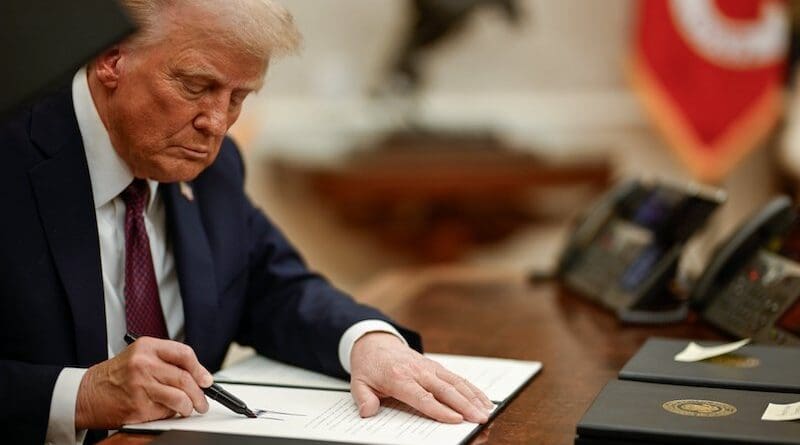
US President Donald Trump signing executive order. Photo Credit: POTUS, X

By 

US President Donald Trump has signed a series of executive orders titled Reinvigorating the Nuclear Industrial Base, Reforming Nuclear Reactor Testing at the Department of Energy and Ordering the Reform of the Nuclear Regulatory Commission with the goal of “re-establishing the United States as the global leader in nuclear energy”.


The aim is to increase US nuclear energy capacity from 100GW to 400GW by 2050, including the Department of Energy (DOE) prioritising work “with the nuclear energy industry to facilitate 5 gigawatt of power uprates to existing nuclear reactors and have 10 new large reactors with complete designs under construction by 2030”.

Among the measures included are a reorganisation and cuts to the Nuclear Regulatory Commission and an order for licence decisions on the construction and operation of new reactors to be taken within a maximum 18 months. 

The president was joined in the Oval Office on Friday afternoon for the announcements by representatives from the US nuclear industry and Secretary of the Interior Doug Burgum, who is Chairman of the National Energy Dominance Council, and Secretary of Defense Pete Hegseth.

A White House statement summarising the impact of the orders, said: “Today’s executive orders allow for reactor design testing at DOE  labs, clear the way for construction on federal lands to protect national and economic security, and remove regulatory barriers by requiring the Nuclear Regulatory Commission to issue timely licensing decisions.”

‘Reinvigorating the Nuclear Industrial Base’

The executive order Reinvigorating the Nuclear Industrial Base‘s purpose is described as: “The United States originally pioneered nuclear energy technology during a time of great peril.  We now face a new set of challenges, including a global race to dominate in artificial intelligence, a growing need for energy independence, and access to uninterruptible power supplies for national security … as American deployment of advanced reactor designs has waned, 87 percent of nuclear reactors installed worldwide since 2017 are based on designs from two foreign countries. At the same time, the Nation’s nuclear fuel cycle infrastructure has severely atrophied, leaving the United States heavily dependent on foreign sources of uranium as well as uranium enrichment and conversion services. These trends cannot continue.


“Swift and decisive action is required to jumpstart America’s nuclear energy industrial base and ensure our national and economic security by increasing fuel availability and production, securing civil nuclear supply chains, improving the efficiency with which advanced nuclear reactors are licensed, and preparing our workforce to establish America’s energy dominance and accelerate our path towards a more secure and independent energy future.”

It aims to strengthen the domestic fuel cycle with a report required within 240 days to “recommended national policy to support the management of spent nuclear fuel and high-level waste and the development and deployment of advanced fuel cycle capabilities to establish a safe, secure, and sustainable long-term fuel cycle”. This includes “recommendations for the efficient use of the uranium, plutonium, and other products recovered through recycling and reprocessing; recommendations for the efficient disposal of the wastes generated by recycling or reprocessing through a permanent disposal pathway; a recommended process for evaluating, prior to disposal, nuclear waste materials for isotopes of value to national security, or medical, industrial, and scientific sectors”.

It also calls for a programme “to develop methods and technologies to transport, domestically and overseas, used and unused advanced nuclear fuels and advanced nuclear reactors containing such fuels in a safe, secure, and environmentally sound manner, including any legislation required to support this initiative” and within 120 days the Energy Secretary “shall develop a plan to expand domestic uranium conversion capacity and expand enrichment capabilities sufficient to meet projected civilian and defense reactor needs for low enriched uranium (LEU), high enriched uranium (HEU) and high assay, low enriched uranium (HALEU), subject to retention of such stockpiles as are necessary for tritium production, naval propulsion, and nuclear weapons”.

There will also be an end to the general “surplus plutonium dilute and dispose” programme and instead a programme will be established to dispose of surplus plutonium by processing and making it available to industry in a form that can be utilised for the fabrication of fuel for advanced nuclear technologies, the order says.

There will also be energy-defence department work to “assess the feasibility of restarting or repurposing closed nuclear power plants as energy hubs for military microgrid support, consistent with applicable law, focusing initially on installations with insufficient power resilience or grid fragility”.

There is also a section on expanding the nuclear energy workforce, saying that “within 120 days of the date of this order, the Secretary of Labor and the Secretary of Education shall seek to increase participation in nuclear energy-related Registered Apprenticeships and Career and Technical Education programs”.

Reforming Nuclear Reactor Testing at the Department of Energy

The Reforming Nuclear Reactor Testing at the Department of Energy executive order says “commercial deployment of new nuclear technologies has all but stopped.  The Idaho National Laboratory has principal responsibility for constructing and testing new reactor designs; it concluded construction of new reactors in the 1970s.  Our proud history of innovation has succumbed to overregulated complacency”.

It adds “the United States needs a reliable, diversified, and affordable supply of energy to drive development of advanced technologies, manufacturing, transportation, agriculture, and defense industries, and to sustain modern life and national security. Nuclear energy both is vital to this effort and has never held so much promise … advanced reactors – including microreactors, small modular reactors, and Generation IV and Generation III+ reactors – have revolutionary potential.  They will open a range of new applications to support data centers, microchip manufacturing, petrochemical production, healthcare, desalination, hydrogen production, and other industries”.

It says that “within 90 days of the date of this order, the Secretary shall take appropriate action to revise the regulations, guidance, and procedures and practices of the Department, the National Laboratories, and any other entity under the Department’s jurisdiction to significantly expedite the review, approval, and deployment of advanced reactors under the Department’s jurisdiction.  The Secretary shall ensure that the Department’s expedited procedures enable qualified test reactors to be safely operational at Department-owned or Department-controlled facilities within 2 years following the submission of a substantially complete application”.

There will also be a pilot programme established for reactor construction and operation outside of the National Laboratories, with the goal of three reactors reaching criticality by 4 July 2026.

There will also be action taken “consistent with applicable law” to “use all available authorities to eliminate or expedite the Department’s environmental reviews for authorizations, permits, approvals, leases, and any other activity requested by an applicant or potential applicant”.

Ordering the Reform of the Nuclear Regulatory Commission

The executive order Ordering the Reform of the Nuclear Regulatory Commission says that between 1954 and 1978 the US “authorised the construction of 133 since-completed civilian nuclear reactors at 81 plants. Since 1978, the Nuclear Regulatory Commission (NRC) has authorized only a fraction of that number; of these, only two reactors have entered into commercial operation”.

The order says that “instead of efficiently promoting safe, abundant nuclear energy, the NRC has instead tried to insulate Americans from the most remote risks without appropriate regard for the severe domestic and geopolitical costs of such risk aversion”. 

It proposes that the NRC working with the Department of Government Efficiency “reorganize the NRC to promote the expeditious processing of license applications and the adoption of innovative technology.  The NRC shall undertake reductions in force in conjunction with this reorganization”. It proposes fixed deadlines for its evaluation and approval of licences, including “a deadline of no more than 18 months for final decision on an application to construct and operate a new reactor of any type, commencing with the first required step in the regulatory process, and a deadline of no more than 1 year for final decision on an application to continue operating an existing reactor of any type, commencing with the first required step in the regulatory process”.

Answering questions from reporters after signing the orders. President Trump said that nuclear was “safe and clean” and said the country aimed to build small modular reactors but “we’ll build the big ones too … I think we’re going to be second to none because we are starting very strong. But it’s time for nuclear and we’re going to do it very big”.

Among those attending the Oval Office event was Nuclear Energy Institute (NEI) President and CEO Maria Korsnick who thanked the president for “leaning in” to support and bring attention to commercial nuclear energy. 

And in a statement after the signings event, an NEI spokesperson said: “We appreciate the Administration’s ongoing actions to preserve existing nuclear plants and usher in the deployment of next generation nuclear. Policies to strengthen nuclear are essential to bolstering our national security and meeting our energy goals. We look forward to working with the Administration and other stakeholders to ensure the implementation of the orders will help us build a reliable, affordable, and increasingly clean energy system.”

Article researched and written by WNN’s Alex Hunt

World Nuclear News

World Nuclear News is an online service dedicated to covering developments related to nuclear power. Established in 2007, WNN has grown rapidly to welcome over 40,000 individual readers to the website each month, while its free daily and weekly emails both reach more than 16,000 people. These figures represent a broad audience that includes not only nuclear professionals but also journalists, researchers, opinion leaders, policy-makers, and the general public.