Tuesday, May 27, 2025

How Ulaanbaatar’s toxic air is killing its children
How Ulaanbaatar’s toxic air is killing its children
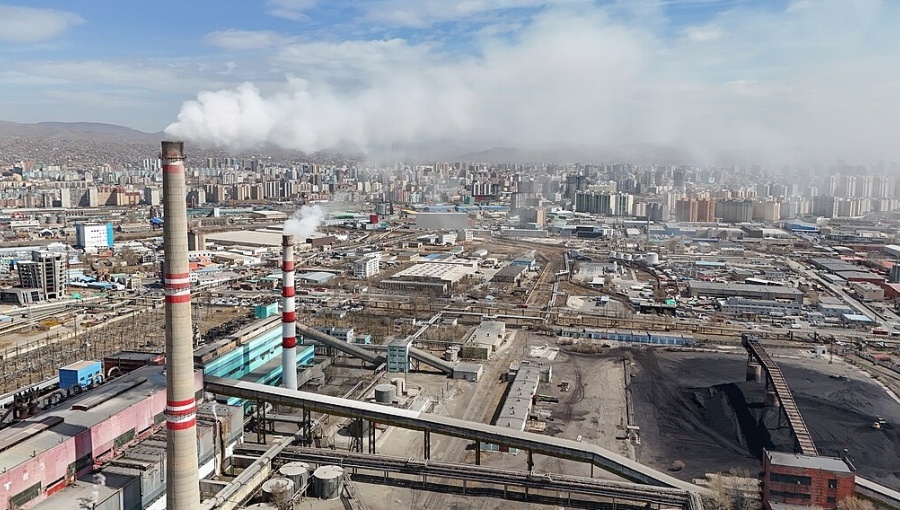
No. 3 Combined Heat and Power Plant is one of the leading pollutants in the Mongolian capital. / Quintin Soloviev, cc-by-sa 1.0
By Antonio Graceffo in Ulaanbaatar May 27, 2025

Summer in Mongolia reveals a vast land of beauty—green steppes stretch beneath expansive blue skies, herds of livestock graze freely and horse-mounted herders ride clad in traditional dels. But when winter arrives, especially in the capital, Ulaanbaatar, the scene changes dramatically. A dense black haze blankets the city. Visibility drops, eyes and throats burn, breathing becomes difficult, and people, especially children, fall ill and die.

This seasonal crisis arrives given the smoke pouring from burning coal. Approximately 55% of Ulaanbaatar’s 1.6mn residents live in gers, traditional felt-covered tent-houses, located in the sprawling ger district on the city’s periphery. Without access to the centralised Soviet-era heating system available to apartment dwellers, these households burn coal to survive sub-zero temperatures. On average, a ger consumes five tonnes of coal each winter. And many residents, facing economic hardship, resort to burning any available material, including plastic, tyres or banned raw coal. For them, heat is a matter of survival.

The city’s topography worsens the problem. Located in a basin surrounded by mountains, Ulaanbaatar suffers from the trapping of emissions from power plants, vehicles and household stoves beneath a stagnant layer of air. In winter, PM2.5 concentrations, made up of tiny particulate matter that can enter the bloodstream, have been measured at 27 times the level considered safe by the World Health Organization (WHO).

When an inhabited area is located in a basin surrounded by mountains, in smog season the environs trap emissions beneath a stagnant layer of air (Credit: Bundesarchiv, Bild 183-1989-1218-003 / CC-BY-SA 3.0).

Children are especially vulnerable. Their faster breathing rates and smaller lungs make them more susceptible to pollution-related diseases. Cases of respiratory illness continue to rise steadily. Pneumonia remains the second leading cause of death among children under five in Mongolia. According to local doctors, it is increasingly common for young children to be hospitalised multiple times before their first birthday due to recurring respiratory infections.

Recent research underscores the urgency. A 2024 study published in Environmental Research found that air pollutants, including PM2.5, ozone and sulfur dioxide, intensify the severity of viral infections. The study analysed over 16,000 influenza-related hospital visits in Ulaanbaatar and concluded that pollution exposure significantly amplifies viral risk, particularly in children under five. Short-term exposure alone was linked to increased hospitalisations.

This interaction between pollution and viral exposure compounds the health crisis in the ger district. Doctors and school health workers report that no child breathing Ulaanbaatar’s winter air escapes unscathed. One mother, Uyanga, whose five-month-old son was hospitalised with pneumonia and later developed a secondary infection, said she had no choice but to leave the city for three months, exhausting her family’s savings, in a desperate attempt to protect her children. All three of her children had been hospitalised with respiratory illnesses before their first birthday.

The health effects of Mongolia’s air pollution crisis are not limited to respiratory infections alone. A 2024 report by the Health Effects Institute and UNICEF ranked air pollution as the second leading cause of death for children under five globally, with Mongolia among the most affected countries. Prolonged exposure increases the risk of stillbirth, low birth weight, chronic bronchitis, impaired lung development and even neurological damage in young children.

Indoor air pollution, particularly from the coal stoves used in gers, is a critical but often overlooked factor. While Ulaanbaatar’s outdoor smog draws international attention, many children are also breathing dangerously polluted air inside their homes and classrooms. In winter, with homes sealed against the cold, toxic particles from indoor stoves can accumulate to lethal concentrations. The problem is exacerbated by limited ventilation and the use of low-quality fuel, including toxic or banned coal.

A major birth cohort study published in Scientific Reports in January highlighted the cumulative impact of household air pollution (HAP) on child health. Tracking more than 1,200 children in Ulaanbaatar over three years, researchers found that even modest increases in HAP exposure were linked to higher rates of pneumonia, developmental delays and growth deficits, including reduced height and weight-for-age scores. The effects were most pronounced in the first year of life but persisted through 36 months. The findings show that HAP is not only a respiratory hazard but also a serious developmental risk, contributing to stunting, underweight conditions, and neurodevelopmental impairment. With millions of children across Mongolia and neighbouring Central Asian countries exposed to similar conditions, the study carries significant public health implications.

Government attempts to mitigate the crisis have fallen short. The 2019 shift from raw coal to compressed briquettes briefly improved air quality, but the gains have since plateaued. The briquettes are now linked to increased carbon monoxide poisonings, with over 800 deaths reported since their introduction. Many households attempted to switch to electric heaters but quickly abandoned them due to unaffordable electricity costs.

Public frustration has grown. In early 2025, a petition demanding a formal review of air quality policies gained 71,000 signatures in just three hours, prompting a rare parliamentary hearing. Among the signatories was Enkhuun Byambadorj, a 23-year-old activist whose mother’s illness spurred her into action. “The government has looked at this issue from only one perspective,” she said, calling instead for a “holistic, cross-sector” approach. Such an approach is essential because the problem is not only complex but also expensive to solve, and many seemingly obvious solutions end up creating new problems.

City officials have announced limited measures. Deputy Governor Amartuvshin Amgalanbayar stated that 20,000 households would transition to gas heating, aiming for a 15% reduction in emissions. However, the plan would require sustained gas supplies year after year, and even with a 15% cut, pollution levels would remain dangerously high. Another 20,000 families are slated to move from the ger district into apartments beginning from this year. The move eliminates their need to burn coal. Yet this figure is small compared to the roughly 800,000 residents still living in gers.

Moreover, relocating large numbers of families to apartments creates additional problems. Water consumption rises sharply, with one average shower using more water than a ger household typically consumes in a week. Ulaanbaatar is already facing water shortages. The city’s ageing Soviet-era infrastructure, including its electrical and heating grids, is, meanwhile, already at or beyond capacity and could not support a mass transition to apartment living.

A long-delayed metro system for the capital, first proposed more than a decade ago, is scheduled for completion by 2028 and is expected to help reduce vehicle emissions, which contribute an estimated 30% of Ulaanbaatar’s air pollution. Still, many remain sceptical, noting that similar plans have repeatedly failed to materialise. Moreover, the metro is unlikely to serve the entire city, meaning most residents will continue relying on cars and buses for daily transportation.

Meanwhile, air quality monitoring remains severely under-resourced. Only two specialists are assigned to Ulaanbaatar’s monitoring stations, and funding is minimal. “If you heard the actual budget,” said one state meteorologist, “you would laugh.”

Ulaanbaatar’s pollution crisis is not new, but the scale of suffering, especially among children, is worsening rapidly. Each year, tens of thousands of Mongolians abandon nomadic herding and move to the capital in search of work, swelling the city’s ger population. Meanwhile, rising incomes have led to a surge in car ownership, adding to the already toxic air. Without effective solutions, conditions will continue to deteriorate, and more children will die.

Antonio Graceffo, PhD, China-MBA, is an economist and analyst. He has spent over 20 years living in Asia, including seven years in China, three in Taiwan and four in Mongolia. He conducted post-doctoral studies in international trade at the School of Economics, Shanghai University, and holds a PhD from Shanghai University of Sport and a China-MBA from Shanghai Jiaotong University. Antonio has authored seven books on Asia, with a focus on the Chinese economy.

Ukraine risks €2bn EU funding cut over unmet reform benchmarks, EU trade relations in limbo

Ukraine risks €2bn EU funding cut over unmet reform benchmarks, EU trade relations in limbo
Kyiv has missed the deadline to make EU accession-related reforms, which risks seeing €2bn of funding go up in smoke. At the same time, import duty exemptions granted after the start of the war will expire on June 5 and no new regime has been put in place yet. / bne IntelliNews
By bne IntelliNews May 27, 2025

Ukraine risks losing up to €2bn in European Union financial support after missing four EU chapter reform targets required under the Ukraine Facility programme in the first quarter of the year, UBN reported on May 27. Kyiv has 12 months to rectify the omission after which the money will be lost if the reports are not made.

The threat of losing funding associated with Ukraine’s EU bid comes as Ukraine is also about to lose considerably more money indirectly earned from trading with the EU after exemptions to import duties and quotas to the EU market are due to expire on June 5.

The EU accession reform delays threaten both the timing and total amount of the next disbursement, which will make funding a long war against Russia much harder.

The European Commission is tightening the conditions surrounding its funding of Ukraine and has introduced a new tranche-based system where each reform indicator is linked to defined monetary reward. As a result, failure to meet specific conditions triggers automatic penalties and a reduction in the amount of funds distributed. If Ukraine does not resolve the outstanding issues with the missing reforms, it may receive only €2.5bn of the planned €4.5bn tranche.

“If the non-fulfilment of obligations is officially acknowledged, Ukraine will be granted an additional 12 months to meet the indicators; otherwise, any unused resources will be lost,” UBN reports.

The Ukraine Facility and the European Union’s Extraordinary Revenue Acceleration (ERA) mechanism, backed by profits from Russia’s $300bn in frozen central bank funds, have collectively disbursed €4.26bn to Ukraine so far. Of this, €3.1bn has been transferred under the Ukraine Facility, while €1bn has been channelled through the ERA. In parallel, the World Bank has provided a $50mn loan under the THRIVE initiative to support Ukraine’s recovery efforts.

The delayed compliance with required benchmarks has already affected the timeline for future disbursements under the Ukraine Facility. Analysts have warned that prolonged delays may compound fiscal pressures on Ukraine’s government, which is reliant on external aid to finance public services and maintain macroeconomic stability.

Ukraine is expecting international donors to provide circa $38bn this year, on a par with previous years, but the Ministry of Finance (MinFin) is expecting international aid to more than halve as soon as next year.

“Each of these indicators now has a monetary equivalent,” said a person briefed on the Commission’s revised disbursement rules. “Consequently, not meeting specific conditions leads to an automatic decrease in funds that are issued.”

The Ukraine Facility programme, launched in 2023, forms a central part of the EU’s long-term financial commitment to support Ukraine’s reconstruction and reform agenda.

EU accession veto

Ukraine’s bid to join the EU is plagued with problems, due to Hungary’s stringent objections to its membership. Hungarian Prime Minister Viktor Orban has mounted a vigorous campaign to block Ukraine’s accession, saying the EU “cannot afford” to admit Ukraine.

In theory all 27 EU member states have to approve Ukraine’s bid and pass each of the chapters as they are fulfilled by Ukraine. However, EU foreign policy chief and former Estonian Prime Minister Kaja Kallas said earlier this month that the EC has a “plan B” to avoid the need for unitary approval and Hungary’s de facto veto.

In effect, Kallas is proposing to launch the negotiations and approve those parts that don’t need unitary approval, while dodging the EU approval process for those that do by conducting bilateral negotiations with all 26 member states and Ukraine. While the latter does not lead to agreements that have any legal weight, the hope is progress can be made in the negotiations that will isolate Hungary and increase the political pressure on Budapest to eventually approve the process formally within the EU structures. Orban faces elections in 2026, which he will probably win, according to current polls, and then again four years after that.

The first cluster of Ukraine's EU accession negotiations is due to open this summer. One of the sticking points is Hungary’s concerns about the rights of a large Hungarian minority that lives in the west of Ukraine close to its EU border.

Before the EU Council on Foreign Affairs meeting, European Commissioner for Enlargement Marta Kos said last week: "Ukraine has done its homework, therefore it is ready to open the first cluster of fundamental provisions. Now the Council has all the elements to make a decision."

She reported that last week the EC submitted two additional screenings on the second and sixth clusters for Ukraine and Moldova to the EU Council.

"If we continue at the same speed as before, we will be able to conduct all screenings by autumn," said the European Commissioner.

Regarding Hungary's blockage of the opening of negotiations due to its issues with treatment of national minorities, she stressed that the protection of minorities is a fundamental and important aspect for the EU.

"This is a very important part of the negotiations. That's why, in my opinion, it would be very good if we could open the first cluster, which would give Hungary the opportunity to solve the problems it has regarding its minority in Ukraine," Kos explained.

Trade deal in confusion

Ukraine’s trade relations are also in a mess. Following the start of the war with Russia in 2022, the EU temporarily suspended all duties and quotas laid out in the Deep and Comprehensive Free Trade Areas (DCFTA) that had been signed previously. However, that exemption is due to expire on June 5 and should mean a return to the extremely restrictive conditions on Ukraine trade – most agricultural products – with the EU.

While European Commission President Ursula von der Leyen last year proposed a temporary trade regime be put in place on June 6, no work on the regime has been done. With only a week to go before the deadline, Ukraine’s producers still have no idea what the new trade regime will look like.

The problem is that to pass a resolution on a temporary trade regime, Poland’s vote is needed and Poland is in the midst of a very tight run race to choose a new president. Agricultural workers make up a decisive constituency and farm workers and truck drivers have protested against the open border trade policies of the EU, which they claim are wrecking their sectors. Polish protesters have mounted numerous protests and blocked the Ukraine-Polish border crossings on many occasions.

Polish Prime Minister Donald Tusk, who is currently also the chairman of the European Council until July, has been outspoken on the issue, saying that Warsaw supports Ukraine politically in its struggle with Russia, but “not at the expense of the Polish agricultural workers.” Poland is pushing for the DCFTA restrictions to be reimposed after chap Ukrainian grain exports wrecked the Polish grain market last year.

The political tensions have paralysed the Polish government, which is reluctant to tackle the issue of revising Ukraine’s trade deal until after the elections pass; the deciding second round vote for president will happen on June 1.

A lot is at stake. Currently only seven products are still subject to EU restrictions, but that will be increased to 30 – most of Ukraine’s best money-makers – if the trade agreement reverts to its previous pre-war DCFTA rules.

The European Commission has adopted a list of transitional measures for Ukrainian exports to the EU, said EC spokesman Balazs Ujvari, but no details have been released. The transitional arrangements will remain in place as long as necessary to adjust the DCFTA, which has been in effect between Ukraine and the EU since 2016, Ujvari noted.

Currently, the existing autonomous trade measures need to be renewed annually. "Instead, we are looking for more long-term solutions. Negotiations on this are ongoing – how to revise and modernize this agreement, make it more modern," he added.

In the meantime, starting in June, the EU will reinstate quotas for Ukrainian agricultural imports and begin a new round of negotiations to draw up a new exemption deal after the Polish elections are over. However, the reimposition of duties will badly affect Ukraine’s export revenues at a time when it is already running a €20bn trade deficit with the EU, while its corn exports, the biggest export category, are under pressure due to lower US corn prices.

Both Kyiv and Brussels hope to conclude the negotiations on balanced trade conditions by the end of July, but confusion will rein in the interim period.

FASCIST FRIENDS OF A EATHER...

Argentina intelligence plan could target journalists and government critics

Argentina intelligence plan could target journalists and government critics
Just hours after the plans was revealed, Milei posted on X that "Journalism (90%) [are] the biggest creators of fake news in the history of mankind," echoing anti-press sentiments of US President Donald Trump.
By Mathew Cohen May 27, 2025

Argentina's State Intelligence Secretariat (SIDE) has approved a National Intelligence Plan that could permit agents to gather intelligence on journalists, economists, academics, and other government critics, investigative journalist Hugo Alconada Mon reported in La Nación.

The 170-page document, designed in late 2024 under SIDE director Sergio Neiffert, contains "generalisations, grey areas and ambiguities" that would allow the targeting of anyone who "erodes" public trust in security officials or "generates loss of trust" in government economic policies, according to Alconada Mon's report.

The plan reportedly fails to distinguish between foreign intelligence threats and legitimate critics, including press members and subject experts who may "manipulate" public opinion or spread "disinformation" during elections.

President Javier Milei's communications office denied the accusations. However, hours after publication, Milei posted on X that "Journalism (90%) [are] the biggest creators of fake news in the history of mankind," echoing anti-press sentiments of US President Donald Trump.

Following his report, Alconada Mon said unidentified hackers attempted to compromise his WhatsApp account ten times and his X account once.

This controversy highlights growing tensions between the Milei administration and media critics, raising concerns about press freedom and government surveillance capabilities. Last year, Milei restructured Argentina's state news agency, TĆ©lam, into an advertising agency, triggering widespread protests by media workers. 

The intelligence plan emerges amid a broader campaign by Milei against Argentina's media establishment, just as the country grapples with economic challenges that have intensified political polarisation. The libertarian president has increasingly targeted journalists under the slogan "People don't hate journalists enough", whilst his cabinet members have followed suit with similar statements.

Economy Minister Luis Caputo recently claimed that journalism "is a profession that tends to disappear", whilst presidential adviser Santiago Caputo has been accused of intimidating photographers covering political events. This rhetoric has coincided with a dramatic increase in physical attacks on journalists, including recent incidents where reporters covering pensioner protests have been struck by tear gas canisters and threatened by unidentified assailants.

The escalation in anti-media rhetoric marks a stark departure from Milei's previously symbiotic relationship with the Argentine press. Before assuming the presidency, the flamboyant libertarian built his political career through frequent appearances on television and radio programmes, deftly leveraging media exposure to secure first a congressional seat and later the Casa Rosada. But since taking office, Milei has severely restricted media access, granting interviews almost exclusively under tightly controlled conditions from the presidential palace.

Meanwhile, the Argentine Journalism Forum has warned of "an escalation of attacks on journalists promoted by the country's highest authority", noting a 53% increase in press attacks in 2024 compared to the previous year, with digital harassment accounting for nearly half of all incidents.

And NGO Reporters Without Borders (RSF) delivered a scathing assessment in its latest report, warning that “In Argentina, President Javier Milei stigmatised journalists, dismantled public media outlets, and used state advertising as a political weapon,” the report states.

The South American nation has tumbled 47 places to 87th out of 180 countries in RSF's annual press freedom ranking since Milei assumed the presidency in December 2023.


BLOG: Efforts to tackle methane emissions continue, despite Trump’s regulatory rollback

BLOG: Efforts to tackle methane emissions continue, despite Trump’s regulatory rollback
By Newsbase May 25, 2025

The Trump administration’s Unleashing American Energy agenda has resulted in significant deregulation, including the rollback of some requirements for US oil and gas operators to curb their methane emissions – methane being, by some methodologies, 84 times more potent a greenhouse gas (GHG) than CO2. This has raised concerns among environmentalists, who fear that progress in addressing methane emissions may be slowing or even reversing.

However, after speaking with operators and the companies and organisations assisting them with methane monitoring and abatement, NewsBase finds this concern is not borne out in practice. Momentum behind improved methane monitoring, quantification, and mitigation continues to build in the US – even without the same regulatory pressure. This has important implications for the emissions profile of US LNG, which matters greatly given the country’s role as the world’s largest exporter of the fuel.

While the oil and gas industry is not the main source of anthropogenic methane emissions – that distinction belongs to agriculture – there is broad consensus that oil and gas offers the most immediate, cost-effective opportunities for reductions. In contrast, tackling agricultural emissions would require drastic lifestyle changes by food consumers. According to 2021 estimates by the UN Environment Programme (UNEP), oil and gas accounts for 23% of human-caused methane emissions, compared with 40% from agriculture, primarily livestock, 20% from waste and 12% from coal mining.

Methane reductions in oil and gas can be achieved through improved monitoring and quantification, using tools such as laser imaging detection and ranging (LIDAR) cameras, sensors mounted on drones, vehicles or aircraft and increasingly advanced satellite technologies. Such monitoring – combined with data analytics and AI – can accelerate leak detection and repairs or enable predictive maintenance to prevent leaks altogether. Equipment design and operational changes can also help minimise emissions, including avoiding routine methane venting.


Carrot or stick

When it comes to tackling methane emissions – or any environmental issue – companies typically respond to either regulation (the “stick”) or pressure from investors and customers (the “carrot”).

In the US, regulation of methane emissions has historically been relatively limited, especially compared to other major oil and gas producers such as Canada, Norway or the UK. Yet this did not prevent operators from taking action. Fifteen years ago, methane was barely mentioned in boardrooms, as one executive told NewsBase. That began to change around a decade ago. Ironically, it was during the early years of Donald Trump’s first term, starting in 2016, that methane reduction efforts began to gain real traction. With limited regulatory pressure, operators were instead pushed by environmentally-conscious investors and customers.

In 2019, Denver-based Project Canary launched its TrustWell certification, which assesses natural gas production based on operators’ standards for monitoring and minimising methane emissions. The following year, the non-profit MiQ was launched by the Rocky Mountain Institute and SYSTEMIQ, grading gas on emissions intensity, monitoring frequency and abatement practices. The goal was to create commercial incentives for emissions reduction – certified “cleaner” gas could command a premium in the market. Today, MiQ certifies more than 5% of global gas production, most of it in the US.

Internationally, UNEP and the Climate and Clean Air Coalition (CCAC) launched the OGMP 2.0 framework in 2014, which sets a “gold standard” for transparent methane reporting and targets a 60-75% reduction in oil and gas emissions by 2030. The number of companies achieving this benchmark continues to grow. Then there are industry-led initiatives like the Oil and Gas Climate Initiative (OGCI) – a coalition of 12 major oil and gas producers – has already more than halved its upstream methane emissions. In 2023, OGCI launched the Oil & Gas Decarbonisation Charter (OGDC) to promote this success across the broader global industry. OGCI now has over 55 signatories, including leading national oil companies.


Regulatory rollback

Under President Biden, the US introduced a significant regulatory measure: a methane emissions fee applicable to all oil and gas facilities emitting more than 25,000 tonnes of CO2-equivalent methane annually. The fee was set to start at $900 per tonne in 2024, rising to $1,200 in 2025 and $1,500 by 2026.

But in early 2025, the Republican-controlled Congress repealed the EPA’s rule implementing the fee. Combined with further deregulation via executive order, this rollback sparked fears that operators would ease their emissions-reduction efforts.

Yet evidence on the ground suggests otherwise. Companies supporting the industry with methane monitoring and abatement services report that demand remains strong and is even getting stronger. Investor pressure continues – especially from those looking to prepare assets for sale or conducting due diligence prior to acquisition, with emissions profiles remaining a key consideration in the purchase price.

In Europe – the largest market for US LNG – buyers remain highly focused on the methane intensity of imported gas. And with the EU planning to apply methane performance standards to all imported gas in the coming years, this pressure is unlikely to ease. That said, Brussels may ultimately soften its stance on US gas imports, particularly given Trump’s vocal opposition to such regulation.

Japan, the world’s second-largest LNG importer, also remains committed to reducing the emissions footprint of its gas supplies – reinforcing the need for US producers to maintain progress on methane reduction.

US operators are also acutely aware that methane regulations could return if the Democrats regain the presidency in 2028. Continuing voluntary compliance is seen as prudent to avoid costly catch-up measures should regulations be reintroduced.

In summary, US efforts to reduce methane emissions have largely been driven by market and stakeholder pressure rather than regulation to date. And despite the current regulatory rollback, these efforts appear to be holding firm.


BERTRAND: Indonesian President Prabowo hails China as the new moral leader of geopolitics

BERTRAND: Indonesian President Prabowo hails China as the new moral leader of geopolitics
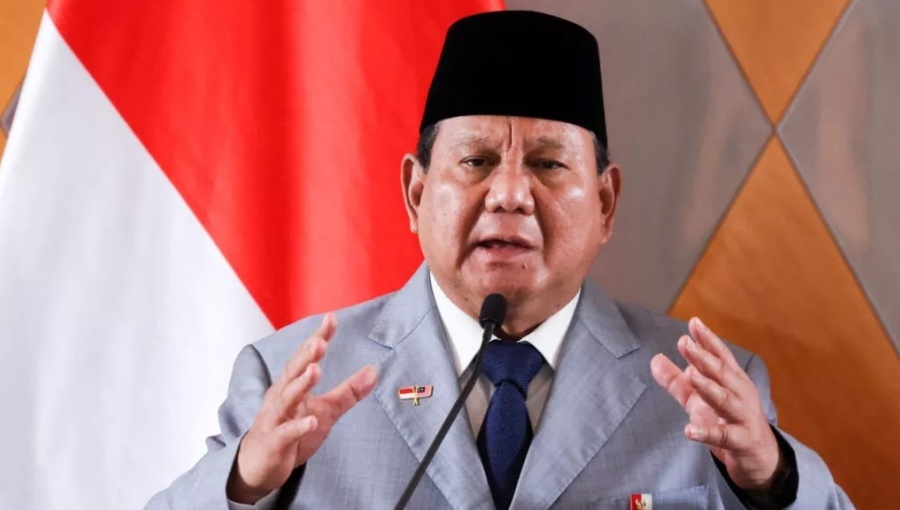
In a sign of China's growing influence and the deepening rift between the West and the Global South, Indonesian President Prabowo has hailed Beijing as the new "moral leader" of the world in a speech. / bne IntelliNews
By bne IntelliNews May 26, 2025

President Prabowo Subianto has hailed Indonesia’s deepening ties with China, calling it a “pillar of peace and prosperity” in the Southeast Asia region, in an implicit rebuke of western “imperialism and colonialism.” The speech highlights the deepening rift between the West and the Global South, where China is increasingly seen as the guarantor of independence and a moral authority.

There is no overstating how extraordinary this speech (video) on China by President Prabowo is, especially if you know Indonesia's history during the Cold War, and Prabowo's personal history as a US-trained military officer, one of Suharto's most feared generals and his son-in-law.

He was speaking on the occasion of the visit of Li Qiang, China's Premier, and praised China's "constant opposition to oppression, imperialism, colonialism and apartheid", and "not just now when China's economy has become strong, but even when China was still developing."

Everyone should read the "The Jakarta Method" by Vincent Bevins to learn more about Indonesia's role during the Cold War.

But as a quick summary, Indonesia began the Cold War as a leader of the Non-Aligned Movement – Sukarno hosted the famous 1955 Bandung Conference that brought together Asian and African countries seeking a "third way" between the US and the Soviet Union.

However, in 1965-66 General Suharto seized power from Sukarno and immediately launched one of the Cold War's bloodiest purges. With US and British support and using CIA-provided kill lists, Suharto systematically slaughtered an estimated 500,000 to over 1mn suspected communists, leftists and ethnic Chinese. Suharto then remained in power for the next three decades as the most consequential US ally in Southeast Asia.

Which is why now hearing Prabowo, a general under Suharto and his son-in-law, praising China's anti-imperialist record, including "when China was still developing" (meaning during the Cold War), is so remarkable.

You could, of course, cynically point out that this is hypocritical given Prabowo's past. But first and foremost it goes to show how completely the geopolitical landscape has been transformed since the Cold War, and therefore how unlikely it is to see a replay of the same dynamics in Asia.

Very striking too is how Prabowo singles out China's defence of Palestinians as a source of pride "for us all" – quite a statement from the leader of the world's largest Muslim nation. It is an illustration of the US's complete failure to create a rift between the Muslim world and China with the Xinjiang narrative.

In fact, it illustrates that the rift is very much between the Muslim world – as well as the Global South in general – and the West.

China is increasingly seen as the moral leader on issues that matter, the "defender of the oppressed", when the West is seen as the imperialist oppressor.


Arnaud Bertrand is an entrepreneur and China analyst. Can be found on X @RnaudBertrand. Bertrand founded HouseTrip, a leading European vacation rental marketplace, and is founder and CEO of Me & Qi, a premier English-language platforms for Traditional Chinese Medicine. He is also a graduate and honorary professor of Founder & CEO of Me & Qi, one of the premier English-language platforms for Traditional Chinese Medicine. He is also a graduate and honorary professor of Ecole HÓtelière de Lausanne in Switzerland.


BERTRAND: US criminalises using non-US AI microchips anywhere in the world

BERTRAND: US criminalises using non-US AI microchips anywhere in the world
Any company using any non-American chip to run AI software anywhere in the world is open to criminal prosecution or sanctions, according to new US export restrictions. / bne IntelliNews
By Arnaud Bertrand in Switzerland May 23, 2025

Anyone, anywhere using Huawei Ascend chips could be prosecuted for violating US export restrictions according to new rules issued by the White House in May.

A Chinese company using a 100% Chinese designed and manufactured chip, in China, and having nothing to do with the rest of the world whatsoever, would be violating US export restrictions under the new rules and so subject to sanctions and/or criminal prosecution. So, you better stick to US AI chips. At least that is the idea behind the new rules.

At the same time anyone, anywhere using US AI chips (Nvidia) to deploy a Chinese Large Language Learning Model also faces "consequences" for not running US software on the chips.

The upshot? Practically speaking, you're only allowed to use Nvidia chips, and you're only allowed to run American AI models on it. Everything else is outlawed.

This is the most insane part of the new US export controls. If you're a Chinese company, in China, with zero relations to the US and you buy Huawei Ascend chips, then you're held criminally liable for doing so under US extraterritorial law.

Those “consequences” include:

You get added to the Entity List, which effectively means you get completely cut-off from international financial systems as global banks refuse to process your transactions out of fear of violating US sanctions. You also get completely cut-off from future access to any US-linked technology, software, or services.

Potential sanctions on the company executives, jail time if they travel to the wrong country, etc.

What this means is that China's only strategic option here is to accelerate tech and financial decoupling from the U.S. so that these sanctions have no bite anymore.

Will this ultimately work out in the US's favour? It's far from certain: in seeking to cut off the world's - including China's - access to Huawei products, they might ultimately cut themselves off from the world as China responds by building alternative ecosystems that bypasses them.

The previous attempt to impose exports controls on technology sold to China – that included the threat of nixing the passports of any US technician that works for a Chinese company in China – have failed, according to study by the Federal Reserve Bank of New York.

US export controls on technology exports to China have backfired, hurting US technology companies, and have been unsuccessful in cutting China off from the technology, thus driving innovation in China’s technology sector, according to the report.

Arnaud Bertrand is an entrepreneur and China analyst. Can be found on X @RnaudBertrand. Bertrand founded HouseTrip, a leading European vacation rental marketplace, and is founder and CEO of Me & Qi, a premier English-language platforms for Traditional Chinese Medicine. He is also a graduate and honouree professor of Founder & CEO of Me & Qi, one of the premier English-language platforms for Traditional Chinese Medicine. He is also a graduate and honorary professor of Ecole HÓtelière de Lausanne in Switzerland.


Weekend protests renew pressure on Serbian government

Weekend protests renew pressure on Serbian government
Thousands of demonstrators marched in cities across Serbia over the weekend. / Kreni Promeni via X
By Tatyana Kekic in Belgrade May 25, 2025

Thousands of demonstrators marched in cities across Serbia again this weekend, demanding early parliamentary elections amid simmering public anger over corruption.

In the capital Belgrade, protesters gathered on May 25 under the slogan “Be careful who you choose”, continuing a student-led movement that has grown into one of the country’s largest waves of civil unrest in over two decades. Parallel demonstrations took place in Zaječar on Saturday and in Novi Sad and Kragujevac on Sunday.

The student-led protests were ignited by the collapse of a canopy roof at Novi Sad’s newly-renovated train station in November 2024, which killed 16 people. The incident was widely attributed to corruption and cronyism in the awarding of public contracts, sparking outrage and demands for accountability.

The movement builds on years of growing frustration with the government, following the mass shootings of May 2023, contested parliamentary and local elections in December 2023 and mass environmental protests against lithium mining between 2021 and 2024.

Despite the government’s recent efforts to mollify dissent through various arrests, a cabinet reshuffle and promises of public sector wage and pension increases, demonstrators have remained defiant. Student organisers have called for snap elections, saying the current administration lacks legitimacy, and have elected a university rector, Vladan Đokić, to head their electoral list.

Former Prime Minister Milos Vucevic resigned in January amid mounting protests. His successor, Djuro Macut—an endocrinologist with no prior political experience—retained most members of the previous cabinet, in a move widely interpreted as an effort by President Aleksandar Vucic to maintain control without conceding to protest demands.

Several senior officials have dismissed the idea of early elections. However, if protests continue, Vucic may ultimately see early polls as a means to re-legitimise his government and sap the momentum of the protest movement. No parliamentary elections are currently scheduled until 2027.

While the size of the protests has declined from their peak earlier this year, student groups continue to deploy new tactics to maintain public interest. Whether Vucic will risk an early vote remains uncertain. But with crowds continuing to take to the streets, Serbia’s volatile political climate shows little sign of calming.


Secrets Of The Mysterious Gobi Wall Uncovered

Excavation at G05 at area. (Credit_ M. Ullman)

By 

New study reveals that the Gobi Wall—an extensive, little-understood structure in the Mongolian desert—was not merely a defensive barrier but a sophisticated tool of imperial strategy during the Xi Xia dynasty (1038–1227 CE).


Constructed primarily from rammed earth, stone, and wood, the wall and its associated garrisons were deliberately placed to manage frontier movement, regulate trade, and assert territorial control, all while adapting to the harsh ecological and geographic realities of the region. This research reframes the Gobi Wall as a multifunctional infrastructure that played a central role in the geopolitical and environmental landscape of medieval Inner Asia.

A new study led by Professor Gideon Shelach-Lavi and Mr. Dan Golan, archaeologists from the Department of Asia Studies at the Hebrew University of Jerusalem. The study, which was conducted in Mongolia in cooperation with Prof. Chunag Amartuvshin from the National University of Mongolia and Prof. William Honeychurch, from Yale University, sheds new light on one of the least understood segments of medieval Inner Asian infrastructure: the Gobi Wall.

Stretching 321 kilometers across the highland deserts of Mongolia, the Gobi Wall is part of an extensive wall system that once spanned from China into Mongolia. Until now, its origins, function, and historical context remained largely unknown. Through an ambitious international expedition combining remote sensing, pedestrian surveys, and targeted excavations, Professor Shelach-Lavi and his team have uncovered compelling new evidence about the wall’s construction and purpose.

The study reveals that the wall and its garrison complexes were primarily constructed during the Xi Xia (1038–1227 CE), a dynasty ruled by the Tungut tribe of Western China and Southern Mongolia. This period marked by the expansion of frontier defense systems amid significant geopolitical transformations. Contrary to the traditional view of such walls as solely defensive structures, the research highlights the Gobi Wall’s multifunctional role in boundary demarcation, resource management, and the consolidation of imperial control.

While the main phase of construction and occupation belongs to the Xi Xia, the expedition reviled evidence of periodic occupation of this remote area from the 2nd century BCE through the 19th century CE, with layers of artifacts pointing to the wall’s long-term strategic significance. The fortifications were made of rammed earth, supported by stone and wood reinforcements, illustrating the adaptive use of local materials in this arid, remote environment.


Moreover, the study’s ecological and spatial analysis shows that the wall’s route was carefully selected based on resource availability, particularly water and wood. The placement of forts and garrisons took advantage of natural geographic features such as mountain passes and sand dunes to enhance the wall’s effectiveness.

“This research challenges long-standing assumptions about imperial frontier systems in Inner Asia,” said Prof. Shelach-Lavi. “The Gobi Wall was not just a barrier—it was a dynamic mechanism for governing movement, trade, and territorial control in a challenging environment.”

The findings offer critical insights into the interplay between environmental adaptation and state power in medieval empires, with broader implications for understanding ancient infrastructure and its legacy on today’s political and ecological landscapes.


Eurasia Review

Eurasia Review is an independent Journal that provides a venue for analysts and experts to disseminate content on a wide-range of subjects that are often overlooked or under-represented by Western dominated media.


New Verification Framework Uncovers Safety Lapses In Self-Driving System Autoware

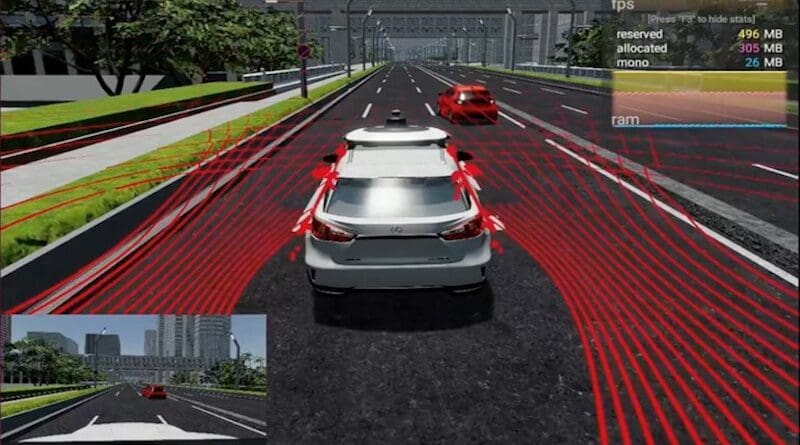
Image title: A scene from the cut-in scenario.  Image caption: A simulated traffic scenario from the experiments with Autoware, where a red car in the adjacent lane cuts into the path of the autonomous vehicle. Image credit: Duong Dinh Tran from JAIST.

By 

Imagine a future where you can sit back and relax while your car drives you safely to your destination. Self-driving cars promise this convenience, but before we fully embrace this technology, one crucial question remains: Can we truly trust them to handle anything the road throws their way?


In this view, Research Assistant Professor Duong Dinh Tran from Japan Advanced Institute of Science and Technology (JAIST) and his team, including Associate Professor Takashi Tomita and Professor Toshiaki Aoki at JAIST, decided to put the open-source autonomous driving system, Autoware, through a rigorous verification framework, revealing potential safety limitations in critical traffic situations. To thoroughly check how safe Autoware is, the researchers built a special virtual testing system. This system, explained in their study published in the journal IEEE Transactions on Reliability, acted like a digital proving ground for self-driving cars.

Using a language called AWSIM-Script, they could create simulations of various tricky traffic situations—real-world dangers that car safety experts in Japan have identified. During these simulations, a tool called Runtime Monitor kept a detailed record of everything that happened, much like the black box in an airplane. Finally, another verification program, AW-Checker, analyzed these recordings to see if Autoware followed the rules of the road, as defined by the Japan Automobile Manufacturers Association (JAMA) safety standard. This standard provides a clear and structured way to evaluate the safety of Autonomous Driving Systems (ADSs).

Researchers focused on three particularly dangerous and frequently encountered scenarios defined by the JAMA safety standard: cut-in (a vehicle abruptly moving into the ego vehicle’s lane), cut-out (a vehicle ahead suddenly changing lanes), and deceleration (a vehicle ahead suddenly braking). They compared Autoware’s performance against the JAMA’s “careful driver model,” a benchmark representing the minimum expected safety level for ADSs.

These experiments revealed that Autoware did not consistently meet the minimum safety requirements as defined by the careful driver model. As Dr. Tran explained, “Experiments conducted using our framework showed that Autoware was unable to consistently avoid collisions, especially during high-speed driving and sudden lateral movements by other  vehicles, when compared to a competent and cautious driver model.”

One significant reason for these failures appeared to be errors in how Autoware predicted the movement of other vehicles. The system often predicted slow and gradual lane changes. However, when faced with vehicles making fast, aggressive lane changes (like in the cut-in scenario with high lateral velocity), Autoware’s predictions were inaccurate, leading to delayed braking and subsequent collisions in the simulations.

Interestingly, the study also compared the effectiveness of different sensor setups for Autoware. One setup used only lidar, while the other combined data from both lidar and cameras. Surprisingly, the lidar-only mode generally performed better in these challenging scenarios than the camera-lidar fusion mode. The researchers suggest that inaccuracies in the machine learning-based object detection of the camera system might have introduced noise, negatively impacting the fusion algorithm’s performance.

These findings have important real-world implications, as some customized versions of Autoware were already deployed on public roads to provide autonomous driving services. “Our study highlights how a runtime verification framework can effectively assess real-world autonomous driving systems like Autoware. Doing so helps developers identify and correct potential issues both before and after the system is deployed, ultimately fostering the development of safer and more reliable autonomous driving solutions for public use,” noted Dr. Tran.

While this study provides valuable insights into Autoware’s performance in specific traffic disturbances on non-intersection roads, the researchers plan to expand their work to include more complex scenarios, such as those at intersections and involving pedestrians. They also aim to investigate the impact of environmental factors like weather and road conditions in future studies


Eurasia Review

Eurasia Review is an independent Journal that provides a venue for analysts and experts to disseminate content on a wide-range of subjects that are often overlooked or under-represented by Western dominated media.