Sunday, October 12, 2025

Adults 65 Years And Older Not Immune To The Opioid Epidemic


By 

Overdose deaths in adults age 65 and older from fentanyl mixed with stimulants, such as cocaine and methamphetamines, have surged 9,000% in the past eight years, matching rates found among younger adults, according to research presented at the ANESTHESIOLOGY® 2025 annual meeting.

The study is among the first to use Centers for Disease Control and Prevention (CDC) data to show that older adults, a group often overlooked in overdose research, are part of the broader rise in fentanyl-stimulant overdose deaths. Adults 65 years and older are especially vulnerable to overdoses because many live with chronic health conditions, take several medications and process drugs more slowly due to age. 

The opioid epidemic has unfolded in four waves, each characterized by a different type of opioid driving the increase in overdose deaths: prescription opioids in the 1990s; heroin starting in 2010; fentanyl starting in 2013; and a mix of fentanyl and stimulants starting in 2015.

“A common misconception is that opioid overdoses primarily affect younger people,” said Gab Pasia, M.A., lead author of the study and a medical student at the University of Nevada, Reno School of Medicine. “Our analysis shows that older adults are also impacted by fentanyl-related deaths and that stimulant involvement has become much more common in this group. This suggests older adults are affected by the current fourth wave of the opioid crisis, following similar patterns seen in younger populations.”

Researchers analyzed 404,964 death certificates that listed fentanyl as a cause of death from 1999 to 2023, obtained from the CDC Wide-ranging Online Data for Epidemiologic Research (WONDER) system. Older adults (age 65+) represented 17,040 and younger adults (ages 25–64) represented 387,924 of the death certificates.

Overall, fentanyl-related deaths between 2015 and 2023 increased from 264 to 4,144 in older adults (1,470% increase) and 8,513 to 64,694 in younger adults (660% increase). The analysis revealed a growing number of fentanyl-stimulant related deaths, particularly among adults age 65 or older. Among this group, fentanyl-stimulant deaths rose from 8.7% (23 of 264 fentanyl deaths) in 2015 to 49.9% (2,070 of 4,144 fentanyl deaths) in 2023, a 9,000% increase. For younger adults, fentanyl-stimulant deaths increased from 21.3% (1,812 of 8,513 fentanyl deaths) in 2015 to 59.3% (38,333 of 64,694 fentanyl deaths) in 2023, a 2,115% increase.

The researchers highlighted data from these individual years because 2015 marked the onset of the fourth wave of the opioid epidemic and was also the year fentanyl-stimulant deaths among older adults were at their lowest, and 2023 as it was the most recent year of CDC data available.

The researchers noted that the rise in fentanyl deaths involving stimulants in older adults began to sharply rise in 2020, while deaths linked to other substances stayed the same or declined. Cocaine and methamphetamines were the most common stimulants paired with fentanyl among the older adults studied, surpassing alcohol, heroin and benzodiazepines such as Xanax and Valium.

“National data have shown rising fentanyl-stimulant use among all adults,” said Mr. Pasia. “Because our analysis was a national, cross-sectional study, we were only able to describe patterns over time — not determine the underlying reasons why they are occurring. However, the findings underscore that fentanyl overdoses in older adults are often multi-substance deaths — not due to fentanyl alone — and the importance of sharing drug misuse prevention strategies to older patients.”

The authors noted anesthesiologists and other pain medicine specialists should:

  • Recognize that polysubstance use can occur in all age groups, not only in young adults.
  • Be cautious when prescribing opioids to adults 65 or older by carefully assessing medication history, closely monitoring patients prescribed opioids who may have a history of stimulant use for potential side effects, and considering non-opioid options when possible.
  • Use harm-reduction approaches such as involving caregivers in naloxone education, simplifying medication routines, using clear labeling and safe storage instructions and making sure instructions are easy to understand for those with memory or vision challenges.
  • Screen older patients for a broad range of substance exposures, beyond prescribed opioids, to better anticipate complications and adjust perioperative planning.

“Older adults who are prescribed opioids, or their caregivers, should ask their clinicians about overdose prevention strategies, such as having naloxone available and knowing the signs of an overdose,” said Richard Wang, M.D., an anesthesiology resident at Rush University Medical Center, Chicago and co-author of the study. “With these trends in mind, it is more important than ever to minimize opioid use in this vulnerable group and use other pain control methods when appropriate. Proper patient education and regularly reviewing medication lists could help to flatten this terrible trend.”




william-s-burroughs-junky.epub | Are.na


Most people can’t tell the difference between AI and human voices, study finds

Speaking to AI voices, like virtual assistants, has become a common part of life.
Copyright Canva


By Amber Louise Bryce
Published on 


As AI becomes more enmeshed in our lives, most people can’t tell the difference between human voices and their synthetic clones, a new study reveals.

Artificial intelligence (AI) has become a common part of day-to-day life for many. We see it written in the AI slop on our social media feeds, speak to it using large language models, and hear it every time Amazon’s Alexa perks up at a demand. Yet, as the technology rapidly advances, it’s becoming harder to tell what’s real and what’s not. 

In a new study, published in the PLoS One journal, researchers found that most people can no longer distinguish between AI-generated voices and the human voices they were cloned from. 

Participants were given samples of 80 different voices, half of which were AI, the other human. They were then asked to rate what they heard based on levels of trustworthiness or dominance. 

Within the AI category, there were two different types: Generic voices created from scratch, and voices cloned from recordings of humans speaking. 

While most people recognised the generic AI was fake, the synthetically cloned versions proved less decipherable, with 58 per cent being mistaken for real. In comparison, 62 per cent of the real voices were correctly identified as being human, leaving only a slight difference between respondents’ ability to tell the two apart. 

“The most important aspect of the research is that AI-generated voices, specifically, voice clones, sound as human as recordings of real human voices,” Dr Nadine Lavan, the study's lead author and a senior lecturer in psychology at Queen Mary University of London, told Euronews Next. 

“That is particularly striking since we used commercially available tools, where anyone can create voices that sound realistic without having to pay huge amounts of money, nor do they need any particular programming or technological skills”.

Voicing concerns

AI voice cloning technology works by analysing and extracting key characteristics from voice data. Due to its ability to mimic so precisely, it’s become a popular tool for phone scammers, who sometimes use social media posts as a resource for imitating the voices of people’s loved ones. 

The elderly are most at risk, with at least two-thirds of people over the age of 75 receiving attempted telephone fraud, according to research by the University of Portsmouth. They also found that nearly 60 per cent of the attempted scams are conducted via voice calls.

Although not all of these calls will be made using AI, it’s becoming increasingly prevalent due to the software’s sophistication and accessibility, with popular examples including Hume AI and ElevenLabs. 

58 per cent of people who took part in the study mistook the AI-cloned voices for being real.
58 per cent of people who took part in the study mistook the AI-cloned voices for being real. Canva

AI-cloning has also become a cause for concern in the entertainment industry, where several celebrities' voices have been used without permission. Last year, Scarlett Johansson spoke out about OpenAI using a voice that sounded 'eerily similar' to her own in the film ‘Her’ for its ChatGPT service

Then there's the widespread use of audio deepfakes, which have previously mimicked politicians or journalists in attempts to sway public opinions and spread misinformation.  

As all these troubling misuses continue to permeate society, Lavan believes AI developers have a responsibility to implement stronger safeguards. 

“From our perspective as researchers, we would always recommend that companies creating the technology talk to ethicists and policy makers to consider what the ethical and legal issues are around, for example, ownership of voices, consent (and how far that can stretch in the face of an ever-changing landscape),” she said. 

Improving accessibility

As with all technologies, AI-generated voices also have the potential to be used for good - and could prove particularly beneficial for people who are mute or struggle to speak.    

“This kind of assistive technology has been in use for some time, with Stephen Hawking being one of the most iconic examples. What’s new, however, is the ability to personalise these synthetic voices in ways that were previously impossible,” said Lavan. 

“Today, users can choose to recreate their original voice, if that’s what they prefer, or design a completely new voice that reflects their identity and personal taste”.

She also noted that, if used ethically and responsibly, the technology could improve accessibility and diversity in education, broadcasting and audiobook production. 

For example, a recent study found that AI-assisted audio-learning boosted students' motivation and reading engagement - especially those with a neurodiversity like Attention Deficit Hyperactivity Disorder (ADHD).

“Another fascinating development is the ability to clone a voice into different languages, allowing people to represent themselves across linguistic boundaries while retaining their vocal identity. This could be transformative for global communication, accessibility, and cultural exchange,” Lavan added. 

As the sound of artificial voices becomes ever more present in our lives, the nuances with which we utilise and engage with them will continue to develop. Lavan hopes to explore this with further research, focusing on how AI-generated voices are perceived. 

“I'd be really keen to explore in more depth how whether someone knows whether a voice is AI-generated or not will change how they engage with that voice,” she said. 

“Similarly, it would be very interesting to see how people would perceive AI-generated voices that sound nice and pleasant but clearly not human: For example, would people be more or less likely to follow instructions from these pleasant, but non-human AI voices? Would people be more or less likely to get angry at them when something goes wrong? 

“All of these questions are really interesting from a research perspective and can tell us a lot about what matters in human (or human-computer) interactions,” she said.


Perceptions of tax fairness in Europe: Are the rich paying their way?

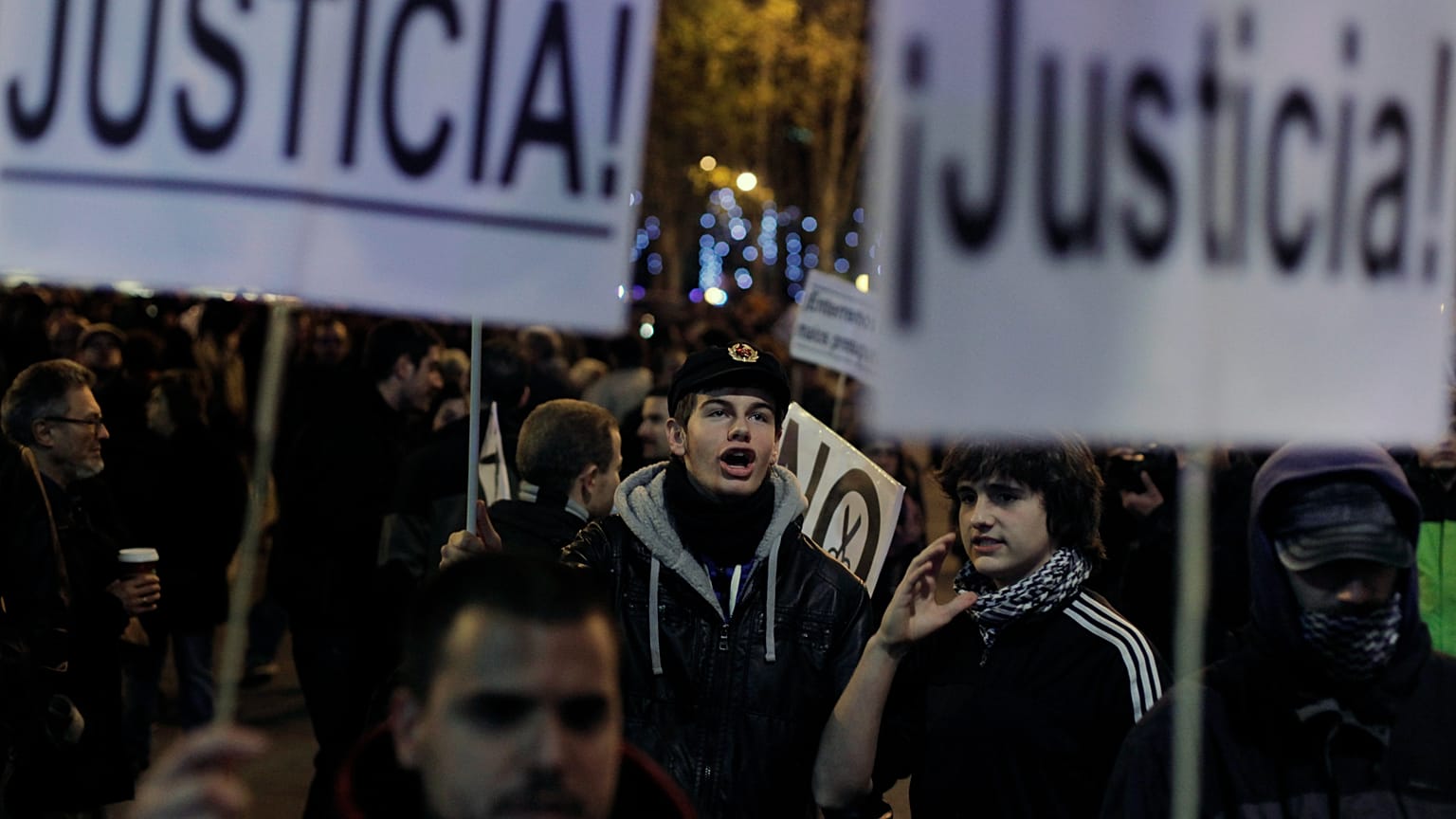
Protestors shout slogans as they hold banners reading 'Justice' during a demonstration against austerity measures and the approval of the budget for 2013 by the Spanish govern
Copyright Copyright 2012 AP. All rights reserved.


By Servet Yanatma
Published on 

Perceptions of tax fairness are generally higher in Nordic and Western European countries, while they tend to be lower in Eastern Europe. Experts attribute this gap to the quality of public services and the tax system’s capacity to redistribute wealth.

Taxes are an important way for governments to pay for public services like healthcare and education.

In 2023, the total taxes collected by all EU governments made up about 40% of the total value of goods and services produced, known as the tax-to-GDP ratio.

Yet despite the pivotal role of taxes, around one in four people in the EU believe that citizens in their country do "not at all" pay taxes in proportion to their income or wealth.

But how do views on tax fairness differ across Europe? A 2025 Eurobarometer study, which gathered responses from more than 25,000 people, asked citizens across the EU: "Do people pay taxes in proportion to their income and wealth in your country?”

Taxes are paid ‘to a large extent’ in line with wealth

Across the EU, one in five respondents said that this is the case ‘to a large extent’. The proportion of people who responded in this way ranges from just 8% in Latvia to 38% in Finland.

At least three in ten people in Luxembourg (36%), Denmark (32%), Austria (32%), Malta (31%), Germany (31%), and Greece (30%) also believe that people in their countries pay taxes ‘to a large extent’ in proportion to their income and wealth.

On the other hand, Lithuania, Poland, and Czechia (each 9%) are very close to Latvia, with few people responding to the question in this way.

Among the EU’s larger economies, Italy shows the lowest share for this view, at 12%. The perception is also below the EU average in Spain (17%) and France (19%).

Taxes are paid ‘to some extent’ in line with wealth

About half of respondents in the EU (51%) felt that people pay taxes ‘to some extent’ in proportion to their income and wealth. This share ranges from 33% in Hungary and Croatia to 59% in Cyprus. 

Most countries fall between 45% and 55%, meaning this answer is the most common in 23 out of 27 EU countries. The exceptions are Hungary, Croatia, Estonia, and Bulgaria, where the ‘not at all’ response is higher than ‘to some extent’.

Four countries stand out for strong ‘not at all’ responses

Around one in four people in the EU (24%) believe that citizens in their country do ‘not at all’ pay taxes fairly in proportion to their income and wealth. In four countries, almost half of respondents share this view: Hungary (50%), Croatia (48%), Estonia (47%), and Bulgaria (46%)

The next highest is Slovakia (38%), showing that these four stand out as an outlier group. Beyond them, more than three in ten people in Latvia and Lithuania (both 36%), Poland (33%), Portugal, Slovenia, and Czechia (each 32%) also feel that taxes are not collected fairly, as citizens do ‘not at all’ pay according to their income and wealth. 

Italy and Spain are close to this level as well, both at 39%.

In contrast, the two Nordic countries, Denmark (7%) and Finland (10%), record the lowest ‘not at all’ perception, both below 10%.

These results indicate clear geographical trends in how people perceive tax fairness. In general, Nordic and Western European countries express more positive views, while Southern European nations are more divided. In contrast, Eastern European EU members tend to see their tax systems as less fair. 

In the EU, 5% of respondents said they do not know, while the share of unsure answers reaches 9% in some countries.

What shapes people’s views on tax fairness?

“Where citizens perceive procedures as transparent and rules as applied equally to all, tax morale and voluntary compliance tend to be strong,” said economic psychology professor Erick Kirchler from the University of Vienna.

He noted that in countries such as Denmark and Finland, which consistently rank among the global leaders in governance and integrity, citizens report a particularly high perception of fairness in the tax system.

“In these contexts, taxpayers experience a clear ‘value for money’. High-quality public services — such as childcare, health care, education, and security — make the return on taxes visible,” he added.

Kirchler pointed out that lower institutional trust and weaker administrative capacity, as found in parts of Eastern and Southern Europe, often undermine these perceptions.

Finland vs. Poland

Dr Fabian Kalleitner from Ludwig Maximilian University of Munich underlined that people in Northern European countries are generally more satisfied with the distribution of income after redistribution than people in Southern and Eastern European countries. 

“This is not only because income differences between the top and bottom are smaller—although they are also relatively low in many Eastern European countries—but also because the income floor is higher, even after accounting for differences in purchasing power,” he said. 

“In other words, the poor in Finland and Denmark simply have higher incomes than the poor in Poland or Czechia.”

Kalleitner also highlighted the ‘actual redistributive power of taxes,’ referring to a government’s ability to use its tax system to influence the distribution of income and wealth.

 “Countries with low tax redistribution, such as Estonia, Latvia, or Hungary, show lower levels of [fairness] agreement than high-redistribution countries such as Austria, Finland, or Denmark,” he said.

Role of tax complexity

Professor Caren Sureth-Sloane from Paderborn University emphasised the role of tax complexity.

She noted that tax systems in Northern European countries are generally seen as less complex, and this is often linked to higher levels of trust in both the government and the tax system.

“Nordic countries offer their citizens extensive information on tax payments of individuals, they are very transparent in this respect,” she said. 

Dr Sabina KoÅ‚odziej, from Kozminski University, added: “High perceptions of tax fairness in Nordic countries can be attributed to strong institutional quality and high levels of societal trust. These factors foster voluntary compliance and enable effective redistribution, resulting in more equal societies with low levels of poverty and inequality.”

Mercosur, Canada Resume Free Trade Agreement Negotiations

Flags of Mercosur members, Paraguay, Uruguay, Brazil, and Argentina. 
Photo Credit: ABr, Isac Nobrega/PR

October 11, 2025 
By ABr
By Wellton Maximo

Mercosur and Canada continue free trade agreement talks this Friday (Oct. 10) in Brasília.

Chief negotiators and technical teams from Canada and the four Mercosur member countries (Brazil, Argentina, Paraguay, and Uruguay) are meeting at the Ministry of Development, Industry, Commerce, and Services (MDIC) headquarters in the country’s capital.

The resumption of dialogue follows Canada’s Minister of International Trade, Maninder Sidhu, visiting Brazil in August 2025, where he met with Vice President and MDIC Minister Geraldo Alckmin. On that occasion, both sides reaffirmed their interest in deepening economic dialogue and reactivating the negotiation agenda.

Topics under discussion include market access, trade facilitation, technical barriers, sanitary and phytosanitary measures, services and investments, intellectual property, and environmental issues.

According to the ministry, the move reflects Mercosur’s commitment to pursuing modern, balanced, and mutually beneficial trade agreements. The negotiations, the Ministry of Development, Industry, Commerce, and Services (MDIC) reported, follow the model of those already concluded with Singapore, the European Union (EU), and the European Free Trade Association (EFTA) – a group of non-EU countries comprising Iceland, Norway, Switzerland, and Liechtenstein.


ABr
Agência Brasil (ABr) is the national public news agency, run by the Brazilian government. It is a part of the public media corporation Empresa Brasil de Comunicação (EBC), created in 2007 to unite two government media enterprises Radiobrás and TVE (Televisão Educativa).


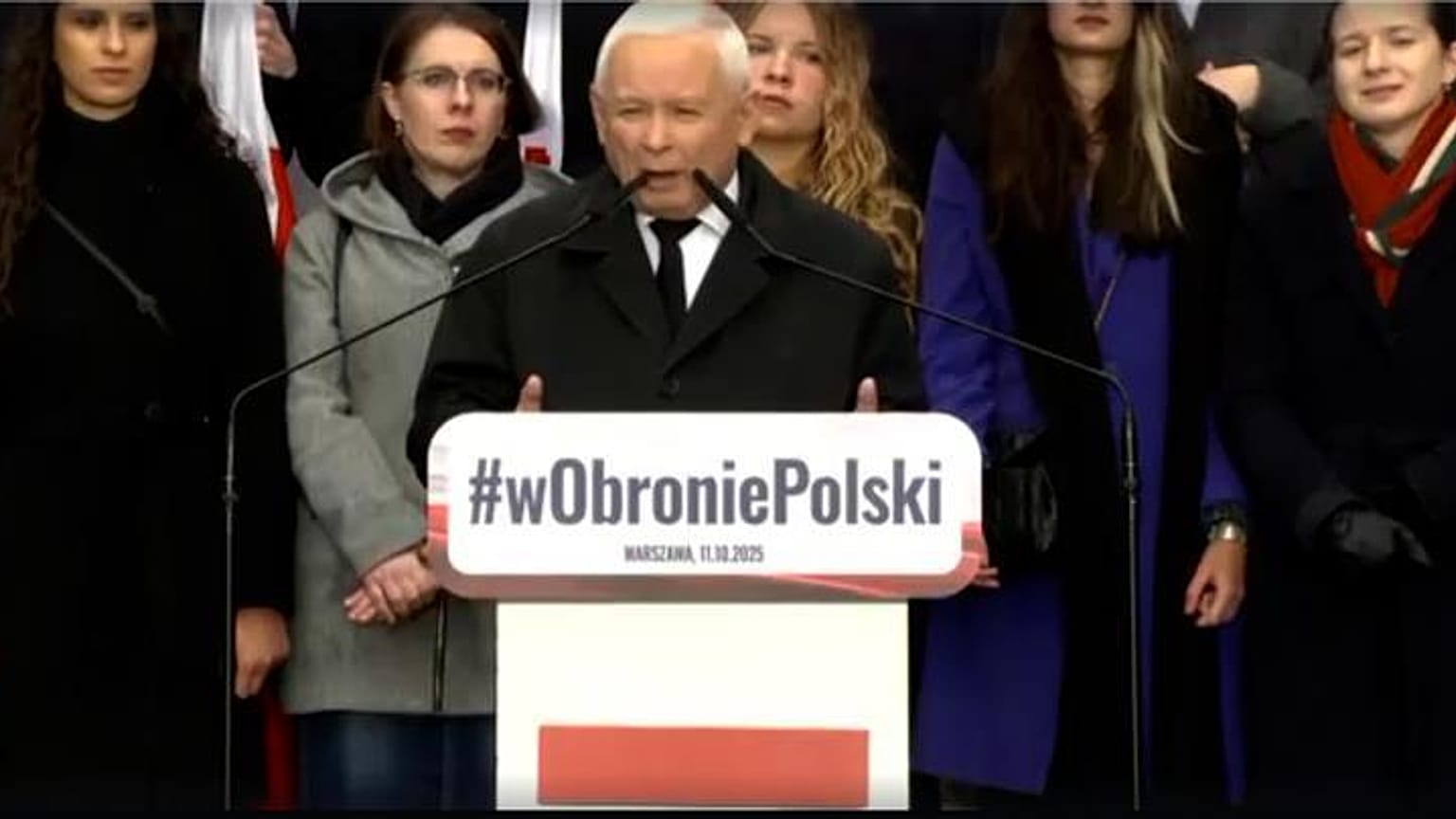
STOP illegal migration! NO to Mercosur' - right-wing protestors take to the streets in Warsaw

President of the Law and Justice Party Jarosław Kaczyński
Copyright EBU

By Katarzyna-Maria Skiba
Published on 

Thousands marched through the Polish capital on Saturday, protesting against illegal migration and opposing the EU-Mercosur agreement. On the same day, Prime Minister Donald Tusk claimed that Poland would be exempted from the EU migration pact.

Carrying Polish flags and marching through the streets of the capital, thousands of demonstrators expressed their opposition to illegal migration and Prime Minister Donald Tusk's ruling coalition.

The event's main organiser and president of Law and Justice, Jaroslaw Kaczynski, spoke at a rally before the protest began, appealing to participants not to trust the prime minister's words, calling them "old games".

"I said there would be no relocation of migrants in Poland and there won't be! It's a done deal. That we will seal the barrier on the border with Belarus - and it is the best-guarded border in Europe today. That we will tighten visa and asylum laws - and Poland has become a model for others. We are doing, not talking!" the Prime Minister wrote on X prior to the rally.

Just hours later, Kaczynski responded at the match.

"Today Donald Tusk, who not so long ago said that Poland would have to be punished for the fact that our government [Law and Justice] was able ensure that this agreement did not enter into force at that time [...] Today, all of a sudden he announces that next year we will not have immigration [in Poland]," Kaczynski said.

"Don't be fooled, these are old games," he added.

Kaczyński called for an end to the Tusk government.

"We must dismiss Tusk, away with Tusk. We must rebuild everything that this government has managed to destroy," Kaczyński said to the crowd of demonstrators.

The gathering was also attended by several other Law and Justice politicians, including former Prime Ministers Beata Szydło and Mateusz Morawiecki and former Defence Ministry chief Mariusz Blaszczak.

In her speech at the rally, Szydło called for the unity of conservative society and challenged the Prime Minister's words.

"We must unite as a white and red team and we must invite those who see what is happening in Poland today and are worried about their future," Szydło said.

"Today is the time when we must be together. You can't believe Tusk, but you also can't believe those who govern in the European Union" - she added.

Asking those gathered whether they believed that Poland would not be bound by the migration pact, she said: "It is as if you believe Angela Merkel, who, when bringing this disaster to Europe, said that everything would be under control."


German exports to US slump to 4-year low as Trump tariffs bite

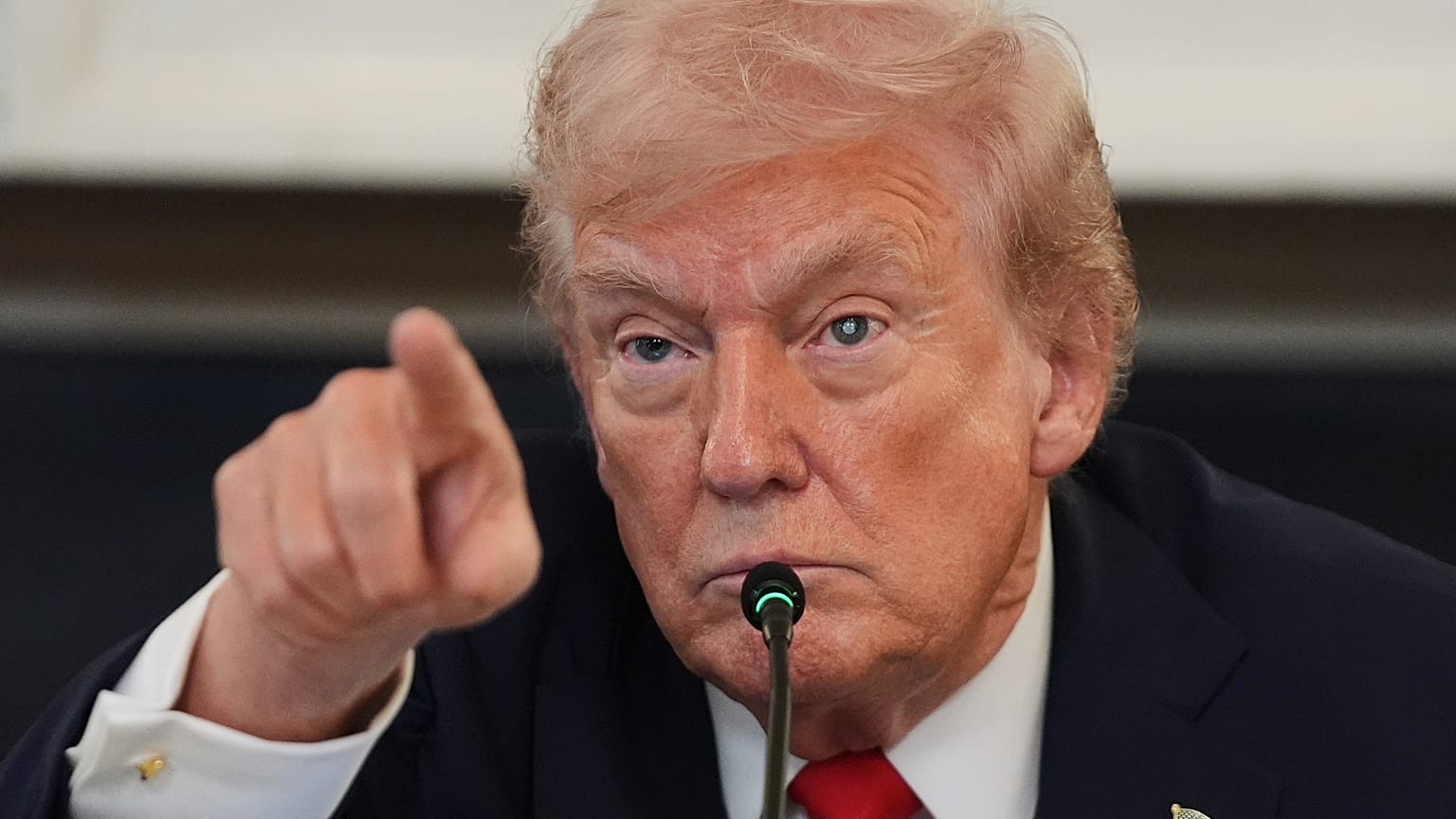
President Donald Trump speaks during a roundtable meeting on antifa in the State Dining Room at the White House. 8 Oct. 2025.
Copyright AP/Evan Vucci

By Piero Cingari
Published on 

German exports to the US fell to a 4-year low in August, hit by Trump tariffs. Shipments to the country dropped 20% from a year earlier, marking the fifth straight month of decline.

German exports to the United States have fallen for the fifth consecutive month, reaching their lowest level in nearly four years, as the impact of tariffs imposed by US President Donald Trump continues to reverberate across transatlantic trade.

Despite remaining Germany’s top export destination, shipments to the US declined by 2.5% month-on-month in August to €10.9 billion, according to provisional data released on Thursday by the Federal Statistical Office (Destatis).

On a year-on-year basis, exports to the US plunged by 20%, underscoring the long-term strain imposed by tariff policies.

Conversely, Germany imported more goods from the United States in August, with inbound shipments rising 3.4% month-on-month to €8.0bn. Compared with August 2024, imports from the US were up nearly 8%.

The European Union reached a deal with the Trump administration in August, agreeing on a unified 15% tariff on most EU exports to the US

The agreement covers key sectors including automotive, pharmaceuticals, semiconductors, and timber. Some categories of European goods have been granted preferential treatment under the deal, including critical natural resources such as cork, all aircraft and aircraft components, as well as generic pharmaceuticals and chemical precursors.

According to the European Commission, goods and services worth over €4.2bn cross the Atlantic each day, amounting to an annual trade value of €1.6 trillion.

German trade surplus rebounds, but remains well below 2024 levels

Beyond the transatlantic relationship, Germany’s overall trade balance improved in August despite subdued export activity.

Total exports amounted to €129.7bn, down 0.5% from July and 0.7% lower than in August 2024.

Imports stood at €112.5bn, marking a 1.3% monthly decline but a 3.5% rise year-on-year.

As a result, the trade surplus increased to €17.17bn in August 2025 — its second consecutive monthly gain.

However, compared to the €21.9bn surplus recorded a year earlier, this represents a 21.6% annual contraction.

The entire surplus stemmed from trade within the European Union.

Germany exported €72.5bn worth of goods to fellow EU members while importing €58.8bn, resulting in a significant intra-bloc surplus.

Month-on-month, EU-bound exports declined by 2.5%, while imports from the bloc dropped by 1.9%.

In contrast, Germany registered a trade deficit with non-EU countries. Exports to non-EU partners amounted to €57.1bn in August, while imports reached €53.7bn.

Among non-EU markets, the United Kingdom saw a notable decline in German imports, with exports falling 6.5% month-on-month to €6.5bn.

On the upside, Germany increased its exports to China, which rose by 5.4% from July to €6.8bn. China also retained its role as Germany’s leading supplier, although imports from the country dropped 4.5% on the month to €13.5bn.

Markets brush off trade weakness as equities hit records

European markets appear largely indifferent to the worsening of Germany’s trade position with the US and the broader decline in exports.

The DAX index climbed to fresh record highs during morning trading on Thursday, breaking above 24,700 points. Shares of Bayer and HeidelbergCement led the gains on the index, rising by 1.8% and 1.4%, respectively

Elsewhere, the EURO STOXX 50 index also reached historic levels, trading near 5,655 points and posting a gain of more than 5% over the past month.

The broader STOXX 600 index similarly remains near all-time highs although it slipped around 0.3% by late morning.

Geopolitical developments added to market sentiment, as US President Donald Trump confirmed a Gaza peace deal, including the release of hostages.

In France, President Emmanuel Macron is expected to name a new prime minister by Friday as coalition negotiations continue.

More than 500,000 Palestinians return to ruined Gaza City as truce holds

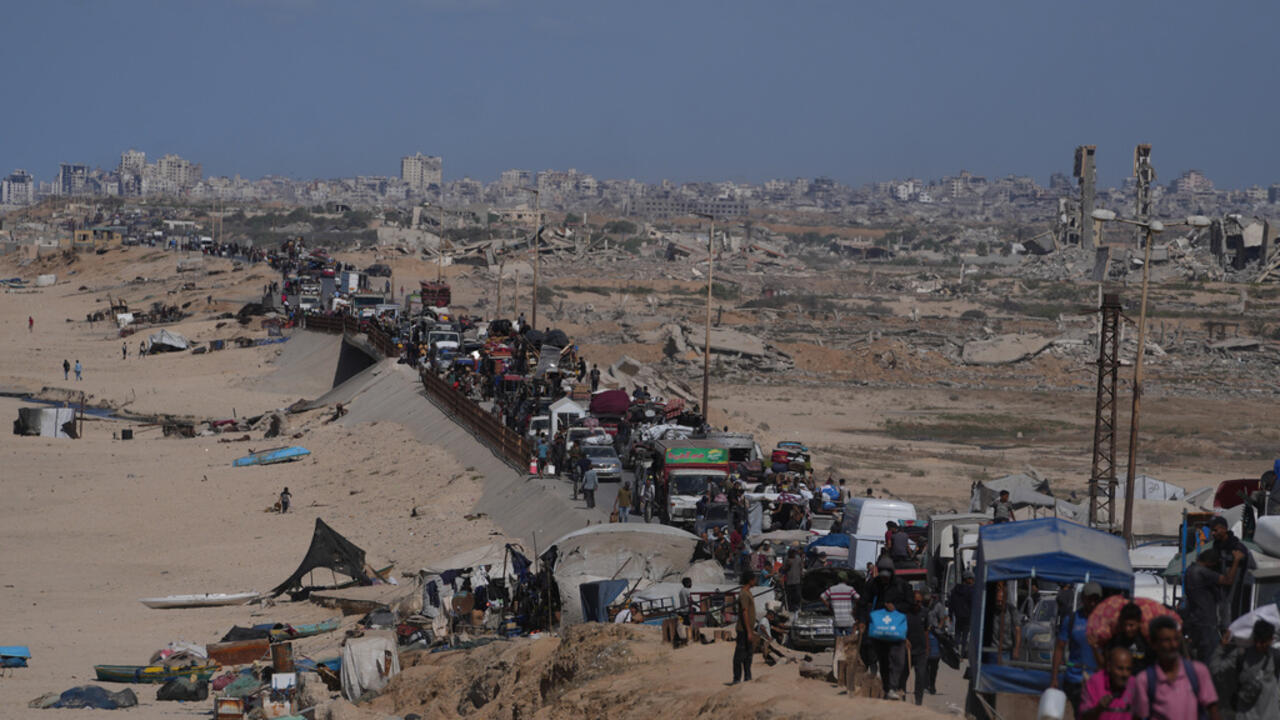
More than half a million displaced Palestinians have returned to Gaza City since a ceasefire came into effect Friday, Gaza's civil defence agency said on Saturday. Many displaced Palestinians returning home were left stunned by the destruction while others were amazed to find their homes still standing.


Issued on: 11/10/2025 -
By: FRANCE 24


Displaced Palestinians walk along the coastal road toward Gaza city, Saturday, October 11, 2025. © Jehad Alshrafi, AP

Gaza's civil defence agency on Saturday said more than 500,000 people have returned to Gaza City since a ceasefire took effect the previous day.

"More than half a million people have returned to Gaza (City) since yesterday," said Mahmud Bassal, a spokesman for the civil defence, a rescue service operating under Hamas authority.

Many displaced Palestinians were left stunned by the destruction even as others were relieved to find their homes still standing.

Israel agreed to the truce on Friday and pulled back troops from several areas of the territory, prompting long columns of exhausted residents to set off for the north along a coastal road.

Taking advantage of the ceasefire, Raja Salmi walked back to her home in Gaza City, where weeks of Israeli bombardment and ground operations had targeted areas said to harbour thousands of Hamas fighters.

© France 24
07:20


"We walked for hours, and every step was filled with fear and anxiety for my home," Salmi told AFP.

When she reached the Al-Rimal neighbourhood, she found her house destroyed.

"It no longer exists. It's just a pile of rubble," she said. "I stood before it and cried. All those memories are now just dust."

Under a ceasefire deal proposed by US President Donald Trump, Hamas will hand over 47 remaining hostages – living and dead – from the 251 abducted during its October 7 attack on Israel two years ago. The remains of one more hostage, held in Gaza since 2014, are also expected to be returned.

In exchange, Israel will release 250 prisoners serving life sentences and 1,700 Gazans detained since the war broke out.

It has released the list of prisoners, which does not include any of the top militant leaders Hamas is seeking to have freed.
'Destruction, destruction'

The withdrawal of Israeli forces from some areas, announced at 0900 GMT on Friday, set the clock running on a 72-hour deadline for Hamas to release the hostages, ending on Monday morning.

Hamas and its allies Islamic Jihad and the Popular Front for the Liberation of Palestine (PFLP), hailed the ceasefire as "a setback" for Israel's alleged goal of bringing about the "displacement and uprooting" of Gaza's Palestinians.

"We will continue to work responsibly with the mediators to ensure that the occupation is bound to protect the rights of our people and end their suffering," they said in a joint statement.

Trump told reporters on Friday he believed the ceasefire would hold, arguing that both sides were "tired of the fighting", and confirming his plans to travel to Israel and mediator Egypt this weekend.

However, many parts of the Trump proposal still have not been agreed, including its plans for post-war governance, and its insistence that Hamas disarm – both of which Hamas has signalled resistance to.

At Al-Rantisi hospital, a facility for children and cancer patients, AFP footage showed wards reduced to heaps of overturned metal beds, gaping ceilings and scattered medical equipment.

"I don't know what to say. The images speak louder than any words: destruction, destruction, and more destruction," said Saher Abu Al-Atta, a resident who had returned to the city.

With the United Nations having declared famine in Gaza City just before the outset of the latest Israeli offensive, aid agencies are hoping the ceasefire will give them the opportunity to surge in aid.

The UN's Office For Humanitarian Affairs (OCHA) says it has been given the green light by Israel to deliver 170,000 tonnes of aid under a response plan for the first 60 days of truce.

"The most basic necessities are still urgently needed in Gaza: medical equipment, medicines, food, water, fuel, and adequate shelter for two million people who will face the approaching winter without a roof over their heads," said Jacob Granger, Gaza coordinator for Doctors Without Borders (MSF).
'Ghost town'

Men, women and children navigated streets filled with rubble, searching for homes amid collapsed concrete slabs, destroyed vehicles and debris.

While some returned in vehicles, most walked carrying belongings in bags strapped to their shoulders.

Sami Musa, 28, returned alone to check on his family's house.

"Thank God... I found that our home is still standing, though it has suffered some damage that we can repair," Musa told AFP.

Nonetheless, the destruction in Gaza City left him shocked.

"It felt like a ghost town, not Gaza," Musa said.

"The smell of death still lingers in the air," he added, vowing to rebuild.

Israel's campaign in Gaza has killed at least 67,682 people, according to the health ministry in the Hamas-run territory, figures the United Nations considers credible.

The data does not distinguish between civilians and combatants but indicates that more than half of the dead are women and children.

The war was sparked by Hamas's October 7, 2023 attack on Israel, which resulted in the deaths of 1,219 people, mostly civilians, according to an AFP tally based on official Israeli figures.

(FRANCE 24 with AFP )

‘No guarantees’ that Israel will uphold Gaza ceasefire, specialist warns


Issued on: 12/10/2025 -

There are “no guarantees” that Israel will uphold the current ceasefire in Gaza, which was brokered with help from the United States and other mediators, said Anne Irfan, a lecturer in interdisciplinary race, gender, and postcolonial studies at UCL. “As for whether the Trump plan can — and will – hold, that’s obviously the million-dollar question,” she added.


Video by: FRANCE 24

A New Afghan War? – Analysis

By Observer Research Foundation
October 12, 2025 
By Sushant Sareen


Reports coming in from Afghanistan claim an aerial attack last night on a few places in Kabul and some other parts of Eastern Afghanistan along the border with Pakistan. It remains unclear whether the attacks were conducted by fighter aircraft or drones.

Apparently, at least one vehicle was targeted, making it more likely that drones were used. However, Pakistani social media handles are claiming that fighter aircraft were pressed into action. There has been no official confirmation from Pakistan so far that it carried out attacks in Kabul targeting Tehrik-e-Taliban Pakistan (TTP) leaders.

There is speculation about possible United States (US) involvement in the attacks. If indeed the Americans were involved, was it at the technical level, or was it to the extent of intelligence sharing, or did it involve kinetic action remains in the realm of speculation. The target of the attacks is believed to be the TTP emir, Noor Wali Mehsud; however, an audio clip purportedly of Mehsud surfaced soon after the attack claims that he is in the tribal districts of Pakistan, not Afghanistan.

This is not the first time that Pakistanis have used air power against alleged terrorist targets in Afghanistan; however, past attacks were generally limited to border areas, which were remote and inaccessible. This is the first time that Pakistan has decided to strike at the heart of Afghanistan. The repercussions of such an audacious attack will be far-reaching.

Earlier attacks were downplayed by the Taliban and not made much of an issue, at least not to a point where it would have led to a major break with Pakistan. A strike on Kabul will, however, be difficult, if not impossible, to brush under the carpet. Although the initial reaction from the official spokesman of the Taliban, Zabiullah Mujahid, and the Kabul police chief has been measured, the Taliban will have to take a strong stand on the Pakistani attack on the capital city. To not do so will seriously dent the legitimacy of the Taliban regime and raise questions or even challenge the authority of the ‘Emir ul Momineen’.

While the Taliban are not in a position to respond to Pakistan in kind as they lack an air force and an effective air defence system, they do have other ways to hit back. Broadly, there are four options available to the Taliban. The first is to do nothing. Make a bit of noise and then move on. But such restraint will raise serious questions about their legitimacy as the Taliban would appear fearful of Pakistan or being compromised by their long association with Pakistan. Even if the senior leadership prefer not to escalate, the foot soldiers will want to take revenge.

The second option is to speak softly but ramp up the attacks. This will mean lifting the restraints imposed on Taliban cadres to not joining the ranks of TTP and desisting from participating in attacks inside Pakistan. The third option is to declare war on Pakistan and unleash guerrilla forces to exact retribution. Finally, there is a remote possibility that the Pakistani attacks will have a salutary impact on the Taliban and force them to either expel or curb the activities of TTP inside Afghanistan.

Regardless of the option that is picked, as long as the TTP continues to bleed Pakistan, there is no solution to the problem. The fact that the TTP attacks have increased in intensity, ferocity, and even geography—with recent claims by the anti-Pakistan jihadist alliance Ittehadul Mujahideen Pakistan of carrying out attacks even in Pakistan-occupied Jammu and Kashmir—means that it will not be easy to eliminate them.

The TTP and other groups claim that they are now operating from inside Pakistan. The Taliban authorities in Afghanistan also insist that this is Pakistan’s problem and that Afghanistan is being made a scapegoat. But Pakistan insists that not just the Islamist jihadists but also Baloch freedom fighters are operating from bases inside Afghanistan.

The issue for Pakistan is that bombing targets in Afghanistan won’t solve the problem. All it will do is satisfy public opinion, especially in Punjab, where there is an anti-Pashtun sentiment is simmering. But kinetic military action has its limitations. All Pakistan needs to do is ask the Americans and, before them, the Soviets. If anything, attacks on Afghanistan will only lead to Afghans, even those who are against the Taliban, closing ranks against Pakistan. Recent reports suggest that the interior minister, Sirajuddin Haqqani, was being sidelined by the Kandahar clique that calls the shots. But the Haqqanis won’t be caught dead siding with Pakistan against the Taliban Emir. Interestingly, the Pakistani attacks have been criticised by some senior military officials of the erstwhile Islamic Republic of Afghanistan.

The other option for Pakistan is to unleash another round of destabilisation in Afghanistan. The instruments for this will be sections of the erstwhile republic who are carrying out a low-level insurgency against the Taliban, and using the Islamic State Khorasan (ISK) as a proxy to wage a dirty war in Afghanistan as a tit-for-tat. The Taliban have already accused Pakistan of giving bases to ISK in Balochistan, and there are some reports that some terrorist proxies of the Pakistan Army, like the Lashkar-e-Taiba (LeT), could also be deployed against the Taliban and TTP. The LeT had been used earlier against the TTP in the late 2000s but had been wiped out in the Tribal Districts. Perhaps a second try will be made using these mostly Punjabi jihadists against the predominantly Pashtun Islamist Jihadists of TTP.

The timing of the bombing runs on Kabul and other parts of Afghanistan is also interesting, as it coincided with the Taliban Foreign Minister Amir Khan Mutaqqi’s visit to India. Although the immediate provocation is the ambush in Orakzai in which around 17 Pakistan army soldiers were killed, the visit of Mutaqqi to India has been something of a red rag for the Pakistani military establishment, which has been accusing India of backing and funding not just the Baloch freedom struggle (the Pakistanis have started calling it Fitna al Hindustan) but also the TTP insurgency.

But the attack will only drive the Taliban closer to India, which is seen as a counter to Pakistani bullying and overbearing attitude in the region. “The enemy’s enemy is a friend” logic could once again come into play—a dynamic that has historically defined Afghanistan’s regional alignments.


About the author: Sushant Sareen is a Senior Fellow at Observer Research Foundation.

Source: This article was published by the Observer Research Foundation.

Observer Research Foundation

ORF was established on 5 September 1990 as a private, not for profit, ’think tank’ to influence public policy formulation. The Foundation brought together, for the first time, leading Indian economists and policymakers to present An Agenda for Economic Reforms in India. The idea was to help develop a consensus in favour of economic reforms.