Sunday, October 12, 2025


Political Instability In Japan Likely As Komeito Breaks Alliance With LDP – Analysis


October 11, 2025 
By Dr. Rajaram Panda


Japanese politics plunged into turbulent waters even before the country is to formally see a female Prime Minister Sanae Takaichi in office who was elected as the head of the Liberal Democratic Party.

The LDP’s junior coalition partner, the Komeito, frustrated with the LDP’s opposition to reforms on funding announced on 10 October that it will withdraw from the ruling coalition, severing a quarter-century relationship and throwing the political world into further turmoil. Komeito leader Tetsuo Saito informed LDP President Takaichi, his party’s decision to part after a 90-mnute meeting.

Saito declared that Komeito will not only dissolve the coalition with the LDP, but it will also terminate future election cooperation with the party. Komeito’s complaint was that the LDP failed to provide a satisfactory response concerning political donations from companies and organisations and other issues. Saito informed Takaichi that his party would not vote for her in the upcoming extraordinary Diet session to designate the prime minister. Hereafter, for the Lower House single-seat districts, Komeito will not endorse LDP candidates or seek endorsements from the LDP for its candidates. In the interest of political stability, the decision of Komeito that ended a partnership that began in 1999 and helped stabilise Japanese politics for 26 years was rather unfortunate.

Komeito’s decision is a huge setback for the LDP as Komeito is supported by the Soka Gakkai, Japan’s largest Buddhist organisation known for its coordination skills in election campaigns. The LDP now loses this advantage. In the Lower House, the LDP hold 196 seats, 37 short of a majority, while Komeito has 24 seats. The main opposition Constitutional Democratic Party of Japan (CDP) has 148 seats.

Komeito’s Saito felt that his party overcame numerous challenges by working with the LDP during the 26 long years of association. For Komeito, public trust in politics is paramount and now felt that this critical element was eroded, compelling it take this painful decision to sever ties with the LDP. There seemed to be some misunderstanding between Takaichi and Saito. Takaichi felt that Saito’s unilateral decision was rather hasty as she was keen to discuss Komeito’s political reform proposals for consideration within the LDP and felt that Saito should have waited for that to happen. She on her own could not unilaterally take the decision to enact changes in the Political Fund Control Law in a democratic set up. Saito had proposed tightening regulations on political donations from companies and organisations by limiting entities allowed to receive such funds but Takaichi wanted time to discuss within the LDP first before announcing any major change in policy. Saito did not see that to happen anytime soon.

Komeito seriously felt that because of LDP’s political funding scandal, the coalition parties faced defeats in last Lower House and Upper House elections. It was on 9 October, Komeito’s central executive committee authorised Saito and Secretary-General Makoto Nishida to take the final decision on whether to continue the coalition with the LDP. There was also demand within the Komeito that the party should sever ties unless the LDP made concessions. Takaichi found that her hands were tied as within her party there was resistance not to accept Komeito’s call for stricter rules on corporate and organisational donations.

It may be recalled that Komeito first formed a coalition government with the LDP and the Liberal Party in 1999. Including the period spent in the opposition under the DPJ administration, Komeito maintained its relationship with the LDP for a quarter of a century. The LDP-Komeito alliance was born of necessity. In the late 1990s, LDP’s electoral fortune was heading south. The party decided to partner with Komeito because it felt its Soka Gakkai-rooted voter base would help LDP to restore its declining fortune. The split among the coalition partners now threatens the centrality of the LDP in Japan’s governing order. Now that Komeito prioritises organisational networks over transparency, it now faces credibility and electoral tests ahead.

During the 26 years of staying together, it was a win-win situation for both the LDP and Komeito. By partnering with the largest political party, the LDP, Komeito enjoyed in terms of spreading its influence even with less number of seats, and by being a part of the government it could shape policy outcomes. It was able to protect its core principles such as social welfare and clean governance. When LDP’s electoral fortune was tested in early 2000s and Japan entered into a phase of political instability, Komeito stuck to the alliance. It was only when Shinzo Abe returned to power in 2012 for his second term (he had resigned in 2007 after staying in power for a year due to health reasons), the coalition’s health remained sound till 2022 when he was assassinated. The advantages were therefore reciprocal.

During the 26 years of alliance, Komeito was able to push through morĂ© socially oriented measures. When the government responded with limited measures to mitigate the hardship of people and issued limited relief package during the Covid-19, Komeito forced the government to make universal cash payment of 100,000 Yen, including to foreigners residing in Japan during that time. Komeito also insisted on softening consumption tax and helped shape coalition’s fiscal choices. When the consumption tax rose to 10 per cent, Komeito successfully argued for exemptions and mitigations.

It was because of Komeito’s support that Abe remained in office for long eight years and enact many far-reaching reform measures. Abe was able to advance LDP’s leadership with his Abenomics stimulus and structural reforms agenda. When the security environment in Japan’s neighbourhood deteriorated considerably because of China’s aggressive posture and North Korea’s missile threats, Abe was able to deepen defence ties with the US as well as expand cooperation with India. His address in the Indian parliament in August 2007 heralded a new dawn in the Indo-Pacific when he spoke about the Confluence of the two Seas. Komeito cooperation during this time came handy.

Komeito showed its maturity when in 2015 it overcame successfully internal resistance and voter unease and voted with the LDP to pass security legislation enabling limited collective self-defence. It was a demonstration of Komeito’s commitment to maintain political stability despite that it tempered its principles somewhat. Abe was able to pass legislation in the parliament with Komeito’s support. However, when Abe tried to enact measures towards constitutional revision, the fault lines between the coalition partners made appearances.

The differences sharpened when Komeito questioned factional party-fund irregularities and demanded stricter caps, besides reporting on corporate and organizational donations. Since the LDP has long relied on party and factional fundraising networks, it resisted sweeping restrictions. The party felt that it would undercut political organization and campaign capacity. The disagreement reached the flashpoint in 2025 when Komeito demanded transparent accounting and tighter regulation, which collided with deep resistance inside the LDP. When mediations after Takaichi’s election as the LDP President, and the partners failed to bridge their positions, Saito notified Takaichi that Komeito would withdraw and would not back her in the upcoming vote for prime minister.

Komeito’s decision could impact its fate when elections take place next. Its parliamentary standing is already weak. In the July 2025 Upper House election, Komeito won just eight of its contested seats (down from 27 in the previous contest). This left it with 21 seats after the vote. It was a notable erosion of its cushion and bargaining power.

Would LDP’s future now be at stake after Komeito’s pullout? The LDP shall not have Komeito’s calming influence. The LDP still controls the largest share of seats and retains the country’s most extensive organisational apparatus. To maintain stability in the government, the LDP is likely to explore ad-hoc alliances with smaller parties, maintain internal discipline and negotiate issue-based cooperation where necessary. The biggest challenge before the LDP would be to convince the voters that stability need not collapse with the coalition’s end.

As regards Komeito, it needs to work hard to maintain its independent identity without the institutional levers of government. Being out of the government, it can no longer have any ministerial position and thus carve out its political future on its own. Takaichi could be hurt when Saito openly questioned her suitability as the leader of the coalition. That position was politically incorrect because the LDP had elected her by majority vote. Questioning her credibility was tantamount to questioning the democratic process itself. The LDP shall be under no obligation to adjust by making concession demands and likely to stick to its own party agenda while making legislation.

Earlier, Saito also had voiced concerns over Takaichi’s hard-line stance on immigration and her regular visits to Yasukuni Shrine, the controversial war memorial in Tokyo. Takaichi had expressed willingness to expand the coalition, and Saito felt that a broader alliance could dilute Komeito’s influence within the government. With the break of the coalition alliance, the spectre of another phase of political instability that Japan saw during the pre-Abe and post-Koizumi era looms large in Japan.
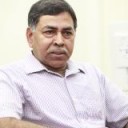


Dr. Rajaram Panda

Dr. Rajaram Panda is former Senior Fellow at Pradhanmantri Memorial Museum and Library (PMML). Earlier Dr Panda was Senior Fellow at MP-IDSA and ICCR Chair Professor at Reitaku University, JAPAN. His latest book "India and Japan: Past, Present and Future" was published in 2024 by Knowledge World. E-mail: rajaram.panda@gmail.com
Kyrgyzstan: Secret Police Raid, Police Fine Baptists For ‘Illegal’ Worship Meeting – Analysis

October 11, 2025 
By F18News
By Mushfig Bayram and Felix Corley


On 14 September, National Security Committee (NSC) secret police officers alongside officials of the regime’s National Agency for Religious Affairs and Interethnic Relations raided the Sunday worship service of the Council of Churches Baptist Church in the capital Bishkek. The Church was celebrating harvest festival that day. Officials filmed the service and seized religious literature for “expert analysis”.

Council of Churches Baptist congregations choose not to seek official registration in any country where they operate.

Ibrahim Akunov of the National Agency threatened church members with closure of the Church. “When the officials were filming the Church and the children playing outside in the yard of the Church, he threatened and shouted that he will close down this Church,” members of the Church, who wished to remain unnamed for fear of state reprisals, complained to Forum 18. “This scared some of us and particularly the children” (see below).

Akunov refused to explain why he raided the Baptist Church and threatened Church members. “I won’t talk to you. You can only write a letter to the Foreign Ministry,” he told Forum 18. NSC secret police Officer Major Aleksey Akulich – who led the raid – did not respond to Forum 18’s questions (see below).

Officials took the Church’s leader, Pastor Dmitri Golovin, and Aleksey Demchenko, a deacon of the Church, to the local police station. Officer Izzat Ozubekov of Bishkek’s Sverdlov District Police’s division for the struggle against extremism and illegal migration drew up a record of an offence under Violations Code Article 142, Part 7 (“Carrying out religious activity and using a facility for religious purposes without state registration”). He then issued summary fines to each of about two weeks’ average wage for those in formal work. Bishkek’s Sverdlov District Court is due to hear the men’s appeal against the fines on 17 October (see below).

Forum 18 asked Officer Ozubekov why he fined the Baptists for exercising their right to religious freedom guaranteed by the Constitution. “They violated the Religion Law, because they do not have registration,” he responded (see below).

National Agency for Religious Affairs and Interethnic Relations Deputy Director Kanatbek Midin uuly did not answer Forum 18’s questions on why the Baptists were raided, why religious communities cannot meet for worship without the obligatory registration, and why the Religion Law is so restrictive (see below).

The raid on the Bishkek Baptist congregation came 10 months after NSC secret police raids on members of the Bishkek congregation of the True and Free Reform Adventist Church in November 2024. Officers tortured four church members, including the leader, Pastor Pavel Shreider. In March 2025, a court banned the Church as “extremist”. A Bishkek court jailed the 65-year-old Pastor in July for 3 years and ordered his deportation at the end of his sentence (see below).

Prison officials transferred Pastor Shreider in September to a prison hospital in a serious condition (see forthcoming F18News article).

On 23 July, five United Nations Special Rapporteurs – including Nazila Ghanea, Special Rapporteur on Freedom of Religion or Belief – wrote to the regime about the “arrests, detentions and alleged torture” of members of the True and Free Reform Adventist Church, as well as the subsequent criminal prosecution of Pastor Pavel Shreider and ban on the Church (see forthcoming F18News article).

The Special Rapporteurs also reminded the regime of their earlier concerns about their “Concerns regarding the legal framework governing freedom of religion or belief”. “In particular, we reiterate that the mandatory registration of religious or belief organisations, and the criteria such as in relation to the size of the association itself, which govern the possibility of registration, can lead to the criminalisation of legitimate manifestations of religion or belief,” they wrote. They pointed out that this was incompatible with Article 18 (“Freedom of thought, conscience and religion”) of the International Covenant on Civil and Political Rights (see below).

The regime responded with a brief reply in Russian on 20 September, according to the UN Special Procedures communication website (see below).

On 1 September, the regime’s National Agency for Religious Affairs and Interethnic Relations announced on its website that it had suspended the activity of six Muslim and four Protestant Christian organisations. The ten organisations had been registered at various times between 1999 and 2017. The National Agency claimed that they had allegedly “systematically violated” the Religion Law. “The National Agency warns religious organisations to comply with the Religion Law,” it noted (see below).

Several Protestants told Forum 18 that they do not recognise the names of the four Churches whose activity the National Agency suspended. “They may have existed earlier, but merged with other Churches or stopped their existence,” some Protestants commented. “The Agency probably wants to clarify whether or not they are still active.” Others commented that this “may be a warning to all others to give their financial and other reports to the Agency. They want strict control of everybody” (see below).
Officials ban, target religious communities

Officials banned Ahmadi Muslims as allegedly “extremist”. They have not been able to publicly meet for worship since July 2011 after the National Security Committee (NSC) secret police told the then State Commission for Religious Affairs (now the National Agency for Religious Affairs and Interethnic Relations) that they are a “dangerous movement and against traditional Islam”.

“We do not meet publicly or privately for worship together,” Ahmadi Muslims, who asked not to be identified for fear of state reprisals, told Forum 18 in May 2025. “We stopped our common worship ever since we were banned. Our believers have been threatened several times in the past by local police in various localities of the consequences if we meet for worship.”

An association of the Falun Gong spiritual movement was registered in July 2004, but – under Chinese pressure – was liquidated as “extremist” in February 2005. In January 2018 the Chuy-Bishkek Justice Department in the capital Bishkek registered a Falun Gong association. However, in March 2018, less than eight weeks later, the Justice Department issued a decree cancelling the registration.

The NSC secret police opened a criminal case in December 2019 against so far unspecified representatives of the Jehovah’s Witness national centre in Bishkek on charges of inciting hatred. In November 2021, the then Deputy General Prosecutor Kumarbek Toktakunov sent a suit to Bishkek’s Birinchi May (Pervomaisky) District Court asking for it to ban 13 Jehovah’s Witness books and 6 videos as “extremist”. The court dismissed the suit the following month on technical grounds.

Jehovah’s Witnesses told Forum 18 in August 2025 that they do not know if the criminal case opened in 2019 is still active, “but have no reason to believe that it has been closed”.

The NSC secret police arrested the head of the True and Free Reform Adventist Church, Pavel Shreider in Bishkek in November 2024. They tortured him and at least three other church members. A Bishkek court jailed the 65-year-old Pastor in July 2025 for 3 years and ordered his deportation at the end of his sentence. He was transferred in September 2025 to a prison hospital in a serious condition (see forthcoming F18News article). On 19 March 2025, a court banned the True and Free Reform Adventist Church as “extremist” .

The list of 21 banned organisations on the website of the National Agency for Religious Affairs and Interethnic Relations, as of 10 October, does not include Ahmadi Muslims, the Falun Gong movement or the True and Free Reform Seventh-day Adventist Church.
Repressive new Religion Law

At the beginning of 2025, the regime adopted two new laws which continue to restrict freedom of religion or belief.

The new Religion Law – which came into force on 1 February – continues to ban all unregistered exercise of freedom of religion or belief and makes it impossible for communities with fewer than 500 adult citizen members to gain legal status (up from 200 in the previous Law). For the first time it required places of worship of registered religious organisations to also register. It bans sharing faith in public and from door to door.

A new Amending Law in the Area of Religion – which also came into force in February – changed the 2021 Violations Code, the Political Parties Law, the Laws on Elections of and Status of Deputies of Local Keneshes [administrations], and the Law on Status of Deputies of the Zhogorku Kenesh (parliament). Among the Violations Code changes were sharply increased fines for violating the Religion Law.
Secret police raid Baptists’ worship meeting

On 14 September, National Security Committee (NSC) secret police officers alongside officials of the regime’s National Agency for Religious Affairs and Interethnic Relations raided the Sunday worship service of the Council of Churches Baptist Church in Bishkek, a church member told Forum 18. The Church was celebrating harvest festival. NSC secret police officers Major Aleksey Akulich, Senior Lieutenants N. Nazarov and T. Toguzakov and Ibrahim Akunov of the National Agency took part in the raid.

Council of Churches Baptist congregations choose not to seek official registration in any country where they operate.

The officials video filmed the worship service, despite the objection of the church members not to disturb the worship.

The officials demanded that Dmitri Golovin, the leader of the Church, show state permission for carrying out religious activity. Pastor Golovin explained to the officials that Council of Churches Baptist congregations do not seek state registration as they regard that as interference in their activity. He added that the Church has met at the same place since 1992 and never needed to register. He pointed out that Kyrgyzstan’s Constitution guarantees freedom of conscience and religion to its citizens.

The officials confiscated some of the religious literature for state “expert analysis”. They then called and summoned to the church building Officer Izzat Ozubekov of Bishkek Sverdlov District Police’s division for the struggle against extremism and illegal migration.

Akunov of the National Agency threatened church members with closure of the Church. “When the officials were filming the Church and the children playing outside in the yard of the Church, he threatened and shouted that he will close down this Church,” members of the Church, who wished to remain unnamed for fear of state reprisals, complained to Forum 18 on 8 October. “This scared some of us and particularly the children.”

NSC secret police Officer Major Akulich did not answer his phone on 10 October. Forum 18 sent written questions to his phone asking:

– why he raided the Baptist Church;
– why officials threatened the Church with closure;
– and why he thinks the Baptists have to ask officials for permission peacefully to gather for worship in private.

Major Akulich saw the questions but did not respond.

Akunov refused to explain why he raided the Baptist Church and threatened Church members. “I won’t talk to you. You can only write a letter to the Foreign Ministry,” he told Forum 18 on 10 October. He then put the phone down.
Police fine Baptist pastor, deacon

Officials took Pastor Dmitri Golovin and Aleksey Demchenko, a deacon of the Church, to the local police station. Officer Izzat Ozubekov drew up a record of an offence under Violations Code Article 142, Part 7 (“Carrying out religious activity and using a facility for religious purposes without state registration”). He then issued summary fines against the two men. Each was fined 200 Financial Indicators, 20,000 Soms (about two weeks’ average wage for those in formal work).

The Violations Code allows the police and the National Agency to issue summary fines for violating Article 142. The Amending Law which came into force in February 2025 sharply increased fines under this Article.

Forum 18 asked Officer Ozubekov on 10 October why he fined the Baptists for exercising their right to religious freedom guaranteed by the Constitution. “They violated the Religion Law, because they do not have registration,” he responded.

Forum 18 pointed out to Officer Ozubekov that officials demand registration from religious communities which would like to be and act as a religious organisation, while the Baptists do not wish to be a religious organisation as this would mean for them state interference in their internal matters of faith. Asked why religious believers cannot meet privately to worship and read their holy books together, he could not answer. “Well, we will meet them in the court,” he told Forum 18. He did not wish to talk further.

The Baptists told Forum 18 that they have not paid the fines. They filed an appeal to Bishkek’s Sverdlov District Court in mid-September soon after Officer Ozubekov issued the fines. They found out that Judge Tilek Toktosunov, Chair of the Court, will hear their appeals on 17 October.

The Court reception official (who did not give her name) passed Forum 18’s name and questions to Judge Toktosunov on 10 October why religious communities must ask for permission or register officially for gathering in private for worship and why the Religion Law is so restrictive. He did not respond.
Renewed UN concern over religious freedom restrictions

On 23 July, five United Nations Special Rapporteurs – including Nazila Ghanea, Special Rapporteur on Freedom of Religion or Belief – wrote to the regime (AL KGZ 4/2025) about the “arrests, detentions and alleged torture” of members of the True and Free Reform Adventist Church, as well as the subsequent criminal prosecution of Pastor Pavel Shreider (see forthcoming F18News article).

In their 23 July communication the Special Rapporteurs expressed concern over restrictions on exercising freedom of religion or belief.

“Concerns regarding the legal framework governing freedom of religion or belief in the Kyrgyz Republic have been the subject of previous communications from Special Procedures mandate holders,” the 23 July communication noted. It pointed to the Special Rapporteurs’ December 2023 communication about the then proposed new Religion Law (OL KGZ 6/2023). “We regret that no response was received.”

The 23 July communication reiterated these concerns over “the legal framework governing freedom of religion or belief and religious associations” in Kyrgyzstan. “In particular, we reiterate that the mandatory registration of religious or belief organisations, and the criteria such as in relation to the size of the association itself, which govern the possibility of registration, can lead to the criminalisation of legitimate manifestations of religion or belief in a manner incompatible with article 18 [(“Freedom of thought, conscience and religion”) of the International Covenant on Civil and Political Rights] ICCPR”.

“We further reiterate that blanket prohibitions on the distribution of religious literature relying on the definition of ‘extremism’ do not satisfy the principles of legality, proportionality, necessity, and non-discrimination,” the Special Rapporteurs added.

The Special Rapporteurs pointed to the concerns over these legal restrictions raised by the UN Committee on Economic, Social and Cultural Rights in its September 2024 review of Kyrgyzstan (E/C.12/KGZ/CO/4). “We further observe that the term ‘extremism’ has no place in international legal standards, is irreconcilable with the principle of legal certainty and is incompatible with fundamental human rights (A/HRC/43/46, para. 14).”

The regime responded with a brief reply in Russian on 20 September, according to the UN Special Procedures communication website.

National Agency for Religious Affairs and Interethnic Relations Deputy Director Kanatbek Midin uuly did not answer his phone on 9 and 10 October. Forum 18 sent written questions on 9 October asking:
– why officials raided the Baptist Church in Bishkek;
– why religious communities cannot meet for worship without the obligatory registration;
– and why the Religion Law is so restrictive.
He read the questions, but did not answer.
“The National Agency warns religious organisations to comply with the Religion Law”

On 1 September, the regime’s National Agency for Religious Affairs and Interethnic Relations in the capital Bishkek announced on its website that it had suspended the activity of six Muslim and four Protestant Christian organisations. The ten organisations had been registered at various times between 1999 and 2017. The National Agency claimed that they had allegedly “systematically violated Article 36, Part 3 of the Religion Law”.

Religion Law Article 36, Part 3 states: “Religious organisations must provide the authorised state religious affairs agency information and annual report of its activity, including that of the facilities used for religious purposes, of their leaders, employees and students studying religion as well as documents of expenditure of funds, the use of other funds, including those received from international and foreign organisations, foreign citizens, and stateless persons.”

The National Agency suspended the activity of the ten religious organisations under Religion Law Article 37.

The National Agency warned that failure to comply with its order to eliminate the violations within 90 days will result in the liquidation of the religious organisations and religious educational institutions under the Religion Law. “The National Agency warns religious organisations to comply with the Religion Law,” it noted.

“They want strict control of everybody”

Several Protestants from various Churches from Bishkek and other regions, including some belonging to various Alliances of Churches, told Forum 18 that they do not recognise the names of the four Churches whose activity the National Agency suspended.

“They may have existed earlier, but merged with other Churches or stopped their existence,” some Protestants commented. “The Agency probably wants to clarify whether or not they are still active.” Others commented that this “may be a warning to all others to give their financial and other reports to the Agency. They want strict control of everybody.”


F18News

Forum 18 believes that religious freedom is a fundamental human right, which is essential for the dignity of humanity and for true freedom.

A Dangerous Illusion: Why Observing Myanmar’s Election Betrays Democracy – OpEd


October 12, 2025 
By James Shwe

I was recently asked by a citizen of a Western democracy a question that, while well-intentioned, reveals a dangerous misunderstanding about authoritarian regimes. Seeing that Myanmar’s military junta was planning an election, they asked: “Why is it a bad thing to go observe? Surely, if a military junta holds an election, they have intentions to free up the country.”

This perspective, which sees a ballot box as an inherent sign of progress, is precisely the narrative the violent and illegal military regime wants the world to believe. But we must not be fooled. The junta’s elections, set to begin on December 28, 2025, are not a step towards democracy. They are a meticulously crafted trap, a cynical performance designed to manufacture legitimacy for an illegal, violent, and authoritarian rule. Engaging with this sham, especially by sending international observers, is not a harmless act; it is an act of complicity that betrays the millions of people in Myanmar who continue to risk their lives for genuine freedom.

The junta’s primary motive is survival, not liberation. After seizing power in a violent coup in February 2021 and facing nearly five years of fierce nationwide resistance, General Min Aung Hlaing’s regime is internationally isolated and losing ground on the battlefield. The elections are a desperate attempt to break this isolation. The goal is to rebrand the junta as a legitimate government, secure international recognition, and normalize its brutal grip on power under the thinnest veneer of a democratic process.

To understand why this election is a fraud, one must look past the superficial promise of voting and see the reality on the ground.

A Foundation of Illegality and Repression

First, the junta has no legal authority to hold elections. The legitimate mandate rests with the parliamentarians chosen in the 2020 general election, a vote that credible international observers confirmed was free and fair. The military’s pretext for the coup—baseless allegations of widespread voter fraud—was a lie used to justify their illegal power grab.

Second, the conditions for a genuine election have been systematically destroyed. The National League for Democracy (NLD), which won the 2020 election in a landslide, has been forcibly dissolved. Its leaders, including Nobel laureate Aung San Suu Kyi, are imprisoned along with over 20,000 other political prisoners. The junta has engineered a new legal framework designed to eliminate all opposition, requiring parties to meet impossible registration criteria while reserving 25% of parliamentary seats for the military outright.

Third, this is an election held at gunpoint. The junta has declared martial law in 63 townships, many of which are opposition strongholds. The country is an active war zone where the military continues to commit atrocities, including aerial bombardments of civilians and the torture of detainees. A new law threatens anyone who “disrupts” the election—a term so broad it includes critical speech—with harsh penalties, including execution. In this environment of terror, there is no freedom from fear, a prerequisite for any credible election.[5][1]

A Chorus of Global Rejection

The world’s leading democratic and electoral watchdogs have unequivocally condemned this process. The Asian Network for Free Elections (ANFREL) and International IDEA concluded the junta’s process “cannot be considered credible or legitimate” and fails to meet international standards.

This call for rejection has been echoed by a global coalition. While specific governments continue to finalize their official positions, numerous democratic nations, global trade union federations representing over 200 million workers, and more than 200 civil society organizations from Myanmar and around the world have already denounced the polls as a sham. These groups have urged all UN member states to categorically reject the election and refuse to provide any form of technical or material assistance, including election observation.

The Observer’s Trap: The Impact and Risk


Sending international monitors is not a neutral act of fact-finding; it is a political act that plays directly into the junta’s hands. Their presence, no matter how critical their final report might be, lends the process an undeserved veneer of legitimacy. The junta craves the photo opportunities and the headlines suggesting the world is watching, as it helps them sell their narrative of a “transition” to partners in ASEAN and beyond. UN Special Rapporteur Tom Andrews has rightly called the planned polls a “mirage” and a “fraud,” emphasizing you cannot hold an election while imprisoning and executing your opponents.

The stakes are life and death. The junta’s push to secure territory to hold these sham elections will only intensify the violence, putting civilians in even greater danger. As ANFREL starkly warned, people are being killed and will continue to die because of these elections.

The international community faces a clear choice. It can choose to engage with this dangerous illusion, lending credibility to a process designed to entrench a murderous regime. or it can stand in solidarity with the people of Myanmar and the global consensus for democracy.

The correct path is clear: unequivocally reject these sham elections. Refuse to send observers. Refuse to recognize the results. Instead, intensify pressure on the junta and provide robust support to Myanmar’s legitimate democratic forces. To do anything less is to become an unwitting accomplice in the junta’s cynical scheme to extinguish the flame of democracy in Myanmar for good.


James Shwe

James Shwe is a Burmese American Engineer residing in Los Angeles, California, USA. He was born in Yangon, Myanmar in 1954 and has been residing in the US since 1984. He is a Registered Professional Mechanical Engineer in California. He owns and operates a consulting engineering firm in Los Angeles.

WOMAN LIFE FREEDOM

Iran’s Streets ‘Transformed’ As More Women Shun The Mandatory Hijab – Analysis


By 

By Fereshteh Ghazi and Farangis Najibullah


Iranian journalist Zeinab Rahimi has refused to wear the mandatory hijab for over two years, despite the risk of arrest and imprisonment.

She is among a growing number of women and girls who have stopped covering their head in public, in direct defiance of the country’s clerical rulers.

“I enjoy seeing women dress the way they like and letting their hair out,” Rahimi told RFE/RL’s Radio Farda, describing the visible change on the streets of Tehran, the Iranian capital.

“We haven’t experienced this in our country for many years,” added the 22-year-old. “It’s beautiful when you don’t have to wrap yourself up, especially when you have always resented it.”

Turning Point

The turning point was the antiestablishment protests that rocked Iran in 2022, following the death in custody of Mahsa Amini, a young woman who was arrested for violating the hijab law.

Women were at the forefront of the protests, during which some removed and burned their hijab. The demonstrations snowballed into the biggest threat to the authorities in decades, with some protesters calling for an end to clerical rule.


In the wake of the protests, the authorities initially attempted to double down on their enforcement of the hijab, which has been mandatory since soon after the Islamic Revolution in 1979.

Hard-line lawmakers last year passed a new controversial law to enforce the hijab under which violators would face lengthy prison terms, hefty fines, and travel bans.

But wary of provoking unrest, Iran’s Supreme National Security Council suspended the implementation of the Hijab And Chastity law.

A member of Iran’s Expediency Council, which serves as an advisory body to the supreme leader, said this month that the new hijab law was unenforceable.

Mohammad Reza Bahonar told reporters on October 3 that there was essentially “no compulsory hijab law in force.”

His comments triggered an uproar among hard-liners. But they also underscored the reality on the ground in major cities where the authorities have relaxed their enforcement of the hijab, a key pillar of the Islamic republic.

Irreversible Changes

Radio Farda spoke to 12 women in seven Iranian cities who said the number of women ditching the Islamic head scarf had increased on the streets and in cafes and restaurants in recent years.

Rahimi, the Iranian journalist, said women’s shunning of the hijab has been gradual.

Following the 2022 protests, women who did not wear a hijab kept a head scarf in their bag or loosely around their shoulders in case they were approached by the dreaded morality police, which enforced the hijab, she said.

“Nowadays, women go out entirely without a head scarf,” said Rahimi. “They don’t wear it, and they don’t keep it around their shoulders or in their bags.”

Despite the shift, Rahimi said a significant number of women still wear the head scarf for fear of retribution by the authorities.

The defiance of the hijab law is starkest in bigger cities. But even in smaller cities and towns, attitudes toward women’s rights, including the freedom to choose what to wear, is changing, and women are defying the authorities.

A woman in the southwestern city of Yasuj, who spoke on condition of anonymity, said the “percentage of women who go out without the hijab in Yasuj is much smaller than in Tehran, but locals see these women as brave.”

Many Iranian women believe the changes are here to stay.

“This change cannot be reversed or controlled,” Mojgan Ilanlou, a Tehran-based filmmaker who has documented Iranian women’s struggles, told Radio Farda. “But that doesn’t mean the government has changed its stance on the hijab.”

Ilanlou added that the authorities have been “forced to retreat” by “the determination of Iranian women who fought tooth and nail for their right to wear what they want and now strive to protect that achievement.”

“Authorities know that if they resist it will cost them and it will hurt them profoundly,” she said.

  • Fereshteh Ghazi is a correspondent for RFE/RL’s Radio Farda.

  • Farangis Najibullah is a senior correspondent for RFE/RL who has reported on a wide range of topics from Central Asia, including the impact of Russia’s invasion of Ukraine on the region. She has extensively covered efforts by Central Asian states to repatriate and reintegrate their citizens who joined Islamic State in Syria and Iraq.


Tribal Communities Contribute To India’s Economy, Culture And Sports – OpEd


October 12, 2025 
By Sudhansu R Das


The majority of them may not know how to speak English, wear modern dresses and lead a modern lifestyle. But, the tribal communities have the rich experience, skills and wisdom to teach the world how to lead a happy life in harmony with nature.

Nature provides them food, shelter, nutrition and medicinal plants to become self-sufficient. It helps them develop strength, stamina and endurance capacity. They make utility items with wood, metal, leaves, tree fibers and stones etc,. Many of those utility items have become amazing pieces of art. Though the tribal do not have much income to buy consumer comforts, nature provides them with everything to live a happy and healthy life.

The mountain rivers, waterfall, springs, pure air, clean water, rich flora and fauna make their life far more comfortable than the people who live in smoke and dust filled congested urban centers. The tribal build beautiful houses from the material available in nature; popular resorts around the world build tribal houses to attract tourists. The tribal jewelry, attires, art objects, organic food and paintings etc are the most sought after items in the global market. Many filmmakers and artists of India have plagiarized the tribal art, music and dance to earn huge profit.

Over centuries the tribal people have immensely contributed to India’s freedom struggle, sports, economy and culture. Many tribal sportsmen have brought glory to India by winning Olympic medals for the country. Their tough bringing up in the natural environment gives them the much needed strength, stamina and the fighting spirit to compete at the highest level of the game.

The tribal district of Sundargarh of Odisha has given the Indian hockey team many star players. The district has given five hockey captains, Dilip Tirkey, Ignace Tirkey and Prabodh Tirkey to the men’s hockey team. Subhadra Pradhan and Jyoti Sunita Kulu played for the Indian women’s hockey team. The tribal district, Sundargarh has so far produced more than 60 International hockey players which include the Olympians Lazarus Barla, William Xalco, Birendra Lakra and Sunita Lakra.

Recently, Deep Grace Ekka, Amit Rohidas and Birendra Lakra from the district have performed in the Tokyo Olympics 2021. Dutee Chand, sprinter from a poor weaver family of Odisha, clinched gold in the world Universiade in Naples in 2019; she was the first Indian to win a gold medal in the 100 meter global meet. And she was the fifth Indian to qualify for the 2016 Rio Olympics in the 100 meter Olympic race. Dutee Chand has gone through extreme poverty; her mother used to give the children several cups of tea before meals in order to reduce appetite. Dutee’s elder sister had to close her sports career due to poverty. It was her luck and determination that had kept Dutee running on the banks of the Brahmani river until she was noticed by the selectors. Dutee broke the national record in the 100 meter race and won two silver medals in the 2018 Asian Games and in 2019. The Odisha government should protect forests, hills and build more public playgrounds in all the tribal districts of the state.

Like Odisha, the tribal athletes of North East India have also made the country proud. Hilly tracks, crop diversity and tough life build their muscles, stamina and the fighting spirit to compete with the best athletes of the world. Born in a landless farmer’s family in the remote Kangathei village of Manipur, Mary Com has become a boxing legend by winning the World Amateur Boxing Championship six times and a bronze medal in the London Olympic game. Poverty did not deter the iron willed Mary Com to achieve what seemed impossible for many; the crop diversity rich with nutrition and the tough life contributed to her becoming a legend.

Lovlina Borgohain, the Bronze medalist in the boxing event in the Tokyo Olympic, belongs to a poor family in the Golaghat district of Assam. She has got her strength and fighting spirit from her daily struggle for survival in a tough situation. Similarly, Mirabai Chanu from theNongpok Sekmai village of Manipur who won a silver medal in weight lifting in the Tokyo Olympic, belongs to a very poor family. When Mirabai was at the age of 12, she had to collect firewood and carry it on her head to the paddy field.”While my other children would spend time studying and weaving, Mirabai would carry the firewood on her head to support me,” reportedly said her mother Tombi Devi.

It is not only sports the tribal have proved their unshakable patriotism and commitment to India’s freedom. Through the ages, the Indian tribes helped the kings and monarchs against the marauding invaders. The brave Banara tribe of Southern India helped Ram defeat the mighty demon King, Ravana. The tribal warriors saved the life of Maha Rana Pratap and Chatrapati Shivaji; they fought for them against the Moghuls in their long enduring battle for freedom; their bravery, loyalty and sacrifice is unparalleled in the history of freedom struggle. The Tribals were always in the forefront of India’s freedom struggle.

Indian tribes have also contributed to the rich handicraft traditions and added high value to biodegradable products with their skills and imagination. They have the skill to harness hundreds of minor forest products which have a ready domestic and international market. The tribe can guard the forest and guide the tourists to see wildlife; the tourist can enjoy tribal folk dance and music in the forest environment. Tribal art and craft, wildlife tourism, pilgrim tourism, handloom and the minor forest products can generate income and employment for the tribal.

The Gond Ojha of Adilabad can add very high value to the dhokra craft; they can make a human figure look natural from 20 feet away. The tribal artisan of Bastar makes decorative and utility items from wood and iron which are very popular in domestic and foreign craft bazaars. The Bhil tribe of Dhar and Jhabua districts of Madhya Pradesh make ragged dolls; the demand for those dolls is very high in the western market.

Similarly, the Warli tribe of Maharashtra make exotic paintings which are famous as Warli paintings. The Banjaras of Telangana make traditional attires which have become high fashion among the women in big cities. The tribes of North East India make hundreds of handicraft and handloom products. The demand for those biodegradable handicrafts is growing fast due to global warming. This is high time to protect and preserve the tribal communities in their forest homes.

Eurasia Review is an independent Journal that provides a venue for analysts and experts to publish content on a wide-range of subjects that are often overlooked or under-represented by Western dominated media.
India's Neocons Celebrate Donald Trump’s Humiliation: Why It Matters – OpEd


By M.K. Bhadrakumar


I still miss the inimitable tag line, Tukde Tukde Gang, literally meaning ‘fragments’, after all these eleven tumultuous years of Indian politics. It was the political catchphrase invented by India’s ruling party, Bharatiya Janata Party, revelling in the sheer exuberance of its magnificent 2014 election victory to storm the citadel of power in Delhi, which it is still occupying, to mock at India’s neocons who blindly imitated the liberal international globalist agenda in the West, principally America, and were manifestly out of touch with Indian realities but nonetheless wielded a larger than life presence in urban India primarily due to their fluency and felicity of expression in English language and their communication skills and social connections — plus lavish western patronage, of course.

India’s neocons are far from an extinct species. They come out of the woodwork to present their antithesis at defining moments. The arrival of foreign minister Amir Khan Muttaqi from Kabul on a five-day official visit currently has been one such moment, as they come out to show their irritation that Modi government is according virtual recognition to the Taliban government in Afghanistan while women folk in the Hindu Kush do not enjoy the sort of ‘freedom’ that is in there in America.

Their argument is that unless women’s rights are recognised by the Taliban, it is premature to accord recognition, little realising that by such a yardstick, India too may have a problem of legitimacy even after seven decades of independence where the centuries-old Hindu caste system still prevails, which is, we all can agree, the apogee of man’s cruelty to man.

India’s neocons are celebrating as joyfully as Barack Obama or Hillary Clinton would be doing in North America that President Donald Trump lost the race for the Nobel Peace Prize to an obscure Venezuelan agitator. The Nobel panel has once again placed politics over peace, true to its tradition. Indeed, the Swedish Committee cannot claim a single instance in its history of honouring a left-wing socialist battling autocratic / fascist regimes anywhere in the world.

In a curious twist to the tale, in this case, Venezuela’s Maria Corina Machado, to celebrate her Nobel, acknowledged truthfully in an X post: “I dedicate the prize to the suffering people of Venezuela and to President Trump for his decisive support to our cause!”

Machado qualifies as the candidate of the Deep State in the US. She was at the forefront of the CIA’s attempted coup in 2022 against Venezuelan president NicolĂ¡s Maduro (which almost succeeded) and subscribed to the so-called Carmona Decree dissolving overnight the country’s constitution and every public institution.

She is an ardent supporter of Trump’s ongoing regime change project in Venezuela under the pretext of ‘combatting narcotrafficking’; she advocates US military intervention in her country; she fully backs the US sanctions to cripple her country’s economy that brought untold hardships to the poor people; she recommends the reopening of the Venezuelan embassy in Jerusalem; she argues for the ‘privatisation’ of Venezuela’s oil industry so that Big Oil can return (Venezuela has the world’s largest reserves exceeding Saudi Arabia’s).

Plainly put, Machado is a blind supporter of Trump’s obnoxious, illegal, futile regime change project aimed at overthrowing the elected socialist government of Maduro where he and the Deep State are on the same page. By the way, Trump has also imposed 50% tariffs against Brazil to undermine the progressive politics of President ‘Lula’. Both Maduro and Lula are charismatic figures and their countries’ lodestars in the vicious class struggle under way in Latin American society. They symbolise the rise of the working class to the corridors of power in Caracas and BrasĂ­lia. Madura was a truck driver by profession; Lula honed his political skills as a tough trade union leader.

India’s neocons probably never heard of Maduro or Lula, or couldn’t care less. It is another matter, though, that the Nobel Committee’s choice of Barack Obama in 2009 thrills India’s neocons although it remains ‘a riddle wrapped in a mystery inside an enigma’, to borrow Winston Churchill’s phrase to describe a situation that is difficult to comprehend.

Can anyone tell what contribution Obama, who is qualified to enter the Guinness book of world records as the statesman who resorted to maximum number of missile strikes against foreign countries, to world peace? He didn’t even keep his electoral pledge during his 8 years as president to shut down the infamous Guantanamo detention camp where prisoners are kept in horrible sub-human conditions, including the common use of bell and chains as a correctional strategy, with no hope on earth for justice or even the milk of human kindness.

The stony silence of the neocons, be it in India or North America, vis-a-vis Guantanamo Bay, or the regime change projects in Venezuela and Brazil, only underscores the depth and intensity of their ideological dogmatism and moral depravity to mouth values they themselves do not practice. Why wouldn’t the Nobel Committee take a look at what is happening in Moldova currently — how the country’s president Maia Sandu manages to remain in power? Because, she’s an American citizen and an American proxy in a strategically important country which is to be ripened as Ukraine 2.0 in the Black Sea region?

Now, one may argue that Trump is no different than Machado. But that is not true. The cardinal difference is, Trump holds power and leads a superpower which is still the world’s number one military power. And he is a mercurial personality known to be capable of making wild swings in his public stance and policies. Machado’s main virtue, in comparison, is that she is a consistent right-wing reactionary who is a camp follower of the US in her politics.

In sum, Trump may use his power between now and January 2028 to strengthen peace or push the world situation even more into anarchical conditions than they are today. To my mind, a Nobel would have served the noble purpose of shackling Trump, so to speak — imprisoning him, making him captive as an apostle of peace, a cause he espouses at times. The world desperately needs such a Trump, since the US’ decline is irreversible but its obsessive desire to hold on to its hegemony is all too evident.

Unfortunately, the Nobel Committee has exposed its prejudices and confirmed all over again what many suspected all along, namely, that its decisions carry the imprimatur of the US Deep State. For, make no mistake, this is not only an insult to Trump but a retaliation against his politics — being overlooked in favour of a minion of the US Deep State.

As an embittered man who would know by now that he will never get the Nobel in his life, Trump can be more dangerous than a woman scorned going forward. Such a mindless decision with no sense, logic or merit should not have been taken in Oslo behind closed doors by a clutch of people without assessing its potential impact on the world situation at such a critical juncture when international security is at a crossroads with no certainty which way it leads to — a catastrophic Armageddon or, peace and a readiness to live and let live.

“Father, forgive them, for they do not know what they are doing.” The neocons, in their deep, visceral hatred towards Trump, are missing the woods for trees. Warts and all, Trump has been a man of peace, the best ever after Dwight Eisenhower, and the White House is unlikely to get another one like Trump for a very long time to come.


M.K. Bhadrakumar

M.K. Bhadrakumar is a former Indian diplomat.
How Technology Shapes How We Move, Speak, And Think – Analysis


LONG READ


October 11, 2025 
By Dr. Vanessa Chang

The influential computer scientist Mark Weiser once wrote that “a good tool is an invisible tool. By invisible, I mean that the tool does not intrude on your consciousness; you focus on the task, not the tool.” By this definition, many of our digital tools seem to have succeeded completely; they liberate our bodies by becoming invisible to users. By closing the gap between our bodies and our virtual selves, touchless technologies such as gesture control, voice recognition, and eye tracking aspire to channel our pure, natural expressions.

Such an interface has long been the holy grail for designers. From the Wii motion console to Leap Motion to the gadgets we all now carry in our pockets, these devices aim to erase the boundary between our bodies and our information. These devices promise a future in which our tools are so intuitive, they vanish. Now, it seems that future has arrived.

Though invisible to our conscious minds, our tools indelibly shape us. Technologies are not simply objects but architectures that organize our bodies in space and time, and give form to what I call the digital body: how we feel, move, and become through and alongside digital technologies. And the digital body is not an abstraction—it is us, becoming, again and again, in the technologies we build and the worlds we inhabit.

Living in the era of smartphones and AI, it’s easy to think that we’re in uncharted waters without a map. Our tools have become so frictionless, so invisible, that we forget their historical origins. Long before algorithms and touchscreens, technologies like writing, musical instruments, and even roads reshaped human life. These transformative tools and systems heralded profound changes in how we interact with one another, how we engage with the world around us, and ultimately, how we live.

As increasingly personalized technologies permeate our lives, such urgent questions arise as: How did we get here? What kinds of bodies do our technologies assume, require, or erase? What’s at stake when flesh becomes interface? And how might we redesign our path?


Our interactions with technology are dramas of skin, bone, information, rhythm, and power. Technologies refine, track, translate, and choreograph our behaviors; in doing so, they introduce new ways and languages of being, feeling, moving, and knowing.
Hands

As organs that extend consciousness into our surroundings, hands might be understood as the original interface—or as cartoonist Lynda Barry calls them, “the original digital device”—between human and world.

Paleoanthropologists, neuroscientists, and philosophers have stressed the evolutionary symbiosis of hand and mind. The hand mediates the most complex interactions of the human brain and the realm of technology. At the same time, our gestures have been shaped by an ongoing dialogue with our tools and our environments. As our earliest principal technology for information storage and retrieval, writing embodies this interplay. Hands are smart. Hands are curious. Hands learn. Hands know things.

Despite the crucial role hands have played in the development of new technologies—and our bodies with them—there have been numerous attempts to automate the human hand out of the equation.

Automata, proto-robots built to act as if working under their own power but actually following a predetermined sequence of operations, have existed for over a millennium. Many of them are dedicated to mimicking the unique human performances of the hand, although they haven’t reproduced its intelligence.

How do bodies become information? In 1804, a French weaver patented a different kind of automaton that mimics and would eventually replace the intelligent hand. Named for its inventor, Joseph-Marie Jacquard, the Jacquard machine is an oft-cited ancestor in the history of modern computing. Fitted to a handloom, it is a mechanical surrogate for the weaver’s hand, a physical addendum to the weaving apparatus that automates the production of elaborately patterned fabric. By transforming the competence and creativity of the weaver’s hand into programmable code—ultimately supplanting that human expertise—the Jacquard loom became the first numerical control machine.

A 1951 advertisement for IBM’s Type 604 Electronic Calculating Punch featured a glowing human hand overlaid with its mechanical surrogate: vacuum tube modules arranged like fingers. The tagline reads, “Fingers You Can Count On.” More than just a sales pitch, the image dramatized a broader shift: the intelligent hand, once a symbol of craftsmanship, reimagined as a modular, electronic appendage—human labor abstracted into interchangeable, replaceable parts.

History, however, reminds us of the hand’s abiding creativity. By designing interfaces that serve human needs, rather than corporate metrics, we can reclaim the hand’s role as a living bridge between mind, body, and world.
Voice

Until the dawn of sound recording, the human voice was tethered to the human body. Speech and song were ephemeral, dissipating in almost the same instant that they sprang into being. At the end of the 19th century, sound recording severed the voice from the body and gave it a new and separate existence, extending what the technology of writing had long begun to do. Human voices could now endure beyond death, transcending the limits of the human body.

Like the hand, the voice is a threshold between body and world. Once only borne aloft in the air, its vibrations now travel wires, waves, and code. If writing extended the hand’s reach, sound recording gave the voice a second existence. Translated by machines, abstracted into data, and refigured into new forms, the voice has lived a thousand new lives—pressed into vinyl, remixed by DJs, morphed by Auto-Tune, parsed by speech recognition, and now reanimated by AI-generated vocal clones. These technologies have not only transformed how the human voice sounds, but how it is made, perceived, and preserved.
Ear

If the voice is how we reach outward, the ear is how we are reached. Our ears, once tuned by acoustic communities, are now calibrated by machines. From choirs to cochlear implants, music boxes to algorithmic playlists, listening has become a mediated act— private, curated, and data-driven.

The music box marked a turning point in the modern objectification of sound. Music boxes began to divorce ears from other speaking and singing bodies, restructuring listening from a communal act into an insular exchange between individual and machine. In so doing, music boxes began to create the channels for a new kind of hearing that would lead to our digital ears.

Since then, numerous mass-produced sound technologies have nourished and evolved the intimacy between ears and listening machines. Phonographs, gramophones, transistor radios, and later, magnetic tape, made it possible for people to listen to music in the absence of a performer. Several sound recording and storage technologies emerged in the wake of the phonograph’s invention. Whereas the music box, as an automated instrument, generated sound on its own, later technologies recorded and reproduced human performances. Each has spawned new auditory cultures, and with them, consonant reimaginations of the ear. As they transformed the voice from its pure alignment with the human soul to a more machinic object, they transformed listening cultures—and the ear itself.
Eye

Contemporary cameras, as we know them, unfix the eye from the body. Though now ubiquitous—embedded in nearly every phone and capable of high-resolution, high-focus capture— this was not always the case. Photography’s chief ancestor, the camera obscura, relies on the proximity of eye and image. Essentially a pinhole device, the camera obscura projects light through a small aperture into a darkened room or box, casting a live, inverted replica of the world outside—a shadow play of reality.

By the 16th century, the camera obscura had become a metaphor for human vision. This analogy defines the relationship between the eye and the seen world by immediacy: just as the outside world is projected onto a darkened room, so too is reality believed to be projected onto the eye through rays of light—an image cast upon the body. Photography descends from the camera obscura, turning projection into permanence. Whereas the camera obscura was ephemeral, the photograph imprints projected reality onto a surface, making it durable, portable, and endlessly reproducible. In so doing, it initiated the detachment of seeing from the physical act of looking. Vision, once anchored in the immediacy of the body, became something that could be captured, stored, and transmitted.

Yet, even as both vision and photography evolved into increasingly complex systems, no longer limited to the eye or lens, the metaphor of the camera as the eye endures. The persistence of this metaphor illustrates a deeper paradox at the heart of digital embodiment: we trust what we see, even though we are aware that sight can be deceiving. When machines inherit the work of the senses, we transfer that trust to them—forgetting, once again, that the eye has always been fallible. And as developments in imaging technologies have evolved, so too has the digital eye. Today’s digital eyes—those of smartphone cameras, Photoshop algorithms, and computer vision systems—do not see as the eye sees, nor do they operate by the same principles of immediacy that the camera obscura once did. They reconstruct, enhance, filter, and infer. As we increasingly outsource seeing to machines, the very nature of sight itself is transformed. Yet, cameras and the images they produce remain important referents for our reality, even as that reality becomes ever more fluid, manipulated, and abstracted. The digital gaze does not simply record the world; it remakes the very relationship between our bodies and the realities they claim to represent, between what is seen and what is believed.
Foot

The human foot is a marvel of evolutionary engineering, distinguishing us from other animals. The first hominins, the earliest members of our lineage, didn’t have large brains like modern humans, didn’t use sophisticated technology, and didn’t talk. They did, however, walk on two legs. Our feet are the very foundation of modern humanity as we know it. Bipedalism is the most ancient human adaptation, setting the stage for many characteristics that distinguish us as humans, including our reliance on tools and technology, language, and dietary flexibility. It freed human hands for tools and communication, and breath for speech. Walking—upright, that is—is as central to our humanity as writing and singing to one another. Our feet embody this extraordinary legacy and history. As Leonardo da Vinci is said to have remarked, “The human foot is a masterpiece of engineering and a work of art.”

As vehicles for our bodies, our feet serve as a primary interface between ourselves and the world. With the advent of self-tracking technologies that turn our footsteps into information, they, too, have become fodder for systems that flatten the nuance of lived experience. The notion that one must walk ten thousand steps daily for health has become almost as much of a maxim as that ancient adage, “A journey of a thousand miles begins with a single step.” It might be truer to say instead that a journey of ten thousand steps begins with a single pedometer.

While walking may be the most natural thing in the world (for those who are ambulatory), it is increasingly being integrated into technological systems. Impregnated with information-gathering sensors, smart cities are the inexorable conclusion of this logic. Cities are becoming algorithmic labs for human movement.
Body

Technology desires disappearance. When a tool is working as intended, you don’t think about it—until it breaks. This kind of disappearance doesn’t just require a good tool; it demands skill and practice of the human using it. Like a surgeon with a scalpel or a carpenter with a chisel using their intelligent hands, disappearance is a collaboration between well-made tools and disciplined bodies. Digital technologies push this further still: the ideal tool is one that will completely dissolve, making the human body itself the interface.

We’re already living in mixed reality. Our bodies are entangled in a dance with data: computers track our keystrokes, footsteps, and heartbeats; they reproduce and organize our movements; intelligent systems choreograph our journeys, large and small; we socialize through electronic sound and through avatars in virtual spaces. Extended reality technologies don’t simply show us other worlds; they clarify the one we’re already in and reveal how deeply our lives are intertwined with computation.

We burnish our digital images (I’ll admit that mine is lightly airbrushed by the Touch Up My Appearance option in my Zoom preferences). We feed ourselves to the technologies we use, seeking to transcend the limits of our bodies and minds. We are spit out as ghosts of the platforms that puppet us. The term “ghost in the machine” has been used as a crude and derogatory jab at Descartes’s mind-body dualism—the idea that our minds animate our bodies like spirits inhabiting a shell. One version of the body digital inverts this: the mind floats free, divorced from our bodies and assimilated by platforms. But we are not disembodied minds. We are deeply rooted in flesh, blood, and bone. Any future worth building must remember that.
Mind

In their landmark 1998 paper “The Extended Mind,” philosophers of mind Andy Clark and David Chalmers asked, “Where does the mind stop and the rest of the world begin?” Their answer has become one of the most influential articulations of the extended mind thesis, which rejects the conventional view that the mind resides solely within the brain, stopping at the skull and skin. Rather, they proposed that cognition arises from the dynamic interplay of brain, body, and tool. A pencil, a notebook, or a computer screen can become so integrated into our mental processes that they functionally bring about our cognitive abilities as much as our brains. The mind, in this view, is porous: it reaches into the world, and the world reaches back. Cognition, then, is not contained but distributed—emerging from an ecology of brain, body, and environment.

From grocery lists to encyclopedias, writing extends the human mind by offloading the burdens of memory, storing and retrieving information outside the body. Writing is a technology that allows us to outsource individual and collective memory. By sustaining the creation of informational archives that can be referenced, literacy made possible new forms of interaction with language. New techniques of information storage afforded the structured accumulation of knowledge. Once formulated, information can be reformulated with increasing precision. In this way, literacy laid the groundwork for the disciplines of logic, philosophy, and science in general—the knowledge infrastructures that would, centuries later, give rise to AI.

Writing has never been a solo act. Facilitated by AI, our writing should connect us with our past as much as with our future, with one another as much as ourselves. The best human writing challenges us to open our minds, not close them. We owe it to ourselves to tell stories with this new technology that does the same. If we must write with machines, let it not be to replicate, but to reimagine ourselves.

Rather than reflexively embracing or rejecting new technologies, we must ask: Do they expand or contract our horizons? Do they sustain care, curiosity, and complexity—or reduce us to what can be measured and predicted? How do they shape how we see, move, feel, speak, and connect? The history of our digital bodies shows that the ecologies we create are never neutral. They reflect how we choose to know one another, and how we allow ourselves to be known.


Author Bio: Dr. Vanessa Chang is the director of programs at Leonardo, the International Society for the Arts, Sciences, and Technology. She has been a lecturer in Visual & Critical Studies at the California College of the Arts, lead curator with CODAME Art & Tech, and a SOMArts curatorial resident from 2019 to 2020. Her essays and reviews have been published in Slate, Noema, the Los Angeles Review of Books, and Wired.


Credit Line: This adapted excerpt is from Vanessa Chang’s The Body Digital: A History of Humans and Machines from Cuckoo Clocks to ChatGPT (2025, Melville House). It is licensed under the Creative Commons Attribution-NonCommercial-ShareAlike 4.0 International License (CC BY-NC-SA 4.0) with permission from Melville House. It was adapted and produced for the Observatory by the Independent Media Institute.