Sunday, October 12, 2025

How football mega tournaments became a lightning rod for Morocco protesters

Two years on from Morocco's selection as one of the co-hosts for the 2030 football World Cup, the government's multi-billion-euro investment in the tournament has become a focal point for protesters now leading their second weekend of demonstrations to demand better public services.


Issued on: 05/10/2025 - RFI
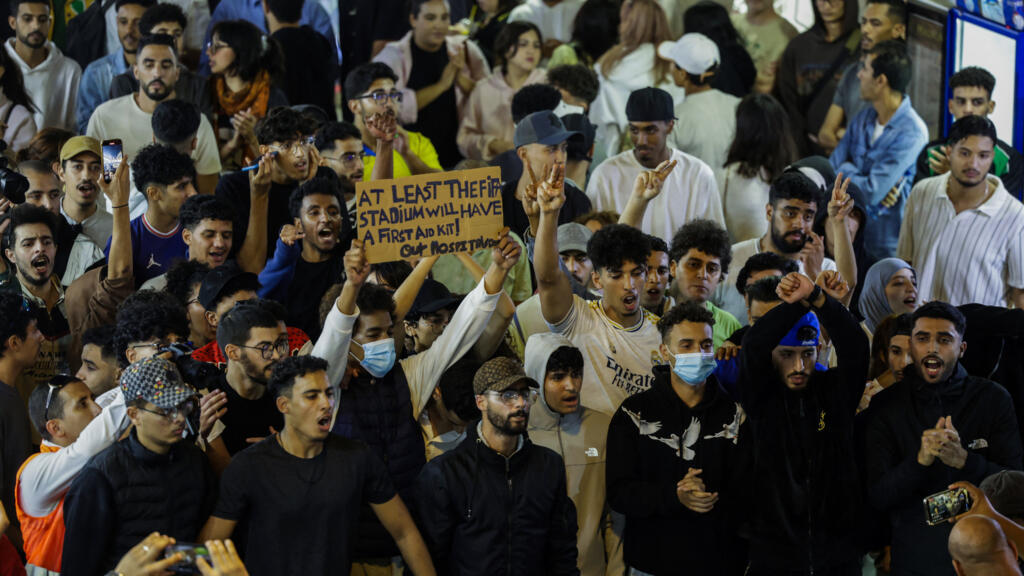
Mainly young demonstrators have been on the streets of towns and cities in Morocco calling on the government to spend as lavishly on schools and hospitals as it does on stadiums for the 2030 World Cup. 
© AFP - ABDEL MAJID BZIOUAT

By: Paul MyersFollow

Rallied by online collectives including GenZ 212 and Morocco Youth Voices, thousands of mainly young Moroccans took to the streets in a dozen towns and cities last weekend waving placards and shouting slogans including: "Stadiums are here, but where are the hospitals?"

Although the estimated €6 billion costs of building and revamping stadiums and roads for the World Cup appear to be the main conductor for their anger, the month-long Africa Cup of Nations that starts on 20 December could bear the brunt.

"Football is much more than entertainment or sport," said Abderrahim Boukira, professor of the sociology of sport at Hassan 1 University in Settat.

"It’s a vehicle for national pride and identity and a perfect tool for social cohesion and inclusion – if it is used in the right way.

"But also football exposes structural weaknesses such as inequality, lack of spaces and social exclusion."


Double hosting duties

The Confederation of African Football (Caf), which organises the biennial Cup of Nations, declined to comment about the protests which, according to the Moroccan Interior Ministry, have left at least 589 police officers as well as 50 civilians injured and led to nearly 500 arrests.

The 35th Africa Cup of Nations was handed to Morocco in September 2023, a year after Guinea was stripped of hosting duties due to its lack of progress on revamping stadiums and roads.

A week later, Morocco's football administrators were celebrating anew. The bosses at Fifa, world football's governing body, awarded them co-hosting duties with Portugal and Spain for the centenary edition of the World Cup in 2030.

Two years on, with protests in their second week and GenZ 212 calling for the resignation of Prime Minister Aziz Akhannouch, a poser has emerged for Moroccan politicians and football tournament organisers.

Now that they have been questioned, how can they effectively appease the disaffection to ensure a friction-free Cup of Nations and show the demonstrators that they are responding?

Young and angry

Tahani Brahma, a researcher and secretary general at the Moroccan Association for Human Rights, told RFI: "Moroccan youth are taking to the streets to call for functioning hospitals, quality schools and decent jobs.

"They're rejecting the reality of billions being spent on stadiums for the World Cup while basic services are collapsing.

"Most importantly, Moroccan youth do not want promises, they want their rights."
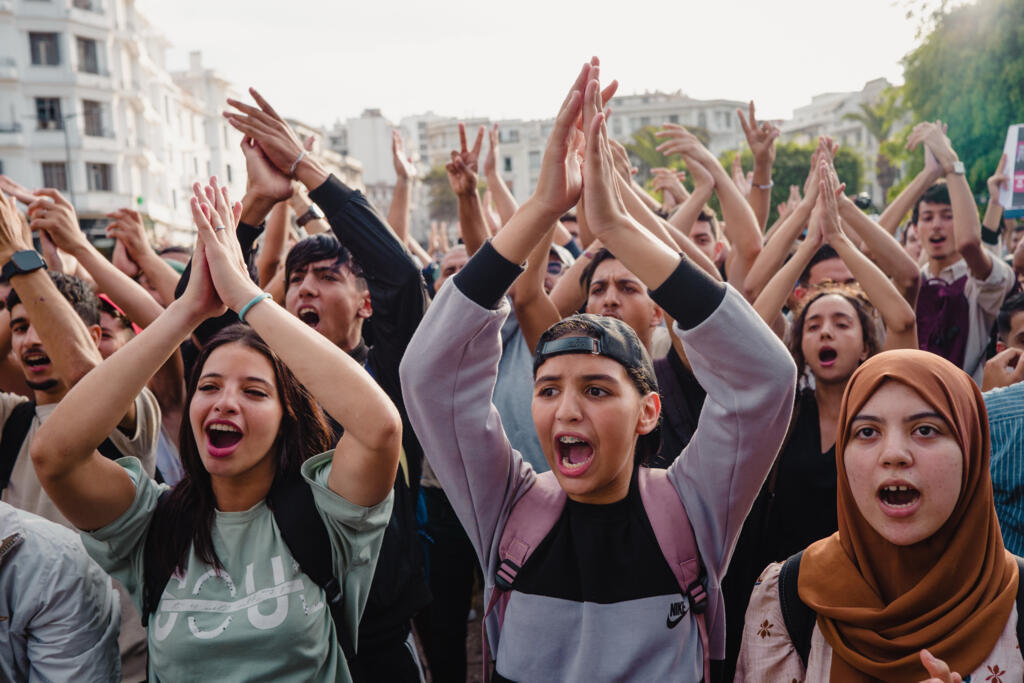

People protest against corruption and call for healthcare and education reform in Casablanca, Morocco, on 2 October 2025. © AP Photo


People born between 1995 and 2010 make up a fifth of Morocco's population of 38 million. In August, Morocco's national statistics office reported unemployment rates of 35.8 percent for 15- to 24-year-olds and 21.9 percent for the 25 to 34 cohort.

The demographic's ability to mobilise swiftly and vocally on the streets via online platforms such as TikTok and Discord has transformed them into an unpredictable mass with palpable reasons for anger – such as a string of deaths on a maternity ward in Agadir that they say are evidence of the public health sector's shortcomings.

Akhannouch, who is also mayor of Agadir, responded to protests outside that hospital in early September by acknowledging that the centre had been facing problems for decades.

The billionaire fuel and media tycoon insisted that the government was in the process of building and upgrading hospitals across all the country's regions.

Data from the World Health Organisation suggests that quest could be long.

In 2023, WHO statistics showed Morocco having 7.7 medical professionals per 10,000 inhabitants and far fewer in certain regions, including Agadir, with 4.4 per 10,000. The WHO recommends 25 per 10,000.

Spending priorities

The government has also been accused of failing to adequately help victims of the earthquake that struck Morocco's Atlas Mountains on 8 September 2023.

More than 2,900 people were killed and 5,500 people injured during the 6.8-magnitude tremor and its aftershocks.

Just over two years on, Crown Prince Moulay El Hassan inaugurated the 68,000-seat Prince Moulay Abdellah Stadium in Rabat. Amid the pomp and ceremony for the heir to the throne, officials cooed over how the old stadium was demolished and replaced within two years with a state-of-the art venue that will host the first match at the Cup of Nations as well as the final.


A few days later, dozens of quake survivors congregated in front of Morocco's parliament as part of a public plea to the government to take reconstruction aid as seriously as the World Cup projects.

Brandishing banners with the names of villages destroyed during the earthquake, they chanted: "Quake money, where did it go? To festivals and stadiums."


Tourism concerns


While GenZ 212 and other organisers are urging peaceful protests, there have been reports of violence in several smaller towns over the past week, including three deaths in the village of Lqliaa near Agadir on Wednesday night.

Officers fired on protesters "in legitimate defence" after they allegedly tried to storm a police station, the authorities said.

In Sale, near Rabat, groups of young men hurled stones at police, looted shops, set banks ablaze and torched police vehicles. Security forces in Tangier faced a barrage of stones, and in Sidi Bibi, masked youths burned the commune headquarters and blocked a main road.

Gatherings since then have been largely peaceful, but the shadow of unrest may be enough to worry tourism chiefs.

Tourism contributes significantly to Morocco's economy, accounting for 7 percent of its GDP. Between January and the end of August 2025, Morocco welcomed 13.5 million visitors, a 15 percent rise on a similar period in 2024, said the Ministry of Tourism.

The 2025 Cup of Nations is expected to improve those figures. But the numbers arriving in Rabat, Agadir, Casablanca, Fez, Marrakech and Tangier for the tournament could be affected if a threat of protests and violence were to stalk the nine venues.
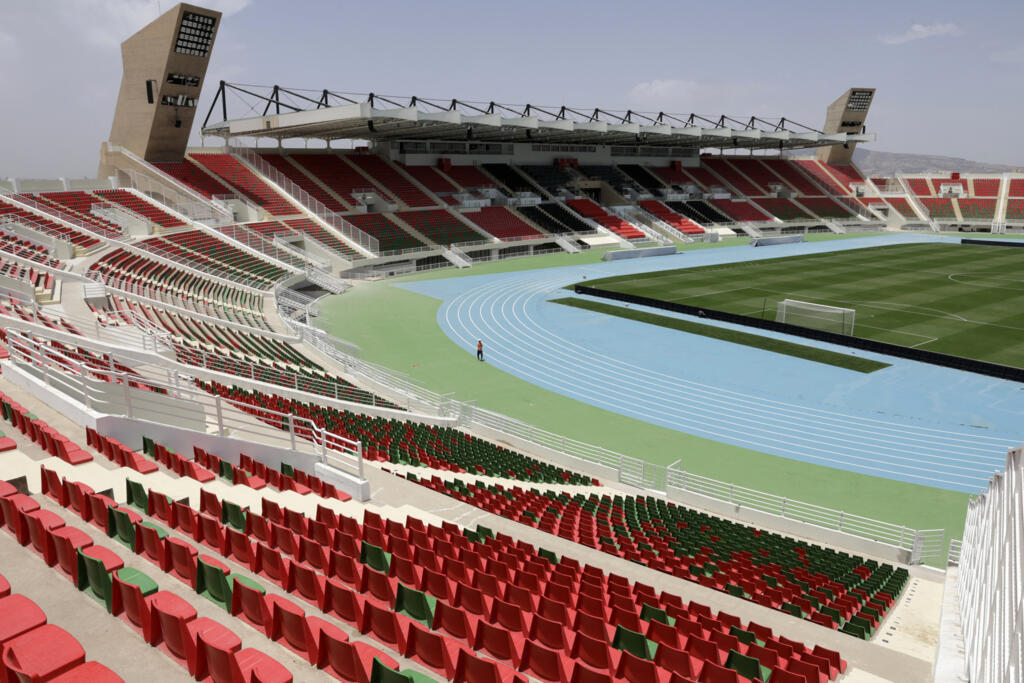
The stadium in Fez, which has received a major overhaul before Morocco hosts the 2025 Africa Cup of Nations. © AFP - ABDEL MAJID BZIOUAT

Sports sociologist Boukira suggested it was the opposite of the image the Moroccan administration hopes to project.

"Football is also a tool of soft power," he said. "Hosting big tournaments, improving infrastructure and attracting global attention shows that football functions beyond sport: it’s a way to project a modern image and to engage internationally."

He also pointed out the potential benefits at home: "Events like the Cup of Nations and the World Cup also create employment, bring in more tourists and investments. And all that helps in our socio-economic development."

But with young protesters demanding fundamental reform, there is no guarantee that logic will convince them.

"Young people in Morocco have been suffering for a long time, and not only young people, but the entire population," said human rights campaigner Brahma.

"Young people are demanding freedom and dignity, and I think these demands will only increase."


Côte d'Ivoire opposition calls for daily protests ahead of presidential election

Côte d'Ivoire's two main opposition parties called on Sunday for daily protests, less than two weeks before a presidential election in which their two main candidates are barred from running.


Issued on: 12/10/2025 - RFI

Supporters of different opposition parties wave flags and carry placards during a march calling for an inclusive election in the neighborhood of Yopougon in Abidjan on 9 August, 2025, ahead of the presidential election on October 25, 2025. AFP - ISSOUF SANOGO

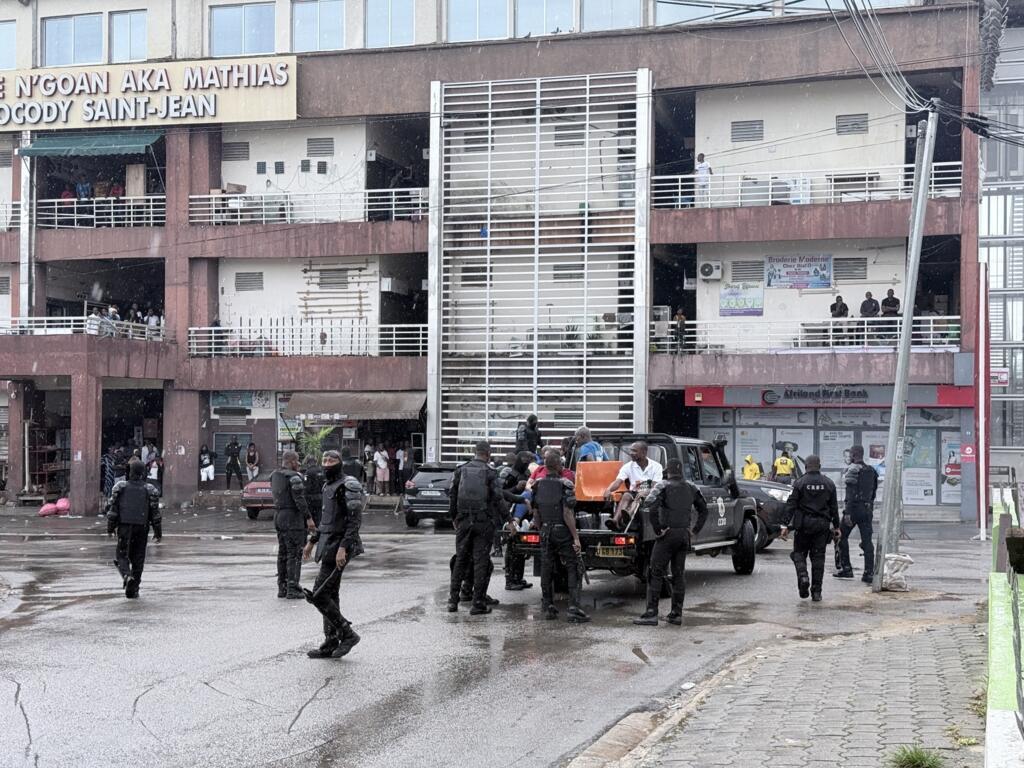
At a march in Abidjan on Saturday, which had been banned by authorities the day before, security forces dispersed crowds with tear gas. At least 237 people were arrested, according to Interior Minister Vagondo Diomande.

Côte d'Ivoire's government earlier this month imposed sweeping bans on meetings and rallies protesting the exclusion of leading critics of President Alassane Ouattara from the 25 October vote.

Ex-leader Laurent Gbagbo and Tidjane Thiam, who heads the west African country's largest opposition party, are among the figures who have been prevented from challenging 83-year-old Ouattara's bid for a fourth term.

"Demonstrations for democracy, justice, and peace will continue every day across the country until the demands for political dialogue are met," announced the Common Front, which unites the two main opposition parties, in a joint statement seen by French news agency AFP on Sunday.

Côte d'Ivoire's Common Front activists arrested after defying the banned march in Abidjan on Saturday, 11 October, 2025. © RFI / Abdoul Aziz Diallo

Gbagbo and Thiam's parties both reported numerous people injured on Saturday, and reaffirmed their "firm determination not to be intimidated or distracted by the regime's brutal repression".

The authorities in Abidjan had banned Saturday's opposition protest on the grounds of the need to "maintain public order".

No opposition leaders were seen at the march, but several groups took to the streets in several neighbourhoods, calling for democracy and opposing Ouattara's candidacy.

Côte d’Ivoire presidential race begins amid rising tensions

"Alassane Ouattara is not the choice of the Ivorians. We are not in a democracy; we are under a dictatorial regime," one activist told AFP on condition of anonymity.

Another woman said: "I came to demonstrate this morning because I'm tired of this country. His time has come, he (Ouattara) just has to leave."

Security forces assaulted journalists covering the protest, seized equipment and deleted images.

The head of Thiam's Democratic Party of Côte d'Ivoire (PDCI) in parliament, Simon Doho, told AFP the arrests were "arbitrary" and were a "serious risk to the stability of the country".

"What we want for our country is democracy, freedom of expression, to vote, the participation of all candidates, and transparent elections," he added.

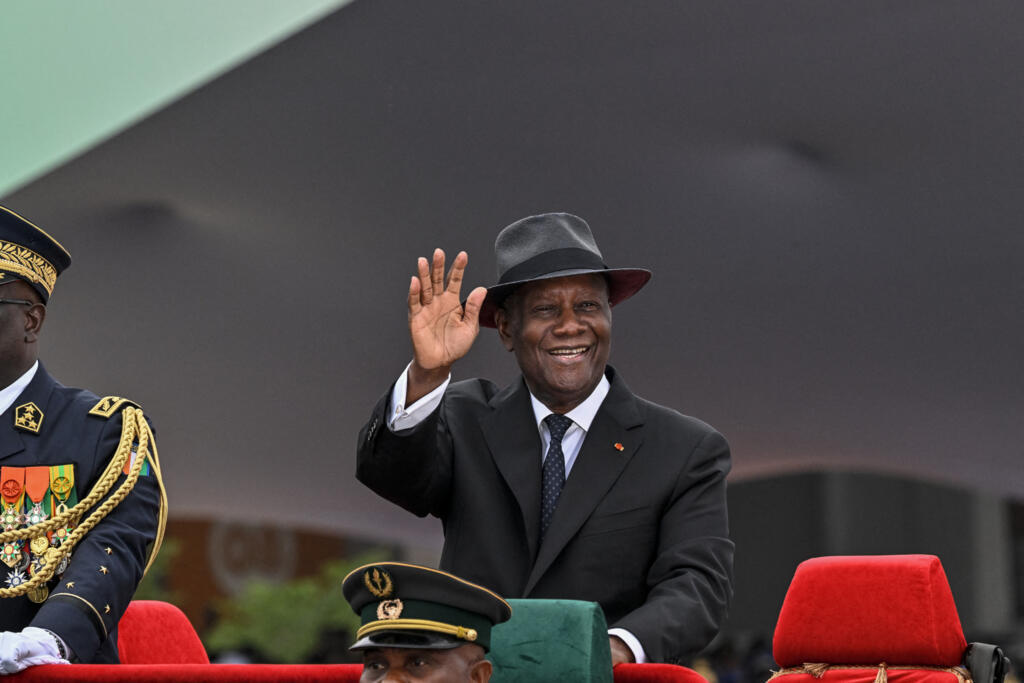
Ivorian President Alassane Ouattara (R) waves as he arrives to attend a military parade to mark 65 years of Ivory Coast's independence in Bouake on 7 August, 2025. © ISSOUF SANOGO / AFP

'Peace imposed by weapons'

The executive secretary of Gbagbo's African People's Parti Côte d'Ivoire (PPA-CI), Sebastien Djedje, said peace was being "imposed by weapons".

Some 300 kilometres away to the northwest, there was a festive atmosphere in the city of Daloa, where Ouattara launched his re-election campaign.

Why Côte d’Ivoire’s election could be more complex than it seems

"I love this Côte d'Ivoire that unites women and men from different communities," the 83-year-old president said, addressing the crowd of cheering supporters at the Daloa regional stadium.

Heavy downpour failed to dampen spirits at the rally where Mamadou Toure, spokesperson for the ruling Rally of Houphouetists for Democracy and Peace (RHDP) party, urged people to "vote for stability, peace, and continuity."

In the upcoming election, Ouattara, will face off against former ministers Jean-Louis Billon and Ahoua Don Mello, as well as former first lady Simone Ehivet Gbagbo and Henriette Lagou, who previously ran for president in 2015.

(with AFP)
WWIII

China and Philippines trade blame over boat collision near disputed islands


The Philippines and China accused each other on Sunday of responsibility for a maritime confrontation near disputed islands in the South China Sea, in the latest flare-up of long-simmering territorial disputes over the resource-rich waterway.


Issued on: 12/10/2025 
By: FRANCE 24

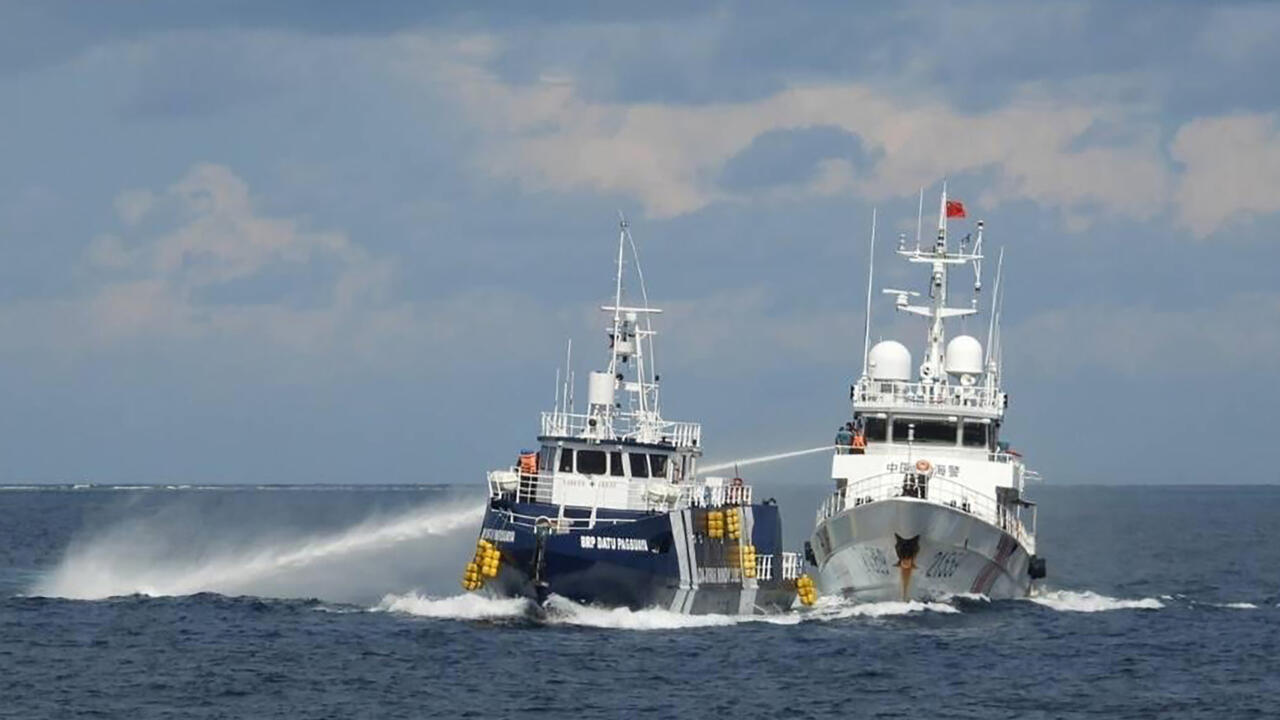
This handout photo taken and released on October 12, 2025 by the Philippine Coast Guard shows a China Coast Guard ship (right) using water cannon against a Philippine Bureau of Fisheries vessel in disputed waters of the South China Sea. © Philippine Coast Guard handout via AFP

The Philippines said a Chinese ship deliberately rammed one of its government vessels in the disputed South China Sea on Sunday, though Beijing blamed Manila for the incident.

Confrontations between Philippine and Chinese vessels occur frequently in the contested waterway, which Beijing claims nearly in its entirety despite an international ruling that its assertion has no legal basis.

The Philippines said a Chinese coast guard ship "fired its water cannon" at the BRP Datu Pagbuaya, a vessel belonging to Manila's fisheries bureau, at 9:15am (0115 GMT) on Sunday.

"Just three minutes later... the same (Chinese) vessel deliberately rammed the stern" of the Philippine boat, "causing minor structural damage but no injuries to the crew", the statement said.

Manila's coast guard said the incident took place near Thitu Island, part of the Spratly Islands where Beijing has sought to assert its sovereignty claims for years.

China's coast guard said the incident occurred after a Philippine vessel entered waters near Sandy Cay, "ignored repeated stern warnings from the Chinese side, and dangerously approached" the Chinese ship.

"Full responsibility lies with the Philippine side," spokesman Liu Dejun said in an online statement.

Photos and videos released by the Philippine Coast Guard showed a China Coast Guard vessel – with its activated water cannon – shadowing a Philippine ship.

"Despite these bullying tactics and aggressive actions... we will not be intimidated or driven away," the Philippine Coast Guard said.

The incident is the latest in a string of recent flare-ups between Beijing and Manila in the South China Sea, a busy waterway through which more than 60 percent of global maritime trade passes.

Last month, the Philippine government said one person was injured when a water cannon attack by a China Coast Guard vessel shattered a window on the bridge of another fisheries bureau ship, the BRP Datu Gumbay Piang, near the Beijing-controlled Scarborough Shoal.

And in August, a Chinese navy vessel collided with one from its own coast guard while chasing a Philippine patrol boat near the same shoal.

China seized control of the fish-rich shoal from the Philippines after a lengthy standoff in 2012.

The Philippines had voiced opposition to China's plans for a "nature reserve" there, calling it a pretext for the eventual occupation of the site.

(FRANCE 24 with AFP)


Philippines says China rammed their ship in South China Sea

DW with AFP and Reuters
12/10/2025 

Manila has decried the incident as a "clear threat" from China, while Beijing insists the Philippines' vessels bear "full responsibility" for the collision in the long-disputed naval region.

The Philippines, on Sunday, accused a Chinese ship of deliberately colliding with a Philippine vessel anchored near an island in the disputed South China Sea.

Chinese maritime forces used water cannon and rammed a Filipino government ship near the Thitu Island, according to Manila. The Philippines' officials described the incident as a "clear threat" from Beijing.

Such confrontations between Chinese and Philippine vessels have grown increasingly common in recent years. China claims nearly all of the South China Sea which is a crucial path for over $3 trillion (€ 2.58 trillion) in annual ship trade.

In 2016, the Permanent Court of Arbitration in The Hague ruled that most of China's claims in the South China Sea, particularly on its resources, had no basis in international law. It was a landmark victory for the Philippines but the issue remains rife nearly a decade later, and China continues raising the pressure on Manila and other naval rivals to comply with Beijing's stance.

Parts of the waters are also claimed by Brunei, Indonesia, Malaysia and Vietnam.

Tensions between Manila and Beijing have been rising steadily through the year, especially over a prime fishing location in the disputed waters.

Who's challenging Beijing in the South China Sea?  15:26

What did the Philippines say?

The Philippine Coast Guard said three vessels, including the government's BRP Datu Pagbuaya. were anchored near the Manila-controlled island as part of a government program to protect local fishermen when a Chinese ship approached and intimidated them by using water cannon.


An hour later, the Chinese vessel is said to have used water cannon directly at the BRP Datu Pagbuaya.

"Just three minutes later... the same (Chinese) vessel deliberately rammed the stern" of the Philippine boat, "causing minor structural damage but no injuries to the crew", the coast guard's statement said.

How did China respond?


China has blamed the Philippines for the collision, saying it bears "full responsibility."

The Chinese Coast Guard released a statement in response saying two Philippine government vessels "illegally entered" the waters without authorization and "dangerously approached" a coast guard ship, resulting in a collision.

The Chinese Coast Guard "lawfully" took control measures against the said vessels and expelled them, it said.

Edited by: Darko Janjevic


'From caricature to dangerous figure': Kim Jong-un's transformation on the global stage


Issued on: 10/10/2025 
Play (12:52 min)
From the show

Reading time1 min

On the show this week, we ask what message Kim Jong-un is trying to send to the West, and the US in particular, as he marks 80 years since the founding of the North Korean Workers' Party. We also explore how India's stance in the Middle East has shifted, as it tilts closer to Israel. Plus, an HPV vaccine drive faces road bumps in Pakistan over claims of misinformation.

Video by: 

To Prevent Rapid Sea-Level Rise, Reduce Emissions Now


October 11, 2025 
By Eurasia Review

The timing of emissions reductions, even more so than the rate of reduction, will be key to avoiding catastrophic thresholds for ice-melt and sea-level rise, according to a new Cornell University study.

The study, published in Nature Climate Change, models the impacts of different emissions trajectories, finding that emissions and uncertainties around ice sheet dynamics will have the most impact on sea-level rise through 2200.

“Roughly speaking, we found that somewhere between 2065 and 2075, emissions really start to become the dominant factor, as well as uncertainties related to emissions like Antarctic Ice Sheet tipping points,” said Vivek Srikrishnan, assistant professor of biological and environmental engineering in the College of Agriculture and Life Sciences. “As we get to 2060, 2065, the mitigation we do today will start to really materially impact the range of sea-level rise outcomes.”

It‘s well understood that future carbon dioxide emissions will impact global temperatures, the melting of ice sheets and sea-level rise, but there’s a great deal of uncertainty around what that will look like: We don’t know how or when emissions and increased temperatures will precipitate a rapid melting of ice sheets and surge in sea levels, or the best approach to avoid those tipping points.

Previous studies and models focused on or made central emissions’ impact on warming temperatures, without considering how those changes might interact with ice sheet and ocean dynamics over time in a detailed way. Srikrishnan and his team, including first author Chloe Darnell, M.S. ‘23, wanted to understand how emissions might have a nonlinear relationship to sea-level rise – as temperatures surpass thresholds and initiate a more rapid melting of ice sheets.

For more granular detail, the researchers used their own model of emissions and integrated it with a number of existing climate models, including ones that model ice sheet dynamics, to determine the factors impacting sea-level rise through 2200. They found that delaying emissions reductions by even a decade substantially reduces the chances of avoiding thresholds for sea-level rise, with the year emissions peak greatly influencing the probability of surpassing ice sheet tipping points.

They estimate that a failure to reduce emissions by 2050 will result in a greater than 50% probability of reaching the threshold that would raise sea-levels by 0.4 meters, which could surpass 0.5 meters depending on how heat is absorbed into the oceans and other complex geophysical dynamics. A sea-level rise of 0.5 meters could increase the entire distribution of flood risk at most tidal gauges by 10-fold, with a 100-fold increase in risk at more than half of those gauges.

“It’s not worth waiting for a silver bullet,” Srikrishnan said. “Obviously the faster we can reduce emissions the better, but any decrease is better than nothing. That’s not a new insight, but this reinforces it.”

The study also found that while uncertainties around the Antarctic Ice Sheet explain the most variability of 21st century sea-level rise, Greenland could play a larger role in the 22nd century.

“The overall volume of sea-level rise that Greenland could contribute could be quite large, and that matters a lot in a number of different places on the planet,” Srikrishnan said.

More broadly, the modeling approach provides a new tool to assess shifts in emissions and policy, and to help communities allocate resources.

“One of the goals is building a machinery that allows us to look more granularly at how changes in emissions – that we may see in response to changes in policy – might impact climate risk,” Srikrishnan said. “We need to have ongoing conversations around what emissions trajectories are more plausible and how that might impact our assessment of adaptation needs.”

Srikrishnan said the approach attempts to identify signposts in a future that no one can precisely predict.

“Trying to refine our understanding of these uncertainties, the ones we can refine, is important,” Srikrishnan said. “Then we can ask: What can we observe that would give us enough lead notice for decision-makers to make appropriate accommodations to their planning? What clear signposts can we try to identify that point to an impending instability? These are central questions.”

Caspian’s Falling Water Level Hitting Kazakhstan Harder Than Other Littoral Countries – OpEd


By 

Because of differences in the topography of the coastline and in the depth of coastal waters, the rapid fall in the water level of the Caspian is not hitting all five of the countries equally. Kazakhstan is suffering the most and thus has become the leader in efforts to prevent the shallowing of the sea from becoming a disaster.


According to Kazakhstan journalist Viktor Dolgov, Kazakhstan must take unilateral steps to address its problems before it will be in a position to demand the cooperation of other littoral states, at least some of which don’t face the same problems and can avoid making changes (spik.kz/2407-obmelenie-kaspijskogo-morja-ugrozy-i-riski-dlja-kazahstana.html).

The Kazakhstan authorities have also been prompted to be more sensitive to these issues because Astana has already been confronted with the demise of the Aral Sea and thus know more than the other four Caspian littoral states which have not just how serious  falling water levels can be economically, socially and politically.

And it is these two factors which mean that Kazakhstan has already taken more steps at home and in relations with its neighbors in this regard and is likely to do so in the future, steps that have put it at odds with Russia over water from the Volga which flows into the Caspian (windowoneurasia2.blogspot.com/2025/08/russians-outraged-kazakhstan-wants.html).


Saving The Somali Sea: A Call For Ownership, Protection, And Prosperity – OpEd


The Horn of Africa as seen from the NASA Space Shuttle. 

Photo Credit: NASA, Wikipedia Commons

October 12, 2025 

By Dr. Suleiman Walhad


The Somali Sea, a vast expanse of the western Indian Ocean stretching along Somalia’s eastern coastline and folding over to the Gulf of Aden all the way to the southern tip of the Red Sea near the Bab El Mandab Straits, represents both a national treasure and an untapped engine for economic growth. With over 3,300 kilometers of coastline, the longest on mainland Africa, Somalia’s marine territory is rich in biodiversity and home to some of the world’s most productive fishing grounds, thanks to the Somali Current upwelling system. For centuries, Somali communities have depended on these waters for their livelihoods, food, trade, and cultural identity. They still do.

However, in recent decades, the Somali Sea has become a zone of quiet exploitation. As Somalia struggles with decades of civil war, weak governance, and limited maritime infrastructure, foreign actors have seized the opportunity to exploit its unprotected waters. Today, illegal, unregulated, and unreported (IUU) fishing remains one of the most pressing threats facing the Somali Sea, depriving the Somali people of critical resources and revenue.

Foreign industrial fishing vessels, mainly from countries like Iran, Yemen, the Gulf countries and especially the UAE, China, South Korea, Egypt, India, and even some European nations continue to plunder Somali waters with little or no oversight. These ships, often operating under the radar, target high-value fish species such as tuna, snapper, lobster, and cuttlefish. They use destructive fishing techniques and take advantage of the lack of enforcement, fishing far beyond their quotas, or without any licenses at all. While Somali fishers, often using small wooden boats, struggle to make ends meet, massive trawlers pull in hundreds of tons of fish that are shipped overseas for profit. Unfortunately, at times Somali agents work with these foreign parties at the expense of their own people for uno poco di dolari.

This exploitation isn’t only illegal. It is unjust. These foreign fleets extract marine wealth from Somalia’s exclusive economic zone (EEZ), which by international law belongs to the Somali people. The losses are staggering. According to some estimates, Somalia loses hundreds of millions of dollars each year due to IUU fishing. These are funds that could be reinvested in coastal development, infrastructure, education, and healthcare.

But the danger goes beyond theft. IUU fishing also devastates the marine ecosystem. Overfishing and the use of harmful gear destroy coral reefs, seagrass beds, and fish breeding grounds. Key species are becoming scarce, pushing local fishers to travel further and take greater risks. The environmental degradation caused by unregulated fishing also threatens long-term food security for coastal communities.

Alongside IUU fishing, the Somali Sea is also under threat from pollution and the lingering effects of suspected toxic dumping. During the lawless years of the early civil war, several international reports, including investigations by the United Nations, suggested that foreign companies used Somali waters to dispose of hazardous and industrial waste. Containers filled with chemicals and radioactive material were believed to have been dumped offshore, sometimes washing up along the coast. While not always proven with hard evidence, these claims sparked fears of contamination and increased rates of unexplained health problems in nearby communities.

Adding to these challenges is climate change, which is causing sea temperatures to rise, coral reefs to bleach, and weather patterns to become more extreme. Coastal erosion, saltwater intrusion, and rising sea levels pose further threats to Somalia’s vulnerable shoreline and the communities that live along it. The compounded effects of environmental degradation, illegal activity, and climate instability threaten to strip Somalia of its marine resources before the country has a chance to fully benefit from them.

Yet despite these dangers, the Somali Sea holds vast potential for economic development and national renewal, if properly protected and managed. The Somali Sea could support a thriving blue economy: one built around sustainable fishing, responsible tourism, aquaculture, and maritime trade. Somalia’s strategic location near the Gulf of Aden and the Indian Ocean shipping lanes gives it access to global trade routes and positions it as a future maritime hub.

To fully realize this potential, the Somali people and their government must reassert both symbolic and practical ownership of their maritime domain. The strategic significance of the Somali Sea has not gone unnoticed in the region, as evidenced by past attempts by landlocked Ethiopia to secure maritime access or exert influence over Somali coastal assets. While these efforts were ultimately unsuccessful, they underscore the geopolitical value of Somalia’s coastline and the urgent need for a coherent national strategy to safeguard it against external ambitions and ensure it serves national interests.

First, Somalia must build robust maritime governance. This means strengthening institutions like the Ministry of Fisheries and the Somali Coast Guard, which have been underfunded and under-equipped for years. Proper laws must be enforced to control who can fish in Somali waters and under what conditions. Licensing processes need to be transparent, data-driven, and enforced, ensuring only responsible and sustainable actors are allowed to operate.

Second, there must be a crackdown on illegal fishing. Somalia should partner with international organizations, satellite monitoring services, and neighboring countries to track and report IUU vessels. The agreement with Türkiye to protect the Somali seas for a decade represent one step in the right direction but must be accompanied by robust Somali efforts to safeguard its own assets. Platforms like Global Fishing Watch and regional maritime security networks can be instrumental in building surveillance capacity. Vessels caught stealing from Somali waters should be penalized, publicly named, and, where possible, detained and prosecuted.

Third, Somali coastal communities must be empowered. These communities are the rightful stewards of the sea, yet they are often the poorest and most neglected. Investing in local fishing infrastructure, such as cold storage, fish processing facilities, and safe harbors, can dramatically increase incomes and create jobs. Training programs can introduce sustainable fishing practices and help communities transition to higher-value and more environmentally friendly methods. Community-led marine protected areas (MPAs) can also play a key role in restoring fish stocks and biodiversity.

Fourth, Somalia needs a long-term blue economy strategy, one that balances economic growth with environmental sustainability. This strategy should explore opportunities in eco-tourism, aquaculture, maritime trade, and ocean energy. Foreign investment must be welcomed cautiously and regulated to ensure it benefits local populations and respects Somalia’s sovereignty. A large presence of activities (tourism resorts, water sports, fishing fleets, boat building, and others) along the coastline can put pressures on thieving parties from elsewhere.

Fifth, the Somali public must be informed and mobilized. A national awareness campaign can help people understand the importance of protecting marine resources. Somali media, schools, religious leaders, and civil society organizations all have a role to play in educating the public about the dangers of illegal fishing, pollution, and overuse.

Lastly, international cooperation must be leveraged not to replace Somali leadership of its seas, but to support it. Global partners, such as the United Nations, African Union, FAO, and others, should offer technical assistance, training, and funding, while respecting Somalia’s autonomy. Somalia must engage more actively with regional fisheries management bodies like the Indian Ocean Tuna Commission (IOTC) to claim its rightful seat at the table in managing shared ocean resources.

In conclusion, the Somali Sea is not just water and fish. It is wealth, history, identity, and opportunity. But today, that opportunity is slipping away, taken by foreign vessels and neglected by weak systems. It is time for Somalia to stand up and say: our seas are not for sale, not for dumping, and not for plundering. They are for the Somali people, today, tomorrow, and for generations to come.

Reclaiming the Somali Sea will not be easy, but it is essential. It is a matter of economic survival, environmental justice, and national pride. The ocean is rising, and Somalia must rise with it.


Dr. Suleiman Walhad

Dr. Suleiman Walhad writes on the Horn of Africa economies and politics. He can be reached at suleimanwalhad@yahoo.com


Ongoing Houthi Support Of Somali Terror Groups Threatens Regional Stability


United States forces seize Iranian-made missile parts and other weapons bound for Yemen’s Houthi rebels near the coast of Somalia. Photo Credit: U.S. CENTRAL COMMAND


October 11, 2025 
By Africa Defense Forum


Growing ties between Yemen’s Houthi rebels and Somali terror groups threaten to fuel greater insecurity in Somalia and further disrupt shipping in the Gulf of Aden and the Red Sea.

Aries D. Russell of Aries Intelligence said there is “credible evidence” that Iranian and Houthi-linked networks are using Somali ports and smuggling routes to move arms into East Africa and there are indications they also offer consultation and training.

“What we’re seeing is more of an influence and logistical presence, rather than a direct Houthi ground deployment into Africa,” Russell told ADF.

Russell characterized the Houthis, as well as jihadist fighters from Iraq and Syria, as “black market” private military contractors, or PMCs. They are organized, operational entities that offer military-style services such as training, advising and tactical support, although they may be informally structured or loosely governed.

“While these groups are ideological and networked rather than profit-maximizing corporations in the Western sense, they do behave like contractors or subcontractors in a militant ecosystem,” he said. “They differ from conventional mercenaries in their ideological as well as transactional orientation; they do not always fight purely for pay.”

The Iran-backed Houthis supply terror groups with weaponized drones, surface-to-air missiles and other materiel that have been traced to Iranian stockpiles. The weapons are shipped to al-Shabaab, the al-Qaida-affiliated terror group that controls areas in central and southern Somalia, and the Islamic State in Somalia (ISSOM), which primarily operates in Puntland’s mountainous regions.

“Just as in Yemen, the Houthis are using weapons, and especially promises of access to UAVs [unmanned aerial vehicles] and military expertise, as a way of acquiring support from groups in Somalia,” analyst Michael Horton wrote for the Combatting Terrorism Center at West Point. “The Houthis, in cooperation with Iran, are also using the provision of weapons as a way of securing supply chains for their drone and missile programs.”

Analysts warn that expanded supply routes of both Iranian and Chinese ammunition and weaponry could increase the reach of terror groups who could attack targets in Djibouti, Ethiopia and Kenya. According to Horton, the Houthi-Somali arms trade is quite lucrative.

“For example, a crate of Chinese or Iranian-made AK-47s can be sold in Somalia for up to five times what they cost to acquire in Yemen,” he wrote. “Margins for other weapons and materiel such as sniper rifles, RPG-7s, man-portable mortars, and night vision devices are considerably better. Modifiable commercial and military-grade UAVs command even higher premiums.”

Somali and international security forces have tried to stem the flow of arms into the country, but the terror groups have demonstrated the capacity to use high-tech weapons. In January, ISSOM conducted two drone strikes against Puntland security forces, their first known use of the technology, according to the Armed Conflict Location and Event Data Project.

The terrorist group al-Shabaab deployed more drones and reclaimed significant amounts of territory from the Somali government in early 2025. Its network of fighters, loyalists and smugglers across Somalia and northern Kenya offers the Houthis greater opportunities to ship arms out of the Indian Ocean or by land to the Gulf of Aden.

Al-Shabaab also has shared with the Houthis its coastal intelligence network and years of experience in piracy, strengthening the Yemeni group’s ability to threaten regional maritime traffic. An uptick in maritime attacks has bolstered both groups’ finances. According to the Africa Center for Strategic Studies, the Houthis earn an estimated $180 million a month from fees paid by shipping agents to secure safe passage through the region.

The rising insecurity has had direct economic effects on coastal continental countries and global trade. The Africa Center reported that the rerouting of commercial vessels around the Cape of Good Hope in South Africa has increased by 420% and added up to two weeks and 6,000 nautical miles to their journeys. Egypt has seen its nearly $10 billion annual revenues from Suez Canal traffic drop by more than 70%, for a monthly loss of $800 million.

On July 7, the Houthis attacked a Liberian-flagged cargo ship in the Red Sea with drones and rocket-propelled grenades. The assault killed at least four Sailors and left 15 others missing. The rebels released a video that showed explosions on the ship before it sank. The Houthis claimed responsibility for sinking another cargo ship in the Red Sea the day before. These were the first assaults on shipping in the Red Sea since late 2024, possibly indicating a new armed campaign.

Houthi attacks in the Red Sea last year coincided with a resurgence in Somali piracy. As Somalia’s Hiiran Online reported, it is not clear whether the piracy surge reflected opportunism or direct coordination with the Houthis. However, analysts say al-Shabaab last year reached a deal to provide protection to Somali pirates in exchange for 30% of all ransom proceeds and a cut of any loot.

Horton does not expect the relationship between the Houthis and groups in African conflict zones to end any time soon.

“Ongoing wars and insurgencies in Sudan, Ethiopia, and Somalia and the overall febrile nature of politics in the Horn of Africa will provide the Houthis with ample opportunities for expanding their reach,” he wrote.


Africa Defense Forum

The Africa Defense Forum (ADF) magazine is a security affairs journal that focuses on all issues affecting peace, stability, and good governance in Africa. ADF is published by the U.S. Africa Command.

Iran’s Cautious ‘Yes’ To Trump’s Gaza Plan – Analysis


October 11, 2025
By RFE RL
By Kian Sharifi


When US President Donald Trump unveiled his peace plan for the Gaza Strip, it was first met with official silence in Iran, then state media condemnation, and finally cautious acceptance.

Iran’s posture, experts say, is a calculated effort to avoid being seen as a spoiler while allowing Tehran to preserve its influence over Hamas, the US-designated Palestinian terrorist group.

Iran’s restrained endorsement of the US peace plan also reflects Tehran’s waning clout in the region as well as its shifting priorities after a costly 12-day war with Israel in June, experts say.

Israel and Hamas agreed to a first phase of the plan that includes a cease-fire and hostage release. Other thorny issues in Trump’s peace plan unveiled last month have been left for later negotiations.
‘Keeping Ties With Hamas Alive’

“Iran is trying to avoid being branded as a spoiler, seeing the negotiations and possibility of a cease-fire as beneficial for keeping ties with Hamas alive,” said Sanam Vakil, director of the Middle East and North Africa Program at Chatham House.


Iran has for years provided financial and military support to Hamas. But Tehran’s leverage over Hamas has diminished as Israel has degraded the armed group’s military capabilities during two years of war in Gaza.

Tehran’s ability to shape outcomes in Gaza, too, has been reduced.

Iran’s so-called axis of resistance, its loose regional network of proxies, and armed groups against Israel, has been severely weakened over the past year. The alliance includes Hamas, Lebanon’s Hezbollah, Yemen’s Huthi rebels, and Shi’ite militias in Iraq.

During the brief war in June, Israel and the United States carried out a bombing campaign that degraded Iran’s nuclear and military capabilities.

“Even if it wanted to spoil the plan, [Iran] understands very, very clearly that it doesn’t really have the ability to do that,” said Raz Zimmt, director at the Israeli-based Institute for National Security Studies.

Iran is preoccupied with rebuilding its military capabilities, including missiles and air defense systems, and restoring its strategic footprint in the region, Zimmt said.
The Future Of Hamas

Trump’s peace plan requires Hamas, the governing authority in Gaza, to fully disarm and surrender power. Control of the territory would then pass to a transitional Palestinian administration.

When Iran expressed support for the plan, it commended Hamas’s “smart” response to Trump, noting that the group had agreed to the hostage release but rejected disarmament and its surrender of power.

“Israel would like to disarm Hamas, to disarm the Gaza Strip, but I think it’s very realistic to assume that it’s not going to be that easy,” said Zimmt.

If a cease-fire holds in Gaza, Iran will just look for other opportunities to insert itself in Palestinian politics, most likely via the Israeli-occupied West Bank, experts say.

“Tehran will [shift] resistance support to the [Israeli-occupied] West Bank and also support civil society resistance,” said Vakil.

Iran could also use the “media and social platforms to promote” anti-Israeli narratives, she said.Kian Sharifi is a feature writer specializing in Iranian affairs in RFE/RL’s Central Newsroom in Prague. He got his start in journalism at the Financial Tribune, an English-language newspaper published in Tehran, where he worked as an editor. He then moved to BBC Monitoring, where he led a team of journalists who closely watched media trends and analyzed key developments in Iran and the wider region.


RFE RL

RFE/RL journalists report the news in 21 countries where a free press is banned by the government or not fully established.


Azerbaijan Compels Putin To Take Responsibility For Civilian Jetliner Shootdown Incident


October 11, 2025 
By Eurasianet


(Eurasianet) — State-aligned media in Azerbaijan is lauding the country’s leader, Ilham Aliyev, for making his Russian counterpart Vladimir Putin blink first during a long-running diplomatic staredown over the shootdown of a civilian Azerbaijani jetliner last December.

After months of dodging, Putin finally acknowledged that Russian air defenses were responsible for causing the airliner to crash in late December, killing 38 passengers and crew aboard. Putin made the admission on October 9, during a one-on-one meeting with Aliyev on the sidelines of a CIS summit in Dushanbe, Tajikistan, claiming, implausibly, that he only found out details of the incident a few days before.

The Kremlin leader attributed the mishap to “technical failures in the Russian air defense system,” adding that two anti-aircraft missiles “exploded, perhaps self-destructing, a few meters away” from the airliner as it flew over Russian airspace in Chechnya.

In what for Putin passes as an apology, he went on to say “everything required in such tragic cases will be done by the Russian side in terms of compensation, and the actions of all officials will be legally assessed,” according to a Azerbaijani governmentstatement.

Aliyev, who has in recent months been increasingly biting in his criticism of Russia’s refusal to take responsibility for the incident, accepted Putin’s olive branch, “expressing gratitude for considering it necessary to address this issue at our meeting.”

He went on to indicate that bilateral relations, which experienced a flash freeze over the shootdown, can now start returning to normal.

One of the main complaints aired by Aliyev during the spat over the shootdown was that Moscow did not regard Baku as an equal partner. By compelling Putin to take responsibility for the shootdown, Aliyev’s hardline approach appears to have succeeded in shifting the power dynamic governing the bilateral relationship, forcing the Kremlin to acknowledge Azerbaijan as a partner, not treat it as a subservient state.

A commentary published October 10 by the Caliber.az outlet lauded Aliyev for standing up to Putin by exhibiting a combination of “firm principle and a willingness to go all the way, balanced by a pragmatic and carefully calculated approach.”

“President Ilham Aliyev can celebrate yet another success,” the commentary stated. “Once again, he has achieved the desired result and upheld the national dignity of our country.”


Eurasianet

Originally published at Eurasianet. Eurasianet is an independent news organization that covers news from and about the South Caucasus and Central Asia, providing on-the-ground reporting and critical perspectives on the most important developments in the region. A tax-exempt [501(c)3] organization, Eurasianet is based at Columbia University’s Harriman Institute, one of the leading centers in North America of scholarship on Eurasia. Read more at eurasianet.org

Can Marijuana Legalization Help Keep Republican Majorities In Congress? – OpEd


October 11, 2025

By Adam Dick

Eight years ago this month I commented that “I would not be surprised to see the US government legalize marijuana within the next five years.” That conclusion came upon my consideration of the then 64 percent nationwide support for legalization among Americans who had been recently polled by Gallup, plus — for the first time — majority support among Republicans.

Since then, support for legalization has come in even higher among Americans generally and Republicans. A 2023 Gallup poll measuredsupport for marijuana legalization up another six percent to reach 70 percent of Americans. Support among Republicans came in at 55 percent — up four percent from the 2017 Gallup poll.

Currently, there is much speculation regarding what may be the result of the Trump administration’s ongoing review of whether marijuana should be moved from the most restrictive Schedule I of the Controlled Substances Act (CSA) to Schedule II or Schedule III that progressively relax government prohibition. Leaving marijuana where it is in the CSA would be an affront to legalization proponents, while even dropping marijuana down to Schedule III that allows much medical use but still retains many aspects of the war on marijuana would be underwhelming.

President Donald Trump and Republican leadership in the United States House of Representatives and Senate may garner a major benefit for their party if they enact marijuana legalization within the next twelve months instead of continuing to keep in place the unpopular prohibitionary policy. Trump could announce soon the move of marijuana down to Schedule III, but the major news could be his concurrent announcement that he and Republican congressional leaders will be working on enacting legislation in the next few months that will bring about national marijuana legalization and an end altogether the US government’s war on marijuana.

Rep. Thomas Massie (R-KY) has argued that the Republican House leadership may have prevented the loss of the Republican House majority in the November 2018 election if the leadership had previously allowed members to approve in a floor vote leaving marijuana law up to the states. Maybe taking such action soon in the House and Senate would benefit Republican congressional contenders in the November of 2026 election, With marijuana legalization popular, making it a reality may be a wild card Republicans can play to keep their House and Senate majorities. 

This article was published at Ron Paul Institute


Adam Dick

Adam Dick is a Senior Fellow at Ron Paul Institute for Peace and Prosperity. Adam worked from 2003 through 2013 as a legislative aide for Rep. Ron Paul. Previously, he was a member of the Wisconsin State Board of Elections, a co-manager of Ed Thompson's 2002 Wisconsin governor campaign, and a lawyer in New York and Connecticut.