Sunday, October 12, 2025


90% of Science Is Lost: Frontiers’ revolutionary AI-powered service transforms data sharing to deliver breakthroughs faster


Frontiers


Most scientific data never fuel the discoveries they should. 

For every 100 datasets created, around 80 remain in the lab, 20 are shared but rarely reused, fewer than two meet FAIR standards, and only one typically drives new findings. 

The result: delayed cancer treatments, climate models short on evidence, and research that cannot be reproduced. 

Frontiers, the open-science publisher, is tackling this problem with the launch of Frontiers FAIR² Data Management, the world’s first all-in-one, AI-powered service for research data. Designed to transform how data is shared so it is reusable and credited, it brings together curation, compliance checks, AI-ready packaging, peer review, an interactive portal, certification, and lifetime hosting in a single workflow — ensuring that research funded today delivers faster breakthroughs in health, sustainability, and technology tomorrow. 

FAIR² extends the FAIR principles (Findable, Accessible, Interoperable and Reusable) with an open specification that ensures every dataset is AI-ready and responsibly reusable by both humans and machines. Frontiers FAIR² Data Management is the first implementation, launched at a time when research outputs are growing exponentially and AI is reshaping discovery — turning principles into practical infrastructure for real-world impact at scale. 

Dr Kamila Markram, co-founder and CEO of Frontiers, comments: 

“Ninety percent of science vanishes into the void. With Frontiers FAIR² Data Management, no dataset and no discovery need ever be lost again — every contribution can now fuel progress, earn the credit it deserves, and unleash science.” 

AI at the Core 

Tasks that once took months of manual work — from curating datasets and checking compliance to creating metadata and publishable outputs — are now completed in minutes by the AI Data Steward, powered by Senscience, the Frontiers venture behind FAIR². 

With one submission, researchers receive four outputs: a certified Data Package, a peer-reviewed and citable Data Article, an Interactive Data Portal with visualizations and AI chat, and a FAIR² Certificate. Together they include quality checks and clear summaries that make data easier to interpret for non-specialists and simpler to combine across disciplines. 

Together, they ensure every dataset is preserved, validated, citable, and reusable — ready to drive new discoveries while giving scientists the credit they deserve. Frontiers FAIR² also makes data visible and easy to explore, enabling responsible reuse by researchers, policymakers, practitioners, communities, and even machines — helping society gain more value from its investment in science. 

Flagship Pilot Datasets 

  • SARS-CoV-2 Variant Properties — Covering 3,800 spike protein variants, this dataset links structural predictions from AlphaFold2 and ESMFold with ACE2 binding and expression data. It offers a powerful resource for pandemic preparedness, enabling deeper understanding of variant behavior and fitness. 

  • Preclinical Brain Injury MRI — A harmonized dataset of 343 diffusion MRI scans from four research centers, standardized across protocols and aligned for comparability. It supports reproducible biomarker discovery, robust cross-site analysis, and advances in preclinical traumatic brain injury research. 

  • Environmental Pressure Indicators (1990–2050) — Combining observed data and modeled forecasts across 43 countries over six decades, this dataset tracks emissions, waste, population, and GDP. It underpins sustainability benchmarking and evidence-based climate policy planning. 

  • Indo-Pacific Atoll Biodiversity — Spanning 280 atolls across five regions, this dataset integrates biodiversity records, reef habitats, climate indicators, and human-use histories. It provides an unprecedented basis for ecological modeling, conservation prioritization, and cross-regional research on vulnerable island ecosystems. 

Researchers testing the pilots noted that Frontiers FAIR² not only preserves and shares data but also builds confidence in its reuse — through quality checks, clear summaries for non-specialists, and the reliability to combine datasets across disciplines, all while ensuring scientists receive credit. 

All pilot datasets comply with the FAIR² Open Specification, making them responsibly curated, reusable, and trusted for long-term human and machine use so today’s data can accelerate tomorrow’s solutions to society’s most pressing challenges. 

Recognition and Reuse 

Each reuse multiplies the value of the original dataset, ensuring that no discovery is wasted, every contribution can spark the next breakthrough, and researchers gain recognition for their work. 

Dr Sean Hill, co-founder and CEO of Senscience, the Frontiers AI venture behind FAIR² Data Management, notes: 

“Science invests billions generating data, but most of it is lost— and researchers rarely get credit. With Frontiers FAIR², every dataset is cited, every scientist recognized — finally rewarding the essential work of data creation. That’s how cures, climate solutions, and new technologies will reach society faster — this is how we unleash science.” 

What Researchers Are Saying 

Dr Ángel Borja, Principal Researcher, AZTI, Marine Research, Basque Research and Technology Alliance (BRTA): 

“I highly [recommend using] this kind of data curation and publication of articles, because you can generate information very quickly and it’s useful formatting for any end users.” 

Erik Schultes, Senior Researcher, Leiden Academic Centre for Drug Research (LACDR); FAIR Implementation Lead, GO FAIR Foundation: 

"Frontiers FAIR² captured the scientific aspects of the project perfectly." 

Femke Heddema, Researcher and Health Data Systems Innovation Manager, PharmAccess: 

"Frontiers FAIR² makes the execution of FAIR principles smoother for researchers and digital health implementers, proving that making datasets like MomCare reusable doesn’t have to be complex. By enabling transparent, accessible, and actionable data, Frontiers FAIR² opens the door to new opportunities in health research." 

Dr Neil Harris, Professor in Residence, Department of Neurosurgery, Brain Injury Research Center, University of California, Los Angeles (UCLA): 

"Implementation of [Frontiers] FAIR² can provide an objective check on data for both missingness and quality that is useful on so many levels. These types of unbiased assessments and data summaries can aid understanding by non-domain experts to ultimately enhance data sharing. As the field progresses to using big data in more disparate sub-disciplines, these data checks and summaries will become crucial to maintaining a good grasp of how we might use and combine the multitude of already acquired data within our current analyses." 

Maryann Martone, Chief Editor, Open Data Commons: 

“[Frontiers] FAIR² is one of the easiest and most effective ways to make data FAIR. Every PI wants their data to be findable, accessible, comparable, and reusable — in the lab, with collaborators, and across the scientific community. The real bottleneck has always been the time and effort required. [Frontiers] FAIR² dramatically lowers that barrier, putting truly FAIR data within reach for most labs." 

Dr Vincent Woon Kok Sin, Assistant Professor, Carbon Neutrality and Climate Change Thrust, Society Hub, The Hong Kong University of Science and Technology (HKUST): 

“[Frontiers] FAIR² makes our global waste dataset more visible and accessible, helping researchers worldwide who often struggle with scarce and fragmented data. I hope this will broaden collaboration and accelerate insights for sustainable waste management.” 

Dr Sebastian Steibl, Postdoctoral Researcher, Naturalis Biodiversity Center and the University of Auckland: 

“True data accessibility goes beyond just uploading datasheets to a repository. It means making data easy to view, explore, and understand without necessarily requiring years of training. The [Frontiers] FAIR² platform, with an AI chatbot and interactive visual data exploration and summary tools, makes our biodiversity and environmental data broadly accessible and usable not just to scholars, but also practitioners, policymakers, and local community initiatives.” 


MACRO ADVISORY: The unintended consequences of Western sanctions

MACRO ADVISORY: The unintended consequences of Western sanctions
Sanctions on Russia have not worked anything like they were supposed to. One of the side effects is there are now more billionaires in Russia today than at the start of the war and most have brought their money home, making it easier for Putin to fund his war. / bne IntelliNews
By Chris Weafer CEO of Macro-Advisory October 12, 2025


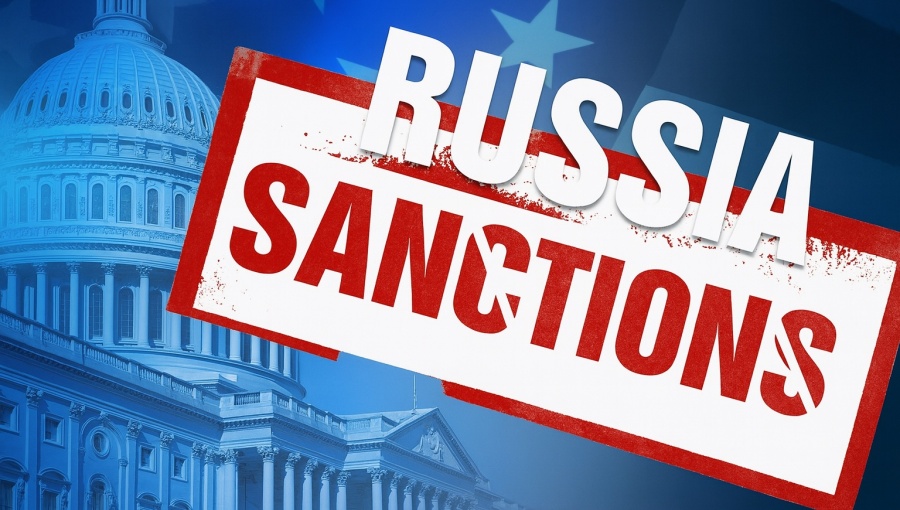
Since 2014, Western nations have hit Russia with a total of 26,655 sanctions (to mid-September 2025), with 23,960 coming after February 2022. The largest target group, with 13,611 sanctions, is state officials, business owners, and well-known public figures. The declared intention of sanctions was to force the Kremlin to alter its geopolitical course, i.e. to quickly withdraw from Ukraine, by causing a shock crisis in the economy and creating a backlash by prominent businesspersons and the public against the Kremlin.

The economy did suffer from disruption in 2022 (-1.2%), but growth returned in 2023 (+4.1%) and in 2024 (+4.3%). The economy also received a huge boost to income in 2022-23, as the EU was not ready for sanctions and was forced to stockpile Russian oil and other materials. The external trade and current accounts have remained comfortably in surplus since 2022.

Today, there is again speculation in many parts of the western media that because headline growth in Russia dropped to just over 1.0% in the first half of this year; the rate of VAT is planned to rise to 22%, (from 20% currently); and the budget deficit is higher than had been planned; that the economy is heading for recession and that the government is facing a financial crisis. President Trump recently fuelled that narrative with his reference to Russia as a “paper tiger”. But none of this speculation or the assumption of imminent crisis holds up to scrutiny. The motivation for the reports is again, or is mostly, political optics.

As mentioned, over 13,000 of the sanctions have been directed at individuals, especially Russian billionaires and business owners. The assumption being that these individuals would increase pressure on the Kremlin to withdraw from Ukraine to alleviate pressure on their businesses and to recover their wealth from sanctions orders. But here is where there is a lack of understanding about how Russia has changed since 2000. billionaires do not have political influence in Putin’s Russia and, as such, cannot be properly referred to as Oligarchs, i.e. as originally defined in ancient Greece. So, while these individuals were targeted by sanctions intended to pressure the government, they hold little to no political influence, and the measures have therefore failed to bring about any meaningful change in state policy - and nor will they. 

Moreover, while some assets – modest volume - belonging to the business elite have been frozen under Western sanctions, the bulk of their wealth remains in Russia or in so-called friendly jurisdictions. This is largely because, in the face of an increasingly unpredictable external environment – where sanctions were often imposed based solely on high net worth – many saw no viable option other than to redomicile their wealth and business interests to Russia or allied countries. And they had plenty of notice to do so since sanctions against Russia started quite meekly from spring 2014.

The 2025 Forbes billionaire Report showed that there are now 146 billionaires in Russia, up 21 from 2024 and with 15 new names appearing. The combined wealth of the billionaires is assessed at $625.6bn, a record high for Russia. Most of that wealth is now in Russia or in so-called friendly jurisdictions and has helped create a strong financial base in the country. This is one of the reasons why the government is now able to switch from financing the federal budget deficit from the National Welfare Fund, Russia’s Sovereign Wealth Fund, to tapping into the local debt market. With state debt at only 16% of GDP, the Finance Ministry has considerable scope to borrow and still keep Russia as a low indebted country.

Instead of staging a revolt, some of the sanctioned businesspersons have adapted to the new environment and have refocused their repatriated wealth on bolstering Russia’s domestic economy. Others have pursued investments or private activities outside the West, particularly in countries “friendly” to Russia. In essence, rather than weakening the Russian state, the sanctions inadvertently reinforced it by redirecting wealth and investment into the domestic market, while also simultaneously pushing away many of the pro-Western businesspeople who were essentially punished because of their nationality. Had policymakers heeded the advice of several prominent voices in the west to not sanction Russian billionaires but to make it easier for them to settle in the west and to bring the bulk of their wealth with them, it would probably be a different story in Russia today.

Also, in terms of foreign businesses in Russia, while some left, many chose to stay, either directly or indirectly by selling their operations to local investors or changing their business models. Around 46% of the largest foreign companies operating in Russia in early 2022, sold their businesses to local investors, ensuring operations continued, providing goods and services, employment and taxes and bolstering overall GDP. Ironically, many foreign companies still operating in Russia are often finding themselves in a favorable position. With many Russian founded companies now sanctioned, foreign firms, or those which have evolved from a formerly foreign owned business, are emerging as key players in several sectors, often enjoying a competitive advantage. This has created another unintended consequence in that, according to a recent calculation published by the Kyiv School of Economics (KSE) foreign companies are now contributing significantly to the Russian federal budget, paying taxes in excess of $20bn last year, but remain outside of Western sanctions lists. 

A survey by the Association of European Businesses showed in May that most of such companies operating in Russia saw opportunities for growth. While barriers like sanctions, geopolitical risks and payment restrictions persist, these companies are continuing with their long-term strategies. The reputation risks are real, but for many businesses the long-term financial rewards provide adequate compensation for the medium-term costs.

The sanctions on Russia have also had ripple effects and unintended consequences far beyond its borders. Many countries in the so-called Global South, especially China, India and others in the BRICS bloc, have deepened their economic ties with each other and with Moscow. As a result, the shift toward a multipolar world has accelerated, with new economic power centers emerging outside of the traditional Western dominated structures.

In addition, sanctions have exposed vulnerabilities within the global financial system, particularly in terms of reliance on the US dollar and the SWIFT payment system. Russia’s, and China’s, ability to create alternative financial networks and build stronger connections with non-Western financial institutions has opened the door for other countries to re-evaluate their overdependence on Western-controlled financial systems. While this shift may not be immediate, it has started and could have long-lasting implications for global trade and finance.

Apart from the unintended consequences, of course there are damaging and direct consequences from sanctions in Russia. While the economy is now stable, albeit in a much lower but sustainable growth range, the legacy of sanctions will likely remain visible in the long run. The penalties and negative effects won’t dissolve quickly even when the sanctions start to ease. High military spending will remain for several years after a peace deal. As stated by President Trump and his senior officials, sanctions will only be removed in stages over many years and some, such as access to Western technologies in dual-use areas, may stay indefinitely. Moscow also faces even greater challenges dealing with demographic challenges.

Russia has for sure been impacted by the weight of sanctions, and previous plans for economic development have been disrupted. But the country, big businesses, and people proved a lot more resilient and adaptable than those applying sanctions had expected. Trade has shifted from a previous Western dominance to the East and South. Innovation has accelerated, and localization has moved from being an ambition to a reality. Assumptions made about the nature of political power and influence in Russia was very wide of the mark.

It can also be argued that sanctions have had many unintended consequences and, in some instances, the opposite effect of what was originally hoped for by those who demanded them. Rather than fracturing Russia, the restrictions have inadvertently helped reinforce the country’s economic, social and political stability. Rather than isolating Russia within the global community, there is now a more visible fracture between the West and the Global South, and it is growing. This realization is at least one reason why The White House is now opposed to additional sanctions against Moscow (despite the frequent threats) even as Brussels prepares yet another, the nineteenth, package of sanctions.

The woman who wants to end Cameroon president's 43-year rule
DW
 October 11, 2025

Tomaino Ndam Njoya, an experienced parliamentarian with international credibility, is confident she can achieve what many have failed to do over the past four decades: unseat President Paul Biya in Cameroon's election.

Image: UDC
Cameroon's presidential candidate, Tomaino Ndam Njoya, wants to modernize the country if she wins Sunday's October 12 election

There was great surprise when Cameroon's electoral commission announced the 12 candidates for the October 12 presidential election. For the third time in Cameroon's political history, one of the contenders running for the highest office in the country is a woman.

The fact that Tomaino Hermine Patricia Ndam Njoya was even allowed to run is remarkable, given that the initial list comprised over 80 candidates in Cameroon. Kah Walla, who made history as Cameroon's first female presidential candidate in 2011, did not succeed in defeating President Paul Biya. Neither did Esther Dang, who also ran in 2011.

But this time, the chances of a female president are looking better than ever. This is not only because Africa has more female politicians, ministers and presidents.

With the adoption of the first Women's Convention in 2021, more than 81 women's organizations nationwide have gained influence that would have been unthinkable in previous elections.

In this Central African country, equality before the law prevails. Women make up over half of the population. But standing alongside 11 male presidential candidates is still a rarity.

The mayor with presidential ambition

Ndam Njoya is not new to active politics. She is the mayor of the city Foumban and chairwoman of the Democratic Union for Cameroon (UDC).

The 56-year-old politician's election campaign slogan is: "Freedom. Justice. Progress."


Tomaino Ndam Njoya is the only female presidential candidate in the 2025 election
Image: UDC

Cameroon is at a "crossroads," Ndam Njoya told DW. "It is clearly a matter of the sovereign people leading the Republic of Cameroon, which has been weakened and threatened by long-term chaotic governance, into a new era that we all deserve."

She is not fazed by the fact that few people believe she stands a chance. She intends to fight until election day. Traveling across the country, campaigning on social media platforms, such as Instagram, Facebook, and TikTok, she is using all channels to draw attention to herself.

In doing so, she has to put up with some disparaging remarks. Her male competitors refer to her as "the wife of her late husband." The fact is that in 2021, she took over the chairmanship of the UDC from her deceased husband, Adamou Ndam Njoya, a prominent opposition figure, who was Cameroon's Minister of Education in the late 1970s and also served as mayor of Foumban for many years. Adamou Ndam Njoya ran for president in 1992, 2004 and 2011, but he lost to Paul Biya, who has ruled the country for four decades. The 92-year-old president is seeking an eighth term in office.

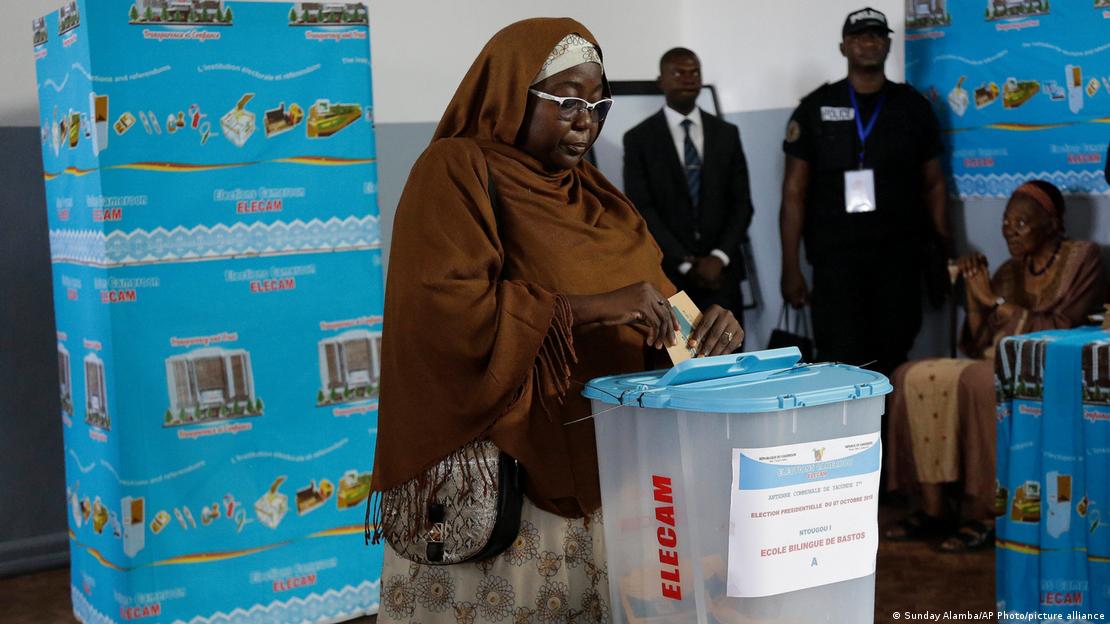
Women make up slightly more than half of Cameroon's population
Image: Sunday Alamba/AP Photo/picture alliance


Courting votes in the diaspora

Ndam Njoya has set herself ambitious goals. In the run-up to the elections, she visited the diaspora in Germany, Italy and France to encourage them to vote. Unlike the Cameroonian diaspora in France, the Cameroonian community in Germany largely supports Biya's CPDM party.

To convince them to support her candidacy, Ndam Njoya met with Joy Alemazung, the Cameroonian-born mayor of the German municipality of Heubach, Cameroonian-born SPD local politician Steve Kommogne, and other Cameroonians.

But that wasn't her only European stop. In September, she spoke about the urgency of peace and solidarity at the annual meeting of the World Brotherhood in Rome. Pope Leo was present during her speech.

Shortly afterwards, in Gabon, she outlined her ideas for better neighborly relations on both sides of the Cameroonian conflict. The Anglophone crisis in Cameroon's Northwest and Southwest regions has been raging since 2016. In addition, Cameroon has also been a target of Islamist insurgency, particularly on its northern border.


As a member of parliament, she was a member of the Forum of Women in Africa and Spain for a Better World and a member of the African Parliamentary Union.

The fact that, despite her extensive contacts, she has chosen not to pursue an international career but to fight for the future of her country has also earned her the goodwill of other opposition politicians.

Endorsements from former presidential candidates

A dozen former presidential candidates who failed in their bid in July have thrown their support behind her.

Among them is Shewa David Damuel, an entrepreneur nominated by the Patriotic Movement for a New Cameroon (MPCN) and a former member of the Social Democratic Party (SDF). "The opposition must work together," he told DW. "Cameroon is at a crossroads. The opposition is divided; it is weak, so we must stand behind Ndam Njoya."

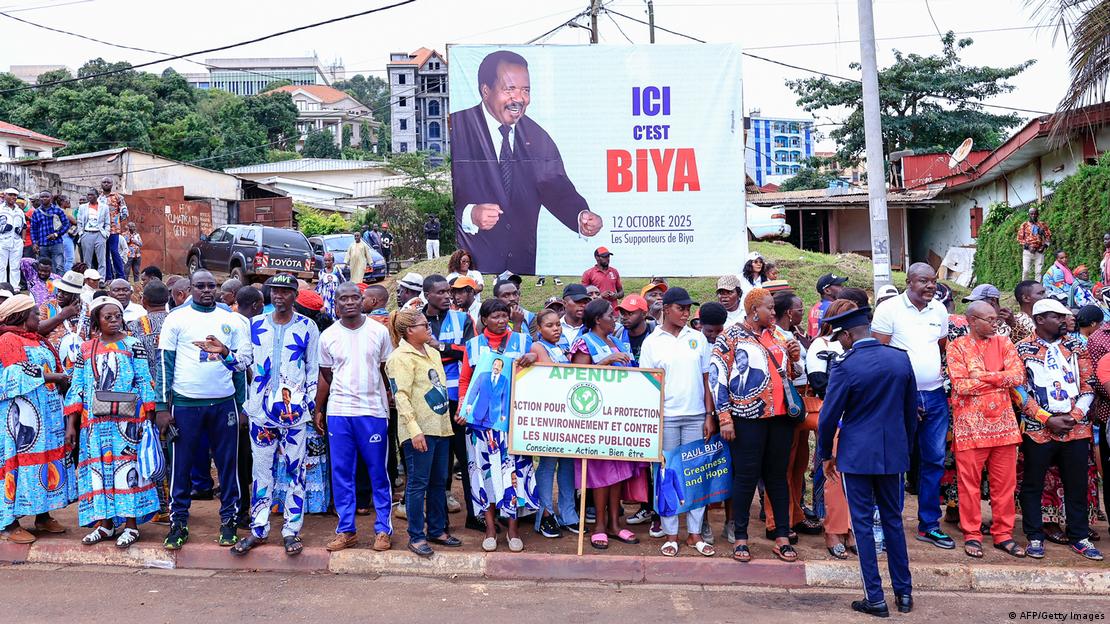
Despite his old age, President Biya still has considerable support in Cameroon
Image: AFP/Getty Images

Just like Tanzania, Liberia, Malawi and Namibia, Cameroon could also join the growing number of African countries led by women.

And Ndam Njoya has big plans. She wants to fulfill her husband's goals of uniting Cameroon as a federal state and end the Anglophone crisis. She also wants to combat youth unemployment and improve conditions for investment. Her candidacy has also attracted attention in Germany because she advocates a rotation principle when it comes to the restitution of looted cultural assets.

This article was originally written in German

Hungary: Maja T. and the lingering doubt over rule of law

DW

The cases of activist Maja. T and politician Ilaria Salis, branded 'left-wing terrorists' in Hungary, have been running for a year and a half. They raise numerous questions about the rule of law in the European country.


The case of German antifa activist Maja T. has raised a number of questions


Image: Daniel Alfoldi/ZUMA/picture alliance


Maja T. entered the courtroom in Budapest's District 5 on October 8, 2025 in a prisoner transport belt and handcuffs, accompanied by helmeted police officers. One of the officers closed the window to block out the chants of "Free Maja!" that rose from a cluster of demonstrators.

Just another day in the trial of the suspected left-wing extremist, who is accused of having attacked and seriously injured several suspected right-wing extremists in Budapest in February 2023.

According to Germany's Constitutional Court, this trial should not be taking place in Hungary. The German court in Karlsruhe ruled that insufficient checks were made before Maja T., a German national, was extradited to ensure that the conditions of detention in Hungary would be humane — especially in view of the fact that Maja T. is non-binary.

Legal expert Petra Bard, of the Central European University (CEU) in Budapest, says the Constitutional Court's ruling also indicates doubt as to whether Maja T. can expect a fair trial. "It's an open question, both because of their gender identity, and because of the way the case has been politicized."

‘Fears the worst'

As a result, Maja T.'s family and friends are extremely worried. Their father, Wolfram Jarosch, told DW that he "fears the worst" in terms of how fair the trial will be — especially now, as the Hungarian prime minister, Viktor Orban, recently declared the anti-fascist movement Antifa a terrorist organization. From a purely legal standpoint, this has no bearing on the trial already underway. Jarosch, however, is convinced: "You can see that he's exerting pressure, that Maja will ultimately be given a really draconian punishment."


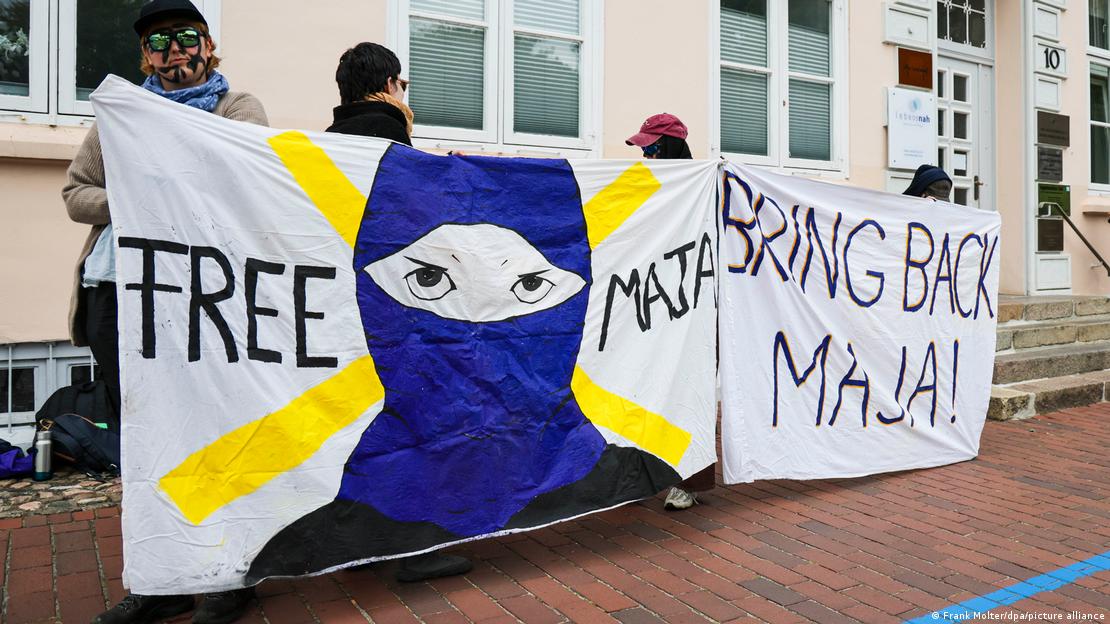
Protestors have called for action outside the office of German foreign minister, Johann Wadephul
Image: Frank Molter/dpa/picture alliance

The background: In February 2023, a group of left-wing extremists, known as autonomists, ambushed a group of suspected neo-Nazis in Budapest and attacked them with metal bars and hammers, injuring some severely. Several people were arrested in both Hungary and Germany on suspicion of involvement in the attack, and some of the cases against them, in both countries, are still ongoing.

A verdict isn't expected in Maja T.'s trial until January. Until then, they remain in pre-trial detention, where, according to their father, they are forced to endure isolation and degrading treatment. Applications for Maja to be transferred to house arrest have so far been denied.

Same charge, different circumstances

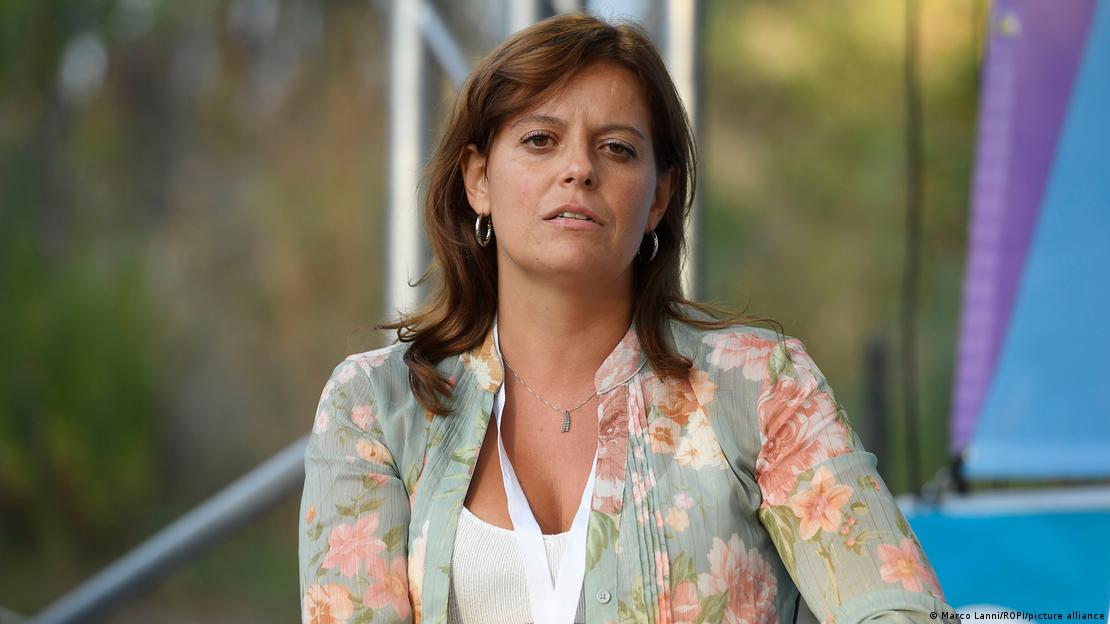
If convicted in Hungary, Maja T. faces a long prison sentence. By contrast, Ilaria Salis, a member of the European Parliament who is also accused of involvement in the crime, will not face any legal consequences, at least for now. On October 7, the European Parliament rejected the Hungarian prosecutors' demand that it should lift the left-wing Italian politician's immunity.

The result follows the recommendation of the Parliamentary Legal Affairs Committee. It found, among other things, concrete evidence that proceedings in Hungary were motivated by the intention to harm Salis' political activities and therefore opposed the waiver of immunity.

Political statement on a legal basis


The vote was extremely close, with 306 votes to 305, not least because it is debatable whether immunity also applies to acts committed before taking office, lawyer Julia Pöcze, from the Brussels-based think tank Centre for European Policy Studies (CEPS), told DW.

The state of immunity for Italian MEP Ilaria Salis has been the cause of much debate
Image: Marco Lanni/ROPI/picture alliance

The European People's Party, which is the largest faction in the European Parliament, had publicly opposed maintaining Salis' immunity — unlike in the cases of Peter Magyar and Klara Dobrev. The two Hungarian opposition figures are also facing charges in their home country.

Salis, a self-professed anti-fascist, was arrested in Hungary in February 2023 on charges of grievous bodily harm. While in Hungarian custody, she ran for the Italian Alliance of Greens and Left (Alleanza Verdi e Sinistra) in the 2024 European elections and was elected to the European Parliament in June of that year. The immunity she gained as a result led to her release shortly after her election.

Protection from repression or evasion of responsibility?

According to Pöcze, the European parliament's vote in favor of her immunity is legally justifiable, even if it is a political statement: "I think it is a political message to the effect that they do not want to assist Viktor Orban. Lifting immunity would not have been a good precedent, but it is, of course, justified on technical grounds."


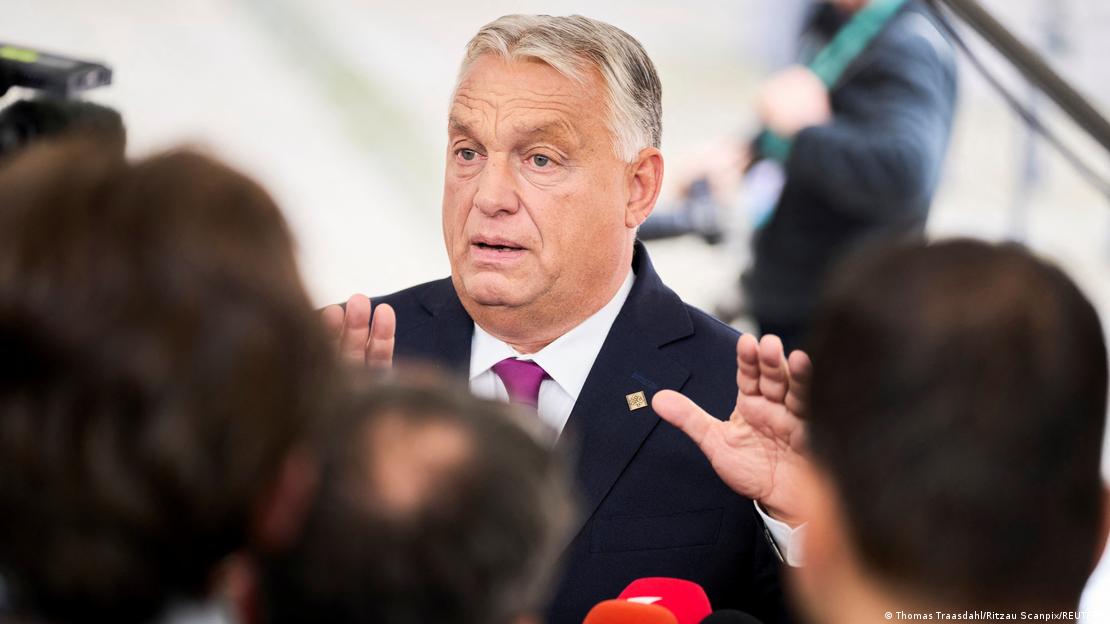
Some feel Hungarian Prime Minister Viktor Orban is attempting to influence the case
Image: Thomas Traasdahl/Ritzau Scanpix/REUTERS

Salis' lawyer György Magyar, told DW the vote is a "victory for justice" and that "her immunity was not lifted because they don't want her to be subjected to repression because of her views." His client is not trying to evade responsibility for her actions, he said: "She does not deny having been involved in certain acts of violence. Immunity is not a way for her to escape." Salis herself wants her trial in Italy to continue.


Terrorism allegations from Budapest

Budapest reacted with outrage to the votes in Strasbourg. On X, Orban wrote that Salis was "a member of a terrorist group" and was "protected" by Brussels, before adding: "The Brusselian bureaucrats like to lecture, but the pieces of their rule-of-law puzzle just don’t fit." For him and his government, there are no problems with the Hungarian rule of law – though the EU does not always agree.

In 2018, Brussels initiated proceedings against Hungary under Article 7 of the EU Treaties, which could theoretically result in the suspension of voting rights. But nothing has happened for years, and the upcoming hearing scheduled for 21 October 2025 is not expected to bring any change.

"If there is one case where the application of sanctions under Article 7 would be justified, it is Hungary. But we haven't even come close to that," added Pöcze of CEPS. "Experience shows that it leads to nothing but further hearings."

This article has been translated from German.
Mexico: Floods and landslides claim dozens of lives

Kieran Burke 
DW with dpa, AP

Authorities said the death toll had risen to at least 41 amid severe flooding and landslides in the south east. Thousands of troops have been deployed to help with disaster efforts.


Relief efforts are underway to help the tens of thousands of people impacted by flooding and landslides in Mexico
Image: Felix Marquez/AP Photo/picture alliance

Severe flooding and landslides caused by heavy rainfall in southeastern Mexico have left at least 41 people dead, local authorities said on Saturday.

Mexico's government said in a statement that 15 were killed in Veracruz, 9 in Puebla, 16 in Hidalgo, and one in Queretaro, while a search for 27 missing people was underway.

The country's Security Ministry said that 117 cities and municipalities in five states have been heavily impacted. Authorities said that many of the dead had been caught up in landslides.


Thousands of soldiers deployed


Mexico's President Claudia Sheinbaum said that at least 6,700 soldiers were being deployed to assist with emergency relief operations and to help clear roads.

"We are not leaving anyone behind; we are taking care of families who have lost a loved one," Sheinbaum wrote on X.

Authorities said that at least 34,000 houses and also hospitals, schools and critical infrastructure including roads have been damaged.


Landslides cut off some communities


Some communities have been cut off as a result of the floods. Mexico's navy was helping rescue residents from over 40 communities in some locations.

Power has also been cut off with 320,000 people impacted. Government officials said work to restore damaged power lines was underway.

In one municipality — in the central state of Puebla — a tiger escaped when the zoo flooded, but was later captured by authorities.

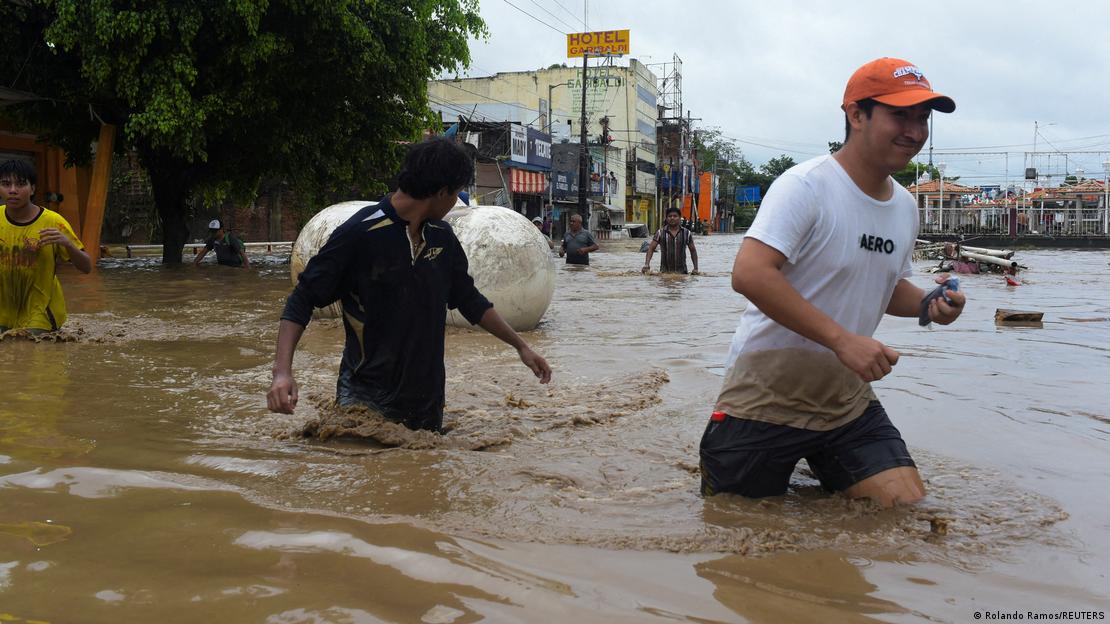
Local authorities said that between October 6 and 9, heavy rain fell in five states, with Veracruz receiving the most with 540 mm.

The rainfall is partly due to the tropical cyclones Priscilla and Raymond in the Pacific. Meteorologists predict further rain in the coming days.

The heavy rainfall of is partly due to the tropical cyclones Priscilla and Raymond in the PacificImage: Rolando Ramos/REUTERS

Edited by: Rana Taha

Kieran Burke News writer and editor focused on international relations, global security and law enforcement.
Generations of musicians threatened by US tariffs, say French instrument makers

The United States has added a 15 percent tariff on European goods since August, and while wine, aerospace and luxury items have been among the hardest hit, French musical instrument makers are also struggling.

 The US is a key market, buying half of all musical instruments made worldwide.

Issued on: 12/10/2025 - RFI

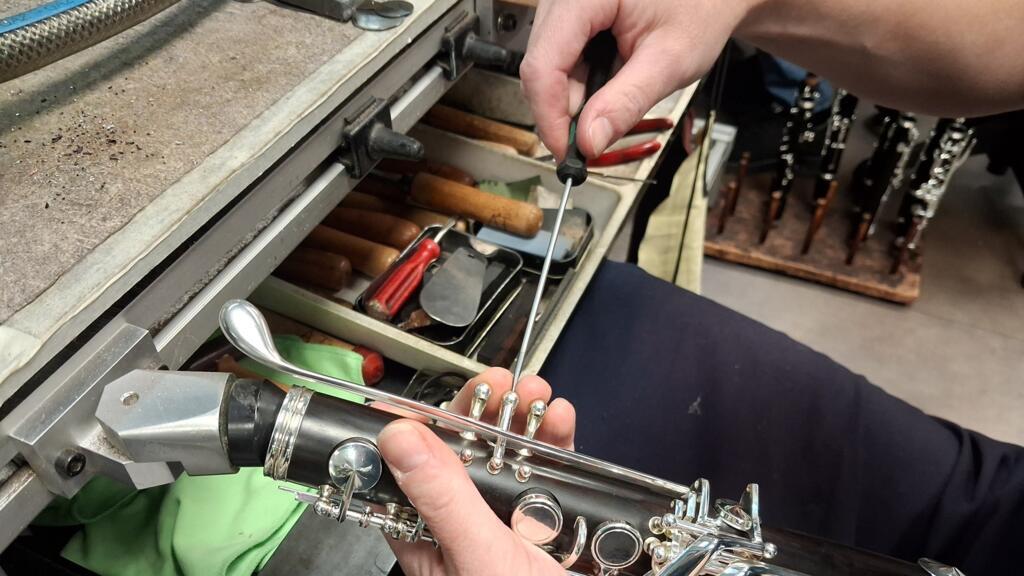
The Buffet Crampon factory manufactures 15,000 clarinets each year, 30 percent of which are exported to the United States. © RFI - Baptiste Coulon

At Buffet Crampon’s large workshop near Paris, 15,000 clarinets are produced each year. The majority are exported to the United States – "around 30 percent of our production," Jérôme Perrod, president of this 200-year-old company, told RFI.

But since the implementation of US tariffs on 7 August, things have changed.

"We’re already seeing a decline in the market due to price increases. Stores are being very cautious and don’t want to renew their stock, because they fear that musicians will buy fewer instruments," said Perrod.

The US market for wind instruments is shrinking because prices have gone up due to tariffs set by Donald Trump’s administration. According to Perrod, prices have increased by 10 to 15 percent.

US competition

Jakez François, CEO of Camac Harps, a pioneering French harp maker, shares the same concerns. The American market makes up a quarter of the company’s exports.

"These tariffs caused our prices to jump overnight," François explained. "And they come on top of the weak dollar against the euro. Combined, this has led to a 22 percent increase in our prices in the United States."

On 15 September, Camac faced a setback that had long been feared. "We had a shipping container with about 15 harps ready to go," said François. "Our main distributor cancelled more than half the order. We're now in the exact situation we were worried about."

It’s a significant blow, especially given that Camac’s main global competitor is based in the United States. "This puts us in a much tougher position against that competitor," François added.

Trump's tariffs come into force, upending economic ties with Europe

Buffet Crampon, however, is almost in a monopoly position on the wind instrument market. Because of this, Perrod says he doesn't understand the relevance behind these tariffs.

"We have no competitors in the United States, so no one is going to benefit from these American taxes."

Impact on education

The customs duties agreed between the EU and the Trump administration appear to be a lose-lose deal.

This is especially concerning since wind instruments have long been an important part of musical education and culture in the US.

"There is a very strong tradition of instrumental practice in the United States, particularly in orchestras, starting in school. Half of all children between 9 and 12 years old choose to play a wind instrument, which inevitably leads to a career in music for some of them," says Perrod.

In the long term, this tradition could suffer the consequences of these tariffs, explains Coraline Baroux-Desvignes, general delegate of the Chambre Syndicale de la Facture Instrumentale (CSFI), the union which represents around 60 companies in the sector.

"Some musicians may delay purchasing musical instruments until the situation improves, which could have an impact on the quality of musical productions," she said.

The price increase also impacts instruments made for students, which are more affordable.

"This could discourage young musicians from starting regular practice of an instrument," added Baroux-Desvignes, who fears the consequences for "several generations of musicians".

Partial unemployment

French instrument makers are now exploring new markets. The president of Camac Harps said he is working to grow the company's presence in parts of Asia, particularly China, Hong Kong and Singapore.

Buffet Crampon is thinking about doing the same. "But these new opportunities will probably not compensate for the decline in export volumes to the United States," said Perrod, as the US market buys half of all musical instruments made worldwide.

François says his company can manage for now, but Perrod has had to put some workers on partial unemployment to cut back on activity.


"It breaks our hearts to see the workshops empty on some Fridays," he said.

According to him, this is the best option available. "It would take us years to re-train workers and get back to the quality we have today. Partial unemployment lets us keep our staff and when business picks up again, bring them back like before."

Perrod doesn’t believe the tariffs will be lifted anytime soon, but still hopes for an exemption from US taxes on wind instruments.

The US Supreme Court is due to rule in early November on whether the tariffs imposed by Trump on US trade partners are legal.

This article has been adapted from the original version in French.

Madagascar leader says power grab under way as army unit claims control of military


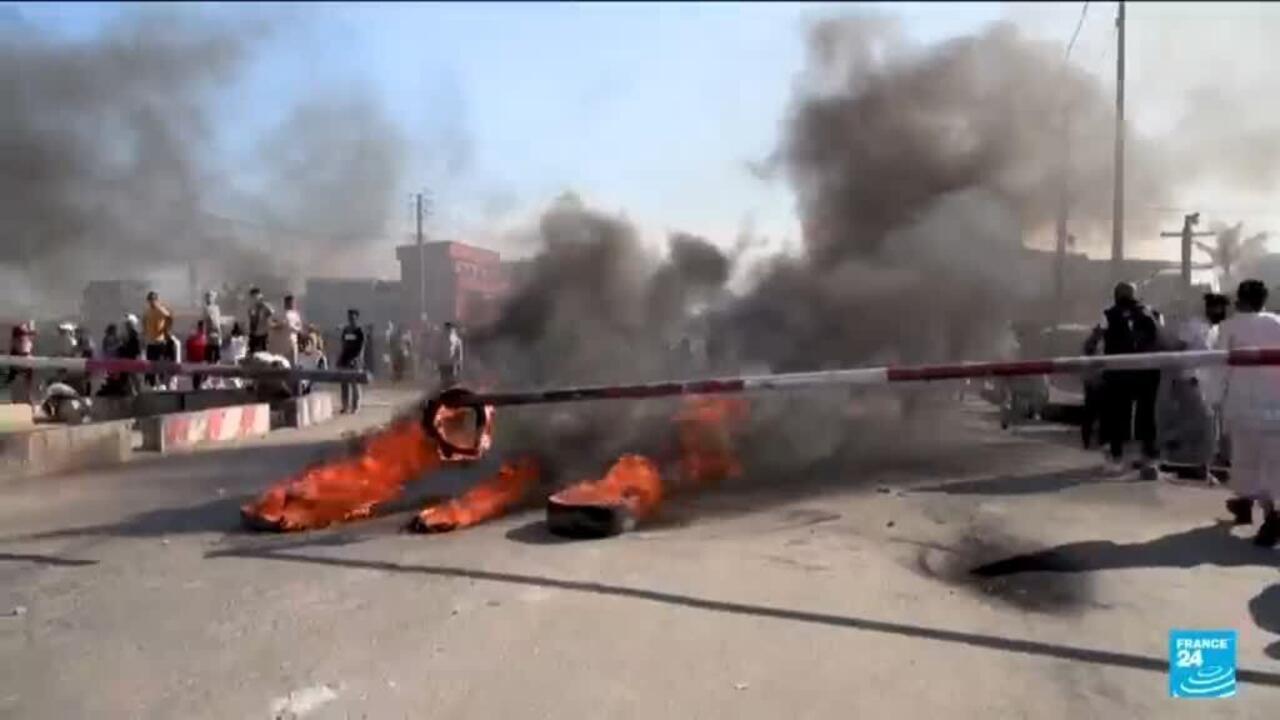
Madagascar's President Andry Rajoelina said in a statement on Sunday that "an attempt to seize power illegally and by force" was underway in the Indian Ocean island state, a day after some soldiers joined a vast protest movement that started last month. The mutinied army unit announced it was taking control of all military forces in the country.


Issued on: 12/10/2025 -
By: FRANCE 24


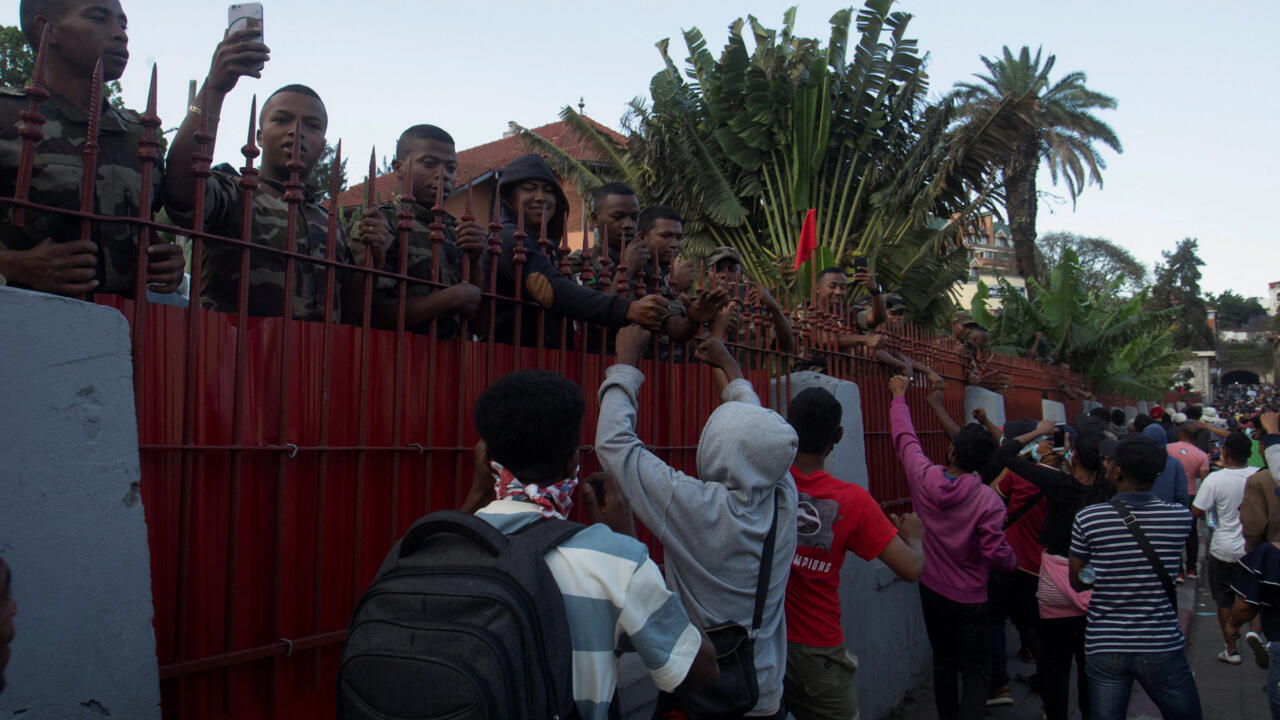
Protesters cheer members of the Madagascar military behind a fence during a nationwide youth-led demonstration in Antananarivo on October 11, 2025. 
© Zo Andrianjafy, Reuters
02:20


Madagascar's President Andry Rajoelina on Sunday said an "attempt to seize power illegally and by force" was under way, a day after a contingent of soldiers joined thousands of anti-government protesters in the capital.

Rajoelina's statement came as the CAPSAT contingent of administrative and technical officers said it was taking control of the army, after earlier repudiating the violent crackdown on youth-led protests that have rocked the Indian Ocean island for more than two weeks.

"From now on, all orders of the Malagasy army – whether land, air or the navy – will originate from CAPSAT headquarters," the officers claimed in a video statement.

There was no immediate response from other units or the military command.

The newly appointed minister of the armed forces called on troops to 'remain calm' in a press conference Saturday. © Rijasolo, AFP

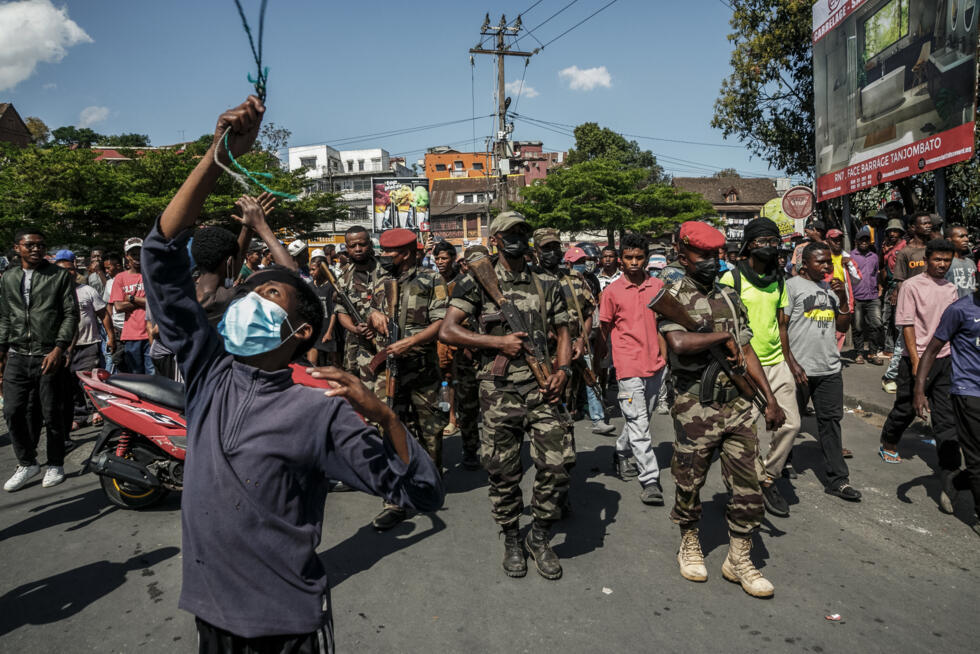
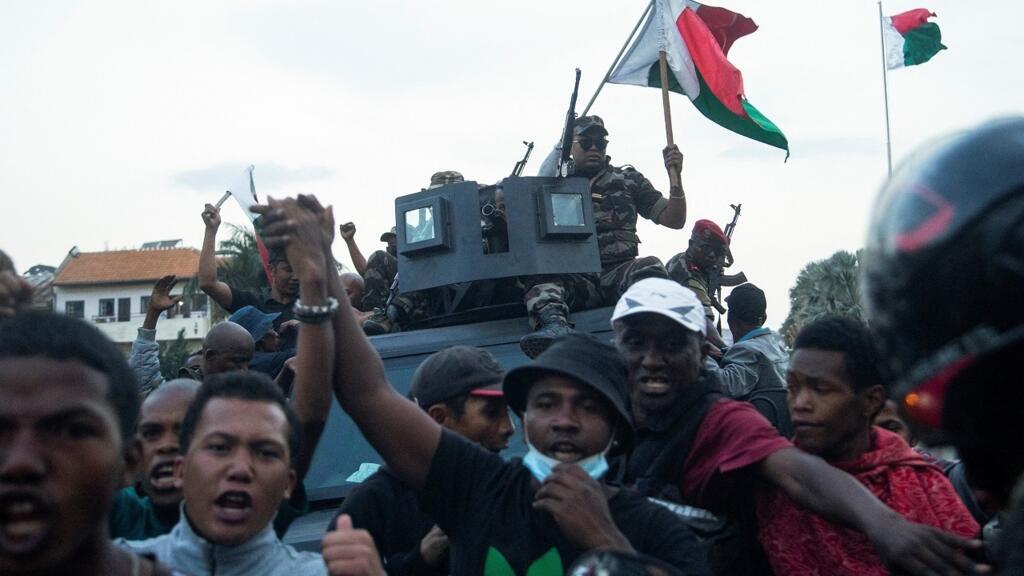
Soldiers from the unit clashed with gendarmes outside a barracks on Saturday and rode into the city on army vehicles to join the demonstrators on the symbolic Place du 13 Mai in front of Antananarivo's city hall, where they were welcomed with cheers and calls for Rajoelina to resign.

The embattled president released a statement Sunday saying "an attempt to seize power illegally and by force, contrary to the Constitution and to democratic principles, is currently under way".

"Dialogue is the only way forward and the only solution to the crisis currently facing the country," the statement added, calling for "unity".

Meanwhile, Air France on Sunday announced that it has suspended its flights to Madagascar until at least Tuesday.

"Given the security situation at that destination, Air France is suspending its services between Paris Charles de Gaulle (airport) and Antananarivo (Madagascar's capital)... to October 13, 2025 inclusive," it said in a statement.

'Faults'

Saturday's demonstration in the Malagasy capital of Antananarivo was one of the biggest since the protest movement erupted on September 25, sparked by anger over power and water shortages.

As it sided with protesters, the CAPSAT unit said it would "refuse orders to shoot" and criticised the gendarmerie, who have been accused of using heavy-handed tactics and causing several deaths.

"Because they are non-commissioned officers, CAPSAT officers say they are part of the population and experience the same difficulties with power and water cuts," said FRANCE 24's correspondent Gaëlle Borgia.

Officers of the gendarmerie said in a video statement Sunday that they recognised "faults and excesses during our interventions", calling for "fraternity" between the army and the gendarmes.

"We are here to protect, not to terrorise," they said, adding that "from now on, all orders will come solely" from the gendarmerie's headquarters.


Rajoelina 'in the country'

The government on Sunday night assured that Rajoelina remained "in the country" and was managing national affairs, while the newly appointed prime minister said the government was "standing strong" and "ready to collaborate and listen".

The United Nations has said that at least 22 people were killed in the first days of the protests that started on September 25, some killed by security forces and others in violence sparked by criminal gangs and looters in the wake of the demonstrations.

Rajoelina has disputed the toll, saying last week there were "12 confirmed deaths and all of these individuals were looters and vandals".

According to local media, the emergency services reported another two dead and 26 injured on Saturday. The CAPSAT unit said a soldier was also shot by gendarmes and died.

(FRANCE 24 with AFP)


Madagascar president says 'illegal power grab' underway after army mutiny

A mutinied army unit declared Sunday that it was taking control of all Madagascar military forces as President Andry Rajoelina said an "attempt to seize power illegally" was under way.


Issued on: 12/10/2025 - RFI

Protesters cheer next to a Madagascar military vehicle during a nationwide youth-led protest over frequent power outages and water shortages, in Antananarivo, Madagascar, 11 October, 2025.
 REUTERS - Zo Andrianjafy


The CAPSAT contingent of administrative and technical officers joined thousands of protesters in the city centre on Saturday in a major shift in a more than two-week anti-government youth-led protest movement.

The unit had earlier declared that it would "refuse orders to shoot" and criticised the gendarmerie, who have been accused of using heavy-handed tactics against protesters, causing several deaths.

"From now on, all orders of the Malagasy army – whether land, air or the army – will originate from CAPSAT headquarters," officers of the CAPSAT contingent of administrative and technical officers claimed in a video statement.

The officers said they had named General Demosthene Pikulas as the head of the army – a post that had been vacant since the former head was appointed minister of armed forces last week – although it was not clear if the posting could be considered official.


There was no immediate response from other units or the military command.

Soldiers based in the outskirts of Antananarivo on Saturday morning called on security units to "join forces" and to "refuse orders to shoot", repudiating the violent crackdown on the protests.

Calls to resign


They clashed with gendarmes outside a barracks and rode into the city on army vehicles to join the demonstrators on the symbolic Place du 13 Mai in front of Antananarivo's city hall, where they were welcomed with cheers and calls for Rajoelina to resign.

The president released a statement Sunday saying "an attempt to seize power illegally and by force, contrary to the Constitution and to democratic principles, is currently under way."

"Dialogue is the only way forward and the only solution to the crisis currently facing the country," he said, calling for "unity".

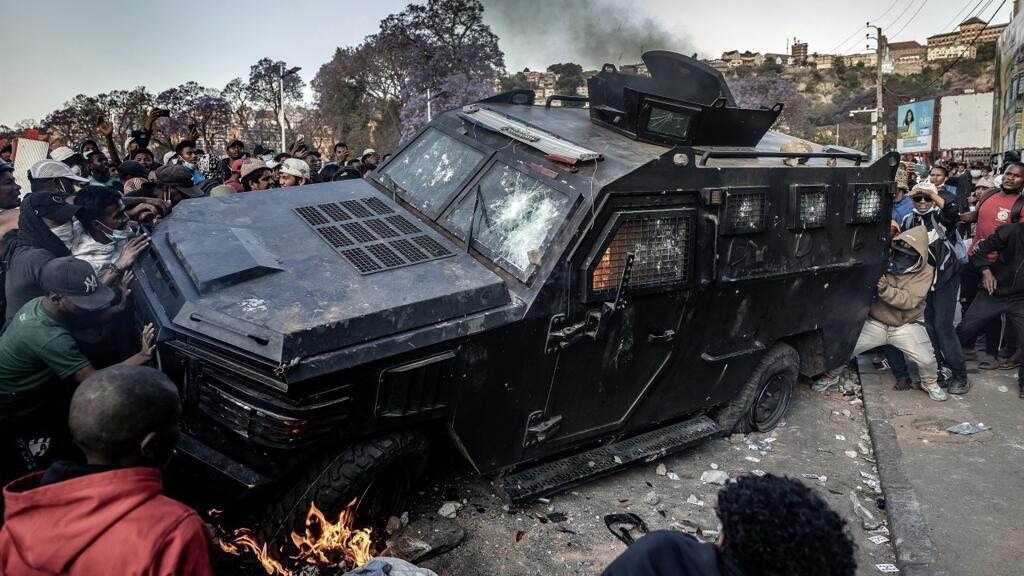
Protesters vandalise a Gendarmerie armoured vehicle as members of a section of the Malagasy army take control of the area around Lake Anosy following clashes between demonstrators and security forces during protests calling for the resignation of President Andry Rajoelina in Antananarivo, on 11 October, 2025.
 AFP - LUIS TATO

Officers of the gendarmerie, which has been accused of violence against protesters, on Sunday morning released a video statement recognising "faults and excesses during our interventions" and calling for "fraternity" between the army and the gendarmes.

"We are here to protect, not to terrorise," they said, adding that "from now on, all orders will come solely" from the gendarmerie's headquarters.

The soldiers calling on the military to desist from cracking down on protesters were from the CAPSAT contingent of administrative and technical officers in the Soanierana district on the outskirts of Antananarivo.

The Soanierana military base in 2009 led a mutiny during a popular uprising that brought Rajoelina to power.

The African Union Commission on Sunday expressed "deep concern" at the situation in Madagascar.

"The Chairperson of the Commission welcomes the Government's renewed commitment to dialogue and urges all Malagasy stakeholders, both civilian and military, to exercise calm and restraint," it said in a statement.

Neighbour South Africa also called upon "all parties to respect the democratic process and constitutional order".

Ready to listen?


Saturday's demonstration in Madagascar's capital Antananarivo was one of the biggest since the protest movement erupted on 25 September, sparked by anger over power and water shortages.

The United Nations has said that at least 22 people were killed in the first days of the protests, some killed by security forces and others in violence sparked by criminal gangs and looters in the wake of the demonstrations.

Rajoelina has disputed the toll, saying last week there were "12 confirmed deaths and all of these individuals were looters and vandals".

According to local media, the emergency services reported another two dead and 26 injured on Saturday. The CAPSAT unit said a soldier was also shot by gendarmes and died.

In an effort to address the unrest, Rajoelina last week dismissed his entire government. On Monday he appointed army General Rufin Fortunat Zafisambo as prime minister and gave him six months to improve basic services and curb corruption, a move which has failed to ease tensions.

The government on Sunday ensured that Rajoelina remained "in the country" and was "managing national affairs", while the newly appointed prime minister said the government was "standing strong" and "ready to collaborate and listen".

Also on Sunday, Air France announced a suspension of flights to Madagascar for two days.

(with AFP)


Madagascar leader says power grab under way as army unit claims control of military


Madagascar's President Andry Rajoelina said in a statement on Sunday that "an attempt to seize power illegally and by force" was underway in the Indian Ocean island state, a day after some soldiers joined a vast protest movement that started last month. The mutinied army unit announced it was taking control of all military forces in the country.


Issued on: 12/10/2025 
By: FRANCE 24

Protesters cheer members of the Madagascar military behind a fence during a nationwide youth-led demonstration in Antananarivo on October 11, 2025. 
© Zo Andrianjafy, Reuters
02:20


Madagascar's President Andry Rajoelina on Sunday said an "attempt to seize power illegally and by force" was under way, a day after a contingent of soldiers joined thousands of anti-government protesters in the capital.

Rajoelina's statement came as the CAPSAT contingent of administrative and technical officers said it was taking control of the army, after earlier repudiating the violent crackdown on youth-led protests that have rocked the Indian Ocean island for more than two weeks.

"From now on, all orders of the Malagasy army – whether land, air or the navy – will originate from CAPSAT headquarters," the officers claimed in a video statement.

There was no immediate response from other units or the military command.


The newly appointed minister of the armed forces called on troops to 'remain calm' in a press conference Saturday. © Rijasolo, AFP


Soldiers from the unit clashed with gendarmes outside a barracks on Saturday and rode into the city on army vehicles to join the demonstrators on the symbolic Place du 13 Mai in front of Antananarivo's city hall, where they were welcomed with cheers and calls for Rajoelina to resign.

The embattled president released a statement Sunday saying "an attempt to seize power illegally and by force, contrary to the Constitution and to democratic principles, is currently under way".

"Dialogue is the only way forward and the only solution to the crisis currently facing the country," the statement added, calling for "unity".

Meanwhile, Air France on Sunday announced that it has suspended its flights to Madagascar until at least Tuesday.

"Given the security situation at that destination, Air France is suspending its services between Paris Charles de Gaulle (airport) and Antananarivo (Madagascar's capital)... to October 13, 2025 inclusive," it said in a statement.
'Faults'

Saturday's demonstration in the Malagasy capital of Antananarivo was one of the biggest since the protest movement erupted on September 25, sparked by anger over power and water shortages.

As it sided with protesters, the CAPSAT unit said it would "refuse orders to shoot" and criticised the gendarmerie, who have been accused of using heavy-handed tactics and causing several deaths.

"Because they are non-commissioned officers, CAPSAT officers say they are part of the population and experience the same difficulties with power and water cuts," said FRANCE 24's correspondent Gaëlle Borgia.

Officers of the gendarmerie said in a video statement Sunday that they recognised "faults and excesses during our interventions", calling for "fraternity" between the army and the gendarmes.

"We are here to protect, not to terrorise," they said, adding that "from now on, all orders will come solely" from the gendarmerie's headquarters.

Rajoelina 'in the country'


The government on Sunday night assured that Rajoelina remained "in the country" and was managing national affairs, while the newly appointed prime minister said the government was "standing strong" and "ready to collaborate and listen".

The United Nations has said that at least 22 people were killed in the first days of the protests that started on September 25, some killed by security forces and others in violence sparked by criminal gangs and looters in the wake of the demonstrations.


© France 24
01:32

Rajoelina has disputed the toll, saying last week there were "12 confirmed deaths and all of these individuals were looters and vandals".

According to local media, the emergency services reported another two dead and 26 injured on Saturday. The CAPSAT unit said a soldier was also shot by gendarmes and died.

(FRANCE 24 with AFP)


Madagascar: Elite army unit turns on President Rajoelina
DW with AFP, Reuters
12/10/2025 

After an elite CAPSAT unit sided with protesters in Madagascar's capital, the soldiers claimed to control the entire military. President Andry Rajoelina said an "attempt to seize power illegally" was underway.

Madagascar's influential CAPSAT military unit said it was in control of the country's entire military, according to a statement published Sunday.

The statement came to light as Madagascar's President Andry Rajoelina said an "attempt to seize power illegally and by force" was underway.

"From now on, all orders of the Malagasy army — whether land, air, or military — will come from the headquarters of CAPSAT," officers from the contingent said in its video statement.

The same unit mutinied in 2009 during the uprising that brought Rajoelina to power.

Later on Sunday, General Demosthene Pikulas was installed as Chief of the Army Staff during a ceremony at the army headquarters attended by armed forces minister, Manantsoa Deramasinjaka Rakotoarivelo.

"I give him my blessing," the minister said.

Pikulas was chosen by the mutinying CAPSAT unit.

What is happening in Madagascar?

On Saturday, the CAPSAT faction of soldiers joined thousands of anti-government "Gen-Z" protesters in the capital. While the protests were triggered by anger over police brutality and power and water shortages, escalating unrest has since evolved into a broader demand for political change.

Saturday's protest was one of the largest since the demonstrations began on September 25.

Soldiers from the CAPSAT unit, based in the Soanierana district on the southern outskirts of Antananarivo, left their barracks, called on security forces to "refuse orders to shoot" and condemned the recent police crackdown.


The troops clashed with gendarmes before driving into the city to join protesters gathered on the symbolic Place du 13 Mai in front of city hall, where they were greeted with cheers and chants for Rajoelina's resignation.

According to UN figures, at least 22 people have been killed and more than 100 injured since the protests began. Rajoelina has disputed those numbers, claiming Wednesday that there had been only 12 deaths and insisting those killed had been "all looters and vandals."

What did Madagascar's president say about a coup?

"The Presidency of the Republic wishes to inform the nation and the international community that an attempt to seize power illegally and by force, contrary to the Constitution and to democratic principles, is currently underway," Rajoelina said in a statement released by the presidency Sunday morning.


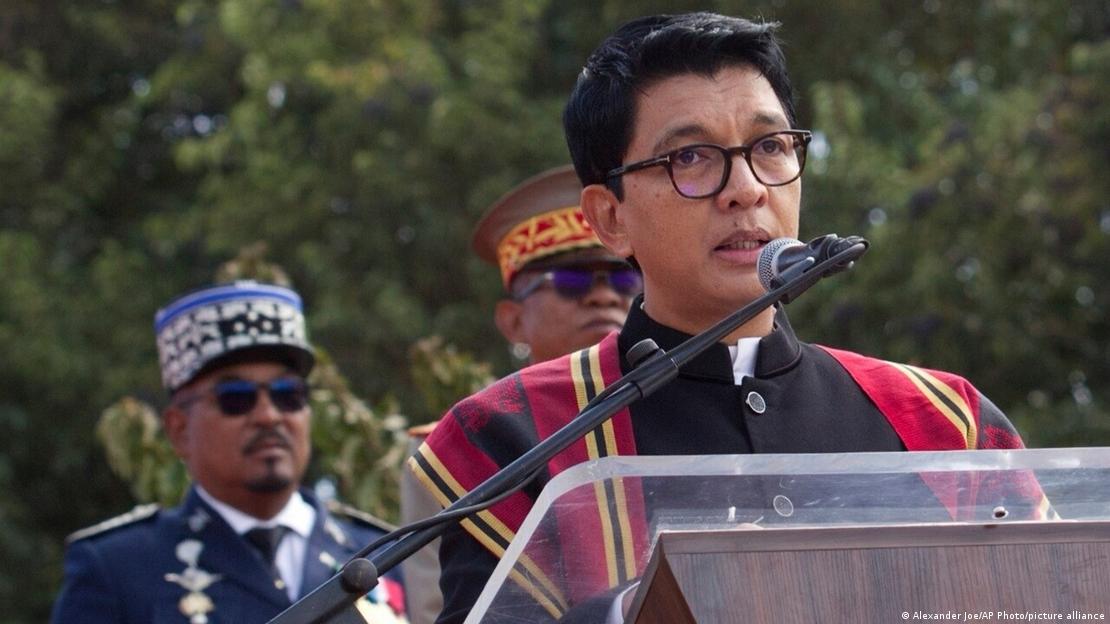
The government says Rajoelina remains 'in the country' and was 'managing national affairs'
Image: Alexander Joe/AP Photo/picture alliance

Newly appointed Prime Minister Ruphin Zafisambo on Saturday evening said the government "remains firm" and is "ready to collaborate and listen to all forces — the youth, unions, and the army." He warned that "Madagascar will not withstand another crisis if this division among citizens continues."

The presidency issued a statement assuring that President Andry Rajoelina "remains in the country" and "continues to manage national affairs."
Rajoelina installed by the military

Madagascar, one of the world’s poorest countries, has a long history of political upheaval and popular uprisings since gaining independence from France in 1960.

What you need to know about Madagascar's Gen Z protests  01:28


In 2009, mass demonstrations forced then-president Marc Ravalomanana from power, paving the way for the military to install Rajoelina for his first term. He later won re-election in 2018 and again in 2023, though both votes were marred by opposition challenges and allegations of irregularities.

Edited by: Darko Janjevic
Richard Connor Reporting on stories from around the world, with a particular focus on Europe — especially Germany.