Monday, November 17, 2025

Lebanon: UN Peacekeeping Patrol Targeted By Israeli Tank, IDF Blames ‘Misidentification’

HARD TO MISS THE BLUE HELMETS!

File photo of UNIFIL peacekeepers on patrol. Photo Credit: UNIFIL


By 

On Sunday, a foot patrol of the United Nations Interim Force in Lebanon (UNIFIL) was targeted by an Israeli army Merkava tank from a position established by Israel in Lebanese territory.


According to the UN peacekeeping mission, bursts of heavy artillery hit an area just five meters away from the UNIFIL blue helmets, who had to beat a hasty retreat and take shelter in the terrain.

Mission representatives were able to contact the IDF (Israeli Defence Force) via their communications channels and ask them to stop firing, UNIFIL explained in a press release. The patrol was able to leave safely half an hour later, when the tank withdrew to IDF positions.

“Fortunately, no one was injured,” the statement said, adding that the attack was a serious violation of Security Council Resolution 1701, which was adopted in 2006 in order to resolve the war between Israel and the Hezbollah militia.

In response to queries from local media, IDF representatives reportedly claimed that the attack was the result of UNIFIL troops being “misidentified” due to the weather conditions, and that it had not intention of firing on the peacekeepers.

This is the third incident of its kind in the last three months. On 2 September, IDF drones dropped four grenades close to UNIFIL peacekeepers working to clear roadblocks hindering access to a UN position near the “Blue Line”, the buffer zone between Israel and Lebanon patrolled by UNIFIL.


On 26 October UNIFIL reported that an Israeli drone dropped a grenade near a UN patrol, followed by tank fire directed at peacekeepers.

A mission nearing the end of its journey

The incident comes at a delicate time for UNIFIL, which is set to close its doors at the end of 2027, after nearly half a century of presence along the Blue Line. Established in 1978 by the Security Council to oversee the withdrawal of Israeli troops from southern Lebanon, the mission – currently numbering 10,500 peacekeepers – has emerged as a central element of the region’s relative stability.

Its mandate was strengthened after the 2006 war between Israel and Hezbollah, and then again following deadly fighting between the two sides last Autumn, devastating several towns in southern Lebanon. Since the cessation of hostilities in November 2024, UNIFIL has supported the redeployment of the Lebanese National Army to territory where the state is struggling to reassert its authority, while Israel maintains military positions in some areas.

“Yet again, we call on the IDF to cease any aggressive behaviour and attacks on or near peacekeepers,” UNIFIL insisted, recalling that its troops are “working to restore the stability to which both Israel and Lebanon say they seek”.

UN News

News provided by UN News Centre

AMERIKA

Direct Loan Program Student Loans: Loan Discharge And Forgiveness – Analysis


November 17, 2025
By CRS
By Alexandra Hegji

Outstanding Direct Loan program debt currently totals about $1.5 trillion, which is owed by over 40 million borrowers. When borrowing a loan, a borrower assumes a contractual obligation to repay the debt over a period of time that may span a decade or more. The Higher Education Act (HEA), however, authorizes the Secretary of Education (the Secretary) to discharge or forgive a Direct Loan in certain circumstances; that is, the Secretary may relieve a borrower of their obligation to repay the debt, in whole or in part.

This In Focus discusses Direct Loan borrower options for loan discharge and loan forgiveness following service. It does not discuss loan forgiveness benefits provided to borrowers following repayment according to an income-driven repayment (IDR) plan. It also does not address loan cancellation; this term has sometimes been used to refer to broad-scale loan relief available to individuals regardless of their individual circumstances or other characteristics. For detailed information on all of these topics, see CRS Report R45931, Federal Student Loans Made Through the William D. Ford Federal Direct Loan Program: Terms and Conditions for Borrowers and CRS Report R47196, Federal Student Loan Debt Cancellation: Policy Considerations.
Loan Discharge

The HEA does not define the word discharge. For purposes of this In Focus, the term is used to refer to instances in which a borrower is relieved of their obligation to repay all or part of their loan debt due to some adversity. The HEA authorizes several such opportunities, including discharge due to1. a borrower’s death,
2. a borrower’s total and permanent disability,
3. a borrower’s inability to complete their program of study due to the closure of their institution of higher education (IHE),
4. a borrower defense to repayment,
5. an IHE’s false certification of an individual’s eligibility to borrow a Direct Loan,
6. an IHE’s disbursement of a loan without the borrower’s authorization, and
7. an IHE’s failure to refund loan proceeds to a borrower in certain circumstances.

Parent PLUS Loans may be discharged under reasons 1, 3, 4, 6, and 7 above if the student on whose behalf the PLUS Loan was borrowed meets the specified conditions. For example, a Parent PLUS Loan may be discharged due to the death of the student on whose behalf the loan was borrowed.

The Bankruptcy Code authorizes the discharge of Direct Loans (and other student loans) in bankruptcy proceedings if a borrower can show that not discharging the debt would impose an undue hardship on them. Also, the Third Higher Education Extension Act of 2006 (P.L. 109-292) authorizes the discharge of certain eligible borrowers’ Direct Loans if their spouse or child died or became totally and permanently disabled due to injuries suffered in the September 11 terrorist attacks.


Loan Forgiveness Following Service

The HEA does not define the word forgiveness. For purposes of this In Focus, the term is used to refer to instances in which a borrower is relieved of their obligation to repay all or part of their loan because they have completed certain service requirements. The HEA authorizes two such loan forgiveness programs: Public Service Loan Forgiveness (PSLF) and Teacher Loan Forgiveness (TLF).

Loan forgiveness following service is distinct from federal programs that provide student loan repayment benefits to borrowers for completing service requirements (of which about 40 are federally authorized). Loan forgiveness following service benefits are part of a Direct Loan’s terms and conditions; thus, they are considered an entitlement to qualified borrowers. The programs’ benefits are funded through mandatory budget authority and accounted for as part of federal student loan subsidy costs. In contrast, loan repayment benefits are generally offered through programs that are separate and distinct from the Direct Loan program and are generally made available to a limited number of borrowers. Typically, the loan repayment benefits are funded with discretionary appropriations. Thus, loan repayment benefits are not necessarily considered entitlements to qualified borrowers and may be subject to the availability of funds. For additional information on federal student loan repayment programs, see CRS Report R43571, Federal Student Loan Forgiveness and Loan Repayment Programs.
Selected Issues

Each of the Direct Loan discharge and forgiveness following service options available to borrowers have their own unique policy issues and considerations. For example, some stakeholders have argued that eligibility criteria to have a student loan discharged in bankruptcy is an “unnecessarily high bar” and have proposed reforms to those eligibility criteria. As another example, some research indicates that administration of the TLF program may constrain borrower take up of program benefits. Nonetheless, several considerations span many or all Direct Loan discharge and forgiveness following service options.
Available Mix of Discharge and Forgiveness Options

The currently available loan discharge and forgiveness options are each intended to address discrete scenarios that policymakers have deemed appropriate for debt relief. Congress might consider whether additional borrower scenarios may be addressed with the creation of new loan discharge or forgiveness options, or whether to expand eligibility to more borrowers under the currently available options. For example, some Members of Congress have proposed providing debt relief benefits to individuals who are not eligible for such benefits under current discharge or forgiveness options (e.g., loan discharge for Pell Grant recipients), while others have proposed extending PSLF benefits to a broader swath of borrowers.

Expanding discharge or forgiveness following service options in these ways could remove or lessen student loan repayment burdens for additional borrowers. Expansion of loan forgiveness following service options may also help meet other potential goals, such as increasing recruitment and retention in specific fields or professions. However, such an expansion may also result in increased Direct Loan program costs to the federal government.

Alternatively, Congress might consider whether to limit or streamline the current array of loan discharge and forgiveness following service options. For example, some stakeholders have proposed altogether repealing or curtailing the PSLF program, arguing that the program is not well-targeted and provides outsized benefits to graduate and professional students. These individuals tend to borrow more and to have higher earning potential than individuals without graduate or professional degrees. Eliminating or curtailing discharge and forgiveness following service options could help address concerns such as insufficient targeting of benefits and could result in Direct Loan program cost savings. However, doing so may limit debt relief options for some individuals who may be in need of such assistance.
Benefits Administration

ED is responsible for overall Direct Loan program administration and has contracted with third-party loan servicers to perform many of the program’s day-to-day administrative functions (e.g., sending billing statements to borrowers, communicating with borrowers about and processing borrower requests for loan program benefits). In recent years, the Government Accountability Office (GAO), the Consumer Financial Protection Bureau (CFPB), and others have reported on a number of issues with the administration of loan discharge and forgiveness benefits.

The CFPB has reported on servicers’ “mishandling” of PSLF, TLF, and loan discharges for multiple years. Such mishandling has included, for instance, processing delays in and miscommunication about PSLF and borrower defense to repayment discharges. GAO has found that ED did not provide key information or guidance on some discharge and forgiveness benefits to borrowers and loan servicers, thus potentially creating borrower confusion and raising the risk of benefits being improperly granted or denied.

ED has recently made significant changes to how it administers Direct Loan program loans and its loan servicing environment. It has undertaken efforts to automatecertain discharge and forgiveness processes, like automatically granting total and permanent disability discharges to borrowers based on information obtained through data sharing agreements with the Social Security Administration. It has also transitioned to a new loan servicing environment called the Unified Servicing and Data Solution (USDS), which is in the process of being implemented. Once fully implemented, ED intends that the USDS will “create a loan servicing environment that better serves customers and allows for appropriate oversight” of the federal student loan programs. Successful implementation of these changes may improve benefits administration.


About the author: Alexandra Hegji, Specialist in Social Policy

Source: This article was published by the Congressional Research Service (CRS)


CRS

The Congressional Research Service (CRS) works exclusively for the United States Congress, providing policy and legal analysis to committees and Members of both the House and Senate, regardless of party affiliation. As a legislative branch agency within the Library of Congress, CRS has been a valued and respected resource on Capitol Hill for nearly a century.

By 

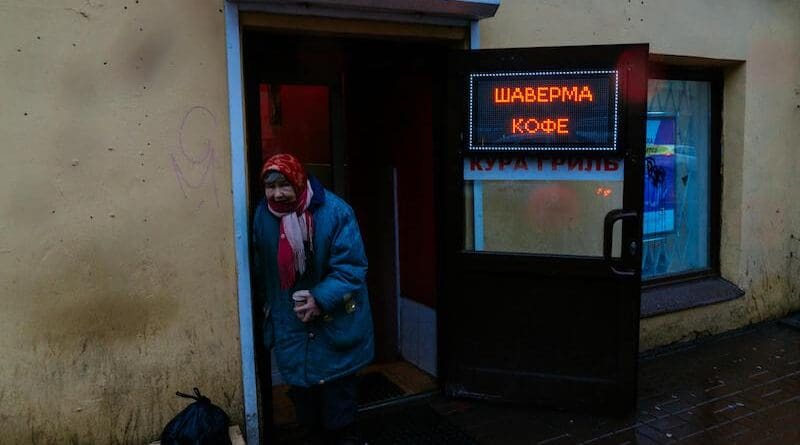
Women now form an estimated one in four of all immigrant workers in Russia, approximately one million in all. Most are from Central Asia. And while they are not at risk of being impressed into the Russian military as their male counterparts are, they are subject to increasingly harsh restrictions.


According to Anna Azyalova, a PosleMedia journalist, these include the fact that most work in sectors where registration is less frequent and so are subject to kinds of harassment and mistreatment that men who are registered by their employers are not (posle.media/article/migrant-women-and-the-war-new-discriminatory-laws)..

But their mistreatment is not limited to that alone. Many Russian officials want to prevent women from coming lest they and their husbands and children remain in Russia for lengthy periods of time. Immigrant women also suffer when immigrant children are forced out of school for one reason or another, and that continues even when they return home.

There is a shortage of school places in most Central Asian countries from which immigrants come; and as a result, when they and their mothers are forced to leave Russia and return to their homelands, both are left in difficult straits, something few talk about but that affects thousands.

For various reasons, including a desire for Russian officials not to appear as heartless as they often are, the Moscow media focuses on male immigrants rather than women and children. And as of yet, there are relatively few institutions that specifically defend these groups, leaving them more at risk of mistreatment than otherwise.

Indeed, Azyalova suggests, the best way for such groups to gain even minimal protection is for independent media outlets to report on their problems, something that is beginning to happen as the number of women and children among immigrants to the Russian Federation continues to rise.

Russia’s Big Brother SORM mass surveillance system


The FSB's "System for Operative Investigative Activities" (SORM) gives the Kremlin the ability
to eavsdrop on the bulk of Russias' telephone calls and online traffic. / bne IntelliNews


By Ben Aris in Berlin November 17, 2025

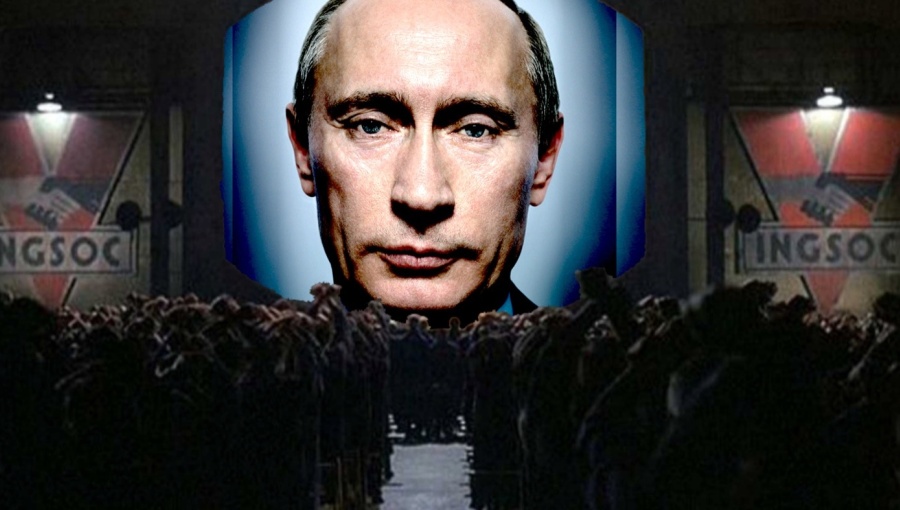
It’s a modern-day Big Brother. Russia’s Federal Security Service (FSB) operates the vast and largely opaque SORM surveillance infrastructure in Russia spies on the entire Russian population that grants intelligence officers unfettered access to citizens’ communications, according to a new book by investigative journalist Andrei Zakharov.

The book, Russian Cyberpunk, details how the SORM system — officially known as the "System for Operative Investigative Activities" — has enabled nearly total control over digital and telephone traffic as well as what is known as RuNet, or the Cyrillic version of the Internet.

The Kremlin missed a trick by ignoring the development, and its ability to control or censure, the internet under Boris Yeltsin and is now trying to impose “sovereignty” over the world wide web in Russia to mirror Beijing's control over the Chinese internet.

The effort started with Yeltsin, starting with the Yarovaya law in 2018, but has been expanded under Vladimir Putin and a lot of progress has been made.

Listening devices have been added to telecoms companies and later to servers; SORM is installed across all major telecom and internet provider networks. Operators are unaware of the internal workings of these black-box devices, which are installed and maintained by FSB-linked contractors. The system funnels data directly to FSB terminals, to which only security officers have access.

“SORM is a black box in the literal sense,” writes Zakharov, explaining that court approval is technically required for interception, but in practice, “the procedure has become completely formal.” From 2016 to 2024, Russian courts granted surveillance permissions nearly 7mn times. In 2023 alone, over 500,000 requests were approved, with only 272 rejected — a rate of 0.00005%. reports The Bell.

Lawyer Yevgeny Smirnov, who specialises in high-profile state security cases, told The Bell, “I think the rejections were for formal reasons, due to paperwork errors.”

He described how operatives prepare surveillance requests with minimal judicial scrutiny: “All they need to fill in are a few fields — citizen’s name, judge’s name.”

Former FSB officers confirmed the rapid approval process, noting that judges typically spent five to fifteen minutes per request.

The book includes multiple examples of retrospective authorisation, where surveillance began before a warrant was obtained. One notable case involved the prosecution of the late opposition figure and anti-corruption activist Alexei Navalny, who died in a Russian prison under questionable circumstances in February 2024, where a key wiretapped conversation was recorded after the court order had expired. Lawyers failed to get the material excluded.

Zakharov also documents the FSB’s deeper integration with Russian internet services. Officials can reportedly access user data on social network VKontakte without a password. “They can log into any account and see everything as if they were the user,” said one unnamed contact, noting that this privileged access is limited to higher-ranking officers.

Russia’s largest platforms — including Yandex, VKontakte, Odnoklassniki and Mail.Ru — are required to hand over encryption keys under the Yarovaya law. However, some foreign services, such as WhatsApp, are resistant due to end-to-end encryption. “You can detect WhatsApp usage with SORM but not decrypt the data,” said a former FSB officer.

Online arrests

Russia ranks highest in Europe for arrests related to online speech, with over 20,000 people facing administrative or criminal charges between 2022 and 2024.

According to rights group OVD-Info, prosecutions have surged under new laws criminalising criticism of the military or government, often for as little as sharing or liking posts on social media. Charges typically fall under provisions against "discrediting the army" or spreading "false information", and many cases have resulted in custodial sentences or heavy fines.

Turkey and Belarus follow closely. Turkish authorities arrest more than 1,000 people annually for online posts, especially those critical of the government or President ErdoÄŸan, under laws targeting "terror propaganda" and "insulting the president". In Belarus, the human rights centre Viasna has documented hundreds of arrests each year, particularly targeting individuals engaging with opposition content on platforms like Telegram. Charges often relate to extremism or unauthorised media activity.

In Western Europe, arrests are less frequent but still notable. France and Germany each register dozens of cases annually, mostly under hate speech and incitement laws. France reported over 100 arrests in 2023 for online content, while Germany’s Federal Criminal Police investigated more than 300 online hate cases, with arrests following in some instances.

In the United Kingdom, authorities continue to enforce online speech laws under the Communications Act 2003, with 50 to 100 arrests a year for messages deemed grossly offensive or threatening.

Other European Union countries such as Poland, Italy, and Spain see far fewer arrests for online expression. Polish authorities have increased prosecutions under criminal defamation laws, especially against critics of the government or Church, but total arrests remain in the dozens annually. In Italy and Spain, arrests are rare and typically limited to extreme cases involving hate speech or threats.

While Western European states maintain legal boundaries around online speech, enforcement largely results in fines or suspended sentences rather than custodial punishment.

However, the picture looks different when comparing the number of complaints and subsequent investigations set against the number of convictions. In this case the UK leads Russia in terms of number of investigations, whereas Russia leads in terms of the number of convictions.

The United Kingdom ranks number one in Europe in terms of the number of police investigations or cases opened in relation to online posts — particularly under laws addressing grossly offensive messages, harassment, threats, or hate speech.

According to data from UK police forces, tens of thousands of complaints are made each year about online content. For example, figures from the UK Home Office showed that in 2017–2019, police investigated over 30,000 online speech-related offences per year under the Communications Act 2003 and the Malicious Communications Act.

By comparison, according to Agora International, a Russian human rights group that closely monitors digital repression, only 200 individuals were criminally prosecuted each year in 2017, 2018, and 2019 for online speech under various sections of the Criminal Code,

While the US numbers remain high, the vast majority of these cases do not lead to arrest or prosecution — many result in warnings, community resolutions, or are dropped due to evidentiary thresholds.

In Russia, from 2022 to mid-2024, over 20,000 people were arrested or prosecuted for online speech — often under wartime censorship laws or extremism-related charges, according to OVD-Info.

Privacy

A European Court of Human Rights ruling in 2015 found Russia’s surveillance practices violated the right to privacy. The case, brought by journalist Roman Zakharov, argued that SORM enabled unchecked surveillance in breach of constitutional protections. Despite the ruling, no substantial legal reforms were enacted.

The system’s efficacy remains in question. SORM logs vast quantities of traffic, yet over 80% of websites now use HTTPS encryption, limiting even what the FSB can access. According to a 2024 report from St Petersburg’s Ministry of Internal Affairs university, “HTTPS sites are inaccessible for monitoring by SORM-3, allowing potential criminal activity to evade surveillance.”

At the same time, Russians have increasingly adopted VPN solutions that hide their traffic from the FSB, although here too, the Kremlin has moved to block or ban VPN services inside of Russia as a cat and mouse game between the FSB and Russian citizens develops.

Nevertheless, the FSB maintains control of the system and restricts access to other law enforcement agencies. Alternative monitoring systems are used to track public social media activity, including tools powered by AI such as the Moscow State University’s “news collider” project, reportedly led by President Putin’s daughter, Katerina Tikhonova.

The Kremlin has so far failed to take control of RuNet. And while the TV news is dominated by the state, and the free press has been cowed into self censorship by repressive laws, Russia’s Internet remains relatively open and any citizen that wants to know what is really going on still has relatively unfettered access to independent and objective sources of information with a little effort.

One of the ironies of the Kremlin’s attempt to better police the online traffic is it is looking to Washington, not Beijing, for a blueprint. Zakharov says that Russia’s surveillance apparatus mirrors elements of the US National Security Agency’s PRISM programme, exposed by Edward Snowden in 2013. However, unlike in the US — where the revelations prompted public debate, new laws and restrictions on intelligence gathering — Russia’s response has been institutional silence. As Zakharov writes, “There is not a single official statement that SORM has helped solve a major crime.”



Western Hydrocarbon Imports From Russia Since The Ukraine Crisis – Analysis

A view of Russia's TUPRAS Izmit Refinery. Photo Credit: İsa Karakuş, Wikipedia Commons

By 

By Bipandeep Sharma


Western analysts and policymakers have been highly vocal in criticising India’s oil imports from Russia. Some of these experts have been consistently propagating a strong anti-India narrative that India’s significant purchase of Russian oil since 2022 has been a major factor in support of Russia’s military action in Ukraine. India accounts for about 5.6 million barrels of crude oil consumption per day, which is expected to reach around 6 million barrels per day in the near future. The International Energy Agency has highlighted that India’s growing energy needs over the next two decades would contribute to a 30 per cent increase in global energy demand. Eighty per cent of India’s crude oil and 51 per cent of its gas requirements are met by heavy dependency on imports.[i]

An increasing population, along with the continuously rising demand for energy and rapidly growing industrialisation, necessitates that India meets its oil and gas needs from reliable global sources that can supply them at favourable prices and at consistent rates. This is precisely why India’s oil imports from Russia witnessed a significant uptick after February 2022. Significant discounts, favourable conditions for crude cargo deliveries to Indian ports, steady and consistent supply flows have been the key factors in India’s increased imports of Russian crude oil. This has not only ensured India’s energy security but also enabled Indian refineries to meet global demand for refined oil products.

Major EU and other Western-aligned states (some of which are even NATO member states) have, in fact, increased their hydrocarbon imports from Russia, despite their geopolitical rivalry since 2022. Despite multiple rounds of Western sanctions on Russian companies, many Western states continue to import significant quantities of Russian oil and gas. According to estimates by the Centre for Research on Energy and Clean Air (CREA), Russia earned around € 969 billion in revenue from global fossil fuel exports (Oil, Gas and Coal) from February 2022 to October 2025, and these figures continue to tick upwards.[ii] Of this total of EUR 969 billion, EU countries account for more than € 215 billion in imports from Russia. China alone accounts for around EUR 280 billion, whereas India’s imports from Russia stand at just € 156 billion.

Figure 1. Total Fossil Fuel Imports of EU and Other Major Western Allies from Russia. Data Source: Centre for Research on Energy and Clean Air (CREA).

If hydrocarbon import data from Russia for the major Western allies (i.e., Türkiye, South Korea, Japan, Singapore, Saudi Arabia, Taiwan, and the UAE) are added to EU fossil fuel imports, the combined total of imports since the Ukraine–Russia conflict is around € 422 billion. This makes the Western states and their allies accountable for about 44 per cent of Russia’s total hydrocarbon imports.

Figure 2. Fossil Fuel Imports from Russia since February 2022 to October 2025. Data Source: Centre for Research on Energy and Clean Air (CREA).

It is, therefore, ironic that since the advent of the Ukraine–Russia war, the EU and Western states have been consistently targeting India’s oil imports from Russia. However, when it comes to their own combined net fossil fuel imports from Russia, the figures remain vastly underreported. Türkiye alone accounted for around € 90 billion in fossil fuel imports (€ 61 billion of oil, € 21 billion of gas, and € 8 billion of coal) from Russia from January 2023 to October 2025. This even surpassed the combined import figures of the EU member states, totalling € 67 billion during the same period.


Similarly, analysis of EU member states’ LNG imports suggests that, despite their tough public statements to limit LNG imports from Russia by 2027, they have purchased around € 120 billion worth of Russian liquefied gas over the last 3.5 years. These states imported around € 4.5 billion worth of LNG from Russia in the first half of 2025.[iv] According to a report published by the Institute for Energy Economics and Financial Analysis, EU bloc imports of LNG from Russia increased by 7 per cent year on year in the first half of 2025. The report further suggests that in this increase, France accounted for 41 per cent of Europe’s imports of Russian LNG, followed by Belgium (28 per cent), Spain (20 per cent), the Netherlands (9 per cent) and Portugal (2 per cent).

Western double standards are further evident in the US’s latest round of sanctions in October 2025, which targeted two major Russian oil giants, Rosneft and Lukoil, to curb India’s imports of Russian crude oil.[vi] Germany, however, managed to obtain exceptions from the US for the two German subsidiaries of Rosneft, namely Rosneft Deutschland GmbH and RN Refining & Marketing GmbH, to protect its energy interests.

Similarly, Hungarian Prime Minister Viktor Orbán post his recent meeting with Donald Trump has claimed that he has managed to obtain an “indefinite waiver” from US sanctions for Hungary for the use of Russian oil and gas however US sources highlight that this exemption to Hungary is for just  one year.[viii] Japan, despite being a strong US ally, continues to import around 9 per cent of its LNG from Russia. Despite the US’s continued pressure on Japan to limit its LNG imports from Russia, Tokyo has emphasised that these imports are crucial to its energy security. The situation remains similar of other Asian Western allies, such as South Korea and Singapore, regarding their LNG imports from Russia.

Conclusion

The government of India has consistently emphasised that India’s purchase of Russian crude oil aims to safeguard the interests of Indian consumers by ensuring a stable and affordable energy supply amid volatility.[x] Further, Indian refineries have also played a crucial role in meeting global refined petroleum product needs, with Europe topping India’s list. In a highly interdependent and interlinked global energy market, demonising India by singling out its oil imports from Russia and labelling those as a factor of support for Russia’s military agendas in Ukraine is irrational.

Secondly, targeting Indian oil imports from Russia and ignoring European and Western allies’ individual, as well as combined LNG imports from Russia, requires one to ask how this is not a factor in supporting Russia’s war efforts in Ukraine? Thirdly, it is essential to note that despite multiple rounds of sanctions against Russia, its hydrocarbons have found ways to reach global consumer markets. This is primarily due to the realistic needs of nations.

Pressuring Indian companies to limit their supplies from Russia might or might not have implications for Russia, but China could fill these new potential disruptions to the demand-supply chain. This could further make not only Russia but also the EU and like-minded Western states dependent on China, as China maintains the capacity and capability to increase oil purchases from Russia and supply refined petroleum products to European and Western markets. Finally, the crisis in Ukraine continues to remain honest and challenging. Its solution lies in dialogue and in addressing each side’s realistic concerns. Weaponising global energy trade via undertaking selective approaches risks worldwide energy and economic security.

Views expressed are of the author and do not necessarily reflect the views of the Manohar Parrikar IDSA or of the Government of India.

  • About the author: Bipandeep Sharma is a Research Analyst at the Non-Traditional Security Centre at the Manohar Parrikar Institute for Defence Studies & Analyses (MP-IDSA), New Delhi. He works on Polar Regions where his core areas of expertise is on Polar Geopolitics. Here at the institute he focuses on security and strategic developments in the Arctic; aspects of Antarctic governance, and on emerging issues of climate change and economic development in these regions.
  • Source: This article was published by the Manohar Parrikar Institute for Defence Studies & Analyses (MP-IDSA)

[i] India’s Growth Linked to Energy and Maritime Strength: Shri Hardeep Singh Puri, Press Information Bureau, Ministry of Petroleum & Natural Gas, Government of India, 29 October 2025.

[ii] Payments to Russia for Fossil Fuels Since 24 February 2022Russia Fossil Tracker, 4 November 2025.

[iii] Ibid.

[iv] Malte Humpert, EU Talks Tough on Russian LNG, But Buys More Than Ever in 2025High North News, 30 October 2025.

[v] Europe’s LNG Buildout Slows Amid Anticipated Decline in Gas Demand, Institute for Energy Economics and Financial Analysis, 30 October 2025.

[vi] Weilun Soon, Understanding the Latest US Sanctions on Russian Oil, Bloomberg, 24 October 2025.

[vii] Liubava Petriv, US Temporarily Lifts Sanctions on Rosneft Subsidiaries in GermanyUnited 24, 3 0ctober 2025; Bradley T. Smith, Authorizing Transactions Involving Rosneft Deutschland GmbH and RN Refining & Marketing GmbH, Office of Foreign Assets Control, US Department of Treasury, 29 October 2025.

[viii] Gergely Szakacs, Hungary’s Waiver from US Sanctions on Russia Energy is Indefinite, Minister SaysReuters, 8 November 2025.

[ix] Berk Kutay Gökmen, LNG Imports from Russia Play ‘Extremely Important Role in Japan’s Energy Security’: MinisterAnadolu Ajansı, 21 October 2025.

[x] Official Spokesperson’s Response to Media Queries on Comments on India’s Energy Sourcing, Ministry of External Affairs, Government of India, 16 October 2025.

[xi] Sukalp Sharma, India’s Diesel Exports to Europe Skyrocket in Run-up to EU Ban on Fuels Made from Russian OilThe Indian Express, 6 September 2025.


Manohar Parrikar Institute for Defence Studies and Analyses (MP-IDSA)

The Manohar Parrikar Institute for Defence Studies and Analyses (MP-IDSA), is a non-partisan, autonomous body dedicated to objective research and policy relevant studies on all aspects of defence and security. Its mission is to promote national and international security through the generation and dissemination of knowledge on defence and security-related issues. The Manohar Parrikar Institute for Defence Studies and Analyses (MP-IDSA) was formerly named The Institute for Defence Studies and Analyses (IDSA).