Monday, February 09, 2026


Spain train strikes: Which services are still running and what are your refund rights?

People run to catch a train during a 24-hour partial strike by train drivers at Atocha station in Madrid, 10 June 2016.
Copyright Copyright 2016 The Associated Press. All rights reserved. This material may not be published, broadcast, rewritten or redistributed without permission.

By Christina Thykjaer
Published on 

During Spain's three-day train drivers' strike, more than 330 services have been cancelled.

A train strike in Spain is causing major disruptions to passengers this week.

Train drivers and railway workers are walking out between 9-11 February. As of Monday morning, it has already resulted in the cancellation of more than 330 high-speed and medium-distance trains. Commuter services are also impacted.

The operators Renfe, Ouigo and Iryo have jointly cancelled these services as a result of the strike and are running minimum services, forcing thousands of passengers to change their travel plans.

Which trains are still running during Spain's strikes?

In order to guarantee essential journeys for citizens in Spain, the Secretary of State for Transport and Sustainable Mobility has established minimum train services during the strike days.

Renfe Cercanías (commuter) services will be maintained at 75 per cent during peak hours and at 50 per cent during the rest of the day, while 65 per cent of the usual services will run on medium-distance trains. In the case of high-speed and long-distance trains, minimum services are set at 73 per cent of scheduled journeys.

These percentages are set by the central government in accordance with current railway legislation, although there are territorial exceptions. In Catalonia, the Generalitat is responsible for determining the minimum services for suburban and regional trains operating entirely within the region, whereas in the Basque Country this falls to the autonomous government for Iberian and metric gauge suburban trains.

Ticket changes and refunds during Spain's train strikes

Renfe says affected passengers can cancel or modify their tickets at no additional cost, regardless of the sales channel used. This measure applies both to passengers whose trains have been cancelled and to those who decide not to travel during the strike.

The operators recommend that passengers check the status of services before going to stations, as train schedules may vary throughout the day.

How long will Spain's train strike last?

The strike will continue until Wednesday 11 February. It comes after unions failed to reach an agreement with the Ministry of Transport and the companies in the sector.

The trade union organisations defend the stoppages as a measure to demand labour and safety improvements.

The beginning of the year was marked by several railway accidents in Spain, including the deadliest in decades, which has intensified the debate on safety on the network, working conditions and the need to reinforce operational protocols. This has increased pressure on both companies and the administration in the midst of negotiations with the unions.

Spain has fallen behind in rail network inspection

Several specialised train drivers who were hired for network supervision by state-owned railway network manager Adif have said that they were left without assigned tasks for extended periods, despite having contracts to carry out this work, according to Spanish newspaper El Mundo.

This complaint from train drivers is part of a wider criticism of the management of rail infrastructure maintenance, which some workers see as uncoordinated and ineffective.

The fleet designed to inspect the tracks has in many cases been inoperative or in prolonged approval phases, which, in the complainants' view, has hampered the ability to continuously monitor the network.

This situation was the subject of an injunction from the Labour and Social Security Inspectorate, which pointed out the absence of work calendars and annual timetables for these drivers, a basic element to ensure that they could carry out their duties normally.

 SPACE/COSMOS


This Student Made Cosmic Dust In Her Lab: What She Found Could Help Us Understand How Life Started On Earth


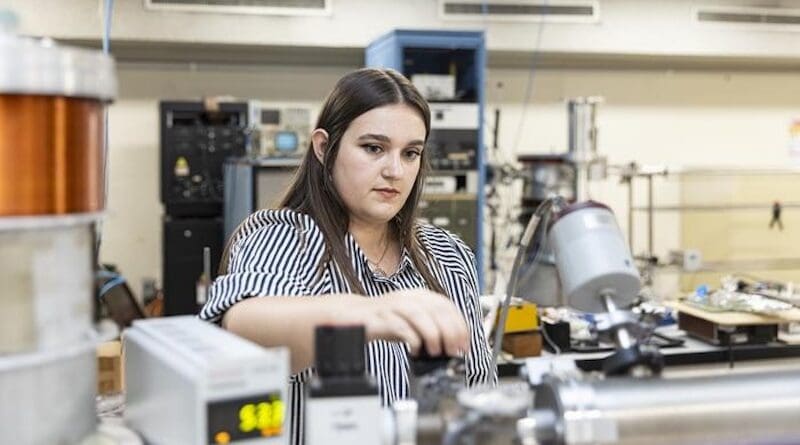
PhD candidate and lead author of the study Linda Losurdo in the plasma physics laboratory at the University of Sydney. CREDIT: Fiona Wolf/The University of Sydney

February 9, 2026 
By Eurasia Review

A Sydney PhD student has recreated a tiny piece of the Universe inside a bottle in her laboratory, producing cosmic dust from scratch. The results shed new light on how the chemical building blocks of life may have formed long before Earth existed.

Linda Losurdo, a PhD candidate in materials and plasma physics in the School of Physics, has used a simple mix of gases – nitrogen, carbon dioxide and acetylene – to mimic the harsh and dynamic environments around stars and supernova remnants.

By subjecting these gases to intense electrical energy, she generated carbon-rich “cosmic dust” similar to the material found drifting between stars and embedded in comets, asteroids and meteorites.

Her results are published in The Astrophysical Journal of the American Astronomical Society.

The dust she created contains a complex cocktail of carbon, hydrogen, oxygen and nitrogen – known collectively as CHON molecules – which are central to many organic substances essential for life.

“We no longer have to wait for an asteroid or comet to come to Earth to understand their histories,” Ms Losurdo said. “You can build analogue environments in the laboratory and reverse engineer their structure using the infrared fingerprints.

“This can give us huge insight into how ‘carbonaceous cosmic dust’ can form in the plasma puffed out by giant, old stars or in cosmic nurseries where stars are being born and distribute these fascinating molecules that could be vital for life.

“It’s like we have recreated a little bit of the Universe in a bottle in our lab.”

Cosmic dust is known to form in extreme astrophysical environments, where molecules are constantly bombarded by ions and electrons. Scientists can identify this dust in space because it emits a distinctive infrared signal – a molecular fingerprint that reveals its chemical structure.

The dust produced in Ms Losurdo’s experiments showed the same tell-tale infrared signatures, confirming the laboratory process closely mirrors what happens in space.

BUILDING BLOCKS OF LIFE

One of the enduring questions in science is how life began on Earth. Researchers are still debating whether the earliest organic molecules formed locally on our young planet, arrived later aboard comets and meteorites, or were delivered during the earliest stages of solar system formation – or some combination of all three.

Between about 3.5 and 4.56 billion years ago, Earth was bombarded by meteorites, micrometeorites and interplanetary dust particles originating from asteroids and comets. These objects are thought to have delivered vast amounts of organic material to the planet’s surface. Yet the origins of that material remain mysterious.

“Covalently bonded carbon and hydrogen in comet and asteroid material are believed to have formed in the outer envelopes of stars, in high-energy events like supernovae, and in interstellar environments,” Ms Losurdo said.

“What we’re trying to understand are the specific chemical pathways and conditions that incorporate all of the CHON elements into the complex organic structures we see in cosmic dust and meteorites.”

HOW THEY DID IT

In the experiment, the team, consisting of Ms Losurdo and her supervisor Professor David McKenzie, used a vacuum pump to evacuate air from glass tubes, recreating the near-empty conditions of space. Nitrogen, carbon dioxide and acetylene were then introduced. The gas mixture was exposed to around 10,000 volts of electrical potential for about an hour, creating a type of plasma known as a glow discharge.

Under this intense energy, molecules broke apart and recombined into new, more complex structures. These compounds eventually settled as a thin layer of dust on silicon chips placed inside the tubes.

The collected dust at times looks like glittering collections of cosmic material.

Professor David McKenzie, co-author on the paper, said the work will allow scientists to probe conditions that are otherwise impossible to study directly.

“By making cosmic dust in the lab, we can explore the intensity of ion impacts and temperatures involved when dust forms in space,” Professor McKenzie said. “That’s important if you want to understand the environments inside cosmic dust clouds, where life-relevant chemistry is thought to be happening.

“This also helps us interpret what a meteorite or asteroid fragment has been through over its lifetime. Its chemical signature holds a record of its journey, and experiments like this help us learn how to read that record.”

Beyond insights into the origins of life, the researchers aim to build a comprehensive database of infrared fingerprints from lab-made cosmic dust. Astronomers could then use this library to identify promising regions of space – in stellar nurseries or the remnants of dead stars – and work backwards to understand the processes shaping them.

By recreating cosmic chemistry on Earth, the research opens a new window onto deep stellar processes – and the ancient steps that may have helped make life on Earth possible.

Ms Losurdo won the best presentation for this research at the international Annual Meeting of the Meteoritical Society late last year.


China develops compact microwave driver that could power a ‘Starlink-killer’ weapon

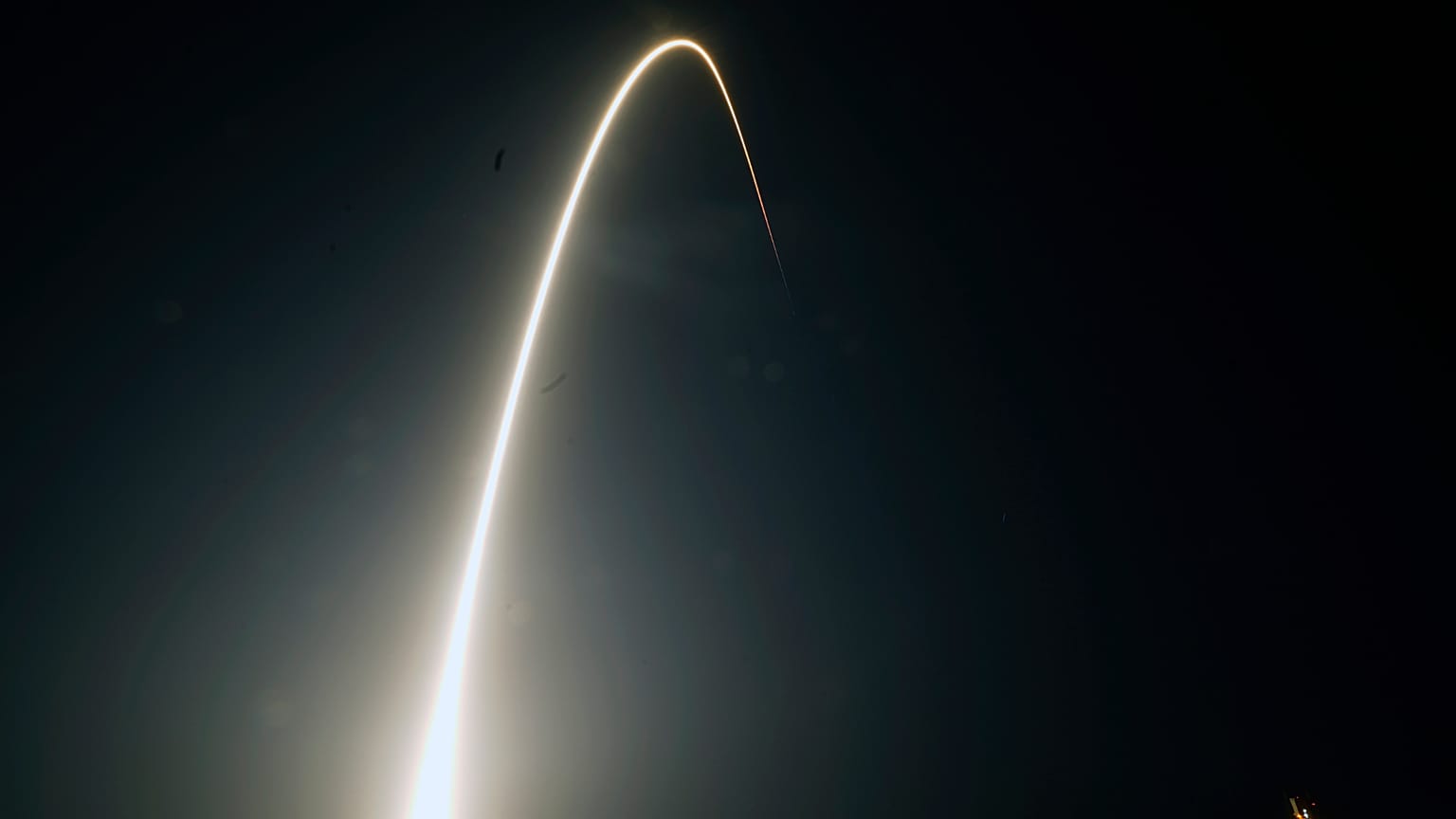
In this time-exposure photograph, a SpaceX Falcon 9 rocket with the 25th batch of approximately 60 satellites for SpaceX's Starlink broadband network lifts off
Copyright AP Photo/John Raoux

By Roselyne Min
Published on 

The compact pulse-power driver could enable high-power microwave attacks that are harder to detect and attribute than conventional anti-satellite weapons, potentially putting China ahead of the United States and Russia in the space-weapons race.

China has developed a new piece of military technology that could one day be used to disrupt satellite networks such as Starlink, according to a study.

Researchers at the Northwest Institute of Nuclear Technology (NINT), a research facility linked to the Chinese military in Xi’an, say they have built the world’s smallest driver for a high-power microwave (HPM) weapon, a system that could potentially be used to disrupt satellite networks such as Starlink.

The device, known as TPG1000Cs, measures about four metres long and weighs roughly five tons, making it significantly smaller than comparable systems.

“The system has demonstrated stable operation over continuous one-minute durations, accumulating approximately 200,000 pulses with consistent performance,” the study said.

Until now, similar known systems could only operate continuously for no more than just a few seconds and were far bulkier, making them difficult to install in smaller weapons systems

The TPG1000Cs system can generate electrical pulses reaching 20 gigawatts, according to the study. This far exceeds the roughly 1 gigawatt output that experts say a ground-based microwave weapon would need to potentially disrupt low-Earth-orbit satellite networks such as Starlink.

How does it work?

The United States, Russia, and China have all been exploring whether high-power microwave technology could be developed into weapons capable of disrupting satellites.

Destroying satellites using conventional weapons can create large clouds of orbital debris that may threaten other spacecraft, including those belonging to the attacking country.

Microwave weapons, in contrast, could theoretically disable electronics without creating significant debris, potentially offering strategic advantages and a degree of plausible deniability.

These weapons store electrical energy and then release it in a sudden, powerful burst. This pulse can produce intense microwave radiation that can disrupt electronics.

Starlink satellite communications have been used to support Ukraine’s communications infrastructure during Russia’s invasion of Ukraine, thanks to demonstrated resilience against jamming attempts.

The study was published in the Chinese journal High Power Laser and Particle Beams on January 13.

China has published a number of studies in recent years discussing the need to develop ways to disrupt large satellite constellations, including Elon Musk’s Starlink network.

Researchers say the breakthrough was made possible by a special liquid insulating material called Midel 7131.

“By adopting a high-energy-density liquid dielectric Midel 7131 and a dual-width pulse-forming line, the study achieved miniaturisation of an integrated Tesla transformer and pulse-forming system,” scientists wrote in the study.


Milan protesters rally against environmentally and economically 'unsustainable' Winter Olympics


By Fortunato Pinto & Giorgia Orlandi
Published on 

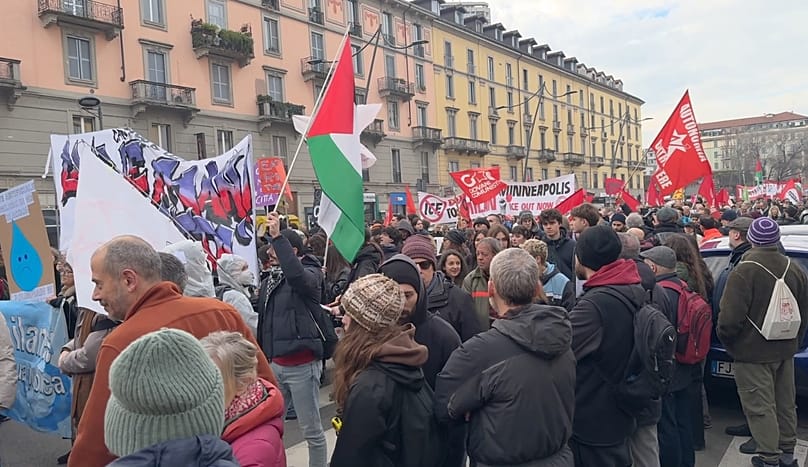
A demonstration took place in Milan on the first day of the 2026 Milan-Cortina Winter Olympics, with protesters lamenting the environmental and economic effect of the Games on the region.

The spectacular 2026 Milan-Cortina Winter Olympics opening ceremony on Friday evening evening showcased Italian culture and placed a heavy emphasis on the theme of harmony.

Nevertheless, there was no shortage of criticism, with boos directed at Israel's Olympic team, as well as US Vice President JD Vance when he appeared on the San Siro stadium's big screen.

Outside the venue, the city of Milan took centre stage on the eve of the Games - not only for high level political meetings, but also for widespread protests - Friday saw a demonstration by activists and students against the presence of the ICE. On Saturday, there was a protest organised by grassroots union against the environmental impact caused by the Winter Olympics.

A demonstration in Milan on 7 February 2026.
A demonstration in Milan on 7 February 2026. Giorgia Orlandi/Euronews

Protesters marched through the city, passing by the newly opened Olympic Village. Among the banners displayed, some read “ICE out”, while others criticised Giorgia Meloni's government as well as Milan mayor Beppe Sala.

While the march was mostly peaceful, a brief confrontation with Italian police marked the end of the demonstration.

Police fired tear gas and a water cannon at dozens of protesters who threw firecrackers and tried to access a highway near a Winter Olympics venue on Saturday.

The demonstrators appeared to be trying to reach the Santagiulia Olympic ice hockey rink after the skirmish. By then, the larger peaceful protest, including families with small children and students, had dispersed.

Earlier, a group of masked protesters had set off smoke bombs and firecrackers on a bridge overlooking a construction site about 800 metres from the Olympic Village that's housing around 1,500 athletes.

Protesters: Games environmentally and economically unsustainable

"It's public money that has been spent on a display window. It may be interesting to have these showcase events, but at a time when there is not enough money for essential things, it makes no sense to spend it in this way," a healthcare worker at the protest told Euronews.

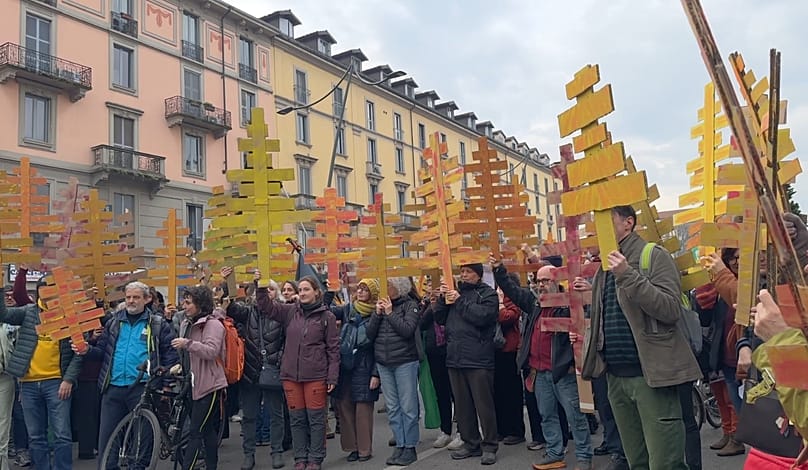
Protesters holding up signs in Milan on 7 February 2026.
Protesters holding up signs in Milan on 7 February 2026. Giorgia Orlandi/Euronews

Another protester criticised the national government and the mayor of Milan, describing the works carried out for the Games as environmentally unsustainable

A third protester criticised the Olympics because "they have not brought any wealth to the city of Milan and Lombardy". According to him, "they have taken money away from social welfare, public schools and healthcare. This money has literally been burned, and not a single lira will go to Italian citizens, particularly those in Lombardy, so these are bogus Olympics."

'Melania': Why the Mrs Trump documentary isn't a documentary at all

Melania - A 'documentary' worth seeing?
Copyright Amazon MGM Studios

By David Mouriquand
Published on Euronews

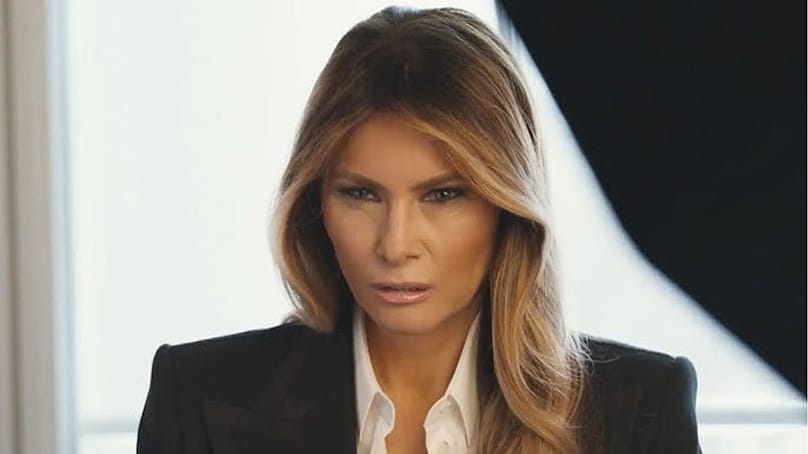
Euronews Culture’s David Mouriquand went to see the Melania Trump documentary ‘Melania’ so you don’t have to.

At the end of time, when the fabric of space and time has collapsed, there will be a final level boss, the gatekeeper whose vacant stare finally reveals that there is no benevolent deity to explain everything and that behind the grotesque pantomime we call life hides no greater truth. The gatekeeper of this cosmic harlequinade could very well be Melania Trump.

Harsh? Not if you’ve sat through Melania, the new documentary directed by Hollywood outcast Brett Ratner, which Amazon has spent $40m to acquire – with $28m going directly into Mrs. Trump's tailored pockets.

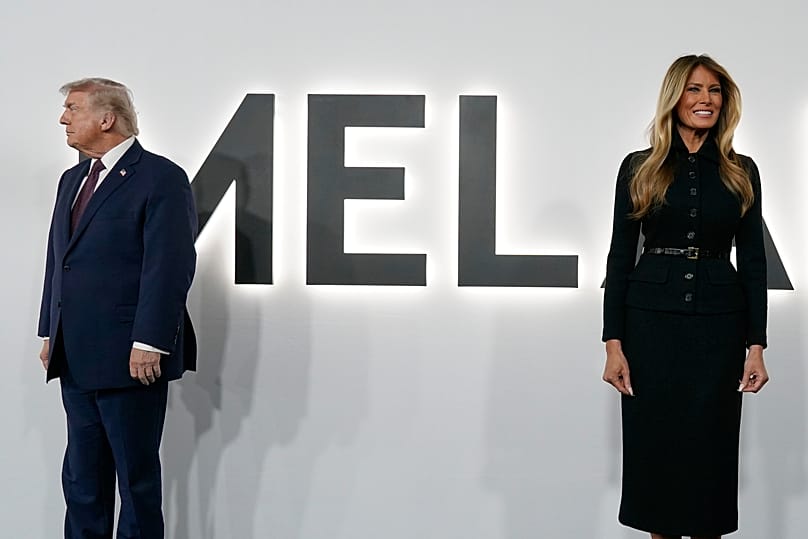
It follows the terrifyingly emotionless US first lady during the three weeks leading up to the second Trump inauguration, aiming to offer rare and unfiltered insider access to an inscrutable figure.

“Everyone wants to know” are Melania’s first words.

Debatable.

While there could have been a flickering ember of hope that we actually might learn something about the former model from Slovenia who ended up marrying the most anti-immigrant president the US has known, to say that Melania is short on substance is a cruel insult to things that are short on substance.

Instead of a sliver of insight on the supposed enigma hiding behind expensive designer hats or information about the true dynamics of her marriage, we only get to see a perpetually scowling figure. She selects gold eggs with caviar for the inauguration dinner. She picks out “really sharp” outfits with fashion designers. She delights us with vapid pull quotes which sound like they’ve been delivered by an AI on a quest to prove its soullessness – monotonously delivered aphorisms like “we are all bound by the same humanity” and “cherish your family and loved ones”.

Oh, we do learn that her favourite recording artist is Michael Jackson.

It was all worth it, then.

Melania Amazon MGM Studios

The only human moment in this self-congratulatory portrait of privilege, one singularly uninterested in mining anything beyond the surface, is Melania sharing that she is still grieving her “beloved mother” Amalija Knavs, who died in January 2024.

It’s a potentially interesting insight that could have provided some depth, but in lieu of injecting humanity, the personal detail only emphasises a cruel lack of empathy. We witness this when Melania unable to conjure the slightest bit of compassion at President Jimmy Carter’s funeral. She’s not thinking about the recently deceased human being or the sorrow felt by his loved ones; she only cares about her narrative.

Somewhat perversely – and this is perhaps the film’s greatest trick – Mrs. Trump’s lack of personality and overall lifelessness makes her husband come off as... whisper it... almost charismatic. Donald Trump occasionally appears in Melania, and while the lack of warmth between the two was already plain to see, he comes off as a breath of fresh air. Quite the feat.

However, even this surprising default side-effect is undercut by Donald reminding audiences that empathy is also not his forte. He heartlessly says, “This one had a hard time with that” when referring to his wife’s mother’s death.

Every pot finds a lid.

Donald Trump and Melania Trump at the premiere of 'Melania' at The John F. Kennedy Memorial Center - 29 January 2026 AP Photo

Many were quick to accuse Melania of being a despicable piece of propaganda even before seeing it. It’s not. Propaganda has a point. Forceful tools of hatred like Triumph of the Will and Birth of a Nation had evil purpose

Melania can be mentioned in the same sentence as these films but only remains as a staged puff piece - a cynical attempt by Jeff Bezos to curry favour with Trump and an anti-documentary cash-grab orchestrated by people who only care about money and the furthering of empty mythologies designed to feed the Trump brand. And by the time the film ends with a suspiciously long list of Mrs. Trump’s supposed achievements as First Lady (none of which we actually get to witness), you’ll be too bored to notice - much less want to march for the Trump cause.

So what is Melania? Ultimately, it’s a shallow, 104-minute-long vanity project whose staggeringly misjudged timing reveals it to be the ultimate "F*ck you”.

The release of Melania comes at a time when the Trump administration’s actions have led to innocent people being shot, creating fear, anger and grief across America. The images of Melania Trump picking out expensive outfits, spouting ‘wisdom’ about shared humanity, and demanding audiences to sympathise with her own grief don’t land so well in the context of tragedy.

And in case you needed another reason to want to avoid Melania, the film also hits theatres when its director Brett Ratner, already accused of sexual assault by multiple women in 2017 (denied claims that included one allegation of rape), has appeared embracing a young woman alongside sex offender Jeffrey Epstein in images recently released by the US Department of Justice.

But much like the First Lady's infamous “I don’t really care, do you?” jacket, Melania is the embodiment of that very sentiment. A bird flip from those who only care about themselves.

One could laugh at how transparent it all is, if it wasn’t so soul-crushingly bleak. The cosmic harlequinade continues.


'I didn't make a mistake': Trump refuses to apologise for since-deleted racist post about Obamas


By Emma De Ruiter
Published on 


A social media post by US President Donald Trump depicted former President Barack Obama and his wife, Michelle Obama, as primates in a jungle. It was deleted on Friday after a backlash from both Republicans and Democrats.

US President Donald Trump refused to apologise on Friday for a racist video he posted on his social media platform Truth Social, which depicted the former President Barack Obama and his wife Michelle as primates.

Following widespread backlash for its treatment of the nation’s first Black president and first lady, the post was blamed on a staffer and deleted.

Near the end of the one-minute-long video promoting conspiracies about Republican Trump's 2020 election loss to Joe Biden, the Obamas were shown with their faces on the bodies of apes for about one second.

The video repeated false allegations that ballot-counting company Dominion Voting Systems helped steal the election from Trump.

The frames of the Obamas at the end of the clip originated from a separate video, previously circulated by an influential conservative meme maker. It shows a lion Trump as “King of the Jungle” and depicts Democratic leaders as other animals.

A rare admission of a misstep by the White House, the deletion came hours after press secretary Karoline Leavitt dismissed “fake outrage” over the post. After calls for its removal — including by Republicans — the White House said a staffer had posted the video erroneously.

"I didn't make a mistake," Trump said on Air Force One late Friday when asked if he would apologise for the post.

"I just looked at the first part... and I didn't see the whole thing," Trump said, adding that he "gave it" to staffers to post and they also didn't watch the full video.

Asked if he condemns the racist imagery in the video, Trump replied: "Of course I do."

Former vice president Kamala Harris called out the White House's backpedaling in a post on X on Friday.

"No one believes this cover up from the White House, especially since they originally defended this post," she wrote.

"We are all clear-eyed about who Donald Trump is and what he believes."

There is a long history in the US of powerful white figures associating Black people with animals, including apes, in demonstrably false, racist ways. The practice dates to 18th century cultural racism and pseudo-scientific theories used to justify the enslavement of Black people, and later to dehumanise freed Black people as uncivilised threats to white people.

When Obama was in the White House, Trump pushed false claims that the 44th president, who was born in Hawaii, was born in Kenya and constitutionally ineligible to serve. Trump had demanded that Obama prove he was a “natural-born citizen” as required to become president.

The White House explanation also raises questions about control of Trump’s social media account, which he's used to levy import taxes, threaten military action, make other announcements and intimidate political rivals. The president often signs his name or initials after policy posts.

The White House did not immediately respond to an inquiry about how posts are vetted and when the public can know when Trump himself is posting.


'All American': Everything we know about MAGA's protest Super Bowl Halftime Show

Everything we know about the right-wing protest Super Bowl Halftime Show
Copyright AP Photo - X screenshot

By David Mouriquand
Published on 

MAGA is preparing to hold the All-American Halftime Show in protest of the NFL’s 2026 Super Bowl music acts. Prepare to be underwhelmed.

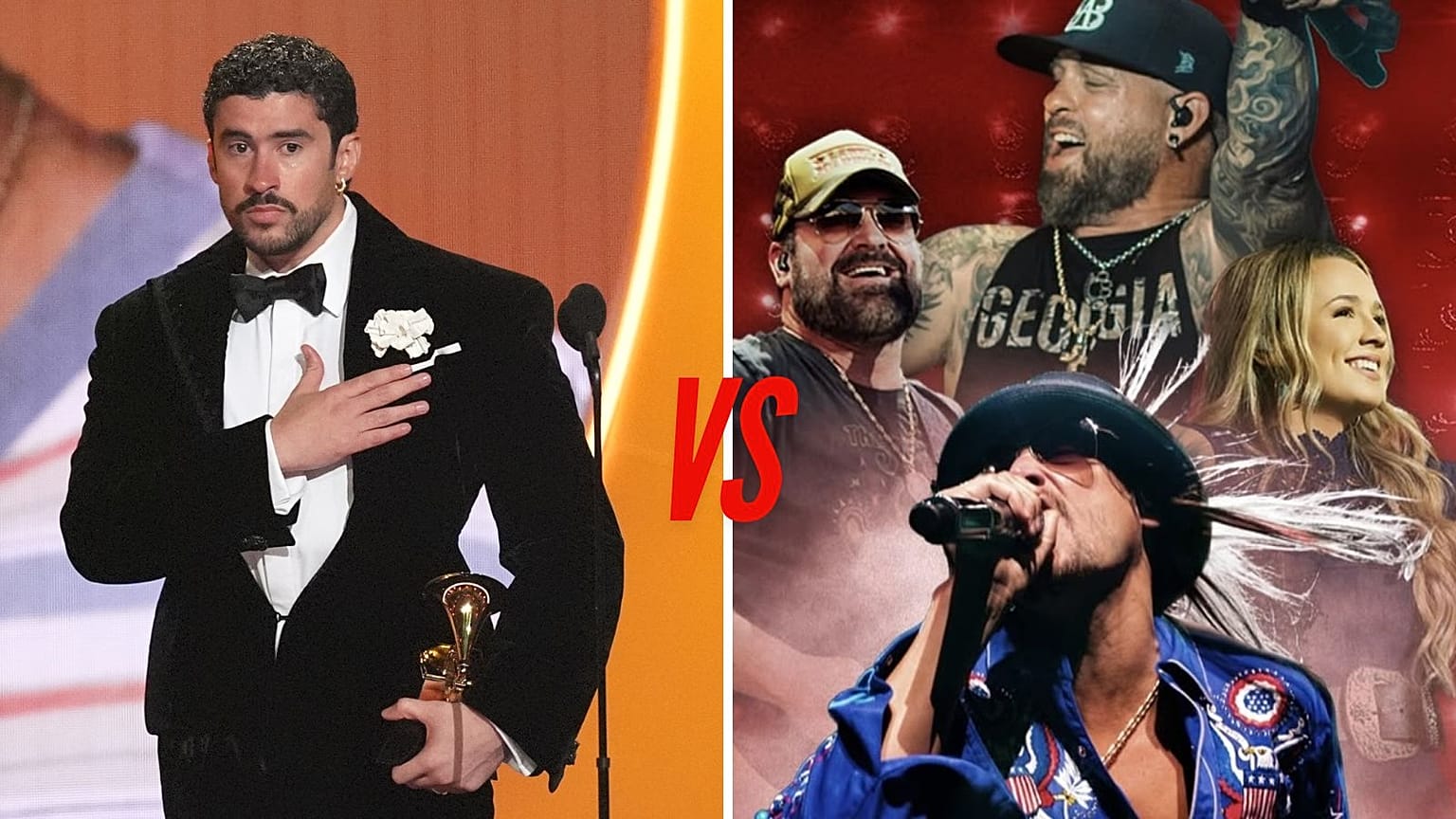
The NFL's Super Bowl LX takes place this weekend, with multi-Grammy Award winning Puerto Rican rapper Bad Bunny headlining the US' most-watched television event, which attracts more than 100 million viewers every year.

The Halftime Show is a huge and coveted gig, which has a long history of reflecting and influencing cultural trends.

Last year, Kendrick Lamar’s headlining performance shattered all records with 133.5 million viewers tuning in. Bad Bunny is expected to match if not surpass that record, but no thanks to the MAGA crowd.

Diversity-averse rightwing media has been up in arms over the choice of headliner for months now, with many saying that Bad Bunny’s music is "un-American" and “woke”, handily forgetting for the sake of barely concealed racism that the singer is an American citizen, since Puerto Rico is part of the US.

Funny how no one was complaining when Canadian singer Shania Twain or the UK’s The Rolling Stones were headlining...

Bad Bunny was recently described by Donald Trump as a “terrible choice” for the Super Bowl headline slot, with one of his advisors even confirming that ICE would be present at the “shameful” concert.

Despite criticism and plenty of complaining about American football’s biggest night being hijacked by a “left-wing conspiracy”, the NFL did not drop(kick) Bad Bunny. The organisation even appeared to double down in defying Trump, as they added rock band Green Day, who are vocal Trump critics, to the Super Bowl line-up.

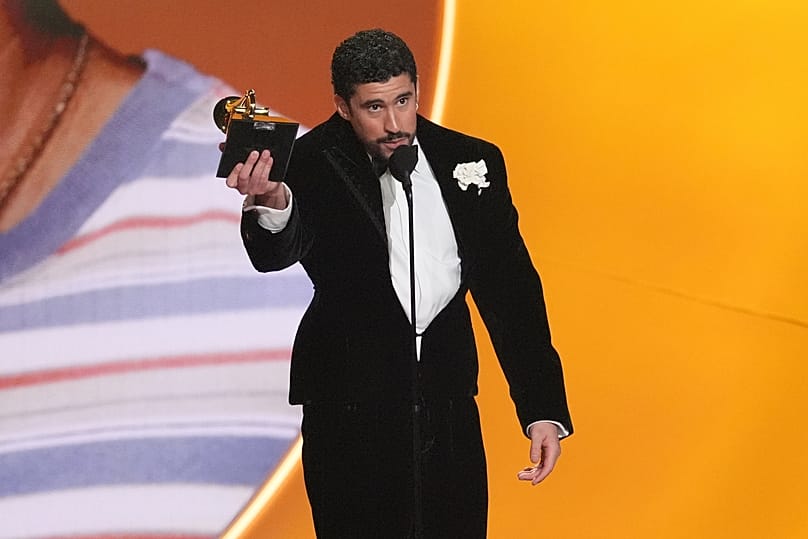
There was renewed MAGA outrage when the Puerto Rican superstar blasted the Trump administration and ICE while accepting the top award at this year’s Grammys, saying: “Before I say thanks to God, I’m gonna say: ICE out”, adding, “We’re not savages, we’re not animals, we’re not aliens. We are humans and we are Americans.”

Bad Bunny at the 2026 Grammys AP Photo

The MAGA response? Counterprogramming.

Turning Point USA – the conservative group founded by Charlie Kirk and now helmed by his widow Erika Kirk - has organised an alternative, competing halftime show titled the “All American Halftime Show”.

It will celebrate “American faith, family, and freedom,” the organization said.

So, who’s on the powerhouse and not-at-all-underwhelming line-up?

Trump supporter Kid Rock is headlining, and he will be joined by country singers Brantley Gilbert, Lee Brice, Gabby Barrett.

It’s a veritable Who’s WHO?

“We’re approaching this show like David and Goliath,” Kid Rock said in a statement issued through Turning Point USA. “Competing with the pro football machine and a global pop superstar is almost impossible…or is it?”

The singer, who hasn’t had a hit song since the dire Lynyrd Skynyrd-pilfering ‘All Summer Long’ in 2008, added: “He’s said he’s having a dance party, wearing a dress, and singing in Spanish? Cool. We plan to play great songs for folks who love America.”

Best of luck with that, as the Goliath he mentions dethroned Taylor Swift to become Spotify’s most-streamed artist of 2025 and made history last weekend as the first Spanish-language artist to win the Grammy’s Album of the Year with 'DeBÍ TiRAR MáS FOToS'.

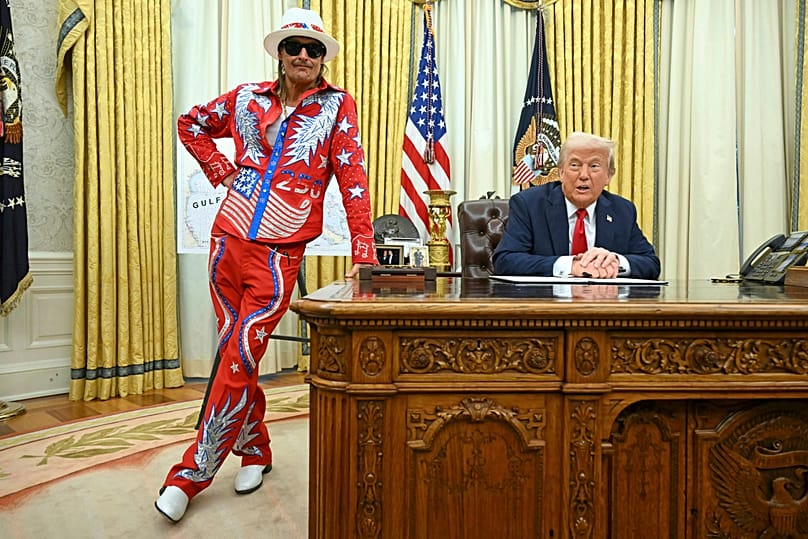
Kid Rock at the White House AP Photo

The All-American Halftime Show is scheduled to take place the same night as the 2026 Super Bowl – Sunday 8 February – at a location that is still unknown. It will broadcast across four conservative networks: DailyWire+, TBN, Charge!, and Real America’s Voice. It will also stream on Turning Point USA’s social media channels.

We’re betting that Bad Bunny won't lose sleep over it – especially since those supposed All-American values Turning Point USA are trumpeting apparently don’t concern themselves with Kid Rock’s unsavoury lyrics.

Indeed, there has been fresh scrutiny online over Mr. Rock’s song ‘Cool, Daddy Cool’ in the lead up to the protest show, with the song’s lyrics featuring the lines: “Young ladies, young ladies / I like 'em underage / See, some say that's statutory / But I say it's mandatory.”

Maybe that’s what “American faith, family, and freedom” sounds like.

The NFL's Super Bowl LX will take place on Sunday 8 February. The NFL chief security officer Cathy Lanier recently said at a security briefing that despite previous comments made by the Trump administration, ICE officers will not be among the federal agencies present at Levi’s Stadium in Santa Clara, California.