BULLY, BLUFF & BLUSTER
Ali Shamkhani was referring to the US Army's rapid exit from Afghanistan in 2021 after maintaining a stronghold there for two decades, leaving behind one million weapons and military equipment - mostly funded by Washington DC- to the Taliban.

Ayatollah Ali Khamenei vs Donald Trump
India Today World Desk
New Delhi,
Edited By: Sayan Ganguly
Moments after Donald Trump threatened military intervention in Tehran if it fired on peaceful protesters, Ayatollah Ali Khamenei’s adviser mocked the US President, saying that Iranians were well aware of US "rescue operations" in Iraq, Afghanistan, and Gaza.
In response to Trump’s direct threat to the Ayatollah, Ali Shamkhani, a senior aide to Iran’s Supreme Leader, reminded him of the US’s hasty withdrawals from Afghanistan and Iraq, among other examples.
advertisement
Shamkhani was referring to the US Army’s rapid exit from Afghanistan in 2021 after maintaining a stronghold there for two decades, leaving behind one million weapons and military equipment - mostly funded by Washington DC- to the Taliban.
Another example Shamkhani cited was the US withdrawal from Iraq at the turn of the last decade, which eventually contributed to the rise of ISIS and a bloody four-year war that devastated the country between 2013 and 2017.
Accusing Trump of engaging in what he called "adventurism," Shamkhani told Americans to "watch over their soldiers."
Taking to X, the Khamenei adviser warned that any intervention aimed at Iran's security would be met with a swift and "regrettable" response before it could materialise.
He added that Iran's national security was a "red line" and not something to be tested through what he described as "adventurous."
"Iranians know US 'rescue' record well, from Iraq and Afghanistan to Gaza. Any intervening hand-nearing Iran Security on pretexts will be cut off with a Regret Inducing Response. Iran’s national security is a Red Line, not material for adventurist tweets," Shamkhani said.
Earlier in the day, Trump shot off a warning to Khamenei and wrote: "If Iran shoots and violently kills peaceful protesters, which is their custom, the United States of America will come to their rescue. We are locked and loaded and ready to go."
As reports of chants calling for the death of Iran's Supreme Leader and for the return of the exiled leader to the US began circulating, Supreme Leader Ali Khamenei’s representative in Iran’s Razavi Khorasan province, Ahmad Alamolhoda, dismissed the developments as fabricated using artificial intelligence, according to Iran International.
Alamolhoda alleged that Israeli media and what he called "enemy-affiliated outlets" filmed crowds and then used AI technology to superimpose anti-government chants onto the visuals.
He said the aim was to create the impression that Iranians have turned against the Islamic Revolution and want the system to collapse.
Along with chants of "Mullahs must leave Iran", the slogan of "Javid Shah", meaning "long live the Shah", was raised by the protestors.
- Ends

Issued on: 02/01/2026 - FRANCE24
As protests rock Iran in the largest unrest the country has known since the 'Woman, Life, Freedom' movement in 2022, the elected President Masoud Pezeshkian has struck a conciliatory tone, pledging dialogue with protest leaders over the cost-of-living crisis. But at the same time, some are taking a harder line to stop the protests from amplifying. FRANCE 24's Douglas Herbert breaks it down for us.
Trump Threatens Intervention as Iran’s Economic Protests Turn Violent

US President Donald Trump has warned that Washington is prepared to intervene if Iranian authorities use lethal force against peaceful protesters, as demonstrations over worsening economic conditions spread across the country and turn increasingly violent.
In a post on his Truth Social platform on Friday, Trump said the United States would act if Iranian security forces shot and killed demonstrators. He wrote that such actions were customary for the Iranian regime and added that the US was “locked and loaded and ready to go.” The statement followed reports of deaths during Iran’s most serious wave of protests in three years.
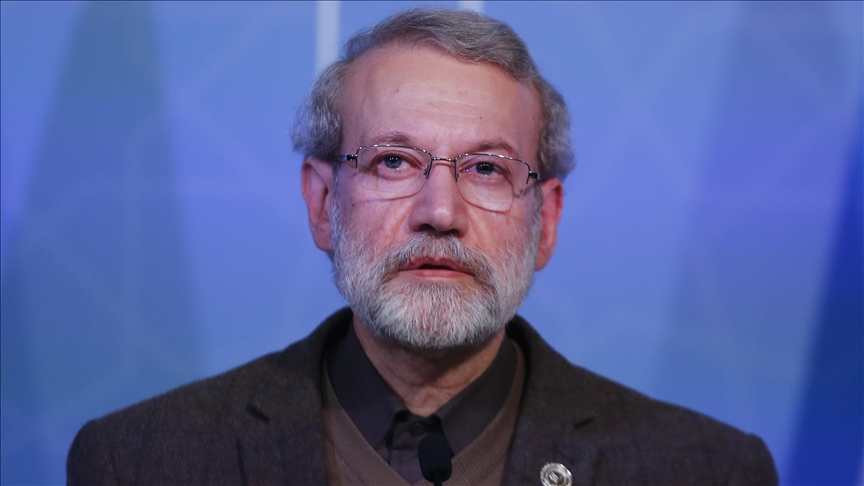
Iranian officials quickly pushed back. Ali Larijani, a former speaker of parliament and current secretary of Iran’s Supreme National Security Council, accused Israel and the United States of fueling the unrest, though he provided no evidence. Writing on X, a platform blocked in Iran, Larijani warned that US intervention in what he described as a domestic issue would trigger chaos across the region and damage American interests. He added that Americans should understand that Trump was embarking on dangerous adventurism and urged them to be mindful of the safety of US soldiers.
The protests began over sharp price increases and economic hardship after Iran’s national currency plunged to record lows. What started as a merchants’ strike in Tehran has since spread to multiple provinces, with shop owners, bazaar traders and university students joining demonstrations and chanting slogans against the government. While the scale remains smaller than the nationwide unrest seen in 2022, the current protests represent the largest outbreak of public anger since then.
Clashes between demonstrators and security forces have intensified in recent days. State television reported that a volunteer member of the Basij paramilitary force was killed overnight during protests in the western city of Kuhdasht. According to various reports, at least six civilians have also died in confrontations with security forces across the country.
Semi-official media outlet Fars News Agency said two people were killed in clashes in Lordegan, in the southwestern province of Chaharmahal and Bakhtiari, while three others died in Azna, in neighboring Lorestan province. A human rights group, Hengaw, also reported fatalities, saying security forces had fired on protesters, killing and wounding several people. Hengaw added that another protester was shot dead in central Isfahan province.
Footage shared online, though unverified, appeared to show demonstrators throwing stones at police in Lordegan. Fars claimed that protesters attacked the governor’s office, banks and other state buildings and alleged that armed individuals exploited the protests. The agency said authorities later seized firearms from several people, though no evidence was provided
The earliest reported death linked to the unrest occurred on Wednesday night, when a member of the Basij was killed and 13 others were injured in Kuhdasht, according to state-affiliated media. Fars broadcast images of a police officer receiving medical treatment after allegedly being set on fire during the clashes. The Basij force, which is loyal to Supreme Leader Ayatollah Ali Khamenei and affiliated with the Islamic Revolutionary Guard Corps, is often deployed to suppress protests.
Authorities have moved quickly to make arrests. The prosecutor in Kuhdasht said 20 people were detained during the protests there. In Malard county, west of Tehran, officials reported the arrest of 30 individuals on charges of disturbing public order. A local official said those detained were abusing their lawful right to protest and claimed some had traveled from neighboring areas to take part.
The unrest reflects deep frustration with Iran’s prolonged economic crisis. The economy has been under severe strain since the United States reimposed sweeping sanctions in 2018, following Trump’s withdrawal from the international nuclear agreement during his first term. Inflation exceeded 40 percent in December, further eroding living standards.
Iranian President Masoud Pezeshkian has attempted to ease tensions by replacing the central bank chief and instructing the interior minister to listen to what he described as the protesters’ legitimate demands. Speaking on state television, Pezeshkian said that failing to address people’s livelihoods would have grave moral consequences. At the same time, authorities have warned against exploiting the situation and have promised a firm response to unrest.
The US State Department said it was alarmed by reports of intimidation, violence and arrests of protesters and called on Iranian authorities to halt the crackdown. In a message posted in Farsi, the department expressed support for Iranians demanding respect for their voices and rights.
Many Iranians remain wary of what may come next. The death of a young Basij volunteer has raised fears that the authorities could use it as a pretext for a harsher crackdown, similar to the response that followed the Women, Life, Freedom protests in 2022 after the death of Mahsa Amini in police custody. That movement was suppressed with heavy force, leaving hundreds dead and thousands imprisoned.
Iran’s Supreme National Security Council
secretary warns US interference
would destabilize region
Statements by Israeli officials and Trump make 'what has been going on behind the scenes ... clear,' says Ali Larijani, responding to online remarks by Trump saying US is 'locked and loaded'
Seyit Kurt |02.01.2026 - TRT/AA
ISTANBUL
US interference in Iran would both destabilize the Middle East and devastate US interests as well, warned the secretary of Iran’s Supreme National Security Council on Friday.
Responding in English to recent remarks by US President Donald Trump, Ali Larijani said on US social media company X: “With the statements by Israeli officials and Trump, what has been going on behind the scenes is now clear.”
He said Iran distinguishes between the stance of Iran’s “protesting shopkeepers and the actions of disruptive actors,” warning that US interference in what he described as an internal matter would “destabilize the entire region and destroy America’s interests.”
"The American people should know — Trump started this adventurism. They should be mindful of their soldiers’ safety," he added.
Larijani’s remarks came after US President Donald Trump warned that Washington would intervene if Iran “shoots and violently kills peaceful protesters,” saying that the US is “locked and loaded and ready to go.”
Javid Shah war cry in Iran: A taboo phrase
Protests against the regime of Ayatollah Ali Khamenei are raging across Iran. Fuelled by economic distress, protestors are calling for the clerical regime to step down and restoration of the Shah's monarchy. The slogan, "Javid Shah" ("Long Live the Shah"), is being raised. The Shah, whose regime was toppled in 1979, has now become the voice of Iranian resistance against the theocratic regime which ousted the monarchy.
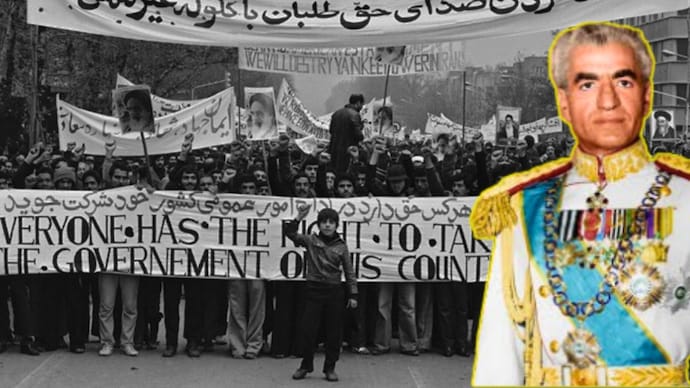
Iranians are calling for the return of the Shah's rule, 47 years after it was ousted in the Islamic Revolution in 1979. (Image: AP/Queen Farah Pahlavi)
India Today World Desk
New Delhi,
Written By: Shounak Sanyal
Protests against Iran's regime of Ayatollah Ali Khamenei have spread nationwide, beginning in Tehran among the merchants before expanding to dozens of cities. By Friday, January 2, protests were reported in more than 30 cities, including Qom, the bastion of Iran's ruling clerical class. The unrest is the largest since the 2022 protests following Mahsa Amini's death, which saw pro-monarchy chants backing the former Pahlavi Shah and its crown prince, Reza Pahlavi.
Along with chants of "Mullahs must leave Iran", the slogan of "Javid Shah," meaning "long live the Shah", was raised by the protestors.
Economic distress initially fuelled the protests, driven by a sharply depreciating currency, trading at around 42,000 rials to the United States dollar, and inflation of up to 42 percent. The protests have evolved into open calls for the theocratic regime to step down. Iranian American journalist Masih Alinejad said protesters were chanting slogans "Death to the
So, who is the Shah that Iranians are now invoking to oppose the rule of Ayatollah Ali Khamenei? It was during the rule of the Shah that protests led by Ruhollah Khomeini, the predecessor of Ayatollah Ali Khamenei, ousted the monarchy in 1979. As a result, a Shia clerical system was established in Iran, with the office of the Ayatollah, or Supreme Leader, at the head of the state.
Reza Pahlavi, who is now the crown prince of the long-deposed Pahlavi dynasty, and is living in exile in the United States, has voiced support for the protests. He praised demonstrators for resisting the regime and called for unity while honouring those who have died seeking greater freedom.
Who is Reza Pahlavi? What is the Pahlavi dynasty, calls for whose restoration, is being raised? The name of the Shah had been a taboo in Iran. It has now become the rallying cry for the latest movement against the rule of Supreme Leader Ayatollah Ali Khamenei.
WHO IS REZA PAHLAVI?
Reza Pahlavi was born in 1960, in Tehran, the capital of Iran. He is the eldest son of Mohammad Reza Pahlavi, the Shah of Iran, whose regime was toppled in the 1979 Iranian Revolution.
A proponent of liberal democracy, he is the founder and leader of the National Council of Iran, an exiled opposition group.
He advocates a free referendum to determine Iran's future system of government. Pahlavi was formally named Crown Prince in 1967 during his father's coronation. He has been active in the Iranian democracy movement and is a prominent critic of the Islamic Republic, led by the Ayatollah. He has repeatedly called for nationwide protests and for the removal of the current regime.
During the current protests, Pahlavi has once again announced his support for the movement.
Writing on X, he urged Iranians to "use every opportunity, gathering, and event in the coming days to expand this movement," and called for protestors to "honour each and every fallen hero of this national uprising" and "continue until the day Iran is free."
WHAT IS THE PAHLAVI DYNASTY AND WHY DID IT FALL?
The Pahlavi dynasty ruled Iran from 1925 to 1979.
It was founded by Reza Shah Pahlavi, a British-trained military officer who rose to power after the Qajar dynasty was weakened and formally deposed in 1925. Reza Shah ruled until 1941, when a joint British and Soviet invasion during the Second World War forced him to abdicate in favour of his son, Mohammad Reza Pahlavi.
Iran remained under Allied occupation for much of the war and emerged in 1946 as a constitutional monarchy. Political life briefly expanded, with major forces including the communist Tudeh Party and the National Front led by Mohammad Mosaddegh. Iran's brief tryst with democracy ended in 1953, when Mosaddegh, who had become prime minister and moved to nationalise Iran’s oil industry, was overthrown in a CIA and MI6-backed coup. Mohammad Reza Pahlavi was restored as the dominant ruler.
advertisement
From 1953 to 1979, Mohammad Reza Pahlavi governed as an increasingly autocratic monarch. Oil revenues fuelled rapid economic growth and close ties with the United States and its allies. Major cities modernised quickly, but development remained uneven, and political freedoms were tightly restricted. The Shah's land reforms, Westernisation policies, and repression of dissent through the SAVAK secret police alienated religious leaders, traditional elites, and large sections of society. His extravagant lifestyle, highlighted by the costly 1971 Persepolis celebrations, further fuelled resentment.
Economic decline brought on by declining oil revenues and increased military spending, cultural backlash, and mounting opposition led by the exiled cleric Ayatollah Ruhollah Khomeini sparked mass protests from 1978.
The monarchy collapsed in 1979, paving the way for the establishment of the Islamic Republic.
The Shah and his family fled Iran, and Mohammad Reza Pahlavi died in exile in Egypt in 1980.
His son, Reza Pahlavi, who is now the crown prince and is living in exile in the United States, is supporting the anti-Ayatollah protestors in Iran.
advertisement
'JAVED SHAH': WHY TABOO SLOGAN NOW RULES THE STREETS OF IRAN?
The Pahlavi dynasty had been overthrown in 1979 as a result of a long-drawn period of unrest and resentment against the Shah. His push for modernity and harsh repression had led to economic inequality, cultural alienation, and united all facets of Iranian society under the religiously driven revolutionary movement led by Khomeini, the Uttar Pradesh-born predecessor of the incumbent Supreme leader.
After 1979, the Pahlavi Dynasty was widely hated, while the newly established Islamic Republic enjoyed popular support.
So what has changed in the last 47 years?
The Islamic Republic of Iran proved to be as repressive, if not more, than the Pahlavi Dynasty it had deposed.
The Ayatollah regime isolated Iran from the rest of the world, which led to the country entering an economic free fall from which it has yet to recover.
The regime's support for terrorist and extremist movements across the Middle East exacerbated the situation as the US and its allies imposed crippling sanctions on the country. The policies cut Iran off from the global economy.
The regime's heavy-handed imposition of Islamic rule and all of its practices has led to incalculable damage to Iran's rich cultural legacy.
Moreover, Iranians are no strangers to resistance and protests.
With the Iranian rial plunging to over 42,000 against the US dollar, and inflation rising to over 42%, the clerical regime of Supreme Leader Ayatollah Ali Khamenei is facing the biggest protest in three years.
"Many videos are coming in from Iran, showing people chanting in unison in the streets: 'Mullahs must leave Iran' and 'death to the dictatorship...' This is the voice of a people who do not want the Islamic Republic," Iranian-American journalist and author Masih Alinejad posted on X earlier this week.
The country has witnessed numerous mass protests and uprisings in its history against the most repressive of the Ayatollah's policies, such as the 2009–2010 Iranian presidential election protests, and the 2022–2023 Mahsa Amini protests.
But what makes the latest movement different from all the rest is the massive outpouring of support for the once hated Pahlavi Dynasty.
The slogan which now echoes on the streets of Iranian cities, "Javid Shah", is a call for restoration of what the Iranians had ousted decades ago.
Although the regime of the Ayatollahs has weathered many such protests and uprisings through brutal crackdowns, the question remains if it can this time? But one thing is crystal clear, the Pahlavi Dynasty has emerged as a face and force in the fight of the Iranians against the theocratic regime.
- Ends
REGIONAL AFFAIRS: Any visible Israeli hand risks allowing the regime to reframe an organic uprising as a Zionist plot - but this does not mean that nothing should be done from the outside.
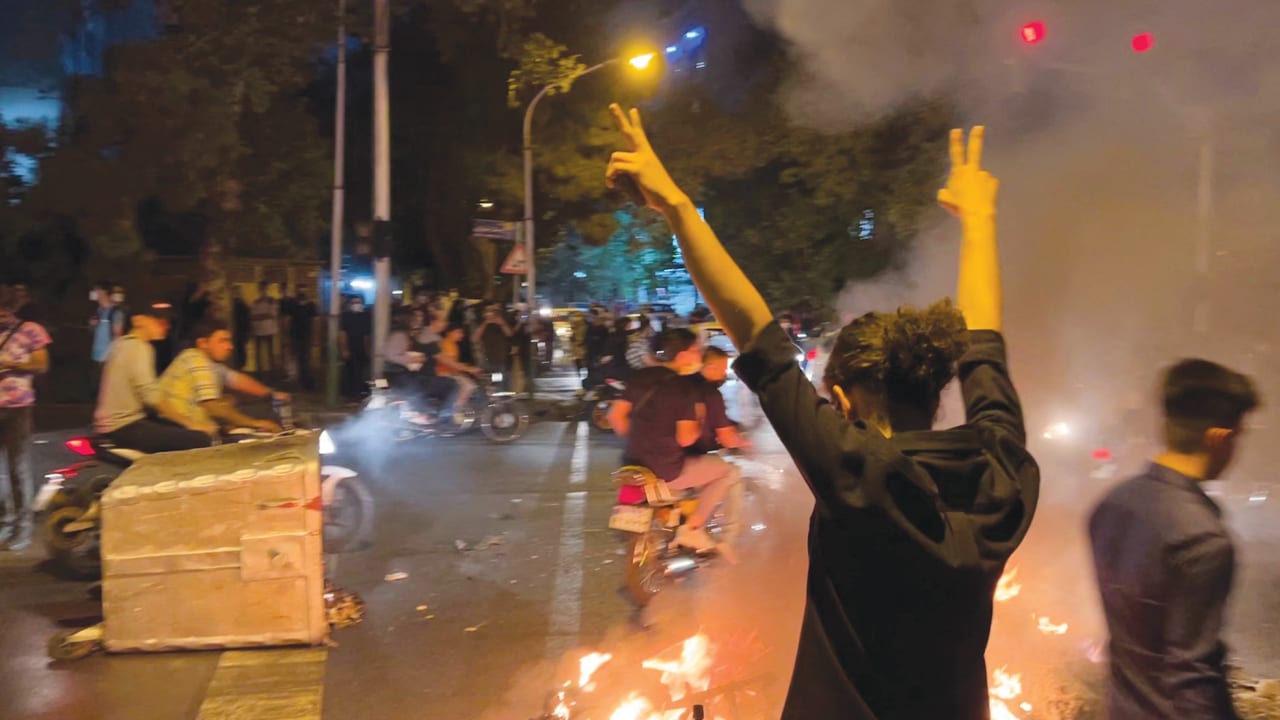
When reporters asked US President Donald Trump this week whether he supports the overthrow of Iran’s regime, his answer was striking less for what it said than for what it didn’t.
“I’m not going to talk about the overthrow of a regime,” Trump said during a photo-op on Monday with Prime Minister Benjamin Netanyahu at the entrance to Mar-a-Lago.
Instead, he spoke about Iranian inflation, an economy gone “bust,” economic collapse, and a people ground down by hardship – before offering a bleakly realistic observation drawn from years of watching Iran: whenever protests reach a critical mass, the regime shoots, people are killed, and the streets empty.
With this characteristically blunt description, Trump was acknowledging a truth that Western policy-makers have struggled with for decades: wanting the Iranian people to succeed, while knowing that openly supporting their efforts for regime change may actually help ensure they fail.
That tension – between solidarity and sabotage, between moral clarity and strategic restraint – sits at the heart of the moment Iran is now entering, once again.

Beyond economics: Iran’s 2026 uprising and the WestTENS OF thousands of Iranians have taken to the streets since Sunday across the country, first over the collapse of the rial and soaring inflation, but then quickly voicing demands – signaled by chants like “Death to the dictator” – that go well beyond economics.
It has happened repeatedly over the last 25 years. Student protests in 1999-2000. The Green Movement in 2009-2010. Nationwide economic protests in 2017-2018. The fuel-price uprising of November 2019. Water and bread protests in 2021. And most dramatically, the “Woman, Life, Freedom” movement in 2022-2023, following the death of Mahsa Amini in custody.
The same question arises in Washington, Jerusalem, and European capitals each time – how to help without hindering.
The dilemma has its roots deep in Iran’s collective memory: the 1953 CIA-backed overthrow of Prime Minister Mohammad Mossadegh. For Iranians, this is not some obscure event that happened nearly 75 years ago. Instead, it is a trauma that resonates through the years. It is also the prism through which Tehran frames every Western gesture of support for internal dissent.
When Iranian leaders accuse the US and Israel of instigating protests, they are not inventing a narrative out of thin air. They are invoking a real episode that continues to reverberate. That incident lends the regime’s claims of foreign interference a sense of plausibility – a “been there, done that” credibility that might otherwise not exist.
Likewise, that episode has strongly influenced every American response to Iranian unrest since.
In 2009, President Barack Obama, facing the Green Movement, opted for extreme caution. Seeking to avoid giving Tehran an excuse to brand the protests as foreign-backed, and very keen on preserving the possibility of nuclear diplomacy, which was a top administration priority, Washington kept its distance.
With time, that restraint – especially considering Obama’s support for protesters in Egypt during the “Arab Spring” – has come to look like a badly missed moment. America’s silence did not spare the protesters from repression, and the regime – which at the time seemed to be teetering – survived to consolidate its power.
Trump, in his first term, chose the opposite tack. During the 2017-2018 protests and again in 2019, he openly voiced support for the demonstrators and cast their anger as evidence of regime corruption and misrule. Tehran seized on those statements as proof of foreign interference, and the protesters themselves were divided over whether Trump’s words helped or hurt.
Joe Biden, faced with the 2022 protests, decided on a more vocal response than that of the Obama administration. The White House paired clear public support for Iranian women with targeted sanctions and steps to expand Internet access. The shift reflected lessons Biden drew from 2009, as well as changed realities that included stalled nuclear talks and less concern about diplomatic fallout from showing support.
Tehran predictably blamed Washington for stirring up the unrest and brutally put down the protests. This reinforced the conclusion that, regardless of how the US responds, the regime will pin the protests on “foreign agitators.”
FOR ISRAEL, the dilemma is even sharper.
Jerusalem would obviously be thrilled by a different regime in Tehran – one not pouring resources into Hezbollah, Hamas, and ballistic missiles aimed at Israeli cities. But Israel’s very involvement is radioactive.
Netanyahu put it carefully this week in an interview with Newsmax. Change in Iran, he said, “will come from within.” Israelis, he stressed, understand what the Iranian people are going through and are sympathetic, but it is not for outsiders to decide Iran’s future.
That restraint is deliberate. Any visible Israeli hand risks allowing the regime to reframe an organic uprising as a Zionist plot.
This does not mean that nothing from the outside should be done, or that the West and Israel are helpless and must abandon the Iranian protesters to their fate.
Rather, the conclusion is that the tools that actually work and are effective are unglamorous, indirect, and often invisible.
Economic pressure matters – a lot.
The current protests did not erupt in a vacuum. They were triggered by inflation, a collapsing currency, and the siphoning off of hundreds of billions of dollars to fund a grandiose nuclear program and regional proxies created to form a “ring of fire” around Israel. All the while, ordinary Iranian citizens were left without reliable electricity or water.
Sanctions imposed in response to these Iranian policies contributed mightily to Iran’s economic vulnerability, and tightening them now in targeted ways can place further pressure on the regime and limit its ability to buy loyalty.
Economic sanctions on Iran are not enoughSANCTIONS ALONE, however, are not enough; they should be augmented by technical support for the protesters. One way of doing this is to ensure Internet access by providing censorship-circumventing tools such as Psiphon and satellite connectivity kits such as Starlink. This allows the protesters to directly counter the regime’s ability to isolate them, coordinate crackdowns, and control the narrative.
The Biden administration did this to some degree during the Mahsa Amini protests, allowing the protesters to document abuses, organize strikes, and sustain momentum.
Targeting the machinery of repression also matters. Sanctions on surveillance technology providers, on telecommunications firms enforcing censorship, and on Islamic Revolutionary Guard Corps units directly involved in crackdowns would affect the regime’s capacity to put down the protests.
Targeting IRGC units does not necessarily mean military action against them, but, rather, pinpoint sanctions: naming the provincial IRGC and Basij commanders who order the shooting of protesters or make mass arrests, freezing their assets abroad, and restricting their travel. The aim is to erode the regime’s capacity to repress by raising the personal and institutional cost for those who carry out the crackdowns.
Another way the West can help is by supporting Iranian diaspora organizations that operate at arm’s length from governments. These groups can provide financial, legal, and moral assistance without tainting the protesters as foreign proxies.
THERE IS, however, another possibility hovering in the background – direct military action.
In recent days, there has been increased talk about the possibility that Iran could try to deflect domestic pressure outward by attacking Israel. This is not something unheard of in the region.
But here the calculus cuts both ways.
As Netanyahu warned this week in an interview on Fox News, any ballistic missile attack on Israel would bring devastating consequences to Iran.
Nevertheless, if Iran were to strike Israel now, it would hand Jerusalem a clear justification to hit IRGC bases and personnel inside Iran – precisely those forces responsible for violently suppressing protests. Such strikes would not be framed as support for demonstrators, but as self-defense.
Tehran obviously understands this, which is one reason it may reconsider whether this is really the time to launch an attack against Israel. While Jerusalem is very unlikely to act preemptively on behalf of protesters, if hit by Iran, it has made clear that it will not hesitate to respond with full force – and that response would inevitably have an impact on Iran’s internal repression apparatus.
ONE OF the most striking aspects of this moment is what has not happened.
During the Israel-Hamas War, massive anti-Israel demonstrations – often openly sympathetic to Hamas – swept capitals and campuses around the world. Hamas saw those protests and concluded that much of the world was with it.
For Iran’s protesters, there has been no such echo. Why?
Part of the answer lies in framing. The anti-Israel protests were cast, however, tendentiously, as anti-colonial and anti-imperialist. Iran, which brands itself as being at the anti-imperialist vanguard, does not fit that mold. The radical Left and the Islamists – the red-green coalition that coalesced in full force after October 7 against Israel – are not going to go out to demonstrate against the ayatollahs.
But forget about protests. Tellingly, The New York Times did not have a single article about the protests on its front page this week. Not only was there no article, but there was also not even a blurb at the bottom of the front page where articles on the inside pages are promoted.
The absence of global demonstrations of solidarity with the Iranian protesters, and the lack of front-page attention, matters and has consequences for those demonstrating in Iran.
Authoritarian regimes do factor international reaction into their responses. When internal unrest dominates headlines and triggers demonstrations abroad, repression becomes costlier.
When it does not spark much of a response, the regime’s calculus shifts. Silence lowers the perceived price of repressing these protests, and Iran’s leadership can conclude that it has room to crack down without triggering sustained external pressure.
Global reaction also has an effect on the staying power of the protesters. The Gaza demonstrations around the world signaled to Hamas that it was not isolated, and this informed some of its decisions.
A lack of global outrage now sends Iranian protesters the opposite message: they are on their own, their struggle did not capture the world’s attention. That matters in terms of morale, endurance, and the demonstrators’ willingness to keep returning to the streets even as the risks mount.
OVER A quarter-century of protest waves in Iran, the West – led by the United States and including Israel – has oscillated between caution and moral support, but has never crossed into overt sponsorship of regime change.
That restraint reflects neither cowardice nor indifference, but history: an understanding that in Iran, visible foreign support can become a liability. The task now is not for the West or Israel to lead Iran’s revolution, but to avoid getting in its way – and to quietly, patiently make it harder for the regime to crush those who are risking everything to challenge it.
Experts see systemic fractures in Iran
After five days of demonstrations, some analysts and observers see support for the son of the deposed Shah, Reza Pahlavi, as the main factor, and others cite economic grievances.

Iran’s latest wave of protests did not erupt suddenly or as a unified political movement. What began with merchant strikes and shop closures in Tehran, particularly among traditionally cautious bazaar networks, has evolved into a broader rupture, driven by currency collapse, rising prices, chronic water shortages, and opposition to the Islamic Republic as a governing system.
With at least two believed killed after five days of demonstrations, some analysts and observers see support for the son of the deposed Shah, Reza Pahlavi, as the main factor, and others cite economic grievances. All agree it is a complex, multi-tiered reality.
That the initial spark came from merchant stoppages in Tehran was a notable shift in a system where bazaar merchant networks have long served as an economic pillar. Their decision to shutter businesses signaled that silence had become costlier than protest.
Nik Kowsar, an Iranian-Canadian award-winning journalist and cartoonist based in Washington DC, situates this turning point within a deteriorating economic environment. “The currency exchange rate is not under control, and it has risen fast,” he told The Media Line.
For shopkeepers and small business owners, the plunge of the rial translated immediately into unaffordable prices and evaporating margins. “It’s like having your monthly income cut in half because of the higher prices, but actually you are getting the same money in rials, but not in US dollars,” Kowsar said.

Ashkan Rostami, an Iranian-Italian political analyst, member of the Iran Transition Council, and co-founder of the Institute for a New Middle East, also traces the unrest to economic pressures while stressing how fast it spread. “It all started at the economic level, that is, initially with the bazaar, which is actually the economic node of the country, and then it spread quite quickly, and honestly, I didn’t expect it to be so fast. It spread immediately to universities, then it also spread to normal people,” Rostami told The Media Line.
As closures spread and security forces intervened, the protests widened beyond merchant circles. Students, truck drivers, and other social groups began appearing in demonstrations, transforming what started as an economic outcry into a broader confrontation with state authority.
Independent Iran scholar Alireza Nader, affiliated with the Nader Research Group, cautions against reading the unrest as purely economic. “It’s important to realize that these protests are not just about the economy but are motivated by opposition to the Islamic Republic as a governing system,” he told The Media Line.
Economic shocks, he explains, function as triggers rather than root causes. “The depreciation of the currency and water shortages in Iran are some of the immediate triggers for these protests,” he added.
The social toll, Nader notes, has become severe. “Life has simply become impossible for ordinary Iranians and more and more people are committing suicide because they cannot afford the basics of life,” he said.
Beyond prices and currency issues, Iran’s water crisis has quietly eroded social resilience for years. Shrinking reservoirs, mismanaged infrastructure, and environmental degradation, compounded by sanctions and isolation, have narrowed the margin for survival across much of the country.
Kowsar argues that unrest was inevitable under these conditions: “I was expecting this for a long time, because when we have this type of water crisis, things usually go south,” he said.
In this framing, environmental collapse becomes political. When the state cannot secure water, livelihoods, or food stability, trust in governance fractures.
An image from Tehran showing a lone protester confronting authority in the street spread online, becoming a symbol of defiance. The figure quickly became emblematic of a nation pushed to its limits.
Kowsar cautions against overreading such moments. “It depends on the numbers whether it can lead to something big or not,” he said.
He argues that what matters more is whether different sectors converge simultaneously. “To add one point, if college students from all around the country join the movement, it will be really hard to control the protests,” he observed.
Momentum, he says, remains fragile. “But they’ll win only if they don’t leave the streets and hand the streets to security forces,” he noted.
Rostami similarly identifies a decisive turning point as a shift within the security apparatus. “The crucial moment could be when the police or a part of the army decide to come on behalf of the people,” he said.
Reza Pahlavi not leading name heard in protestsForeign coverage of Iran’s unrest has often elevated Pahlavi as a central opposition figure. Analysts say this reflects a tendency in international media and diaspora discourse to search for identifiable leadership in movements that remain fragmented inside Iran.
Nader strongly challenges portrayals that present the protests as overwhelmingly pro-Pahlavi. “The monarchist Persian language media stations, especially Manoto TV, are manipulating images of protests in Iran to portray Reza Pahlavi as the only man whose name is heard in the streets, but this is a completely false and duplicitous depiction,” he said.
He does not deny that some demonstrators may support Pahlavi but warns against presenting that strand as representative of the will of Iranians in the streets. “They want freedom to choose their representatives and leaders. Something which they never had, including during the Shah’s dictatorship,” he explained.
Rostami offers a more nuanced reading of pro-Pahlavi slogans heard in the streets, arguing they reflect trust in a transitional figure rather than a clear monarchist agenda. “A good part of the people have finally understood that he is the only person in which at this moment, at least for a transition, they can trust,” he noted.
“It is not said that they are necessarily monarchists. There are also Republicans among his followers. People who are neither Republicans nor monarchists, they are indecisive, but in any case, they see him as a character who can guide the transition from the Islamic Republic to a democratic type of government,” he added.
Rostami also cautions against dismissing all pro-Pahlavi chants as fabrications. He noted that numerous videos had emerged on social media from various areas, and he had heard directly from friends who participated in the recent protests that they had witnessed these chants firsthand.
Pahlavi has addressed the protests directly, calling for continued mobilization saying, “Your presence in the streets across Iran has kindled the flame of a national revolution.”
In a message to protesters and security forces, he said, “Greetings to my compatriots in the bazaar and to those who have taken the streets of Tehran into your own hands. As long as this regime is in power, the country’s economic situation will only worsen.”
He has also been quoted as saying, “I ask all sectors of society to join their compatriots who have taken to the streets and to call for an end to this regime,” and, “Take your destiny into your own hands. This regime is collapsing. Don’t stand against the people, join the people.”
Rostami stresses that Pahlavi does not seek unilateral power. “He does not want to be that person who goes into power on his own and takes power on his own. He has said it several times and is willing to go with other sides of the opposition,” he noted.
Rostami also questions the protests’ timing, pointing to their proximity to high-level diplomatic meetings involving Israeli Prime Minister Benjamin Netanyahu and President Donald Trump recently. “The clearest fact is that Netanyahu actually flies to Florida to visit Trump and a few hours before the visit everything explodes—I don’t think it is unrelated,” he said.
He suggests the sequence may have strategic implications. “In fact, Netanyahu can use this as a political strategy on Trump to say, ‘Look, now people are out on the streets. What we have been looking for, for months, is happening,’” he said.
Rostami adds that visible institutional cracks are already emerging. “The governor of the Central Bank resigned, the political vice-president resigned in these three days. It means that something big is already taking place,” he noted.
Kowsar and Rostami both point to fractures within the system. Kowsar argues that the public perception of failure is decisive. “The government has proven to be incompetent and naive. If people find out they have lost everything, and by going to the streets, they have nothing to lose, you may see a bigger turnout,” he said.
Nader, while cautious, does not rule out systemic rupture. “Yes, it’s entirely possible that the protests will lead to the fall of the regime, though no one can predict the turn of events,” he said.
He argues that escalation depends on sustained pressure across strategic sectors. “The key to success [is] if there are sustained demonstrations throughout Iran with full international support, including from Israel, and also strikes in the energy and transportation sectors,” he concluded.
For now, Iran’s protests remain decentralized, fluid, and unresolved. They are not purely economic, nor fully ideological; not leaderless, yet not unified behind a single figure. What they reflect most clearly is a society confronting overlapping crises—economic, environmental, and political—while competing narratives struggle to capture the reality on the ground.
As the unrest shows no signs of abating, reports emerge of mounting violence, with security forces firing on crowds, resulting in the death or wounding of a number of protesters, and a Revolutionary Guards affiliated volunteer also killed in clashes.
Whether this moment becomes another contained uprising or the opening of a deeper transformation will depend less on symbolism than on numbers, persistence, cross-class participation, and the willingness of key institutions to break with a system widely perceived as exhausted.

No comments:
Post a Comment