Sasha Rogelberg
Mon, August 3, 2026
As traffic in the Strait of Hormuz continues to be disrupted during the monthslong Iran war, one company is benefiting from the global trade chaos.
Clarksons, the world's largest shipbroker, reported its best-ever operating profit of £64.8 million ($87 million) for the six months ending June 30, a more than 55% increase from a year ago. The U.K.-based company founded in 1852 saw a nearly 40% increase in revenue to £413.5 million ($555.5 million).
CEO Andi Case attributed the jump to worldwide changes in supply chains as a result of the Iran war, increasing demand for companies like Clarksons. Shipbrokers are third-party firms that liaise between shipowners, such as Maersk, and cargo-holders, like retailers.
"Clarksons delivered a record first half performance, reflecting both the investment into our underlying business and the exceptional volatility caused by the disruption to global trade from global conflict including the situation in the Strait of Hormuz," Case wrote in a statement on Monday. "We expect the full year performance of the Group to be materially ahead of market expectations."
He added that the disruptions have "created a pronounced shock across global shipping markets" that have reshaped trade routes and caused a "period of operational dislocation" followed by an increase in both freight rates and hedging activity.
Since the onset of the war in February, traffic in the Strait of Hormuz has dwindled from its prewar rate of more than 100 ships per day passing through the chokepoint to about 33 today, according to maritime data tracker Kpler.
Despite President Donald Trump signaling the resumption of peace talks after canceling a renewed offensive against Iran, disruptions in the area look to continue, with Tehran expanding the war across the Gulf region.
That includes Yemen's Houthi movement blockading Saudi Arabian maritime traffic near the Bab el-Mandeb Strait. Ukraine's drone attacks on Russia have also suspended shipping to Black Sea ports and trade corridors key for grain exports.
These supply-chain upheavals have mounted pressures on certain industries like aviation, where jet fuel costs have soared, and agriculture, which has dealt with shortages of key chemicals used in fertilizers as a result of Strait of Hormuz closures. But as those sectors try to cope, companies like Clarksons thrive.
"In any market, any disruptions, obviously, create some kind of a zero-sum game," Jean-Paul Rodrigue, a professor of maritime business administration at Texas A&M University at Galveston, told Fortune. "That is, some actors are losing and the others are gaining the equivalent loss."
Why Clarksons is winning big in times of geopolitical chaos
According to Rodrigue, the shipbroker's record-breaking earnings are a matter of simple supply and demand: With fewer ships passing through the Strait of Hormuz, the need increases for third parties like Clarksons, which can help connect retailers to ships actually able to transport goods.
Like any broker, companies like Clarksons receive a share of the transactions between the two parties. So when the cost of shipping increases, a brokerage's share likewise increases.
"When you have geopolitical instability, of course, it disrupts the market," Rodrigue said. "It creates uncertainty. It creates a lack of knowledge because nobody knows what the hell is happening. Uncertainty, therefore, actually increases the importance of such firms because people are getting a bit more desperate."
But uncertainty doesn't always mean winning big. In March 2025, ahead of the Trump administration's steep tariffs and amid continued conflict between Ukraine and Russia, Clarksons said the trade tensions would have an adverse impact on revenues.
The Iran war, however, has had the opposite effect. Sea freight routed near the Strait of Hormuz nearly quadrupled in the first two months of the conflict, according to data from the International Rescue Committee, primarily as a result of steep insurance premiums associated with navigating the region. The higher demands and costs of doing business presented a strong opportunity for companies like Clarksons.
"They just behave rationally," Rodrigue said. "Market positions change…and when the market position changes, obviously supply and demand change, and those who are at the right end of the stick are going to benefit."
This story was originally featured on Fortune.com
Fortunes Buoyed by Hormuz Crisis, Clarksons Posts a Record First Half
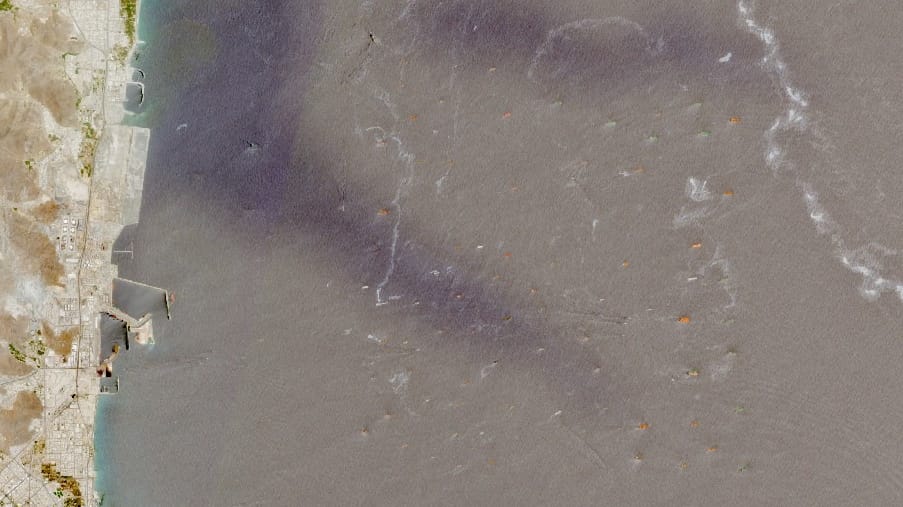
Its fortunes buoyed by conflict in the Mideast, world-leading shipbroking firm Clarksons is having a spectacular year, posting its best-ever results for the first half and predicting a better-than-expected finish to 2026.
War is usually good for shipping, within limits, and brokers are well-placed to benefit. For Clarksons, the disruption at Hormuz in the first six months of the year yielded a 38 percent jump in revenue and an underlying profit of $83 million, a company record for the first half.
In a brief statement, CEO Andi Case cited "exceptional volatility" in the markets caused by trade disruption, to include the on-and-off Hormuz shutdown. He predicted that the firm's full-year performance would be "materially ahead of market expectations."
The dynamics of the Hormuz shutdown "shock" were a primary driver of the firm's outsize success in the first half. The disruption drove up freight rates, forced operators to readjust routing and reposition vessels, and increased tonne-mile demand. For those with ships available in the right place and the right time, it was an excellent opportunity for earnings - and for broking as well. Demand for freight derivatives ran high, too, as charterers moved to hedge their exposure to changing rates.
"I am extremely proud of our colleagues across the group, whose exceptional hard work, commitment and client focus have made this performance possible," Case said. "We look forward with confidence."
Clarksons' strong results and optimism saw its share price jump by about six percent in morning trading to reach a new all-time high of about $67.75. Investors can also look forward to an interim dividend of 47 cents per share, up from 44 cents last year.
BP Earnings Surge to $5.7 Billion on Oil Price and Refining Boom
BP more than doubled its profit for the second quarter from a year earlier on the back of higher oil and gas prices and stronger refining margins driven by the shock supply disruption in the Middle East.
BP on Tuesday reported an underlying replacement cost (RC) profit, the closest metric to net profit closely watched by analysts, of $5.7 billion for the second quarter, up from $3.2 billion for the previous quarter, and more than doubled from the $2.35 billion for the same period of 2025.
The Q2 earnings beat the average analyst consensus of $5 billion.
The jump in oil and gas prices, combined with significantly higher refining margins and stronger oil and gas trading profits from a year earlier, boosted BP’s underlying earnings above analyst expectations.
The surge in the underlying result mainly reflected higher liquids and gas realizations, including the impact of price lags, stronger realized refining margins, and stronger customer results, partly offset by higher exploration write-offs, BP said.
Moreover, “The oil trading contribution for the second quarter and first half was significantly higher compared with the same periods in 2025,” BP said.
The UK-based supermajor, like its European peers Shell and TotalEnergies, benefited from the higher oil prices, the spike in refining margins, and the bumper trading profits from extreme market volatility.
Last week, Shell also reported more than doubled second-quarter earnings from a year earlier, as higher oil and gas prices, record refinery utilization, and strong trading boosted profits to above analyst expectations.
Other European majors, including Eni, TotalEnergies and Equinor, also saw their profits jump from a year earlier as oil and gas prices surged during the Middle East crisis and delivered windfall earnings to the biggest energy firms.
For BP, the earnings jump comes at a crucial moment for the company as CEO Meg O’Neill looks to simplify the business to focus on the most profitable assets in a bid to create shareholder value and show investors that BP’s stock can be attractive again.
“We need to take a clear look at ourselves: assessing what needs to change, stopping what holds us back and building strength where it matters. We have to get fit to grow,” O’Neill said in the earnings release.
By Tsvetana Paraskova for Oilprice.com
Saudi Aramco’s Adjusted Profit Jumps 33% as Oil Prices Surge
Saudi Aramco saw its adjusted net income jump by 33% for the second quarter from a year earlier as high oil prices and the oil giant’s ability to re-route most crude exports more than offset the constrained flows at the Strait of Hormuz.
The state giant Aramco on Tuesday reported an adjusted net income of $33.385 billion for the second quarter, up by 33% from the $25.19 billion for the same period of 2025 and beating an analyst consensus of about $31 billion.
Saudi Aramco’s average realized crude oil price jumped to $108.1 per barrel for April to June, the period in which Brent oil prices averaged $97 a barrel.
The oil giant’s average realized price compares with $76.9 per barrel realizations for the first quarter of the year and $66.7 a barrel for the second quarter of 2025.
Aramco kept its Q2 2026 base dividend of $21.9 billion, to be paid in the third quarter to shareholders, the majority of which is the Kingdom of Saudi Arabia.
Despite the major disruption to flows in the second quarter, Aramco benefited from its diverse asset base, including strategic infrastructure such as the East-West Pipeline, storage capacity, and export terminals, President and CEO Amin Nasser said.
“That enabled us to sustain production and exports while advancing key projects, despite the challenging regional environment,” the executive noted.
Ziad Al-Murshed, Aramco’s Executive Vice President and CFO, commented, “Our resilience stems from decades of long-term planning and our strategic domestic and international infrastructure that provide flexibility and optionality.”
Saudi Aramco has re-routed its crude oil exports to the Red Sea port of Yanbu to avoid the Strait of Hormuz constraints. But this new route was challenged two weeks ago when the Iran-aligned Houthis threatened to block Saudi-linked shipments in the Red Sea and the Bab el-Mandeb Strait, prompting dark transits through Bab el-Mandeb and new re-routing of oil exports northward to Egypt and the Suez Canal.
By Tsvetana Paraskova for Oilprice.com

No comments:
Post a Comment