Top Container Lines Lean Towards Ownership Over Chartering
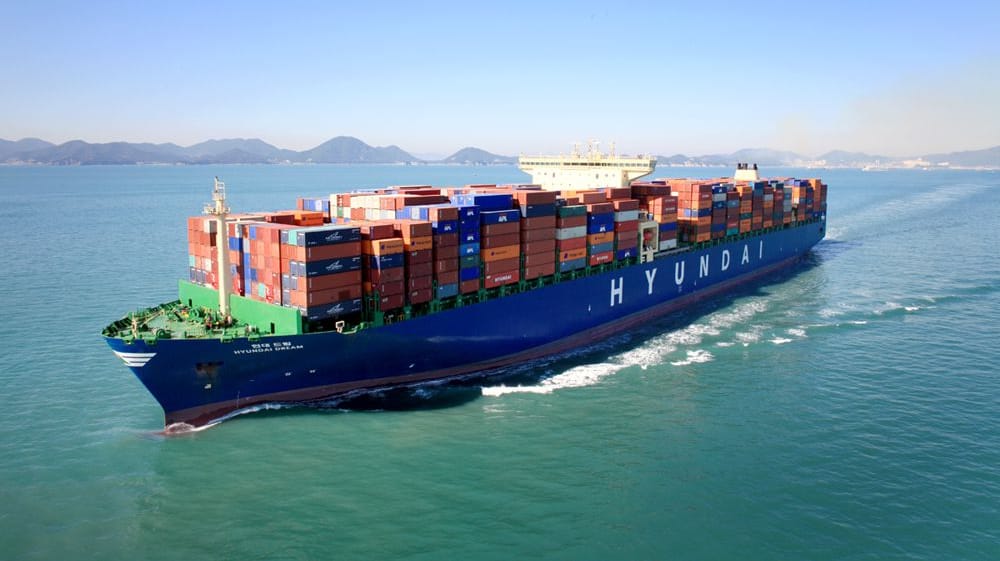
At the outset of the pandemic, ocean carriers chartered-in the majority of their tonnage, giving them the flexibility to grow or shrink their fleets as needed to match demand. That capital-light structure has now reversed itself: on average, the 12 largest ocean carriers now own the majority of their operated capacity - about 63 percent of all slots in total, according to Sea-Intelligence.
The decision to build or charter-in varies by container carrier, and each has its own strategy. Israel's ZIM is well known for securing almost all of its tonnage on long-term charters rather than buying or building its own hulls: it only owns about 15 ships, and it charters-in the remaining 101 ships in its fleet. At the other end of the spectrum, Wan Hai has recently eliminated all chartered tonnage from its operations and now owns its entire 124-ship fleet. MSC, HMM and Evergreen are likewise heavy on the ownership side of the equation.
MSC's post-pandemic buying spree is one explanation for the average number shifting in favor of ownership. During the early 2020s, MSC developed a reputation for buying used tonnage at healthy prices, and it has ordered newbuilds at a swift pace. It now dominates the field in both TEU capacity (7.3 million TEU afloat) and vessel count (more than 1,000 hulls). The number-one container carrier has purchased so many ships that its owned fleet alone is larger than the combined fleet of its next-largest competitor, Maersk Line, and it continues to grow. In June, it was linked to orders for another 20 vessels of 20,000 TEU each at Hengli Heavy Industries, bringing its orderbook to about 2.6 million TEU.
Other big movers who have swung towards ownership include CMA CGM, PIL and Evergreen, all of which now own a majority of their fleets.
The advantages that accrue to carriers with a high owned percentage of tonnage center around predictability and control, both operationally and on the balance sheet. Owned vessels are not exposed to fluctuations in the charter market, like the extreme price surges seen during the pandemic. Carriers with owned ships do not have to worry about a bidding war at the end of a charter term, nor do they have to ensure that they meet the shipowners' specifications for maintenance, trading area or any other operational factors. This leaves the carrier with more flexibility and more assurance when planning service strings, and greater ability to capture peak earnings when container rates begin to climb. When a boom market arrives, an owned vessel is an available vessel - even when the chartered vessels get snapped up by somebody else.
Rolls-Royce Presents New Marine Propulsion Systems at SMM 2026
Rolls-Royce Power Systems introduces advanced marine propulsion solutions aimed at enhancing efficiency and sustainability.
[By Rolls-Royce]
At SMM 2026, Rolls-Royce Power Systems will showcase new technologies for efficient and more sustainable shipping. The focus will be on propulsion systems, sustainable fuels, intelligent automation and comprehensive service offerings – all with the aim of making fleets fit for the future.
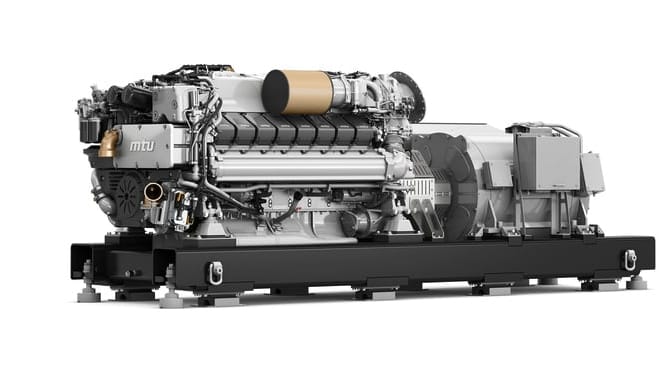
A highlight: the new mtu Series 2000 variable-speed generator sets. They offer industry-leading power density and can enable up to 15 per cent lower fuel consumption and CO? emissions compared to constant speed gensets. The variable speed adapts optimally to different load profiles – ideal also for electric and hybrid vessels that demand maximum efficiency, reliability and flexibility. Noise and vibration levels are also reduced, which significantly enhances on-board comfort. The product range comprises compact and powerful units from 8V to 16V variants, perfect for passenger ferries, SAR vessels, offshore support vessels, yachts and patrol boats.
This range is complemented by the new SCR exhaust after-treatment solution, which meets the strictest IMO Tier III emission standards and paves the way for sustainable shipping.
Rolls-Royce also sets the standard in the field of automation: with mtu NautIQ, bridge solutions and data analytics, ship operators are empowered to manage their fleets safely, efficiently and sustainably – whether for newbuilds or retrofits.
The service portfolio supports customers throughout the entire lifecycle of their vessels: extended maintenance intervals, in-situ maintenance and industry-leading warranties ensure maximum availability and cost-effectiveness.
Rolls-Royce Power Systems stands for technological openness, bespoke customer solutions and 100 years of maritime experience. “As a company within the Rolls-Royce Group, we actively evaluate, research and invest in future technologies to offer our customers the right propulsion technology for their fleets – both today and in the future – and support them with the expertise of our engineers and our service team throughout the entire service life of their vessels,” explained Dr Lukas Köhler, Senior Vice President Global Marine & Mining at Rolls-Royce Power Systems.
The products and services herein described in this press release are not endorsed by The Maritime Executive.
Autonomy Firm Accurate Unveils Workboat With Collision Avoidance Software
Accurate Industrial Control's new patrol boat features advanced collision avoidance technology certified by IRS.
[By Accurate]
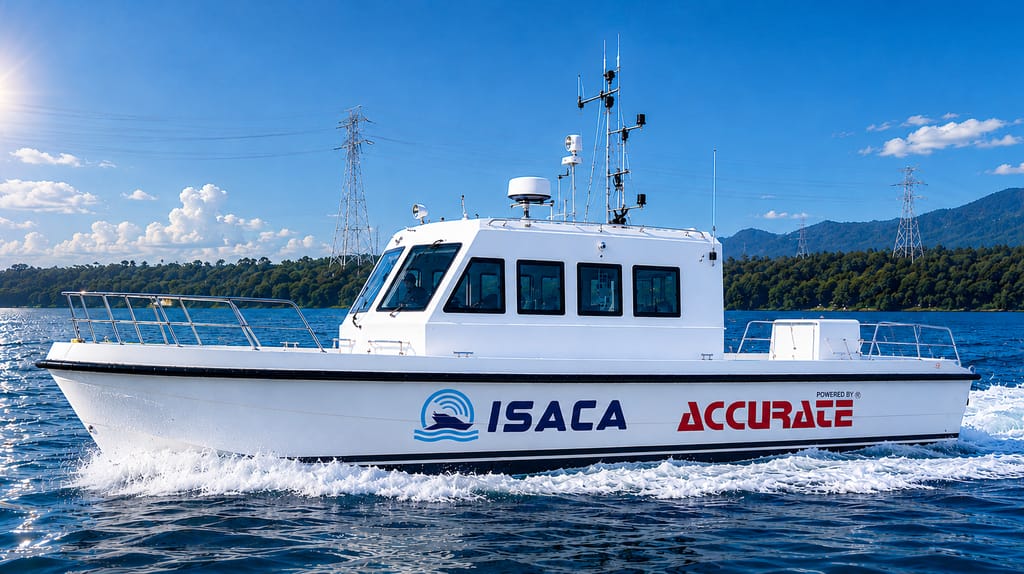
India is taking a major step into the global marine autonomy market after the Indian Register of Shipping (IRS) certified Pune based automation specialist Accurate Industrial Control’s newly built patrol boat featuring collision avoidance software.
The IRS has awarded the certification to Accurate Industrial Controls for its ‘Intelligent Situational Awareness and Collision Avoidance’ (ISACA) tech stack following sea trials on board a new 13m workboat, built for Accurate at SHM Shipyard Limited in Mumbai. The sea trials took place in the Arabian Sea off Karwar, India.
Dharmesh Popatlal Gala Accurate’s director of AI and Robotics confirmed the ISACA system includes Multiple Situational Awareness Sensors including radar, GNSS, echo sounder, CCTV and a full collision avoidance stack. He said it achieved IRS AUTN 4-R(N) certification in line with the specific IMOs International Regulations for Preventing Collisions at Sea (COLREGs) rules.
Dharmesh said following the successful trials Accurate is now receiving orders and interest for both new build and retrofit versions of the ISACA equipped boat for commercial and naval markets.
“This is an exciting moment for Accurate,” he said. “We have worked for more than 30 years in automation across the steel, auto and aerospace industries. We saw an opportunity to expand into marine around five years ago when we were working with the Indian army. We now see massive growth potential for our collision avoidance software and autonomous navigation solutions to be supplied at scale into Europe, the Middle East, India and beyond. We are seeing queries from navies and coastguards as well as port, harbours and the offshore market.”
Dharmesh said key to Accurate’s offering is to draw on the expertise of a 1500 strong workforce.
“As India is showing in space with the orbiter sent to Mars, India can innovate tech at a fraction the cost of other countries,” he said. “For that reason, we believe we have one of the most advanced and competitive autonomous navigation solutions available in the world. With the ISACA system we are aiming to democratize the cost of autonomous navigation solutions without compromising safety or performance.”
Dharmesh said bringing affordable autonomy to the market releases massive pressure on traditional patrol boats which require continuous crewing and cannot maintain persistent awareness across large areas.
“Autonomous boats using the ISACA solutions can replace crews and provide 24/7 monitoring and persistent awareness at a fraction of the operational cost,” he said. “This matters more than ever in the naval arena where threats are changing and the nature of warfare evolving.
Dharmesh added Accurate has further built a smaller 5m autonomous ‘SAR Craft’ at the Sumit Shipyard, Kochi which it is also bringing to the patrol boat market with the full ISACA tech stack.
FEATURES
The ISACA platform is directly compatible with Mercury, Cox and any CAN/MODBUS based propulsion systems and can integrate also non-digital propulsion employing appropriate actuators, enabling autonomous control of steering and propulsion of wide class of vessels.
Key capabilities include:
- Persistent autonomous operations – 24/7 surveillance and mission execution without onboard crew.
- Advanced sensor fusion – Combines radar, electro-optical cameras, AIS and inertial navigation into a single real-time operational picture.
- Situation perception – Detects, classifies and tracks multiple vessels and objects simultaneously while assessing potential risks.
- 360° situational awareness – Provides continuous all-round monitoring and target tracking in complex maritime environments.
- Autonomous mission planning – Generates and continuously optimises routes, patrol patterns and mission plans as conditions change.
- COLREGS-compliant collision avoidance – Performs real-time collision risk analysis and executes safe manoeuvres in accordance with specific IMOs International Regulations for Preventing Collisions at Sea (COLREGs) rules.
- Precision vessel control – Converts navigation decisions into steering and throttle commands while compensating for wind, waves and currents via the integrated DTS/CAN/MODBUS propulsion interface.
- Remote command and control – Enables operators to monitor vessel status, sensor feeds and missions in real time, with manual override capability when required.
Applications include: port and harbour security, critical infrastructure protection, offshore energy, coastal surveillance, environmental monitoring, hydrographic survey, inspection missions, border security and maritime defence operations.
Further, the ISACA’s Collision Avoidance Software (DrishtipathaTM) without Autonomous Control but with Audio/Visual Alerts is available as Wheelhouse Co-Navigator.
The products and services herein described in this press release are not endorsed by The Maritime Executive.

No comments:
Post a Comment