Showing posts sorted by date for query BUSH KATRINA. Sort by relevance Show all posts

Wednesday, December 17, 2025

Survivors Slam Kristi Noem Over FEMA’s Response to Deadly Disasters


FEMA workers say the agency is being gutted under Trump, putting disaster victims at risk
.
December 16, 2025

Department of Homeland Security Secretary Kristi Noem answers questions from members of congress during the House Committee on Homeland Security on December 11, 2025, in Washington, D.C.Marvin Joseph / The Washington Post via Getty Images

Independent journalism at Truthout faces unprecedented authoritarian censorship. If you value progressive media, please make a year-end donation today.

Department of Homeland Security (DHS) Secretary Kristi Noem is under fire from disaster survivors for mismanaging the federal government’s response to recent storms, floods, and deadly wildfires as staffing cuts and controversial policy changes continue to cause chaos at the Federal Emergency Management Agency (FEMA).

Disaster survivors from 10 states and Puerto Rico gathered Monday on Capitol Hill for an emotional press conference to demand accountability from Noem for “systemic failures” at Noem’s department, which oversees FEMA. The survivors said communication shortfalls and mismanagement of emergency relief funds that in some cases caused months-long delays left officials and residents on the ground frustrated and confused after disaster struck.

Among the attendees were survivors of the devastating floods in central Texas, which claimed more than 130 lives in July. The survivors demanded a meeting with Noem and a personal visit from her to the flood-ravaged communities. They also are calling for a congressional hearing on the government’s response to the disaster.

“When FEMA cannot fully function, real people pay the price, and what happened in Sandy Creek cannot be allowed to happen again.”

“When FEMA cannot fully function, real people pay the price, and what happened in Sandy Creek cannot be allowed to happen again,” said Brandy Gerstner, who survived flash floods with her family in Leander, Texas.

The activism from the disaster survivors comes as President Donald Trump’s administration continues to bring controversy to FEMA. Earlier this month, the Trump administration installed an election denier and conspiracy theorist with no official government disaster response experience as a top administrator at FEMA. Gregg Phillips, a human resource official for the Texas state government, reportedly only has experience responding to disasters with religious groups and nonprofits. In one social media post, Phillips described himself as a “very vocal opponent of FEMA.”

Related Story

FEMA Employees Speak Out After Attacks on Workers Warning of Looming Disaster
“The danger posed to our collective communities … is very real,” said one employee who signed a public letter. By Sasha Abramsky , Truthout  August 30, 2025


Rafael Lemaitre, a former FEMA public affairs director and member of the advisory council to Sabotaging Our Safety, a FEMA watchdog group, said the hiring of Phillips to manage FEMA’s Office of Response and Recovery is part of a larger pattern of dismantling FEMA piece by piece.

“The only thing Gregg Phillips seems qualified for is running the Flat Earth Society — yet Trump put him in charge of saving American lives,” Lemaitre told Truthout in an email. “This clearly isn’t about keeping Americans safe when disaster strikes.”

Then, on December 12, officials abruptly canceled a much-anticipated meeting of a FEMA review council after significant changes made by Noem’s office to a report recommending sweeping cuts to FEMA leaked to the media. The three officials, who spoke to the Associated Press on condition of anonymity to discuss the issue with the media, said the report shrunk from over 160 pages to roughly 20.

Created by a policy “review council” created by Trump, the draft report recommends a dramatic overhaul and downsizing of FEMA, including a 50 percent reduction in staff. Noem’s office reportedly made significant cuts to the review council’s draft and rejected some of the recommendations. The report is now undergoing additional internal vetting and has not been released publicly, according to The Washington Post.

CNN first reported on the leaked policy recommendations, which include changing the name of the agency to “FEMA 2.0” at least temporarily.

“It is time to close the chapter on FEMA,” the draft report states. “A new agency should be established that retains the core missions of FEMA, while highlighting the renewed emphasis on locally executed, state or tribally managed, and federally supported emergency management.”

Such an overhaul at FEMA would leave cities and states shouldering the costs of disaster preparation, response, and recovery — costs most states cannot afford — and put disaster victims at risk of serious harm, especially those with fewer financial resources, according to Shana Udvardy, a senior climate resilience policy analyst at the Union of Concerned Scientists.

“That means the next time a hurricane or horrific wildfires materialize we may again experience a disturbing FEMA fiasco on par with Hurricane Katrina, as FEMA staff warned about in their recent petition to Congress,” Udvardy said in a statement on December 12.

Udvardy was referring to The FEMA Katrina Declaration, a petition against the Trump administration’s FEMA overhaul organized by current and former FEMA workers. The petition states that key Trump appointees running FEMA have little experience in emergency management, and points to Hurricane Katrina as a warning. FEMA’s infamous failure to assist stranded Black residents of New Orleans after Hurricane Katrina devastated the city in 2005 left a racist stain on the administration of President George W. Bush, which helped pave the way for the election of President Barack Obama in 2008.

Fast forward 20 years, and communities in central Texas are still recovering from deadly flash floods unleashed by storms over the summer. Abby McIlraith, an emergency management specialist at FEMA, said she joined colleagues and signed the Katrina Declaration to call out the Trump administration for harming disaster survivors after the floods claimed dozens of lives in Kerrville, Texas. A day after the petition was published, McIlraith and other whistleblowers were placed on leave.

“Secretary Noem took only 36 hours to illegally retaliate against us as whistleblowers, but 72 hours — twice as long — to send search and rescue to Kerrville,” McIlraith told reporters on December 15. “Her insistence on personally approving major FEMA expenses, combined with these retaliatory actions, left disaster survivors waiting for help when hours and days mattered most.”

Gerstner said her family in Leander felt abandoned by FEMA and local authorities after flash floods destroyed the life they built over the past 36 years, including three homes, a business, and their sense of safety. The flood is fading from the local headlines, but Gerstner said the community is still struggling with recovery months later.


“We lost neighbors, were stranded for days without help, and watched as FEMA response was delayed while families were left to survive on their own.”

“We lost neighbors, were stranded for days without help, and watched as FEMA response was delayed while families were left to survive on their own,” Gerstner said. “More than five months later, many are still homeless, and only 36 percent of FEMA claims in our area have been approved.”

Victims of a federally recognized disaster can file claims with FEMA for financial assistance to cover the cost of emergency repairs, transportation, and hotel rooms when homes are destroyed, for example. It’s a notoriously slow and byzantine process disaster victims have complained about for years. Federal emergency funds only become available to states and local communities after the president issues an official disaster declaration, often in response to a request from a state governor and a recommendation from FEMA.

Since taking office, Trump has made it clear that he wants to shift the financial burden of disaster relief from the federal government to the states and has suggested phasing out FEMA altogether, a position Noem echoed in interviews. Dismantling FEMA entirely would require an act of Congress, but the Trump administration did not wait on lawmakers to slash staff and budgets at the agency while shifting DHS resources toward Trump’s mass deportation campaign.

Advocates and disaster survivors say emergency relief for communities impacted by fires, hurricanes, tornadoes, and other disasters has been delayed for months at a time as a result of the Trump administration’s assault on FEMA.

For example, FEMA announced on December 12 it would send $350 million to local governments and electric utilities in Georgia for relief efforts after Hurricane Helene and Hurricane Debby, which both hit in 2024. The payment comes two months after Sen. Raphael Warnock (D-Georgia) released a report showing that nearly $500 million in Hurricane Helene disaster relief was unpaid, according to the Associated Press.

“Hurricanes and natural disasters are not political; they do not care if you voted red or blue, and Georgia counties and cities went right to work recovering from Helene’s destruction with the understanding the federal government would fulfill its promises and pay their share,” Warnock said in a statement. “It should not have gotten to this point.”

Dr. Michael McLemore, a local organizer with community and racial justice groups in St. Louis, Missouri, survived a violent tornado that devastated residential areas and claimed at least five lives on May 16. McLemore said he lost the roof of his house and witnessed “our community’s systems fail at every level.” Trump did not declare the tornado a federal disaster until June 10, which delayed FEMA’s response.

“Sirens didn’t sound, local officials delayed response, and FEMA, under Secretary Kristi Noem, was nearly a month late in declaring a major disaster — leaving seniors and residents without transportation to fend for themselves,” McLemore said.

Like other disaster survivors, McLemore supports the 2025 FEMA Act, a bipartisan bill that would make FEMA an independent, cabinet-level agency and make major reforms to streamline the process for providing disaster relief. Introduced in the House by leaders of the Transportation and Infrastructure Committee from both parties, the bill has 40 bipartisan co-sponsors but remains in committee as the House Republican majority struggles to pass even basic legislation.

“Disasters don’t discriminate, but disaster recovery does,” McLemore said.

Sunday, November 02, 2025

Opinion

Why We Shouldn’t Care What Bill Gates Has to Say About the Climate Crisis

If we were listening to people on the grounds of whether they had a good track record, the world would not spend a lot of time on Gates and climate. But if you have a hundred billion dollars all is forgiven.


Bill Gates and Warren Buffett speak with journalist Charlie Rose at an event organized by Columbia Business School on January 27, 2017 in New York City.
(Photo by Spencer Platt/Getty Images)


Bill Mckibben
Nov 01, 2025
The Crucial Years

I feel quite strongly that we should pay less attention to billionaires—indeed that’s rather the point of this small essay—so let me acknowledge at the outset that there is something odd about me therefore devoting an edition of this newsletter to replying to Bill Gates’ new missive about climate. But I fear I must, if only because it’s been treated as such important news by so many outlets—far more, say, than covered the United Nations Secretary General’s same-day appeal to international leaders that began with a forthright statement of the science. Here’s António Guterres:
The truth is that we have failed to avoid an overshooting above 1.5°C in the next few years. And that going above 1.5°C has devastating consequences. Some of these devastating consequences are tipping points, be it in the Amazon, be it in Greenland, or western Antarctica or the coral reefs.


In fact, I could probably just note that Gates, with impeccable timing, decided to drop his remarks at the same moment that Hurricane Melissa plowed into Jamaica, doing incalculable damage because of winds made stronger by the ocean heat attributable to global warming. As Jeff Masters reported:
Human-caused climate change increased Hurricane Melissa’s wind speeds by 7% (11 mph, or 18 km/h), leading to a 12% increase in its damages, found researchers at the Imperial College of London in a rapid attribution study just released. A separate study by scientists at Climate Central found that climate change increased Melissa’s winds by 10%, and the near-record-warm ocean waters that Melissa traversed—1.2°C (1.2°F) warmer than average—were up to 900 times more likely to be that warm because of human-caused climate change.

RECOMMENDED...


‘There Is No Lack of Money’: Climate Movement Demands Billionaire Tax to Fund Greener Future


Richest 0.1% Overwhelmingly Guilty of the ‘Climate Plunder’ Wrecking Planet Earth

And, oh, the same day Hue, in Vietnam, reported one of the two or three greatest rainfalls in recorded human history: 5 feet of rain in 24 hours, the kind of deluge made ever more likely by a warming atmosphere that can hold more water vapor. As the Associated Press reported, “Global warming is making tropical storms stronger and wetter, according to experts, because warmer oceans provide them with more fuel, driving more intense winds, heavier rainfall and shifting precipitation patterns across East Asia.”

Anyway, Bill Gates’ letter.

It was wrong of him to write it because if his high-priced pr team didn’t anticipate the reaction, they should be fired. I assume they did, and that they were okay with the entirely predictable result from our president. Here’s how the Washington Times described it:
“I (WE!) just won the War on the Climate Change Hoax,” said Mr. Trump in a Wednesday post on Truth Social. “Bill Gates has finally admitted that he was completely WRONG on the issue. It took courage to do so, and for that we are all grateful. MAGA!!!”


Bill Gates didn’t, of course, say that. He said climate change was real and we should be worried about it, but that it wouldn’t lead to “humanity’s demise” or “the end of civilization” (which seems like the lowest of low bars) and that:
Although climate change will hurt poor people more than anyone else, for the vast majority of them it will not be the only or even the biggest threat to their lives and welfare. The biggest problems are poverty and disease


and therefore that’s where we should focus our money. His letter is actually directed at delegates to the global climate conference next month in Brazil, essentially telling them to back off the emissions reductions and concentrate on growing economies in the developing world because “health and prosperity are the best defense against climate change.”

Any conversation about Bill Gates and climate should begin by acknowledging that he’s been wrong about it over and over again. He’s explained that up until 2006—i.e., 18 years after Jim Hansen’s testimony before Congress laying out the science, and well past the point where George W. Bush had acknowledged its reality—he like Trump thought the whole thing was a crock. “I had assumed there were cyclical variations or other factors that would naturally prevent a true climate disaster,” he explained—at the time he was the richest man in the world, and yet his scientific advisers couldn’t get across the simple facts to him.

And he was last heard from on the topic in 2021, when he wrote a book explaining that it was going to be very hard to do renewable energy because it came with a “green premium”—i.e. it cost more. Sadly for his argument, that was pretty much the year that sun and wind crossed the invisible line making them less expensive than coal and oil and gas. (You can read my review from the New York Times here, and you can read his response to it in Rolling Stone here where he explains, “McKibben is stuck in this time warp.”)

So—if we were listening to people on the grounds of whether they had a good track record, the world would not spend a lot of time on Gates and climate. But if you have a hundred billion dollars all is forgiven, and so there has been lots of fawning coverage. The fact that Gates framed all this in a way designed to appeal to the president is so obvious that it hardly bears mentioning (the richest men in the world have all been sucking up to him, so no extra shame here); let’s instead just go to the heart of his argument. Which is weak in the extreme.

Take the case of Jamaica. The warming-fueled hurricane that smashed into the island on Tuesday did a lot of damage. How much? The first estimates from the insurance industry say between 30 and 250% of the country’s annual GDP. The wide range is because we don’t yet have pictures from much of the country, so let’s go with the very low end of the range. Thirty percent of a country’s GDP is… a lot of money. It’s as if Hurricane Katrina had cost America $8 trillion. If America suddenly had an $8 trillion hole, what do you think that would do to its ability to pay for education and healthcare and the like? That’s what “development” is. Jamaica is in a hole it will spend forever getting out of.

And oh, Cuba and Haiti got smacked too. And Vietnam. And… and that was just last week. According to the National Bureau of Economic Research, every one degree climb in temperature knocks 12% off GDP. The paper concluded that “by the end of the century people may well be 50% poorer than they would’ve been if it wasn’t for climate change.” And who gets hurt the most? That would be the developing countries that Gates in theory worries about. Here’s a Stanford study showing that “the gap between the economic output of the world’s richest and poorest countries is 25% larger today than it would have been without global warming.”

Gates goes on and on about public health, but as the US Global Leadership Coalition (a group he has lauded extensively) said a few years ago:
Warmer temperatures could expose as many as one billion people to deadly infectious diseases such as Zika, dengue, and chikungunya. In the US alone, disease cases from mosquitoes, ticks, and fleas more than tripled from just under 30,000 to almost 100,000 a year from 2004 to 2016. A warmer climate could lead to an additional 250,000 people dying of diseases including malaria each year between 2030 and 2050, according to the World Health Organization.

Is this a smaller effect than the things he worries about? On the same day that Gates issued his letter, the premier medical journal the Lancet issued its annual update on climate and health, and what it found was:
Rising global heat is now killing one person a minute around the world, a major report on the health impact of the climate crisis has revealed.

It says the world’s addiction to fossil fuels also causes toxic air pollution, wildfires, and the spread of diseases such as dengue fever, and millions each year are dying owing to the failure to tackle global heating.


The irony of Gates’ new letter is that he acknowledges, in passing, how wrong he was four years ago about the “green premium”:
You probably know about improvements like better electric vehicles, dramatically cheaper solar and wind power, and batteries to store electricity from renewables. What you may not be aware of is the large impact these advances are having on emissions.

Ten years ago, the International Energy Agency predicted that by 2040, the world would be emitting 50 billion tons of carbon dioxide every year. Now, just a decade later, the IEA’s forecast has dropped to 30 billion, and it’s projecting that 2050 emissions will be even lower.

But he uses that new knowledge to argue that since they’ve done so well we’ve knocked the high end off climate projections and hence can calm down about it all. He misses the most obvious point, which is that if you care about development the rapid expansion of solar and wind power gives us the greatest possible chance we’ve ever had to really knock down poverty, at exactly the same point that we’re spreading the technology that can help limit how high the temperature eventually gets.

Jigar Shah, who led the Department of Energy loans office under Biden, put it best:
Bill Gates hasn’t made sense on Climate since he teamed up with Bjorn Lomborg in 2009. This is just a restating of Bjorn’s book from this year about how we have a finite amount of money and we shouldn’t use it for climate. What they get wrong is that climate solutions are now fully profitable.

Here’s Rajiv Shah, writing in the New York Times last year, about the opportunity:
As world leaders gather this week for the United Nations General Assembly they should reimagine their approach. In today’s digital world, nothing matters more to individual well-being than energy: Access to electricity determines fundamental aspects of individuals’ lives, like whether they are healthy or have a job.

Instead of treating electrification as one of many goals, it’s time to see it is essential to all of them. And that means the world needs to focus investment and effort on getting reliable, clean electricity to the nearly 700 million people who don’t have any—and the 3.1 billion more who don’t have enough.

As Rajiv Shah explained in the headline to that article, “Want to End Poverty? Focus on One Thing.” Clean electricity.

I doubt Rajiv Shah can say anything about Gates’ letter—he worked at the Gates Foundation for years as part of his long and distinguished career. In fact, not many people can really reply—Gates money is too important to too many agencies and organizations. But since I don’t get any of it, let me say: He’s really not the guy to be listening to on this stuff. Really.


© 2022 Bill McKibben


Bill Mckibben is the Schumann Distinguished Scholar at Middlebury College and co-founder of 350.org and ThirdAct.org. His most recent book is "Falter: Has the Human Game Begun to Play Itself Out?." He also authored "The End of Nature," "Eaarth: Making a Life on a Tough New Planet," and "Deep Economy: The Wealth of Communities and the Durable Future."
Full Bio >

Saturday, November 01, 2025


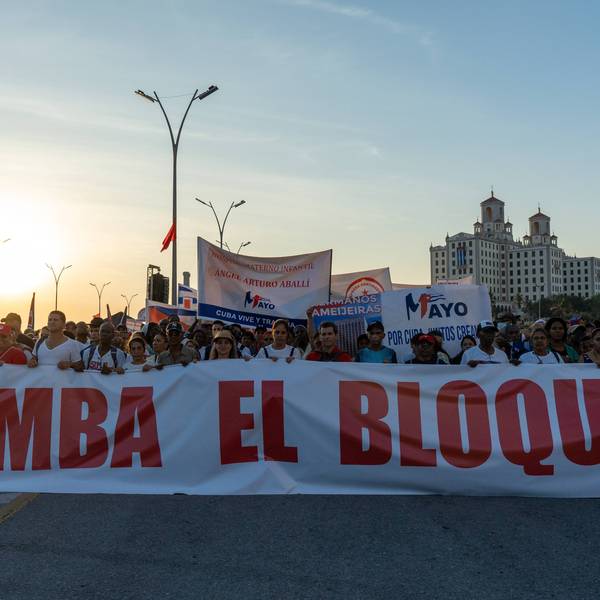
What a trip to Cuba meant for a US student in the 21st century

Havana Cuba

On the morning of May 21, 2024, in the small but endearing airport of Burlington, Vermont, I hugged my father tightly and bade him and my stepmother goodbye, a little over an hour before embarking on the journey that would change my life. I was preparing to spend a month abroad — something I had never done before — and the uncertainty of the journey ahead was all at once exciting and unsettling. On some level, I knew right there in the airport that the trip would alter the course of my life. To what extent and in what ways it would do so, I was not sure — I could only guess.

My parents divorced when I was very young — I have no memory of them being together. Despite the split, I have the chance to visit my father frequently, for which I am grateful, but I spent most of my time growing up in the household of my mother, a Russian immigrant whose decision to move to rural New York afforded her no opportunities to employ the master’s degree she had earned in her home country. The result was that my mother was forced to put herself through school again here while working part time as a clinical assistant to provide for herself and her child — me. As one might imagine, this was tremendously stressful for her.

Certain memories from this period still stick out to me: paying for food at a gas station with the money in my piggy bank. Mom crying and shaking the steering wheel when the car would not start in winter. I noticed things: the stress on mom’s face after a long day at work, the bags beneath her eyes. The sharpness of her voice was not so much a product of anything I had done, but rather of so many different stressors and financial strains piling up. The Christmas tree slim on presents.

There were some things I did not notice. Some things she told me later, when she had gotten a better job and the worst financial strains were behind us. How my Christmas presents the year the tree was thinnest on them all came from a local charity. How she pretended she was not hungry when there was only enough money for one of us to eat.

Abstracting from the emotion of these experiences and training the cold eye of honest appraisal upon them, I can say that they are likely to elicit sympathy. They are also far from the most horrible experiences that class societies have forced working people to endure throughout history. My best friend in my Senior year of high school had once been homeless. A girl I knew once told me how her family’s home was being repossessed by their bank.

Independence

Long before I grew and began to take note of such things in my immediate vicinity, the working classes of Cuba had been trapped in a struggle for their own emancipation. Spanish colonizers in the 16th century forced indigenous Taíno to flee to neighboring islands or the mountains to avoid being murdered and enslaved en masse. Later, those same colonizers kidnapped Africans and brought them to the island in chains, instituting a slave labor system that would last hundreds of years. In 1898, just when brave Cuban independentistas (independence fighters) were about to rid the island of Spanish colonialism for good, the United States intervened militarily with the express goal of filling Spain’s former role as the hegemonic power in the Caribbean.

After 1898, the Cubans ostensibly obtained independence, but the US retained the right to intervene militarily in Cuba whenever it wanted. US soldiers laid the groundwork for the predominance of US capital in the Caribbean nation’s economy.1 Cuban production served the interests of US businessmen, whether the Cubans liked it or not. This state of affairs, which prevailed on the island for decades, was suddenly and rapidly reversed after 1959. Fidel and Raul Castro, Camilo Cienfuegos and Ernesto Che Guevara led a revolutionary movement, toppled US-backed dictator Fulgencio Batista and took a series of bold measures against imperialism, nationalizing land that had formerly belonged to exploitative US corporations and refusing to allow Washington’s politicians to dictate life in Cuba.

I am hardly the first person to write about such things, nor am I the most qualified. But my growing interest in working class history — a product of my childhood experiences — and my own university’s partnership with the University of Cienfuegos, coupled with my interest in the Spanish language and Latin American culture, all combined to bring me to the land of orange earth and great horned bulls in the countryside and the most hospitable people in the world: Cuba.

Socialism in action

For years leading up to the trip I had been studying the texts of Karl Marx and Friedrich Engels, which I found convincing from a rhetorical perspective, and which felt very much like the natural intellectual expression of the emotions my family’s brush with poverty evoked in me. The deeper I delved into Capital, The German Ideology or Vladimir Lenin’s What Is To Be Done?, the stronger my desire became to witness firsthand what life was like in a post-capitalist society. Marx’s conception of the working class as an entity capable of independent development outside its relationship with capital seemed brilliant — how would real working-class people pursue that development? Unfortunately, thus far, the US working class has not had the opportunity to find out. Thus, to go beyond the realm of theory and see what real people thought about socialist solutions where they had been implemented, became a primary motivator for my trip.

Stepping off the plane and into the warm Caribbean air was something of a dream for me. As we took our hour and a half bus ride from the airport where we arrived to the city of Cienfuegos, my eyes were constantly swiveling, drinking in as much of the countryside as possible. I quickly discovered that my Spanish was not as good as I thought it was, but I was there to learn and that was what mattered. I got better quickly; dozens of tiny, everyday interactions forced me to learn to respond in ways that I had not thought to investigate when I had a purely academic understanding of the language. (You learn the difference between scrambled and fried eggs very quickly when you vastly prefer one and accidentally ask for the other).

I came to Cuba with a group of five other students, four from SUNY Potsdam, like me. One, John Scott, was from Louisiana, attending Ole Miss University. One of our professors, Axel Fair-Schulz, was born in East Germany, and had been an intellectual mentor for me. Axel co-taught our course on the Cold War with the affable Dictinio Diaz Gonzalez, a brilliant Cuban professor with a crown of gray hair wrapped around his head and an impressive ability to dance. Yadira and Dayana, our guides, made themselves indispensable by translating for us and informing us about the history of the island.

Education and healthcare

Very quickly we learned what the revolution meant to everyday Cubans. Dayana’s grandmother and her entire family had been poor peasants prior to 1959, unable to pay for basic education. When the Revolution came, massive literacy campaigns were carried out across the country. Dayana’s abuela was one of the beneficiaries; she learned to read and write at 26 years old.

Stone steps greet you at the entrance to one of the main buildings of the University of Cienfuegos. There is a mural painted on the wall just beyond those steps. It reads “Sin educacion, no hay revolucion ... no hay socialismo posible.” (Without education, there is no revolution... [without it] socialism is impossible). We learned how before the revolution, there were just a handful of universities scattered across Cuba. The campus where we studied day in and day out had not existed before the revolution. Today, dozens of universities dot the island, spread across hundreds of campuses. Dayana’s grandmother, who had been illiterate until she was 26, was able to send all four of her children to receive a university education — an opportunity she likely would not have had without the revolution.

In the US, the ruling classes continue to squeeze universities by making them operate like businesses and slicing their budgets. We live in the richest country on Earth, yet higher education in the US is cripplingly expensive. Cuba — an island with far fewer resources than us — manages to provide free education for all its citizens. This despite the illegal sanctions the US government has maintained against the island’s people since the 1960s. Perhaps we in the US should shift our priorities from contributing to the material scarcity of other countries to making education as affordable as they do. We certainly have the means — if only we wrest control of society for working people from the hands of the capitalists. Dictinio, our Cuban professor, once recounted how Fidel Castro visited his childhood school on occasion, overseeing its construction along with many others. For Cubans, education is the revolution — it is the very core of what it means to be revolutionary.

We took several day trips around the island between classes, including visits to the Bay of Pigs and old Spanish colonial fortresses. In Havana, we visited art museums and Afro-Cuban cultural events. To finish off the journey, we took a week-long road trip across the island, visiting the cities of Trinidad, Matanzas, Pinar del Rio and others, learning a bit about the unique histories of each and getting a feel for contemporary Cuban culture. We moved around enough to work up some serious sweat in the blazing summer sun, but fun conversation and good company made the heat just a little less oppressive. Our guides were careful to remind us to drink enough to stay hydrated. When one travels there are always concerns about how the stomach will adjust to the local food, but in that regard, I had few issues. Funnily enough, the one time I was sick in Cuba, it was my own fault.

When I made the ill-advised decision to consume an aging airport sandwich, I quickly began to regret it. Our guides brought me to a local medical clinic in Cienfuegos. Joking with the staff there after they gave me something to ease my stomach (and some electrolytes to stay hydrated) is one of the fondest memories I retain from the trip. Cuba provides free healthcare for its citizens. The US ruling classes will not do the same, despite the U.S. being the richest country on Earth. The working class is fed up with the affordability crisis — Zohran Mamdani’s recent victory in the New York City mayoral primary is an indication of this. Perhaps we can use the momentum of his victory to begin to build a new socialist movement in the US, reminiscent of the Cuban model in that it puts people before profits.

Since the revolution, Cuba’s medical system has developed tremendously. Cuban doctors are some of the best in the world, and the country even manufactured its own vaccine for the COVID-19 pandemic. Shortages of important medicines have forced medical professionals to adapt to tough conditions. Through impressive innovation in the face of these shortages, the Cuban system has developed advanced strategies for preventative care. Thousands of Cubans volunteer overseas in humanitarian aid missions after natural disasters; the Cuban government once offered to send medical personnel to aid the victims of Hurricane Katrina in New Orleans. Unbelievably, and revealing the depth of its moral bankruptcy in a single decision, the George W Bush administration refused Cuban aid while the people of New Orleans were suffering.

Problems

If I speak very highly of the Cubans and the type of society they have built, it must be said that Cuba still faces serious problems. Finding basic foodstuffs on the island can be difficult; electrical blackouts are uncomfortably common. We experienced these problems firsthand on the island: in Havana, the power went out for a few hours while we were visiting; another time our Cienfuegos hosts went fishing in the morning to catch dinner for us that night. Cubans face these issues on the daily, and unlike us they have no retreat from them at the end of the month.

This scarcity has led some, such as our host Melba in Cienfuegos, to express disappointment with the current state of things in Cuba. Melba most clearly expressed this sentiment to me when she declared: “Che fue el verdadero revolucionario.” (Che was the real/ true revolutionary). Once, a faulty power line failed and the electricity went out. I remember Melba’s stressed reaction; she threw up her hands and declared, “Se me perdió todo.” (I lost everything). The power failure damaged Melba’s electrical appliances, some of them perhaps irreparably. One morning we were set to leave for a few days in Havana, and a pipe burst, leaving my space upstairs without water. I was lucky — the water flow was fixed by the time we returned from Havana, and I was not the one who had to deal with replacing the pipe.

Socialism and the revolution clearly remain the dominant ideological forces on the island, but for some ideology matters little. There was the hotel worker who complimented my Spanish when I struck up a conversation with him on the edge of a pool, who seemed to have little interest in political matters. There was Brayan, the English language student in Cienfuegos who mentioned little about politics but confided in me that he would like to live in the US someday. For some who deal more immediately with ideological matters, like the college professor entering her middle years, the island’s prevailing ideology might not suffice in the face of serious material shortages. I asked, “Do you consider yourself Marxist-Leninist?” Her response was ambiguous. (“What a question! That’s difficult to say.”)

Any socialist system must practice serious self-criticism. At least in one crucial case, the Cubans have done that — by all accounts, LGBTQ+ people were treated poorly in the years immediately after the revolution. Today, having corrected this, Cuba has adopted one of the most progressive family codes in the world. Criticism of political repression continues to be directed towards the island, a favorite talking point of the bourgeois press. One must point out that the imperial core, with its enormous gravity, constantly threatens to erode the self-determination of Cubans and pull the aspiring socialist nation back into a capitalist orbit. It is an express goal of the US to achieve regime change in Cuba. Still, within the Cuban system, valid concerns about imperialist counter-revolution and external threats should not lead to the reflexive denouncement of all internal disagreements as counterrevolutionary.

Cuba is not a paradise simply because Marxism holds sway; hundreds of thousands of people have left Cuba in the years since the revolution, some for ideological reasons, many more (perhaps most) simply because they seek better opportunities and less material hardship. It is important to note that migration is something of a regional problem across the Caribbean due to lack of opportunity and difficult living conditions; Puerto Rico, Haiti and the Dominican Republic all have large diasporas in the US.2 What cannot be ignored is that the US embargo — a series of ongoing sanctions against Cuba because the island’s people dared to chart a course of independent, anti-imperialist development in the 1960s — is probably the main reason for material hardship on the island today. The embargo has cost the island’s economy billions of dollars since it began. History has proven that the ruling classes of the world will never let socialist experiments develop in peace, because the success of socialism anywhere brings the death of class society and ruling class privilege everywhere ever closer. If humanity has a pleasant future ahead of it, it will only be a matter of time until the bourgeoisie is swept into the dustbin of history.

Defend the revolution

I left Cuba with countless fond memories, new friends and a better understanding of the island’s people. I left also with the firm conviction that the Cuban Revolution must be defended at all costs, not merely because the Cuban state is avowedly socialist or its intellectuals use Marxist language, but because in Cuba, society pursues concrete policies to improve the lives of its people. I had learned about Cuba’s bold initiatives in housing, medicine and education in books, but it was being on the ground in Cuba, witnessing what los logros of the revolution meant to the working-class people who had won them, which cemented my faith in Cuba’s brave social experiment. Being on the island showed me that a better world is possible.

The Cuban model is far from perfect — no revolutionary model is or ever will be. But the Cubans have taken a great stride towards human emancipation through their revolution, and we in the US would do well to acknowledge that.

I would like to thank Dairo Moreno and the other members of the Civitas Global Educational Services team for organizing our trip; their work is invaluable in that it fosters empathy and understanding between Cubans and students such as me in the US. The connections they help build are especially important when the hostile rhetoric of the US ruling classes towards Cuba — imperialist words cloaked in self-righteous sermons about freedom, when the only freedom the US recognizes is its freedom to intervene militarily in other countries — dominates and shapes the prevailing historical narrative about the island.

The US working class must oppose the criminal embargo against Cuba, which only Israel has not condemned at the United Nations in recent years. It must fight for gains like those the Cuban people have won for themselves, all while demanding that Cubans be given the right to live their lives and develop their society in peace. Perhaps one day, if we are lucky, US and Cuban students can study and learn together in numbers far greater than the US regime currently allows. Perhaps one day, a socialist US can stand together with socialist Cuba in fraternity and shared humanity.

Bibliography

Batalova, Jeanna and Lorenzi, Jane. “Caribbean Immigrants in the United States.” Migration Policy Institute, 7 July 2022.

Castro, Fidel and Ramonet, Ignacio. My Life: A Spoken Autobiography. Scribner, 9 June 2009.

Arias, J. C., Bedforck, L. S., Bombino, L. L., Caballero, J. D., Corzo, J. F., Freyre, R. P., Gonzalez, C. S., Gonzalez, J. A., Jover, J.N., Lopez, M. B., Louredo, M. Z., Padron, G. P., Palenzuela, V. S., Pi, M., Pedroso, J. F., Pupo, R. P., Rodriguez, J. G., Sanchez, C. H. & Zayas, N. M. Lecciones de Filosofia Marxista-Leninista: Tomo 1. Editorial Pueblo y Educacion. 2011.

Farber, Samuel “The Criminalization of Opposition Politics in Cuba.” Spectre Journal, 13 January 2021.

Ferrer, Ada. Cuba: An American History. Scribner, 7 September 2021.

Guadalupe de Jesus, Raul. Sindicalismo y lucha política: Apuntes históricos sobre el movimiento obrero puertorriqueño. Editorial Tiempo Nuevo, 2009.

Guevara, Ernesto. Diarios de Motocicleta: Notas de viaje por América Latina. Seven Stories Press, 28 March 2023.

Katz, Jonathan M. Gangsters of Capitalism: Smedley Butler, The Marines, and the Making and Breaking of America’s Empire. St. Martin’s Press, 18 January 2022.

Meléndez-Badillo, Jorell. Puerto Rico: Historia de una nación. Planeta Publishing, 2 April 2024.

Yaffe, Helen. We Are Cuba! How a Revolutionary People Survived in a Post-Soviet World. Yale University Press, 6 April 2020.

  • 1

    Ada Ferrer, Cuba: An American History. Scribner, 7 September 2021. 178-193.

  • 2

    Jane Lorenzi and Jeanna Batalova, “Caribbean Immigrants in the United States.” Migration Policy Institute, 7 July 2022.


Saturday, September 27, 2025


Trump’s Shock Doctrine: Exploiting Kirk’s Killing to Crush the Left and the Media

FILE - President Donald Trump is joined on stage with Turning Point USA Founder Charlie Kirk as he finishes speaking at the Marriott Marquis in Washington, July 23, 2019. (AP Photo/Andrew Harnik, File)

In the aftermath of the assassination of Charlie Kirk, President Trump and his allies are insisting — without a shred of evidence — that a vast left-wing conspiracy are plotting violent attacks in this country. Naomi Klein, in her book The Shock Doctrine: The Rise of Disaster Capitalism, popularized the term “shock doctrine” — based on the economic term “shock therapy” — theorized that in times of war, political turmoil, natural disasters, and one might add, assassinations, right wing forces will push forward their agenda, regardless of how unpopular it may be.

After 9/11, for instance, the Bush administration launched a perpetual War on Terror; after Hurricane Katrina, New Orleans lost public schools and hospitals while tens of thousands of Black residents were displaced. Trump’s narrative now risks becoming another such shock, weaponized to expand repression under the guise of security.

The overwhelming evidence about the initiation of violent acts, tells a different story. The vast majority of violent incidents in this country are spearheaded by right wing extremists. Instead of dealing with this fact, Pam Bondi’s Department of Justice quickly  removed a study that documented  that far-right attacks outpace all other forms of terrorism and extremist violence. The cover-up is itself proof that the administration is more interested in weaponizing fear than facing reality.

According to the Daily Beast’s Julia Ornedo: “A June 2024 study on domestic extremism by the National Institute of Justice, a research agency under the DOJ’s Office of Justice Programs, began by noting that “militant, nationalistic, white supremacist violent extremism has increased in the United States.”

A piece at the Zeteo Substack was headlined “Vance Says It’s a ‘Statistical Fact’ the Left Commits Most Political Violence. The Actual Stats Show He’s Lying.”

According to Trump, in order to prevent further violent attacks, the left, liberals and the Democratic Party need to be investigated, prosecuted and destroyed. The administration is in the process of gearing up for a major crackdown on left-wing dissent; naming names, and labeling enemies domestic terrorists, with the intention of prosecuting them.

In a story on her Substack headlined “A Vast Domestic Terror Movement: Trump Prepares to Dismantle the Left,” Laura Jedeed pointed out that the administration’s intentions were expressed unequivocally during “three media events the Trump administration participated in the past few days: JD Vance took over as host for the Charlie Kirk showTrump answered questions in the Oval Office  after sending the National Guard to Memphis. And Pam Bondi made an hour-ling appearance on Katie Miller’s new podcast.”

Jedeed noted that “Quotes from all three of these appearances are circulating around the Internet, and any single one could be mistaken for yet another out-of-pocket threat that will be forgotten by tomorrow. Taken together, however, the messages appear both clear and coordinated: they are saying the same thing using similar words in response to similar questions. To say that message is grim would be an understatement. We are in a new kind of danger, and once that danger arrives it is likely to move fast.”

As Naomi Klein observed in a 2017 interview with The Progressive magazine, Trump functioned as “a rolling shock,” manufacturing daily outrages to keep the nation reeling. In May of this year, Klein writing with Astra Taylor in the Guardian piece headlined, “The rise of end times fascism,” warned that “The governing ideology of the far-right in our age of escalating disasters, has become a monstrous, supremacist survivalism.”

In a May interview with Rolling Stone, Klein pointed out that “The shocks are not surprises anymore. The shocks come continuously.”

In order for the Trump to thrive, it must tamp down or completely eliminate opposition voices. The murder of Charlie Kirk has opened up the field to new and vituperative attacks on the left, liberals and the Democratic Party. These moves are not about healing the country or stemming political violence, they are about sowing fear, silencing opposition voices, and consolidating power, the very pattern Klein has long warned would accompany every new shock.

Bill Berkowitz is a longtime observer of the conservative movement. Read other articles by Bill.

Sunday, September 14, 2025

Trump’s Education Plan Seeks to Make Cruel Domination Into “Common Sense”

Trump isn’t even trying to hide his authoritarianism within social acceptability.

September 13, 2025

Protestors on the campus of New College of Florida chase after Christopher Rufo, a conservative activist and New College of Florida trustee, after he attended a bill signing event featuring Florida Governor Ron DeSantis, who signed three education bills in Sarasota, Florida, on Monday, May 15, 2023.Thomas Simonetti / The Washington Post via Getty Images

U.S. democracy has always been fragile, and we are now witnessing its dismantlement.

The rising tide of political violence poses one threat to democracy in this country, but another quieter threat is also hard at work via the erosion of free speech and critical thinking, both of which are necessary for a flourishing democracy.

Trump’s book bans and attacks on opposing political ideas, the blocking of independent journalism, the intimidation of news organizations, and the defunding of public media are all part of this erosion. These attacks are neither accidental nor incidental, but systematic and dangerously consequential to this country

Trump’s regime is driven by a form of authoritarian control (both political and military), disinformation, and a blatant disrespect for the U.S. Constitution. He has ushered in policies rooted in forms of fascism, where the act of dominating the people is articulated and enforced as “common sense.”

The concept of hegemony helps to capture what this regime is attempting to accomplish — or is in fact accomplishing. Hegemony, within the current U.S. context, captures what I see as an unmitigated criminal process of domination.

In this exclusive interview, education scholar Stephen Brookfield offers clarity on the concept of hegemony, how it is linked to white supremacy and authoritarianism, and how critical education and educators can mount a necessary form of resistance. Brookfield is an adjunct professor at Columbia University Teachers College in New York and professor emeritus at the University of St. Thomas in Minneapolis-St. Paul. His goal is to help people (including himself) identify and challenge the dominant ideologies they have internalized. Brookfield is the author, co-author, or editor of 21 books, including Becoming a White Antiracist (with Mary Hess), Teaching Race, and The Handbook of Race and Adult Education (with Vanessa Sheared, Juanita Johnson-Bailey, Elizabeth Peterson & Scipio A. J. Colin III). The interview that follows has been lightly edited for clarity and length.

George Yancy: Define hegemony and explain how it is negatively related to processes of education and learning.

Stephen Brookfield: Hegemony exists when a set of ideas that claim to explain how the world works, and the associated practices linked to these, sustain a particular social order. The question to be asked about hegemony is: Whose interests does it serve? Is it an unrepresentative minority whose position is bolstered by the widespread acceptance of these ideas and practices? Or does this hegemony reflect and promote the interests of the wider majority? Hegemony is always being contested as groups within a society constantly try to promote their own interests. When hegemony is most successfully in place, there is no need for paramilitary control because people have internalized the dominant ideology so completely that they police their own conduct. And, as Michel Foucault pointed out, they often take sensuous pleasure in doing so.

In the United States right now, there is a clear attempt to create a hegemony based on particular ideologies. One of these is monopoly capitalism, hidden behind the valorization of free-market enterprise as the best guarantor of freedom and liberty. Another is patriarchy. A third is white supremacy, the belief that European settlers “tamed” and “civilized” a continent, and that their “superior intelligence” and capacity for clear decision-making helped create the greatest nation on Earth. Mixed into this combustible cocktail is authoritarianism, the belief that a strong leader is needed who brooks no dissent from their vision and policies, and whose certainty appeals strongly to those confused by the maelstrom of forces they see swirling around their individual lives. Erich Fromm’s work outlined this dynamic beautifully three-quarters of a century ago.

At the heart of a successful state hegemony is control of what Louis Althusser called ideological state apparatuses. One of these is education. Control the curriculum and you control the range of ideas that people are exposed to. This is why schooling is inherently political. In earlier parts of my career, I had colleagues who disagreed with me on this point. Now I don’t know anyone who disputes it. Early pointers of this hegemony were Florida Gov. Ron DeSantis’s targeting of New College of Florida, and the federal abolition of critical race theory as a term used in federal training programs. As the current administration hits its stride, we have revisionist history in place that erases any analysis of slavery. Add to this the targeted removal of any institutional practice or office that mentions the words diversity, equity, or inclusion (DEI); the ridicule of anything that describes itself as “anti-racist” as “woke”; and targeted lawsuits aimed at any university that resists these restrictions — and we have the clear attempt to install white supremacy as an official, state-approved ideology.

Antonio Gramsci, whose work is usually associated with the term hegemony, was particularly focused on how cultural mechanisms enforce a certain picture of the world. As Fox News moved to occupy an important place in U.S. TV networks and right-wing radio and podcasts gathered steam, white supremacy, patriarchy, and authoritarianism were all fully legitimized and reinforced as “sensible” ways to order society. The betrothal of the Trump administration to right-wing media is consummated by senior cabinet and advisory positions being filled by pundits drawn from these sources.

The overt nature of this attempt to create hegemony is striking. There is no need to hide authoritarian control behind socially acceptable signifiers. The stream of billionaires traveling to kiss the ring of the president shows just how far business has caved.

Black history is under attack. Through a right-wing hegemonic retelling of Black history, where the reality of the brutality of anti-Blackness is being erased, memory is being controlled by those who would rather tell a pleasing lie than face the horrors of truth. While there was important pushback, I recall that a group of Texas educators had proposed to the Texas State Board of Education that slavery should be taught in second grade social studies as “involuntary relocation.” Or think about the Florida Board of Education and its approval to teach middle school students “that enslaved people gained a ‘personal benefit’ from the skills they learned under slavery before the Civil War.” My sense is that partly undergirding this attempt to whitewash and rewrite the brutality of anti-Blackness within the U.S. is the aim to maintain a history and ideology of “white innocence.” Given your important work on whiteness, explain how the meta-narrative of white innocence is part of the core of what Trump is up to.

George W. Bush said that the worst moment of his presidency was not 9/11 or leading the country into an invasion that killed hundreds of thousands in Iraq. Instead, it was being called a racist after his administration’s lackluster response to Hurricane Katrina. This shows the deep-rooted belief held by many white people that we are essentially racially innocent. Sure, our ancestors may have enslaved people, but that was what was considered culturally appropriate at the time, and anyway it has no relation to who we are today. We treat others as we would want to be treated, we don’t make judgments about the content of character based on skin color, and we treat people of color with goodwill. So how can we be racist? This act of self-congratulation is a common signifier of white innocence.


“Control the curriculum and you control the range of ideas that people are exposed to. This is why schooling is inherently political.”

Innocence is a delightfully complex term, something that is often projected as a desirable state to which we should aspire, but also something that suggests a certain childlike naivete. Recently, the protestation of white innocence has become weaponized as a response to the Black Lives Matter movement and the anti-racist momentum that built in the wake of George Floyd’s murder. This weaponization has multiple dimensions. First, there is the reinterpretation of colonialism and imperialism as a generally innocent and beneficent phenomenon in which the supposed improvements conferred (instilling morality, religious conversion, and an adherence to European values) far outweigh any unfortunate mistakes such as genocide and slavery. Second, we have the contemporary claim that even if some bad things were done in the past, that has nothing to do with anything that’s happening today. The strident rejection of white guilt is one aspect of this; as is the belief that referring to the history of slavery and settlement is a “woke” device that folks of color use to blame their situation on the past, thereby ignoring their need to take personal responsibility for their lives and work harder.

A deeper sense of innocence is that which Shannon Sullivan describes as the innocence of “good white people.” This is the innocent belief in our essential humanity, in our commitment to “treating people as we find them,” in our subscription to the color-blind viewpoint, and in our belief that we act out of the best possible motivations. Under white innocence, the sincerity of our actions is what matters the most and “justifies” any unintended harm we might commit.

This describes a worldview that I internalized early on in life and that still resides within me. One way that structural inequity stays in place is by the majority assuming that a level playing field exists so that we interact as equals unaffected by history. In this worldview, the past does not matter, and structural barriers are overcome by exercising goodwill. Under white innocence, words and actions that came from a “good place” cannot be viewed as racist, owing to the purity of their intentions. If we are told that we have behaved or spoken in a racist way, we apologize. But in our hearts lies the unspoken conviction that really the other person was being overly sensitive. Or, that they’ve misinterpreted a beneficent communication and taken offense at imagined slights that were really not there. In this way, innocence regards racism as an unfortunate problem of miscommunication owing to what we call “cultural differences.”

As the current administration systematically defunds any institutional efforts to address racism, those who were made uncomfortable in the past by DEI programs can now breathe a sigh of relief. In their minds, we are back to “normal.” Balance has been restored after a period of whites being unfairly blamed for colluding in white supremacy.

If you recall, in George Orwell’s 1984, the dystopian Party can control what people think and do. In fact, in that book, the belief that “2 + 2 = 5” is taken as true and is indicative of the extent to which political power can be used to brainwash people. Fascism works to create a world where what is blatantly false has become what is deemed “common sense” and “true.” Under Trump’s neo-fascist regime, we must fight against the perpetuation of systematic falsehoods and ideologies of distraction. You argue that the process of “doing ideology critique involves adults learning to become aware of how ideology lives within them as well as understanding how it buttresses the structures of the outside world that works against them.” Understanding and deploying the concept of ideology critique is indispensable at this moment. Explain ways in which teachers in schools and universities might use ideology critique to contest the attempt by the right wing to accept blatant falsehoods as “commonsense wisdom.”

One of the greatest challenges in my teaching has been to work out how to get students to think structurally; that is, how they learn to realize that their individual actions are framed by their social location and that wider economic forces and dominant ideologies constrain the options they consider. The ideology of individualism, so lauded throughout the history of the U.S., is a major barrier to this task. It posits life’s journey as one of grit, determination, and struggle in the face of barriers that are unexpectedly thrown up to block the realization of our full potential.

I am not a rigid economic materialist. I don’t believe that individual choice is purely a comforting myth, and I do believe that individual consciousness is, ultimately, inexplicable. Chance, unpredictability, and serendipity are powerful elements of the human condition. But our choices are fueled by the ideological oxygen we breathe. Ideological state apparatuses such as education and religion, official government policies and statements, and the daily bath in social media present the range of possibilities that we view as both desirable and realistic. When a government controls the flow of information and intimidates schools and media outlets into legitimizing their worldview, then hegemony becomes easier to establish.

The key as an educator is to find a way to interrupt this dominant ideological narrative. In adult education, a great deal of attention has been paid to what the transformative learning theorist Jack Mezirow called “disorienting dilemmas.” These are the moments when our settled expectations about how the world works are thrown into confusion. Examples would be facing an unexpected health crisis and finding care unavailable, being fired after a history of professionalism and assiduously working to achieve institutional goals, or being conscripted to fight in a war. For George W. Bush, it was being called “racist.”


“As the current administration systematically defunds any institutional efforts to address racism, those who were made uncomfortable in the past by DEI programs can now breathe a sigh of relief. In their minds, we are back to ‘normal.’”

As we negotiate our response to being caught in such dilemmas, we are brought face-to-face with our paradigmatic assumptions. As we realize that these assumptions are flawed, we are forced to examine why we believed them to be so accurate in the first place. We seek other, more satisfactory meaning schemes and perspectives that make more sense.

In the classroom, teachers need to create disorienting dilemmas that unsettle and confound our students’ expectations. And, as we do so, we need to judge how much dissonance can be tolerated. Too much, and we risk them dismissing our activities as unrealistic. Too little, and we allow them to stay comfortable. In ideology critique, I present a cultural or institutional action that seems benign and desirable and then ask students to answer several questions about it: What assumptions are embedded in the practice? What is it intended to achieve? Whose interests does the practice serve? Who is most harmed by it? Why do those who benefit not recognize the harm it creates? How could the action be reimagined in ways that were fairer or socially just?

A similar approach is to institute equity pauses as a required element in decision-making across a university. As program changes are made, admissions criteria altered, and curricula revised, we need to pause very deliberately before deciding on a particular course of action and ask the ideology critique questions above.

We also need teachers and institutional leaders to model the practice of critical reflection. White leaders need to talk publicly about their own struggle to recognize that they have a racial identity, and to acknowledge the benefits this brings. This kind of disclosure needs to become normalized, so that discussions of racism are not prefaced by a collective intake of fearful inhalation. Neither should it be confessional, in which whites purge themselves of the sin of racism by asking absolution from colleagues of color. And courses need to be taught by racially mixed teams who can model what a difficult racial conversation looks like — stilted, characterized both by periods of uncomfortable silence, and also displaying strong emotions and feelings.

In my own capacity as a philosopher and a teacher, I have attempted to model what it means to engage in critical reflection. Indeed, critical reflection is inextricably linked to critical pedagogy. But what we are witnessing is the very opposite of critical reflection. In The Power of Critical Theory: Liberating Adult Learning and Teaching, you describe the problematic process of creating what you call “adult educators as professional ideologists.” What will education in the U.S. look like as “adult educators as professional ideologists” continue to gain traction? And what are the larger implications for U.S. democracy?

I have argued that critical reflection focuses on power and hegemony — on understanding how and when an elite group uses power in an authoritarian way to impose its cultural hegemony on the majority of people. It also reveals the tricks of ideological manipulation that result in people voting enthusiastically for politicians whose actions and decisions end up harming those same voters — and then continuing to do it over and over again.

Adult education as political detoxification seeks to remove the addictive chemicals of white innocence from our consciousness. It demonstrates the falsity of believing that we all act on a level playing field, or the naivete of thinking that our actions are motivated solely by a humanist concern for everyone to get along. It unmasks power.

This article is licensed under Creative Commons (CC BY-NC-ND 4.0), and you are free to share and republish under the terms of the license.


George Yancy is the Samuel Candler Dobbs professor of philosophy at Emory University and a Montgomery fellow at Dartmouth College. He is also the University of Pennsylvania’s inaugural fellow in the Provost’s Distinguished Faculty Fellowship Program (2019-2020 academic year). He is the author, editor and co-editor of over 25 books, including Black Bodies, White Gazes; Look, A White; Backlash: What Happens When We Talk Honestly about Racism in America; and Across Black Spaces: Essays and Interviews from an American Philosopher published by Rowman & Littlefield in 2020. His most recent books include a collection of critical interviews entitled, Until Our Lungs Give Out: Conversations on Race, Justice, and the Future (Rowman & Littlefield, 2023), and a coedited book (with philosopher Bill Bywater) entitled, In Sheep’s Clothing: The Idolatry of White Christian Nationalism (Roman & Littlefield, 2024).

Monday, September 01, 2025

Hard Lessons From Katrina We’re Still Learning 20 Years Later


Hurricane Katrina not only exposed the vulnerability of communities to extreme weather events exacerbated by climate change, but also systemic injustices and a deeply flawed US insurance system.


Water surrounds homes in the devastated Ninth Ward in this aerial view of damage from Hurricane Katrina in New Orleans on August 30, 2005.
(Photo by Smiley N. Pool/Houston Chronicle via Getty Images)

CIEL Blog

It’s been 20 years since Hurricane Katrina struck the Gulf Coast of the United States, wreaking havoc in Louisiana, Mississippi, and Alabama. An estimated 1,833 people died in the hurricane and the flooding that ensued. The storm destroyed or damaged more than a million housing units and more than 200,000 homes, causing one of the largest relocations of people in US history.

In the months and years that followed, entrenched inequalities, questionable policy choices, and predatory practices by private insurers decided who could return home and rebuild. For instance, countless residents impacted by the hurricane learned too late that their standard homeowners’ insurance offered no protection against flood damage, leaving them to shoulder devastating repair costs themselves. In cities such as New Orleans, these dynamics further marginalized Black residents, who were more likely to live in flood-prone neighborhoods. The result was widespread and often permanent displacement, with longtime communities effectively erased from the map.


Hurricane Katrina not only exposed the vulnerability of communities to extreme weather events exacerbated by climate change, but also systemic injustices and a deeply flawed US insurance system. Private insurers pour billions of dollars into the fossil fuel industry, which is the main contributor to climate change. Thus, insurers help fuel the very crisis that is driving more frequent and severe climate disasters like Hurricane Katrina. Meanwhile, they are passing the financial risk of the escalating impact of climate change onto policyholders and forcing them to bear the costs of the crisis the industry itself helps perpetuate.

As climate-driven storms grow more frequent and increasingly destructive, the same insurance failures, housing crises, and inequitable recovery that followed Katrina now threaten communities nationwide. Two decades later, Katrina’s hard lessons cannot be ignored. Everyone deserves to live in safety and the opportunity to stay in the place they call home. Corporate greed and government negligence cannot continue to undermine these rights.

The Hurricane

On August 29, 2005, Hurricane Katrina made landfall with winds that reached 140 miles per hour. These high-velocity winds drove a storm surge that raised sea levels 25 to 28 feet above normal along parts of the Mississippi coast, and 10 to 20 feet along the southeastern Louisiana coast. The surge breached protective levees, causing catastrophic flooding. Two days after the hurricane struck, 80% of the city of New Orleans was underwater. Other coastal towns and cities in Louisiana, Mississippi, Alabama, and along the western Florida panhandle also experienced significant storm surges and destructive winds, which caused widespread flooding and damage to homes.

The Great Displacement

Approximately 1.5 million people aged 16 years and older had to leave their residences in Louisiana, Mississippi, and Alabama because of Hurricane Katrina. In New Orleans, where the mayor issued a mandatory evacuation order, a population of around 500,000 was reduced to a few thousand people within a week of the storm.

As water was pumped out of the flooded areas and basic services and infrastructure were restored, New Orleanians were allowed to return. But tens of thousands were not able to do so. One year after Katrina, approximately 197,000 residents had not come back to the city; many relocated to the relatively close cities of Houston and Baton Rouge, but others as far away as Alaska and Massachusetts. Still today, many of those who evacuated the city, hoping to return, remain displaced. New Orleans’s metropolitan area population remains 20% below pre-Katrina levels.

The Impact On Black Communities


The development of New Orleans has been fraught with injustices. Racial segregation, redlining, and chronic underinvestment in Black communities pushed residents and renters into areas with crumbling infrastructure, poorer-quality homes, and greater exposure to environmental hazards and contaminants.

When Katrina hit, Black residents were concentrated in the most vulnerable parts of New Orleans, located well below sea level and poorly protected by inadequate levees. Accordingly, neighborhoods with the highest percentages of Black residents saw greater housing destruction from the storm.

Did You Know?


The disparate impact of climate disasters on property and infrastructure in US minority communities is the result of nearly a century of discriminatory home lending and insurance policies.

In the 1930s, the US federal government used a rating system in its low-cost home loan program to assess lending risk. Assessors created maps ranking the perceived risk of lending in certain neighborhoods, with race often used as the determining factor in assessing a community’s risk level. Black and immigrant neighborhoods were typically rated as “hazardous” and outlined in red, warning lenders that the area was a perilous place to lend money. Known as redlining, these and other discriminatory practices led to a lack of investment in minority communities.

This lack of financial access resulted in shoddy construction and poor infrastructure that have made minority neighborhoods less resilient to climate disasters and more prone to other financial risks. For instance, insurers are more likely to increase premiums if they determine that properties are less resilient to climate damage. This new financial practice is known as bluelining, and it occurs when insurers raise their prices or pull out of areas that they perceive to be at greater environmental risk.

Reconstruction: A New Pathway to Segregation?

For Lousina’s Black residents, Katrina’s damage was compounded by discriminatory recovery policies that deepened inequalities. After the storm, the federally funded Road Home program was launched to help residents repair or rebuild damaged homes. It offered grants of up to $150,000 per homeowner, but payments were based on whichever was lower—the home’s pre-storm value or the cost to rebuild.

Because property values in Black neighborhoods were often far lower than in white neighborhoods, this meant many Black homeowners would receive only a fraction of what they needed to rebuild. In one case, a woman had rebuilding costs of over $150,000, but because the estimated value of her home pre-storm was much lower, she would’ve received an essentially useless grant of $1,400. As a result, the program was alleged to discriminate against Black homeowners, and a federal class action suit was filed on November 12, 2008, on behalf of 20,000 homeowners. The litigation settled with Louisiana agreeing to reward approximately 1,300 homeowners with $62 million in additional compensation.

The Blow to Affordable Housing

Renters fared no better. Hurricane Katrina damaged or destroyed 82,000 rental units in Louisiana, 20% of which were affordable to extremely low-income households. The impact on public and federally subsidized rentals was especially severe. In New Orleans, public-housing residents were displaced at a rate of nearly 90%. And reconstruction policies only exacerbated the disparities these residents faced.
Consider this.

Before the storm hit and floodwaters rose, the Housing Authority of New Orleans evacuated all residents living in its 7,379 public housing units. After the waters receded, residents were allowed to return to approximately 1,600 units. Most other units were sealed off with steel doors and barbed wire—officially due to storm damage—before being slated for demolition. Yet, the redevelopment that followed included far fewer mixed-income apartments. By 2010, five years after the hurricane, less than half of the original 7,379 units were open in any form. The dramatic decrease in public housing contributed to the permanent displacement of many of New Orleans’ longtime residents.

After Katrina, renters faced a range of economic pressures. Many landlords delayed repairs or rebuilding, especially in low-income areas, which are seen as less profitable. Some used the disaster as an opportunity to renovate and target higher-paying tenants, further shrinking the supply of affordable rentals. Within five years of the Hurricane, the stock of mid-priced housing units in New Orleans had declined by more than two-thirds, pushing the median rent from $689 in 2004 to $876 in 2009. These rising costs hit Black residents hardest, forcing many to leave and permanently altering the city’s character.

Even those who could afford to return to New Orleans and buy a new home after Katrina faced soaring prices—up 14% in the first year alone—as demand outpaced the reduced housing supply. In addition, homeowners’ insurance premiums jumped 22% in Louisiana between 2005 and 2007, adding yet another barrier to homeownership.

The Flood Exclusion Trap


Then, as now, and to the surprise of many victims of the Hurricane, standard home insurance policies in the US did not protect homeowners from floodwater damage. This means residents must buy additional flood insurance to be protected in the event of a disaster like Katrina.

New Orleans residents had among the highest participation rates in the country in the National Flood Insurance Program (NFIP), a federal government program that provides flood insurance to homeowners, renters, and businesses. However, the majority of residents in areas affected by Katrina had not purchased flood insurance. Uninsured property losses due to flooding were economically devastating, exceeding an estimated $41.1 billion (USD 100 billion in 2024 prices). In addition, the NFIP incurred some $16.1 billion in losses and a deficit exceeding $18 billion as a direct result of the flooding caused by Katrina.

Even for New Orleanians with flood insurance, coverage likely fell short. Policies typically covered about $152,000—the city’s median house price at the time. But this was rarely enough to replace the damaged household contents or to pay residents for temporary housing while their home was uninhabitable.

More and more, whether people hit by climate-driven storms get anything from their insurers depends not on the fact that their homes were damaged, but on how they were damaged.

While the standard home insurance policy does not cover water damage from a hurricane, it does cover wind damage. This gap left residents and insurers arguing about whether Katrina’s destruction to their homes was caused by its high-velocity winds or the flooding that followed, with multiple lawsuits challenging the validity of flood exclusions in insurance policies. Even before the flooding receded and residents of Louisiana and Mississippi could start to rebuild their lives, courts were inundated with litigation, with about 6,600 insurance-related lawsuits being instigated in the US District Court. Yet, Katrina’s destructive flooding was driven by a storm surge powered by the hurricane’s high winds—the very peril homeowners’ policies are supposed to cover.

On September 15, 2005, Mississippi’s Attorney General Jim Hood filed a case against five of the largest homeowners’ insurers in the state. Attorney General Hood sought a court declaration that the flood exclusion provision in standard home insurance policies was “void and unenforceable” and in violation “of the public policy of the State of Mississippi.” However, in that case and others, courts ruled that the flood exclusions were spelled out clearly in homeowners’ insurance policies and did not violate public policy.

The exclusion of water damage from insurance coverage remains a present issue for existing homeowners. According to the Federal Emergency Management Agency, since 1996, 99% of US counties have been impacted by flooding, but only 4% of homeowners have flood insurance. And, more importantly, over half (56%) of American homeowners don’t know that their home insurance policy excludes flood damage. As hurricane season intensifies, many homeowners will be shocked to learn that their insurance does not cover flood loss.

Insurers’ Favorite Loophole: Wind vs. Water Damage


After Katrina, some insurers exploited the false dichotomy between wind and water damage, classifying losses as water damage to shift liability onto homeowners or the NFIP.

In 2013, a federal jury in Mississippi found that State Farm Fire and Casualty Co. defrauded the NFIP after avoiding covering a policyholder’s wind losses from Katrina by blaming the damage on storm surge, which is covered by federal flood insurance. Almost 10 years later, in August 2022, State Farm settled the case, agreeing to pay $100 million to the federal government.

State Farm was not the only insurer engaged in nefarious behavior, attributing Hurricane Katrina damage to flooding instead of wind. In oral argument before the Mississippi Supreme Court in 2009, insurance company USAA publicly admitted that it shifted its own costs to the NFIP and thus taxpayers.

The false dichotomy between the wind and water damage resulting from a hurricane remains nebulous. The damage caused by Hurricane Ian in Florida, North Carolina, and South Carolina in 2022, with its record-high wind speeds, generated $63 billion in private insurance claims. In contrast, 2018’s Hurricane Florence primarily caused water—not wind—damage in North and South Carolina, leaving uninsured flood losses estimated at nearly $20 billion and letting private insurers largely escape liability. More and more, whether people hit by climate-driven storms get anything from their insurers depends not on the fact that their homes were damaged, but on how they were damaged.

Regulators Must Act: People over Profit


Hurricane Katrina exposed widespread gaps in home insurance coverage that persist today. In the 20 years since Katrina, unmitigated climate change has fueled rising temperatures and made extreme weather events such as hurricanes both more frequent and more severe. As storms grow costlier and more destructive, insurers have raised home insurance premiums and declined to renew many policies, leaving households with fewer options for protection. This escalating cycle has produced today’s insurance crisis.

Federal and state lawmakers must respond. The federal government must reform the NFIP to improve federal flood insurance and ensure it provides affordable coverage for more hazards. At the same time, the NFIP should do more to support community-based mitigation. States, meanwhile, must use their regulatory authority over insurance markets to address skyrocketing insurance costs and growing coverage gaps resulting from mounting climate change impacts.

Regulators should adopt legislation, like New York’s Insure Our Future bill, to prohibit insurers from underwriting new fossil fuel projects, require them to phase out support for existing projects, and force insurers to divest from fossil fuel companies.

The insurance industry cannot ignore its role in fueling the very crisis it now faces. Climate change-induced disasters are indisputably driven by fossil fuel emissions. And insurance companies facilitate climate change by investing in fossil fuel companies and underwriting fossil fuel projects. US insurance companies have investments of more than $500 billion infossil fuel-related assets, including coal, oil, and gas. In 2022 alone, insurers worldwide collected $21 billion in premiums for underwriting fossil fuel projects—directly enabling their expansion.

Regulators should adopt legislation, like New York’s Insure Our Future bill, to prohibit insurers from underwriting new fossil fuel projects, require them to phase out support for existing projects, and force insurers to divest from fossil fuel companies. Without bold action, insurers will continue to profit from climate destruction while leaving families and communities to bear the costs.


© 2024 Center for International Environmental Law


Charles Slidders
Charles Slidders is the senior attorney for financial strategies in CIEL’s Climate & Energy Program.
Full Bio >

Alexandra Colon-Amil
Alexandra Colon-Amil is the communications campaign specialist at the Center for International Environmental Law.
Full Bio >