Wednesday, February 24, 2021

Lawyers Are Working to Put 'Ecocide' on Par with War Crimes. Could an International Law Hold Major Polluters to Account?


Mélissa Godin TIME
Fri, February 19, 2021

Extinction Rebellion Climate Crime Invesigators

Police watch as Extinction Rebellion "crime scene investigators" in white suits and masks put up climate crime scene tape to investigate areas of ecocide in a performance outside the Brazilian Embassy on Sept. 7, 2020 in London, United Kingdom Credit - Mike Kemp—In Pictures, via Getty Images

When a Nigerian judge ruled in 2005 that Shell’s practice of gas flaring in the Niger Delta was a violation of citizens’ constitutional rights to life and dignity, Nnummo Bassey, a local environmental activist, was thrilled.

Bassey’s organization, Friends of the Earth, had helped communities in the Niger Delta sue Shell for gas flaring, a highly polluting practice that caused mass disruption to communities in the region, polluting water and crops. Researchers had found that those disruptions were associated with increased rates of cancer, blood disorders, skin diseases, acid rain, and birth defects—leading to a life expectancy of 41 in the region, 13 years fewer than the national average.


“For the first time, a court of competence has boldly declared that Shell, Chevron and the other oil corporations have been engaged in illegal activities here for decades,” Bassey said on Nov. 14, 2005, the day the Federal High Court of Nigeria announced the ruling. “We expect this judgement to be respected and that for once the oil corporations will accept the truth and bring their sinful flaring activities to a halt.”

Yet the judgement was not respected. A United Nations report published six years later found that Shell had not followed its own procedures regarding the maintenance of oilfield infrastructure. Today, Shell is still gas flaring in the Niger Delta.

In the 15 years since the ruling, Bassey has come to believe that Shell’s executives might have been held accountable had the case gone to the International Criminal Court (ICC). “Shell could ignore [the case] because it wasn’t in the international media but if it had gone to the ICC, it would have gotten global attention and shareholders would have known what the company was doing,” he says. “If we had had an ecocide law, things would have turned out differently.”

The word “ecocide” is an umbrella term for all forms of environmental destruction from deforestation to greenhouse gas emissions. Since the 1970s, environmental advocates have championed the idea of creating an international ecocide law that would be adjudicated in the ICC and would penalize individuals responsible for environmental destruction. But the effort has gained significant traction over the past year, with leaders from Vanuatu, the Maldives, France, Belgium, the Netherlands—as well as influential global figures like Pope Francis and Greta Thunberg—expressing their support. Although there are questions about whether the ICC as an institution has the teeth to prosecute any crimes, Bassey and other activists believe the law will act as a powerful deterrent against future forms of environmental destruction. “We will not get different outcomes in cases of exploitation and marginalisation unless we reimagine the laws that govern us,” Bassey says.

In December 2020, lawyers from around the world gathered to begin drafting a legal definition of ecocide. If they succeed, it would potentially situate environmental destruction in the same legal category as war crimes, genocide and crimes against humanity. But even within the movement, questions remain on how far the law should go — and who might fall under its jurisdiction.
The history of the ecocide movement

The term ecocide first rose to the public consciousness in 1972, when Olof Palme, the premier of Sweden, used the term at a United Nations environmental conference in Stockholm to describe the environmental damage caused by the Vietnam War. At the conference, an ecocide convention was proposed but never came to pass.

The idea resurfaced again in the 1990s when the ICC, the world’s first permanent international criminal court, was being created. As a court of last resort, the ICC was established not to override national courts but to complement them, creating a global tribunal that would adjudicate the gravest crimes of concern to the international community. When lawyers came together in 1998 to draft the Rome Statute, the founding document of the ICC, there was a law in the pipeline that would have criminalized environmental destruction.

But the law never came about. “My recollection is that there was just no political support for it,” says Philippe Sands, who was involved in drafting the preamble of the Rome Statute in 1998 (and who would go on to co-chair the expert panel formed in 2020 to draft a legal definition of ecocide). Environmental destruction, Sands says, was not on the public’s consciousness.

This began to change in 2017 when Polly Higgins, a British barrister, launched the Stop Ecocide campaign alongside environmental activist Jojo Mehta. Higgins, who sold her home in 2010 to raise funds to combat environmental destruction, wrote an influential book, Eradicating Ecocide, that informed the legal debate. When the campaign launched a few years later, it quickly gained unprecedented momentum: Greta Thunberg donated €100,000 of the money she received from that year’s Gulbenkian Prize for Humanity to the cause, and for the first time in history, several world leaders publicly backed the idea. Fast-forward three years and now, an expert panel of international criminal lawyers is drafting a definition of ecocide. “Six months ago, we never would have believed where we are at now,” says Mehta. Higgins, sadly, never lived to see her campaign bear fruit, dying in 2019 at the age of 50.

Environmental advocates believe an ecocide law at the ICC would be groundbreaking. While some countries have national laws on environmental harm, there is no international criminal law that explicitly imposes penalties on individuals responsible for environmental destruction. If adopted, experts say there are three main areas where an ecocide law would make a difference.

The first is the symbolic impact of having the ICC elevate environmental destruction to the same level as genocidal crimes. Mehta argues that the fear of being labelled an ecocide criminal could create incentives for leaders to behave more responsibly. “A CEO doesn’t want to be seen in the same bracket as a genocidal maniac,” she says.

The second area where this law could make a difference is by setting a legal precedent, creating a bandwagon effect where international law could prompt changes in national criminal laws, as countries look to signal their environmental commitment to others. ICC laws have influenced national policies before: several countries, including Germany and the Netherlands, have adopted national laws that criminalize ICC crimes.

The third way an ecocide law could be useful is by prosecuting environmental crimes that fall outside of national jurisdictions. This is especially helpful in poorer countries where legal barriers make it difficult to hold foreign companies accountable. An ecocide law, Bassey says, would create an arena in which marginalized communities in countries like Nigeria have a voice against powerful, polluting actors. “Most of this ecocide devastation is happening in communities where voices are not heard,” he says.


A picture taken on March 22, 2013 shows gas flare at Shell 
Cawtharine Channel, Nembe Creek in the Niger DeltaPius 
Utomi Ekpei—AFP via Getty Images

Advocates of an ecocide law also believe it would change the way the environment is valued. “There is something powerfully urgent about the idea that nature has rights,” says Mitch Anderson, founder and executive director of Amazon Frontlines, an organization that works with Indigenous communities in the Western Amazon to protect their lands. “The [ecocide] law would ensure that nature has a legal voice.”

There’s still a long way to go, though. While lawyers are expected to finish a draft of the law by the end of spring, it will take at least 3 to 5 years before the law might be ratified. Drafting the law is just the first of many steps: a member state needs to propose it to the ICC, at which point, 50% of ICC states have to approve it. States will then need to convene to debate the exact definition of the law before eventually, adopting and ratifying it.

But if passed, an ecocide law would be unique in the ICC’s history, not only because of what it would protect but who it could go after—the heads of countries and corporations that are big polluters. Historically, the ICC has been criticized for targeting only African dictators while turning a blind eye to Western leaders responsible for mass atrocities. But with an ecocide law, powerful white men—who are often disproportionately represented in extractive industries—could face criminal charges. “The ecocide movement is powerful not only in the legal precedent it could set for protecting rivers, forests, oceans and the air but also in the names and faces it identifies as being behind this destruction,” says Anderson. “[They] may not look like the picture we’re used to seeing.”

Oil and gas companies contacted by TIME did not want to comment on whether they support an ecocide law, but the International Association of Oil and Gas Producers (IOGP) said in a statement they “want to further improve the environmental performance and reduce the likelihood and consequences of incident.”

What counts as ecocide?


Bassey is confident that many of the world’s worst environmental offenses —such as Chevron’s pollution of the Ecuadorian Amazon in the 1990s or the ongoing coal-seam fires in Witbank, South Africa—could have been prevented had an ecocide law been in place. “If we had an ecocide law, no one would allow this to go on,” he says. In theory, that might be true. But in practice, much depends on how the term is defined.

Sands, the co-chair of the panel drafting the law, is concerned that the bar for what counts as “ecocide” could be set too high. There’s historical precedence for such a scenario: When the idea of “genocide” was first proposed in 1944 by Raphael Lemkin, a Polish lawyer, he envisioned a law that would prosecute individuals that killed members of a national, ethnic, racial, religious or political group. But when member states—many of whom who were worried about their own histories of discrimination—came together to actually draft the law in 1948, they decided that lawyers needed to prove not only that an individual killed members of a group but that they did so with the specific intention to kill.

The result is that most genocide trials heard by the ICC have not ended with a guilty verdict because the burden of proof is too high. Sands is worried the same mistake might be made with the definition of ecocide. “It will never be possible to prove that someone intended to destroy the environment on a massive scale,” he says. “If we set the bar too high, we won’t catch anyone.”

On the other hand, if the bar is set too low—if the ecocide law encompasses too many types of alleged environmentally destructive acts, and implicates too many types of people and institutions—it may lose political support. Many people might get behind an ecocide law that charges mega-corporations for polluting on a grand scale; it is less likely they would support a law that penalizes anyone who destroys the environment in any way. The lawyers drafting the definition didn’t want to offer their opinion on what, specifically, a “low bar” would look like out of concern that doing so would put at risk their ability to advocate for a more robust law.

But even if a robust ecocide law is put in place, the movement faces another big challenge: the limited legal powers of the ICC. On its own, the ICC does not have the authority to enforce laws; it is completely reliant on its member states to arrest and surrender the accused. If a country does not comply—if it does not arrest the accused individual—there is no trial. In addition, over 70 countries are not members—including the United States. Some of the biggest fossil fuel corporations, such as Exxon Mobil and Chevron, are American owned, meaning they would be unlikely to be drawn into a prosecution.

Lawyers working on the ecocide law are acutely aware of these limitations. “Let’s not be starry eyed about our legal international frameworks at the international level,” Sands says. “Let’s be realistic.” Holding perpetrators of environmental destruction to account, he says, must ultimately be done at the national level. Nevertheless, international criminal law can be a tool that catalyzes thinking and helps set a precedent. Although only four people have been convicted at the ICC since it began hearing cases in 2002, the creation of ICC law has influenced national policy through the norms and precedents it helped to generate. Advocates of ecocide believe the law could do something similar.

“We know one law won’t change everything,” says Mehta. “But without something like this in place, it’s hard to see how these [environmental] targets will be met.”
Alexandria Ocasio-Cortez Raises More Than $5 Million In Relief For Texas Amid Storm Crisis

Jenna Amatulli
·Reporter, HuffPost
Mon, February 22, 2021


Rep. Alexandria Ocasio-Cortez has raised more than $5 million for Texans in need as the state faces widespread power grid failures after brutal winter weather.

The New York Democrat tweeted on Sunday night that the efforts to help people in Texas who have gone without heat, electricity, groceries, and water over the last week had topped $5 million. She thanked all who had contributed and said that while “charity can’t replace policy,” “solidarity is how we’ll face climate change and build a better world.”


As demand for power surged in Texas last week amid a freezing winter storm, many of the state’s power-generating systems failed. At least 26 people have died since Feb. 11, CNN reported.

On Thursday, the legislator tweeted out the initial push for relief for Texas, sharing a fundraising link that indicated 100% of donations would be split between Central Texas Food Bank, Feeding Texas, Food Bank of the Rio Grande Valley, Corazon Ministries, Houston Food Bank, Family Eldercare, North Texas Food Bank, the Bridge Homeless Recovery Center, Food Bank of West Central Texas, South Texas Food Bank, Southeast Texas Food Bank, and ECHO (Ending Community Homelessness Coalition).

In just a few hours, the fundraiser surpassed $1 million in donations and doubled again a day later.

The 31-year-old went on to visit Texas over the weekend, working alongside local Reps. Sylvia Garcia, Sheila Jackson Lee and Al Green to help distribute food at the Houston Food Bank, deliver water, and visit some homes of impacted Texans.

Texas’ own Republican senator Ted Cruz was also seen distributing water over the weekend and slicing brisket with Houston firefighters and other first responders. The senator was heavily criticized days earlier for a brief trip to Cancun, Mexico, with his family.

Critics — including some fellow Republicans — said Cruz was “abandoning his constituents in the middle of a crisis.”

This article originally appeared on HuffPost and has been updated.


Top board leaders resign after deadly Texas power outages

PAUL J. WEBER and DAVID KOENIG
Tue, February 23, 2021


AUSTIN, Texas (AP) — Top board leaders of Texas’ embattled power grid operator said Tuesday they will resign following outrage over more than 4 million customers losing electricity last week during a deadly winter storm, including many whose frigid homes lacked heat for days in subfreezing temperatures.

The resignations are the first since the crisis began in Texas, and calls for wider firings remain in the aftermath of one of the worst power outages in U.S. history.

All of the five board directors who are stepping down, including Chairwoman Sally Talberg, live outside of Texas, which only intensified criticism of the Electric Reliability Council of Texas. The resignations are effective Wednesday — a day before Texas lawmakers are expected to sharply question grid managers and energy officials about the failures during hearings at the state Capitol.

Another candidate for a director position, who also does not live in Texas, said he was withdrawing his name.

Four of the departing board members acknowledged “concerns about out-of-state board leadership" in a letter to grid members and the state's Public Utility Commission, which oversees ERCOT. During the crisis, ERCOT officials removed contact information for board members off its website, saying they had become the target of threats.

The board members did not reflect on their own performance in the letter.

“Our hearts go out to all Texans who have had to go without electricity, heat, and water during frigid temperatures and continue to face the tragic consequences of this emergency," the letter read.

The other board members are vice chairman Peter Cramton, Terry Bulger and Raymond Hepper. Talberg lives in Michigan and Bulger lives in Wheaton, Illinois, according to their biographies on ERCOT's website. Cramton and Hepper spent their careers working outside Texas. The fifth board member leaving is Vanessa Anesetti-Parra.

There are a total of 16 members on ERCOT's board, which appoints officers who manage the grid manager’s day-to-day operations.

Historic snowfall and single-digit temperatures in Texas last week left millions without power and water for days. The storm was part of any icy blast across the Deep South t hat is blamed for more than 80 deaths, roughly half of which were in Texas.

Republican Gov. Greg Abbott has largely blamed the outages on ERCOT and called for investigations. But the problems were wider than ERCOT, including power plants that were knocked offline by the extreme cold and natural gas producers didn’t protect wellheads from freezing.

“The lack of preparedness and transparency at ERCOT is unacceptable, and I welcome these resignations," Abbott said in a statement. “The State of Texas will continue to investigate ERCOT and uncover the full picture of what went wrong, and we will ensure that the disastrous events of last week are never repeated.”

ERCOT president Bill Magness has said Texas' power grid — which is uniquely isolated from the rest of the U.S. — was on the brink of collapse in the early hours of Feb. 15 as power plants froze in the cold and a record demand for electricity to heat home overwhelmed the system. He has defended the outages as a necessity, while Abbott has accused ERCOT of misleading Texas about the readiness of the grid.

As governor, Abbott picks the commissioners of the Public Utility Commission that oversees ERCOT. The selection of “unaffiliated” ERCOT board members — like most of those who are resigning — must be approved by the PUC.

According to tax filings from 2018, Cramton received $87,000 in compensation and worked an average of five hours a week. Bulger got $65,250 and worked an average of eight hours a week. Three others on the board at the time were paid between $92,600 and $100,100, though it was not immediately known how many hours they worked. ERCOT valued Magness’ total compensation that year at $883,264.

After ERCOT removed board members' information from the website, Magness conceded it was public information in a call last week with reporters but did not describe the nature of the threats.

“It was a security, safety idea," Magness said.

Cramton, whose page on the professional networking site LinkedIn lists him as living in California, declined comment when contacted Tuesday. Hepper also declined comment beyond the resignation letter, and other board members did not immediately respond to requests for comment.

Meantime, Houston Mayor Sylvester Turner said the Public Utility Commission of Texas is as responsible for the loss of electric power as ERCOT.

“ERCOT alone should not be made the scapegoat," said the Democratic ex-state lawmaker who presides over the largest city in the state and one of the hardest hit by recent weather.

"When I was in the Texas Legislature, I filed a bill in 2011 relating to the PUC to ensure ERCOT has adequate reserve power to prevent blackout conditions. That bill never got a hearing.

“The PUC oversees ERCOT, and the governor appoints all three commissioners. The resignations do not change the fact that the PUC and the Texas Legislature failed to provide oversight or enact common-sense policy," Turner said.

Koenig reported from Dallas.


Out-of-state ERCOT board members resign after Texas winter storm


Five Electric Reliability Council of Texas board members are resigning amid criticism that they live outside of the state.

Board Chairwoman Sally Talberg, Vice Chair Peter Cramton and board members Terry Bulger and Raymond Hepper will resign following a Feb. 24 board meeting, according to a notice to the Public Utility Commission of Texas.

In a letter to their peers on the board, the members wrote that the recent concerns about out-of-state leadership have been noted and that they are resigning to “eliminate distractions.”

“Before we step aside, we are beginning the process of reviewing this extreme cold weather event and resulting power crisis,” the letter reads, expressing optimism that Texas can lead the nation in emergency preparedness for extreme weather.

“We want what is best for ERCOT and Texas,” the letter reads.

Board member Vanessa Anesetti-Parra’s signature was not among those on the letter, but a footnote in a corresponding document provided to the Public Utility Commission notes she is resigning.

Talberg lives in Michigan and Bulger in Illinois, according to their bios on the ERCOT website. Cramton lives in California, Hepper lives in Maine and Anesetti-Parra lives in Toronto, according her LinkedIn profile.

Gov. Greg Abbott previously called on the board to resign, labeling ERCOT’s response a “total failure.” ERCOT oversees the states power grid and is regulated by the the Pubic Utility Commission, whose commissioners are appointed by Abbott.

Abbott said he welcomed the resignations in a Tuesday statement.

“When Texans were in desperate need of electricity, ERCOT failed to do its job and Texans were left shivering in their homes without power,” Abbott said. “ERCOT leadership made assurances that Texas’ power infrastructure was prepared for the winter storm, but those assurances proved to be devastatingly false.”

In addition to the board members, Craig Ivey, a candidate to fill a vacant board position, withdrew his name from consideration. Like the members, Ivey said he didn’t want to be a distraction.

“The response to recent events will require the full attention of leaders in the state and at ERCOT,” Ivey said in a letter to the Public Utility Commission.

ERCOT has faced sharp criticism over its response to the winter storm after millions across the state were left without power, some for days.

Abbott has made ERCOT reforms an emergency item for lawmakers to consider during the legislative session. State Sen. Drew Springer, R-Muenster, has filed a bill that if passed would require ERCOT board members reside in the state.

“When I learned that five out of the fifteen board members did not live in Texas and were not experiencing the freezing conditions like the rest of us, my constituents and fellow Texans demanded that change,” Springer said in a statement. “It is unacceptable that Texans went days without heat for their homes and no running water due to the mismanagement at ERCOT.”

U.S. Rep. Colin Allred said the resignations are a step in the right direction, stressing that an investigation into ERCOT and the state’s “failure to prepare for the storm and failure to communicate with the public” is needed.

“This is a first step towards holding those responsible for this crisis to account but it does not absolve them, or state leaders, from answering questions and providing the clarity on their failure that Texans deserve,” Allred said.

Representatives from ERCOT are expected to testify before members of the state House and Senate on Thursday.

“We look forward to working with the Texas Legislature, and we thank the outgoing Board Members for their service,” ERCOT said in a statement.

Texas Crisis Exposes a Nation's Vulnerability to Climate Change


City of Richardson workers prepare to work on a water main pipe that burst due to extreme cold in a neighborhood Wednesday, Feb. 17, 2021, in Richardson, Texas. Water service providers in Tennessee, Oklahoma, Texas and other states hit hard by frigid winter storms and mounting power outages are asking residents to restrict usage as reports of water main breaks, low pressure and busted pipes
emerge. (AP Photo/LM Otero)

Even as Texas struggled to restore electricity and water over the past week, signs of the risks posed by increasingly extreme weather to America’s aging infrastructure were cropping up across the country.

The week’s continent-spanning winter storms triggered blackouts in Texas, Oklahoma, Mississippi and several other states. One-third of oil production in the nation was halted. Drinking-water systems in Ohio were knocked offline. Road networks nationwide were paralyzed, and vaccination efforts in 20 states were disrupted.

The crisis carries a profound warning. As climate change brings more frequent and intense storms, floods, heat waves, wildfires and other extreme events, it is placing growing stress on the foundations of the country’s economy: its network of roads and railways, drinking-water systems, power plants, electrical grids, industrial waste sites and even homes. Failures in just one sector can set off a domino effect of breakdowns in hard-to-predict ways.

Much of this infrastructure was built decades ago, under the expectation that the environment around it would remain stable or at least fluctuate within predictable bounds. Now climate change is upending that assumption.

“We are colliding with a future of extremes,” said Alice Hill, who oversaw planning for climate risks on the National Security Council during the Obama administration. “We base all our choices about risk management on what’s occurred in the past, and that is no longer a safe guide.”

While it is not always possible to say precisely how global warming influenced any one particular storm, scientists said, an overall rise in extreme weather creates sweeping new risks.

Sewer systems are overflowing more often as powerful rainstorms exceed their design capacity. Coastal homes and highways are collapsing as intensified runoff erodes cliffs. Coal ash, the toxic residue produced by coal-burning plants, is spilling into rivers as floods overwhelm barriers meant to hold it back. Homes once beyond the reach of wildfires are burning in blazes they were never designed to withstand.

Problems like these often reflect an inclination of governments to spend as little money as possible, said Shalini Vajjhala, a former Obama administration official who now advises cities on meeting climate threats. She said it is hard to persuade taxpayers to spend extra money to guard against disasters that seem unlikely.

But climate change flips that logic, making inaction far costlier. “The argument I would make is, we can’t afford not to, because we’re absorbing the costs” later, Vajjhala said, after disasters strike. “We’re spending poorly.”

The Biden administration has talked extensively about climate change, particularly the need to reduce greenhouse gas emissions and create jobs in renewable energy. But it has spent less time discussing how to manage the growing effects of climate change, facing criticism from experts for not appointing more people who focus on climate resilience.

“I am extremely concerned by the lack of emergency management expertise reflected in Biden’s climate team,” said Samantha Montano, an assistant professor at the Massachusetts Maritime Academy who focuses on disaster policy. “There’s an urgency here that still is not being reflected.”

A White House spokesperson, Vedant Patel, said in a statement, “Building resilient and sustainable infrastructure that can withstand extreme weather and a changing climate will play an integral role in creating millions of good paying, union jobs” while cutting greenhouse gas emissions.

And while President Joe Biden has called for a major push to refurbish and upgrade the nation’s infrastructure, getting a closely divided Congress to spend hundreds of billions, if not trillions, of dollars will be a major challenge.

Heightening the cost to society, disruptions can disproportionately affect lower-income households and other vulnerable groups, including older people or those with limited English.

“All these issues are converging,” said Robert Bullard, a professor at Texas Southern University who studies wealth and racial disparities related to the environment. “And there’s simply no place in this country that’s not going to have to deal with climate change.”

Many Forms of Water Crisis

In September, when a sudden storm dumped a record of more than 2 inches of water on Washington in less than 75 minutes, the result was not just widespread flooding but also raw sewage rushing into hundreds of homes.

Washington, like many other cities in the Northeast and Midwest, relies on what is called a combined sewer overflow system; if a downpour overwhelms storm drains along the street, they are built to overflow into the pipes that carry raw sewage. But if there is too much pressure, sewage can be pushed backward, into people’s homes — where the forces can send it erupting from toilets and shower drains.

This is what happened in Washington. The city’s system was built in the late 1800s. Now climate change is straining an already outdated design.

DC Water, the local utility, is spending billions of dollars so that the system can hold more sewage. “We’re sort of in uncharted territory,” said Vincent Morris, a utility spokesperson.

The challenge of managing and taming the nation’s water supplies — whether in streets and homes or in vast rivers and watersheds — is growing increasingly complex as storms intensify. Last May, rain-swollen flooding breached two dams in central Michigan, forcing thousands of residents to flee their homes and threatening a chemical complex and toxic waste cleanup site. Experts warned it was unlikely to be the last such failure.

Many of the country’s 90,000 dams were built decades ago and were already in dire need of repairs. Now climate change poses an additional threat, bringing heavier downpours to parts of the country and raising the odds that some dams could be overwhelmed by more water than they were designed to handle. One recent study found that most of California’s biggest dams were at increased risk of failure as global warming advances.

In recent years, dam safety officials have begun grappling with the dangers. Colorado, for instance, now requires dam builders to take into account the risk of increased atmospheric moisture driven by climate change as they plan for worst-case flooding scenarios.

But nationwide, there remains a backlog of thousands of older dams that still need to be rehabilitated or upgraded. The price tag could ultimately stretch to more than $70 billion.

“Whenever we study dam failures, we often find there was a lot of complacency beforehand,” said Bill McCormick, president of the Association of State Dam Safety Officials. But given that failures can have catastrophic consequences, “we really can’t afford to be complacent.”

Built for a Different Future

If the Texas blackouts exposed one state’s poor planning, they also provided a warning for the nation: Climate change threatens virtually every aspect of electricity grids that are not always designed to handle increasingly severe weather. The vulnerabilities show up in power lines, natural-gas plants, nuclear reactors and myriad other systems.

Higher storm surges can knock out coastal power infrastructure. Deeper droughts can reduce water supplies for hydroelectric dams. Severe heat waves can reduce the efficiency of fossil-fuel generators, transmission lines and even solar panels at precisely the moment that demand soars because everyone cranks up their air conditioners.

Climate hazards can also combine in new and unforeseen ways.

In California recently, Pacific Gas & Electric has had to shut off electricity to thousands of people during exceptionally dangerous fire seasons. The reason: Downed power lines can spark huge wildfires in dry vegetation. Then, during a record-hot August last year, several of the state’s natural-gas plants malfunctioned in the heat, just as demand was spiking, contributing to blackouts.

“We have to get better at understanding these compound impacts,” said Michael Craig, an expert in energy systems at the University of Michigan who recently led a study looking at how rising summer temperatures in Texas could strain the grid in unexpected ways. “It’s an incredibly complex problem to plan for.”

Some utilities are taking notice. After Superstorm Sandy in 2012 knocked out power for 8.7 million customers, utilities in New York and New Jersey invested billions in flood walls, submersible equipment and other technology to reduce the risk of failures. Last month, New York’s Con Edison said it would incorporate climate projections into its planning.

As freezing temperatures struck Texas, a glitch at one of two reactors at a South Texas nuclear plant, which serves 2 million homes, triggered a shutdown. The cause: Sensing lines connected to the plant’s water pumps had frozen, said Victor Dricks, a spokesperson for the federal Nuclear Regulatory Agency.

It is also common for extreme heat to disrupt nuclear power. The issue is that the water used to cool reactors can become too warm to use, forcing shutdowns.

Flooding is another risk.

After a tsunami led to several meltdowns at Japan’s Fukushima Daiichi power plant in 2011, the U.S. Nuclear Regulatory Commission told the 60 or so working nuclear plants in the United States, many decades old, to evaluate their flood risk to account for climate change; 90% showed at least one type of flood risk that exceeded what the plant was designed to handle.

The greatest risk came from heavy rain and snowfall exceeding the design parameters at 53 plants.

Scott Burnell, a Nuclear Regulatory Commission spokesperson, said in a statement, “The NRC continues to conclude, based on the staff’s review of detailed analyses, that all U.S. nuclear power plants can appropriately deal with potential flooding events, including the effects of climate change, and remain safe.”

A Nation’s Arteries at Risk

The collapse of a portion of California’s Highway 1 into the Pacific Ocean after heavy rains last month was a reminder of the fragility of the nation’s roads.

Several climate-related risks appeared to have converged to heighten the danger. Rising seas and higher storm surges have intensified coastal erosion, while more extreme bouts of precipitation have increased the landslide risk.

Add to that the effects of devastating wildfires, which can damage the vegetation holding hillside soil in place, and “things that wouldn’t have slid without the wildfires start sliding,” said Jennifer Jacobs, a professor of civil and environmental engineering at the University of New Hampshire. “I think we’re going to see more of that.”

The United States depends on highways, railroads and bridges as economic arteries for commerce, travel and simply getting to work. But many of the country’s most important links face mounting climate threats. More than 60,000 miles of roads and bridges in coastal floodplains are already vulnerable to extreme storms and hurricanes, government estimates show. And inland flooding could also threaten at least 2,500 bridges across the country by 2050, a federal climate report warned in 2018.

Sometimes even small changes can trigger catastrophic failures. Engineers modeling the collapse of bridges over Escambia Bay in Florida during Hurricane Ivan in 2004 found that the extra 3 inches of sea level rise since the bridge was built in 1968 very likely contributed to the collapse, because of the added height of the storm surge and force of the waves.

“A lot of our infrastructure systems have a tipping point. And when you hit the tipping point, that’s when a failure occurs,” Jacobs said. “And the tipping point could be an inch.”

Crucial rail networks are at risk, too. In 2017, Amtrak consultants found that along parts of the Northeast corridor, which runs from Boston to Washington and carries 12 million people a year, flooding and storm surge could erode the track bed, disable the signals and eventually put the tracks underwater.

And there is no easy fix. Elevating the tracks would require also raising bridges, electrical wires and lots of other infrastructure, and moving them would mean buying new land in a densely packed part of the country. So the report recommended flood barriers, costing $24 million per mile, that must be moved into place whenever floods threaten.

Toxic Sites, Deepening Peril

A series of explosions at a flood-damaged chemical plant outside Houston after Hurricane Harvey in 2017 highlighted a danger lurking in a world beset by increasingly extreme weather.

The blasts at the plant came after flooding knocked out the site’s electrical supply, shutting down refrigeration systems that kept volatile chemicals stable. Almost two dozen people, many of them emergency workers, were treated for exposure to the toxic fumes, and some 200 nearby residents were evacuated from their homes.

More than 2,500 facilities that handle toxic chemicals lie in federal flood-prone areas across the country, about 1,400 of them in areas at the highest risk of flooding, a New York Times analysis showed in 2018.

Leaks from toxic cleanup sites, left behind by past industry, pose another threat.

Almost two-thirds of some 1,500 Superfund cleanup sites across the country are in areas with an elevated risk of flooding, storm surge, wildfires or sea level rise, a government audit warned in 2019. Coal ash, a toxic substance produced by coal power plants that is often stored as sludge in special ponds, has been particularly exposed. After Hurricane Florence in 2018, for example, a dam breach at the site of a power plant in Wilmington, North Carolina, released the hazardous ash into a nearby river.

“We should be evaluating whether these facilities or sites actually have to be moved or resecured,” said Lisa Evans, senior counsel at Earthjustice, an environmental law organization. Places that “may have been OK in 1990,” she said, “may be a disaster waiting to happen in 2021.”

This article originally appeared in The New York Times.

© 2021 The New York Times Company
Could a $15 Minimum Wage Save Social Security?

Raising the minimum wage does more than just help low-income workers -- it could also prevent Social Security from having to cut future benefits.

Maurie Backman
(TMFBookNerd)
Feb 24, 2021
MOTELY FOOL

Lawmakers are fighting to raise the minimum wage to $15 an hour as part of a whopping $1.9 trillion coronavirus relief bill. The hope is that in doing so, it will lift more families out of poverty and give them an opportunity to reach a place of financial stability. The current proposal in the works wouldn't boost the minimum wage overnight, but rather, gradually increase it to $15 (up from $7.25) by 2025.

But while a more robust minimum wage would no doubt work wonders for a lot of households, it could also serve a secondary purpose that's extremely important -- saving Social Security.
More revenue for a crucial program

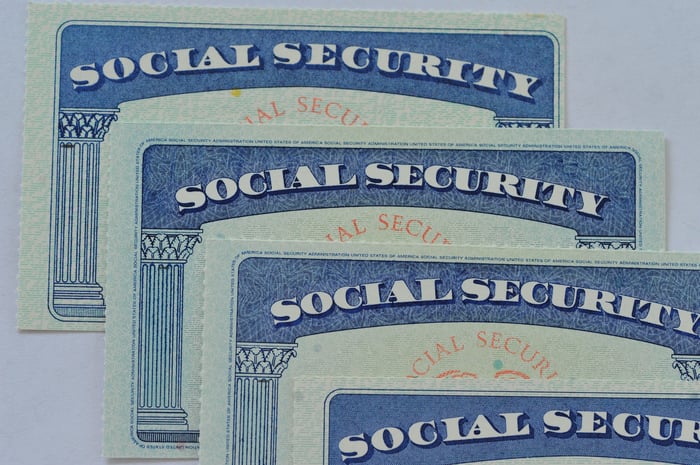
Social Security gets the bulk of its revenue from payroll taxes. In the coming years, however, that revenue stream is expected to decline as baby boomers leave the workforce in droves and too few replacement workers enter it. The situation is so dire that Social Security may need to slash benefits within 15 years if lawmakers don't intervene and find a way to pump more money into the program.


A minimum wage hike, however, could achieve the latter goal.

Workers pay a 12.4% Social Security tax on wages of up to $142,800 this year (that wage cap typically increases from year to year). Those who are self-employed pay the full 12.4% tax, while those who are considered employees of another company or entity pay half of that 12.4% and their employers pay the remaining half. President Biden is also considering implementing a 12.4% Social Security tax on earnings above $400,000, but so far, that's not officially on the table.


If the minimum wage is increased, workers and employers alike will begin to pay more in Social Security tax. That could, in turn, provide a lot more revenue for Social Security in the coming years, thereby shoring up its finances and potentially minimizing or preventing future benefit cuts.

Of course, raising the minimum wage could also put a lot more workers in a position where they collect a higher monthly retirement benefit. Social Security benefits are earnings based and are calculated based on workers' 35 highest-paid years of wages. As such, if someone who normally makes $7.25 an hour begins making $15 an hour instead, that could, down the line, translate into a lot more retirement income courtesy of Social Security.

It's estimated that a $15 minimum wage would put more money into roughly 32 million American workers' pockets. That could, in turn, result in an additional $107 billion in revenue for Social Security.


Though a minimum wage hike has been lobbed into the massive coronavirus relief package lawmakers are trying to pass, it could still get cut before that bill is finalized. But if it does go through, it could help millions of Americans better cover their living expenses, all the while setting them up for a more secure retirement. Just as importantly, it could be just the thing that helps prevent Social Security from cutting benefits and hurting the millions of seniors who rely on it as their main source of income.
US minimum wage activists face their toughest foe: Democrat Joe Manchin
Zack Harold in Charleston, West Virginia
Mon, February 22, 2021, 

Photograph: J Scott Applewhite/AP

Hopes that the US will finally increase the federal minimum wage for the first time in nearly 12 years face a seemingly unlikely opponent: a Democrat senator from one of the poorest states in the union.

Joe Manchin of West Virginia, the state’s former governor and the Democrats’ most conservative senator, has long opposed his party’s progressive wing and is on record saying he does not support increasing the minimum wage from $7.25 to $15 an hour, the first increase since 2009. “I’m supportive of basically having something that’s responsible and reasonable,” he told the Hill. He has advocated for a rise to $11.

Related: 'Hopefully it makes history': Fight for $15 closes in on mighty win for US workers

None of this has found favor with some low-wage workers in a state where an estimated 278,734 West Virginians lived in poverty in 2019, 16% of the population and the sixth highest poverty rate in the US.

Last Thursday Manchin reaffirmed his stance during a virtual meeting with members of the West Virginia Poor People’s Campaign (WVPPC), a group pushing for an increased minimum wage and other policy changes that would benefit the working class.

That meeting was closed to the media but at an online press conference immediately afterward, participants said Manchin refused to budge. “He was kind of copping out,” said WVPPC member Brianna Griffith, a restaurant worker and whitewater rafting guide who, due to exemptions for tipped workers, only makes $2.62 an hour.

As a result of her sub-minimum wage job, Griffith received only $67 a week in unemployment benefits until that ran out in August. She lost her house and was forced to move in with her grandmother. Although she has now returned to work, business is slow and she estimates tips have fallen by 75%.

When Griffith told Manchin about her plight on Thursday, she said he asked about the $600 stimulus check approved by Congress in December. “He seemed to think that $600 … was enough to get me by,” she said. “I feel like he’s got his head in the clouds and he doesn’t understand what’s happening to poor people in West Virginia.”


Despite Manchin’s insistence on an $11 minimum wage, according to MIT’s living wage calculator, even a $15 minimum wage would only provide a living wage for single West Virginians without children. For a West Virginia family with two working parents and two children, both parents would need to be making at least $20.14 an hour to make ends meet.

Griffith said if the minimum wage was increased to $15 an hour, “I could afford to live on my own. I could afford a car that’s not 25 years old.”


Fast-food workers and supporters rally in Los Angeles on 18 February. Photograph: Lucy Nicholson/Reuters

The Rev Dr William Barber, co-chair of the national Poor People’s Campaign, was in last week’s meeting and said Manchin agreed the current $7.25 minimum wage was “not enough”.

But Barber said he was “amazed” Manchin could hear from people like Griffith and still oppose increasing the minimum wage to $15.

“What he is suggesting would just further keep people in poverty and hurting,” he said.

Raising the minimum wage was a key part of Democrats’ 2020 platform. The former presidential candidate and now Senate budget committee chairman, Bernie Sanders, has referred to the current $7.25 rate as “a starvation wage”.

The wage hike, formally known as the Raise the Wage Act of 2021, is now part of a proposed $1.9tn Covid-19 relief bill. The measure would incrementally raise the minimum wage from $7.25 to $15 over the next four years.

With only a razor-thin majority in the Senate, all 50 Democrat senators need to be onboard for the bill to pass. But in addition to Manchin, Kyrsten Sinema of Arizona has told Politico she does not want the minimum wage increase to be part of the Covid relief package.

There are some reasons to be hesitant about increasing the minimum wage. A Congressional Budget Office (CBO) report detailing the economic impact of the Raise the Wage Act has estimated the legislation would eliminate an estimated 1.4m jobs and would swell the national debt by $54bn over the next decade.

But the report also estimates a $15 minimum wage would lift 900,000 people out of poverty nationwide and inject $333m into the US economy.

Other economists have disputed the CBO report. Estimates by the left-leaning Economic Policy Institute predict 32 million US workers would benefit from the minimum wage increase, which includes a quarter-million workers in Manchin’s home state of West Virginia.

WVPPC member Pam Garrison was also on Thursday’s call with Manchin. Garrison is 55 years old and says she has earned minimum wage her entire working life and makes ends meet by taking side jobs cleaning houses. She spoke of the mental, physical and emotional toll that living in poverty has on people like her.

“You’re just frazzled,” she said. “If you’ve never lived in poverty, you have no idea what it does to you.”


If you’ve never lived in poverty, you have no idea what it does to you
Pam Garrison

Garrison said Manchin ‘heard our side” but is reluctant to embrace a $15 minimum wage because he is worried small businesses could not absorb the increased labor costs. But she said giving low-wage workers more money would also benefit small businesses.

“If you give us a decent pay, we’re going to put the money back into the economy [and] we’re going to be able to feed our families,” she said.

Members of the WVPPC plan to continue lobbying Manchin on the Raise the Wage Act despite his seeming unwillingness to change his stance on the legislation.

The group will hold a masked, socially distanced rally outside his office in Charleston, West Virginia, on Monday. A similar rally will be held at . Sinema’s office in Pheonix, Arizona.

Manchin’s office denied multiple requests for comment.

Zack Harold is a freelance writer and radio producer in Charleston, West Virginia. He is a regular contributor for West Virginia Public Broadcasting’s Inside Appalachia and formerly served as the Charleston Daily Mail’s entertainment editor and managing editor for WV Living, Wonderful West Virginia and WV Focus magazines
Most Americans support a $15 minimum wage, but are split on how soon it should happen


Juliana Kaplan
Tue, February 23, 2021, 9


Demonstrators participate in a protest outside McDonald's corporate headquarters on January 15, 2021, in Chicago. Scott Olson/Getty Images


Over 60% of Americans definitely or probably support raising the minimum wage to $15, an Insider poll found.


Results came down along party lines; Democrats were more likely to support the increase.


But the poll found more Americans support a gradual increase to $15 by 2025.


Over 60% of respondents in a new Insider poll would definitely or probably support a $15 minimum wage.

That increase -which would give 32 million Americans a raise - is currently a hot topic in Washington. Democrats, led by Sen. Bernie Sanders (I-Vt.), are pushing for the increase to be included in reconciliation package for President Biden's $1.9 trillion stimulus relief plan.

While Biden has reiterated his support for the increase, he's also reportedly signaled that he's not optimistic it'll make it into reconciliation - and two Democratic senators seem to agree.

Outside of Washington, though, the $15 minimum wage seems to have strong support, and it has for years. A 2019 Insider poll found that 63% of respondents supported or strongly supported an increase. Since then, the economy and low-wage employment have been ravaged by the pandemic.

In Insider's most recent poll, participants were asked: Do you support increasing the federal minimum wage to $15 an hour?

Of the 1,130 respondents, 44% said they would definitely support the increase, while 21% said they probably would.

Conversely, 15% of respondents said they probably wouldn't support it, 17% said they definitely wouldn't, and 4% didn't know.

Party affiliations seemed to play a role in responses:

58% of respondents who said they would probably vote in their state's Democratic primaries or caucuses would "definitely" support an increase to $15 an hour.


But 28% of likely Republican voters would "definitely" support the increase.


Conversely, 9% of likely Democratic voters "definitely would not support" the raise, while 32% of likely Republican voters "definitely would not support it."


There was also some divide along generational lines:


52% of respondents between 30 and 44 "definitely would support" the increase, the highest percentage among age groups.


Meanwhile, 25% of respondents over the age of 60 "definitely would not support" the raise.

The current Democratic plans would gradually increase the federal minimum to $15 by 2025. Respondents to Insider's poll were asked: If the federal minimum wage was increased to $15 per hour, do you have a preference about how that would be implemented?


39% said that, if the increase were to happen, the "$15 minimum wage should be implemented immediately."


But 50% would "prefer a phased rollout, gradually raising the minimum wage annually to $15 in 2025."


When it comes to raising the minimum wage, it seems that slow and steady wins the race.

SurveyMonkey Audience polls from a national sample balanced by census data of age and gender. Respondents are incentivized to complete surveys through charitable contributions. Generally speaking, digital polling tends to skew toward people with access to the internet. SurveyMonkey Audience doesn't try to weight its sample based on race or income. Polling data collected 1,154 respondents February 22, 2021 with a 3 percentage point margin of error.


Democrats plot their Plan B to save minimum wage hike


Democrats are scrambling to piece together a backup plan that could save their minimum wage hike from getting tossed out of President Joe Biden’s $1.9 trillion relief package and win over moderates wary of the proposal.

The budget tool that Democrats are using to steer Biden’s plan through Congress without GOP support, known as reconciliation, is laden with thorny restrictions waiting to ensnare the $15 minimum wage boost they've added to the next tranche of coronavirus relief. The wage increase is also running into strong headwinds from two influential Senate Democratic centrists, Joe Manchin (D-W.Va.) and Kyrsten Sinema (D-Ariz.), who are both resistant to enacting the sweeping policy change through the powerful budget process.

The White House and Democratic leaders have been waiting to see how the Senate's parliamentarian, its official adviser on procedural matters, opines on the wage increase. Both Democrats and Republicans are expected to meet with the parliamentarian on Wednesday to argue their case. Her ruling could follow soon after the arguments.

In the meantime, Democrats are already weighing several options to try to save the wage hike from fully imploding and make it more palatable for moderates in their own party — from whom congressional leaders need lockstep support in order to muscle the Covid-19 aid package through the Senate with a simple majority vote before unemployment benefits expire for millions of Americans in mid-March.

“There are two issues going on right now — one is Byrd Rule problems, one is whip problems,” said House Budget Chair John Yarmuth (D-Ky.), referring in the first case to the procedural hurdle that could quash the wage hike in the Senate. “If Joe Manchin isn’t going to vote for it because of the minimum wage, I assume we have to take it out or compromise in a way that he would accept.”

“Increasing the minimum wage, particularly in the middle of a pandemic when so many small businesses are struggling, would do nothing further than damage the economic welfare of low-income families,” said freshman Rep. Byron Donalds (R-Fla.), who said businesses in his district are concerned about the proposal.

“We know that when government raises the cost of doing business for small enterprises, such as through arbitrary minimum wage increases, the workers at the bottom actually get fewer working hours and fewer job opportunities,” Donalds said.

But progressives on the panel stressed that a wage increase is critical to lifting people out of poverty, especially during a health and economic crisis. Rep. Barbara Lee (D-Calif.), who used to own a small business, said "in many ways, it's like slave labor" to pay workers the current federal minimum wage of $7.25 an hour.

“We know that people of color have been paid poverty wages for too long," Lee said, "which deepens the longstanding racist and economic divisions in this country.”

“Paying more than poverty wages is good for the bottom line. People who are working should not have to go to food lines, should not have to apply for SNAP benefits, should not have to apply for Section 8 or other public benefits," she said. "That’s what happens when you pay $7.25. It’s just wrong.“

To ensure that a minimum wage boost survives, Democrats are discussing the possibility of capping the increase at less than $15 an hour, to possibly $11 or $12, Yarmuth said. Such a move could satisfy wonky Byrd Rule restrictions that constrain the projected cost of the pandemic relief proposal outside of a 10-year budget window, he said.

Budget rules that allow the bill to pass the Senate without the threat of a filibuster essentially require that all pieces of the bigger package have a significant effect on federal spending, revenues and the debt within a decade. If the package increases deficits beyond that window, approval from the Senate parliamentarian can get problematic.

Manchin has previously said that an $11 minimum wage hike, adjusted for inflation, would make more sense for his home state of West Virginia. Sinema's support for any wage hike would likely be harder to win, since she told POLITICO earlier this month that the increase is "not appropriate" as an add-on to the Covid-19 aid bill.

Manchin told reporters on Monday that if the parliamentarian rules favorably on the $15 minimum wage provisions, he will seek to amend the legislation to instead raise the federal hourly minimum to $11.

“$11 is the right place to be,” he said. "Throwing $15 out there right now just makes it very difficult in rural America.”

Notably, some Republicans have backed a wage bump, but with extra strings that would divide Democrats. Sen. Mitt Romney (R-Utah) announced last week that he’ll introduce a bill with Sen. Tom Cotton (R-Ark.) that would raise the minimum wage — although he didn’t specify a number — “while ensuring businesses cannot hire illegal immigrants.”

Progressives aren’t yet ready to ditch the $15 figure. Senate Budget Chair Bernie Sanders (I-Vt.) and his staff have repeatedly contended that the Congressional Budget Office has already produced ample evidence showing that the $15 increase satisfies budgetary rules within the 10-year window. Sanders aides note that raising the wage will produce a much bigger effect on the budget than oil drilling in the Arctic and the repeal of Obamacare health insurance mandate penalties — which were both previously allowed under the Senate's arcane rules.

But to ensure that the $15 wage hike officially checks off all the right boxes, progressives have another idea. They're pushing the possibility of a small business tax relief plan that could be paired with the minimum wage increase in order to alleviate any burdens on businesses required to increase their pay, according to a senior Senate Democratic aide.

Separately, Democrats are exploring other options from the Senate Finance Committee that could include closing “some loopholes that benefit the rich or large corporations,” the Democratic aide said.

Democrats "could certainly repeal" some tax provisions, including one added to last year's pandemic relief measure, "that benefit wealthy real estate owners," the aide added. “There are some other tax provisions that President Biden has supported that would raise more than enough money to cover both the 10-year window and out-year expenses with respect to the minimum wage.”

Senate Finance Chair Ron Wyden (D-Ore.) “is looking at various options to stay within our allocation and support small businesses,” said his spokesperson Ashley Schapitl, noting that he’s previously said “he’s doing all he can" to keep the minimum wage increase in the broader package.

A House Democratic aide, who described the issue as “a Senate math problem,” said additional revenue could also come from cutting one month off the expiration date for unemployment benefits that the House package would extend through August. House Democrats have already lopped a month off Biden’s original unemployment benefits extension, which he proposed to run through September, to offset the cost of pension aid that they included in the Covid-19 aid bill.

Schapitl said she hadn’t heard of any options involving unemployment insurance and raising the minimum wage, but declined to discuss any other specifics.

Biden has privately signaled to governors that the wage hike likely isn’t happening as part of his first Covid-19 aid measure. And while Democrats could technically overrule the parliamentarian on the issue, that's unlikely to happen given that Biden is leaning heavily against the idea, POLITICO reported earlier this month.

Liberals, however, remain confident that the minimum wage boost will survive without any compromises — and they’re confident of a parliamentarian ruling in their favor.

“We’ve made a very, very strong case,” Sanders said Monday. “And hopefully the parliamentarian rules in our favor. I think she should.”

Marianne LeVine contributed to this report.
The minimum wage hike Biden ran on is unlikely to be in the $1.9 trillion stimulus package because of 2 centrist Democrats

Grace Panetta
Mon, February 22, 2021,


In this Feb. 13, 2021, file photo Sen. Joe Manchin, D-W.Va.,
 departs on Capitol Hill in Washington Alex Brandon/AP


An increase to the federal minimum wage likely won't be passed in a COVID stimulus package.


Biden reportedly told governors that he doesn't think the move would comply with a Senate rule.


Two key Senate Democrats, Joe Manchin and Kyrsten Sinema, have also thrown cold water on the idea.


Democrats are gearing up to pass President Joe Biden's $1.9 trillion stimulus package, but all signs are pointing to a much-anticipated minimum wage hike not being included in the bill largely due to procedural hurdles and opposition from Sen. Joe Manchin.

Increasing the federal minimum wage from its current rate of $7.25 an hour to $15 is a major priority for Democrats, who now control the Senate for the first time since 2015, and is something Biden has also stressed in his campaign and in his presidency.

But in a recent call with governors of both parties, Biden told them not to get their hopes up about the wage increase being included in the stimulus package because of procedural rules, Politico reported.

The Senate will likely pass the stimulus package through a process known as budget reconciliation, which allows the Senate to pass budget-related legislation with just a simple majority of 51 votes instead of the usual 60-vote majority required in the Senate to get past the filibuster.

The Senate is currently divided between 50 Democrats and 50 Republicans, with Vice President Kamala Harris serving as the tie-breaking vote.

Specifically, Biden expressed doubt that a minimum wage increase being included in the reconciliation package would pass muster under the Byrd rule, saying, "doesn't look like we can do it," according to Politico.

Named for legendary former West Virginia Senator Robert Byrd, the rule stipulates that matters "extraneous" to the budget process cannot be passed through reconciliation.

It's ultimately up to the Senate parliamentarian, Elizabeth McDonough, to determine what can be included under the parameters of the Byrd rule. But Biden, who served in the Senate for 36 years from 1973 to 2009, doesn't seem optimistic that the process would survive a so-called Byrd bath, a review of the provision's permissibly through reconciliation.

Politico reports that McDonough is expected to rule on the matter on Tuesday.

It would take a two-thirds majority of the body to overrule a decision made by the Senate parliamentarian. And while some have suggested that Harris could simply ignore the parliamentarian's rulings, it would be an unprecedented and potentially risky move that could risk the entire package being derailed and losing support from key moderates like Manchin.

Powerful Democratic Senator Manchin of West Virginia, who holds Byrd's former senate seat, has also privately conveyed to Biden that he won't support any legislation that violates the Byrd rule and is unlikely to support a minimum wage increase in the stimulus package, CNN reported on Wednesday.

"My only vote is to protect the Byrd Rule: Hell or high water," the senator told CNN. "Everybody knows that. I'm fighting to defend the Byrd Rule. The President knows that."

Manchin conveyed the same sentiment in an interview with the Washington Examiner.

"I will defend the Byrd rule the same way I defend the filibuster. I am not going to just set back and say, 'Oh, well, he really didn't mean it,'" Manchin said of Byrd. Manchin, for his support, supports raising the federal minimum wage to $11 an hour.

Another key moderate, Democratic Sen. Kyrsten Sinema of Arizona, has also appeared to put the kibosh on passing a wage hike through reconciliation.

"What's important is whether or not it's directly related to short-term Covid relief. And if it's not, then I am not going to support it in this legislation," Sinema recently told Politico. "The minimum wage provision is not appropriate for the reconciliation process."

House Budget Chairman Rep. John Yarmuth has also expressed doubts, telling CNN, "I think the minimum wage is a stretch to get through the Byrd Rule," adding. "I'm just not aware of how they do that."

Roll Call reported that if senators like Manchin and Sinema aren't swayed by a favorable ruling from the parliamentarian, Democratic leaders could include a small-business tax credit in the package to earn their support and ease some of their concerns about the impact of a wage increase on small businesses.

But ultimately, as Politico put it, "Senior Democratic aides are skeptical that progressives would risk tanking stimulus checks, child tax credits and money for state and local governments over the minimum wage."


Living Wage Calculator (mit.edu)
Romney, Cotton challenge $15 min wage with new proposal

WHAT YOU THOUGHT THEY WOULD RAISE IT TO $20

Republicans release bill to 'gradually raise the federal minimum wage to $10'

EVER SO SLOWLY

Aarthi Swaminathan and Denitsa Tsekova
Tue, February 23, 2021

Sen. Mitt Romney (R-UT) and Sen. Tom Cotton (R-AR) unveiled a proposal on increasing the federal minimum wage to $10 by 2025. The proposal comes as President Joe Biden and Democrats push to include a provision increasing the minimum wage to $15 by 2025 in the next stimulus package.

“For millions of Americans, the rising cost of living has made it harder to make ends meet, but the federal minimum wage has not been increased in more than 10 years,” Romney said in a statement on Tuesday. “Our legislation would raise the floor for workers without costing jobs and increase the federal minimum wage to $10, automatically raising it every two years to match the rate of inflation."

Under the Republican proposal, the federal minimum wage will increase to $8.00 in 2022, $8.75 in 2023, and $9.50 in 2024, until it reaches the $10 threshold. Businesses with fewer than 20 employees would have a longer phase-in period.


Former Republican Presidential candidate Mitt Romney, right, speaks at a North Little Rock, Ark., news conference Thursday, Aug. 21, 2014, as he endorses U.S. Rep. Tom Cotton, R-Ark., left, in the race for U.S. Senate. (AP Photo/Danny Johnston)

“American workers today compete against millions of illegal immigrants for too few jobs with wages that are too low— that’s unfair,” Cotton said in a statement. “Ending the black market for illegal labor will open up jobs for Americans. Raising the minimum wage will allow Americans filling those jobs to better support their families. Our bill does both.”

The legislation would mandate stricter immigration control and would implement an E-Verify system to "ensure the wage increase only goes to legal workers," while raising civil and criminal penalties on companies hiring unauthorized aliens.
The current state of federal minimum wage

But most Americans favor raising the federal minimum wage, which was last increased in 2009.

Many cities and states have enacted their own hikes, including in Republican-leaning ones like Florida. While the federal minimum wage stands at $7.25 presently, 20 states (and D.C.) currently have a minimum wage at or above $10. By 2022, three more states will have increased their hourly wages beyond $10.


Living Wage Calculator (mit.edu)

Leading Democrats are pushing for a gradual increase of the federal minimum wage to $15 by 2025.

UC Berkeley's Center for Labor Research and Education recently found that $15 an hour would provide a “direct boost” in pay to 23 million Americans, a boon to many amid the pandemic.

“There’s good evidence to say: ‘Yeah, this is a bold policy, but it’s not as risky as some people think,'” Michael Reich, a minimum wage expert at the University of California, Berkeley, told Yahoo Finance in a previous interview.

Goldman Sachs analysts also previously estimated that a rise to $15 an hour would impact around 30% of U.S. workers, most of whom have household incomes below $50,000.


Critics of a $15 minimum wage, including most Republicans and some Democrats, generally argue that a large hike lacks nuance and is bad for businesses that are also dealing with the ongoing coronavirus pandemic.

“Everybody’s trying to paint this whole thing with one broad brush stroke,” John Horne, owner of the Anna Maria Oyster Bar in Bradenton, Fla., told Yahoo Finance previously. “$15 [minimum wage] is fine in Miami... but it’s not good in a small town, you know?”

John Motta, chairman of the Coalition of Franchisee Associations, said during a press conference on February 17 that states that hiked their minimum wages “did it in a way where businesses can absorb that increase."

But he added that “doing it as quickly as the Biden administration is stating will definitely hurt businesses, will hurt jobs, and probably cause some businesses to close because they jus cannot compete and pay those wages.”


Denitsa is a writer for Yahoo Finance and Cashay, a new personal finance website. Follow her on Twitter @denitsa_tsekova

Aarthi is a reporter for Yahoo Finance. She can be reached at aarthi@yahoofinance.com. Follow her on Twitter @aarthiswami.