Thursday, November 03, 2022

Most US pet food CONTAINERS contaminated with ‘forever chemicals’, study finds

Tom Perkins - Yesterday 


Much of America’s pet food packaging could be contaminated with PFAS “forever chemicals”, creating a potentially dangerous exposure to the toxic compounds for cats and dogs.

Photograph: Edgard Garrido/Reuters© Provided by The Guardian

In a recent study public health advocate the Environmental Working Group (EWG) checked 11 bags of pet food and found that all of them contained the substance, including several at extremely high levels.

“This represents a significant source of PFAS in the home environment,” said Sydney Evans, a science analyst with the EWG.

PFAS, or per- and polyfluoroalkyl substances, are a class of about 12,000 compounds used to make products resist water, stains and heat. They’re called “forever chemicals” because they don’t naturally break down, accumulating in humans and animals. PFAS are linked to a range of serious health problems like cancer, birth defects, kidney disease and liver disease.

The chemicals are likely used in pet food bags to make them repel grease. For cats, the highest levels were detected in the Meow Mix Tender Centers salmon and chicken flavors dry cat food, at more than 600 parts per million (ppm). Purina Cat Chow Complete chicken showed over 350 ppm, while Blue Buffalo, Iams and Rachael Ray Nutrish all had detections of under 100 ppm.

For dogs, Kibbles ’n Bits bacon and steak flavor registered just under 600 ppm, followed by Blue Buffalo’s Life Protection Formula chicken and brown rice recipe at 150 ppm. Other dog foods made by Purina, Iams and Pedigree had much lower amounts. While some of the PFAS levels are considered by public health advocates to be high, no legal framework to measure it exists.


A second test checked some of the bags for individual PFAS compounds, like PFBA, which is known to cause liver and kidney problems, and harm the immune system in humans.

The study did not check the pet food for PFAS,
though based on past research that found the chemicals leached from fast food wrappers into human food, it’s likely that the chemicals are contaminating the products, the EWG said. The chemicals can also separate from bags and end up in homes.

No “top pet food manufacturers” appear to have committed publicly to stop using PFAS in their packaging, the report states. Despite pressure from public health advocates, the Food and Drug Administration has refused to ban the use of PFAS in food packaging, and efforts to do so via legislation have died in Congress.

“We need strong new state and federal actions to eliminate sources of PFAS pollution … and end unnecessary uses of PFAS in pet food packaging and in products found in and around the home,” Evans said.
BLAMING THE WORKERS
Suncor reducing contractor work force by 20 per cent to improve safety, efficiency

CALGARY — Suncor Energy Inc. is reducing the size of its contractor work force by 20 per cent as part of its effort to improve safety and performance at its oilsands operations.


Interim CEO Kris Smith told analysts on a conference call Thursday that more than half of the work force reductions have already been completed, with the remainder on track to be completed by the first half of 2023.

He said the decision to reduce the number of contractors working on Suncor sites was the result of "a thorough review of the make-up of our front-line work force" and aimed at reducing the number of exposure hours that put the company at risk for workplace injuries or fatalities, as well as improving efficiency and competitiveness.


“My priority has been to remove distraction from the organization and to focus our employees on safe, reliable operations in our biggest opportunities," Smith said on the call.

Suncor's safety record has been under the microscope in 2022, ever since U.S.-based activist investor Elliot Investment Management publicly called for change at the Calgary-based energy company.

Since 2014, there have been at least 12 fatalities at Suncor's oilsands facilities in northern Alberta, including five since 2021. That's more than all of its industry peers combined.


Smith — who stepped into the CEO role in July to replace Mark Little, who stepped down from the top job one day after a 26-year-old contract worker was struck by equipment and killed at Suncor's Base Mine — said Suncor is also enhancing its contractor management processes, and partnering with experts to ensure managers in all departments and operations have the latest safety training and education.

The company is also installing collision prevention technology on over 1,000 pieces of mobile mine equipment to eliminate what it calls a "key risk" within its operations. Fatigue management systems will also be completed across all of Suncor's mines by early 2023, Smith said.

On Wednesday evening, Suncor reported a net loss of $609 million in the third quarter, the result of taking a $3.4-billion writedown against its share of the Fort Hills oilsands mine.

The net loss, which works out to 45 cents per common share, is in contrast to an $877-million profit, or 59 cents per common share, in the prior year's quarter.


Suncor announced last week it will buy out Teck Resources Ltd.'s 21.3 per cent stake in the Fort Hills oilsands project for approximately $1 billion. The agreed-upon sales price reflects a lower market value for the mine, resulting in a non-cash impairment charge.

On an adjusted basis, however, Suncor said it earned $2.6 billion for the three months ended Sept. 30, or $1.88 per share, more than double the $1 billion or 71 cents per common share it earned on an adjusted basis in the same three months of 2021, thanks to significantly higher crude oil prices and upstream production.

Suncor’s total upstream production increased to 724,100 barrels of oil equivalent per day (boe/d) in the third quarter of 2022, compared to 698,600 boe/d in the prior year's quarter. Refinery crude throughput was 466,600 barrels per day and refinery utilization was 100 per cent in the third quarter of 2022, compared to 460,300 barrels per day and 99 per cent in the third quarter of 2021.

Suncor has said it will hold an investor presentation on Nov. 29 to provide additional information about its plans to improve safety and performance, as well as the results of its review looking into the possible sale of its retail division.

Suncor, which recently sold its wind and solar assets as well as its exploration and production assets in Norway, is trying to streamline its portfolio to focus on its "core business."

Eight Capital analyst Phil Skolnick said that could mean Suncor is about to embark on an oilsands "buying spree." He said in the aftermath of the deal to acquire Teck's share in Fort Hills, he wouldn't be surprised if Suncor is also in negotiations with French company TotalEnergies SE for its remaining 24.6 per cent stake in the Fort Hills project.


"We could also see (Suncor) looking to acquire CNOOC and Sinopec's combined 16.2 per cent interest in Syncrude (China has been reported to be looking to exit Canada)," Skolnick said in a research note.


This report by The Canadian Press was first published Nov. 3, 2022.

Companies in this story: (TSX:SU)

Amanda Stephenson, The Canadian Press


Suncor quarterly profit more than doubles, beats estimates on crude rally
Yesterday 
SU Rising fast

(Reuters) -Suncor Energy Inc said on Wednesday its third-quarter adjusted profit more than doubled and beat analysts' expectations, as the Canadian energy major was supported by higher oil and refined product prices.

Global crude prices have recently cooled from 14-year peaks touched earlier in 2022, but were still 30% higher year-on-year during the quarter as Russian sanctions and OPEC+ lower output plans kept supply tight.

Excluding items, Suncor's adjusted earnings more than doubled to C$2.57 billion ($1.87 billion), or C$1.88 per share, beating analysts' consensus of C$1.83 per share, as per Refinitiv data.

Total upstream production for the reported quarter was 724,100 barrels of oil equivalent per day (boepd), compared with last year's 698,600 boepd.

Its refinery crude throughput rose 1.4% to 466,600 barrels a day with a refinery utilization of 100%.

Last week, Suncor had said it will buy Canadian miner Teck Resources' stake in the Fort Hills oil sands project in Alberta for C$1 billion, expanding its stake in the project to 75.4% from 54.1%.

Before the stake expansion, the Calgary, Alberta-based firm took an impairment charge of nearly C$3.4 billion in the reported period against its share of the Fort Hills assets.

($1 = 1.3716 Canadian dollars)

(Reporting by Ruhi Soni in Bengaluru; Editing by Rashmi Aich and Sherry Jacob-Phillips)

US authorities relax regulations on prescription opioids

Thu, November 3, 2022 


US health officials issued new recommendations Thursday to relax restrictions for doctors prescribing opioids for pain, despite the risk of addiction.

The Centers for Disease Control (CDC) revised principles issued in 2016 in an attempt to curb the opioid overdose epidemic in the United States.

Unlike the previous document, the new guide refrains from setting thresholds in terms of dosage or prescription duration.

These had led doctors to suddenly cut or drastically reduce patients' doses. States and insurance companies were also inspired to set their own limits.

Chronic pain patients had complained that they no longer had access to the drugs that would allow them to lead a normal life, and had warned of the increased risk of suicide in their ranks.

The new recommendations, compiled in a 200-page report, seek a balance. One in five Americans suffers from chronic pain and "opioids can be essential medications for the management of pain, however, they carry considerable potential risk," the authors of the document wrote.

The guidelines are not "a replacement for clinical judgment or individualized, person-centered care" or "intended to be applied as inflexible standards of care," the report says.

But it recommends caution, warning that opioids should be considered only after other pain treatments have failed, and at each step, physicians should discuss the issue with their patients.

If they decide to use opioids, they should first prescribe the lowest effective dose and then closely monitor the effects of the treatment.

If problems arise, physicians should also avoid abruptly terminating opioid prescriptions and should ensure appropriate care for those with complications.

As a precautionary measure, the agency recommends that people using opioids over a prolonged period be offered Naloxone, an antidote that can save someone who is overdosing, said Christopher Jones, a senior CDC official, at a press briefing.

Opioid prescriptions increased fourfold between 1999 and 2010 in the United States. Although the trend has reversed since 2016, they have created addictions and driven some patients to drugs like heroin and fentanyl.

Last year, the US had a record 107,000 overdose deaths, more than 70 percent of which were from illegal synthetic opioids.

chp/ube/st/caw
DECRIMINALIZE DRUGS
Captagon connection: how Syria became a narco state

Rouba EL HUSSEINI, Jean Marc MOJON
Wed, November 2, 2022 


LONG READ

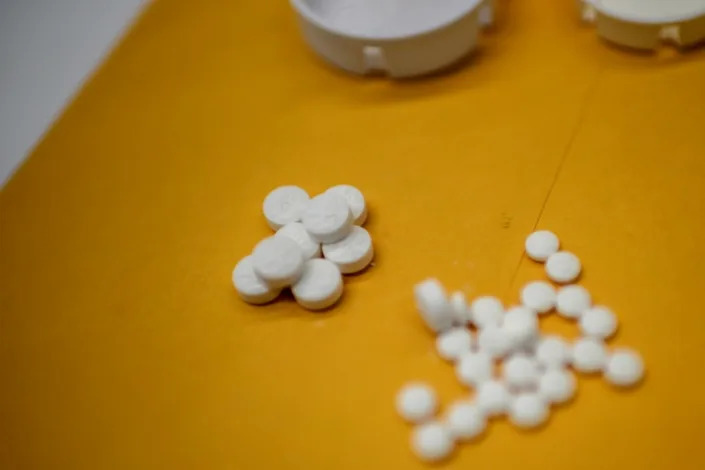
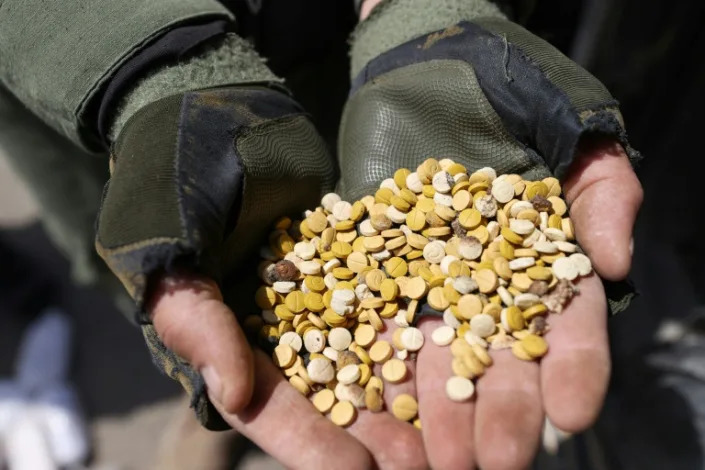
A decade of appalling civil war has left Syria fragmented and in ruins but one thing crosses every front line: a drug called captagon.

The stimulant -- once notorious for its association with Islamic State fighters -- has spawned an illegal $10 billion industry that not only props up the pariah regime of President Bashar al-Assad, but many of his enemies.

It has turned Syria into the world's latest narco state, and sunk deep roots in neighbouring Lebanon as its economy has collapsed.

Captagon is now by far Syria's biggest export, dwarfing all its legal exports put together, according to estimates drawn from official data by AFP.


An amphetamine derived from a once-legal treatment for narcolepsy and attention disorder, it has become a huge drug in the Gulf, with Saudi Arabia by far the biggest market.

AFP interviewed smugglers, a fixer who puts together multi-million dollar deals, and 30 serving and former law enforcement officers from Syria and beyond, as well as diplomats and drug experts in a bid to grasp the scope of the phenomenon.


Given the danger of speaking publicly -- particularly for those inside the trade -- the majority asked for their identities to be protected.

- 'I can work for days' -


In Saudi Arabia, captagon is often talked of as a party drug, but its hold extends far beyond the gilded lifestyles of the kingdom's wealthy elite.

Cheap, discreet and less taboo than alcohol, many poorer Saudis and migrant workers go to work on the drug.

"I can work for two or three days non-stop, which has doubled my earnings and is helping me pay off my debts," said Faisal, a skinny 20-year-old newlywed from a working-class background, who spends 150 riyals a week ($40) on the pills.

"I finish my first job exhausted in the early hours of the morning," but the drug helps him push through to drive for a ride-hailing service.

An Egyptian construction worker told AFP that he began taking the pills after his boss secretly slipped some into his coffee so he could work faster and longer.


"In time my colleagues and I became addicted," he added.

The retail price of a pill varies wildly from $25 for the premium tablets sold to the Saudi jetset to low quality adulterated pills that go for a dollar.

Many begin their journey to the Gulf in the lawless badlands between Syria and Lebanon.

- Border barons and tribal networks -

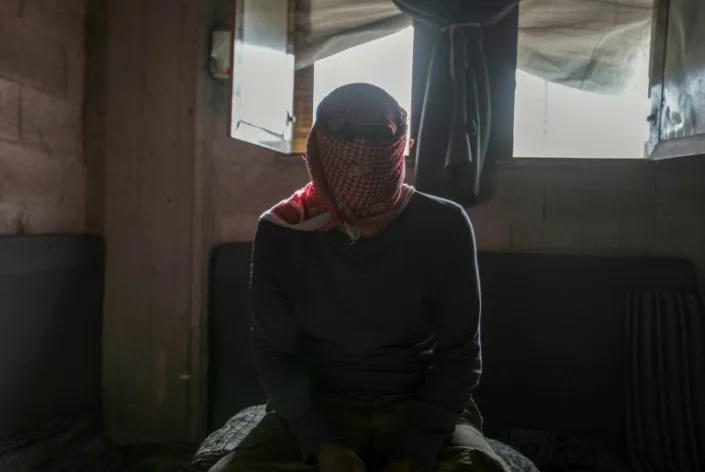
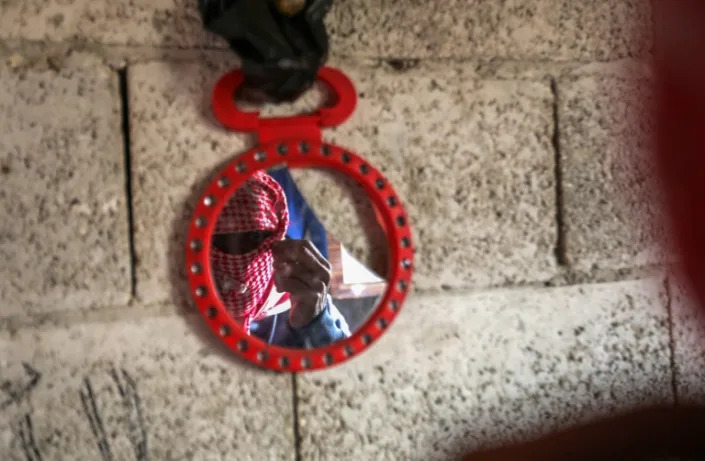
Hidden behind dark glasses and a mask in the middle of a vineyard in the Bekaa Valley, a Lebanese fixer and trafficker told AFP how he organised the shipments.

"Four or five big names typically partner up and split the cost of a shipment of say $10 million to cover raw material, transport and bribes," he said.

"The cost is low and the profits high," he said, adding that even if only one shipment out of 10 gets through, "you are still a winner".

"There's a group of more than 50 barons... They are one big web, Syrians, Lebanese and Saudis."

While the captagon trade spans several countries, many key players have tribal ties, particularly through the Bani Khaled, a Bedouin confederation that reaches from Syria and Lebanon to Jordan, Iraq and Saudi Arabia.

A shipment can stay within the Bani Khaled's sphere of influence the whole way from manufacture in Syria to delivery in Saudi Arabia, said multiple sources, including a smuggler, an intelligence officer and Syrian army deserters.


The economics of the trade are dizzying.

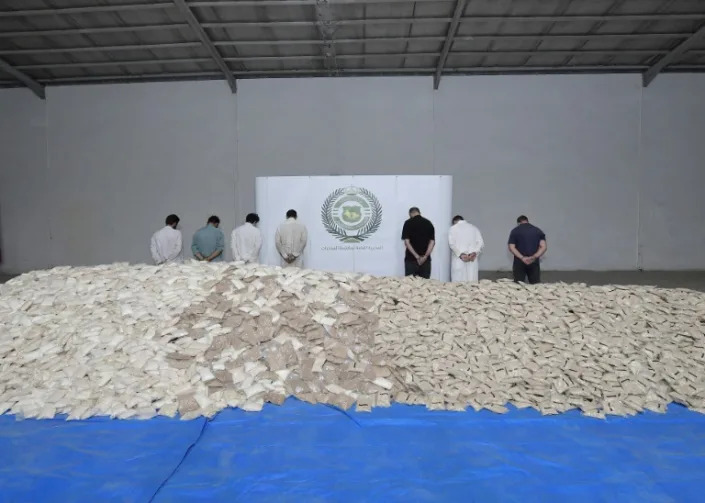
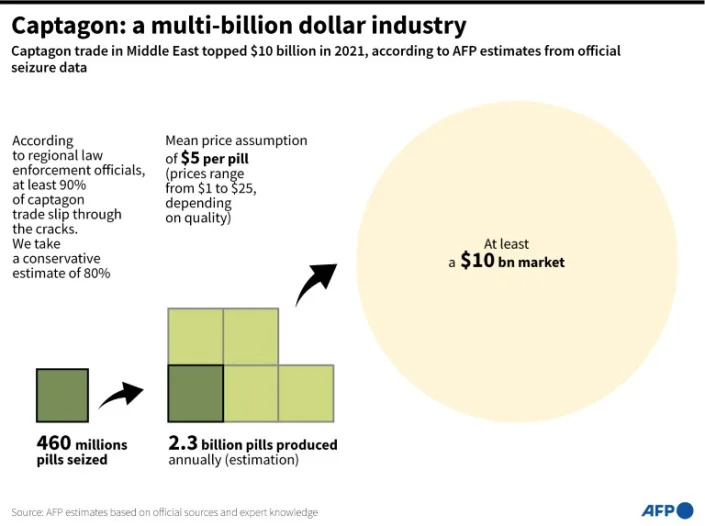
More than 400 million pills were seized in the Middle East and beyond in 2021, according to official figures, with seizures this year set to top that.

Customs and anti-narcotics officials told AFP that for every shipment they seize, another nine make it through.

That means even with a low average price of $5 per tablet, and only four out of five shipments getting through, captagon is at least a $10 billion industry.

With Syria the source of 80 percent of the world's supply, according to security services, the trade is at least worth three times its entire national budget.

- Assad's brother -


The Syrian state is at the heart of the trade in Assad-controlled areas, narcotics experts say.

The shadowy network of warlords and profiteers Assad indebted himself to to win the war has benefited hugely from it, including Lebanon's powerful Iran-backed Hezbollah group, which experts say plays a significant role in protecting the trade along the Lebanese border.

"Syria is in dire need of foreign currency, and this industry is capable of filling the treasury through a shadow economy from importing raw materials to manufacturing and finally exporting" the pills, an ex-Syrian government adviser now outside the country told AFP.


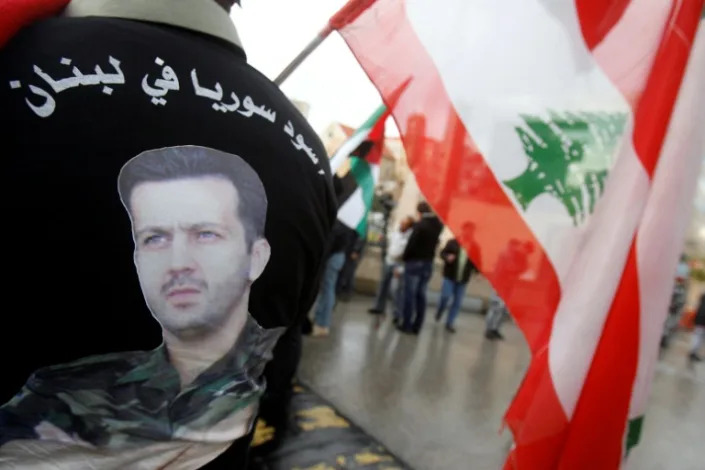
One major mover keeps coming up ==in all the AFP interviews -- Assad's much-feared brother Maher, the de facto head of Syria's elite unit, the 4th Division.

A dozen sources told AFP that the division was deeply involved in the trade, including smugglers, a regional law and order official, a former Syrian intelligence officer, a member of a tribe that smuggles captagon and a pharmaceutical industry insider.

The British Army-linked CHACR think tank and the independent Center for Operations Analysis and Research (COAR) have also pointed the finger at Assad's brother.

The Syrian authorities did not reply to AFP requests for comment after being contacted at the United Nations and through the country's embassy in Paris.

"Maher al-Assad is one of the main beneficiaries of the captagon trade," said Rami Abdel Rahman, director of the UK-based Syrian Observatory for Human Rights.

"He receives his own share from the profit. Drug money has become a main source to pay the salaries of an armed group affiliated with the 4th Division," he added.

Some captagon labs get "the raw material directly from the 4th Division, sometimes in military bags", said a Syria monitor, with a trafficker telling AFP that it even supplied rebel groups opposed to the regime.

The division controls large parts of the porous border with Lebanon that is key to the trade, with the Mediterranean port of Latakia another of its bastions.

Caroline Rose, of the Washington-based Newlines Institute, said it has "played an active role in guarding, facilitating and running a lot of captagon in Homs and Latakia" and then "transporting shipments to state-owned ports".

The Lebanese frontier, which has never been clearly demarcated, has long been a happy hunting ground for smugglers, with captagon operations now booming in the north.

"Wadi Khaled is the new hub, the place is full of traffickers," a judicial source told AFP, referring to a remote northern border region where much of the population on the Lebanese side identifies as Syrian.

At the height of the war, arms were smuggled into Syria through Wadi Khaled. Now captagon and migrants attempting to make the perilous crossing to Europe flow in the other direction.

- Rebel involvement -


The southern Syrian provinces of Sweida and Daraa, which border Jordan, are other key smuggling routes to Saudi Arabia, with the latter also home to many drug labs.

Sweida teems with gangs transporting captagon, with Bedouin tribes bringing consignments down from major production plants around Damascus and Homs.

"The smuggling is organised by the tribes who live in the desert in coordination with over 100 small armed gangs," said Abu Timur, a spokesman for the local Al-Karama armed group.

Across Syria the money to be made from captagon trumps old enmities.

"Captagon brought together all the warring parties of the conflict... The government, the opposition, the Kurds and ISIS," the ex-Syrian government adviser said.

Even in the north, home to the last pockets where rebel and jihadist groups are holding out against Assad, the drug has forged unlikely alliances.

"I work with people in Homs and Damascus who receive the pills from 4th Division depots," a smuggler in the Turkish-dominated region told AFP.

"My job is to distribute the pills here or to coordinate with rebel groups to send them to Turkey," he said.

"This job is very dangerous and very easy at the same time."

The trafficker said he also sold pills to leaders from the Hayat Tahrir al-Sham jihadist group that dominates the Idlib enclave in northwestern Syria.


He said myriad groups working as Turkish proxies and under the rebel umbrella known as the Syrian National Army (SNA) had aggressively moved in on the captagon business recently.

"The area is teeming with rebel groups. It's a jungle, everyone is hungry out there and wants to eat," he said.

He said the new captagon kingpin in the region is Abu Walid Ezza, a commander from the Sultan Murad faction of the SNA.

"He has very good relations with the 4th Division, since he used to be based in Homs," the trafficker said. "He brings excellent pills."

The faction told AFP they had nothing to do with the trade.

Turkish players are also deeply involved, said one regional judicial investigator.

"Diethyl ether, a kind of chloroform, is one of the main precursors needed for (making) captagon, and most of it enters from Turkey," the source said.

- Candy machine -


Beyond the chemicals, the biggest investment for a captagon lab is a tablet press or candy-making machine.

One Chinese website even advertises a "captagon tablet press" for $2,500 that can spew out tens of thousands of pills an hour.


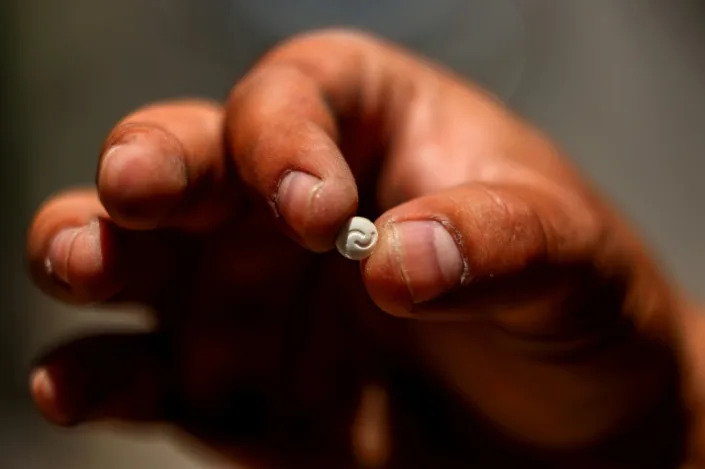
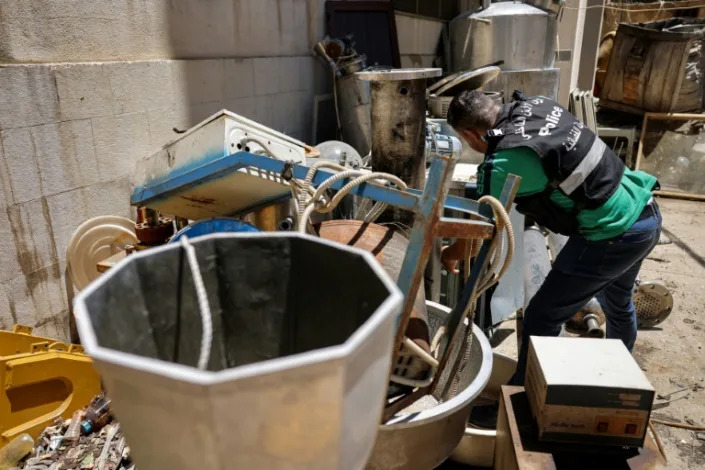
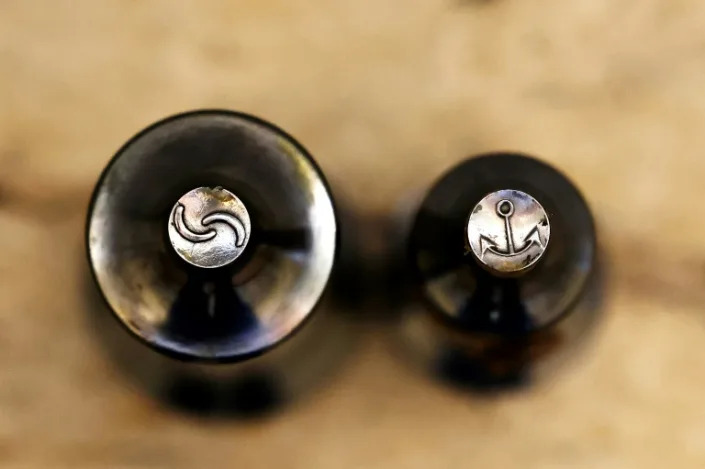
For a few dollars more you can get the pill stamps with captagon's trademark logo -- the two Cs that have earned it the nickname "Abu al-hilalain" (two crescent moons).

Once the chemical precursors have been procured, it only takes 48 hours to set up a captagon manufacturing laboratory with relatively rudimentary equipment.

Which means even when drug units swoop, the captagon cooks can quickly start working again. They have even been known to set up mobile labs in the back of utility vans, especially after a recent clampdown in eastern Lebanon.

The Syrian government also acts but most seizures "are nothing but pure farce... the enforcers are themselves the thieves," said a Syrian pharmaceutical company worker interviewed outside the country. Some pharma plants are also involved in the trade, he added.

Slick videos from Saudi Arabia's customs and police boast of how they are battling captagon with state-of-the-art detection technology and dog units.

But senior security and judicial officials in the region told AFP that the traffickers are always a step ahead.

"At (Lebanon's) Tripoli port, for example, the scanner always needs repairing on the wrong day, or is inadvertently switched off," said a senior Lebanese official.

"And when arrests are made, the security services always bring the driver to court, the only guy who doesn't know anything," the official added.

Corruption also helps to load the dice in the smugglers' favour. Several anti-narcotics officials told AFP that some senior officials were on the take and had even sold off seized drugs

- 'Captagon king' –

"Captagon king" Hassan Dekko used to run his empire out of the Lebanese border village of Tfail, which sits at the tip of a tongue of land jutting into Syria north of Damascus.

But Dekko, a binational with high-level political connections in both countries, was arrested in April last year after major captagon seizures.

In court documents obtained by AFP, Dekko denied any involvement in drug trafficking.

But anti-narcotics chiefs in Lebanon claim that some of the businesses he owns, including a pesticide factory in Jordan, a car dealership in Syria and a fleet of tanker trucks, are common covers for drug barons.


However, a senior security official said Dekko's influence had been on the wane.

Several security sources as well as deserters from the Syrian army described Syrian MP Amer Khiti, who is under US sanctions, as another major figure in the business.

"Khiti is involved in smuggling captagon," the Syrian Observatory for Human Rights confirmed, and he has also been named in CHACR and COAR reports.

One of his workers told AFP that he had seen captagon being delivered to a warehouse near Damascus.

"He is a good man. We don't care what he does, so long as he helps the people," the employee said.

"The Khiti family has been involved in this since before the war. They used to put pills in plastic bags and stitch them inside sheep" to smuggle them, he added.

Khiti could not be reached for comment.

- 'No smoking gun' -

With no end in sight to their economic and political crises, the fear is that captagon will become an even bigger pillar of life in Syria and Lebanon, where up to a fifth of the pills are produced.

Multiple sources told AFP that the captagon barons have built strong political connections there.

"Syria became the global epicentre of captagon production by conscious choice," said Ian Larson, chief Syria analyst at the COAR political risk consultancy.

With its economy crippled by war and sanctions, "Damascus had few good options", he added.

From the Syrian regime officials and millionaire businessmen at the top of the chain down to the villagers and refugees employed to cook and conceal the drugs, captagon dollars get spread far and wide in both countries.

"There is still no smoking gun directly linking Bashar al-Assad to the captagon industry, and we shouldn't necessarily expect to find one," said Larson, who has written extensively on the drug.


On September 20, the US House of Representatives passed an act with the catchy acronym CAPTAGON -- Countering Assad's Proliferation Trafficking And Garnering Of Narcotics Act -- but the drug has generally received scant attention in Western policy-making circles.

Meanwhile, both the dealers and those tracking them believe the captagon era is only just beginning.

"The trade will never stop, generation after generation will keep working in it," the Lebanese fixer insisted.

A senior judicial source agreed. "They are never convicted and the money is huge. Give me one reason why this would stop."

(Additional reporting by Haitham el-Tabei in Saudi Arabia and Patrick Lee in Kuala Lumpur.)


‘Captagon connection’: How Syria became a narco state

A smuggler describes the inner workings of the captagon trade in northern Syria, where the stimulant is trafficked across frontlines between areas under the control of Syrian government forces, Turkish-backed rebels, and the Hayat Tahrir al-Sham jihadist group. "It's a jungle out there, everyone is hungry and everyone wants to eat.” The stimulant – once notorious for its association with Islamic State group fighters – has spawned an illegal $10-billion industry.


Psychedelic Treatment with Psilocybin Relieves Major Depression, Study Shows

11/04/2020

Note: To view and download footage of Roland Griffiths, Ph.D., talking about his research, click here. To view and download footage of a research participant talking about his experience in Johns Hopkins' psilocybin study, click here.

In a small study of adults with major depression, Johns Hopkins Medicine researchers report that two doses of the psychedelic substance psilocybin, given with supportive psychotherapy, produced rapid and large reductions in depressive symptoms, with most participants showing improvement and half of study participants achieving remission through the four-week follow-up.

Why do humans eat meat?

Anne-Sophie Brändlin
11/01/2022November 1, 2022

On World Vegan Day, DW looks at why humans eat so much meat when we know it's bad for the planet and our health.

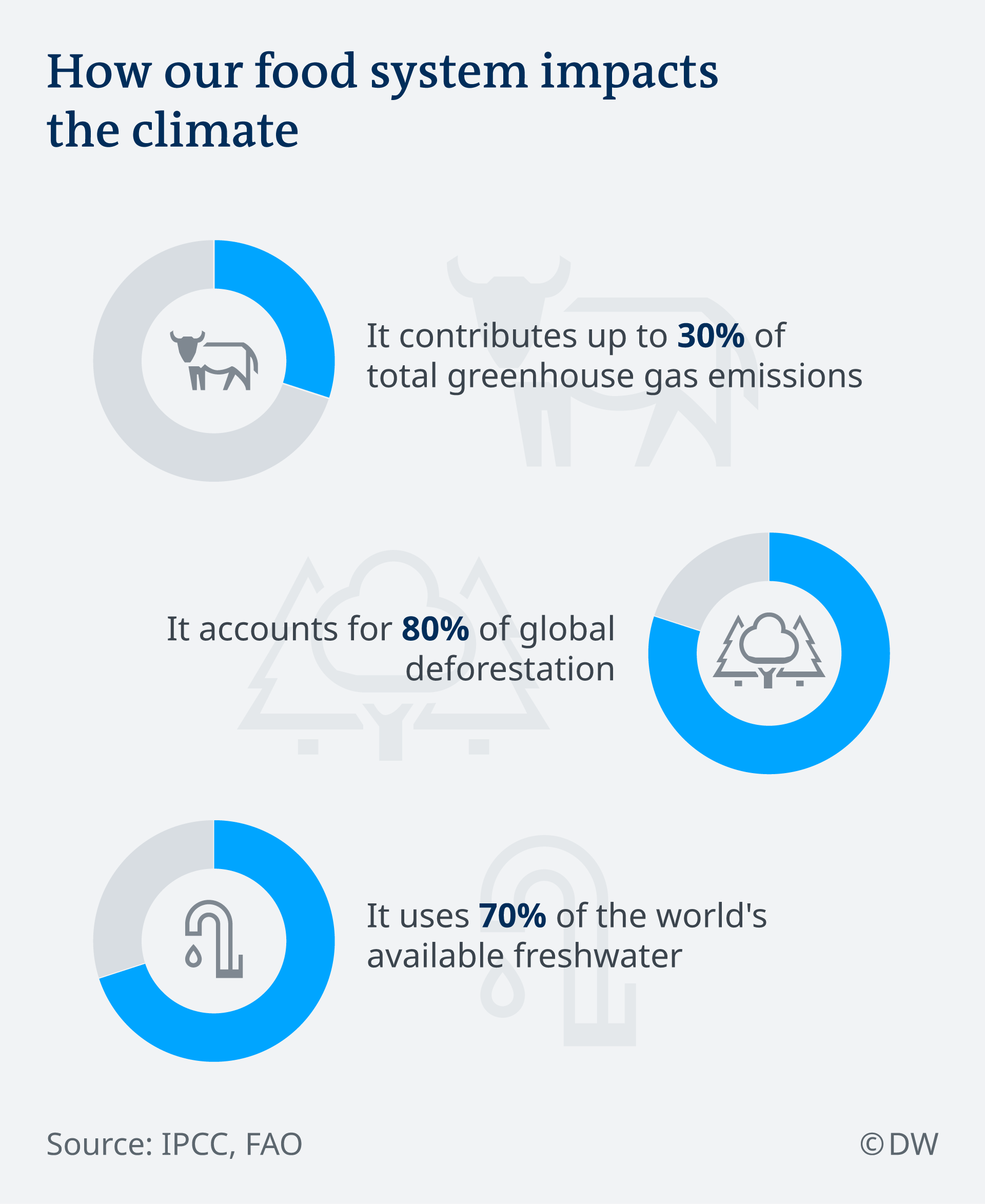
Humans have been eating meat since the prehistoric age, consuming ever more of it as time has worn on. Over the past 50 years alone, we have quadrupled global production to roughly 350 million tons annually, according to the United Nations Food and Agricultural Organization (FAO).

And the trend shows no sign of abating. Current predictions suggest we will be producing up to 455 million tons a year by 2050.

Inefficient food source


Scientists have long raised concerns about the environmental impact of this love affair, particularly with regard to industrially farmed animals, and have deemed it an "inefficient" food source as it requires more energy, water and land to produce than other things we eat.


A study on the impact of farming for instance found beef production is responsible for six times more greenhouse gas emissions and requires 36 times more land compared to the production of plant protein, such as peas.

Avoiding meat and dairy products is the biggest way to reduce our environmental impact on the planet, the study concludes. Without meat and dairy consumption, global farmland use could be reduced by more than 75%.

What's more, 60% of global biodiversity loss is caused by meat-based diets, according to World Wildlife Fund (WWF) sources.

The psychology behind eating meat


Yet, many of us continue to eat meat regardless. Benjamin Buttlar, a social psychologist from the University of Trier, Germany, attributes this to habit, culture and perceived needs.

"I think a lot of people just enjoy the taste. And the other thing is the identity part of eating. Many traditional cuisines revolve around certain meat dishes," he said, adding that the habitual nature of eating animals means we often don't even question what we are doing.

"Most of the time, these habits prevent us from thinking that meat consumption is actually bad because it's just something that we do all the time," he said.
 
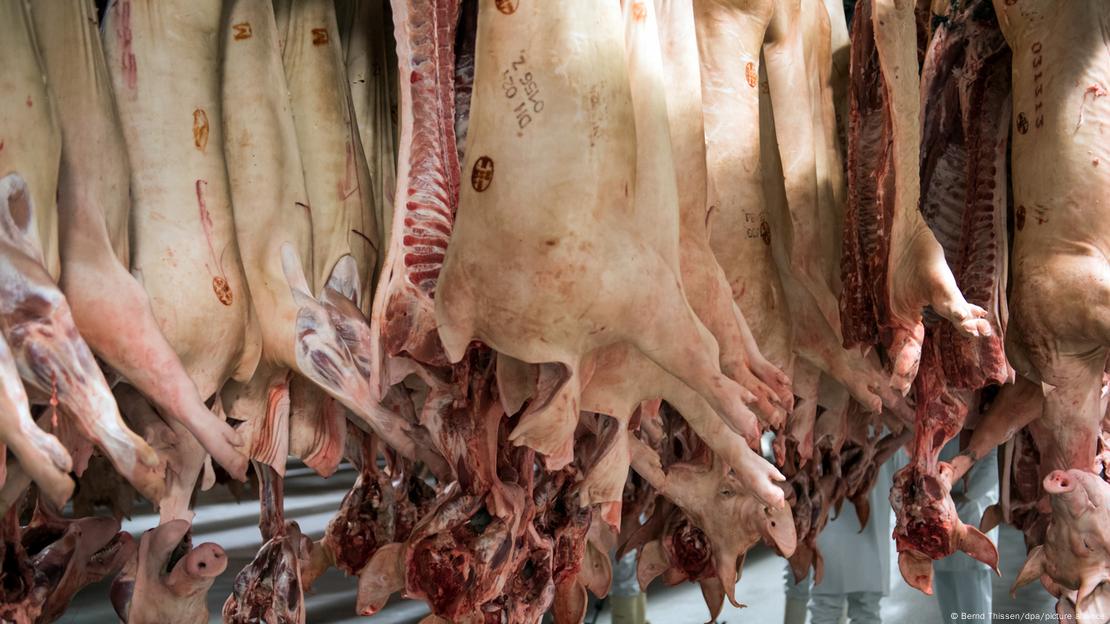
We don't usually see how animals are slaughtered
Image: Bernd Thissen/dpa/picture alliance

Then there's the fact that because what we are eating doesn't remind us of an animal or the suffering it has gone through on the way to the plate, we are able to dissociate more easily. Yet when confronted with a different perspective, whether in talking to a vegetarian or a vegan or watching a documentary about animal welfare, Buttlar says we might feel a need to justify ourselves, for example, by saying humans have always eaten meat.

Research shows that justifying eating meat as a natural, normal and necessary part of our diet is something that's more typical for males.

"You see this in the trends of food," Buttlar explained. "There are a lot more young females and fewer men who are becoming vegetarian because it's still a masculine stereotype that men eat meat. And this goes back to the idea of strong men hunting and evolutionary misconceptions around meat consumption."
The 'meat made us human' hypothesis

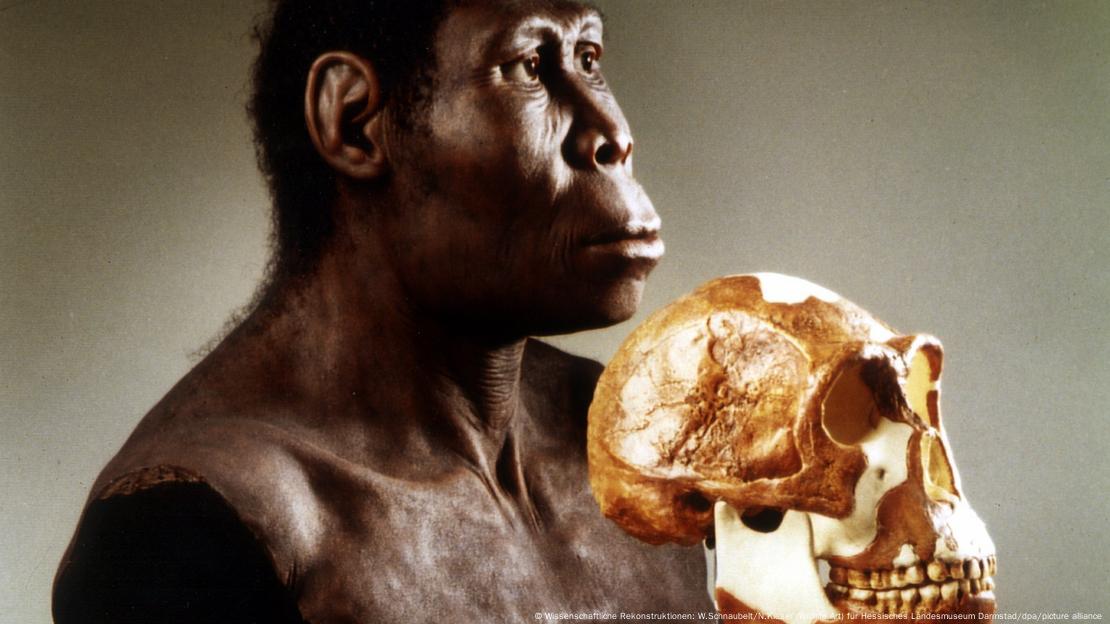
Scientists long believed that eating meat helped our ancestors develop more human-like body shapes and that eating meat and bone marrow gave the Homo erectus the energy it needed to form and feed a larger brain around 2 million years ago.

But a recent study questioned the importance of meat consumption in our evolution.
 
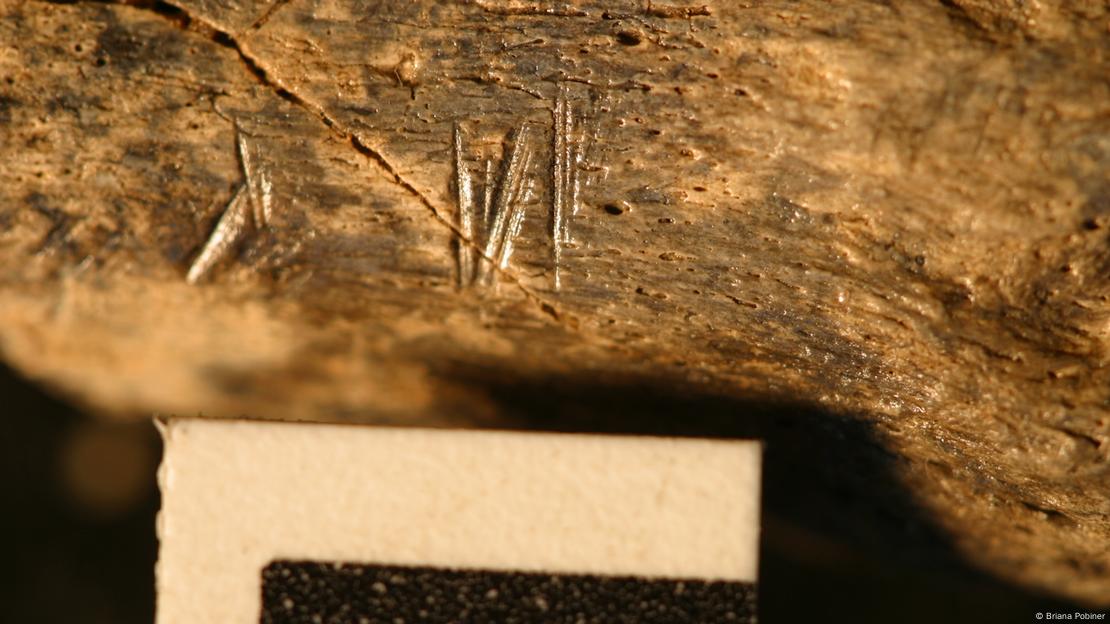
The study counted the number of fossils and the number of butchered bones found at major research areas in eastern Africa dating 2.6 million to 1.2 million years ago
Image: Briana Pobiner

The study authors argued that while the archaeological evidence for meat consumption increases in step with the appearance of H. erectus, this could also be explained by the greater attention given to the time period. Or, put another way, a sampling bias. The more paleontologists went looking for archaeological evidence of butchered bones, the more they found it. As a result, the increase in bones seen during this time is not necessarily evidence of an explosion in meat eating, the authors wrote.

"I was definitely very surprised by this finding," said Briana Pobiner, a paleoanthropologist at the Smithsonian Museum of Natural History in the US and study co-author. "I was one of those people for a long time that had this narrative that H. erectus evolved because meat eating increased, and so these findings are something that forced me to reexamine my perception of our evolutionary history."
What role did plant-based food play in our evolution?

Eating meat may not have been responsible for supersizing our brains either, according to Pobiner, who researches the evolution of the human diet.

"We don't see a big increase in brain size around the time that meat eating started. The brain size got absolutely bigger with H. erectus, but it actually didn't get relatively bigger — so a much bigger brain compared to the body size — until about a million years ago."

Eating meat may not have been the reason why the brains of our ancestors grew
Image: Wissenschaftliche Rekonstruktionen: W.Schnaubelt/N.Kieser (Wildlife Art) für Hessisches Landesmuseum Darmstad/dpa/picture alliance

There is some evidence that early humans started cooking their food around the time their brains were getting bigger. Heating food unlocks extra nutrients and speeds up the process of digestion because food is softer and easier to chew.

Pobiner also believes human evolution is attributable to a healthy dietary mix.

"And interestingly, there are ideas that it's not so much one particular type of food that drove our evolutionary history, but it's really being able to eat a wide variety of foods that made us so successful and that kind of made us human," Pobiner said.

Currently, 75% of the world's food comes from only 12 plants and five animal species. But when humans consume too much of a single food source, it can cause health problems.

"Innumerable studies show that when human beings consume animal protein, it is linked to the development of a variety of cancers," Dr. Milton Mills, an internal medicine and critical care physician in the US, told DW.

Some people argue that vegetarians or vegans typically do not get enough protein and nutrients from their diets, but Mills, who is an advocate for plant-based diets and founded his own website to raise awareness of the issue, disagrees.

"Those theories originated 50, 60 years ago, when people were under the mistaken impression that meat was somehow more nutritious than plant foods. That was a grotesquely false misconception that people used to have, that there are only certain amino acids that you could get from animal tissue. That is flatly not true," said Mills.
What's next?

If the appetite for meat remains unchanged, the world population could be too big to feed itself by 2050, when we'll reach a global population of almost 10 billion.

But how can levels of global meat consumption be reduced? Psychologist Buttlar believes incremental change with "top-down intervention" is the way forward.

"For instance, by making meat products as expensive as they should be for securing animal welfare and in terms of costs for the climate. And by making alternatives cheaper," he said.

What's also important, according to Buttlar, is enabling people to have positive associations with plant-based alternatives.

"Instead of pushing them away by saying, 'you shouldn't eat meat,' we should probably say, 'have you tried this? This is really good.' And once they realize plant-based food tastes the same or even better, and it's even better for my health, for the climate, and animal welfare, then change will come automatically."

Changing attitudes are already becoming apparent, even in meat-loving Germany. According to the statistics for 2021, the market for meat alternatives is thriving with a 17% increase in the production of plant-based foods compared to 2020. Edited by: Jennifer Collins and Tamsin Walker

Veggie discs and bloody beets: Future of meat

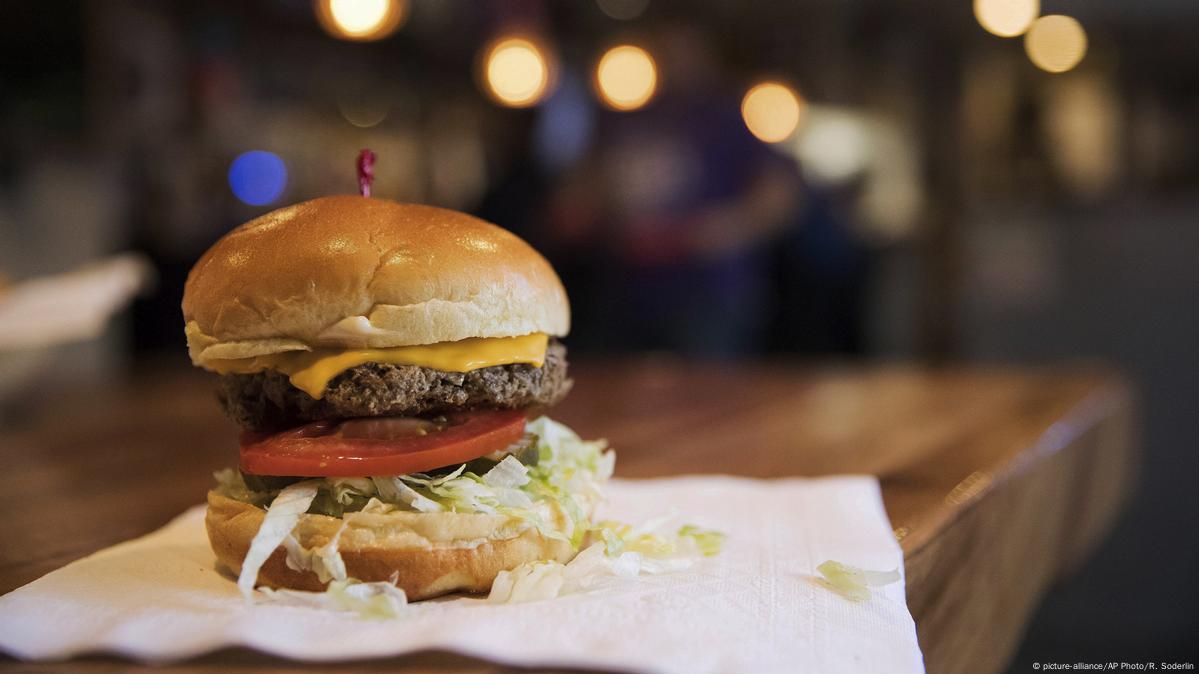
Demand for meat-free foods is up — 23% in the US last year alone, according to The Good Food Institute. But can plant-based alternatives replace classic burgers and sausages, and are they really better for the climate?Image: picture-alliance/AP Photo/R. Soderlin

Big appetite

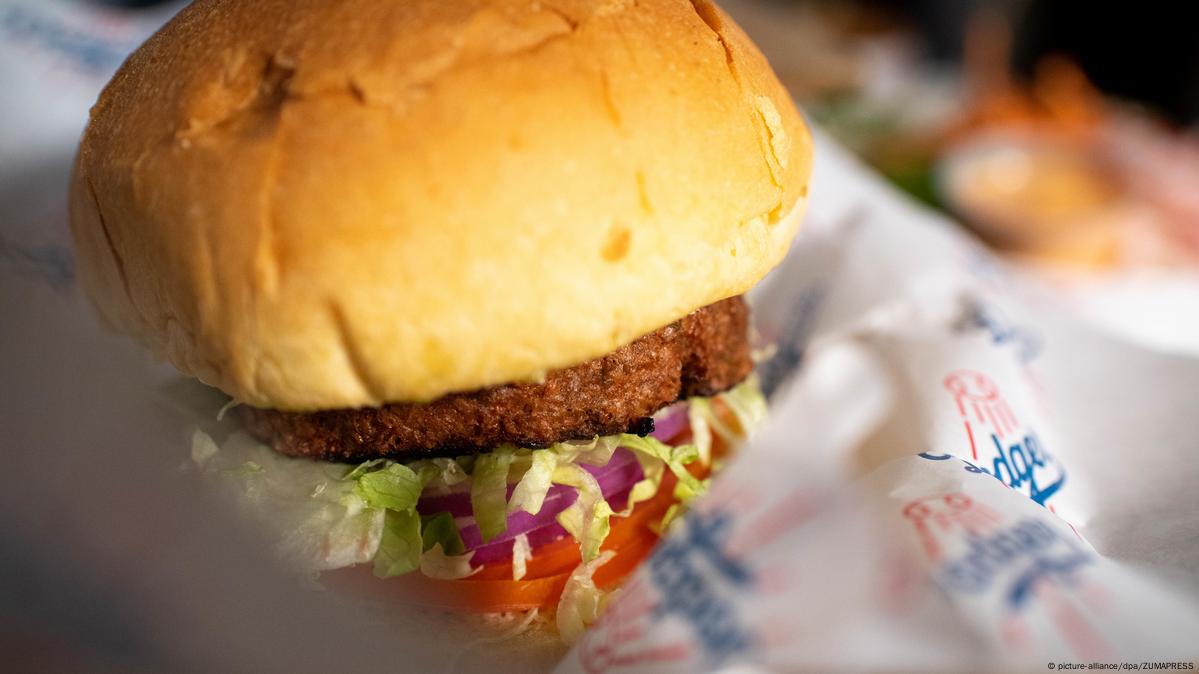
With climate concerns growing, many people are trying to reduce their environmental impact. Increasingly, they're turning to plant-based meats — and investors are taking notice. When Beyond Meat debuted on Wall Street in early May, share prices more than doubled the first day. "Investors recognize … a huge business opportunity," Bruce Friedrich, director of the Good Food Institute, told AFP.

Image: picture-alliance/dpa/ZUMAPRESS


Germany wants to revive fund to save Amazon rainforest

In his presidential victory speech, Luis Inacio Lula da Silva said Brazil is open to international cooperation to preserve the Amazon. Germany, following Norway's lead, said it is ready to help.

November 2, 2022

Germany wants to release funds for the protection of the Amazon rainforest, a development ministry spokesperson said on Wednesday.

"Germany supports this fund," the spokesperson said, adding it would discuss it with the transition team of Brazil's incoming president, Luiz Ignacio Lula da Silva.

This Amazon fund was set up in partnership with Norway in 2008 to help finance the protection of the rainforest and biodiversity.

However, the two countries stopped making payments in 2019 after President Jair Bolsonaro took office and weakened environmental protection measures in the Amazon.

Norway said Monday it would resume financial aid to Brazil under the fund that is endowed with well over $500 million (€500 million).

The timeline for reactivating the fund depends on how quickly Brazil creates the conditions for resuming work on it, the spokesperson said, but added that "in the German government, there is a great will to reach out quickly."

Lula vows to protect the Amazon


In his victory speech on Sunday Lula had promised to put an end to deforestation in the Amazon.

It is a goal no Brazilian president has been able to achieve.

Under Bolsonaro's government deforestation surged as he allowed more agriculture and mining in rainforest areas.

Environmental advocates blame him for emboldening illegal loggers, miners, and land speculators to destroy the forest.

Recent studies have shown that around 18% of the Brazilian Amazon has already been cleared — and around 60% of the rainforest's total area lies within the territory of Brazil.

VIDEO: Brazil: The fear of the Amazon loggers


In October 2021, activists and indigenous groups even filed a lawsuit with the International Criminal Court over Bolsonaro's environmental policies.

The Amazon, covering 5.5 million square kilometers, accounts for half of the world's remaining tropical rainforest. It's home to enormous biodiversity, has a major influence on the world's climate and hydrological cycles, and acts as a carbon sink.

Lula's team said he would participate in the COP27 United Nations climate summit starting in Egypt on Sunday, although Bolsonaro would still officially represent Brazil.

lo/es (AFP, dpa, Reuters)
‘Just trying to cut costs’: Inflation squeezes Memphis business owners, farmers

Issued on: 03/11/2022 
 03:06Memphis-area farmers Zooland Woodard (L) and Marvin Roddy (R) are sharing some equipment to cut costs amid high inflation. © FRANCE 24 screengrab

Text by: FRANCE 24
Video by: Kethevane GORJESTANI
Fanny ALLARD

Ahead of the November 8 midterms, FRANCE 24 takes you on a tour down the Mississippi River with a series of reports by Fanny Allard. The fourth of five episodes brings us to Memphis, Tennessee, where high inflation is forcing small business owners and farmers to reassess and alter their practices.

The home of the blues, which has the second-highest poverty rate for cities of more than 500,000 residents in the US, is now contending with high inflation. Sandy Othmani runs a car service in the city, and for the first time in 20 years, she has had to raise her hourly rates by $15 due to cost increases.

“It’s not just the gas, the insurance has gone up, the price of the cars has gone up,” Othmani said. “Just even the drinks that we put in the car for the customers, that’s gone up, napkins, everything’s gone up!”

Inflation reached almost 9 percent in the US South in September, nearly half a point higher than the national rate.

Othani is considering selling her company because things are so bad. For now, she tries to keep her gas bill as low as possible.

“With $30 I could fill it up (before) and now you’re looking at $58-60 to fill it up.”

Othmani blames the Democrats for her troubles.

“Every time we’ve had a Republican president the country seems to be doing really well. Trump – for all his problems, he ran the country like a business and it was working for us.”

Inflation isn’t just hard on small businesses. It’s also wreaking havoc among farmers. Marvin Roddy grows soybeans just outside of Memphis, in the Mississippi Delta. This year, he’s operating at a loss.

“I farm approximately 300 acres and my operating costs went from roughly $200 an acre to $300-320 an acre. I just want to be able to produce some quality product, yet at the end of the day make a profit to pay our bills as farmers.”

Diesel and fertilizer prices have doubled. To keep afloat, Roddy has come to rely on his fellow farmers.

“We try to utilise some equipment that I may have that [Roddy] doesn’t have, instead of us both buying the same things,” said farmer Zooland Woodard. You know, just trying to cut costs.”

Recent polls have consistently shown the economy and inflation are by far the number one priority for American voters. Among those voters, a majority trusts Republicans more to fix the economy.

Click on the player to watch the report by Fanny Allard and Kethevane Gorjestani


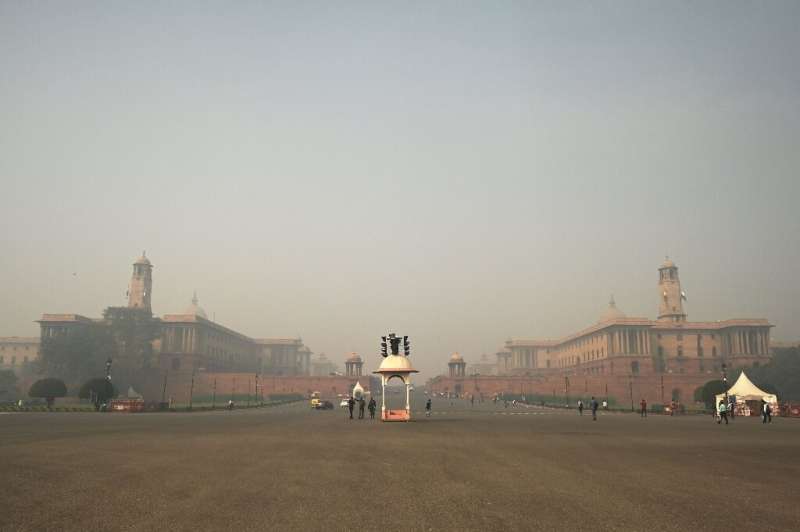
'Hazardous' smog chokes India's capital

Every winter, cooler air, smoke from farmers burning stubble, and emissions from vehicles combine to create a deadly smog reduci
Every winter, cooler air, smoke from farmers burning stubble, and emissions from vehicles
 combine to create a deadly smog reducing visibility in New Delhi.

Smog in New Delhi hit "hazardous" levels on Thursday as smoke from thousands of crop fires in northern India combined with other pollutants to create a noxious grey cocktail enveloping the megacity.

Levels of the most dangerous particles—PM2.5, so tiny they can enter the bloodstream—were 588 per cubic metre early on Thursday morning, according to monitoring firm IQAir.

That is almost 40 times the daily maximum recommended by the World Health Organization. IQAir rated overall  as "hazardous".

"This is really the worst time to be out in Delhi. One never wakes up fresh with this pollution," policeman Hem Raj, 42, told AFP.

"The body feels tired and lethargic in the mornings... The eyes are always watery and throat scratchy after spending hours on the Delhi roads," he said.

Every winter, cooler air, smoke from farmers burning stubble, and emissions from vehicles and other sources combine to create a deadly smog reducing visibility in the city of 20 million people.

In 2020 a Lancet study attributed 1.67 million deaths to  in India in 2019, including almost 17,500 in the capital.

Delhi authorities regularly announce different plans to reduce the pollution, for example by halting construction work, but to little effect.

The burning of rice paddies after harvests across Punjab and other states persists every year despite efforts to persuade farmers to use different methods.

The situation is also a political flashpoint—with the capital and Punjab governed by the Aam Aadmi Party, a rival to Prime Minister Narendra Modi's Bharatiya Janata Party (BJP).

"As of today, Punjab, a state run by the AAP, has seen an over 19% rise in farm fires over 2021," environment minister Bhupender Yadav, who is from the BJP, tweeted on Wednesday.

"There is no doubt over who has turned Delhi into a gas chamber," he added.

"I have been here for a long time now and the situation has only become worse. We spend 8 to 10 hours on the Delhi roads every day and it's tough because  hits everyone," said Brij Lal, 54, another policeman.

"But there isn't much we can do about the situation since police have to be out on the roads, among the people all the ."

Journal information: The Lancet 

© 2022 AFP


Farm fires stoke Indian capital's pollution crisis
Pope says human rights should be ‘promoted, not violated’ during visit to Bahrain

Thu, 3 November 2022 

© Marco Bertorello, AFP

Pope Francis said human rights should not be "violated" and hit out at use of the death penalty as he arrived in Bahrain for his second trip to the Gulf on Thursday.

The leader of the world's 1.3 billion Catholics, who is the first pope to visit the tiny nation, is visiting to promote dialogue between Christians and Muslims.

But rights groups had urged him to also use the visit to speak out about alleged abuses in the Sunni-led monarchy.

Pope Francis told dignitaries, including his host, King Hamad bin Isa Al-Khalifa, that religious freedom should be "complete and not limited to freedom of worship".

Speaking less than three weeks from the World Cup in neighbouring Qatar, which has faced fierce scrutiny over its migrant workers, the pope also demanded that "working conditions everywhere are safe and dignified".

"Much labour is in fact dehumanising," he said at the gleaming Sakhir Royal Palace. "This does not only entail a grave risk of social instability, but constitutes a threat to human dignity."

The first papal visit to the island nation follows this pontiff's 2019 trip to the United Arab Emirates, also aimed at inter-faith outreach.

Pope Francis, 85, uses a wheelchair due to knee problems and boarded and disembarked from the plane on an electronic platform.

(AFP)


Pope Francis visits Bahrain as rights groups seek engagement on alleged abuses


Pope Francis, leader of the world's 1.3 billion Catholics, flies Thursday to the Gulf state of Bahrain to foster ties with Islam in a voyage overshadowed by criticism of human rights abuses.


Pope Francis visits Bahrain as rights groups seek engagement on alleged abuses
© AETOSWire

The second voyage by a pope to the Arabian Peninsula after Francis' 2019 trip to the United Arab Emirates (UAE) is similarly aimed at encouraging interfaith dialogue between Muslims and Christians, and will include the pontiff leading a prayer for peace at a vast modern cathedral opened last year.

But criticism of Bahrain's human rights record has already erupted ahead of Francis' voyage, which lasts through Sunday, as international rights groups urge him to speak out against alleged abuses against Shiites, activists and opposition figures in the Sunni-led monarchy.

The 85-year-old Francis, who will likely be mostly confined to a wheelchair due to recurring knee pain, is scheduled to arrive at 4:45 pm local time (1345 GMT) and conduct a "courtesy visit" with King Hamad bin Isa Al-Khalifa following a welcoming ceremony.

He will then give a speech to authorities, diplomats and members of civil society, according to his official schedule.

On Friday, Francis will address the "Bahrain Dialogue Forum: East and West for Human Coexistence", organised by the UAE-based Muslim Council of Elders, followed by a private meeting with Sheikh Ahmed al-Tayeb, grand imam of the prestigious Cairo-based Al-Azhar, Egypt's highest Sunni institution.

The two religious leaders signed a joint document pledging interfaith coexistence during Francis' UAE trip in 2019.

The Argentine pope has made outreach to Muslim communities a priority during his papacy, visiting major Muslim countries such as Egypt, Turkey and Iraq, and most recently in September, Kazakhstan.

On Tuesday, Francis asked the faithful assembled on Saint Peter's Square to pray for his upcoming trip, calling it "a journey under the banner of dialogue".

Ahead of the voyage, Vatican spokesman Matteo Bruni told journalists he would not guess whether Francis would broach the topic of human rights.

But the pope's view "concerning religious freedom and liberty is clear and known", Bruni said.

Public pressure


Francis' visit to Bahrain comes amid recent scrutiny of the rights record of neighbour Qatar -- particularly treatment of low-income migrant workers, women and the LBGTQ community -- ahead of the World Cup later this month, which it is hosting.

>> ‘Just hell’: New book shines light on migrant deaths ahead of Qatar World Cup

But on Tuesday, Human Rights Watch and eight other rights groups called on Francis to publicly press Bahrain to "halt all executions, abolish the death penalty, and seriously investigate torture allegations and violations of the right to a fair trial".

They also called on Francis to demand better protections of migrant workers and the release of opposition figures, journalists and others still imprisoned since a crackdown that followed pro-democracy protests in 2011.

A government spokesman rejected the groups' allegations, stating Tuesday that Bahrain "does not tolerate discrimination" and no one is prosecuted for their religious or political beliefs.

Friday's "prayer for peace" will be held at the cavernous Our Lady of Arabia Cathedral in Awali, which seats over 2,000 people and opened in December. It was built to serve Bahrain's approximately 80,000 Catholics, mainly workers from southern Asia, including India and the Philippines.

On Saturday, Francis will lead mass at Bahrain's national stadium before a crowd of nearly 30,000 people, where workers on Wednesday were adding finishing touches, including a giant gold cross above Francis' chair.

About 2,000 spots will be saved for Catholics arriving from Saudi Arabia, Bishop Paul Hinder, the apostolic administrator for the vicariate of Northern Arabia, told Vatican News.

Sunni powerhouse Saudi Arabia, the cradle of Islam, is an absolute monarchy repeatedly accused of abuses by rights groups. Riyadh does not recognise freedom of religion and bans all non-Muslim places of worship.

Francis will preside over a prayer meeting with Catholic clergy and others on Sunday before his return to Rome.

(AFP)