Saturday, March 04, 2023


Advanced Nuclear Power Could Transform U.S. Maritime Industry
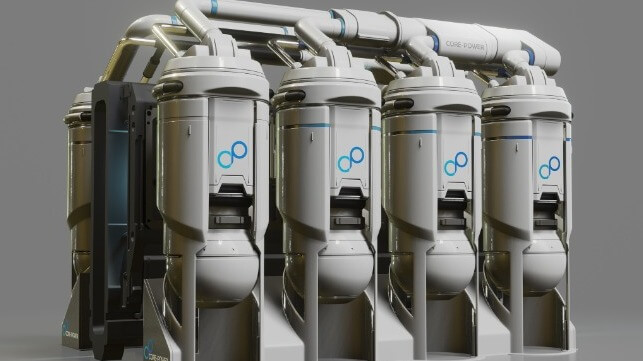
Core Power
Illustration courtesy Core Power

PUBLISHED MAR 1, 2023 3:17 PM BY MIKAL BOE


The US maritime sector has suffered a steep decline since its peak in the immediate post-WWII era with the number of American flagged and constructed vessels plummeting.

The advent of marinized nuclear power offers an opportunity for the reversal of this decline and a new era for American shipping. The US can use its experience in both the nuclear energy and marine sectors to drive forward the decarbonisation of shipping and gain a first-mover advantage for its national economy.  Advanced nuclear vessels will need to be both built and flagged in nuclear energy states i.e., those with existing nuclear energy regulators and with a well-developed nuclear ecosystem. This provides the opportunity for massive growth in market share for the US shipbuilding and operating industries as well as providing new opportunities for the next generation of US seafarers.

The US now has the ideal opportunity to demonstrate the benefits of marinized nuclear power in its own internal maritime market. The number of vessels trading within US waters has been continuously decreasing with goods being transported by road or rail increasing while the total volume on ships plateaued. A new fleet of advanced nuclear vessels could reduce shipping costs and create a new high-tech industry while fully decarbonising US shipping.

The US would be in a prime position to become an exporter of this technology to trusted partner nations like the UK, allowing the US to create a valuable export market for technology built by highly skilled American workers.

This report discusses how deployment of advanced marinised nuclear reactors can transform the US maritime industry.

Advanced nuclear for maritime

The US has a long record of using nuclear power in its Navy with an exemplary safety record. This has led to increased interest in the use of nuclear power for civilian vessels, including by US Special Envoy for Climate John Kerry reflecting on his own Naval career during COP26. Naval reactors are not suited for use in civilian applications as they run on highly enriched uranium fuels which is not allowed in commercial applications. Running current naval reactors on low enriched uranium would require large reactors, and would require frequent refuelling, posing a major challenge in managing both supply of fresh fuel and handling of spent fuels. Developments in advanced reactor technology mean that new reactors are being developed which can use low enriched fuel that would be available for deployment within a reasonable timeframe.

The optimum solutions for advanced marine reactors are those which fulfil the three main criteria for success in the maritime industry.

Superior fuel efficiency. Advanced reactors must be extremely fuel-efficient allowing ships to sail for a lifetime without refuelling. This avoids handling of fresh and spent fuels required during operation, and therefore mitigates proliferation concerns.

Minimal Emergency Preparedness Readiness Zone in port. Advanced reactors operating at ambient pressure, require only a tiny Emergency Preparedness Readiness Zone (EPRZ), not extending outside the boundary of the ship. This allows simple and easy port calls, removing a major barrier to adoption.

Small, advanced reactors can be mass-assembled at the highest quality assurance levels, in dedicated facilities or specialist shipyards, making them affordable. This is a major departure from conventional nuclear building techniques.

The two new reactor types which meet these criteria and offer the optimum solution for marine deployment are the Molten Salt Reactor (MSR) and the micro-Heat Pipe Reactor (HPR).

Molten Salt Reactor

A Molten Salt Reactor (MSR) is an advanced nuclear reactor that is fuelled by liquid molten fuel salts rather than solid fuel elements assembled in fuel rods, like those in conventional PWR reactors. The MSR operates at ambient pressure and runs at a very high temperature between 500°C – 700°C.

The fuel salt contains the nuclear fuel and is therefore both the fuel that produces the heat and the coolant which transports the heat to the power conversion system producing electric power. Because MSRs operate at ambient pressure there is no force to expel radio toxins into the environment in the case of an accident. This allows for a small EPRZ which should not extend beyond the boundary of the ship’s hull, making port calls and narrow waterways transits possible without requiring extended safe zones around the ship.

If the reactor stops and the fuel salt is cooled, it would solidify and be entombed in the reactor. This means no fuel can escape. This passive safety feature of the MSR is highly desirable for the marine environment.
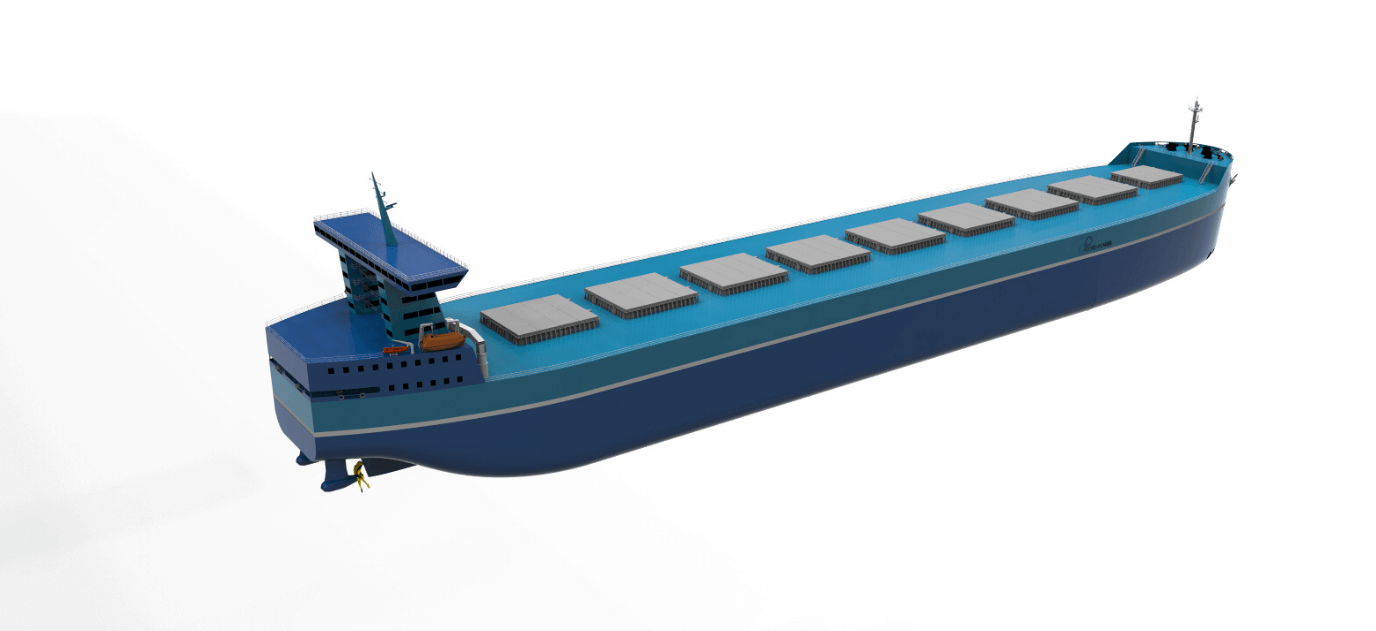
Figure 1: Concept design of a large bulk carrier powered by a molten salt reactor

The MSR is small and could therefore be mass-assembled, bringing the cost of construction and assembly down to very competitive levels.

A modular marinized MSR could deliver 30MW for 20 full power years. With a maximum continuous rating (MCR) required for marine propulsion of around 65%, this would allow a large ship to sail a full design service speed for 30 years or more.

Heat Pipe Reactor (HPR)

The HPR is an innovative advanced reactor design combining space reactor technologies and over half a century of commercial nuclear systems design, engineering, and innovation. The HPR is designed to provide small scale competitive and resilient power with superior reliability and minimal maintenance, particularly for energy consumers in remote locations. Its small size allows for rapid installation and deployment.
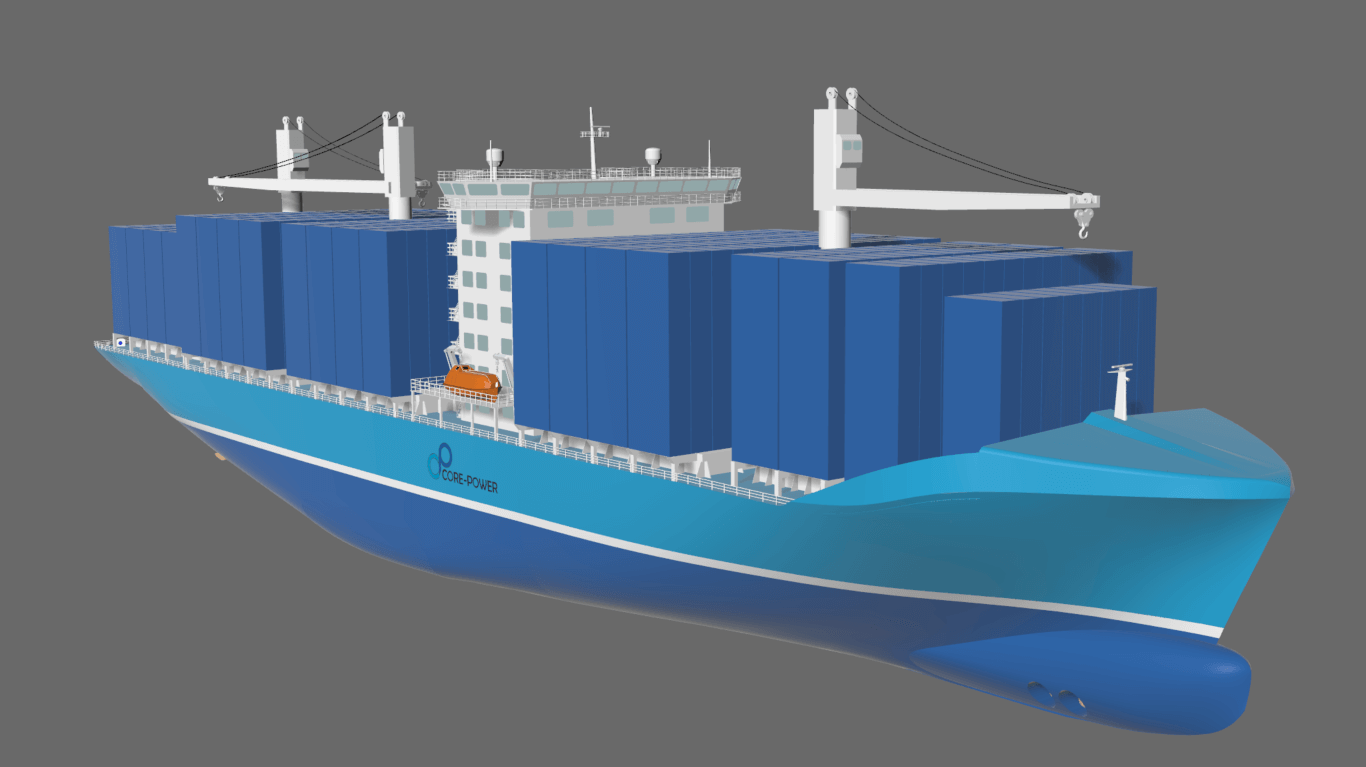
Figure 2:  Concept design of a small containership powered by the HPR.

The heat pipes make the HPR a “solid-state” reactor with minimal moving parts, allowing for autonomous operation and inherent load following capabilities. The HPR also operates at ambient pressure. Being fully factory-built, fuelled, and assembled, current HPR designs promise a 10–15-year refuelling interval, a near-zero EPRZ and a very small footprint.

The HPR is not as fuel-efficient as the MSR but would still perform very well for smaller marine deployment over long periods. The HPR could run on a variety of fuel types in solid form and is currently being constructed to use ‘TRi-structural ISOtropic’ (TRISO) uranium fuels. The HPR would cover the segment of deployments requiring 5-20MW with between one and four power units installed dependent on requirements.

Building reactors of this size also opens the possibility of modular shipyard construction. Mass-manufacturing of small modular machines would substantially bring down costs and complexity while maintaining the highest quality.

Current US maritime trade

The US maritime trade sector is a $50 billion market transporting goods on the Great Lakes, up and down the three coasts as well as transporting goods on the major US inland waterways.

The inland fleet plays a vital role in the US economy providing one of the most economically efficient ways to move goods and commodities around the country as well as major US exports to the coast.

The fleet is a key component in facilitating the export of US grain, coal, oil and increasingly steel. The internal waterways employ around 150,000 people.
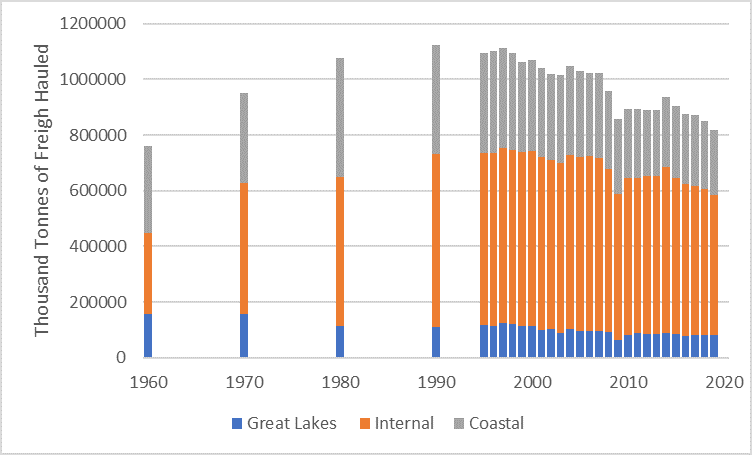
Figure 3: Thousand Tonnes of freight hauled on US internal waterways.[i]

As can be seen in figure 3 above, the amount of cargo transported on the US waterways peaked in 1990 and has been in steady decline ever since almost returning to levels seen in 1960. The sector averaged a 10% decline in total volumes while overall freight levels were increasing.

A decarbonised nuclear powered US internal fleet would provide a highly cost-efficient way to transport goods around the US with more cargo being carried faster where possible. All would be true-zero emission vessels, decarbonising US maritime transportation.  

US coastal trade

Trade between US mainland ports as well as between the US mainland and outside US territories like Puerto Rico is governed by the Jones Act, discussed below. The coastal trading US fleet is dominated by tankers for the transport of crude oil as well as refined oil products.

Due to the increased competition of land-based trade routes, the coastal fleet is now almost entirely used for trade where land-based options are not possible like Alaska, Hawaii, and Puerto Rico. The ocean-going fleet of vessels has decreased from more than 400 in 1950 to just 100 in 2018, albeit the DWT of the vessels engaged in this trade has remained broadly flat as ships have become larger.

MSR and HPR powered tankers, ro/ros, container ships and bulkers operating between US ports would carry more cargo at a higher speed and would do so for longer than the current fleet is capable. As each ship would produce its own electric power, these ships could provide electric power to operate loading and discharging gear during port calls, decarbonising US ports and substantially improving the environment for those communities that live and work near ports.

A new generation of vessels capable of competing with land-based transport options would stimulate economic growth in coastal communities while reducing emissions and providing cheaper transportation costs to offshore US territories.

The Great Lakes

The Great Lakes link several large population and manufacturing areas including Chicago and Detroit and provide access to the Canadian cities of Toronto and Montreal. Over 160 million tonnes of cargo valued at $77 billion is transported on the Great Lakes each year, including agricultural, mining and energy commodities. This fleet of vessels is of special importance to the US steel sector who rely on a fleet of steel-carrying barges to move finished products.[ii]

The vessels undertaking this trade are normally below 300 m length overall (LOA) and capable of carrying up to 80,000 metric tonnes of cargo. Vessels can leave and enter the Great Lakes though their size is limited by the design constraints of the St Lawrence Seaway which has a max vessel size of 257m LOA and 24m beam. This means that the largest vessels on the Great Lakes spend their entire operating lives there. Smaller vessels can leave and pass through the seaway and move goods to international ports around the world.[iii]

Inland Waterways

The US has approximately 12,000 miles of commercially navigable waterways. These are traversed by flat-bottom barges transporting a wide range of goods. Moving goods on the US waterways is one of the most economically efficient ways to transport energy, commodities, industrial components and building materials across the US with transport costs 50% lower than rail and as much as 95% lower than trucks.

Figure 4: Map Showing the navigable Inland and Intracoastal waterways of the US.[iv]

In 2019 the Mississippi river system, transported 630 million tonnes of goods.[v] The US waterways have a high amount of spare capacity. A low-cost true-zero emission power option for US river barges would boost the volume of goods transported on the rivers and reduce pollution from road haulage as fast, efficient green river transport becomes available.[vi]

The Jones Act

Current vessels in the US fleet are ageing and rely on heavy fuel oil for propulsion power. For domestic costal shipping to compete with road haulage as the preferred freight carrier of goods in bulk, a new generation of ships will have to be built providing cleaner and greener transport.

The Jones Act is a federal law that regulates maritime commerce in the United States. The Jones Act requires goods shipped between US ports to be transported on ships that are built, owned, and operated by United States citizens or permanent residents. The Jones Act is Section 27 of the Merchant Marine Act of 1920, which provided for the maintenance of the American merchant marine. The Jones Act therefore regulates all transit of goods between US ports, preventing foreign flagged, owned, or operated ships to carry out cabotage business in the US.

The initial intention of the Act was to protect US shipyards from competition ensuring that the US maintained shipyard capacity for naval purposes. As these vessels must be crewed by American sailors it would also provide a pool of seafarers for potential naval recruits. Whilst partially successful as a protectionist measure, the number of Jones Act vessels has continued to fall in recent decades.[vii],[viii],[ix]
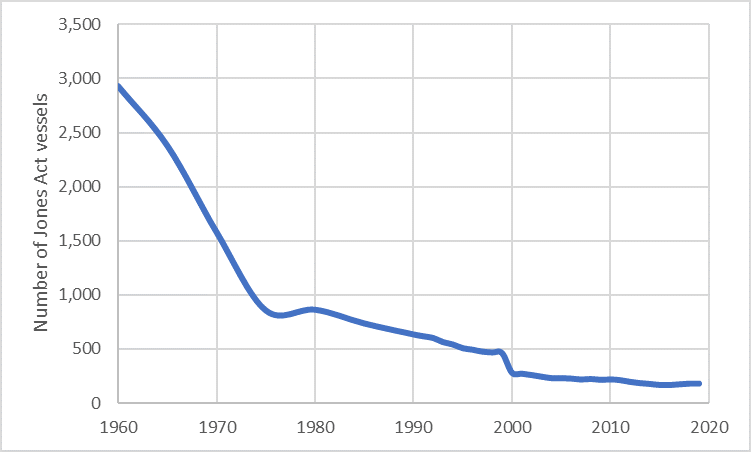
Figure 5: Number of registered vessels in the Jones Act fleet larger than 1,000 gross tonnes .xi

Turning the tide

The Jones Act fleet has a considerably older age profile than the global fleet. As of 2021 the average age of Jones Act vessel was 18 years with the oldest vessel being 54. Only a quarter of the fleet is under 10 years old. A typical lifespan of a vessel in the international deep-sea fleet is 20-25 years.[x]
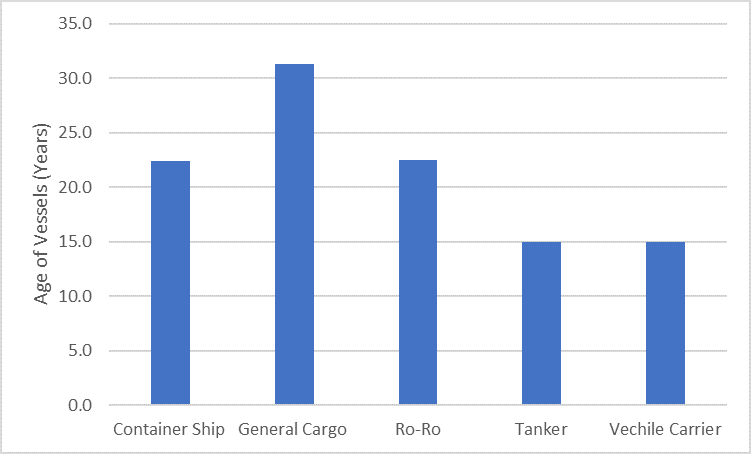
Figure 6: The average age of the Jones Act fleet vessels over 1,000 GT in years by vessel type[xi]

The ageing of the fleet is in part due to the high capital expenditure (CAPEX) resulting from the Jones Act’s requirement to build ships in domestic yards. It is also part due to the uncertainty of owners in selecting the required propulsion method that will be needed to comply with environmental regulations.

This is having the unintended consequence of keeping in service older, more polluting vessels. The order book for Jones Act vessels is currently small, providing little hope of fleet renewal and the overall fleet is expected to age further in the coming years.

Showing the world how to decarbonising shipping

Currently, emissions from the US domestic shipping stand at approximately 60 million tonnes of CO2 per year from the burning of Heavy Fuel Oil as well Liquefied Natural Gas (LNG) and marine gas oil (MGO).  The emissions goal for the maritime sector is set by the International Maritime Organisation (IMO) which has mandated that a 50% reduction of emission by 2050 compared to 2008 levels is required to stay in line with the Paris Agreement of 2015.

For these reductions to happen there will have to be a significant change to the way vessels are fuelled. While some small vessels for port operations have the potential to be electrified larger vessels, such as those used in US rivers, Great Lakes and coastal transport may require different and alternative paths to decarbonisation.[xii]

For these goals to be met, most current Jones Act vessels will need to be replaced.  By embracing marine-appropriate advanced nuclear power for both propulsion and the production of low-carbon fuels, CO2 emissions from the sector could be reduced by as much as 90%.

Building a new competitive advantage

Different segments of the US fleet would benefit from marinised advanced nuclear power in different ways depending on the power requirement of vessels and their operating conditions.

The US coastal fleet is likely to find the best value in the use of advanced nuclear power for direct propulsion using both the MSR and the HPR. For the largest vessels, those with a power requirement more than 15 MW the MSR offers the best technology, and for those with lower power requirements of between 2-15 MW, the HPR would perform well. The HPR is also a promising option for the propulsion of the Great Lakes fleet where most of the current vessels sit in the sub-15 MW power range.[xiii] The vessels would also be capable of providing power when docked, reducing the emissions both from ships at berth and from energy required to operate loading and discharging gear in ports

The move to advanced nuclear propulsion would see a fundamental shift in the way these vessels are managed and operated throughout their lifecycle. Advanced nuclear vessels would require no refuelling, substantially reducing operating expenditure (OPEX). The higher CAPEX of reactors that are fuelled for the life of a ship, would be mitigated through a leasing structure, where the initial outlay, depreciation and interest rate are combined into a flat monthly payment by the operator. Removing volatility from the OPEX and cost of propulsion would allow for longer, more economically predictable transportation contracts, which in turn would be easier to finance.

Advanced nuclear ships would be true-zero emission vessels and be immune to carbon pricing as it is introduced to fossil fuels. One ton of heavy bunker fuel oil produces 3.2 tons of CO2. Large ships consume 70 metric tons of bunker fuel per day, or close to 500,000 tons over a lifetime, therefore emit in excess of 1.5 million tons of CO2 in service. With a carbon levy of $200 per ton, these ships would see an increased OPEX of $300 million over a lifecycle. Advanced nuclear-powered ships would save this cost, making them economically more viable.

The US inland waterway fleet is comprised of vessels that are often too small for advanced nuclear propulsion. This fleet of smaller river-tractors could still benefit from the development of marinised nuclear power. As discussed in CORE POWER’s January 2022 report on the production of low-carbon synthetic fuels from hydrogen, marinised nuclear power is the ideal power source for ‘green’ fuels. Producing  green ammonia as a marine fuel onboard a floating production plant at the mouth of major rivers would convert water and air into fuels that contain little or no carbon. These production facilities could act as refuelling points for barges before returning upriver and could even be stationed along the largest rivers and in the Great lakes. Tank barges could be used to ship green ammonia fuel upriver both to be used by returning vessels as well as potentially the production of fertiliser in the US farm belt.

The use of marinised nuclear power offers the best route to decarbonisation. It is truly green, does not have to rely on complex carbon capture and storage and has the benefit of the extreme reliability of nuclear energy.

By embracing a new generation of fit-for-purpose advanced nuclear reactors, the US Jones Act fleet would be able to fully decarbonise while gaining a new competitive advantages compared to land-based transport.

A resurgent shipbuilding industry

The US shipbuilding industry has been in decline since the 1980s with the total gross tonnage built and the total number of workers in the industry, declining steadily. The yards that remain are mostly focused on US defence contracts and building vessels for the Jones Act fleet, though as stated before, the orderbook is small.

The construction of vessels for international sea freight is now primarily concentrated in East Asia in countries such as Japan, China, and South Korea accounting for around 95% of ships launched each year.

Nuclear powered ships will have to be built in countries with advanced nuclear expertise and a highly skilled workforce. The US fits that bill.

This is an opportunity for a dramatic renaissance of US commercial shipbuilding either as a standalone domestic industry or in collaboration with yards from overseas. In the global fleet of over 100,000 ships larger than 100 gross register tons (GRT) those vessels most suited for advanced nuclear-electric propulsion account for just 17,000 vessels.  If construction of a new fleet was spread over a period of 30 years between 2030 and 2060, the US shipbuilding industry could launch up to 570 vessels of these vessels each year. All US yards combined now only build around ten commercial vessels a year.

The advent of nuclear shipping could therefore be transformational for the sector. The value to US GDP of the US private shipping industry is currently $12.2 Billion and the advent of US nuclear shipping could vastly increase this.[xiv] This could allow the US to compete internationally with the largest shipbuilding nations including China which currently dwarves US production.
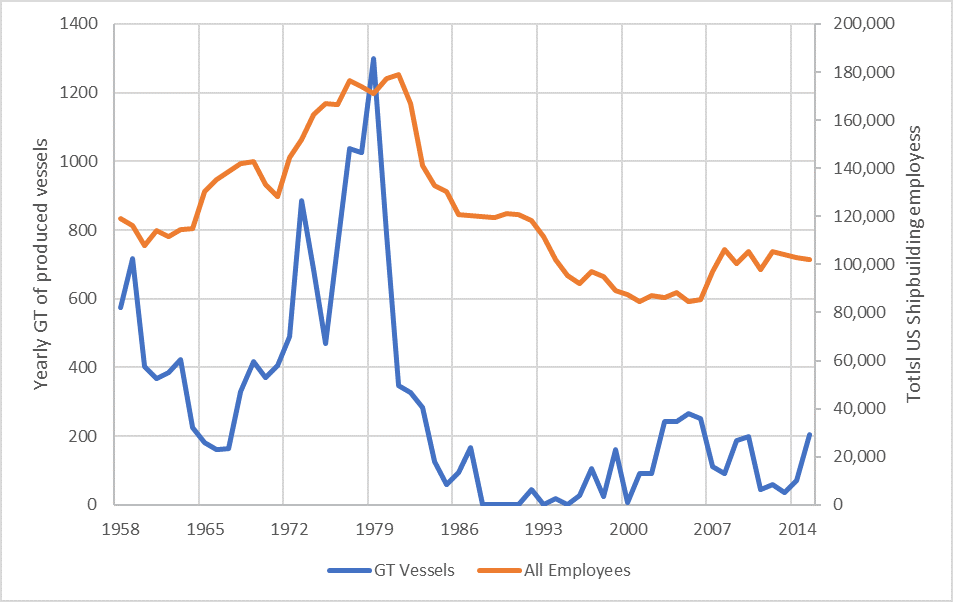
Figure 7 Summary of the GRT of commercial ships built yearly and the total number of employees engaged in the US shipbuilding industry[xv] 

As of 2020 shipbuilding is a $126 Billion a year market and is expected to reach a value of $167 billion by 2026. By embracing nuclear shipping, the US could catalyse exponential growth in US shipbuilding creating a substantial new industry driving employment and economic growth.[xvi]

Benefit to the US flag

Just like the US shipbuilding industry, the volume of US flagged vessels has declined in the last few decades. Owners have moved  ships to specific low tax low designations, also known as flags-of-convenience. The current US flagged fleet now only accounts for 182 vessels over 1,000 GRT of which around half are Jones Act vessels which are legally required to be flagged in the US.

The US flag is currently ranked just 20th in the world. Compared to other flag states its size is dwarfed by the largest flag states of Panama, Liberia and the Marshall Islands which are between 20 and 30 times larger.[xvii],[xviii]
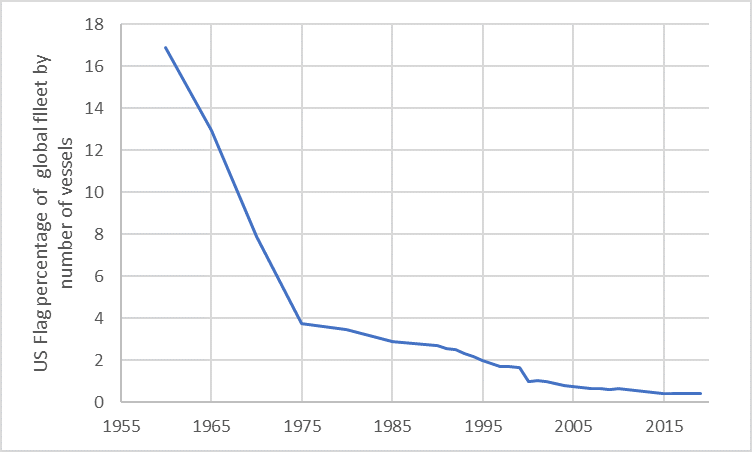
Figure 8. American flagged vessels as a percentage of the global fleet by number of vessels[xix]

Advanced atomic ships will require a step-change in the way commercial vessels are flagged. These vessels will only be able to be flagged in nations that have both a mature nuclear and maritime regulator and to which export control restrictions allow transfer of stewardship.

The superior economic and environmental benefit of advanced nuclear ships would encourage ship operators to seek the US flag as a high-quality jurisdiction instead of the current race to the cheapest flag of convenience. Partnering with the UK and allowing advanced nuclear power to sail under the UK flag, would help share the burden of oversight and regulation with the US’s closest ally.

For both countries, this would mean more, and better vessels are available if required in for naval support, as well as vastly increasing the revenue via tonnage tax. This tax calculable on all US and UK flagged ships would rise at the same rate as the number of vessels in the register.

The US should look to share the responsibility for regulating and inspecting advanced nuclear ships with allies such as the UK which has equally mature nuclear and maritime regulators, and whose domestic fleet is suffering the same fate as that of the US.

Benefit to ports

The US has some of the world’s busiest ports. Long Beach in California and New York Harbour handle vast amounts of both inbound and outbound cargoes, serving ships from all over the world. The movement towards advanced nuclear power for ships has several key advantages for US ports.

Providing green electricity to port facilities allows for the decarbonisation of port operations. Furthermore since these vessels don’t require bunkering they would help reduce port congestion, in turn allowing port capacity to increase without the need for additional capital investment.

With global trade expected to continue to increase and the ports requiring viable decarbonisation plans, marinised advanced nuclear power provides an ideal solution.

More jobs and seafarers

The advent of nuclear-powered shipping will lead to a paradigm shift in the staffing and crewing of international vessels. Officers on nuclear-powered ships will require a much higher degree of training than those on conventional vessels.

This will be an entirely new career path for both STEM college graduates as well as a career path for veterans of the US nuclear navy. It is not just seafarer jobs that will be created.

The development and flagging of these vessels within the US will create downstream jobs in fuelling, maintenance as well the insurance, broking, and finance industries.

Floating production of green fuels

As discussed in the CORE POWER January 2022 report, a solution for those vessels not suitable for direct nuclear propulsion is the use of green e-fuels from nuclear powered floating facilities. The deployment of reactors on offshore production platform as well as allowing the decarbonisation of smaller vessels such as those trading on US internal waterways, would provide a mixture of electricity, desalinated water, hydrogen, and ammonia to local off-takers.

The US has committed to developing several hydrogen hubs across the country, one of which is specified to be powered by nuclear energy. These facilities could benefit the decarbonisation of other difficult to abate sectors such as aviation and heavy industry by the provision of low-carbon fuelling options, as well as the potential provision of reliably priced water and electricity to American consumers.

Marinised nuclear power offers the opportunity to provide dependable consistently priced power options to not just the maritime industry but to the whole US industrial sector. This will allow the USA to lead the way on decarbonisation while increasing economic competitiveness.

Seizing the opportunity

The US offers a unique blend of experience in the advanced nuclear and marine industries to be among the best placed nations to exploit the developing field of marinised nuclear power.

At a base level, the US is home to companies developing the types of reactors that will be suitable for marine deployment. CORE POWER is partnering with leading US nuclear innovation companies to develop a marinised version of appropriate marine reactors that will be suitable for deployment.

At a deeper level, the US has a wealth of research and development facilities for nuclear technology. The network of US national laboratories leads the world in nuclear reactor innovation as well as the development of nuclear fuel. The US has experience both in the private and public sector in managing nuclear waste as well as reactor fuel, meaning it is ideally located for the modular manufacture and servicing of marinised nuclear reactors.

The US has a well-respected regulator in the Nuclear regulatory Commission (NRC). Current nuclear regulations are light on marine deployment and will need to be updated and improved as the new security requirements and passive safety features of the next generations of advanced reactors, come to market Once  licensed, these reactors can be deployed within national waters with high confidence from both the government and the public.

The US also has a highly developed maritime infrastructure not just for shipbuilding, but for ship classification, financing and insurance.

CORE POWER is working with leading classification societies  on developing new class rules for advanced nuclear-powered vessels which will be appropriate for the US fleet. Vessels designed, built, and operated to the high standards set by these rules will be properly certified which allows for a solid insurance framework, making advanced nuclear vessels commercially viable.

The US is a leader in international finance. The unique proposition of nuclear-powered vessels with very low OPEX and guaranteed performance over an entire lifetime, allows the development of new financial products to fund the development of the next generation of zero-emissions vessels.

The US also has the benefit of being home to the largest pool of nuclear qualified mariners in the world. The US nuclear navy has operated for almost 70 years without incident and have the best-trained seafarers in the world. The deployment of commercial nuclear vessels would offer an entirely new career path for these seafarers once they leave the Navy. STEM qualified students from the US college system seeking well paid careers in an exciting industry could also be recruited to supplement the skills of the highly trained ex-US Navy personnel.

This is not just a one-way relationship. While the US is ideal for nuclear shipping, nuclear shipping is ideal for US long term goals. By taking the lead in nuclear shipping, the US can develop new high-quality manufacturing jobs reshoring a key industry from the far east. The increase in US-flagged vessels will give the US a ready source of US vessels for use by US Navy if required while ensuring that maritime transport in the US is fast, efficient, and fully decarbonised.

How the US can lead the way

Deployment of marinised nuclear power requires a concerted effort by both nuclear and maritime regulators to establish an exceptional standard for nuclear powered ships that will be acceptable to stakeholders in maritime communities and in government.

The current chapter of IMO’s Safety of Life at Sea Convention (SOLAS) that concerns nuclear commercial vessels was passed in 1981, and specifies conventional PWR feeding a steam cycle which directly drives the propellors.

Advanced nuclear-powered ships  will be nuclear- electric where the reactors are used to drive turbines that generate electricity to power the vessel. For SOLAS to be updated, an alliance of key nations such as the US and the UK need to develop new terms and propose a modernisation of the rules to reflect 40 years of advancement in both nuclear and maritime safety standards.

Regulatory development will also have to be supported on the nuclear side for the next generation of nuclear reactors to be fully marinised. The MSR and HP both have essential design characteristics that enable walk away safety and so will not require the same wide EPRZ and active reactivity management which traditional PWRs need.

This action to lead to regulatory change in this area would place the US at the forefront of a new industry allowing the transformation of the US maritime industry.

Conclusion

The US maritime Industry stands at a crossroads. The need to decarbonise has opened new paths and opportunities. If the industry commits to taking the lead on nuclear shipping first by fully decarbonising the US merchant fleet and going on to develop an exportable product, a dramatic renaissance of the US maritime industry is possible. This will lead to substantial jobs growth and a cleaner more efficient domestic transportation sector driving economic competitiveness.

The US maritime industry has been in a process of continuous decline since the 1950s with the number of vessels built, registered, and crewed in the US continuously falling. The shipbuilding industry now is primarily centred in east Asia in Korea Japan and China.

The nuclear vessel industry would offer a unique opportunity to secure the private investments from the shipping sector to re-shore these jobs, driving economic growth and employment.

The first step of this process is the decarbonisation of the US internal maritime market. The transport of goods on the US Coast, Great Lakes and US internal waterways offers amazing proof of concept for nuclear powered decarbonisation, without the complex regulatory hurdles of moving reactors between nation-states.

Taking the lead on this process by updating SOLAS, engaging the NRC with its maritime counterparts and supporting reactor innovation will allow the US to profit from its existing expertise in maritime and nuclear to both decarbonise one of the trickiest industries while providing a long-term boost to the US the economy. 

Mikal Bøe is a senior maritime executive with three decades of experience from floor to board level in shipping, finance and technology. As Chairman and CEO of CORE POWER, Mikal today plays a key role in the development and deployment of a new generation of reactor technologies as the solution for ocean transportation to meet its emission reduction targets.

References

[i] Water Transport Profile , US Bureau of Transportation Statistics, 2021

[ii] The Great Lakes Seaway Partnership , Shipping on the Great Lakes-Seaway – Efficient. Green. Sustainable , 2018

[iii] Martin Associates , Economic Impactsof Maritime Shipping In The Great Lakes - St. Lawrence Region , 2018

[iv] American Society of Civil Engineers , Failure to Act: Ports and Inland Waterways Anchoring the U.S. Economy , 2021

[v] US Army Corp of Engineers , 2019 - Mississippi River System , 2020

[vi] HIS Markit , The River Barg Still Plays a Role in U.S Transportation , 2009

[vii] US Department of Transportation, The state of the U.S, Flag Maritime Industry , 2018

[viii] Congressional Research Service , Shipping Under the Jones Act: Legislative an Regulatory Background , John Frittelli , 2019

[ix] CATO Institute , Old Ships Still Abundant in the Jones Act Fleet , 2019

[x] Equasis , The 2020 World Merchant Fleet , 2020

[xi] US Department of Transportation , Oceangoing, Self?Propelled Vessels of 1,000 Gross Tons and Above that Carry Cargo from Port to Port , 2019

[xii] National Transportation Statistics , US Bureau of Transport Statistics , 2021

[xiii] Man , Propulsion Trends in Bulk Carriers , 2015

[xiv] UNCTADSTAT , https://unctadstat.unctad.org/wds/TableViewer/tableView.aspx , Accessed 15/02/2022

[xv] Shipbuilding History , https://www.shipbuildinghistory.com/ , Accessed 15/02/2022

[xvi] Mordor Intelligence , Ship Building Market   Growth, Trends, Covid-19 Impact, And Forecasts (2022 - 2027) , 2021

[xvii] What is a ship registry or ship register? , Shipping and Freight Resource, Hariesh Manaadiar , 2018

[xviii] UNCTAD e-Handbook of Statistics 2021 , 2021

[xix] Number and Size of the U.S. Flag Merchant Fleet and Its Share of the World Fleet , US Bureau of Transportation , 2021

The opinions expressed herein are the author's and not necessarily those of The Maritime Executive.

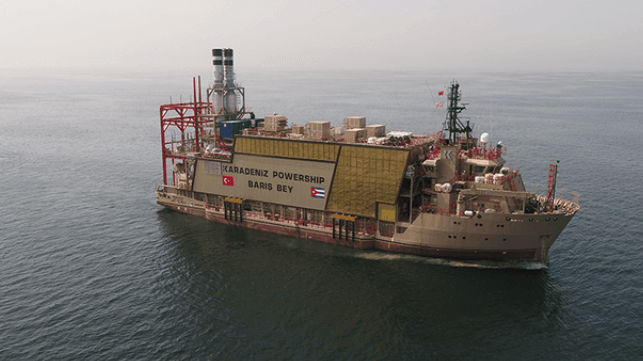
 

Power Ships Now Provide About One Quarter of Cuba's Electricity

Baris Bey power ship under way
Image courtesy Karpowership

PUBLISHED FEB 27, 2023 5:54 PM BY THE MARITIME EXECUTIVE


The government of Cuba faces tough choices in addressing a chronic shortage of electrical generating capacity, as rolling blackouts have affected communities across the country for months. The erratic power supply has added to the downward pressure on Cuba's economy, which has been in severe decline - so severe that about two percent of the population tried to leave for the U.S. last year. The broader issue of economic malaise will be difficult to address, but Havana has at least found a technical way to reduce the impact of the power shortage: floating mobile generating stations, courtesy of Turkish operator Karpowership.

Cuba's relationship with Karadeniz-owned Karpowership began in 2018, when its government signed a four-year charter for three small floating power plants. Taken together, these units provide about 110 MW of capacity. As the Cuban utility sector's Cold War-era permanent power plants have deteriorated, Karpowership's share of the nation's grid capacity has gradually gone up. The eighth unit in Cuba arrived in Havana at the beginning of February, bringing total capacity to roughly 770 MW, or one-quarter of Cuba's minimum electrical demand of 3,000 MW. 

The speed of delivery of a powership lends itself well to Cuba's needs. Cuba's onshore power plants need deep maintenance, and the rapid addition of portable generating capacity makes it easier to take existing plants offline for overhaul. It's also far faster than building new capacity on shore, which could take years and would require overcoming the structural hurdles to all infrastructure projects in Cuba - like U.S. sanctions and access to capital, among others

The same obstacles may make it hard for Cuba to pay for the services of Karpowership, according to Al-Arabiya. "The Cubans do not have any money," said Jorge Pinon, a senior research fellow at UT Austin, in conversation with the outlet.

Cuba's heavy dependence on oil for power generation is partly a quirk of Cold War history. The Caribbean nation was a Soviet client state for decades, and it built out most of its power generation capacity to run on subsidized Russian fuel oil. With the collapse of the Soviet Union, this relationship ended, and it has struggled to maintain and fuel its fleet of Eastern Bloc-designed thermal power plants ever since. 

Under other circumstances, the nation might have become less reliant on fossil fuels. Towards the end of the Cold War, Cuba nearly built an 880 MW nuclear power station with Soviet assistance. Construction began in 1983, but the dissolution of the Soviet Union put an end to Russian financing and technical assistance. The project was abandoned in 1992, and the ruins of the unfinished plant are still visible today. 


How Australia Managed to Eradicate its Zebra Mussel Infestation

With great effort, Australian responders eliminated one of the world's most persistent marine invasives

Zebra mussels
File image courtesy Washington Invasive Species Council

PUBLISHED MAR 2, 2023 9:16 PM BY CAMERON LIVINGSTONE, SE AUSTRALIA BRANCH OF THE NAUTICAL INSTITUTE


The outbreak of the 'Zebra Mollusc' was Australia's worst-ever marine invasive species infestation, highlighting the importance of ships' ballast water management and hull biofouling control.

On 27 March 1999, marine biologist divers detected a large population of unfamiliar molluscs in a Darwin marina. These were later identified as Black Striped Mussels, also known as 'Zebra Molluscs.' They are native to the Atlantic (Colombia to Mexico) and also found in Asia. Mature zebra molluscs produce 50,000 eggs per incubation. There were now tens of millions of molluscs in Darwin harbour - up to 10,000 per square metre in Cullen Bay.

Ships carry ballast water on cargo voyages. Thousands of tonnes of water are drawn in at a foreign port, then discharged at another port. In this water, millions of marine organisms are transported across to non-native environments.

An emergency taskforce was established to eradicate the exploding mollusc population. About 420 vessels were identified as being at risk (either in, or recently in, the infected marinas). Over 280 personnel, 28 divers, support teams, the Australian Defence Force, and fisheries & quarantine agencies were mobilised. Molluscs were found on every single static structure in the marinas. The only cure was a 100% kill.

Several hundred tonnes of liquid sodium hypochlorite (chlorine) was needed for successful treatments. The sole supplier in Darwin produced only 15 tonnes a year. Truck drivers from Alice Springs were rostered to bring sodium hypochlorite in 10 special rubber lined trucks from Melbourne, Adelaide and Sydney (approx 4,000km).

An initial three tonnes of sodium hypochlorite was poured into the Cullen Bay lock to kill off any mussel larvae and act as a sterile ‘plug’ between the marina and the Harbour. Pumps were used to aerate 12 hectares of water surface.

Unfortunately, many molluscs survived the chlorine treatment. Scientists determined that copper sulphate might work. Around 6,000 tonnes of copper sulphate were added to the marinas. Vessels were hauled out of the water for treatment. Strict orders were put on masters, including navigation restrictions, cooling water flushing with copper sulphate, and steam cleaning on hardstands for seven days.

A 100% kill was eventually declared on 23 April, and the taskforce demobilised on 29 April. The operation had cost AU$2.2 million and taken hundreds of personnel. Queensland, Western Australia and the Northern Territory remained on high-alert for years afterwards.

The International Maritime Organization Ballast Water Management Convention took effect on 8 September 2017, and the Zebra mollusc outbreak was a prime example of why it's so important.

Cameron Livingstone MNI is the secretary of the South Eastern Australia Branch of The Nautical Institute, which covers the region of New South Wales and the Australian Capital Territory. The Institute's aim is to promote professionalism, best practice and safety throughout the maritime industry and to represent the interests of its members.

The opinions expressed herein are the author's and not necessarily those of The Maritime Executive.

Finland’s Port Strike Ends with New 25-Month Labor Contract

Finland port strike ends
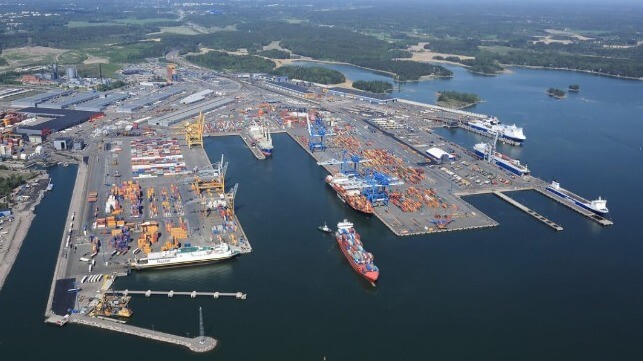
Dockworkers are returning to Finland's ports after a two-week strike (Helsinki file photo)

PUBLISHED MAR 2, 2023 5:56 PM BY THE MARITIME EXECUTIVE


The two-week strike that stopped the loading and unloading of cargo at all of Finland’s ports is coming to an end after a collective bargaining agreement was reached on March 1. Finland’s Transport Workers' Union AKT and the port operators accepted the terms after an arduous series of negotiations. The settlement however came as labor disputes moved to other sectors in Finland including bus drivers who walked off the job hours before the agreement for the ports.

“At AKT, we are satisfied with both the signed collective agreement and the end of the labor dispute,” said Ismo Kokko, chairman of ATK. “The round has been difficult because the negotiations have included an exceptionally large number of external factors. From the beginning, we have negotiated our own starting points, taking into account the interests of our members. That's what was done now as well.”

The union said as a result of the agreement, it would end the industrial action against all the ports effective immediately. They expect dockworkers to return to their jobs “as soon as possible,” but no later than March 4, Saturday, to start normal work shifts. Maersk, which had suspended all service to Finland however advised customers to continue to defer shipments saying that it would advise them when the operations had resumed normally.

The union rejected two prior proposals by a mediator assigned to talks. They said they were seeking raises that kept pace with the current inflation rate in Finland as well as work rule changes. 

The collective barging agreement is for 25 months, ending on February 28, 2025. It includes a total wage increase of 6.3 percent plus a one-time payment to be paid next week of approximately $1,165 for full-time employees. The work rule changes included local agreement on the 10-hour working time format and for the rules on night ships.

The strike impacted Finland’s 10 major ports, including Helsinki, Hamina-Kotka, Hanko, Rauma, and Turku. With as much as 90 percent of the country’s trading moving by sea and the ports, foreign trade had been effectively brought to a halt since the dockworkers started their strike on February 15. The Finnish Port Operators Association had estimated that each day of the strike would impact more than $300 million in foreign trade.

The union earlier in the week reported that it had also come to terms for portions of the truck divers including the movement of petroleum products and terminal operations. Bus drivers however began a strike on March 1 that is scheduled to last 10 days after they failed to reach terms on a new contract and other segments of the union are also beginning contract talks later in the month.

The strike at the Finnish ports was similar to actions that hit Germany’s ports in 2022 as well as both Liverpool and Felixstowe in the UK. Contracts were resolved for those ports while the talks for the longshore workers on the U.S. West Coast that began in July 2022 continue to drag on despite a recent report of progress from the union and employers.

UK Union Plans More Strikes in North Sea Offshore Sector

North Sea strike
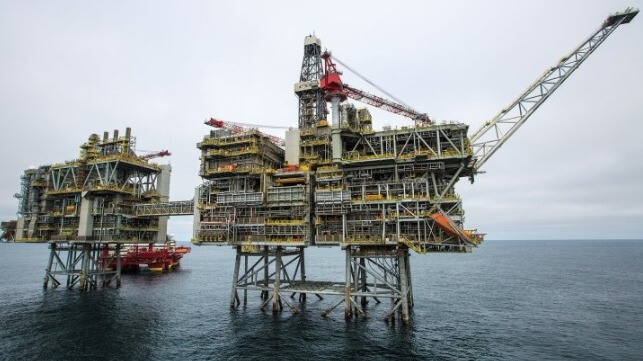
Latest strikes are targeting crane operations on BP's North Sea platforms (BP Clair Ridge)

PUBLISHED MAR 3, 2023 2:20 PM BY THE MARITIME EXECUTIVE


The UK union Unite is continuing its efforts to target operations at the North Sea oil platforms calling for improved working conditions and pay increases. Its latest action involves crane operators, maintenance workers, and lifting personnel as well as deck crews on BP platforms working for Sparrows Offshore Services, which is involved in the supply operations. This follows a just concluded negotiation for drillers working at some of the same BP platforms while they are moving forward with strike votes for other elements of the industry.

“Corporate greed is at its peak in the offshore sector because the workforce is seeing none of these astronomical profits coming into their pay packets or through improved terms and conditions,” says Unite General Secretary, Sharon Graham. She accuses the industry of being “awash with record profits” saying the union is fighting for better jobs, pay, and conditions.

Sparrows personnel working on BP’s Andrew, Clair, Clair Ridge, ETAP, Glen Lyon and Mungo installations have reportedly overwhelmingly backed Unite for a strike action. The union says it will involve a series of 24 and 48-hour stoppages designed to add pressure to their current negotiations. They warn however that the nearly 50 crane operators, maintenance and lifting personnel, and deck crews could escalate to an all-out strike and a complete overtime ban.

The union is calling for an 18 percent increase in pay for 2022 or alternately longer break periods between field work with no reduction in pay. They are also demanding time and a half pay for all overtime work.

Sparrows personnel plays a critical role in the day-to-day operations of the platforms. Unite notes they are responsible for the safe transfer of all supplies coming to the platforms. Virtually all goods, including food and water, delivered to these BP installations are transferred by boat. The crane operators bring the supplies to the deck.

Vic Fraser, Unite Regional Officer, says at issue is members' concerns about fatigue and physical and mental burnout. He accuses the platform operators of not listening to members and not providing them with the same work schedules as most other offshore workers.

The announcement of this strike comes just a week after Unite announced it had reached an agreement for nearly 100 drillers working for Odfjell Technology also on the BP Clair and Clair Ridge platforms. Unite had announced in early February that the drillers would conduct 24-hour stoppages. The agreement for the drillers provides three weeks of paid time off work per year. Unite says this equates to around an 11.5 percent wage increase.

“Although it brings this particular dispute to an end, offshore operators need to wake up,” said Fraser announcing the agreement for the drillers. “Continuing with a three on and three off rotation causes unacceptable physical and mental burnout and fatigue. Ultimately, it also leads to staff shortages.”

The union's actions against the offshore oil sector are likely to continue. The GMB and RMT trade unions are also balloting their members within Sparrows on BP installations. Unite has also recently said that it is conducting balloting including for 300 workers at Stork Technical Services, which conducts maintenance and lifecycle services at 30 platforms in the UK North Sea, and for 700 members who work for German offshore engineering company Bilfinger. These actions would be scheduled likely in April. 

The salt on your table could be key for the green energy transition

Staff Writer | March 1, 2023 | 

Salt grains. (Reference image from Pexels).

A new study led by researchers at The University of Texas at Austin’s Bureau of Economic Geology describes how large underground salt deposits could serve as hydrogen holding tanks, conduct heat to geothermal plants, and influence CO2 storage.


Published in the journal Tektonika, the paper also highlights how industries with existing salt expertise, such as solution mining, salt mining, and oil and gas exploration, could help make this regular ingredient a key component in the energy transition.

“We see potential in applying knowledge and data gained from many decades of research, hydrocarbon exploration, and mining in salt basins to energy transition technologies,” lead author Oliver Duffy said in a media statement. “Ultimately, a deeper understanding of how salt behaves will help us optimize design, reduce risk, and improve the efficiency of a range of energy transition technologies.”

Duffy pointed out that salt has an influential role in shaping the earth’s subsurface layers. It is easily squeezed by geologic forces into complex and massive deposits, with some subsurface salt structures taller than Mount Everest. These structures and their surrounding geology offer a number of opportunities for energy development and emissions management.

“The co-location of surface infrastructure, renewable energy potential, favourable subsurface conditions and proximity to markets are key to plan for subsurface hydrogen storage,” said study co-author Lorena Moscardelli, director of the bureau’s State of Texas Advanced Resource Recovery (STARR) program. “STARR is currently engaged with emerging energy opportunities in West Texas that involve hydrogen and carbon capture, utilization and storage potential for the region.”

Salt domes are proven containers for hydrogen used by oil refineries and the petrochemical industry. According to the paper, these salt formations could also be put to use as holding pens for hydrogen bound for energy production. Moreover, the porous rock surrounding them could be used as a permanent storage spot for CO2 emissions.

The study describes the potential benefits of co-locating hydrogen production from natural gas called “blue hydrogen” and CO2 storage. While the hydrogen is sent to salt caverns, the CO2 emissions generated by production could be kept from the atmosphere by diverting them to the surrounding rock for permanent storage.

According to the researchers, with its numerous salt domes surrounded by porous sedimentary rock, the Texas Gulf Coast is particularly well suited for this type of combined production and storage.

The study also touches on how salt can aid in the adoption of next-generation geothermal technology. Although the industry is still in its early stages, the scientists show how it can make use of salt’s ability to easily conduct heat from warmer underlying rocks to produce geothermal power.
Goldman warns carmakers against buying miners: ‘It always end in tears’

Bloomberg News | March 1, 2023 | Lithium

Broken down Tesla on road side. Credit: Adobe Stock

Car manufacturers acquiring mining companies to secure raw materials needed for electric vehicle batteries will end badly if history is any guide, according to Goldman Sachs Group Inc.’s head of commodities.


History is littered with examples of consumers trying to move upstream in commodities markets, Goldman’s Jeff Currie said in an interview Wednesday with Bloomberg Radio.

“It always ends in tears,” he said. “Going in and being involved in mining projects in places like Southern Africa, it requires an expertise that is very different than producing cars.”

Currie was commenting in response to a question about the prospect of Tesla Inc. acquiring Sigma Lithium Corp. The electric-car maker has been mulling a takeover of the miner amid rampant demand for the material crucial to powering EVs, Bloomberg News reported last month, citing people with knowledge of the matter.

Automakers have been pushing into mining more aggressively to lock in supply for batteries that increasingly are replacing internal combustion engines. Stellantis NV took a 14% stake in a McEwen Mining Inc. copper subsidiary, and General Motors Co. is said to be vying for a stake in Vale SA’s base metals unit. In January, GM struck a $650 million pact with Lithium Americas Corp. to develop the top US lithium deposit.

Car companies will be better off sticking to their core competencies and reducing their exposure to commodity price swings through hedging, said Currie, who declined to comment on Tesla specifically.

(By James Attwood, with assistance from Caroline Hepker and Tom Mackenzie)
Denarius resource supports restart of 230-year-old Colombian gold mine

Staff Writer | March 1, 2023 | 

A computer rendering of the Zancudo project site south of Medellin in Colombia. 
Credit: Denarius Metals

Denarius Metals’ (TSXV: DSLV) first resource estimate for its Zancudo project to revive an 18th century gold mine in Colombia confirms its high-grade potential.


The Toronto-based company plans to restart production this year from the former Independencia mine dating to 1793. It produced as much as 2 million oz. gold-equivalent until 1948 from the site 27 km south of Medellin, Colombia’s second-largest city.

The Zancudo project holds an inferred resource of 2.8 million tonnes grading 6.5 grams gold per tonne and 112 grams silver for contained metal of 576,000 oz. gold and 10 million oz. silver, Denarius said in a news release on Wednesday.

The inferred resource contains 718,000 oz. gold-equivalent when grading at 8 grams gold at a 4-gram cut-off over a 1-metre minimum width, the company said.

“We see an opportunity to develop near-term production and cash flow through local contract miners and long-term growth through exploration,” Denarius CEO Serafino Iacono said in the release. “The local contract miner has already commenced activities to rehabilitate the mine workings.”

Denarius also said Wednesday it sold its Guia Antigua gold project 130 km northeast of Medellin back to Aris Mining (TSX: ARIS) for $2.2 million to help fund Zancudo’s crushing equipment, road construction and infrastructure restoration.

The company is to carry out in-fill drilling this year to upgrade resources at Zancudo. Gran Colombia Gold (TSX: GCM) and Iamgold (TSX: IMG; NYSE: IAG) drilled its principal veins from 2011 through 2021. Diamond drilling in 149 holes totaled more than 40,100 metres, including from 33 underground holes in the old mine.

Mineralization at Zancudo occurs in stacked mantos and steeply dipping veins that have been mined over a strike length of 3,500 metres, Denarius said. The veins vary in average width from 0.35 metres to 3 metres, while mineralization runs 400 metres deep.

“The mantos and veins have early-stage base metal sulphides (pyrite, sphalerite, galena, arsenopyrite) infilled by quartz or quartz-carbonate gangue, with banded textures that are typical of epithermal veins,” Denarius said. “This initial resource estimate confirms the historically significant high gold-silver grade potential of this project as it remains open for further expansion in all directions.”

Denarius is also active in the Iberian Pyrite Belt. The company issued an C$8.3 million rights offering in January to explore its Lomero-Poyatos polymetallic project in Spain. The company plans drilling to update the project’s resource estimate and prepare a preliminary economic assessment.
Controversial Lithium Mine Moves Forward in Nevada

Molly Taft
Fri, March 3, 2023 

A geologist points to an area for future development in 
Thacker Pass in this photo from 2018.

Construction began this week on a controversial lithium mine in Nevada after a federal appeals court denied an 11th-hour attempt to halt the project.

In a decision issued Wednesday, the 9th U.S. Circuit Court denied an appeal filed Monday by Western Watersheds Project, longtime opponents of the mine, that would have temporarily halted construction on the Thacker Pass mine in Nevada. In a press release, the project’s owner, Canada-based Lithium Americas Corp, announced that it officially broke ground on Wednesday.

Why is lithium important?

The mine site covers one of the largest deposits of lithium in the U.S., and General Motors this year invested $650 million in the project, which will become North America’s biggest lithium mine. Lithium is a crucial component of electric vehicles and batteries; experts expect demand for the material to skyrocket in the coming decades as the world transitions to clean energy. The Biden administration has made expanding the domestic supply of clean energy minerals a priority.

But lithium and other clean energy materials come with a host of problems, including concerns around the environmental degradation that comes with mining as well as overseas supply chains rife with child and forced labor. An analysis released earlier this year calls some of these demand models into question, finding that centering public transit and smaller vehicles in the clean energy revolution could significantly reduce global reliance on these minerals.

What’s going on with Thacker Pass?

The Thacker Pass project has been mired in controversy for the past two years, since the federal government granted a permit for it to move forward. Some Native tribes in the area say the mine is situated on the site of a massacre of more than 30 members of the Paiute Tribe in 1865, making the land a sacred site.

In January 2021, in the twilight of the Trump administration, the Bureau of Land Management fast-tracked final approval for the mine with a surprisingly short environmental impact statement, a move that critics say calls the environmental soundness of the permit into question. But in mid-February, a federal judge issued a ruling saying that the project’s opponents had not yet proved that there were significant environmental issues with the permit, and it allowed construction to proceed while mandating portions of the permit be reviewed. The appeal denied this week was a last-ditch attempt to temporarily pause that decision.

“This massive open pit mine has been fast-tracked from start to finish in defiance of environmental laws, all in the name of ‘green energy,’ but its environmental impacts will be permanent and severe,” Talasi Brooks, a lawyer for the Western Watersheds Project, said in a statement following Wednesday’s decision.

Some of the opposition to the Thacker Pass project has itself been problematic. Last year, E&E issued a blockbuster report finding that one of the green groups helping organize opposition on the ground was extremely transphobic.

Lithium Americas Corp said this week that it expects the Thacker Pass mine to begin producing lithium in the second half of 2026.

Gizmodo

Lithium Americas kicks off construction at Thacker Pass

Staff Writer | March 2, 2023 

Landscape at Thacker Pass. Credit: Lithium Americas

Lithium Americas (TSX: LAC) (NYSE: LAC) announced Thursday it has kicked off construction at its 100%-owned Thacker Pass lithium project in Humboldt County, Nevada, following the receipt of notice to proceed from the Bureau of Land Management (BLM).


The announcement follows a federal court ruling from February rejecting claims that the project would cause “unnecessary harm to the environment or wildlife”, which delayed the mine’s construction after it was originally approved by former US President Donald Trump in 2021.

Construction commenced following a favorable court ruling in February for the issuance of the record of decision, which confirmed the permitting process for Thacker Pass was conducted “thoroughly and responsibly.”

“Starting construction is a momentous milestone for Thacker Pass and one we have been working towards for over a decade,” Lithium Americas CEO Jonathan Evans said in a news release.

“We are excited about the prospect of generating economic growth in Northern Nevada and playing a major role in the domestic lithium supply chain for electric vehicles.”

Thacker Pass is targeting 80,000 tonnes per annum of battery-quality lithium carbonate (Li2CO3) production capacity in two phases of 40,000 tonnes. Phase 1 production is expected to commence in the second half of 2026. The project is expected to create 1,000 jobs during construction and 500 jobs during operations.

Major earthworks have been awarded, Lithium Americas said, with activities expected to begin in the second half of 2023.

The proposed mine has the potential to be North America’s largest source of lithium for electric vehicle batteries and would support US President Joe Biden’s efforts to reduce dependence on Chinese supplies for the metal.

Measured and indicated mineral resources at Thacker Pass are estimated at 385 million tonnes averaging 2,917 parts per million (ppm) lithium for 6 million tonnes of lithium carbonate equivalent (LCE). Inferred resources are 147 million tonnes averaging 2,932 ppm for 2.3 million tonnes of LCE.

In January, General Motors announced that it would invest $650 million in Lithium Americas to help develop the project, the largest investment by an automaker to produce battery raw materials to date.

Shares of Lithium Americas were down 4.3% by 12:15 p.m. ET following the construction announcement, giving the Vancouver-based miner a market capitalization of C$4.2 billion ($3.1bn).

Tesla lobbying to secure lithium from Chile — report

Cecilia Jamasmie | March 2, 2023 |

Tesla executives met last month with Chilean authorities, including the ministers of foreign affairs and mining, as well as representatives for the country’s development agency Corfo, as the electric cars maker redoubles efforts to secure supplies of battery metals, particularly lithium.


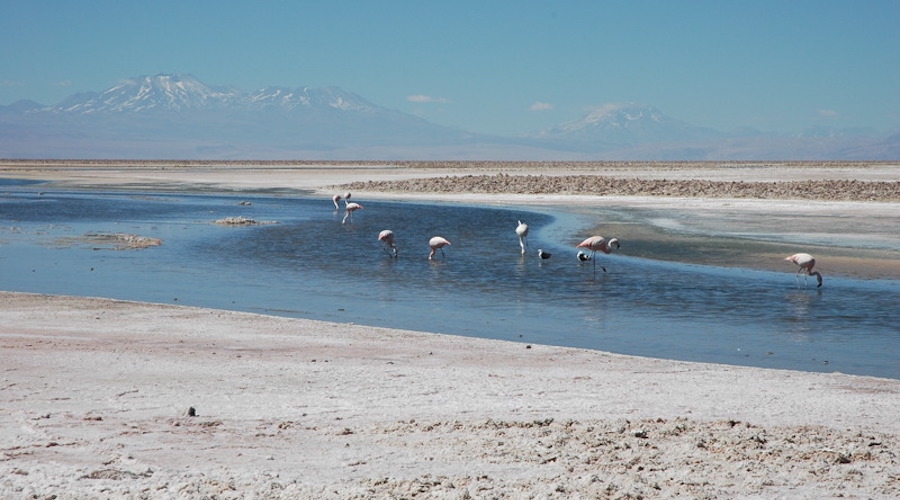
The hearings, local newspaper La Tercera reports, also included executives from Albemarle (NYSE: ALB), the word’s top lithium miner and the main competitor of Chile’s SQM (NYSE: SQM) in the Salar de Atacama salt flat, which contains the world’s highest known concentrations of lithium and potassium.

The official minutes of the meeting, disclosed by Corfo, show that Tesla is interested in knowing the agency’s development plans for the sector as well as the opportunities for collaboration with lithium producers such as Albemarle.

Talks come as the Chilean government is planning to take a page out of Mexico’s book and create a state-run lithium company, although authorities are open to let private companies in the sector through tenders.

While the administration has yet to release final details, it has said the proposed national lithium company will seek out minority partners to provide the technical knowledge the government lacks.

Private firms that win tenders may also be allowed to operate individual lithium projects under a minority stake.

The state-run miner’s first main asset would be Codelco’s lithium project at the Salar de Maricunga, a salt flat that hosts Chile’s second-largest reserves of the battery metal.
From mining to refining

Elon Musk wants more lithium, but only a handful of countries can supply the material key to the electrification of transportation.

While Tesla’s chief executive office has hinted in the past that the company planned to get into mining, he now says the firm is more focused on refining lithium than on extracting the battery metal.

The “limiting factor” is refining the metal, not actually finding it, as no country has a monopoly on deposits, Musk said Wednesday during the EV maker’s investor day.

Tesla’s goal is to produce 20 million EVs a year by 2030. It delivering around 1.31 million units in 2022.

Ahead of the 2023 investor day on Tuesday, Mexico’s President Andres Manuel Lopez Obrador said that Tesla had agreed to build a large factory in Monterrey.

The factory will be one of the country’s first that is entirely dedicated to the expensive and complex process of making electric cars

.
Albemarle has major lithium projects in Chile’s huge Atacama salt flats, pictured here.
 (Image by Valerio Pillar, Wikimedia Commons)


China’s lithium mining likely to face more scrutiny

Reuters | March 1, 2023

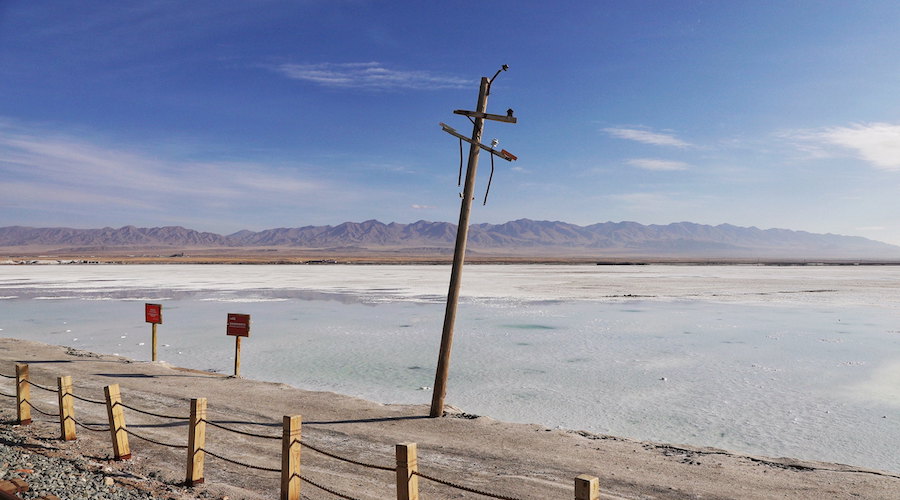
Salt Lake in Qinghai, China. (Image by Bfatphoto, Flickr).

China’s lithium mining will likely face disruption as the government steps up scrutiny of a range of problems that have emerged from extracting the metal, experts said on Wednesday.


Yichun, a city in the southern province of Jiangxi, suspended all lithium mining late last week to crack down on criminal activity, such as unlicensed and environmentally damaging mining..

Though at least some mining has resumed, experts said the government was increasing oversight of a sector that has boomed in recent years as lithium prices soared alongside burgeoning demand for battery-powered electric cars.

“Environmental issues and illegal mining are the prominent problems in Jiangxi, where around one third of domestic lithium resource supply comes from,” said Wu Wei, assistant professor at the China New Energy Policy Research Institute of Xiamen University.

“We’re likely to see regular inspections to regulate the industry as an effort for China to enhance its self-supply sufficiency of the metal critical in the new energy transition,” Wu said.

Jiangxi has large reserves of lepidolite, a lithium-containing mineral. But the relatively low grade of lithium in it requires heavy extraction, said Wu.

“The mining and processing also pollute water as a result of its byproducts like tantalum and thallium,” he said.

Yichun’s big miners with valid permits have resumed operations, even as the inspection continues.

“Our production is now normal,” an official at Yichun Tantalum Niobium Mine Company Limited, a major lithium miner and processor, told Reuters on Wednesday.

About a third of the area’s output is still suspended, however, due to a lack of permits, said a Shanghai-based lithium analyst who declined to be identified because of the sensitivity of the matter.

Yichun’s Bureau of Industry and Information Technology could not be reached for comment.

The investigation comes after a sharp decline in lithium prices, triggered by slowing demand for electric vehicles in China.

Mining in Yichun has boomed in the last two years, growing from a couple of dozen ore selection plants to more than 200, said the analyst, adding that more inspections are likely.

(By Siyi Liu, Ningwei Qin and Dominique Patton; Editing by Robert Birsel)
Column: India cheers the return of ‘King Coal’ as industry sees buoyant future

Reuters | March 2, 2023 | 

Coal mine in Jharkhand, India. 
(Image: Screenshot of Sandeep Sharma video | YouTube)

India’s coal industry celebrated the return of its major conference after a three-year pandemic hiatus by presenting a bullish view of demand, rising supply from new mines and strong demand for imports.


“King coal is coming back and coming with a big bang,” Anil Kumar Jha, the chairman of Jindal Power Ltd., told the Coaltrans India conference, held this week for the first time since February 2020.

The sentiment was echoed by virtually every speaker at the event, although there was a wide variety of views as to how successful India will be at ramping up coal domestic coal output, and how quickly this can replace imports.

The industry’s confidence in a long and prosperous future for itself stands in contrast to India’s commitment to “phase down” coal-fired power generation and achieve net zero carbon emissions by 2070.

There was no talk at all of phasing down coal at the event, rather the debate centred on just how high India’s coal demand will rise, with the consensus being it will jump to around 1.4 billion tonnes per annum by 2030 from around 1 billion tonnes currently.

As is always the case, the trick is separating the hype from the reality, and also distinguishing between short-term market dynamics and long-term trends.

The reality is that India has successfully increased domestic coal output, with official government figures released last week showing production in the first 10 months of the fiscal year that started in April 2022 reached 698.25 million tonnes, up 16% over the same period a year earlier.

It’s likely that India’s full-year output in the 2022-23 fiscal year will reach a record high, although still fall short of a target for just over 900 million tonnes.

The question is whether Coal India, the state-controlled miner that accounts for about 80% of the country’s total output, can continue to ramp up production at double-digit annual growth rates.

And even if Coal India can achieve what it has never been able to do in the past, can the railway and ports systems keep up with the increased output?

India is also betting that private mining companies will start to make a bigger contribution to domestic output as they start bringing mines to production.

Overall, the trend does appear to be for rising domestic output, but if history is any guide, it’s also likely that India will fall short of its longer-term targets.

The question is by how much, and whether the country will be able to source sufficient imports at a price that its utilities can afford.
Imports gaining

In the short term India’s imports of seaborne thermal coal are likely to accelerate, especially since the government invoked emergency measures last week requiring power plants that use imported fuel to operate at full capacity in order to avert potential electricity shortfalls as the summer demand peak approaches.

India’s coal arrivals are already heading higher, with data from commodity analysts Kpler pointing to a rise in thermal coal imports to 10.19 million tonnes in February, up from 9.71 million tonnes in January and the most since November.

Over the longer term, the trajectory for imports will depend on how successful India is at boosting domestic coal production, and shifting volumes around the country.

It’s likely that thermal coal imports may decline over the coming years, but predictions that this trade will end by 2030 are ambitious.

Where India will see increasing coal imports is in higher-grade metallurgical coal, used primarily to make steel.

India produces only small amounts of this grade of coal, also known as coking coal, and given the expected increase in steel production, it’s expected that coking coal imports will rise from around 63 million tonnes a year currently to around 100 million by 2030.

There was one question that participants at the Coaltrans India event were likely to skip around, and that was whether this additional coal the industry expects to produce will actually be needed.

India is rapidly rolling out renewable energies such as solar and wind, as well as boosting hydro generation.

In the 2021-22 fiscal year some 15.5 gigawatts (GW) of renewable capacity was installed, but only 1.4 GW of new coal-fired generation.

While thermal generation still accounts for 59% of India’s total capacity, the share of renewables is rising and was at 27% in March 2022, according to data from the Institute for Energy Economics and Financial Analysis.

The share of renewables is expected to rise to at least 40% by 2030, and may even climb to half of India’s generation capacity.

India is building new coal-fired power plants, with data from the Global Energy Monitor showing 32 GW currently being built.

Given that each GW of generation requires around 3 million tonnes of coal annually, this implies the coming capacity additions will only need another 100 million tonnes, well below the 500 million tonnes extra the industry believes it will deliver by 2030.

There are other coal users, such as cement producers, but it’s unlikely they will need massive new volumes.

Overall, it appears the positive mood of India’s coal sector is justified, especially in the short term. But their vision of massive increases in output and demand for decades to come may yet prove overly optimistic.

(The opinions expressed here are those of the author, Clyde Russell, a columnist for Reuters.)

(Editing by Stephen Coates)