Tuesday, March 21, 2023

 SASKATCHEWAN

Library workers seeing rise in violent incidents according to survey

Prince Albert Library. (File photo/paNOW Staff)
SAFE LIBRARIES
Mar 20, 2023 | 2:00 PM

Are libraries in Saskatchewan safe places for employees and patrons? A new survey is turning the page on that question with alarming data.

The results of the survey, conducted last year, were released by CUPE Saskatchewan on Thursday and show a majority of respondents have experienced or witnessed violence in the workplace.

Of those who responded to the survey, 78 per cent reported verbal abuse, 71 per cent reported witnessing violence, and 44 per cent experienced sexual harassment.

While the data was largely taken from libraries in Saskatoon and Regina, President of CUPE Saskatchewan Judy Henley said it is happening everywhere.

“It’s actually happening right across Canada; it’s not unique to Saskatchewan,” she said.

Henley noted with mental health, addictions, and homelessness becoming a growing concern in many parts of the province, staff have seen more aggressive behaviour in recent years.

“Mental health is on the rise, homelessness is on the rise, everything is on the rise and libraries are sometimes a place where people go to because it’s a warm place and a safe place,” she said. “What used to be a quiet place is no longer a quiet place.”

The survey looked at various levels of violence and harassment and exactly who is committing these acts. The results showed that a large number of cases involved a library patron or member of the public.

(CUPE Saskatchewan)

Many of the incidents involved threats of physical harm to an employee or being struck with an object.

However, about 36 per cent of those employees polled said they have not experienced a violent act over the past year.

(CUPE Saskatchewan)

paNOW reached out to several library networks including the Prince Albert Library Board, Wapiti, and Lakeland. The Lakeland Regional Library network responded by saying while it is aware of incidents in other libraries in the province, they have not seen an increase in such incidents in the past year.

“While those stories were very troubling, Lakeland Library Region has not experienced anything comparable at any of our library branches,” Executive Director Jake Marion said in a statement.

Henley though, believes many libraries are experiencing this level of harassment, and it not only puts workers in danger but patrons.

“If workers are not safe, this could adversely affect the public that are coming in to use the service. It’s not just about workers, it’s about keeping libraries safe for everybody,” she said.

As part of the report, CUPE also unveiled a number of recommendations for preventing these incidents in the future including violence prevention training, expanded union education, onsite social workers and Elders and bargaining for new provisions in collective agreements.

derek.craddock@pattisonmedia.com

Twitter: @PA_Craddock


 British Columbia

Student innovation helps Fraser Valley farmers tackle weighty plastic problem

Canada produces 62,000 tonnes of agricultural plastic

 yearly, with B.C. contributing nearly 4,200 tonnes

Eight men wearing rubber boots and other farmers' clothing stand in front of a large pile of bundled plastic
Gerald Struys says farmers in Agassiz are working to reach a net zero carbon emission goal by 2050. (Provided by Gerald Struys)

Farmers in Agassiz, B.C. finally have a solution to their thousand-tonne problem. 

Agassiz farmer Gerald Struys says farms in the area accumulate about 1,200 to 1,400 tonnes of agricultural plastic every year — about the equivalent of 350 Asian elephants.

"It's important to find a way to recycle [the plastic] because just dumping in a landfill isn't doing any good," said Struys, who is also the chair of the Kent Ag Plastics society. 

Agricultural plastic includes bale wrap and bunker covers used to preserve feed for farm animals. According to non-profit organization Cleanfarms, Canada produces nearly 62,000 tonnes each year, including 4,200 tonnes in B.C. 

After multiple hurdles, Struys says local farmers are now able to easily handle and recycle their plastic, thanks to innovations from some University of the Fraser Valley (UFV) students and Cleanfarms. 

"They've really been the go-getters for getting [the solution] going and keeping it going," he said.

Struys and other B.C. farmers now hope other communities will be inspired to tackle their plastic problem through community and youth engagement. 

"If we can do this instead of just dumping it or burning it, that would help get to our net zero [goal]," Struys said. 

Dairy Farmers of Canada has a goal to reach net zero carbon emissions by 2050. 

An open doorway to a barn shows stacks of green and white plastic sheets compressed into cubes and wrapped together with strings.
Farmers in Agassiz B.C. say they produce 1,200 to 1,400 tonnes of agricultural plastic per year. (Gerald Struys)

Creating a solution

In the spring of 2022, Cleanfarms, an organization focused on helping Canadian farmers reduce waste, provided Agassiz's farmers with a single compactor. Compactors help farmers compress large plastics for easier transport and recycling. 

But soon, one compactor wasn't enough and a team of UFV students was brought on to create a new one from scratch. 

Pierce Stoeckly, a UFV technician who initiated the project, explained that agricultural plastic is often big, light and very fluffy, making it difficult to transport to recycling depots. 

"The biggest problem is how to increase the weight," he said.

"Our students did a bit of research … and came up with a design in-house … that will compact the plastic to about a 500-kilogram bale."

Stoeckly said the students were able to test their compactor a few weeks ago at the community's biannual plastic collection day. 

They compressed nearly 70 bales of plastic in 10 hours, and then Cleanfarms helped transport it to a recycling depot. 

Once there, the plastic is turned into pellets to make fence posts and patio planks, according to Struys. 

"We really put [the machine] through its paces and based on the information we learned there, [students] are going to make a few slight modifications," Stoeckly said.

Two young people work in a large, industrial shop. The students are loading a large metal compactor with plastic.
University of Fraser Valley students helped create a recycling compactor from scratch and did a test run in Agassiz, B.C. (Pierce Stoeckly)

'Icing on the cake'

Struys says the community was happy to see youth interested in resolving the farmers' problem. He hopes this will encourage other farmers in the area to consider recycling their plastics. 

"We're going to be contacting the rest of the farms to see if they would be willing to get on board … because in the long run it's keeping [the plastic] out of the landfill," Struys said, adding the community has recycled nearly 700 tonnes of plastic in the past year. 

For the folks at Cleanfarms, this type of community engagement is what they hope to see happen across the country with other farming communities. 

"It's really unique how the farmers engaged a university," said Kim Timmer, director of stakeholder relations and policy at Cleanfarms. 

"Getting students involved, it's really icing on the cake, because now the next generation is learning about different aspects of farming."

Cleanfarms is working to send at least one compactor to each farming community in Canada, with Agassiz in line to receive 10 more to reduce potential biohazard issues and any transfer of disease from farm to farm. 

Where do your old clothes go? Nelson thrift store struggling to keep donations out of landfill

Positive Apparel Thrift Store employees load a semi-trailer with bags of old clothes, which every three weeks makes deliveries from Nelson to a recycling facility in Vancouver. There is nowhere in the Kootenays to recycle textiles. Photo: Tyler Harper

Positive Apparel Thrift Store employees load a semi-trailer with bags of old clothes, which every three weeks makes deliveries from Nelson to a recycling facility in Vancouver. There is nowhere in the Kootenays to recycle textiles. Photo: Tyler Harper


Positive Apparel sends a semi-trailer packed with clothing every month to be recycled on the coast


Every three weeks, a crew of nine people gather outside a Nelson thrift store. They form a chain, and over several hours fill a semi-trailer to capacity with bags of clothes.

Stained shirts, pants with worn-out knees, jackets with broken zippers, the bags are packed with clothes that are either ruined in some way or have simply gone out of fashion.

Once the trailer is loaded, the clothes are sent to a recycling centre in Vancouver where they are cleaned, sorted, shipped overseas or repurposed.


Better there than a landfill according to Positive Apparel owners Simone Varey and Aviva Keely, who for over a decade have tried and failed to find a local recycling solution to the thousands of pounds of old clothing Kootenay residents no longer want.

“Look at this,” Varey says as she points at a storage room that’s overflowing with bags. “Imagine this in our dump, in our landfills.”

Over the last 13 years, Keely says Positive Apparel has diverted nearly 300,000 pounds of waste textiles from the Grohman Narrows Transfer Station located just outside Nelson.

The material is sent to the Lower Mainland, where B.C.’s only dedicated textile recycling facilities are located. The clothes are washed and sorted, then either resold, made into rags or sent overseas.

It’s a costly endeavour for Positive Apparel. The store spends approximately $5,700 monthly to rent extra storage space, pick up clothes from other thrift stores and charities throughout the West Kootenay, rent the semi-trailer and make its delivery to Vancouver. Typically they do the trip once every three weeks, or sometimes twice monthly in the summer.

The effort gives Positive Apparel first pick of clothing for its store, but the majority of material isn’t anything customers would buy. The store is only paid between 10 and 15 cents per pound sent to Vancouver, and they need to make 10 trips annually to break even. The company they work with is also willing to take items such as shoes, belts and purses, but it doesn’t pay for them.

“The profit margin in this industry is tiny,” says Varey. “People think, ‘oh you get everything for free, you must make gobs of money.’”

Keely wants to see that material stay in the West Kootenay.


A decade ago, Positive Apparel briefly set up a non-profit organization and local facility that would have repurposed textiles into stuffing for pillows and couches. Anything with natural fibres could have been used to grow mushrooms. But just three months into the endeavour a trailer carrying their stock flipped on the highway, and the ensuing costs ended their plan before it could begin

Ideally, Keely says, a textile recycling facility would be operated by local governments. She says it could be set up for shredding, with materials used as rags, blankets, landscape cloth or for futons and upholstery.

“This is obviously a resource. We’re not using this resource at all, we’re sending this resource away.”

Positive Apparel owners Aviva Keely (left) and Simone Varey gesture toward a pile of clothing waiting to be recycled. The amount is a fraction of what the thrift store collects from donations in the West Kootenay. Photo: Tyler Harper

Positive Apparel owners Aviva Keely (left) and Simone Varey gesture toward a pile of clothing waiting to be recycled. The amount is a fraction of what the thrift store collects from donations in the West Kootenay. Photo: Tyler Harper

Keely said the store had previously approached the RDCK about expanding into textile recycling, but felt there was no interest.

That could change in the near future.

Amy Wilson, the RDCK’s resource recovery manager, was surprised to hear how much material Positive Apparel is diverting from the transfer station. She said the district’s sustainability department staff had already planned to attend a workshop later this month on circular economies, in which resources are reused locally, with textiles as a focus.

The workshop is being run by the B.C. organization Textile Lab For Circularity (TLC), which advocates for the elimination of textiles from landfills.

TLC managing director Tracy Lydiatt says clothing sent to textile recycling facilities doesn’t necessarily keep it out of landfills. Some of it is shipped overseas to secondary markets, where if it is soiled or damaged it is burned or buried in landfills.

“What happens to those materials when they’re actually processed? Some of them are ragged. Some of them are sold to foreign markets and the rest, unfortunately, I think goes to energy recovery.”

There are three obstacles to growing textile recycling in B.C., according to Lydiatt.

The first is a lack of a provincial ban on textiles in landfills. Do that, she says, and it will spark innovative solutions to textile recycling.

There’s also a lack of political funding and will to take on textile recycling. Lydiatt said she’s been told by provincial officials that the public’s focus right now is on plastics.

“We feel like textiles is hopefully simmering underneath the surface. Some optimistic folks say it’ll be two to three years and some say like [five to 10 years] before the province puts that legislation in place.”

Finally, textile recycling is a logistics problem. Shipping material to facilities is one hurdle, but right now most of the sorting work isn’t automated and is labour intensive. That’s complicated by the fact not every material is easy to recycle. A cotton shirt is easier to shred than stretchy yoga pants.

Lydiatt says she believes the public has good intentions for their clothing, which is why so much of it is donated instead of being tossed away. But that’s also part of what she calls wishcycling. People give away clothing hoping it goes to a place it will be used, without a thought for what happens next.

“The problem is they like holding on to jeans and old Gore-Tex jackets and literally have half a closet full of stuff because they know enough that they don’t want it to go to landfill. There’s also no viable solution for them yet to have it fully recycled.”

So the shirt that didn’t match what it looked like online, the jacket a child outgrew or the pants that became a little too tight end up with thrift stores like Positive Apparel.

Keely says her store will keep taking donations, but the public’s reliance on thrift stores to keep clothing out of landfills isn’t sustainable.

“Fundamentally the issue is out of sight, out of mind, which is why people donate.”

READ MORE:

• Tiny B.C. island community’s answer to climate change? Feed everyone

• Rise and fall of Canada’s domestic PPE market blamed on government policy

• Groups want plastic waste reduced at the source as B.C. expands recycling list

@tyler_harper | tyler.harper@nelsonstar.com

USA, Indonesia announce partnership on SMRs

20 March 2023


The USA and Indonesia have announced a strategic partnership to help Indonesia develop its nuclear energy programme, supporting Indonesia's interest in deploying small modular reactor (SMR) technology to meet its energy security and climate goals.

The signing of the agreement (Image: US Embassy in Jakarta)

A Memorandum of Agreement, as well as affiliated grants and contracts, was signed during the Indo-Pacific Business Dialogue in Bali, Indonesia. The agreement advances the goals of the Just Energy Transition Partnership (JETP) and will strengthen Indonesia's leadership in the ASEAN region on the deployment of advanced, safe and secure nuclear energy technologies, working toward the goal of net-zero emissions in Indonesia by 2060.

Under the agreement, the US Trade and Development Agency (USTDA) has awarded a grant to PLN Indonesia Power to provide assistance to assess the technical and economic viability of a proposed nuclear power plant, to be located in West Kalimantan. It will include a site selection plan, power plant and interconnection system design, preliminary environmental and social impact assessment, risk assessment, cost estimate and regulatory review.

Indonesia Power selected NuScale Power to carry out the assistance in partnership with a subsidiary of Fluor Corporation and Japan's JGC Corporation. The proposed 462 MWe facility would utilise NuScale's SMR technology.

In addition, cooperation will include USD1 million in new funding for capacity-building for Indonesia, building on its existing partnership under the US Department of State Foundational Infrastructure for the Responsible Use of SMR Technology (FIRST) Program. This includes support in areas such as workforce development, stakeholder engagement, regulations and licensing.

"This project will advance climate action and clean energy access throughout a critical part of the world and has the potential - as part of follow-on projects - to create thousands of jobs, pave the way for additional SMR projects in Indonesia and the Indo-Pacific region, and uphold the highest standards for nuclear safety, security, and non-proliferation," the US Embassy in Jakarta said.

"Indonesia has demonstrated a strong interest in partnering with the United States on its energy transition and identifying innovative and groundbreaking US technology to advance its goals," said USTDA's Director Enoh Ebong "USTDA has a unique, catalytic role in advancing the development of some of the most ambitious and noteworthy infrastructure projects in Indonesia and emerging economies around the globe."

NuScale President and CEO John Hopkins said: "In addition to providing our innovative small modular reactor technology to countries like Indonesia that are seeking reliable, zero-carbon baseload power, NuScale continues to support the US government in strengthening relationships abroad through clean energy. NuScale VOYGR SMR power plants are poised for the energy transition and will reinforce energy security for years to come."

The VOYGR plant is based on the NuScale Power Module, a pressurised water reactor with all the components for steam generation and heat exchange incorporated into a single unit, generating 77 MWe, which is the first SMR design to receive approval from the US Nuclear Regulatory Commission. NuScale offers VOYGR plants in 12, four and six-module configurations.

"After 78 years of waiting, now is the time to achieve self-sufficiency in emission-free green energy," said Indonesia Power President Edwin Nugraha Putra. "Through cooperation on technical assistance for the development of a small modular reactor, Indonesia Power, the National Research and Innovation Agency of Indonesia, and NuScale, with support from USTDA, the Coordinating Ministry for Economic Affairs of the Republic of Indonesia and PT PLN (Persero), have opened the gates to a new era of nuclear energy for electricity to light up Indonesia."

In August 2019, Indonesia's National Atomic Energy Agency (Batan) signed a Memorandum of Understanding with utility Indonesia Power to cooperate in the use of nuclear technology in the energy sector. One area of cooperation will be a feasibility study on the use of nuclear power plants.

Researched and written by World Nuclear News

Energoatom and Cameco sign uranium agreements

20 March 2023

Energoatom and Cameco have signed agreements covering the supply of Ukrainian uranium and the production of nuclear fuel for nuclear power plants in Ukraine.

Tim Gitzel, left, and Petro Kotin signed the agreements (Image: @cameconews/Twitter)

Energoatom President Petro Kotin and Cameco's President Tim Gitzel, signed the agreements in London at an event attended by the UK ambassadors of Canada and Ukraine, with Ukraine's energy minister Herman Halushchenko attending online.

The first of the bilateral agreements signed will see Cameco meeting 100% of Energoatom's need for natural uranium hexafluoride from 2024 to 2035 for the nine nuclear reactors at the Rivne, Khmelnitsky and South Ukraine plants for the duration of the contract. These plants have combined requirements over the contract term of some 15.3 million kgU as UF6 - equivalent to 40.1 million pounds U3O8 (15,424 tU).}

The second agreement covers the sale of Ukrainian uranium to Canada, with conversion of the uranium being provided by Cameco.

Kotin said that the two agreements paved the way for concluding a third agreement, on specific quantities of uranium product supply, adding: "Cooperation with Cameco is strategic and necessary for Energoatom, because together with Westinghouse we continue to move to Western standards. The development of domestic nuclear energy is possible only thanks to cooperation with our international partners."

Energoatom was already moving to diversify its nuclear fuel supply before Russia launched its military action on Ukraine, and since then has ended all contracts for Russian fuel.

Halushchenko said: "We already have a good experience of cooperation with Canadian partners and today we are deepening this cooperation. Making such strategic agreements is a matter of Ukraine's national security. We have been living in conditions of daily attacks on the energy sector ... but thanks to the stable operation of nuclear generation, we survived this winter, and for the second month now we have had no shortage of generating capacity."

Gitzel said: "We are grateful and glad to be partners of Energoatom and Ukraine in the nuclear sector. Our teams have worked fruitfully together to come to the signing of these agreements and to agree on cooperation until at least 2035. This is one of the largest and most important contracts for Cameco. Our company will help Ukraine maintain its energy independence, provide your country with electricity thanks to the supply of our nuclear fuel."

Researched and written by World Nuclear News

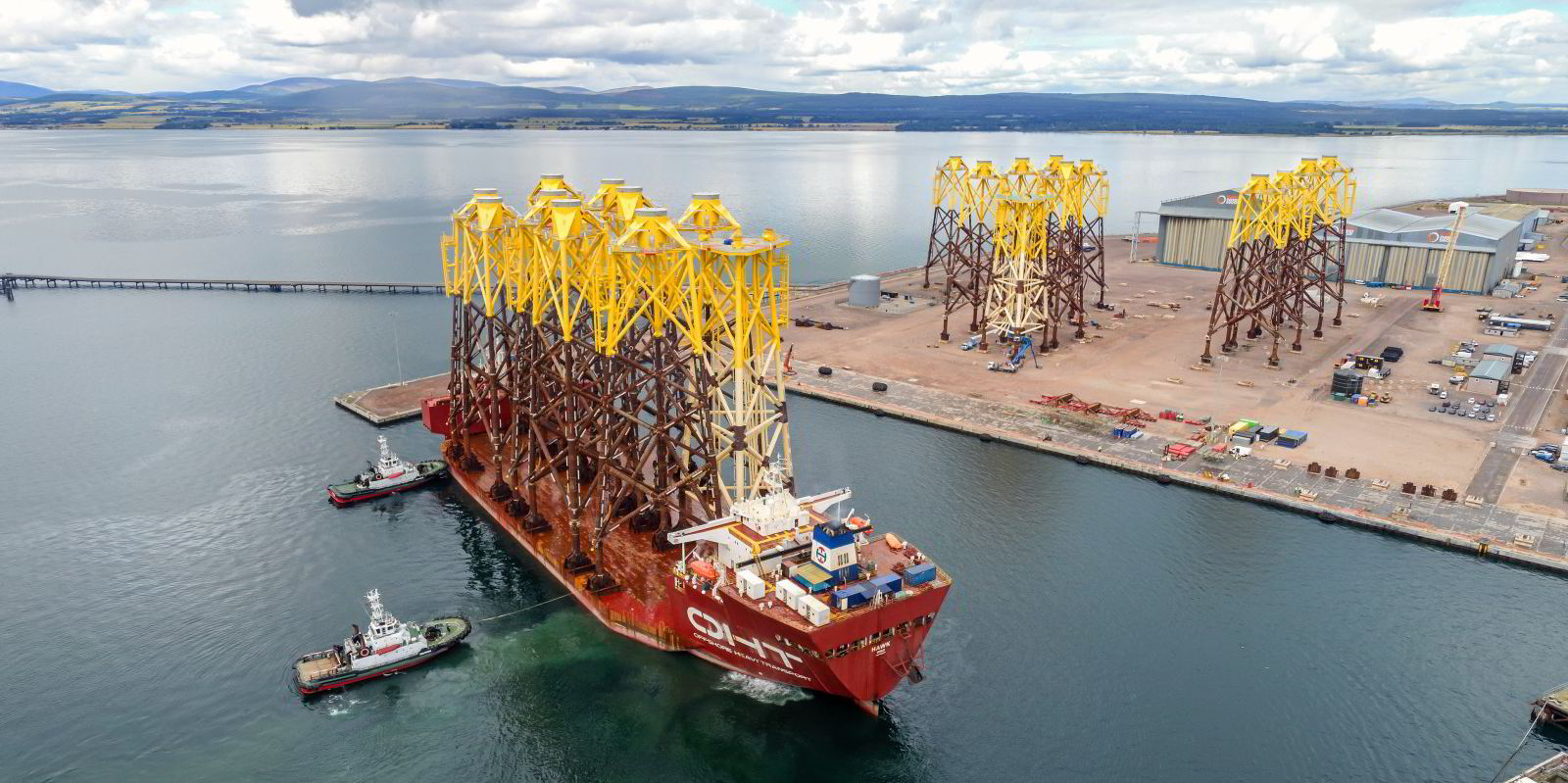
'World's biggest floating wind farm' scoped by SSE-Marubeni-CIP venture off Scotland


Ossian project development lead Holly Cartwright Photo: Ossian


Developer consortium's 3.6GW Ossian deepwater project, won in landmark ScotWind auction last year, moves past key project milestone with eye on start-up in the early-2030s

The SSS-Marubeni-Copenhagen Infrastructure Partners (CIP) joint venture constructing the floating wind development set to be the world’s largest when brought online in the 2030s, has handed in the scoping report for the 3.6GW Ossian, a key milestone on the project’s timeline.

Sumbission to Marine Scotland of the developer’s plan for the giant North Sea array on acreage awarded to the trio in last year’s landmark ScotWind auction – and recently upscaled from original 2.8GW plans – marks the first step in megaproject’s environmental impact assessment (IEA) process.


'Timeline tight' | Huge £4bn spend to ready UK ports for gigascale floating wind build: taskforce
Read more

“This is a great moment for the project team who worked together on the scoping submission. The Ossian partners are looking forward to receiving feedback and continuing to engage with stakeholders to undertake a robust and proportionate EIA for the array area,” said Holly Cartwright, the project development lead for Ossian, which worked with consultants RPS on the report.

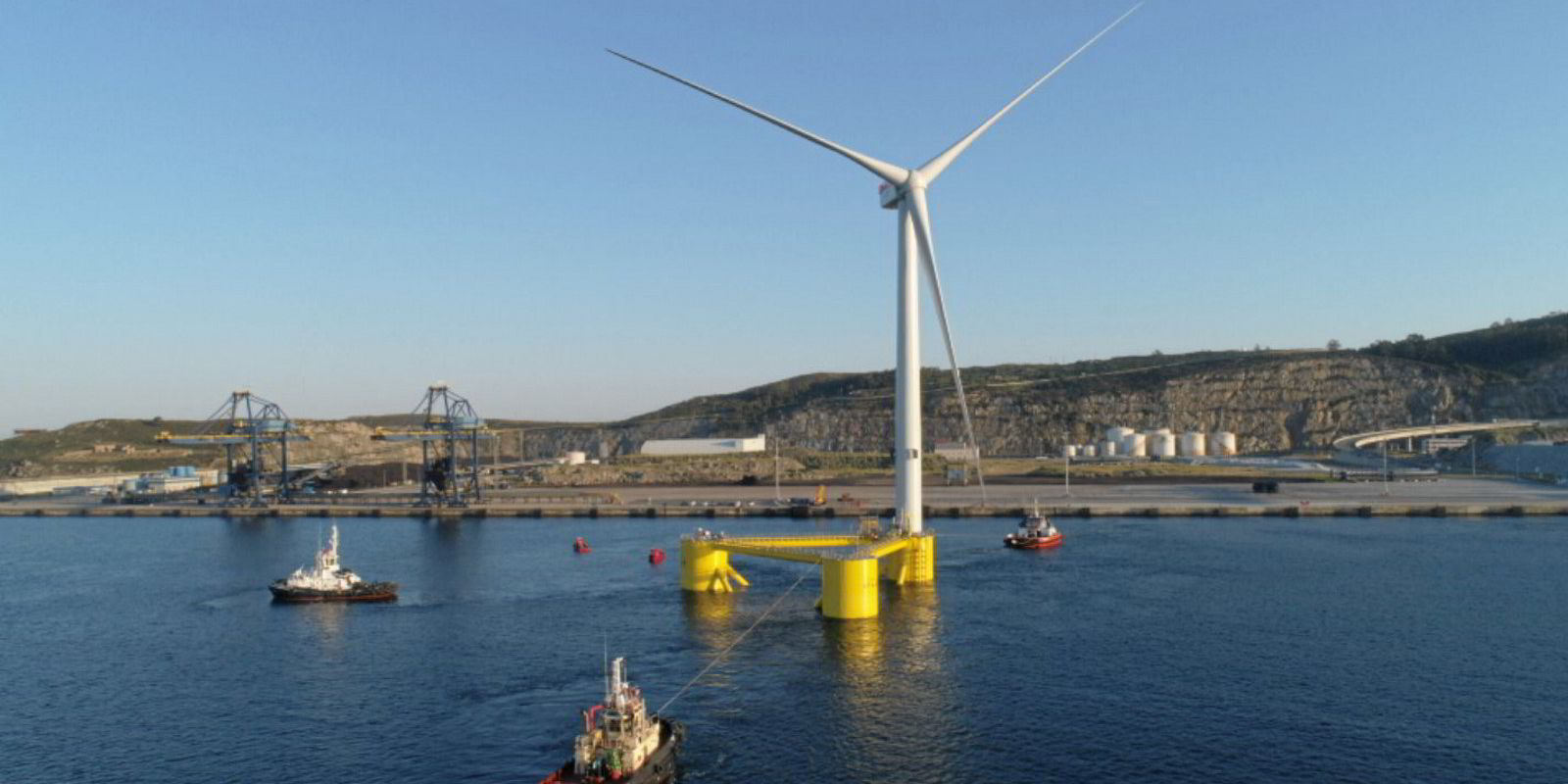
Set within the so-called E1 plan option area, Ossian, sited 80km offshore Aberdeen in 64-89 metres of water, is different class of project than the sector – which currently has total of less than 150MW of operating floating wind capacity globally – has seen so far: some 270 supersize turbines mated to hulls moored over a 858km2 swath of water as part of the development, as well as up to six offshore substation platforms, likely using a mix of fixed-bottom and floating foundations.

Ossian – named an ancient Scottish sea adventurer – will generate enough power for six million Scottish homes and offset up to 7.5 million tonnes of carbon dioxide emissions each year.


Industy calls for 'all port' aid as Scotland names first green freeports for offshore wind drive
Read more

Geotechnical investigation contracts have recently been awarded for Ossian, with Fugro brought in for downhole sampling and in situ cone penetration testing on the project site’s seabed, while Ocean Infinity will focus on shallow vibro-cores and deep push seabed cone penetration tests.

Scotland is prospective home to some of the world’s most ambitious floating wind plans thanks to ScotWind, in which the SSE-Marubeni-CIP consortium was among the biggest winners and that has laid the ground for a potential 28GW of development, the majority of which is foundation-free.

Consultancy DNV calculates floating projects today make up over 15% of the total offshore wind deploymentin the pipeline for switch-on by mid-century, equal to some 264GW of the 1.75TW slated to be installed.
Prevalence of endangered orca inbreeding ‘surprising’, new study suggests

Posted: Mar. 20, 2023
 
CHEK
A new study suggests inbreeding is more common than previously thought within the endangered orca population that frequents B.C. waters.

Released Monday, the study found that the amount of orcas that are inbreeding was higher in the population of Southern Resident Killer Whales that numbers only 73 as of last count, according to report co-author Dr. Kim Parsons of the NOAA’s Northwest Fisheries Science Centre in Seattle.

“I think that the magnitude of the level of inbreeding was a little bit surprising, but we knew from the work we had already done and published in 2018 that there was evidence of inbreeding in the Southern Resident Killer Whales and there’s not a lot of mating outside of the southern resident population,” stated Parsons.
Conservational organizations note that this information highlights the need for change fast.

Christian Wilhelmson from the Georgia Strait Alliance said this study is an opportunity to fuel the conversation to act now to save the endangered orcas.

“I think what the scientists have been reporting on highlights just how urgent more action is need to protect the species, because obviously inbreeding is something we want to see less of and the only way you can have that is to have more individuals of the population,” said Wilhelmson.

Wilhelmson adds that the way to increase the population and reduce inbreeding is better regulate Chinook salmon fishing, reduce pollution in their environment and reduce noise and disturbance.

Scientists behind the study note that there may not be a way to reverse the inbreeding and emphasize that protecting killer whales should still be a top priority to ensure the health of the pods.

The report also suggested that as female killer whales take about 20 years to reach peak fertility, the southern resident females may not be living long enough to ensure the growth of their population.

In its latest census released in November 2022, the Center for Whale Research reported a decline in the number of Southern Resident Killer Whales belonging to J, K and L pods, saying they went down to 73 from 74 a year earlier accounting for two new births and three new deaths.

Researchers: Inbreeding a big problem for endangered orcas

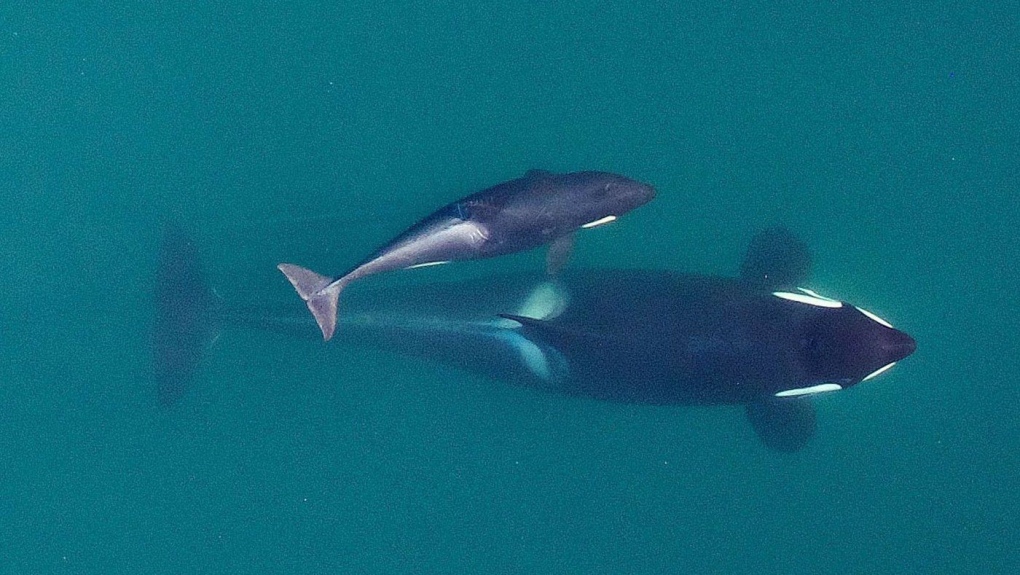
This Sept. 2015, photo provided by NOAA Fisheries shows an aerial view of adult female Southern Resident killer whale (J16) swimming with her calf (J50)
(NOAA Fisheries/Vancouver Aquarium via AP, File)

Gene Johnson
The Associated Press
Published March 20, 2023
S
SEATTLE -

People have taken many steps in recent decades to help the Pacific Northwest's endangered killer whales, which have long suffered from starvation, pollution and the legacy of having many of their number captured for display in marine parks.

They've breached dikes and removed dams to create wetland habitat for Chinook salmon, the orcas' most important food. They've limited commercial fishing to try to ensure prey for the whales. They've made boats slow down and keep farther away from the animals to reduce their stress and to quiet the waters so they can better hunt.

So far, those efforts have had limited success, and research published Monday in the journal Nature Ecology and Evolution suggests why: The whales are so inbred that they are dying younger and their population is not recovering. Female killer whales take about 20 years to reach peak fertility, and the females may not be living long enough to ensure the growth of their population.


RELATED STORIESB.C. study links killer whale decline to lack of energy-rich fatty salmon
Two U.S. towns declare rights for critically endangered southern resident killer whales
Southern resident killer whale population falls to 73
It's a girl: New endangered orca calf identified as female
'Just astounding': Orca swims through Victoria Inner Harbour

While that news sounds grim for the revered orcas - known as the “southern resident” killer whales - it also underscores the urgency of conservation efforts, said Kim Parsons, a geneticist with the National Oceanic and Atmospheric Administration's NOAA Fisheries who co-authored the study. The population is not necessarily doomed, she said.

“It's not often inbreeding itself that will result in a shortened lifespan or kill an individual,” Parsons said. “It's really that inbreeding makes these individuals more vulnerable to disease or environmental factors. We can support the population by supporting the environment and giving them the best chance possible.”

The struggles of the charismatic population of orcas that frequent the waters between Washington state and the Canadian province of British Columbia have been well documented - including in 2018, when one grieving mother carried her stillborn calf for 17 days in an apparent effort to mourn or revive it.

The southern resident population comprises three clans of whales known as the J, K and L pods. They are socially distinct and even communicate differently from other orca populations, including the nearby northern residents, which are listed as threatened and which primarily range from Vancouver Island up to southeast Alaska.

While the southern residents' range overlaps with other populations of killer whales, they haven't regularly interbred in 30 generations, the researchers said.

In the 1960s and 1970s, dozens of Pacific Northwest whales were caught for display in marine theme parks. The whale-capture industry argued that there were many orcas in the sea, and that some could be sustainably caught.

At least 13 orcas died in the roundups, and 45 were delivered to theme parks around the world - reducing the southern resident population by about 40%. The brutality of the captures began to draw public outcry and a lawsuit to stop them in Washington state.

Today only 73 southern residents remain, according to the Center for Whale Research on Washington state's San Juan Island. That's just two more than in 1971. Of those captured, only one - 56-year-old Lolita, at the Miami Seaquarium - survives. The Seaquarium announced last year it would no longer feature Lolita in shows.

Prior studies have suggested that inbreeding was a problem, including a 2018 study that found just two males had fathered more than half the calves born to the southern residents since 1990.

For the new research, NOAA geneticist Marty Kardos, Parsons and other colleagues sequenced the genomes of 100 living and dead southern residents, including 90% of those alive now. Those whales had lower levels of genetic diversity and higher levels of inbreeding than other populations of killer whales in the North Pacific, they found.

The capture of the whales decades ago, as well as the geographic or social isolation of the animals, likely explains the inbreeding, the researchers said.

Meanwhile, conservation efforts have helped other North Pacific orca populations thrive. The northern resident killer whales have increased from about 122 animals in 1974 to more than 300 by 2018. Like the southern residents, they only eat fish, primarily salmon - unlike many other killer whales, which eat mammals such as seals.

The Alaska resident killer whale population is estimated to have doubled from 1984 to 2010. According to the researchers, the southern residents would likely be on a similar trajectory if not for their elevated levels of inbreeding.

Inbreeding has also afflicted other populations of isolated or endangered animals, such as mountain lions in California, gorillas in Africa and bottle nose dolphins off western Australia. In some cases, scientists may be able to improve the gene pool in one population by capturing and introducing animals from another.

That's not the case for orcas, which are massive and free-swimming. Further, the southern residents already have opportunities to interbreed - they just haven't done so, Parsons said.

“We really have to leave it to those whales to mate with whom they choose and support the population in other ways,” Parsons said.


Canada's Prairies expected to benefit from U.S. wheat problems
By Sean Pratt
WESTERN PRODUCER
Published: 12 hours ago

Crop condition reports for hard red winter wheat (HRWW) in Kansas and Texas show that only 17 percent of the crop is rated good to excellent as of March 12. | File photo

Canada’s upcoming spring wheat crop will once again benefit from problems with the U.S. winter wheat crop, says an analyst.

“The biggest bread wheat that is produced in North America is in trouble again,” said MarketsFarm analyst Bruce Burnett.

Crop condition reports for the week ended March 19 show some improvement over the previous week in Texas and Kansas, but the ratings are still well below normal.


The amount of the hard red winter wheat (HRWW) crop in good-to-excellent condition was 29 percent in Oklahoma, 23 percent in Texas and 19 percent in Kansas.

Much of the region is still experiencing “extreme” to “exceptional” drought, according to the U.S. drought monitor.

U.S. farmers planted 36.95 million acres of winter wheat in 2023, up 11 percent from the previous year.

That includes 25.3 million acres of hard red winter wheat, up 10 percent from 2022.

Burnett plans to pay close attention when the U.S. Department of Agriculture updates those numbers at the end of March.

“I would expect that given the dry conditions, you’re going to see a fairly large abandonment rate in parts of Kansas, Oklahoma and Texas,” said Burnett.

The full extent of the abandonment may not be known until June.

It is extremely early to be forecasting U.S. hard red winter wheat production, but he was willing to take a crack at it

Burnett believes growers will harvest 600 million bushels of the crop, give or take 25 million bu.

That would be an improvement over last year’s disappointing drought-reduced output of 531 million bu.

“I think production will be higher than last year, because last year was a pretty dismal production number,” said Burnett.

But it will be well below the previous year’s 750 million bu.

And total supply will likely be smaller than last year, since carryout from the previous crop is expected to drop by about 100 million bu.

Canada’s spring wheat crop helped fill the supply shortfall caused by last year’s small U.S. HRWW crop.

“It will be called upon to fill the gap this year as well,” he said.

Canadian wheat exports are on a record-setting pace through the first 32 weeks of the 2022-23 campaign.

Burnett expected strong demand again in the upcoming year because of the looming production problems in the U.S.

The USDA reports that U.S. HRWW futures prices rose to historic highs in 2022, peaking in May because of the drought in the southern Plains and the onset of the war between Russia and Ukraine, which lead to massive market uncertainty.

Prices started to drop in mid-2022 with the onset of winter wheat harvests in key exporting countries.

“In recent months, prices were pressured by slow U.S. export sales amid abundant exportable supplies from key

U.S. competitors, especially Russia, Australia and Ukraine,” said the USDA in its Wheat Outlook: March 2023 report.

U.S. prices are at their lowest since mid-2021, but they are still high relative to competitors.

The price spread between U.S. HRWW and comparable Russian and French wheat was about $60 per tonne as of the publication of the report on March 10.

That spread has historically been between even and $40 per tonne.
It takes guts to fix America’s abusive, illegal ag labour system

By Alan Guebert
Published: 5 days ago

U.S. federal labour experts estimate 73 percent of all U.S. agriculture business employees are immigrants and that half are "undocumented," or in the U.S. illegally. As such, it's likely that half or more of the food bought by Americans is picked, packed, milked, slaughtered, boxed or delivered by undocumented and sometimes, underage workers.
 | Getty Images

Less than a month after the revelation that a Wisconsin-based contractor, Packers Sanitation Services, Inc. (PSSI) had illegally hired at least 102 teenagers between the ages of 13 and 17 to clean some of the nation’s most profitable industrial meat-packing plants, one middle school child at the centre of the story has, according to a March 3 Washington Post account, “watched her whole life unravel”:“First, she lost the job that burned and blistered her skin but paid her $19 per hour.”

“Then the county judge sent her stepfather to jail for driving her to work each night, a violation of child labour laws.”

“Her mother also faces jail time for securing the fake papers that got the child the job in the first place.”
Meanwhile, PSSI, the company that hired her and other children, “has faced no criminal charges, despite evidence that it failed to take basic steps to verify the age of its young employees.” It did, however, “quickly resolve” any charges it faced by “paying a US$1.5 million civil fine.”

That is the all too common side of today’s global food system: it operates on the ragged edge of the law. Most giant meat packers, despite their folksy corporate slogans and farm-friendly images, live on this edge.

For example, since 2020, two of the biggest, Tyson Foods and JBS, have paid nearly $800 million to settle either federal or civil suits for alleged labour and market violations.

Those costly settlements, however, haven’t hurt Big Meat’s ability to secure lucrative government contracts. Since 2017, JBS has been awarded nearly $500 million from the U.S. Department of Agriculture — $400 million in meat contracts and $90 million in China trade aid offered under former U.S. President Donald Trump’s administration.

This latest revelation about underage, illegal immigrant cleaning crews only spotlights meatpacking’s worst kept secret. U.S. federal labour experts estimate 73 percent of all U.S. agriculture business employees are immigrants and that half are “undocumented,” or in the U.S. illegally.

As such, it’s likely that half or more of the food bought by Americans is picked, packed, milked, slaughtered, boxed or delivered by undocumented and sometimes, underage workers.

That’s one of the darker aspects of America’s cheap, safe food supply: some of the biggest, richest ag companies often rely on powerless, illegal immigrant labour to do food’s dirty work because, as these companies often claim, no American will do it.

If true, the biggest part of the cure lies in the near-total control the large ag businesses hold over wages, benefits, harsh and dangerous working conditions, harassment, bullying, poor training, favouritism and other worksite shortfalls.

This corrupt-at-its-core system continues because agbiz and everyday Americans benefit from the abuse of desperate immigrant workers seeking to remain in the United States to somehow earn enough money to pay off debts that brought them and family members to the promised land — America.

That’s exactly what happened to one middle-schooler caught in the raid of the JBS beef plant in Grand Island, Nebraska.

Like most 13-year-olds, she wanted a job to buy “nice clothes and an iPhone 13” so she lied about her age and was hired by JBS’s cleaning contractor “to scour blood and beef fat from the slippery kill floor, using high-pressure hoses, scalding water and industrial foams and acids….”

PCCI, the contractor; JBS, the plant owner; and Blackstone, the $100-billion private equity fund that owns PCCI, all denied hiring underage workers.

But clearly they do, as proven by the 102 underage teenagers found cleaning slaughtering plants in eight states by the U.S. Department of Labor in raids last October.

And consumers, too, use underage workers, every time we buy a ribeye, pork loin, chicken breast, carrot, strawberry, head of lettuce or some other item that has travelled a crooked path to our local meat case or grocery shelf.

Which 13-year-old child, mother, grandfather, sister or son was abused, underpaid, threatened, hurt or fired so I could pay pennies less for that meat or vegetable?

If our politicians won’t fix this corrupt system, then our shame and courage should.

Alan Guebert is an agricultural commentator from Illinois.
ALBERTA
Domestic sheep suspected in bighorn disease outbreak

By Alex McCuaig
Published: 4 days ago

Matt Mellon, Wild Sheep Foundation Alberta president, said 18 bighorn were found dead or culled because of a confirmed case of Mycoplasma ovipneumoniae, or Movi. 
| Government of Alberta photo

An organization committed to the preservation of Alberta’s bighorn sheep population is calling for better testing of its domestic cousins after an ovis disease outbreak in a wild herd west of Calgary.

Matt Mellon, Wild Sheep Foundation Alberta president, said 18 bighorn were found dead or culled because of a confirmed case of Mycoplasma ovipneumoniae, or Movi.

“It’s an all ages die-off of our bighorn sheep,” said Mellon, referring to the result of an uncontrolled Movi outbreak. “It can affect up to 95 percent of the sheep and once it gets out into the open population, it’s not stoppable.”


The respiratory disease, which produces pneumonia-like symptoms, is usually fatal to wild sheep but produces more mild symptoms in domestic flocks.

The infection was detected after reports of six dead bighorns were made in the Bluerock Wildland Provincial Park, just west of Turner Valley next to Kananaskis County, with a seventh animal found suffering with symptoms consistent with Movi.

Testing confirmed the disease with another 11 bighorn subsequently culled to prevent disease spread.

Mellon said provincial officials are trying to identify the vector for transmission, but he suspects nearby small domestic flocks may be the source.

“The next step for our bighorn sheep as a whole, which is a big step, is to be working with our agriculture department and our partners in agriculture to promote herd health in domestic sheep,” said Mellon. “We can’t stress that enough.”

Some jurisdictions with bighorn populations have established an exclusion zone that prohibits domestic flocks in areas that may overlap with wild herds, said Mellon.

“We want to avoid the finger pointing right now but I can’t drive home enough how much of a risk there is out there from these domestic sheep to our wild sheep,” he said.

WFSA is working with the province on a voluntary domestic sheep Movi testing program to help ensure the disease is not present in those flocks as well as mitigating risks to wild populations if it is.

The Rocky Mountain bighorn is Alberta’s official mammal and one of several recognized symbols of the province along with the wild rose.