Thursday, May 18, 2023

WestJet says it is activating contingency plan in preparation for work stoppage

Talks between WestJet and the pilots' union continue amid the countdown toward a Friday strike deadline, with the airline saying it has started to cancel flights ahead of the anticipated work stoppage.

Some 1,800 pilots at the carrier and its Swoop subsidiary are poised to walk off the job as of 3 a.m. eastern daylight time after the Air Line Pilots Association issued a strike notice Monday.

The federal labour minister and the government's head mediator as well as WestJet's CEO and the pilots' union leaders have all descended on a hotel near Toronto's Pearson airport to work toward a deal.

WestJet issued a statement early Thursday saying it has begun cancelling flights in preparation for the job action. 

The statement reads that the WestJet Group is parking the majority of its 737 and 787 fleet in a "measured, phased and safe approach," given that a tentative agreement has not yet been reached. The airline says WestJet Encore, WestJet Link as well as limited 737 flights will continue to operate during this time. 

WestJet chief executive Alexis von Hoensbroech says the union's demands are extreme, while the travel plans of thousands of Canadians hang in limbo ahead of the May long weekend.

Bernard Lewall, who heads the union's WestJet contingent, says the workers' issues revolve around pay, job security and scheduling, with pilots earning roughly half of what some of their U.S. counterparts make.

With more than 4,000 flights scheduled over the next seven days, WestJet carries 28 per cent of Canada's domestic market, while Air Canada runs 47 per cent, according to flight data firm Cirium.

The airline is advising travellers to check the status of their flight before leaving for the airport, and to visit WestJet's Guest Updates page or Swoop's information hub for more information regarding flight status and travel changes. 

This report by The Canadian Press was first published May 18, 2023.


Gap is substantial': WestJet CEO says

negotiations remain difficult after offer 

tabled to pilots

As negotiations continue between WestJet and the union representing its pilots, Chief Executive Officer Alexis von Hoensbroech said a substantial gap still exists after the airline put an offer on the table to avoid travel disruptions. 

On Monday, the Air Line Pilots Association put forward a 72-hour strike notice ahead of the May long weekend. The union represents approximately 1,600 crew members for WestJet and its subsidiary, Swoop. 

The Calgary-based airline said Tuesday that a work stoppage could occur as soon as Friday at 3 a.m. MDT.

“The gap is substantial. We have put something on the table that is very generous. I think it's the most generous offer that any union actually got across all the Canadian sectors that were going on strike for less than what we are offering,” von Hoensbroech said in an interview with BNN Bloomberg Wednesday. 

Von Hoensbroech said limitations exist regarding what the company can afford. 

“With what we have put on the table, we would make them the best-paid pilots in Canada, and I think that's quite reasonable,” he said. 

Alongside wages, von Hoensbroech said both sides are discussing scope and working conditions.

Last week, Bernard Lewall, the head of the Air Line Pilot Association's WestJet contingent, stated that the strike notice was related to job protection, pay, and scheduling. Lewall also stated that around 340 pilots left the airline over the previous year and a half, adding that most of which went to other airlines. 

In a statement to BNNBloomberg.ca on Wednesday, the union acknowledged that negotiations were ongoing and that flight disruptions "are never an ideal outcome."

“Negotiators are making themselves available 24/7 until the end of the 72 notice period to reach a negotiated agreement that will help fix WestJet’s pilot attraction and retention crisis and allow the airline to recognize its growth strategy,” the statement reads.

Ahead of the potential strike, the airline issued a lockout notice Monday. The airline also indicated preparations would be made to reduce network operations across WestJet as well as Swoop. 

In order to avoid travel disruptions for WestJet customers, von Hoensbroech said the airline is taking an “all hands on deck,” approach and that he and the airline’s negotiations team are present and working around the clock. 

“Everyone knows that we have a deadline looming that may disrupt the long May weekend, and we are doing everything we can, including myself being here, to bring this to a close before we see any major disruptions,” he said. 

With files from the Canadian Press.


Here's what you need to know about a 

possible WestJet pilot strike

WestJet started grounding flights Thursday in preparation for a potential work stoppage by its pilots early Friday.

The pilots’ union issued a 72-hour strike notice earlier this week, and WestJet issued a lockout notice in response. The company’s chief executive said Wednesday the two sides are far apart on an agreement after the airline tabled an offer during negotiations in a hotel north of Toronto.

The Air Line Pilots Association said in a news release Monday the strike notice comes after nine months of failed negotiations with the company. The union represents around 1,600 flight crew members across WestJet and its subsidiary Swoop.

As the May long weekend approaches, travel plans hinge on successful negotiations between the airline and the union representing its pilots.

Here’s a look at the ongoing situation.

WHAT’S HAPPENING NOW

WestJet had started parking the majority of its 737 and 787 fleet as of Thursday morning in the absence of an agreement with the pilots, though the company said said WestJet Encore, WestJet Link and some 737 flights were set to continue.

Meanwhile, Air Line Pilots Association union leaders, WestJet CEO Alexis von Hoensbroech, Canada’s labour minister and the government’s head mediator were in Toronto near Pearson International Airport on Thursday working towards an agreement.

The Canadian Press has reported that WestJet’s latest offer to the pilot captains would see them earn between $300,000 and $350,000 by the end of the collective agreement term, but the pilots’ union said the numbers don’t tell the whole story.  

WHAT COULD HAPPEN NEXT?

In its strike notice, the Air Line Pilots Association stated that flight disruptions are not ideal, but pilots of the Calgary-based airline would withdraw services in order to secure a contract.

Von Hoensbroech said Tuesday the potential strike brings uncertainty for thousands of individuals with travel plans over the long weekend.

However, the airline stated Monday that if a delay or cancellation were to occur, customers would be, “refunded or re-accommodated, as applicable.”

Ahead of the potential pilot strike, Flair Airlines announced it was increasing its travel offerings between certain Canadian cities during the long weekend.

WHEN WOULD IT HAPPEN?

Following the strike notice, WestJet stated a work stoppage could occur as soon as Friday at 3 a.m. MDT, in a news release Tuesday.

However the airline stated at the time of the release, there was no impact on the company’s operations and that in the event of a work stoppage, WestJet will provide enhanced flexibility for guests travelling from May 15-21.

WHAT BOTH SIDES ARE SAYING

The union stated in its notice Monday that it could have filed the strike notice over the May long weekend but chose not to in an effort to keep the airline functioning.

Following the strike notice, WestJet issued a lockout notice Monday but noted that it does not mean a work stoppage is certain. The airline also stated it would prepare for a reduction in network operations across WestJet and Swoop.

WestJet said in a statement last week that its pilots are amongst the highest compensated across the country and that a contract comparable to U.S. pilot groups would put the company’s future at risk.

WestJet said that resignations have been “relatively low” and that the airline has hired three times more pilots in its mainline service compared to the number of resignations.

Bernard Lewall, the head of the Air Line Pilot Association's WestJet contingent, said last week that the strike notice relates to job protection, pay, and scheduling, while adding that around 340 pilots left the airline over the past year and a half. Lewall said most of the departing pilots went to other airlines.

Negotiations face headwinds as von Hoensbroech said the “gap is still massive,” on a video call from the location of ongoing talks Tuesday.

Additionally, with a potential strike looming, von Hoensbroech said bookings have been “softening.”

In a statement Wednesday, the union told BNN Bloomberg that talks are ongoing and negotiators are making themselves available around the clock in order to reach an agreement.

In an interview with BNN Bloomberg Wednesday, von Hoensbroech said negotiations are difficult, but that the airline did table an offer.

“The gap is substantial. We have put something on the table that is very generous. I think it's the most generous offer that any union actually got across all the Canadian sectors that were going on strike for less than what we are offering,” he said.

Additionally, von Hoensbroech reiterated there are limits on what the company can afford. He said the offer that was presented to the union would make WestJet pilots the “best-paid” in the country.

With files from the Canadian Press.


It’s time to guarantee healthcare to all Americans as a human right


It is time to end the international embarrassment of the US being the only major country that does not guarantee healthcare

OPINION
THE GUARDIAN
Thu 18 May 2023 

Let’s be clear. The current healthcare system in the United States is totally broken, dysfunctional and cruel. It is a system which spends twice as much per capita as any other major country, while 85 million Americans are uninsured or underinsured, one out of four Americans cannot afford the cost of the prescription drugs their doctors prescribe, and where over 60,000 die each year because they don’t get to a doctor on time.

It is a system in which our life expectancy is lower than almost all other major countries and is actually declining, a system in which working class and low-income Americans die at least ten years younger than wealthier Americans.

It’s not just trans kids: Republicans are coming after trans adults like me, too
Alex Myers

It is a system in which some 500,000 people go bankrupt because of medically related debt.

It is a system in which large parts of our country are medically underserved, where rural hospitals are being shut down, and where people, even with decent insurance, have to travel hours in order to find a doctor.

It is a system in which, in the midst of a major mental health crisis, Americans are unable to find the affordable mental health treatment they need.

It is a system where, despite our huge expenditures, we don’t have enough doctors, nurses, dentists, mental health professionals, pharmacists and other healthcare professionals – and where we spend less than half as much of our healthcare dollars on primary care as do most other countries.

It is a system in which, while we are desperately in need of more health professionals, young people are graduating medical school, dental school or nursing school, hundreds of thousands of dollars in debt; a system in which Black, Latino and Native American doctors and nurses are grossly under-represented as medical professionals.

It is a system in which health care for most Americans remains attached to employment. Incredibly, during the pandemic when millions lost their jobs, they also lost their healthcare. It is a system in which the quality of care you receive in this country is dependent on the generosity of your employer or whether you have a union. Not surprisingly, workers at McDonald’s do not receive the same quality care as executives on Wall Street.

All of that has got to change. The function of a rational and humane healthcare system is to provide quality care for all as a human right. It is not to make tens of billions of dollars every year for the insurance companies and the drug companies.

Yes. It is long overdue for us to end the international embarrassment of the United States being the only major country on earth that does not guarantee healthcare to all of our people. Now is the time to finally pass a Medicare for All single-payer program. And that is the legislation that I am introducing in the Senate this week with 14 co-sponsors. In the House there will be over 100 co-sponsors.

Let’s be honest. The debate over Medicare for All really has nothing to do with healthcare. It has everything to do with the extraordinary greed of the healthcare industry and their desire to maintain a system which makes them huge profits.

While ordinary Americans struggle to pay for healthcare, the seven largest health insurance companies in our country made over $69bn in profits last year and the top ten pharmaceutical companies made over $112bn.

The corporate opposition to the desperately needed reforms of our disastrous healthcare system is extraordinary.

Since 1998, the private health care industry has spent more than $11.4bn on lobbying and, over the last 30 years, has spent more than $1.8bn on campaign contributions to get Congress to do its bidding.

The pharmaceutical industry alone has over 1,800 lobbyists on Capitol Hill – including the former leadership of both political parties.

That’s how business is done in Washington. Well, we intend to change that dynamic. We intend to fight for legislation which ordinary Americans want, not what powerful special interests want.

Our Medicare For All legislation would provide comprehensive healthcare coverage to all without out-of-pocket expenses and, unlike the current system, it would provide full freedom of choice regarding healthcare providers.

No more insurance premiums, no more deductibles, no more co-payments, no more filling out endless forms and fighting with insurance companies.

And comprehensive means the coverage of dental care, vision, hearing aids, prescription drugs and home and community-based care.

Would a Medicare-for-all healthcare system be expensive? Yes. But, while providing comprehensive healthcare for all, it would be significantly LESS expensive than our current dysfunctional system because it would eliminate an enormous amount of the bureaucracy, profiteering, administrative costs and misplaced priorities inherent in our current for-profit system.

Under Medicare for All there would no longer be armies of people billing us, telling us what is covered and what is not covered and hounding us to pay our hospital bills. This simplicity not only substantially reduces administrative costs, but it would make life a lot easier for the American people who would never again have to fight their way through the nightmare of insurance company bureaucracy.

In fact, the congressional budget office has estimated that Medicare for All would save Americans $650bn a year.

Guaranteeing healthcare to all Americans as a human right would be a transformative moment for our country. It would not only keep people healthier, happier and increase life expectancy, it would be a major step forward in creating a more vibrant democracy. Imagine what it would mean if our government worked for ordinary people and not just powerful corporate interests.

Bernie Sanders is a US Senator and the ranking member of the Senate budget committee. He represents the state of Vermont


UPDATE
Devastating floods in Italy claim lives and leave thousands homeless

Twenty-one rivers burst their banks after heavy storms across country cause landslides and submerge villages

Angela Giuffrida in Rome
THE GUARDIAN
Wed 17 May 2023 

Nine people have died and thousands have been evacuated from their homes after heavy storms wreaked havoc in the northern Italian region of Emilia-Romagna, causing severe flooding and landslides.

People sought refuge on the rooftops of their homes after 21 rivers broke their banks, submerging entire towns.

Among the victims were an elderly man and a couple who owned a company in the agriculture sector, according to Corriere della Sera. The body of a German woman was found on a beach in Cesenatico, a town by the Adriatic coast, but it is unclear if she was killed in the storms. Others are still reported missing.

The Emilia Romagna F1 Grand Prix scheduled this weekend has been cancelled.

“The only irreparable thing in this emergency are the nine people who lost their lives, and we hope there are no more,” said Stefano Bonaccini, president of Emilia Romagna.

Italy’s civil protection agency said on Wednesday there could be worse to come. “The rainfall is not over, it will continue for several hours,” the agency’s chief, Titti Postiglione, told SkyTG24 news. “We are facing a very, very complicated situation.”
The Savio River in Cesena, central Italy, which burst its banks. 
Photograph: AP

There has been heavy rain across Italy in recent days but the worst-affected area has been Emilia-Romagna and parts of the central Marche region, where 12 people died in floods last September.


In a video shared on social media, the voices of people trapped in their homes in Faenza, a city in Ravenna province, could be heard shouting for help. Massimo Isola, the mayor of Faenza, said: “We had a night that we will never forget. We’ve never known such flooding in our city, it is something unimaginable.”

Enzo Lattuca, the mayor of Cesena, where citizens swam through the floods to rescue others, said: “The situation is disastrous, it’s a catastrophe, and the rain has not yet finished.”

He said on Wednesday morning the River Savio was starting to swell again.

A bridge that connected Motta-Budrio with San Martino in the area of Bologna collapsed overnight. “Do not go near it,” Italy’s fire service warned. “There is a gas pipeline close by which also seems to be affected.”

Five thousand people were evacuated from their homes in Ravenna. “It’s probably the worst night in the history of Romagna,” Michele de Pascale, the mayor of Ravenna, told Rai radio. “Ravenna is unrecognisable for the damage it has suffered.”

Dario Nardella, the mayor of Florence, said mountain villages on the Romagna side of the Mugello valley had been cut off due to landslides.skip past newsletter promotion

In a post on social media, the Italian prime minister, Giorgia Meloni, expressed her “total closeness to the affected population”, adding that the government was closely monitoring the situation.

The deputy prime minister, Antonio Tajani, said the government would “do everything to help the population hit by the flooding in Emilia-Romagna”.

“From those evacuated to the agricultural companies that have lost entire harvests,” he added. “The rescue forces and volunteers are heroes. I pray for the victims and their families.”

Weather-related disasters have been on the rise in Italy, a country deemed particularly vulnerable to climate change. Emilia-Romagna and parts of Marche were also affected by severe flooding in early May in which two people died.

In 2022, the hottest year on record in Italy, 310 extreme weather events were registered, causing the deaths of 29 people, according to Legambiente, an environmental group. In late November, 12 people, including several children, died in a landslide on the island of Ischia.

A report in 2021 by Ispra, the Italian government’s environment agency, said 7,423 municipalities (93.4% of the total) across the country were at risk of landslides, floods and coastal erosion. However, the government has done little to mitigate the risk.

Before the latest floods, Emilia-Romagna and other areas of northern Italy were blighted by a drought that dried out land, reducing its capacity to absorb water.

https://libcom.org/article/murdering-dead-amadeo-bordiga-capitalism-and-other-disasters-antagonism

Murdering the dead: Amadeo Bordiga on capitalism and other disasters - Antagonism ... Antagonism's introduction to a collection of articles by Amadeo Bordiga, ...

https://www.youtube.com/watch?v=p5-TuwQnrx0

Jul 26, 2021 ... Full text: https://www.marxists.org/archive/bordiga/works/1951/murder.htmArt is by Steven Russell Black.


UPDATE
UN Rights Expert: $1 Billion in Arms Flowing to Myanmar Military

May 17, 2023 
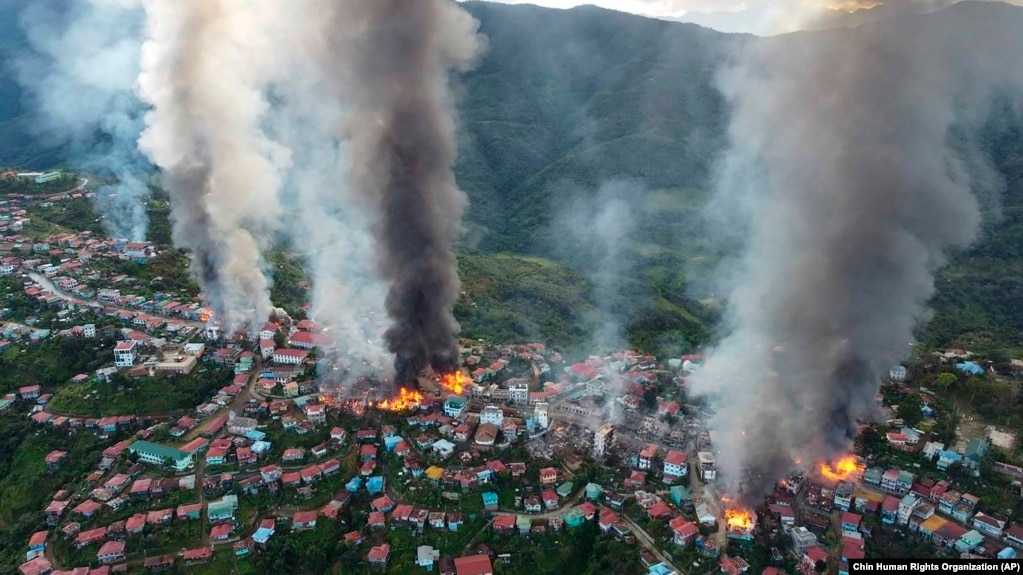
Fires burn in the town of Thantlang in Myanmar's northwestern state of Chin, Oct. 29, 2021. 
More than 160 buildings in the town, including three churches, have been destroyed by shelling by government troops. Russia is reportedly the junta's top supplier of weapons.

UNITED NATIONS —

The U.N. special rapporteur for Myanmar said Wednesday that Myanmar's military has imported at least a $1 billion worth of weapons and weapons materials since overthrowing the democratically elected government in February 2021, with Russia as the junta's top supplier.

"Russia and China continue to be the main suppliers of advanced weapons systems to the Myanmar military, accounting for over $400 million and $260 million respectively since the coup, with much of the trade originating from state-owned entities," Tom Andrews said.

He told reporters at a news conference at U.N. headquarters that weaponry provided by Russian suppliers has been used to commit probable war crimes and crimes against humanity in Myanmar.

"These weapons, and the materials to manufacture more of them, have continued to flow uninterrupted to the Myanmar military despite overwhelming evidence of its responsibility for atrocity crimes," he said.

The military seized power on February 1, 2021, alleging massive election fraud after their political party gained only 33 of 498 contested parliament seats. Since then, the U.N. human rights office says at least 3,000 civilians have been killed, more than 17,500 detained and more than a million displaced as the military pursues its brutal crackdown to retain power. The United Nations says at least 17.6 million people in Myanmar require humanitarian assistance.

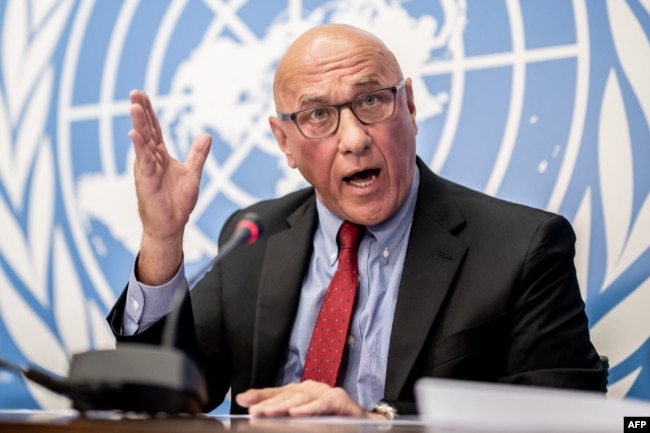
U.N. Special Rapporteur on Myanmar Tom Andrews gives a press conference in Geneva, Sept. 22, 2022.

The special rapporteur presented his latest report, "The Billion Dollar Death Trade: International Arms Networks that Enable Human Rights Violations in Myanmar," in which he used both private and public sources, including trade databases, to identify more than 12,500 unique purchases or recorded shipments from multiple sources directly to the junta or known Myanmar arms dealers working on the military's behalf.

The networks and companies he identified in these transfers operate in Russia, China, Singapore, Thailand and India.

"The diversity and volume of goods provided to the Myanmar military since the coup is staggering," Andrews told reporters. "I identified fighter jets, attack helicopters, reconnaissance and attack drones, missile systems, tank upgrades, radio and communications equipment, radar complexes, and components for naval ships."

Russian weaponry

Moscow is by far Myanmar's largest arms dealer, conducting more than $400 million in transfers from 28 Russian entities, including from state-owned ones, since the February 2021 coup. The report says 16 of those suppliers have been sanctioned by some countries for their role in Russia's war in Ukraine.

The special rapporteur says more than half of the confirmed arms exports from Russia to the junta come from the state-controlled Rosoboronexport. It has shipped at least $227 million worth of equipment and materials to the Myanmar military since the coup, including SU-30 fighter jets and rocket launch systems, as well as supplies for MiG-29 fighter jets.

"The Russian Mi-35 helicopter was reported to be the most sighted aircraft, including in strikes against schools, medical facilities, and civilian homes and infrastructure," Andrews says in his report. "MiG-29 and Yak-130 aircraft have also been used extensively since the coup, with Yak-130 jet fighters seen in attacks in Chin, Kachin, Kayin, Mon, and Shan States and Sagaing Region."

Destroyed concrete structures are scattered in Nam Nein village, Pinlaung township in Shan state, Myanmar, March 12, 2023.

Andrews, an independent human rights expert, whose mandate comes from the Geneva-based U.N. Human Rights Council, says under international humanitarian law, Russia has an obligation to deny further transfers of its weapons, since it should know the Myanmar military is systematically committing violations of international humanitarian law with them.

Chinese entities, including state-owned ones, are the second-largest supplier to Myanmar's military, having sent $267 million in spare parts, communications equipment, missiles, tanks and fighter jets, which Andrews says also violates international arms treaties and conventions.

The special rapporteur said he presented his findings to the countries identified in his report, including Russia and China.

"In all cases, there was not a specific rebuttal about any of the facts that I have identified from anybody," he said.

An emailed request for comment from VOA to the Russian mission early Wednesday was unanswered as this story was published.

Regional arms flows


ASEAN members Singapore and Thailand both supported the regional bloc's "five-point consensus" for ending the fighting in Myanmar and moving toward talks, as well as a 2021 U.N. General Assembly resolution calling on nations not to arm Myanmar. But while Andrews emphasized the governments are not implicated in his report, arms dealers have extensively used their banking and shipping sectors to facilitate hundreds of millions of dollars in arms transfers.

The special rapporteur says Singapore has become a major hub for spare parts, raw materials, and manufacturing equipment sent to the Myanmar military that feed its domestic arms factories. Transactions have totaled at least $254 million since the coup. Its banks have been used extensively by arms dealers. Thailand-based entities have conducted $28 million in arms transfers.

He said both countries have received his report and are looking into it.

Neighbor India is also called out for supplying $51 million worth of arms and related materials to the military since the coup. The special rapporteur says both Indian state-owned and private entities are involved in the weapons transfers.

In the report, India told the special rapporteur that it shares a 1,700-kilometer-long border with Myanmar, and any arms transfers that may have been made to Myanmar were based on commitments made to the civilian government before the coup and centered upon India's domestic security concerns. But Andrews says shipments continued after the coup.

Blatant behavior

The Myanmar military does not try to hide its purchases. More than $947 million of arms-related trade Andrews identified went directly to entities controlled by the Myanmar military. An additional $58 million was funneled through Myanmar-based military suppliers or sanctioned arms dealers.

Despite Western economic sanctions and arms embargoes, and a U.N. General Assembly resolution calling on all member states "to prevent the flow of arms into Myanmar," Andrews says aircraft, weapons and other materials continue to get to the junta because of poorly coordinated international sanctions.

"If you don't enforce sanctions, you don't have sanctions," he said.

He also urged countries to target the source of the military's foreign currency, which it uses to purchase weapons — specifically its lucrative oil and gas sector — and to sanction its foreign trade bank.

"We know that these weapons transfers — we know where they are going and we know how they are being used," Andrews said. "Since we know how they are being used, we have an obligation to stop aiding and abetting these human rights violations."


Analysis-Intrigue, uncertainty in Thailand after opposition's election win

Story by By Panu Wongcha-um and Kay Johnson 
 Thomson Reuters
Yesterday 

Thailand general election

BANGKOK (Reuters) -Thailand's two top election winning parties are working to overcome the built-in advantage for a military-backed bloc and form a government that they say must reflect the will of voters who want to end the long military domination of politics.

They face coalition talks that could take weeks or months and ultimately their success is not guaranteed - and that is assuming that they can stick together.

In public, the parties are claiming a mandate of the people's will - with the leader of surprise winner Move Forward party saying that his party along with several others pro-democracy parties together have 310 seats in the 500-seat lower house of parliament.

In almost any other country, that would be a clear path to government. But this is Thailand, where the powerful military toppled the last elected government in 2014 and later created an unelected 250-seat Senate that also participates in a combined vote on who becomes prime minister.

Analysts say that what is likely to happen next - and is probably already happening - are behind-the-scenes negotiations to bring others into the proposed coalition to get to the actual number of votes, 376, needed to get a prime minister and form a government.

While Move Forward was celebrating its historic victory this week - and its ally, the Pheu Thai party, was congratulating it and calling for others to join them in forming a government, many believe that it is actually Pheu Thai that has the most options in the coalition talks - and not all of them include Move Forward.

"There are differences in terms of political strategies of these two parties," said Prajak Kongkirati, political scientist at Thammasat University.

"Move Forward chooses an uncompromising mode of change while Pheu Thai choose a compromising mode of change," Prajak said.

Move Forward's sole prime ministerial candidate, Pita Limjaroenrat, could face disqualification if the Election Commission takes up a complaint filed against him that he failed to sell shares in a media company before the campaign, which breaches the rules - the same fate that befell his party's founder in 2019.

Key to any stable coalition could be two other parties in parliament: the Bhumjaithai party of health minister Anutin Charnvirakul with 70 seats; and with 25 seats the Democrats, a party that has sided with the military-backed governments in the past.

Then there is, with 40 seats, the now-ruling Palang Pracharat party led by General Prawit Wongsuwon, who was part of the military junta led by army chief Prayuth Chan-ocha who seized power in 2014. Prawit and Prayuth parted ways before the election and Prayuth's own offshoot party fared poorly.


Related video: Opposition Parties Score Stunning Election Win in Thailand (Cover Media)
Duration 1:31  View on Watch


SENSITIVE AGENDA

But analysts say all three of these parties are unlikely to join a coalition led by Move Forward because of a contentious campaign promise to amend strict laws against criticising King Maha Vajiralongkorn.

Move Forward says it only wants to change the law to prevent it being misused. More than 240 people, many of whom took part in protests against the current pro-military government, have been charged under the law, which carries a sentence of up to 15 years in prison.

The monarchy is held in such high regard among traditionalists in Thailand's culture that the mere hint of criticising it, which some royalists would say includes attempts to amend the law protecting it, could make Move Forward anathema as the leader of a government to most other parties.

The Bhumjaithai party late on Wednesday made its position clear. It released a statement saying it would never support a prime minister who supported amending the royal insult law, effectively ruling out joining a Move Forward-led coalition.

Pheu Thai has been far more measured in its messaging on the monarchy - and that could leave it with more options.

"Pheu Thai is holding its cards close to its chest," said Thitinan Pongsudhirak, a political scientist at Bangkok's Chulalongkorn University.

"Pheu Thai might still not want to be in a coalition with Move Forward because of Move Forward's agenda on lese majeste law and on monarchy reforms."

As strange as it might seem, a coalition favoured by Pheu Thai could include the Palang Pracharat party, even though its leader, Prawit, was as a military man associated with the ousting of two governments led by the populist party, founded by former telecommunications tycoon Thaksin Shinawatra, in 2006 and again in 2014.

Self-exiled Thaksin has recently said he would like to come home and making a deal with the Palang Pracharat might make that possible - and win over the votes of the military-appointed Senate for a Pheu Thai prime minister.

However, Joshua Kurlantzik, senior fellow for Southeast Asia at the Council on Foreign Relations, said Pheu Thai was unlikely to opt for another coalition.

"I think Pheu Thai will stick with Move Forward," he said, adding abandoning its ally would make Pheu Thai look as if it was betraying the will of the people.

There is another possibility, one that sounds unlikely given the voters' repudiation of military-backed parties but is mathematically possible: That is that members of the Senate and the pro-military parties that lost on Sunday could vote in a conservative prime minister of their choosing.

That would be a clear denial of the people's will and risks a return of the protests that have plagued Thailand in recent decades.

But for longtime analyst Zachary Abuza, professor at the National War College in Washington, it's a very plausible scenario.

"I still think that a conservative coalition ... with Senate backing is far more likely to emerge than a pro-democracy led coalition," Abuza said.

"The will of the people is likely to be thwarted again."

(Additional reporting by Poppy McPherson in Bangkok. Writing by Kay Johnson; Editing by Robert Birsel)
Arab conflict zones missing out on climate funds: aid groups

AFP
Thu, May 18, 2023 

Al-Bouzayad village in Iraq has experienced worsening droughts over the past four years

Conflict-plagued countries in the Middle East are among the most vulnerable to climate change but are almost entirely excluded from meaningful financing to mitigate its effects, aid groups warned Thursday.

In a joint report focusing on Iraq, Syria and Yemen, the International Committee of the Red Cross (ICRC) and the Norwegian Red Cross demanded greater assistance, saying the combined effects of climate change and armed conflict create an alarming cocktail of humanitarian woes.

The Climate Funds Update database, which collates information from 27 UN, World Bank and other multilateral funds, listed only 19 single-country projects in Iraq, Syria and Yemen that have been approved for funding as of January 2022, the report said.

It noted the total amount disbursed to date is just $20.6 million –- less than 0.5 percent of the money spent on climate projects worldwide.

"Current climate finance distributions almost entirely exclude the most fragile and unstable places," said the 56-page report.

"It's clear from a humanitarian perspective that this must change," said Anne Bergh, secretary-general of the Norwegian Red Cross.

Grappling with an eight-year civil war, the University of Notre Dame's Global Adaptation Initiative ranks Yemen as one of the region's most climate-vulnerable countries, topped only by Sudan and Afghanistan.

"In Yemen, it is not uncommon for people to flee their homes seeking safety from conflict only to then leave that new location because the land cannot be farmed" due to drought and water scarcity, the ICRC said in a statement.

The United Nations ranks Iraq, still recovering from decades of conflict, as one of five countries most impacted by some effects of climate change including drought.

Syria is also at heightened risk following more than a decade of war that has battered the country's infrastructure.

"Death, injury and destruction are the devastating and well-known effects of armed conflict," ICRC regional director Fabrizio Carboni said in a statement.

"Less well-known are the challenges residents must endure and overcome because of this terrible combination of conflict, climate change and environmental degradation."

ho/th/ami
Egyptian artisans carve a path to world luxury markets

A craftsman inspects a jewellery piece at the Azza Fahmy workshop in the  industrial zone southwest of Egypt's capital 
- Khaled DESOUKI


by Sofiane Alsaar
May 16, 2023 — Cairo (AFP)

Egyptian luxury brands are harnessing traditional craftsmanship from jewellery design to carpet weaving to bring the country's ancient cultural riches to the world.

Experts in the sector say the global appeal of Arab and Islamic designs from other countries shows Egypt could do more to promote its rich, millennia-old artistic heritage.


One pioneer has been master jeweller Azza Fahmy, whose signature Islamic art-inspired pieces have graced the world's rich and famous including US pop star Rihanna and Jordan's Queen Rania.

Fahmy, who started off in an Old Cairo workshop about 50 years ago, said her focus has been designs that "resonate with Egyptian identity".

Artists and artisans in Egypt, the Arab world's most populous country, draw from a history that spans ancient Pharaonic times, the Mamluk, Ottoman and modern eras.


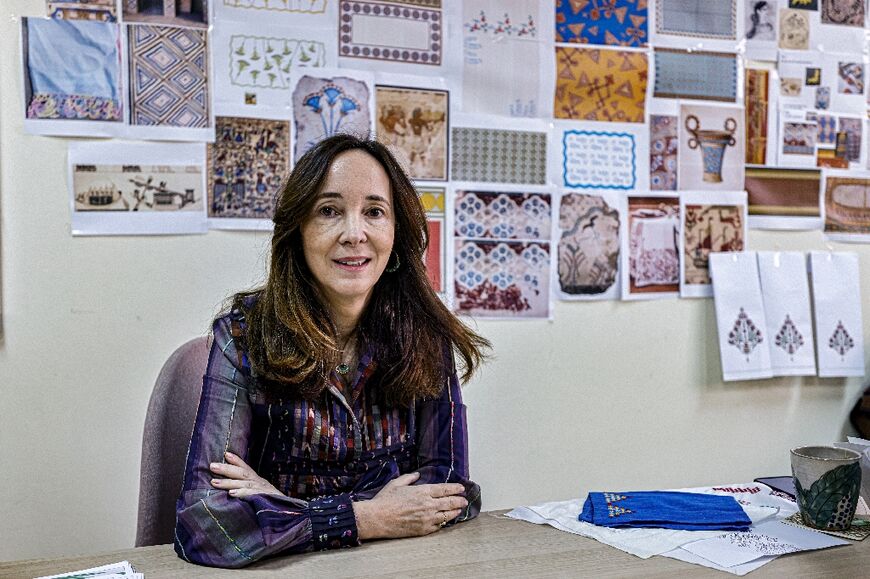
"We are lucky to be able to draw on 6,000 years of history," said textile designer Goya Gallagher, founder of Cairo-based Malaika Linens, which makes high-end household pieces.

"The main challenge is making sure our pieces are timeless, that they're very well made and always hand-made," she said at the company workshop on the western outskirts of Cairo.

- Myriad challenges -


But while Egypt boasts some business success stories, many more luxury goods makers say they labour against myriad odds to eke out a market both locally and internationally.

In the era of global mass production, Egypt's once expansive pool of skilled artisans has shrunk, with many young people turning their backs on family skills passed down through the ages.

As businesses struggle to fill the talent gap, they also face the headwinds of a painful economic crisis that has tanked the local currency and restricted raw material imports.


The state's efforts to support the handicrafts sector, meanwhile, have been "limited and sporadic", says the United Nations Industrial Development Organization.

Culture consultant Dina Hafez agreed that Egypt offers little in the way of formalised arts and crafts training.

"The training of artisans is still essentially based on informal education and networks of apprenticeship," said Hafez of Blue Beyond Consulting.

"The sector lacks any structure. We need a real ecosystem. But for the moment, it's all based on personal initiatives."

She said Egypt could learn from Turkey and Morocco, "where the opportunities and obstacles look a lot like Egypt", but which had managed to launch "their designs onto the international scene".

- 'Soft power' -


Still, change is afoot.

Fahmy, the jewellery designer, said there is always space in the market for works made by skilled artisans and "good designers with creative minds and quality education".

Many designers hope to benefit from government initiatives to draw in investment and tourism revenue from its ancient wonders.

At the Grand Egyptian Museum at the foot of the Giza pyramids, Egyptian luxury stores enjoy pride of place.

Although its official opening has been long delayed, the museum offers limited tours and events, and the shops already "showcase the best of Egyptian crafts", said the owner of one, Mohamed al-Kahhal.


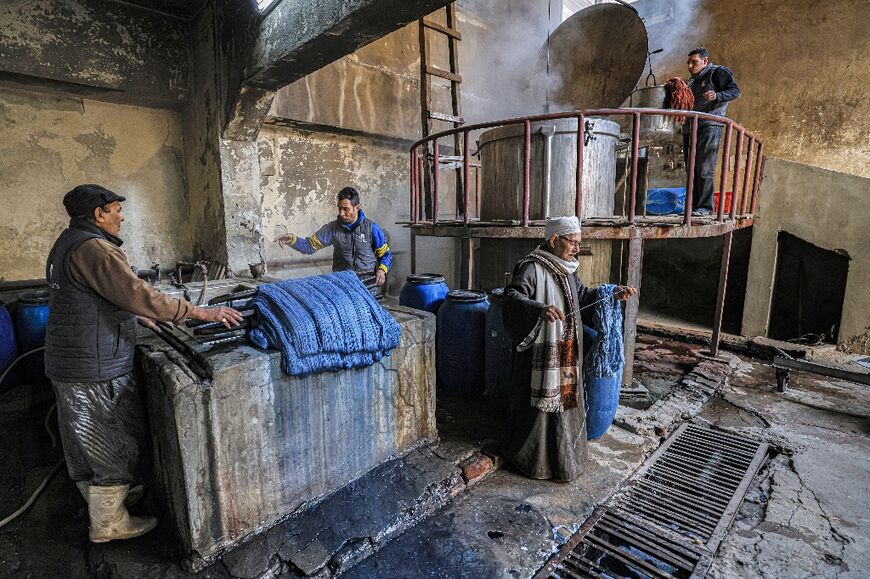
In Cairo's historic centre, linen company Malaika trains women from marginalised backgrounds in embroidery and sells the wares to its customers and to other fashion and textile brands.

Carpet maker Hend al-Kahhal works in the same spirit, of bringing Egyptian identity to global frontiers.

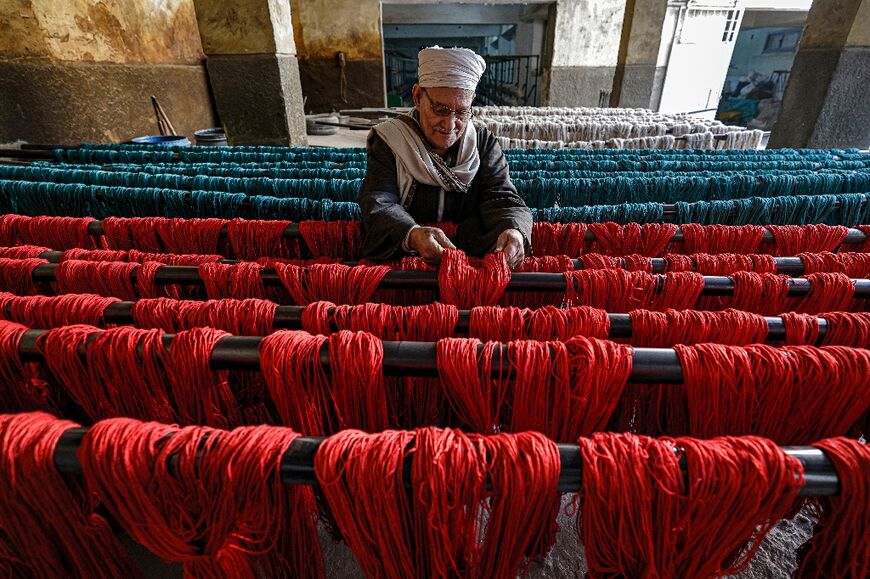
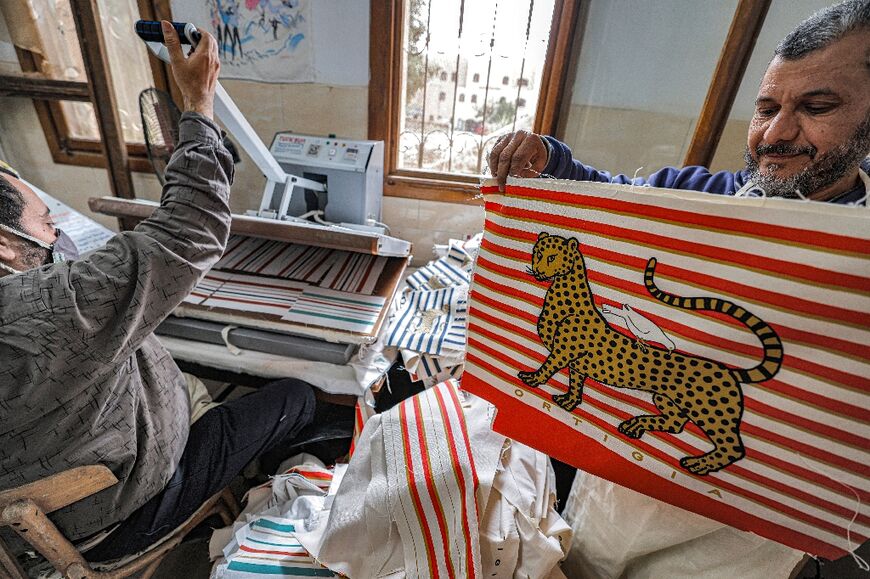
Standing on the factory roof, where wool and silk creations hung out to dry, Kahhal said the family business works with designers "to give a contemporary touch to Pharaonic and Mamluk motifs".


The Egyptian Handicrafts Export Council, under the trade and industry ministry, has long been working to showcase such Egyptian creations internationally.

But Hafez, the culture consultant, said she hopes for more progress in future, as often "budget constraints, red tape and customs regulations don't exactly make things easier".

The question, she said, is whether Egyptian "authorities are really aware of the soft power these creators can have".

'A really very big deal for us': 3 Mi'kmaw First Nations excited about moderate livelihood fisheries

Story by Tom Ayers • CBC
Yesterday 

Three Mi'kmaw communities are celebrating their dramatically increased roles in the lobster fishery around Cape Breton Island this spring.

The Department of Fisheries and Oceans announced Tuesday it has renewed moderate livelihood understandings with Potlotek and We'koqma'q, and now Eskasoni has joined them.

Eskasoni Chief Leroy Denny said he is excited because up to 70 fishers will now be out on the water hauling in traps and earning a living.

"It's a really good thing, a really very big deal for us," he said.

Under interim understandings, the bands will fish during the commercial season, which is open now around Cape Breton and closes in mid-July.


Eskasoni Chief Leroy Denny says up to 70 fishers from the community will be taking part in the moderate livelihood lobster fishery.© Steve Sutherland/CBC

They will share 4,600 traps in all fishing areas around the island, which is an increase in traps and fishing areas over previous years.

In 2021, Potlotek fished up to 700 traps in a limited area. Last year, We'koqma'q also came to an understanding with DFO, but the two bands were only allotted 210 traps each and were restricted to a smaller number of fishing zones.

No one from the department was available for comment Tuesday, but in a Facebook post, DFO said the fishery will not harm lobster stocks, because the fishing licences already exist and are not otherwise being used.

Related video: Assembly of Manitoba Chiefs grand chief says not conducting landfill search for remains sends troubling message (cbc.ca)  Duration 0:52  View on Watch

Denny said Eskasoni fishers will operate under a plan similar to the Netukulimk Livelihood Fisheries Plan first developed by Potlotek, the Assembly of Nova Scotia Mi'kmaw Chiefs and Kwilmu'kw Maw-klusuaqn Negotiation Office.

Netukulimk is a Mi'kmaw word that represents the principle of using natural resources for the benefit of individuals and the community without harming the environment.


We’koqma’q Chief Annie Bernard-Daisley says the fishery will allow community members to provide a better quality of life for their families.
© Brent Kelloway/CBC

"It'll be a good plan for safety and conservation and we're excited for this year and a good number of traps and a good number of areas," Denny said.

The Supreme Court of Canada has confirmed Indigenous people's treaty right to earn a moderate living from fisheries and affirmed the government's authority to regulate the fishery, which has occasionally led to enforcement against Mi'kmaw fishers and clashes between Mi'kmaw and commercial fishers.

Working toward longer-term deals

DFO has begun using understandings as an interim measure while it tries to work out a longer-term arrangement.

Denny said with these new understandings, Mi'kmaw and non-Indigenous fishers should finally be able to share the resource without harassment.

"We're a fishing community and it's important that we work together and we do this peacefully and we're hoping that that'll happen eventually," he said.

Potlotek Chief Wilbert Marshall was unavailable for comment on Tuesday.

We'koqma'q Chief Annie Bernard-Daisley said she was pleased with the increased access to the fishery.

She also said the deal is a "great opportunity for fishers in We'koqma'q to provide a better quality of life for their families and to exercise their inherent right to fish without interference."

Unnamed First Nations join Snoop Dog in Ottawa Senators bid


Rapper Snoop Dog says some First Nations have joined his bid to buy the Ottawa Senators in a potential deal that also includes L.A. producer Neko Sparks. The team’s new owner could be announced within days. 


The celebrity bidding war over the Ottawa Senators, explained | About That
CBC
The Ottawa Senators are courting celebrity bids for team ownership including from Snoop Dogg and The Weeknd. About That producer Lauren Bird and Sportsnet's Donnovan Bennett discuss the significance of big-name buyers on the day of the bid deadline, and what could happen next.


SEX WORK IS WORK!
Dancers at Los Angeles bar to become only unionized strippers in US after 15-month battle

By WYATTE GRANTHAM-PHILIPS
AP
TODAY

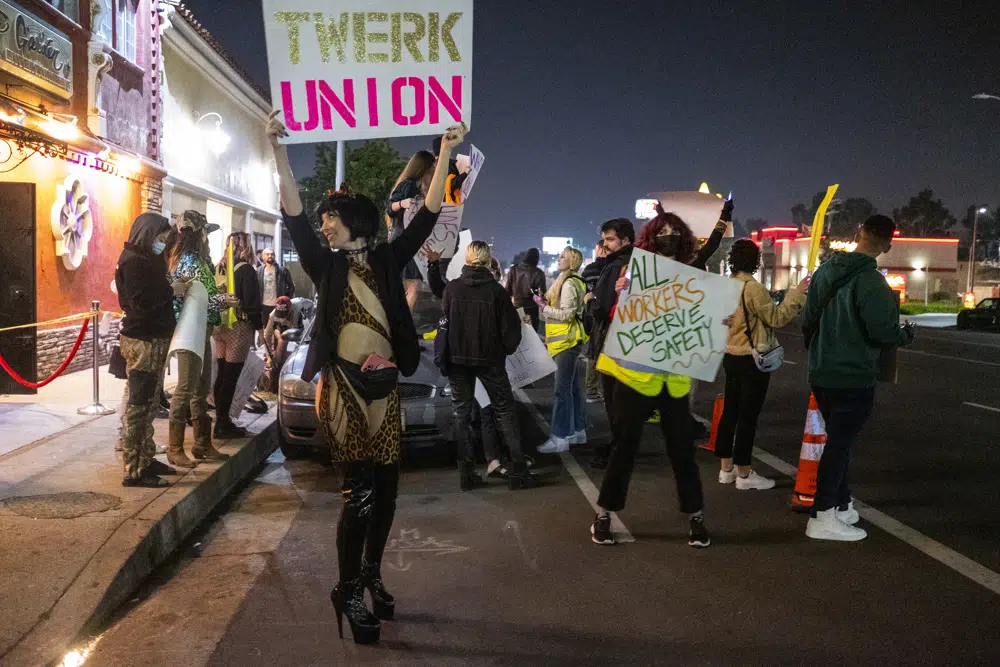
 A protester identified as "Reagan" holds a sign outside the Star Garden Topless Dive Bar on Saturday, March 26, 2022 in the North Hollywood area of Los Angeles. Dancers at the bar, who have for 15 months been seeking safer workplace conditions, better pay and health insurance, among other benefits, are poised to become the only unionized group of strippers in the U.S.
(Francine Orr/Los Angeles Times via AP)

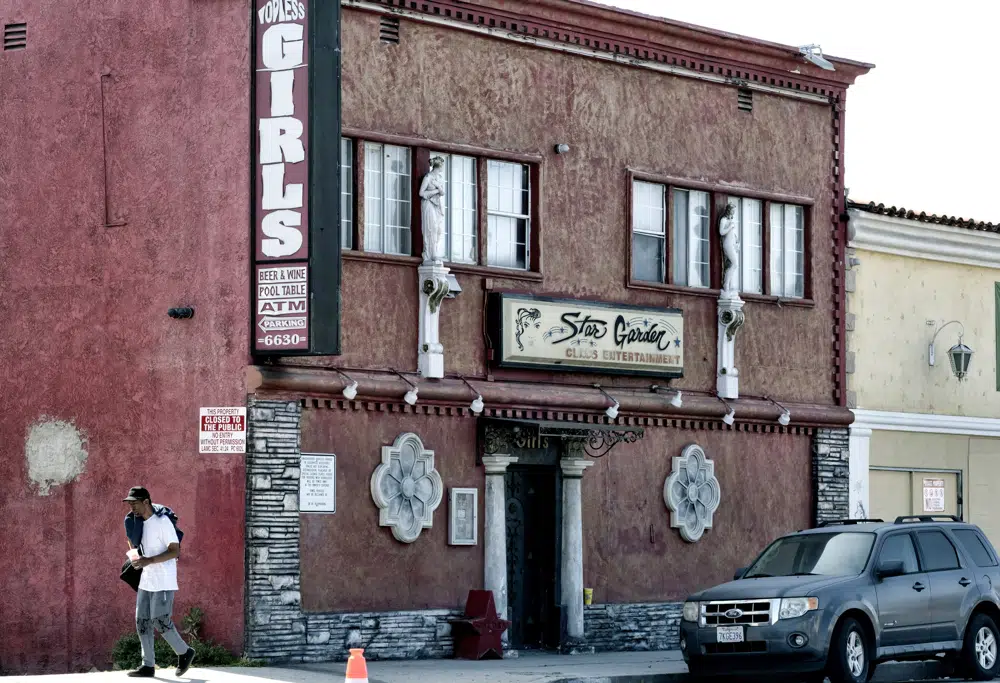
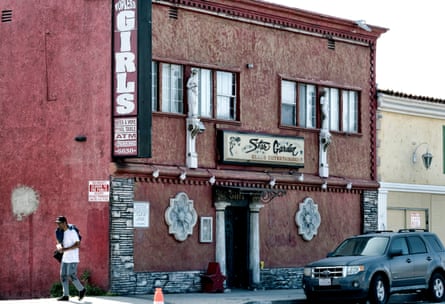
A pedestrian walks past the Star Garden Topless Dive Bar, a club in the North Hollywood section of Los Angeles, on Wednesday, May 17, 2023. Dancers at the bar are poised to become the only unionized group of strippers in the U.S. today after management withdrew challenges to their upcoming guild election and agreed to recognize the union, the Actors' Equity Association said Tuesday. The dancers from club have been seeking safer workplace conditions, better pay and health insurance, among other benefits for 15 months. (AP Photo/Richard Vogel)


NEW YORK (AP) — Dancers at a Los Angeles bar could soon become the only unionized group of strippers in the U.S.

The Actors’ Equity Association labor union says owners of the Star Garden Topless Dive Bar in North Hollywood have withdrawn their opposition and agreed to recognize the strippers’ union.

For 15 months, dancers at the club have sought safer workplace conditions, better pay and health insurance, among other benefits. But their unionization drive was stalled by objections and legal challenges from the club’s management.

The union announced this week that management had agreed to a settlement. A formal vote count by the National Labor Relations Board has been set for Thursday.

“We’re hoping what we’ve done to unionize this club will have laid the groundwork for any other stripper in the country who decides that they want to also have a voice in the way their workplace is run,” Lilith, a dancer at Star Garden, told The Associated Press. Lilith asked not to be identified by her legal name in this article, due to fears of being harassed or stalked. The AP is aware of her legal name.

After being certified, the Star Garden dancers will join Actors’ Equity, a union representing more than 51,000 workers in the entertainment industry nationwide.

The Star Garden case is not the first time strippers in the U.S. have sought union recognition. In the late 90s, dancers at San Francisco’s Lusty Lady organized the Exotic Dancers Union. But that club was shuttered in 2013 — so, if Thursday’s results are certified by the NLRB as expected, the Star Garden dancers will become the country’s only existing unionized strippers.


Dancers at Los Angeles bar to become unionized

Dancers at a Los Angeles bar could soon become the only unionized group of strippers in the U.S. The Actors’ Equity Association labor union says owners of the Star Garden Topless Dive Bar in North Hollywood withdrew their opposition. A formal vote count is set for Thursday. (May 18)


The dancers’ union battle at the Star Garden dates back to March 2022 — after security guards at the club “repeatedly failed to protect” dancers from abusive or threatening patron behavior, and fired those who brought concerns to management, Actors’ Equity said.

“The positive side of Star Garden is that ... it’s where dancers are allowed to express themselves in creative ways. And all of my coworkers looked out for each other — it was like a little family from the start,” Lilith said. “So, when we started noticing that there were some safety concerns that we all had, it didn’t take long for us to band to together and decide we needed to do something about it.”

Lilith recalled a handful of instances that made her and other dancers feel unsafe while working — including a lack of adequate protection from sexual harassment and assault often faced by dancers. Star Garden management told dancers that they couldn’t go directly to security when they felt unsafe, Lilith said — noting that they were instead instructed to go to management, who would decide “if it was a severe enough instance for security to intervene.”


Customers were also allowed to stay in the bar after closing, which made the dancers feel unsafe because patrons could see them dressed “out of our stripper personas” and identify which cars they drove when they went home, she said. According to Lilith, one dancer was fired for bringing up her concerns about this to management. Another dancer was fired for intervening when she noticed a customer filming a coworker on stage without her consent, she added.

After the two coworkers were fired, the Star Garden dancers banned together in efforts to get their jobs back. But after delivering a safety petition to their bosses, they were locked out of work, Lilith said — so they began picketing outside of the club. They later announced their affiliation with Actors’ Equity, which filed for a NLRB guild election on behalf of the group.


According to the union, NLRB conducted the election via mail and planned for a November vote count. But those results were put on hold due to legal challenges from the Star Garden, which challenged the eligibility of some voters. The club also filed for bankruptcy protection.

As part of Tuesday’s settlement, Star Garden agreed to dismiss the bankruptcy filing and reopen the club soon after, attorneys representing Star Garden management said in a statement.

“Star Garden decided to settle, as it has always been a fair and equal opportunity employer, that respects the rights of its employees,” attorneys Josiah R. Jenkins and An Nguyen Ruda said, adding that the club “is committed to negotiating in good faith with Actor’s Equity a first of its kind collective bargaining agreement which is fair to all parties.”

Mori Rubin, who approved the settlement as regional director for NLRB’s Region 31, said she admired “the dancers who had the courage to protest their unsafe working conditions” and was “very pleased” with the settlement.

Lilith and other dancers said they were looking forward to preparing a union contract and returning to work.

“I’m feeling really optimistic about going back,” Lilith said. “It will definitely be surreal being back on that specific stage, but I know we’re going to have our community rallying around us .... And hopefully we’ll be able to show the country how successful a union strip club can be.”


Dancers at Los Angeles club to become the US’s only unionized strippers

A formal union vote will take place on Thursday and will mark the first time Actors Equity association represents strip club workers


Lois Beckett in Los Angeles
@loisbeckett
THE GUARDIAN
Thu 18 May 2023 06.00 BST

After months of late-night picketing in North Hollywood, the dancers of the Star Garden Topless Dive Bar are poised to become the only unionized strippers in the US.

The dancers’ victory is expected to be finalized with a formal union vote on Thursday morning, and will mark the first time that the Actors Equity association, a century-old union for stage actors, singers and dancers, will represent strip club workers.

The strippers’ campaign featured colorful, costumed protests, and attracted high-profile support, with Amazon Union president Chris Smalls and Tom Morello of Rage Against the Machine both showing up in solidarity.

For Charlie, a 23-year-old Star Garden dancer, spending eight months of prime weekend nights last year on a picket line rather than working was a financial challenge, but one that proved worth it.

“The sacrifices we made were definitely sacrifices, but it was for something bigger than us,” she said. The dancers were fighting for “a future where unionization exists for strippers who want it. That’s bigger than struggling to pay rent.”

The campaign, which started in March 2022, was galvanized by what dancers said were unsafe working conditions, and what they described as retaliatory firings of dancers who tried to address customers’ dangerous behavior themselves.

The dancers at Star Garden Topless Dive Bar in North Hollywood have been campaigning for safer workplace conditions, better pay and health insurance. 
Photograph: Richard Vogel/AP

Although Actors’ Equity, which represents more than 50,000 workers, has not organized strip club employees in the past, the union said, the strippers had similar concerns as other performers, from wage theft to post-show security.

“Strippers are live entertainers. While some elements of their job are unique, they are essentially performance artists, and have a lot in common with other Equity members who dance for a living,” Kate Shindle, the union president, said in a statement.

Shindle called the Star Garden dancers “absolute warriors throughout this long process”.

As well as concerns about sexual harassment and dancer safety, the union campaign was driven by labor concerns that strippers share with other workers, such as workplace injuries that affect dancers in their highly physical work, and that make health insurance essential.

“Just walking around in six- to eight-inch heels every night is a lot of wear and tear on your body,” Charlie, the Star Gardens dancer, said.

Strippers also need mental health support, she added, since many patrons want someone willing to listen to their struggles and show empathy, making the job in many ways similar to the emotional labor of being a therapist or a social worker.

“I would say most of my social work experience has been in my underwear,” Charlie said.

She said the union win built on decades of campaigns by sex workers advocating for safe working conditions, and had crucial support from the advocacy group Strippers United.

After more than a year of legal battles, which included the club filing for bankruptcy, the union and the Star Garden owners announced a settlement on Tuesday, which will allow the dancers to proceed with a union vote, and the club to reopen.

“Star Garden is committed to negotiating in good faith with Actor’s Equity a first of its kind collective bargaining agreement which is fair to all parties,” said An Ruda, an attorney for Star Garden, in a statement. “Star Garden decided to settle, as it has always been a fair and equal opportunity employer, that respects the rights of its employees.”

The North Hollywood dancers said they hoped their victory would galvanize new union efforts at other US strip clubs.

“This is not just a win for the dancers at this club, but the entire strip club industry,” said Lilith, a Star Garden dancer, in a statement.

Star Garden’s vote comes a decade after the 2013 closure of the Lusty Lady, a worker-owned club in San Francisco, which unionized with the Service Employees International Union in 1997. At that time, it was the only unionized strip club in the US.

While the Lusty Lady had “a good run”, the California club’s unionization ultimately did not “spark organizing all over the country,” as workers had hoped it would, said Kristina Zinnen, a former Lusty Lady dancer who went on to become a San Francisco labor lawyer.

Over the years, Zinnen said, she’s talked to at least 10 groups of strippers trying to organize their workplaces, but none of those campaigns succeeded. One of the major hurdles to organizing strippers has been finding the right union to back them, Zinnen said.

The new involvement of the powerful and well-resourced Actors Equity was “very significant”, and might signal a broader interest in organizing other clubs.

The Star Garden dancers made a strategic effort to make their picketing entertaining to demonstrate to the club owners, and customers, that “we are the club – without us, the business doesn’t exist,” Charlie said.

Protesting on a North Hollywood street corner until 1am or 2am took stamina, and sometimes came with safety concerns, Charlie said. But the dancers focused on a charm offensive, she said, aiming to “be flirty and strippery” while pushing the labor movement.

The dancers asked patrons to come back another time, visit a different club, or party with them on the picket line rather than going inside, she said.

Each night the picket had a different theme, with costumes and props, from witches to pageant night to dad night (they brought a grill), to big cats. One night, the theme was the environmental and safety violations they were fighting, and dancers dressed up as “broken glass” and “a hole in the stage”.

The strippers also built a following on social media, and used supporters’ contributions to make the 15-month long protest possible, though most dancers also worked other jobs to pay rent, Charlie said. (She worked at a grocery store, among other gigs.)

While it could be “disheartening” when longtime patrons chose to cross the picket line, Charlie said, “the majority of our customers were amazing”, with some actively supporting the labor movement, and others simply deciding to listen to dancers’ advice to come back another time.