Friday, February 07, 2025


The EPA Has Suffered Decades of Attacks — But Trump’s Are the Worst Yet


Trump’s Project 2025-stoked sabotage of the Environmental Protection Agency will unleash rampant carcinogens in the US.
February 5, 2025

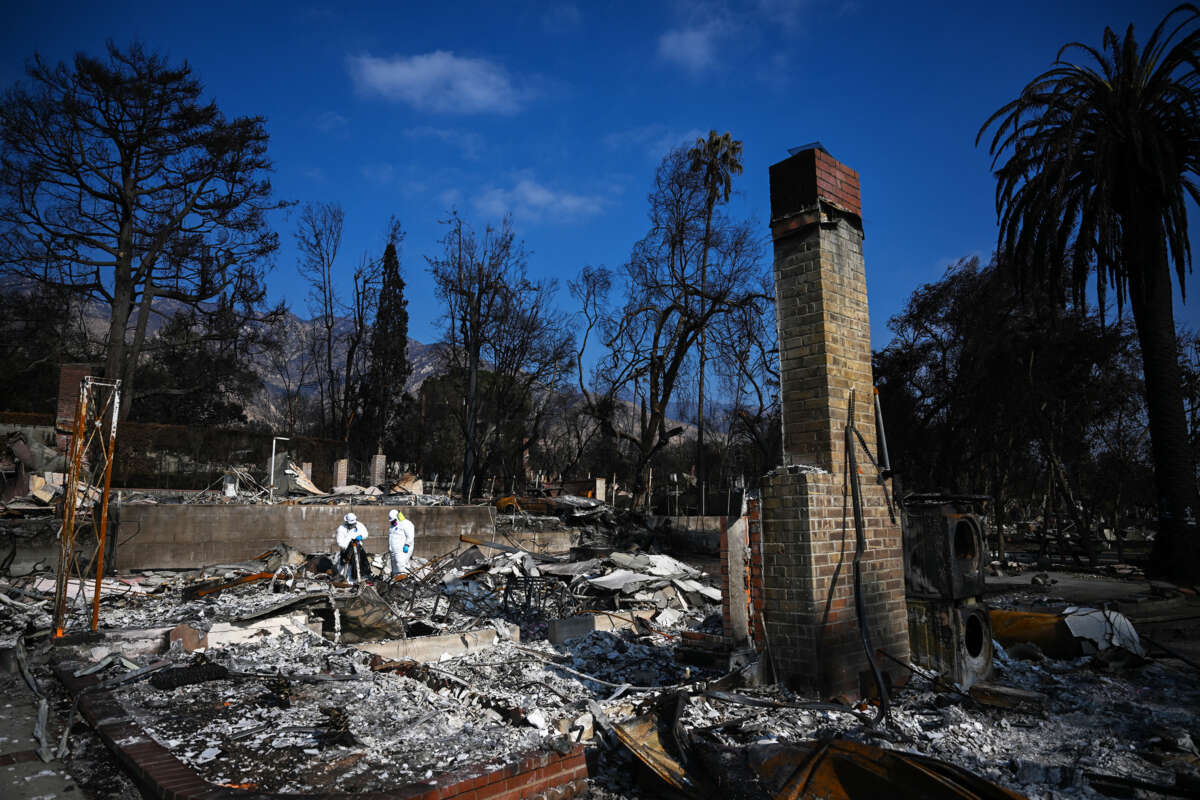
Contractors for the Environmental Protection Agency remove household hazardous waste as they search through homes damaged and destroyed by the Eaton Fire in the Altadena neighborhood of Los Angeles County, California, on January 30, 2025.PATRICK T. FALLON / AFP via Getty Images


Honest, paywall-free news is rare. Please support our boldly independent journalism with a donation of any size.

Just over two weeks into Donald Trump’s second presidential term, his intentions are clear: to weaken and destroy the federal government. He has already unconstitutionally usurped congressional power and given Elon Musk’s unelected team complete access to the Treasury’s payment system, while taking a hatchet to longstanding, life-saving federal institutions. We are witnessing a blatant attempt to burn our governmental structure to the ground, destroy any semblance of checks and balances, and allow billionaires and their corporations free rein without consequences.

What does this mean for the Environmental Protection Agency (EPA), which has protected the environment and human health for nearly 55 years, including by regulating air pollution, banning dangerous chemicals like DDT and working to reduce carbon emissions? Trump is revealing the fragility of our government: Progress often takes years of pressure, compromise and monumental amounts of work — consider the recent limits on the dumping of perfluoroalkyl and polyfluoroalkyl substances (PFAS) known as “forever chemicals” submitted by the Biden administration last fall, or the agonizing process of passing the Inflation Reduction Act of 2022. Now, Trump and his right-wing allies are attempting to destroy both with a snap of his fingers.

Speaking days into the Trump presidency — before some of the most horrifying orders came down — Matthew Tejada, senior vice president of environmental health at the nonprofit Natural Resources Defense Council (NRDC), told Truthout that concerns about the future of the EPA can be broken down into three buckets: The White House may seek to roll back or revoke hard-earned environmental regulations and protections, withhold funds that the EPA is charged with disbursing for energy and environmental projects, and weaken the agency by attacking federal employees and the institution itself.

We are already seeing Trump attempt all three avenues of EPA sabotage predicted by Tejada, who previously worked within the EPA’s Office for Environmental Justice and External Civil Rights. Within his first weeks in office, Trump withdrew Biden’s forever chemical reform plan, sought to keep lead in Americans’ drinking water and froze already allocated Inflation Reduction Act funds. Trump has also appointed chemical and oil industry insiders to the agency, fired every scientist on two of the EPA’s most influential science advisory panels and seems poised to attempt mass firings of EPA staff.

Rollbacks to Existing Protections

Environmental organizations like NRDC have been preparing for legal fights over rollbacks of EPA rules and protections. On January 22, the Trump administration announced the EPA was withdrawing Biden’s proposed regulations on PFAS. The regulations, which set limits on the amount that chemical plants can dump into the water supply, had been heavily pushed for and celebrated by advocates.


Trace amounts of forever chemicals, which are strongly linked to cancer, can be found in virtually every human’s blood. “It is in every single one of us, across the entire planet,” Tejada told Truthout. “It is ubiquitous. It is scary. We only know the literal tip of the iceberg of how dangerous this stuff is in our bodies, and all of us have it.” PFAS were used for decades in the production of nonstick coatings, waterproof clothing and fabrics and cardboard food packaging. Although some PFAS are banned in some states, others are still in use, and chemical plants continue to dump the dangerous chemicals into the water supply.

“If they take down those regulations we have on the books now, they’re consigning another generation to be exposed to these forever chemicals, without even beginning the process of getting them out of our environment,” said Tejada.

Trump is also threatening long awaited improvements to the Lead and Copper Rule. In October 2024, after decades of pressure and lawsuits from advocates, Biden’s EPA unveiled rules that aim to replace all lead drinking water pipes within the next 10 years. Now, Trump and congressional Republicans are attempting to repeal these regulations and ban the EPA from ever mandating lead pipe replacement in the future. As an NRDC adviser told The Guardian, Trump is “saying let them drink lead.”

“Nobody in this country really wants to continue to live with lead,” said Tejada. “Stepping back from it now would consign literally tens, if not hundreds of millions of people that are alive today, and are yet to even be born, to growing up in an environment where they are exposed to lead every time they take a sip out of their faucet.”


Within his first weeks in office, Trump withdrew Biden’s forever chemical reform plan, sought to keep lead in Americans’ drinking water and froze already allocated Inflation Reduction Act funds.

Advocates also fear that Trump will seek to overturn the endangerment finding, a federal ruling that empowers the EPA to regulate greenhouse gases. On his first day in office, he ordered the EPA to make a recommendation within 30 days on the “legality and continued applicability” of the finding. What’s more, Project 2025 also recommends eliminating the EPA’s Office of Enforcement and Compliance Assurance, instead turning enforcement duties over to the states. “If you take away enforcement, then the rest of the system just kind of doesn’t matter,” said Tejada. “The rules you pass, the permits that polluters have to receive … that all falls apart if industry knows that nobody’s going to come knocking to make sure that they’re playing by the law.”

He also noted that traditional methods of fighting in the courts don’t always work the same way against someone like Trump, who has no regard for following the rules.

“Even though we will challenge them in court, as will other folks … this administration has been so emboldened, they will go out there and make those claims, and it effectively freezes stuff in place,” Tejada explained. When Trump inevitably freezes or eliminates protective regulations, a federal judge can issue an injunction, instructing agencies to resume their work until the legality is sorted out. But the Trump administration has shown that it may ignore such orders, pressuring agencies to obey, even in the face of a conflicting judge order.

The massive mandate of protecting the environment already keeps the EPA stretched to capacity, even under the best of conditions. “We’re barely holding this thing together: Making our society work; keeping our economy going; offering a modicum of protection for people so they aren’t scared every time they take a sip of something, or a bite of something, or lay their head down on a pillow,” he said. “And we have a supreme agent of chaos now in the White House who understands that, and understands his ability to completely upset those systems to his own advantage.”
Slashing Funds

Each year, the EPA awards more than $4 billion in grants, technical assistance, and other assistance to governments, nonprofits, and other entities.

Among dozens of other executive orders, on January 20, Trump froze spending that was already authorized and approved by Congress through the Inflation Reduction Act. On January 27, his Office of Management and Budget (OMB) followed up with a wildly unconstitutional freeze on all federal financial assistance, grants and loans. The vague and poorly written memo, which asserts that federal spending should not be used to “advance Marxist equity, transgenderism, and green new deal social engineering,” appears to apply to scheduled payments for disaster relief, hospital funding, school lunch programs and other food assistance, cancer research, and infrastructure and transit funding. The following day, shortly before the OMB order was set to go into effect, Medicaid payment portals were already down in some states.

Minutes before the scheduled start to the freeze, U.S. District Judge Loren AliKhan temporarily blocked it, ordering federal payments to continue until the legality of the freeze could be worked out in the courts. Days later, in a second lawsuit, U.S. District Judge John J. McConnell Jr. issued another temporary block. In a transparent attempt to dismiss the lawsuits, the administration rescinded its memo, but not necessarily the spending freeze, throwing everything into further confusion. On February 3, Judge AliKhan followed up with a restraining order, instructing OBM to order departments to release all frozen funds. Legal experts agree that the president has no power to indefinitely pause federal spending, as the “power of the purse” constitutionally belongs to Congress.

Meanwhile, Inflation Reduction Act funding remains frozen: pausing projects, creating widespread confusion, and leaving invoices for already approved and completed work unpaid.

“Right now is when the [Inflation Reduction Act] money is finally starting to hit the ground,” Tejada said. “It’s finally rolling out of the government, touching down in people’s communities — buying solar panels, putting people to work, building resilience centers. So all of that, right now, is in jeopardy, just as it was about to get started.”

He added: “Hundreds of thousands of individuals across this country, at every level of our society, have put in so much time and energy and effort to make the best use of these resources, to put them to work in the ways that Congress intended. And for all that to potentially now be snatched away, just as the … meaningful part of the work is actually getting started, would be a tragedy on top of a tragedy.”
Attacking EPA Staff

Trump is also waging attacks on employees across the federal government. On his first day in office, he effectively reinstated his own October 2020 “Schedule F” order, which had initiated the process of stripping employment protections from tens of thousands of career civil servants in “policy-related” positions, making it easier to fire and replace them. President Joe Biden not only rescinded Trump’s 2020 order, but also used the official rule-making process to establish safeguards making it more difficult for Trump to bring it back. But in another power grab, Trump’s Office of Personnel Management claims he does not need to follow official steps to unwind Biden’s protections, and can do so with a simple executive order.


Trump and congressional Republicans are attempting to ban the EPA from ever mandating lead pipe replacement in the future.

Trump’s new EPA head, Lee Zeldin, voted against the environment 86 percent of the time during his tenure in the House of Representatives, according to the League of Conservation Voters. A group of utilities has already written to Zeldin, asking him to roll back Biden-era regulations on coal ash and greenhouse gas emissions. Trump also appointed a host of industry insiders to the agency, including Nancy Beck, a former chemical industry lobbyist, and Lynn Dekleva, who worked for 30 years at DuPont, a long-time producer and dumper of forever chemicals.

Meanwhile, Trump also fired every scientist on two important EPA science advisory panels, demoted many other EPA experts, and in a further effort to demoralize staff and encourage resignations, ordered all federal employees to return to the office full time instead of working remotely. In late January, more than 1,100 EPA employees — most of whom had been at the agency for less than a year or who had recently moved into new positions — received emails notifying them that they are on “a probationary/trial period,” and that “the agency has the right to immediately terminate you.”

“It’s bad,” Marie Owens-Powell, president of a union that represents thousands of EPA workers, told CBS, referring to agency morale. “I’ve been with the agency for over 33 years and I’ve never seen anything like this.”

This is exactly what Trump and his allies want. Trump’s nominee to run the OMB, Russell Vought, was one of the main architects of Project 2025 and the Schedule F order, and is a major proponent of Trump’s current unconstitutional attempts to withhold funds authorized by Congress. In a 2024 speech, he outlined exactly what is happening now:


We want the bureaucrats to be traumatically affected. When they wake up in the morning, we want them to not want to go to work because they are increasingly viewed as the villains. We want their funding to be shut down so that the EPA can’t do all of the rules against our energy industry because they have no bandwidth financially to do so. We want to put them in trauma.

Tejada warned that Project 2025 proposals like reinstating Schedule F and moving whole agency campuses across the country “will effectively shut down huge parts of our government, not just for days or weeks, but for years. And we’ve seen over and over again from past government shutdowns how unpopular that is with the American public. People are failing to connect the dots that what this administration is threatening to do is not a shutdown of our government for a few days, but literally for years.”
The EPA’s History as a “Punching Bag”

The EPA has been under assault before. But in many ways, the threats it faces today are unprecedented.

“EPA has been a punching bag since it was first created,” Tejada told Truthout. The agency was established in 1970 under President Richard Nixon, at a moment when the dangers of pollution were becoming impossible to ignore, from oil spills, to lifeless lakes, to deadly smog and chemical odors permeating cities, to the Cuyahoga River literally catching fire. In 1969, Congress passed the National Environmental Policy Act, which required federal agencies to assess the environmental impact before beginning major projects, and directed the president to assemble the Council on Environmental Quality. The following year, sensing a growing environmental consciousness, Nixon created the EPA.

The EPA faced its first major challenge from Nixon himself. After Congress overrode his presidential veto on the Clean Water Act of 1972, he refused to release half of the funding mandated by Congress in the legislation. Ultimately, the Supreme Court ruled he had no power to withhold the funds. Congress further limited the president’s power to withhold spending in the Congressional Budget and Impoundment Control Act of 1974 — the very law that Trump and his allies are now trying to steamroll with his federal spending freeze.

A decade later, in 1980, Ronald Reagan campaigned on deregulation, arguing that the health effects of pollution were overblown. Although environmental deregulation was unpopular with the public, Reagan rejected a moderate policy plan created by Republican environmentalists, instead adopting recommendations from the relatively new right-wing think tank, the Heritage Foundation.

Reagan appointed Anne Gorsuch — Supreme Court Justice Neil Gorsuch’s mother — to head the agency. According to a 2018 paper in the American Journal of Public Health (AJPH): “Gorsuch demoralized, marginalized, and reorganized EPA staff. In her inaugural speech … Gorsuch told employees, ‘We’re going to do more with less and we’re going to do it with fewer of you.’” Higher-ups developed hit lists of career staff they wanted gone, and EPA staffing levels dropped 21 percent over two years. Gorsuch also disbanded the EPA’s Office of Enforcement, causing civil enforcement cases to plummet.

Career staff at the EPA fought back. Hundreds of former employees calling themselves “Save EPA” leaked documents to Congress, prompting an investigation into Gorsuch’s handing of the Superfund program, which is dedicated to cleaning up highly contaminated sites. When Gorsuch refused to turn over subpoenaed documents, 55 House Republicans joined with Democrats to hold her in contempt of Congress. Amid the growing controversy, the White House forced Gorsuch to resign, reinstating Nixon’s original EPA head, William D. Ruckelshaus, for the remaining two years of the term.

In the following years, the EPA was generally supported by presidents George H.W. Bush and Bill Clinton, although Republicans gained control of Congress under Clinton in 1994 and managed to shrink its budget. According to the AJPH article, as fossil fuel-funded conservative think tanks and media outlets grew in influence, “Many EPA employees remember 1994 as a watershed after which environmental policy and science became more politicized.”

This politicized atmosphere continued under George W. Bush, whose administration prohibited EPA employees from mentioning climate change. The AJPH article outlines how Bush’s attacks on the EPA were less confrontational than Nixon’s, “relying on delaying decisions and undermining science rather than on cutting budgets.”

Writing in 2018, one year into Trump’s first term, the paper’s authors analyzed the ways in which Trump’s assault on the EPA differed from Reagan’s and Bush’s. Their analysis holds truer than ever in 2025: “The Republican Party has shifted to the right and now controls the executive branch and both chambers of Congress (unlike in the early Reagan administration). Wealthy donors, think tanks, and fossil fuel and chemical industries have become more influential in fighting regulation. In the broader public, political polarization has increased, the environment has become a partisan issue, and science and the mainstream media are distrusted.”

Over the years, Tejada said the EPA has come to hold a key role in everyday life. “Not that everything has been perfect.… But if you look at the environment that we lived in in 1970, versus today, EPA has been wildly successful at cleaning up the environment in our country.”

“I think a lot of people don’t understand that its ability to have been as successful as it has been, has largely been due to the steady leadership and commitment of the institution and the people who inhabit it,” he continued. “And those people are now under threat in a way that they have never been. If they actually make moves to really gut the staff, to eliminate institutional memory and knowledge? A next president can’t just fix that. You’re talking about generations of value that can pretty quickly be extinguished, and that will take generations to rebuild.”

This article is licensed under Creative Commons (CC BY-NC-ND 4.0), and you are free to share and republish under the terms of the license.



Katie Rose Quandt is a freelance journalist in the Bronx who writes about justice and inequality. Follow her on Twitter: @katierosequandt.

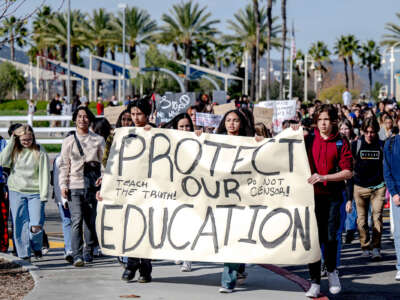

Erasing History, Erasing Democracy: Trump’s Authoritarian Assault on Education

Trump appears bent on ridding schools of dangerous practices like critical thinking and an unsanitized study of history.
February 6, 2025

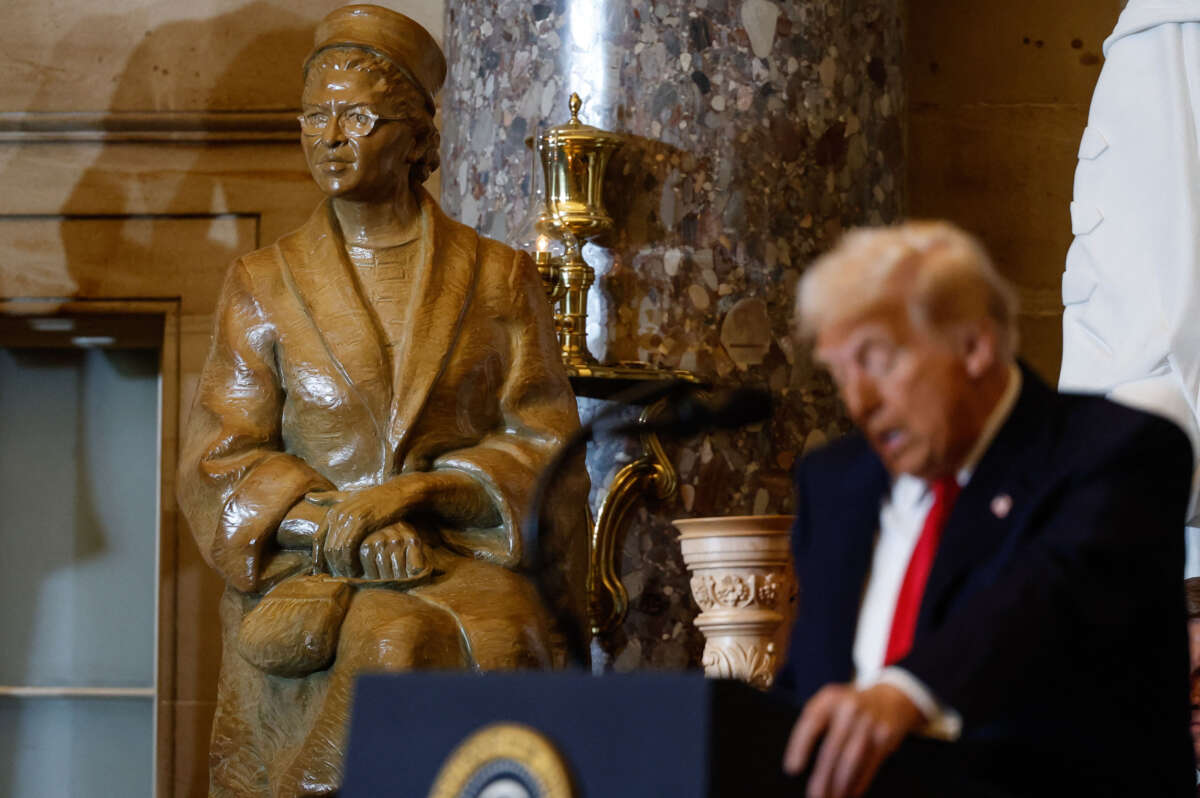
A statue of civil rights organizer Rosa Parks looks on as President Trump speaks during the National Prayer Breakfast at the U.S. Capitol in Washington, D.C., on February 6, 2025. Trump's executive order on K-12 schooling threatens to revoke federal funding from schools that teach students about the history of racism and anti-racist struggle in the U.S.
Ting Shen / AFP via Getty Images

In the initial days of his second term, President Donald Trump issued several executive orders “seeking to control how schools teach about race and gender, direct more tax dollars to private schools, and deport pro-Palestinian protesters.” On January 29, 2025, he signed the “Ending Radical Indoctrination in K-12 Schooling” executive order, which mandates the elimination of curricula that the administration deems as promoting “radical, anti-American ideologies.” This executive order is not just an attack on critical race theory or teachings about systemic racism — it is a cornerstone of an authoritarian ideology designed to eliminate critical thought, suppress historical truth and strip educators of their autonomy. Under the guise of combating “divisiveness,” it advances a broader war on education as a democratizing force, turning schools into dead zones of the imagination. By threatening to strip federal funding from institutions that refuse to conform, this policy functions as an instrument of ideological indoctrination, enforcing a sanitized, nationalistic narrative that erases histories of oppression and resistance while deepening a culture of ignorance and compliance.

Concurrently, President Trump issued the “Expanding Educational Freedom and Opportunity for Families” executive order, aiming to enhance school choice by redirecting federal funds to support charter schools and voucher programs. This policy enables parents to use public funds for private and religious school tuition. While proponents claim that this legislation empowers parents and fosters competition, in reality, it is a calculated effort to defund and privatize public education, undermining it as a democratizing public good. As part of a broader far right assault on education, this policy redirects essential resources away from public schools, deepening educational inequality and advancing an agenda that seeks to erode public investment in a just and equitable society.

In the name of eliminating radical indoctrination in schools, a third executive order, which purportedly aims at ending antisemitism, threatens to deport pro-Palestinian student protesters by revoking their visas, warning that even those legally in the country could be targeted for their political views. In a stark display of authoritarianism, Trump’s executive order unapologetically stated that free speech would not be tolerated. Reuters made this clear in reporting that one fact sheet ominously declared: “I will … quickly cancel the student visas of all Hamas sympathizers on college campuses, which have been infested with radicalism like never before. To all the resident aliens who joined in the pro-jihadist protests, we put you on notice: come 2025, we will find you, and we will deport you.”

Trump’s longstanding war on education has taken a more dangerous turn with his incoming order to eliminate the Department of Education through executive fiat. This is not just an attack on bureaucracy; it is a calculated and boldfaced assault on public education itself — an effort to dismantle one of the last remaining institutions or public goods capable of fostering critical thought, historical memory and civic responsibility.

By gutting federal oversight, he is handing the fate of education to reactionary state legislatures and corporate interests, ensuring that knowledge is shaped by a state held captive by billionaires and far right extremists. This is the logic of authoritarianism: to hollow out democratic institutions and replace education with white Christian propaganda and a pedagogy of repression. At issue here is an attempt to render an entire generation defenseless against the very forces seeking to dominate them.

Related Story

Trump’s Education Agenda for Teachers: Sanitize US History or Leave the Field
Teachers fear Trump may use federal funding as a bludgeon to push “uncritical race theory” on K-12 schools and colleges. By Jesse Hagopian , Truthout January 24, 2025


What we are witnessing is not just an educational crisis but a full-scale war on institutions that not only defend democracy but enable it. What is under siege in this attack is not only the critical function of education but the very notion that it should be defined through its vision of creating a central feature of democracy, educating informed and critically engaged citizens.

These executive actions represent an upgraded and broader version of McCarthyite and apartheid-era education that seeks to dictate how schools teach about race and gender, funnel more taxpayer dollars into private institutions, and deport Palestinian protesters. The irony is striking: The White House defends these regressive measures of sanitizing history, stripping away the rights of transgender students and erasing critical race theory as efforts to “end indoctrination in American education.” In truth, this is not about the pursuit of freedom or open inquiry, nor is it about fostering an education that cultivates informed, critically engaged citizens. At its core, this agenda is a deliberate attack on education as a public good — one that threatens to dismantle not only public institutions, but the very essence of public and higher education and its culture of criticism and democracy. The urgency of this moment cannot be overstated: The future of education itself is at stake.

In the raging currents of contemporary political and cultural life, where fascist ideologies are rising, one of the most insidious and all-encompassing forces at play is the violence of forgetting — a plague of historical amnesia. This phenomenon, which I have referred to as “organized forgetting,” describes the systemic erasure of history and its violent consequences, particularly in the public sphere. This is especially evident in the current historical moment, when books are banned in libraries, public schools and higher education across countries, such as the United States, Hungary, India, China and Russia. Ignoring past atrocities, historical injustices and uncomfortable truths about a society’s foundation is not merely an oversight — it constitutes an active form of violence that shapes both our collective consciousness and political realities. What we are witnessing here is an assault by the far right on memory that is inseparable from what Maximillian Alvarez describes as a battle over power — over who is remembered, who is erased, who is cast aside and who is forcibly reduced to something less than human. This struggle is not just about history; it is about whose stories are allowed to shape the present and the future. Alvarez captures this reality with striking clarity and is worth quoting at length:


Among the prizes at stake in the endless war of politics is history itself. The battle for power is always a battle to determine who gets remembered, how they will be recalled, where and in what forms their memories will be preserved. In this battle, there is no room for neutral parties: every history and counter-history must fight and scrap and claw and spread and lodge itself in the world, lest it be forgotten or forcibly erased. All history, in this sense, is the history of empire — a bid for control of that greatest expanse of territory, the past.

Organized forgetting also helped fuel the resurgence of Donald Trump, as truth and reason are being systematically replaced by lies, corruption, denial and the weaponization of memory itself. A culture of questioning, critique and vision is not simply disappearing in the United States — it is actively maligned, disparaged and replaced by a darkness that, as Ezra Klein observes, is “stupefyingly vast, stretching from self-destructive incompetence to muddling incoherence to authoritarian consolidation.”

This erosion affects institutions of law, civil society and education — pillars that rely on memory, informed judgment and evidence to foster historical understanding and civic responsibility. The attack on the common good goes beyond the distractions of an “attention economy” designed to distort reality; it reflects a deliberate effort to sever the ties between history and meaning. Time is reduced to fragmented episodes, stripped of the shared narratives that connect the past, present and future.

This crisis embodies a profound collapse of memory, history, education and democracy itself. A culture of manufactured ignorance — rooted in the rejection of history, facts and critical thought — erases accountability for electing a leader who incited insurrection and branded his opponents as “enemies from within.” Such authoritarian politics thrive on historical amnesia, lulling society into passivity, eroding collective memory and subverting civic agency. This is epitomized by Trump’s declaration on “Fox & Friends” that he would punish schools that teach students accurate U.S. history, including about slavery and racism in the country. The call to silence dangerous memories is inseparable from the violence of state terrorism — a force that censors and dehumanizes dissent, escalating to the punishment, torture and imprisonment of truth-tellers and critics who dare to hold oppressive power accountable.

At its core, the violence of forgetting operates through the denial and distortion of historical events, particularly those that challenge the dominant narratives of power. From the colonial atrocities and the struggles for civil rights to the history of Palestine-Israel relations, many of the most significant chapters of history are either glossed over or erased altogether. This strategic omission serves the interests of those in power, enabling them to maintain control by silencing inconvenient truths. As the historian Timothy Snyder reminds us, by refusing to acknowledge the violence of the past, society makes it far easier to perpetuate injustices in the present. The politics of organized forgetting, the censoring of history and the attack on historical consciousness are fundamental to the rise of far right voices in the U.S. and across the world.

With the rise of regressive memory laws, designed to repress what authoritarian governments consider dangerous and radical interpretations of a country’s past, historical consciousness is transformed into a form of historical amnesia. One vivid example of a regressive memory law was enacted by Trump during his first term. The 1776 Report, which right-wingers defended as a “restoration of American education,” was in fact an attempt to eliminate from the teaching of history any reference to a legacy of colonialism, slavery and movements which highlighted elements of American history that were unconscionable, anti-democratic and morally repugnant. Snyder highlights the emergence of memory laws in a number of states. He writes in a 2021 New York Times article:


As of this writing, five states (Idaho, Iowa, Tennessee, Texas and Oklahoma) have passed laws that direct and restrict discussions of history in classrooms. The Department of Education of a sixth (Florida) has passed guidelines with the same effect. Another 12 state legislatures are still considering memory laws. The particulars of these laws vary. The Idaho law is the most Kafkaesque in its censorship: It affirms freedom of speech and then bans divisive speech. The Iowa law executes the same totalitarian pirouette. The Tennessee and Texas laws go furthest in specifying what teachers may and may not say. In Tennessee teachers must not teach that the rule of law is “a series of power relationships and struggles among racial or other groups.”… The Idaho law mentions Critical Race Theory; the directive from the Florida school board bans it in classrooms. The Texas law forbids teachers from requiring students to understand the 1619 Project. It is a perverse goal: Teachers succeed if students do not understand something.

A major aspect of this forgetting and erasure of historical memory is the role of ignorance, which has become not just widespread but weaponized in modern times. Ignorance, particularly in U.S. society, has shifted from being a passive lack of knowledge to an active refusal to engage with critical issues. This is amplified by the spectacle-driven nature of contemporary media and the increasing normalization of a culture of lies and the embrace of a language of violence, which not only thrives on distraction rather than reflection, but has become a powerful force for spreading bigotry, racial hatred and right-wing lies. In addition, the mainstream media’s obsession with spectacle — be it political drama, celebrity culture or sensationalist stories — often overshadows the more important, yet less glamorous, discussions about historical violence and systemic injustice.

This intellectual neglect allows for a dangerous cycle to persist, where the erasure of history enables the continuation of violence and oppression. Systems of power benefit from this amnesia, as it allows them to maintain the status quo without having to answer for past wrongs. When society refuses to remember or address past injustices — whether it’s slavery, imperialism or economic exploitation — those in power can continue to exploit the present without fear of historical accountability.


To strip education of its critical power is to rob democracy of its transformative potential.

The cultural impact of this organized forgetting is profound. Not only does it create a void in public memory, but it also stunts collective growth. Without the lessons of the past, it becomes nearly impossible to learn from mistakes and address the root causes of social inequalities. The failure to remember makes it harder to demand meaningful change, while reproducing and legitimating ongoing far right assaults on democracy.

The violence of organized forgetting is not a mere act of neglect; it is a deliberate cultural and intellectual assault that undercuts the foundations of any meaningful democracy. By erasing the past, society implicitly condones the ongoing oppression of marginalized groups and perpetuates harmful ideologies that thrive in ignorance. This erasure silences the voices of those who have suffered — denying them the space to speak their truth and demand justice. It is not limited to historical injustices alone; it extends to the present, silencing those who courageously criticize contemporary violence, such as Israel’s U.S.-backed genocidal war on Gaza, and those brave enough to hold power accountable.

The act of forgetting is not passive; it actively supports systems of oppression and censorship, muffling dissent and debate, both of which are essential for a healthy democracy.

Equally dangerous is the form of historical amnesia that has come to dominate our contemporary political and cultural landscape. This organized forgetting feeds into a pedagogy of manufactured ignorance that prioritizes emotion over reason and spectacle over truth. In this process, history is fragmented and distorted, making it nearly impossible to construct a coherent understanding of the past. As a result, public institutions — particularly education — are undermined, as critical thinking and social responsibility give way to shallow, sensationalized narratives. Higher education, once a bastion for the development of civic literacy and the moral imperative of understanding our role as both individuals and social agents, is now attacked by forces seeking to cleanse public memory of past social and political progress. Figures like Trump embody this threat, working to erase the memory of strides made in the name of equality, justice and human decency. This organized assault on historical memory and intellectual rigor strikes at the heart of democracy itself. When we allow the erasure of history and the undermining of critical thought, we risk suffocating the ideals that democracy promises: justice, equality and accountability.

A democracy cannot thrive in the absence of informed and engaged agents that are capable of questioning, challenging and reimagining a future different from the present. Without such citizens, the very notion of democracy becomes a hollow, disembodied ideal — an illusion of freedom without the substance of truth or responsibility. Education, in this context, is not merely a tool for transmitting knowledge; it is the foundation and bedrock of political consciousness. To be educated, to be a citizen, is not a neutral or passive state — it is a vital, active political and moral engagement with the world, grounded in critical thinking and democratic possibility. It is a recognition that the act of learning and the act of being a citizen are inextricable from each other. To strip education of its critical power is to rob democracy of its transformative potential.

Confronting the violence of forgetting requires a shift in how we engage with history. Intellectuals, educators and activists must take up the responsibility of reintroducing the painful truths of the past into public discourse. This is not about dwelling in the past for its own sake, but about understanding its relevance to the present and future. To break the cycles of violence, society must commit to remembering, not just for the sake of memory, but as a critical tool for progress.

Moreover, engaging with history honestly requires recognizing that the violence of forgetting is not a one-time event but a continual process. Systems of power don’t simply forget; they actively work to erase, rewrite and sanitize historical narratives. This means that the fight to remember is ongoing and requires constant vigilance. It’s not enough to simply uncover historical truths; society must work to ensure that these truths are not forgotten again, buried under the weight of media spectacles, ideological repression and political theater.

Ultimately, the violence of forgetting is an obstacle to genuine social change. Without confronting the past — acknowledging the violence and injustices that have shaped our world — we cannot hope to build a more just and informed future. To move forward, any viable democratic social order must reckon with its past, break free from the bonds of ignorance, and commit to creating a future based on knowledge, justice and accountability.

The task of confronting and dismantling the violent structures shaped by the power of forgetting is immense, yet the urgency has never been more pronounced. In an era where the scope and power of new pedagogical apparatuses such as social media and AI dominate our cultural and intellectual landscapes, the challenge becomes even more complex. While they hold potential for education and connection, these technologies are controlled by a reactionary ruling class of financial elite and billionaires, and they are increasingly wielded to perpetuate disinformation, fragment history and manipulate public discourse. The authoritarian algorithms that drive these platforms increasingly prioritize sensationalism over substance, lies over truth, the appropriation of power over social responsibility, and in doing so, reinforce modes of civic illiteracy, while attacking those fundamental institutions which enable critical perspectives and a culture of questioning.

The vital need for collective action and intellectual engagement to reclaim and restore historical truth, critical thinking and social responsibility is urgent. The present historical moment, both unprecedented and alarming, resonates with Antonio Gramsci’s reflection on an earlier era marked by the rise of fascism: “The old world is dying, and the new world struggles to be born; now is the time of monsters.”

In the face of a deepening crisis of history, memory and agency, any meaningful resistance must be collective, disruptive and unapologetically unsettling — challenging entrenched orthodoxies and dismantling the forces that perpetuate ignorance and injustice. This struggle needs to be both radical in its essence and uncompromising in its demands for social change, recognizing education as inseparable from politics and the tangible challenges people face in their everyday lives. In this collective effort lies the power to dismantle the barriers to truth, rebuild the foundations of critical thought, and shape a future rooted in knowledge, justice and a profound commitment to make power accountable. Central to this vision is the capacity to learn from history, to nurture a historical consciousness that informs our present and to reimagine agency as an essential force in the enduring struggle for democracy. This call for a radical imagination cannot be confined to classrooms but must emerge as a transformative force embedded in a united, multiracial, working-class movement. Only then can we confront the urgent crises of our time.

This article is licensed under Creative Commons (CC BY-NC-ND 4.0), and you are free to share and republish under the terms of the license.


Henry A. Giroux currently holds the McMaster University Chair for Scholarship in the Public Interest in the English and Cultural Studies Department and is the Paulo Freire Distinguished Scholar in Critical Pedagogy. His most recent books include: The Terror of the Unforeseen (Los Angeles Review of books, 2019), On Critical Pedagogy, 2nd edition (Bloomsbury, 2020); Race, Politics, and Pandemic Pedagogy: Education in a Time of Crisis (Bloomsbury 2021); Pedagogy of Resistance: Against Manufactured Ignorance (Bloomsbury 2022) and Insurrections: Education in the Age of Counter-Revolutionary Politics (Bloomsbury, 2023), and coauthored with Anthony DiMaggio, Fascism on Trial: Education and the Possibility of Democracy (Bloomsbury, 2025). Giroux is also a member of Truthout’s board of directors.

'Cult making kids kill': Mysterious online figure linked to at least 2 school shootings

February 06, 2025
RAW STORY

Before 17-year-old Solomon Henderson fatally shot a fellow student and then took his own life at Antioch High School in Nashville, Tennessee last month, he left a trail of documents and social media posts that revealed his immersion in a swirl of violent white supremacy, occultism and edgy far-right memes.

He name-dropped a parade of white supremacist mass murderers and school shooters, while resharing terror manuals that goad impressionable and troubled teenagers like himself to gamify violence by encouraging efforts to improve on their predecessors’ lethality.

Henderson’s writings and social media posts also referenced “groomers” and “handlers.” Among the half-dozen nicknames Henderson dropped, one has been flagged for its association with three separate deadly attacks.

“Nitro groomed me,” Henderson wrote on his Bluesky account one day before he took a gun to school and killed a 16-year-old student. And in a diary that he left behind, Henderson mentioned Nitro, also known as “Nitrogen,” as being among his “top ‘groomers.’”


Henderson’s writings brim with dehumanizing tropes and grotesque descriptions of violence, suggesting, at least in part, that the purpose of his propaganda was to shock and alarm parents, teachers and other authority figures.

Carla Hill, director of investigative research for the Anti-Defamation League’s Center on Extremism, told Raw Story in an email that Henderson’s post “may have been a trolling effort” or “perhaps an inside joke.” She added: “We have no evidence that Nitro played a direct role in guiding or mentoring Henderson. What is more likely and perhaps notable is that Henderson had to have been in online spaces either with Nitro or where he was discussed, because he was familiar with him and versed in his activities/reputation perhaps.”

While the exact role played by the “groomers” and “handlers” cited by Henderson remains unclear, the nicknames and social media accounts are likely to provide investigators with leads on a potential network of operators — part of a global network — who may be working behind the scenes to instigate terrorism.
by Taboola
Sponsored LinksYou May Like

Advance Your Career with a Nursing Degree—Flexible Online Programs for Aspiring Healthcare Heroes!Pursue your passion for healthcare with a flexible nursing degree. Study at your own pace, anytime, anywhere.toptip
Learn More


“They think we’re satanic pdf groomers. Part of super Mkultra cult making kids kill,” Henderson wrote in an X post that tagged Nitro in mid-December last year, referring to a CIA mind-control experiment. “They [sic] people are f---ing stretching. I’m just trolling; I barely know her.”

Henderson was talking about Natalie Rupnow, a 15-year-old who fatally shot a fellow student and teacher at Abundant Life Christian School in Madison, WI before taking her own life. Rupnow’s attack turned out to be eerily similar to the one Henderson himself would carry out about a month later.

But privately, according to a diary entry from the same period, Henderson suggested he was much more closely connected to Rupnow.

Henderson took note of an X post by Rupnow shortly before she carried out her attack. In the post, Rupnow displayed a photo of herself making a hand sign. Henderson wrote in his diary that he recognized the gesture as the “white power symbol” used by Brenton Tarrant, the white supremacist who slaughtered 51 Muslims in an attack on two mosques in Christchurch, New Zealand in 2019.

Rupnow followed the photo with a post linking to a Google Docs version of her manifesto, although she neglected to make it public.

“Livestream it,” Henderson wrote in reply.

Later, he expressed excitement in his diary that Rupnow had followed two of his X accounts.

For his part, the person who goes by the name Nitro admitted to being in an online voice chat with Rupnow, and, according to the Center on Extremism, distributed a hoax version of her manifesto on X.

Nitro’s identity remains unknown, but based on an apparent recording of his voice reviewed by Raw Story, he appears to have an English accent and confirmed in the recording that he was in the time zone for the United Kingdom. An X post uncovered by the Center on Extremism indicates Nitro is 17 years old — the same age as Henderson was — and that he is a person of Russian heritage. The post displays a photo of a balloon that says, “Happy 17th Birthday” in Russian, while another X account uses a Russian flag in the bio.

An archived version of another X account shows Nitro telling another user that he planned to “get into contact with my FSB friends,” suggesting that he knows people who work for Russian intelligence.

Henderson’s dismissive post came in response to a post by another X user tagging the FBI and calling on the agency to detain Henderson and “Nitro” based on their apparent foreknowledge of Rupnow’s attack.

Three days later, Henderson posted a link in his diary to a video recording of Nitro giving an interview to an unidentified reporter about the Rupnow shooting. Nitro livestreamed the interview in a Discord group chat as four other anonymous users listened in and typed comments in the chat to help him script his responses.

There was no mistaking in the exchange that took place before the call started that Nitro’s intention was to misdirect the reporter.

“This is going to be fun,” Nitro told the other users in the group chat. “The greatest psy-op ever.”

In a comment in his diary accompanying the link, Henderson remarked that Nitro was “trolling” the reporter, adding a homophobic slur and the text acronym for “laugh out loud.”

During the interview, Nitro admitted that he and Rupnow had interacted in a Discord group chat, while presenting himself as an amused bystander. Based on the coaching from the other members of the chat and their celebratory post-interview assessment, it’s clear what they intended to present as a red herring to explain the motivation behind the attack.

About 10 minutes into the interview, a user with the screen name “Chud King” encouraged Nitro to talk about a concept called “radfem Hitler,” and that was the theme Nitro emphasized during the interview.

“So, radfem Hitler — it’s this really insane bats--- crazy misandrist, like racist woman on Twitter,” Nitro told the reporter. He added that when Rupnow started following the account that supposedly promoted radical feminism and Hitler worship, “that’s kind of when she spiraled.”

Another user in the group chat goes by the name Kristiyan on Discord and X.

In recent X posts, Kristiyan identifies himself as a pan-Slavist. He laments that Eastern Europeans “have this idiotic aggressive pettiness towards the people who are the most similar to them, which is how they end up conquered and taken over by total aliens.

Two days after Donald Trump’s inauguration, Kristiyan expressed disdain for Russian far-rightists who welcome the new U.S. president, writing, “The US will remain an enemy, and I’m grateful things are that way.”

Following Nitro’s phone call with the reporter seeking information about the Rupnow shooting, Kristiyan commented with wry satisfaction: “Journalist owned.”

In addition to playing up the “radfem Hitler” concept as a driver of the attack, Nitro also attempted to minimize connections between Rupnow and another attacker — an 18-year-old named Arda Küçükyetim, who stabbed five people at an outdoor café in the northwestern Turkish city of Eskisehir in August.

“Nobody actually knows about this Arda guy outside of probably people in Turkey, right?” Nitro said. “Nobody’s ever heard of him. He’s such a nothing-burger.”

The reporter asked Nitro whether Rupnow had ever mentioned Küçükyetim.

“No,” Nitro responded.

What Nitro didn’t mention was that both he and Rupnow were in a Telegram chat that had been set up in advance so they could watch Küçükyetim livestream his attack.

Hill at the Center on Extremism told Raw Story that her team found a Telegram chat group where Küçükyetim posted his manifesto. An associate known as “Hansen” then posted a link to a livestream of a promised attack. While the members of the chat group were waiting for the attack to begin, Hill said, Rupnow joined the chat through an invitation link, indicating she had a preexisting relationship with at least one other participant.

Afterwards, members of the chat group critiqued the attack.

By the standards of the accelerationist movement, where success is measured in kill counts, it was a disappointment to them: No one died.

“A for effort,” Nitro wrote in the chat.

“At least he did it,” Hansen said.

Rupnow concurred.

“Credit given for that at least,” she wrote.

This story is the second in a three-part series exploring how violent online subcultures provide the opportunity for teenagers attracted to accelerationism and inceldom to network and encourage one another to carry out terrorist attacks. Read Part 1 here.

Catch-22: The great antiwar novel whose barbs still strike home — even in times of peace


February 04, 2025


Joseph Heller’s Catch-22 (1961) is a satirical antiwar novel about an American bomber squadron stationed in Italy in the second world war. It exposes the horrors of war, but, even more, it is about the inept and immoral military bureaucracy and the grim relationships between men and women within the war. Its barbs still strike home, even in times of relative peace.

This is because Heller was not just writing against war. “Frankly, I think the whole society is nuts,” he once said – “and the question is: What does a sane man do in an insane society?”


The novel doesn’t exactly have a plot. For the most part, its 42 chapters circle around episodes and characters. It is not until you are some way in that you begin to get a feel for its content and method.

The novel needs a second pass to catch everything you missed the first time, such as the first mention of the central “Snowden” episode, or the extent to which various characters are morally compromised, or the way the protagonist Yossarian replies “pretty good” whenever anyone asks him how he is (he is far from pretty good).


Key episodes include Yossarian spending time in hospital, either because he is actually injured or feigning illness to get out of fighting (his commander Colonel Cathcart keeps raising the number of missions to be flown), the depictions of Yossarian’s flight missions, and the exploits of mess officer Milo Minderbinder, who builds a world-spanning syndicate that profits from everything from selling eggs to bombing his own squadron.

The novel also describes the numerous visits the men make to brothels in Rome and, in its later parts, Yossarian’s refusal to fly any more missions and the consequences of his refusal.

Heller, like Yossarian, was a bombardier in WWII. He joined the US Army Air Corps when he was 19 and flew 60 combat missions. He started writing Catch-22 in 1953, but took eight years to finish it.

The book received mixed reviews. In the United States, the hardcover sold slowly in its first year. Yet it quickly gained a cult following among young people. It was a word-of-mouth success. Unlike in the US, it was immediately successful in the United Kingdom. Once the paperback was released, its sales exploded.

The novel is filled with gags – mostly paradoxes in the style of Oscar Wilde, of which the central one is the eponymous “catch-22”. It is explained by the squadron’s physician Doc Daneeka, who tells Yossarian he has to ground anyone who is crazy. But the person has to ask to be grounded. The catch is that if someone asks to be grounded, this is a sign of a rational mind, so the person cannot be grounded.

The gags seem a little inane at first:
The Texan turned out to be good-natured, generous and likeable. In three days no one could stand him.
[…]
Nately had a bad start. He came from a good family.

But their cumulative effect points to something fundamental: our promotion of evil for the sake of self-interest or cowardice, and our tendency to hide this with doublespeak and bureaucratic cant.

Returning to the novel after a long time, I found it slow going at first. But by the end I was racing through the chapters – the last five are dark and brilliant – searching for anything redeeming.

I was hoping to be convinced the morality I hold to is not merely “a vain sticking up for appearances”, to quote Joseph Conrad, whose novel Heart of Darkness inspired the anti-Vietnam War movie Apocalypse Now (1979), which has some thematic similarities to Catch-22.

In the weighty Chapter 39, The Eternal City, which draws on James Joyce’s Ulysses and Dostoevsky’s Crime and Punishment, we read:
[…] how many good people were bad people? When you added them all up and then subtracted, you might be left with only the children, and perhaps with Albert Einstein and an old violinist or sculptor somewhere.

Bureaucracy versus humanity

One of the most successful aspects of Catch-22 is the way the inhuman military bureaucracy is juxtaposed with various human moments.

One involves McWatt, a pilot, who is one of those fearless wartime characters like Lieutenant Colonel Kilgore in Apocalypse Now.

Kilgore makes his men surf in the middle of battle, and has the famous line: “I love the smell of napalm in the morning.” McWatt is always buzzing the base and flying dangerously low during bombing runs. After an incident where Yossarian tries to choke McWatt for flying too low, Yossarian asks him: “Aren’t you ever afraid?” McWatt replies: “Maybe I ought to be […] I guess I just don’t have brains enough.”

Later in the novel, McWatt is flying low over the sea, approaching the base. Shockingly, the propeller of his plane kills a young soldier standing on a pontoon. McWatt flies around for a while. Then we read:
He dipped his wings once in salute, decided oh well, what the hell, and flew into a mountain.

McWatt’s sudden demise inclines us to see his erstwhile fearlessness more as a nihilistic death wish: something driven by trauma, not character.

The most intense episode in the novel is the death of the radio-gunner Snowden. After their plane is hit by flak, Yossarian tries but fails to save Snowden’s life.

The most comprehensive retelling of the episode occurs in the climactic second-last chapter, which gives a detailed account of Yossarian competently and tenderly treating Snowden’s leg wound. It seems as if Snowden will be saved, though incongruously he keeps saying “I’m cold”. The crushing moment comes when Yossarian realises he has missed that a piece of shrapnel has penetrated Snowden’s flak vest, spilling out his entrails.

There are the many other smaller human moments, such as when the sensitive and moral chaplain is talking with Yossarian. I love this part:
‘Have you ever […] been in a situation which you felt you had been in before, even though you knew you were experiencing it for the first time?’ Yossarian nodded perfunctorily, and the chaplain’s breath quickened in anticipation as he made ready to join his will power with Yossarian’s in a prodigious effort to rip away at last the voluminous black folds shrouding the eternal mysteries of existence.

The chaplain, who is the object of the first line of the novel – “It was love at first sight” (this is from Yossarian’s perspective) – is also with Yossarian at the end, and shares in his defiance.

A man’s world

Then there is the sex. Numerous bleak sexual relationships between men and women occur in Rome – often in brothels – but also on the military base, for example between Yossarian and Nurse Duckett.

At best, the women in Catch-22 are opportunistic. Nurse Duckett breaks off her relationship with Yossarian because she prefers the financial stability of a doctor. Doc Daneeka’s wife seems a little too ready to move on after he is wrongly reported dead and she receives a substantial payout.

But much of the time the women – often prostitutes – seem numb about what is happening to them. We read descriptions like this one, when a prostitute is rejected by several men:
She seemed more fatigued than disappointed. Now she sat resting in vacuous indolence, watching the card game with dull curiosity as she gathered her recalcitrant energies for the tedious chore of donning the rest of her clothing and going back to work.


I said that as I approached the end of the novel I was racing through the pages, searching for anything redeeming. It is easy to identify with everyman Yossarian. He has been traumatised by the war. He speaks plainly when few do. He shows great humanity, particularly when he tries to save Snowden. Ultimately, he refuses to lie, even though doing so will give him a way out of the war.

Yet he, like the other soldiers, is a user and abuser of women.

Towards the end, after Nurse Duckett has broken it off with him, Yossarian travels to Rome, desperately seeking women he has known before.

He has sex with two prostitutes. On one savage page we read, among other horrors: “He banged a thin streetwalker with a wet cough […] but that was no fun at all.” And directly after:
He woke up disappointed and banged a sassy, short, chubby girl he found in the apartment […] but that was only a little better, and he chased her away when he’d finished.

We can say that Yossarian’s treatment of women is a symptom of the war. But my sense is that the novel is also making the deeper point that in our insane society men’s treatment of women doesn’t figure in our assessment of their character. Yossarian himself, in the climactic chapter The Eternal City, reflects: “It was a man’s world.”

To strengthen my point: at the time of writing, the Wikipedia entry for Catch-22, which is strong in most respects, says nothing about the relationships between men and women in the novel

. 
Alan Arkin as Yossarian in the 1970 film adaptation of Catch-22.
 Ralf Liebhold/Shutterstock

Catch-22 also drives home a more unspeakable point. Yossarian reflects on why a particular prostitute likes a particular officer. He says the officer, “treats her like dirt” and reflects: “Anyone can get a girl that way.” As Annie Lennox sings: “Some of them want to abuse you, some of them want to be abused.” Nice guys finish last.

Yet there is a glimmer of redemption. At the end of the novel, Yossarian is committed to rescuing a young girl: the sister of “Nately’s whore”, a prostitute his naive friend Nately is in love with.

Significantly, after she is told of Nately’s death on a mission, Nately’s whore blames Yossarian and spends the remainder of the novel trying to kill him. The last lines of the novel are
Nately’s whore was hiding just outside the door. The knife came down, missing him by inches, and he took off.

Her wordless and implacable rage feels like the return of the repressed for all the women in the novel. It is a fury that cannot be articulated, because the truth is too dark – but it can nonetheless be embodied.

The phrase “catch-22” has entered common usage to describe a situation where someone is trapped by contradictory rules. Many subsequent movies and shows are thematically and tonally similar to Heller’s novel – for example, Stanley Kubrick’s satirical Dr Strangelove or: How I Learned to Stop Worrying and Love the Bomb (1964).

And while movies like Apocalypse Now, Platoon (1986) and Full Metal Jacket (1987) are not humorous, we can see in them similar critiques of the violence of war, the treatment of women, and the wartime bureaucracy that makes it all possible. As Captain Willard says in Apocalypse Now: “The bullshit piled up so fast in Vietnam, you needed wings to stay above it.”

The bullshit depicted in Catch-22 is legion. As it is, alas, in our own institutions and organisations today.

Jamie Q. Roberts, Lecturer in Politics and International Relations, University of Sydney

This article is republished from The Conversation under a Creative Commons license. Read the original article.
Art as resistance: A digital archive documents how protest arts address police violence


A person walks past a mural of George Floyd in Victoria, B.C., in June 2020. Floyd was murdered by a police officer in 2020 in Minneapolis, Minn. 
THE CANADIAN PRESS/Chad Hipolito
February 06, 2025

Policing has become a contentious subject globally, with systemic injustices prompting diverse responses of resistance and revolt. In turn, protest movements around the world have increasingly turned to art as a dynamic tool for resistance, awareness and advocacy for change.

In this context, the Centre for Socially Engaged Theatre (C-SET) at the University of Regina launched the Ar(c)tivism and Policing digital archival research project as part of a five-day Festival of Art and Discourse.

This “living archive” initiative documents and analyzes the role of protest arts in addressing police brutality and systemic injustice through digital ethnography — the study of cultural and social aspects of human interaction through online technologies.
Socially engaged art

The archive is concerned with how socially engaged art has shaped resistance movements and “artivism”the combination of art and activism for transformative social action. The archive emphasizes the role of art in resisting oppressive systems such as police violence, systemic racism and the enduring effects of colonialism.

Our methodology for gathering and documenting works prioritizes inclusivity, focusing on works that address systemic injustices and resonate with resistance movements. The archive features a diverse range of artworks connected to protests or broader cultural concerns for change.

We document both creative works from grassroots creators and from established figures (for example, such as Kent Monkman or Laolu Senbanjo).

Currently, the archive is designed to focus on Nigeria, Bangladesh, the United States and Canada. Materials are organized into categories such as Visual Arts, Music, Performance, Documentaries, Literary Works and News headlines (news about art as resistance). This structure captures the diverse ways artists and activists respond to police brutality and systemic oppression.

All the content is publicly accessible through social media platforms and online news outlets. The archive is open to input and collaboration from artists, researchers and activists.
The ‘r’ in ar(c)tivism

By showcasing the cultural resistance embedded in art, the project highlights the capacity of art to drive social change and foster collective empowerment. Current archival collections focus on:

Nigeria: The Sorosoke Movement: The project’s Nigerian segment spotlights the 2020 Sorosoke movement, a youth-led protest demanding the disbandment of the Special Anti-Robbery Squad (SARS). SARS, notorious for corruption, extortion, arbitrary detention and extrajudicial killings, symbolized systemic abuse within the Nigerian Police Force (NPF). Protest art from this movement includes paintings, murals, illustrations, spoken word performances, skits, images and music that captured the frustrations and aspirations of a generation demanding accountability and systemic reform.

Bangladesh: The Quota Reform Movement 2024: In Bangladesh, the focus shifts to the 2024 mass uprising that sought equitable government job opportunities and an end to systemic discrimination. Protest art from this movement includes posters, graffiti, street art, paintings and drawings that conveyed themes of resistance and aspirations for democratic reform. These artworks reflect the youth’s vision for a fairer society.

United States: Black Lives Matter (BLM): The archive prominently features the Black Lives Matter movement in the United States, particularly following George Floyd’s murder in May 2020. Protest art includes large-scale murals, graffiti, music, light projections and performance pieces. These works mourned the loss of Black lives while demanding systemic change and racial justice.
Canada: Amplifying marginalized voices

The Canadian segment of the archive is still in early stages. It aims to feature art created by Black, Indigenous and people of colour (BIPOC) communities that protests police violence and systemic racism or that is meaningful to protest movements.

Scholars and creative practitioners challenge Canada’s self-image as a multicultural haven, exposing systemic inequalities. For instance, scholar Robin Maynard’s book Policing Black Lives highlights systemic injustice and state violence in Canada against Black bodies.

Publications like the “Kanesatake Resistance” and others by the Art Canada Institute highlight contributions from Indigenous activists or artists who have waded into sociopolitical discourse, drawing on creativity to change oppressive structures. Such publications offer critical context for the works the archive seeks to document.


The digital repository

As the project evolves, it aims to offer several key insights based on prior research that can also shape new perspectives and inquiries around:

1. Art as a catalyst for change:Art has the ability to mobilize communities and sustain momentum in social movements, such as the #EndSARS protests in Nigeria. The archive aspires to build on these foundations by curating a diverse array of artworks that exemplify this dynamic.

2. The role of youth in protest movements: Young people are central to driving protest movements. Through digital communication networks and creative expressions, youth amplify their demands globally. The archive seeks to document these contributions.

3. Global solidarity through the art: The archive’s goal is to highlight themes of resistance and resilience that resonate across movements, fostering a sense of global connection. Prior analyses highlight art’s potential to inspire solidarity.

4. Sustainability of justice movements: Protest symbols such as the raised fist or the “I Can’t Breathe” murals have become enduring icons of resistance. Specific language, symbolism, gestures and images are are critical to youth, activism and social movements. Through creative practice, symbols play evocative role, foster political participation in social movements and sustain justice movements over time. The archive aims to document important symbols.


A resource for researchers, educators, ‘arctivists’


We hope the archive will serve as a valuable resource for educators, researchers and activists exploring the power of art in advocacy with regards to:Data for research across fields such as policing, media, sociology, anthropology, political science and more;
Case studies for teaching related to art as a resistance tool, enriching courses on social movements, human rights, digital ethnography, media, cultural studies, and more;
Inspiration for ar(c)tivists — the repository can serve as a source of inspiration for artists and activists looking to create their own works of resistance.

By documenting protest art from Nigeria, Bangladesh, Canada and the United States, the Ar(c)tivism and Policing project preserves powerful expressions of dissent and amplifies their impact. It invites reflection on creativity’s role in resistance and showcases how art can continue shaping the fight for justice and equity worldwide.

Taiwo Afolabi, Canada Research Chair in Socially Engaged Theatre; Director, Centre for Socially Engaged Theatre (C-SET), University of Regina and Gabriel Friday Shina, Assistant Researcher, University of Regina


This article is republished from The Conversation under a Creative Commons license. Read the original article.
While Hollywood ignored stories of Black resistance, Cuban filmmakers celebrated Black power


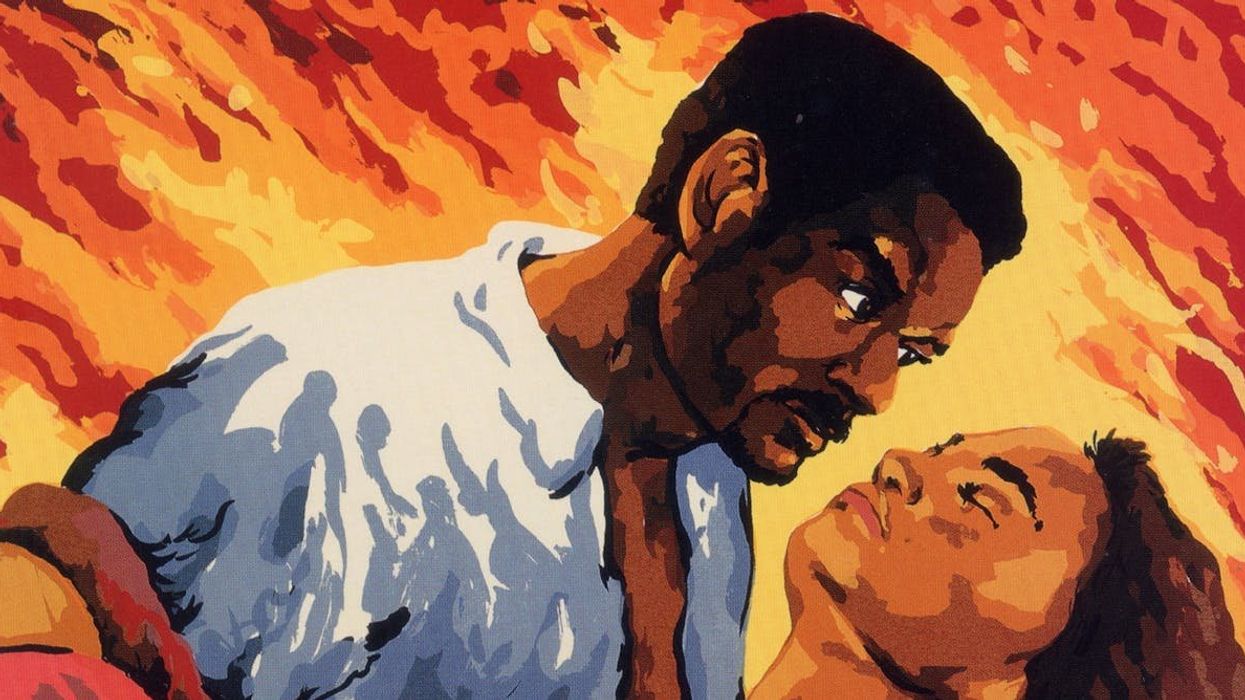
‘Gone with the Macho’ print by Elio Rodriguez. Contemporary debates over slavery, race and racism continue to take place in a public sphere that has been shaped in part by cinematic films. 
(Elio Rodriguez/532 Gallery) , Author provided (no reuse)


The Conversation
February 06, 2025

In recent years, there has been an increased push for more diversity and representation on our entertainment screens. The #OscarsSoWhite campaign of 2015 and the enduring social justice movement it generated increased public awareness of the longstanding problematic issues of discrimination and exclusion in Hollywood.

The movement drew needed attention to Hollywood as an insular industry characterized by institutionalized racism and entrenched disparities. Nearly a decade later some progress has been made, but race, class and gender remain sources of inequality in Hollywood.

Hollywood’s depictions of slavery are emblematic of the persistence of this problem. Although Hollywood has produced several notable films on slavery, more often than not, these films reveal partial and biased views.

For example, one of the world’s first slavery films dating from 1903, is an adaptation of Harriet Beecher Stowe’s 1852 anti-slavery novel, Uncle Tom’s Cabin. In that film, Black people are portrayed by white actors in blackface and slaves are seen dancing at a slave auction.

In general, Black points of view, Black voices and Black historical achievement have been marginalized or overlooked in Hollywood. And in particular, there is a notable lack of films that centre Black resistance to slavery. From overt anti-Black racism in slavery films dating from the earlier part of the 20th century, to a deep-seated and enduring aversion to depicting Black resistance, Hollywood has always lived in a fantasyland when it comes to Black history.

While conducting research into the history of the representation of slavery in cinematic history, I learned that, in contrast to films coming out of the United States, Cuban cinema depicted a very different Black history and culture. Starting in the 1970s, Cuban filmmakers told stories to revalorize Black history and culture.


Black representation in Cuban cinema

Following the Cuban Revolution of 1953–1959, a film industry grew that sought to construct an assertive and representative picture of Black Cuban history and culture, including the history of Black resistance to slavery, which had long been overlooked and misrepresented.

Initially, this work took the form of documentary films that profiled the African roots of Cuban music, a form of cultural expression saturated with a sensibility of resistance. Then, in the 1970s, this work blossomed into a series of feature-length films.

Some examples include the 1976 film La última cena (The Last Supper) by Cuba’s most feted filmmaker, Tomás Gutiérrez Alea. The film is an ironic historical drama of slave revolt and religious hypocrisy set in 1780s Cuba.


A still from the film La última cena (1976), by Tomás Gutiérrez Alea.(Instituto Cubano del Arte e Industria Cinematográficos)

An aristocratic Havana plantation owner decides one Easter week, in imitation of Christ, to invite 12 of his slaves to sup with him at his dinner table. However, far from mollifying the enslaved workers or reconciling them to their status, the count’s 12 chosen slaves respond to their master’s antics by organizing an uprising and burning down the sugarcane mill, thereby demonstrating their selfhood and asserting their agency.

A trilogy of films by one of Cuba’s most underappreciated filmmakers, Afro-Cuban director, Sergio Giral: El otro Francisco (The Other Francisco, 1974), Rancheador (The Slave Hunter, 1976), and Maluala (1979) are also worthy of note. Giral’s trilogy has been regarded as a “welcome tonic to the cloying melodrama of American period films like Gone with the Wind” that erased Black agency as part of their romantic sanitization of slavery.

In El otro Francisco, sentimental, bourgeois perspectives of slavery and abolition are turned upside down. In Rancheador, the perspectives of various poorer whites — smallholder farmers and slave catchers — are brought to the fore to emphasize the insufficiency of race, when taken in isolation, as an explanation for the social dynamics of oppression in slave holding societies.

In Maluala, the strategic and political dilemmas faced by the leaders of Cuba’s maroon communities are emphasized as part of the film’s depiction of the growth of Afro-Cuban consciousness. By foregrounding perspectives that had been sidelined, Giral’s trilogy recovers the history of slave resistance and narrates a counter-history of Cuban slavery and abolition.

Hollywood’s historical inaccuracies


Meanwhile, in the U.S., slavery films have established a popular historiography of slavery for a global audience and have also exerted influence on those in positions of power. One of the most notorious slavery films of all time, D.W. Griffith’s grotesquely racist The Birth of a Nation of 1915, was the first film to be screened in the White House as well as the first film to be projected for the justices of the U.S. Supreme Court and the members of the United States Congress.

It projected flagrant historical inaccuracies, including the perception that the slave-holding American South had been a rural idyll where a noble, chivalrous and pious culture had flourished. The U.S. president of the day, Woodrow Wilson, was among the many millions duped by the film’s depictions; on viewing the film he remarked, “It is like writing history with lightning, and my only regret is that it is all so terribly true.”

The regressive impact of Griffith’s film on American and global public conversations about race should not be underestimated.
Adaptation of a slave narrative

Since The Birth of a Nation, Hollywood has produced several acclaimed movies about slavery in the U.S., but it took nearly a century before the first cinematic adaptation of a slave narrative would appear — Steve McQueen’s celebrated triple Oscar winner 12 Years a Slave of 2013.

Lauded by some critics as “the greatest feature film ever made about American slavery,” 12 Years a Slave received a special screening at the United Nations’ New York headquarters and undeniably represents a significant moment in the history of slavery on screen.


A trailer for ‘12 Years a Slave.’


Nevertheless, and notwithstanding the film’s progressive aspirations, McQueen’s adaptation inadvertently gave new life to sentimental ways of apprehending the history of slavery. The accounts of Black resistance that are present in the source material on which the film was based, Solomon Northup’s 1853 narrative, Twelve Years a Slave, are omitted and the film overlooks the attention paid in the original to slavery as a social and economic system.

For example, the 1853 narrative carefully noted the inadequacy of explaining the evil of slavery by leveling blame at individuals: “It is not the fault of the slaveholder that he is cruel, so much as it is the fault of the system under which he lives.” However, as I argue in my book, McQueen’s adaptation emphasizes the cruelty of individuals. With this focus, the film could be seen as tracing the atrocities of slavery to individuals’ cruelty.

Contemporary debates over slavery, race and racism continue to take place in a public sphere that has been shaped in part by cinematic films produced in Hollywood that have always perpetuated potent fantasies and misunderstandings about slavery.

Cuban cinematic treatments of slavery have sought to correct the record. They celebrate Black power and remind us of the extraordinary efforts of countless Black men and women throughout the history of transatlantic slavery to resist their enslavement.

Philip Kaisary, 2023–2025 Ruth and Mark Phillips Professor of Cultural Mediations, Carleton University

This article is republished from The Conversation under a Creative Commons license. Read the original article.


Thursday, February 06, 2025

A common thread between Trump's agency destruction, his absurd Gaza plan and Dems' silence


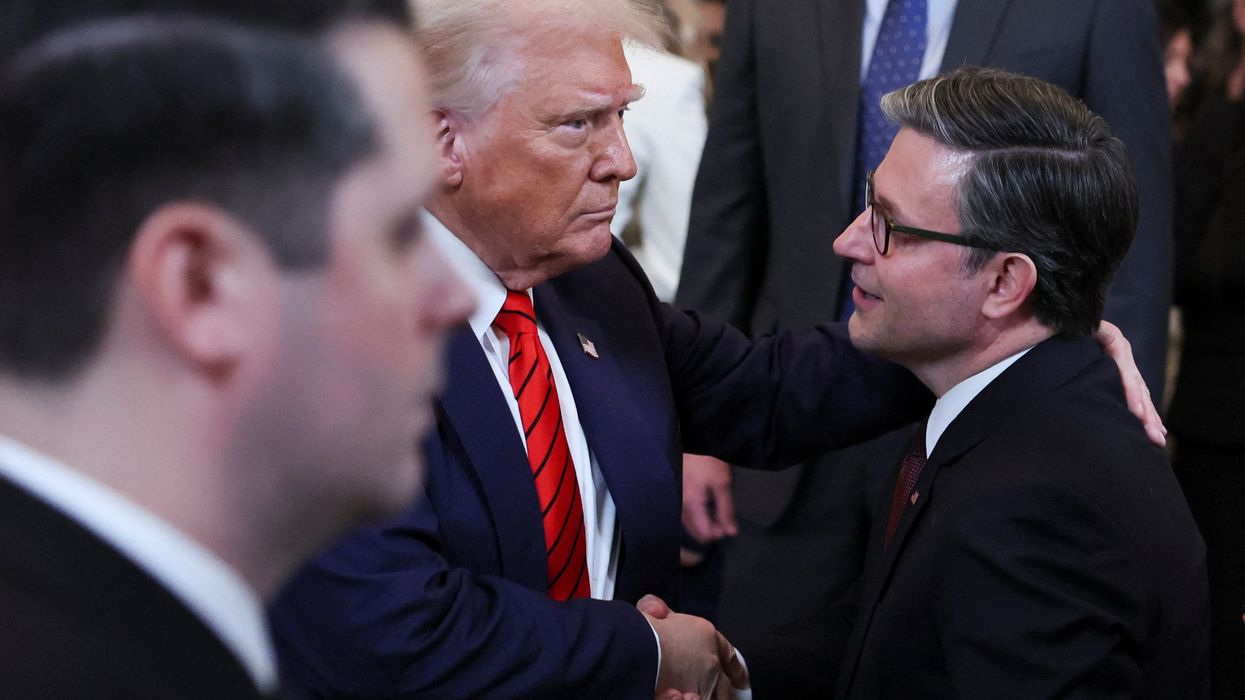
U.S. President Donald Trump shakes hands with Speaker of the House Mike Johnson, after signing an executive order banning transgender girls and women from participating in women's sports, in the East Room at the White House in Washington, U.S., February 5, 2025.
REUTERS/Leah Millis

February 06, 2025
ALTERNET

There is one thread that ties together Trump’s destruction of American government agencies, his offer to take the Gaza crisis off Israel’s hands and dump it on our military, and senators’ and representatives’ failure to challenge him: This is how kingdoms operate. Rule by decree.

It proves that we’re asking the wrong question.

Plug “Can American democracy survive Trump?” into a search engine and you’ll find thousands of websites, blogs, articles, and podcasts devoted to that one, single question.

But American democracy was kneecapped by five Republicans on the Supreme Court years ago when they ruled that money was the same thing as “free speech”; that corporations are “persons” with rights under the Bill of [Human] Rights; and that political operatives can engage in virtually unlimited purges of voting rolls, accompanied by racial- and gender-targeted laws to make it harder to vote.

The correct question is: “Can the American system — now that it’s become flooded with dark money and the ‘right to vote’ has become a mere privilege in Red states — ever again represent the interests of average citizens? Can we ever return to democracy?”

In an open call on X yesterday with Republican Senators Joni Ernst and Mike Lee, apartheid billionaire Elon Musk — whose father says he was chauffeured to school in white-run South Africa in a Rolls Royce — lit into the regulations that created and protect the American middle class and our democracy:
“Regulations, basically, should be default gone. Not default there, default gone. And if it turns out that we missed the mark on a regulation, we can always add it back in.

In a child-like echo of Ayn Rand, Musk added:
“These regulations are added willy-nilly all the time. So, we’ve just got to do a wholesale, spring cleaning of regulation and get the government off the backs of everyday Americans so people can get things done. … If the government has millions of regulations holding everyone back, well, it’s not freedom. We’ve got to restore freedom.”


Both capitalism and democracy could be likened to a game — say, football — ideally played to benefit the largest number of people by creating and guaranteeing “Life, Liberty, and the pursuit of Happiness.”

But imagine if the NFL were to suspend their regulations just before this Sunday’s Super Bowl. And the Chiefs, like most elected Democrats, chose to continue playing by the old regulations, but the Eagles started gut-punching, facemask-pulling, and even threw five extra players onto the field.

The only team that would ever win would be the one most willing to play dirty or buy off the refs. And, increasingly, that’s where we are today, both with our democracy and our economy.

We know this is crazy: Every state in the union has put into place an agency to regulate insurance companies because that very industry has a long, horrible history of ripping people off and refusing to pay claims unless the power of the state is invoked against them.

We regulate banks and brokerages for the same reason; when we deregulated them in the 1920s and the late 1990s the result was huge rip-offs that produced the Republican Great Depression and the Bush Crash of 2008.

We regulate automobile manufacturers because they have a history of putting profits over the lives of their customers (Ford Pinto 900 dead, GM trucks 2000 dead, etc.); refineries because their emissions cause cancer and asthma; drugs because unscrupulous manufacturers killed people in previous eras; workplace safety after the Triangle Shirtwaist fire killed 146 young women; voting because corrupt politicians rigged elections.

We regulate traffic with signs and stoplights to keep order and reduce accidents; we regulate police to prevent them from abusing innocent people; we regulate building codes so peoples’ homes don’t collapse or catch on fire from faulty cheap wiring.

And there was a time in America when we regulated money in politics and guaranteed the right to vote.

Those two types of regulations were passed in the late 19th and early 20th centuries after multiple scandals, like in 1899 when William Clark — then the nation’s second-richest man — openly bribed Montana legislators by standing outside the legislative chamber passing out brand new $1000 bills to the men who voted his way. Or when state after state — most all former Confederate states — repeatedly refused to allow Black people to vote.

We passed regulations guaranteeing a minimum wage, unemployment insurance, and the right to unionize to create the world’s first large-scale middle class. And we regulated the morbidly rich with a 90% income tax rate to prevent them from amassing so much wealth that their financial power could become a threat to our democratic republic.

And, of course, it’s those regulations — money in politics, the right to vote, and preventing the accumulation of dangerous levels of wealth — to which today’s broligarchs most strenuously object.

In each case, it was five Republicans on the US Supreme Court who gutted our protective regulations and put America on a direct collision course with today’s oligarchic neofascist takeover.

— They ruled that billionaires can buy politicians because giving money in exchange for votes isn’t bribery, but merely an expression of First Amendment-protected “free speech.”
— They claimed that corporations aren’t soulless creations of the law but are “persons” with the same right to share their “free speech” with politicians who do their bidding.
— And they ruled that voting is not a right in America — in open defiance of US law — but a mere privilege, giving the green light to Republicans to purge or refuse to count over 4 million votes in the 2024 election.


The result of all this Republican corruption is that the will of the majority of American voters hasn’t been fulfilled in two generations. The last time our political system was truly responsive to the voters was in the 1960s, when Medicare, Medicaid, and food stamps were created, and the Civil Rights and Voting Rights Acts were passed. And in the early 1970s, when we outlawed big money in politics.

Then, in 1978, five Republicans on the Supreme Court ruled in the Bellotti decision (written by Lewis Powell himself) that corporations are persons and money is merely free speech. Two years later, Reagan floated into the White House on a river of oil money and systematically began gutting the protective regulations that had built the largest and most successful middle class the world had ever seen.

Since then, big money has frozen us like a mosquito in amber. Even Obama’s big effort to establish a national healthcare system with an option for Medicare had to kneel before the throne of rightwing billionaires and the insurance industry.

Every developed country in the world has some variation on a free or low-cost national healthcare system, and free or even subsidized higher education. In most developed countries homelessness is not a crisis, nobody goes bankrupt because somebody in their family got sick, and jobs pay well enough (and have union pensions) so people can retire after 30 or 40 years in the workforce and live comfortably for the rest of their lives.

But not in America. Since the Reagan Revolution, rightwing billionaires have blocked any of those things from happening because they’d be paid for with taxes, and there’s nothing rightwing billionaires hate more than paying taxes.

— Dark money has destroyed the notion of one-person-one-vote.
— Monopoly — allowed because corporations can now buy politicians — has destroyed the small businesses that once filled America’s malls and downtowns.
— And voter suppression and voter list purges handed the 2024 election to Trump, as reporter Greg Palast documented in a recent, shocking report.

So, yeah, let’s do away with all the regulations like wannabe Kings Elon and Donald say. And make the United States look and operate more like Syria and its failed-state relatives than anything Americans would recognize.

After all, freedumb!