Thursday, May 01, 2025

 MAY DAY 

Valuing care work: A conversation with Alyssa Battistoni
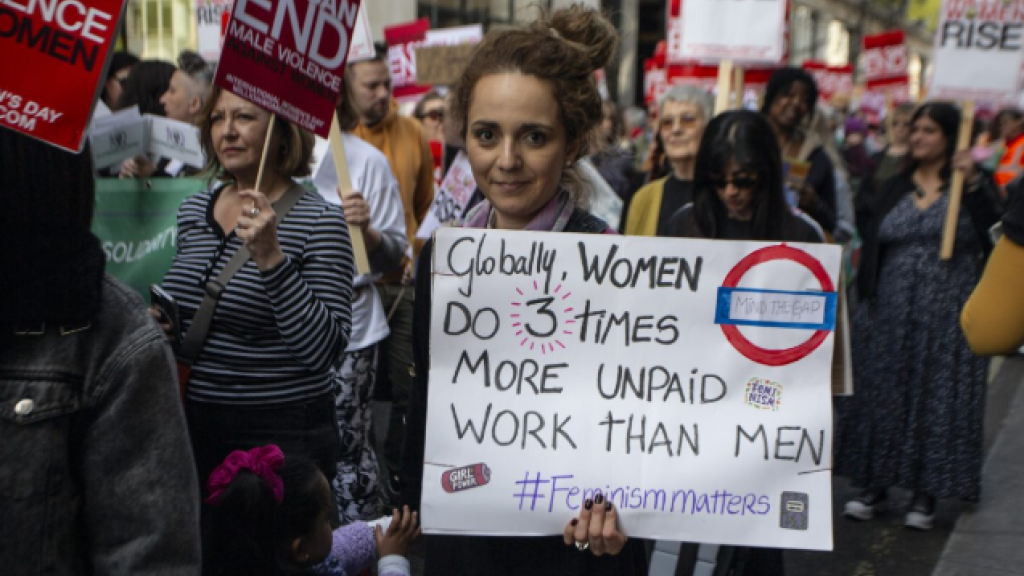

Published 

Photo: Steve Eason

First published at RS21.

Magdalene and Timor spoke to Alyssa Battistoni about her recent article Ideology at Work? Rethinking Reproduction, which engages with social reproduction theory and the Wages for Housework campaign to develop a new theory of the value of what is often called reproductive labour and the role of gender in the sector.

Magdalene: Some Marxist feminists have explained the low wages or absence of wages for reproductive labour as an ideological product of gender or patriarchy. Your work offers an incisive critique of social reproduction theory, arguing that capital’s disinterest in these jobs stems from their low or absent profitability rather than from the fact that women perform them. Given this framework, how should we understand and fight gender oppression? Why is it that so often women, especially racialised women, are working in these jobs, and how does this relate more broadly to oppression?

Alyssa Battistoni: The ways that labour is distributed  who does what kinds of work  are shaped by gender and race. I don’t question that. Many prominent theories explain the role of gender, particularly the ideology of gender, as the force that makes these jobs low-waged. I’m questioning that. Reproductive labour and care have largely shifted from unwaged housework to a low-wage service sector model. It is often racialised migrant women doing these jobs  but also, in some instances, racialised men and migrant men. In other words, this work remains heavily gendered, but many of these low-wage jobs are done by men who have low bargaining power in the labour market as a result of everything from overt racism and discrimination to historical legacies of colonialism or slavery. They have to take the jobs they can get, which leads to these shifting labour patterns.

In the US, for instance, if a Black man is a care worker in a hospital on a low wage, we can’t primarily explain the low wage as being the function of gender. But we can explain the predominance of women in these jobs in relation to a range of factors, from gender socialisation to household structures. We should think about how differently people experience gender, and how people of different genders learn to do different things.

So, for instance, the expectation that women will be nurturing and caring is a form of skill development and job training that the Wages for Housework movement addressed very directly. Selma James talks about women not being born as housewives, but becoming housewives: Women learn to do these jobs by being trained in them. I like to think about gender as a form of labour training (though not only that). That, I think, can help us understand why such work remains so heavily gendered. But I’m trying to push back on the idea that gender is the primary explanatory category for why this work is not valued highly or why we are in a crisis of care.

Gender oppression has a lot of dimensions within the context of capitalism, but the connection between the two does not have to be so direct as to say your job produces your gender or vice versa. We need to think in more complex ways than simply declaring that the status of women in capitalist society is that of the housewife, which is a stylised position that many of these groups took up in the 1970s. 

Timor: You explain that wages are low in the care sector because the physical qualities of the work make automation and technological progression largely impossible. We also hold care work to such a high standard that we don’t want its quality to decrease through mechanisation. In the sectors that can’t be outsourced but are necessary to keep our societies alive, migrant labour becomes increasingly important. This often has high costs because social reproduction is performed elsewhere or because precarious contracts and racism make workers more vulnerable. Does this fit into your analysis?

This brings us to the paradox at the heart of the care crisis: why are wages so low while costs are so high? And I do argue that this is fundamentally about the labour process of care itself, and the ways that it resists efficiency and what Marx calls real subsumption. But then a key question concerns how that low-wage, labour-intensive care work is assigned, organised, and distributed. While historical analyses focused on what has been called ‘the woman question’ or gender dynamics can be helpful, they can also be limiting. As I’ve suggested, gender is certainly a factor in why people are more likely to accept poor working conditions, low pay, and other exploitative practices: gender plays a significant role when women are dependent on other family members or have dependents themselves, such as children they need to provide for, which can force people to accept low wages, long hours, and minimal protections. But it’s not the only factor. And of course, the question of migrant labour is crucial here.

When we think about migrant labour, we of course have to think about the state and its relationship to capital. While capital is often seen as the primary employer in discussions of labour, the state plays a significant role in shaping these dynamics.

The state facilitates conditions that create a labour force that is highly exploitable and precarious. The state plays a dual role here: it can threaten migrants  especially undocumented ones  with prosecution or deportation, even as it tacitly enables their availability for certain kinds of jobs. This dynamic is crucial to understanding how these low-wage positions are filled and how capital strategises to acquire and access labour.

This vulnerability is starkly evident in sectors like domestic work. In the US, many nannies and domestic workers are migrants who labour in private homes with few rights or protections. Their work is often completely informal, leaving them in highly precarious situations. While it might be too strong to describe this as outright enslavement, there is a coercive and not entirely voluntary dimension to these arrangements.

Magdalene: There are various attempts to introduce optimisation of care through technology, like AI therapists. What do you think the limits are regarding what people are willing to accept?

One concern is that people might accept subpar solutions  like relying on AI therapists or bots  simply because they feel they have no other options: ‘Well, a therapy bot is better than nothing.’ This is an area where we need more organising and advocacy.

In particular, I think we need more collaboration between care providers and care recipients. It’s a classic situation where better working conditions for care providers directly translate to better care for recipients. As teachers’ unions often say, ‘Our working conditions are our students’ learning conditions.’ This is true for care work: better conditions and more support benefits everyone.

Most people would rather have a human caregiver who has the time and capacity to provide quality care than a bot that merely monitors them. Similarly, care workers want the time and resources to deliver quality care. The pushback against wage suppression and the decline in care quality  driven by efforts to squeeze efficiency out of an inherently inefficient sector  is bad for everyone except those profiting from it, whether it’s private capital or a cost-cutting state. So the voices of both workers and care recipients are crucial in shaping policies that prioritise quality care and fair working conditions over cost-cutting measures.

Another issue concerns how people understand the reasons for high costs. William Baumol, a mainstream economist  not a Marxist  argues that costs in technologically stagnant sectors like healthcare will inevitably rise, even if services are publicly provided and run efficiently. This isn’t due to waste, corruption, or inefficiency  it’s just a structural feature of these sectors relative to ones where automation and other technological productivity gains are possible .

This feature, in turn, raises significant questions about how we allocate social surplus and prioritise collective resources. Baumol thinks that societies can afford these rising costs, but his analysis forces us to confront difficult questions about social priorities.

People often perceive rising costs in certain sectors as a sign that something is wrong within those sectors, which isn’t necessarily the case. So we also need to communicate that these sectors simply require public support and that rising costs are not inherently a problem or a sign of malfeasance. This is a hard message to convey, but it’s essential.  We can’t treat different sectors in isolation from one another  they’re interconnected, and the divergence between sectors is a product of capitalism itself.

Magdalene: If ‘social reproduction’ has internal contradictions, what does that mean for social movements attempting to combine struggles against exploitation and oppression? Some might argue we should set aside struggles over reproduction to focus on the workplace. How do we best challenge the disinterest of capital in the professions that keep us alive but don’t produce enough profit?

I think struggles over social reproduction remain very important. While I have critiques of social reproduction theory, sometimes these are auto critiques. I have learned a lot from the tradition and see myself very much as a Marxist feminist interested in the problems and questions of social reproduction theory. At the same time, I want to insist that we need to go back and reevaluate our possible over-reliance on tools and concepts developed 50 years ago. That’s a long time! We are as far from the origins of social reproduction theory as the beginning of the women’s liberation movement was from the suffragists. To say that there are internal contradictions in some of the arguments doesn’t mean these are useless as a set of tools.

I also think we should be careful to distinguish between waged and unwaged reproductive labour, and more specific in the resources we bring to bear on different questions. Some struggles over social reproduction are concerned with unwaged work in families and households, but others are more traditional workplace struggles. In my article, for instance, I mention Claudia Jones’ analysis of the complex reasons why Black women tend to be over-represented in waged domestic work, and her prescriptions for worker organising. Domestic workers didn’t have labour protections in the US as a legacy of the New Deal and its racial politics, while segregation meant that Black men didn’t get union jobs and earned low wages. The housewife is a figure of white womanhood, but stereotypes about Black women as nurturing means they are expected to do domestic work. Black women are often at the bottom of the labour market and these circumstances call into question the basic premise of a demand for labour. Jones also said that the Communist Party needs to organise Black women as workers and recognise that domestic workers are a huge, ignored part of the proletariat  not seeing housewives as an “invisible” proletariat, as Wages for Housework did, but literally just pointing to this large group of waged workers who had been neglected, to people doing waged reproductive work which needed to be recognised as continuous with other waged work.

Workplace-focused analysis must be attentive to gender and race to develop effective analysis, strategy and organising but of course there are also dimensions of gender and racial oppression that might not be directly workplace-related. Protections for migrants, for instance, may not be explicitly about the workplace or about social reproduction, but have major implications for both.

More generally, we cannot disconnect workplace analysis from the broader point that everybody has an interest in reproduction at some level. We all need to be reproduced, so there is the potential for this insight to be a really powerful organising or mobilising force when it comes to the question of how to deal with the crisis of care. Neither capital nor the private sector will solve this problem. On principled and practical grounds, we must resist the idea that the existing system could solve these problems, explain why not and think about how to decide on our social priorities. We need to decide that reproductive care is something that people need and that we must provide publicly as a universal good and service for the sake of both the workers who are in these sectors and the people who need this care.

For example, pushing back against private equity in nursing homes can be motivating because people are already horrified by it. Right now, a lot of people in the US are sympathetic to Luigi Mangione, who shot the United Healthcare CEO, because they are so disgusted by the way that private companies are just preying on people’s needs. Finding a way to explain that capitalism is why this is happening and it will keep happening as long as the private sector delivers care is a crucial way of connecting that disgust and horror to thinking more systematically about the causes of the problems that people confront in such intimate ways.

Timor: In your article you discuss the demand not just for redistribution but also to question the wage and labour more generally. One frustrating example of the necessity of this double demand in the US has been the Service Employees International Union’s fight for a $15 minimum wage, which not only doesn’t question the wage at all but isn’t asking for adequate pay. Are there examples of strategies for social movements putting forward a proper double demand today? What do you think of demands focused on time, like a four-day work week or shorter hours? Do these go beyond the demand for fair wages and question the dominance of labour in the organisation of contemporary life generally?

I wanted to bring out that aspect of the Wages for Housework demand because they are so explicit that the demand of wages for housework is also a demand against the wage: it’s famously for and against housework but also for and against the wage. That second part has dropped out of many subsequent uptakes of wages for housework or ‘wages for xyz.’ We should not forget that we also want to push back against the wage as a structure of labour, and the idea of wages as a fair valuation or reflection of work.

When labour movements demand a fair wage, that’s a long-standing and rhetorically powerful claim. It can be quite effective in pointing out that people are doing socially valuable work that’s not being valued adequately. But there is also a way of talking about the true value of work that’s widespread in discussions of care work. People rightly try to reveal the gap between the very low wage for reproductive work we recognise as difficult, skilled labour that is socially valuable and necessary  but the trap comes in suggesting that other work is correctly valued and that it’s only reproductive labour that is incorrectly valued. In the context of a particular struggle, a slogan about the “true value” of work isn’t a terrible thing. But we always need to push back against this idea that wages do generally reflect what work is worth to society, or else we end up accepting the wage as a reflection of social value instead of insisting that it is a social relation structured by power and capital. There’s nothing in the wage that reflects how we want society to be.

Thinking about labour time is also important to challenge the frame in which the wage is the only important category. In struggles over care, the model of organising both recipients and care workers can be very effective on this front, because one of its focuses is limiting work hours  pointing out, for instance, that people working twelve-hour days, six days a week, cannot provide quality care. Overwork is unsafe for both nurses and their patients. Explaining that overwork and underpay are both bad for the workers and for the ‘product’ which in this case is people who need care, can be an effective way of bringing these questions to the fore. Obviously, we should all have shorter working days and weeks in all sectors. But the salience of labour time to care work can be an effective wedge into that conversation.

The fact that care and reproductive labour impact people so directly, and people often have such intimate relationships with these services and the people who provide them, can make seeing the political dimensions of this labour difficult. But it can also open up questions of the wage and the organisation of labour more broadly: once you see the gap between what capital values and what we need with respect to care work, it can lead you to ask – why wouldn’t that be true of everything else?

In other words, I think that reproduction and reproductive labour should illuminate all kinds of labour struggles. Some of the language around reproduction can make it sound like a category entirely distinct from other work, but in my view it’s a much more porous boundary. So I hope that people thinking about more traditional kinds of labour will recognise this as well and look to Marxist feminists not just for thinking about gender but for thinking about work. 


LA REVUE GAUCHE - Left Comment: Whose Family Values?


Donald Trump is weakening US influence in Latin America


Published 
Email
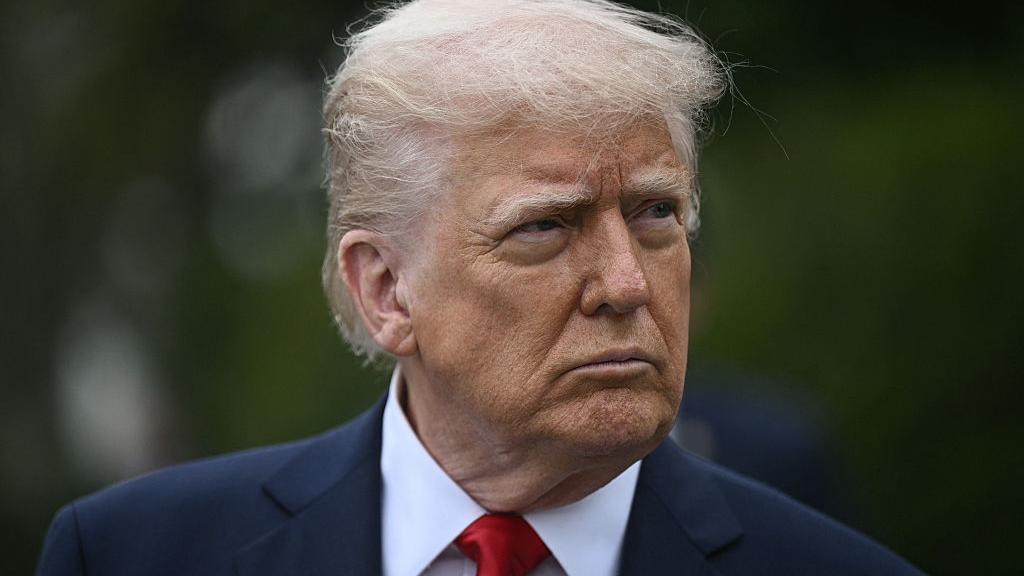
US president Donald Trump hosts the annual Easter Egg Roll on the South Lawn of the White House on April 21, 2025, in Washington, DC.

First published in Jacobin.

Indignation and resistance to Donald Trump’s bullying, deportations, and economic reprisals are spreading across Latin America. Though the mainstream media has amply covered pushback from Canada and Western Europe and the street protests and town halls in the United States, along with Alexandria Ocasio-Cortez and Bernie Sanders’s Fighting Oligarchy tour, it has not given much attention to the growing defiance to the south.

Opposition to Trump throughout Latin America is taking on many forms. In some places, like Mexico, presidents have forged a united front over the issue of tariffs, which includes prominent businesspeople and some leaders of the opposition. Diplomatic initiatives by other presidents, such as Lula of Brazil, are aiming to build a unified Latin American stand against Trump’s measures by shoring up regional organizations, principally the Community of Latin American and Caribbean States (CELAC).

The opposition has also included street mobilizations. Most recently, Panamanians reacted to Secretary of Defense Pete Hegseth’s visit on April 12 by taking to the streets. The National Front for the Defense of Economic and Social Rights (Frenadeso), one of the main sponsors, denounced Washington’s veiled schemes to establish four military bases in the country. The protests intimidated right-wing president José Raúl Mulino; though called a “traitor” by Frenadeso, Mulino warned Hegseth of the danger of implementing the plan. “Do you want to create a mess?” he warned, and added that “what we’ve put in place here would set the country on fire.” Frenadeso also denounced Mulino’s capitulation to pressure from Washington that resulted in Panama’s exit from China’s Belt and Road Initiative.

Three issues have galvanized the pushback against Trump in Latin America: tariffs, deportations, and Washington’s policy of exclusion. The latter includes ostracizing Cuba and Venezuela from the Latin American community of nations as well as rhetoric and actions designed to drive China from the continent.

Trump’s policies have also intensified the polarization in Latin America that pits left and center-left governments against the far right, which is closely aligned with Washington and Trump in particular. The indignation produced by Trump’s inflammatory remarks on the Panama Canal and Gulf of Mexico and his policy of mass deportation and tariffs to likely to strengthen the Latin America left at the expense of the Right.

They also stimulate anti-Americanism, which according to Bloomberg columnist Juan Pablo Spinetto is “gaining new life in Latin America.” Spinetto writes that the harshness of his take-it-or-leave-it approach will . . . give new force to the anti-Americanism . . . undermining . . . interest in cooperating and establishing common goals.”

In one example of the repudiation of one of the many heinous measures taken by the Trump administration, the prime minister of Barbados, Mia Mottley, thanked Cuban international health workers for their assistance during the COVID-19 epidemic. On February 25, Secretary of State Marco Rubio had announced sanctions against government officials and their family who were “complicit” in promoting the Cuban health missions — the measure also threatens “complicit” nations with trade restrictions. Mottley announced that she would not back down in her defense of the Cuban missions and said that “if the cost of it is the loss of my visa to the US, then so be it. But what matters to us is principles.”

To make matters worse for Rubio, in a joint session in Jamaica after the secretary of state hailed the measure against the Cuban health missions, Prime Minister Andrew Holness in effect rebuked him. Holness said, “In terms of Cuban doctors in Jamaica, let us be clear, the Cuban doctors in Jamaica have been incredibly helpful to us.” Similar statements were made by the prime ministers of Antigua and Barbuda, Saint Vincent and the Grenadines, and Trinidad and Tobago.

Defeat at the OAS

On March 10, Albert Ramdin of Suriname was elected secretary general of the Organization of American States (OAS) after his only competitor, Paraguay’s foreign minister, Rubén Ramírez Lezcano, dropped out of the race. In its reporting on the event, the mainstream media largely took their cue from the claim by White House envoy for Latin America, Mauricio Claver-Carone, that “the OAS Secretary General will be an ally of the United States.” He added that Ramdin’s Suriname government is “on the right path economically . . . bringing in foreign investments that’s non-Chinese.”

Nothing could be further from the truth. Ramdin opposes US sanctions and favors dialogue with the Venezuelan government of Nicolás Maduro. In contrast, his rival, Ramírez, had pledged to promote regime change in Venezuela, Cuba, and Nicaragua.

Furthermore, China, with its OAS observer status, had supported Ramdin’s candidacy, while the right-wing, pro-Trump governments of Argentina and El Salvador backed Ramírez. Ramdin defends the “one China” policy; in a 2006 trip to Beijing, he stated that his goal was to “expand and deepen” the relationship between China and the OAS, a strategy that he evidently continues to support.

Ramdin owes his nomination not only to the unanimous support of Caribbean nations, but also the joint endorsement by the progressive governments of Brazil, Colombia, Uruguay, Bolivia, and Chile. It was reported that Lula’s initiative was a response to Ramírez’s trip to Washington where he met with Trump advisors, after which he visited Mar-a-Lago. There he posed for photo ops with Trump and Elon Musk, which were seen as a virtual endorsement of his OAS candidacy.

Rubio’s congratulations notwithstanding, Ramdin’s replacement of Washington lackey Luis Almagro as OAS secretary general can’t be to the liking of the Trump administration. The right-wing Latin American press was more up front. Argentina’s Derecha Diario reported that Ramdin, with a “troubling trajectory aligned with socialism . . . represents a threat to the independence of the OAS and seeks to benefit the leftist dictatorial regimes in Latin America.”  The article went on to claim that Ramdin has admitted that “Suriname’s diplomatic missions . . . work ‘hand in hand’ with those of China.” The same line on Ramdin is being pushed by Congressman Chris Smith (R-NJ), senior member of the House Foreign Affairs Committee and cochair of the Congressional-Executive Commission on China (CECC).

If the past is any indication, the Trump administration may attempt to blackmail the OAS by threatening to reduce its contributions to the organization, currently representing 60 percent of its budget. In fact, some Trump advisors have privately raised that possibility, and Washington has already frozen “voluntary contributions” to the OAS. The prospect of the United States completely pulling out of what it considers to be an unfriendly OAS would, however, dovetail with the vision of Mexico’s former president Andrés Manuel López Obrador, who favors replacing the OAS with a Latin American organization modeled after the European Union.

Challenging the hegemon

After Trump announced a 25 percent tariff on Mexican and Canadian imports, Mexico’s president, Claudia Sheinbaum, called a rally for March 6 at Mexico City’s central plaza to announce retaliatory measures. Although Trump postponed the tariffs, Sheinbaum held the rally anyway and converted it into a festival to celebrate Washington’s turnaround.

In front of an estimated crowd of 350,000 Mexicans, some of whom held signs reading “Mexico Is to Be Respected,” Sheinbaum said, “We are not extremists, but we are clear that . . . we cannot cede our national sovereignty . . . as a result of decisions by foreign governments or hegemons.”

The showdown with Trump has helped forge a “common front,” a term used by Francisco Cervantes Díaz, president of Mexico’s main business organization, who pledged that at least three hundred businesspeople would attend the March 6 rally. Some members of the Mexican opposition to Sheinbaum and her ruling Morena party also took part.

But the nation’s two main traditional parties, the Institutional Revolutionary Party (PRI) and the National Action Party (PAN), refused to unite behind the president. At the outset, they blamed the governing party’s drug policy for triggering Trump’s measures. Then the PRI-PAN’s standard-bearer, Xóchitl Gálvez, called Sheinbaum’s threat to enact counter-tariffs “ill-advised.”  The phenomenon of a broad “common front” behind the president being pitted against a hardened right opposition is just one more indication of how polarized politics has become throughout the region.

Sheinbaum’s decisiveness resonated in Mexico, with her approval rating climbing to 85 percent. Her reaction to Trump stood in sharp contrast with the submissiveness of Canadian prime minister Justin Trudeau, who immediately headed to Mar-a-Lago after Washington first announced the tariff hikes. Panamanian president Mulino also buckled under.

Immediately following Trump’s initial tariff announcement, Lula and Sheinbaum spoke by phone on the need to strengthen CELAC to serve as an alternative to US commercial ties. Lula, like Sheinbaum, combined caution with firmness (at one point he called Trump a “bully”). Lula’s action on the international front is designed to promote a multilateral response to Trump’s tariff surge. In late March, he traveled to Japan to gain support for a customs agreement between that nation and MERCOSUR, which takes in Brazil, Argentina, Uruguay, and Paraguay.

The collective approach to tariffs that the progressive Latin American governments are now proposing, with Lula at the helm, is diametrically opposed to the bilateral agreements that the United States has pushed in the region since 2005. That year, Latin American progressive presidents led by Hugo Chávez delivered US-style multilateralism in the form of the Free Trade Area of the Americas proposal (FTAA) a fatal blow, much to the chagrin of then president George W. Bush.

The polarization that pits progressive governments, which favor Latin American unity, against those on the right, which sign bilateral trade agreements with Washington, was on full display at CELAC’s ninth summit held in Honduras in April. The rightist presidents of Argentina, Paraguay, Peru, and Ecuador were conspicuously absent, while those on the left side of the spectrum, representing Cuba, Colombia, Mexico, Uruguay, Honduras, and Venezuela, participated.

Especially significant was Lula’s insistence that countries in the region move away from the dollar by trading in local currencies. In an obvious reference to Trump, Lula said, “The more united our economies are, the more protected we are from unilateral actions.” And the summit’s host, Honduran president Xiomara Castro, remarked, “We cannot leave this historic assembly . . . without debating the new economic order that the United States is imposing on us with tariffs and immigratory policies.”

The right-wing presidents of Argentina and Paraguay, Javier Milei and Santiago Peña, met separately in Asunción to reject CELAC’s united position on tariffs. Their representatives at CELAC refused to sign the final document called the “Declaration of Tegucigalpa,” which opposed unilateral international sanctions and Trump’s tariffs.

Both nations objected to Xiomara Castro’s use of the term “sufficient consensus” to refer to support for the declaration at the summit. Arguing that the term does not exist in international law, Paraguay questioned whether the final document could be issued in the name of the organization and unsuccessfully insisted that the dissenting position of both countries be officially recognized.

The question of the appropriateness of the phrase “sufficient consensus” was taken up by the Right throughout the region. But the issue went beyond semantics. The intention was clearly to discredit, if not sabotage, steps taken to achieve Latin American unity.

Polarization hurts the right

Trump’s policies have intensified the extreme polarization in which the far right has replaced the center right at the same time the Left has gained influence. A case in point is Venezuela. The deportation of 238 Venezuelans from the United States to an overcrowded for-profit prison in El Salvador, and others to Guantanamo, has horrified Venezuelans.

Some have taken to the street to protest, including scores of family members holding photos of victims. One typical sign read “Jhon William Chacín Gómez — He’s Innocent.” Chacín’s wife and sister told reporters that his only crime was his tattoos. In a show of pro-Venezuelan solidary and in defiance of the repressive atmosphere that exists in the nation, protesters in El Salvador also hold signs with photos of individual Venezuelan prisoners.

The issue has put the Venezuelan right, led by María Corina Machado, in a bind. Machado knows that even the slightest criticism of Trump’s deportation policy will lose her the support of the president. For that reason, she has firmly backed Trump on the issue. She has said, “We respect the measures taken in the framework of the law by democratic governments like the United States . . . to identify, detain, and penalize the Tren de Aragua, and we trust in the rule of law that exists in those democratic nations.” Machado calls the Tren de Aragua gang “the executing arm of the Maduro regime,” thus feeding into Trump’s narrative that demonizes Venezuelan immigrants.

The issue of deportations has divided the Venezuelan opposition more than it already is. The hard-line opposition that supported the candidacy of Machado and then her surrogate Edmundo González is now split. In April, the two-time presidential candidate Henrique Capriles was expelled from one of the nation’s major parties, Primero Justicia, due to his differences with Machado, one of them being on the issue of the deportations. Capriles asked with regard to Venezuelan deportees, “What is their crime? What is the criteria for proving it?” He went on to demand “respect for human rights,” adding “it is unacceptable to characterize all [Venezuelan] migrants as delinquents.” José Guerra, a leading member of the Venezuelan opposition, told me that “there’s no doubt that the issue of the deportations is playing a fundamental role in splitting the opposition into two blocs.”

The irony of Trump’s Monroe Doctrine

It’s ironic that the twenty-first-century president who proclaims the Monroe Doctrine as the cornerstone of US policy south of the border is distancing Latin America so much from Washington. Events since Trump took office that portend a worsening of relations between the two include the election of an OAS secretary general who doesn’t share Trump’s objectives and may result in Washington’s defunding of or complete withdrawal from the organization; Trump’s remarks that display complete insensitivity to nationalist sentiment in the region; his weaponization of tariffs that single out Venezuela and Nicaragua for special treatment and serves as a warning for governments such as Brazil, Colombia, and Uruguay; the gutting of foreign aid programs; and mass deportations. In addition, the fervent anti-China campaign that invokes the Monroe Doctrine will clash with the reality of Chinese economic expansion in the continent.

If Latin America does move away from the US camp, the blame can’t be placed entirely on Trump. His bullying is just a more extreme version of the imperialism that has always characterized US actions in the region. Progressive governments there now seem more determined than ever to put a check on it.

Steve Ellner is an associate managing editor of Latin American Perspectives and a retired professor at the Universidad de Oriente in Venezuela, where he lived for over forty years. His latest book is his coedited Latin American Social Movements and Progressive Governments: Creative Tensions Between Resistance and Convergence.


Madness as method: The logic of Trump’s tariffs


Published 

Trump tariffs graphic Tempest

First published at Tempest.

We are currently living in the fallout of the radical policy shifts of Trump’s “Liberation Day,” when Trump’s team imposed a baseline tariff of 10 percent against every country on earth. According to Trump and his team, these tariffs signalled the end of a system where the whole world has taken advantage of the U.S. for forty years. Never mind that the U.S. designed this system! A week later, rattled by the response of markets, Trump’s team made a semi-reversal, putting a 90 day pause on the majority of the tariffs, but increasing those upon China dramatically, to 145 percent. Since then, there have been further retreats, with certain sorts of Chinese products exempt from the tariffs, such as tech products, which represent 22 percent of all imports from China.

Even after Trump’s retreat, this policy shift has brought U.S. tariffs to their highest level in 130 years, with the average tariff rate on U.S. imports rising to 27 percent. A year ago it was closer to 2 percent. The immediate impact to this most liberating of days was devastating, with markets seeing their steepest decline since March of 2020, and the fourth worst two day decline since the Second World War, destroying $6 trillion in the dollar value of traded assets. Global stocks plummeted following the announcement on the second, though they have since rebounded slightly since the partial-reversal on April 10. The Dow Jones Industrial Average still sits 7 percent lower than it did before the tariff announcement.

It is too easy to make the mistake of getting lost in all of this noise, in the fact that the mouthpiece of this radical change in policy is a megalomaniacal buffoon, blame the whole project on his individual insanity, and lose sight of the underlying material dynamics and blinkered rationality that are driving the new policy designs. The material underpinnings guiding this policy shift are the relative decline of the U.S. global dominance—hegemony—and the crises and weak growth that have followed the financial crisis of 2008.

The danger of blaming the dramatic shifts on Trump’s personal qualities is that we can fall into the trap of what might be called “the fallacy of the primacy of policy,” the idea that policy carries more weight in determining a given economic and political reality than the material circumstances of capital accumulation at a given moment. This fallacy is one of the main tools propping up ideologies that seek to reform capitalism into something humane and sustainable. Naomi Klein’s The Shock Doctrine is a paradigmatic case of this type of thinking, seeking to explain the loss of a post-war Keynesian utopia to neoliberalism in the late 1970s and early 1980s, through a conspiracy coming out of the University of Chicago, rather than forced upon capital by a falling rate of profit. If we spend too much energy drawing attention to the policy insanity, we privilege the subjective element and can potentially conceal the circumstances that provide these policies with their blinkered logic. In the case of a recession, or worse, following the implementation of Trumponomics, we will have to fight the tendency to blame the stagnation on his team’s policies, letting the underlying dynamics that inform these policies escape notice.

As socialists, we understand that in almost all cases, an explanation rooted in material reality can be found for even the most irrational ideologies. Why a recourse to such extreme solutions now? Unlike during the first threat to U.S. hegemony, in the 1970s, when it was possible through skillful means to find a solution that would reassert U.S. rule into the future, the truth is that no such solution exists today for U.S. empire. There is no policy shift that would guarantee U.S. power in the world. The best that could be done was to skillfully manage its decline, as the Biden administration had been attempting to do during its tenure. Faced with a total lack of a winning strategy, sections of the ruling class are beginning to act desperately.

The context in which Trumponomics is being imposed on the world is general economic malaise, the weak recovery following the crisis of 2007–2008, and the United States’ relative decline as world hegemon. Where Bidenomics sought to manage U.S. decline within the framework of the current world system, Trumpism seeks to radically upend the world system by aggressively reasserting U.S. power and forcing the rest of the world, friend and foe alike, to come to heel. It is nothing less than a revolutionizing project for the global economy. It would be a mistake to see in all of this the U.S. self-isolating—in a throwback to Nazi Germany’s contradictory dreams of self-sufficient autarky. This is a deliberate and thought-through policy to reassert U.S. hegemony over the world. Trump’s policy also shares with Bidenomics the domestic component of recognizing the economic and political instability that resulted from the gutting of the U.S. industrial base, and is attempting to turn back the clock on that process.

The brains behind the plan seem to be Treasury Secretary Scott Bessent, a former hedge fund manager, and Trump’s top economic advisor, Steven Miran, a Harvard PhD. Both see de-industrialization as a threat, not only because of its economic and political impacts, but because they fear that the collapse of U.S. manufacturing would put the U.S. at a disadvantage in the event of a military conflict.

Overall, the strategy’s goal is to re-industrialize the U.S. through the weakening of the American dollar while simultaneously keeping the dollar as the world reserve currency. The weakening of the dollar would strengthen other currencies in relation to it, such that they would have the capacity to buy more U.S. exports—thus supporting U.S. re-industrialization.

The strategy seems to have had three parts:

  1. An initial barrage of tariffs that act as a negotiating tool to bring countries to the table.
  2. It is hoped that this would lead to a certain degree of leveling of the world system, such that the imbalances that make large scale industrial production impossible in the U.S. would disappear. The Trump administration believes that these tariffs will not result in trade wars like those of the 1930s because of the unique position of the United States. In an article published in November of 2024 called “A User’s Guide to Restructuring the Global Trading System,” Miran expressed his belief that the importance of the U.S. market as the consumer of last resort, and the global need for U.S. dollars, give the U.S. a special kind of power that can be leveraged through the use of tariffs to renegotiate the world system. As Miran noted in his article, “President Trump views tariffs as generating negotiating leverage for making deals. It is easier to imagine that after a series of punitive tariffs, trading partners like Europe and China become more receptive to some manner of currency accord in exchange for a reduction of tariffs.”
  3. Step three would be a “Mar-a-Lago Accord”, which Miran has spoken about in the past. Like the Bretton Woods Agreement (1944) and the Plaza Accord (1985) before it, this would remake the world system in the interests of the United States. The key idea here would be to have friendly countries backing their currencies with dollar reserves—with an agreement that they would sell some reserves to appreciate their currencies if the U.S. dollar starts to become too strong. This would be the cost of access to the global reserve currency, the U.S. consumer market, and U.S. security benefits. It’s even possible to imagine, given the leaning of the Trump administration, that the U.S. would attempt to charge a fee for this military protection.

Additionally, as has been noted elsewhere, the administration is almost certainly trying to find a way to pay for maintaining the tax cuts for the wealthy that Trump instituted in his first term. Revenue from tariffs that offset the loss from these cuts may be a way to keep the wealthy in his corner.

So far, rather than a heroic display of U.S. dominance, what has been exposed is the striking contrast between the arrogant delusions of Trump’s team and the actual relative weakness of the U.S. in a multipolar world. While Trump’s team surely expected some degree of instability in the markets, they clearly did not anticipate the extent of the collapse. While the hit to the stock market was significant, the core reason for the reversal was the impact to the bond market, with U.S. Treasuries, which underpin the international monetary system, taking a dive.

As Michael Roberts recently put it,

Trump backed down because the bond market was showing signs of severe stress that could lead to a credit squeeze particularly for hedge funds that own a significant  stock of US bonds. If bonds dived there might well be bankruptcies for many companies, especially the heavily indebted so-called ‘zombie’ companies that constitute about 20% of all in the US. Bankruptcies could then ricochet through the economy, leading to a financial crash and slump.

As it was recently put in the Financial Times, “[T]he bond market sets the size of [Trump’s] tariff stick, and it is much smaller than he thought it was.”

The revolt of the markets and within Trump’s own class was too much. The impact of the tariffs even caused fissures within the ranks of the Trump-dominated Republicans. Since Elon Musk’s personal interests are threatened by the tariffs against the EU, he has publicly stated that he would prefer to have “a zero-tariff situation, effectively creating a free-trade zone” between the U.S. and Europe. Republican Senator Ted Cruz has warned of a “bloodbath” in the midterms if the tariffs cause a recession. Cruz, along with other Senators, have co-sponsored the Trade Review Act, a bipartisan bill aimed at limiting the president’s authority to impose tariffs without congressional approval. Trump’s approval rating has dropped by 14 percentage points since he took office.

In short, markets will not tolerate Trump’s ambitions, and there is no domestic will to deal with their fallout. Before the tariffs were implemented, Goldman Sachs estimated that there was a 35 percent probability of a recession in the next 12 months. They then raised that estimate to 65 percent following the tariffs, and lowered it again to 45 percent after the 90 day pause was announced. A U.S. population that has gone through two economic collapses (2008 and 2020), a global pandemic, and an extremely weak recovery, does not have any interest in bearing the material cost necessary to carry through these plans.

Yet there is no going back to normal, both because markets and allies are spooked, not knowing what will come next, and because the trade attacks on China have intensified. If Trump and his team were unable to immediately force vassalage upon the entire globe, they could at least up the attack on the greatest threat to U.S. hegemony.

The sweeping nature of new tariffs on China essentially signal the end of Biden’s more tempered approach to China of having a “small yard and high fence,” around key technologies that guarantee U.S. supremacy while maintaining the trade that has been central to both economies’ growth. What Trump’s administration has precipitated is a virtual trade embargo between the countries, usually an act of war. Both economies are still deeply integrated with each other, but since the trade war initially began during Trump’s term, the two economies have been in the process of slowly pulling apart. China’s share of U.S imports fell to 13.4 percent in 2024, eight percentage points lower than it had been in 2017.

Even in the context of this retreat, rather than appearing strong, the U.S. looks scattered and disorganized. While a trade embargo will hurt both the U.S. and China, it is likely to harm the U.S. even more. The WTO expects that trade between the two countries will drop by 80 percent this year. That’s not to say that the impact on the Chinese economy will be insignificant. The Chinese economy has been coping with a crisis in its property sector, and it is more dependent than ever on exports. While exports to the U.S. have shrunk in recent years, 14 percent of its exports still go to the U.S., and trade with the U.S. is an important source of U.S. dollars.

But the position of the U.S. is worse. It is damaging one of the greatest sources of its power, the sense of stability that keeps its financial system the central power of the global economy. The reversal on universal tariffs means that it will no longer be plugging the hole they were in part intended to address, where Chinese products escaped the tariffs by being rerouted through other countries such as Vietnam and Mexico. The exception made for tech products both illustrates the leverage China has over the U.S., and also tacitly admits the fallacy that tariffs are paid by exporters. China has already imposed severe restrictions on six rare earth metals and on magnets (90 percent of which are produced in China) that are essential for many important industries. U.S. companies have only a few months worth of stockpiles of these metals to keep their operations going. Finally, China will have an advantage in terms of popular will to wage this fight. China appears to be the country on the defensive, and between this and the restrictions on political freedom, internal dissent is much less likely to be a factor in terms of influencing the Chinese leadership’s will to wage the fight. China also has some really nasty tools that it could deploy if needed. It currently owns $750 billion worth of U.S. government bonds. If it were to stop buying or start selling these bonds, it would cause enormous pain to the U.S. economy, driving a further increase in interest rates, putting downward pressure on the U.S. dollar, and creating global chaos. China also produces 50 percent of the ingredients that go into U.S. antibiotics.

We are already seeing the way that Trump’s actions are forcing other countries to reconsider their alliances. Biden had gone out of his way to bring his allies closer in a move to repel the ascension of China. One of the hallmarks of this strategy was the three-way accord with Japan and South Korea, historically unfriendly with each other, in order to counter China in the region. Yet almost immediately following the announcement of Trump’s “Liberation Day” tariffs, these countries and China pledged to speed up negotiations for a trilateral free trade agreement.

The net result of all these policy shifts has so far been a fall in stocks, bonds, and the value of the U.S. dollar. This may very well indicate a seismic shift in terms of confidence in the U.S. market. If foreign investors become too spooked to buy U.S. treasuries at a low interest rate, this will dramatically change the world financial system, as well as impact the American way of life, subsidized by the low interest of these treasuries.

As countries lose faith in the stability of the U.S. economy, it’s possible to imagine that the world’s slow move away from the U.S. dollar as the international reserve currency will accelerate, though as of now, there is no clear alternative. As of late 2023, U.S. dollars accounted for 58 percent of global currency reserves, and that number was expected to dip only about 4 percent over a decade. But now, when the world now has every reason to try to find ways to circumvent their dependence on an unreliable and megalomaniacal hegemon, that process may speed up.

I indicated in a recent article that while we are currently living in a time in which the far-right is in ascendance globally, where it will continue to radicalize and achieve successes if the global working class does not first pull the emergency break, this will not necessarily be a linear process. We may see partial restorations of mainstream bourgeois hegemony along the way. It’s possible to imagine that the enormous hit that may come as a result of these new policies to the U.S. standard of living may serve as the basis for a restoration of the Democratic Party in 2028. It may also mean an end for Trump’s personal political career. Yet this restoration will be incredibly unstable, unable to provide real solutions, and will open the door for future right-ward radicalizations in the future.

Capitalist empires do not decline gracefully. Due in part to the subjective element, the decline does not happen at a steady pace. Aware of the necessity of a solution, but unable to conceive of one outside of the capitalist system, radical ideas come to power that accelerate the decline. Trump’s tariff policy may very well be an example of this dynamic.

Nor are the processes of their decline smooth processes for the rest of the world. The transition from British to American hegemony was defined by two world wars and a great depression. This is the level of global instability that we are looking at today as the U.S. empire rides like a mad John Wayne into the sunset.

Thomas Hummel is a member of the Tempest Collective living in New York City.


United States - Trump and America: One-hundred PRIL in the waiting room of fascism

by LA BOTZ Dan

Since taking office 100 days ago, President Donald Trump has been engaged in destroying America’s liberal, democratic state and its social welfare systems, taking away citizens’ and non-citizens’ rights, and attacking the institutions of civil society such as universities and the media. Trump’s attack on our government and our society has shocked, disoriented, and disconcerted the American people. The resistance has been growing, but is still too divided, small, and weak to stop Trump.

Trump dominates the Republican Party that controls not only the presidency, but also Congress and the Supreme Court. Trump created and put billionaire Elon Musk in charge of the Department of Government Efficiency which has run riot through government departments and agencies carrying out mass firings of hundreds of thousands of federal workers and cutting the budget of social welfare programs. Trump has signed 137 executive orders, many of them directed to ending diversity, equity, and inclusion programs that deal with racism. The flurry of actions by Trump, Musk and others are too numerous to list, so we look at only a few areas.

Trump, and his immigration team, Stephen Miller and Tom Homan, are ramping up mass deportations of immigrants. In August the Trump administration will end temporary protective status (TPS) which provides the right to live and work in the United States for 800,000 immigrants from 16 countries. They will have to leave or be subject to deportation to Haiti or Ukraine or wherever they’re from. Trump’s ultimate goal is to deport 11 million undocumented immigrants and he is prepared to do so under a 1798 law known as the Alien Enemies Act which allows the president to deport immigrants without a hearing. Hundreds of immigrants have been rounded up in violation of the Constitution and without due process and deported and imprisoned in El Salvador. Trump has said that he is also prepared to deport U.S. citizens in the same way.

Trump and his Secretary of Health Robert F. Kennedy Jr. have taken an axe to the two most important government public health institutions in the United States: The Centers for Disease Control (CDC) and the National Institutes of Health (NIH). They plan to cut the CDC from 82,000 to 62,000 employees. At the NIH 1,200 are being laid off and 30,000 scientists have had their research funding abruptly terminated. And $2.7 billion will be cut from research grants.

Kennedy who has promoted conspiracy theories is an anti-vaxxer who now faces the largest measles outbreak in decades. In 2000, the United States declared that thanks to vaccination measles had been eliminated, but now, due to the anti-vaxxers who refused to vaccinate their kids, there are almost 900 cases of measles in 29 states, with two children and one adult dead. We risk a national epidemic.

The Republicans are anxious to extend Trump’s 2017 tax cuts for the rich from 2025 to 2034 at a cost of $4.5 trillion in federal revenue. At the same time, the Internal Revenue Service workforce that collects the taxes is being reduced from 102,000 to 65,000 employees, so fewer taxes will be collected. All of that means that with less income, there must be less spending. The New York Times writes that “The proposed budget for the 2026 fiscal year would cut billions of dollars from programs that support child care, health research, education, housing assistance, community development and the elderly.”

The situation is frightening, dangerous. The resistance largely takes the form of legal action. Some 186 lawsuits have been brought against the Trump administration and in 122 of them the courts have at least temporarily paused the closing of agencies and firing of workers. There have been national protests that brought millions into the streets, but so far nothing is stopping Trump.

Dan La Botz


If leaders stay silent, the US won’t survive Trump’s next 100 days

by REICH Robert


We are tottering on the edge of dictatorship. Powerful voices across institutions, from politics to academia and religion, must speak out

‘Trump wants total power, even at the cost of our democracy and economy.’ Photograph: Evelyn Hockstein/Reuters

We have witnessed the first 100 days of the odious Trump regime.

The US constitution is in peril. Civil and human rights are being trampled upon. The economy is in disarray.

At this rate, we will not make it through the second 100 days.

Federal judges in more than 120 cases so far have sought to stop Trump – judges appointed by Republicans as well as Democrats, some appointed by Trump himself – but the regime is either ignoring or appealing their orders. It has even arrested a municipal judge in Milwaukee amid a case involving an undocumented defendant.

Recently, Judge J Harvie Wilkinson III of the court of appeals for the fourth circuit – an eminent conservative Reagan appointee who is revered by the Federalist Society – issued a scathing rebuke to the Trump regime. In response to its assertion that it can abduct residents of the US and put them into foreign prisons without due process, Wilkinson wrote:

If today the Executive claims the right to deport without due process and in disregard of court orders, what assurance will there be tomorrow that it will not deport American citizens and then disclaim responsibility to bring them home? And what assurance shall there be that the Executive will not train its broad discretionary powers upon its political enemies? The threat, even if not the actuality, would always be present, and the Executive’s obligation to ‘take Care that the Laws be faithfully executed’ would lose its meaning.

Wilkinson’s fears are already being realized. Ice recently deported three US citizens – aged two, four and seven – when their mothers were deported to Honduras. One of the children, who has stage 4 cancer, was sent out of the US without medication or consultation with doctors.

Meanwhile, the regime continues to attack all the independent institutions in this country that have traditionally served as buffers against tyranny – universities, non-profits, lawyers and law firms, the media, science and researchers, libraries and museums, the civil service and independent agencies – threatening them with extermination or loss of funding if they do not submit to its oversight and demands.

Trump has even instructed the Department of Justice to investigate ActBlue, the platform that handles the fundraising for almost all Democratic candidates and the issues Democrats support.


“We are no longer Democrats or Republicans. We are either patriots fighting the regime or we are complicit in its tyranny. There is no middle ground”


Meanwhile, Trump is actively destroying the economy. His proposed tariffs are already raising prices. His attacks on the Fed chief, Jerome Powell, are causing tremors around the world.

Trump wants total power, even at the cost of our democracy and economy.

His polls are plummeting yet many Americans are still in denial. “He’s getting things done!” some say. “He’s tough and strong!”

Every American with any shred of authority must loudly and boldly explain the danger we are in.

A few Democratic members and progressives in Congress (Bernie Sanders, AOC, Cory Booker, Chris Van Hollen, Chris Murphy) have expressed outrage, but most seem oddly quiet. Granted, they have no direct power to stop what is occurring but they cannot and must not appear to acquiesce. They need to be heard, every day – protesting, demanding, resisting, refusing.

Barack Obama has spoken up at least once, to his credit, but where is my old boss, Bill Clinton? Where is George W Bush? Where are their former vice-presidents – Al Gore and Dick Cheney? Where are their former cabinet members? They all must be heard, too.

What about Republican members of Congress? Are none willing to stand up against what is occurring? And what of Republican governors and state legislators? If there were ever a time for courage and integrity, it is now. Their silence is inexcusable.

Over 400 university presidents have finally issued a letter opposing “the unprecedented government overreach and political interference now endangering American higher education”. Good. Now they must speak out against the overreach endangering all of American democracy.

Hundreds of law firms have joined a friend-of-the-court brief in support of the law firm Perkins Coie’s appeal of the regime’s demands. Fine. Now, they along with the American Bar Association and every major law school must sound the alarm about Trump’s vindictive and abusive use of the justice department.

America’s religious leaders have a moral obligation to speak out. They have a spiritual duty to their congregations and to themselves to make their voices heard.

The leaders of American business – starting with Jamie Dimon, the chair and CEO of JPMorgan Chase, who in normal times has assumed the role of spokesperson for American business – have been conspicuously silent. Of course they fear Trump’s retribution. Of course they hope for a huge tax cut. But these hardly excuse their seeming assent to the destruction of American democracy.

We have witnessed what can happen in just the first 100 days. I’m not at all sure we can wait until the 2026 midterm elections and hope that Democrats take back at least one chamber of Congress. At the rate this regime is wreaking havoc, too much damage will have been done by then.

The nation is tottering on the edge of dictatorship.

We are no longer Democrats or Republicans. We are either patriots fighting the regime or we are complicit in its tyranny. There is no middle ground.

Soon, I fear, the regime will openly defy the supreme court. Americans must be mobilized into such a huge wave of anger and disgust that members of the House are compelled to impeach Trump (for the third time) and enough senators are moved to finally convict him.

Then this shameful chapter of American history will end.

Robert Reich