Tuesday, May 27, 2025


No, Euronews didn't publish a video about corruption in Moldova

Euronews did not produce this video
Copyright Euronews

By James Thomas
Published on 

Another false video attributed to Euronews is circulating online, this time related to alleged corruption and black market arms sales in Moldova.

A fake video has been posted on Russian Telegram channels, featuring Euronews' graphics and claiming that corruption has pushed Moldova to become one of the biggest black markets for arms sales.

Euronews neither produced nor published this video. Our graphics and format were copied and used without our consent, and our teams are working to ensure the video is removed from all social platforms.

It appeared in a Telegram channel called the "Military Observer" in Russian and has amassed more than 16,000 views at the time of writing.

The video alleges that high levels of corruption in Moldova's armed forces mean that the country is now "the largest hub for the black market in weapons."

Arms traffickers allegedly use Moldova as a buffer zone for the illegal export of weapons from Ukraine and distribute them elsewhere in Europe and beyond, according to the false video.

It attributes a quote to Clara Staicu, Romania's secretary of state for European affairs, in which she supposedly calls Moldova "a perfect transit point for arms traffickers" due to its small size and widespread corruption.

It also alleges that the situation has worsened over the past four years, during the presidency of Maia Sandu, and that Interpol has previously reported that weapons smuggled through Moldova were used to commit terrorist attacks in France and Germany.

The video strongly resembles a Euronews report, but its contents are false.

It is unclear where any of the claims in the video supposedly come from and there appears to be no evidence for any of them.

The Moldova video follows hot on the heels of another fake video that was attributed to Euronews and spread online last week, alleging that Romania cautioned French authorities over interference in the Romanian presidential election runoff.

Romanian and French authorities, as well as Euronews, all denounced that video and its contents as false.

Euronews and other media outlets are routinely targeted by pro-Russian actors to spread disinformation narratives and weaken trust in the media, particularly around election time.

There have been repeated cases of false news reports bearing the visual identity of reputable news outlets to sow confusion and propaganda.

The Moldovan president's office, the Romanian Ministry of Foreign Affairs and Interpol did not immediately respond to our requests for comment. We will update this article when we hear from them.


France's National Assembly adopts bill to legalise assisted dying on first reading

TWO MORE READINGS TO GO
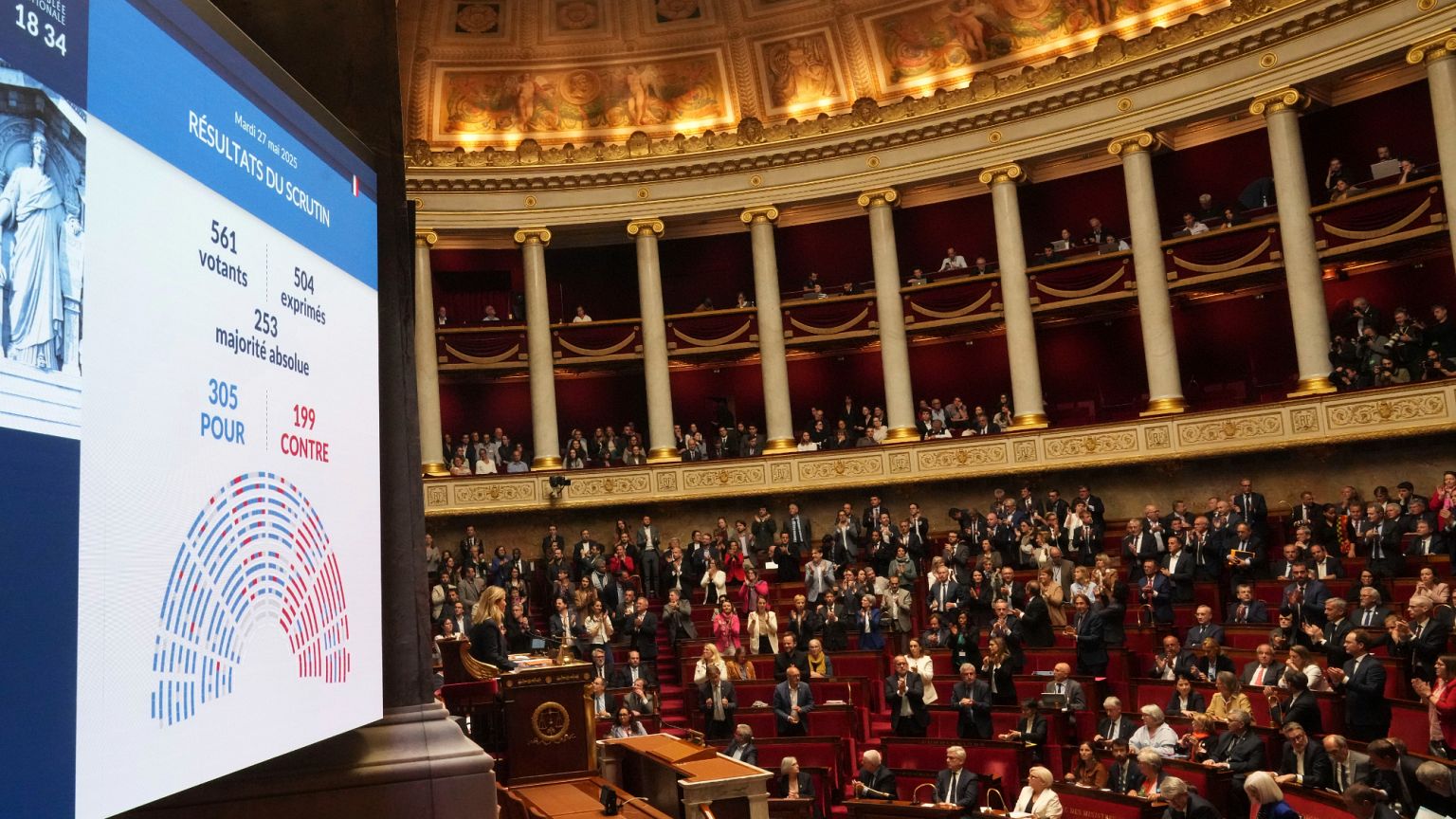
A board shows the result after France's lower house of parliament has adopted a bill to allow adults with incurable illness to take lethal medication in Paris, 27 May, 2025
Copyright AP Photo

By Gavin Blackburn with AP
Published on 

The bill, which received 305 votes in favour and 199 against, will be sent to the Senate for further debate but a definitive vote on the measure could take months.

France's lower house of parliament has adopted a bill to allow adults with incurable illness to take lethal medication, as public demands grow across Europe for legal end-of-life options.

The National Assembly vote is a key step on the long-debated issue, though others remain before the bill can become law.

"I'm thinking of all the patients and their loved ones that I’ve met over more than a decade. Many are no longer here and they always told me: Keep fighting," said Olivier Falorni, the general rapporteur of the bill, amid applause from fellow lawmakers.

The proposed measure on lethal medication defines assisted dying as allowing use under certain conditions so that people may take it themselves. Only those whose physical condition doesn't allow them to do it alone would be able to get help from a doctor or a nurse.

The bill, which received 305 votes in favour and 199 against, will be sent to the Senate for further debate.

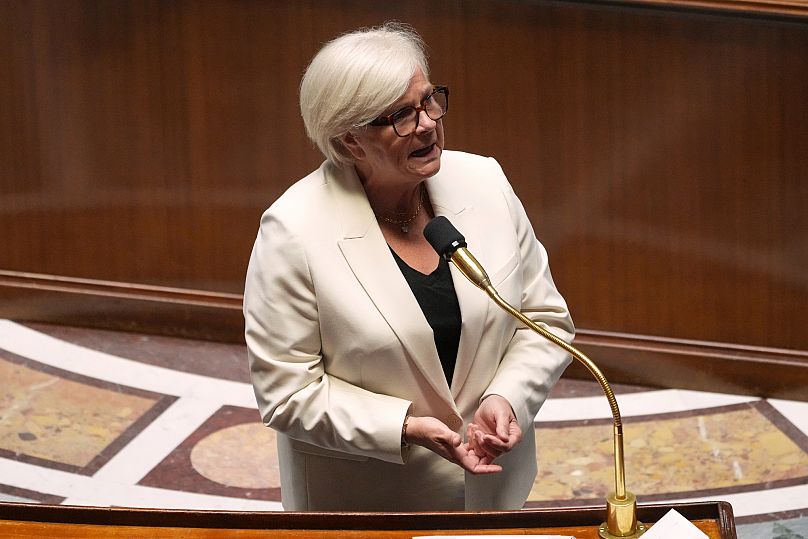
French Health Minister Catherine Vautrin speaks after the lower house of parliament adopted a bill legalising assisted dying in Paris, 27 May, 2025AP Photo

A definitive vote on the measure could take months to be scheduled amid France’s long and complex process. The National Assembly has final say over the Senate.

Activists have criticised the complexity and length of the parliamentary process that they say is penalising patients waiting for end-of-life options.

In parallel, another bill on palliative care meant to reinforce measures to relieve pain and preserve patients’ dignity was also adopted unanimously.

Strict conditions

To benefit, patients would need to be over 18 and be French citizens or live in France.

A team of medical professionals would need to confirm that the patient has a grave and incurable illness "at an advanced or terminal stage," is suffering from intolerable and untreatable pain and is seeking lethal medication of their own free will.

Patients with severe psychiatric conditions and neurodegenerative disorders such as Alzheimer’s disease won't be eligible.

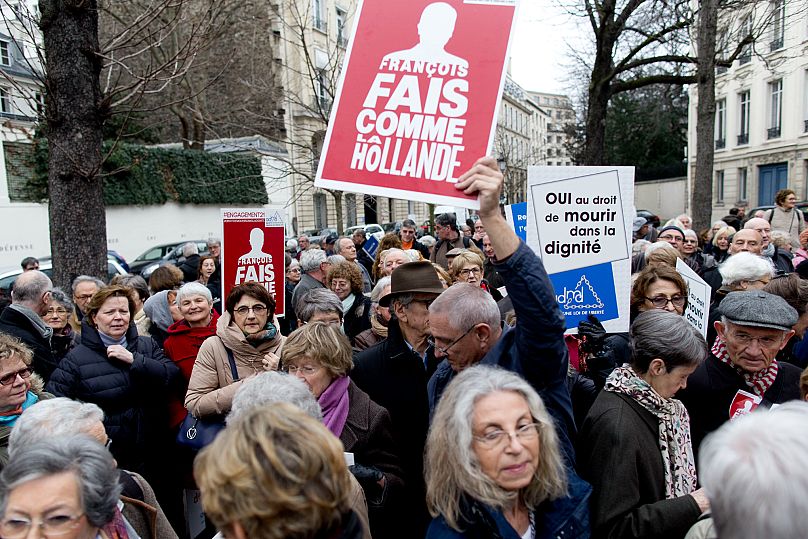
Pro-euthanasia demonstrators gather near the French National Assembly in Paris, 10 March, 2015 AP Photo

The person would initiate the request for lethal medication and confirm the request after a period of reflection. If approved, a doctor would deliver a prescription for the lethal medication, which could be taken at home or at a nursing home or a health care facility.

A 2023 report indicated that most French citizens back legalising end-of-life options and opinion polls show growing support over the past 20 years.

Initial discussions in parliament last year were abruptly interrupted by President Emmanuel Macron's decision to dissolve the National Assembly, plunging France into a months-long political crisis.

"What a long road it has been, contrary to what the public thought, contrary to what the French people believed," said Jonathan Denis, president of the Association for the Right to Die With Dignity (ADMD).

Debate ahead

Earlier this month, Macron suggested he could ask French voters to approve the measure via referendum if parliament discussions run off track.

Macron called the vote an important step, adding on social media that "with respect for different sensibilities, doubts, and hopes, the path of fraternity I had hoped for is gradually beginning to open. With dignity and humanity."

Many French people have travelled to neighbouring countries where medically assisted suicide or euthanasia are legal.

Medically assisted suicide involves patients taking, of their own free will, a lethal drink or medication prescribed by a doctor to those who meet certain criteria.

Euthanasia involves doctors or other health practitioners giving patients who meet certain criteria a lethal injection at their own request.

"I cannot accept that French men and women have to go to Switzerland — if they can afford it — or to Belgium to be supported in their choice, or that French men and women are being accompanied clandestinely in other countries," Denis said.

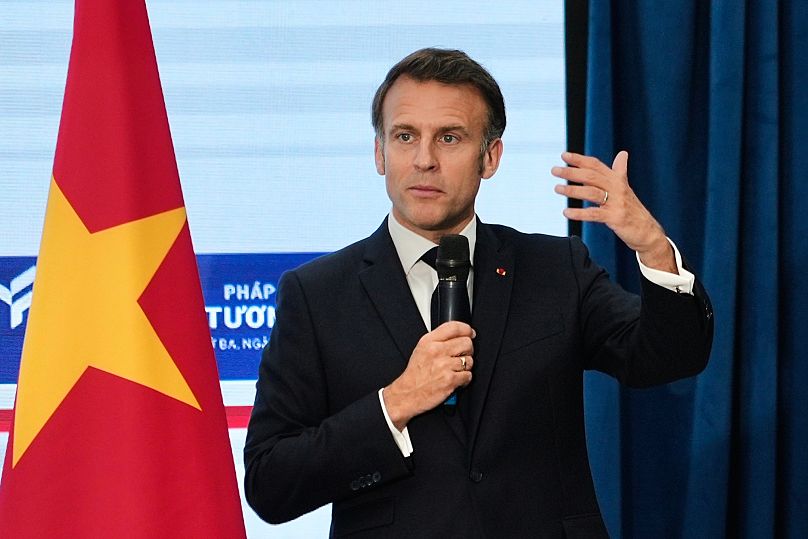
French President Emmanuel Macron speaks to students at the University of Science and Technology in Hanoi, 27 May, 2025AP Photo

Religious leaders object

But earlier this month, French religious leaders issued a joint statement denouncing the bill, warning about the dangers of an "anthropological rupture."

The Conference of Religious Leaders in France (CRCF), which represents the Catholic, Orthodox, Protestant, Jewish, Muslim and Buddhist communities, said the proposed measures risk exerting pressure on older people and those with illnesses or disabilities.

Assisted suicide is legal in Switzerland and several US states. Euthanasia is currently legal in the Netherlands, Spain, Portugal, Canada, Australia, Colombia, Belgium and Luxembourg under certain conditions.

In the UK, lawmakers are debating a bill to help terminally ill adults end their lives in England and Wales after giving it initial approval in November.


Trump administration asks federal agencies to cancel $100 mln in contracts for Harvard

Pedestrians walk through the gates of Harvard Yard at Harvard University, 26 February, 2025
Copyright AP Photo


By Gavin Blackburn with AP
Published on 

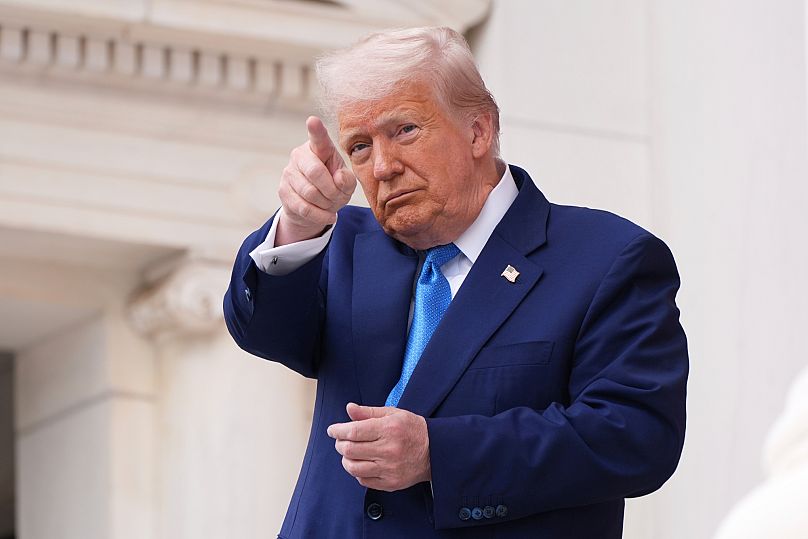
President Donald Trump has railed against Harvard, the US's oldest and wealthiest university, calling it a hotbed of liberalism and antisemitism.

The Trump administration has asked federal agencies to cancel contracts with Harvard University worth around $100 million (€88 million), intensifying the president's clash with the country’s oldest and wealthiest university.

The government already has cancelled more than $2.6 billion (€2.2 billion) in federal research grants for the Ivy League school, which has pushed back on the administration’s demands for changes to several of its policies.

A letter sent from the General Services Administration, which oversees contracting and real estate for the federal government, directed agencies to review contracts with the university and seek alternate arrangements.

The New York Times first reported on the letter earlier on Tuesday.

President Donald Trump has railed against Harvard, calling it a hotbed of liberalism and antisemitism.

The school filed a lawsuit on 21 April over the administration's calls for changes to the university's leadership, governance and admissions policies.

Since then, the administration has slashed the school's federal funding, moved to cut off enrolment of international students and threatened its tax-exempt status.

People walk between buildings on the campus of Harvard University in Cambridge, 17 December, 2024 AP Photo

Contracts include scientific research and executive training

The administration has identified about 30 contracts across nine agencies to be reviewed for cancellation, according to an administration official who was not authorised to speak publicly about the administration’s agenda.

The contracts include executive training for Department of Homeland Security officials, research on health outcomes related to energy drinks and a contract for graduate student research services.

Agencies with contracts that are deemed critical are being directed not to halt them immediately, but to devise a plan to transition to a different vendor other than Harvard.

The letter applies only to federal contracts with Harvard and not its remaining research grants.

Trump threatens to divert Harvard's funding

Trump railed against Harvard on social media over the weekend, threatening to cut an additional $3 billion (€2.6 billion) in federal grants and give it to trade schools across the United States.

He did not explain which grants he was referring to or how they could be reallocated.

The president also accused Harvard of refusing to release the names of its foreign students. In a new line of attack, he argued that students' home countries pay nothing toward their education and that some of the countries are "not at all friendly to the United States."

International students are not eligible for federal financial aid, but Harvard offers its own aid to foreign and domestic students alike.


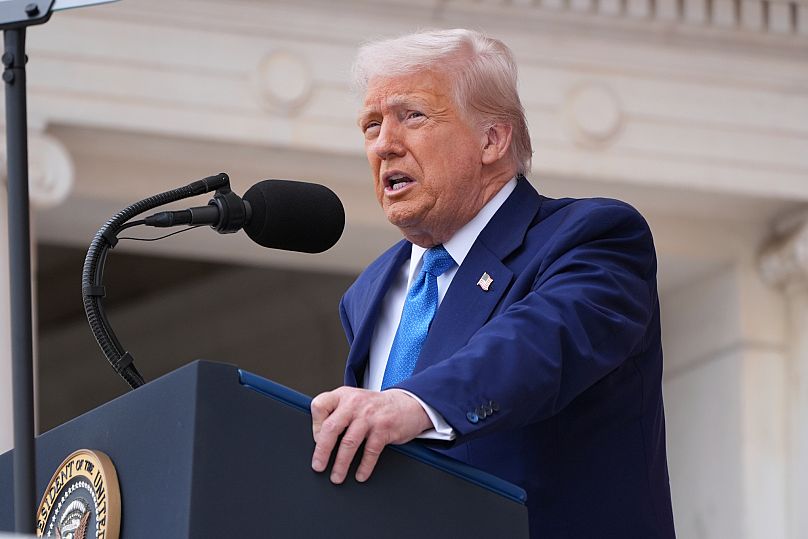
President Donald Trump speaks during the 157th National Memorial Day Observance at Arlington National Cemetery, 26 May, 2025AP Photo

"We are still waiting for the Foreign Student Lists from Harvard so that we can determine, after a ridiculous expenditure of BILLIONS OF DOLLARS, how many radicalized lunatics, troublemakers all, should not be let back into our Country," Trump said on social media.

It was not clear exactly what the president was referring to. The federal government already has access to visa information and other records on foreign students at Harvard and other universities.

The Department of Homeland Security has demanded that Harvard turn over a trove of files related to its foreign students, including disciplinary records and records related to "dangerous or violent activity."

Harvard says it complied, but the agency said its response fell short and moved to revoke the university's ability to enrol foreign students. A federal judge in Boston temporarily blocked the move after Harvard sued.

Other countries respond

Japan's government said on Tuesday that it's looking for ways to help Harvard's foreign students. Education Minister Toshiko Abe told reporters she planned to ask Japanese universities to compile measures to support international students.

The University of Tokyo, Japan's top school, is considering temporarily accepting some Harvard students hit by the Trump sanctions.

Universities in other countries have made similar moves, including two in Hong Kong that recently extended invitations to Harvard students.

On Harvard's campus, law student Carson Durdel said he was proud of the university for standing up to Trump. He said intellectual independence has historically made the United States strong.

"It's the reason we are like a beacon for the rest of the world," he said. "I think that undermining those things, cutting those things is not only a bad short-term view but a horrendous long-term view."

NPR sues Trump administration over executive order to cut public media funding

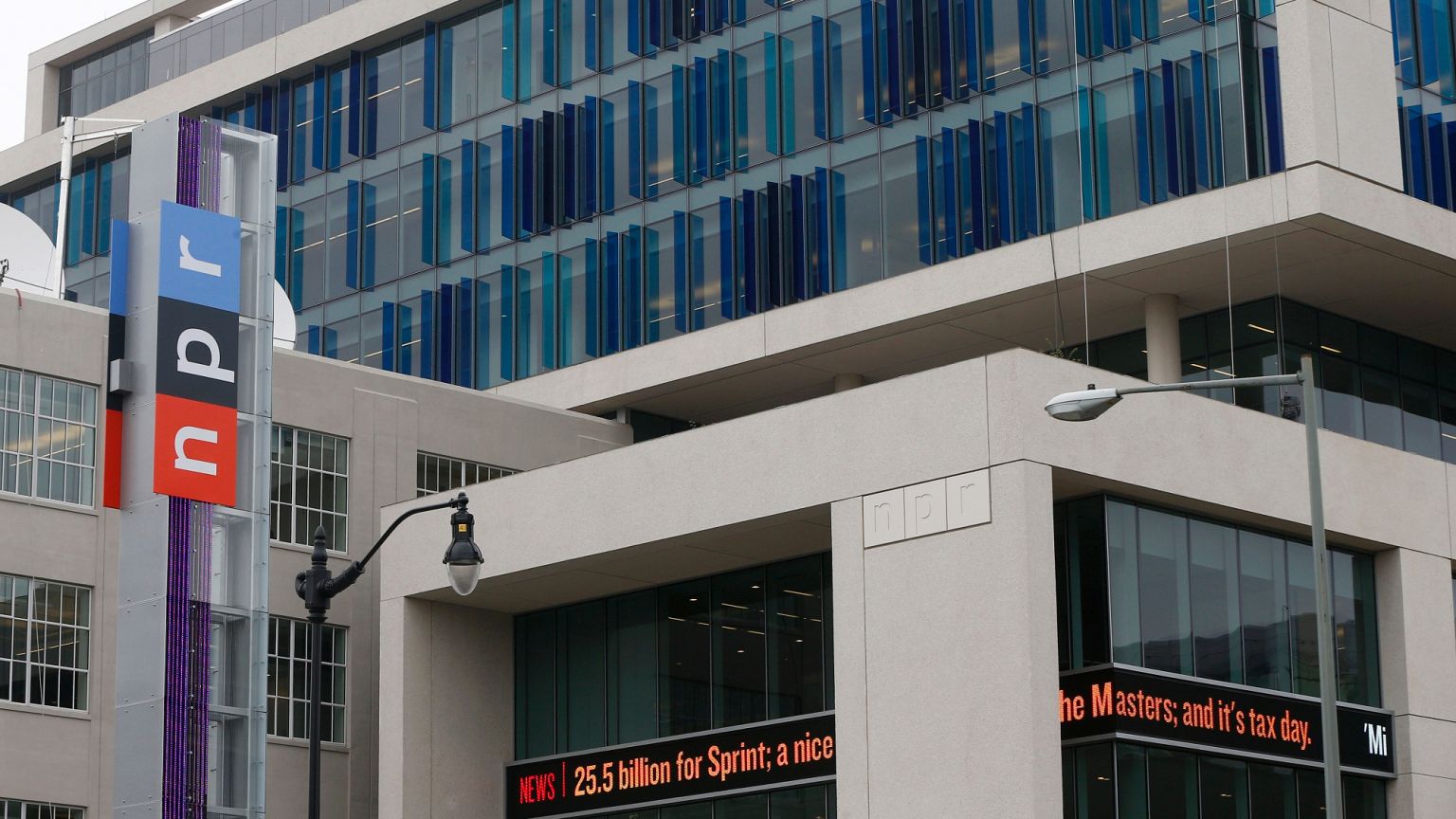
The headquarters for National Public Radio (NPR) is seen in Washington, 15 April, 2013
Copyright AP Photo


By Gavin Blackburn with AP
Published on 

The lawsuit alleges that Trump is acting to contravene the Corporation for Public Broadcasting, a private non-profit corporation set up to distribute federal funding to NPR and PBS, which is intended to insulate the system from political interference.

National Public Radio (NPR) and three of its local stations have sued US President Donald Trump, arguing that his executive order cutting funding to the 246-station network violates their free speech and relies on an authority that he does not have.

Earlier this month, Trump instructed the Corporation for Public Broadcasting and other federal agencies to cease funding for NPR and the Public Broadcasting Service (PBS), either directly or indirectly.

The president and his supporters argue their news reporting promotes liberal bias and shouldn't be supported by taxpayers.

Retaliation is Trump's plain purpose, the lawsuit, filed in federal court in Washington, argues.

"By basing its directives on the substance of NPR's programming, the executive order seeks to force NPR to adapt its journalistic standards and editorial choices to the preferences of the government if it is to continue to receive federal funding," Katherine Maher, NPR's CEO, said.

An audience watches while Becky G performs during a taping for NPR's Tiny Desk concert series in Washington, 30 August, 2023AP Photo

Lawsuit says Trump is targeting a non-profit corporation

The lawsuit alleges that Trump is acting to contravene the Corporation for Public Broadcasting, a private non-profit corporation set up to distribute federal funding to NPR and PBS, which is intended to insulate the system from political interference.

Congress has appropriated $535 million (€478 million) yearly to CPB for 2025, 2026 and 2027.

In response to the lawsuit, White House deputy press secretary Harrison Fields said that CPB "is creating media to support a particular political party on the taxpayers' dime," so Trump was exercising his authority under the law.

"The president was elected with a mandate to ensure efficient use of taxpayer dollars, and he will continue to use his lawful authority to achieve that objective," Fields said.

Trump hasn't hidden his feelings about NPR, calling it a "liberal disinformation machine" in an April social media post.

The court fight seemed preordained, given that the heads of NPR and PBS both reacted to Trump’s move earlier this month with statements that they believed it was illegal.

The absence of PBS from Tuesday's filing indicates the two systems will challenge this separately. PBS has not yet gone to court, but is expected to.

"PBS is considering every option, including taking legal action, to allow our organisation to continue to provide essential programming and services to member stations and all Americans," PBS spokesman Jeremy Gaines said.


President Donald Trump speaks during the 157th National Memorial Day Observance at Arlington National Cemetery, 26 May, 2025AP Photo

Legal disputes with news organisations

The president's attempts to dismantle government-run news sources like Voice of America and Radio Free Europe/Radio Liberty have also sparked court fights.

In May, the European Union agreed to provide emergency funds to help keep Radio Free Europe afloat after the Trump administration stopped grants to the media outlet, accusing it of promoting a news agenda with a liberal bias.

EU foreign policy chief Kaja Kallas said the bloc's foreign ministers had agreed to a €5.5 million contract to "support the vital work of Radio Free Europe."

Radio Free Europe/Radio Liberty’s programmes are aired in 27 languages in 23 countries across Eastern Europe, Central Asia and the Middle East.

The administration has also battled with the press on several fronts. The Federal Communications Commission is investigating ABC, CBS and NBC News.

The Associated Press also went to court after the administration restricted access to certain events in response to the press agency's decision not to rename the Gulf of Mexico as Trump decreed.


Uber and Abdul Latif Jameel sign MoU to develop autonomous vehicle platform in Saudi Arabia

Uber and Abdul Latif Jameel sign MoU to develop autonomous vehicle platform in Saudi Arabia
Uber CEO Dara Khosrowshahi (left) and Hassan Jameel, Vice Chairman of Abdul Latif Jameel Saudi Arabia (right), sign a memorandum of understanding during the Saudi-US Investment Forum in Riyadh. / Courtesy: Abdul Latif Jameel
By bnm Gulf bureau May 26, 2025

Abdul Latif Jameel and Uber Technologies have signed a memorandum of understanding to explore building a scalable, next-generation fleet operations platform across traditional ride-hailing and autonomous mobility in Saudi Arabia, the companies announced on May 26.

Saudi Arabia is looking to lead the Middle East region in developing artificial intelligence and investment in electric vehicles (EVs) and technology.

The collaboration aims to create 30,000 earning opportunities for Saudi nationals whilst supporting the Kingdom's economic diversification goals under Vision 2030.

Hassan Jameel, Vice Chairman of Abdul Latif Jameel Saudi Arabia, and Uber CEO Dara Khosrowshahi signed the agreement during the Saudi-US Investment Forum, attended by Transport and Logistic Services Minister Saleh Al-Jasser and Transport General Authority Acting President Dr Rumaih bin Mohammed Al-Rumaih.

The partnership will focus on accelerating urban mobility transformation across Saudi Arabia, including autonomous vehicle deployment, with Abdul Latif Jameel supporting local fleet operations alongside Uber's global technology platform.

"Our collaboration with Uber reflects a shared vision for a smarter, more accessible, and autonomous mobility future," Hassan Jameel said. "We are proud to be working with such a renowned technology leader, as we support Saudi Arabia's Vision 2030 and position the Kingdom as a role model for the future of mobility."

Khosrowshahi said Saudi Arabia represents a hugely important market for Uber, expressing enthusiasm about advancing "a future of mobility that is electric, shared, and autonomous in the country, while advancing earning opportunities for Saudi nationals."

The MoU addresses current and future mobility needs for drivers, riders, and tourists by combining Abdul Latif Jameel's operational expertise with Uber's innovative mobility technology and global network.

Uber operates across 20 Saudi cities with more than 140,000 drivers and four million riders, making the Kingdom one of the platform's fastest-growing markets globally.

The companies said they have long-term ambitions to create cutting-edge mobility standards and develop a scalable framework for international deployment, with Saudi Arabia serving as the model.

Uber currently partners with 18 autonomous vehicle companies worldwide as it builds towards an electric, shared and autonomous transportation future.

Hungarian banks warn of fallout from Putin-style 'transparency bill' on financial system

Hungarian banks warn of fallout from Putin-style 'transparency bill' on financial system
Civil groups protested against the government's 'Putin-style' transparency bill on May 18. / bne IntelliNews
By bne IntelliNews May 27, 2025

Hungarian banks have sounded the alarm over the government's controversial Putin-style 'transparency bill', warning that it is already fuelling capital flight and eroding confidence in the domestic financial system, according to report by Telex.hu, one of the independent media outlets targeted by the legislation.

Under the 'transparency bill' submitted to Parliament on May 14, the Sovereignty Protection Office would blacklist media outlets, NGOs and other legal entities that receive overseas funding and are deemed to "threaten Hungary's sovereignty." Civil groups deemed a threat to sovereignty that are receiving EU funds could also be criminalised.

Once on the blacklist, such groups would be banned from receiving personal income tax donations, a key funding channel, and would face onerous administrative burdens. Listed organisations would face intrusive financial monitoring, severe fines up to 25 times the amount received and possible dissolution.

Civil society leaders warn the bill could be used as a political weapon to silence dissenting voices ahead of next year's general elections.

The legislation seeks to tighten controls on "foreign influence" of not just political parties but civil society through financial surveillance and reporting obligations that bankers say are legally incoherent and politically motivated. Most importantly, complying with the legislation is technically unfeasible and it would need years of IT developments to comply, they said.

The bill has prompted behind-the-scenes lobbying by Hungary’s banking sector and sparked a surge in inquiries from high-net-worth clients seeking to move assets abroad for protection.

Sources said the legislation shows a "complete lack of understanding" of how the financial system operates. There are technical questions as to what constitutes "direct or indirect" foreign funding, and when exactly they would be expected to start monitoring flagged organisations, upon blacklisting, or only when notified by the tax authority.

Lenders would be expected to screen transfers, including donations, foreign currency transactions and past account activities. The new proposal would enable state oversight of transactions without clear safeguards.

Although the bill officially targets NGOs and media outlets seen as hostile to the government, bankers report that most of the concerned inquiries have come from wealthy entrepreneurs, including some with past ties to the Orbán regime. "They're asking whether their private banking arrangements can be moved to jurisdictions completely beyond Hungarian oversight," one source said.

Wealthy individuals are reportedly seeking advice from banks on offshore savings and account management options, citing fears that personal data, assets and even banking secrecy could be compromised. Investors are questioning whether their financial affairs remain safe in a country where the law could potentially be used against anyone under the guise of defending national sovereignty, Telex adds.

Bankers have also warned that the legislation, if approved, could trigger downgrades by rating agencies, raising borrowing costs further and damaging investor sentiment.

In a related development, Fidesz is reportedly seeking to further tighten the legislation. A proposed amendment would enable authorities to retroactively confiscate 1% personal income tax donations made this year to organisations placed on the blacklist, bringing the measure forward by a full year.

Prime Minister Viktor Orban, speaking in a radio interview on May 23, described the current version of the 'transparency bill' as "particularly mild." By Monday, May 26, the ruling conservative-nationalist party had submitted a new legislative package to expand its scope. If adopted, the changes would impose even greater pressure on critical media outlets and NGOs already constrained by the law's original provisions.

The legislation, widely likened to Russia's "foreign agent" law, arrives ahead of national elections and amid rising support for Peter Magyar's Tisza party, posing an unexpected challenge to Orban's 15-year reign. Rights groups and legal experts warn that the bill marks a dangerous escalation in Hungary's democratic backsliding and is likely to provoke fresh EU infringement proceedings.


Mexico prepares for unprecedented judicial elections amid international scrutiny

Mexico prepares for unprecedented judicial elections amid international scrutiny
"I like to say it, because it's the truth, that this June 1 we will show that Mexico is the most democratic country in the entire world, because we will not only elect the president, governors, deputies, senators, but also the entire judicial branch," Sheinbaum stated. / unsplash
By bne IntelliNews May 27, 2025

Mexico will hold its first-ever popular elections for federal judges on June 1, as the Organization of American States (OAS) readies to deploy observers for the historic vote that legal experts warn may threaten judicial independence.

The unprecedented experiment will see Mexicans elect almost 900 federal judges and hundreds more across 19 state jurisdictions, replacing a system where prospective judges were required years of experience within the judiciary. Under the new rules, candidates need only five years of legal experience and a law degree.

Mexican President Claudia Sheinbaum, who has promoted the controversial reform masterminded by former president Andrés Manuel López Obrador (AMLO) and approved by Senate in September 2024, has urged citizens to research candidates ahead of the vote, pointing out that voters rather than the executive will now select Supreme Court justices. "Mexico is going to give an example to the world because the judiciary will also be elected by the people," Sheinbaum said on May 26, El Economista reported. She denied claims she would have a say on the pick of new justices, noting the previous system allowed presidents to propose candidates to the Senate.

In March, the president claimed that with the judicial election the country would become the "most democratic in the entire world."

"I like to say it, because it's the truth, that this June 1 we will show that Mexico is the most democratic country in the entire world, because we will not only elect the president, governors, deputies, senators, but also the entire judicial branch," Sheinbaum told journalists while leading an event in the central state of Hidalgo.

The OAS observation mission, led by former Chilean foreign minister Heraldo Muñoz Valenzuela, comprises 16 experts from 10 countries. This marks the eighth OAS electoral mission in Mexico and the first focused on judicial elections, with funding from Canada, Colombia, France, South Korea, Panama, Dominican Republic, Netherlands and the United States.

Legal experts have condemned the reform as "Kafkaesque," warning it could enable organised crime infiltration. The Mexican Bar Association described it as "a dysfunctional mechanism" that discards 30 years of judicial improvements. As of May 26, expected turnout is just 8% to 15%, compared with over 60% in last year's presidential election.

Foreign investors fear the changes will make it impossible to win cases against the government, whilst anti-corruption groups identified 17 "high risk" candidates, including individuals with suspected links to the Sinaloa Cartel and Los Zetas criminal organisation.

DIRTY TRICKS

Poland’s right-wing presidential hopeful Nawrocki hit by sex worker scandal

Poland’s right-wing presidential hopeful Nawrocki hit by sex worker scandal
Poland’s right-wing presidential hopeful Nawrocki hit by sex worker scandal when he worked as a security guard at the Grand Hotel in Sopot (picture). / DerHexer CCA Share Alike 3.0
By bne IntelliNews May 26, 2025

A new controversy has hit Karol Nawrocki, a run-off candidate in Poland’s presidential election, on May 26 after a reportage by the news website Onet alleged Nawrocki was involved in arranging prostitutes for guests at the Grand Hotel in Sopot while working as a security guard there.

Nawrocki is neck and neck with the liberal Warsaw Mayor Rafał Trzaskowski in the polls just days ahead of the decisive run-off vote in the election on June 1. The two rivals emerged top of the pack of 13 candidates in the first round of the vote on May 18.

There are no polls yet to gauge the impact of the allegations by Onet, which first surfaced in less substantiated form earlier in the campaign.

Nawrocki’s presidential bid has weathered other problematic episodes from his past without a sustained drop in poll ratings. Media have reported at length on Nawrocki’s alleged takeover of an apartment from an elderly man, his participation in a football hooligans’ brawl when he was 26, or apparent heavy use of snus, a nicotine dose applied on the gum.

The Onet report included statements from former security colleagues who said Nawrocki had suggested they participate in a scheme providing sex workers to guests, offering them a share of the profits. They said they were prepared to testify in court but had requested anonymity due to safety concerns.

Nawrocki denied the allegations and said he would file a civil lawsuit against Onet and submit a private criminal complaint.

“Today in Poland, the real problem is political prostitution, which wants to give away our country for foreign money. For this heap of lies and hatred, I will sue Onet for protection of personal rights and also file a private criminal complaint,” Nawrocki said in a post on X.

If filed, the lawsuit would take months to conclude, while a trial in the so-called election mode would require a court decision within 24 hours, according to Polish law. Nawrocki has chosen not to pursue the 24-hour option, leaving himself open to accusations from political opponents that he was attempting to conceal something from the public.

“The media aides of Tusk and Trzaskowski will not take away our victory,” Nawrocki also said, referring to Prime Minister Donald Tusk, Trzaskowski’s party boss.

“Karol Nawrocki has spoken on this many times. Nothing of the sort ever happened … It’s a coordinated attack by institutions linked to Tusk,” said Adam Bielan, PiS Member of the European Parliament and a Nawrocki campaign staffer.

PiS Chairman JarosÅ‚aw KaczyÅ„ski called the Onet story “another repulsive attack based on lies.”

But Onet’s reporting, as well as reports in other media over recent months, has led to questioning his being fit for office, where he would handle sensitive and classified information of national and international importance.

Tusk claimed KaczyÅ„ski knew of Nawrocki’s alleged actions for years. “You knew about everything, JarosÅ‚aw. About the connections to criminals, arranging girls, the apartment fraud, and other matters still hidden,” Tusk said on X.

The run-off’s outcome could reshape the future of Prime Minister Donald Tusk’s government. Tusk has struggled to advance reforms due to obstruction from outgoing President Andrzej Duda, a PiS ally. He has promised to move on quickly if Trzaskowski is elected.

A Nawrocki victory would enable PiS to continue blocking Tusk’s agenda until the next parliamentary election in 2027, when the party hopes to reclaim power by portraying Tusk as ineffective.


INTERVIEW: Karen Chen – adviser to the Taiwan Geothermal Association

FRACKING BY ANY OTHER NAME

INTERVIEW: Karen Chen – adviser to the Taiwan Geothermal Association
Karen Chen hosting a post conference dinner in Taipei. / Karen Chen – TGA

By bno - Taipei Office May 27, 2025

Taiwan is actively advancing its geothermal energy sector as a key component of its strategy to achieve net-zero carbon emissions by 2050. With massive untapped geothermal potential, the government has set ambitious capacity targets and talk of geothermal development is ever more frequently making headlines.

To facilitate this interest, Taiwan implemented the "Geothermal Exploration and Development Permit and Management Regulation" in May 2024. This regulation outlines clear guidelines for exploration and development permits, including applicant qualifications, required documentation and safety standards, such as maintaining a minimum distance between wells and other infrastructure.

Currently, there are over 20 geothermal projects either operational or under development across Taiwan, particularly in regions like Datunshan north of Taipei, Qingshui in Yilan to the Southeast of the capital, Ruisui in Hualien on the Pacific coast and Hongye in Taitung – also on the Pacific seaboard.

Notably, the Sihuangziping Pilot Geothermal Power Plant in Jinshan, New Taipei City, which commenced operations in late 2023, is Taiwan's first geothermal facility powered by direct volcanic activity, with a capacity of 1 MW, and plans in place to expand this to 4 MW in time.

Sitting down to speak to Newsbase recently in the Taiwanese capital, Karen Chen, adviser to the Taiwan Geothermal Association (TGA) promotes the geothermal industry in Taiwan and also the Citizen’s Association for Public Policy Taiwan (CAPPT) with a mission to “look at policies and laws to accommodate a better environment on energy transition and waste management” she says.

Asked which challenges the energy transition in particular faces in Taiwan, Chen responds “many” following up with “right now we – Taiwan – are still about 97% dependent on imported energy sources, so it's not just a carbon reduction issue. It is also a national security issue. But when you look at what Taiwan has, we only have a few choices including solar and wind-power, but only two-fifths of the island is inhabitable so we don’t have too much space, and because of that we don’t have enough space to install wind or solar facilities. Even in the Taiwan Strait we have limited space to install offshore wind.”

As a result of this evident leaning to geothermal on the part of Chen and her organisation as well as others, the 2025 Taiwan International Geothermal Conference took place in late April, albeit somewhat ironically in the HQ of CPC – Taiwan’s state-owned petroleum, gas and gasoline company.

Hosted by the Ministry of Economic Affairs (MOEA), geothermal experts from Canada, New Zealand, Iceland and the US among others were joined by local Taiwanese experts and government representatives to discuss the nation’s potential for the future development of its geothermal energy sector.

Hot island

“Geothermal is what Taiwan has” Chen says. “Taiwan is a hot island, as the country was actually formed as a result of two tectonic plates coming together. We have over 200 mountains over 3,000m” she points out.

“We also have over 20 volcanoes in the northern part of Taiwan, (around the capital) with more in the northern offshore area. This is why we keep advocating that this whole northeast grid area can have geothermal plants.”

She adds that the northeast region around Keelung – one of Asia’s leading transit cargo ports and home to around 400,000 locals – “could have 10 or 20 geothermal plants distributed across the region. It is much better for security and much better for stability of operations.”

The Taiwanese landmass Chen continues “is sitting on a very good situation in the north, and when you go down south or on the east side” of the country “it is also very rich in geothermal resources.”

A part of Taiwan sparsely populated, the eastern counties of Yilan and Hualien border the Pacific Ocean. Much of Taiwan’s 24mn population live on the flat plains of the west coast which, unbeknownst to most Taiwanese, also comes with a degree of geothermal potential.

On the west coast Chen says “even though it is sedimentary rock, if you go deeper” the potential is there.

Asked whether the ruling government is currently supportive of the installation of geothermal technology and plants, she answers somewhat half-heartedly saying that “they are supportive in a way that they are really making some progress in declaring grand plans of 1.2 GW of geothermal capacity by 2030 and 6 GW by 2050, but still 2050 is far off.”

Collaboration

More upbeat, she says that Taiwan could reach this number “10 or 20 years earlier.” Taiwan is still a developing nation in terms of its overall geothermal installations; something she refers to as Taiwan being a place suitable for everyone to come and invest in, or work with local authorities in the hope that there will be “more collaboration than competition.” It was a concept repeated frequently at the official MOEA event a week prior.

“Everyone interested in geothermal and with stakes in developing geothermal in Taiwan can find their own patch” in Taiwan, Chen claims.

Questioned on whether or not there is a danger that western countries more advanced in geothermal usage could thus see Taiwan as a target for sub-surface exploitation, she laughed and said: “I don’t mind. We need green energy and there will be monitoring systems to prevent environmental issues."

Many Taiwan watchers, and energy sector analysts in particular, are already aware that this is what marked the early days of offshore wind development in the country – a sector now hurting as western companies leave having fallen foul of what has been termed by some as overbearing local influence on the industry.

Taking a more proactive approach to her own subsurface focus, however, Chen continues that “geothermal is in a good position to learn from all the past experiences, good or bad.”

At present she states: “we are trying to advocate for a smoother transition for geothermal power to take root in Taiwan but for now”, even with the many various applications of geothermal, “the main focus is still in power generation because we do need a lot of renewable energy and we do need domestic sources of renewable energy. But after power generation, especially in eastern Taiwan, there could be other applications of geothermal.”

For now though the most pressing need from geothermal sources all over – and under – Taiwan, is power.

Living alongside a neighbour that has repeatedly made aggressive overtures claiming the Taiwanese islands to be a part of China, Beijing could at any time attempt to impose a sea blockade around the island. That would immediately stop any LNG cargoes from reaching Taiwanese ports. In no way, shape or form, though, could a self-contained geothermal-powered grid ever fall victim to Chinese efforts to cut Taiwan off from the rest of the world. It is a concept not lost on those in power.

And with this as a daily backdrop on life in modern Taiwan, it is in the political and economic heart of the north of the country that Chen sees the most immediate opportunities for geothermal capacity due to existing grid lines with “at least 6 GW of spare grid capacity” that currently lie idle following policies to close down other power plants in the area, and Taiwan’s May 17 cessation of nuclear power generation.

Taiwan, as so many said in late April at the 2025 Taiwan International Geothermal Conference, is literally sitting atop the solution to so many of its energy issues. It just has to drill.