Monday, June 30, 2025

US Christian broadcasters ask listeners to tune in to the fight for AM radio

(RNS) — A diverse coalition is urging Congress to keep AM radio on the nation’s dashboards.


(Photo by Anthony/Pexels/Creative Commons)
Kathryn Post
June 25, 2025

(RNS) — Faith Radio president Scott Beigle’s quest for Christian radio started with 1070AM, a former CNN news station in Tallahassee, Florida.

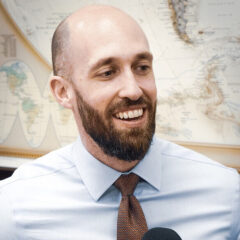
After moving from northern Alabama to the Florida Panhandle with his wife and three kids, Beigle, who is Baptist, noted the lack of Christian radio stations in the area and felt compelled to change that. Months later, on Oct. 6, 1997, that calling became a reality as the Faith Radio Network’s blend of evangelical Christian music and teachings hit the airwaves on 1070AM.

Nearly three decades later, the nonprofit network has grown to include 12 other Christian radio stations. Their flagship station, 1070AM, has been converted to a Spanish-language Christian station to meet the needs of Latino Christians in the region — “there was no one doing that in our area,” Beigle told RNS.

But in recent years, the future of 1070AM has become uncertain, even as Beigle said its message has become more vital.

Scott Beigle. (Photo courtesy of Faith Radio)

“A lot of them, especially now with the immigration and all, they’re scared,” Beigle said of 1070AM’s Spanish-speaking listeners. “And we understand they’re scared to go out — but they’re not scared to listen, to turn that AM radio on to hear their language, and to hear how God can change their life.”

In recent decades, AM radio, known especially for talk radio, has faded in popularity with the arrival of the clearer but more limited reach of FM signals, in addition to streaming and satellite radio. A 2025 survey from Barna Group and the National Religious Broadcasters found listeners access Christian radio from multiple sources, with 68% saying they listen to FM stations, 57% a website or app, 38% satellite radio and 37% AM stations.

While AM stations remain a smaller but consequential part of America’s radio landscape — the National Association of Broadcasters reports 80 million Americans still listen to AM radio each month on over 4,000 AM stations — AM radio now faces an existential threat: removal from cars. Citing dwindling audiences and technological clashes with electric vehicle equipment, automakers such as Ford, Volkswagen, Tesla and BMW have begun phasing out AM radio in some newer vehicles. 

A diverse coalition of stakeholders linked with conservative talk shows, foreign language stations and religious broadcasters is teaming up in the halls of Congress, advocating to salvage AM radio’s spot on the nation’s dashboards, at least temporarily.

(Photo by Jonathan Farber/Unsplash/Creative Commons)

For many Christian stations, the legislative effort has spiritual stakes.

“We’re in the hope business — to see their lives changed,” Beigle said. 

The AM Radio for Every Vehicle Act is the latest iteration of a bill that would require United States automakers to include AM receivers in new vehicles for the next 10 years. Though the bill has already gained broad bipartisan support — with at least 218 co-sponsors of the House version and 61 of the Senate — the House version is still in committee, while the vote on the Senate version has yet to be scheduled.   

“We have more than enough votes to pass it in the House right now, but to make it a priority in a moment where there’s just a whole lot of four- and five-alarm fires you have to put out, it’s hard to do something that’s more of a long-term concern,” said Mike Farris, legal counsel for the National Religious Broadcasters, a multimedia association founded by evangelical Christian broadcasters in the 1940s. The NRB, which has more than 120 AM stations among its members, has been one of several groups advocating for the legislation.
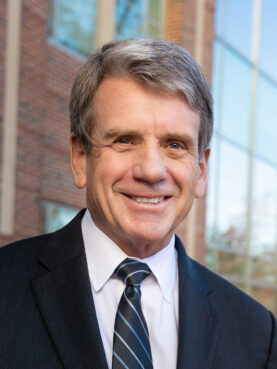
Mike Farris. (Courtesy photo)

Proponents of AM radio say the medium has long been a key source of emergency communication. The Federal Emergency Management Agency’s warning system relies on AM stations for emergency alerts, and local AM stations are known for distributing critical updates in a crisis — particularly in more rural areas, where AM is sometimes the only signal available. Carolyn Cassidy, a regional general manager for Christian media conglomerate Salem Media Group, said her stations give AM listeners in Tampa, Florida, information on how to prepare for, ride out and recover from severe storms during hurricane season.  

“It’s a First Amendment issue, it’s a religious issue, but it’s also a public safety issue, because AM radio is the backbone of the Emergency Alert System,” said Nic Anderson, vice president of government affairs for Salem. He said he fears that excluding AM radio from cars is a move toward giving automakers control over what drivers can listen to.

Known for promoting Christian and conservative values, Salem Media Group owns and operates roughly 80 stations, 84% of which fall on AM, Anderson said. The group also has about 3,000 affiliate stations that are owned locally but carry Salem programs — of those, 900 are AM stations.

In addition to advocating on Capitol Hill, Salem has been raising awareness among listeners by distributing prerecorded, pro-AM radio public service announcements from evangelical Christian leaders and influencers such as Focus on the Family President Jim Daly and Turning Point USA founder Charlie Kirk.

(Photo by Breakingpic/Pexels/Creative Commons)

“For generations, AM radio has brought the hope of the gospel, biblical teaching and encouragement right into our homes and cars, especially in times of crisis,” Kirk said in one of the announcements. “But now, some automakers want to eliminate AM radio from new vehicles. Let’s stand together and protect this ministry lifeline.”


Broadcasters say one reason Christian stations are especially available in the AM format is because it’s a more affordable option than FM, making it more accessible to smaller, niche stations of all stripes, including farming and foreign language stations.

“AM allows for certain formats that can’t command the bigger dollars from agencies. They have more of a local appeal,” said Orlando Boyd, general manager of The Gospel Nashville, which offers a mix of music and talk shows that cater to Christian audiences. “It’s really to get that foot in the door … for people trying to break into the radio business.”
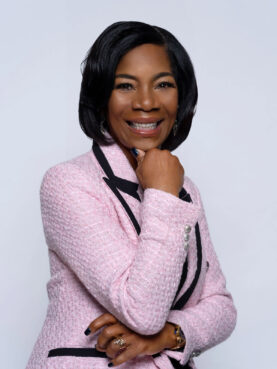
Sheila Brown. (Courtesy photo)

Boyd said The Gospel Nashville began as an AM station and later added an FM translator, which “piggybacks” on the AM station to play the same content on an FM frequency. But the AM station is still a key part of the branding and reach. It’s vital, he said, for listeners in remote settings and is often the first choice for those over age 40.

Sheila Brown, who owns two AM radio stations — WUFO (1080AM) in Buffalo, New York, and WIGO (1570 AM) in Atlanta — said listeners on the east side of Buffalo and the south side of Atlanta especially depend on these stations’ unique blend of R&B, gospel and talk shows to reflect their interests and experiences.

“We’re running our own narrative when it comes to our talk shows, our music, our format. No one else in either city has the formats that we have,” Brown said. 

Brown started her career in an entry-level position at WUFO in 1986 and worked her way up to become owner and CEO in 2013. She went on to purchase WIGO in 2022. While WUFO in Buffalo has since added a translator to air its content on an FM signal, WIGO in Atlanta is a standalone AM station.

Brown’s stations feature daily gospel music and sermon segments, and on Sundays, they play religious content all day. That’s why for the lifelong member of Pilgrim Missionary Baptist Church in Buffalo, the fight for AM radio is a matter of faith.  

“You have so many people that are sick and shut in, who can’t get out to their churches like they used to,” Brown said. “But when they turn to us, they’ll get the same singing, ministry, preaching that they would if they would be at their church.” 

Head of Caritas in Jerusalem reports worsening situation in Gaza, West Bank

(RNS) — Anton Asfar, secretary general of Caritas Jerusalem, criticized the Israeli-run and US-backed humanitarian foundation in Gaza, saying, 'This is not aid.'


Palestinians carry bags filled with food and humanitarian aid provided by the Gaza Humanitarian Foundation, a U.S.-backed organization approved by Israel, in Khan Younis, southern Gaza Strip, on Tuesday, June 3, 2025. (AP Photo/Abdel Kareem Hana)

Claire Giangravé
June 20, 2025


VATICAN CITY (RNS) — Before his death on April 21, Pope Francis made it a habit to call the 500 people taking shelter in the Holy Family Church, a Catholic parish in Gaza City, every evening to ask about how they and their supplies were holding up.

In early June, the church was briefly left without means to contact the outside world, after Israeli airstrikes destroyed telecommunications structures in the area. Now, to speak to their bishop, Latin Patriarchate of Jerusalem Cardinal Pierbattista Pizzaballa, Holy Family’s priests must climb on the roof to search for a cell signal using eSim chips, according to Catholic charity workers in Gaza.

The emergency clinic at the parish also had to suspend its operations for a time. “Even their food is depleting over there,” said Anton Asfar, secretary general of the Catholic charity network Caritas Jerusalem, in a phone call with Religion News Service.


“There is no secure place, there is no safe place, and communities are squeezed,” he said.

Caritas Jerusalem has 10 medical points in Gaza, though one, located in a “hot area,” Asfar said, had been shut down. The 122 Caritas members are offering aid on the ground in Gaza with the help of local volunteers who have continued their work despite the risks of operating in a war zone.

When Israel began its attack against Iran June 13, and after Iran’s retaliation, Caritas could not guarantee the safety of its workers, Asfar said, leading the charity to temporarily suspend all operations in the West Bank and Gaza.

“But our staff, we have wonderful staff, our very loyal mission operators, they were stubborn. They wanted to provide lifesaving services to the needy,” Asfar said, and they soon resumed work. Preparing for the worst, they are carrying out drills in case of bombings and readying bunkers, he added.

In October, a 26-year-old Caritas staffer died with her husband and infant daughter during an airstrike on the St. Porphyrios Church, a Greek Orthodox Church in Gaza, which was providing shelter for roughly 500 people. An estimated 17 people died in the attack.

Caritas Jerusalem works in close partnership with the Latin Patriarchate of Jerusalem and a cluster of aid agencies. The aid corridor launched by Jordan to provide necessary medical supplies is no longer able to reach people in Gaza, Asfar said.


The Catholic charity also does not collaborate with the Gaza Humanitarian Foundation, established by Israel and registered in Geneva and Delaware, Asfar said. “This is not aid,” he said, referring to the foundation, which has come under scrutiny for its lack of financial transparency. Asfar criticized the foundation’s decision to hire a security company, Safe Reach Solutions, to oversee aid distribution, saying aid organizations should not use weapons.

Dozens of Palestinians have been killed and many more were wounded by Israeli Defense Forces as they attempted to receive aid near a distribution site run by GHF, according to media reports. (GHF has denied that any shooting occurred near its site.) Asfar said that the GHF is “a really undefined way of supplying people with food.”

But Asfar also said that Gaza has seen growing numbers of Palestinian armed gangs and said that “it’s becoming extremely dangerous” to bring aid to the region as the rule of law continues to break down.

Just before he died, Francis donated a popemobile he used in a visit to Caritas in the West Bank in 2014, asking that it be repurposed as a mobile health clinic for Gaza. The popemobile is ready for deployment, Asfar said, but Caritas is still waiting for permits from Israel to enter Gaza.


Asfar said that “humanitarian conditions have really deteriorated” as well in the West Bank, where, he said, Caritas is the only charity organization still operating. He reported that Israel has built more fences and gates there, making it difficult for his group to bring aid from Jerusalem. He said the hospitals in the West Bank city of Jenin, where the refugee camp there is under Israeli military control, lack basic supplies.

Asfar said that residents in the West Bank are often ordered to leave their homes, “and they leave everything behind and are left with nothing.” Caritas is active in providing basic care and food for those who have lost any means of living.


The deprivation, he said, has not diminished residents’ faith and hope for the future. “We believe in the power of prayer. We feel it over here, and it provides us with a lot of hope and energizes us to continue our mission in the Holy Land,” he said.

He appealed to the world leaders to bring “a true end” to the conflict and pointed to the newly elected Pope Leo XIV as “a man of peace” who is concerned about the situation and close to the people suffering in the Holy Land.


Iranians and Jews can get along. Go back to the Bible.

(RNS) — Iran deserves a new leader. If only Cyrus could return.


This is a depiction of the biblical character Emperor Cyrus the Great of Persia, by Jean Fouquet, created circa 1470. Image courtesy of Creative Commons
Jeffrey Salkin
June 17, 2025

(RNS) — You know that line about how even a broken clock can be right twice a day? That is how I feel about Israeli Prime Minister Benjamin Netanyahu.

I will eagerly enter a contempt competition with anyone regarding Netanyahu. His corruption, cynicism and capitulation to the worst aspects of Israeli society enrage me and many others.

But in the face of a crisis for the Jewish people — like on Oct. 7, 2023, and now with Israel’s conflict with Iran — I set that aside at least temporarily. I turn to the speech Netanyahu addressed to the people of Iran. Here are the words that moved me (at 1:05):


“The nation of Iran and the nation of Israel have been true friends since the days of Cyrus the Great, and the time has come for you to unite around your flag, and your historic legacy by standing up for your freedom from an evil and oppressive regime.”

He then invoked the words “Woman, life, freedom” — and repeated them in Farsi — “Zan, zendegi, azadi.” This slogan has become a powerful symbol of resistance, especially associated with the Iranian movements for women’s rights and civil liberties.


In that statesmanlike address, Netanyahu offered the Iranian people hope. He reached back into their remote past to one of the greatest righteous gentiles in Jewish history.

In the year 586 B.C.E., the Babylonian empire destroyed Jerusalem and burned the Temple. The Babylonians deported the Judean elite to Babylonia, thus beginning that period known as the Babylonian Exile. 

Seventy years later, the Persian King Cyrus conquered Babylonia. He invited a group of Judeans to return to the land of Israel under the leadership of Ezra and Nehemiah. With that act, he helped reconstitute the Judean state – Yahud – under the aegis of the Persian Empire.

That is how the Hebrew Bible ends:

“And in the first year of King Cyrus of Persia, when the word of the Lord spoken by Jeremiah was fulfilled, the Lord roused the spirit of King Cyrus of Persia to issue a proclamation throughout his realm by word of mouth and in writing, as follows: ‘Thus said King Cyrus of Persia: The Lord God of Heaven has given me all the kingdoms of the earth, and has charged me with building him a house in Jerusalem, which is in Judah. Any one of you of all his people, the Lord his God be with him, and let him go up!'” (2 Chronicles 36: 22-23)

 I have memorized those words, which I say when my airplane touches down at Ben Gurion Airport in Israel. It’s Zionism 101. It wasn’t just that Cyrus restored the Jews to their land; he did the same thing with other peoples as well. He was an internationalist — or, some might say, a globalist.

Consider the “Cyrus Cylinder,” a declaration issued by Cyrus, inscribed on a cuneiform on a clay cylinder. It now resides in the British Museum in London.


“I am Cyrus, King of the World, Great King, Legitimate King, King of Babylon … King of the four rims of the earth … I returned to the sacred cities on the other side of the Tigris the sanctuaries of which have been ruins for a long time, the images which used to live therein and I established for them permanent sanctuaries. I also gathered all their former inhabitants and returned them to their habitations.”

Some hail this document as the first charter of international human rights. A replica of it stands at the entrance to the United Nations headquarters in New York City.

Among Cyrus’ successors was Ahasuerus, of the Purim story. The Jewish community of Iran (once Persia) is arguably one of the oldest Jewish communities in the world. Several years ago, I tutored a Persian Jewish girl for her bat mitzvah, and I gently teased her: “Who knows? You might be related to Queen Esther and Mordecai!” She came back the next week and told me that according to family lore, I was absolutely right.

There’s also a connection between Cyrus and former American President Harry S. Truman.

For decades, there has been an ongoing debate in Jewish circles about whether Truman was antisemitic. In the aftermath of World War II and the Holocaust, Truman demonstrated compassion for Jewish survivors. And yet, in private conversations with his wife and friends, he was known to have uttered antisemitic epithets and other malicious things about American Jews.

In particular, Truman was offended by Jewish assertiveness in their activism toward the creation of a Jewish state. We can understand his consternation; in late 1947, the White House received more than 100,000 letters and telegrams about Zionism. Jewish leaders were frequently brusque with Truman – a favor he willingly returned. As his biographer, David McCullough, wrote, at one Cabinet meeting, he became so furious over the Jews’ agitation that he snapped: “Jesus Christ couldn’t please them [the Jews] when he was on Earth, so how could anyone expect that I would have any luck?”

But let’s not be too hard on Truman. He came from a pious Midwestern Baptist upbringing, which taught him a deep respect for the Jewish Bible and history. And arguably, the most important Jew in American history is part of this story. 


Eddie Jacobson had been Truman’s partner in a men’s store in Kansas City, Missouri. When Truman became president, Jacobson used their personal relationship as a way to educate the president on the refugee and Palestine partition issues. In March 1948, he urged the reluctant president to see the Zionist leader Chaim Weizmann and help the nascent Jewish state come into being.


When Jacobson later introduced Truman to an American Jewish delegation as the leader who helped create the state of Israel, as author Michael Oren has written, Truman responded sharply: “What do you mean, ‘helped create’? I am Cyrus, I am Cyrus!”

Truman demonstrated he was not only in favor of creating a Jewish state, but he grounded that support in his belief in the ultimate truth of the ancient biblical narrative. He saw himself as the modern-day reincarnation of Cyrus.

I offer this story during these dark hours and dark days because it is redemptive. It gives hope, mostly for Iran.

The Iranian people deserve a leader like Cyrus again. May they get one — and soon. 

 Investigation finds Rev. Barber did not misdirect funds to pay his ex alimony


(RNS) — An independent investigation by Repairers of the Breach found that Barber did not use or direct organizational funds for personal benefit.


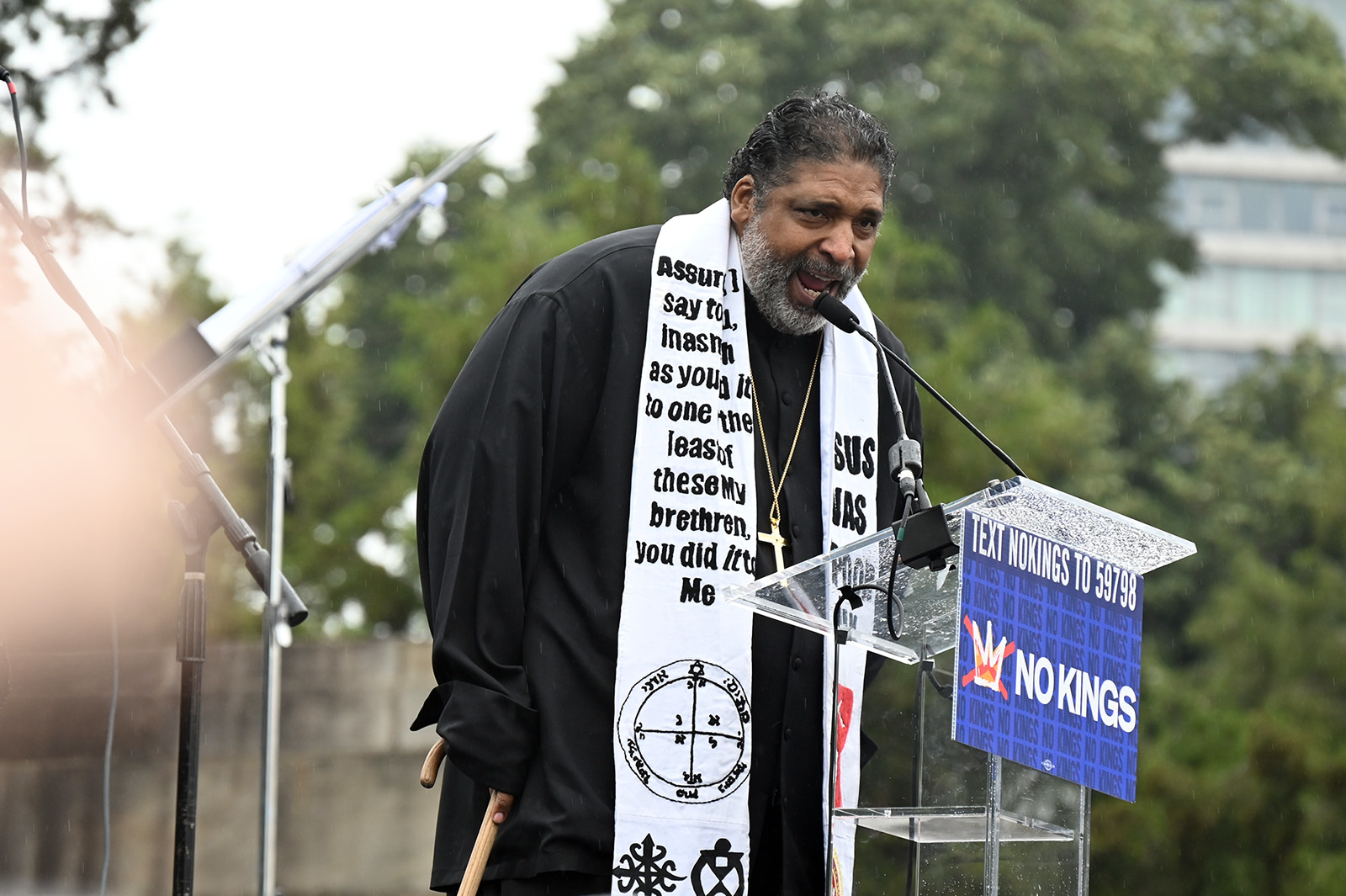
The Rev. William Barber II addresses a "No Kings" protest, Saturday, June 14, 2025, in Philadelphia. (RNS photo/Jack Jenkins)
Yonat Shimron
June 21, 2025


DURHAM, North Carolina (RNS) — An independent investigation into allegations that the Rev. William Barber had been paying his ex-wife alimony from the finances of his nonprofit concluded that the civil rights leader did nothing wrong.

In a court filing last month, Rebecca Barber, the preacher’s ex-wife, alleged that since November 2023, the nonprofit, Repairers of the Breach, has issued monthly checks for $7,000 to a joint personal bank account shared by Barber and his ex-wife, “under the guise of alimony or financial support.”

The board of Repairers of the Breach, a 10-year-old social change organization founded by Barber, hired the North Carolina law firm Parker Poe Adams and Bernstein to investigate the suit’s claim. In a statement issued Saturday (June 21), the board concluded, “We can confirm that all payments made to Reverend Barber align with approved amounts, and any transfers made to a personal account were made from his own salary, independent of Repairers of the Breach.”

Barber and his ex-wife have been dueling in court over the distribution of their assets. The couple divorced after 37 years in November 2024. They have four adult children and raised a daughter from William Barber’s prior relationship.

When mediation to settle parts of the divorce failed, Rebecca Barber filed a motion to add Repairers of the Breach as a third-party defendant.

“Defendant contends that Repairers of the Breach, Inc. is functionally an alter ego of Plaintiff and may possess or control assets that are marital in nature or otherwise relevant to this Court’s equitable distribution determination,” read the motion filed in Durham County, North Carolina, on May 14.

But the board’s investigation found that Barber did not use or direct organizational funds for personal benefit. The report was not made public because it contained privileged information about employees, said Jonathan Wilson-Hartgrove, chairman of the 10-member board and a frequent collaborator with Barber.

“The story is that there is no story and we’re moving on with our work,” Wilson-Hartgrove said.

On June 12, a district court judge denied a motion by the Rev. Barber’s lawyer, Tamela Wallace, for a protective order against Rebecca Barber. 


Repairers of the Breach paid Barber more than $224,000 in salary in 2023, according to the most recent 990 form filed by private foundations in the U.S. That year, the organization had $8.2 million in net assets.

According to a 2024 Nonprofit Compensation Report from Candid, which reports on nonprofit organizations, the median salary for a nonprofit the size of Repairers of the Breach — with revenue between $5-$10 million — was $185,699, with an average salary of $219,446. In North Carolina, median salary for nonprofits with revenue of between $5-$10 million was $166,693, with an average of $192,942.

Barber is also founder of the Center for Public Theology and Public Policy at Yale Divinity School, where he also teaches and earns a salary. Barber’s Yale salary is not public, but, according to its Office of Institutional Research, the average salary of a professor at Yale was between $142,238 and $275,325 in 2023-24.

Repairers of the Breach is best known for reviving the Poor People’s Campaign, an anti-poverty effort bearing the name and the goals of the movement launched by Martin Luther King Jr. shortly before his 1968 assassination.

Recently, the organization has begun a “Moral Monday” campaign with weekly demonstrations at the U.S. Capitol aimed at challenging the Republican-led budget bill, including potential cuts to social safety-net programs such as Medicaid.

Repairers is planning another Moral Monday protest in front of the U.S. Supreme Court on Monday (June 30).

Last month Barber married the Rev. Della Owens, pastor of St. James Church in Wilson, North Carolina, a Disciples of Christ congregation, and a former employee of Repairers of the Breach.

(National reporter Bob Smietana contributed to this report.)

 Opinion


A book on Pope Leo's rise already? Chris White's compelling account takes a long view.


(RNS) — Delivered just six weeks after Leo's election, it creates a broad picture of a new era unfolding in the Catholic Church.


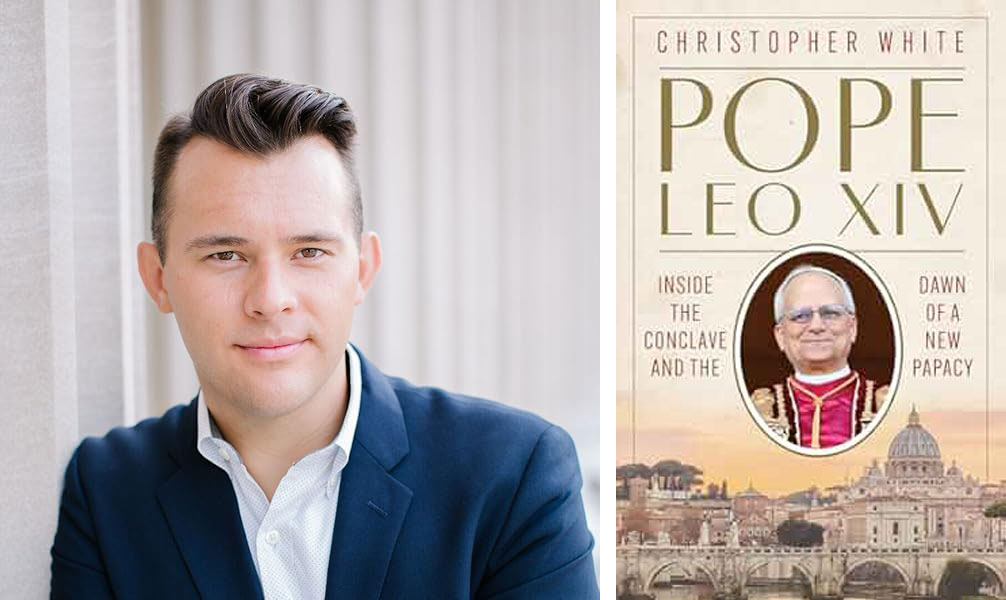
Author and reporter Christopher White and his new book on the rise of Pope Leo XIV. Photos courtesy Amazon

Steven P. Millies
June 20, 2025

(RNS) — The cardinals of the Roman Catholic Church astonished the world when they suddenly elected a new pope on May 8 in just four ballots and little more than 24 hours. Christopher White can claim a similar achievement with “Pope Leo XIV: Inside the Conclave and the Dawn of a New Papacy.” In scarcely six weeks he has written a marvelous account of the dizzying weeks that followed Pope Francis’ death the day after Easter.

The book, filled with helpful historical background and sharply concise explanations of the inner workings of the church, is a wonder. White, until recently the Vatican correspondent for the National Catholic Reporter, has long had access to key figures that enliven his account. But in very little time he turned his familiarity into more than an insider account — it is a compelling book that gives us the big picture that the limits of day-to-day reporting make more difficult to capture.


Those of us who will miss White’s updates at NCR — he is now a senior fellow and associate director at Georgetown University’s Initiative on Catholic Social Thought and Public Life — can have hope that this is the first of many books that will find him giving texture and context to the unfolding new era in the Catholic Church.


The book is divided into three sections — first deftly summarizing the 13 years of the pontificate of Pope Francis, then recounting the conclave and finally focusing on Leo himself. A book whose title promises a focus on “Pope Leo XIV” that spends its first third on Francis might be considered a bit of a cheat. White sketches the Francis papacy with precision and a feeling of accumulating momentum. We read how Francis changed the church so much that the conclave to find his successor was inevitably a different kind of gathering, responding to a different church, than the one that elected him.

In the wake of Leo’s election, however, it’s easy to forget how precarious the fate of Francis’ reforms looked in the days leading up to the election. White traces the battle lines of what seemed to be shaping up to be a very close contest about the future of the church, dividing the major players into three camps: those who wanted to press Francis’ full agenda forward, those who wanted to continue in Francis’ direction but abandon his inclusive all-church dialogue known as “synodality” and those who sought a full repudiation.

The prelates were not the only ones doing battle. In the days leading up to the conclave, White writes, “a relatively small but extremely wealthy and influential set of Americans” threw their support behind the cardinals who wanted to scuttle Francis’ legacy.

Instead, the cardinals quickly and emphatically landed on Cardinal Robert Prevost — reports tell us the votes in favor far exceeded the required two-thirds of the 133 possible votes.

With all this background, White settles into the book the reader may have expected: a well-reported history of Prevost’s upbringing and career and a journalist’s insights about how the conclave actually went down. The author recalls in a lengthy passage his own meeting with Prevost in the cardinal’s Vatican office, where we meet the Prevost we have come to know from interviews conducted with friends and family members since he became pope: quiet, reserved, a good listener who can also be funny. Perhaps most revealingly, White offers a vivid depiction of the quality that seems to have drawn both Francis’ affection and the cardinals’ votes: Prevost is a missionary and a pastor, not a bureaucrat or a professor.

These three sections hang together quite well in a narrative that never seems to slow down. Even the digressions into history and theology are precisely targeted, giving a reader who may not know much about Catholicism just as much as they need to know to have a sense of the stakes. White even manages to conjure a little suspense despite the world knowing the outcome.

Ad Choices Icon

But the real delights of this book are the countless reportorial touches that place us in White’s confidence as well as in the confidence of his well-placed sources. Besides Prevost’s Vatican offices and others’, we get glimpses of Francis’ apartment in the Domus Sanctae Marthae, the Vatican guest house and even the conclave itself. We get to know the personalities as much as the politics of the church. We learn much about Leo and Francis — and Christopher White, as he divulges how he fixed on Prevost as a serious papal contender even as others smugly dismissed his chances. 

The reader also comes to see the depth of White’s affection for Francis. The reporter had the chance to observe the late pope closely in small moments that affirm what many of us saw and loved in him in the bigger ones, as when Francis passes out candy to small children. After Francis’ appearance in St. Peter’s Square on Easter, the day before he died, White recalls thinking, “This was a very sick man, and he was giving it all he had.” These moments paint a picture in pointillist details that together expose a much larger landscape.  

But if a reporter narrating his own more personal experience of events he witnessed is not traditional reporting, exactly, it makes this a more impressive book. It adds a dimension of humanity that makes for a more revealing and fascinating read, because it invites the reader into the story. As we read about how Leo became pope, we root for Francis’ legacy to survive the papal election.


It’s an astonishing achievement. Many more books about Leo will follow, but many authors who take more time will struggle to do so well.

(Steven P. Millies is professor of public theology and director of the Bernardin Center at Catholic Theological Union. The views expressed in this commentary do not necessarily reflect those of Religion News Service.)

Opinion

The LDS historical department just published an 1886 polygamy revelation

(RNS) — After denying that the 1886 pro-polygamy 'Taylor revelation' existed, the Church of Jesus Christ of Latter-day Saints quietly published it on Saturday.


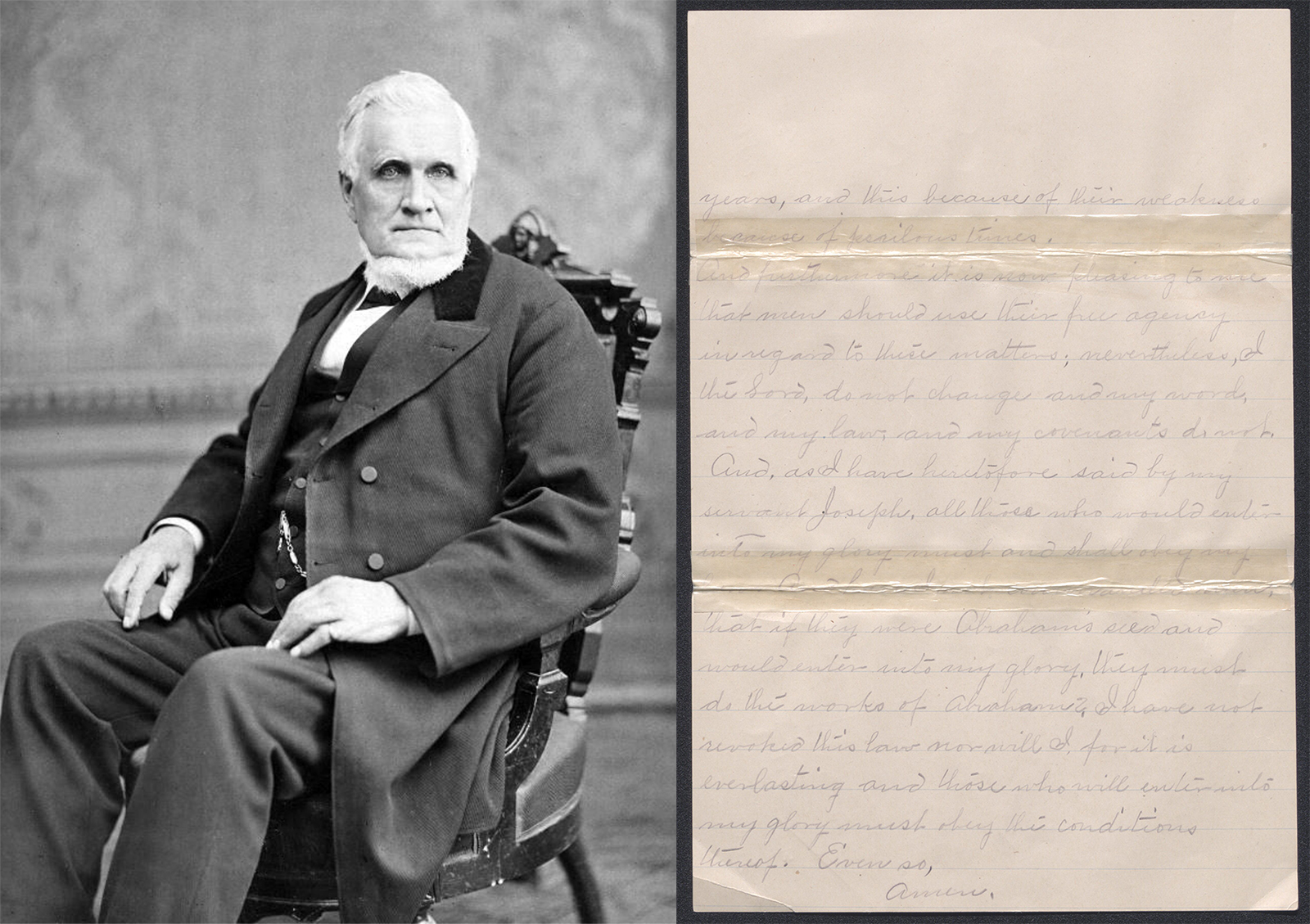
John Taylor (1808–1887), the third president of the Church of Jesus Christ of Latter-day Saints, whose revelation in support of plural marriage, right, was just published on the church’s historical department website. (Photo courtesy Wikimedia/Creative Commons; document courtesy of the Church History Library, The Church of Jesus Christ of Latter-day Saints)


Benjamin Park
June 16, 2025
RNS


(RNS) — In the Church of Jesus Christ of Latter-day Saints, a religion built on modern revelation, perhaps no revelation has caused as much controversy as one attributed to President John Taylor, who presided over the church in the 1880s during one of its most tumultuous decades.

In 1886, while the federal government sought to stop all Mormons who practiced polygamy, Taylor allegedly wrote a revelation proclaiming the controversial practice was an everlasting covenant that could never be revoked. Such a command quickly became complicated when the church renounced the practice in 1890. LDS authorities then publicly and vociferously denied his document’s existence for over a century.

That is until Saturday morning (June 14), when the revelation quietly appeared in the church history library’s catalog.

What happened to it in the intervening 130-plus years? The revelation was for years in the hands of Taylor’s son, John W. Taylor — a slim, stern man with well-manicured hair, a conservative mustache and a piercing gaze. John W. Taylor was groomed for Mormon leadership and ordained an apostle himself at 26 years old in 1884, four years after his father became the faith’s prophet.


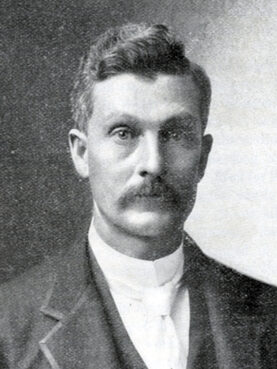
John W. Taylor, son of John Taylor. (Photo courtesy Wikimedia/Creative Commons)

The elder Taylor spent much of his presidency hiding as government officials prosecuted and imprisoned those who practiced plural marriage. He died in 1887, separated from family and out of public sight. John W. Taylor always maintained his father had exhibited profound bravery in his refusal to acquiesce.

While the next LDS president, Wilford Woodruff, publicly forfeited polygamy in 1890 to ensure the church’s survival, John W. Taylor rejected any such concession: Polygamy was an eternal law, he believed.

He and a handful of other authorities secretly continued to solemnize plural unions, and the young apostle was sealed to three additional wives. This prompted the church in 1904 to issue the “Second Manifesto,” telling members they must cease all plural marriages for good.

John W. Taylor refused and lost his place in the Quorum of the Twelve, forfeiting his ecclesiastical office instead of betraying his father’s principles.

But being dropped as an apostle wasn’t the end of his church discipline. After being caught solemnizing more polygamous unions, he was summoned to an excommunication trial. At the hearing, he displayed what he alleged was the 1886 revelation from his late father, written in President Taylor’s own hand, proclaiming polygamy could never be revoked. John W. Taylor was excommunicated. And when he died in 1916, the document crucial to his defense remained within his family.

Over the ensuing two decades, an increasing number of Latter-day Saints became convinced the church had erred in renouncing polygamy. They congregated around men who claimed to have been appointed by President Taylor himself in September 1886 to a priesthood council authorized to continue the principle even if the church strayed. At the heart of their narrative was the revelation that John W. Taylor had displayed at his excommunication trial.

Finally, on June 17, 1933, after years of disputes, the church’s First Presidency issued a memo reaffirming the threat of excommunication to anyone who continued to practice plural marriage. The memo explicitly dismissed rumors of a “pretended revelation” from President Taylor and denied the document existed.

Nellie Taylor, the widowed plural wife of John W. Taylor, knew otherwise. She had spent the underground period of the 1880s hiding in Mexico and stood by her husband as they remained committed to the principle. Through an intermediary, she contacted the First Presidency within a month of the memo’s release and alerted them to her father-in-law’s revelation and where they could find it.

By July 15, 1933, the First Presidency held in its possession the document whose existence it vehemently denied. And it wasn’t a complete surprise — the church historian’s office had a copy of the text, though not access to the original, as early as 1909.

Instead of correcting the June memo’s claims, they instead sequestered the revelation. Church authorities refused to confirm its veracity.

Meanwhile, Mormons committed to polygamy soon became known as “fundamentalists,” a reference to their devotion to what they believed to be the faith’s founding principle. They continued to stake their claims on President Taylor’s alleged revelation. A photograph of the text, likely taken just before the document was turned over to LDS authorities, was frequently shared within the community, though it could never be verified.

The “Taylor Revelation,” as it is sometimes known, only grew in significance throughout the 20th century. Although many ideas found in it were featured in President Taylor’s other available documents, including several other revelations from his underground period, this text took on mythic proportions. It came to symbolize polygamy’s eternal nature and its centrality to the faith, etched in a prophet’s own hand — even if, and perhaps especially because, its existence could not be firmly corroborated.

What’s in the revelation released Saturday? Cataloged as MS 34928 and titled “John Taylor revelation, 1886 September 27,” the digitized archival file contains several documents. Besides the long-speculated revelatory text — words in faded pencil that were addressed to “My Son John” — there are several typescripts, as well as a memo signed by First Presidency counsellor J. Reuben Clark that details how the revelation came into the church’s possession.


A portion of President John Taylor’s handwritten 1886 revelation declaring that “I, the Lord, do not change and my covenants and my law do not, and as I have heretofore said by my servant Joseph, all those who would enter into my glory must and shall obey my law, and have I not commanded men that if they were Abraham’s seed and would enter into my glory, they must do the works of Abraham? I have not revoked this law, nor will I … ” (Courtesy of the Church History Library, The Church of Jesus Christ of Latter-day Saints)

The revelation is clear in its purpose and matches the photographed text that has circulated in the fundamentalist community. “How can I revoke an everlasting covenant,” President Taylor’s God declares, when “my everlasting covenants cannot be abrogated nor done away with.” All who wish to enter into God’s highest glory “must and shall obey my law.”

While these documents do not confirm other key elements of the fundamentalist origin story — most notably, the ordination of a clandestine priesthood council — they confirm the existence of a text fundamentalists have long insisted was real.

As important as the document will likely be to fundamentalists, it raises thorny issues for Latter-day Saints. Was Taylor’s revelation true, and were the prophets who followed him traitors? And what does it mean for LDS authority if revelations — and revelators — are fallible?

The LDS church did not attempt to answer these questions. Instead, the documents appeared in the catalog without any comment or explanation. I think it is part of a process in which the First Presidency has been slowly transferring many previously restricted historical documents in its archives to the church historical department, rather than it being any kind of response to current debates about the role of polygamy in church history. But perhaps further analysis is coming.


Benjamin E. Park, historian and author of “American Zion.” (Photo by Blair Hodges)

While these documents exhibit material frailty — faded etchings, ruffled pages, jagged creases — their contents pose lasting meaning. Latter-day Saints cherish their tradition’s revelatory treasures.

(Benjamin E. Park teaches American history at Sam Houston State University in Huntsville, Texas, is the author of “American Zion: A New History of Mormonism” (2024), runs the YouTube channel Professor Benjamin Park and recently became the president of the Mormon History Association. The views expressed in this commentary do not necessarily reflect those of Religion News Service.)