Monday, July 21, 2025


Current Politics Of Narendra Modi Exposes Limits Of His Leadership – Analysis
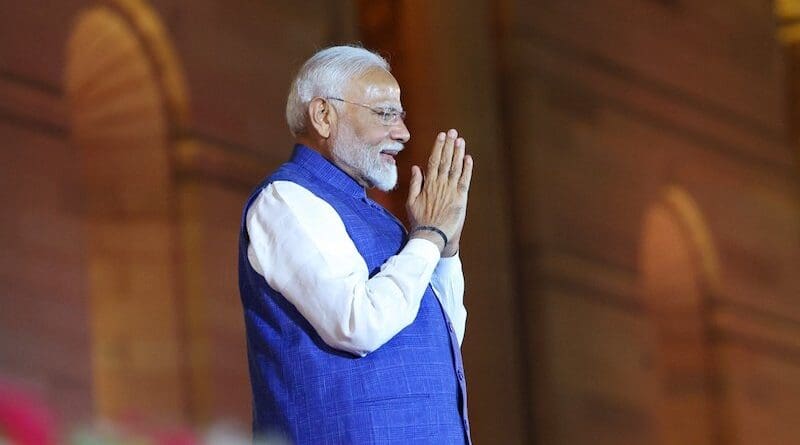
India's Prime Minister Narendra Modi. Photo Credit: Narendra Modi, X


By 

By Dr. Sudhanshu Tripathi


Indian Prime Minister Narendra Modi has led the country for more than a decade, shaping its politics, economy and global posture. As he enters what is likely his final term, with no guarantee of returning to office after 2029, growing tensions at home and abroad demand a closer examination of his record. His leadership has prioritized national security, economic expansion and cultural identity, but it has also raised concerns about democratic decline, institutional decay and foreign policy failures.

Missed opportunities on the global stage

Modi has failed to establish meaningful and assertive interactions with external powers such as the US, UK, France, Canada, Germany, Japan, South Korea, Australia and Turkey. He also struggles to address issues with troublesome neighbors like Pakistan and China, who have deliberately intruded into India’s territory. Although he traveled around the globe to promote India’s foreign policy and diplomacy, he failed to convince foreign powers, including America, that India has been a victim of Pakistan-sponsored terrorism for decades and not the other way around. 

Perhaps due to this, Pakistan — despite being an epicentre of Global Terrorism, including cross-border terror against India for the past many decades — has been adorned as Vice Chair of the Anti-terrorism Committee by the UN Security Council (UNSC), which is an unparalleled paradox.

Additionally, he has not secured a permanent seat for India in the UN Security Council or membership in other prominent forums like AUKUS (a trilateral security pact between Australia, the UK and the US), the Nuclear Suppliers Group (NSG), the Fissile Material Cut-off Treaty (FMCT) and G7 (an intergovernmental political forum consisting of Canada, France, Germany, Italy, Japan, the UK and the US). 

The recent security crisis and the India–Pakistan war have exposed flaws in India’s national security and foreign policy. The terror attack in Pahalgam on April 22, 2025, killed 26 innocent tourists in Baisaran valley of India-administered Jammu and Kashmir, revealing serious lapses in security management and civilian safety. In retaliation, India launched Operation Sindoor on May 7, 2025, which demonstrated the capabilities of its forces across all three wings. However, the ceasefire announced on May 10 showed that Modi succumbed to US President Donald Trump’s pressure. The ceasefire benefited Pakistan because India had gained the upper hand in the ongoing India-Pakistan conflict. This event significantly altered India’s diplomatic landscape. 


In 2014, Modi started his tenure with enthusiasm to transform India into a haven for foreign investments by streamlining rules and regulations to make investment easier. However, bureaucratic disputes and a rising middleman culture discouraged his well-planned efforts. An excessive concentration of power within the Prime Minister’s office and among a small group of Indian Administrative Service (IAS) officers led to the formation of a confidant coterie. His reliance on this small circle marginalized democratic governance, frustrating senior ministers, party leaders and top officers.  

Governance crisis and administrative decay

The Bharatiya Janata Party (BJP) government at the center, along with its own party governments in many states, has failed to control rising prices, poverty, unemployment, law and order, ever-mounting corruption, undue interference by party workers and officials in daily administration and declining morals and increasing promiscuity among party cadres. This indicates a weakening of the top leaders’ control over party members and office bearers. 

The high-profile case of a sitting BJP Member of Parliament (MP), Brij Bhushan Sharan Singh, accused of molestation and sexual offenses under the POCSO Act by women wrestlers Vinesh Phogat, Sakshi Singh and other minor girls, has garnered attention. Unfortunately, the First Information Reports (FIRs) lodged against this MP have been withdrawn. Similar cases against BJP leader Manohar Lal Dhakad (who has now obtained bail) and Amar Kishore Kashyap, “Bum-Bum,” a BJP district president, are particularly concerning. 

Crimes committed by party workers have severely tarnished the party’s reputation, which claims to establish a new culture in the country. Modi has also misappropriated funds for the BJP through Electoral Bonds and granted extraordinary favors to billionaires such as Gautam Adani, Mukesh Ambani and others. 

The central government has waived large loans for wealthy businessman, Gautam Adani, while thousands of farmers have gone bankrupt and suffered due to natural calamities. India’s wealthiest industrialist, Mukesh Ambani, enjoys Z+ security provided by the Indian state along with other VIPs and politicians. Taxes paid by ordinary citizens fund the cost of this security. Ironically, while elites enjoy top security, common citizens often fall victim to crime due to a shortage of police personnel and ineffective law enforcement.

Furthermore, the BJP is misusing the powers of the Central Bureau of Investigation (CBI), Election Commission, Enforcement Directorate and Income Tax Department to intimidate politicians with non-BJP affiliations who are facing various criminal charges. This can be seen in cases like Ajit Pawar, Chhagan Bhujbal, Ashok Chauhan, Hemanta Biswas Sharma, Subhendu Adhikari, Prafulla Patel and many others. These politicians are pressured to join the BJP and support its interests, leveraging these agencies. An ironic aspect is that once these tarnished politicians join the BJP, the cases against them are often withdrawn.

Another serious concern is the declining health of Indian democracy. In a parliamentary system, opposition parties and their leaders play a crucial role. However, the mass suspension of opposition members from the House to prevent meaningful debates and discussions on national issues, merely to serve the ruling party’s interests, represents a negation or violation of democracy.

Another troubling development that has caused an internal crisis is the ethnic riots in Manipur that started last year. Yet, the Prime Minister has not visited the region to ease the suffering of the affected community or to restore the declining confidence in the police and security forces. 

The Indian Army’s Agniveer scheme (a recruitment model that allows youth to serve in the armed forces for four years) has sparked controversy. Politicians, who do not retire from active politics even in their seventies, face ridicule as young men in their twenties prepare to leave the army after just four years of service. People express concernsabout the scheme’s long-term implications, especially given the rising cross-border terrorism from Pakistan and China’s consistent intrusions into Indian territory. Former Chief of Defense Staff (CDS) General Bipin Rawat reportedly doubted the scheme’s merits, and his mysterious death in a helicopter crash highlights his cautious judgment today.

The overemphasis on the Hindu-Muslim divide also threatens national unity and social cohesion. The politicized use of slogans like “Jai Shri Ram” (“Hail Lord Rama”) to advance the BJP’s political goals has caused alienation among Muslims and other minorities, actions that conflict with the ideals of Lord Ram and India’s diverse culture. The government must stop communal segregation and actively include Muslim and other minority communities in India’s growth and progress.

India’s economy remains fragile, despite grand claims to become the world’s fourth-largest economy and its ambition to reach third place. In 2025, the national debt has sharply increased to approximately $248 billion due to ill-planned spending, misappropriation of funds and large-scale embezzlement. These issues have fostered a parallel black economy that threatens the country’s economic stability.

State-controlled media agencies are another worrisome aspect of Mr. Modi’s politics. They undermine the principle of democracy by violating the idea that the media serves as the fourth pillar of democracy. News channels based in Noida are mostly labeled as “Godi Media”, and many consider them biased and sold. The print media in the country does not dare to challenge or hold the government accountable, drawing parallels to the Emergency of 1975.   

A call for renewal and accountability

The popularity and support for the BJP have declined, with only minor exceptions in some states. As its foremost leader, Modi cannot escape the responsibility that comes with his prominent role in the party and the country. His advancing age, declining mental focus, the rise of vested interests and the absence of a strong opposition have created obstacles in governance. Additionally, giving undue favors to elites and corrupt elements within the BJP has prevented the leadership from ensuring independent, fair and effective decision-making. These issues have shattered the hopes, aspirations and expectations of the people not only within India but also across the international community. The grand vision of making India the “Vishwaguru” (“world guru” or “teacher of the world”) of ancient times again has proven ineffective, as seen after Operation Sindoor, when none of its allies supported it.

As Modi approaches the end of his likely last term, he must carefully assess his personal shortcomings and reemphasize the BJP’s original promises to build a new culture of honest, fair, corruption-free, responsive and responsible democratic governance — completely different from the previous Congress governments in India. 

The views expressed in this article are the author’s own and do not necessarily reflect Fair Observer’s editorial policy.

  • About the author: Dr. Sudhanshu Tripathi is a Professor of Political Science at Munishwar Dutt Post Graduate College in Pratapgarh, Uttar Pradesh. He previously served as Director of the School of Social Sciences at UP Rajarshi Tandon Open University from 2017 to 2021. He has authored India’s Foreign Policy: Dilemma over Non-Alignment 2.0 and NAM and India, co-authored the textbook Rajnitik Avadharnayein and published widely in journals. He serves on the Editorial Board of World Focus Journal and has contributed to other academic publications. A former President of the Teachers Union and Vice President of Shikshak Maha Sangh, he also engages in socio-cultural work with the Rashtriya Swayamsevak Sangh, continuing his family’s legacy of public service.
  • Source: This article was published by Fair Observer\

Fair Observer

Fair Observer is an independent, nonprofit media organization that engages in citizen journalism and civic education. Fair Observer's digital media platform has 2,500 contributors from 90 countries, cutting across borders, backgrounds and beliefs. With fact-checking and a rigorous editorial process, Fair Observer provides diversity and quality in an era of echo chambers and fake news. Fair Observer's education arm runs training programs on subjects such as digital media, writing and more. In particular, Fair Observer inspires young people around the world to be more engaged citizens and to participate in a global discourse.

 

The Dalai Lama Succession: Religious Tradition, Geopolitical Contest And Implications For South Asia – Analysis

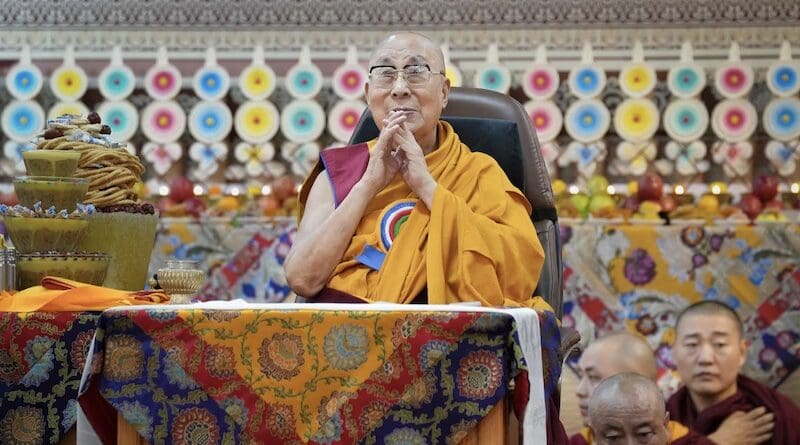
Tibetan spiritual leader the Dalai Lama at the Main Temple in Dharamsala, India, on June 30, 2025, as celebrations begin in the days leading up to his 90th birthday on July 6. (Tenzin Woser/RFA Tibetan)


By 

By Nirupama Rao


The succession of the 14th Dalai Lama has become a pivotal issue at the intersection of religion and geopolitics. Traditionally guided by Tibetan Buddhist rituals, this sacred process is now entangled in a web of complications.

The Dalai Lama has confirmed that his lineage will continue and that his reincarnation will be born in a “free country”, identified strictly through religious procedures under his personal office. Conversely, the Chinese government asserts authority over the succession process. This scenario raises the likelihood of two rival Dalai Lamas, with significant implications for India, regional stability and global diplomacy.

Traditional Succession Process

Tibetan Buddhism determines the Dalai Lama’s reincarnation through visions, omens, oracle consultations and recognition tests administered by senior lamas. A committee traditionally searches for boys born around the time of the previous Dalai Lama’s death, guided by spiritual signs and visions (often from sacred sites like Lhamo La-tso lake in Tibet). Candidates are tested by their ability to recognise objects from their predecessors’ life. The current (14th) Dalai Lama, Tenzin Gyatso, was discovered in 1939 through such methods. Historically, Tibetans have rejected the Qing-imposed ‘Golden Urn’ lottery system (1793), used only sparingly and under duress, as contrary to spiritual discernment.

The Dalai Lama’s Position

While initially open to ending the lineage, the 14th Dalai Lama reversed course in 2025, affirming that the institution will continue. He stated unequivocally that his reincarnation will not be born in Chinese-controlled territory but in a “free country” like India. His Office – specifically the Gaden Phodrang Trust – will be the sole authority managing the identification process. He has also opened the door to the possibility of a female successor, stating that the most qualified individual, regardless of gender, may embody Avalokiteshvara – the Bodhisattva of Compassion.

China’s Strategy

China maintains that it has sole authority to approve Tibetan Buddhist reincarnations, citing the 1793 Qing edict and enforcing its 2007 Order No. 5. This regulation mandates government oversight of all “Living Buddhas”, including the Dalai Lama. Beijing is expected to appoint a rival Dalai Lama after the 14th’s passing, possibly using rituals such as the Golden Urn to simulate traditional legitimacy. The Dalai Lama has categorically rejected any candidate selected under Chinese authority as illegitimate, urging Tibetans and global followers to do the same.


The Panchen Lama Precedent

In 1995, the Dalai Lama recognised Gedhun Choekyi Nyima as the 11th Panchen Lama. Within days, Chinese authorities abducted the child and his family. In his place, Beijing appointed another boy, Gyaltsen Norbu, who remains under state supervision and is not accepted by the Tibetan community. This precedent is critical. The Panchen Lama traditionally helps recognise the Dalai Lama’s reincarnation. With the Dalai Lama’s chosen Panchen Lama missing and China promoting its own, any attempt to use the Chinese Panchen for legitimacy will likely be rejected by the Tibetan exile community.

Implications for India

India is central to this unfolding succession for several reasons: It has hosted the Dalai Lama and the Central Tibetan Administration since 1959. It is home to the largest Tibetan exile community. It may be the birthplace of the next Dalai Lama, as indicated by the current Dalai Lama. A rival Dalai Lama installed by China in Lhasa could increase friction along the already tense Line of Actual Control. India may face pressure to respond – either by recognising the exile-appointed successor or by maintaining strategic ambiguity. The United States has already passed the Tibetan Policy and Support Act (2020), which backs the Tibetan people’s right to choose their religious leaders and threatens sanctions against Chinese officials who interfere. India may need to consider whether and how to align with such international positions.

Policy Recommendations for India

India should reaffirm religious autonomy as a principle and coordinate with like-minded democracies. Engaging with Buddhist leaders and the Tibetan community can bolster India’s image as a supporter of cultural freedom. Strategic ambiguity may help balance support without direct confrontation. Advanced preparation is essential for managing post-succession diplomacy.

Conclusion

The Dalai Lama’s succession is a defining moment not only for Tibetan Buddhism but also for regional geopolitics. The strong possibility of two rival Dalai Lamas – one chosen in exile, one selected by Beijing – threatens to deepen divisions and test diplomatic resolve. India, as host to the Dalai Lama and guardian of Tibetan culture, must carefully balance moral leadership with geopolitical pragmatism. Proactive, principled engagement can strengthen India’s regional standing and uphold the values it seeks to project globally.

  • About the author:Ambassador Nirupama Rao is a Distinguished Visiting Research Fellow at the Institute of South Asian Studies (ISAS), an autonomous research institute at the National University of Singapore (NUS). She can be contacted at nrao.01@nus.edu.sg. The author bears full responsibility for the facts cited and opinions expressed in this paper.
  • Source: This article was published by the Institute of South Asian Studies (ISAS)


Institute of South Asian Studies

The Institute of South Asian Studies (ISAS) was established in July 2004 as an autonomous research institute at the National University of Singapore (NUS). ISAS is dedicated to research on contemporary South Asia. The Institute seeks to promote understanding of this vital region of the world, and to communicate knowledge and insights about it to policy makers, the business community, academia and civil society, in Singapore and beyond.

Erbil water project… between serving the people and affirming Kurdish rights

What distinguished this project, as Barzani highlighted, was not only the achievement itself but how it was accomplished: a local company, local labor and expertise, and even the majority of materials sourced locally.

Sunday 20/07/2025
MEO


Erbil has suffered from a severe water crisis, worsened by climate change and a decline in groundwater levels

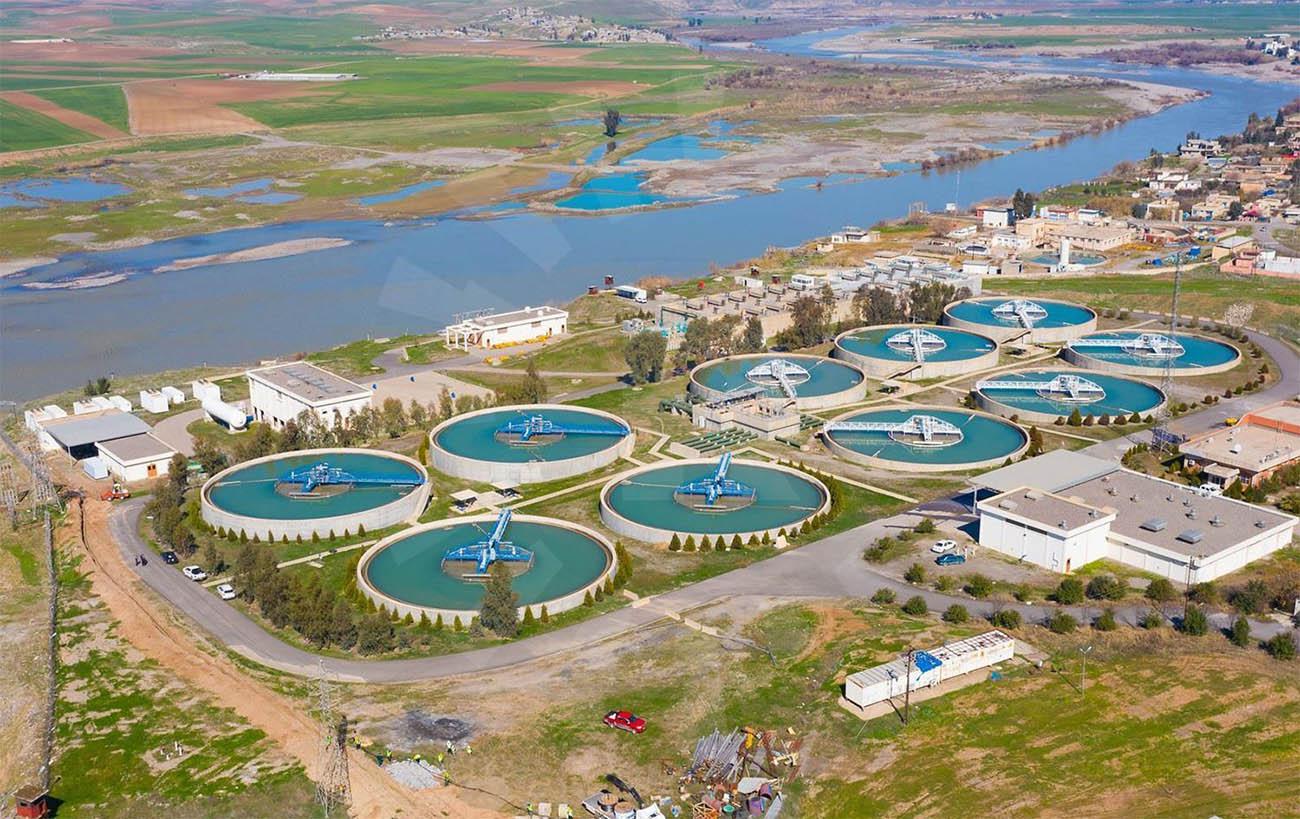
In a calm yet deeply symbolic moment, the Prime Minister of the Kurdistan Region, Masrour Barzani, inaugurated the first phase of the Rapid Water Supply Project in Erbil. This was more than just the launch of a public utility infrastructure—it came at a time of mounting questions about local revenues and the region's authority, serving as a quiet, practical response to all the campaigns of doubt and marginalisation.

Erbil, a city that has experienced significant urban and population growth in recent years, has suffered from a severe water crisis, worsened by climate change and a decline in groundwater levels. This project represents a qualitative step—not only in meeting a basic daily need but also in affirming the region's ability to manage its affairs and execute vital projects despite political and financial pressures.

What distinguished this project, as Barzani highlighted, was not only the achievement itself but how it was accomplished: a local company, local labor and expertise, and even the majority of materials sourced locally. These are not mere technical details but a subtle message that Kurdistan can rely on itself when it is deprived of its resources or collectively punished through salary freezes or budget withholding.

Barzani’s speech during the inauguration was not just a congratulatory address but a calm and transparent message outlining the internal and external challenges facing the region. These include issues like delayed salaries and recurrent drone attacks on Kurdistan’s oil fields—an implicit message that every move toward public service is met with attempts to halt progress.

In a notably candid moment, Barzani spoke frankly to his people, pointing out that the region has been deprived of its fair share in public employment, social security, hospitals, schools, and even access to Iraqi markets for its agricultural products. This clear discrimination is not a misunderstanding of figures—it is a deliberate exclusionary approach that demands deep political and public awareness.

Yet, amid this bleak reality, signs of hope remain. The Regional Government remains committed to defending its rights while expressing readiness to cooperate as a partner—not a subordinate. It is determined to proceed with projects like 24-hour electricity, water recycling, and infrastructure expansion, despite all obstacles.

Since assuming office in 2019, Masrour Barzani has launched a series of major service and development projects. Chief among them is the "Ronakî Project," aimed at providing 24-hour electricity across the region. More than 30 new transformer stations have been installed, and the distribution network has been fully upgraded in Erbil and Duhok, reaching over 80% completion by mid-2025.

Over the past four years, the government has completed around 280 strategic projects in sectors such as health, education, roads, electricity, and water, with investments exceeding 3.5 trillion Iraqi dinars. Among the notable projects:

-Construction of more than 500 km of new roads and 15 strategic bridges to facilitate trade and intercity connectivity.

- Water recycling projects in Erbil and Duhok, reducing groundwater consumption by 30%.

- Building or rehabilitating over 250 new schools and developing the digital infrastructure in education.

These efforts are not separate from the broader context of systematic pressure from the federal government on the region, particularly in areas of funding and economic sovereignty. Baghdad has withheld salaries for months under legal and political pretexts, imposing unrealistic conditions that even exceed constitutional limits. It has also restricted Kurdish oil exports via the Ceyhan port, causing billions in losses for the region.

These pressures extend to denying the region its share in centrally funded projects and freezing allocated funds under the budget law, while using the Federal Supreme Court as a political tool to enforce centralised control and block any attempt by Kurdistan to manage its resources independently. Although couched in terms of “sovereignty” and “unity,” these policies effectively amount to **gradual economic strangulation**, aiming to force political submission and undo the constitutional gains achieved post-2005.

In the face of this harsh reality, the Kurdistan Regional Government has chosen not confrontation or populist rhetoric, but a response rooted in facts and achievements. Under Masrour Barzani’s leadership, the Region has witnessed a notable boom in construction and services. Over 1,250 projects have been completed in service and investment sectors, costing more than 4.7 trillion Iraqi dinars, including roads, bridges, housing complexes, electricity, and water networks.

One of the most prominent is the Ronakî electricity project, which has delivered clean energy to approximately 250,000 residents, reducing dependence on generators by 35%.Government plans also include building and upgrading over 400 kilometers of strategic roads, such as the *Sheikhan–Lalish Road Project, which is 85% complete, stretching 8.2 km in length and 25.5 meters wide, at a cost of over 26 billion dinars.

In health and education, more than 100 schools and healthcare facilities have been built or rehabilitated across various provinces. Cancer and cardiac treatment centers equipped with modern technology have been opened, reducing patient pressure and the need for treatment outside the region. The private sector has also contributed by developing new industrial zones that created over 15,000 jobs in just two years.

These numbers are not just metrics of achievement—they reflect a vision built on long-term planning rather than short-term fixes. These projects were not executed for political marketing, but to genuinely improve the lives of Kurdish citizens.

With quiet determination, Barzani affirmed that what is being accomplished on the ground is the best answer to skeptics. When projects of this scale are realized without federal support, the real question becomes: What could be achieved if the Region’s constitutional rights were respected and it were treated as a true partner in the country?

The Erbil Water Project, at its core, is more than a pipeline delivering water to homes—it is a symbol of self-governance resilience, the ability to adapt and work under pressure, and a powerful yet silent form of resistance. A reminder that in Kurdistan, “service” itself has become a form of resistance—a defiant response to those who seek to trap the region in manufactured crises.

This moment—full of symbolism and achievement—reminds us that Iraq’s conflict is not only about influence, but also about the very definition of justice. Can justice be selective? Can a people be asked to give up their local revenues and resources while being denied even the most basic rights to a fair share of national wealth?

In conclusion, the Prime Minister’s speech was not an excuse—it was a roadmap: We will keep building—not with slogans, but with service; not with charity, but with rightful claim. With every completed project, Kurdistan’s true face emerges and its voice grows louder, even if spoken softly.

Kurdistan does not ask for sympathy—

It demands justice.

And water, electricity, and roads…

Are only the beginning—much more is coming through will and action.

Mohanad Mahmoud Shawqi specialises in political and social affairs in Iraq and the Kurdistan region.
The curious case of Dr. al-Sharaa
and Mr. al-Jabala

Opinion: Once jihadist ideologue, Syria’s new president now seeks legitimacy on world stage; but after three assassination attempts and brutal crackdown in Sweida, Ahmad al-Sharaa must prove he’s shed his terrorist past — or risk losing Western and regional support

Smadar Perry|Yesterday | 
 Ynetnews


Syria’s president, Ahmad al-Sharaa, has survived at least three assassination attempts since taking office seven months ago, according to multiple reports. The first attempt, in March, was thwarted when Turkish forces detected suspicious movement as al-Sharaa exited the “People’s Palace.” His security detail closed in on the would-be attacker, who was later detained and interrogated. The incident was kept under wraps at the president’s request, as he sought to shape a public image of a leader without enemies.

The second attempt, described as more sophisticated, occurred during a visit to Daraa province near the Jordanian border. Al-Sharaa’s elite Syrian and Turkish bodyguards noticed two suspicious individuals and promptly altered the presidential convoy’s route at the last minute


Ahmad al-Sharaa
(Photo: AP /Francisco Seco)

The third attempt nearly succeeded. A gunman reportedly lay in wait for al-Sharaa on a route he was expected to take from the presidential palace in Damascus. While full details have yet to emerge, the incident sparked rumors that the president abruptly fled the capital.

U.S. Special Envoy for Syria and Ambassador to Turkey, Thomas Barak, made rare public comments acknowledging the threats. Speaking cautiously, Barak confirmed multiple attempts on al-Sharaa’s life and warned of “very serious threats.” He emphasized Washington’s growing concern for the president’s safety and called for the immediate creation of a dedicated security unit to protect him. U.S. officials are reportedly relying heavily on Turkish intelligence for information and assistance.

While no group has officially claimed responsibility, all three attempts are believed to be the work of ISIS. It remains unclear how operatives managed to infiltrate Damascus and obtain explosive materials.

Meanwhile, the recent wave of violence in southern Syria, centered around the city of Sweida, appeared to subside yesterday. Isolated clashes between Druze and Bedouin factions continued sporadically, but Syrian army forces moved in to enforce a fragile calm after four days of intense bloodshed.


Smadar PerryPhoto: Yariv Katz

According to Rami Abdulrahman, director of the UK-based Syrian Observatory for Human Rights, 718 civilians were killed in fighting that spread from Sweida to Daraa province. Of those, 165—including women and children—were summarily executed by regime forces. Soldiers reportedly abused and then killed Druze civilians and community leaders, dumping bodies outside the city’s only hospital, whose morgue quickly overflowed.

Faced with unprecedented instability and growing scrutiny, President al-Sharaa lashed out at Israel, accusing it of destabilizing Damascus and southern Syria. Notably, he avoided mentioning the regime’s violent crackdown on the Druze population.

Prime Minister Benjamin Netanyahu later revealed that Israel had issued direct warnings to senior Syrian officials. Foreign media suggest these messages may have been delivered during semi-secret talks held in Azerbaijan. A similar warning was reportedly sent to Turkey as well, despite ongoing tensions between Ankara and Jerusalem. According to Israeli sources, the message to Turkey made it clear that Israel would not remain silent in the face of continued attacks on the Druze minority.

While it's likely Ankara passed these messages to Damascus, al-Sharaa has chosen to deflect blame onto Israel, accusing it of fueling chaos and seeking to divide the Syrian people. In rhetoric that echoed Iranian propaganda, he claimed that “the Israeli entity” was trying to turn Syria into a battleground.

Al-Sharaa now faces the delicate task of proving—to Israel, but more critically to the United States and Saudi Arabia—that he has abandoned his former jihadist ideology. The situation is fraught with contradictions: though he expelled Iran from Syria (an objective shared by Israel), he also dispatched jihadist fighters, disguised as Syrian soldiers, to crush dissent in Sweida.

With no real national army and mounting pressure from abroad, al-Sharaa is entering a period of reckoning. Despite his harsh rhetoric, he may soon have no choice but to return to the negotiating table—quietly, and likely under American pressure. Syria, like Israel, has much to lose.
The “New Middle East” is not so new after all!

21 July 2025
Dennis Sammut
COMMONSPACE EU


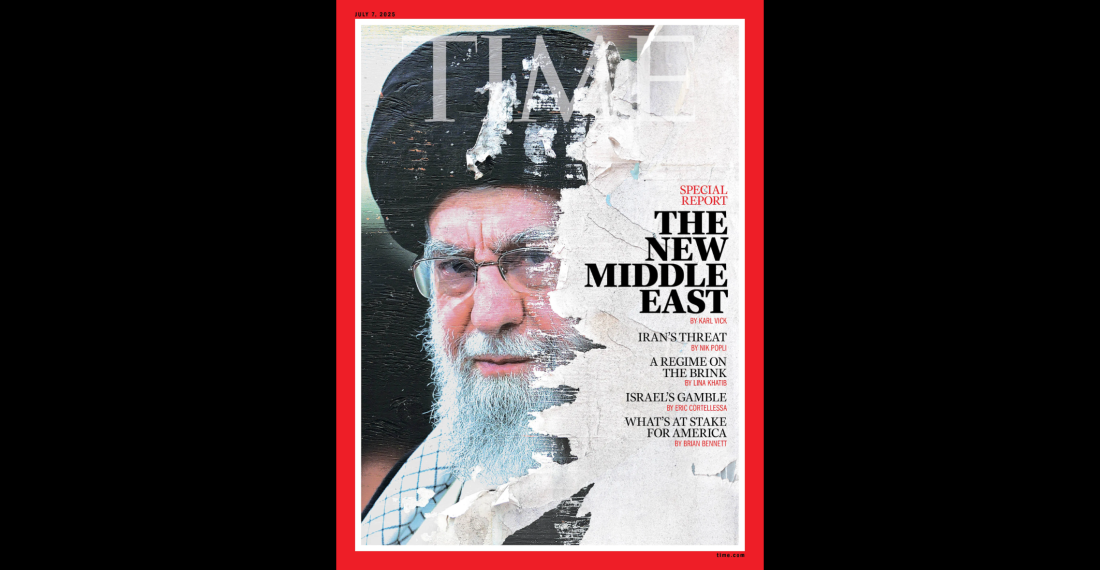
Last month, TIME magazine ran a cover story entitled “A New Middle East Is Unfolding before our eyes”.

“The middle of what? East of where?”, asks Tim Marshall in his seminal book ‘Prisoners of Geography’, before quickly reminding us that “The Middle East is one of those places where the past is now”.

Indeed, many issues that dominate the region today have roots going back centuries. When the British arrived in the 19th century they were content in keeping things quiet, as long as they had the final say. When they left for rather unceremoniously in 1967, after a heroic but very clumsy last stand in Aden, they were replaced by the Americans, who had a very different approach. The Americans say they want to leave, but in truth, they are sucked into the region more than ever.

The Middle East is the home of the Arabs. Yet in modern times the Arabs are increasingly sandwiched between Iran and Israel, with Islamism bubbling under them. This situation has now persisted for decades, but will not last forever. Radical political Islam has probably peaked, and its more respectable face, the Muslim Brotherhood, tried both the gun and the ballot box. It is now on the defence, and the retreat in several countries. It is not clear what will replace it.

So is there a “new” Middle East? Not yet!

Fragmented Arab World

There are twenty-two countries in the Arab League. Many of them are artificial creations created by Europeans, mainly British and French colonialists. In at least five the central government does not control the whole country: Sudan, Libya, Somalia, Yemen, Syria, Lebanon

Palestine is a good example of Arab weakness and incompetence

For more than seventy years the Arabs could not agree on the modalities and mechanics of creating a credible Palestinian state. There was no shortage of rhetoric, and half-cooked ideas like the “Boycott Office”, but these were never effective and only served to make officials look busy. The June 1967 six-day war was the last time the Arabs tried to solve the Palestinian question by military means. It ended up being a disaster for Egypt, Jordan, and Syria.

However, it is the war in Gaza over the last two years that has laid bare the incompetence and weakness of the Arabs. The genocide done by the Israelis in Gaza laid bare the weakness of the Arab states, their leaders, and their failure and inability to stop it. The Arabs cannot be insulated from the daily horrific scenes on the media and social media. There is disquiet among the Arab public. This will have consequences, sooner or later.

The rift between the Arabs and the Persians goes back to the time of the Prophet. Shortly after the Prophet died Islam split into two, most Arabs are Sunni, most Persians are Shia. The current argument about Iran’s nuclear file is simply the latest iteration. The past is now.

Arab nationalism

At its peak in the 1950s and early 1960s Arab nationalism seemed unstoppable. But it depended only on one man, and his oratory – Gamal Abdel Nasser. Nasser was a great orator and he used to mesmerise the crowds. The British monitored his speeches, and the broadcasts of the Egyptian radio station ‘’Saut el Arab” religiously, as if these were broadcast from heaven–or hell.

But when Nasser tried to put his rhetoric into practice he failed miserably: for example, the attempt at unification with Syria, the intervention in Yemen, and of course, the six-day war with Israel.

There were attempts to emulate Nasser. The Baathist regimes in Syria and Iraq are a case in point, but they were more focused on regime survival. In his early days as Libyan leader, Muammar Gaddafi, also embraced Arab nationalism. But by the end of his rule, Libya was more focused on Africa.

Arab nationalism died with Nasser in 1970. It has never been properly replaced: American hegemony and blunders, political Islam, filled the gap for a while, but never convincingly.

New kid on the block

The modern state of Israel was created in 1947. Up to 1967, it had to fight for its existence. Now it is the only state in the Middle East that has nuclear weapons. It also has a strong and efficient armed forces. It can rely on the United States for support.

But in Gaza over the last two years, Israel has changed. And the perception of Israel in the world has changed.

Iran

Iran is licking its wounds following the US and Israeli bombardment. But Iran is not going to disappear, nor will the Islamic Revolution. Decapitating the political and military leadership, as Israel has tried to do, has limited value. New people move in, and in some cases bring in new energy and blood. Palestine is an important tenet of the Iranian revolution. But make no mistake about it, the first task of the revolution is to protect itself.

Have Israel and Iran overplayed their hands?

It is possible that both Israel and Iran, in different ways, overplayed their hands. Others, such as Turkiye, will increasingly challenge their hegemony.

To talk of a new Middle East, as Time Magazine did last week, is premature, possibly even folly.

The litmus test will be the creation of a viable Palestinian state, recognised by all neighbours, including Israel. Only then can we talk of a new Middle East.
Source: Dr Dennis Sammut is the Director of LINKS Europe and Managing Editor of commonspace.eu.

The views expressed in opinion pieces and commentaries do not necessarily reflect the position of commonspace.eu or its partners.