Monday, July 21, 2025


Russia bans Internet searches for ‘extremist material’, broadening scope for terror in occupied Ukraine


21.07.2025   
Halya Coynash

This is the first time that Russia has introduced prosecution for a Google search, with even Putin chief propagandist indignant, albeit only because it will make denunciations more difficult

“Supporters of Putin! Under Putin, you won’t speak Russian, you will BE SILENT in Russian!” - a courageous protester’s banner in early March 2014

“Supporters of Putin! Under Putin, you won’t speak Russian, you will BE SILENT in Russian!” - a courageous protester’s banner in early March 2014

Russia’s State Duma has rushed through legislative amendments which impose serious fines for using VPNs to access ‘prohibited sites’ and modest fines for what is called ‘searches for knowingly extremist material’.  This is yet another move by the Russian regime to censor and restrict information, with especially disturbing consequences to parts of Ukraine currently under Russian occupation.  Russia’s list of so-called ‘extremist literature’ already contains over six thousand items and any Ukrainian websites and material telling the truth about Ukrainian culture, history and Russia’s war of aggression against Ukraine have either already been banned as ‘extremist’ or are almost certainly blocked anyway.   

The bill in question was adopted by Russia’s State Duma on 17 July 2025, with the articles added to Russia’s code of administrative offences due to come into effect on 1 September 2025.  The independent Network Freedom Project ["Сетевые свободы"] notes that this was one of an ever-increasing number of occasions where repressive initiatives have been rushed into law by being added to other bills awaiting reading.  This makes it possible to expedite the procedure, with bill having their second and third (final) readings on the same day.  The method is also used to try to avert publicity over high-profile or contentious initiatives.

The amendments in this case add two new articles to Russia’s code of administrative offences.  Article 13.52 imposes liability for infringing the rules for the use of VPNs in the Russian Federation or on illegally occupied Ukrainian territory.  The fines here are potentially steep – from 50 thousand to 200 thousand roubles for an individual; from 80 to 300 thousand in the case of an official; and from 200 thousand to a million in the case of a legal entity.

Article 13.53 imposes liability for what is calling “searches for knowingly extremist material”, as well as for gaining access to these, including through the use of VPNs or other means of accessing resources where access has been restricted.  This is the first time that Russia has imposed liability for using blocked Internet content, and though the fines themselves are fairly small – from 3 to 5 thousand roubles – there are grounds for concern, not only because of the precedent set.  One of the ways of establishing whether a person has looked for such ‘extremist material’ is, of course, to get hold of their telephones, computers, etc.  In occupied Ukraine, random checks, for example, of school students, to see if they are using Ukrainian distance learning apps or Ukrainian sites are already common and are likely to become even more frequent.  With essentially all Ukrainian sites blocked, Article 13.53 will, presumably, make it possible to ignore the fact that Russia has not yet, formally, banned the use of VPNs by citing their use in accessing Ukrainian sites.

The amendments must also have a deterrent effect as Russia has already forced Internet providers to ‘cooperate’ with the FSB and other enforcement bodies by gathering and passing on information about Internet searches.  The fear will, therefore, be legitimate that any supposed search for ‘extremist material’ could get reported.

Considering how many repressive laws the State Duma regularly churns out, it is interesting that some legislators appear to have balked at the imposition of liability, effectively, for an Internet search.  The bill passed easily because it was supported by all deputies or Russian leader Vladimir Putin’s ‘United Russia’ party.  All of the few communist or other party deputies either voted against (19 such votes) or, in 20 cases, abstained.  Even one of Putin’s chief propagandists, Margarita Simonyan, was unhappy, asking how she and her ilk were supposed “to investigate and stigmatize” various ‘extremist organizations’ if they could not even read their material. Her brief post specifically mentions the Anti-Corruption Foundation, created by Alexei Navalny, and one of the many reasons why the politician was imprisoned, and almost certainly killed.  The regime is currently hunting down and passing huge sentences against Russians merely for having sent donations to this foundation which exposed Kremlin and other high-level Russian corruption.

Russia’s legislation of what is claimed to be ‘extremism’ or ‘terrorism’ is not just used as a weapon against those investigating and exposing corruption. The ‘Federal list of extremist materials’, compiled and banned by Russia’s justice ministry, contains the book by Alexander Litvinenko and Yuri Felshtinsky on the FSB’s role in apartment bombings in 1999; Raphael Lemkin’s book on Genocide in Ukraine; and an appeal by the civic organization Voices of Beslan, which has sought, in vain, to establish the truth about the terrible massacre in Beslan School No. 1 in September 2004. The List contains religious material from the Jehovah’s Witnesses and several other religious faiths which the current regime is claiming to be ‘extremist’. After Russia’s politically compliant ‘Supreme court’ banned as ‘extremist’ something it claimed was “the LGBT movement” on 30 November 2023, any work espousing LGBT rights, etc. is likely to land on this list.  

The list almost certainly contains huge number of books by world-renowned historians or thinkers, if their content, for example, on Ukrainian history clashes with the current regime’s ideology.  In any part of Ukraine that has come under Russian occupation, the invaders have sought to eradicate and ban, for example, books about Holodomor, the manmade Famine in Ukraine in 1932/33; books on Ukrainian history; books by Ukrainian authors, especially those with a pronounced nationalist or simply patriotic position, and much more.   In January 2023, all educational institutions in Russian-occupied Luhansk oblast were sent a list of supposedly ‘extremist’ books which were to be removed.  This was, it was claimed, in order to get rid of “literature of an extremist nature, reflecting the ideology of Ukrainian nationalism.”  The order was to remove any literature about Holodomor; on Ukrainian history or, essentially, any “publicist, research or monitoring” material published after 2014.  The list of ‘prohibited’ books included works by renowned historians like Serhiy Plokhiy; Yaroslav Hrytsak and Anne Applebaum, as well as a biography of Metropolitan Andriy Sheptytsky by founding member of the Ukrainian Helsinki Group, Soviet political prisoner and internationally respected writer and thinker Myroslav Marynovych. 

While there is clear danger from Article 13.53 that makes it illegal to look for religious or historical material; novels; material exposing corruption, etc. the new Article 13.52 seems even more ominous for occupied territory.  Without VPNs, Ukrainians are unable to get any reliable information precisely because Ukrainian websites are blocked. While avoiding openly banning VPNs, the new law will increase the likelihood of spot checks on occupied territory, with yet another weapon now available of persecution for accessing those truthful sites that Russia is intent on blocking. 

See also:  Russia’s ‘strategy on fighting extremism’ is a threat to all Ukrainians on occupied territory


China’s Expanding Strategic Footprint in Libya: Energy, Infrastructure, and a New Gateway to Europe (1)


SinoSage

July 18, 2025

Information from sources inside Libya suggests that China is gaining a strong foothold on NATO’s southern flank.


Over the past decade, China has steadily increased its engagement across North Africa, with Libya emerging as a centerpiece of Beijing’s expanding geopolitical and economic ambitions. As part of its global Belt and Road Initiative (BRI), China is accelerating multi-sectoral investments in energy, infrastructure, and logistics in eastern Libya.

These developments reflect a broader effort by China to reshape trade routes, supply chains, and political alignments in the Mediterranean and sub-Saharan Africa. Libya’s east, under the control of Field Marshal Khalifa Haftar’s Libyan National Army (LNA), has become a focal point for negotiations that could transform the region into a critical hub for Sino-African and Sino-European trade.

Strategic Location and Investment

Potential

Tobruk, a port city on Libya’s eastern coast, is at the center of Chinese plans. Its strategic location—less than 400 kilometers from Crete and southern Europe—offers a rare combination of geographic proximity and maritime potential. Historically, Tobruk has served as a strategic military and trading post since the Roman era, and later as the site of a pivotal World War II battle. Now, the city is poised to regain international importance, this time as a commercial and energy transit node.

Unlike many southern European ports, such as Genoa, Piraeus, and Barcelona, which lack the draft depth to accommodate ultra-large container vessels, Tobruk’s natural deep-water port positions it as a gateway to Europe. According to our sources inside Libya, Chinese strategists have identified Tobruk as a linchpin for addressing Europe’s port capacity constraints.

A multi-phase Chinese investment plan envisions Tobruk as a logistics megahub. At its core is a proposed $10 billion oil refinery capable of processing 500,000 barrels per day. The refined products would be exported to European markets, securing an alternative and stable energy source for the continent. If Haftar’s approval is secured, Chinese stakeholders are prepared to invest even more extensively, potentially surpassing $50 billion in total commitments across Libya in the near- to medium-term.

This refinery project is not standalone. Our sources suggest that China envisions Tobruk as an integrated logistics platform that includes fuel storage facilities, transshipment terminals, and supply depots for both maritime and overland transport. The city’s unique geographic location gives it direct access to the Suez Canal, the eastern Mediterranean, and central Africa, creating a web of interlocking trade and supply chains.

Port, Airport, and Logistics Expansion

Alongside the refinery, Chinese companies plan to expand and modernize Tobruk’s port, transforming it into a transshipment hub. Large vessels would dock and offload goods, which would then be transferred to smaller ships for distribution to European destinations—offering a strategic workaround for European port limitations. The port upgrade would include container terminals, bunkering facilities, and customs infrastructure to facilitate seamless trade flows.

China has also proposed upgrading Al-Adem Airport, located adjacent to the Tobruk port. Once the largest British Royal Air Force base globally and now controlled by Haftar’s forces and used by Russian military personnel, Al-Adem is slated to become a critical logistics hub.

The airport would integrate with sea and land transport systems, serving as both a civilian cargo and refueling station and a potential dual-use facility with strategic implications. Fuel produced at the Tobruk refinery could be stored and distributed via this air hub, bolstering China’s aviation and military logistics.

These combined port and airport projects would create a modern, multi-modal logistics hub in Tobruk, from which China could control the flow of goods and energy into southern Europe. Strategically, it would give Beijing an unparalleled foothold on NATO’s southern flank.

While Haftar has not yet formally approved the projects, our sources suggest Chinese officials are offering generous terms and may request Russian mediation to overcome U.S. concerns. Haftar’s hesitancy underscores Libya’s fragile geopolitical balance, but also highlights the stakes of deeper Chinese engagement.

Rail, Roads, and Cross-Regional Linkages

China’s ambitions extend far beyond Libya’s Mediterranean coast. As Egypt constructs a 2,000-kilometer high-speed rail network connecting Ain Sokhna on the Red Sea to Marsa Matruh on the Mediterranean, Chinese-backed plans to extend this corridor into eastern Libya would effectively link Tobruk and Benghazi to the Red Sea.

This east-west transnational rail connection would create a seamless land bridge from Libya’s key eastern ports through Egypt to Asia-facing shipping routes.

The China Railway International Group (CRIG), supported by the Singapore-based BFI Management Consortium and in partnership with Siemens, has signed a memorandum of understanding with Libyan Railroads to explore building this railway from Benghazi to Marsa Matruh via the Musaid border crossing. With an estimated cost of up to $20 billion, the project reflects the scale of ambition and the complexity of terrain, engineering, and cross-border coordination required.

BFI Management Consortium plays a pivotal role in advancing China’s infrastructure ambitions in Libya. Acting as CRIG’s exclusive partner, BFI has facilitated high-profile agreements across both eastern and western Libya, including planned rail and metro systems in Benghazi and Tripoli.

Formed as a special-purpose vehicle for Libyan development, BFI brings together global engineering firms such as Arup and Siemens, providing both technical expertise and political risk insulation. Its involvement underscores the strategic coordination between Chinese state-owned enterprises and international partners, and its operations serve as a critical conduit for Beijing’s expanding logistical and commercial presence in North Africa.

These rail lines are not just about transit—they represent a new spine of connectivity through North Africa. Designed to streamline the movement of goods and people between Asia, Africa, and Europe, these projects are also aimed at opening up future corridors south into Chad and Sudan. In doing so, China seeks to build a vertically integrated trade route that bypasses traditional maritime chokepoints and strengthens its position in emerging African markets, all while using Libya as a continental gateway.

China’s Expanding Strategic Footprint in Libya: Energy, Infrastructure, and a New Gateway to Europe (2)


Sino Sage  

July 21, 2025


Energy Finance and Institutional  Frameworks

To facilitate these complex infrastructure and energy investments, eastern Libya has approved the establishment of the Libyan Bank for Energy and Mining. Its director, Juma Jaballah, has disclosed plans to bring in substantial Chinese capital and is currently awaiting Central Bank of Libya approval for a SWIFT code to begin international transactions.

This development underscores China’s preference for building institutional foundations alongside infrastructure. The bank would serve as the financial conduit for refinery construction, port upgrades, and associated service contracts. It is expected to play a pivotal role in easing capital flows and ensuring compliance with international norms, even as Libya remains politically divided.

Kerui Petroleum, a major Chinese oil services firm, has already begun preliminary studies for the Tobruk refinery under contract from Benghazi’s Ministry of Investment. This underscores the operational readiness of Chinese firms to move forward with detailed planning, even as geopolitical approvals remain pending.

In support of this growing partnership, a high-level Libyan delegation—led by one of Field Marshal Haftar’s sons and representing the Fund for the Development and Reconstruction of Libya—recently traveled to China to advance multiple avenues of cooperation. The delegation held meetings with leading Chinese companies, including Huawei and the China Energy Engineering Corporation (CEEC), to discuss a wide array of projects spanning telecommunications, energy infrastructure, and logistics.

Notably, according to our sources inside Libya, Huawei is already leading the rollout of a dedicated telecom network in eastern Libya through a joint venture with local authorities, with the system currently in the testing stage. These developments highlight China’s deepening multi-sector engagement in Libya’s east.

Link to Africa: Roads to Chad and Sudan

China’s vision for Libya transcends national borders. With Africa’s population set to double by 2050, Beijing aims to deepen trade routes that bypass maritime chokepoints like the Suez Canal. Tobruk’s transformation includes plans to extend highway and logistics corridors southward into Chad and Sudan. These overland routes would allow Chinese-manufactured goods to reach African interior markets quickly and cost-effectively.

In return, China would gain access to African raw materials—oil, rare earth elements, and agricultural goods—transported north to Tobruk for processing and export. This multimodal corridor strategy mirrors similar Chinese projects in East Africa, such as the Mombasa-Nairobi-Addis Ababa corridor.

Historical and Geopolitical Context

China’s interest in North Africa is not new. Since the 1960s, Beijing has maintained a presence in Africa, supporting liberation movements and later pivoting to infrastructure and trade. Libya, once marginalized due to internal conflict, is now reemerging as a candidate for strategic partnership. China’s non-interference policy and track record of dealing with non-Western regimes appeal to Haftar’s administration, which remains internationally unrecognized.

Importantly, the eastern region of Libya—historically known as Cyrenaica—played a pivotal role in the Allied campaign during World War II, serving as a key staging ground in the fight against Nazi Germany and Fascist Italy. The region’s legacy as a frontline in the defense of liberal democracy underscores the strategic importance of its alignment today. In the context of growing Chinese and Russian activity, many Western analysts argue that restoring Libyan unity under a government aligned with Western institutions is not only a matter of regional stability but a vital component of broader transatlantic security.

Meanwhile, Libya’s fractured governance deters Western investment and engagement. The United States has prioritized counterterrorism and migration control over state-building in Libya, while the EU remains divided over the best approach. The absence of cohesive Western policy has opened the door to alternative actors—including Russia, Turkey, and increasingly, China.

Implications for European Energy Security

The implications of this Chinese pivot toward Libya for European energy security are profound. Europe’s ongoing energy diversification efforts, especially since the Russia-Ukraine war, have made the continent more reliant on alternative sources from the Middle East and North Africa. If Beijing gains control over a large-scale refinery in Tobruk and the associated port infrastructure, it will possess significant influence over supply chains feeding Europe.

This is not just about access to oil. With the ability to refine, store, and transport energy products directly from North Africa to Europe, China could dictate pricing, volume, and prioritization in times of crisis. Such leverage would challenge Europe’s energy autonomy and increase its dependency on Beijing at a time when the transatlantic alliance is already under strain.

Additionally, China’s control over container logistics through Tobruk would provide Beijing with leverage over not just energy, but manufactured goods and critical technologies. The dual-use airport, coupled with surveillance and digital infrastructure, could also serve intelligence and military interests.

Strategic Consequences and Outlook

Should Haftar approve the Chinese proposals, Libya would become the western anchor of a vast, China-led logistical and energy network spanning the Indian Ocean, the Red Sea, and the Mediterranean. The Tobruk refinery and associated infrastructure would give Beijing new leverage over European energy markets, especially as the EU seeks to diversify away from Russian gas.

Moreover, the dual-use nature of Tobruk’s upgraded airport and port could extend Chinese naval or intelligence capabilities into the Mediterranean. This possibility has already raised concerns in some NATO circles, although no formal opposition has been articulated.

If successful, China’s Libya strategy would reshape Eurasian supply chains and trade flows. It would also signal a shift in the balance of soft power and strategic influence in North Africa, with potentially profound implications for Europe’s energy security and geopolitical autonomy.

Libya may appear a fragile and fractured state, but to Chinese planners, it represents a gateway—one with the potential to tie Africa, Europe, and Asia together under a new global trade architecture led by Beijing.
Trump’s Global Bully Diplomacy: The Failure of a Strategy Built on Coercion


In his second term, Donald Trump has embraced an even more aggressive and theatrical approach to foreign policy—a style that can aptly be called “bully diplomacy.”


ByBrian Hudson
July 21, 2025
MODERN DIPLOMACY


In his second term, Donald Trump has embraced an even more aggressive and theatrical approach to foreign policy—a style that can aptly be called “bully diplomacy.” By projecting himself as a strongman leader, he has sought to coerce countries—from adversaries like Iran to nominal allies such as Ukraine—into accepting U.S. demands through threats, economic sanctions, and even military action. This strategy, rooted in extortion, rests on the belief that intimidation and unpredictability can quickly deliver political and economic concessions for the United States. In practice, however, this approach has not only failed to achieve its desired results but has led to repeated setbacks. From stalled nuclear negotiations with Iran and the botched military strike on its facilities in June 2025 to lost economic opportunities in Ukraine, Trump’s policies have damaged America’s global credibility, emboldened its adversaries, and alienated its allies.

A Strategy of Extortion: An Ineffective Formula

From the start of his second term, Trump has pursued a foreign policy grounded in displays of power and intimidation. Leveraging tools such as economic sanctions, threats of military action (and at times actual strikes), and relentless diplomatic pressure, he has tried to force other nations into accepting America’s terms. This so-called “strategy of extortion” appears deceptively simple: issue threats, secure concessions, and showcase the deal as a triumph. But in practice, the strategy has run aground—lacking strategic depth, overlooking geopolitical complexities, and miscalculating the motivations of global actors.

On Iran, Trump doubled down on his “maximum pressure” campaign from his first term. Having withdrawn from the nuclear deal (JCPOA) and imposed fresh sanctions, he threatened that if Iran did not return to talks, it would face crippling new sanctions and even military force. The apex of this approach came in June 2025, when the U.S. launched strikes on three Iranian nuclear sites—Fordow, Natanz, and Isfahan. Trump declared that these attacks, executed with 30,000-pound bunker-buster bombs and Tomahawk missiles, had “completely destroyed” Iran’s nuclear program. However, early intelligence assessments, including from the Defense Intelligence Agency (DIA), indicated the strikes caused no irreparable damage.

On Ukraine, Trump’s deal-making approach proved equally flawed. Ukraine, heavily reliant on American military and financial support to fend off Russian aggression, was viewed as a key ally. But by conditioning military aid on economic concessions—such as access to Ukraine’s lithium resources—Trump chilled the relationship. Negotiations over a major mining deal meant to secure U.S. access to Ukraine’s strategic lithium reserves appear to have collapsed. Trump’s silence on this failure not only exposed a diplomatic defeat but also signaled to U.S. allies that Washington’s support is conditional and unreliable.

Why Trump’s Bully Diplomacy Failed

The failure of Trump’s strategy can be traced to several core factors:

Misreading the Other Side’s Motivations
Trump assumed that all countries—whether foes or friends—would capitulate under economic and military pressure. But Iran, hardened by decades of sanctions, had already adapted its economy through trade with China and clandestine oil markets. The June 2025 strikes showed Iran was not cowed by military threats, responding instead with both military and diplomatic countermeasures, including missile attacks on a U.S. base in Qatar. Likewise, Ukraine, fighting for its survival against Russia, prioritized national security over cutting deals on strategic resources with the U.S.

Weakening Alliances
Trump’s extortion tactics failed to isolate America’s enemies but did succeed in pushing allies away. European countries, weary of Trump’s unilateralism, moved to strengthen their own strategic autonomy. In 2025, the EU launched initiatives to reduce reliance on the dollar in global trade and deepen ties with China and India. Even the U.K., one of America’s closest partners, declined formal requests to use its military bases in Diego Garcia or Cyprus for strikes on Iran.

Lack of Long-Term Planning
Trump’s approach prioritized short-term wins over sustainable strategy. The strike on Iran, carried out without a clear plan for managing the aftermath, merely escalated tensions. Undertaken without congressional authorization or allied support, the attack looked more like a political stunt than a genuine policy. This neglect of sustained diplomacy eroded international trust in the United States.

A New Multipolar World
By 2025, the global order was no longer one in which the U.S. could unilaterally impose its will. China’s rise as an economic and military powerhouse, along with greater independence among developing nations, meant countries had alternatives to simply yielding to Washington. Iran grew closer to China and Russia, while Ukraine began exploring other avenues for international support.

Consequences: U.S. Isolation and Lost Opportunities

The strike on Iran and the collapse of negotiations with Ukraine have had sweeping implications for America’s global standing. Internationally, U.S. credibility as a reliable mediator has eroded. Traditional allies, such as NATO countries, now approach Washington’s policies with increased caution, while adversaries like Iran act with greater confidence. Global reactions to the June 2025 strikes underscored America’s isolation: nations such as Saudi Arabia, the UAE, and Turkey condemned the attacks and called for a return to diplomacy. Meanwhile, China and Russia expanded their influence in the Middle East by stepping up support for Iran.

Domestically, Trump’s foreign policy has fueled public discontent. Recent polls (like Gallup’s June 2025 survey) show only 40% of Americans approve of Trump’s handling of foreign affairs, highlighting declining support for his aggressive posture. Criticism from Congress—particularly from Democrats but also some Republicans—reveals deep fractures in backing for Trump’s approach.

Moreover, the strike on Iran heightened the risk of a broader Middle East conflict. Iran’s threats to close the Strait of Hormuz, a crucial artery for global oil trade, signaled its capacity to disrupt the world economy. Coupled with missile attacks on U.S. and Israeli bases, it became clear that Trump’s bully diplomacy not only failed to achieve its aims but also pushed the region closer to all-out war.

Trump’s bully diplomacy—carried out under the guise of strongman leadership—has neither forced Iran into submission nor convinced Ukraine to strike favorable deals. Instead, it has left the United States more isolated on the world stage. The lesson of this failure is clear: effective diplomacy requires a blend of strength, negotiation, and alliance-building—not mere threats and intimidation. By ignoring this reality, Trump squandered diplomatic opportunities and left America in a more precarious position.


Brian Hudson
Brian Hudson
I am Brian Hudson, a political science graduate from Bates College with a keen interest in international relations. I work as a freelance commentator specializing in geopolitics and counter-terrorism.
Cyber Clashes Between Cambodia and Thailand Threaten ASEAN Stability

As bilateral tensions between Cambodia and Thailand, following the border clash in May 2025, have spread to cyberspace and could affect regional security.


By M. Faizal bin Abdul Rahman
July 21, 2025

photo: Unsplash


Bilateral tensions between Cambodia and Thailand, following the border clash on May 28, 2025, between the two countries’ militaries, have spread to cyberspace. Both sides have traded accusations of cyberattacks, disinformation, and complicity in cybercrime, specifically online scams.

To an outside observer, this development could mark an evolution in the two countries’ relations as their historical rivalry and unresolved territorial dispute increasingly adopt digital characteristics. For the Association of Southeast Asian Nations (ASEAN), this development could be of concern due to its possible implications for the security and stability of regional cyberspace.

According to media reports, the Thai military said that the clash on May 28 happened when Thai soldiers returned fire in response to gunshots from the Cambodian side. However, the Cambodian military said that the Thai soldiers had attacked Cambodian soldiers who were conducting routine border patrol. Since then, both sides have engaged in a series of diplomatic exchanges, implemented measures that curtail cross-border trade and people movement, and beefed up their military forces along the disputed border. On July 14, Cambodian Prime Minister Hun Manet said that the tensions have given a reason for the Cambodian military to begin conscription in 2026.

Rising Cyber Tensions

The ongoing tit-for-tat actions between Cambodia and Thailand, along with the perceived institutional silence of ASEAN—possibly due to its practice of quiet diplomacy—have raised concerns that the bilateral tensions could destabilize ASEAN. However, how the tensions are playing out in cyberspace has received less attention. This is an area that warrants close attention, as ASEAN member states have committed to regional digital integration as a strategy for economic development and resilience. Furthermore, the regional grouping is set to launch the third iteration (for 2026–2030) of the ASEAN Cybersecurity Cooperation Strategy this year.

Cyberattacks increasingly came into the picture in June 2025 when the Thai media reported that Cambodian hackers—known as the AnonsecKh group—were launching Distributed Denial of Service (DDoS) attacks on the websites of Thai government, military, and private sector institutions. There were also allegations of Cambodia using North Korean hackers to conduct cyberattacks on Thai institutions. Cambodia has denied any connections to North Korean hackers and accused Thailand of attempts to damage its international reputation. Furthermore, the Cambodian government reported that Thai hackers, known as “BlackEye-Thai,” have been targeting the websites of Cambodian government institutions since mid-June 2025.

Disinformation came into play as allegations of cyberattacks emerged. The Thai government has warned Thai citizens about online fake news, including stories claiming that “Thailand will seize Cambodia if Cambodia does not withdraw its forces” and that “Thailand is preparing to invade Cambodia.” On the other hand, the Cambodian government has warned Cambodian citizens about online fake news originating from foreign sources, including Thailand, since the border clash. Some of this fake news was reportedly generated using artificial intelligence (AI) and impersonated Cambodian institutions, as well as the voices of Cambodian leaders.

Cybercrime, specifically online scams, could gain from bilateral tensions as cross-border law enforcement cooperation to combat transnational criminal syndicates comes under strain due to its politicization. In June 2025, the Thai government reported that it faced challenges cooperating with Cambodia to investigate online scam centers because bilateral tensions have hampered two-way communication and information sharing. The Thai side was also investigating the role of the Cambodian commercial entity “Huione ”Group”—which is reportedly linked to the family of the President of the Cambodian Senate, Hun Sen—for facilitating scam operations. In response, Hun Sen accused Thailand of supplying electricity and internet connection to the border areas where scam centers operate. On July 14, the Thai government upped the ante by commencing legal actions against Hun Sen for the alleged cybercrime act of political interference through social media.

Digital Distrust and Bilateral Cooperation

Bilateral tensions have unquestionably made cyberspace a domain of conflict between Cambodia and Thailand, one that accompanies contestation over sovereignty in diplomatic, economic, legal, and military spaces. The fog of tensions could make it difficult to determine whether cyberattacks and disinformation were the actions of state-backed entities or overzealous, nationalistic hackers operating independently.

On the positive side, contesting in cyberspace—as a form of digital retaliation or psychological warfare—may allow the disputing countries to satisfy nationalist sentiments and continue the fight below the threshold of armed conflict, hence mitigating risks to regional peace. On the negative side, it is clear that bilateral trust in cyberspace has declined. The decline in trust could hamper cybersecurity and digital defense (in the military context) cooperation between the two neighboring countries, especially when politics influence operational-level engagements.

Regional Cyber Implications

Additionally, there may be an impact on cybersecurity or digital defense cooperation at the regional level, especially if two ASEAN member states harbor deeper digital distrust towards each other. At least three main issues come to mind.

First, how can Cambodia and Thailand ensure that they continue to cooperate meaningfully in information sharing and cyber incident response within the auspices of the ASEAN Regional Computer Emergency Response Team (CERT)? The breakdown in cybercrime cooperation between the two countries regarding online scams and the use of cybercrime investigation to probe political interference does not bode well for this issue.

Second, how can ASEAN ensure that the Cambodia-Thailand tensions do not hamper the implementation of the 11 Norms of Responsible State Behavior in Cyberspace, which is essential to ensuring a rules-based digital order in the ASEAN region? The conundrum is that, on the one hand, adherence to these norms could reduce options for digital retaliation. On the other hand, these norms are crucial to prevent cyber escalation.

Third, how would Cambodia-Thailand tensions impact activities conducted by the ASEAN Defence Ministers’ Meeting Plus (ADMM-Plus) Experts’ Working Group (EWG) on Cybersecurity? Currently, Australia is co-chairing this EWG with Cambodia from 2024 to 2027. The tensions between the Cambodian and Thai militaries should not influence the agenda of this EWG, as it could risk further undermining the credibility and cohesion of ASEAN.

To conclude, bilateral tensions between Cambodia and Thailand in cyberspace, if they persist, could signal the start of open or discreet cyber contestation between ASEAN member states arising from disputes over sovereignty that involved a military confrontation. It remains to be seen if the tensions would affect interactions between Cambodian and Thai military officials during ASEAN-related meetings such as the ASEAN Roundtable on Digital Defence hosted by Singapore and the ASEAN Cyber Defence Network (ACDN) Meeting hosted by Malaysia.

This problem would not only create a political conundrum for ASEAN but also have a profound impact on the regional cybersecurity architecture. ASEAN may want to deliberate on this problem as it moves to launch the third ASEAN Cybersecurity Cooperation Strategy.


M. Faizal bin Abdul Rahman
Muhammad Faizal Bin Abdul Rahman Research Fellow (Regional Security Architecture Programme) Institute of Defence and Strategic Studies S. Rajaratnam School of International Studies
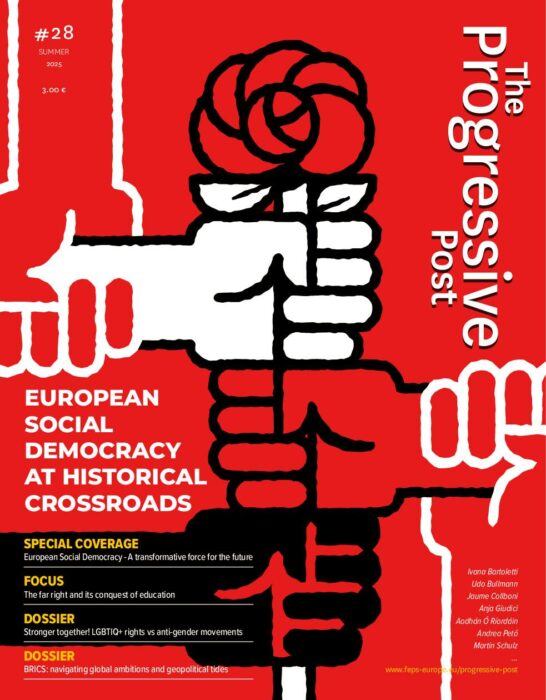
European Social Democracy at historical crossroads

The Progressive Post - Issue 28

04/07/2025


European Socialists struggle to balance their responsibilities with the need to take bold positions and actions in the face of many major crises, while far-right political parties are increasingly gaining ground. Against this background, we offer European progressive forces food for thought on projecting themselves into the future. The Special Coverage European Social Democracy – A transformative force for the future includes analyses and proposals concerning the concept of the state, work, internationalism, digital capitalism, democracy and leadership.

Increasingly, the far right attempts to go beyond electoral success and shape the world as well as future generations. In the Focus The far right and its conquest of education, we show how far-right governments in countries like Hungary, Serbia and the United States attempt to redesign education systems to serve their own political agenda. The far right also targets LGBTIQ+ rights, but our position – outlined in the Dossier Stronger together! LGBTIQ+ rights vs anti-gender movements – is clear: LGBTIQ+ rights are fundamental human rights and therefore non-negotiable.


Will Denmark Lead Europe Towards a Super-Rich Tax?

Despite past failures, growing public support and recent international initiatives offer Copenhagen an opportunity to push for wealth taxation.

u4219834af 1

A recently released progress report from the Polish EU Presidency’s final meeting with the 27 EU Finance Ministers paints a sobering picture. Despite six months of dedicated effort, the Polish EU Presidency, which concluded at the beginning of July, failed to secure a consensus on any new common tax. The only notable movement was a possible extension of the Carbon Border Adjustment Mechanism (CBAM) to additional sectors, a measure that is more a shift in burden than genuine progress.

Extending the CBAM would compel companies from non-EU countries, including low-income nations such as Zimbabwe or Mozambique, to contribute to repaying the EU’s Next Generation EU (NGEU) debt. These costs could also be passed on to European consumers. While less visible than a direct tax, this approach disproportionately affects those least able to afford it.

Meanwhile, a consensus on a tax on extreme wealth, particularly as a source for new EU resources, remains elusive. The primary objection cited is that it would infringe upon national sovereignty. This presents a paradox: invoking sovereignty while allowing the ultra-rich to evade taxes is not true sovereignty; it is surrender. Sovereignty implies the power to act, and governments could and should act, both individually and collectively, to ensure that the wealthiest contribute at least as much as ordinary citizens.

Clear evidence now shows that billionaires and centi-millionaires—individuals with a wealth of $100 million or more—pay proportionally less tax than ordinary people. Furthermore, in most cases, their lifestyles and investment patterns contribute disproportionately to the climate crisis. To safeguard national competence on taxation, an EU agreement could focus on a set of common principles for such a tax, allowing national authorities flexibility in implementation, similar to the temporary solidarity contribution levied on the fossil fuel industry’s profits.

Member states have also cited “technical difficulties” as a reason to delay a wealth tax, but this argument is unconvincing. Several concrete and feasible steps could be taken immediately to mitigate these supposed obstacles.

For instance, EU governments could harmonise exit taxes to prevent ultra-wealthy individuals from relocating for tax purposes. A European register of land and real estate ownership would enhance transparency, while improved cross-border data exchange would strengthen enforcement. Member states could also publish annual distributional accounts of income and wealth, based on World Inequality Database guidelines, to produce more comparable statistics. National tax authorities could collaborate with academic researchers to analyse anonymised wealth data, informing smarter policymaking. Finally, a self-reporting requirement for those with over $100 million in assets—akin to country-by-country reporting for multinationals—would provide much-needed oversight.

None of these steps requires a revolution in tax administration; only political will. Until movement is seen on any of these fronts, it is difficult to take the “technical difficulties” argument seriously.

In recent months, civil society organisations and trade unions have twice urged EU governments to agree on bold tax reforms that could fund the green and social transition, including an EU-level coordinated tax on extreme wealth. This is a timely proposal. Europe is warming twice as fast as the global average, yet it is falling short on both sustainable development and international climate finance pledges.

Concurrently, support for taxing the super-rich is growing. A new poll by Greenpeace and Oxfam across 13 countries—including France, Germany, Italy, and Spain—reveals that 77 percent of people would be more likely to support a political candidate who prioritises taxing the wealthy and the fossil fuel industry. Even among millionaires in G20 countries, three-quarters support higher taxes on wealth, and over half believe extreme wealth is now a “threat to democracy”.

The groundwork for effective taxation of the super-rich is clear: coordinated action is essential. The Danish EU Presidency has an opportunity to lead, not just in principle, but on practical next steps. Its EU Presidency programme already highlights the importance of strengthening administrative cooperation. This opens the door to progress, particularly through an update to the EU Directive on Administrative Cooperation (DAC), which governs tax-related information exchange.

The case for taxing extreme wealth has never been stronger. Europe faces converging crises: rising inequality, climate collapse, democratic erosion, and austerity-driven public underinvestment. Governments urgently need funding to ease the cost of living, build resilient public services, and invest in a liveable future.

This is about more than just revenue. It is about fairness, sovereignty, and restoring trust. Governments must invest in healthcare, education, housing, public transport, and a just climate transition. This requires new, sustainable sources of funding, and taxing the ultra-wealthy must be part of the solution.

Just a week ago, Spain and Brazil demonstrated leadership by launching a platform for action to tax the super-rich during the Financing for Development conference in Seville. The EU now has a chance to join this initiative. The ball is in the EU Presidency’s court. Denmark, can you score?


Isabelle Brachet

Isabelle Brachet leads the work of Climate Action Network (CAN) Europe on the reform of EU economic governance and a socially just transition. Previously, she was EU advocacy adviser for ActionAid International and worked for 15 years for the International Federation for Human Rights.


Water tanks replace springs on a Serbian mountain as drought endangers some 1,000 cows and horses


A severe drought this summer in the Balkans has left over 1,000 cows and horses without water on a mountain in southeast Serbia, forcing the authorities to bring up emergency supplies

By Ivana Bzganovic and Jovana Gec | AP
July 20, 2025

SUVA PLANINA, Serbia — A severe drought this summer has left over 1,000 cows and horses without water on a mountain in southeast Serbia , forcing the authorities to bring up emergency supplies.

The early drought that started in May has affected people, animals and crops throughout the Western Balkans , causing water and power restrictions, disruptions in river traffic and problems in agriculture in this part of southeast Europe.

At Suva Planina, Serbian for Dry Mountain, cattle owners said they can’t remember the springs ever drying up before mid-August. Lack of water has sent the cattle roaming down the mountain in panic, they said.

“We haven’t had any rain on the mountain since May 27,” lamented Nikola Manojlovic, from the nearby village of Mali Krcimir.

The drought has left visible consequences on a plateau at the altitude of some 1,200 meters (nearly 4,000 feet) — cracked ground has replaced the main water spring, along with dry, yellow grass and dust.

“We tried to dig new wells but everything has dried up,” he said. “It was horrible, our cattle had no water for three days, they were screaming.”

Alarmed, authorities drove up water trucks on Thursday, and workers used hoses to fill up a pond from the tanks for the thirsty animals. The Ministry of Agriculture said it will keep sending supplies in the coming weeks.

“We are out of imminent danger,” local municipal chief Milisav Filipovic said after the water trucks drove up the mountain. He warned that the situation remains just as bad down the mountain, in villages that have faced restrictions in water supplies for weeks now.

“Our farmers don’t recall such a bad and hard year,” Filipovic said. “People here mostly do farming and use products for own needs, for their existence. This year has brought unseen hardship for them.”

While a spell of rainy weather in July brought some relief, farmers say that the land is too dry deep below the surface to recover easily. Scores of small rivers, lakes and creeks that are normally used in Serbia’s rural areas have dried up.

In neighboring Bosnia, meteorologists have said that June this year could end up being the driest in recent history, causing huge damage in agriculture.

In eastern Croatia, authorities declared emergency measures in several municipalities along the border with Hungary to deal with the effects of the drought. The country’s vegetable growers have warned many could go out of business.

Earlier in July, both Albania and Kosovo reported water shortages that affected also electricity production in Albania.

Serbia’s farmers have asked for financial help from the government, fearing poor yield, which could spike prices. Irrigation systems in the country are underdeveloped, leaving many farmers dependent on the weather.

Jovica Jaksic, of the Independent Farmers’ Association told the state RTS television that the damage to the corn is so big already that even if it rained for the rest of the summer, it wouldn’t help.

Scientists warn that climate change is exacerbating the frequency and intensity of heat and dryness in parts of Europe, making the region more vulnerable to health impacts and wildfires .

The EU monitoring agency found that, in Europe and globally, 2024 was the hottest year on record and the continent experienced its second-highest number of “heat stress” days.

In Serbia’s northern neighbor Hungary , weather-damaged crops have dealt significant blows to the country’s overall GDP. This has prompted Prime Minister Viktor Orbán to announce the creation of a “drought task force” to deal with the problem.

Persistent droughts in the Great Hungarian Plain, in the country’s southeast, have threatened desertification, a process where vegetation recedes due to high heat and low rainfall. The soil remains “critically dry,” the country’s meteorological service said on Thursday, warning of the negative effects on the crops.

A new heat wave is expected in the Western Balkans in the coming days.


___


Associated Press writer Justin Spike in Budapest, Hungary, contributed to this report.
Man who died after being pulled into MRI machine was wearing 9kg weight-training chain, wife reveals

Keith McAllister, 61, died after entering a room at an MRI clinic in New York while a scan was under way and being pulled into the machine.


Monday 21 July 2025 
 Sky News:


A man who died after being pulled into an MRI machine in New York was wearing a large weight-training chain around his neck, his wife has said.

Keith McAllister, 61, entered a room at the Nassau Open MRI clinic while a scan of his wife's knee was under way.

The machine's strong magnetic force drew him in by the 9kg metal chain around his neck, according to Nassau County Police.

His wife, Adrienne Jones-McAllister, said she had called out to her husband to help her off the table.

"I yelled out Keith's name, [shouting] Keith, come help me up," she said in an interview with News 12 Long Island.

She said her husband entered the room wearing the chain, which he uses for weight training.

"I saw the machine snatch him around and pull him into the machine," Ms Jones-McAllister said as tears streamed down her face. "He died, he lost, he went limp in my arms."

Police said that the accident last Wednesday "resulted in a medical episode" and left Mr McAllister in a critical condition in hospital.

Ms Jones-McAllister said her husband had suffered a series of heart attacks after he was freed from the MRI machine. He was later pronounced dead.


Image:A file picture of an MRI scanner

MRI stands for Magnetic Resonance Imaging. The machines use strong magnetic fields and radio waves to create detailed images of the inside of the body.

Due to the magnetic fields, "very powerful forces" are exerted on objects made of iron, some steels, and other magnetic materials, the National Institute of Biomedical Imaging and Bioengineering says.

It says the forces are "strong enough to fling a wheelchair across the room".

Sky News' US partner network NBC New York reported that MRI accidents are rare but can be fatal.

It is not the first time someone has been killed by an MRI machine in New York.

In 2001, six-year-old Michael Colombini died at the Westchester Medical Centre when an oxygen tank flew into the chamber, drawn in by the MRI's 10-ton electromagnet.
[Graphic News] 

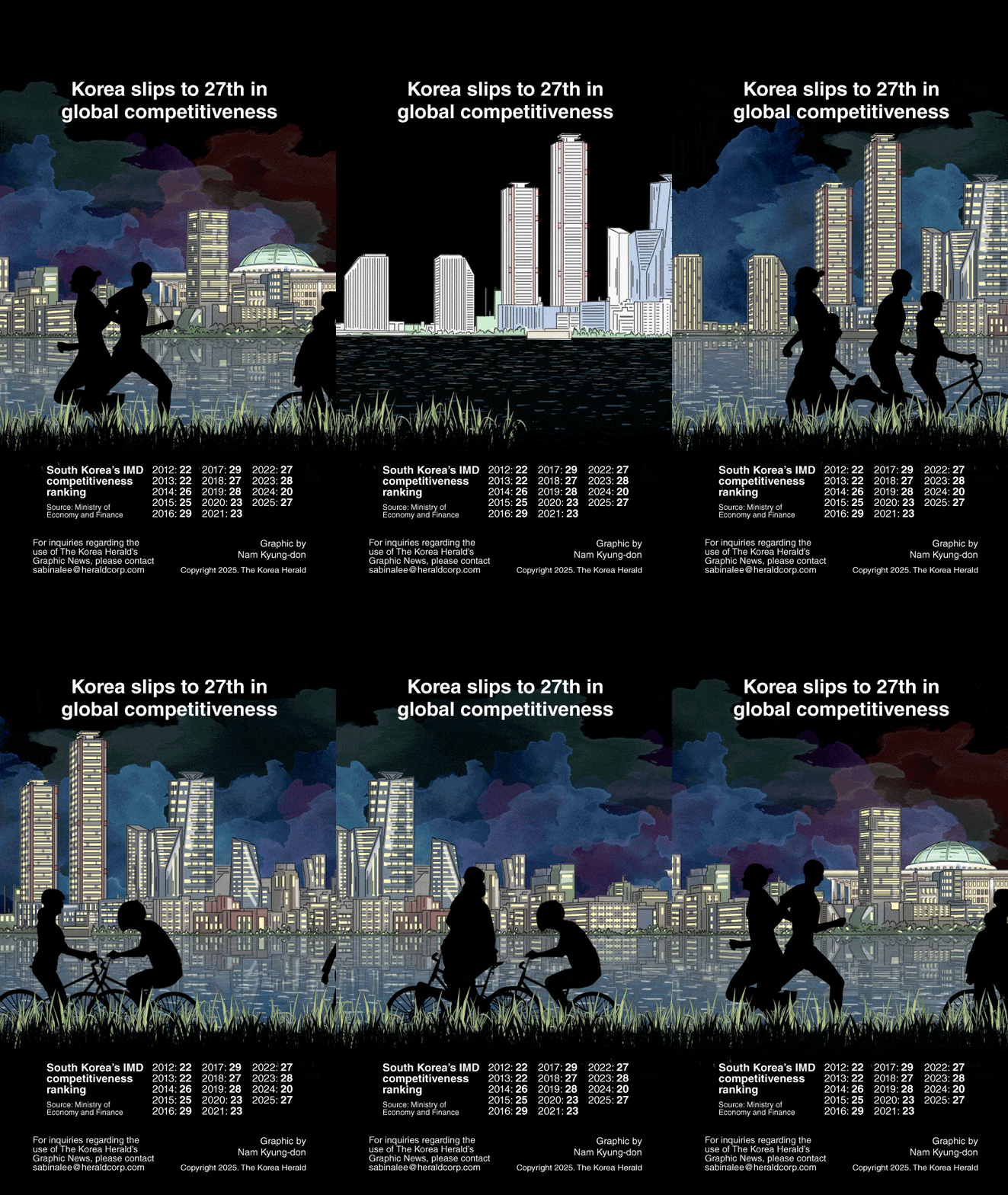
Korea slips to 27th in global competitiveness


Published : July 21, 2025 - Nam Kyung-don


The Finance Ministry announced that South Korea’s global competitiveness ranking fell seven places to 27th in the world, according to the 2025 report by the International Institute for Management Development, or IMD, a Switzerland-based business school. The report, which surveyed 69 countries, marks Korea’s steepest decline since IMD began assessing its competitiveness in 1997.

In 2024, South Korea reached a record high of 20th place but has now slipped back to 27th — the same position it held in 2023. IMD evaluates national competitiveness based on four main categories: economic performance, government efficiency, business efficiency and infrastructure.

The sharpest decline came in business efficiency, where Korea fell to 44th, down 21 spots from the previous year, dragging down its overall ranking. Other subcategories also saw notable drops, including productivity, labor market and finance.

In the 2025 rankings, Switzerland placed first, pushing Singapore to second. The United States ranked 13th while Japan came in 35th.
don@heraldcorp.com