Friday, August 22, 2025

LOOTING
Trump weighs using $2 billion in CHIPS Act funding for critical minerals, sources say

Ernest Scheyder and Jarrett Renshaw
Updated Thu, August 21, 2025 


(Reuters) -The Trump administration is considering a plan to reallocate at least $2 billion from the CHIPS Act to fund critical minerals projects and boost Commerce Secretary Howard Lutnick's influence over the strategic sector, two sources familiar with the matter told Reuters.

The proposed move would take from funds already allocated by Congress for semiconductor research and chip factory construction, avoiding a fresh spending request as it seeks to reduce U.S. dependence on China for critical minerals used widely in the electronics and defense industries.

Boosting Lutnick's role over critical minerals financing would also help centralize the administration's approach to the sector, a push sought by White House officials after the rollout of the Pentagon investment in rare earths company MP Materials last month sparked questions about the U.S. government's minerals strategy, one source said.

The White House did not respond to requests for comment. Pentagon officials were not immediately available to comment. MP Materials declined to comment.


The Commerce Department oversees the $52.7 billion CHIPS Act, formally known as the CHIPS and Science Act. The act, signed into law by then-President Joe Biden in 2022, has provided funding so far for research while also seeking to lure chip production away from Asia and boost American domestic semiconductor production.

But since taking office in January, Trump has moved to change the CHIPS Act - legislation he has called "a horrible, horrible thing" that amounts to a giveaway to companies - largely by renegotiating grants to chipmakers.

Repurposing some funds for mining-related projects would align in part with the spirit of the CHIPS Act as the semiconductor industry requires abundant supplies of germanium, gallium and other critical minerals over which China has tightened its market control, said the sources, who are not permitted to speak publicly about the deliberations.


"The administration is creatively trying to find ways to fund the critical minerals sector," said the first source. The plans are under discussion and could change, the sources added.

Mining companies themselves could benefit, but also processing and recycling firms. Most of the minerals considered critical by the U.S. government are not processed inside the country.

Kent Masters, CEO of North Carolina-based Albemarle, the world's largest producer of lithium for rechargeable batteries, told Reuters last month that the company's stalled plans to build a U.S. lithium refinery are "difficult now without some type of government support or partnership."


It was not immediately clear if the Trump administration aimed to use the funds for grants or equity stakes in mining companies, but Lutnick aims to "get the $2 billion out the door" as soon as possible, the first source said, adding that the administration aims to find other funds to reallocate in the near future.


A former U.S. official said the Biden administration considered using CHIPS Act grants for rare earths but decided it was uneconomical, required many environmental exemptions and was best left for the Department of Energy to handle.

The administration is also looking to use CHIPS Act-related funding to take equity stakes in Intel and other chip makers in exchange for cash grants, Reuters reported on Tuesday.

Trump moved quickly to expand U.S. critical minerals production since taking office in January by signing executive orders to boost deep-sea mining and domestic projects.

On Tuesday he met with the CEOs of Rio Tinto and BHP at the White House despite the ongoing negotiations with European leaders over Russia's invasion of Ukraine, a move aimed at underscoring his support for U.S. mining.


The CHIPS Act deliberations come after the Energy Department last week proposed $1 billion in spending for some critical minerals projects, with funds tied to the 2021 Bipartisan Infrastructure Law.

LUTNICK

The White House aims to give Lutnick a greater role over funding decisions for critical minerals by giving him oversight of the decision making process within the administration, the sources said.

The Pentagon's multibillion-dollar investment in MP Materials and its move to extend a price support mechanism - a deal negotiated by Deputy Defense Secretary Steve Feinberg - was seen by White House Chief of Staff Susie Wiles as uncoordinated as it sparked confusion over whether Washington would guarantee a price floor for all miners and forced the administration to clarify that it does not intend for MP to have a rare earths monopoly, the two sources said.

Much of the funding for MP's deal - including Washington's equity stake, loans and purchase agreements - still needs to be allocated by Congress.

Two weeks after the Pentagon announced its MP investment, administration officials rushed to meet at the White House with rare earths firms and their customers to underscore broad support for the entire sector, Reuters reported.

Lutnick will now help coordinate the administration's funding decisions, taking the lead from the Pentagon and other agencies, the sources said.

Lutnick ran brokerage firm Cantor Fitzgerald before he joined Trump's cabinet. Cantor is a large shareholder in Critical Metals Corp, which Reuters reported in June is under consideration for a loan from the U.S. Export-Import Bank.

(Reporting by Ernest Scheyder and Jarrett Renshaw; additional reporting by Alexandra Alper; Editing by Chris Sanders, Veronica Brown Alistair Bell)


US Supreme Court lets Trump administration cut $783 million of research funding in anti-DEI push


LINDSAY WHITEHURST
Thu, August 21, 2025


WASHINGTON (AP) — The Trump administration can slash hundreds of millions of dollars’ worth of research funding in its push to cut federal diversity, equity and inclusion efforts, the Supreme Court decided Thursday.

The split court lifted a judge’s order blocking $783 million worth of cuts made by the National Institutes of Health to align with Republican President Donald Trump’s priorities.

The court split 5-4 on the decision. Chief Justice John Roberts was among those who wouldn't have allowed the cuts, along with the court’s three liberals. The high court did keep the Trump administration's anti-DEI directive blocked for future funding with a key vote from Justice Amy Coney Barrett, however.

The decision marks the latest Supreme Court win for Trump and allows the administration to forge ahead with canceling hundreds of grants while the lawsuit continues to unfold. The plaintiffs say the decision is a “significant setback for public health,” but keeping the directive blocked means the administration can't use it to cut more studies.

The Justice Department, meanwhile, has said funding decisions should not be “subject to judicial second-guessing” and efforts to promote policies referred to as DEI can “conceal insidious racial discrimination.”

The lawsuit addresses only part of the estimated $12 billion of NIH research projects that have been cut, but in its emergency appeal, the Trump administration also took aim at nearly two dozen other times judges have stood in the way of its funding cuts.

Solicitor General D. John Sauer said judges shouldn’t be considering those cases under an earlier Supreme Court decision that cleared the way for teacher-training program cuts that the administration also linked to DEI. He says they should go to federal claims court instead.

Five conservative justices agreed, and Justice Neil Gorsuch wrote a short opinion in which he criticized lower-court judges for not adhering to earlier high court orders. “All these interventions should have been unnecessary,” Gorsuch wrote.

The plaintiffs, 16 Democratic state attorneys general and public-health advocacy groups, had unsuccessfully argued that research grants are fundamentally different from the teacher-training contracts and couldn’t be sent to the claims court.

They said that defunding studies midway through halts research, ruins data already collected and ultimately harms the country’s potential for scientific breakthroughs by disrupting scientists’ work in the middle of their careers.

Justice Ketanji Brown Jackson wrote a lengthy dissent in which she criticized both the outcome and her colleagues' willingness to continue allowing the administration to use the court's emergency appeals process.

“This is Calvinball jurisprudence with a twist. Calvinball has only one rule: There are no fixed rules. We seem to have two: that one, and this Administration always wins,” she wrote, referring to the fictional game in the comic strip “Calvin and Hobbes.”


In June, U.S. District Judge William Young in Massachusetts had ruled that the cancellations were arbitrary and discriminatory. “I’ve never seen government racial discrimination like this,” Young, an appointee of Republican President Ronald Reagan, said at a hearing. He later added: “Have we no shame.”

An appeals court had left Young’s ruling in place.


DESANTISLAND
Pulse Memorial's rainbow crosswalk removed overnight in Orlando, Florida

Brooke Sopelsa
Thu, August 21, 2025 


Pulse Memorial's rainbow crosswalk removed overnight in Orlando, Florida

A rainbow crosswalk in Orlando, Florida, that was part of the city’s Pulse Memorial was painted over by the state late Wednesday night.

The memorial honored the 49 people fatally shot by a gunman at the Pulse LGBTQ nightclub in 2016, in what was the largest mass shooting in the country at the time.

Orlando Mayor Buddy Dyer criticized the removal of the crosswalk on social media, calling it a “cruel political act.”

“We are devastated to learn that overnight the state painted over the Pulse Memorial crosswalk on Orange Avenue,” he wrote. “This crosswalk not only enhanced safety and visibility for the large number of pedestrians visiting the memorial, it also served as a visual reminder of Orlando’s commitment to honor the 49 lives taken.”


Dyer added that the crosswalk adheres to safety standards and was actually installed by the state. It was created in 2017.


Brandon Wolf, one of the Pulse shooting’s surviving victims, said the removal was a desecration of the deceased victims’ memories.

“In the dark of night, they came to erase our show of solidarity, our declaration that we will never forget,” Wolf wrote on X. “The cowards who feel threatened by our lives should feel lucky they didn’t have to bury the ones they love — then watch the state come & desecrate their memory.”


Gov. Ron DeSantis commented Thursday afternoon on X. In response to a video of Democratic state Sen. Carlos Guillermo Smith criticizing the rainbow crosswalk’s removal, DeSantis wrote: "We will not allow our state roads to be commandeered for political purposes."

The state Transportation Department and DeSantis' office did not immediately respond to requests for comment.

The crosswalk’s removal follows a directive last month from President Donald Trump’s transportation secretary, Sean Duffy. On July 1, Duffy sent a letter to all 50 states, along with Washington, D.C., and Puerto Rico, about roadway safety that stressed “consistent” roadway markings that are “free from distractions.” In a social media post that same day, Duffy shared the letter along with a message taking direct aim at rainbow crosswalks, which are typically intended to symbolize LGBTQ Pride.

“Taxpayers expect their dollars to fund safe streets, not rainbow crosswalks,” he wrote. “Political banners have no place on public roads. I’m reminding recipients of @USDOT roadway funding that it’s limited to features advancing safety, and nothing else. It’s that simple.”


This article was originally published on NBCNews.com


Gene sequencing uncovers differences in wild and domesticated crops


Can understanding these differences help researchers breed better crops suited for a changing climate?


Hiroshima University

An overview of meta-analysis of wild and cultivated crop species 

image: 

This diagram illustrates the methodology of a meta-analysis comparing gene expression data between wild relatives and domesticated species. Using public gene expression databases and computer-based methods, researchers analyzed data from rice, tomato, and soybean to identify differentially expressed genes and common expression changes associated with domestication.

view more 

Credit: Makoto Yumiya, Hiroshima University


With climate change and more frequent extreme weather events, researchers predict that global yields of important crops like maize, rice, and soybeans could decline by 12 to 20% by the end of the century. To prepare, plant scientists are hoping to find ways to improve yields and grow hardier varieties of these crops. New insights into the genetic makeup of wild varieties of common crops show how domestication has changed crop traits over time and propose a new cultivation method to improve genetic diversity. The research was shared in a paper published in Life on July 11.

“While domesticated species have originally been bred by cultivating wild species, the resulting reduction in genetic diversity can damage all individuals by exposing them to diseases and environmental stresses. To solve this problem, we set out to identify differences in crop traits between wild relatives and domesticated species and to contribute to the selection of new breeding candidate genes. The introduction of useful traits, especially those found in wild relatives, may provide hints for the development of new useful varieties,” said Hidemasa Bono, a professor at Hiroshima University’s Graduate School of Integrated Sciences for Life in Hiroshima, Japan.

The researchers used RNA sequencing data from public databases, including the National Center for Biotechnology Information Gene Expression Omnibus and published studies online. They focused on crops with wild relatives that had widely available RNA sequencing data: tomatoes, rice, and soybeans. The gene expression data of the wild varieties was then compared to the domesticated varieties. To evaluate the data, researchers classified all genes into three groups: upregulated, unchanged, and downregulated.

By understanding the gene expression comparison between the wild varieties and the domesticated varieties, researchers could understand differences in how the plants respond to stressors. “Wild relatives have high environmental stress tolerance with the potential to respond to climate change and severe changes in the natural environment, which has been an issue in recent years,” said Bono.

The researchers found 18 genes that were upregulated in the wild relatives and 36 genes that were upregulated in the domesticated species. Wild species were found to have genes related to environmental stress responses while domesticated species had more genes related to the hormone regulation and chemical compound export and detoxification. For example, a gene called HKT1 affects salt stress response and salt tolerance was found to be upregulated in wild varieties. This could be an opportunity to develop crops that can grow in soil with more saline. Researchers also found genes that were upregulated in wild varieties that helped with drought stress (RD22), water stress (HB-12), leaf development and photosynthesis promotion (HB-7), and osmotic stress response and wound signaling (MYB102).

In domesticated plants, researchers also found beneficial genes that were upregulated compared to wild varieties. Several genes help detox the plants and remove chemicals found in soil. One gene (ALF5) improves the plant’s resistance to tetramethylammonium, and another (DTX1) manages cadmium and toxic compounds. These genes and others can help plants grow in soils that have been contaminated by chemicals. Researchers suspect this may have become beneficial for plants because of increased pesticide and chemical fertilizer use.

“The three wild species used in this analysis—rice, tomato, and soybean—had in common high expression levels of genes that contribute to stress responses, such as drought, osmotic pressure, and wound stress. The high expression levels of genes that contribute to stress tolerance that these three less closely related species have in common suggest that wild species of other species are likely to have useful traits as well,” said Bono.

Looking ahead, researchers hope to learn even more about these essential differences between wild relatives and domesticated species to improve breeding. “In addition, we would like to collect and reanalyze data used in crop breeding research to construct a database that will contribute to the promotion of digital breeding of crops,” said Bono.

###

The other contributor to this research was Makoto Yumiya of the Graduate School of Integrated Sciences for Life at Hiroshima University.

The Center for Bio-Digital Transformation (BioDX), COI-NEXT, and the Japan Science and Technology Agency (JST) supported this research. 

This paper received funding from Hiroshima University to cover open access fees.

About Hiroshima University

Since its foundation in 1949, Hiroshima University has striven to become one of the most prominent and comprehensive universities in Japan for the promotion and development of scholarship and education. Consisting of 12 schools for undergraduate level and 5 graduate schools, ranging from natural sciences to humanities and social sciences, the university has grown into one of the most distinguished comprehensive research universities in Japan. English website: https://www.hiroshima-u.ac.jp/en


Ozone will warm planet more than first thought


University of Reading


The world will warm more than expected due to future changes in ozone, which protects Earth from harmful sun rays but also traps heat as it is a greenhouse gas. 

While banning ozone-destroying gases such as CFCs has helped the ozone layer to recover, when combined with increased air pollution the impact of ozone could warm the planet 40% more than originally thought.  

A new study led by the University of Reading found that from 2015 to 2050, ozone is expected to cause 0.27 watts per square meter (Wm⁻²) of extra warming. This figure - which measures how much extra energy gets trapped per square metre of Earth's surface - would make ozone the second largest contributor to future warming by 2050 after carbon dioxide (1.75 Wm⁻² of extra warming). 

Professor Bill Collins, lead author from the University of Reading, said: “Countries are doing the right thing by continuing to ban chemicals called CFCs and HCFCs that damage the ozone layer above Earth. However, while this helps repair the protective ozone layer, we have found that this recovery in ozone will warm the planet more than we originally thought.  

“Air pollution from vehicles, factories and power plants also creates ozone near the ground, causing health problems and warming the planet.” 

Simulating the atmosphere 

The research, published today (Thursday, 21 August) in Atmospheric Chemistry and Physics, used computer models to simulate how the atmosphere will change by the middle of the century. The models followed a scenario with low implementation of air pollution controls, but with CFCs and HCFCs being phased out as mandated by the Montreal Protocol (1987). 

The findings show that stopping CFC and HCFC production - done mainly to protect the ozone layer - provides less climate benefit than previously calculated. CFCs and HCFCs are greenhouse gases that warm the planet. Countries banned them to save the ozone layer, expecting this would also help fight climate change. But as the ozone layer heals, it creates more warming that cancels out most of the climate benefits from removing CFCs and HCFCs. 

Countries that reduce air pollution will limit some ozone formation near the ground. However, the ozone layer will continue repairing itself for decades regardless of air quality policies, creating unavoidable warming.  

Protecting the ozone layer remains crucial for human health and preventing skin cancer. The ozone layer shields Earth from dangerous ultraviolet radiation that can harm people, animals and plants. However, the research suggests climate policies need updating to account for ozone's larger warming effect.  


Inaugural editorial of Sustainable Carbon Materials


Biochar Editorial Office, Shenyang Agricultural University

Sustainable Carbon Materials 

image: 

Sustainable Carbon Materials

view more 

Credit: Roger Ruan, Xiangke Wang, & Yaning Zhang


Introducing Sustainable Carbon Materials—a new peer-reviewed, open-access journal dedicated to advancing fundamental and applied research on carbon-based materials! 
As a multidisciplinary global platform, we foster innovation in this rapidly expanding field by publishing high-impact reviews, original research, rapid reports, perspectives, commentaries, and correspondence.

Broad Scope Includes:
✅ Synthesis & characterization of graphene, nanotubes, fullerenes & more
✅ Physical/chemical properties for electronics, optics, and spintronics
✅ Energy applications (batteries, supercapacitors, fuel cells)
✅ Environmental solutions (water treatment, carbon capture)
✅ Biomedical innovations (drug delivery, bioimaging)
✅ Composites, theory, industrial tech, sustainability & recycling

Unmissable Opportunity:
📢 No Article Processing Charges (APCs) in 2025–2027!
Accepted papers during this period will be published free of charge—maximize your reach without cost barriers.
Submit Today!


Our submission portal is now open at:
https://www.maxapress.com/scm 

Drive solutions for energy, environment, economy, and a resilient future!

Free to read, share, and build upon (CC BY 4.0)!

Join editors Roger Ruan, Xiangke Wang & Yaning Zhang in advancing a sustainable civilization!

https://www.maxapress.com/article/doi/10.48130/scm-0025-0001

Learn more: https://www.maxapress.com/article/doi/10.48130/scm-0025-0001 

Italy's Ventina glacier has melted so much geologists now can only monitor it remotely


Copyright Lombardy Glaciology Service via AP

By SILVIA STELLACCI with AP
Published on 19/08/2025 -

After 130 years of direct measurement, the retreat of Italy’s Ventina glacier will now be tracked by drones due to rapid melting and unstable terrain.


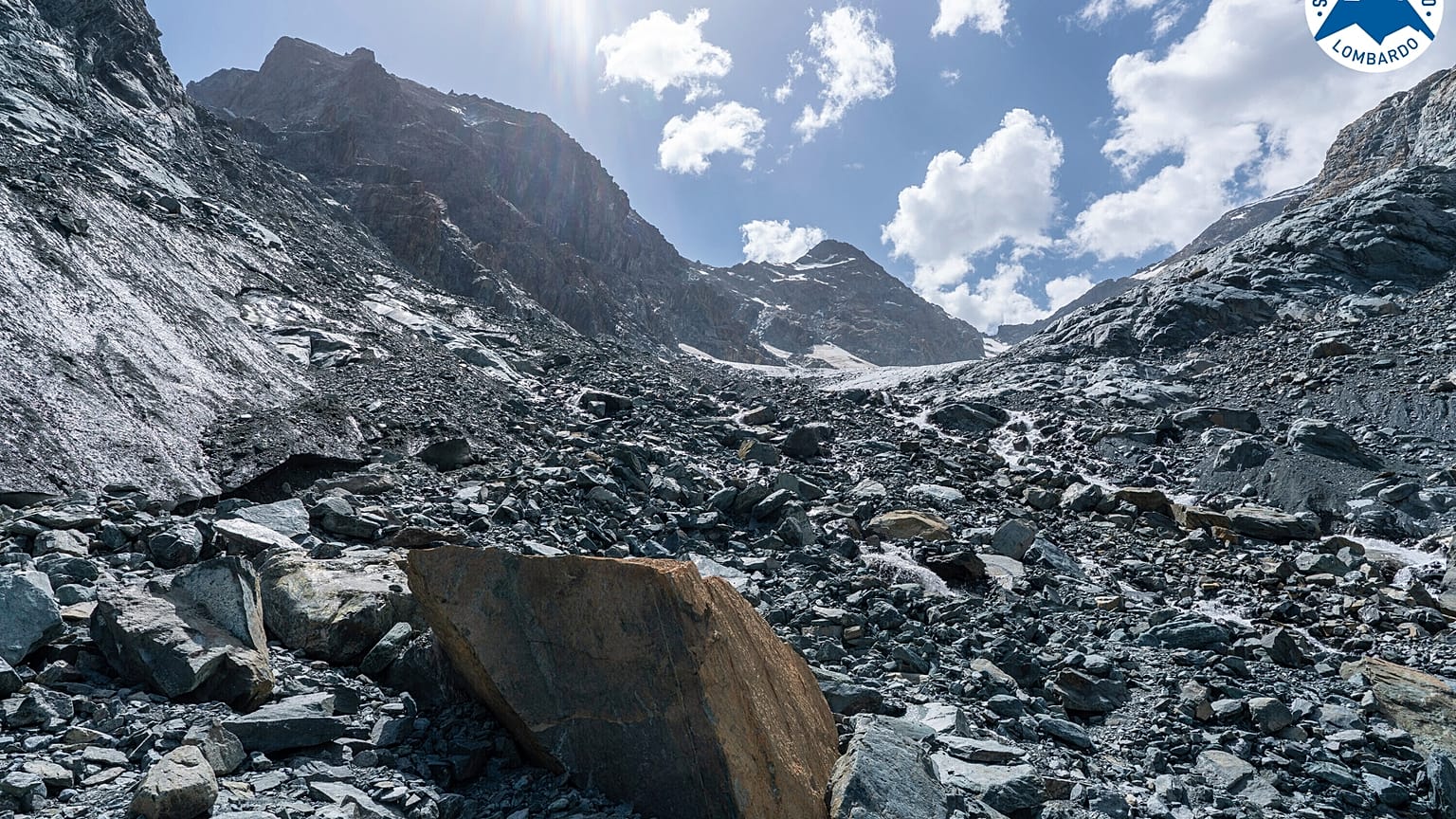
Italy’s Ventina glacier, one of the biggest in northern Lombardy, has melted so much due to climate change that geologists can no longer measure it the way they have for the past 130 years.

After this year’s hot summer, geologists discovered that the simple stakes used as benchmarks to measure the glacier’s retreat each year are now buried under rockslides. Debris has made the terrain too unsteady for future in-person visits.

The Lombardy Glaciological Service said Monday that it will now use drone imagery and remote sensing to keep track of the ongoing shrinkage of the glacier, which is located near Sondrio, in the same general area of northeast Lombardy that is hosting some 2026 Winter Olympics events.

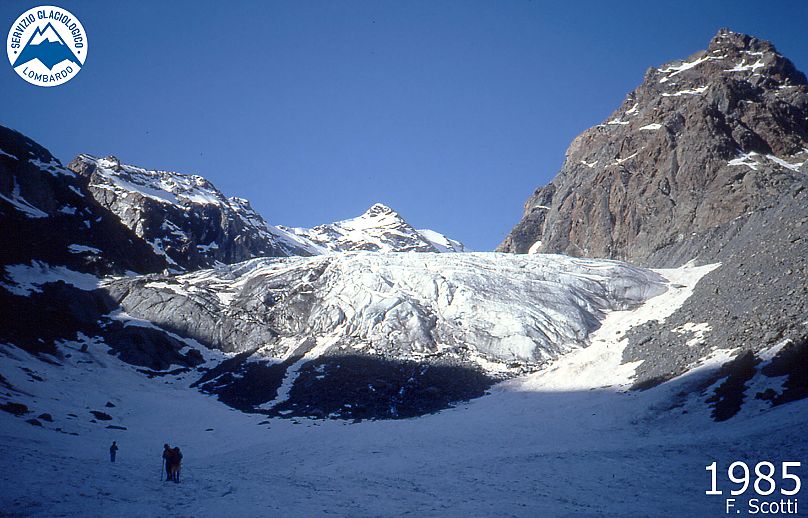
An overview of the Ventina glacier, near Sondrio, northern Italy in 1985. Lombardy Glaciology Service via AP

Geologists say that the Ventina glacier has already lost 1.7 kilometres in length since the first measuring benchmarks were positioned at the front of the glacier in 1895.

Related Glaciers are losing more water each year than the world will consume in three decades, study warns

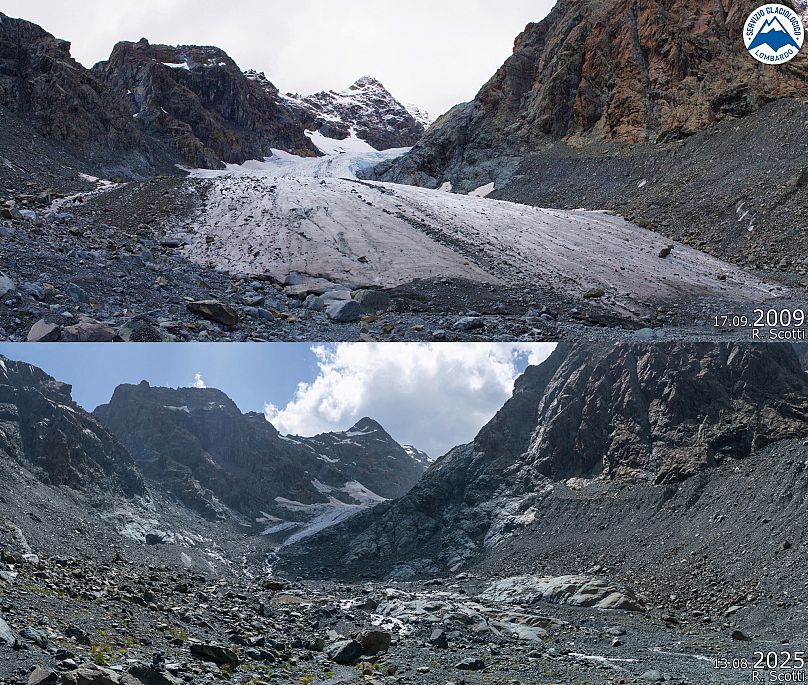
The melting has accelerated in recent years, with the glacier losing 431 metres in the last 10 years, nearly half of that since 2021, the service said. It's another example of how accelerating global warming is melting and shrinking Europe’s glaciers, causing a host of environmental and other impacts.

A combo image of an overview of the Ventina glacier, near Sondrio, northern Italy, in 2009, above, and same view on Wednesday 13 August 2025. Lombardy Glaciology Service via AP

“While we could still hope until the 1980s that there would be normal cycles (of retraction) or at least a contained retraction, in the last 40 years something truly striking has occurred,” said Andrea Toffaletti, a member of the Lombardy Glaciological Service.

Hot summers and less snow are melting Italy's glaciers

Italy’s mountain glaciers, which are found throughout the Alps and Dolomites in the north and along the central Apennines, have been receding for years, thanks to inadequate snowfall in the winter and record-setting hot summers.

Glaciers always melt some in summer, with the runoff fueling mountain streams and rivers.

But the hot summers are “no longer able to guarantee the survival of the winter snowpack,” which keeps the glacier intact, Toffaletti said.

“In order to regenerate and remain in balance, a certain amount of residual snow from the winter must remain on the glacier's surface at the end of the summer. And this is happening less and less frequently,” said Toffaletti.

Related

Climate change turns Alpine glaciers into ‘Swiss cheese’, raising water and power concerns

According to the Lombardy service, the Alps represent a climate hotspot, recording double the global average of temperature increases since pre-industrial times, resulting in the loss of over 64 per cent of the volume of Alpine glaciers.

In February, the journal Nature reported on a study showing the world’s glaciers lost ice at the rate of about 231 billion tonnes annually from 2000 to 2011, but that quickened to about 314 billion tonnes annually over about the next decade.
Crackdown on 'forever chemicals' expands ahead of EU rules overhaul


Copyright European Union - Atte Kajova

By Gerardo Fortuna
Published on 20/08/2025 

As the EU prepares a broader reform of its chemical legislation, the European Chemicals Agency has updated its proposal to restrict “forever chemicals,” adding new sectors to the scope of its planned ban.

The European Chemicals Agency (ECHA) on Wednesday expanded its proposal to restrict so-called “forever chemicals” from eight new industrial and commercial sectors as the long-awaited revision of the EU’s flagship chemical safety law, REACH, continues to gather pace.

First manufactured in the 1940s, per- and polyfluoroalkyl substances (PFAS) are prized for their water, grease, and heat resistance, making them essential in everything from non-stick cookware and waterproof clothing to semiconductors and firefighting foams.

However, their extreme persistence in the environment has earned them the label “forever chemicals.”

Studies have linked PFAS exposure to serious health conditions, including liver disease, hormonal disruption, and certain cancers, raising alarm among scientists and regulators alike.

A restriction proposal of these chemicals was originally submitted in January 2023 by five European authorities—Denmark, Germany, the Netherlands, Norway, and Sweden.

The group of countries, collectively known as the ‘dossier submitter’, revised its plan targeting over 10,000 PFAS substances after evaluating more than 5,600 comments gathered during a public consultation.

New sectors under review


The ECHA's expanded proposal now covers printing, sealing, and machinery applications, as well as certain medical uses such as immediate packaging and pharmaceutical excipients.

Military and explosives applications are also added, alongside technical textiles and broader industrial uses, such as solvents and catalysts.

These sectors join a growing list of industries facing possible restrictions under what could become the world’s most comprehensive ban on PFAS.

While the central thrust of the proposal remains a broad ban, ECHA has also assessed more flexible regulatory options.

These include allowing continued use of PFAS in certain industries (such as electronics, energy, and transport) provided that risks can be adequately controlled.

Another updated document detailing these scenarios now serves as the basis for opinions by ECHA’s scientific committees, which may further refine the plan.

The road to REACH reform

The ultimate goal is a near-total phaseout, with time-limited derogations for essential applications in healthcare, defence, and high-tech sectors where no alternatives currently exist.

The broader revision of REACH is expected in December 2025, when the European Commission will present a formal legislative proposal, setting the course for Europe’s chemicals policy in the decades to come.

This review is expected to modernise and simplify EU rules, introducing changes such as time-limited registration validity, mandatory dossier updates, digital safety data sheets, and stronger enforcement measures.

Early drafts were already shared with national experts in April 2025, marking the final stages of internal consultation.

The Commission has already confirmed on several occasions that the REACH revision will include provisions clarifying the regulation of PFAS, though a universal restriction is expected to follow separately.

In parallel, sector-specific measures, such as the existing ban on PFAS in firefighting foams, continue to advance under the current framework.

The updated ECHA proposal marks a decisive step in what could become one of the most significant chemical regulatory efforts in Europe’s history.

Cheetah cubs destined for the illegal trade in exotic wildlife rescued in Somaliland

Copyright CRCC via AP

By EVELYNE MUSAMBI with AP
Published on 21/08/2025 - 

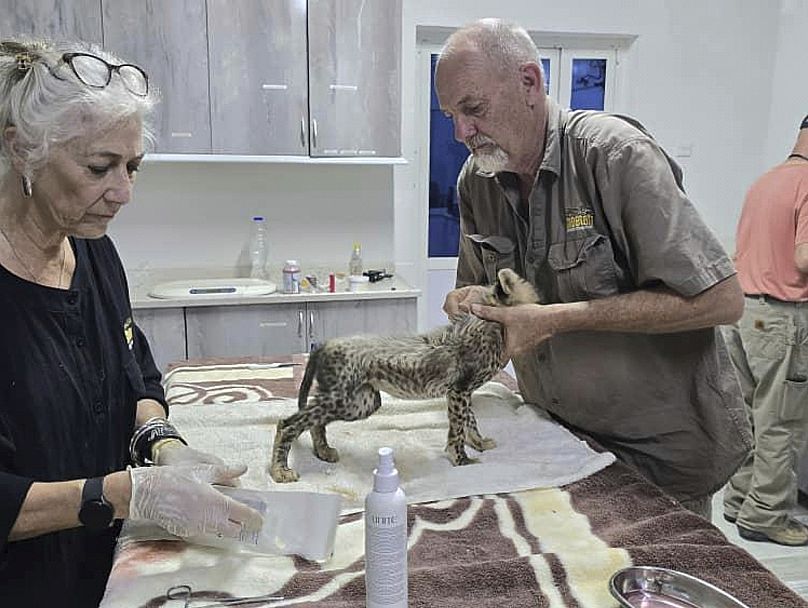
One eight-month-old cub was unable to walk after being tied up for six months, while a five-month-old was “very malnourished".

Ten cheetah cubs held in captivity since birth and destined for international wildlife trade markets have been rescued in Somaliland, a breakaway region of Somalia

Laurie Marker, the founder of the Cheetah Conservation Fund (CCF), which is caring for the cubs, said Wednesday they were all in a stable condition despite all of them having been undernourished and limping due to being tied in captivity for months.

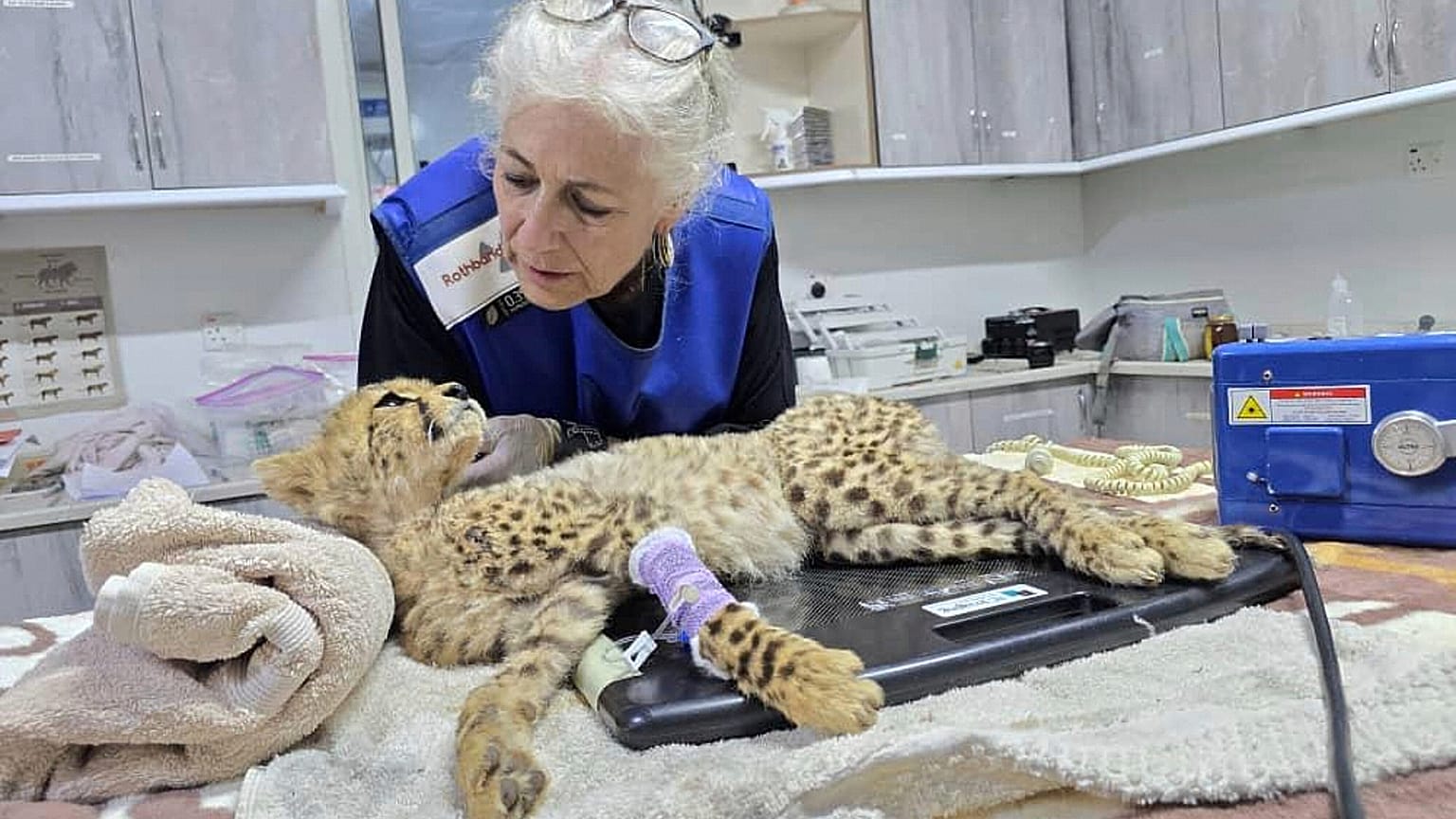
She said one eight-month-old cub was unable to walk after being tied up for six months, while a five-month-old was “very malnourished (a bag of bones), with sores all over her body and full of botfly maggots which are under the skin.”

“But with cubs like this, we need to start them onto on food slowly due to refeeding syndrome, similar to people in starvation,” she added.


One of 10 cheetah cubs rescued from the illegal wildlife pet trade receives treatment at the Cheetah Rescue and Conservation Centre. CRCC via AP

Two people who were in possession of the cubs were arrested during a 14 August operation in the northern Sallahley District. The authorities have urged the public to report suspected wildlife trade activities.

Environment Ministry Director Abdinasir Hussein Said told journalists that the cheetah cubs have joined a group of 109 others rescued in similar operations.
A transit hub for the illegal wildlife trade

Somaliland is a major transit hub for the illegal wildlife trade. Hundreds of cheetahs and leopards from the Horn of Africa have been transported to Gulf countries through the Gulf of Aden.

Possession of wildlife is illegal in Somaliland, and police often crack down on suspected traders.

“We encourage the people of Somaliland to protect wildlife in their natural habitats, as their best interests lie there,” said Hussein. “We can imagine the distress of a mother being separated from her young.

"These animals are currently suffering due to being separated from their mothers, which may lead to the mothers experiencing stress and potentially dying. Once again, we emphasise the importance of protecting wildlife in their habitats.”

Conservationists in the Horn of Africa have previously expressed concern over the rise in demand for exotic pets in Gulf countries and the resulting illegal trade affecting ecosystems in Horn of Africa nations.