Monday, October 20, 2025

Trump’s ‘peace’ in the Middle East: A retrocolonialism built on sand


Forced displacement Gaza

First published at The International Marxist-Humanist.

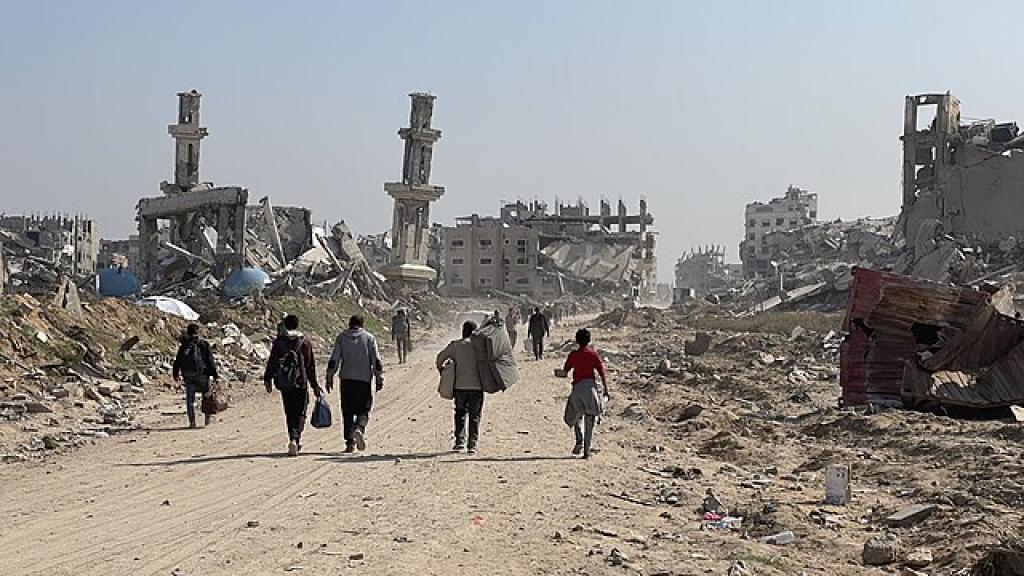
After two years, the guns are silent, at least for the most part. Long-suffering Palestinians are heading back to their hometowns and villages in Gaza, and the remaining Israeli hostages and some Palestinian prisoners are being released. Meanwhile, the Israeli Knesset has toasted US autocrat Donald Trump as the hero of the hour, and Arab, Muslim, and Western European leaders — from the EU nations to Egypt, and from Turkey to the Gulf monarchies and Pakistan — have gathered to celebrate these developments, while also genuflecting to Trump.

These bizarre ceremonies — in Jerusalem and Sharm El-Sheikh — proceeded with nary a word about the 67,000 Palestinian deaths that have resulted in legitimate genocide charges against Israel, nor the fact that not a single Palestinian representative was involved in the elaboration of the “peace” plan, nor the lack of even the kind vague promises of future elections that usually follow impositions from above like military invasions and coups.

In fact, Trump’s twenty-point “peace” plan does not contain the word “election” or “representative.” It does state:

Gaza will be governed under the temporary transitional governance of a technocratic, apolitical Palestinian committee, responsible for delivering the day-to-day running of public services and municipalities for the people in Gaza. This committee will be made up of qualified Palestinians and international experts, with oversight and supervision by a new international transitional body, the ‘Board of Peace,’ which will be headed and chaired by President Donald J. Trump, with other members and heads of state to be announced, including Former Prime Minister Tony Blair.

In short, what is proposed is a retrocolonialist protectorate, reminiscent of the imperialist machinations that divided up the Ottoman Empire after World War I — the infamous Sykes-Picot Agreement — or even of the carving up of Africa by European powers in 1884-85.

This will not pass!

As the celebrated Arab Marxist Gilbert Achcar predicts on his blog: 

As for the proud Palestinian people, they have spent a century proving their refusal to submit to their oppressors — whether the British Mandate authorities or the Zionist government. They will not kiss Donald Trump’s hand or show him ‘appreciation,’ no matter what those who claim to represent them may do. They will not submit to the so-called Peace Council chaired by Trump, which includes figures like Tony Blair, George W. Bush’s partner in the occupation of Iraq. Instead, the Palestinian people will continue their struggle for full rights, undiminished. (“Trump at the Knesset and Sharm el-Sheikh: A Festival of Obsequiousness,” Oct. 14, 2025).

During two years of hellish bombardments, of an Israeli genocide that has surely killed untold numbers beyond the 67,000 officially reported, the Palestinian people of Gaza have never given up. Not a single hostage was ever turned over to Israeli forces despite death raining down and starvation stalking the land for over 700 days. As they streamed back into their ruined cities and towns, one marcher declared ringingly to the global media:

We, Palestinians, are showing our attachment to our land and our resilience” (Laure Stephan, “A Gaza, le retour massif des deplacés dans le nord de l’enclave, Le Monde, Oct. 13, 2025).

Nor will the people of the world give up, especially the youth, who have engaged in two years of truly colossal street demonstrations, strikes, and occupations in support of Palestine. Among the latest manifestations here were a giant rally in Amsterdam, a massive general strike in Italy. Even in the US, public opinion has shifted so far against Israel and its genocide that a rightwing commentator complained recently, “Everybody under 30 is against Israel” (David Halbfinger, “Test for Israel: Repairing Ties to U.S. Voters,” NY Times, Oct. 13, 2025).

To be sure, the silence over Palestine that existed in the region and the world before October 7, 2023 has been shattered by the events of the past two years. Palestine is sure to remain high on the agenda of movements for global justice and peace for the foreseeable future.

For now, though, the Trump “peace” plan is a bitter, imperialist pill that the region is being forced to swallow. It and the world have had to watch the smiling perpetrators of genocide claim victory, ringed by supposed friends of the Palestinian people. At least for now, this has been a defeat for Palestine and for the global movement for human liberation.

Defeats like this are a time to regroup and continue the struggle, which we will surely do.

They are also occasions for reflection and rethinking. For the last two years have not only shattered the complacency of those regional and global powers that thought they could ignore Palestine, that the Palestinian people had been defeated, bottled up behind Israel’s apartheid walls, and silenced. 

These two years have also shattered the Axis of Resistance backed by Iran, and including the Syrian regime, Lebanese Hezbollah, and the Houthi-ruled part of Yemen, all of them declared supporters of Palestinian Hamas. They were unable or unwilling to aid Gaza in any meaningful way. The overthrow of the murderous Assad regime in Syria due to mass disaffection in the face of a small military force, and the barbaric Israeli attacks on Iran and Lebanon have severely weakened, if not destroyed, this alliance of convenience.

New pathways of resistance to the new and undisguised forms of imperialism developing around Trump’s Gaza “peace” plan will need to be found. Many will question the recourse to armed attacks by well-disciplined groups operating in secret, and links to dubious allies, vs. the kind of public mass movements that have been the hallmark of all successful revolutionary movements in recent years, and which are evidenced in the Gen Z revolutions taking place around the world today.

As we continue and deepen our support for the Palestinian resistance and our demands that those responsible for the genocide be held to account, and above all for the full national liberation of the Palestinian people, we will also be, as Marxist-Humanists, engaging in the global debates about where to go from here.

— Approved as a Statement of the Steering Committee of the International Marxist-Humanist Organization on October 15, 2025

There are no ceasefires on stolen land: Liberation, not liberal Zionism

Palestinian statehood

First published at Spectre.

Social media is filling up with images of what can only be called joyous determination — images of Gazans returning to their devastated city and rebuilding, reconstructing, renewing. I cannot stop watching videos of children hugging their cats, of women and men laying bricks on a bombed-out home, of twins reuniting. All this amidst what the IOF called “finishing touches” to their two-year holocaust: as they were forced to retreat from Gaza, they set fire to food, homes, and a critical water treatment plant in their own version of “festival of the oppressor.”

The current ceasefire includes consistent bad faith deals from the usual suspects. The Israeli list of Palestinians to be released as part of the hostage exchange has carefully left out the names of several popular leaders whose release Hamas has insisted upon. Among them are Marwan Barghouti (popular leader, often called the Palestinian Mandela), Ahmad Saadat (Secretary-General of the Marxist group the Popular Front for the Liberation of Palestine), Hassan Salameh (Qassam Brigade member with forty-eight life sentences, the third highest among all Palestinian prisoners), and Abbas al-Sayyed (senior Hamas Leader).

The two sides at the negotiating table seem to have been negotiating for completely different realities, with Hamas asking for a permanent ceasefire guaranteed by the United States and Israel asking for a “demilitarized Gaza” with Hamas completely dismantled. In his televised address to the nation, Benjamin Netanyahu declared that “If this [dismantling of Hamas] is achieved the easy way — so be it. If not — it will be achieved the hard way.”1 The United States of course has refused to comment on any of this — perhaps the President is waiting for Jared Kushner’s riviera plan with Leo DiCaprio’s hotel chain?

In these circumstances every Palestinian — and everyone serious about winning freedom for Palestine — knows that the ceasefire is simply a respite, and an unstable one at that. After all, the IOF still controls 53 percent of Gaza. Even if the active genocide moves away from the headlines (undoubtedly to the relief of mainstream Western media), all of us know that the everyday violence will continue in Gaza and the West Bank. Ceasefire or no ceasefire, settlers and the IOF will continue to harass, violate, and kill Palestinians. Under these circumstances, nothing is more urgent than an assessment of the ceasefire and a collective discussion of future strategies for the international Palestine movement. It is the movement, of course, that has brought us to this point.

What ceasefire on stolen land looks like

While is true that the Zionist project continues, the current respite has won some short-term victories:

  1. Israel has been reduced to a global pariah.
  2. None of the Palestinian leadership has been exiled.
  3. The Blair Witch Project — Mouin Rabbani’s brilliant term for former UK Prime Minister Tony Blair’s prospective leading role in Gaza’s interim authority — seems to have been put on hold.2
  4. Some aid is trickling in.
  5. Most importantly, Palestinians are finally returning to their homes in a city where caring for the living can never be paused, even for a moment, to mourn the dead.

While the wins may seem momentous after two years of publicly broadcast genocide, the alarming aspects of this ceasefire deal are also becoming more evident:

  1. Israel has yet to be held accountable for their internationally recognized war crimes.
  2. No major Western power has cut financial ties with Israel or imposed sanctions.
  3. The plans for an archipelago of “Bantustans” in Palestine have not been withdrawn. Nor have the grotesque plans for Gaza as a beach resort.
  4. Despite the two-year long holocaust, a full 76 percent of US Jews still view Israel’s existence “as vital for the future of the Jewish people” (though many of those remain critical of Israel’s actions in Gaza).3 The idea that Zionism and settler colonialism are the only solutions to (very real) European antisemitism continues to thrive.

Once the deal is weighed thus, it becomes clear that there can never be any permanent ceasefire on stolen land. For the movement, then, “right of return” and “land back” remain our goals.

Moving from respite to liberation

Let me clarify at the outset the social movements that I think brought us this small respite: the global spread of large internationalist marches, the campus revolts, the flotillas, the magnificent general strike in Italy, and the less spectacular but equally significant labor actions on campuses and other workplaces.4 And, finally and most importantly, Palestinian actions against the Occupation in Gaza and the West Bank. These actions, taken together, are what constitute “the movement” at this current moment. This movement, in all its component parts, needs to be strengthened and spread in order to move from respite to liberation.

If we on the left take this task of amplifying our reach seriously, there are bound to be debates about the fine print, which strategies are best, with whom we should be collaborating, how we deal with state repression, and so on. Comradely debate is the hallmark of a healthy left and since October 7, we have seen some truly generative discussions in the movement about the role of violence, the meaning of decolonization and sovereignty, and the relationship between capitalism and colonialism. I believe that Jacobin has published Eric Blanc’s interview with Hoda Mitwally and Bashir Abu-Maneh in this spirit: as a contribution to a discussion about strategy.5 It is a long piece, and I encourage everyone to read it. But here I want to challenge a few of their contentions with a different perspective.

The first assumption of the piece is that the movement in the United States has “failed to consistently build the biggest and broadest coalition possible.”

The second assumption is that the narrowness of the movement is attributable to the ultraleft politics of its leadership. The two examples they cite are:

(a) that the campus “encampments’ rhetoric was often kind of inflammatory (and prone to misinterpretation), which undercut efforts to involve and persuade others to join the fight for a ceasefire and divestment”;

(b) that some Palestinian groups, which they acknowledge “have led some of the bigger protests,” are essentially “middle-class activists” who insist on excluding even liberal Zionists from the movement. This, the authors reason, is because these activists do not understand class politics. It is for such misguided reasons that these ostensibly ultraleft activists have harsh criticisms of DSA representatives such as Alexandria Ocasio-Cortez (who supports the Iron Dome) and Jamal Bowman (who refuses to abide by the DSA’s own resolution on BDS); and finally,

(c) that the correct way to broaden the movement is to “get our hands dirty” and commit to “united-front, inside-outside efforts to win a permanent ceasefire.” Instead, the authors complain that the “US activist left” has incorrectly made the Iron Dome into a make-or-break symbol,” and they “have a preexisting ideological orientation toward trying to break the Left from the Democrats immediately or in the very near future.”6

The two dangerous fantasies that these arguments enclose, and from which their logic flows, are as follows:

(i) that middle class student-activist types rather than real working-class people are leading this movement; and

(ii) that only struggles at the point of production constitute “class struggle,” and transformative change can only come through those.

I think these comrades and I have been reading our Marx, not to mention our daily newspapers, rather differently. Three regimes in South Asia, the region I come from and study, have been overturned in the last year by student-led movements!7 Ought we to be condemning the young people of Sri Lanka, Nepal, and Bangladesh for being insufficiently Marxist?

Sarcasm aside, between October 7, 2023 and March 2024, over a million people joined these marches for Palestine in the United States. Are the comrades so assured that there was no class orientation to them? That these marches and die-ins were effective is now undeniable. A March Gallup Poll shows that public opinion on Israeli action in Gaza changed from majority approval (November 2023) to majority disapproval (March 2024).8

Similarly, over 3200 people were arrested during the student encampment wave.9 Students, faculty, and staff were beaten, fired, expelled, and deported. The administration turned campuses into a warzone against unarmed, peaceful students exercising their constitutional right to protest. There were snipers on our roofs and armed guards controlling where we could go. I know first-hand that many nonunionized staff, adjunct faculty, and even workers from some campus bookshops came out in full-throated support for the students and formed cordons to protect them from the police. Another critical aspect of the encampment movement, perhaps its most important, was that it had the full support of the Palestinian BDS National Committee (BNC), which declared that the encampments “brought to international attention like never before the complicity of their academic institutions in Israel’s genocide and apartheid.”10

I would unhesitatingly call this class struggle. Wouldn’t you?

Needless to say, I am in complete agreement with the authors that only workers under capitalism have the kind of power we need to shut the system down. See Italy. But modern history has shown us again and again that there is no unilinear logic to class action. That is, class action does not always begin in the workplace and spread outwards. While a strike can initiate the fall of a regime, such a strike can be catalyzed by a group of absurdly brave civilians, in little dinghy boats, armed only with baby food and rice, set to confront an empire. Again, see Italy.11

I also agree with the authors that this is a critical moment for the Palestine movement in the United States. The next few months will determine whether we continue on the old route of appeasing liberal Zionism and “collaborating” with such elected Democratic Party officials on their own terrain of electoral politics, the consequences of which lie in the ruins of the left around us. Or if we will take our lead from Palestine, from the flotilla, and yes, from the young activists — working class, immigrant, and student — and continue to build our movement away from the contagion that is liberal Zionism. I am confident one can argue that US funds should go to healthcare and not Israel at a union meeting (as the authors rightly argue we should) without linking arms with Brad Lander or Adam Schiff. AOC will always be welcome in our encampments, marches, and pack-the-courts actions. But in order to extend that welcome we need not use a public forum to apologize for her embarrassing defenses of the Iron Dome.12

Trump’s ceasefire deal is his way of restabilizing US relations with Gulf capitalism and making nice with Qatar, angered by the reckless Israeli airstrike on September 9. He wants a relaunch of his 2020 Abraham accords for the sake of his declining empire and to ensure that Gulf money flows into his planned beach project in Gaza.13

It is striking that the Palestinian hostages are loaded onto buses from Israel to reach their families in historic Palestine. Buses, not airplanes or boats, indicate the short distance between these factories of torture and home. That road is now paved with the bodies of more than sixty-seven thousand Palestinians, of whom at least twenty thousand are children.14

For those of us not in Palestine, the ceasefire is merely a window to rebuild our forces and renew our efforts to help restore to historic Palestine her unbowed people, her rich olive groves, and her poets who sing of freedom.

Tithi Bhattacharya is an editor of Spectre. She writes here in a personal capacity, in no way reflecting the views of any organization or institution.

Libera Palestina
Published October 19, 2025 
DAWN


In  our first night in Toledo, the former capital of Spain, we went to our hotel rooftop to catch the views of this stunning city. I recognise how privileged I am to have the means to travel, and after an exhaustive application for the Schengen, I claimed this view as one of the rewards.

Within a few minutes, we heard chanting in Spanish and followed the noise to the town square below where a crowd of 40 stood around a huge Palestine flag, waving flags and calling for the liberation of Palestina, as they call it. We tried to make sense of the chants as we recorded videos, surprised by this midweek demonstration. I knew Spain’s left-leaning government’s robust support for Palestine. In 2024, it recognised the state of Palestine, it supported South Africa when it submitted a case against Israel in the International Court of Justice and it suspended arms exports to Israel. It was also the last European country to recognise Israel in 1986.

Many foreign policy analysts believe Spain could influence Europe’s policy on Israel. They said this after Prime Minister Pedro Sánchez became the first European leader last month to call Israel’s actions a genocide. I read about Sánchez’s package of measures in The New Arab, which included formalising an arms embargo, bans on military transits through country ports and airspace, restrictions on imports from illegal settlements and a vow to increase humanitarian aid to Gaza by next year.

His supporters said it was an overdue moral stand, the paper reported. And, of course, it was met with Israeli hostility, calling Madrid antisemitic. This did not deter the Sánchez government which denied entry to two Israeli far-right leaders and the foreign ministry said it would enforce the International Criminal Court arrest warrant against Benjamin Netanyahu if he came to Spain. Madrid, as The New Arab reported, was prepared to confront Israel at the ministerial level, not just in rhetoric.


All over Spain that day, they waved Palestinian flags.

Days later, the president of the European Commission said she would propose suspending payments to Israel, imposing sanctions on violent settlers and suspending trade concessions with Israel. The withdrawal of Israel’s preferential access to the EU was a major move even if many see it as too little too late.

These shifts are driven by public opinion and pressure. And the mood across the world is changing.

The demonstration in Toledo, I learned, was part of a larger nationwide protests on Wednesday organised by trade union federations and student organisations, calling for work stoppage and walkouts in schools. Tens of thousands of protesters attended in Madrid, and called for an end to relations with Israel. One socialist news website claimed that 80 per cent of students participated in walkouts from schools and universities. It said 40pc of teachers in public schools went on strike in Basque country. All over Spain that day, they waved Palestinian flags and chanted “this is not war, it’s genocide” and “from the river to the sea, Palestine will be free”. These must have been the chants we heard that night in Toledo — from adults and children. It was a wonderful sight to behold.

That night, after they departed as peacefully as they had assembled, we talked about Spaniards’ affinity for Palestinians and wondered why we hadn’t seen it in our part of the world. It’s not been consistent. I think we are uncomfortable joining hands with religious parties calling for an end to the genocide because we don’t subscribe to so many of their misogynist or regressive views. I was disappointed Senator Mushtaq did not rec­eive the praise he deserved for joining the flotilla to Gaza. Some of the memes following his release were downright vile. There’s too much dis­­­­comfort around Ham­as as well, which may explain a lacklustre response to the genocide beyond keyboard activism.

Arab antipathy towards Palestinians has a long, and tragic history. While there is support for Palestine in the ‘Arab streets’, a term used to describe public opinion in the Arab world, we’ve never seen it impact policy in their various governments. Following Oct 7, few countries withdrew their ambassadors from Israel. Even today as the truce begins to do whatever it is doing, theories abound about various countries being pressured to sign the Abraham Accords, including Pakistan.

We should not recognise Israel. It is a criminal state that has committed genocide and continues to do so. This truce does not signal an end to Israel’s atrocities. It must be held liable for it. Perhaps that can be our role moving forward — demanding that Israel pay for its crimes. If EU officials can push repatriation loans on Russia for its actions in Ukraine, so too must we lead a demand for Israel to pay for its destruction of Gaza. It is the least we can push for.

The writer is an instructor of journalism.

X: @LedeingLady

Published in Dawn, October 19th, 2025


‘You Cannot Fight the World’: The Hidden Meaning Behind Trump’s Warning to Israel


by  | Oct 20, 2025 | 

A single, candid statement by US President Donald Trump during a Fox News interview on October 9 may illuminate the true calculus behind Israel’s decision for a ceasefire in Gaza, following a relentless, two-year genocidal campaign that has tragically killed and wounded nearly a quarter of a million Palestinians.

“Israel cannot fight the world, Bibi,” Trump declared during the interview, a direct warning he said to have previously delivered to Israeli Prime Minister Benjamin Netanyahu.

The stark reality is that very few people around the globe currently support Netanyahu. Crucially, a significant segment of his own populace has already held him in contempt, a resentment that predates the war on Gaza – a war which he treated as a desperate, personal quest for renewed domestic popularity.

Yet, his delusion persists. Even as millions globally protest his systematic extermination of innocent Palestinians, Netanyahu has seemingly convinced himself that world opinion is miraculously shifting in his favor – a shift that would require the world to have liked him in the first place.

But what precisely did Trump mean by, “You cannot fight the world”?

The term ‘fight’ here clearly transcends physical combat. Gaza, besieged, starved, and devastated, was the entity enduring the physical confrontation. Trump’s reference is unambiguously to the combative surge of anti-Israel sentiment worldwide: the official sanctions imposed by nations like Spain, the critical legal proceedings initiated at the world’s highest courts, the widespread demands for boycott, the organizing of freedom flotillas, and more.

It is profoundly significant that, in the minds of both Washington and Tel Aviv, these global events have registered as a serious strategic concern. Future historians will likely designate this moment as the definitive turning point in global attitudes toward the Israeli occupation of Palestine. If deliberately and strategically fostered by Palestinians, this burgeoning solidarity movement holds the potential to fully isolate Israel, compelling it to finally relent and free the Palestinian people from its enduring system of colonialism and apartheid.

However, ‘Bibi’ is not merely losing the world; he is fundamentally losing America itself. For decades, the United States has operated as Israel’s indispensable benefactor, underwriting every war, financing every illegal settlement, justifying every act of violence, and consistently blocking any international attempt to hold Israel accountable.

The reasons for America’s decades-long, unwavering commitment to sustaining Israel are profoundly complex. While the overwhelming influence of the powerful pro-Israel lobby in D.C. and Israel’s disproportionate sway over major media are correctly cited as factors, the dynamic is far deeper. The prevailing, mutually reinforced narrative in both nations has consistently framed Israel not merely as an ally, but as a crucial, essential extension of America’s political identity and core values.

Yet, cracks in this political edifice began to appear with unmistakable clarity. What were once marginalized dissenting voices, often labeled as ‘radicals’ within the American left, gradually solidified into mainstream dissent, particularly within the Democratic Party. Poll after poll demonstrated a mass shift, with the majority of Democrats turning against Israeli policy and lending their support, instead, to the Palestinian people and their rightful struggle for freedom. One of the most telling polls was conducted by Gallup in March 2025. It found that 59 percent of Democratic voters say they sympathize more with Palestinians, while only 21 percent say they sympathize more with Israelis.

The Israeli genocide in Gaza catalyzed more than just dissent within one of America’s two major political parties. Outright opposition to Israel has rapidly become mainstream, transcending traditional political lines – a rupture that has profoundly alarmed those determined to maintain the illusion that Israel can act with impunity, free from American objection.

The pro-Israel media apparatus in the US fought a shameful war to obscure the extent of the Israeli genocide. It consistently sought to blame Palestinians for Israel’s actions and brazenly promoted the insidious notion that the war against Gaza’s innocents was a necessary component of the ever-elusive ‘war on terror.’

But it was ordinary people, powerfully amplified by countless social media platforms, who collectively fought back. They successfully defeated a mainstream propaganda machine that had, for decades, served as the primary defense line for Israel.

A particularly troubling fact for Israel was the erosion of its newly established base of support: the Evangelicals and the broader Republican party. Polling indicated a significant exodus, especially among young Republican voters. A survey conducted by the University of Maryland Critical Issues Poll in August 2025 found that only 24 percent of Republican voters aged 18–34 said they sympathize more with Israelis than with Palestinians.

According to Politico, Israel even attempted to manipulate social media by paying influencers significant sums of money to circulate Israeli fabrications and deception. That campaign employed roughly 600 fake profiles posting over 2,000 coordinated comments per week, targeting more than 120 US lawmakers.

But can Israel possibly swing the narrative back in its favor? While vast sums of money will, undoubtedly, be committed to launching sophisticated campaigns aimed at polishing Israel’s severely tarnished image, the efforts will prove futile. The once-marginalized Palestinian narrative has surged, becoming a powerful, compelling moral authority worldwide. The strong, unyielding, and dignified resilience of the Palestinian people has garnered global sympathy and galvanized support in ways unprecedented in history.

This new reality may very well represent hasbara’s final stand, as truly no amount of money, newspaper coverage, or Netflix specials can ever successfully polish the image of a state that has so openly committed a genocide, one of the most thoroughly documented in recorded history.

Dr. Ramzy Baroud is a journalist, author and the Editor of The Palestine Chronicle. He is the author of six books. His forthcoming book, ‘Before the Flood,’ will be published by Seven Stories Press. His other books include ‘Our Vision for Liberation’, ‘My Father was a Freedom Fighter’ and ‘The Last Earth’. Baroud is a Non-resident Senior Research Fellow at the Center for Islam and Global Affairs (CIGA). His website is www.ramzybaroud.net

A Warning from Lebanon

by  | Oct 20, 2025 | 

In not quite one year since the ceasefire deal in Lebanon, Israel has broken the ceasefire 4,600 times. It has killed hundreds of people, including infants, demolished tens of thousands of homes and annexed five areas of Lebanon. It was supposed to withdraw completely.

This situation is being replicated in detail in Gaza. In particular, the ceasefire in Lebanon is “guaranteed” by the USA and France and overseen by an international committee referred to as “the Mechanism”. The “Mechanism” is chaired by the USA. Accordingly the guarantors have refused to acknowledge a single breach of the ceasefire because the US-controlled “Mechanism” calls them counter-terrorist operations aimed at disarming Hezbollah.

The United Nations defers to “the Mechanism” and thus to the USA, and the presence of UN peacekeeping troops in Southern Lebanon is therefore useless. Lebanon is now under control of the US/Israeli puppet administration of General Aoun and effectively being run by US Special Envoy Tom Barrack.

Barrack stated that the borders of Israel and Syria are meaningless and that “Israel will go where they want, when they want, and do what they want to protect the Israelis and their border to make sure on October 7th it never happens again”. This is from the “guarantor” of the Lebanese ceasefire agreement.

There can be no doubt that Trump’s US-chaired “Board of Peace” for Gaza will take exactly the same line as “the Mechanism” in Lebanon. It is axiomatic that Israel will never honor any agreement. They never have.

What we know from Lebanon is not just that the Israelis will break any agreement, but that the American “guarantors” will support their continued violence as “counter-terrorism”. While the Gaza peacekeeping force may not be UN blue-helmeted, it will also almost certainly have terms of engagement that defer to the US-chaired “Board of Peace”.

Back in February I discussed the failure of the Lebanese ceasefire agreement with the UN spokesman in Lebanon, and the primacy of the “Mechanism”. In light of the Gaza agreement negotiations, it is worth revisiting that interview.

Hamas were right to enter the ceasefire negotiations and the prisoner exchange is a good thing. I am not supportive of Hamas’s policy of taking prisoners, other than active service personnel, and I do not believe it has done their cause any good these last two years, particularly as Israel had taken more hostages than they have released in exchanges. The “hostage” narrative, however twisted and unfair, has muddied the waters and hurt the Palestinians. So I shall be pleased to see the end of that phase, and of course welcome the release of Palestinians.

Israel will still hold over 9,000 Palestinian hostages after the releases, and possibly many more.

I will not go through the 20 points of the Agreement, all of which are just headings requiring the substance. But the Israeli military withdrawal from Gaza is of course fundamental, and entirely obscure in its timing and completeness. The “first stage” still leaves the Israeli military in over 60% of Gaza.

Netanyahu has made plain to the Israeli public that he has no intention of the Israeli military leaving Gaza, or of agreeing to a Palestinian state. That this agreement is a phoney is not hidden at all – Israel is not pretending it will honour it.

But if the process gets three things into Gaza – food, journalists and peacekeepers – that will be a major improvement. I do not think you should underestimate the impact on world opinion once journalists can actually get into Gaza, witness the destruction and interview people. There is nobody more cynical than I about the mainstream media, but they are not going to be able to prevent the truth from bleeding into their coverage.

The victory for Palestine will take a few years. Israel is now a pariah state in the eyes of the majority of the inhabitants of this globe, and that will accelerate. Hamas are negotiating from a position of weakness, it is true. We are apparently going to see formal colonialism restored in Gaza for a while. There is more pain to be endured. But the balance is shifting.

I have two quotes for you, one from the West and one from the East.

The mills of God grind slowly, but they grind exceeding small.

They plan, and they plan, but Allah is the best of planners.

Craig Murray is an author, broadcaster, human rights activist, and former diplomat. He was British Ambassador to Uzbekistan from August 2002 to October 2004 and Rector of the University of Dundee from 2007 to 2010. The article is reprinted with permission from his website.

'We're going to go': Trump threatens sending National Guard to San Francisco on Fox News

THE CITY IS TOO WOKE AND TOO D.E.I.

Robert Davis
October 19, 2025 
RAW STORY


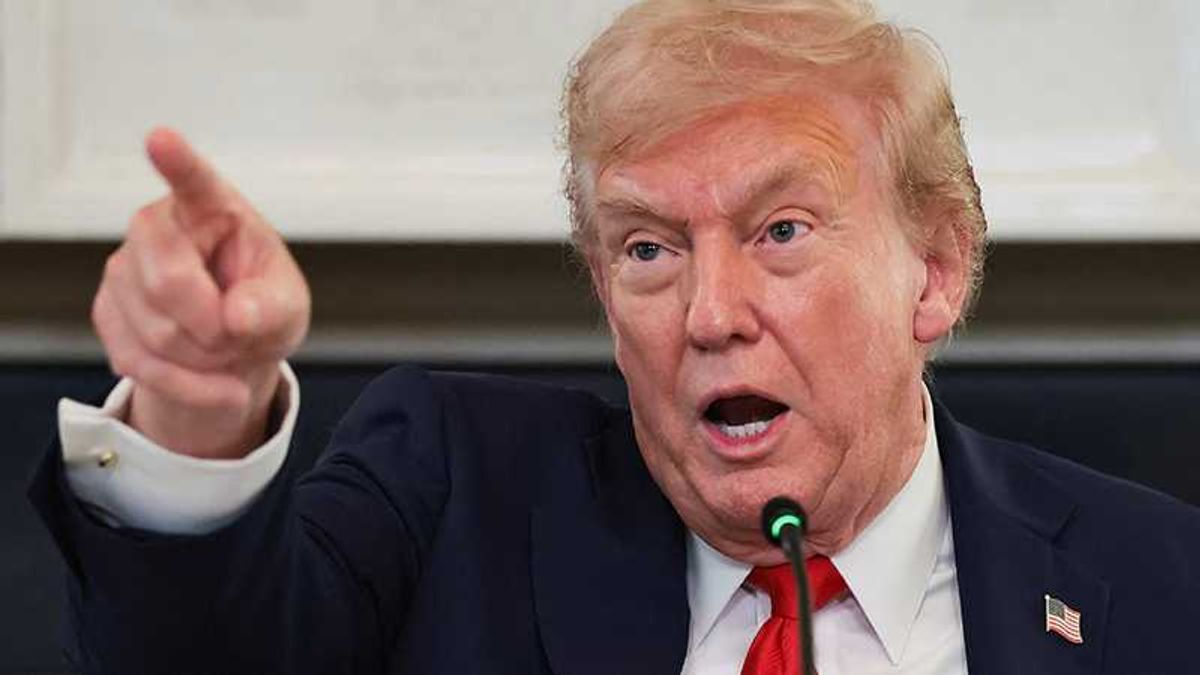
U.S. President Donald Trump points a finger as he speaks during a roundtable on antifa, an anti-fascist movement he designated a domestic "terrorist organization" via executive order on September 22, at the White House in Washington, D.C., U.S., October 8, 2025. REUTERS/Evelyn Hockstein

President Donald Trump threatened to send National Guard troops to San Francisco during an interview on Fox News on Sunday, according to a new report.

The New York Times reported that Trump reiterated the threat during an interview on the Fox News program “Sunday Morning Futures" with host Maria Bartiromo. His comments come at a time when the administration is deploying troops to several Democratic-run cities such as Los Angeles, Memphis, and Chicago.

“We’re going to go to San Francisco. The difference is I think they want us in San Francisco,” Trump told Bartiromo on her show.

“San Francisco was truly one of the great cities of the world. And then 15 years ago it went wrong, it went woke,” he said. He added that, “We’re going to make it great.”

Trump appeared to be referencing to comments from Salesforce CEO Marc Benioff, who told The New York Times last week that San Francisco doesn't "have enough cops, so if they can be cops, I’m all for it,."

Benioff apologized for the comments on Friday.

“Having listened closely to my fellow San Franciscans and our local officials, and after the largest and safest Dreamforce in our history, I do not believe the National Guard is needed to address safety in San Francisco,” Benioff wrote in a post on X.

Read the entire report by clicking here.


SAN FRANSISCO NIGHTS THE ANIMALS

CONCENTRATION MOON FRANK ZAPPA


'Nobody Wants You Here': Gavin Newsom Hits Trump With A Scathing 'Fact Check'

Ed Mazza
Mon, October 20, 2025 
HUFFPOST

California Gov. Gavin Newsom (D) on Sunday fired back at President Donald Trump for once again threatening to send the National Guard into San Francisco.

“We’re gonna go to San Francisco,” Trump said during a Fox News interview. “The difference [from Chicago] is, I think they want us in San Francisco.”

Politics: Chicago Mayor Brandon Johnson Ups The Ante As He Calls For A General Strike

Newsom wasn’t having it.

“Fact check: Nobody wants you here,” Newsom wrote on X. “You will ruin one of America’s greatest cities.

In an awkward moment during the same interview, Trump accidentally praised Newsom.

He said San Francisco was “truly one of the great cities of the world,” but “went wrong” 15 years ago.

Newsom served as mayor of San Francisco starting in 2004, leaving office in early 2011 ― or almost exactly 15 years ago.


Gavin Newsom speaks with Donald Trump in January 2025. MANDEL NGAN via Getty Images

When Trump threatened to send troops to San Francisco earlier this month, at least one local business leader welcomed the idea... at first.

Salesforce CEO Marc Benioff, once a Hillary Clinton donor, said the city doesn’t have enough police officers and he supported Trump’s plan.

Politics: Gavin Newsom Delivers Grim Predictions About Donald Trump’s Next Move

“I fully support the president,” he told The New York Times. “I think he’s doing a great job.”

The comments caused venture capitalist Ron Conway to quit the board of the Salesforce Foundation, the company’s charitable organization, saying “I now barely recognize the person I have so long admired.”

Benioff later apologized, saying his comments were made “out of an abundance of caution.”

“Having listened closely to my fellow San Franciscans and our local officials, and after the largest and safest Dreamforce in our history, I do not believe the National Guard is needed to address safety in San Francisco,” he wrote on X.

He also said his company would give the city $1 million to use as signing bonuses to hire new police officers.


Members of the Texas National Guard assemble in Elwood, Illinois, at the Army Reserve Training Center in the southwest suburb of Chicago, on Tuesday, Oct. 7. 2025. (Brian Cassella/Chicago Tribune/Tribune News Service via Getty Images) Chicago Tribune via Getty ImagesMore

Trump has sent the National Guard into multiple cities ostensibly due to high crime rates, calling Chicago, for example, a “hellhole” of crime. He’s also threatened to send troops into additional cities, including San Francisco.

However, critics say he’s targeting cities with Democratic leaders in Democratic states, while ignoring high-crime cities and states with Republican leaders.

Politics: Karoline Leavitt’s ‘Incredibly Dangerous’ Rant About Democrats Draws Instant Backlash

Some of the cities he has threatened actually have declining crime rates. Newsom shared one report that finds San Francisco’s homicide rate is on track for its lowest level since the 1950s.

Trump likewise sent troops into Washington, D.C. claiming the city’s crime numbers “get worse” and the situation is “totally out of control.”

However, the city’s crime rate is actually falling.

Trump claims ‘unquestioned power' to deploy troops to San Francisco under Insurrection Act

Aidin Vaziri
San Francisco Chronicle
Sun, October 19, 2025 


President Donald Trump said in a Fox News interview that he has "unquestioned power" to deploy the National Guard to U.S. cities and that San Francisco is "next." (Andrew Caballero-Reynolds/Tribune News Service)

President Donald Trump said he has "unquestioned power" to deploy the National Guard and reaffirmed that San Francisco will be the next city to face federal intervention.

In an interview that aired Sunday on Fox News' "Sunday Morning Futures," Trump floated invoking the Insurrection Act - a centuries-old law that allows presidents to deploy troops on U.S. soil.

"Don't forget I can use the Insurrection Act," he said. "Fifty percent of the presidents almost have used that. And that's unquestioned power. I choose not to, but I'm met constantly by fake politicians, politicians that think that they - you know, it's not a part of the radical left movement to have safety. … These cities have to be safe." Only about one-fourth of presidents have invoked the act.

Related: ‘The only solution': Elon Musk backs call to deploy federal troops to San Francisco


Read more: ‘People have had it': No Kings protests inspire Bay Area crowds, exceed expectations

Trump told host Maria Bartiromo that San Francisco is next, setting up another potential showdown with Democratic leaders over presidential authority and local control.

"The difference is, I think they want us in San Francisco," he said. "San Francisco was truly one of the great cities of the world. And then, 15 years ago, it went wrong. It went woke."

Soldiers with the California National Guard and U.S. Marines form a line outside the North Los Angeles Federal Building during the June No Kings protest. (Stephen Lam/S.F. Chronicle)

Trump has already deployed the National Guard to Los Angeles, Memphis, Chicago and Washington, D.C. After a trial in federal court, a judge ruled that the Los Angeles deployment violated the law because troops acted as police, a violation of the Posse Comitatus Act. Federal judges have also blocked his attempt to send troops to Portland, Ore.

Gov. Gavin Newsom was quick to fire back on Sunday.

More in U.S.

A Video Of Obama Exposing How He Thinks MAGA Would React If He Sent Troops To Red States Is Going Viral, And It's A Startling Reminder Of The Double Standard
BuzzFeed1.8K


"Fact check: Nobody wants you here," he wrote on X. "You will ruin one of America's greatest cities."

Trump's comments came amid a separate legal battle over his administration's attempt to deploy National Guard troops to Chicago. A federal judge temporarily blocked that move, ruling there was no evidence of a "danger of rebellion."

The White House has appealed to the Supreme Court, arguing that the decision "impinges on the president's authority."

National Guard soldiers stand by Friday as visitors check out the Ellipse in Washington, with the White House in the background. (Rahmat Gul/Associated Press)


In San Francisco, local officials have already made clear they don't want federal troops in the city. Mayor Daniel Lurie said last week that the city's police department is seeing progress in both recruitment and crime reduction.

"We have a lot of work to do, but I trust our local law enforcement," Lurie said at a police academy news conference on Wednesday. "We in San Francisco are doing the work each and every day."

District Attorney Brooke Jenkins said city leaders "have this issue under control" and criticized the idea of federal troops as "resources being imposed upon our communities."

Prominent tech figures have urged federal intervention in San Francisco. Elon Musk and investor David Sacks backed sending in federal forces, and Salesforce CEO Marc Benioff initially echoed the idea before walking it back and pledging $1 million to support larger hiring bonuses for new police officers.

The Posse Comitatus Act bars using federally controlled troops - including a federalized National Guard - as local police. Only a formal Insurrection Act declaration creates a narrow exception for domestic law enforcement in extraordinary circumstances.

Trump's remarks follow a series of actions directed at Democratic-led cities.

On Friday, the White House announced it would pause $11 billion in infrastructure projects in places such as San Francisco, New York and Baltimore, citing budget constraints. Critics called the move an act of political retaliation.


National Guard soldiers conduct a community safety patrol at Tom Lee Park in Memphis last Sunday. (George Walker IV/Associated Press)

Meanwhile, No Kings protests drew millions nationwide Saturday.

In response, Trump shared an AI-generated video depicting himself as "King Trump" flying a jet that dumps brown sludge resembling feces over demonstrators.

Newsom wrote in a separate post: "7 million Americans turned out yesterday to peacefully protest a monarchy. It was the biggest protest the country has ever seen. And despite the GOP's best efforts to sow hatred and chaos, you stood firm in peace and unity. That's what real patriotism looks like."

Asked about the ongoing demonstrations by NPR, White House spokesperson Abigail Jackson responded: "Who cares?"

This article originally published at Trump claims ‘unquestioned power' to deploy troops to San Francisco under Insurrection Act.


Trump says government will send National Guard troops to San Francisco

John Krinjak
Sun, October 19, 2025 

The Brief

In an interview on FOX Sunday, Pres. Donald Trump suggested that San Francisco may be the next city to see a deployment of National Guard troops.


Trump claimed in the interview that "I think they want us in San Francisco," something which many officials and residents dispute.


Trump claims he can use the Insurrection Act to deploy the Guard, but experts say there will be legal roadblocks for the administration.

SAN FRANCISCO, Calif. - On Sunday, President Donald Trump again threatened to send National Guard troops to San Francisco, and says he may invoke the Insurrection Act to do it.

Trump even suggested residents want the troops, a comment that did not go well with many across the city. Meanwhile, any timeline for a potential deployment remains unclear.
"We're going to do San Francisco."

In an interview on the FOX News show "Sunday Morning Futures", Trump spoke about his deployment of National Guard troops to Chicago – and suggested again that San Francisco might be next.

Host Maria Bartiromo asked Trump a direct question: "Are you going to San Francisco next?"

Trump responded, "We're going to go to San Francisco. The difference is I think they want us in San Francisco. San Francisco was truly one of the great cities of the world. And then 15 years ago it went wrong. It went woke."
"San Franciscans don't want him."

But Democratic State Senator Scott Wiener of San Francisco took issue Sunday with those claims.

"First of all, San Franciscans don't want him to send his personal army to occupy and invade San Francisco. We don't want that. So he needs to go away, back off. But we also know that he hates San Francisco, he hates what we represent because we support immigrants, we support LGBTQ people," said Wiener.

Trump claims that he can use the Insurrection Act to deploy the National Guard.

The backstory

All this comes after Salesforce CEO Mark Benioff suggested troops could help with San Francisco Police shortages.

Benioff later walked back those comments, with Mayor Daniel Lurie underscoring that SFPD has the situation handled.

"We have seen crime go down in Union Square 40 percent. Crime city-wide is down 30 percent. We are at 70-year lows when it comes to homicides," said Lurie.

More in U.S.

Best signs and costumes from the nationwide ‘No Kings’ protests condemning the Trump administration
The Independent

"The city's putting their best effort in to make sure that it is safe around here. You see SFPD roaming around," said Richard Soriano, who opposes the National Guard being deployed to San Francisco.

Despite those counterarguments, Trump is doubling down.

"We're going to go to San Francisco, and we're going to make it great. We're going to make it great. It'll be great again. San Francisco is a great city. It won't be great if it keeps going like this," Trump said in the FOX News interview.
How will this play out? Expert weighs in

"I think it'll be the same as it was in Portland, the same as it was in Chicago: two different courts, and they both said that the facts on the ground do not add up to the facts necessary to invoke Section 10 of the US Code or the Insurrection Act," said Steve Woolpert, professor emeritus of politics at St. Mary's College of California.
"Nobody that lives here wants it."

People we spoke to in Union Square say the National Guard can stay away from their city by the bay.

"I don't think anybody in San Francisco actually wants it. Nobody that lives here wants it. It's just a political stunt and makes him feel good," said Ashley Brand, who opposes the National Guard in San Francisco.

"Our new mayor is great and he's doing a great job, and San Franciscans are out and about. I'm sorry, it's absurd. It's just distraction," said Jeanne Himy of San Francisco. "I don't feel unsafe here. And I'm an old lady, you know.

Trump claims he has "unquestioned power" to deploy troops to San Francisco under the Insurrection Act.

Experts say any legal battle over all this would likely end up at the U.S. Supreme Court.

The Source

Interview with Pres. Trump on FOX News, interviews by KTVU reporter John Krinjak, and previous reporting


Trump promises to deploy troops to SF: 'We're going to go to San Francisco'

Gabe Lehman
Sun, October 19, 2025 


U.S. President Donald Trump answers questions from reporters after signing a Presidential Memorandum in the Oval Office on September 15, 2025 in Washington, DC. (Kevin Dietsch/Getty Images)

President Donald Trump reiterated his intention to deploy National Guard troops to San Francisco on Sunday, going as far as claiming he may invoke the Insurrection Act if needed.

Speaking to Fox News' Maria Bartiromo in an interview pubbed on Oct. 19, the president said in no uncertain terms that he was planning to send troops to San Francisco.

"We're going to go to San Francisco," Trump said in an interview for the "Sunday Morning Futures" show. "The difference (as opposed to Chicago) is, I think they want us in San Francisco. San Francisco was truly one of the great cities of the world, and then 15 years ago, it went wrong. It went woke.

"Our cities that are Democrat-run - exclusively just about - are unsafe cities. They're a disaster, and I'm going to save the cities," Trump said.

National Guard troops have already been deployed in United States cities including Los Angeles and Chicago. Trump has also stated his intent to send troops to Portland, Ore., but a judge has blocked their deployment so far. The president's most recent comments come a day after Americans took to the streets in massive numbers for "No Kings" protests in the Bay Area and across the country.

Trump also broached invoking the Insurrection Act, a rarely used but extremely powerful presidential tool that allows the president to use military force within the United States and against Americans.

"And don't forget, and I haven't used it, but don't forget. I can use the Insurrection Act. 50% of the presidents, almost, have used that, and that's unquestioned power," Trump said.

According to the Brennan Center, the Insurrection Act can be used "to suppress rebellion or domestic violence or to enforce the law in certain situations." It has been invoked 30 times in the country's history, most recently in 1992 during the Rodney King riots in Los Angeles.

Trump's threats to send National Guard troops to San Francisco have already stirred controversy. In the leadup to Salesforce's Dreamforce convention, company CEO Mark Benioff, a longtime Democratic supporter, said he supported Trump's plan and welcomed the idea of sending troops to San Francisco. Backlash to the comments was swift and Benioff eventually issued an apology on Friday.

More in U.S.

‘No Kings’ rally in downtown Chicago draws more than 100,000 protesters: ‘You fight for the people’
Chicago Tribune

"My earlier comment came from an abundance of caution around the event, and I sincerely apologize for the concern it caused," Benioff wrote on X.com. "Having listened closely to my fellow San Franciscans and our local officials, and after the largest and safest Dreamforce in our history, I do not believe the National Guard is needed to address safety in San Francisco."

Despite Benioff's reversal, the conversation around a possible National Guard deployment in San Francisco is clearly intensifying.

This article originally published at Trump promises to deploy troops to SF: 'We're going to go to San Francisco'.


Trump mulls invoking the Insurrection Act and signals he’ll send troops to San Francisco

John Bowden
Sun, October 19, 2025 
THE INDEPENDENT


President Donald Trump strongly suggested that he was preparing to use the Insurrection Act to crack down on dissent nationwide in an interview Sunday while warning that National Guard deployments would take place in San Francisco next.

He spoke in a pre-recorded discussion that aired Sunday on Fox News’s Sunday Morning Futures with Maria Bartiromo about using the power of the federal government to militarize the National Guard in states where he and his team claim that Democratic officials are refusing to cooperate with federal law enforcement and crime-fighting efforts, including the White House’s mass deportation campaign.

During the conversation, he falsely asserted that nearly half of all U.S. presidents have invoked the act. Fifteen U.S. presidents have invoked the Insurrection Act (out of 45 men to hold the position in total).


“Don’t forget, and I haven’t used it, but don’t forget: I can use the Insurrection Act. 50 percent of the presidents, almost, have used that. And that's unquestioned power,” the president told Bartiromo, before making a somewhat garbled point about Democratic state officials: “I choose not to. I’d rather do this [without invoking it]. But I’m met constantly by fake politicians, politicians that think that they – you know, it’s not a part of the radical left movement to have safety.”

He also confirmed that he was imminently planning to send National Guard troops to San Francisco, while describing himself as “the chief law enforcement officer of the United States.”


Donald Trump said that crime in San Francisco was out of control, even though it's at a 20-year-low overall (AFP via Getty Images)

“San Francisco was truly one of the great cities of the world, and then 15 years ago, it went wrong. It went woke,” said the president. “But we’re going to go to San Francisco, and we’re going to make it great.”

The city, which is experiencing a 20-year low in its overall crime rate, has areas where crime and issues including drug use and homelessness are persistent problems such as the famous Tenderloin district. In 2023, according to city statistics, the Tenderloin district averaged more than four calls reporting violent crimes per day. Rates of violent and non-violent crime have fallen in the district, but still remain higher than in surrounding areas for the most part.

By sending troops to San Francisco, Trump would once again be putting himself in direct conflict with Gavin Newsom, California’s Democratic governor. Newsom, who is a leading possible contender for the 2028 Democratic presidential nomination, challenged the president in the courts after Trump used National Guard forces to protect ICE agents and detention centers in Los Angeles earlier this year.

“California will resist any effort by Donald Trump to militarize another American city for his own vanity and deranged fantasies,” a spokesperson for the governor told Politico in a statement. “California doesn’t want or need the National Guard to police its streets. In this state, we take care of our own communities—unlike Trump who can’t even pay the soldiers under his command.”


Gavin Newsom halted Trump’s use of the National Guard in Los Angeles earlier this year (AP)

The White House and Department of Justice have battled state leaders in the courts over the efforts to expand Trump’s National Guard deployments. The president deployed troops to Memphis with the support of the state’s Republican governor, and has battled with Democratic leaders in Illinois and Oregon over sending troops to Chicago and Portland.

A senior Border Patrol official tweeted that criminal organizations were allegedly plotting to “kidnap and kill law enforcement officers” in cities like Chicago, while Attorney General Pam Bondi told a Senate panel earlier this month that the deployments were necessary to protect ICE facilities.

San Francisco’s mayor hasn’t issued a statement directly responding to the president’s threats, but on Saturday released a video message thanking thousands of city residents who hit the streets as part of nationwide “No Kings” protests against the president.

Millions in cities and towns in every state turned out on Saturday for the demonstrations, which come after months of the Trump administration’s threats to federalize U.S. cities and the growing presence of ICE agents and raids in communities across the country. White House officials cast the demonstrators as far-left radicals and “terrorists” ahead of Saturday’s events. No major acts of violence were reported, despite the massive numbers protesting around the U.S.

The president trolled protesters on Sunday with another AI-generated video depicting him in a fighter jet dropping excrement on crowds in Times Square.