‘The Last First: Winter K2’ Widens the Emotional and Ethical Frame of the Mountaineering Documentary
Tatsam Mukherjee
26/Jan/2026
THE WIRE
It reminds us that history’s greatest feats are often built on quieter, irreversible losses.
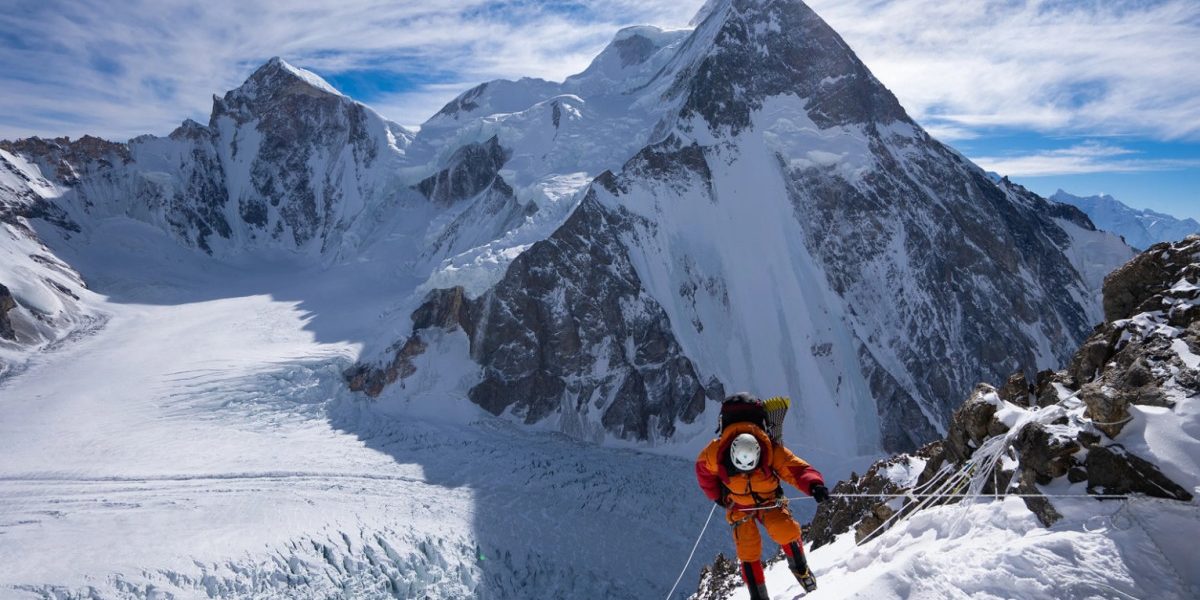
A still from The Last First: Winter K2.
Sometime in December 2020, Icelandic mountaineer John Snorri was on the cusp of making history. He was getting ready to scale the second highest mountain peak, the K2, in the winter. Around then the temperatures go down to -60 degrees celsius near the peak. Compounded with the steep incline of the K2 (part of the Karakoram range) with winds blowing up to 150 mph, even experienced mountaineers dubbed it as a tricky climb. Every other record in the mountaineering world had been achieved. Having arrived in Northern Pakistan a good two months in advance, to help himself acclimatise to the conditions, Snorri – with his Pakistani counterparts, Ali Sadpara and his son Sajid – looked set to take on arguably the most gruelling climb ever attempted.
However, as they prepared themselves at base camp – which had been silent since Snorri’s crew was the only one there – they were surprised to hear other voices. It was a Nepali crew – led by Nirmal Purja and Mingma Gyabu Sherpa – who were attempting for the same record as Snorri. A few days apart, there was also a commercial expedition led by a hiking company called Seven Summits, which brought a dozen climbers with varying skill. Even though it wasn’t how Snorri had intended this to be, the climb had suddenly become a race.
The mountaineering documentary has carved a niche for itself in the recent years, with Alex Honnold-starrer, Free Solo, winning the Academy Award for Best documentary, and climbers like Honnold, Tommy Caldwell becoming worldwide celebrities, thereby influencing more people to take on this extreme sport. Most mountaineering documentaries, are as much thrillers, as also cautionary tales about those testing the limits of one’s hubris. Amir Bal-Lev’s The Last First: Winter K2 offers a sensational, multi-faceted recounting of the tragic climb in 2021 – which resulted in more than half a dozen deaths – thereby revising and expanding the scope of what mountaineering documentaries should cover.
A still from The Last First: Winter K2.
What begins as a film with Snorri as its protagonist, suddenly shoves him off stage, to platform more than half a dozen characters, who are all climbing for their own personal reasons. We learn about Ali Sadpara’s legend in Pakistan (and around the world) while seeing him being jovial and silly, dancing to popular Pakistani songs. We learn about Purja, a Nepali mountaineer who inspired a Netflix documentary, and has gained notoriety in climbing circles in the last few years. And also about filmmaker Elia Saikaly – who wished to film this historic moment, and a company called Seven Summits, which led an expedition of amateur climbers including the likes of pro-endurance athlete, Colin O’Brady.
Bar-Lev’s film does a beautiful dance, shifting the film’s point-of-view several times in the first hour, to showcase the complexity of the dynamic during the climb. There’s an obvious tension between the Westerner Snorri and Purja’s crew of Sherpas. Most mountaineering summits are credited to white-skinned folk, while locals who charted the route for them are left as footnotes. The hiking company, Seven Summits, sees this climb as a way of survival – as the world shut down for several months during the pandemic. They occupy a murky territory during the proceedings, where they fail to convince some of their patrons to descend from the second camp (about 7000m above sea level) – the climb from where could be potentially fatal.
Bar-Lev is also interested in how social media has penetrated and probably contributed to some foolish decisions in mountaineering, where several folks, drunk on their optimism, endanger the lives of other climbers. There’s also the track of nationalistic pride fuelling these climbs, where Purja wants to hoist Nepal’s flag on the peak of K2, and there’s the intrusion of the Pakistani military telling Ali and Sajid Sadapara to continue the climb alongside Snorri, for the sake of the nation’s pride.
Bar-Lev’s film often delves into the ‘bravado’ of extreme sports, where everyone is competing with others, but also with their own mind, trying to explore the limits of their own body. But unlike other documentaries, it isn’t in awe of the daredevilry of its subjects. It understands that these climbers are dangling over the thin crack between bravery and foolishness. It shines a light on the human mind, capable of cut-throat cruelty, greed, overestimating one’s potential, and of grappling with unimaginable grief. The film doesn’t spend more than a few minutes on Purja’s ascent on an early morning, which allowed his crew to win the race and become the first person to conquer the K2 in the winter.
The Last First: Winter K2 doesn’t care so much about this conquest. The film goes on for another half an hour, after the race has seemingly ended. It recounts the reasons behind what propelled some of the other seemingly level-headed folks to keep going, only for some to meet with tragic ends. It underlines a variety of the reasons, proving to be an indictment of the adventure film. In looking beyond the summit, The Last First: Winter K2 widens the emotional and ethical frame of the mountaineering documentary. It reminds us that history’s greatest feats are often built on quieter, irreversible losses.
*The Last Winter: Winter K2 had its world premiere at the 2026 Sundance film festival in Park City, Utah.


No comments:
Post a Comment