Wednesday, November 12, 2025

The Super Predator: How Humans Became The Animal Kingdom’s Most Feared Hunters – OpEd

November 12, 2025
By John Divinagracia

Humanity’s evolution into a super predator has reshaped ecosystems and instilled a primal fear in much of the animal kingdom.

Hunting is considered critical to human evolution by many researchers who believe that several characteristics that distinguish humans from our closest living relatives, the apes, may have partly resulted from our adaptation to hunting, including our large brain size.

Over time, however, the need to hunt for survival has been replaced by greed, leading to the exploitation of natural resources, which is destroying the environment and causing the extinction of thousands of species.

There has been a 60 percent decrease in the wildlife population between 1970 and 2014, according to the Living Planet 2018 report by the World Wildlife Fund. Referring to the report, the Guardian stated that “the vast and growing consumption of food and resources by the global population is destroying the web of life, billions of years in the making, upon which human society ultimately depends for clean air, water and everything else.”
Hunting for Survival

The San People, also known as the Bushmen of the Kalahari Desert in Africa, have for generations employed persistence or endurance hunting to chase down prey such as the kudu. Groups of three or more men find a herd and scatter it, targeting the weakest, slowest, or heaviest animal in the herd. During the hunt, one of the Bushmen serves as the main runner, who finishes the last legs of the hunt by tracking and finally killing the prey. Although the Bushmen do employ more familiar tactics like ambushing, shooting poisoned darts, and throwing spears, persistence hunting has been a standby of the San People in an environment that favors human endurance and stamina.

Over the years, however, persistence hunting has become a topic of debate. In a 2007 article published in the Journal of Human Evolution, Henry T. Bunn, a paleoanthropologist from the University of Wisconsin-Madison, and Travis Rayne Pickering, a professor of anthropology from UW-Madison, questioned the assumption that endurance training was “regularly employed” during hunting and scavenging. They argued that humans would have relied more on their brains than their legs to hunt.

Bunn and Pickering studied a pile of bones found in the Olduvai Gorge in Tanzania, dating back to 1.8 million to 2 million years ago—which were unearthed by paleontologist Mary Leakey—and discovered that “most of the animals in the collection were either young adults or adults in their prime… To Bunn and Pickering, that suggested the animals hadn’t been chased down. And because there were butchering marks on the bones with the best meat, it was also safe to assume that humans hadn’t scavenged animal carcasses after being killed by other predators… Instead, Bunn believes ancient human hunters relied more on smarts than on persistence to capture their prey,” according to a 2019 article in Undark magazine.

Opposing this debate are researchers such as Eugène Morin, an evolutionary anthropologist at Trent University in Canada, and Bruce Winterhalder, from the Department of Anthropology and the Graduate Group in Ecology at the University of California, Davis. A 2024 article written by them, published in the journal Nature Human Behavior, revealed that they scoured ethnographic records and identified almost 400 cases of long-distance running used for hunting around the world. Their research on energy expenditure shows that “running can be more efficient than walking for pursuing prey,” stated a Smithsonian magazine article.

Many other scholars have written about the “locomotor endurance” that humans possess compared to other animals, as well as the anatomical advantages of long legs, Achilles tendons, arched feet, and large, stress-bearing joints in our legs, which collectively contribute to our ability to run long distances.

Whether humans originally evolved as persistence hunters is a matter of debate. What is undeniable is that humans are among the most deadly predators on Earth. “From agricultural feed to medicine to the pet trade, modern society exploits wild animals in a way that surpasses even the most voracious, unfussy wild predator,” said a Smithsonian magazine article.
Ways to Kill

A 2023 study, “Humanity’s Diverse Predatory Niche and Its Ecological Consequences,” published in Communications Biology, describes human predation as a commercial enterprise rather than a necessity:

We consider predation by humans broadly—and from the perspective of effects on prey populations—as any use that removes individuals from wild populations, lethally or otherwise… [ranging] from removal of live individuals for the pet trade, to harvesting by societies that rely heavily on hunting and fishing, to globalized, commercial fishing and trade of vertebrates, and interactions among these activities.

When a shark, a tiger, a boa constrictor, or even the rusty-spotted cat of South Asia kills another animal, its primary aim is survival. As carnivores, these animals must eat meat, and therefore, they must kill. But humans go beyond the necessary. In our years of remodeling landscapes and industrializing the wilderness, we have pushed animals toward extinction. Our activities have had maximum impact on the ocean, leading to the exploitation of 43 percent of Earth’s marine species. While these species are killed for several purposes, 72 percent of marine and freshwater fish species are being used for food. Taxonomically, birds were the most predated group, with 46 percent mainly being used as pets or for other “recreational pursuits.”

Meanwhile, “in the terrestrial realm, use as pets is almost twice as common (74 percent) as food use (39 percent),” according to the 2023 study. Sport hunting and other forms of activities (i.e., for trophies) accounted for 8 percent of the use of exploited terrestrial species.

Due to humanity’s alarming exploitation of 14,663 species, we are driving 39 percent of these species toward extinction. “We exploit around a third of all wild animals for food, medicines, or to keep as pets… That makes us hundreds of times more dangerous than natural predators such as the great white shark,” according to a 2023 BBC article, referring to an analysis by scientists. The article further stated that we were entering the Anthropocene, “the period during which human activity has been the dominant influence on climate and the environment.”

Today, human-induced climate crises and environmental damage are the forces that pulverize bones to dust. An analysis of peer-reviewed literature published between 2012 and 2020 revealed 99 percent consensus that human activity shapes climate change—a collective power that no other species on Earth has ever had. Not even the dinosaurs would have been able to out-roar the din of factories and exhaust pipes.
Fearful Symmetry

Human beings have been termed “super predators,” surpassing other famous predators in the number of prey they kill. This has led to animals fearing us. “Consistent with humanity’s unique lethality, a growing number of playback experiments have demonstrated that fear of humans far exceeds that of the non-human apex predator in the system. In Africa, 95 percent of carnivore and ungulate species (e.g., giraffes, leopards, hyenas, zebras, rhinos, and elephants) in the Greater Kruger National Park ran more or faster on hearing humans compared with hearing lions,” stated the Proceedings of the Royal Society of London. Series B: Biological Sciences.

An atavistic fear also afflicts animals when they see a human. We might be slower and weaker creatures compared to bears and lions, but to these animals, we look monstrous. “There is a threat level that comes from being bipedal,” said John Hawks, a paleoanthropologist at the University of Wisconsin-Madison, to Live Science. So when, say, a kudu in the Kalahari Desert spots one of the San People or Bushmen jogging or walking toward it, the kudu bolts.

This ecology of fear has shifted the predator-prey paradigms, as ungulates such as white-tailed deer and moose will “shield” their offspring by giving birth close to houses and villages, utilizing the local predators’ fear of humans to create a safe environment for their offspring to grow up.

Wildlife researcher Hugh Webster said that research about animals fearing humans shows that “human impacts on animal behavior are even more wide-reaching than we thought. Perhaps the key point is that we need to identify the most disturbance-sensitive species and engineer protections for them that allow freedom from this pervasive fear,” writes Phoebe Weston, a biodiversity writer for the Guardian.

In the animal kingdom, humans now occupy a unique role, surpassing all other predators in lethality and reshaping the natural order through unchecked consumption and industrial-scale exploitation. Our presence instills a pervasive fear across ecosystems, altering animal behavior and disrupting millennia-old predator-prey dynamics. Yet this super predator status comes with unprecedented responsibility. Unlike other apex predators, humans possess the awareness, technology, and moral capacity to recognize the consequences of our actions and to mitigate the harm we inflict. The question before us is whether we will continue to exploit the web of life for short-term gain or harness our intelligence and ingenuity to protect it—ensuring that future generations inherit a planet where humans are not feared as destroyers, but remembered as stewards of the living world.


Author Bio: John Divinagracia is a writer and novelist. He is the author of It’s Always Snowing in Iberia (2021) and was a fellow at the 19th Ateneo National Writers Workshop in 2022. He is a writer at WorldAtlas and a contributing editor and author at the Observatory. He holds a cum laude degree in creative writing from Ateneo de Manila University in the Philippines.


Credit Line: This article was produced by Earth | Food | Life, a project of the Independent Media Institute.

CRIMINAL CAPITALI$M BUSINESS AS USUAL

Ukraine’s anti-graft bureau targets ex-Zelenskiy business partner in sweeping energy corruption probe

Ukraine’s anti-graft bureau targets ex-Zelenskiy business partner in sweeping energy corruption probe
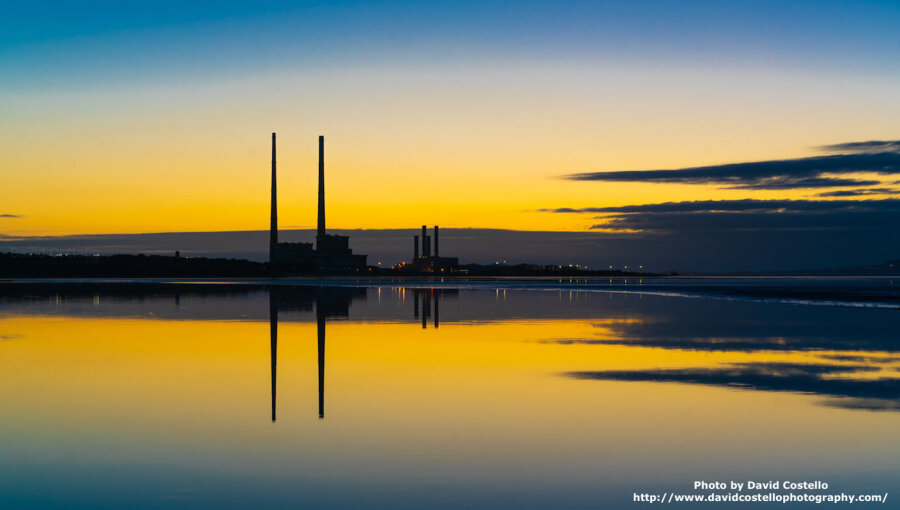
Ukraine's anti-corruption investigators have busted a $100mn energy system corruption ring that involves some of President Zelenskiy's close friends and colleagues in yet another scandal to rock his administration. / David Costello
By bne IntelliNews November 11, 2025

Ukraine’s National Anti-Corruption Bureau (NABU) has carried out a series of high-profile searches in Kyiv, including premises linked to Timur Mindich, a former business partner of President Volodymyr Zelenskiy, as part of what investigators describe as a major $100mn corruption investigation in the country’s energy sector, reported The Kyiv Independent.

Law enforcement sources told The Kyiv Independent that Mindich fled the country only hours before investigators from the independent NABU  raided his home and offices on November 10.

Mindich co-owns Kvartal 95, the production company founded by Zelenskiy, and has remained a figure of interest to investigators amid earlier probes into his alleged role in state energy contracts and drone production firms.

This is the second time Zelenskiy has been embroiled has been embroiled in corruption charges. Earlier this year he attempted to take NABU under his direct control by ramming through Law 21414 that guts Ukraine’s anti-corruption drive but was quickly forced to backtrack following the first anti-government protests since the start of the war with Russia. At the time, NABU was reported investigating figures from Zelenskiy inner circle for corruption.

Now Zelenskiy has been caught up in fresh allegations as Mindich remains a close personal friend of Zelenskiy’s and wealthy. Zelenskiy has surrounded himself with friends and former colleagues from Kvatal95, including his head of staff, and Ukraine’s Ă©minence grise, Oleksiy Termek.

Investigators released picture of a golden toilet in Mindich’s opulently decorated home and numerous packets of hundred dollar bills following their raid.

NABU claims that officials that were not appointed to run state controlled energy companies took control of procurement and ran a an alleged $100m kickback scheme involving Energoatom, the state-run nuclear power company that supplies more than half of the country’s electricity.

NABU said in a statement posted on social media that a “high-level criminal organisation” orchestrated the alleged scheme, led by a businessman and involving a former adviser to the energy minister, Energoatom’s head of security, and four other employees. In total, approximately $100mn passed through this so-called laundromat,” NABU said, without naming the suspects.

“The minister’s adviser and the director of security at Energoatom took control of all the company’s purchases and created conditions under which all contractors had to pay illegal benefits,” according to NABU chief detective Oleksandr Abakumov, Al Jazeera reports.

In his evening address, Zelenskiy backed away from Mindich and others under investigation, praising the bureau’s work but avoiding mentioning any names.

“Any effective actions against corruption are very needed. The inevitability of punishment is necessary,” he said. The president added that officials must cooperate fully with law enforcement, stressing that “there must be convictions.”

Expanding investigation

NABU confirmed it is conducting “a major anti-corruption operation” jointly with the Specialised Anti-Corruption Prosecutor’s Office (SAPO). According to its statement, the agency documented “the activities of a high-level criminal organisation” that had established control over several state-owned enterprises, including the nuclear energy giant Energoatom.

Officials said the network extracted bribes of between 10% and 15% from Energoatom contractors. A 15-month investigation involving over 1,000 hours of recorded conversations culminated in 70 searches across Ukraine, NABU reported.

“In fact, the management of a strategic enterprise with an annual revenue of more than UAH200bn ($4.7bn) was carried out not by officials, but by outsiders who had no formal authority,” the bureau said.

Audio recordings released by NABU identify several figures by their code names — “Roket,” “Tenor,” “Karlson” and “Professor.” According to sources cited by the Kyiv Independent, “Roket” is Ihor Myroniuk, a former adviser to then-energy minister Herman Halushchenko; “Tenor” is Dmytro Basov, a former prosecutor and Energoatom security chief; “Professor” is believed to be Halushchenko himself; and “Karlson” — the alleged ringleader — is Mindich.

The tapes appear to capture conversations about steering state tenders, collecting kickbacks and delaying projects to maximise profits. One recording reportedly includes “Roket” describing anti-drone defences for energy facilities as “a waste of money.”

Political reverberations

The revelations have sent shockwaves through Kyiv’s political and business circles. Justice Minister Herman Halushchenko — who served as energy minister from 2021 to 2025 — was among those searched, according to law enforcement sources.

Mindich, who has long denied wrongdoing, is believed to have left Ukraine before the raids began. In June, NABU arrested his relative Leonid Mindich while allegedly attempting to flee abroad. He was charged with embezzling $16mn from the regional energy company Kharkivoblenergo.

Zelenskiy’s political allies have been quick to frame the case as a test of Ukraine’s anti-corruption credentials, particularly as Kyiv seeks to maintain international confidence and continued Western support amid Russia’s invasion.

Prime Minister Yulia Svyrydenko told public broadcaster Suspilne that the government “is awaiting the results of the procedural actions concerning the situation with Energoatom.” She added, “Combating corruption is one of the government’s key priorities. There should be sentences and inevitable punishment for any offences.”

Current Energy Minister Svitlana Hrynchuk emphasised that Energoatom operates independently of her ministry but pledged full cooperation: “We will look into this case and respond according to the results of the investigation.”

Public reaction and controversy

Public anger has been fuelled by reports circulated on social media. MP Yaroslav Zheleznyak claimed that NABU agents found “a golden toilet” and “a golden bidet” in one of Mindich’s Kyiv properties — a detail that became a symbol of alleged excess in online debate. “A golden toilet is in one of the bathrooms of Zelenskiy’s business partner Timur Mindich,” political scientist Ivan Katchanovski posted on X, citing Zheleznyak’s statement.

Ukrainian journalist Diana Panchenko called the revelations “Zelenskiy’s personal disgrace,” writing that “if all the guilty don’t go to prison, Ukrainians will stop fighting.”

While NABU has not commented on those specific claims, the bureau said it had identified evidence of “a sophisticated money-laundering network” involving around $100mn in illicit proceeds. Investigators allege the group channelled funds through offices linked to the family of fugitive ex-lawmaker Andrii Derkach, who has served as a Russian senator since 2024.

Broader implications

The scandal has erupted as Ukraine braces for another winter under heavy Russian bombardment. Just two days before the raids, Moscow launched a large-scale drone and missile strike targeting energy infrastructure — a campaign Kyiv believes is designed to cripple the power grid.

The timing of the investigation underscores the high stakes for Ukraine’s leadership. Western partners have repeatedly warned that continued financial and military support depends on tangible progress in curbing corruption.

Analysts say the Mindich case could prove a watershed moment for Zelenskiy, whose anti-corruption image helped propel him to power in 2019 but has faced scrutiny as wartime politics blur the line between business and governance.

“Whether Zelenskiy can distance himself from his former associates while preserving the independence of NABU will determine how credible Ukraine remains in the eyes of its Western allies,” said Kyiv-based political analyst Volodymyr Fesenko.

Mindich’s influence reportedly extends across banking and energy sectors. An investigation by Ukrainska Pravda earlier this year alleged he wields behind-the-scenes control over Sense Bank, which was nationalised in 2023, though the bank has not commented on those claims.

The NABU probe adds to mounting political tension between the president’s office and the anti-corruption agencies, which some officials sought to restructure earlier this year. According to Kyiv Independent sources, an attempt to curtail NABU’s autonomy in July may have been linked to the Mindich investigation.

As the searches continue, Ukraine’s anti-corruption campaign faces a defining test — one that will measure not only the resolve of investigators but the political will of those in power.

 Iraq's Sudani secures 'major victory' in general election: sources close to PM


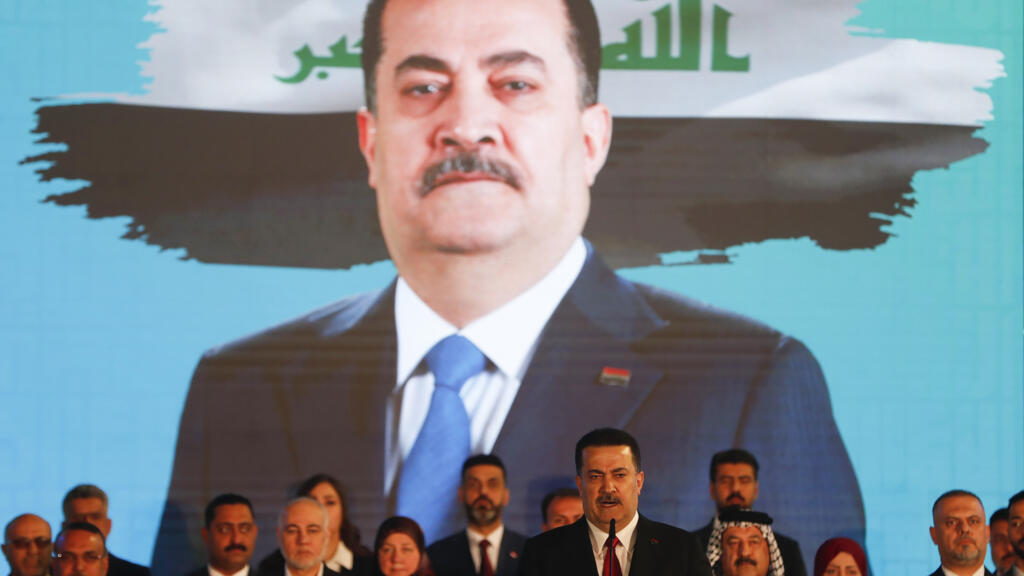
Baghdad (AFP) – Incumbent Iraqi Prime Minister Mohammed Shia al-Sudani, who is vying for a second term, has scored a big win in general elections, sources close to the premier said on Wednesday.


Issued on: 12/11/2025 -  RFI

Iraq's Prime Minister Mohammed Shia al-Sudani delivers a speech during a campaign rally in Baghdad for the Reconstruction and Development Coalition ahead of the country's parliamentary elections © AHMAD AL-RUBAYE / AFP


Iraqis on Tuesday headed to the polls for a general election that came as the country experiences a rare moment of calm in a region roiled by recent conflicts.

The next premier must answer to Iraqis seeking jobs, better infrastructure, and improved education and health systems in a country plagued by corruption and mismanagement.

But he also faces the exacting task of maintaining the delicate balance between Iraq's allies, Iran and the US, even more so now that the Middle East is undergoing seismic changes, with new alliances forming and old powers weakening.

Iraq's electoral commission is expected to announce preliminary results later in the evening, but an official close to the premier said that his "Reconstruction and Development list has secured a major victory".

Another two sources said Sudani's alliance has "won the largest bloc", with approximately 50 seats.

Sudani has emerged as a major force in Iraqi politics, after he was brought to power three years ago by an alliance of pro-Iran groups.
Difficult task

Once final results are confirmed, lawmakers are set to begin negotiations to nominate the prime minister -- an often painstaking task that has at times taken months.

With an outright majority almost impossible to achieve by any single list, the role of prime minister is determined by the coalition that can secure enough post-election allies to form the largest alliance.

In Iraq, the role of prime minister goes to the Shiite majority, the speaker of parliament to a Sunni Muslim, and the largely ceremonial presidency goes to a Kurd.

In previous parliaments, Shiite-majority parties have struck compromise deals to work together and form a government.

Sudani was brought to power in 2022 by the Coordination Framework, an alliance of powerful pro-Iran Shiite parties who formed the largest parliamentary bloc.

A senior Iraqi politician told AFP last month that the Coordination Framework is divided over supporting Sudani, with former prime minister Nuri al-Maliki reportedly likely to oppose a second term for the incumbent.
Always a balance

Even as Iraq tries to move past two decades of war since a US-led invasion toppled Saddam Hussein, the country of 46 million suffers from poor infrastructure and public services, mismanagement and corruption.

Many Iraqis who boycotted the elections told AFP the vote wouldn't bring meaningful change to their daily lives and said that it was a sham that only benefits political elites and regional powers.

Sudani has nonetheless vowed to continue on the path of "reconstruction and development".

During his three-year tenure, Baghdad has been transformed into a bustling construction hub, with new tunnels and bridges springing up across the city.

He also maintains that his government helped shield Iraq from regional turmoil in the past two years.

The next premier will have to maintain the balance between Iran and the US, the long term foes for whom Iraq has often served as a proxy battleground.

Since the US-led invasion, Iran has held sway in Iraqi politics, not only backing influential politicians but also supporting armed groups there.

The past two years have seen Israel inflict heavy losses on Tehran-backed groups in the region, and Iran itself was on the receiving end of an unprecedented Israeli bombing campaign that led to a 12-day war in June.

In addition to maintaining its foothold through the groups it backs, Tehran is also seeking to keep the Iraqi market open to products from its crippled economy.

Washington meanwhile hopes to cripple Tehran's influence, and has long pressured Baghdad to disarm Iran-backed groups.

© 2025 AFP


Iraq's parliamentary elections see 23.9% turnout by midday

Iraq's parliamentary elections see 23.9% turnout by midday
Voting centre in Iraq. / CC: Sonia
By bnm Gulf bureau November 11, 2025

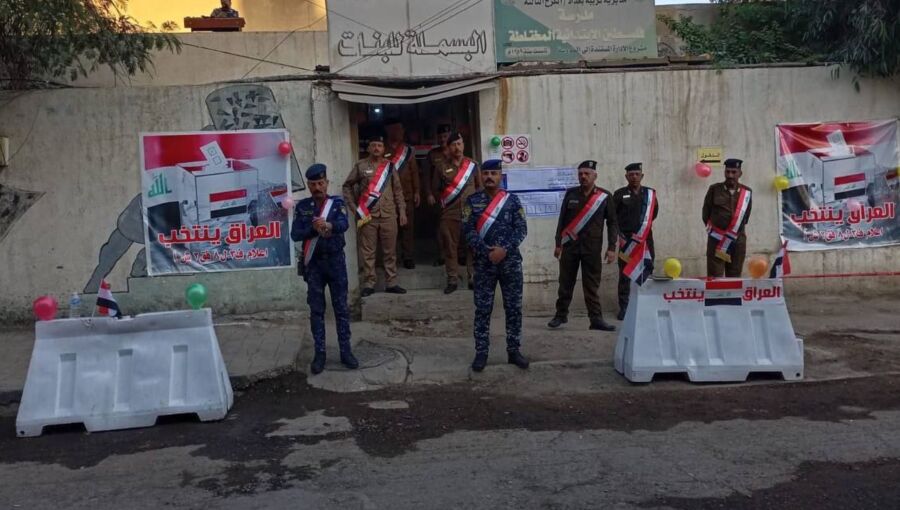
Iraq's electoral commission has announced that 23.9% of eligible voters cast ballots by midday in parliamentary elections held on November 11, with 4.795mn people voting, Anadolu Agency reported.

The Permanent Elections Commission said in its midday report that the total number of voters reached 4mn 795,000 and 685 voters by midday.

Polling stations opened at 7am local time, with electronic voting machines set to close at 6pm without extension. Some 7,743 candidates, including 5,496 men and 2,247 women, are competing in the elections.

More than 20mn voters are eligible to cast ballots in 8,703 polling centres distributed across all provinces to elect 329 members of parliament who will be responsible for electing the president and granting confidence to the government.

Mohamed Al Hassan, Special Representative of the UN Secretary-General in Iraq and head of the United Nations Assistance Mission for Iraq (UNAMI), described election day as "a moment of pride" for Iraqi democracy and an embodiment of the people's will to freely and responsibly shape their country's future.

Al Hassan told Al-Jibal platform that wide participation and distinguished organisation by the Independent High Electoral Commission, along with security forces' efforts in securing centres, confirm that Iraq is moving confidently towards consolidating the democratic path and building effective institutions that respond to citizens' aspirations.

He added that the UN is monitoring the electoral process through its teams deployed in all provinces, confirming that elections represent a basic pillar in consolidating trust between citizens and the state.

Al Hassan expressed appreciation for the Independent High Electoral Commission for its efficiency in organisation, and for security forces for their role in securing a stable electoral environment. "What we witness today of commitment and awareness among voters reflects the maturity of the democratic experience in Iraq and confirms that the people's will is the basis for shaping the future," he said.

The current parliamentary session began on January 9, 2022, and continues for four years. According to Iraqi law, legislative elections must be held 45 days before the end of the parliamentary session.

Following the close of polling, workers using tuk-tuks and large minivans began removing the metal frames used to hang candidate photos and slogans from city streets and neighbourhoods, according to Asharq Al-Awsat.

These workers, typically from low-income families living in working-class neighbourhoods, have become accustomed since previous parliamentary sessions to collecting these frames and selling them in the used goods market at prices less than half their original value.

Although the work is small-scale, obtaining the largest possible number of metal frames represents an opportunity to earn noticeable sums compared to their daily incomes, which usually do not exceed IQD 25,000 (approximately $18).

WTF

Istanbul prosecutor demands up to 2,352 years in prison for Erdogan rival Imamoglu

Istanbul prosecutor demands up to 2,352 years in prison for Erdogan rival Imamoglu
Imamoglu at a hearing in a prison courthouse held in September. / t.me/e_imamoglu
By bne IntelliNews November 12, 2025

Istanbul’s chief prosecutor on November 11 said in a filed 4,000-page indictment that Istanbul’s opposition mayor Ekrem Imamoglu should be imprisoned for 828 to 2,352 years for committing 142 corruption offences.

The multiple cases brought against Imamoglu are widely seen as the work of a regime determined to sideline him in order to prevent him from running against the president, Recep Tayyip Erdogan, in elections, which popular wisdom says would result in a clear victory for the charismatic Imamoglu. The main opposition party CHP has said it will make every effort to keep Imamoglu as its presidential candidate despite the prosecutions mounted against him. He has been in pre-trial custody since mid-March, denying any wrongdoing and describing charges brought against him as a concocted implausible absurdity designed to keep him out of politics. Imamoglu in September described the behaviour of the regime as "bankrupting hope in this country".

The Istanbul chief prosecutor, Akin Gurlek, has targeted Imamoglu as well as 401 others, saying there is a criminal corruption network with the mayor at its head.

Gurlek alleges the Turkish state has suffered losses totalling as much as Turkish lira (TRY) 160bn ($3.8bn) caused by the activities of the claimed criminal organisation, previously dubbed an "octopus-like" structure by Erdogan.

Imamoglu is cited on 12 counts of bribery, seven counts of money laundering from criminal proceeds and seven counts of fraud against public institutions and organisations.

He’s also facing allegations related to espionage and has been accused of forging his university diploma, which has been annulled. This is a difficulty in that the law states that a presidential candidate must have a degree of higher education.

The Erdogan administration denies claims that the judiciary is used as a political instrument against opponents. However, it is well known for disregarding verdicts on appeals to the European Court of Human Rights (ECtHR) that go against it.

CHP leader Ozgur Ozel on November 11 said that no-one else in his party would run for the presidency, saying of Imamoglu: "His crime is to run for the next presidency of this country. He has no other crime!"

In comments to his party’s MPs, Ozel sarcastically added: "Could he have committed electoral fraud, had a fake diploma, been a thief, a terrorist and a spy at the same time?"


GENDER APARTHEID

Taliban forces women to wear burkas to access hospitals

Taliban forces women to wear burkas to access hospitals
/ Wanman uthmaniyyah - Unsplash
By bno - Kolkata Office November 12, 2025

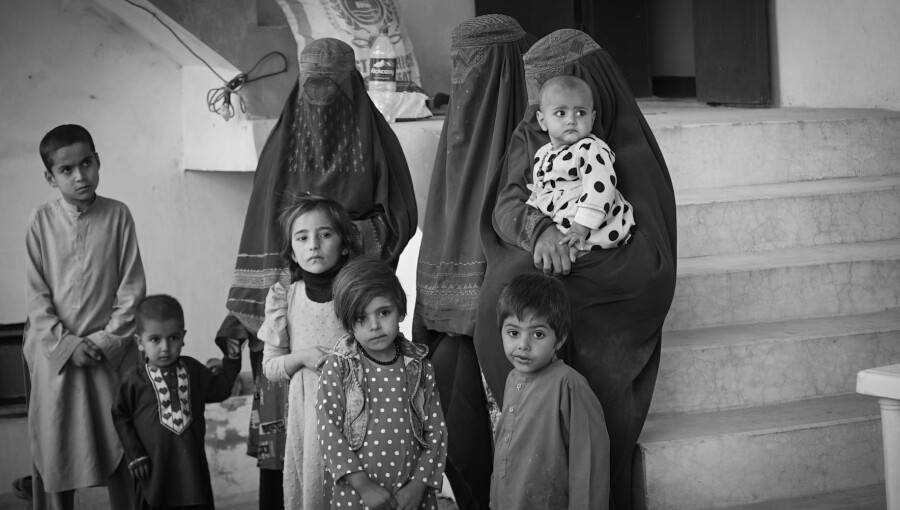
Women in the western Afghan city of Herat are reportedly being denied access to public hospitals unless they wear a burka, according to medical charity Médecins Sans Frontières (MSF).

The aid group said the directive, introduced on November 5, requires female patients, caretakers and healthcare staff to don the full-body Islamic covering before entering medical facilities. The story was reported in English language Afghan media around the same time but has since been removed. According to the BBC, MSF warned that the new rules were further curtailing women’s already restricted access to essential healthcare.

The group has reported a sharp decline in hospital admissions, noting a 28% fall in cases requiring immediate attention at the Herat Regional Hospital during the first few days of enforcement. MSF staff said Taliban members were stationed at hospital entrances to ensure compliance with the new dress code.

A burka is a traditional Muslim piece of clothing that covers the entire face and body, typically leaving only a mesh screen to see through.

The Taliban’s Ministry for the Propagation of Virtue and Prevention of Vice, which enforces the regime’s strict interpretation of Islamic law, however, rejected MSF’s account according to the BBC. “This is totally false. The position of the ministry is generally on the wearing of hijab,” said spokesperson Saif-ul-Islam Khyber in the BBC report, referring to the broader concept of modest dress for Muslim women. He also dismissed claims that women were being turned away for not wearing the burka.

However, residents and activists in Herat have reportedly said that Taliban guards have been enforcing the rule for at least a week, extending it to other public spaces such as schools and government offices. One female activist cited in the BBC report added that women without burkas had been refused entry to hospitals.

The reported restrictions have sparked criticism across social media, with some users posting videos of women burning burkas in protest.

The burka was mandatory during the Taliban’s first period in power in the 1990s. Since the group’s return to power in August 2021, it has reimposed a series of measures restricting women’s freedom, barring them from most jobs, universities and secondary schools.

In 2022, the Taliban issued a decree urging women to wear a full-face veil in public - an order officials described at the time as “advice”. But according to MSF, Herat marks the first instance of strict enforcement.

The United Nations has repeatedly urged the Taliban to end what it calls “gender apartheid”. Last week, the UN suspended operations at the Islam Qala border crossing between Afghanistan and Iran after women working for its agencies were blocked from performing their duties.