Wednesday, November 12, 2025


China’s green capital powers Indonesia’s 100-GW solar ambition

China’s green capital powers Indonesia’s 100-GW solar ambition
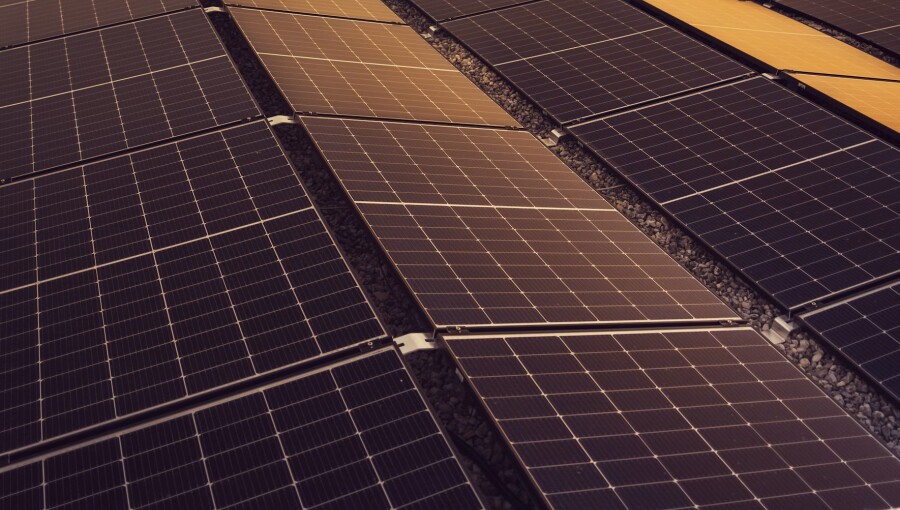
/ Michael Pointner - Unsplash
By bno - Surabaya Office November 12, 2025

Indonesia’s vision to build 100 gigawatts (GW) of solar energy is gathering real momentum, fuelled by growing Chinese investment under the Belt and Road Initiative (BRI). According to TanahAir.com, this wave of green financing, valued at around $900mn, is seen as one of the primary forces driving Indonesia’s energy transition during President Prabowo Subianto’s administration. Experts believe this marks the beginning of a decade-long collaboration that could reshape the country’s renewable energy landscape, create thousands of jobs, and strengthen its position as a regional clean energy hub.

BRI financing

Health and Environment solution provider SUSTAIN Foundation has called on the Indonesian government to fully harness China’s BRI investment to accelerate the transition to renewable energy. During the launch of SUSTAIN and CERAH’s report “Leveraging China’s Green Momentum to Advance Indonesia’s Economic Development” on November 5, SUSTAIN Executive Director Tata Mustasya revealed that Indonesia was the largest BRI investment recipient in 2024, receiving $9.3bn (IDR148.8 trillion) in total. Of that figure, approximately $900mn (IDR14.4 trillion) flowed into the energy sector, with a majority directed toward renewable energy projects.

Mustasya explained that this amount represents just the starting point of long-term financing potential. Based on SUSTAIN’s historical analysis of BRI data, the total investment “could be allocated for renewable development over the next ten years, and the actual figure could certainly be even higher,” he told TanahAir.com.

SUSTAIN’s simulation showed that if the entire BRI energy allocation were redirected to renewables, Indonesia could generate IDR144 trillion ($8.6bn) in economic value over a decade. “If optimised, this could create the equivalent of 80 Cirata Floating Solar Power Plants,” Mustasya said, referring to the country’s largest solar project. Such a scenario could also create 112,000 jobs, reduce 17mn tonnes of CO₂ emissions, and supply clean electricity to 4mn households, according to Indonesian Business Post reports.

The SUSTAIN–CERAH study also analysed West Java as a case study for regional renewable investment. The province, home to 17mn PLN (State Electricity Company) customers, around 19% of Indonesia’s total, is projected to see a 43% increase in electricity demand over the next decade, Indonesian Business Post reports.

According to Mustasya, 30% of current BRI funding, about IDR42.7 trillion, could be used to finance 3.6 GW of solar power projects under the 2025–2034 Electricity Supply Business Plan (RUPTL) in West Java alone. This would create 33,000 new jobs and reduce 5.14mn tonnes of carbon emissions annually.

He added that West Java also presents opportunities in the electric vehicle (EV) manufacturing sector, thanks to its established industrial infrastructure. “The EV market in Indonesia is growing rapidly, driven by incentives for both producers and consumers. Localisation of Chinese EV manufacturing is ongoing in Subang, where factory construction is underway,” Mustasya said. He further estimated that four EV manufacturing plants equivalent to BYD’s size could be developed in the province, creating up to 70,000 formal jobs with wages higher than those in informal employment, Indonesian Business Post reports.

Electric vehicles and the expansion of China–Indonesia industrial ties

According to TanahAir.com, green investment from China is not limited to renewable power generation. Indonesia is also positioning itself as Southeast Asia’s electric vehicle (EV) manufacturing hub, directly challenging Thailand’s dominance. Two large-scale projects are central to this effort: the $1.3bn BYD factory in Subang and CATL’s battery production facility in Karawang.

The China World Resources Institute (WRI) underscores that collaboration will be most effective when it includes local knowledge transfer and community participation. WRI Finance Director Shuang Lin told TanahAir.com that Chinese investors are complementing capital inflows with technical training and workforce development programmes. “Investors are providing equipment and specialised vocational training to build local capabilities, which will drive the success of this collaboration,” Lin said.

While the potential of green investment is substantial, experts urge caution in projecting job creation figures. Yeremia Lalisang, Senior Assistant Professor of International Relations at the University of Indonesia, told Indonesian Business Post reports that employment in renewable energy projects may be lower than in other industries, such as manufacturing or agriculture.

“After solar plants begin operation, manpower needs decline significantly. Operation and maintenance only require a small team; solar technology is designed for minimal staffing,” Yeremia explained. He also questioned the broad use of the term localisation in investment discussions, noting that high-tech industries require specialised skills that are often scarce in rural areas. As a result, companies may bring in workers from other regions who already possess the necessary expertise.

Nevertheless, Yeremia acknowledged that these projects could still stimulate local economies indirectly. “Even if the workforce comes from elsewhere, they contribute to local economic activity, paying rent, buying food, and using local services,” he concluded.

Both TanahAir.com and Indonesian Business Post reports highlight that the success of Indonesia’s green transformation will depend on inclusive policy frameworks that balance economic, social, and environmental goals. Ardhitya Eduard Yeremia Lalisang, another lecturer at the University of Indonesia, stressed that the government must ensure investment benefits reach local communities, particularly those near project sites.

“Regulations must shift from a top-down to a community-oriented approach. Before formulating policies, we must ask how they can benefit those who truly need them,” she told TanahAir.com.

As Indonesia advances toward its 100 GW solar energy target and deepens industrial cooperation with China, it faces a defining challenge: ensuring that the energy transition delivers both sustainability and equity. With continued BRI support and inclusive governance, the country stands poised to turn its renewable energy ambitions into a transformative force for green growth, economic diversification, and climate resilience across the archipelago.

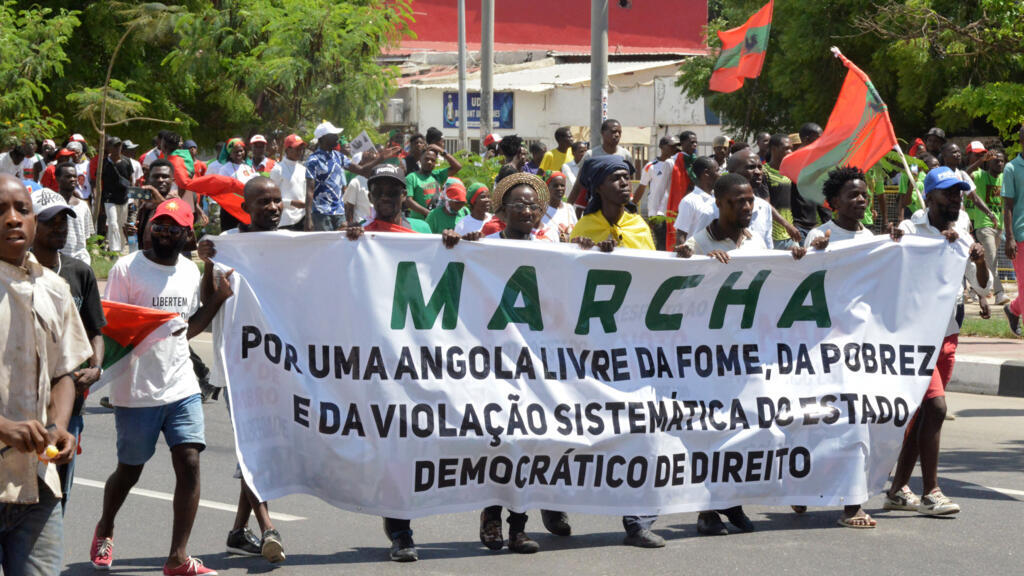
Peace without prosperity: Angola marks 50 years of independence

Angola declared its independence from Portugal on 11 November, 1975. But in a country where the majority of the population was born long after this date, the celebrations give rise to a question: what does it mean to be free when it has failed to bring the promised prosperity?


Issued on: 11/11/2025 - RFI

Young people in Angola protest against poverty, inequality and violations of the rule of law, Luanda, 23 November, 2024. © Julio Pacheco Ntela / AFP

The promises made in 1975 painted a picture of an egalitarian state, capable of repairing five centuries of domination and transforming political freedom into social justice.

The Angola of 2025 is rich in natural resources, including oil, gas and diamonds. Its capital, Luanda, is dotted with steel and glass towers Almost 70 percent of its 37 million inhabitants are under 30 – a dynamic, urban population.

However, the United Nations Human Development Index ranks the country 148th out of 193. Despite significant progress since the end of the civil war in 2001, the gap between the promised land and the reality remains – with a lack of infrastructure, poor housing amongst the capital's skyscrapers and a generation of frustrated youth.

Death toll rises in Angola after protests and looting over fuel hike

President João Lourenço, elected in 2017 following José Eduardo dos Santos's 38-year reign, likes to remind the people that "independence is not an end point, but an ongoing endeavour".

Under his leadership, the country has been attempting to turn the page on its authoritarian past, and its economy's total dependence on oil – the revenues from which fund more than 80 percent of the state budget.

Angola left OPEC, the intergovernmental body of oil-producing nations, at the end of 2023 in order to regain control of its production. It is investing in gas and agricultural diversification, as well as building the multi-billion dollar Lobito Oil Refinery led by the state oil company, Sonangol.

Completion is expected by early 2027, when it will process 200,000 barrels of crude oil per day, with the aim of making Angola a major exporter of refined products to both domestic and regional markets.

A marginalised majority


The young people who make up the majority of the Angolan population have known neither the war of independence nor the civil war. But while they may not have inherited the hardships of the past, they face another struggle: against unemployment, poverty and political mistrust.

Despite two decades of peace, economic development remains fragile. Access to stable employment is rare, especially for graduates. "The problem is no longer war, but the distribution of wealth and economic freedom," says economist Francisco Paulo.

According to him, Angola's labour market remains dominated by the informal economy: "Of 12 million workers, 10 million work in the informal sector. That represents more than 80 percent of jobs, a real social time bomb."

Young people alternate between odd jobs, street trading and long periods of inactivity. The dominance of the oil economy has led to a lack of diversification of opportunities. Growth benefits a minority, while inequalities are widening.

How Portugal's Carnation Revolution changed the fate of its colonies in Africa

Meanwhile, the relationship between citizens and the state remains marked by mistrust.

Activist Laura Macedo describes a climate of silent tension: "Citizens fear those in power, and those in power fear citizens. This mutual fear ultimately leads to revolt."

She highlights a generational shift, saying: "Those who govern us can no longer threaten us with war. It no longer silences us."

For her, this symbolises the breaking of a cycle: war is no longer a political argument. But freedom of expression remains fragile, limited by the authorities, the police and societal pressures.

Transition to true democracy

For philosopher and activist Domingos da Cruz, a leading figure in the 15+2 human rights group, the country remains trapped by an authoritarian culture. "Fifty years after independence, we cannot talk about freedom, only resistance," he says.

He believes that the transition to true democracy "will depend exclusively on the Angolan people".

The 15+2 name was coined when 15 young activists and two other individuals were arrested – da Cruz among them – for discussing a book on non-violent resistance to the regime under dos Santos.

Their trial represented a turning point in the country's recent political history. For the first time, a civil protest led by young urbanites was expressed peacefully, without resorting to violence. Following this event, several citizen movements emerged in the fight against corruption, unemployment and electoral transparency.

Artistic exchange between Brazil and Angola aims to reclaim colonial ties


'Women are relegated'

Inequalities in the country are visible as early as primary school. Nearly 4 million children remain excluded from the education system, according to local NGOs. Activist Sizaltina Cutaia says there is a persistent hierarchy: "Young people simply want to live in a country where they can fulfil their potential, without having to join a political party."

She added: "Education should be the starting point, but girls are still often excluded, especially in poor families. The belief persists that they will be supported by a husband."

This lack of access to schooling further fuels inequality and undermines social mobility, and despite a growing presence in public life, women remain marginalised. Those active in politics face verbal abuse and media invisibility.

"The history of Angola is told through the figure of the father of the nation. Women, despite being active participants in the struggle, are relegated to the margins," says Cutaia.

Macedo too highlights institutionalised patriarchy. "The president said he would put women in government, and that he would put more in if they behaved themselves. That sums up the prevailing mindset."

The promise of equality from 1975 has not been fulfilled, and nor have the pledges of prosperity. Fifty years after Angola's first president, Agostinho Neto, declared independence, the country no longer lives under fire, but under the weight of disillusionment.

This article was adapted from the original version in French by Ligia Anjos.
42 feared dead in migrant shipwreck off Libya: UN

Geneva (AFP) – The United Nations said Wednesday that 42 migrants were missing presumed dead after a rubber boat capsized off the Libyan coast last week.


Issued on: 12/11/2025 - RFI

More than 1,000 migrants have died this year attempting the main central Mediterranean Sea crossing © - / AFP

It was the latest in a series of similar disasters in a stretch of the Mediterranean Sea that has claimed the lives of more than a thousand people so far this year.

Only seven survivors were rescued after six days adrift, said a statement from the UN's International Organization for Migration.

The vessel, carrying 47 men and two women, left Zuwara, west of Tripoli, on November 3, but around six hours later, high waves caused the engine to fail, said the IOM.

The boat capsized, throwing all passengers overboard, the statement added.

On Saturday, the Libyan authorities carried out a search and rescue operation near Al Buri oil field.

"After drifting at sea for six days, only seven men -- four from Sudan, two from Nigeria, and one from Cameroon -- were rescued," the IOM said.

"Tragically, 42 individuals remain missing and are presumed dead, including 29 from Sudan, eight from Somalia, three from Cameroon, and two from Nigeria."

IOM staff gave the survivors emergency medical care, food and water once they were brought ashore.
Death toll

More than 1,000 migrants have died this year attempting the main central Mediterranean crossing between North Africa and southern Europe, according to IOM figures.

"With this latest shipwreck, the total has risen even further, reinforcing the urgent need for strengthened regional cooperation, expanded safe and regular migration pathways, and more effective search and rescue operations to prevent further loss of life," the IOM said.

A European Commission spokesperson told AFP: "These tragic events once again underline the need to intensify joint efforts with our partners, including Libya, to prevent such dangerous journeys and to combat the criminal networks of migrant smugglers that put lives at risk."

UNHCR, the UN refugee agency, estimates that over 1,700 people have died or are missing on the wider Mediterranean and West Africa Atlantic migration routes this year.

In total, around 33,000 migrants are considered dead and missing in the Mediterranean since the start of 2014, according to the IOM's Missing Migrants Project.
MSF relaunches rescue missions

The medical humanitarian organisation Doctors Without Borders (MSF) announced Tuesday it was relaunching its search and rescue activities in the central Mediterranean, having halted them in December 2024.

Its new vessel, Oyvon, was previously an ambulance ship in Norway.

"We have returned to carry out the duty of rescue for those who find themselves in distress at sea, forced to take unseaworthy boats, after having endured deplorable and inhumane conditions, detention, abuse and extortion in Libya," said Juan Matias Gil, MSF's search and rescue representative.

MSF said the switch to a smaller, faster vessel was in response to what it called Italy's "restrictive" practices towards its previous, larger rescue vessel.

MSF said the crew included a doctor and a nurse able to treat people for hypothermia, fuel inhalation, fuel burns, as well as wounds sustained in the "cycle of abuse and detention" in Libya.

© 2025 AFP


4.3 The Multitude against Empire. 393. Notes. 415. Index. 473. Page 11. PREFACE. Empire is materializing before our very eyes. Over the past several decades, as ...


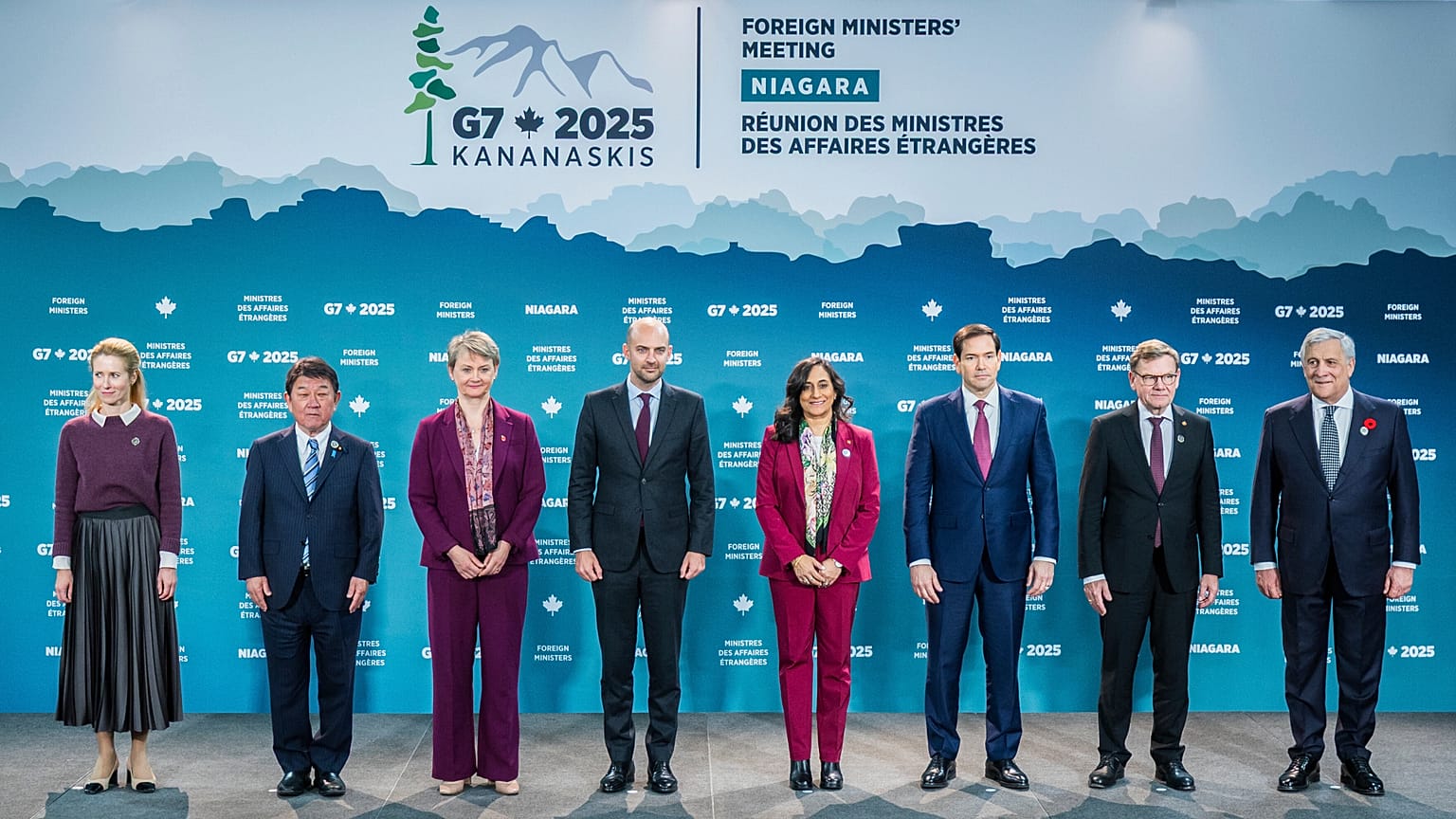
G7 foreign ministers meet in Canada for talks on trade, Ukraine, and Trump's ceasefire plan in Gaza

Top G7 diplomats pose for the family photo during the G7 Foreign Ministers' Meeting in Niagara-on-the-Lake, Ontario, Tuesday, Nov. 11, 2025.
Copyright AP Photo

By Emma De Ruiter
Published on 

Tensions have risen between the US and traditional allies like Canada over defence spending, trade and uncertainty over President Donald Trump's ceasefire plan in Gaza and efforts to end the war in Ukraine.

Canada is hosting the foreign ministers of the Group of Seven industrialised democracies in southern Ontario for talks on defence spending, trade and uncertainty over US President Donald Trump's ceasefire plan in Gaza and efforts to end the Russia-Ukraine war.

Canadian Foreign Minister Anita Anand welcomed US Secretary of State Marco Rubio and their counterparts from Britain, France, Germany, Italy and Japan for the summit held on Tuesday and Wednesday.

EU Foreign Chief Kaja Kallas is also attending, as well as the foreign ministers of Australia, Brazil, India, Saudi Arabia, Mexico, South Korea, South Africa and Ukraine.

"We’re tackling a range of critical issues with one main focus: putting the safety and security of Americans FIRST," Rubio said in a social media post.

Strained relations over Trump's tariffs


Canada's G7 hosting duties this year have been marked by strained relations with its North American neighbour, predominantly over Trump’s imposition of tariffs on Canadian imports.

But the entire bloc of allies is confronting major turbulence over Trump's demands on trade and various proposals to halt worldwide conflicts.

Trump recently ended trade talks with Canada because the Ontario provincial government ran an anti-tariff advertisement in the US that upset him.

Canadian Prime Minister Mark Carney apologised for the ad and said last week that he’s ready to resume trade talks when the Americans are ready.

Anand said she will have a meeting with Rubio but noted that a different minister leads the US trade file. The US president has placed greater priority on addressing his grievances with other nations’ trade policies than on collaboration with G7 allies.

“Every complex relationship has numerous touch points," Anand said. "On the trade file, there is continued work to be done — just as there is work to be done on the numerous touch points outside the trade file, and that’s where Secretary Rubio and I come in because the relationship has to continue across a range of issues."

Anand said Rubio asked her during a breakfast meeting in Washington last month to play a role in bringing countries to the table to ensure that Trump’s Gaza ceasefire plan has longevity, including with a future Gaza reconstruction conference.

Ukraine and Gaza remain priorities

The diplomats will meet with Ukraine's foreign minister early Wednesday. Britain says it will send £13 million to help patch up Ukraine’s energy infrastructure as winter approaches and Russian attacks intensify. The money will go toward repairs to power, heating and water supplies and humanitarian support for Ukrainians.

UK Foreign Secretary Yvette Cooper, who made the announcement before the meeting, said Russian President Vladimir Putin "is trying to plunge Ukraine into darkness and the cold as winter approaches,” but the British support will help keep the lights and heating on.

Canada recently made a similar announcement.

One main point of contention has been defence spending. All G7 members except for Japan are members of NATO, and Trump has demanded that the alliance partners spend 5% of their annual gross domestic product on defence. While a number of countries have agreed, others have not. Among the G7 NATO members, Canada and Italy are furthest from that goal.

Anand said Canada will reach 5% of GDP by 2035.

There have also been G7 disagreements over the Israel-Hamas war in Gaza, with Britain, Canada and France announcing they would recognise a Palestinian state even without a resolution to the conflict. With the Russia-Ukraine war, most G7 members have taken a tougher line on Russia than Trump has.


Russian court extends jail time of teenage singer over performance of anti-war songs

Diana Loginova sits during a court session in St. Petersburg, 11 November, 2025
Copyright AP Photo


By Gavin Blackburn
Published on 

Russian authorities have ramped up their crackdown on dissent and free speech since the Kremlin sent troops into Ukraine in February 2022.

A Russian court extended the jail time of an 18-year-old street singer on Tuesday on charges seen as punishment for performing anti-war songs, an action denounced by human rights activists as part of a crackdown on free speech over the war in Ukraine.

Diana Loginova was ordered held for another 13 days by the court in St. Petersburg on charges of violating public order with her October performance.

It was the third consecutive sentence for Loginova, who has remained in custody since her initial arrest on 15 October.

Loginova, a music student who goes by the stage name Naoko in the band Stoptime, was also ordered to pay fines for "discrediting the Russian armed forces.

Alexander Orlov, a fellow Stoptime member, has been handed repeated sentences along with Loginova. They denied any wrongdoing.

A woman carries boxes out of a building damaged in a Russian attack in Kyiv, 23 October, 2025 AP Photo

Amnesty International said the repeated detentions, which it called "carousel arrests," were intended to keep them in custody without filing more serious criminal charges.

Human rights activists say Loginova and fellow Stoptime band members have been targeted for performing songs by other musicians who had opposed the Kremlin's February 2022 full-scale invasion of Ukraine and left Russia.

Videos of the performance with crowds joining in by singing lyrics critical of the Kremlin and the war have been widely viewed online, triggering calls from pro-Kremlin activists for police to take action.

"The repeated arrests of Naoko and her bandmates are punishment for their public performance, which have become a breath of fresh air in a country gasping under repression and self-censorship," said Denis Krivosheev, Amnesty International's deputy director for Eastern Europe and Central Asia.

"Authorities must immediately and unconditionally release Naoko and Aleksandr Orlov and other street musicians detained for acts of anti-war protest, simply exercising their right to freedom of expression," he said in a statement

"Their only 'crime' is singing songs that challenge the suffocating official narrative."

The Stoptime case triggered similar performances in solidarity in some Russian cities, leading to arrests and fines for several performers.

Russian authorities have ramped up their crackdown on dissent and free speech after the Kremlin sent troops into Ukraine, targeting rights groups, independent media, members of civil society organisations, LGBTQ+ activists and some religious groups.

Hundreds of people have been jailed and thousands of others have fled the country.

Troubled waters: Why is a Nile dam causing such tension?


Copyright AP Photo

By Gregory Holyoke
Published on 11/11/2025 - EURONEWS

LONG READ

In September, Ethiopia inaugurated the Grand Ethiopian Renaissance Dam, hailing it as “a generational victory,” but Sudan and Egypt have denounced it as an “existential threat.” Euronews explores why it was built and what it means for the region.

When the Ethiopian Prime Minister Abiy Ahmed opened the vast Grand Ethiopian Renaissance Dam in the country’s west on 9 September, he did not mince his words.

“This lake has brought with it a wealth greater than Ethiopia's GDP. This generation has accomplished a great deed with the Renaissance Dam. The era of begging has ended,” he told a group of assembled officials, media and some regional leaders.

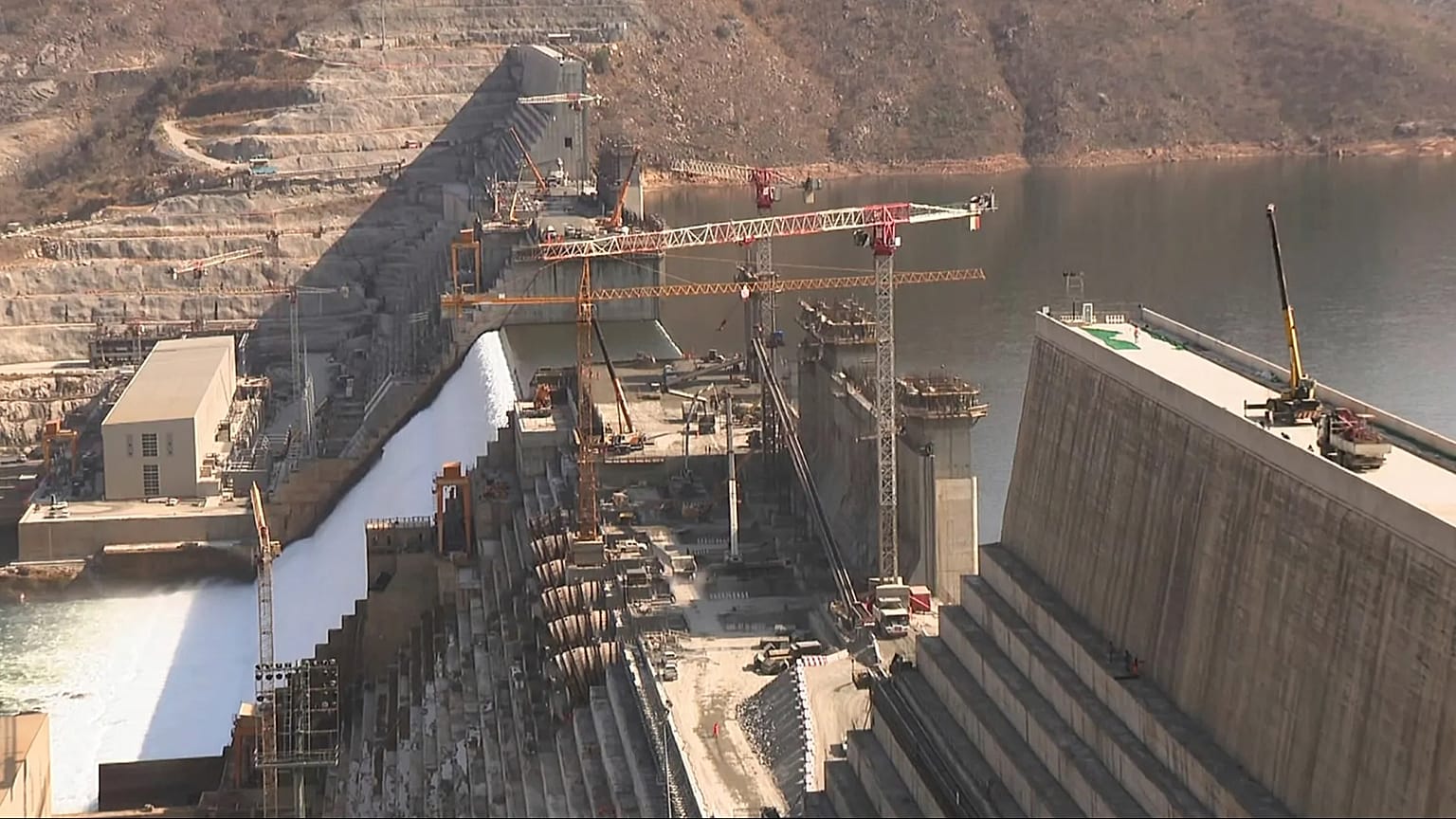
Behind him, sheets of water poured over the concrete from the reservoir behind, which holds almost 74 billion cubic metres of water over a surface area roughly the size of Greater London.

The prime minister went on to call the mega dam, which is expected to produce somewhere between 5,000 and 6,000 megawatts of electricity, a “shared opportunity” for the region.

Notably absent from the pageantry, however, were representatives of the two countries downstream, Sudan and Egypt.

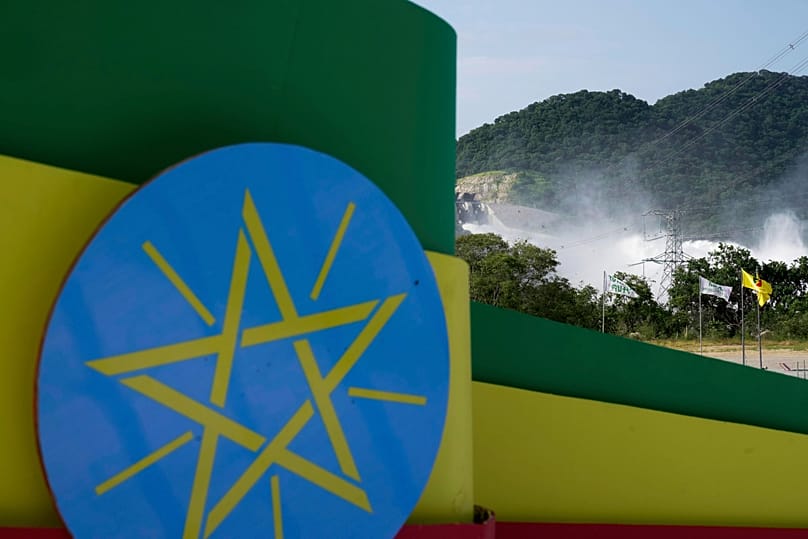
A view of the Grand Ethiopian Renaissance Dam in Benishangul-Gumuz, 9 September, 2025 AP Photo

Just a month after the opening, Egyptian President Abdel Fattah al-Sisi told the Cairo Water Week conference that Egypt “will not stand idly by” what he labelled Ethiopia’s “irresponsible” actions.

However, the question of Nile water distribution has been a diplomatic bone of contention for years before the dam was even conceived of, let alone when construction began in 2011.

Historical precedent


“There have been multiple agreements on the Nile, and Ethiopia keeps breaking them,” professor of geology and water resources at Cairo University and a prominent critic of the GERD Abbas Sharaky told Euronews.

As much as 85% of the Nile waters that converge in Khartoum have flowed from the highlands of Ethiopia, in the so-called Blue Nile branch, despite its reputation for a muddier, siltier appearance than the other White Nile branch flowing from the Rift Valley.

It is for this reason that water diplomacy over the river has more often focused on Ethiopia’s control.

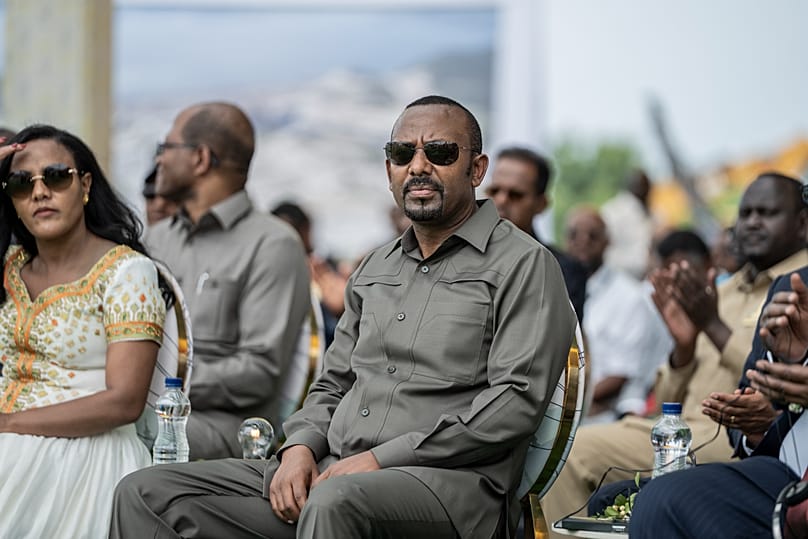
Ethiopia's Prime Minister Abiy Ahmed during the inauguration of the Grand Ethiopian Renaissance Dam in Benishangul-Gumuz, 9 September, 2025 AP Photo

When the first major dam was built in 1902 at Aswan during the period of British colonisation, the UK also signed an agreement with Ethiopia on behalf of its colonies that gave the former veto powers on any construction upstream “which would arrest the flow of their waters into the Nile.”

Subsequent treaties in 1929 and 1959 are seen to have heavily favoured a larger, more powerful Egypt, eventually granting it an allocation of 55.6 billion cubic metres, or 66% of the flow.

Egyptian academic and analyst Ahmed Morsey told Euronews that this stood for a long time because “there had been this understanding by the Egyptians, and to some extent the Sudanese, even by some of the previous Ethiopian leaders, that these older arrangements were here to stay.”

The visiting fellow at the Middle East Council on Global Affairs said construction of the GERD was the first time these treaties, which had long governed the waters, were really thrown into question.

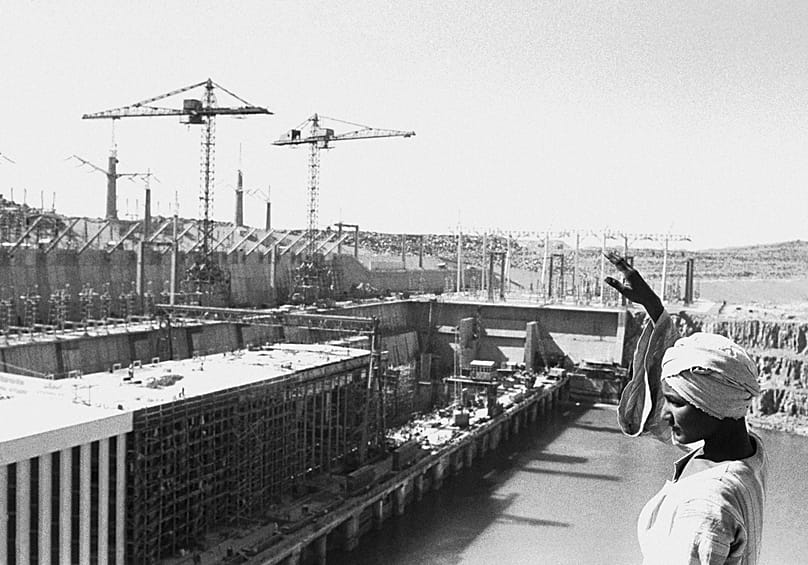
An Egyptian worker waves as he stands on top of a rock overlooking the partly constructed power station on the Aswan High Dam, 27 February, 1968 AP Photo

His Ethiopian colleague Tsedenya Girmay explained that this was not always the case, pointing to a 2015 declaration of principles that aimed to end the long-running dispute, so that “Ethiopia would continue with the dam, but in a fashion that wouldn’t cause harm to the downstream countries”.

“But then domestic issues had an impact on the failure of diplomatic efforts,” Tsedenya said.
Not just a domestic issue

In Ethiopia, Egypt and Sudan, much has changed since the 2015 deal. Only one of the three leaders who signed the 2015 declaration, Egypt's al-Sisi, remains in power. As politics in Addis Ababa and Cairo have slipped into greater authoritarianism, Sudan has suffered a full-blown civil war.

The issue of the dam has become as much a domestic political football of national unity as a cross–border dispute.

Tsedenya recently travelled to the Ethiopian capital, where she said this was more prevalent than ever.

“I spoke to people from the Foreign Ministry, and it does seem to be the one thing that’s unifying and driving whatever policy we have. The dam itself is the only thing that is unifying us,” she told Euronews, noting internal strife in the African country, including the devastating conflict in Tigray.

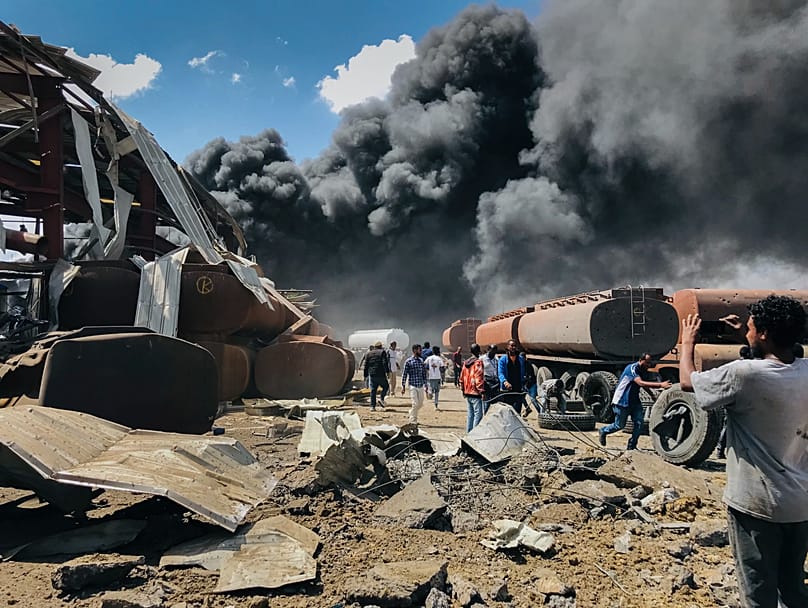
People are seen in front of clouds of black smoke from fires in the aftermath at the scene of an airstrike in Mekele, 20 October, 2021 AP Photo

According to Tsedenya, the centrality of the dam in the Ethiopian school curriculum is evidence of its status as a national rallying cry, especially in a country where almost 60 million people lack access to electricity.

In Egypt, Prof Sharaky also told Euronews that the Nile represented “life” for a burgeoning population of over 115 million people, 95% of whom are packed into the 5% of the land along the river.

It was for this reason that it is seen as such an existential threat to the largely desert-covered country, with al-Sisi warning in 2021 that “no one can take a single drop of water from Egypt.”

Despite US President Donald Trump suggesting that Egypt could "blow up" the dam in 2020, Sisi has always contended that he was determined to resolve the issue through diplomatic means.

Yet, a former senior US official who mediated on the GERD during the Biden administration, who spoke under the condition of anonymity as they still work in the region, laid much of the blame for the breakdown in negotiations at Egypt’s door.

Egypt, Ethiopia and Sudan sign deal on Nile dam

“What we concluded … is that in the end, the Egyptians actually didn't want a deal. Like, there was no deal on the table that would satisfy them,” they said, admitting that Ethiopia also “weren’t going to make a deal easy.”

They told Euronews that “al-Sisi actually benefits from this threat of an external enemy, a domestic political matter,” especially as Egypt’s economy has been faltering and the population faces higher prices, notably after essential wheat imports skyrocketed following Russia’s full-scale invasion of Ukraine.

Ethiopia has also accused Egypt of interfering in its domestic politics. Morsy dismissed this as Addis Ababa trashing Egypt for domestic gain, saying the claims were “without any evidence. I almost wish that Egypt had this power to see if it can actually do any of this.”

Sudanese activist and analyst Kholood Khair also suggested that the civil war in Sudan had pushed the de facto authorities and the Sudanese Armed Forces (SAF) closer to Cairo and its position on the dam.

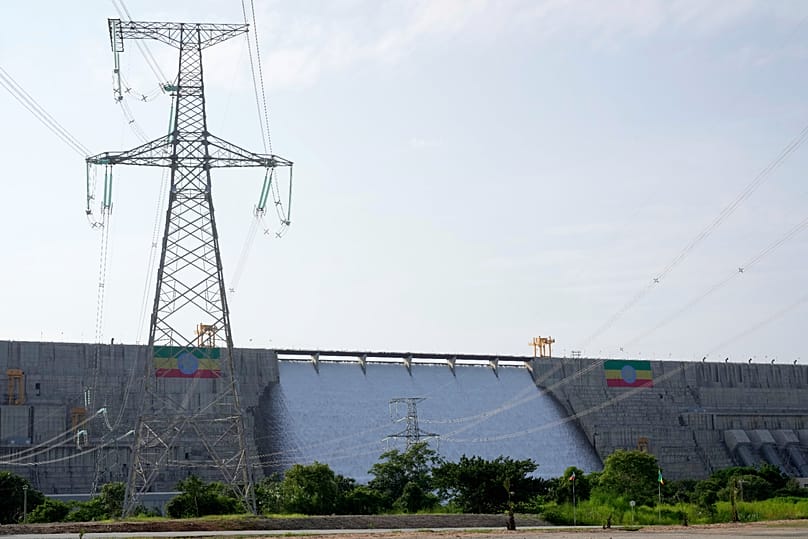
A view of the Grand Ethiopian Renaissance Dam in Benishangul-Gumuz, 9 September, 2025 AP Photo

Khair runs a Sudan-focused think tank that was based in Khartoum until the war. She contends that “opposing the GERD became much more of a vehicle to get greater Egyptian support than it had anything to do with the GERD itself”, saying that pre-war authorities saw a possibility of the project being “good for Sudan,” due to promises by Ethiopia to share the electricity produced with Khartoum.

However, when SAF leader Abdel Fattah Al-Burhan met with al-Sisi in Cairo on 15 October, in the wake of flooding in Sudan and Egypt, much of the blame was apportioned to the GERD, a claim Ethiopia vehemently denies. The two discussed an increasingly coordinated position regarding the dam.
Is Brussels invested in the Nile?

Brussels seems to have fallen increasingly into Cairo’s orbit over the GERD. When the EU welcomed al-Sisi with open arms to a high-profile summit in the Belgian capital in October, it released a joint statement expressing its desire for future cooperation.

Tucked in towards the end, the statement highlighted that “the EU reiterates its support to Egypt's water security and the compliance with international law, including concerning the Ethiopian Dam.”

Corrado Čok of the European Council on Foreign Relations argued that this marks a shift in EU policy, which used to “keep a balanced position between Egypt and Ethiopia …centred on de-politicising the issue by fostering a technical approach.”

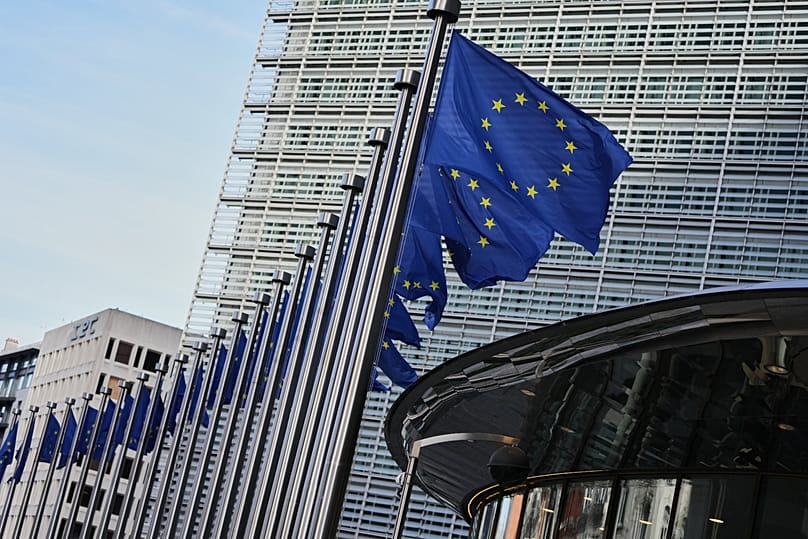
European Union flags flap in the wind outside of EU headquarters in Brussels, 4 November, 2025 AP

This included “diplomatically, technically and financially” supporting independent research panels on the dam’s impacts.

Čok sees reasoning for the policy pivot as two-fold, noting first the devastating war in Tigray between 2020 and 2022, for which the government in Addis Ababa was roundly condemned.

“The disagreements over Ethiopia’s conduct in the war prompted the EU to suspend aid programmes and, eventually, also the dialogue on the GERD faltered,” he explained.

Conversely, the bloc is becoming increasingly reliant on Egypt. “Cairo is becoming a prominent partner for multiple reasons, such as addressing the wars in Gaza, Sudan and Libya, underpinning Europe’s energy security through natural gas and renewables and containing migration flows,” Čok argued.

According to him, this meant the EU had come to “accept” Egypt’s demands for diplomatic support on the dam.

It is not just Brussels that Cairo has targeted. The former US diplomat argued that al-Sisi had also used the issue as a bargaining chip with Washington. “It helps him with the United States, because it's a means of deflection," they said.

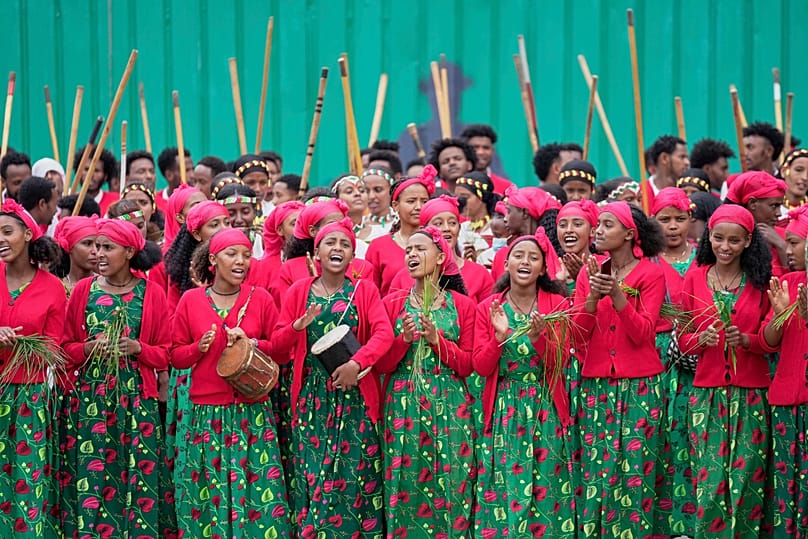
Ethiopian women wearing traditional clothes sing on the street as the Grand Ethiopian Renaissance Dam is inaugurated in Addis Ababa, 9 September, 2025 AP Photo

"The US will come and say, ‘stop doing X with the Russians,’ and he'll say, ‘I would love to do that, but I can't do it unless you help me with this existential threat of the GERD.’”

Yet, with the dam now built and in use, all sides find themselves in a political stalemate. Morsy concluded that Egypt will “just have to deal with it,” until the adversaries can agree to hand over policy control to technocrats.

Even Prof Sharaky was amenable to the idea, but he doubted its likelihood, with even the mediators tending towards a more partisan approach.

“I would speak to other colleagues and geologists in Ethiopia. I just don’t think they’d give me the visa,” he laughed before ringing off.

Euronews has reached out to the Egyptian foreign ministry for comment.


EU top court rejects Denmark's bid to annul bloc-wide rules to set minimum wage

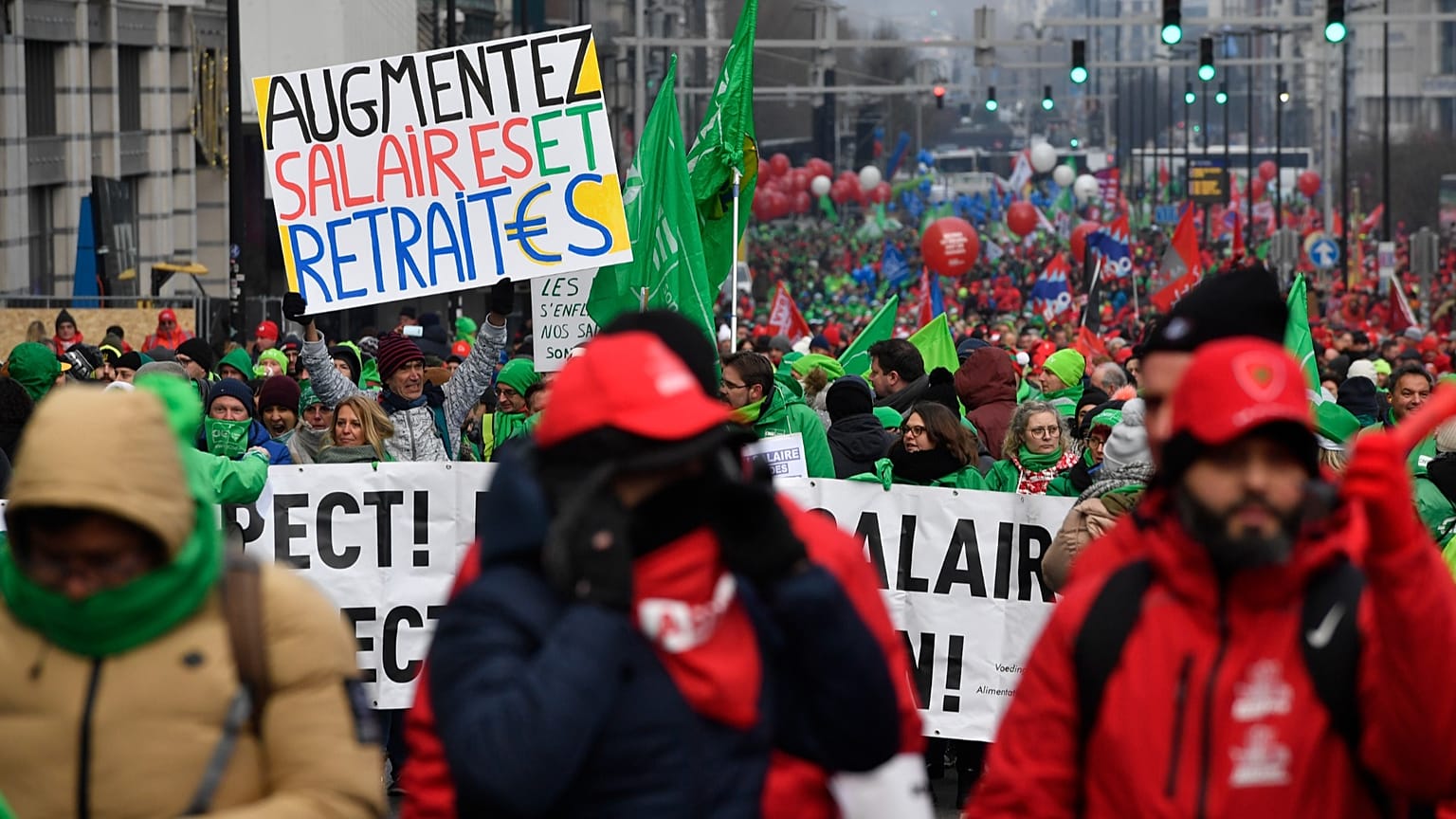
Union workers march with a sign that reads 'increase salaries and pensions' during a demonstration in Brussels, 16 Dec., 2022.
Copyright AP AP Photo/Geert Vanden Wijngaert

By Marta Iraola Iribarren & Alice Tidey
Published on 

Denmark sought to overturn a directive adopted in 2022 that would force member states to set a minimum wage. EU's top court has ruled against it.

The European Court of Justice (ECJ) ruled on Tuesday that an EU directive aiming to establish an "adequate" minimum wage in all 27 member states is valid, after Denmark tried to block it on the basis that the EU overreached its powers by legislating on pay.

Denmark had brought the EU institutions to court over the directive adopted in October 2022, claiming it exceeds the EU’s authority and calling for it to be entirely overturned.

Copenhagen, aided by Sweden, maintained that member states should decide how wages are set, primarily through collective agreements between trade unions and employers, and that the EU is not permitted to set legislation on pay.

But the court confirmed "the validity of most of the directive in question" in its ruling on Tuesday, arguing that it "does not amount to direct interference by EU law with the right of association".

It also rejected Denmark's claim that the directive was adopted on an incorrect legal basis.

However, it did annul two of the directive's provisions arguing they "amount to direct interference by EU law in the determination of pay".

One of the provisions aimed to set out criteria over how this adequate minimum wage should be set, while the other sought to prevent the decrease of the statutory minimum wage in countries where they are automatically indexed.

The decision conflicts with the opinion issued in January by the Advocate General, who assists the Court in preparing cases and had recommended that the directive be annulled on the grounds that it exceeds the EU’s legal powers.

The Socialists and Democrats (S&D) group in the European Parliament welcomed the ruling, writing in a statement that it "in times of a cost-of-living and housing crisis, this is a powerful signal of hope and social justice".

"So far only eight EU member states have implemented the directive. Now, we urge the member states and the Commission to step up efforts to ensure the proper implementation of the directive. No excuses for delay anymore," it added.

The European Trade Union Confederation (ETUC) similarly called on "member states to stop the ‘wait and see’ approach and to get on with implementing the Directive in full".

“The Directive is solid, but it needs solid implementation. Workers need real pay rises and real bargaining power, not legal loopholes. Europe must make sure every worker earns a wage that meets the threshold of decency, and promote effectively collective bargaining and increase collective bargaining coverage,” Esther Lynch, the organisation's general secretary, also said.

Still, it declared itself "very concerned" about the removal of the provision that prevented automatic indexation which it fears could be "used as a reason to reduce statutory minimum wages".

Euronews has contacted Denmark's Ministry of Employment for comment but did not receive a reply by the time of publication.

The European Minimum Wage Directive seeks to ensure adequate statutory minimum wages, promote collective bargaining, and improve workers’ access to minimum wage protection across the bloc.

Under the rules, EU countries must implement procedures to guarantee that minimum wages provide a decent standard of living, reduce in-work poverty, promote social cohesion, and narrow the gender pay gap.

The directive was approved with the support of all member states except Hungary, which abstained.

As of January 2025, gross monthly minimum wages in the EU ranged from €551 in Bulgaria to €2,638 in Luxembourg, according to Eurostat.


Is the EU spy unit about to become reality? Von der Leyen wants her own secret service

FILE: Ursula von der Leyen speaks to soldiers from the German army in Weissenfels, 16 August 2016
Copyright AP Photo

By Euronews
Published on 

European Commission President Ursula von der Leyen plans to create an intelligence service using data from member states, aiming to expand its operational use and increase her influence, according to international media reports.

European Commission President Ursula von der Leyen plans to create an EU intelligence unit that would gather information from member states' national security services, according to media reports on Tuesday.

The Commission said the outfit would make "better operational use" of existing data, but EU diplomats view it primarily as an expansion of von der Leyen's power, FT newspaper reported.

Commission spokesperson Paula Pinho said on Tuesday the new unit would "complement the services of the European External Action Service and play a key role in the preparation of the so-called Security College."

The Security College comprises the 26 commissioners and the Commission president. It met for the first time in March when the Commission expanded its security remit.

Criticism from EU diplomats


Senior EU diplomats criticised the plan, fearing dual structures and power struggles in Brussels, according to reports. Some diplomats worry the move could damage their influence and careers.

The plan has not been officially presented to the 27 member states but would involve seconding personnel from national intelligence services to the new authority.

Two people familiar with the process said they expect EU capitals to resist giving Brussels new intelligence powers.

However, they noted doubts about the effectiveness of existing European security structures, particularly regarding Russia's hybrid warfare.

The intelligence cell would work with the European External Action Service, but could reduce the influence of EU foreign policy chief Kaja Kallas while strengthening von der Leyen's position, diplomats said.

The move follows pressure from Russia's ongoing war in Ukraine and US President Donald Trump's threats to limit security guarantees and intelligence sharing with Europe.