Thursday, January 22, 2026

One year of Trump: the 'far-right revolution’ testing America and the world

Twelve months into Donald Trump’s second term, a presidency driven by impulse rather than restraint is hollowing out US institutions at home while sending shockwaves through NATO, the UN and the wider international order.


Issued on: 20/01/2026 - RFI
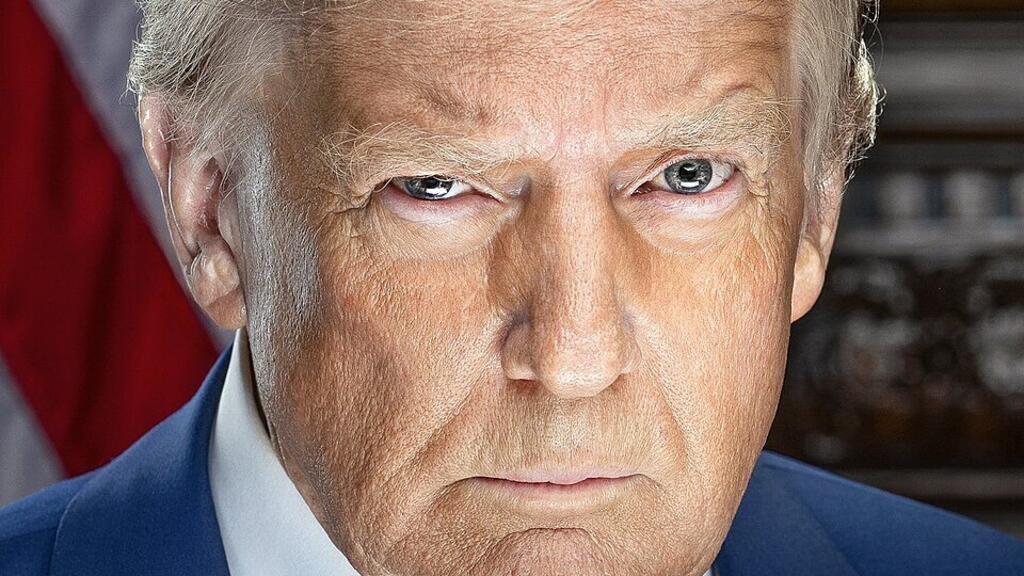
The official portrait of US President Donald Trump, 2025 © wikimedia commons

By:David Coffey

A year after Donald Trump's return to office, the shock persists – but the consequences grow starker. Power is wielded impulsively, institutions appear weakened, and policy often follows presidential whim over process. Critics call it monarchical governance. What does this mean for American democracy and the global order?

Speaking to RFI, former US diplomat William Jordan says what we are witnessing is not simply an unconventional administration, but something far more radical.

“What’s happening in Washington is basically a revolution – a far-right or reactionary revolution – that is playing out every day,” he says. “It’s driven by agitation and then propaganda to support it.”

Jordan points to what he describes as a deliberately performative strategy, popularised by Trump allies like Steve Bannon, designed to overwhelm opponents and institutions alike.

“There’s a certain theatricality to it – flooding the zone, making it impossible for anybody to focus on anything else,” he says. “And the institutions that should be protecting the American system are proving they’re not up to the task.”

Checks, balances and a broken Congress

The United States’ constitutional architecture – its checks and balances,its bicameral Congress – is often held up as a model of democratic resilience. But Jordan is blunt about how well it is functioning today.

“Is it working? I would say no,” he says. “Congress has not been insisting on any sort of real accountability from the executive – at least not anything the executive would have a hard time ignoring.”

While courts are clogged with legal challenges to Trump administration actions, Jordan notes that even there, resolution is slow and often indulgent.

“The court system is choked with pending cases, and we have no clear resolution,” he says. “So the real stakes now are how much has already changed – and how much of that we won’t be able to change back easily, or at all.”

Recent, tentative pushback from Republican senators – particularly over Venezuela and Trump’s threats towards Greenland – may hint at limits, but Jordan cautions against optimism.

“Congress, as an institution, is simply not functioning in the way it’s supposed to,” he says. “The House is basically deadlocked, and the Senate has only shown resistance in very limited areas.”

Trump has openly suggested that a Democratic victory in the midterm elections could lead to impeachment – and has even hinted at blocking or cancelling the vote altogether. Constitutionally, Jordan says, that line is difficult to cross.

“I’m not aware of any provision that+ allows a president to suspend elections,” he says. “Even during the Civil War, the United States continued to hold federal elections. Abraham Lincoln was re-elected in the middle of it.”

The real battleground, he argues, lies elsewhere – in voting rules, redistricting and restrictions on mail-in ballots.

“If the Democrats do take control of the House, it would at least allow hearings and some level of accountability,” Jordan says. “It could also open the door to articles of impeachment – and frankly, they’d likely have even more material to work with than before.”
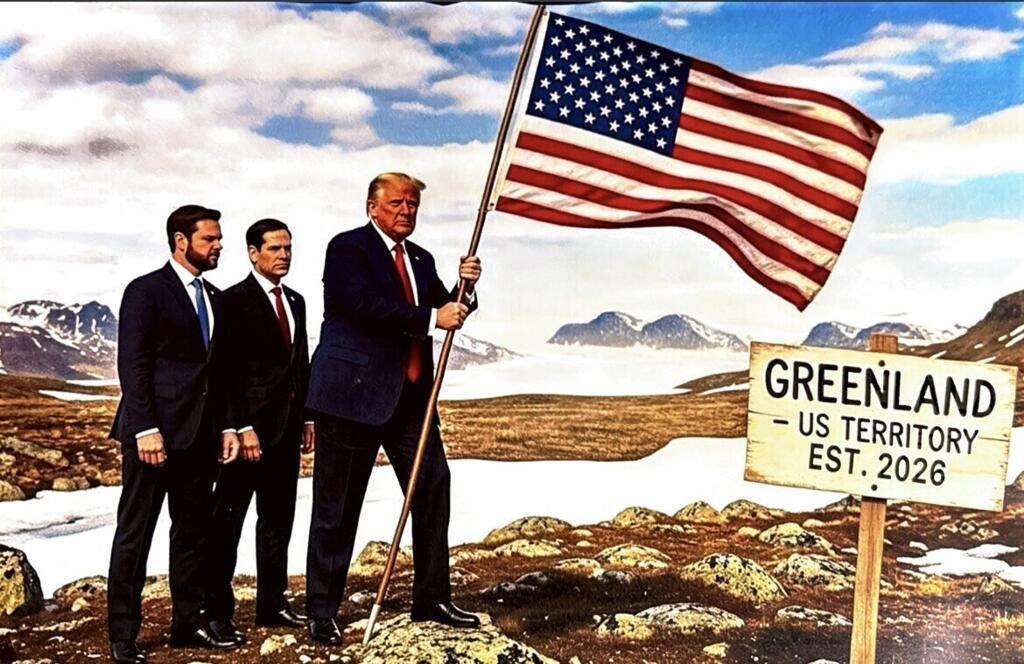
A montage of US President Donald Trump, Vice President JD Vance and Secretary of State Marco Rubio posted on Trump's Truth Social account, 19 January 2026 © Truth Social

American expansionism

Abroad, Trump’s expansionist rhetoric is being digested very differently depending on the capital.

“The Russians are much more publicly in a celebratory mode,” Jordan says. “The Chinese are more inscrutable – and I think more apprehensive.”

Far from welcoming chaos, he argues that Beijing sees itself as a status quo power.

“What the United States is doing is undermining the status quo,” he says. “And I don’t think that’s in China’s interest.”

European allies hit back at US threat to start trade war over Greenland

Few issues encapsulate the current unease more clearly than Trump’s repeated threats to take control of Greenland – a move that would strike at the heart of NATO.

“If the United States were to move on Greenland, that would effectively spell the end of the transatlantic alliance as we know it,” Jordan says.

Could NATO survive without Washington?

“I think something would emerge from the ashes,” he says, though he acknowledges it would be an “extremely heavy lift” for Europe. “Europe remains heavily dependent on American equipment and capabilities. That’s a vulnerability that will last for decades.”

Still, he believes the political will is growing – and that Canada, in particular, could play a key role in keeping NATO genuinely transatlantic.

“I can’t help but think Canada will continue to see value in a very close relationship with European partners,” he says

Pulling back the curtain

Commentators argue that Trump is merely exposing behaviour the US has long practised behind closed doors, and Jordan agrees – up to a point.

“What we’re seeing now is the culmination of decades of the US undermining the rules-based international order it helped create,” he says, pointing to Iraq, the war on terror, and long-standing double standards over issues like Palestine.

But he warns that what comes next could be even more destabilising.

“I think the next target is the United Nations,” Jordan says. “I’ve been waiting for the guns to come out and start blasting at what remains of the UN system.”

He sees recent talk of an alternative "board of peace" as the opening shots in a broader campaign.

“This is being carried out in stages,” he says. “What we’re seeing now is likely the first salvo in a much larger battle to undermine the international order.”


Crypto investments and conflicts of interest: Trump's very profitable year in office


EXPLAINER

Twelve months into Donald Trump’s second presidency, his personal fortune has shot up by at least $3 billion, according to estimates by US media. This is largely due to his family’s crypto ventures, which have attracted wealthy investors and sparked conflict of interest accusations from critics.


Issued on: 20/01/2026 
FRANCE24
By: Joanna YORK
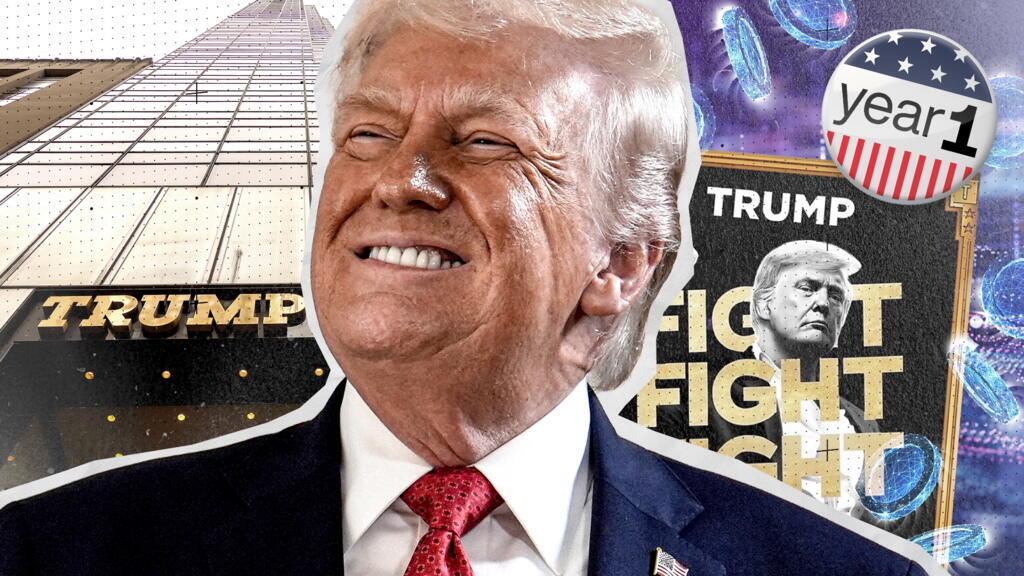

President Donald Trump's is thought to have made billions of dollars from crypto ventures doing his second term. © Studio graphique FMM

In his second inaugural address, US President Donald Trump promised a “golden age of America” was about to begin.

One year later, many Americans still find themselves in the grip of price hikes, but Trump’s personal fortune has flourished, according to estimates from US media and monitors.

The US president has increased his wealth by $3 billion in the past 12 months – up to a total of $7.3 billion, according to Forbes. The New Yorker meanwhile estimates his fortune shot up $3.4 billion in the first six months of his second term alone, largely from “pocketing off the presidency”.

Almost $2 billion-worth of cash and gifts have boosted the Trump family fortune according to the Trump's Take tracker, run by the Center for American Progress (CAP) policy institute.

No one knows exactly how much Donald Trump is worth. Since he first took office in 2017, he has refused to comply with the decades-old tradition of US presidents releasing their tax returns. He has also been accused by a US court of lying about his net worth to make himself look richer.

Historically Trump’s fortune came from the Trump Organisation family conglomerate focused on real estate and tourism, but much of his new wealth is thought to come from crypto ventures that have boosted his fortunes by billions of dollars in just a few months.

The sums are unprecedented for a president in office. “There is no historical parallel for this. Nothing comes close,” said Will Ragland, vice president of research at CAP.

While former presidents have gone to great lengths to avoid conflicts of interest, such as Jimmy Carter putting his peanut farm into a blind trust, Trump seems to embrace the grey area.

Trump is “a president who appears to actively use his businesses as a vehicle for blatant conflict of interest for personal gain,” said Ragland.

A crypto windfall


During Trump’s first term, the infamous dealmaker lost money. According to Forbes, Trump was worth $3.5 billion when he was first inaugurated. By 2021, the figure had slumped to $2.4 billion.

The loss was largely due to the impact of the Covid pandemic on his commercial real-estate interests, including hotels, resorts and office blocks, as well as devaluations in his fleet of planes and golf courses.

By the time Trump was poised to run for a second presidential term in 2024, his portfolio of investments had diversified.

The vast majority of his new wealth has come from crypto investment projects run by the Trump family including World Liberty Financial, stablecoin USD1, meme coin tokens and NFTs (non-fungible tokens).

Although many of these are run by Trump’s sons, Forbes estimates that Trump himself has made $2.4 billion from cryptocurrencies since 2024 while Trump’s Take estimates the total value of the Trump family’s crypto assets has grown by $7.4 billion since his returned to the White House.
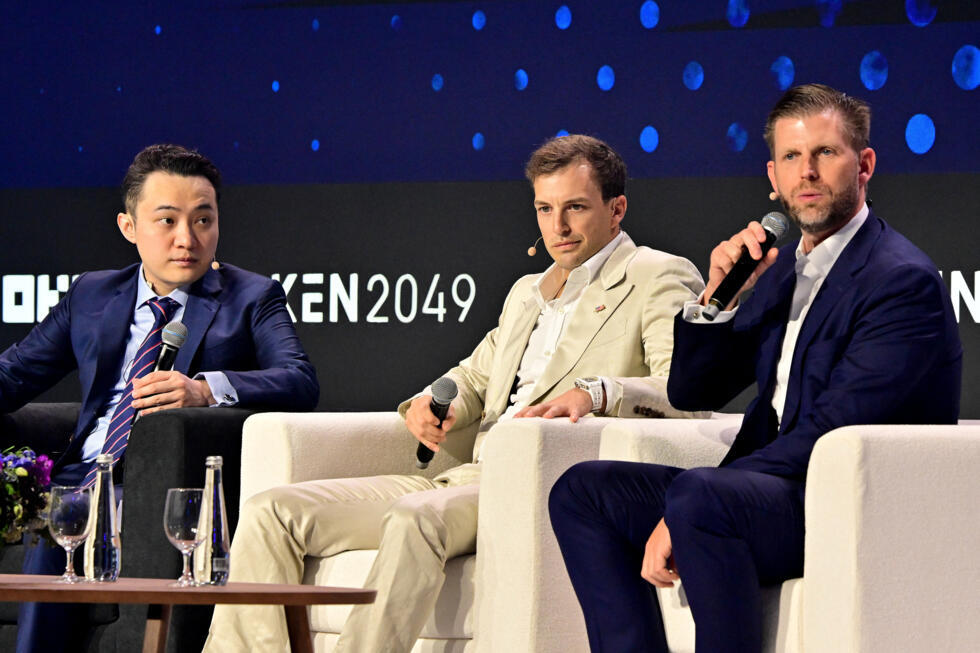
Crypto billionaire Justin Sun, World Liberty Financial co-founder Zach Witkoff and Eric Trump participate in a session at the Token 2049 crypto conference in Dubai on May 1, 2025. © Giuseppe Cacace, AFP


This, despite Trump's claim back in 2019 that he was “not a fan” of cryptocurrencies as their value was “highly volatile and based on thin air” and that they could also facilitate “illegal activity”.

Six years later, the mercurial nature of crypto has played to his advantage.

Meme coins, for example, are cryptocurrencies that generally emerge from internet jokes and are often bought as a novel way to engage with online trends, rather than as a serious investment.

When Trump launched his $TRUMP meme coin days before his second inauguration, buying in was a way for his supporters to ride a wave of excitement – but it was also a money spinner. By March, Trump had made $350 million off the coin, according to the Financial Times.

Next to launch was the $MELANIA meme coin, named after the first lady, which quickly earned $65 million in sales and trading fees – with particular benefits for a few early investors.

In the minutes before it’s official launch, 24 unidentified wallets bought up $2.6 million of the $MELANIA coin and within days flipped them for $100 million, the Financial Times reported.

Paying for access


Trump’s other crypto ventures have benefitted from similar boosts since he became president.

Since 2025, World Liberty Financial – a platform for borrowing, lending and trading cryptocurrencies – has sold more than $1 billion of its own tokens, Trump NFT’s have netted him around $13 million and the USD1 stablecoin is now worth an estimated $235 million.
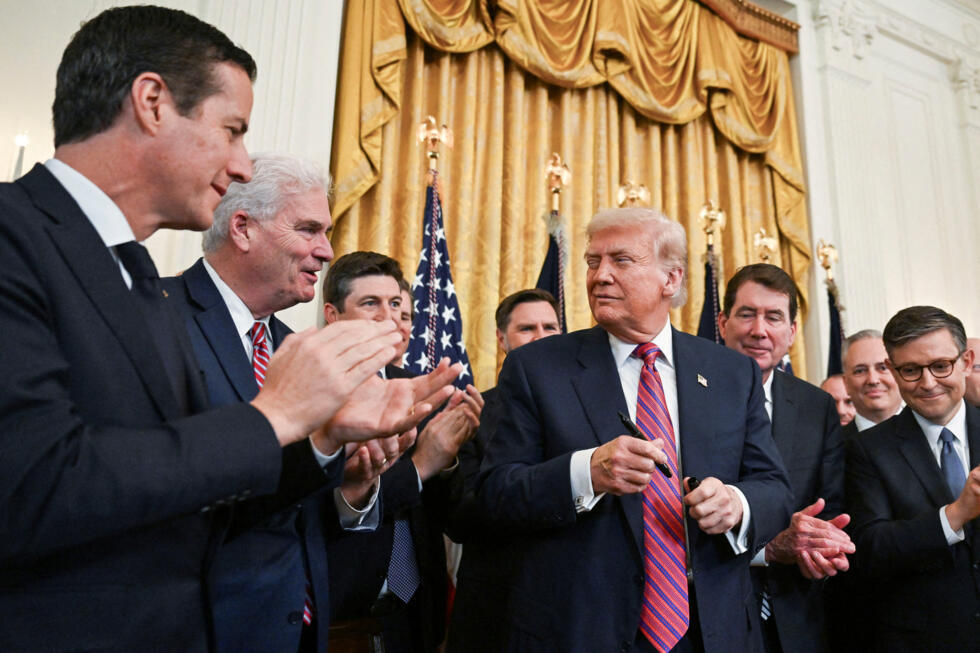

US President Donald Trump signed the "Genius Act" to develop regulatory framework for stablecoin cryptocurrencies and expand oversight of the industry at the White House on July 18, 2025. © Annabelle Gordon, Reuters

The advantage of an association with the White House is especially clear for Trump's stablecoin.

Stablecoins are cryptocurrencies that aim to maintain a stable value through links to specific assets – in USD1’s case it comes with a presidential guarantee that it is backed by short-term US government treasuries and dollar deposits.

The safeguard has encouraged foreign investment. In May 2025, the UAE’s ruling family bought up $2 billion of USD1.

Weeks later the White House gave the UAE access to thousands of the world’s most advanced and scarce computer chips.

Although the two incidents are not explicitly linked, there are indications – some more blatant than others – that those who invest in Trump’s crypto ventures are being given preferential treatment.

In April 2025, it was announced that the top 25 $TRUMP coin holders would be invited to a reception and VIP tour of the White House, a clear opportunity to pay for access to the President.

Among those on the guest list was China-born crypto billionaire Justin Sun, who is thought to own hundreds of millions of Trump’s meme coins, and is also the second-largest known investor in World Liberty Financial.

He was also the subject of a 2023 investigation by the US Securities and Exchange Commission (SEC), which charged him with finding illicit ways of trading in the US including enlisting celebrities to endorse his cryptocurrency.

The Trump administration has since ended nearly all regulation against crypto traders and, in 2026, the SEC put its charges against Sun on hold.

'A systemic failure'

Such deals are not necessarily illegal, but they “certainly transgress the ways in which things have been done in the past,” said Emma Long, associate professor in American history and politics, at the University of East Anglia.

It is not unusual for US presidents to use their profile for lucrative ends: most do this after they leave office, via book deals and speaking fees worth tens of millions of dollars.

But while in office, “presidents usually divest themselves of any financial arrangements that might be a conflict of interest or that might be seen as trading on their official position”, Long added.

While crypto ventures are the main source of Trump’s rapidly increasing fortune, there are other ventures that operate in this grey area.

On the 2024 campaign trail, Trump became the only presidential candidate to run an online merchandise store redirecting funds – that supporters may have believed were going to his campaign – into his own pocket.

Since his re-election, there have been claims that Trump’s hotels and resorts have benefitted from their association with the White House and from Trump holding official events there. Membership fees for Trump’s most famous resort, Mar-a-Lago in Florida, have now risen to $1million.

Then there are a host of other eyebrow-raising deals, such as a $40 million agreement signed with Amazon giving the corporation access to film a documentary with Melania Trump.

There's also the $400 million luxury jet that Trump accepted from Qatari government, which he has been allowed to keep even though it “appears to violate the spirit if not the letter of the Constitution, which essentially prohibits accepting profits or gifts from foreign countries without congressional approval”, said Ragland.

US Congress has so far failed to take action against the exceptionally expensive gift, making it part of a wider cash grab that indicates the country's “ethical guardrails are no longer functional,” said Ragland.

“We aren't just looking at one man’s fortune; we’re looking at a systemic failure that leaves the American public completely vulnerable to industrial-scale corruption,” he added.


One year of Trump's war on American culture

Issued on: 20/01/2026 
07:24 min
From the show


One year after Donald Trump's return to power, FRANCE 24's Eve Jackson revisits the paradoxical and conflictual relationship between the US president and culture and the arts. From controversial appointments in Hollywood, to attacks on diversity policies, to the symbolic takeover of the Kennedy Center, the US president intends to regain control of the American cultural narrative. Faced with this pressure, artists and institutions are getting organised, taking a stand and mobilising for freedom of speech.

BY: 
VIDEO BY:  Eve JACKSON


One year of Trump 2.0: How he's weaponised AI as political propaganda


Issued on: 20/01/2026 - 
05:31 min


As Donald Trump marks one year back in the White House, FRANCE 24's Vedika Bahl takes a closer look at how he has weaponised artificial intelligence into a political tool, used to glorify himself, attack his opponents and amplify his political agenda. Whilst it has become a defining feature of his digital presence, it's brought with it a new frontier for misinformation and fake news.


Mercosur trade deal in limbo after EU parliament asks top court to weigh in

The European Union's parliament voted on Wednesday to refer a freshly signed trade deal with the South American Mercosur trade bloc to the EU's top court, casting the hard-fought accord into legal limbo.


Issued on: 21/01/2026 - RFI

Farmers react as the EU parliament's vote result is announced during a protest against the free trade agreement between the European Union and the Mercosur countries, on the day of a vote on a referral to the courts, in Strasbourg on 21 January, 2026
© AFP - ROMEO BOETZLE

Signed on Saturday with Brazil, Argentina, Uruguay and Paraguay, the pact to create one of the world's largest free trade areas has been fiercely opposed by farmers' groups backed by France and others.

Lawmakers in Strasbourg voted 334 to 324 in favour of asking the Court of Justice of the European Union (CJEU) to determine whether the deal is compatible with the bloc's rules.

Hundreds of farmers had gathered with tractors outside the parliament building ahead of Wednesday's vote – and erupted in celebration as the result came in.

"We've been on this for months and months, for years," a euphoric Quentin Le Guillous, head of a French young farmers group, told French news agency AFP outside the EU parliament.

Tractors surround EU Parliament as MEPs vote on Mercosur review

"Tonight, I'm going home, I'm going to kiss everyone, and I'm going to tell my kids, 'I got it, we got it, we can be proud.'"

The court will now have to assess the legal challenge, a process that could delay and even derail a deal seen as a cornerstone of a Brussels push to open up new markets.

The vote deals a blow to the European Commission, whose president Ursula von der Leyen had given a speech to parliament just hours earlier touting the "historic deal".
Devastating sign

More than 25 years in the making, the EU-Mercosur deal was given fresh impetus amid the sweeping use of tariffs and trade threats by US President Donald Trump's administration, which has sent countries scrambling for new partnerships.

The commission, which championed and negotiated the pact that eliminates tariffs on more than 90 percent of bilateral trade, said it "regrets" the lawmakers' decision.

"According to our analysis, the questions raised in the motion by the parliament are not justified because the commission has already addressed those questions and issues in a very detailed way," European Commission trade spokesman Olof Gill told reporters in Brussels.

EU countries green-light Mercosur trade deal despite France's opposition

The court challenge centres on whether the deal can be partially applied before full ratification from member states, as envisaged by the commission, and if it unlawfully restricts Brussels' powers on some environmental and food safety matters.

The head of German auto industry group VDA decried the EU parliament's decision, saying it sent a "devastating sign" and risked irking Mercosur countries.

"Europe is weakening itself with the EU Parliament's decision at a time when geopolitical stability and reliable international partnerships are more urgent than ever," Hildegard Mueller said.

Parliament will now wait for the court's opinion before holding a vote on whether to approve the Mercosur deal – a necessary step for it to fully come into force.

But the commission could push ahead and apply it provisionally, also pending judgement, a potentially politically explosive move.
A small battle in a larger war

Key power Germany, as well as Spain and the Nordic countries, strongly support the pact, eager to boost exports as Europe grapples with Chinese competition and a tariff-happy administration in the White House.

"We are convinced of the legality of the agreement. No more delays. The agreement must now be provisionally applied," German Chancellor Friedrich Merz said after the vote.

But France, Poland, Austria Ireland and Hungary oppose it over concerns for their agricultural sectors.

"The fight continues to protect our agriculture and guarantee our food sovereignty," said French foreign minister Jean-Noël Barrot.

EU backs tough legislation to slash food waste and rein in 'fast fashion'

The deal favours European exports of cars, wine and cheese, while making it easier for South American beef, poultry, sugar, rice, honey and soybeans to enter Europe.

This has angered many European farmers, who have rolled tractors into Paris, Brussels and Warsaw to protest a feared influx of cheaper goods produced with lower standards and banned pesticides.

"It feels good, finally a victory," French farmer Alice Avisse, 52, said of the vote, cautioning however that it was "only a small battle in a larger war".

Together, the EU and Mercosur account for 30 percent of global GDP and more than 700 million consumers.

(with AFP)
WAR ON WOMEN

France urged to act as rising masculinism flagged as security threat

France must adopt a national strategy to combat masculinism – an organised ideology that promotes male supremacy and hostility to women – as it spreads online and poses a growing public security risk, the country’s gender equality watchdog has warned.

Masculinist ideas are spreading online, with a French report finding many men view feminism as a threat rather than a movement for equality. 


Issued on: 22/01/2026 - RFI

In its annual report on sexism, the High Council for Gender Equality, an advisory body attached to the office of the prime minister, on Wednesday said France was falling worryingly behind in identifying and tackling masculinism.

The council said the phenomenon should be recognised as a public security issue, warning that hatred of women can lead to violence and even terrorism. It noted that countries such as Canada and the United Kingdom have already included the issue in their strategies against violent extremism.

Masculinism emerged in the 1980s as a reaction to feminism. The ideology promotes male supremacy and blames women for what its supporters see as a decline in men’s living conditions.

Senior French civil servant accused of mass drinks spiking to humiliate women

From ideology to violence

“This is a real threat. From the moment you develop a hatred of women, there can be violence and terrorist acts,” Bérangère Couillard, president of the council, told French news agency AFP.

The report cited several cases linked to misogynist violence, going back to 1989 when a self-declared anti-feminist shot dead 14 women at Montreal’s École Polytechnique in Canada.

In France, an 18-year-old was arrested last summer in Saint-Étienne on suspicion of planning knife attacks against women. He was charged by the national anti-terrorism prosecutor, marking the first case involving someone claiming allegiance solely to the masculinist “incel” movement.

The council described that judicial decision as “a major step forward”, and said it now supports integrating what it calls “misogynist terrorism” into security doctrines.

This would involve training intelligence agents to recognise the language, recruitment methods and narratives used within the so-called manosphere.

Growing 'masculinist' culture in France slows down fight against sexism

Online influence

“If masculinist language is not understood, it gets missed,” Couillard said. She cited the British series Adolescence as an example of why familiarity with these terms matters.

The Netflix series, released in March 2025, depicts the murder of a schoolgirl by a classmate and the influence of masculinist ideas on boys. In January, French Education Minister Elisabeth Borne announced that it will be shown in French schools.

The gender equality watchdog said such masculinist ideologies were spreading more widely in France and elsewhere, especially among young people through social media.

It called for stronger regulation and more resources for Pharos, the state platform for reporting illegal online content, and Arcom, the media regulator.

A 2024 study by Dublin City University found that young men are exposed to masculinist content within 23 minutes of browsing TikTok and YouTube, on average, regardless of whether they looked for this material.

France to show 'Adolescence' mini-series as part of school curriculum

Hostile vs. paternalistic sexism

The council's report is based on an online survey by polling company Toluna Harris Interactive of 3,061 people aged 15 and over, representative of the French population.

It found that 60 percent of men believe feminists are seeking to give women more power than men.

A quarter of men said it was normal for a woman to agree to sex to please a partner or out of duty. The same proportion said they had already doubted a partner’s consent.

From these findings, the council estimated that 17 percent of the French population adheres to “hostile” sexism, which devalues women and justifies discrimination and violence.

“The risk is that these people join and become members of masculinist networks,” said Couillard.

In addition, some 23 percent of those surveyed supported a more “paternalistic” form of sexism which promotes traditional gender roles, the council said. Often seen as benevolent by its proponents, it nonetheless contributes to inequality by confining women to stereotypical roles based on fragility or dependence.


French investigators expose failings in Dominique Pelicot mass rape case


France's General Inspectorate of Justice has exposed failings in an investigation into Dominique Pelicot, accusing authorities of not acting on DNA evidence against him for a dozen years. Pelicot's DNA was taken by police after he was first apprehended in 2010 in a suburban Paris shopping centre while filming up women's skirts .


Issued on: 19/01/2026 
By: FRANCE 24
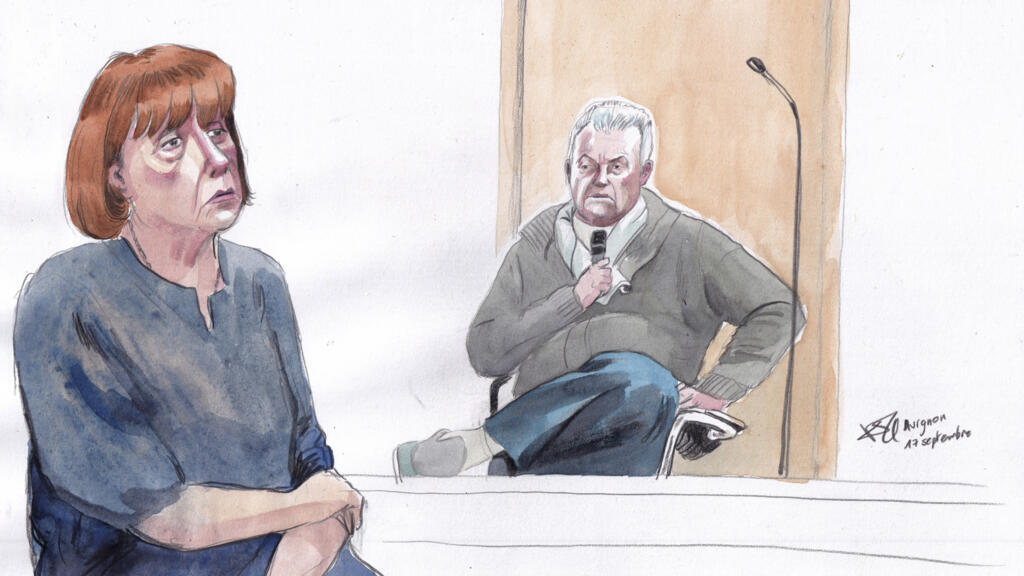
Courtroom sketch by Valentin Pasquier shows Gisele Pelicot, and her ex-husband Dominique Pelicot during his trial in Avignon, southern France, on September 17, 2024. © Valentin Pasquier, AP

France's General Inspectorate of Justice (IGJ) has exposed failings in an investigation into Dominique Pelicot, convicted in a high-profile rape case, for not acting on DNA evidence against him for a dozen years, in a report seen by AFP.

Pelicot was sentenced to 20 years in prison in December 2024 in a case that shocked the country, after admitting to repeatedly drugging his then-wife Gisele Pelicot and inviting dozens of men to rape her while she was unconscious between 2011 and 2020.

During the trial, it emerged that he had been first apprehended in 2010 in a suburban Paris shopping centre while filming up women's skirts, and had his DNA taken by police.

A few months later, he was connected with an attempted rape in the Seine-et-Marne area east of the capital on May 11, 1999.

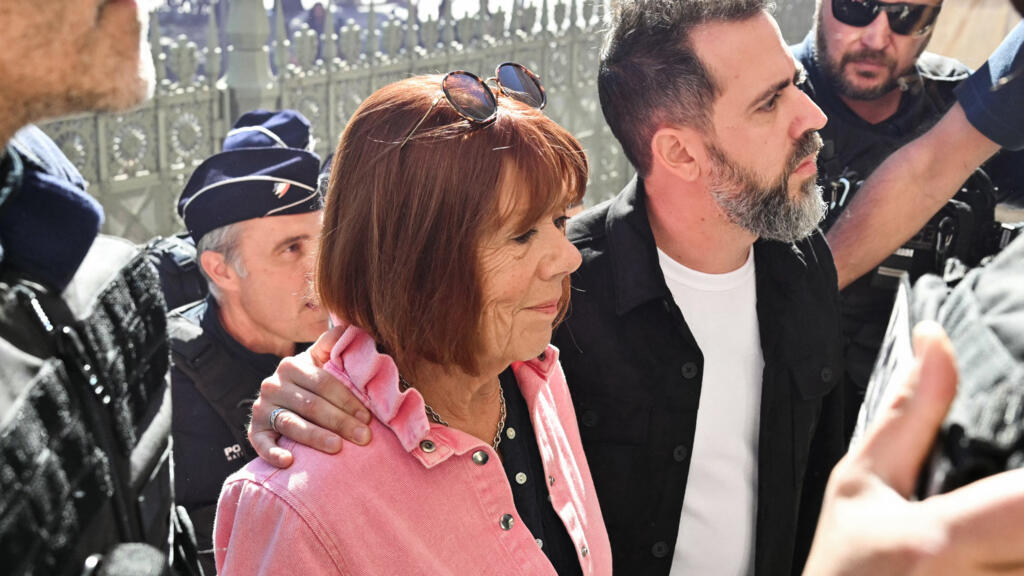
French rape victim Gisele Pelicot arrives at court for appeal trial 
AFP - CHRISTOPHE SIMON
01:51


Yet the DNA match was not acted upon by the justice system for more than 12 years.

In October 2022, he was finally placed under formal investigation by a cold case unit in Nanterre, west of Paris, for the 1999 incident as well as a 1991 rape and murder of a woman in Paris.

Last year, Justice Minister Gérald Darmanin called on the IGJ to look into why the investigation did not happen sooner.

The IGJ report seen by AFP this week found that the court investigating the 1999 rape had no receipt of receiving the evidence, which was sent by regular mail.

Furthermore, the court at the time was undergoing a structural re-organisation and "loss of documents was sometimes observed", the report said.

READ MORE  France enshrines consent in sexual violence law in wake of Pelicot case

The IGJ report highlighted "vulnerabilities" and general malfunction in the handling of genetic profiles, prompting a list of recommendations to secure the receipt of reports issued by France's National Automated DNA Database (FNAEG).

Contacted by AFP, Dominique Pelicot's lawyer, Beatrice Zavarro, said "the work of justice had been undermined".

She also acknowledged that the rape case involving his ex-wife "could have been avoided" had police intervened earlier.

"If we take it at face value, yes, this case could obviously have been avoided," she said.

Pelicot has admitted to his involvement in the 1999 case after he was identified by his DNA, but has denied involvement in the 1991 rape and murder case.

Last week, the Nanterre cold case unit launched a broader investigation into Pelicot's "criminal trajectories" to identify other possible crimes and victims.

(FRANCE 24 with AFP)

French dairy giant Lactalis recalls baby milk over bacteria fears

Lactalis has recalled six batches of Picot infant milk after tests detected a potentially harmful bacterial substance, with products pulled from shelves in 18 countries. French authorities had been informed of the risk at least five days earlier, Radio France reported.


Issued on: 22/01/2026 - RFI

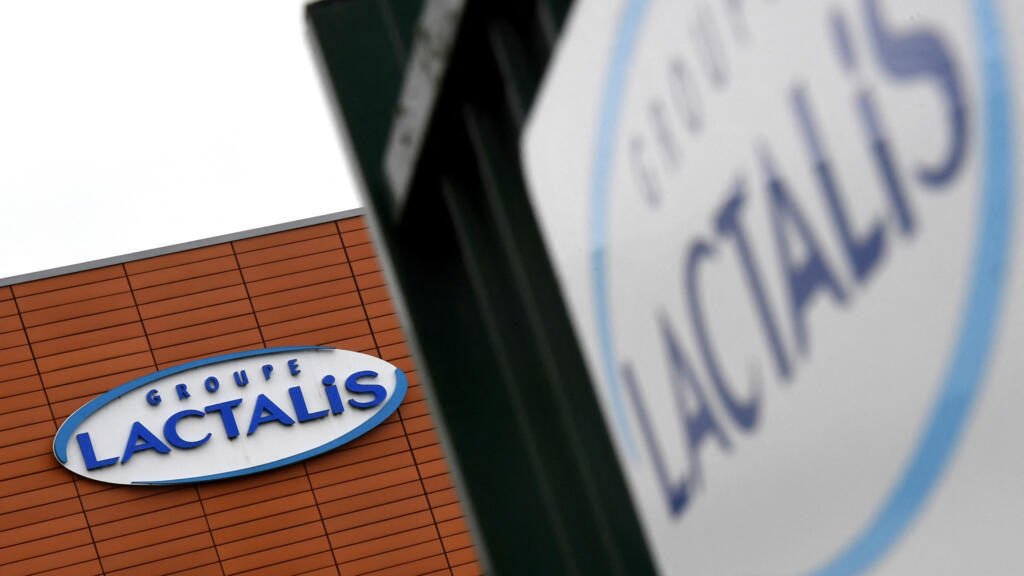
French dairy group Lactalis has announced the recall of several batches of Picot infant milk sold in France, with products also affected in other countries. AFP - DAMIEN MEYER

The company on Wednesday said the products may contain cereulide, a substance that can cause diarrhoea, vomiting and lethargy in babies. It said the recall was launched as a precaution after further testing on prepared bottles.

According to a Radio France investigation, the General Directorate for Food, which oversees food safety within the agriculture ministry, was aware from last Friday, 16 January, that Lactalis had received batches potentially contaminated with cereulide.

Initial tests carried out on finished products did not show levels considered problematic by the authorities, their report found.

Additional checks were later requested on prepared bottles, which revealed higher concentrations of the toxin after dilution, prompting the withdrawal from sale

Lactalis said the issue was linked to an international supplier which provides ARA, an ingredient used in some infant formulas, adding that Spain and countries in South America were notably affected.

In France, the recall covers Picot Nutrition Quotidienne first-age products in 400g, 800g and 850g containers, Picot Nutrition Quotidienne second-age products in 800g and 850g containers, and Picot AR second-age in an 800g container.

The products are sold in pharmacies and large retail stores.

Prepared bottles tested

Lactalis said the recall followed an alert from the French Professional Association for Infant Nutrition, an industry body.

The group said initial tests carried out on the powdered products produced compliant results.

Further analysis carried out on reconstituted products, meaning prepared bottles, later revealed the presence of cereulide, the company said in a statement.

“We are fully aware that this information may cause concern among parents of young children,” Lactalis said.

“At this stage, no complaints or reports linked to the consumption of these products have been reported by the French authorities."

Recalls widening

The Lactalis recall comes as infant milk products have been recalled in several countries in recent weeks over potential cereulide contamination.

Nestlé recalled infant milk products earlier in January in several countries, including France, as a precaution.


The Swiss food group said the presence of cereulide had been confirmed in some of its products and said that other manufacturers could also be affected.

French health authorities have opened a judicial investigation in that case, including epidemiological and food safety inquiries, the Health Crisis Centre said.

French dairy giant Lactalis recalls baby formula in 18 countries due to toxin


French dairy maker Lactalis has recalled baby formula in 18 countries after it was discovered that some batches may contain a dangerous toxin. Since the start of this year, three of the world’s biggest dairy companies, including also Nestlé and Danone, have issued recalls on baby milk due to contamination scares.


Issued on: 22/01/2026 -
By: FRANCE 24

French dairy giant Lactalis said on January 21, 2026, that it is recalling six batches of Picot brand infant milk due to the potential presence of cereulide, a bacterial substance that can cause diarrhea and vomiting. © Damien Meyer, AFP

French group Lactalis on Wednesday announced a worldwide recall of batches of infant formula over worries they contained a toxin. The countries concerned are: Australia, Chile, China, Colombia, Congo, Czech Republic, Ecuador, ​France, Georgia, Greece, Kuwait, Madagascar, Mexico, Monaco, Spain, Peru, Taiwan and Uzbekistan.

“Lactalis Nutrition Santé (LNS) is voluntarily recalling ​six batches of Picot brand infant milk, available ​in pharmacies and supermarkets, due to the presence of cereulide in an ingredient sourced from a supplier,” it said in a statement.

Cereulide, a substance of bacterial origin, may cause diarrhoea and vomiting, the statement said. Lactalis did not name the supplier behind the tainted ingredient. It published a list of six lot numbers, but stressed that all other batches were safe.

“We are fully aware that this information may cause concern among parents of young children,” it said. But French authorities had not signalled to them “any claim nor any report related to the consumption of these products”.

Third recall this year

The infant formula industry has been rocked by recalls in recent weeks.

Singapore authorities on Saturday recalled Dumex baby formula, a brand owned by French food giant Danone.

READ MORENestle recalls infant formula in several European countries

Danone said the authorities blocked just “a few pallets” of Dumex, indicating they were not yet on any store shelves.

The move comes after Nestlé also called back batches of infant milk in several European countries on January 6.

Nestlé France said it was carrying out a “preventive and voluntary recall” of certain batches of its Guigoz and Nidal infant formulas after new investigations showed the potential presence of cereulide.

French health authorities said Tuesday an investigation was underway after the death of a baby who had consumed milk from one of the batches recalled by Nestlé, though no link has been established between its consumption and the death at this stage.

(FRANCE 24 with AFP and Reuters)

US and Denmark to reopen 1951 defence agreement on Greenland

The United States and Denmark will renegotiate their 1951 defence pact covering Greenland, reopening a Cold War-era agreement after US President Donald Trump backed away from threats to seize the territory and punish European allies with tariffs.

Issued on: 22/01/2026 - RFJ

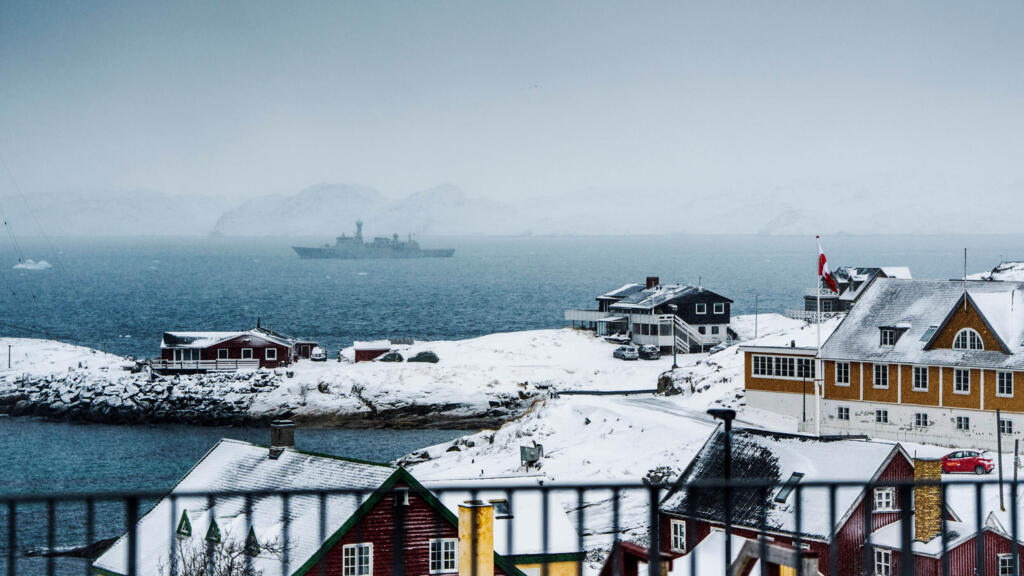
A Danish navy inspection vessel leaves Nuuk, Greenland, on 18 January 2026.
 © AP - Mads Claus Rasmussen

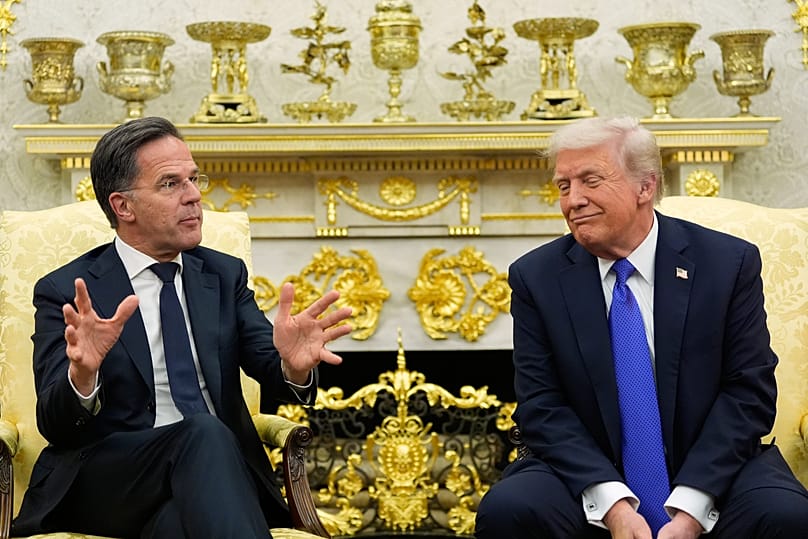
A source familiar with talks between Trump and NATO Secretary-General Mark Rutte said the agreement would be revised, but stressed that placing American bases on Greenland under US sovereignty had not been discussed.

“The 1951 agreement will get renegotiated,” the source told the French news agency AFP – adding that European allies would also step up security in the Arctic.

The defence pact, last updated in 2004, already allows Washington to increase troop deployments on the island as long as authorities in Denmark and Greenland are informed in advance.

The US currently operates one base there, the Pituffik Space Base in the north-west, which plays a key role in its missile defence system.

Trump said on Wednesday he had reached a “framework” agreement with Rutte covering Greenland and the wider Arctic region.

Trump reverses course on Greenland, drops tariff threat, citing 'deal'

But Danish Defence Minister Troels Lund Poulsen said NATO’s chief had no authority to negotiate on Denmark’s behalf.

In a social media post, Poulsen said it was “very positive” that NATO wanted to strengthen Arctic security, but warned there were firm limits.

“We have a clear red line,” he said. “We will not cede sovereignty over parts of the kingdom.”

A NATO spokesperson later said talks would continue, stressing that “negotiations between Denmark, Greenland and the US would go forward aimed at ensuring that Russia and China never gain a foothold, economically or militarily, in Greenland”.
Unclear framework

Trump’s earlier threats over Greenland, an autonomous territory within the Kingdom of Denmark, had shaken relations between Washington and its European allies.

He had repeatedly said he wanted the territory to become part of the United States, and threatened tariffs of up to 25 percent against Denmark and other European countries.

Based on his talks with Rutte, Trump said he would not impose the tariffs that were due to take effect on 1 February.

European diplomats said the shift in tone had eased tensions, but warned that key questions remain unanswered. NATO has insisted that Rutte “did not propose any compromise to sovereignty” in his talks with Trump.

Danish Prime Minister Mette Frederiksen said she had been informed that Greenland’s status was not discussed.

“We can negotiate all political aspects: security, investment, the economy,” she said. “But we cannot negotiate our sovereignty.”

Aaja Chenmitz, one of two Greenlandic lawmakers in the Danish parliament, questioned why NATO should have any role in discussions touching on the island’s resources.

“NATO in no case has the right to negotiate on anything without us, Greenland,” she wrote on social media.

(with newswires)

Wednesday, January 21, 2026

Greenland, NATO and war: Fact-checking Trump’s Davos speech


Copyright AP Photo

By Tamsin Paternoster & James Thomas & Estelle Nilsson-Julien and Noa Schumann
Published on 21/01/2026


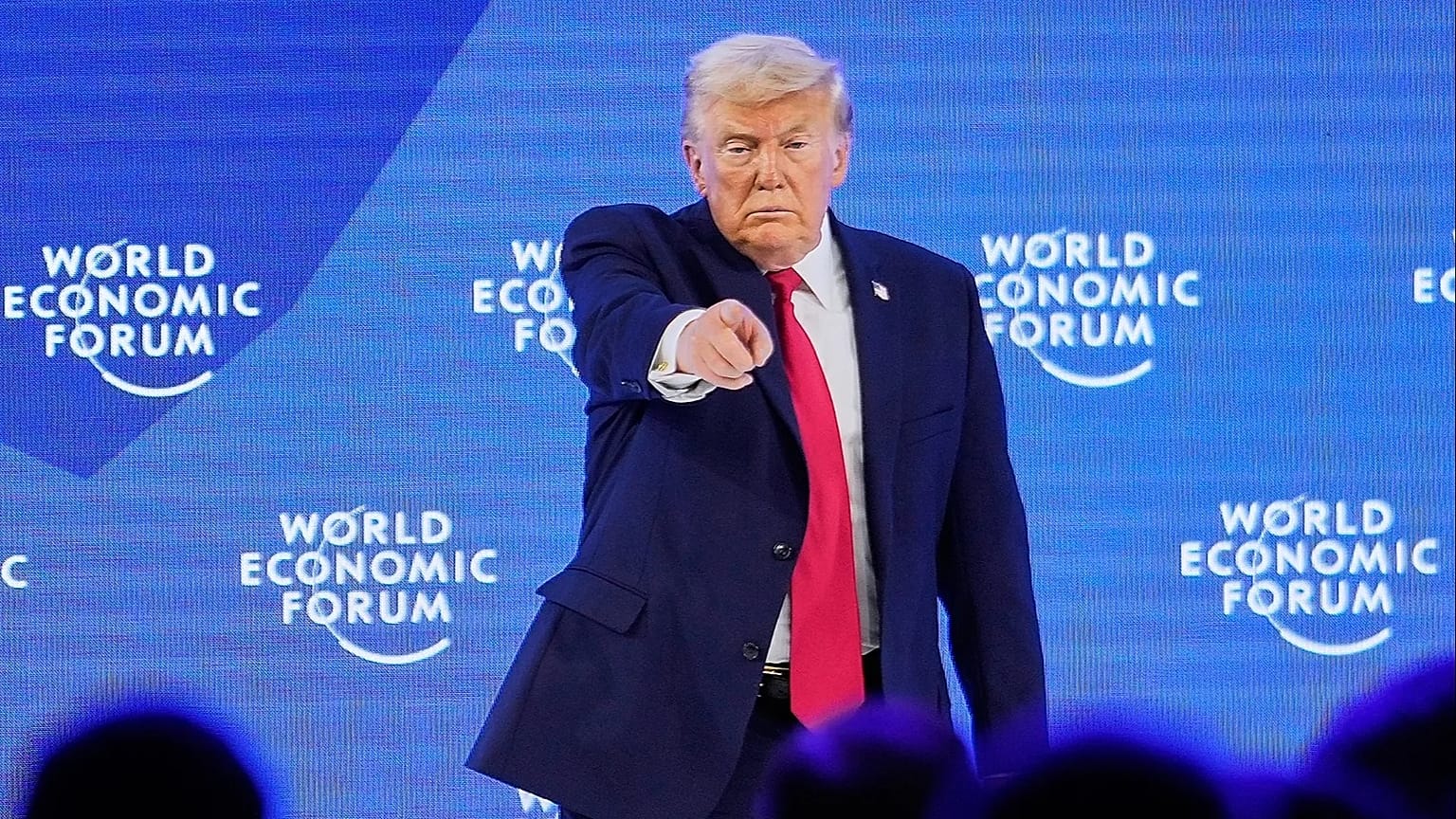
Addressing the World Economic Forum, US President Donald Trump attacked Europe’s energy policies and alleged the US “returned” Greenland to Denmark following World War Two. The Cube looks at where facts back his claims.


From repeating his long-running claim regarding ending eight wars, to evoking World War II history to stake his claim on Greenland, US President Donald Trump made a series of bold statements during his Wednesday speech in Davos.

The Cube, Euronews’ fact-checking team, has looked at some of his assertions to determine their accuracy.

NATO has 'never done anything' for the US

Trump repeatedly criticised NATO and its members for not pulling their weight in his speech, complaining that the US gets very little compared to what it gets back, casting doubt on whether the alliance would support his country in an attack.

“We’ve never got anything out of NATO,” the president said, adding later: “We’ve never asked for anything, it’s always a one-way street.”

“We’ll be there 100% for NATO, but I’m not sure they’ll be there for us,” Trump added.

However, the US is the only country to have ever invoked NATO’s Article 5 common defence measure, triggering an obligation for each country to come to its assistance. It did so in the aftermath of the 11 September attacks in 2001.

RUTTE CALLED TRUMP 'DADDY'

President Donald Trump meets with NATO Secretary General Mark Rutte in the Oval Office of the White House, in Washington on 22 October 2025. AP Photo

According to NATO, the alliance assisted the USin various ways, including enhancing intelligence sharing, providing increased security to US facilities, and launching its first-ever anti-terror operation — Operation Eagle Assist — between October 2001 and May 2002.

Trump also asserted that the US was paying “virtually 100%” of NATO’s budget before he entered office, but that’s not true either.

If he was referring to NATO’s common budget, then according to thealliance’s figures, the US was contributing some 15.9% to its funds between 2024 and 2025, alongside Germany. This included its civil budget, military budget and security investment programme.


The number has dropped to just under 15% for 2026-2027, again alongside Germany. The next biggest contributors are the UK (10.3%), France (10.1%) and Italy (8%).


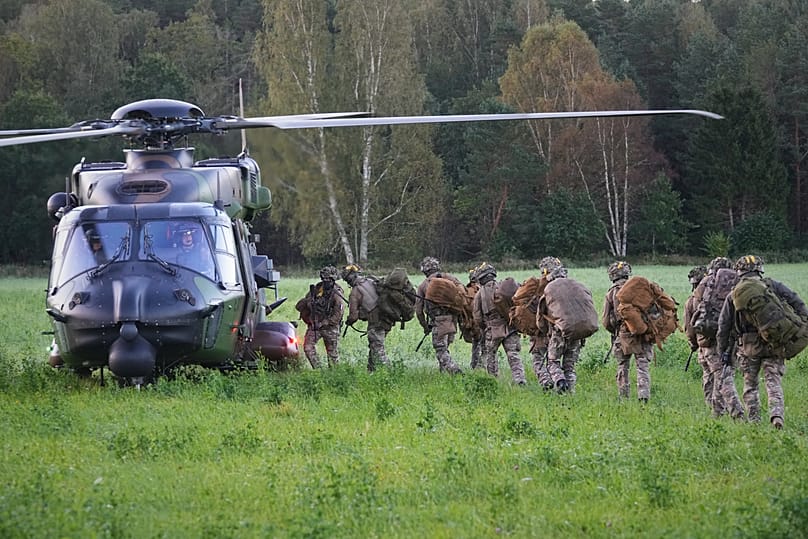
French service members participate in multinational military Exercise Pikne ("Lightning") on Saaremaa Island, Estonia, September 2025. AP Photo

It’s possible that Trump was referring to NATO members’ defence spending, which he criticised at several points during his speech, too, but it’s still wrong to say the US was ever contributing 100% to the alliance’s defence.

Back in 2016, the last year before Trump took office the first time around, US defence spending was in the clear majority (71%) of the total by all NATO members, but that’s not close to 100%.

Since then, it’s fallen to a figure estimated to be around 66%.

These numbers are not to be confused with members’ defence spending as a percentage of their GDP, which was originally set at a 2% target. It has since been increased to 5% by 2035 (excluding Spain), after Trump criticised that not enough countries were meeting the original number.

Recent figures put Polandat the topwith 4.48%, followed by Lithuania (4%) and Latvia (3.73%). The US is in sixth place at 3.22%.
Are Germany’s electricity prices 64% higher than 2017?

During his speech, Trump attacked European countries' energy policies and claimed that Germany's electricity prices are 64% higher now than they were in 2017.

“Germany generates 22% less electricity than it did in 2017. And it's not the current Chancellor's fault, he is solving the problem, he is going to do a great job. But what they did before him, I guess that's why he got there. The electricity prices are 64% higher,” he said.

It’s not clear where Trump is getting his data from, and whether he is counting electricity prices for households or for non-households. It is true that Germany has generated less electricity in recent years since 2017, and that renewables account for a much larger share of the country’s total energy generation, a shift that has grown steadily over decades.


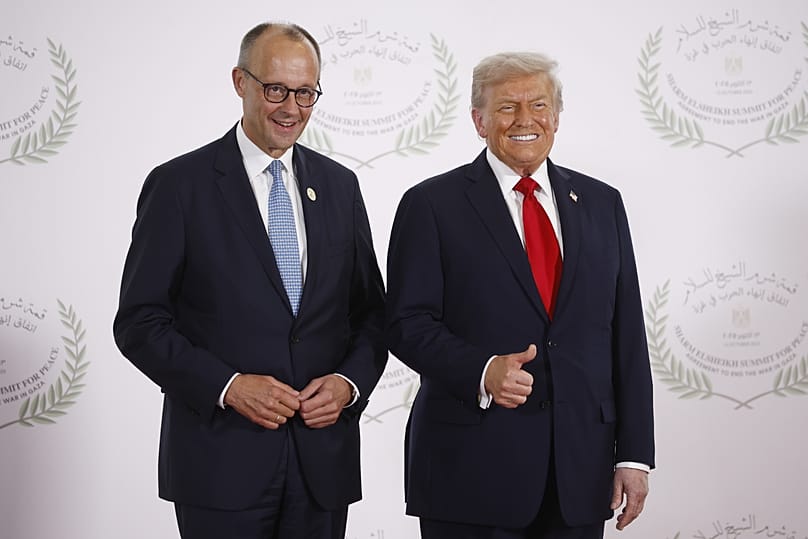
President Donald Trump and German Chancellor Friedrich Merz pose during the family picture at the Gaza International Peace Summit, in Sharm el-Sheikh, Egypt, October 2025. AP Photo

An initial look at data from the German Association of Energy and Water Industries, which represents around 2,000 energy and water companies in Germany, shows that household electricity cost 30,36 cents per kilowatt-hour in 2017 on average. In 2025, the average price was around 39.28 cents per kWh.

That represents an increase of around 29%, not 64%.

Data from Germany’s Federal Statistics Office and Eurostat depict a similar picture. According to it, households in Germany paid an average of 30.4 cents per kWh in 2017 and 39.92 cents in the first half of 2025 — an increase of around 31%.

Elsewhere, Trump blamed the renewable energy policies of left-leaning governments for “extremely high prices” and what he called the “New Green Scam”.

“There are windmills over the place, and they are losers,” he told the crowd.

Overall, Germany’s electricity prices have increased. They spiked particularly in 2022 and 2023 in what experts say was an increase directly linked to the collapse of gas supplies over Russia’s full-scale invasion of Ukraine in early 2022.

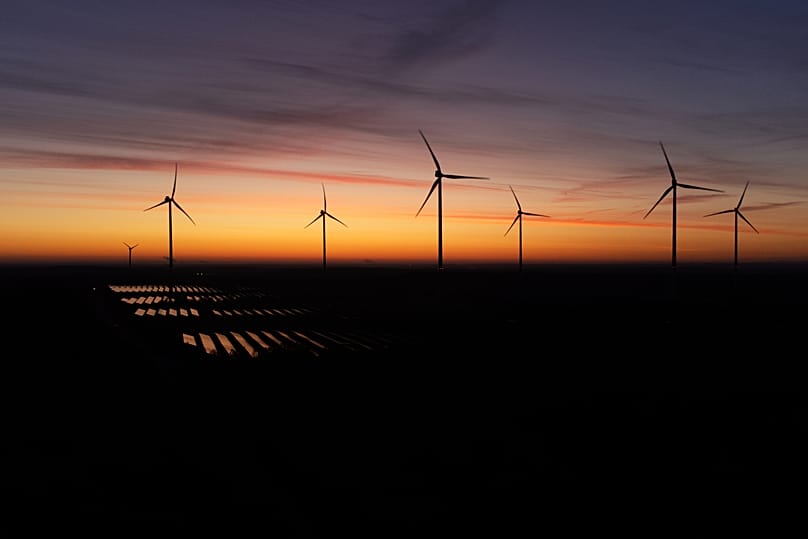
Wind turbines operate as the sun rises at the Klettwitz Nord solar energy park near Klettwitz near Klettwitz, Germany, October 2024. AP Photo

Renewable energy has added long-term system and grid costs to electricity bills, but it was not the main driver of Germany’s electricity price spike during this period.

Trump also said of the UK that it “produces just 1/3 of the total energy from all sources that it did in 1999. Think of that 1/3. And they're sitting on top of the North Sea — one of the greatest reserves anywhere in the world, but they don't use it.”

UK government data shows that energy production in 2023 is down 66% from 1999, when “UK production peaked”, so roughly by one-third.

According to it, oil and gas production from the North Sea, a major source of energy for the UK for decades, has declined naturally as “most accessible oil and gas has already been extracted”, making Trump’s claim that the UK “doesn’t use” its North Sea reserves misleading.
ADVERTISEMENT


Recently, there has been an uptick in rhetoric, particularly from the Conservative Party, that the UK should push for more oil and oil production in the North Sea.
Fixing eight wars

During his address, Trump reiterated his claim that he has ended eight wars since commencing his second Presidential term in January 2025.

He has previously listed these conflicts as: Israel and Hamas, Israel and Iran, Egypt and Ethiopia, India and Pakistan, Serbia and Kosovo, Rwanda and Congo, Armenia and Azerbaijan, and Cambodia and Thailand.

Although Trump has played a part in mediation efforts in a number of these conflicts, his impact is not as clear-cut as he alleges. Although he is credited with ending the 12-day war between Israel and Iran, this can be seen as a temporary respite from an ongoing cold war.

Fresh fighting broke out between Cambodia and Thailand in December. Although a peace agreement between Congolese forces and Rwanda-backed rebels was brokered by the Trump administration, fighting has continued, and M23 — the Rwandan-backed rebel group in the eastern DRC — was not party to the agreement.

Although the US announced the launch of the second phase of the Gaza ceasefire plan in mid-January, the next steps in this process remain shrouded in uncertainty. Many of the points in the first phase of Trump's 20-point plan have not materialised.

Friction between Egypt and Ethiopia over the Grand Ethiopian Renaissance Dam is best described as heightened tension, not war. There has been no threat of war between Serbia and Kosovo during Trump’s second term, nor has he made any significant contribution to improving relations in his first year back in the White House.

And while the leaders of Armenia and Azerbaijan signed a deal aimed at ending a decades-long conflict at the White House in August, they have yet to sign a peace treaty, and their parliaments would still need to ratify it.
RelatedFact check: Can the EU defend Greenland in a US attack?
Fact check: What is Trump's 'Board of Peace' and would it have real power?
Has Greenland banned Donald Trump and his descendants?
The US ‘returned’ Denmark to Greenland

Donald Trump repeatedly claimed during his speech that the United States had returned Greenland to Denmark after World War Two.

“We already had it as a trustee, but respectfully returned it back to Denmark not long ago,” the former president said.

In reality, while the US assumed responsibility for Greenland’s defence during the war, this did not affect Denmark’s sovereignty over the island.


After the conflict, Denmark was required to list Greenland with the United Nations as a “non-self-governing territory”, effectively acknowledging its colonial status.

The US has sought to purchase Greenland on several occasions over the past century. Most notably, in 1946, President Harry Truman offered Denmark $100 million in gold, an offer Copenhagen rejected.

Under a 1951 defence agreement, Washington formally recognised the “sovereignty of the Kingdom of Denmark over Greenland”.

In 2004, the US also acknowledged Greenland’s status as an equal part of the Danish kingdom, following changes to the territory’s constitutional position.

French journalist detained at pro-Kurdish rally in Istanbul released, lawyer says

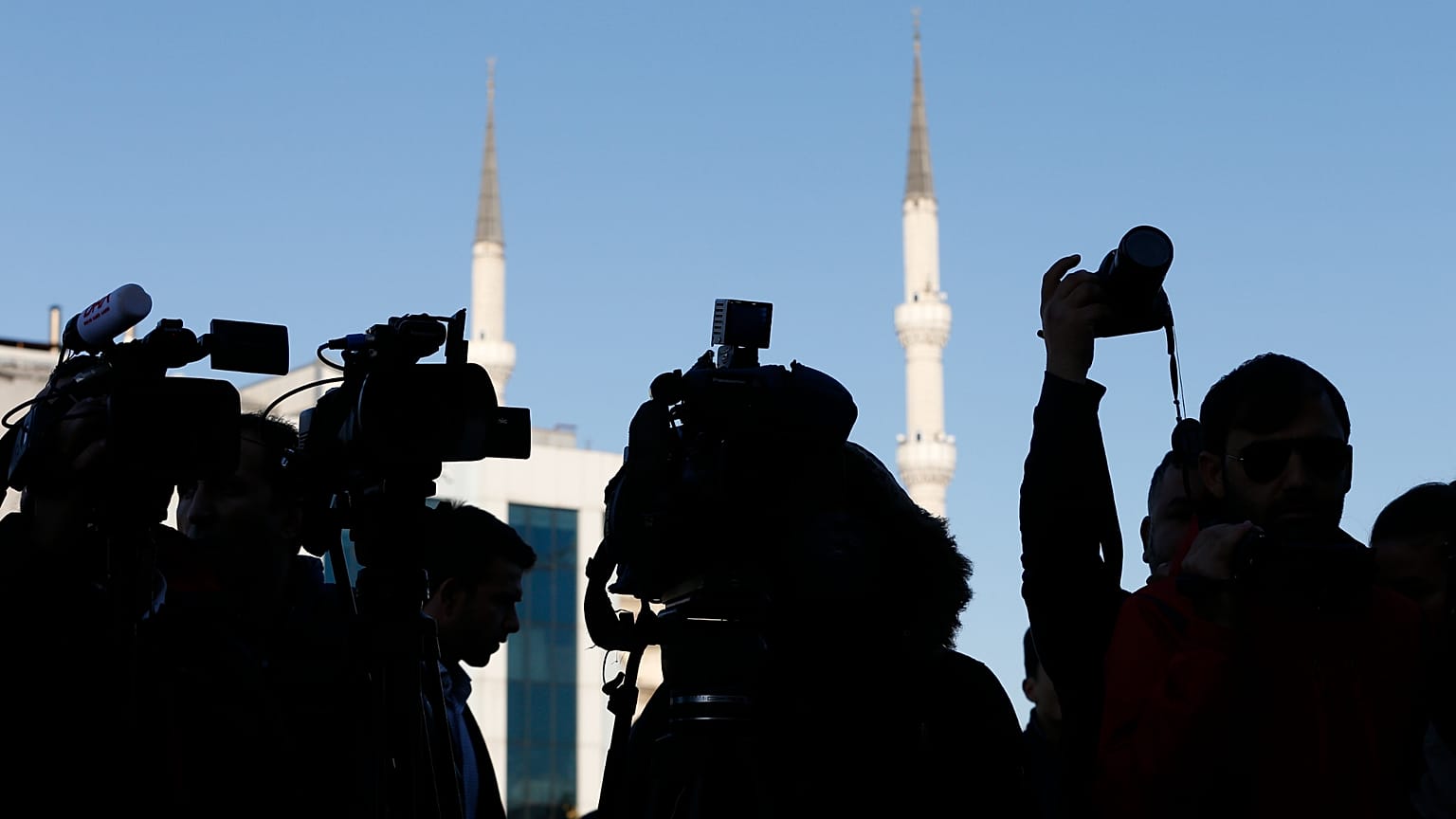
Members of the media follow the protest in front of the courthouse where the trial of Cumhuriyet newspaper employees accused of aiding terrorist organisations is underway / 31 October 2017
Copyright Copyright 2017 The Associated Press. All rights reserved.

By Sait Burak Utucu & Gavin Blackburn
Published on 

Raphael Boukandoura, who works for French publications including Liberation and Courrier International, was detained on Monday at a protest against a military operation targeting Kurdish fighters in northern Syria.

A French journalist who was arrested while covering a pro-Kurdish protest in Istanbul has been released without charge, his lawyer said on Wednesday.

Raphael Boukandoura, who works for French publications including Liberation and Courrier International, was detained on Monday at a protest against a military operation targeting Kurdish fighters in northern Syria.

Boukandoura, 35, has lived legally in Turkey for at least a decade and holds an official press card.

He was transferred to a detention centre for migrants, his lawyer Emine Ozhasar said.

Asked if Boukandoura might be deported, she said: "It's a possibility", explaining that no decision had yet been made.

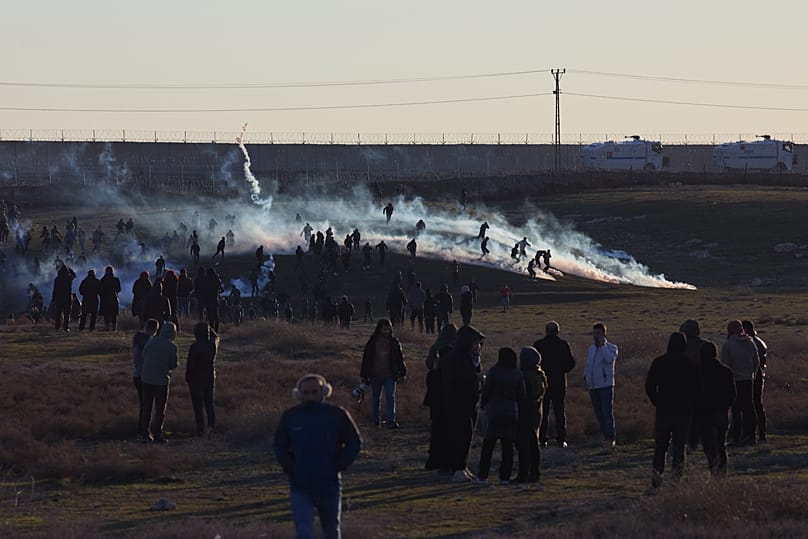
Pro-Kurdish Peoples' Equality and Democracy Party supporters clash with Turkish police in Nusaybin, 20 January, 2026
Pro-Kurdish Peoples' Equality and Democracy Party supporters clash with Turkish police in Nusaybin, 20 January, 2026 AP Photo

The arrest sparked calls for his release from rights groups and France's government.

In a statement to the AFP news agency on Tuesday, the French foreign ministry said it hoped Boukandoura would be "freed as quickly as possible". Its diplomats in Turkey were "closely monitoring the situation", it added.

At the protest, called by the pro-Kurdish party DEM, party officials called for "an immediate halt to the attacks" and the protection of civilians in northeastern Syria.

Police broke up the rally arresting 10 people, including Boukandoura.

Arrest 'unacceptable'

Two weeks ago, Syrian government troops launched an offensive against Kurdish-led forces, an operation publicly welcomed by Turkey, despite its own efforts to pursue a peace process with the outlawed Kurdistan Workers' Party (PKK).

According to rights group MLSA, Boukandoura told police he was present strictly as a journalist, covering the protest for French daily Liberation.

The police quizzed him about slogans allegedly chanted during the protest but he told them he did not chant anything and was only there to report, MLSA said.

The European Parliament's Turkey rapporteur Nacho Sanchez Amor said he was following "with concern" the reporter's case, who was "now facing deportation" despite being based in Turkey since 2015.

"Independent journalism is really a hazardous job in #Türkiye for locals & foreigners," he wrote on X.

Erol Onderoglu of Paris-based media-rights group Reporters Without Borders (RSF) said the fact that a French journalist was facing expulsion for doing his job was "unacceptable".

"It is intended to intimidate journalists covering pro-Kurdish protests in Turkey," he told AFP.

Liberation, along with Courrier International, Mediapart and Ouest-France, other outlets that have published Boukandoura's work, all issued statements calling for his immediate release.

THE GRIFT

Norway will not participate in Donald Trump's 'Board of Peace,' PM's office says

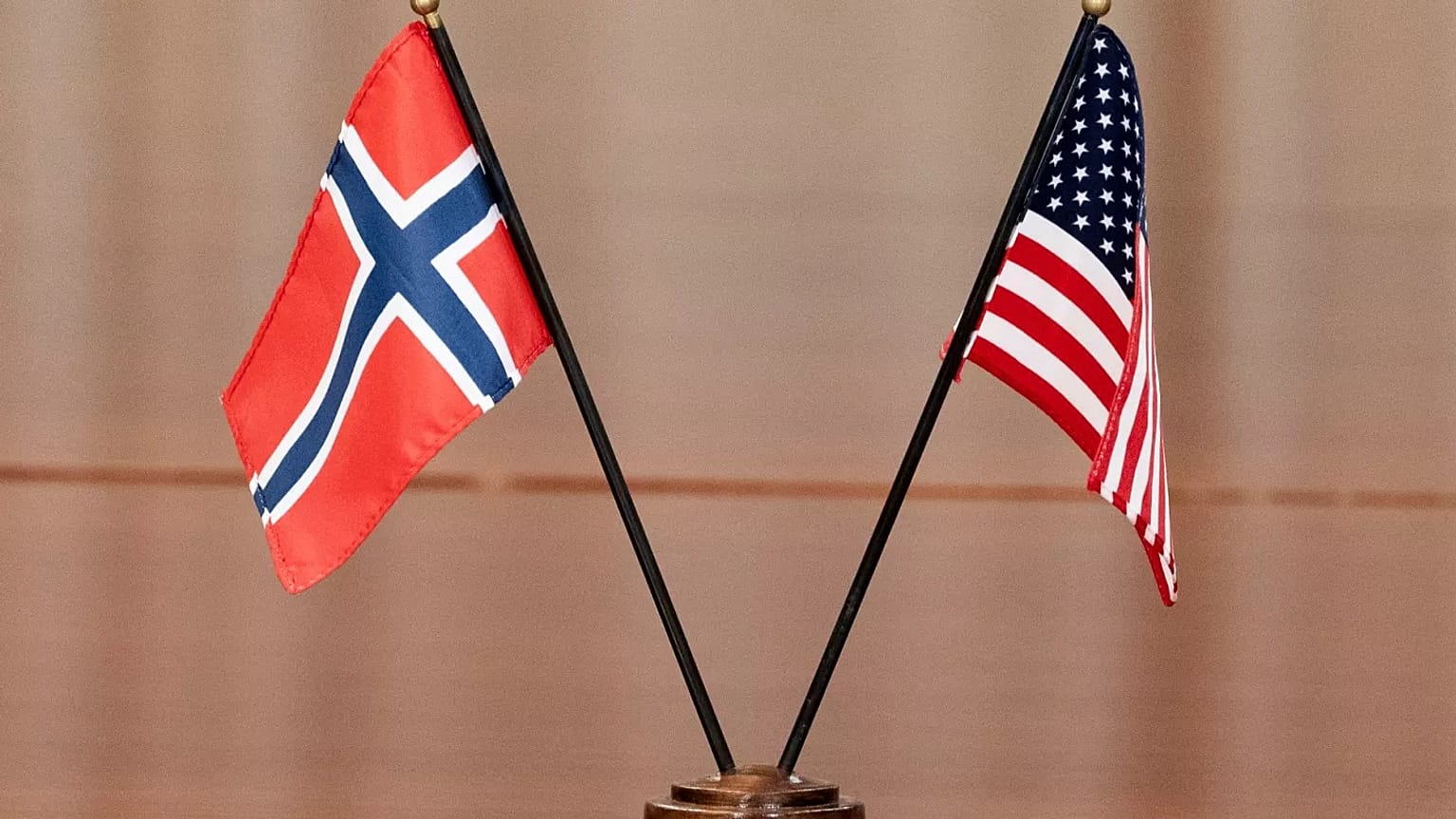
The Norwegian and US flags are seen on the table at the Pentagon, 20 September, 2022
Copyright AP Photo

By Gavin Blackburn
Published on 

Trump's Board of Peace was originally conceived to oversee the rebuilding of Gaza, but according to its charter the scope does not appear to limit its role to the Palestinian territory.

Norway's government said on Wednesday it would not join the Board of Peace initiated by US President Donald Trump, who has vented his frustration at the Nordic country after being snubbed for the Nobel Peace Prize.

"The American proposal raises a number of questions" requiring "further dialogue with the United States", State Secretary Kristoffer Thoner said in a statement.

"Norway will therefore not join the proposed arrangements for the Board of Peace, and will therefore not attend a signing ceremony in Davos," Thoner said.

Norway would continue its close cooperation with the United States, he added.

Trump's Board of Peace was originally conceived to oversee the rebuilding of Gaza, but according to its charter the scope does not appear to limit its role to the Palestinian territory

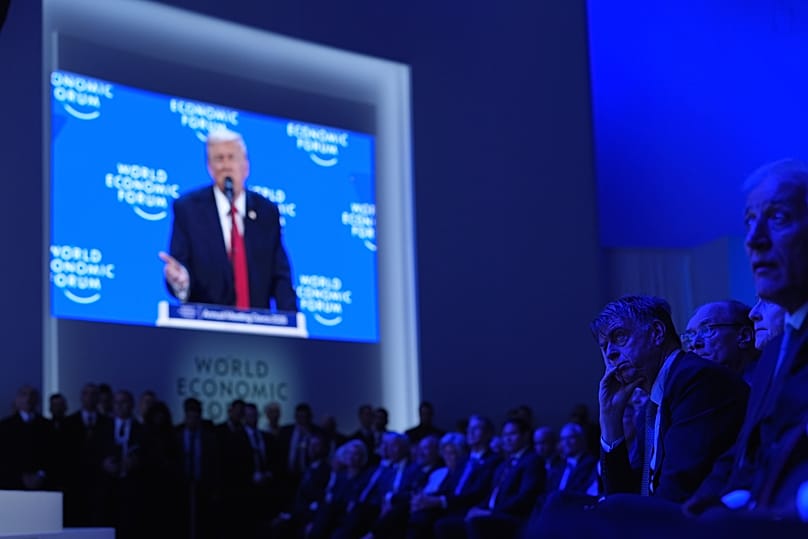
Attendees listen to the address of US President Donald Trump during the Annual Meeting of the World Economic Forum in Davos, 21 January, 2026 AP Photo

The US administration has asked countries to pay up to $1 billion for a permanent spot on the board, on which Trump will serve as chairman.

"For Norway, it is important how this proposal is linked to established structures as the UN, and to our international commitments," Thoner added.

The government representative added that Norway shared Trump's "goal of lasting peace in Ukraine, Gaza and in other situations."

Trump has repeatedly said he believes he deserved the Nobel Peace Prize. Last year's prize went to Venezuelan opposition leader Maria Corina Machado.

In a message to Norway's Prime Minister Jonas Gahr Støre published on Monday, Trump said having been denied the prize he no longer felt "an obligation to think purely of Peace."

Støre said in a statement: "I have clearly explained, including to President Trump, what is well known - the prize is awarded by an independent Nobel Committee.”


Gaza Vanishing: Trump’s Board of Peace


Donald Trump’s Board of Peace overseeing the reconstruction of Gaza was always going to raise a host of niggling questions. From the outset, the US President made it clear he would be the helmsman of what was essentially an outfit of selected corporate overseers tilling the soil for The Donald’s posterity fund. These anointed sorts have been given the ostensible task of reviving and resuscitating a pulverised, rubble strewn enclave that has seen atrocities aplenty visited upon it. But to what end?

The envisaged structure of control over Gaza, seen as a vital part of fulfilling Trump’s 20-point plan for the territory, opens the second phase of the peace process. It’s already clear that the Board is a cheese platter of billionaires and pro-Israeli figures, with Bulgarian diplomat Nickolay Mladenov being named its “High Representative”. A Gaza Executive Board will work with the Office of the High Representative and an inconsequential Palestinian technocratic body, the National Committee for the Administration of Gaza (NCAG). In a statement, the White House notes that the NCAG will be led by technocrat Ali Sha’ath, formerly of the Palestinian Authority, who will be charged with the tasks of restoring core public services, the reconstruction of civil institutions, “and the stabilization of daily life in Gaza, while laying the foundation for a long-term, self-sustaining governance.”

We already have a sense of how the pantomime will unfold. There are the Trump feet washers such as Secretary of State Marco Rubio; men of money such as the Middle East envoy Steve Witkoff; the family angle with the President’s son-in-law Jared Kushner; and that paragon of insincerity and ill-judgment on Middle East affairs, former UK Prime Minister Tony Blair.

The charter of the Board of Peace, a copy of which was circulated among dozens of heads of state with invitations to join, carries a fee of US$1 billion for countries seeking a permanent seat on it. Those not wishing to provide the fee will serve for three years. The document is further notable for what it does not say. Gaza does not make it into the text. Nor does the United Nations. It does, however, speak about the need for “a more nimble and effective international peace-building body”, which looks ominously like a subversive stab at the UN, a body whose alleged impotence Trump has done so much to encourage. To make peace durable, it was important to have “the courage to depart from… institutions that have too often failed.” The proposition as to why such institutions fail is never considered, much like the happy arsonist who starts fires in order to extinguish them.

Even before these bodies have taken shape, trouble is brewing. Despite the warm, favourable slant shown towards Israel in this venture, one designed to keep Palestinians in their downtrodden place, Israeli Prime Minister Benjamin Netanyahu was not delighted to find out that Turkey and Qatar would also have a role to play on the Gaza Executive Board. They might spoil the platter and sour the offerings. “The announcement regarding the composition of the Gaza executive board, which is subordinate to the Board of Peace,” stated a note from the PM’s office, “was not co-ordinated with Israel and runs contrary to its policy.”

In remarks made during an agitated debate in the Knesset plenum on January 19, Netanyahu was adamant that involvement by Ankara and Doha would not be military in nature: “Turkish or Qatari soldiers will not be in the Strip.” These sentiments are seemingly misplaced, given that Qatar lacks a force suitable to make such a contribution. The Israeli PM also insisted that both countries would be denied any authoritative role or have any influence on the various bodies, despite Trump’s willingness to include Turkish and Qatari representatives on the Gaza Executive Board.

Despite being overlooked on the issue of consultation regarding Turkey and Qatar, Netanyahu was boisterous enough to insist that standing up to Washington was something he was rather good at. “When it comes to Israel’s essential interest, we can argue, we can sharpen our positions, and, by the way, we can come to agreements.”

This did not convince the opposition leader and chair of the Yesh Atid party, Yair Lapid. As with most Israeli politicians, the prospect that the Palestinians might even dare to behave in sovereign fashion in Gaza remains both inconceivable and abhorrent. Allies of Hamas, he complained, “have been invited to run Gaza”, while the “dominant factor” of the Palestinian technocratic committee was the Palestinian Authority. This suggested one of two possibilities: either Netanyahu had slyly “agreed behind our backs that Turkey, Qatar, and the Palestinian Authority would be in Gaza” or he had been ignorant of their inclusion, in which case “Trump doesn’t give a damn about you.” Israel was “returning to Gaza, not at the starting point, but to a point much worse than at the beginning.”

Those worried about this venture being one to displace or marginalise the UN (Julien Barnes-Dacey of the European Council on Foreign Relations is of this view) should think again. Chaos seems imminent, with the Board looking much like a waxwork effort by sketchy amateur artists, likely to melt when heat is applied. There will be much fractiousness and no longevity about a project that says nothing of institutions and everything about the moods of a person who, when he departs, will see it wither. Narcissism lies at its core and may well die with it. The concern here is whether aspirations for Palestinian sovereignty will do the same.

Binoy Kampmark was a Commonwealth Scholar at Selwyn College, Cambridge. He lectures at RMIT University, Melbourne. Email: bkampmark@gmail.comRead other articles by Binoy.