Sunday, February 08, 2026


Korean RoRo Turns Around After Reporting Truck Fire
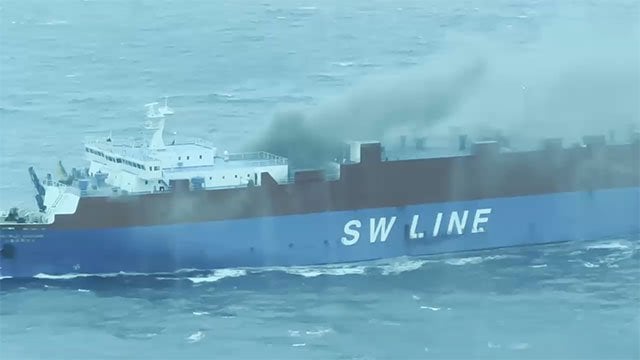
RoRo fire
RoRo reported a truck shortly after departing port in Korea (Korean TV - Jeju Coast Guard)

Published Feb 6, 2026 12:03 PM by The Maritime Executive


A Korean-flagged RoRo operating as a ferry was forced to turn around on Friday evening, February 6, after the crew discovered a truck fire onboard. The crew, aided by the local fire department and the Coast Guard, was able to bring the fire under control after about two hours.

The Korean Coast Guard unit in Jeju and the fire department reported receiving the report of the fire at about 5:30 pm local time. The ship had departed Jeju bound for Mokpo approximately 40 minutes earlier. It had a crew of 16 aboard plus 12 truck drivers. The ship was reported to be carrying a total of 127 vehicles, including 86 trucks and 41 passenger cars.

The Coast Guard dispatched a helicopter to survey the situation while four patrol boats were also deployed. The fire department was put on standby at the pier awaiting the arrival of the ship.

After the fire alarms went off on the vessel, the crew initiated the fire suppression systems while the captain turned the vessel around to return to Jeju.  Pictures from the Coast Guard show smoke emitted from the ferry, Seaworld Marine 2 (6,000 dwt). Built in 2002 as a Japanese vehicle carrier, the ferry has been operating in Korea since 2024.
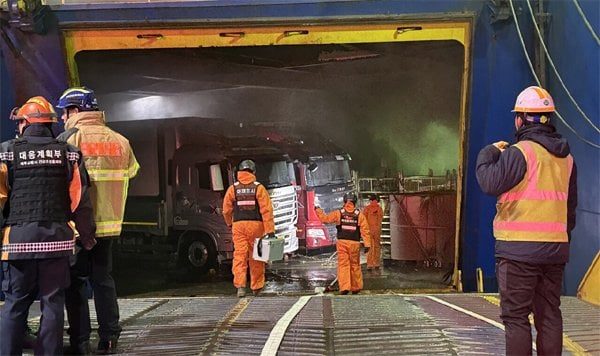
 

(Jeju Fire and Safety Headquarters)


Medical teams set up an emergency station on the dock and reported treating crewmembers and truck drivers for smoke inhalation. Four people, two crewmembers and two truck drivers, were sent on to the hospital for further treatment.

Fire crews reported they were able to extinguish the fire about an hour after the vessel returned to the dock. Three trucks were reportedly heavily damaged, and a survey was ongoing of the vessel. 

The fire was believed to have started in a refrigerated truck. The Coast Guard and fire department said they would be reviewing closed-circuit TV from the cargo areas to determine the cause of the fire.
 

Russian Rescue Service Responds to Explosion and Fire on MSC Boxship
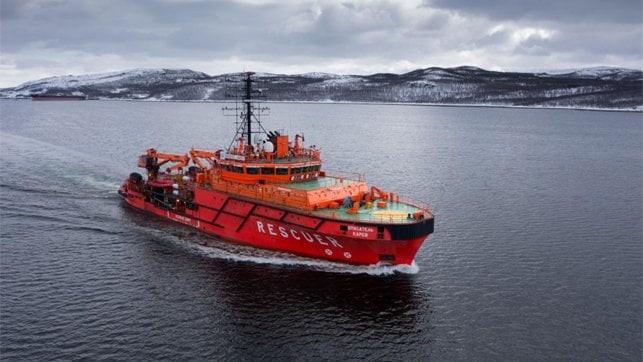
Russian rescue vessel
Russian rescue vessel "Spasatel Karev" and an icebreaker were reported to have responded to the disabled containership (Marine Rescue Service)

Published Feb 5, 2026 1:13 PM by The Maritime Executive


An MSC containership inbound for Saint Petersburg, Russia was reportedly disabled after an explosion and fire in the Gulf of Finland. Details are coming from Russian media reports of the incident without official confirmation from the maritime services or MSC.

A feeder ship named MSC Giada III (39,000 dwt) experienced an explosion in its engine room that is reported to have spread upward into the accommodation block of the ship. Images posted by the Russian media show flames at the rear of the accommodation block. 

Reports indicate the fire was brought under control while the Russian icebreaker Semyon Dezhnev was dispatched to aid. There are conflicting reports that the rescue vessel Spasatel Karev may have also participated in the rescue operation.

The containership is registered in Liberia and has operated for MSC since 2022. Reports indicate it has a Russian captain and at least some of the crew are from Myanmar. 
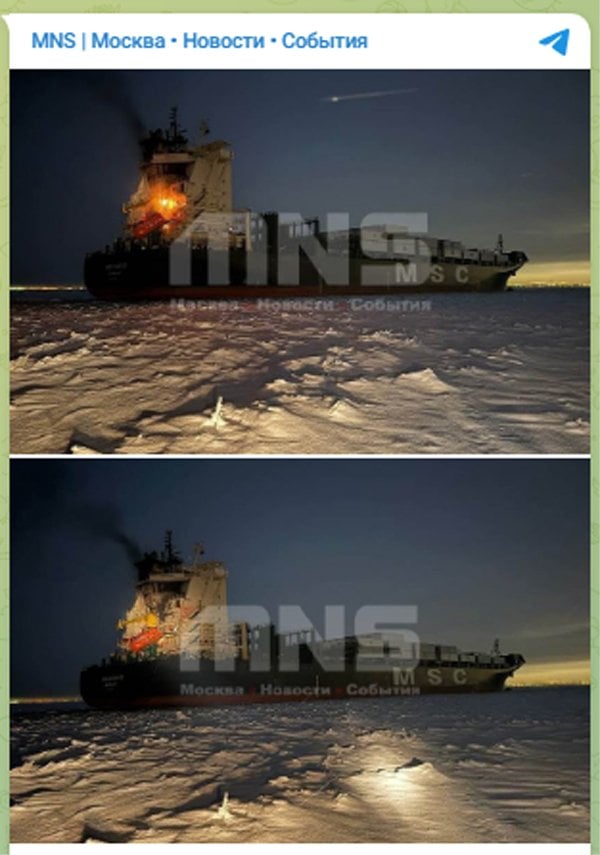


Russian media is reporting the vessel’s AIS signal went offline on the evening of February 4 while it was in Neva Bay. The ship appeared in Saint Petersburg on February 5, apparently towed into port. Its AIS signal has been restored and shows the vessel berthed.

The fire was reportedly contained to a small area of the vessel. There are no reports of injuries to the crew or pollution from the ship.

Built in 2002, it is a 2,700 TEU feeder that MSC employs on a route servicing the Baltic, Spain, and Portugal. The online schedule indicates the ship left Agadir and had made a stop in Antwerp before heading to Russia. It was due to proceed on to Riga and Klaipeda.

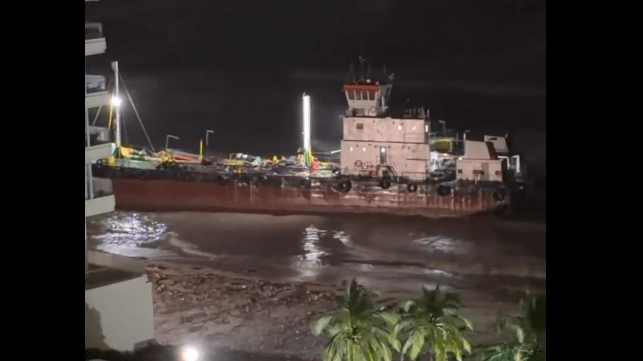
Small Tanker Grounds on Waterfront at Port of Santa Marta

Grounding
Via Colombian social media

Published Feb 4, 2026 3:48 PM by The Maritime Executive


Officials in Santa Marta, Colombia are attempting to refloat a small tanker that has gone aground next to a breakwater near the center of town. 

At about 2230 hours on Monday night, the small tanker Intergod VII grounded on Playa de Los Cocos, a beach about one mile south of the main commercial seaport. The vessel's master reported the incident to the local port authority and VTS operator, and the Colombian Navy responded to the scene. 

The vessel and crew are unharmed, and no pollution has been reported. 

The Colombian Maritime Authority (DIMAR) is investigating the casualty, and initial indications suggest that rough weather likely played a role. A cold front moving through the area brought high winds, heavy surf and record-setting rainfall on Monday. The weather conditions on the coast were severe enough that the port authority closed the harbor to navigation, and the public beaches were shut down for safety. 

The difficult weather delayed any initial salvage response, but the authorities kept an eye on the grounding site to monitor for pollution. 

On Tuesday, the vessel shifted on the sand as the tide came in and made contact with the brick-and-mortar breakwater on the beachfront, raising concerns of possible damage to either the vessel or the infrastructure. Later in the day, with weather improving, refloat operations got under way, with a tug and tow hawser rigged to pull the vessel off the beach. The authorities closed off the nearby section of the waterfront for security purposes. 

On Wednesday, DIMAR reported that the tanker was safely refloated and moored at a nearby terminal.


Italian Coast Guard Finds 54 Deficiencies After Saving Livestock Carrier

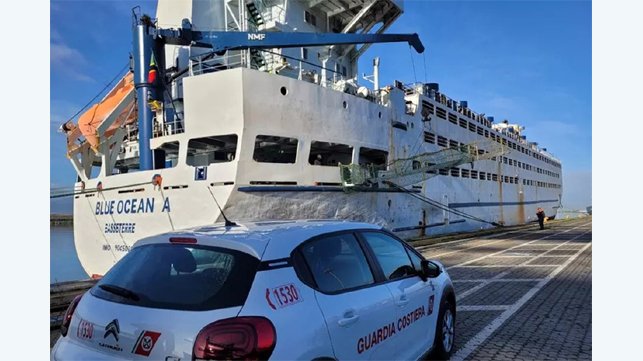
livestock carrier detailed in Italy
Guardia Costiera listed 54 deficiencies during the inspection of the livestock carrier (Guardia Costiera)

Published Feb 4, 2026 3:43 PM by The Maritime Executive


The Italian Coast Guard completed its inspection of the livestock carrier Blue Ocean A after overseeing the towing of the disabled ship into the port of Cagliari. While not saying it was a record, they are reporting the vessel racked up an astonishing 54 deficiencies during the inspection, and 30 of them led to a detention.

The full report has not been released pending resolution of the issues, but the Guardia Costiera and the Port Authority of Cagliari report that the ship will be staying in port until it can correct the long list of issues. The statement says the issues include “numerous irregularities related to the functioning of the firefighting systems, life-saving equipment, and bridge equipment” of the 34-year-old vessel. The inspection also looked at living conditions for the crew and their training.

The statement does not mention the problems with the ship’s engine, which started the incident. On January 28, the captain of the livestock carrier reported it was experiencing engine troubles and that they were attempting to anchor off the coast south of the island of Sardinia and near the small fishing and resort town of Carloforte on Isola di San Pietro. The ship had a crew of 33 aboard.

In a storm with winds of over 50 mph and waves running at 5 meters (over 16 feet), the anchor was not holding, and the ship was being driven toward the shoreline. The crew requested an emergency evacuation, but the winds were too strong for the helicopter. The first tug on the scene reported that four towlines had parted. The Coast Guard and a larger, private tugboat worked and were able to secure the vessel and hold its position offshore overnight until the storm subsided and the tug was able to tow it to Cagliari.

The Coast Guard reports the Rimochiatori Sardi company will be receiving a letter of commendation for its efforts. They called it a particularly complex rescue operation.

Typical of ships in this business, the Blue Ocean A (4,780 dwt) was built in 1992 as a containership and was converted in 2013 to become a livestock carrier. The ship, which is registered in St. Kitts & Nevis, is 117 meters (384 feet) in length and owned by a company in Turkey. 

The ship was returning from the Middle East, bound for Cartagena, Spain, meaning it likely did not have any animals aboard. Its prior inspections in 2025 had found a few issues, including hull corrosion and issues with the steering gear, but the list of issues was short, and the vessel was not detained. 


Captain of Solong Gets Six Years as Court Cites “Complacency and Arrogance"

containership burning after collision
The Solong burned for days with the prosecution arguing the collision was avoidable, endangered both crews, and killing the one seafarer

Published Feb 5, 2026 5:52 PM by The Maritime Executive


A judge at the UK’s “Old Bailey” court in London sentenced the former master of the Solong containership to six years in jail for causing the death of a seafarer in the fiery 2025 allision with the tanker Stena Immaculate. A jury on Monday had found Vladimir Motin, age 59 of Russia, guilty of gross negligent manslaughter.

Motin had been on watch and the sole member of the crew on the bridge on March 10, 2025, when the containership hit the anchored tanker Stena Immaculate off the coast of England. One crewmember, Mark Angelo Pernia, who was working at the bow of the containership, was never found and presumed to have died from the impact, explosion, and fire that engulfed the two ships. The other 13 crewmembers from the containership and the 23 on the tankers were rescued. The containership was a total loss, while Stena sold the badly damaged tanker and said the new owner intended to repair the ship.

Justice Andrew Barker said during the sentencing on February 5 that Motin’s version of events was “extremely implausible.” He called the allision with the tanker and the death of the seafarer “wholly avoidable.”


The master of the Solong, Vladimir Motin, was sentenced to six years in jail (Crown Prosecution Service)


During the sentencing hearing, the judge said that he believed the captain had fallen victim to his “complacency and arrogance.” Testimony during the trial had shown that the Solong was functioning properly and that the Stena Immaculate was visible for more than 30 minutes on radar. Motin, the court was told, had waited until the vessels were one nautical mile apart before attempting to turn the containership. He did not attempt to slow the containership, undertake a crash stop, or sound any alarms before hitting the Stena Immaculate amidships.

“You were a serious accident waiting to happen,” said Justice Barker, addressing Motin. The court had heard that Motin had turned off the system that required someone on the bridge to press a button every 30 minutes to confirm that the bridge was manned and someone was alert, although the captain asserted that he had not fallen asleep that morning or left the bridge after his watch began. He said a lookout was not required before there was good visibility, a fact the UK’s Marine Accident Investigation Branch (MAIB) challenged in its preliminary report, saying there was patchy visibility.

The judge said the facts suggested the Solong was not aware of another ship ahead. Motin, they said, had not acted properly and in a timely manner to avoid hitting the tanker.

The police investigator said they believed Motin had failed his duty as captain to protect the ships and their crew. Further, they said he had shown no remorse at any stage and asserted that he changed his account of the events. The judge called the captain’s attitude “somewhat combative” and “argumentative,” saying he was trying to argue his way out of the clear-cut case.

The defense had admitted Motin’s mistake but argued that it did not meet the standard of gross negligence. They said he had become confused when the ship did not respond to his change of course. Motin said he now realizes he pressed the wrong button and failed to turn off the autopilot. Prosecutors argued that it should have been immediately obvious, especially to Motin, who had commanded the ship for years. The defense cited his previous record and called the events of that morning an “aberration of his conduct.”

Motin had told the court he realized his career at sea was over. He said he never intended to return to sea.


NGO Shipbreaking Platform Reports on 2025 and Calls for More Regulation

ship scrapping
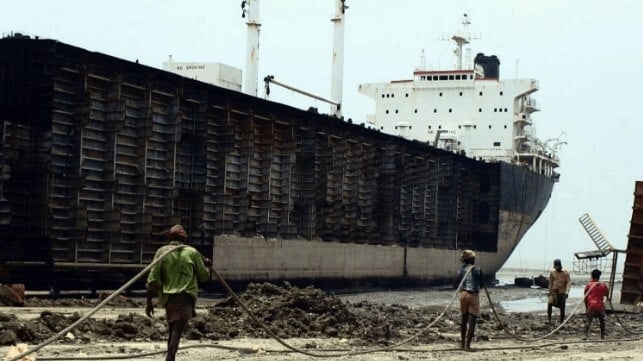
NGO Shipbreaking Platform raises concerns ahead of the anticipated surge is ships being sold for dismantling

Published Feb 6, 2026 11:17 AM by The Maritime Executive


The NGO Shipbreaking Platform compiled a report on the ships sold for dismantling in 2025 while calling for continued efforts to improve the industry’s adherence to safety and environmental regulations. The group highlights that despite the Hong Kong Convention coming into effect at mid-year, there was little improvement in the performance of the shipbreakers.

The listing shows a total of 321 vessels were dismantled in 2025. The overall number remains low as most segments of commercial shipping have extended the life of vessels, in part due to demand and waiting for environmental regulations to be solidified. NGO Shipbreaking expressed concern that, as the backlog of older ships starts to move to dismantling, the safety and environmental issues will be further exacerbated unless steps are taken now.

It highlights that 85 percent of the ships sold for dismantling in 2025 went to South Asia. A total of 214 ships, with Bangladesh and India remaining as the leading destinations, along with Pakistan. More than 6 million gross tons were sent to the three countries. By comparison, 49 ships went to Turkey (under 700,000 GT), 44 ships in other parts of the world, and only 14 ships were dismantled in the EU.

The global total in 2025 was just 321 ships, according to NGO Shipbreaking Platform. This is down from over 400 ships in each of the three prior years, and a peak of over 1,000 ships per year a decade ago.

Bangladesh, the group highlights, has already approved 17 yards under the Hong Kong Convention. The NGO, however, highlights that despite more than 100 shipbreaking plots in India around Alang, none so far have been authorized under the convention.

The convention seeks to improve the safety and environmental record of the industry by requiring specific ship recycling plans that consider the listing of hazardous materials that each ship is required to maintain. The yards also need to have safety and environmental plans. The convention applies to all ships over 500 GT sold by companies in any of the states having adopted the convention.

NGO Shipbreaking reports the safety concerns continued in 2025, with a total of 11 workers losing their lives. Despite lax and opaque reporting, it believes that another 62 workers were injured at the yards in South Asia.

Among the worst incidents reported in 2025, NGO Shipbreaking highlights the explosion on an oil tanker being dismantled in Bangladesh. Eight workers were injured in the explosion.

The group highlights that there are discussions at the International Maritime Organization about enhancing the requirements of the convention and updating the standards, which were drafted more than a decade ago. IMO states first adopted the Hong Kong Convention in 2009, but it took till 2023 to reach the threshold for it to go into force in 2025.

Ingvild Jenssen, Executive Director and Founder of NGO Shipbreaking Platform, emphasizes that the IMO must take action to phase out the beaching method for dismantling ships. 

“At the same time, better enforcement of the Basel Convention’s restrictions on hazardous waste trade need to be ensured through measures that effectively hold the shipping industry accountable. This entails shifting responsibility to the states that actually have control over the owners of assets intended for disposal,” said Jenssen.

As the backlog of old ships breaks, the group points to the potential of hundreds of tankers being sold for dismantling, including ships from the so-called shadow fleet. It is concerned that these ships, which skirt regulations, will continue to do so with the owners seeking cash, crypto, and foreign currency deals to avoid sanctions.

NGO Shipbreaking calculates that China is one of the key sources of ships heading to South Asian shipbreakers. Last year, it reports China sent 21 vessels, with most going to Bangladesh. South Korea (19 ships) and the UAE (17 ships), it says, were also sending ships to the South Asia yards. The group points out that this is despite the UAE Ship Recycling Regulation, which went into force in June 2025, which prohibits ships from leaving the UAE territorial waters for beach scrapping and landing yards.

It also highlights that Europeans continue to use the yards in South Asia, often skirting the regulations. NGO Shipbreaking notes that Turkey is one of the few non-EU destinations that can receive WEU-flagged end-of-life-vessels, but notes that its sector is coming under mounting scrutiny. It notes the growing opposition to the industry at Allaga and the growing pressure for the EU to withdraw approvals for the yards.

Next year marks 20 years since the group was founded. It continues to follow its mission to reverse the environmental and human rights abuses of current shipbreaking practices and to ensure the safe and environmentally sound dismantling of end-of-life ships worldwide.
 

Turkish Fishermen Find Unexploded Drone in Waters Near Istanbul

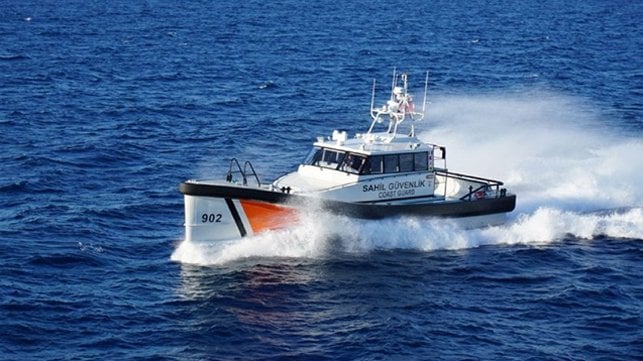
Turkish Coast Guard Command
The Turkish Coast Guard Command responded to the reports of an object in the water near Istanbul (Coast Guard)

Published Feb 6, 2026 3:48 PM by The Maritime Executive


The Turkish Coast Guard Command confirmed it was investigating the latest incident of an unexploded drone found in its waters. Earlier in Russia’s war with Ukraine, the concern had been errant mines, but more recently, Turkey is reporting a series of incidents with drones that have either crashed into its region or been spotted floating in the waters of the Black Sea.

The latest incident happened midday on Thursday, February 5, when a group of Turkish fishermen reported finding an unidentified device in the water. They were near Karaburun, in a district on the northwestern side of Istanbul. 

The fishermen notified the Coast Guard Command, which sent a SAS team to investigate. According to the media reports, the team confirmed the object was an unmanned aerial vehicle. The team secured and neutralized the device. They analyzed it and, according to the reports, destroyed the UAV.

Turkey Today is reporting that it believes the device was a Russian-made Geran-2. It is based on the Iranian Shahed-136, a kamikaze aerial drone. The Coast Guard would only say that it was continuing to investigate the device.


Last July, Turkish officials confirmed the discovery of a 3-meter-long drone that looked a bit like a jet ski. Reports said it was carrying explosives. Since then, Turkey Today reports several other recent discoveries. In December, it says Turkey shot down a drone that violated its airspace. Over a five-day period, the newspaper says two more drones were found that had crashed in Turkey.

Concerns were raised because late last year and in January, a number of commercial vessels reported being struck by unknown objects, causing explosions and, in some cases, fires. Ukraine took credit for attacks on a few tankers heading to Russia, but the other incidents officially remain unsolved. Recently, it was reported that tankers were attempting to hug the Turkish coastline for added protection as they headed to the Russian terminals in the eastern Black Sea.


Dockworkers Disrupt Ports in Italy Protesting Alleged Arms Shipments

port strike Italy
Italy's UBB union staged a 24-hour strike impacting many of the country's ports (UBB)

Published Feb 6, 2026 8:12 PM by The Maritime Executive


Port across Italy were reporting strikes and disruptions in their operations as unionized dockworkers staged a 24-hour strike to protest the alleged “militarization” of the ports. Reports indicate ships of Zim and MSC Mediterranean Shipping Company were being targeted and forced to hold offshore or divert.

Unione Sindacale di Base (UBB) called for the 24-hour action. They allege the ports are being “militarized” as shipments of arms and military equipment move on ships using their ports. The protest focused on arms to Israel, an issue that repeatedly appeared during the war in Gaza. Activists during the war protested against the ships moving through the ports and sought to deny port calls. The U.S. Federal Maritime Commission is investigating incidents related to Maersk Line, Ltd.'s American-flagged ships denied port calls in Spain in 2024.

The union’s calls for a day of action appear to have been largely followed, impacting most of the large ports in Italy. They are claiming that sympathy actions were also seen in Spain at Bilbao and Pasaia, Turkey in Mersin and Antalya, and even in Tangier Med, Hamburg, Bremen, Marseille, and Barcelona.

Among the ships that were reported to be impacted were three Zim containerships, all scheduled for port calls in Italy. AIS signals appeared to show that the Zim Virginia was holding off the Livorno coast, with the union saying the ship had been unable to dock. They are alleging the ship is “loaded with weapons.”

Additionally, the Zim New Zealand was holding in Fos-sur-Mer in France. The union reports it had been scheduled to dock in Genoa. The Zim Australia was holding in the Koper anchorage in Slovenia, with the union reporting it had been scheduled to dock in Venice and then proceed to Ravenna.

Additionally, the MSC Eagle III is sailing in the Mediterranean with its AIS signal showing it is coming from Israel. The union reports it was due to sail into Ravenna and then go on to Venice. Its AIS signal currently shows it is going to the anchorage at Koper.

According to the union’s reports, the container and RoRo terminals were blocked in Genoa, backing up road traffic as well as rail. Ships were reportedly not able to dock, and the strike had spread to La Spezia and Vado Gateway. They reported a 78 percent stoppage at La Spezia.

Similarly, in the east, in Trieste, the union said there was a broad impact on intermodal operations reaching Austria and Germany. They noted that those operations were already having to deal with delays due to adverse winter weather. The strike at Trieste, they said, was also impacting industrial traffic to Central Europe.


EU Calls for Maritime Service Ban Targeting Russia's Shadow Tanker Fleet

European Union
The European Commission wants to ban all maritime services for the shadow tanker fleet as part of the next round of sanctions

Published Feb 6, 2026 2:56 PM by The Maritime Executive


The European Commission, the executive branch of the European Union, took the wraps off its proposed 20th sanction package against Russia since the start of the war in Ukraine, saying the time has come to slash Russia’s energy revenues. The proposed new package again targets the shadow fleet and Russia’s energy industry, as well as adding further sanctions on imports and exports and Russia’s regional banks.

The EU notes that “important peace talks are underway in Abu Dhabi,” with EU President Ursula von der Leyen saying, “We must be clear-eyed, Russia will only come to the table with genuine intent if it is pressured to do so. This is the only language Russia understands.”

In announcing the proposed new effort, the EU contends its sanctions are having a dramatic impact on the Russian economy. It said that Russia's fiscal revenues from oil and gas dropped by 24 percent in 2025 compared to the previous year. The EU contends it is at the lowest level since 2020, and is contributing to Russia’s widening fiscal deficit. 

“Oil and gas revenues in January will be the lowest since the war began. Interest rates stand at 16 percent, and inflation remains high,” said von der Leyen.

The new package is designed to increase the pressure even further and timed to the fourth anniversary of the invasion of Ukraine in February 2022. The package requires the approval of the EU member states, and portions need to be coordinated with the G7. It targets energy, financial services, and trade.

The EU is calling for a “full maritime services ban for Russian crude oil.” It said the new ban would slash Russia’s energy revenues and make it more difficult to find buyers for the oil. The goal is also to make it more difficult for Russia to attract more tankers into the shadow fleet to maintain the oil trade. 

The EU would also add another 43 tankers to its sanctions, bringing the total to 640 vessels. This is in addition to sweeping bans on providing maintenance and other services for LNG tankers and icebreakers.

This comes after the EU started in January using a formula to create a sliding scale on the existing oil price cap. It also said it would start a rolling list of tanker sanctions, adding vessels at regular intervals.

The new import bans will include metals, chemicals, and critical minerals not yet under sanctions. The EU estimates the value at over €570 million. The export restrictions would include technologies Russia uses to produce explosives. The EU proposes a quota on ammonia to cap existing imports. It would also target 20 more Russian regional banks and tighten the ban on goods ranging from rubber to tractors and cybersecurity services. The EU sets the value of the ban on these goods at €340 million.

Another element of the new package seeks to cut sanction evasion. For the first time, the anti-circumvention tool would prohibit exports of certain computer and radio equipment to jurisdictions where the EU says there is a high risk that the products would be re-exported to Russia.


US Sanctions More Tankers as Indirect Talks with Iran Begin

tanker
U.S. added 14 more crude oil, product, and LPG tankers to the sanctions list (file photo)

Published Feb 6, 2026 1:27 PM by The Maritime Executive


The U.S. State Department announced on Friday morning, February 6, that it was adding to the list of sanctioned tankers and companies supporting Iran’s oil industry as it seeks to keep up the pressure on Tehran. The move came as U.S. officials and Iran’s Foreign Minister were starting indirect talks in Oman.

The State Department accused the latest batch of vessels of continuing the efforts to move millions of barrels of Iranian crude oil and playing a key role in the Iranian export supply chain. The announcement encompassed 14 tankers and 15 entities involved in the trade, as well as four entities that the U.S. said have engaged in the transshipment, sale, and purchase of Iranian-origin petrochemical products.

The listing includes companies based in the United Arab Emirates, China, India, Kazakhstan, and Turkey, as well as front companies set up in the Seychelles and Marshall Islands. Two individuals associated with the trade were also included.

The vessels run the gamut with crude oil tankers registered in Barbados and Cameroon, and one tanker, which the U.S. reports is falsely flagged in Aruba. It also includes oil product tankers registered in Panama and Barbados, as well as LPG tankers registered in Palau, Panama, and San Marino.

“The?United States will continue to?act?against the network?of?shippers and traders?involved in the transport and acquisition of Iranian crude oil,?petroleum products, and petrochemical products, which?constitutes?the regime’s primary source of income,” said the U.S. State Department.

The NGO United Against Nuclear Iran highlights that it had identified seven of the 14 vessels sanctioned today as evading sanctions. The group’s online tracking of the tanker fleet lists more than 190 tankers that have been sanctioned since 2020.

The new sanctions were announced as the indirect meetings commenced in Oman. Iran’s foreign minister said the talks had been “a good start,” and that they expected them to continue. Abbas Araghchi said the talks were focused on the “nuclear issue,” but the U.S. had said they would also include ballistic missiles and Iran’s support for regional military groups. 

A report released by The New York Times today concluded that Iran is working on restoring its ballistic missile capabilities and nuclear sites after the attacks last year by the United States and Israel.  It writes that an analysis of satellite imagery suggests Iran has repaired several ballistic missile facilities but made little progress on its nuclear sites.

Donald Trump had said in an interview with NBC News that Iran’s leadership should be “very worried.” He continues to emphasize the U.S. armada and says the U.S. is ready to strike to end Iran’s nuclear ambitions and aggression in the region.


China Moves to Penalize Panama for Court Ruling Against CK Hutchison

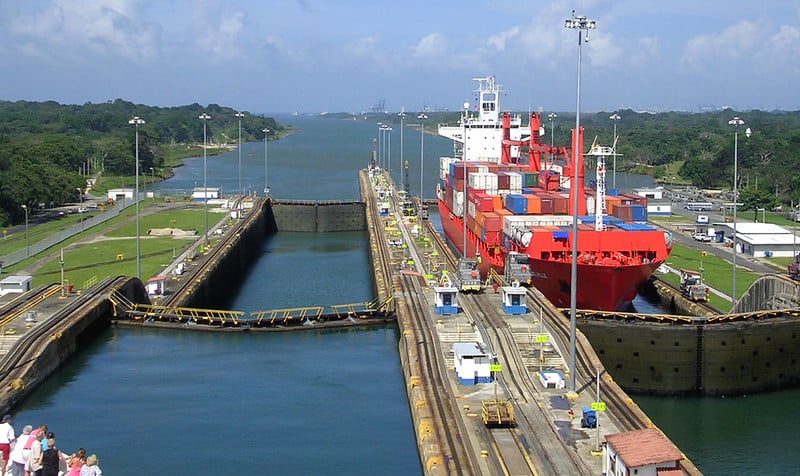
Both the U.S. and China are applying heavy pressure to Panama in a bid for influence at a strategic maritime choke point (file image courtesy Roger W / CC BY)

Published Feb 5, 2026 8:13 PM by The Maritime Executive


The Chinese government has reportedly forced a pause on infrastructure deals in Panama in retaliation for a Panamanian court's decision to suspend CK Hutchison's seaport operations contracts, according to Bloomberg. The development comes as Hong Kong-based Hutchison launches an arbitration process against Panama over the cancelation. 

Last week, the Panama Supreme Court ruled that contracts that allowed Hutchison to operate two container ports near the Panama Canal were "unconstitutional." Hutchison - which has been trying to sell the operating rights for the two ports as part of a giant package deal for its global portfolio - disputes this finding, and has accused Panamanian authorities of disregarding its communications during the trial. For now, the terminals remain in the firm's operational control, it says. 

In response to the ruling, Hutchison has initiated arbitration proceedings in Hong Kong against the Panamanian government. The arbitration process could take years; if successful, it would likely result in a compensation payment, legal analysts say. 

The Panamanian court ruling against Hutchison followed nearly a year of pressure from the Trump administration over alleged Chinese influence in the Panama canal zone. The White House, without evidence, has accused China of "running" the canal; it initially threatened to take action to "take back" the canal from Panamanian control. Secretary of State Marco Rubio recently told Panama that China's presence near the canal "is unacceptable," and could prompt the U.S. to take unspecified measures to "protect its rights under the treaty" that transferred control from the U.S. to Panama in 1999. 

Hutchison's giant plan for a $23 billion port portfolio sale would have handed its two Panama port leases to an American company, BlackRock, a favorable development for U.S. interests. Everything else would be sold to Terminal Investment Limited (TIL), the ports division of the Aponte family's shipping empire - if the deal can be concluded. 

Against this backdrop of U.S. pressure, the government of China has accused Panama's supreme court of giving in to "hegemonic powers" by ruling against Hutchison. In a statement, Beijing's Hong Kong affairs office - responsible for the jurisdiction where Hutchison is headquartered - called the ruling "utterly ridiculous," and threatened "a heavy price both politically and economically" for Panama if it is not reversed. 

That cost is already being imposed, according to Bloomberg and Reuters. Chinese state companies have been instructed to pause all talks over new infrastructure projects in Panama - a serious threat, given China's prominent role in Panama's construction sector. Chinese customs officials are also reportedly applying additional scrutiny to Panama's agricultural exports. Possible further actions could include rerouting cargo to other seaports, depriving Panama of revenue.

So far, Panama's leaders have been unequivocal in resisting Chinese pressure. President Jose Raul Mulino said Wednesday that Panama's government respects the independence of the judiciary, and as a "country of laws," it has no interest in overriding the court system. 

Top image courtesy Roger W / CC BY


Panama hits back after China warns of ‘heavy price’ in ports row


By AFP
February 4, 2026


The Panama Canal is at the center of a hot dispute between the United States and China, with the latter accusing Washington of pressuring Panama into evicting a Hong Kong company from two canal port concessions - Copyright AFP/File MARTIN BERNETTI

Panama’s President Jose Raul Mulino on Wednesday rejected China’s threat to make the Central American country pay a “heavy price” after a Hong Kong company was evicted from two ports on the Panama Canal.

Writing on X, Mulino “strongly” rejected the threat from the Beijing office overseeing affairs in semi-autonomous Hong Kong, which came after Panama’s Supreme Court invalidated CK Hutchison’s port concession.

US President Donald Trump has piled pressure on Panama to cancel Hutchison’s contract by threatening to reclaim the US-built waterway over what he claimed was China’s outsize influence on the canal.

Last week, Panama’s Supreme Court ruled that the concession was “unconstitutional” and found it had “a disproportionate bias in favor of the company” without “any justification” and to the “detriment of the State’s treasury.”

The United States hailed the ruling but China reacted angrily.

On its WeChat account, China’s Hong Kong and Macao Affairs Office accused Panama of buckling to outside pressure, Bloomberg reported.

“Panamanian authorities must recognize the situation and correct their course,” the office was quoted as saying.

“Persisting in this misguided path will result in a heavy price, both politically and economically,” it added.

Mulino condemned the threat, insisting that Panama was a country that upholds the rule of law “and respects the decisions of the judiciary, which is independent of the central government.”

He added that the foreign ministry would issue a statement on the matter “and adopt the corresponding decisions.”

The Panama Canal, which connects the Atlantic and Pacific oceans through Central America, handles about 40 percent of US container traffic.


– ‘Cold War mentality’ –


Since 1997, Hutchison has managed the ports of Cristobal on the interoceanic canal’s Atlantic side and Balboa on the Pacific side.

The concession, which reflected the growing inroads of Chinese companies into Panama’s economy, was extended for 25 years in 2021.

After Trump threatened last year to seize the canal, Panama’s independent comptroller general reviewed Hutchison’s contract and subsequently recommended it be annulled.

The Supreme Court backed the comptroller’s view that the terms of the concession ran counter to Panama’s interests.

Following the ruling, the Panamanian government tapped Danish company Maersk to temporarily take over management of the port terminals until a new concession is awarded.

Hutchison’s port concession has come to symbolize the battle for influence and trade between the United States and China in Latin America.

Beijing’s foreign ministry spokesman Lin Jian on Wednesday reiterated that China would “firmly defend the legitimate and lawful rights and interests” of Chinese companies.

Accusing the United States of a “Cold War mentality and ideological bias,” he said: “It is quite clear to the world who exactly is seeking to forcibly own the Panama Canal and eroding international law in the name of the rule of law.”

The Supreme Court ruling came amid Hutchison’s stalled effort to sell the ports.

In March, it announced plans to transfer its stake in the Panamanian terminals to a group of companies led by the US firm BlackRock, as part of a package valued at $22.8 billion.

That deal was initially seen as favorable in Washington, but interests cooled after China warned the agreement could harm its global interests and urged parties to proceed with “caution” or face legal consequences.
AI to track icebergs adrift at sea in boon for science


By AFP
February 4, 2026


Copyright AFP Kirill KUDRYAVTSEV

British scientists said Thursday that a world-first AI tool to catalogue and track icebergs as they break apart into smaller chunks could fill a “major blind spot” in predicting climate change.

Icebergs release enormous volumes of freshwater when they melt on the open water, affecting global climate patterns and altering ocean currents and ecosystems.

But scientists have long struggled to keep track of these floating behemoths once they break into thousands of smaller chunks, their fate and impact on the climate largely lost to the seas.

To fill in the gap, the British Antarctic Survey has developed an AI system that automatically identifies and names individual icebergs at birth and tracks their sometimes decades-long journey to a watery grave.

Using satellite images, the tool captures the distinct shape of icebergs as they break off — or calve — from glaciers and ice sheets on land.

As they disintegrate over time, the machine performs a giant puzzle problem, linking the smaller “child” fragments back to the “parent” and creating detailed family trees never before possible at this scale.

It represents a huge improvement on existing methods, where scientists pore over satellite images to visually identify and track only the largest icebergs one by one.

The AI system, which was tested using satellite observations over Greenland, provides “vital new information” for scientists and improves predictions about the future climate, said the British Antarctic Survey.

Knowing where these giant slabs of freshwater were melting into the ocean was especially crucial with ice loss expected to increase in a warming world, it added.

“What’s exciting is that this finally gives us the observations we’ve been missing,” Ben Evans, a machine learning expert at the British Antarctic Survey, said in a statement.

“We’ve gone from tracking a few famous icebergs to building full family trees. For the first time, we can see where each fragment came from, where it goes and why that matters for the climate.”

This use of AI could also be adapted to aid safe passage for navigators through treacherous polar regions littered by icebergs.

Iceberg calving is a natural process. But scientists say the rate at which they were being lost from Antarctica is increasing, probably because of human-induced climate change.