Sunday, February 08, 2026


Report: U.S. Navy is Feeling Out Ship Construction Options in Turkey
Turkey
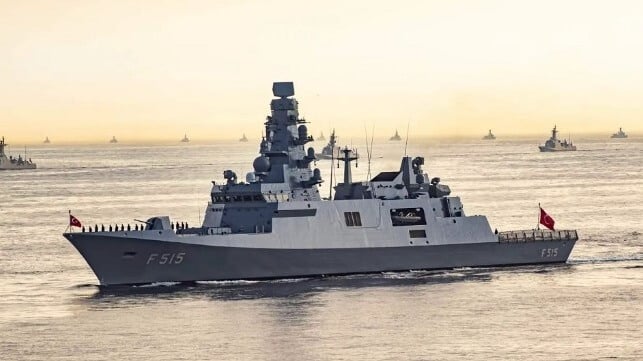
Turkish frigate TCG Istanbul, first in a new class (STM press handout image)

Published Feb 4, 2026 9:42 PM by The Maritime Executive


Momentum appears to be building within some corners of the Trump administration to offshore U.S. Navy warship production to yards in U.S. allied nations, where well-developed shipbuilding industries with available capacity can be found. It would require changing U.S. law and longstanding practice, but this has not deterred proponents: South Korea's "Big Three" have openly sought the administration's support for building American warships in Korea, and U.S. officials have recently met with Turkish counterparts to discuss component and frigate construction in Turkey, insiders told Mideast Eye. 

"The US shipbuilding industry is in a real crisis, and the Trump administration has talked with Turkey about meeting its needs [for shipbuilding]," an American official told Mideast Eye.

All observers acknowledge that the problem is serious: every U.S. Navy shipbuilding program is behind schedule (as of 2025), according to the Secretary of the Navy, and the Constellation-class frigate was recently scaled back to two hulls over delays and cost overruns. The president himself has acknowledged that "we might have to" begin ordering warships from allied nations in order to make up a domestic capability gap. 

In Turkey, the U.S. Navy would have a strong technical partner. Turkish yards are skilled in distributed shipbuilding, series production and short delivery timetables, and they have built export hulls for customers around the world (as well as Turkey's own navy). These experienced builders could ship out blocks and subassemblies for incorporation into American yards' workflows; deliver partially-complete floating hulls; or accept contracts for fully completed vessels. 

"The US lacks sufficient manpower, shipyards and dry docks," Turkish defense commentator Kubilay Yildirim told Mideast Eye. "Turkey can help in terms of production volume, timelines, risk sharing and workload distribution."

There are limitations, however. Turkey has cordial relations and certain limited defense contracting ties with Russia. Ankara is still under U.S. sanctions for the purchase of Russian S-400 antiaircraft systems, and it was removed from the F-35 fighter program for this reason during the first Trump administration. Efforts to unwind those sanctions are currently under way. 

The second potential speed bump - whether for construction in Turkey or in South Korea - would be the Byrnes-Tollefson Amendment, 10 USC Section 8679, which prohibits construction of U.S. naval vessels and major components in foreign shipyards. The law could be changed, but it would require congressional action to legalize the contract and appropriate funds for a foreign purchase. 


After Swift Turnaround for New Deployment, USS Truxton Returns to the Pier
USS Truxton
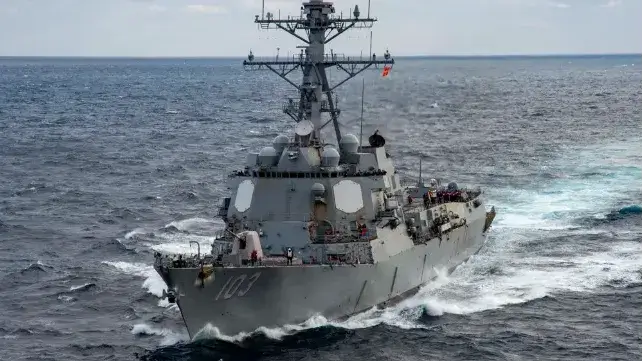
USS Truxton under way (USN file image)

Published Feb 5, 2026 11:02 PM by The Maritime Executive


On February 3, the destroyer USS Truxton conducted a fast turnaround from Naval Station Norfolk in order to redeploy to an unknown destination. The next day, she returned to the pier because of an equipment issue, delaying her departure. 

Last year, Truxton spent seven months on deployment in the Middle East. She returned to Norfolk in October for maintenance, training and shore leave. On February 3, after about three months in port, she departed again, with speculation pointing to the Caribbean or the Mideast, where a military buildup is under way amidst tensions with Iran.

Three months is a comparatively short time for a destroyer to spend in port between deployments: For repairs and upkeep, U.S. Navy destroyers typically get months of pierside maintenance or a drydocking, followed by six months or more in homeport for training and certification. 

"The Navy's kind of asked more for us and our families," Truxton CO Cmdr. James Koffi told local WHRO about the swift deployment. "My crew has done impeccably well during the short turnaround. So I really don't focus on the number of days. . . . I'm very confident of our abilities to execute."

Truxton sailed from Norfolk at about 1000 hours on Tuesday, headed for the York River naval weapons station to take on stores. A harbor webcam spotted her returning to Norfolk on February 4, and USNI confirmed her return to the pier for maintenance purposes on February 5. 

A spokesperson for U.S. Second Fleet told USNI that Truxton had to address an "emergent equipment repair," and the extra time at Norfolk would allow the crew to ensure "maximum operational readiness."

Rapid deployment turnarounds are not unheard-of, but when done, they are often a cause for complaint among the crew - especially if the previous deployment was a long one. Destroyer USS The Sullivans deployed five times in the three years ending 2024, though some of her voyages were comparatively brief. 


Photos: Future Carrier USS John F. Kennedy Completes Builder's Trials
HII
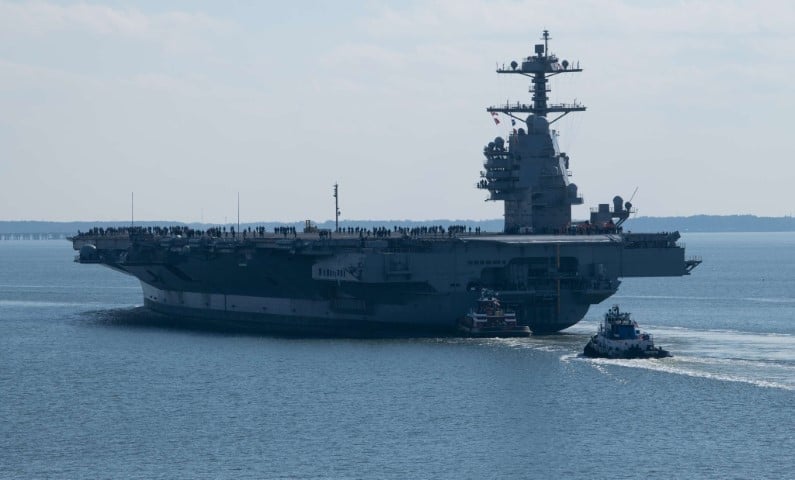
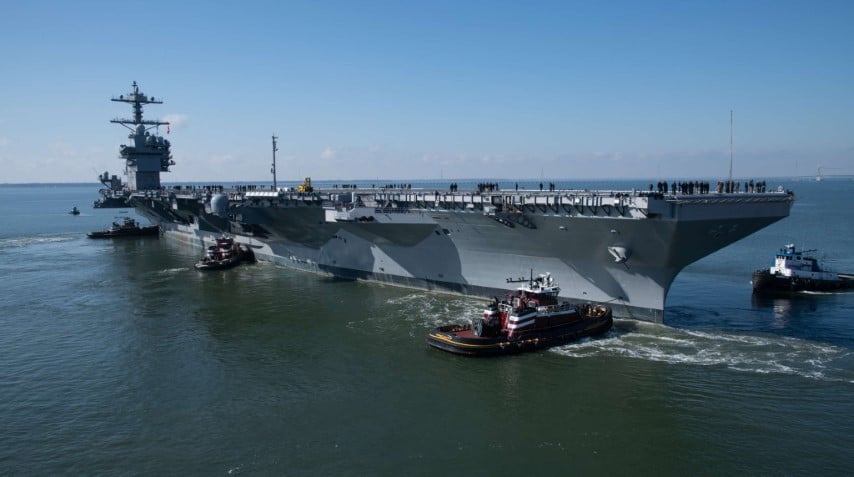
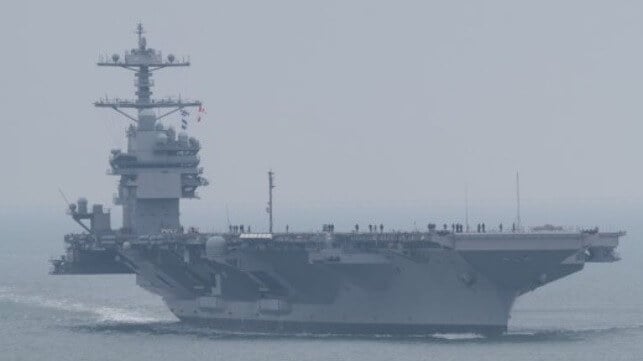
USS John F. Kennedy out on sea trials (HII)

Published Feb 4, 2026 11:17 PM by The Maritime Executive


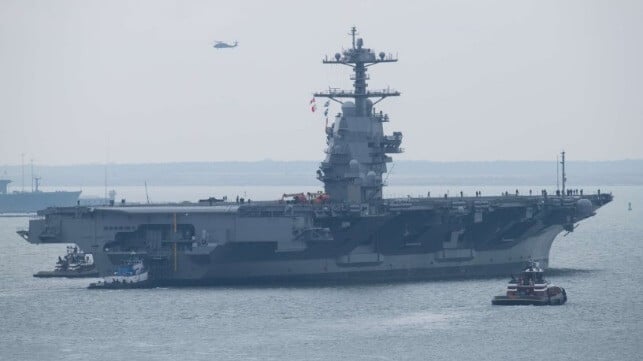
The future USS John F. Kennedy, the second Ford-class carrier for the U.S. Navy, has completed builder's sea trials at Huntington Ingalls Newport News. It has been 17 years since the initial contract award for Kennedy, and more than 10 years since her keel-laying. The test run was the ship's first outing, and it is a milestone towards the high-tech carrier's long-awaited completion.

Kennedy was affected by the same technological issues facing the first-in-class USS Gerald R. Ford, which faced years of delays in bringing its weapons elevators and its launch & recovery deck gear up to standards. The electromagnetic technology behind these devices had never been to sea before, and Ford delivered without any working weapons elevators. To make the time required for repairs, her first major deployment was deferred until mid-2023, six years after commissioning. 

Kennedy also encountered issues with electromagnetic systems, causing delays to the second hull in the series. The Navy also added in additional scope of work pre-delivery to integrate the F-35C fighter into Kennedy's air wing. Certain capabilities are needed aboard to support the stealth fighter jet, and Kennedy will be the first in the class to have them. 

The builder's trials started in late January and have now concluded successfully, HII said in a statement. Shipbuilding personnel from HII Newport News were on board, along with Kennedy's crew and other Navy personnel. 
Courtesy USN

Kennedy is currently on track to deliver by early 2027, nearly two years later than planned. As first-in-class USS Nimitz is set to retire in May 2026, there will be a brief unplanned gap, and the U.S. Navy's carrier fleet will drop to 10 ships instead of 11 until Kennedy is online. By law, the Navy is required to maintain at least 11 carriers in operational condition. 

“Taking Kennedy to sea is a testament to the grit and determination of the world’s finest shipbuilders,” said Derek Murphy, NNS vice president of new construction aircraft carrier programs. “Our nation is depending on us to deliver these critical assets that will protect freedom around the world and we’re proud to see CVN 79 take another step toward joining the fleet.”

KR, Korean Govt., and Partner Set Standards for Ammonia Effluent Discharge

Korea Register
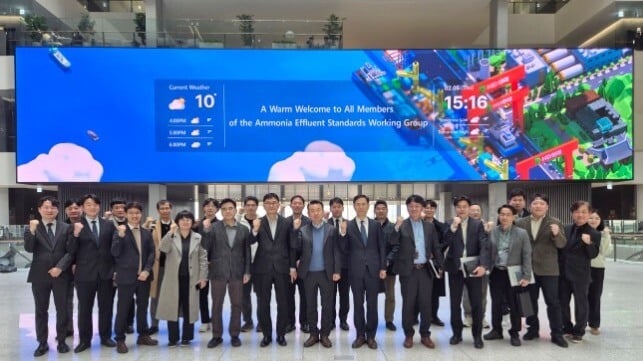
Ammonia Effluent Standards Working Group

Published Feb 7, 2026 4:04 PM by The Maritime Executive


[By KR (Korean Register)]


As the maritime industry accelerates its transition to zero-carbon fuels in line with the International Maritime Organization (IMO)’s 2050 net-zero target, ammonia-fueled ships are emerging as a promising next-generation solution. While the IMO has established interim guidelines to facilitate the use of ammonia as a marine fuel, international standards governing the safe treatment and discharge of toxic ammonia effluent generated during vessel operations have yet to be developed.

During the operation of ammonia-fueled ships, effluent containing toxic ammonia may be generated. Unlike typical aqueous ammonia, this effluent exhibits different physical and chemical characteristics, and the lack of clearly applicable international standards has created uncertainty for ship design, operation, and environmental management.

In response, KR (Korean Register), in collaboration with the Ministry of Oceans and Fisheries (MOF), five major Korean shipbuilders including HD Hyundai Heavy Industries, HD Korea Shipbuilding & Offshore Engineering, HD Hyundai Samho, Samsung Heavy Industries, and Hanwha Ocean, as well as the Korea Testing & Research Institute (KTR), officially launched an international working group in June 2025 to develop safety management and marine discharge standards for ammonia effluent.

The establishment of this joint working group followed Korea’s proposal at the IMO Sub-Committee on Carriage of Cargoes and Containers (CCC) in 2024, which highlighted the need for dedicated ammonia effluent safety standards. The proposal granted official approval at the 83rd session of the Marine Environment Protection Committee (MEPC) in April 2025.

To commence its activities for 2026, the working group convened on February 5 at the HD Hyundai Global R&D Center, reinforcing inter-organizational cooperation on the development of international standards. Over 2026 and 2027, the group plans to submit draft international standards to the IMO Sub-Committee on Pollution Prevention and Response (PPR), positioning Korea at the forefront of global discussions on ammonia effluent management.

At the upcoming 13th session of the IMO PPR, scheduled for later this month, the Korean government delegation will underscore the urgency of establishing guidelines for ammonia effluent management and marine discharge standards, and propose the formation of an Expert Group for in-depth technical discussions. KR is leading these international deliberations by providing technical evidence on safe discharge limits, based on its environmental impact assessment of ammonia effluent.

This international standards development initiative presents a significant opportunity to embed Korea’s shipbuilding technological capabilities and operational experience into global regulations. From a regulation-driven industrial development perspective, this will strengthen the competitiveness of the Korean maritime industry as the market of ammonia-fueled ships expands.

KR’s Executive Vice President, KIM Kyungbok, stated, “This year’s IMO meetings mark the beginning of substantive international discussions on ammonia effluent safety standards. Drawing on KR’s technical and regulatory expertise, we will play a leading role alongside the Korean government and industry to ensure that proven domestic technical standards are effectively incorporated into international rulemaking.”
 

NUS Project to Advance Near-Zero-Emissions Ammonia Marine Engines

ammonia group
NUS leads an industry-academia collaboration to develop ammonia-fuelled marine engines, paving the way towards a sustainable maritime future.

Published Feb 7, 2026 4:04 PM by The Maritime Executive


[By National University of Singapore (NUS)]
 

Industry–academia collaboration to be based at the National University of Singapore’s College of Design and Engineering targets decarbonisation of the global shipping industry through new ammonia-fuelled engine concept

A major new research project to be located on the College of Design and Engineering (CDE) campus at the National University of Singapore (NUS) aims to accelerate the decarbonisation of the global shipping industry through the development of next-generation ammonia-fuelled marine engines with high efficiency and near-zero emissions.

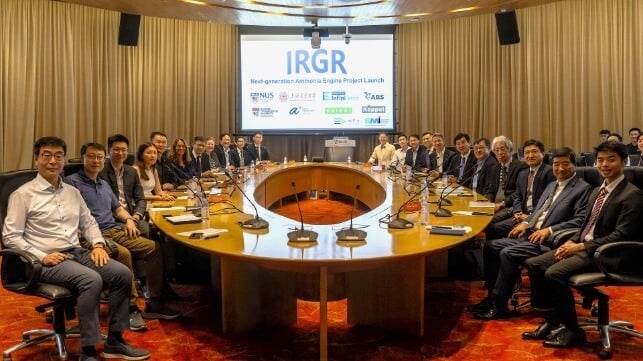
Officially launched on 4 February 2026, the project is led by the NUS Centre for Hydrogen Innovations (CHI) with funding support from the Singapore Maritime Institute (SMI), in collaboration with leading academic and industry partners in Singapore and overseas. The project focuses on a novel in-cylinder reforming gas recirculation (IRGR) engine concept designed to address key limitations that have so far constrained the wider adoption of ammonia as a marine fuel.

“Ammonia has been recognised as one of the most promising fuels for achieving near-zero greenhouse gas emissions in marine transportation, but current ammonia engines face significant challenges in efficiency and emissions,” said Associate Professor Yang Wenming from the Department of Mechanical Engineering at NUS, who leads the project as Principal Investigator. “The IRGR concept is designed to address these limitations by improving combustion efficiency while sharply reducing unburned ammonia and other pollutants.”

“The project will be based in a dedicated laboratory on the CDE campus, featuring an engine test room, control room and facilities for fundamental combustion and systems research,” said Dr Zhou Xinyi, Senior Research Fellow from the Department of Mechanical Engineering. Beyond technical development, the initiative also aims to strengthen Singapore’s position as a hub for maritime innovation and sustainable shipping technologies by anchoring advanced engine research within a broader ecosystem of industry collaboration and talent development.

Speaking at the launch ceremony, Professor Silvija Gradecak, Vice Dean (Research and Technology) at CDE, described the IRGR Ammonia Engine Project as an important milestone for efforts to decarbonise the maritime sector.

“Marine transportation is central to global trade, yet it remains one of the most challenging sectors to decarbonise,” she said. “Through this project, the team aims to develop and demonstrate the world’s first prototype engine based on the IRGR concept, paving the way for the practical adoption of ammonia as a marine fuel.”

Global shipping currently accounts for approximately 3 per cent of global carbon emissions, and the sector faces increasing pressure to reduce its environmental impact in line with international net-zero targets. While ammonia does not produce carbon dioxide at the point of combustion and is easier to store and transport than hydrogen, challenges related to thermal efficiency, combustion stability and pollutant emissions remain critical barriers to commercial deployment.

International collaboration is a central feature of the IRGR project. “The International Maritime Organization’s net-zero emissions target must be achieved by 2050, and the time left is very short,” said Professor Li Tie from Shanghai Jiao Tong University, a key academic partner in the project. “This goal cannot be realised by any single institution or country. It requires disruptive technologies and strong international cooperation, and the IRGR project reflects exactly that kind of collaboration.”

The consortium includes partners from Shanghai Jiao Tong University, Nanyang Technological University, the A*STAR National Metrology Centre and Keppel Energy Nexus, alongside industry partners Daihatsu, a leading global marine engine manufacturer, and the American Bureau of Shipping (ABS). Their involvement is intended to ensure the research remains grounded in practical engineering requirements, safety considerations, certification pathways and commercial relevance.

The launch event at NUS was attended by senior representatives from the government, industry, and academia, including leaders from SMI and the Maritime and Port Authority of Singapore, as well as the President of Daihatsu Infinearth, Mr Yoshinobu Hotta, and Vice President of ABS, Dr Gu Hai. The event also included the formal signing of research collaboration agreements between NUS and Daihatsu, and between NUS and ABS.

Closing the event, Professor Lee Poh Seng, Head of the Department of Mechanical Engineering, emphasised the broader significance of the initiative.

“This project is not merely the start of another research programme, but a deliberate step into one of the hardest and most consequential engineering challenges in the energy transition,” he said. “Decarbonising hard-to-abate sectors like shipping requires technologies that can be validated, scaled and trusted in real-world operations.”

The project is expected to run for three years, with the research team working towards scalable engine concepts that could support the future deployment of low- and zero-emissions vessels worldwide.


COSCO Orders Milestone Dual-Fuel Order

Everllence
L70ME-GI

Published Feb 7, 2026 12:32 PM by The Maritime Executive


[By: Everllence]

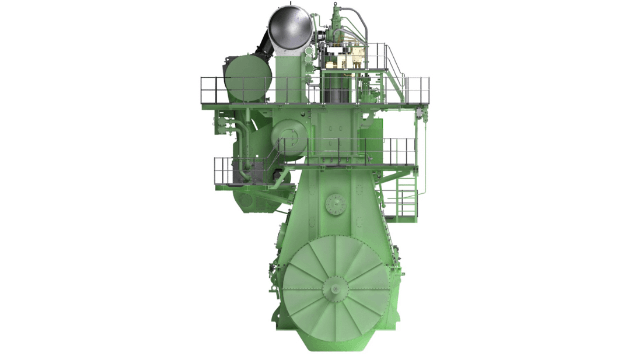
Everllence reports that it has received the 2,000th order for a dual-fuel engine from its two-stroke portfolio. COSCO Shipping Lines Co. Ltd. reached the milestone with an Everllence B&W 8G95ME—GI Mk. 10.5 main engine featuring EcoEGR (Exhaust Gas Recirculation) as part of an order for 12 such engines for a series of 12 x 18,000 teu container vessels currently under construction at Chinese yard Jiangnan Shipyard (Group) Co., Ltd.

Bjarne Foldager – Head of Two-Stroke Business, Everllence – said: “It’s very appropriate that this milestone was reached on the cusp of the Year of the Fire Horse – a particularly auspicious year in the Chinese calendar. China has been a very important market for us for over a century, just as COSCO is a valued customer.”

He continued: “Everllence’s dual-fuel strategy has led to multiple world-firsts in terms of oceangoing ships operating on a variety of alternative, low-emission fuels – confirming our leadership in this crucial marine segment. Our dual-fuel engines are showcases for environmentally friendly, reliable propulsion technology with seamless switching between fuels. On the path to net-zero, the marine industry needs willing partners and our thanks go to COSCO for its custom and friendship.”

Everllence states that, currently, just over half of its order book is dual-fuel measured in engine power. The 2,000-engine figure is a cumulative total for all engine orders from the company’s mature, efficient two-stroke portfolio that includes ME-GI (methane), ME-LGIM (methanol), ME-GIE (ethane), ME-LGIP (LPG), and the recently announced ME-LGIA (ammonia) engines.

Christian Ludwig – Head of Global Sales & Promotion, Two-Stroke Business, Everllence – said: “2025 saw a strong order intake for our two-stroke, dual-fuel engines, especially the ME-GI. Increasingly, decarbonisation and a general desire for fuel-flexibility as a strategic hedge are pushing their adoption. We have now gathered a decade’s worth of invaluable, dual-fuel service experience and operational data with which to further improve the technology. In the same vein, we are also delivering more digitally-connected engines that enable remote monitoring and provide impeccable data, allowing our shore-based engineers to make prompt recommendations on optimising engine performance in real time. We remain convinced that this strategy is the right one on the voyage to a low-emission fleet.”

The products and services herein described in this press release are not endorsed by The Maritime Executive.


CMA CGM Reveals Plan for Electric Container Barge Service on Rhône River

Lyon France terminal
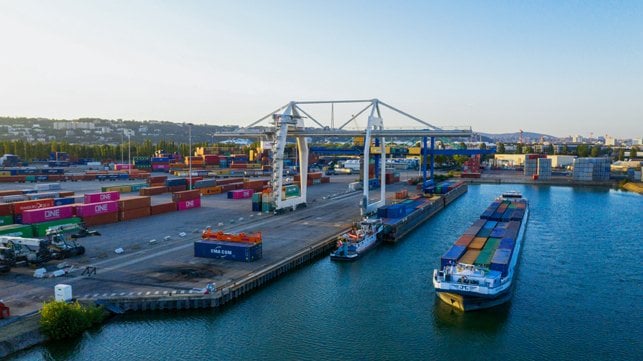
Lyon Rhone Terminal that CMA CGM plans to modernize and use to launch the electric hybrid barge service in France (CMA CGM)

Published Feb 6, 2026 6:30 PM by The Maritime Executive


Shipping giant CMA CGM Group revealed that it is pursuing a plan to launch an electric river container barge on the Rhône River. The company is working in partnership with several organizations to launch the service, reporting that it will be able to transport nearly 12,000 TEU annually and represents an 80 percent reduction in CO2 emissions versus the trucks that currently move containers on the A7 motorway.

Plans call for launching the barge service within two years, using a hybrid electric river barge on the Fos-Lyon axis. Talks are underway to build the barge in Europe, with Combronde as the operator, and for marketing the service. The barge will be 185 meters (approximately 607 feet) with a capacity for 156 TEU. 

CMA CGM is working in partnership with the Banque des Territoires, the CCI Lyon Métropole Saint-Étienne Roanne, and the CCI métropolitaine Aix-Marseille-Provence, sub-concessionaire of the container terminal at the port of Édouard Herriot. 

The barge is part of a larger plan for the modernization of the terminal operations in Lyon. The companies report they plan to invest €40 million over two years in developing the terminal operations. CMA CGM and the group obtained the sub-concession for the Lyon Rhone Terminal in April 2025.

According to the companies, the initiative aims to promote a regular, reliable, competitive, and decarbonized logistics solution between the port of Marseille-Fos, Lyon, and the Rhône Valley. The goal is to accelerate a modal shift and to relieve congestion on the roads. By 2030, the group aims to double river volumes to reach 100,000 TEU per year and double rail volume to 60,000 TEU per year.

To facilitate the electric hybrid barge, the company reports it is working closely with the Compagnie Nationale du Rhône (CNR) on technical studies relating to charging stations in Lyon and Arles.

It is not the first effort by CMA CGM to launch electric river container barges. Last year, it announced a deal to develop and operate fully electric container barges on inland routes in Vietnam. The barge, which will have a capacity of 180 TEU, is being built in China. It will be used to move products for Nike to the port in Cai Mep, Vietnam. The service is due to launch this year, and CMA CGM has said it would study the project for application in other areas.


China Starts Sea Trials for Largest Electric-Powered Containership

China electric-powered containership
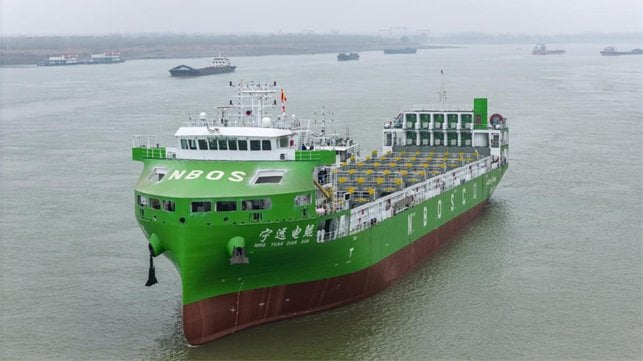
Electric-powered containership heading out for sea trials

Published Feb 4, 2026 6:42 PM by The Maritime Executive


China’s first 10,000-ton electric containership is beginning sea trials. The shipyard is billing the ship as the largest of its kind and a further breakthrough in short-sea shipping.

The Ning Yuan Dian Kun was launched in September 2025 and has completed its outfitting, berth tests, and mooring trials. The ship set out from its builders, Jiangxi Jiangxin Shipbuilding, on February 1. It will be off Shanghai, undergoing its trials between February 6 and 13.

They plan to assess the battery power supply as well as propulsion performance during the sea trials. They will also be testing the ship’s autonomous navigation systems.

The vessel measures nearly 128 meters (420 feet) in length. It has a capacity of 740 TEU. It is reported to have a maximum speed of 11.5 knots.

The power system uses 10 containerized batteries capable of generating up to 19,000 KWh. The batteries will drive two 875 KW permanent magnet propulsion motors, and it will be possible to either recharge the batteries using high-voltage shore connections or quickly swap the batteries for charged batteries. In addition, the vessel has photovoltaic power cells to provide additional power.

The autonomous navigation system can perform sailing as well as route planning and collision avoidance. 

Shipyard officials are hailing the vessel as a combination of green and smart shipbuilding and a key step in the evolution of short-sea shipping.

When delivered, the vessel will be operating for Ningbo Ocean Shipping. It is the first of at least two battery-powered vessels the company is building for its feeder service to the Ningbo-Zhoushan port.


Australia to Build New Hobart Wharf to Resolve Nuyina’s Refueling Problem

Hobart
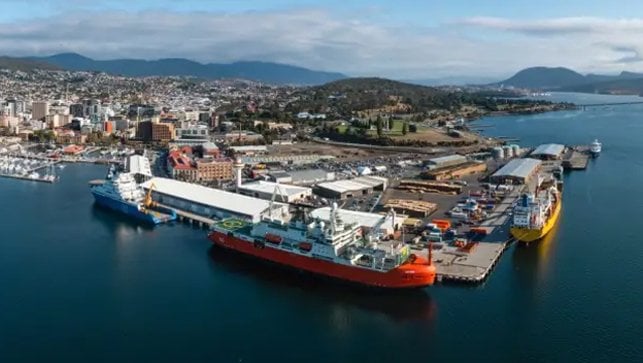
Hobart is redeveloping its berth to provide a permanent home and refueling capability for the research vessel (Tasports)

Published Feb 6, 2026 7:35 PM by The Maritime Executive


Australia is moving to resolve the refueling problem that is facing its flagship Antarctic research vessel RSV Nuyina. After public embarrassment over the problems,  an agreement has been reached  to build a fit-for-purpose wharf at the Port of Hobart.

The Tasmanian Government announced that, following the securing of US$130.6 million funding from the federal government, it has now commenced works on the redevelopment of the Macquarie Wharf 6 in Hobart. The project’s core mission is to provide dedicated berthing for Nuyina and act as a marine base for Australia’s Antarctic program.

Being the main financier of the project, the federal government has set conditions for the redevelopment of the wharf. Key among them is delivering a refueling solution for Nuyina and providing shore power for the $528 million research vessel while at port.

Also, the new facility must comply with other functional requirements for the Australian Antarctic Program (AAD). These include providing a home berth for Nuyina by supporting the requirement to load, unload, and lay up at the Port of Hobart and providing an operational berth for other vessels involved in Antarctic and scientific research.

The redevelopment of the wharf is critical for Nuyina’s operations. Since coming into service in 2021, the vessel has faced refueling challenges owing to the fact that she is too large to safely fit under Hobart's Tasman Bridge, something that has prevented her from reaching the bunker pier in the inner harbor. For this reason, the ship is forced to travel more than 600 kilometers (more than 370 miles) to another port in Burnie to refuel, a journey that adds almost $625,555 to her annual fuel bill.

The Tasmanian Government is highlighting that following the awarding of the contract for the redevelopment of the wharf to Hazell Brady JV in December last year, work for the project, which is of national importance, has begun. The work includes the demolition of the existing wharf, construction of a new wharf structure, provision of shore power, and upgrades to supporting port infrastructure and services. The project is being overseen by TasPorts, the operator of the Port of Hobart, and is scheduled for completion in 2028.

“This project secures Tasmania’s role as the gateway to East Antarctica and provides a permanent home tailored to the Nuyina – Australia’s world-class scientific and icebreaking ship,” said Murray Watt, Federal Minister for the Environment and Water.

The Macquarie Wharf 6 redevelopment is the first stage of the broader Macquarie Wharf Redevelopment project that is expected to be delivered in stages with Macquarie Wharves 4 and 5 set to follow. The overall objective is to expand Tasmania’s export and cruise capacity. The staged approach is designed to maintain critical port operations while positioning Hobart to support growing Antarctic, commercial, and cruise vessel movements.

It is not the first berth embarasment for Tasmania, either. Ferry operator TT-Line invested in two large ferries for the run between Australia and the Tasman city of Geelong, only for it to be discovered that the dock was incapable of handling the ships. They were being delivered starting in late 2024 and going into lay-up until the problem could be solved. Last October, it was revealed that “human error” had specified the wrong strength of fenders, and modifications would have to be made to the ferries and the fenders to prevent damage to the ships. The first of the ferries is now tentatively set to enter service in October 2026.


Georgia Ports Initiative Helps Families Repair, Buy or Build Homes

Georgia Ports Authority
Anita Smith-Dixon, executive director of the Community Housing Services Agency, and Willie Dasher of Dasher Construction celebrate the completion of a new home in West Savannah for the Savannah Affordable Housing Initiative on Jan. 8, 2026.

Published Feb 7, 2026 12:25 PM by The Maritime Executiv\


[By: Georgia Ports]

The Georgia Ports Authority’s Workforce Housing Initiative has so far helped 178 families repair, buy or build a home in the Savannah area.

“A strong community depends on strong families and stable neighborhoods,” said Georgia Ports President and CEO Griff Lynch. “When the people who keep Georgia’s economy moving can afford to put down roots in the communities around us, everyone benefits.”

Since the start of GPA’s initiative in September 2023 through November 2025, nearly $1.7 million from the program has gone to assist 123 owner-occupied home repairs, and 28 home purchases through DreamMaker affordable loans, which help cover down payment, closing costs and gap financing. The program has also assisted 18 new home construction projects and provided down payment assistance for nine GPA employees.

“Local leaders and community partners like Georgia Ports play an essential role in the effort to strengthen our housing landscape,” said Anita Smith-Dixon, executive director of the Community Housing Services Agency. “Through the Housing United Initiative, we are aligning public and private partners to harness creativity and resources and meet the challenge of attainable housing in Chatham County.”

Georgia Ports has pledged a total of $6 million over eight years to support affordable and workforce housing initiatives. Specific projects are funded through a collaboration with the Savannah Affordable Housing Fund and the Community Housing Services Agency.

“Supporting workforce housing isn’t just the right thing to do—it’s an investment in our employees, our partners, and the long-term success of the Savannah region,” Lynch said. “Helping people repair and stay in their homes, while also creating pathways to homeownership helps build generational stability and strengthens our local workforce.”

The Workforce Housing Initiative focuses on housing improvements for residents of neighborhoods in the vicinity of the Port of Savannah’s Garden City Terminal and Ocean Terminal. It prioritizes home repairs for existing neighborhood residents and homeowners. The program also supports eligible port workers with down payment assistance for first time home purchases in the Savannah area.

The Georgia Ports effort complements a state program. Georgia Gov. Brian Kemp launched the Rural Workforce Housing Initiative in 2023. Backed by more than $69 million in legislative funding, the program awards grants for infrastructure that enables workforce housing, leveraging partnerships with local governments and private developers. Kemp said the initiative ensures families can live where they work, delivering lasting benefits to rural communities statewide.

The products and services herein described in this press release are not endorsed by The Maritime Executive.


Maersk Predicts Difficult Times for Industry After a Strong Performance

Maersk containership
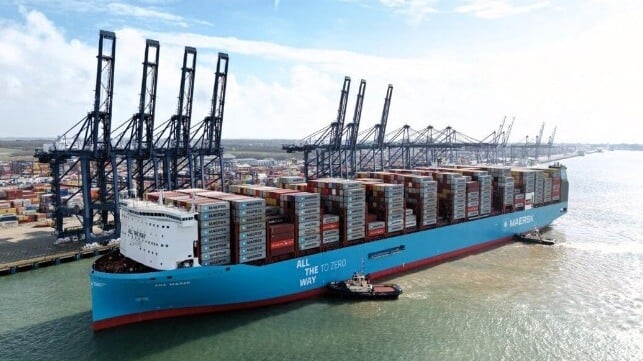
Maersk expects overcapacity and continuing pressure of freight rates for the container business

Published Feb 5, 2026 7:47 PM by The Maritime Executive


Maersk, long considered a bellwether of the container shipping industry and broader global economy, presented a bleak near-term outlook as it reported 2025 financial results. The company pointed to the continued uncertainties in global trade as well as a growing overcapacity in container shipping, which it foresees contributing to further declines in freight rates and its earnings outlook.

While posting a strong overall performance in 2025, which included nearly five percent volume growth for ocean shipping and terminals that achieved record volumes, revenues, and EBIT, the company reported continued declines in freight rates, which contributed to sharply lower earnings. Average freight rates were down more than 20 percent year-over-year and approximately eight percent in sequential quarters in the fourth quarter, which the company attributed to driving its shipping segment to an earnings loss (EBIT) of $153 million in the quarter. The company overall reported $13.3 billion in revenues with earnings (EBIT) of just $100 million. (EBITDA $1.8 billion).

The company reached the top of its forecast for 2025, in part as the return to Red Sea routes was delayed and continued to drive utilization. It reported full-year revenues of $54 billion with earnings on an EBIT basis of $3.5 billion (EBITDA $9.5 billion).

CEO Vincent Clerc, however, presented a bleak picture to investors during the company’s conference call. He said they expected that global container volume would grow between two and four percent this year, but said they expected “container shipping rates to develop adversely.”

One key concern is overcapacity, both from the new ships entering the market and the six-year deferral at scrapping older ships. He forecast an overcapacity of between four and eight percent in 2026, saying “you will need to see some scrapping” for the overcapacity to be reduced. 

The overcapacity, he said, could be further exacerbated if the return to Red Sea routes comes faster than anticipated and in turn further pressure rates. He still expects a gradual return to the routes through the Suez and Red Sea and pointed out that it would make slower steaming possible and contribute to lower costs.

Maersk’s forecast for 2026 presented a worst-case scenario, which could see a financial loss of $1.5 billion (EBIT) and a best-case scenario of a profit of $1.5 billion. Cash flow could also be negative, and to reduce depreciation, the company made a change in the estimated useful lives of vessels from 20 to 25 years, effective January 1, 2026.

Clerc points to steps to reduce corporate overhead, continuing a trend of headcount reductions across the company. For 2026, he said Maersk would cut around 15 percent (1,000 positions) from a global corporate workforce of 6,000 and a total workforce of more than 100,000. This follows broader reductions that started in 2023. The forecast is that Maersk will reduce corporate expenses by $180 million with these latest headcount reductions.

The company is also reorganizing its logistics segment into groups focused on landside, forwarding, and solutions.  To demonstrate faith and support the stock price, the company also initiated a new share buy-back program. The company’s shares were able to claw back some of their early losses, but still closed the day down four percent.


Strength of Cruise Market Spurs New Niche Startups

cruise ship rendering
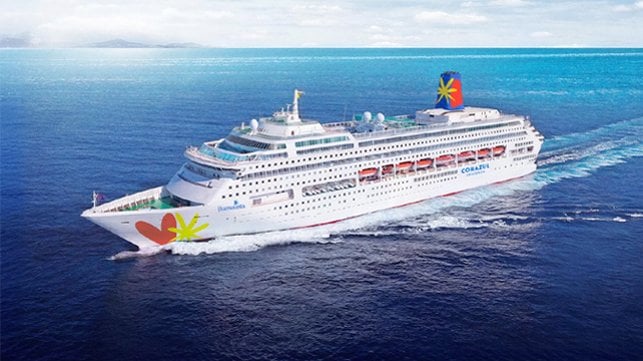
One new entrant is Corazul which is targeted to the Spanish market using a 30-year-old cruise ship originally built for P&O (Corazul)

Published Feb 6, 2026 5:43 PM by The Maritime Executive


The continuing strong demand for cruise vacations and the positive outlook are once again attracting new players into the market and driving the formation of niche offerings. The COVID-19 pandemic and the economics of operating cruise ships largely drove small players from the market, but the strength of the industry is once again creating interest for new companies.

Much of the focus on 2026 will be on the entry of the luxury hotel brands into the market. Ritz-Carlton started the trend, launching cruise ships in 2022 with a smaller ship called Evrima, followed by two larger cruise ships. The much-talked-about Four Seasons yacht cruise ship launches this spring and will be followed by the sailing yacht Orient Express Corinthian, but also emerging are new players seeking to reopen the Spanish cruise market and yacht cruising in the Greek Islands.

Vice President of Sales for Corazul Cruceros, Alex Busquets, says Spanish cruises largely left the market after the collapse of the two Spanish cruise brands, Pullmantur, which closed during the pandemic, and Iberocruceros, which was operated by Carnival Corporation until 2014. 

Busquets told The Maritime Executive that their research showed only 10 percent of Spanish cruisers stayed with the industry. He says they found that 90 percent of the customers had gone back to hotels and resorts, but they believe the interest in cruising remains strong.

Corazul was announced last month and plans to start operations in July, offering a uniquely Spanish product. He said the Spanish culture centers around socializing and outdoor activities. The new cruise product will be tailored, he says, to their style with numerous outdoor activities and music to appeal to Spanish customers. Dinner aboard the ship will be served at 8:30 pm and 10 pm, also to reflect the Spanish culture.

Onboard, the primary language will be Spanish, followed by Portuguese, and then English. They will tailor programs to families, another important part of the Spanish culture. They also look to attract young people to their cruises.

During the northern winter, they will relocate to Brazil, similar to what the previous companies had also done. Busquets says their research showed strong demand and limited capacity in Brazil. They believe there will be a positive market for a Spanish product tailored to Brazil. At 69,000 gross tons and a capacity for approximately 2,000 passengers, Busquets says the ship is ideal for their target market.

Their ship will be named Buenavista, and eagle-eyed observers quickly identified her as the former Oriana of P&O Cruises, built in 1995 at Meyer Werft in Germany. P&O sold the ship in 2019 to the Chinese, who relaunched her as Piano Land. The ship has passed a critical age barrier for the Chinese market, and its operators, Astro Ocean, are merging with Adora Cruises, but the owners are not saying whether they chartered or sold the ship. Astro Ocean says plans for its operations will be announced in due course. Corazul is deferring to the Chinese, but unconfirmed reports are that they have a charter with an option to buy the ship.

Busquets reports the Chinese owners liked the European style aboard and made very few changes, which will make it easy to bring the ship back to Europe. They plan a quick refresh and changing things such as the Chinese signage before launching in July. He says other elements can be updated as they go forward.

Corazul has strong expectations. They note it is currently harder to find second-hand cruise ships, but they say the intent is to acquire more ships.


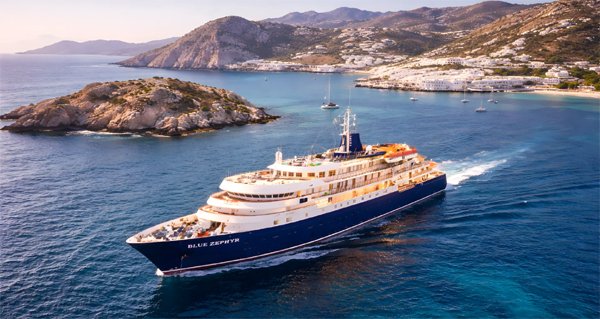
Blue Zephyr will offer a new spirit of yacht cruising in the Aegean (Blue Zephyr Cruises)


Another niche player announced recently, calling itself Blue Zephyr Cruises. The company plans to launch in May in the Aegean, saying it will bring a new spirit to yacht-style cruising. They will offer touches of Greek culture, with, for example, an outdoor taverna, while saying the ship is all about luxury, with spaces designed for calm and privacy.


SBI: India's Refiners Could Make Money By Switching to Venezuelan Oil

Nayara
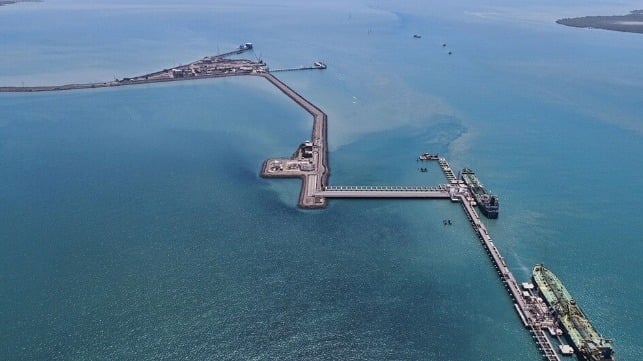
The receiving terminal at the Russian-controlled, EU-sanctioned Vadinar refinery in India, a leading buyer of Russian oil (Nayara / CC BY SA 4.0)

Published Feb 4, 2026 5:53 PM by The Maritime Executive


India's refiners might make out well by taking a deal with the United States to buy lots of Venezuelan oil, according to the State Bank of India. 

Indian refineries became major consumers of gray-market Russian crude oil after the invasion of Ukraine in 2022, drawn by deep discounts and the prospect of profitable crack spreads for overseas sales of the resulting products. (Controversially, a substantial share of the refined-product exports from these refineries ended up for sale in Europe, where Russian oil is sanctioned.) Some of the biggest early operators in the "shadow fleet" tanker market for Russian oil transport were based in India, reflecting the geography of the trade. 

The discounts that drew Indian refiners to Russian suppliers could also make Venezuelan oil attractive, according to SBI's analysis, and could reduce national energy costs by about $3 billion. A discount of about $12 per barrel could make the product financially competitive, the agency said, depending on transport costs and insurance. Deeper discounts - like those currently available at prevailing prices - would save money. Venezuelan crude is currently trading at just $51 per barrel, $17 cheaper than the benchmark Brent index. 

However, Venezuelan crude is discounted for a reason: it is not like Brent, and has different processing requirements. The standard Venezuelan Merey blend is high in sulfur, and it contains unusually high amounts of vanadium, which requires special treatment in the refining process. Handling this feedstock could require changes to Indian refineries, which would add upfront cost, SBI noted. 

The other limiting factor could be Venezuelan production. Under U.S. export management, the nation's producers have increased output to 800,000 bpd, but this is still far short of the record 3.8 million bpd that Venezuela achieved at peak in 1970. Short-term improvements could boost output above 1.0 million bpd, industry experts say, but major improvements would take tens of billions of dollars and likely the better part of a decade to construct - if investors can be found. Venezuela's history of political instability, its cyclical interest in a policy of foreign asset appropriation (twice), its high debt levels and the high technical requirements of its oil production infrastructure all discourage new entrants. ExxonMobil CEO Darren Woods described Venezuelan fields as "uninvestable" at a press conference last month. Given the challenges to increased output, the amount available to ship to India could be limited by the practical realities of production. 

Publicly, the Trump administration has encouraged India to sign on as a major buyer and stop purchasing as much Russian oil. "We’ve already made that deal, the concept of the deal," Trump told media during a flight on Air Force One on Saturday. 

The administration applied a 50 percent tariff on Indian goods last August for its continued purchases of Russian oil, and Indian refiners responded by altering their mix. The aim is to incentivize a transition to non-Russian sources, reducing Moscow's oil revenue and its ability to pursue its war aims in Ukraine. For India, switching to Venezuelan oil - with the Trump administration's backing - could improve the odds of getting U.S. tariffs lifted, in addition to any savings on the oil itself.  


Finland’s Plans to Replace World’s Oldest Operating Icebreaker

icebreaker Voima
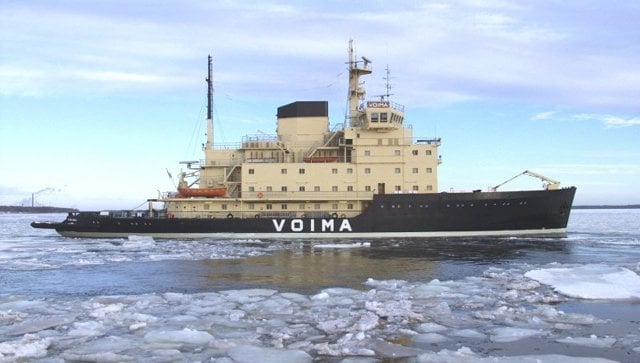
Built in 1954, Voima paved the way for the modern icebreaker and remains active in Finland (Arctia)

Published Feb 6, 2026 7:00 PM by The Maritime Executive


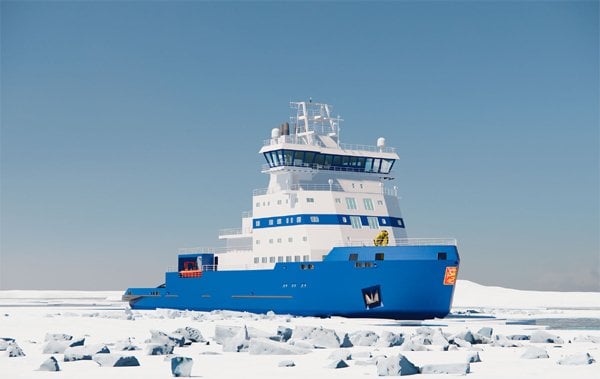
Finland is making progress on a project to replace the world’s oldest working icebreaker. They announced the progress, reporting that the project has settled on the design concept for a new vessel that can operate in the typical ice and open water conditions of the Bothnian Sea and the Gulf of Finland.

The Finnish Transport Infrastructure Agency (FTIA) has settled on the design for the new icebreaker that will replace the 70-year-old Voima, which was built in 1954 and holds the distinction of being the world’s oldest icebreaker that is still in operation. The ship remains a vital part of the fleet, with operator Arctia reporting at the end of December that Voima had set off from Katajanokka, Helsinki, as its first icebreaker for this winter, heading to the Bothnian Bay to assist merchant ship traffic in the Tornio, Kemi, and Oulu areas.

The icebreaker is largely credited with propelling the Finnish shipbuilding industry to world leadership in icebreaker designs and construction and for being the first in the world to be equipped with two bow propellers. At an overall length of 83.5 meters (274 feet), the B-class Voima was once the longest and widest icebreaker ever built in Finland. In 1978–1979, she underwent an extensive refit that allowed her to remain in operation for decades.

Finland has embarked on a project to replace Voima with a new icebreaker that shares some attributes with her (Voima) but also one that incorporates the latest technologies that meet the needs for modern-day icebreaking capabilities.   


Finland has selected a design for the new icebreaker (FTIA)


Having awarded the design contract to Finnish firm Aker Arctic Technology, FTIA is stating that the new B+ icebreaker will be around 96 meters (315 feet) long and with 10.5 MW of engine power, the same power as the Voima. However, the new vessel will be much wider at 24 meters (79 feet) compared to the Voima's 19 meters (62 feet), with the increased beam and the modern hull and propulsion solution expected to significantly improve the vessel's open water characteristics and performance in icy conditions.

FTIA is highlighting that the propulsion solution for the vessel was a key factor in the final design. The agency contends that the propulsion solution chosen is the first of its kind and is based on traditional straight shaft lines and rudders, complemented by a bow-mounted reversible rudder propeller. The combination substantially improves the vessel's maneuverability and ice-handling capabilities compared to rudders alone, while maintaining a technically clear and well-managed entity over its lifetime.

The design is also said to have considered alternatives where the thrust of the vessel would be distributed over several rotating units, in effect increasing the agility of the vessel. Also of critical importance is the fact that the icebreaker will be capable of making a channel of about 25 meters in width, equivalent to the width of existing A-class icebreakers, and will efficiently serve traffic requiring assistance. While the vessel will operate in open water conditions, its main areas of deployment will be icebreaking in the Bothnian Sea and the Gulf of Finland.

“The propulsion solution clearly ensures adequate performance for the vessel’s functions in ice and open water. It is agile and reliable without being technically oversized,” said Lauri Kuuliala, shipping expert.

Having settled on the design, FTIA will move to the tendering stage to bring on board the shipyard to build the icebreaker, whose construction is scheduled to start in 2027 and delivery is slated for September 2029. The new vessel is being built as part of the WINMOS IV (Winter Navigation Motorways of the Sea) project, which has secured $49.4 million in Connecting Europe Facility funding.

Trump Administration Green-Lights Texas GulfLink SPM Project

GulfLink
Courtesy Texas GulfLink

Published Feb 3, 2026 4:18 PM by The Maritime Executive


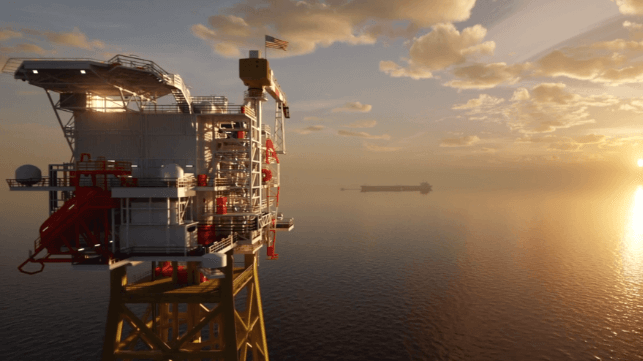
Just weeks after taking over the federal environmental-review process for deepwater oil and gas terminal licensing, the U.S. Department of Transportation has approved a construction and operation license for Texas GulfLink, the first issued under the Trump administration. 

Texas GulfLink will be a twin single-point mooring facility located about 27 nautical miles off the coast of Brazoria County, Texas. It will be fed by a 42" subsea pipeline to a manned offshore platform, where its operations will be overseen on-site in real time. It is backed by Sentinel Midstream.

Capt. Stephen M. Carmel, head of DOT's Maritime Administration, said in a statement that the project will speed up exports of American oil to global buyers. "We are signaling to the global market that America is open for business. By approving projects like Texas GulfLink, we ensure that American oil producers aren't halted by domestic bottlenecks," he said. 

According to the DOT, the project will support more than 700 jobs and increase oil export capacity by as much as one million barrels per day. It will be able to handle VLCCs, the most economical vessel class for transoceanic trade, and will make it less expensive to ship and sell oil to foreign refiners.

"The Texas GulfLink project is proof that when we slash unnecessary red tape and unleash our fossil fuel sector, we create jobs at home and stability abroad. This critical deepwater port will allow the U.S. to export our abundant resources faster than ever before," said Transportation Secretary Sean Duffy in a statement. 

At present, only one VLCC-capable offshore terminal exists in the U.S. - the Louisiana Offshore Oil Port, or LOOP. At all other loading ports, VLCCs have to take on cargo using reverse lighterage, the process of sending a smaller tanker in and out of port several times in order to fill up. This is a relatively expensive and time-consuming method, and requires multiple transits through pilotage waters. An offshore single-point mooring can load a VLCC in a single evolution.