Sunday, February 08, 2026

Eramet’s finance chief steps aside temporarily, days after CEO ouster

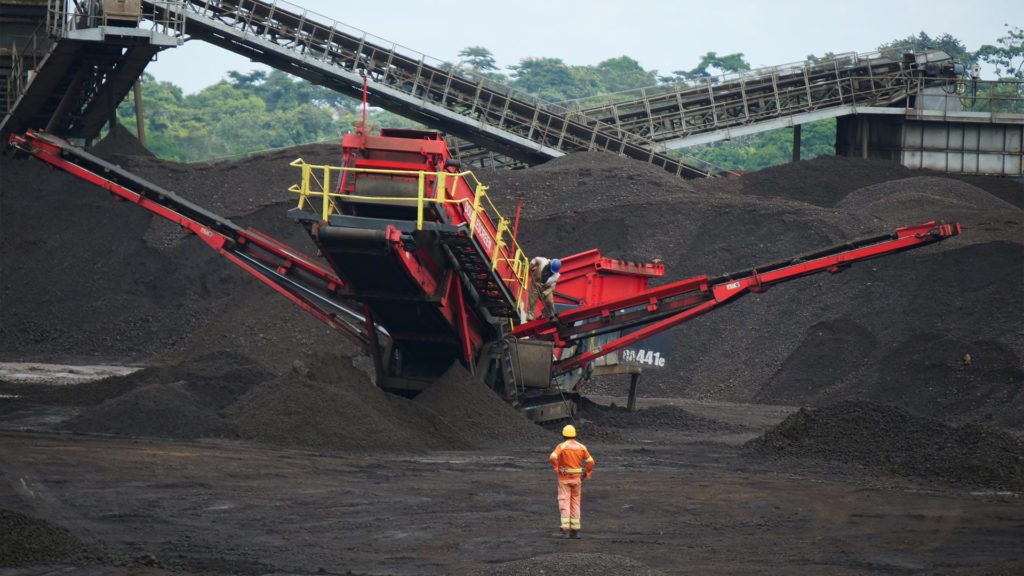
Moanda mine in Gabon. Credit: Eramet

French miner Eramet’s finance chief Abel Martins-Alexandre has stepped aside temporarily during a probe into management methods, a company spokesperson said on Friday, days after Eramet ousted its chief executive.

“Eramet confirms that an interim management has been put in place in its finance department while its CFO steps aside temporarily during an investigation into management methods,” the spokesperson told Reuters.

CEO Paulo Castellari’s dismissal on Sunday was due to coordination issues with the board and staff, rather than the company’s financial results, Chair Christel Bories said previously.

The Financial Times, which first reported the news on Friday, said Martins-Alexandre, who joined the company in September and was considered close to the ousted CEO, had been on sick leave after Castellari’s exit.

Castellari’s ouster just months into his term raised questions over governance at the nickel, manganese and lithium miner, which is partly owned by the French state. Shares of the company are down nearly 8% this week.

The FT, citing sources, said Castellari’s dismissal and Martins-Alexandre’s suspension are not related to any allegations of wrongdoing.

Martins-Alexandre and Bories did not immediately respond to requests for comment.

The FT report added that Castellari and Martins-Alexandre had in recent weeks been setting up an internal task force to look into potential financial mismanagement within the group in recent years

Eramet has cited weakness in metal prices and production setbacks at some of its mines for declining results in the past year.

(By Abu Sultan and Gus Trompiz; Editing by Vijay Kishore and Will Dunham)

Prabowo puts Indonesia on collision course with global investors

Indonesian president Prabowo Subianto during a visit to India earlier this year. Credit: MEAphotogallery via Flickr

As Indonesia’s stocks plummeted last week, a group of executives thousands of miles away were starting to panic for a different reason.

Reports emerged that Danantara, a sovereign wealth fund that reports directly to President Prabowo Subianto, was considering a takeover of one of Indonesia’s largest gold mines. Key investors of Jardine Matheson Holdings Ltd., a Hong Kong-based conglomerate that controlled the mine, were getting anxious, according to people familiar with the situation. The investors wanted Jardine to answer a simple question: Do you still own the gold mine or not?

The episode underscores the quandary facing investors looking at Southeast Asia’s biggest economy: Is the “New Indonesia” envisioned by former leader Joko Widodo — one that would propel the nation into the ranks of the world’s top five economies by 2045 — still on track?

For the moment, the answer remains unclear. On the one hand, regulators reacted quickly to MSCI Inc.’s warning that Indonesia may be relegated to frontier-market status, halting a two-day market meltdown and reassuring many money managers about the nation’s long-term prospects. But at the same time, the threatened gold mine seizure suggests that Prabowo may yet find himself on a collision course with foreign investors and Indonesia’s most influential tycoons.

Moody’s Ratings on Thursday lowered its outlook on the country’s credit rating to negative, citing “reduced predictability in policymaking” and poor communication by Prabowo’s government. Stocks, bonds and the rupiah all slid on Friday, even as Finance Minister Purbaya Yudhi Sadewa pushed back and said Indonesia was in a “better position” than other countries regarding its fiscal deficit and growth prospects.

“Overall I see the state as more centralized and predatory under Prabowo,” said Eve Warburton, research fellow at the Coral Bell School of Asia Pacific Affairs at the Australian National University and author of Resource Nationalism in Indonesia: Booms, Big Business and the State. “Understandably, the domestic private sector is anxious and foreign investors are spooked.”

Having waited in the wings for decades, including as a military leader under the late dictator Suharto, Prabowo is now in a hurry. In power for a little more than a year, the 74-year-old former special forces commander is centralizing control, squeezing tycoons, expanding the military’s role in government and putting confidants into key roles, including installing his nephew at the central bank.

After deadly protests broke out last year over inequality and the cost of living, he responded by firing his finance minister, the well-regarded technocrat Sri Mulyani Indrawati, and elevating a loyalist more willing to loosen the fiscal strings. His government last year came close to hitting a long-held fiscal ceiling imposed after the 1997 Asian Financial Crisis.

For Prabowo, the changes are necessary. The goal of Danantara is to harness Indonesia’s wealth, make state-run companies more efficient and provide funds to invest in industries of the future. Land seizures are all about enforcing the law.

Speaking at the World Economic Forum in Davos last month, Prabowo railed against “robber barons” and “greednomics” while vowing to lift up poorer citizens who live in shacks with no clean water or toilets. He has already begun targeting the nation’s tycoons and billionaires, including considering a new law that would allow authorities to seize assets of individuals allegedly involved in corruption without waiting for a criminal process to prove their guilt.

“Let me say this clearly: There is no investment climate without the certainty of equitable rule of law,” Prabowo said. “Nobody will come in to invest in a country that’s lawless or of dubious legal tradition.”

The Martabe gold mine in Sumatra, Indonesia’s westernmost main island, is just the latest bellwether for where Indonesia might be heading. The communications have been confusing throughout, and it remains unclear how the dispute will be resolved.

Within Danantara, an agency created by Prabowo last year that brought Indonesia’s state-owned enterprises under one roof, a debate has been brewing over the merits of obtaining the gold mine. The fund’s mining unit has yet to communicate plans internally to initiate a takeover, according to one person familiar with its inner workings, noting there is some concern among Danantara executives that a seizure would hurt investor sentiment.

Jardine’s executives initially told institutional investors they didn’t know the status of the gold mine and were racing to find out, according to people familiar with the matter. Senior officials at Danantara eventually told Jardine that the sovereign wealth fund had no intention to take over the mine, but they needed to wait for guidance from Prabowo before formally responding, one of the people said, asking not to be identified discussing private conversations.

Prabowo’s communications office declined to comment and referred questions to Danantara, which didn’t respond to requests for comment. Asked for comment, Jardine said Thursday that its subsidiaries hadn’t received any formal communication from Prabowo’s government about the status of the mine. Discussions are ongoing with Indonesian regulators but next steps are still to be determined, the company added.

Although Indonesia has many things going for it — a young and large population, relatively high levels of consumption and abundant resources like nickel, coal and gas — the negatives are adding up both for companies making investments and traders looking for alternatives to the dollar.

Amid one of the biggest selloffs in Indonesia in decades, officials in Jakarta last week raced to stem the bleeding: They vowed to quickly address MSCI’s concerns over the transparency of shareholding structures, including by doubling the free float to 15% — a figure on par with Thailand though below the 25% in India. The heads of the stock exchange and Financial Services Authority resigned.

The flurry of activity worked, at least for a bit, with the index appearing to halt its freefall despite large swings in recent days. Market players noted that the MSCI move mainly affected equities, without much initial impact on the currency and bonds.

But they also said the index provider had a point. The problems had been festering for years, with regulators taking little action to make changes before MSCI stepped in with a statement. Now Indonesian officials have until May to prevent a downgrade, and many investors are hopeful that the episode will spur reforms that ultimately boost market sentiment in the long term.

“If they don’t shape up, they will have lost a big opportunity,” said Greg Lesko, portfolio manager at Deltec Asset Management, citing Indonesia’s demographics and the global rate cycle as positives. “Hopefully the MSCI was a wakeup call.”

That sentiment was echoed even by key officials with Danantara. Pandu Sjahrir, its chief investment officer, said at an economic forum last week that MSCI had long been clear about what the overseers of Indonesia’s stock market need to do.

“I’ll leave it up to the regulators to decide how they want to work on this,” he told an audience at the Grand Ballroom of the Ritz Carlton Pacific Place, across the street from the stock exchange. “I think the information is accurate, and you can’t blame anyone. I think what MSCI did was right.”

The swift reaction by Prabowo’s government to the MSCI statement stood in stark contrast to the confusion over the land seizures. His government last year confiscated an area the size of Switzerland, describing the land as being used illegally. Prabowo last month suggested he could double those holdings in 2026 to fight what he called “hundreds of illegal mines.


In Davos, the president made no apologies.

“Perhaps these rapacious so-called entrepreneurs feel that they need not recognize the sovereignty of the Indonesian government,” Prabowo said.

The Martabe mine, which is controlled by Jardine through subsidiary PT Astra International, is among 28 operations that had licenses revoked for alleged environmental damage in the wake of devastating floods in December that killed more than 1,100 people in Sumatra. Jardine said Thursday that government investigations into whether the mine impacted flooding are still ongoing.

The dripfeed of statements on government actions regarding the Martabe mine are adding to the confusion, along with Danantara’s role in the episode. The plan for a new company called Perminas to take over the gold mine slipped out when Dony Oskaria, Danantara’s chief operating officer, made the disclosure last week to reporters at a public forum.

At a business forum in Jakarta this week, Purbaya — who took over as finance minister in September — said MSCI’s warning was good for Indonesia. He also called Prabowo’s government “very fair,” saying the revocation of permits for some mining companies was a step toward fostering a positive investment climate.

“It’s not the end of the game,” Purbaya said, referring to the disputed gold mine. “Jardine can always complain, or complain to our government, as long as they conduct their business properly.”

Separately, Hashim Djojohadikusumo, Prabowo’s younger brother and one of his closest advisers, said Tuesday that the 28 companies could appeal the decisions in the courts. In particular, he noted, firms with operations unrelated to floods should have them restored.

“The president has said several times, including to me, that he doesn’t want a miscarriage of justice,” Hashim said. “If the company objects, they should immediately file an objection. I think that’s absolutely right.”

PT Agincourt Resources, which directly operates the Martabe mine, didn’t respond to requests for comment. PT United Tractors, the listed unit that controls Agincourt, said late Thursday in a response to a stock exchange inquiry that Agincourt hadn’t received any information regarding the proposed transfer of the mine to Perminas. Astra International didn’t respond to a request for comment.

Indonesia has refrained from outright cancellation of contracts since 1998, when Suharto’s order to suspend all infrastructure projects led to a prolonged international legal battle over a power plant that involved US investors, according to Kevin O’Rourke, a principal at Jakarta-based consultancy Reformasi Information Services, who has written about the country’s business climate for decades.

“If the government does indeed proceed with unilateral revocation of Agincourt’s contract, this would inevitably reverberate in all economic sectors and further hamper prospects for valuable FDI,” O’Rourke said.

The episode also lands at a moment investors are watching a broader set of signals about how power is being exercised — from court cases that draw international attention to changes that touch core economic institutions.

Prabowo raised eyebrows last year when he backed Suharto, his former father-in-law who led Indonesia for three decades, as a national hero — a move that infuriated human rights groups. Critics have questioned the military’s expanding role, including new development battalions linked to the food-security push behind Prabowo’s free meals program, even as troops have been used to accompany teams seizing illegal plantations.

The narrative of a “New Indonesia” took hold a decade ago when the country elected Widodo, its first president from outside the military or political elite. He presided over an expansion of infrastructure in Indonesia, including a planned new capital outside Jakarta, but he also disappointed many supporters by eroding democratic institutions during his second term.

The concentration of power in the presidency under Widodo has now accelerated under Prabowo, according to John Sidel, director of the Saw Swee Hock Southeast Asia Centre at the London School of Economics and Political Science.

“The election and inauguration of Prabowo has marked a real low point in terms of the evolution of Indonesian democracy,” he said. “Arguably it could be worse, and perhaps there is worse to come.”

(By Ben Otto, Rosalind Mathieson, Abhishek Vishnoi and Echo Wong)
 Li

Environmental groups sue EU commission over Portugal lithium mine

Mina do Barroso is set to be Europe’s first significant producer of spodumene. (Image courtesy of Savannah Resources.)

Environmental groups filed a lawsuit on Thursday against the European Commission over its decision to grant preferential “strategic” status to Portugal’s Barroso lithium mine project, developed by London-listed Savannah Resources.

Local residents’ association United in Defence of Covas do Barroso and ClientEarth group said they filed the lawsuit with the EU’s Court of Justice after Brussels refused to reconsider its 2025 decision under the Critical Raw Materials Act.

That was “despite detailed evidence showing the project poses serious environmental, social and safety risks”, they said in a statement.

Projects like Savannah’s in Portugal are seen as a key test of Europe’s ability to produce lithium and other materials seen as essential to the energy transition, but they often face opposition from environmental groups.

Barroso has been a World Heritage site for agriculture since 2018.

The groups said that securing access to critical raw materials “cannot come at the expense of environmental protection, public participation or community rights.”

“The energy transition must be based on law, science and justice – not political shortcuts that turn rural regions into sacrifice zones,” they said.

Savannah is developing the mining project in northern Barroso, which has estimated resources of the spodumene deposit — one of the lithium-bearing minerals — exceeding 39 million metric tons, making it the largest such deposit in Europe.

Last month, the Portuguese government awarded a 110 million euros ($130 million) grant to the project.

The Portuguese government hopes to launch a long-delayed tender for lithium prospecting licences this year, seen as key to building a domestic lithium value chain and cutting Europe’s reliance on imports from countries including China.

($1 = 0.8473 euros)

(By Sergio Goncalves; Editing by Andrei Khalip and Susan Fenton)


Codelco forms joint venture with Quiborax for lithium exploration

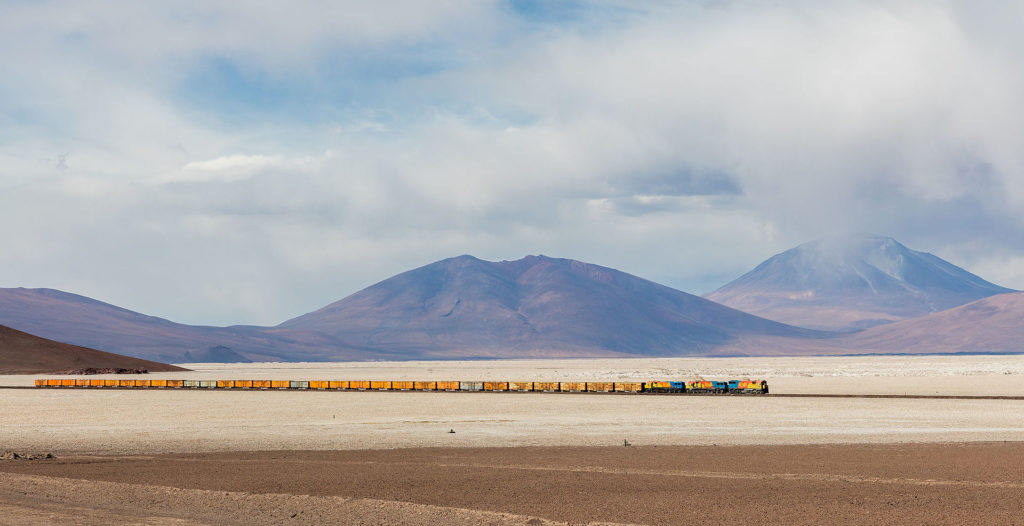
FCAB ore train crossing the Ascotán salt flat at the Collahuasi mine. Credit: Wikipedia

Chile’s state miner Codelco and the Chilean acid producer Quiborax have created a joint venture to secure a special lithium operation contract for the Salar de Ascotan salt flat in northern Chile, the companies said on Thursday.

The partnership, called Minera Ascotan SpA, has an initial 34% stake for Codelco and 66% for Quiborax, but will seek a new majority partner once the contract is obtained.

The companies applied for the contract as a consortium in January 2025. The Mining Ministry is expected to present the new joint venture and its contract terms to Chile’s Comptroller General in coming weeks.

Codelco appointed Jaime San Martin and Felipe Killian as directors, while Quiborax named Allan Fosk, Ignacio Riva Posse and Yatsen Lee. Daniel Ocqueteau will serve as the joint venture’s general manager.

Salary de Ascotan is Chile’s third-largest salt flat by surface area with underground content. The salt flat has not been explored for lithium but has attractive exploration potential.

The venture is part of Chile’s National Lithium Strategy to maintain the country’s role in the global lithium industry.

“Lithium is key to the planet’s energy future, and Chile has a unique opportunity,” Codelco board president Maximo Pacheco said.

(By Iñigo Alexander; Editing by Cassandra Garrison)

CU

Capstone Copper to resume full production at Mantoverde mine as strike ends


Mantoverde is an open-pit mine located in the Atacama region of Chile. Credit: Capstone Copper

Canada’s Capstone Copper said on Friday that the largest union at its Mantoverde copper‑gold mine in Chile had approved a new three‑year labour contract, ending a strike that started on January 2 and paving the way for production to return to normal.

Shares of the miner’s Australia-listed depositary receipts fell as much as 3.9% to A$15.43, their lowest since January 23.

The agreement brings an end to a labour strike that had reduced production at the mine to about 55% of normal levels.

Capstone said it had now negotiated new contracts with all the four unions at the site, allowing the company to resume full operations.

Union No. 2, representing around 645 workers or roughly 50% of Mantoverde’s direct workforce, had led the strike after rejecting a payment offer as labour negotiations broke down.

The company did not disclose details of the new payment offer or any further terms of the agreement.

In 2025, Mantoverde produced 62,308 metric tons of copper concentrate and 32,807 tons of copper cathodes, accounting or about 0.4% of global production.

Capstone owns a 70% stake in Mantoverde, while Japan’s Mitsubishi Materials holds the remaining 30%.

(By Kumar Tanishk; Editing by Subhranshu Sahu)

GEMOLOGY

De Beers sale drags in diamond doldrums


By AFP
February 8, 2026


Botswana is the world's second largest diamond producer after Russia 
- Copyright AFP/File Monirul Bhuiyan


Hillary ORINDE

Even with its legendary image of glitz and glamour, diamond icon De Beers has struggled to attract a buyer after nearly two years on a market dulled by falling prices and the allure of lab-grown gems.

The seller, mining titan Anglo American, even warned Thursday it may take a third writedown in as many years on the company that was born in South Africa 130 years ago and went on to dominate the global diamond market.

This is after a $2.9  billion drop last year and $1.6 billion charge the year before, bringing its estimated value to about $5 billion, according to company records.

Anglo’s bid to offload its loss-making company is not only being thwarted by the depressed market for mined diamonds, particularly in China, according to analysts.

It is also complicated by a crowded field of suitors circling the sale, including at least three sub-Saharan governments and various private bidders, which makes any deal as political as it is financial, they added.

Botswana has perhaps been the most ardent in its ambition to acquire a controlling stake in the company that oversees the world trade in the stones on which its economy depends.

Botswana and its president, Duma Boko, De Beers’ biggest producer partner with a 15-percent holding, led a determined push to finalise a deal by last year but to no avail.

Other diamond‑rich governments such as Angola and Namibia have also signalled interest, as have various sovereign wealth funds and a consortium led by former De Beers chief executive Gareth Penny.

– ‘For better or worse’ –

It is a complicated sale that — if it goes through — would mark one of the most significant shifts in the diamond industry in a quarter of a century, said independent analyst Paul Zimnisky.

“The new owner will be in a position to fundamentally pave the future of the entire industry, for better or worse,” the diamond industry analyst told AFP.

Botswana’s bid underscores its belief that it must manage the resource, which contributes about a third of its GDP, in order to capture more of the value chain and secure its economic future.

But the International Monetary Fund has cautioned the mostly desert nation that concentrating more of its state resources in the diamond sector could heighten fiscal risks and leave it more exposed to swings in global demand.

Zimnisky was also wary of what could amount to the “nationalisation” of De Beers.

“In general, I think that a more private or capitalistic business model works better than a more government-run or social one,” he told AFP.

“It is pertinent to have some private money involved as well as executives with relevant experience,” said the US-based analyst.

– Patience –

Anglo American has kept details of the sale negotiations under wraps, with chief executive Duncan Wanblad saying on Thursday only that the separation is “progressing”.

The mining giant announced in 2024 — after fending off a hostile takeover bid from Australian rival BHP — that it would sell off De Beers and its coal and nickel operations in order to focus on iron ore and copper.

“De Beers isn’t a single, clean asset, it spans mining, marketing, and retail, and it includes a government partner,” leading diamond industry analyst Edahn Golan told AFP.

“From a buyer’s perspective, this is actually an attractive moment to step in. From a seller’s perspective, there’s a compelling argument for waiting until the market improves and capturing more of the upside,” he said.

Demand for natural diamonds has weakened as younger buyers spend less on traditional jewellery and are drawn to cheaper lab‑grown gems.

US tariffs and shifting trade routes are meanwhile disrupting flows through key cutting and polishing hubs.

As the sector weathers a period of unprecedented uncertainty, retailers and manufacturers are sitting on their biggest polished‑stone stockpiles in years.

Despite the gloomy market, Anglo would not be “interested in fire-selling” De Beers, Zimnisky said. “They can be patient,” he added.

Golan agreed. “My hope is that the outcome is a company that both brings prosperity to the communities in which it operates and succeeds in rebuilding consumer interest in diamonds,” he said.
Japan to restart world’s biggest nuclear plant


By AFP
February 5, 2026


The Kashiwazaki-Kariwa Nuclear Power Plant in Kashiwazaki City has been offline since the 2011 Fukushima disaster - Copyright JIJI PRESS/AFP/File STR

Japan will switch the world’s largest nuclear power plant back on next week, after a glitch with an alarm forced the suspension of its first restart since the 2011 Fukushima disaster.

Takeyuki Inagaki, the head of the Kashiwazaki-Kariwa plant run by Tokyo Electric Power (TEPCO), told a press conference Friday that they planned “to start up the reactor on February 9”.

The announcement came after TEPCO restarted the reactor on January 21 but shut it off the following day after an alarm from the monitoring system sounded.

Due to an error in its configuration, the alarm had picked up slight changes to the electrical current in one cable even though these were still within a range considered safe, Inagaki said.

The firm has now changed the alarm’s settings as the reactor is safe to operate, Inagaki said.

The commercial operation will commence on or after March 18 after another comprehensive inspection, he said.

Kashiwazaki-Kariwa is the world’s biggest nuclear power plant by potential capacity, although just one reactor of seven will restart.

The facility had been offline since Japan pulled the plug on nuclear power after a colossal earthquake and tsunami sent three reactors at the Fukushima atomic plant into meltdown in 2011.

Resource-poor Japan now wants to revive atomic energy to reduce its reliance on fossil fuels, achieve carbon neutrality by 2050 and meet growing energy needs from artificial intelligence.

Kashiwazaki-Kariwa is the first TEPCO-run unit to restart since 2011. The company also operates the stricken Fukushima Daiichi plant, now being decommissioned.

Public opinion in the area around the plant is deeply divided: Around 60 percent of residents oppose the restart, while 37 percent support it, according to a survey conducted by Niigata prefecture in September.

In January, seven groups opposing the restart submitted a petition signed by nearly 40,000 people to TEPCO and Japan’s Nuclear Regulation Authority, saying that the plant sits on an active seismic fault zone and noted it was struck by a strong quake in 2007.
China calls EU ‘discriminatory’ over probe into Wind energy giant Goldwind


By AFP
February 4, 2026


Goldwind is one of the world's biggest wind turbine suppliers, and is looking to boost growth overseas - Copyright AFP/File Hector RETAMAL

Beijing accused the European Union on Wednesday of taking “discriminatory” measures after the bloc opened an investigation into Chinese clean energy giant Goldwind over concerns the firm unfairly benefitted from state subsidies.

Goldwind is one of the world’s biggest wind turbine suppliers, and is looking to boost growth overseas, bringing it into competition with Western companies.

The European Commission, the EU’s competition regulator, announced the probe on Tuesday, saying a preliminary investigation had found the Chinese firm “may have been granted foreign subsidies that distort the internal market” of the 27-nation bloc.

China’s foreign ministry said Wednesday the probe amounted to protectionism and threatened future Chinese investments in Europe.

“The EU’s frequent use of unilateral trade tools and its discriminatory and restrictive measures against Chinese companies send protectionist signals,” foreign ministry spokesman Lin Jian told a regular press conference.

The probe would also “affect the confidence of Chinese companies in investing in Europe”, he added.

Beijing’s commerce ministry said the probe “seriously disrupts mutually beneficial China-EU industrial cooperation”.

Beijing will “resolutely” protect Chinese companies, it added in a statement urging Brussels to “immediately correct its wrong practices”.

Brussels has said the opening of an in-depth investigation does not prejudge its outcome.

But if its competition concerns were to be sustained, the commission could accept remedies proposed by the company or impose redressive measures.

China now dominates the global wind sector in terms of total installed capacity, aided over the years by generous subsidies from Beijing and rapid growth in the vast domestic power market.
GREEN CAPITALI$M

Wind turbine maker Vestas sees record revenue in 2025

DESPITE TRUMP


By AFP
February 5, 2026


The Danish group also said it had a record order backlog worth 71.9 billion euros at the end of 2025 - Copyright Ritzau Scanpix/AFP/File Henning Bagger

Denmark’s Vestas, Europe’s leading wind turbine manufacturer, on Thursday posted an all-time high revenue, but noted that regulatory changes in the United states had made wind power investments less attractive.

Vestas recorded revenue 18.8 billion euros ($22.2 billion) in 2025, up nine percent compared to the year before.

It also posted a net profit of 778 million euros, a 55 percent increase.

The group also said it had a record order backlog worth 71.9 billion euros at the end of 2025.

That corresponds to orders representing 23 gigawatts for onshore wind, its core business, and eight gigawatts for offshore wind. Service orders represented more than half of the total at 38.7 billion euros.

For 2026, Vestas is forecasting revenue between 20 and 22 billion euros, while noting that “ongoing geopolitical and tariff risks are likely to cause uncertainty”.

In the United States, Vestas’s largest market, “regulatory changes made future clean energy investments less attractive compared to previously,” the company noted, and expressed concern that “tariff uncertainty remains”.


Massachusetts Looks to Nova Scotia to Supply Offshore Wind Energy

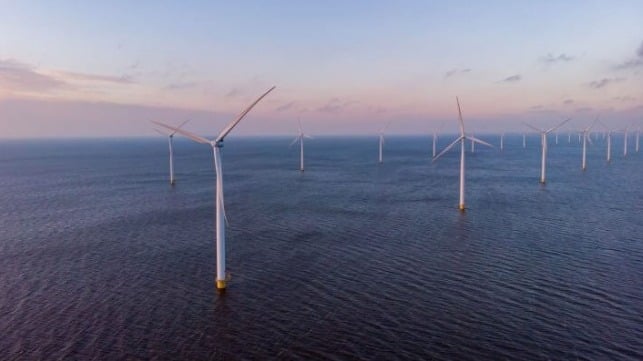
offshore wind farm
Nova Scotia looks to become a hub for offshore wind power generation

Published Feb 4, 2026 5:40 PM by The Maritime Executive


Faced with the need for more electrical power and a desire to expand renewable energy, Massachusetts is looking toward the import of renewable energy from neighboring Nova Scotia. The first-of-its-kind agreement would present a novel solution to meeting the needs while also addressing the opposition of the Trump administration to the development of offshore wind energy generation.

Massachusetts is a strong supporter of the offshore wind energy industry, with some of the first large projects in the United States. It is just weeks away from the completion of Vineyard Wind 1 and has been at the forefront of the efforts to oppose the Trump administration’s efforts to end the development of offshore wind energy. Massachusetts Attorney General Andrea Joy Campbell in January filed an amicus brief supporting Vineyard Wind in its lawsuit against the Trump Administration, and last year Massachusetts led the state’s suit against the Trump administration’s executive order to review the future of the industry.

Meeting with Nova Scotia Premier Tim Houston, Massachusetts Governor Maura Healey today, February 4, signed a memorandum of understanding to work toward Nova Scotia supplying the state with offshore wind energy. The agreement is being billed as a win-win for the state, which has growing power needs, and will also support Nova Scotia as it works to launch Canada’s first offshore wind projects.

“We’re on the verge of our first call for bids to license the first offshore wind projects in Canada, and we’re advancing Wind West to build the transmission infrastructure to send that clean energy to markets,” said Premier Tim Houston. “Our agreement with Massachusetts signals to developers that markets for their clean energy are solidifying, giving them even more confidence to invest in our new offshore wind industry.”

Canada has historically been a major power exporter to the United States, despite the trade tensions with the Trump administration. Historically it has been between 50 and 60 million megawatthours annually, although it fell to just over 27 million megawatthours in 2024, according to the U.S. Energy Information Administration.

Nova Scotia and the Government of Canada jointly designated the first four offshore wind energy areas in Nova Scotia in July 2025, and the Canada-Nova Scotia Offshore Energy Regulator launched the overall process for the first call for bids to license offshore wind energy in Nova Scotia on October 16. The call for bids is expected in the next few months. After the first four licenses currently in process, the province said it would revisit four to five other areas that had been identified in the regional assessment.

It is part of an ambitious plan outlined by Premier Houston in 2025. He points out that Nova Scotia has some of the strongest and most consistent winds on the planet. The initial plan calls for 5 GW of generation capacity by 2030, while the Premier highlights that the province currently has peak usage of 2.4 GW. 

Long-term, Nova Scotia has a vision that says it could potentially produce 66 GW through the development of its offshore capabilities, making it a power hub and key supplier for other parts of Canada and the United States. 

Op-Ed: Seafarer Recruitment Should Never Be a Gamble

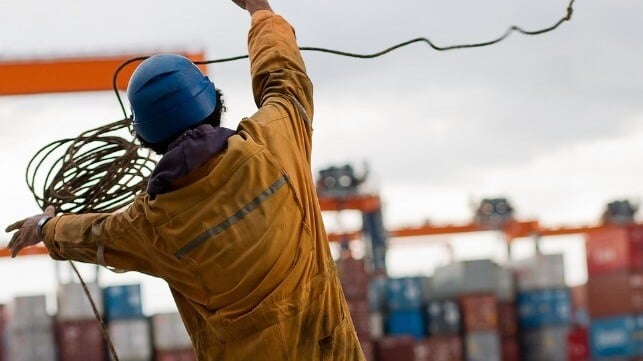
Heaving line
File image courtesy Maxime Felder / CC BY

Published Feb 4, 2026 7:35 AM by Josephine Le


Recent reports concerning Chinese seafarers who traveled overseas for what they believed were legitimate job opportunities, only to lose contact with their families for weeks or months, have brought renewed attention to a deeply troubling recruitment pattern. In one widely shared case, a seafarer eventually returned home, but his family has since spoken about the severe psychological trauma he is now facing. More concerning still is that this appears not to be an isolated incident.

Families and volunteers have described multiple cases involving similar recruitment methods, including online job advertisements, intermediaries offering above average wages, last minute changes to travel routes and sudden instructions to transit through unfamiliar ports. In several instances, seafarers told relatives that they had boarded vessels and begun work, only for later checks to reveal no record of them ever joining a ship. Contact then ceased entirely.

What makes these cases particularly alarming is how closely they mirror the normal realities of seafaring life. Overseas travel, unfamiliar destinations and unexpected itinerary changes are routine in this industry, which makes deception harder to detect and far easier to exploit. When combined with economic pressure and the promise of higher pay, recruitment becomes a point of real vulnerability rather than a straightforward administrative step.

These incidents unfolded before any vessel was boarded, yet the consequences have been profound. Families were left searching for answers across borders, while those who have returned now face the long and difficult process of recovering from experiences that extend well beyond financial loss. This challenges the industry’s tendency to frame welfare almost exclusively around onboard conditions and operational safety, as though responsibility begins only once a contract is signed.

In response to such cases, industry statements often focus on clarifying that no formal employment existed or that no shipowner connection can be established. While accuracy matters, these responses do little to address the broader issue. For seafarers and their families, the absence of paperwork does not lessen the fear, uncertainty or lasting psychological impact. Responsibility cannot simply dissolve because a recruitment process never reached its final stage.

There is also a notable silence around mental health when it comes to recruitment-related harm. While progress has been made in recognizing the pressures faced at sea, far less attention is given to the emotional and psychological toll of deception, disappearance and prolonged uncertainty that can occur before employment even begins. These experiences can undermine trust in the industry and leave scars that are not easily visible.

If recruitment is the gateway to a maritime career, then it deserves the same level of scrutiny, accountability and duty of care as any other aspect of shipping operations. This includes clearer verification processes, greater oversight of intermediaries and stronger channels for seafarers to share information, compare experiences and raise concerns without fear of losing future opportunities.

Ultimately, this is not just a question of better systems or improved technology. It is a question of culture and collective responsibility. Protecting seafarers cannot start at the gangway. If the maritime industry is serious about welfare and trust, then recruitment should never be a gamble, and safeguarding people must begin long before they are asked to step onboard.

Josephine Le is founder of The Hood.

The opinions expressed herein are the author's and not necessarily those of The Maritime Executive.

As Pentagon Lauds Drug-Boat Strikes, USCG Marks Drug-Bust Milestone

Coast Guard cocaine offload
File image courtesy USCG

Published Feb 5, 2026 10:49 PM by The Maritime Executive


After two more large-scale busts at sea, the U.S. Coast Guard has raised the tally of cocaine seized under its new enhanced patrol campaign to 200,000 pounds - equivalent to 75 million lethal doses. The milestone was announced at about the same time as the latest strike in the Pentagon's parallel, lethal-force campaign against the same drug-boat traffic. 

In August, the Coast Guard doubled down on its counternarcotics operation in the Eastern Pacific with a new focused enforcement effort, dubbed Operation Pacific Viper. The region is home to a thriving cocaine trade, carried by go-fast boats and semisubmersibles on short-haul routes from South America to Central America. From origin ports in Colombia and Ecuador, these boats take to the high seas and deliver their valuable cargoes to Honduras, Guatemala and other small Central American nations, sometimes using routes far offshore. From there, the drugs are smuggled overland - either northward to the U.S. land border with Mexico, or to regional seaports for covert shipment to Europe (the destination for the majority of the total volume).   

Cocaine is so abundant on these smuggling routes that the Coast Guard's seizures account for 80 percent of all U.S.-bound drugs - far more than any other agency is able to capture. 

"Each Coast Guard drug seizure far from our borders prevents deadly drugs from reaching our communities and disrupts the profit that fuels narco-terrorists," said Commandant Adm. Kevin Lunday in a statement. "The success of Operation Pacific Viper proves that we own the sea, and the proficiency, vigilance, and heart of our crews is our greatest strength." 

The latest busts included 13,000 pounds of cocaine captured by USCGC Seneca (a medium-endurance cutter built in 1982) and another 13,000 pounds by USCGC Robert Ward (a 350-ton Sentinel-class patrol boat). These large seizures add on to previous successes: the service set a new record in mid-November when USCGC Stone offloaded nearly 50,000 pounds in one delivery at Port Everglades, entirely the product of her crew's efforts. 

The Coast Guard's law-enforcement approach contrasts with the Pentagon's controversial program to destroy drug boats and their crews by aerial attack, without boardings or arrests; the latest strike occurred Thursday, killing two suspected smugglers. In a statement Thursday, the Pentagon said that some of the trafficking cartels in the region have decided to indefinitely suspend small-boat smuggling operations because of the lethal strikes, describing the program as "deterrence through strength."


French Navy Seizes Four Tonnes of Cocaine, Releases Smugglers

French Navy
French Navy RIB boats approach the suspect vessel (French Armed Forces Joint Staff)

Published Feb 5, 2026 10:58 PM by The Maritime Executive


Just weeks after a major multitonne drug bust off French Polynesia, the French Navy has again seized a large cargo of cocaine from a passing vessel, the latest capture in the increasingly-active South Pacific corridor. 

On February 2, French Navy forces intercepted a small tanker at an unspecified location off French Polynesia, an archipelago of 120-plus islands and atolls. The responders pursued the suspect vessel with RIB boats and conducted a boarding. Upon inspection, they found 4.2 tonnes of cocaine in 174 separate bales. According to the authorities, the drugs were likely destined for South Africa - not a leading consumer market. This voyage would have taken the vessel past Australia, where demand is thriving and prices are high. 

The response team destroyed the cocaine at sea, but did not carry out any arrests. The suspects were released and allowed to continue their voyage; according to AFP, local prosecutors did not wish to burden the court system with a smuggling case that did not directly involve French Polynesia, either as the point of origin or as the destination.

The archipelago happens to be located directly between the major cocaine producing nations (Colombia and its neighbors) and two major consumer nations (Australia and New Zealand). This puts its waters on the route for the cocaine supply chain, even if French Polynesia is not itself a significant consumer. 

Just three weeks ago, French Navy assets busted another smuggling vessel in the archipelago, capturing nearly five tonnes of cocaine. The High Commission of French Polynesia reported that the small ship - an older offshore supply vessel - was bound for Australia, where each kilo fetches upwards of $100,000. 

The Australian Federal Police are actively supporting these law-enforcement efforts in French Polynesia, and are working with French authorities to track down the shoreside elements of the smuggling group within Australia. The AFP has a standing task force dedicated to helping Pacific partners combat cocaine trafficking, a top priority for the Australian government, which is attempting to throttle down the supply lines for the world's biggest per-capita cocaine market.