It’s possible that I shall make an ass of myself. But in that case one can always get out of it with a little dialectic. I have, of course, so worded my proposition as to be right either way (K.Marx, Letter to F.Engels on the Indian Mutiny)
Canadian soldiers during a training operation in the Arctic - Copyright US NAVY/AFP/File Petty officer 1st Class Jesse Monford
Canada has launched a new program to attract highly skilled immigrants, including specialized military recruits, as it moves to overhaul a system the government says had become unsustainable.
Canada has for decades been a top destination for economic migrants from the developing world, but in 2024 then-prime minister Justin Trudeau said too many people had been let in too quickly, straining the health care system and housing stocks.
Prime Minister Mark Carney has echoed Trudeau’s message, saying in October that his government was “getting immigration under control” while promising to bring in migrants with the skills needed to boost a Canadian economy facing unprecedented threats from US tariffs.
Carney on Tuesday announced a half‑trillion‑dollar plan ($365 billion) to upgrade Canada’s military and defence‑related infrastructure over the coming decade, a massive spending program he says will spur broad economic growth.
His immigration minister, Lena Metlege Diab, on Wednesday unveiled a new scheme she said would help “attract the best talent to Canada.”
“We are creating a new category for skilled military recruits to attract highly skilled foreign military applicants,” Diab said, specifying that this group includes doctors, nurses and pilots.
“This new category will support our government’s commitment to strengthen our armed forces, to defend our sovereignty and to keep Canadians safe,” she added.
Diab said Ottawa would be proactive in finding the workers it wants to safeguard Canada in an era the prime minister has defined as increasingly dangerous, with the US-led rules‑based international order crumbling.
“We’re not waiting for the right people to find us. We will go out into the world to recruit the people our country needs,” Diab said.
Firefighters Put Out Scrap Metal Fire Aboard Bulker at Port of Vancouver
A fire broke out aboard a bulker at the port of Vancouver on Tuesday, prompting a region-wide response call-out for marine firefighters.
At about 2100 hours on Tuesday night, the Vancouver Fire Department received an alert about a cargo hold fire aboard a bulker at the port. The ship was loading scrap metal, and a pile of material had caught fire.
Because of the potential severity of shipboard fires, and the technical skills required to address them, the department reached out to the Marine Fire Safety Association and called up specialized personnel from around the Columbia River drainage.
The ship's crew responded first with its own firefighting team, and first responders arrived shortly after. Firefighters and crewmembers worked together to find the seat of the fire and put it out, the agency said. The blaze was out in about four hours, according to the Vancouver Fire Department - averting the serious consequences of a runaway scrap cargo fire.
Scrap metal cargoes are a significant risk for shipping due to the possibility of contaminants in the material. Because of the nature of the business, scrap often contains things that should not be included - like oily wastes and lithium ion batteries. Li-ion batteries have high potential for catching fire if damaged, and can ignite other flammables in the pile. The fires can burn for days, polluting the air and damaging the ship.
This is not the first instance at the Port of Vancouver. Last October, the Vancouver Fire Department responded to a large and vigorous scrap metal fire at a metal-shredding plant on the waterfront, just down the road from the bulk cargo pier. 20 firefighters worked overnight to extinguish the flames.
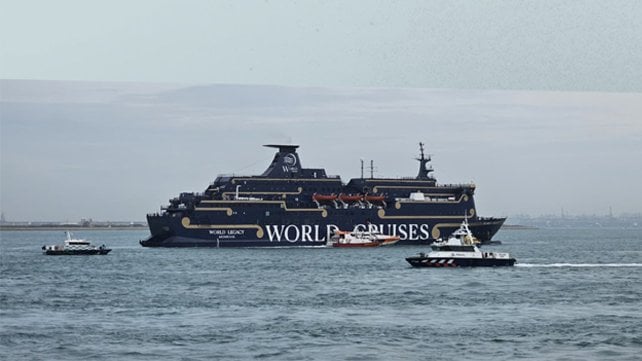
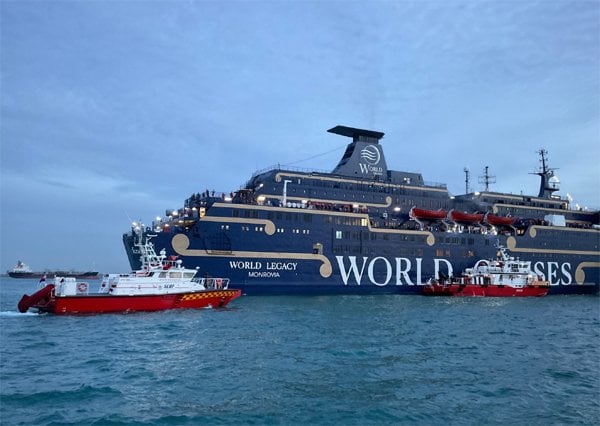
Fire on Party Cruise Ship in Singapore Kills One Crewmember
Fire broke out on the former ferry turned into a party location off Singapore (MPA)
A fire began in the wee hours of the morning on February 20 aboard the party cruise ship World Legacy operating around Singapore as a floating entertainment venue. The Maritime and Port Authority of Singapore is reporting that one crewmember died as a result of the blaze, and four passengers were taken to a hospital for further medical evaluation.
Passengers told the local media they were alerted to the fire at 0400 Singapore time, some by crewmembers banging on their cabin doors, while others saw people running from the lounge area and casino. The MPA is reporting the fire began on Deck Nine in a lounge area but says the cause is under investigation. Some reports suggest it started in the karaoke lounge.
There were reports of thick smoke billowing from the upper deck and a burning smell on the ship, according to the Straits Times newspaper. Passengers recounted that the fire alarms were ringing throughout the ship and that they were sent to the open decks and told to put on life jackets.
The crew reportedly was able to quickly contain the fire, and the SCDF Marine Division and Police Coast Guard, along with an MPA patrol boat, responded to the ship. The fire teams boarded the ship and reported that by midday, the fire was fully extinguished.
The operators of the Batam Fast Ferry report they were placed on standby at around 0630 to assist with an evacuation. After the fire was extinguished, passengers were being transferred to ferries, with the first group of 190 people landing at Singapore’s Harbor Front Ferry Terminal. The MPA reports that all the passengers were safely evacuated and received medical attention.
There was a total of 271 passengers aboard, of which 139 were from Singapore, and 388 crewmembers. One crewmember from Indonesia was reported deceased, but no details were offered. The Indonesian Embassy had been informed, and they were coordinating arrangements.
Singapore responded to the reports of a fire aboard the party ship with 271 passengers aboard (MPA)
The World Legacyentered service in December 2025 based on the former casino boat operations that had been popular in Asia. The ship docks once a week, on Friday mornings, in Singapore, and the rest of the week remains anchored offshore, with ferries taking visitors back and forth to shore. They offer day passes for people to play in the casino and visit the restaurants and lounges for a few hours, or overnight accommodations are offered in approximately 300 staterooms.
The ship was an ex-ferry built in 1982 as the Olau Britannia. Over the years, the ship moved from Olau Line to other well-known ferry companies, including Fred. Olsen, Color, Stella, Fast Net, and after a stint as an accommodation ship, to Moby in 2015, as the Moby Zaza. The ship, which measures 503 feet (153 meters), is approximately 22,000 gross tons and, as a ferry, had accommodations in berths for 938 passengers and space for 530 cars.
It was acquired last year by a company called Dragon 1 in Singapore and refitted before its entry into service. On the company’s website, it said more amenities, including an outdoor sun deck and additional dining venues, would be launched this spring.
The MPA reports the ship was placed in the Raffles Reserved Anchorage, and the crew, except for a core skeleton staff, were also being evacuated. Classification society surveyors engaged by the vessel’s owners will board the ship to assess the extent of damage.
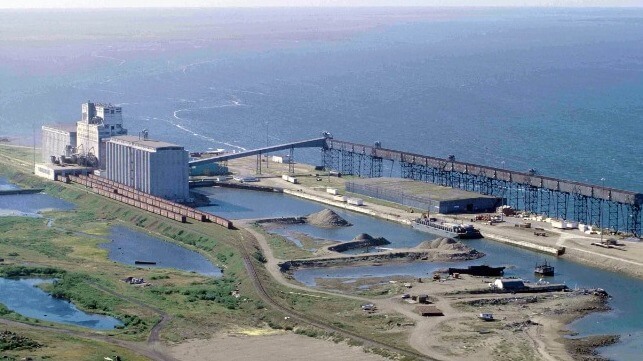
Canada’s Port of Churchill Looks into Year-Round Shipping
With Canada now prioritizing investment in its Arctic infrastructure, Churchill has been identified as a critical part of the logistical supply chain in the North.
With expansion plans for Port of Churchill gaining momentum, Canada’s federal government has launched a study to look into year-round shipping on Hudson Bay. The study - announced last week by the Minister for Prairies Economic Development Canada (PrairiesCan) Eleanor Olszewski - will gather industry input on the long-term growth potential of the Port of Churchill.
The study will complement the ongoing business development campaign being led by the Arctic Gateway Group (AGG), which owns and operates Churchill's port. The target is to grow import and export activity, especially with Western Canadian agricultural and mining companies.
The provincial government of Manitoba recently confirmed that one Canadian energy giant has expressed interest in the Churchill corridor for its oil and gas exports. The company is yet to be named, as Manitoba has signed a non-disclosure agreement, according to Premier Wab Kinew.
The Premier said that an energy corridor through Churchill would include a pipeline, transmission line, fiber optic connections and a shipping terminal. “I am particularly interested in the possibility of LNG exports and an associated liquefaction terminal in the Churchill area,” Kinew told local media. “But a successful port expansion would need to work for a mix of products, including critical minerals, agricultural products and northern re-supply for Nunavut.”
It is on this basis that the federal government’s market sounding study will help the private sector identify areas of interest. The study intends to engage senior executives across key sectors such as mining, energy, potash and grain. In particular, the study will explore how extended or year-round shipping supported by icebreaking, a modernized Class 1 railway and an all-season road connection could influence future import and export strategies as well as supply chain decisions. The government said the study would cost around $180,000, with the results expected by spring
With Canada now prioritizing investment in its Arctic infrastructure, Churchill has been identified as a critical part of the logistical supply chain in the North. This has seen the federal and Manitoba governments commit over $190 million since November, which will facilitate the port’s expansion.
AGG, a business partnership consisting of 41 First Nations and northern communities, has also announced collaboration with Fednav Shipping to examine operational needs for year-round shipping in the Port of Churchill. The port has a short shipping season owing to the Hudson Bay being frozen for about eight months of the year. Fednav is Canada’s largest dry bulk shipping company and has deep expertise in Arctic and Great Lakes navigation.
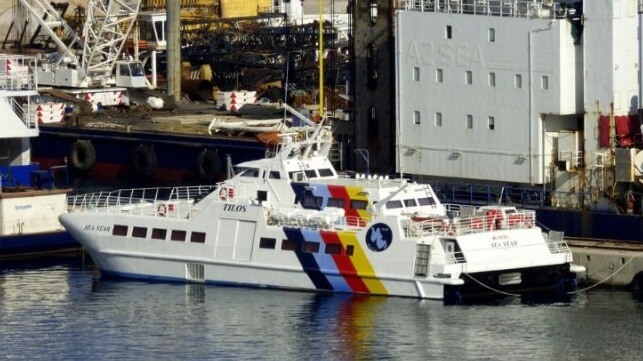
Turkiye Ladder Truck Saves Six Crewmembers From Sinking Ferry
Last week, Turkish firemen used novel means to save the crew of a stricken ferry at a shipyard in the town of Gialova, Turkey.
The ferry Sea Star Tilos, which ordinarily operates an international route between Rhodes and Fethiye, was moored alongside at the Altinova Shipyard in Gialova for repairs. The vessel began taking on water in poor weather conditions, and it began to sink.
In an unorthodox and inventive move, the local fire department dispatched a ladder truck to the scene. The firemen lowered the ladder's elevation to near-horizontal and extended it out over the water. Each crewmember hopped into the manbasket at the far end of the ladder, and the fire engine crew brought them back in to shore by retracting the ladder.
All six crewmembers from the Tilos were rescued safely and given a medical evaluation. No injuries were reported. However, the ferry went down near its berth, raising the possibility of pollution.
Sea Star Tilos is a small twin-hulled surface effect ship (SES), a rare vessel class that has the speed of a hovercraft and the stability of a catamaran.
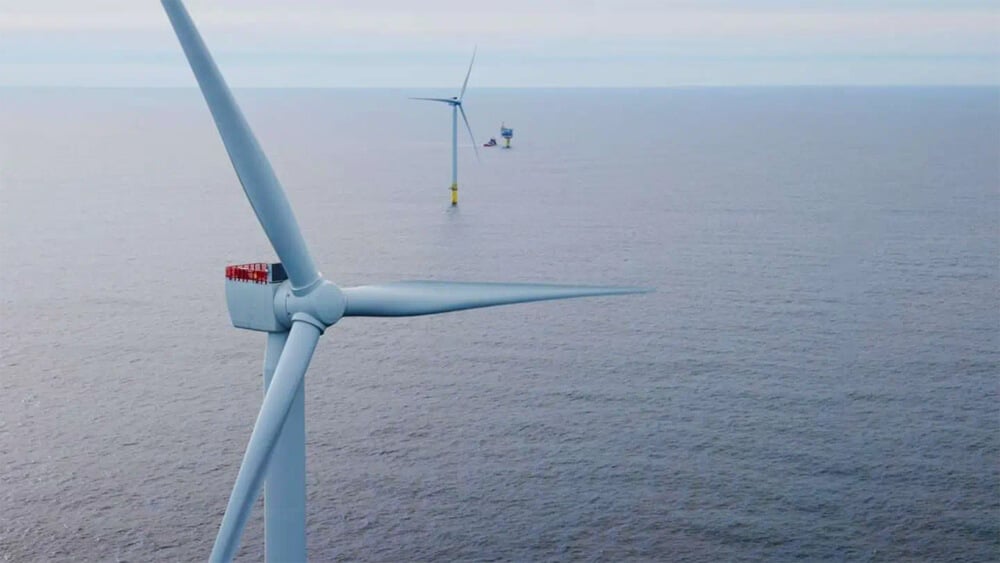
The U.S. Department of Justice’s Environment & Natural Resources Division filed notice with the district court in Massachusetts for an appeal on the court ruling blocking Donald Trump’s Executive Order from January 2025 establishing a moratorium on permitting, leasing, and other authorizations for wind energy projects. It is the latest step in the Trump administration's continuing battle against renewable wind energy.
The filing came 45 days after District Judge Patti B. Saris had ruled in December 2025, calling the Executive order unlawful. Signed immediately after Trump’s return to the White House, the order instructed all agencies to freeze any activity pending a review of the leasing process. It applied to all the permits filed by companies seeking to develop both offshore and onshore wind energy. It did not impact previously approved projects but stopped future advancement.
Trump has long been a vocal critic of wind energy and especially offshore wind farms. He made it a platform in his 2024 run for the presidency, promising to stop the industry. He wrote on social media, calling wind energy “the scam of the century.” Recently, he said wind energy is for “stupid people.”
A coalition led by New York State and made up of 17 states and the District of Columbia, and calling itself the Alliance for Clean Energy, filed a challenge in May 2025 to the Executive Order. The states argued that it jeopardized large investments made in the sector and their ability to meet future energy needs. They said the order violated U.S. law because it was a blanket restriction and because it was not supported by a reasoned explanation. They argued the federal government has an obligation under the law to review and process applications within a reasonable amount of time.
Judge Saris found for the alliance in December, blocking the Executive Order. The ruling called the order “arbitrary and capricious,” saying it was a violation of multiple elements of the Administrative Procedure Act, which spells out how the government handles processes such as the review and approval of applications. The ruling agreed that the government could not indefinitely suspend the reviews and was required by statute to review the applications and make a determination in a “reasonable time.”
Lawyers at the firm of Harris Beach Murtha, which had represented the Sunrise Wind project during its application with New York’s regulator NYSERDA, pointed out the order only meant the reviews would continue. They noted that the administration could still “either deny them outright or subject them to lengthy reviews.” Further, the order did nothing to resume future lease auctions.
The administration had 60 days to file its appeal on the ruling. A spokesperson for the White House said the administration would continue its efforts and that “the administration looks forward to its ultimate victory on the issue.”
The \court has started the process for the lawyers to register for the appeal. It will then set a deadline for both sides to submit their initial arguments.
Separately, Interior Secretary Doug Burgum had said earlier in the month on Bloomberg Television that the administration also plans to appeal the five preliminary injunctions issued by individual courts against its stop-work orders issued to the five under-construction offshore wind farms. Each of the projects received an injunction so that work could resume offshore while the courts continued to consider the argument that new confidential data from the Pentagon raised national security concerns. Burgum has done multiple TV interviews raising the issue of radar interference from the wind turbine blades and towers, while the companies argue they spent years in review and gained approvals from the Department of Defense.
The projects are proceeding, and in the case of Vineyard Wind 1, it is weeks away from completion. Dominion Energy’s Coastal Virginia Offshore and Revolution Wind are both expected in the near future to start their first power generation. Construction on the five projects should be completed by 2027.
Barge Defaced at Cargill Terminal in Protests Over Amazon River Dredging
Apoema Cultural Collective / Amazon Watch press handout
Indigenous protesters and environmental activists in Brazil are showing resolve in their push to stop government projects which they believe will destroy Amazonian rivers and the rainforest, with U.S grain-trading giant Cargill caught in the middle of the controversy.
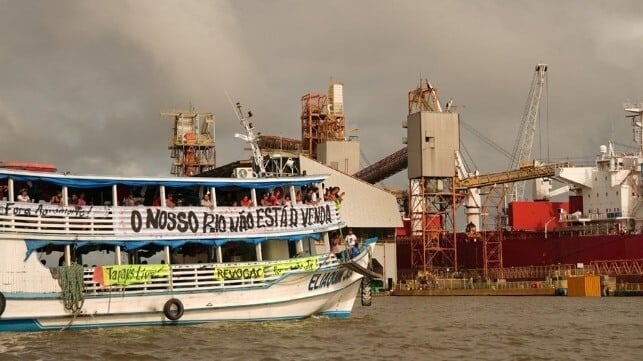
On February 19, about 400 activists in four boats intercepted a grain barge that was docked at Cargill’s terminal in Santarém. The protesters approached the barge on the urban stretch of the river while it was docked at the terminal, with the police moving in to impede their boats prompting many to jump into the river and managed to board the barge and inscribe the words “The Tapajós River isn’t for sale” and “Revoke the Decree of Death.”
The defacing of the barge, which is part of the soy supply chain operating through the Northern Arc logistics corridor, came on the day when a Brazilian court issued a second order to the government to remove protesters who have been staging a blockade at Cargill’s terminal over the past two weeks.
The indigenous protesters have vowed not to relent in the push to demand the repeal of a decree by the federal government last year that saw the Madeira, Tapajós, and Tocantins Rivers included in Brazil’s National Privatization Program. The protestors are also demanding the immediate annulment of plans to dredge the Tapajós River, which they reckon will have adverse impacts on the Amazonian rivers and the rainforest ecosystem.
According to the protesters - led by non-governmental organization Amazon Watch - the government is using the Tapajós River dredging project as a central piece of a much larger project that is being pushed by agribusiness and global commodity traders, whose aim is to transform Amazonian rivers into industrial export corridors for soy and corn. They argue the project comes when the Northern Arc export corridor is already driving deforestation and eroding socio-biodiversity.
“It is essential to take a critical look at the cumulative impacts of the Northern Arc project. Ferrogrão, the expansion of private grain ports, and the Tapajós waterway together could increase soy volumes by five to seven times, intensifying pressure on traditional territories,” said Renata Utsunomiya, transportation policy analyst at GT Infraestrutura, a coalition of civil society organizations.
Utsunomiya added that the consequences of the project go beyond impacts on the Tapajós River because it will likely accelerate deforestation and threaten Brazil’s own climate commitments to reduce forest loss. The project could instigate land speculation and grabbing, soy expansion deeper into the Amazon, water contamination, changes in river flow dynamics and escalating violence along the soy transport routes, Utsunomiya warned.
Brazil remains as the world’s largest soybean exporter with record-breaking shipments in 2025 totaling 109 million tonnes, a 12 percent increase from 2024. China remains the dominant buyer, purchasing nearly 70 percent of the country’s total exports.
Report: Israeli Regulator and Union Threaten Sale of Zim to Hapag
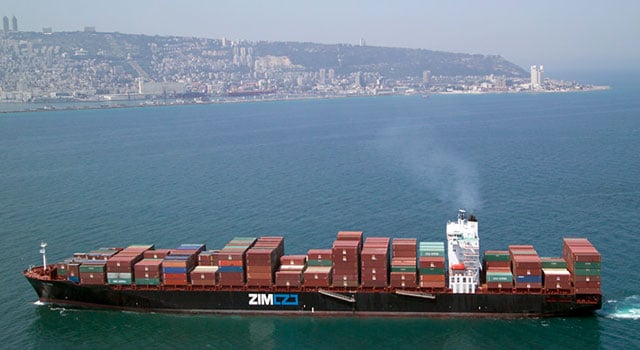
Zim has been viewed as a national asset in its 80 year history (file photo)
Reports from Israel continue to cite pockets of opposition to the agreement to sell Zim to Hapag-Lloyd in a deal valued at $4.2 billion and then split it into domestic and international operations. Zim has long held a unique position, viewed as a national asset, and many believe it is critical to the security of the Israeli state.
Zim dates back to the formation of Israel, and in its 80-year history, it has been a means of transporting cargo for the Jewish state. In the early days, Zim brought immigrants and the displaced people of Europe to settle in Israel. It maintained passenger service into the 1970s and grew as cargo and then container shipping company. While it has been restructured and went public in 2013, it has remained an Israeli asset.
The news outlet Calcalist, which broke the news of the agreement with Hapag-Lloyd, continues to report on the pockets of opposition, including from critical segments of the government. It writes that Transportation Minister Miri Regev may be attempting to block the transaction. Regev is also seeking, it says, inter-ministerial discussions with the Government Companies Authority, the holder of the Golden Share in Zim.
As part of the agreement to let the company go public just over a decade ago, the Government received the Golden Share, which gives it the authority to approve any sale or change in control of the company above 35 percent ownership. Key stipulations include that Zim must remain an Israeli company, with its headquarters and operational center in Israel. The CEO and chairman must also be Israeli citizens. The company has to have at least 11 vessels, which can be requisitioned by the state in times of emergency.
Calcalist reported on February 19 that it has seen a draft position paper from the Government Companies Authority that concludes “the state may not be able to approve the deal.” Calcalist notes that the final terms have not been submitted for approval to the authority, but based on media reports, there is concern that the terms are “inconsistent with the Golden Share.”
Hapag’s solution is to split Zim with a deal to sell the 16 company-owned vessels, the brand, and the Israeli operations to the country’s largest private equity fund manager, FIMI. A new Zim would be created for the trade routes serving Israel, and with access to Hapag and the Gemini Cooperation with Maersk.
FIMI founder and CEO Ishay Davidi is reported to be saying they recognize the strategic importance of Zim. They are committed to building a stable Israeli company.
The news outlet, however, says there are concerns about the change in the legal structure of the company. Analysts also note that the new Zim would be a small company, dependent on its international relationships, at a time when the industry is consolidating in the hands of a few giants. News reports also highlight the investments by Qatar and Saudi Arabia in Hapag-Lloyd.
At the same time, the union representing about 800 Zim employees in Israel fears large layoffs. It says it received minimal commitments for possibly as few as 120 people, with the others all facing layoffs. The union asserts that the board was not responding to it in the last two weeks, and it was given a last-minute notification without securing job protection.
The union immediately started a two-day “warning strike,” and despite assertions in the media that Hapag was protecting the jobs, the union says it moved to a full strike as of February 18.
Oren Caspi, chairman of the workers’ union, told Calcalist, “Ships are already standing idle, and damage is accumulating. We will paralyze the company if necessary.”
Calcalist reports that the general strike includes office workers in Israel. It says it has also expanded to disruptions across the company’s operations, including loading and unloading of vessels.
BRANDING
Florida airport to be renamed after US President Donald Trump
Workers on an aerial lift watch after installing a new banner featuring an image of US President Donald Trump on the facade of the US Department of Justice headquarters building in Washington, DC - Copyright AFP Brendan SMIALOWSKI
An airport in Florida will soon be renamed after US President Donald Trump, after a bill proposing the change was approved by the state’s legislature on Thursday.
Trump, a real estate mogul who has plastered his name on buildings around the world, has sought to leave his mark on the country in an unprecedented image and building campaign.
Florida’s Republican-led legislature approved a bill to rename the Palm Beach International Airport as the “President Donald J. Trump International Airport,” state records show. Governor Ron DeSantis, once a Trump opponent, is expected to sign the measure into law.
The airport in Palm Beach, a town known for its sandy beaches and luxurious estates, is just minutes away from Trump’s Mar-a-Lago residence.
The airport renaming will also require the approval of the Federal Aviation Administration.
It would then become the latest institution to be renamed after Trump.
The president’s handpicked board of the Kennedy Center, an arts complex and memorial to late president John F. Kennedy in Washington, voted in December to rename itself the “Trump-Kennedy Center.”
The same month, the State Department added Trump’s name to the US Institute of Peace.
Trump has also sought to rename New York’s Penn Station and Washington’s Dulles International Airport after himself, according to US media reports, although those efforts were rebuffed.
The Treasury Department has confirmed reports that drafts have been drawn up for a commemorative $1 coin featuring Trump’s image, even though there are laws against displaying the image of a sitting or living president on money.
On Thursday, a large blue banner featuring Trump’s face was draped across the headquarters of the Justice Department, an agency traditionally seen as outside the reach of political influence.
TotalEnergies in high-stakes French trial over climate change
The plaintiffs are demanding a cessation of new hydrocarbon projects, a 37 percent reduction in oil production and a 25 percent reduction in gas production by 2030 - Copyright AFP/File Loic VENANCE
Maxence D'AVERSA
TotalEnergies faces cutting back oil and gas production if NGOs prevail in a trial that began Thursday over accusations the French energy giant failed to properly consider environmental risks.
The case, brought by several NGOs and the city of Paris, is based upon a 2017 law that imposed a “duty of vigilance” on large companies.
The law seeks to counter companies offloading responsibility onto subcontractors by requiring them to identify and prevent any risks toward human rights as well as the environment throughout their production chain, including overseas.
TotalEnergies and the plaintiffs are at odds over the reach of the definition of the environment — whether it means risks on a local scale such as a polluted river or more broadly global warming.
The energy firm’s lawyers argued global warming is beyond the scope of the law.
But a lawyer representing four NGOs including nonprofit Sherpa told the court that “selling hydrocarbons to be burned creates an environmental risk”.
“Is there really no link between global warming and the preservation of biodiversity or the prevention of air pollution?” the lawyer stated.
The NGOs also accuse TotalEnergies of not including within its vigilance requirements the “indirect emissions” produced by its end customers burning its products, which amount to 342 million tonnes of CO2 per year.
The plaintiffs are demanding TotalEnergies stop developing new hydrocarbon projects as well as make a 37 percent reduction in oil production and a 25 percent reduction in gas production by 2030.
“We will ask you to make a courageous, unprecedented decision, but one based on the law,” one of the lawyers for the NGOs said.
TotalEnergies claimed it was the victim of “demonisation” by the plaintiffs.
“If the company, which accounts for less than two percent of global production, were to shut down, global warming would still continue,” one of TotalEnergies’s lawyers said during the hearing.
The trial is due to continue Friday, but a ruling is not expected for several months.
Environmental groups have high hopes for the ruling.
It “could have systemic implications” for “other sectors, such as transport,” said Sherpa’s Thea Bounfour.
Lawsuits against major polluting companies have been on the rise as the consequences of climate change become more apparent.
At the end of 2024, Dutch courts rejected on appeal a case brought by climate advocacy groups who argued that oil giant Shell was not doing enough to reduce its greenhouse gas emissions, overturning a landmark ruling handed down three years earlier.
Belarus frees opposition politician Statkevich: wife
Statkevich had been an active member of Belarus's opposition since the 1990s - Copyright AFP Daniel LEAL
Belarus has released opposition politician Mikola Statkevich from prison, five months after he refused to leave the country in a US-brokered prisoner release, his wife said Thursday.
He suffered a stroke behind bars and is having difficulty speaking, she added.
“Dear friends! Mikola is home! He had a stroke. He is now recovering. For now, he is having problems with speech. Otherwise, everything is fine. Everything will be okay,” Marina Adamovich said on Facebook.
Statkevich, 69, had been an active member of Belarus’s opposition since the 1990s and ran against the country’s longtime leader Alexander Lukashenko in a 2010 presidential election.
He was due to be freed and deported alongside dozens of other political prisoners last September but refused to leave the country, prompting Belarus to put him back in jail.
He had been in jail for five years prior to that.
More than 1,000 political prisoners remain behind bars in Belarus, according to the Viasna human rights group.
Many were detained during a brutal crackdown on opposition in the wake of Lukashenko’s disputed 2020 re-election and prosecuted on what rights groups have described as politically motivated charges.
Lukashenko has ruled the country since 1994, crushing domestic opponents and forging a tight alliance with Russian President Vladimir Putin.
Belarusian opposition leader Svetlana Tikhanovskaya welcomed Statkevich’s release, saying in a post on X that she was “relieved”.