Monday, February 23, 2026

Mexico hit by widespread unrest after cartel leader killed in army operation

Mexico hit by widespread unrest after cartel leader killed in army operation
Analysts described the capture and the violence that followed as a turning point in President Sheinbaum's security strategy, both in her confrontation with organised crime and in managing expectations from the White House. / CC / Diego Fernández
By bne IntelliNews February 23, 2026

For over a decade, Nemesio Oseguera Cervantes, "El Mencho", was the most wanted man in Mexico, a former police officer who built the Jalisco New Generation Cartel (CJNG) into one of the country's most formidable criminal organisations. On February 22, a military operation in the quiet highland town of Tapalpa, Jalisco, finally caught up with him. He died of serious injuries sustained in the clashes. Within hours, Mexico was reminded of just how powerful the organisation he leaves behind remains.

The response from CJNG members has been swift. Burning vehicles blocked roads across at least a dozen states, around 250 roadblocks in total, 65 of them in Jalisco alone. Some 20 bank branches were attacked and looting broke out in several areas. By the time authorities issued their latest update, four blockades remained active and 25 people had been arrested — 11 for alleged violent acts, 14 for alleged looting.

Four CJNG members were killed during the Tapalpa operation, and three army personnel injured. Mexico's defence ministry said the mission was "planned and executed" by special forces, with US intelligence playing an assisting role. Washington had previously offered a $15mn reward for information on El Mencho's whereabouts.

The turmoil landed hardest in Jalisco. Governor Pablo Lemus Navarro declared a code red, suspending public transport, mass events and in-person classes. In Puerto Vallarta, a popular resort town that drew over six million tourists in 2025 and is a scheduled FIFA World Cup host city, smoke rose over the waterfront and visitors described widespread disruption to Reuters. Air Canada, United Airlines and American Airlines all cancelled flights to the state.

President Claudia Sheinbaum sought to steady nerves, saying federal and state authorities were fully coordinated and that most of the country remained unaffected.

According to AP, David Mora, Mexico analyst for International Crisis Group, described the capture and the violence that followed as a turning point in Sheinbaum's security strategy, both in her confrontation with organised crime and in managing expectations from the White House.
That pressure has come largely from President Donald Trump, who has threatened additional tariffs or unilateral military action unless Mexico demonstrates concrete progress in stemming the flow of fentanyl across the border.

Initial signs suggest the operation was welcomed in Washington. US Ambassador Ron Johnson issued a statement late on February 22 praising the performance of Mexican troops and acknowledging the costs they bore, adding that "under the leadership of President Trump and President Sheinbaum, bilateral cooperation has reached unprecedented levels."

The analyst also pointed to a sharp shift in the Mexican military's posture since Sheinbaum took office. "Ever since President Sheinbaum has been in power, the army has been way more confrontational, combative against criminal groups in Mexico," Mora told AP. "This is signalling to the US that if we keep cooperating, sharing intelligence, Mexico can do it, we don't need US troops on Mexican soil."

The US has advised citizens to shelter in place across Jalisco, Tamaulipas, parts of Michoacán, Guerrero and Nuevo León. The UK government has urged visitors to Jalisco to exercise extreme caution and follow local authority guidance. The situation remains fluid and travellers should monitor official advisories and airline updates closely.

 

Azerbaijani president's security detail clashes with protesters in Washington

Azerbaijani president's security detail clashes with protesters in Washington
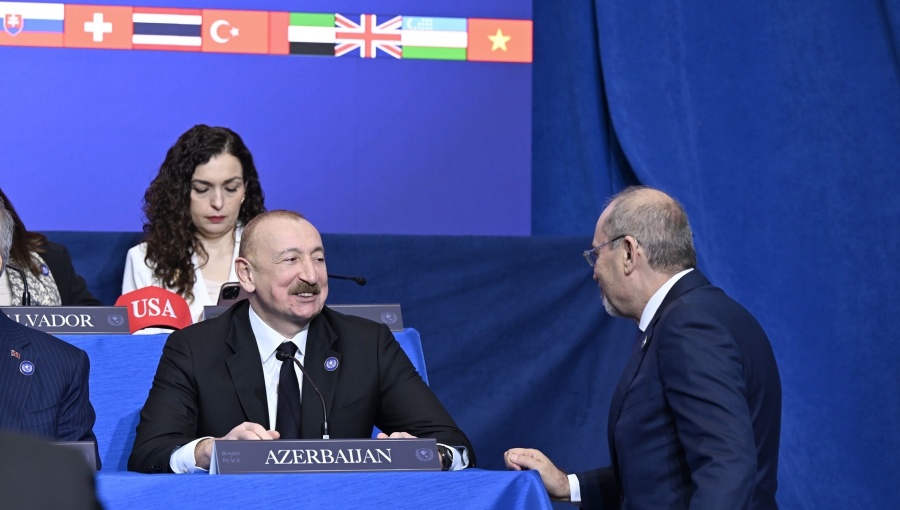
Azerbaijan's President Ilham Aliyev at the inaugural meeting of US President Donald Trump’s Board of Peace. / Ilham Aliyev via Facebook
By bne IntelliNews February 23, 2026

Members of President Ilham Aliyev’s security detail clashed with Azerbaijani protesters in Washington on February 19, as the president attended the inaugural meeting of US President Donald Trump’s Board of Peace according to Washington Post.

Video footage widely circulated on social media shows security guards pushing and striking demonstrators who were shouting in Azerbaijani, “freedom to political prisoners”, outside the Waldorf Astoria hotel in Washington, D.C. The incident occurred in view of US police officers.

Among the protesters was Rahim Yagublu, son of opposition politician Tofig Yagublu, who was sentenced in March 2025 to nine years in prison on fraud and forgery charges. Rahim Yagublu later said on social media that the group had gathered peacefully to demand the release of political critics, journalists and civil society members detained in Azerbaijan.

“We peacefully demanded freedom for the political critics, journalists, and civil society members. We did not try to provoke any action,” he wrote. He said he was struck in the face, kicked and had his clothing damaged during the confrontation.

Another protester, blogger Adil Amrahli, was seen in video footage with a visible black eye and bruises to his forehead and nose. According to the Washington Post, an ambulance arrived at the scene and medical personnel examined the injured protesters, though none were hospitalised.

Amrahli told the newspaper that protesters had moved from the hotel’s front entrance to another entrance in an attempt to prevent Aliyev from leaving without being confronted. He is a member of the American Organisation of Azerbaijani Political Refugees (AOAPR), a US-based group of Azerbaijani exiles that says it rejects violence and advocates a “civil and democratic struggle” against the Azerbaijani government.

Azerbaijani pro-government media outlets characterised the demonstrators as a “dangerous group” that had attempted to enter the hotel and described them as “anti-Azerbaijani elements” acting aggressively.

The Washington police department said it was aware of the incident but that no arrests had been made. Police spokesperson Tom Lynch confirmed to the Washington Post that the episode involved Azerbaijani security guards and said the matter had been referred to the US State Department. He did not clarify whether US police had intervened or whether the guards remained in the country.

In an official statement, the Embassy of the Republic of Azerbaijan to the United States said that a group of protesters had committed “provocative actions” outside the hotel during the president’s visit.

The embassy stated that when the presidential motorcade approached the hotel area, protesters “violently attempted to enter the protected area and took offensive actions against the Presidential vehicle”, also using “indecent expressions” against Azerbaijan’s leadership.

“The Presidential Security Service had no choice but to immediately intervene, since any attempt to obstruct or physically interfere with a protected vehicle carrying the head of state constitutes a serious security concern,” the statement said, adding that the response was aimed solely at ensuring safety and security.

The embassy further noted that, according to the US Secret Service, the hotel area was included within the official security perimeter and rejected what it described as attempts to mischaracterise the measures taken. It said Azerbaijani security personnel operate in strict coordination with the host country and urged responsible reporting.

Aliyev was in Washington to participate in the inaugural session of the Board of Peace, where he and Armenian Prime Minister Nikol Pashinyan attended as founding members at Trump's invitation.

THE EPSTEIN CLASS


UK journalist attacks America's 'culture of complete impunity'
February 21, 2026 

British police released former Prince Andrew on Thursday after 11 hours in custody, with his shocking arrest earlier in the day making him the first senior British royal to be arrested in nearly 400 years. Police are probing his connections to the deceased sexual predator Jeffrey Epstein and whether he shared classified government information with him while serving as a U.K. trade representative from 2001 to 2011. King Charles’ brother, now known as Andrew Mountbatten-Windsor after being stripped of his royal title, is the most high-profile figure in the U.K. to be implicated in a widening scandal over ties to Epstein, who died in a New York jail in 2019 awaiting trial on sex trafficking. Authorities did not reference sexual abuse allegations against Mountbatten-Windsor or Epstein’s sex trafficking case; Mountbatten-Windsor settled a lawsuit with Epstein survivor Virginia Roberts Giuffre in 2022 and has denied all wrongdoing.

Investigative journalist Carole Cadwalladr says this week’s arrest feels like a “rupture” in British society because the royals are seen as “sacrosanct” and rarely subjected to such treatment. “And in America, what are we seeing? We’re seeing this sort of culture of complete impunity, where it appears the law is not equal, where there are people who are above it.”


This is a rush transcript. Copy may not be in its final form.

AMY GOODMAN: This is Democracy Now!, Democracynow.org, the War and Peace Report. I’m Amy Goodman. We begin today’s show in London following the arrest of former Prince Andrew on Thursday. He was held in police custody for 11 hours before being released in the latest fallout from the release of the Jeffrey Epstein files. Andrew is the brother of King Charles and the son of the late Queen Elizabeth. The former prince is the first senior member of the royal family to be arrested in almost 400 years.

Police are investigating whether he committed misconduct in public office by sharing confidential government documents with Jeffrey Epstein while serving as U.K. trade envoy, a breach of the Official Secrets Act. King Charles has said he will give his “full and wholehearted support” to the investigation, saying “the law must take its course.” Andrew’s ties to Epstein have been known for years.

Virginia Roberts Giuffre, who died last year in an apparent suicide, said she was forced to have sex with the prince three times beginning when she was 17. On Thursday, Virginia’s brother Sky Roberts and his wife Amanda responded to the arrest of the former prince.

SKY ROBERTS: Moving forward, we don’t know but we we are hopeful. I think we’re very hopeful that this is the start of the domino effect. This is where the house of cards starts falling. And kudos to the U.K. for taking the first step. For saying, you know what? We are going to arrest somebody who is held to one of the highest esteems out there, somebody who was a former prince. I mean, this hasn’t been before, and so to know what we should expect, it’s really naive to say that we do. But we won’t stop. Virginia said it so clearly in her statements and I will say it again here today: We won’t stop until justice is served.

AMANDA ROBERTS: We are trailing too far behind in justice, especially when we are sitting on the mountains of information that we have. Whether this administration likes it or not, it is sitting at your doorstep. You do not have a choice now, OK? The world is looking at us to do the right thing here. And if they can’t do the right thing, they should resign.


AMY GOODMAN: That was Amanda Roberts and her husband Sky Roberts, the brother of Virginia Roberts Giuffre. We go now to London where we are joined by Carole Cadwalladr, award-winning investigative journalist whose Substack is How to Survive the Broligarchy. She gained international recognition for her exposé on the Facebook-Cambridge Analytica data scandal in 2018. Carole is also the co-founder of an independent news outlet called The Nerve launched with five former Guardian journalists. Carole, welcome back to Democracy Now!

First, this news of the last 24 hours that the former Prince Andrew, the brother of the king, was arrested on his 66th birthday. The picture of him as he was released after 11 hours, now under investigation with his homes being raided, is startling. It’s stunning. To say the least, a deer caught in headlights. Explain the significance of this moment for British society when a senior royal has not been arrested in, what, over 400 years.

CAROLE CADWALLADR: Hi Amy. Thanks so much for having me back. Yeah, it feels like a really significant moment in Britain. And almost a rupture, because the royals have been sacrosanct in Britain. They are treated with such reverence and respect by the British media. I think in all honesty, we didn’t see this coming because it just hasn’t happened before. So it was definitely a sort of incredible moment in Britain. That image that you refer to, that is splashed across every single newspaper in Britain this morning, across the tabloids. I think it is sort of indelible now, that photo. It is going to be a sort of a moment in time, I think.

But I think the thing that I would say is that this isn’t just an incredible moment in Britain. It is an even more incredible moment in America. Because we are the old country, we are the country with a monarchy, with absolute rule that you had to have a revolution to get away from. And yet here we are, arresting an only very recently former prince. And in America, what are we seeing? We are seeing this sort of culture of complete impunity where it appears the law is not equal, where there are people who are above it. So I think it is less a moment of reckoning for Britain, because we are doing the right thing. I mean, I think we are proud of it. It shows that we are equal before the law. I think in America, it is hugely embarrassing, it’s significant, and it should be a wake-up call.

AMY GOODMAN: Interestingly, the former prince, Andrew, was not arrested over assaulting this teenager, assaulting Virginia Giuffre. In her book Nobody’s Girl and when she was alive, she talked about how he knew she was underage because someone said to him, “Do you know how old she is? What’s your guess?” And he said, “17.” But he has been arrested for passing on information that could financially benefit Jeffrey Epstein. The same is the case with Peter Mandelson, who is the former U.K. ambassador to Washington, D.C. Very close to the prime minister, Starmer, leading to questions in British society, the possibility of the toppling of Starmer for not having Mandelson investigated properly. But he, too, was a trade envoy for Britain and he, too, now that these emails have come out, is being investigated for passing on financial information, something that really increased Epstein’s power over so many as he networked both bringing in underage girls and women to be assaulted in the United States or in the U.S. Virgin Islands, but also just creating this network of people that gained financially from knowing Epstein.

CAROLE CADWALLADR: Sorry, Amy, you are absolutely completely right there. The tragedy of it is the thing I think to really hang onto in this moment. As you say, the police did not arrest and question Prince Andrew for the alleged crimes which Virginia Giuffre retold in that book. I mean, it’s heartrending, really, because what if they had? What if she had been believed? What if there had been accountability while she was still alive? So I think the debt that we owe to Virginia Giuffre, her courage, her strength in telling this story, it is why we are here now. And it’s just a terrible, terrible indictment that it wasn’t because a woman’s word was sufficient for this investigation to take place; It was what on the surface of it are lesser, less significant crimes that we are now having sort of the wheels of justice turning.

AMY GOODMAN: Interestingly, as you are talking, Carole, we are showing that famous, famous photograph of Andrew, the man formerly known as Prince, with his arm around Virginia Giuffre standing next to Ghislaine Maxwell. I think it was in Ghislaine Maxwell’s apartment in London when she was first assaulted by the former prince. And you see a flash in the window reflected beyond them because Epstein is taking this picture on Virginia’s own camera. She asked for it—incredibly, prophetically—and this is what has taken him down.

You also have, here in the United States, Les Wexner, who is the former head of Victoria’s Secret, Limited, L Brands, being questioned at his Ohio mansion by the House Oversight Committee. Interestingly, no Republican went for that questioning even though when they put out the video yesterday I think there was a picture emblazoned across the video—”GOP oversight.” I want to go to the clip. You can hear Wexner’s lawyer, as he is being questioned by the congressmembers, saying, “I’ll effing kill you if you answer another question in more than five words.”

LES WEXNER: It was just regularly done.

MICHAEL LEVY: I will [bleeping] kill you if you answer another question with more than five words, OK?

LES WEXNER: [laughs]

MICHAEL LEVY: Answer the question. OK.

PERSON: A discrete question on a different topic.

AMY GOODMAN: I mean, amazing that we can hear this over the mic, the lawyer warning him. But this goes to a bigger point and it goes to the word, part of the title of your Substack, the Broligarchy. On the one hand you have Andrew being arrested, and in this country the man that bankrolled him, possibly to the tune of billions of dollars, how he had his mansion in New York, how he had his island in the U.S. Virgin Islands, and his mansions now being investigated, the Zorro Ranch in New Mexico, and using Ohio, the mention of Les Wexner. He could possibly maybe have had even this huge sex trafficking network that has led now to a sex trafficking investigation in as far as Latvia, and the former prime minister of Norway being investigated, two investigations in France being opened. But this, Les Wexner hearing this and having the U.S. Attorney General saying “There are no investigations, the case is closed,” even though they haven’t released another 3 million pages, and President Trump saying, “See? I’ve been exonerated.”

CAROLE CADWALLADR: Amy, you are so completely right. I think that if you don’t look at this story about Epstein and see that it is part of something much, much bigger, if you don’t connect it to the political moment that America is in and the absence of inquiry and leadership and actual accountability in any sense around this story—I wrote a piece and I said, “It’s the dog that doesn’t bark.” And if it doesn’t bark now, it is not going to bark when the midterm elections come and what many people I think see is going to be a sort of authoritarian assault on them. I think you don’t want to look back and look back at this moment and see that there is this moment in which Congress didn’t act, in which the press didn’t summon the necessary sort of fire and fury, and realize that, actually, it’s a bellwether, it’s a sign, it’s this culture of impunity.

And so I think that’s my sort of message from here in Britain, in this old class-ridden society that, as I say, you had to have a revolution to get away from. We are actually able in this moment to show that there is accountability, to show that people are equal before the law, and you are not. You no longer can. America is no longer the land of the free. Your constitution is breaking down in real time. And I think Epstein is such a symbol of this. And I think in exactly the same way that these women were not believed, that it took these files to come out for suddenly people to go, oh, actually, it turns out that it was not only true that it went to a far, far, far bigger scandal and story than we realized. It feels like a parallel moment in that you’re not actually believing what they are telling you now, what the story is telling you now. You are still in complete denial over it.

I am speaking here, as I say, from this vantage point in London and saying this should be the moment when you realize that—you know this thing, “The call is coming from inside the house”? That actually you really need to step up now. And if you cannot realize that this huge, vast, money laundering, international sex trafficking operation that involves every single institution in your country—it involves banks, it involves people who are part of the government, it involves people who are part of the press. It’s everywhere. And I know it must feel kind of overwhelming because it is so pervasive, but I think really the thing which is missing I suppose is this sort of leadership in being able to signal this and call it out and to demand that the steps are taken now.

AMY GOODMAN: Finally, we just have 30 seconds, but you just republished “The US Coup: one year on.” Explain why.

CAROLE CADWALLADR: Because, well, a year ago I published this article in which I put what I thought should have been the headline on the front pages of The New York Times which was, “It’s a Coup.” And I did that because historians of authoritarianism—Tim Snyder, Ruth Ben-Ghiat—they were calling it out. They were saying that the overturning of the rule of law and this sort of blitzkrieg of executive orders that Trump was doing, they said, “This is a coup.”

The thing which, the vantage point that I came from in my work of looking at the way that data is used, it was the assault by DOGE, the illegal assault by DOGE on the U.S. Treasury in which they illegally captured and data harvested the personal data of the entire U.S. population. Then they went to do that across the U.S. government. Now in the age in which we live, knowledge is power and data is knowledge, and that power was being concentrated in, as I said, this totally illegal data gathering operation. That for me is the foundation of a surveillance state. That is what we can see now coming into being. That is what is happening in Minnesota.

And I think it’s really important to mark these landmarks, that we are a year on from that moment and nothing has got better, everything has got worse. This is now consolidating and you’re now in the final stretch. You now have—it is months now, not years, in terms of the midterm elections, really. Is that going to be a performative election in which it is going to look like democracy as it is in Hungary, as it is in Turkey? Or do you have a chance now to save your country? I think it is really, really uncertain. There is still time, but you have to recognize the moment that you’re in, and I think there’s a lot of people out there who still aren’t.

Carole Cadwalladr, thank you for being with us, award-winning investigative journalist. We will link to your Substack, How to Survive the Broligarchy:https://broligarchy.substack.com/. Gained international recognition for her exposé on the Facebook-Cambridge Analytica data scandal in 2018. Co-founder of independent news outlet The Nerve, launched with five former Guardian journalists.


OPINION
If Prince Andrew can be arrested, so can King Trump


(REUTERS)

February 19, 2026 
ALTERNET


Police in the United Kingdom have arrested Andrew Mountbatten-Windsor, the former Prince Andrew and Duke of York, on suspicion of misconduct in public office—after the disclosure of emails between Mountbatten-Windsor and the late disgraced banker Jeffrey Epstein. As I write this, Mountbatten-Windsor remains in custody.

We don’t know yet the specific charges. But we do know that the late Virginia Giuffre, an Epstein victim, accused Mountbatten-Windsor of raping her.

We also know that Mountbatten-Windsor was the UK’s trade envoy between 2001 and 2011, and appears to have forwarded to Epstein confidential government reports from visits to Vietnam, Singapore, and China, including investment opportunities in gold and uranium in Afghanistan.

Prime Minister Keir Starmer says, “No one is above the law.” The family of Virginia Giuffre says, “No one is above the law, not even royalty.” Britain’s chief prosecutor says, “No one is above the law.”

Instead of bureaucracies, America now has a royal entourage. Instead of institutions, we now have royal prerogative.

All of which raises awkward questions about the people implicated on this side of the pond, including the person in the Oval Office who loves to be treated like a king, and who appears in the Epstein files 1,433 times (that is, the files that have been released so far). Prince Andrew appears in them 1,821 times.

America likes to believe we gave up kings almost 250 years ago and adopted a system in which “no one is above the law.”

But President Donald Trump’s foreign policy has become a personal tool for him to channel money and status to himself and his closest associates. Since the 2024 election, the Trump family’s personal wealth has increased by at least $4 billion.

As with the British royalty of the 16th century, it’s all personal with Trump—all about expanding his power and enlarging his and his family’s wealth. Proceeds from the sale of Venezuelan oil? “That money will be controlled by me,” he says. The gift of a plane from Qatar? “Mine.” Investments by Middle-East kingdoms in his family’s crypto racket? “Perfectly fine.”

Like the British royalty of yore, King Trump has arbitrary power. He raises Switzerland’s tariff from 30-39% because its former president Karin Keller-Sutter “just rubbed me the wrong way.” He imposes a 50% tariff on Brazil because Brazil refused to halt its prosecution of Trump’s political ally, the former Brazilian President Jair Bolsonaro, who was found guilty of plotting a coup. Vietnam fast-tracks approval of a $1.5 billion Trump family golf course at the same time it seeks to reduce its tariff rate.

Trump claims that Greenland is “psychologically needed,” although the United States already has a military presence there and an open invitation to expand its bases. He muses about making Canada the “51st state.” These are throwbacks to the 16th-century age of empire.


***

Meanwhile, Trump has created a system of tribute and allegiance that would make Henry VIII jealous.

Apple’s Tim Cook delivers a gold-based plaque and a donation to Trump’s planned ballroom. Swiss billionaires bring a gold bar and a Rolex desk clock to the Oval Office. Jeff Bezos backs a vapid movie of Melania and hands her a check for $28 million.

Trump pardons Changpeng Zhao, the billionaire mogul who pled guilty to money-laundering violations in 2023, after which time Zhao’s Binance digital-coin trading platform becomes the engine of the Trump family’s crypto business, World Liberty Financial.

King Trump was evidently involved in Jeffrey Epstein’s nefarious doings. We don’t know exactly how because there’s been no criminal investigation. But shouldn’t there be?

Elon Musk’s humongous quarter-billion-dollar contribution to Trump’s 2024 campaign earns Musk a dukedom—a “department of government efficiency”—and the keys to the kingdom in the form of sensitive US Treasury Department software systems used to manage federal payments.

But when the Duke of DOGE starts becoming more visible than King Trump, the king banishes him and revokes his dukedom. When the banished Musk begins openly criticizing Trump, the king threatens to cut off Musk’s head in the form of cutting him and his SpaceX off from valuable government contracts. This puts an end to Musk’s impertinence.

The new TikTok (on which Trump has more than 16 million followers) will continue operating in the United States—but now with the financial backing of Trump ally Larry Ellison’s Oracle;Trump’s allied Emirati investment firm MGX (which has already invested in the Trump family’s cryptocurrency company); and Silver Lake, teamed up with the private equity firm founded by Trump’s son-in-law Jared Kushner.

Trump allows Nvidia to sell chips to the United Arab Emirates and Saudi Arabia and extends military guarantees to Qatar—all of which have invested in the Trump family empire. (Emirati-backed investors plowed $2 billion into World Liberty Financial.)

Instead of national glory, Trump demands personal glory—to get the Nobel Peace Prize, to put his name on the Kennedy Center and Penn Station, and other major monuments and buildings.

If his commands are not met, he punishes. Because Norway didn’t give him a Nobel (it wasn’t Norway’s to give anyway), he “no longer feels obliged to think only of peace.” Because performers refuse to appear at the “Trump-Kennedy” Center, he shutters it.

Instead of bureaucracies, America now has a royal entourage. Instead of institutions, we now have royal prerogative. Instead of legitimacy based on the will of the people, there’s divine right (“I had God on my side,” “God was protecting me,” “God is on our side”).


***

We will march against King Trump on the next “No Kings Day” on March 28—hopefully making it the biggest protest in American history.

But the arrest of the former Prince Andrew raises an issue that goes way beyond protesting and marching. King Trump was evidently involved in Jeffrey Epstein’s nefarious doings. We don’t know exactly how because there’s been no criminal investigation. But shouldn’t there be?

Pam Bondi obviously won’t investigate Trump because she’s part of King Trump’s court. But what about a group of state attorneys general?

Trump has also been enriching himself and his family through his public office, violating multiple laws about conflicts of interest.

If the UK can arrest the former Prince Andrew on evidence of such wrongdoing, why shouldn’t America arrest King Trump? If no one is above the law in the UK, not even royalty, presumably no one is above the law in the US, not even a president.

Pam Bondi obviously won’t investigate Trump because she’s part of King Trump’s court. But what about a group of state attorneys general?

Almost 250 years after we broke with George III, the question must now be faced: Are we a monarchy or a nation of laws?

Robert Reich is a professor of public policy at Berkeley and former secretary of labor. His writings can be found at https://robertreich.substack.com/.


There's a reason why powerful people in America remain above the law


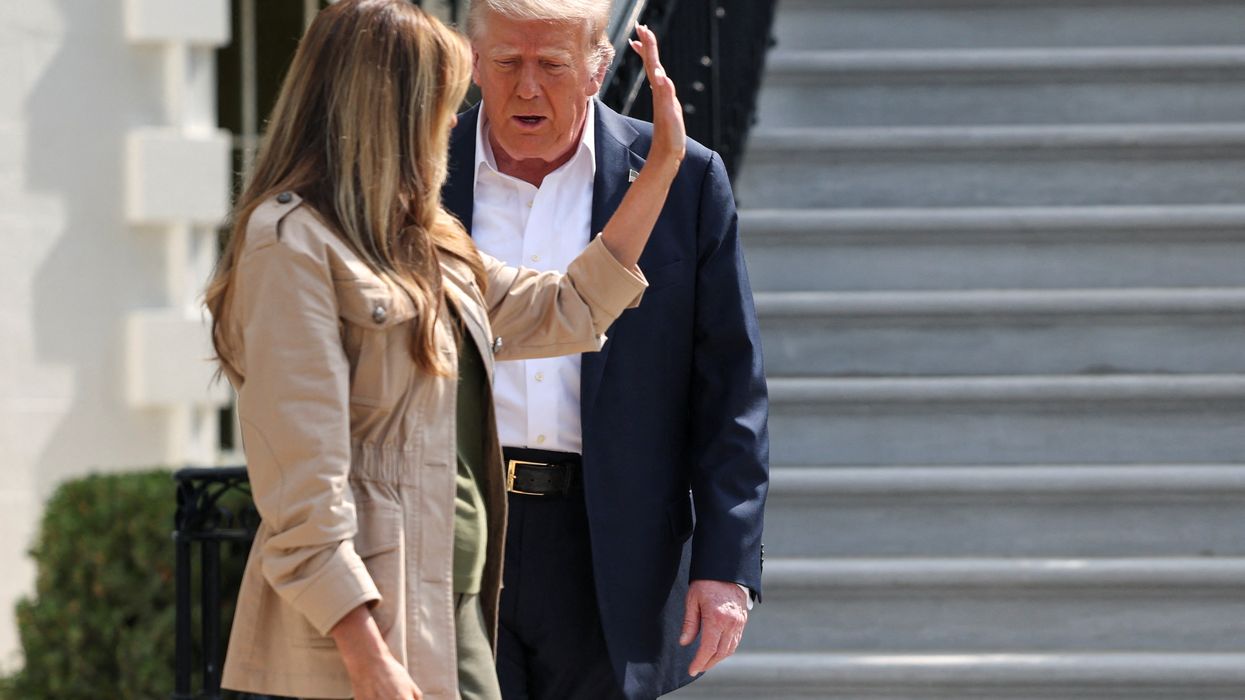
U.S. President Donald Trump and lady Melania Trump depart for travel to Texas to tour areas affected by deadly flash flooding, from the South Lawn of the White House in Washington, D.C., U.S., July 11, 2025. REUTERS/Jonathan Ernst

February 19, 2026  
ALTERNET

Here in America, before the royal formerly known as Prince Andrew was arrested in the UK, Reuters reported the results of a new public survey. Ipsos, the pollster, found nearly 70 percent of Americans believe the system is rigged, allowing elites to act with impunity.

Some 69 percent of respondents in the four-day poll, which concluded on Monday, said their views were captured "very well" or "extremely well" by a statement that the Epstein files "show that powerful people in the U.S. are rarely held accountable for their actions."

Then came news this morning of Andrew Mountbatten-Windsor, the brother of King Charles III, being arrested “on suspicion of misconduct in public office” – what American media might call insider trading.

Andrew allegedly shared “confidential trade reports” with Jeffrey Epstein in 2010 when the former prince was the UK’s special envoy for international trade. Their correspondence was part of the latest cache of Epstein-related emails released by the US Department of Justice.

The news appears to be the beginning of a kind of accountability. There’s probably enough evidence for British authorities to bring a massive sex-crimes case against Andrew. But that would be devastating to the king’s image. Better to bring Andrew up on discrete and boring white collar crimes than risk greater public scrutiny of who in the royal family knew about his reputed predilection for underaged girls.

In other words, it’s justice through the backdoor, if you can call it justice, but even that is more than anyone can say in America.

In Europe, “heads are rolling over the Jeffrey Epstein revelations,” according to Politico earlier this month. A prominent diplomat in Norway was suspended. A member of the British House of Lords was forced to resign. Andrew can no longer be called the Duke of York.

The British prime minister apologized for hiring Lord Peter Mandelson as ambassador to the US after it was revealed that Mandelson, in addition to keeping up his relationship with Epstein after Epstein’s 2008 conviction, gave him “sensitive government information.”

But the fallout faced by political elites over their association with a convicted sex offender and alleged child-sex trafficker has stood in contrast to the near-total absence of accountability in America. The taint of Epstein can rock the European continent, but not American elites, especially those close to the president of the United States.

And, per Reuters, Americans are noticing the difference. We don’t agree on much of anything, but a vast majority of us agree “powerful people in the US are rarely held accountable for their actions”

Here, I want to suggest a few things.

One, that this and other polls point to a growing awareness of the gathering unfairness that has shaped American life since at least the 2007-2008 financial crisis and proceeding Great Recession.

Two, that this awareness has been gaining momentum over those years and has now reached a tipping point. Data journalist G Elliott Morris said the new swing voter is an “anti-system voter.” In his latest, he cites new research identifying “a key bloc of swing voters who distrust both parties, believe elites are corrupt and think the political system is rigged against people like them.”

Third, that a majority, or a near-majority, now equates unfairness with Epstein and is opposed to a rigged system that rewards elites, including Donald Trump, while despoiling everyone else.

I don’t think voters have a full understanding of the various forces bearing down on them. But unlike when we had mostly abstractions to argue for change, we now have, for the first time in the 21st century, a human face to put on an inhuman system rigged against the people.

Here’s how US Senator Jon Ossoff put it recently:

“Now you remember, we were told that maga was for working-class Americans. But this is a government of, by and for the ultra rich. It is the wealthiest cabinet ever. This is the Epstein class” (my italics).

He went on:

They are the elites they pretend to hate. Prices are up. Jobs are going away. Medicaid and school lunches are slashed. Nursing homes are getting defunded. If you’re Steve Bannon and your pitch was Trump for “the forgotten man and woman,” how do you sell any of this?

Trump was supposed to fight for the working class. Instead, he’s literally closing rural clinics and hospitals to cut taxes for George Soros and Elon Musk. He was supposed to end globalist world police foreign policy. Instead, we’re doing war-for-oil and nation-building again, and threatening to conquer Greenland. He was supposed to “drain the swamp.” Instead, this is the most corrupt administration of all time and everybody knows it. Everybody knows it.

Will there be justice for Epstein’s victims? Will the elites who conspired to bring us despoliation face a jury? Frankly, I doubt it. In South Korea, justice means leaders of insurrections go to prison for life. Here, it means they get criminal immunity to continue their insurrections.

That said, there is some hope. As the Democrats prosecute their political case against the president, binding him and his allies ever more tightly to Jeffrey Epstein, they are probably going to end up grinding to dust the reputations of elites associated with his crimes.

For instance, Les Wexner. The billionaire former owner of Victoria’s Secret was named in the Epstein files as a “co-conspirator,” though he never faced criminal charges. Epstein managed his fortune until nine months before his 2008 conviction on sex-with-minors charges. This week, House Democrats deposed Wexner as part of their investigation.

This is what Robert Garcia, ranking member of the House Oversight Committee, said about Wexner: “We should be very clear that there would be no Epstein island. There would be no Epstein plane. There would be no money to traffic women and girls. Mr. Epstein would not be the wealthy man he was without the support of Les Wexner.”

With sufficient time, Les Wexner’s reputation could become collateral damage in the Democrats’ larger fight against Trump and his party.

That’s not enough justice. No one should be satisfied.

But like the white-collar charges against Andrew for giving Epstein secret trade reports, it is the beginning of a kind of accountability.


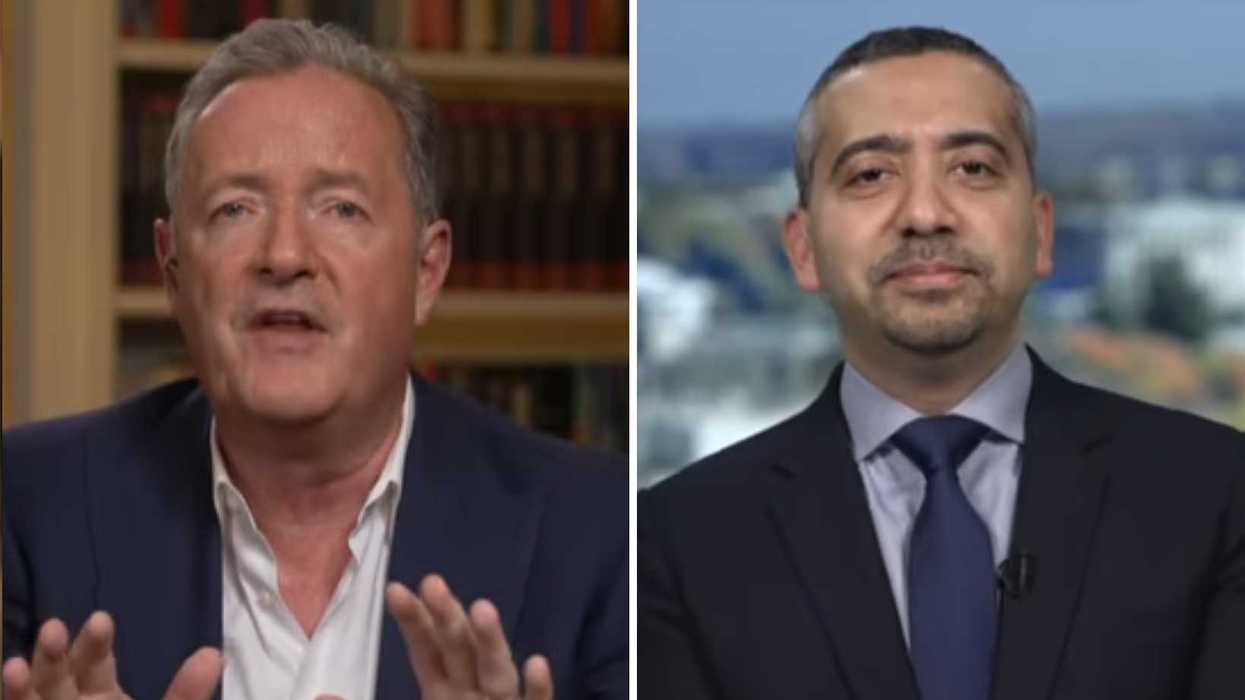
'Quick to defend your pal': Piers Morgan faces pushback over Trump-Epstein defense


British Broadcaster Piers Morgan and Zeteo Founder Mehdi Hassan
 (YouTube Screengrab)
February 19, 2026
ALTERNET

Zeteo founder Mehdi Hassan battled British conservative Piers Morgan into agreeing that the U.S. Justice Department must investigate the connection of President Donald Trump to his close friend, convicted sex-trafficker Jeffrey Epstein.

Hassan pushed Morgan to grudging agreement after pointing out the numerous times Trump lied about the facts of his relationship with Epstein.

“Donald Trump travelled on Epstein’s private jet many more times than has previously been reported or that we were aware: That’s an email from one of his own DOJ lawyers in 2020,” Mehdi told Morgan. “Trump lied, Piers, when he said he ‘never’ went on the plane. He went on the plane eight times. We know for example that Epstein wrote in 2011 that ‘Donald Trump spent hours at my house with a victim.’ He referred to Trump being at his house as ‘the dog that hasn’t barked.’ He said in 2019 that Trump knew about the girls.”

“Now, Epstein could be lying,” added Hassan. “He was a horrible convicted sex offender but the point is we’ve not had full investigations. The media has barely touched this, Piers. There’s been a lot of coverage of Prince Andrew … Peter Thiel and Elon Musk and all sorts of people … but if this was any other president or politician this would be a huge scandal.”

Morgan pointed out that there is no outright evidence of Trump’s criminality, however much the president’s name saturates the Epstein files.

“Oh, I agree that we haven’t got evidence of criminality,” agreed Hassan, before pulling out a 21-page FBI PowerPoint presentation entitled: “Prominent Names.”

“Donald Trump’s at the top here with two allegations on there. I’m not saying there’s a proven allegation, but the idea that the American public’s not even familiar with those allegations [we in the media] need to be talking amore about what a huge scandal this is and how many lies have been told by the people in power. Not just Donald Trump,” Hassan said, adding that “I can no longer just laugh at people who come up with conspiracy theories anymore.”

Morgan conceded that he also “would be prepare to believe any conspiracy theory related to the Epstein scandal because so much of it is actually coming true.”

“Although you’re quick to defend your pal Donald Trump, who was close to him,” Hassan quipped.

“I’m only quick to defend him about one part of it,” insisted Morgan, adding that “a lot of stuff in those files that are clearly fantastic and malicious.”

“And there’s A lot of it is also redacted, Piers, so how do we know?” Hassan said “… There hasn’t been a full investigation with [FBI Director] Kash Patel and [US AG] Pam Bondi shutting it down. Why are they shutting it down?”

“I agree! Buddy, you’re preaching to the choir,” Morgan said, adding “I always feel a bit disconcerted when we agree.”


'Just read the files!' Dem lawmaker scolds irate host over Trump-Epstein ties

Alexander Willis
February 22, 2026  
RAW STORY


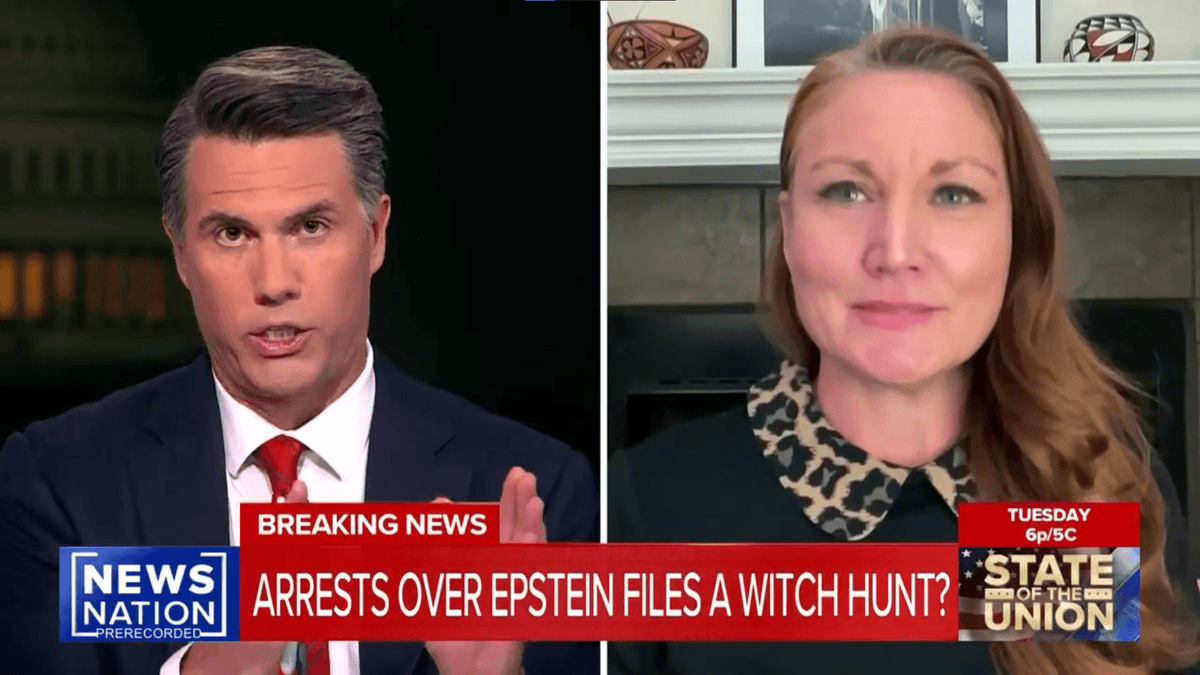
Rep. Melanie Stansbury (right) appears on News Nation with Leland Vittert (left), Feb. 20, 2026. (Screengrab / News Nation)

Rep. Melanie Stansbury (D-NM) held her own in a recent interview with NewsNation’s Leland Vittert in defending her calls for accountability with respect to President Donald Trump and the serious allegations leveled against him involving Jeffrey Epstein.

Stansbury was confronted Friday by Vittert over a social media post she made last week that referenced the recent arrest of Andrew Mountbatten-Windsor, the former British prince who was briefly jailed over his past ties to Epstein.

“If a Prince can be held accountable, so can a President,” Stansbury wrote in a social media post on X last Thursday.

“What crime should Donald Trump be charged with?” Vittert asked Stansbury in an aggressive tone, as seen in a clip of the exchange that went viral on Sunday.

“Donald Trump was investigated by the FBI for abuse of a minor, and there are multiple statements from witnesses that the FBI took as tips, and they investigated as allegations,” Stansbury said. “Those, as far as we know, were never taken to the fullest extent of their investigation.”

Vittert, visibly frustrated, continually tried to interject as Stansbury continued speaking, interjections that rose to the level of shouting. In response, Stansbury offered Vittert some advice.

“Sir, I didn’t come on your program to argue. I came to present the facts to the American public," she said. "The files are there. I don’t have to argue with you on the air. Just go read the files, my friend!”


A key Epstein associate quit her job but evades real scrutiny. Why?

John Casey
February 22, 2026
RAW STORY

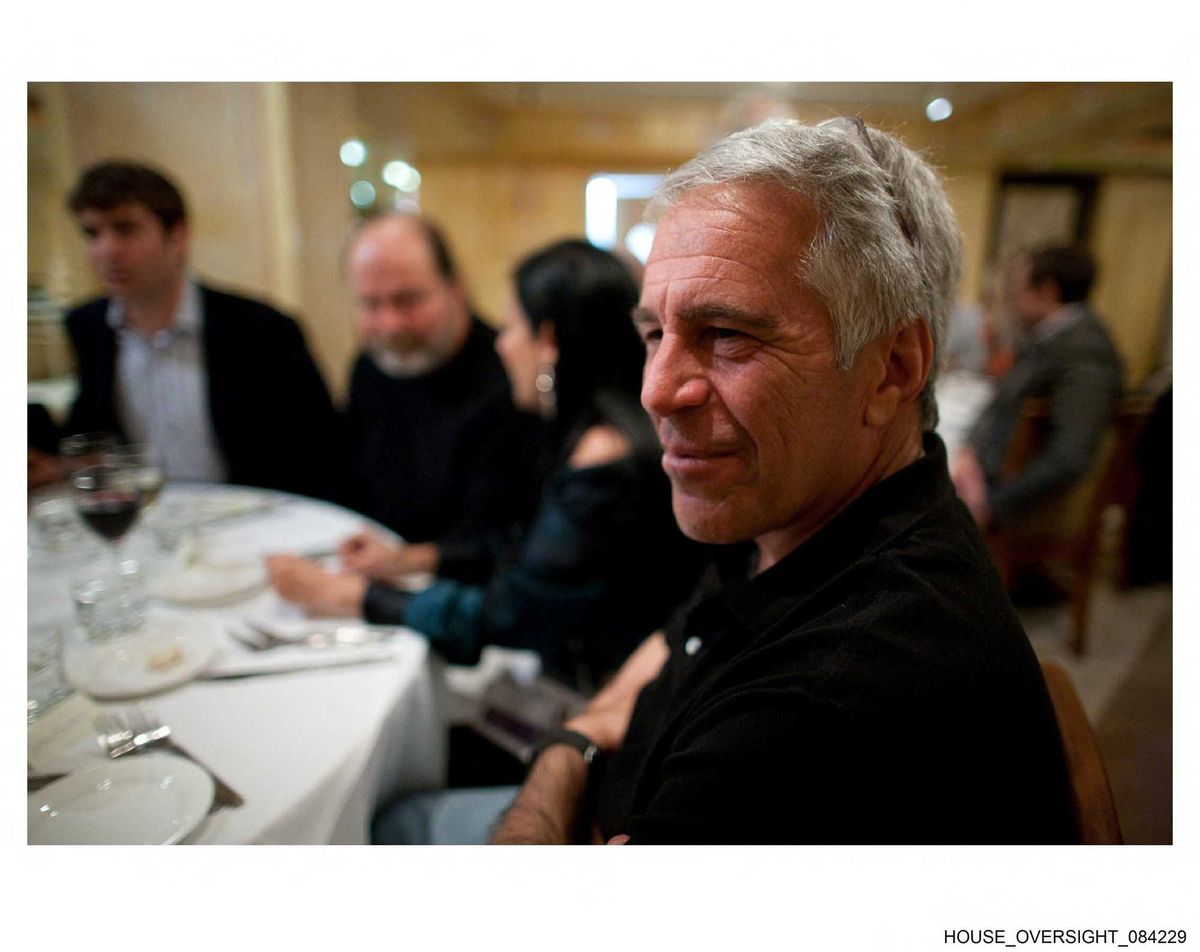
Jeffrey Epstein is seen in an released by House Oversight Committee Democrats. Handout via REUTERS

Working in corporate America for nearly three decades, I learned that the most feared person in any organization isn’t necessarily the CEO. It’s the chief counsel. They’re the ones who know where the bodies are buried.

That’s why one name in the Epstein files has consistently given me pause. Perhaps more than anyone besides Ghislaine Maxwell, Epstein's convicted sometime partner, this person may know where the proverbial bodies are buried. Certainly her association with the late financier and sex offender has proved close enough that she was prompted to quit as chief counsel to one of the most powerful financial firms on the planet — though shockingly, she will still serve until June.

For years, the Epstein narrative has centered on men: a parade of shielded billionaires, aging politicians, and pampered royals pretending they didn’t know the man was a child predator. Their excuses would be laughable if the subject weren’t so serious.

No one enabled Epstein like Maxwell, chief architect of his evil. But the latest — and shockingly, perhaps final — tranche of released Department of Justice files revealed a more sophisticated adjunct to Epstein’s depravity: Kathryn Ruemmler.

Ruemmler wasn’t a fringe associate angling for a free ride on a private jet. She was Barack Obama’s White House Counsel, the lawyer for the office of the presidency, charged with safeguarding the constitutional integrity of the executive branch. After that, she became Chief Legal Officer at Goldman Sachs, arguably the most influential investment bank in the world.

By any measure, Ruemmler reached the pinnacle of the American legal establishment.

Yet emails from a period between those posts, when she was in private practice, show her gushing over “Uncle Jeffrey” and his gifts: luxury handbags, Fendi furs, Bergdorf Goodman cards.

Though she has insisted the connection was strictly professional, the emails paint a different picture.

She said Epstein was “like another older brother.” They exchanged dozens of messages, ranging from dating advice to crude jokes.

This was not cold legal counsel to a problematic client. It was a high-powered attorney cozying up to a convicted sex offender. For what? Social access? Designer goods? Proximity to power? She had all of that. It is beyond belief that a lawyer of her stature would associate with someone she knew to have pled guilty to a state charge of soliciting prostitution from someone under 18.

It gets worse.

Wall Street Journal report details a 2016 episode involving French modeling agent Jean-Luc Brunel. Brunel was reportedly prepared to cooperate with federal authorities and testify against Epstein. Epstein alerted Ruemmler that a friend of Brunel was seeking $3 million to keep him quiet.

Ruemmler, the Journal reported, asked Epstein to explain, then when he did, said she was about to talk to an Epstein lawyer in Washington, D.C.

Brunel soon went “dark.” He would die in jail in France. Epstein remained free for three years, before dying while jailed himself.

David Boies, a lawyer for Epstein’s victims, told the Journal the Brunel episode “set us back a couple of years.”

“We know from our lawsuits that there were more than 50 girls that were trafficked after this,” Boies said.

A spokesperson for Ruemmler told the Journal: “This was another instance of Epstein attempting to engage Ms. Ruemmler on a matter about which she had no knowledge, and she appropriately directed him to his legal counsel.”

Ruemmler, the Journal added, “has said she never represented Epstein and regretted her association with him.”

Epstein’s D.C. lawyer told the paper he never talked to Ruemmler or Epstein about Brunel, though he did say he scheduled a call with Ruemmler on the day in question to talk about “quash[ing] a subpoena directed at Epstein.”

So many questions remain. Why would a former White House Counsel even respond to a convicted sex offender seeking the silence of a key witness? Why has Ruemmler not faced questioning herself?

The concerns don’t end there. While serving in the White House, Ruemmler shared non-public information with Epstein about the 2012 Secret Service prostitution scandal and even allowed him to review draft responses to journalists.

A convicted sex offender as a sounding board on ethics breaches. Let that sink in.

The DOJ has long known about Ruemmler’s association with Epstein. Yet she is untouched, bar announcing her resignation from Goldman Sachs. If anyone needs an example of how the rich and powerful evade scrutiny in this saga, look no further.

This represents a staggering betrayal of public trust. For elites, the law often appears less a boundary, more like a lever, something a ridiculously meticulous and unscrupulous person can manipulate.

Now comes what might be called the “Goldman Sachs Golden Pass:” a carefully timed resignation, effective months from now. She says media attention has become a “distraction” — that familiar phrase that signals an implication of guilt.

The Epstein case has always raised disturbing questions about accountability. Ruemmler’s role adds another layer. When you’ve served as White House Counsel, you aren’t being asked to fix parking tickets. You’re consulted because you understand systems of power, how to navigate them at the caller's behest.

Ruemmler may have been among the most consequential figures in Epstein’s orbit. She operates at the intersection of law, politics, and finance. She knows where secrets reside and how to keep them buried.

The emails we have, the “Uncle Jeffrey” familiarity and the gifts, suggest closeness that demands scrutiny. Her involvement in the Brunel episode should be investigated too.

If she were compelled to testify, she might well invoke the Fifth Amendment, as Maxwell recently did. In such a situation, she would prove cut from the same cloth as Maxwell and Pam Bondi, women who defy every fiber of human decency by ignoring the hollowed-out lives and desperate pleas of Epstein’s victims.

The DOJ needs to stop treating Ruemmler like a prestigious colleague and start treating her like what the Epstein files suggest: an associate of a monster, maybe also an advisor.


John Casey was most recently Senior Editor, The Advocate, and is a freelance opinion and feature story writer. Previously, he was a Capitol Hill press secretary, and spent 25 years in media and public relations in NYC. He is the co-author of LOVE: The Heroic Stories of Marriage Equality (Rizzoli, 2025), named by Oprah in her "Best 25 of 2025.”


Off-Balance Sheet AI Financing Stirs Tech Bubble Fears

  • Big Tech firms like Meta and Oracle are utilizing special purpose vehicle (SPV) financing to keep billions of dollars of AI infrastructure borrowing, such as data centers, off their main balance sheets.

  • This accounting choice involves using an external entity to raise debt and lease the infrastructure back to the tech group, a practice that, while legal, is raising concerns among market watchers about complexity and hidden leverage, particularly if returns do not meet the massive spending.

  • Despite these financial structures and forecasts of huge corporate bond issuance to fund AI expansion, the largest US tech firms still hold substantial cash reserves, and the scale of off-balance sheet arrangements is considered modest relative to their enormous projected cash flows.

Meta is paying roughly $6.5bn (£4.82bn) in extra financing costs to keep $27bn of AI infrastructure borrowing off its balance sheet, a costly accounting choice that captures the mood in Big Tech’s race to build the pipes of AI without spooking investors.

The arrangement, known as special purpose vehicle financing (SPV), allows an external entity to raise debt, construct the data centre, and lease it back to the tech group.

On paper, Meta books lease payments rather than traditional borrowing, but really, it has committed to decades of payments tied to huge computing facilities.

The structure was used for Meta’s $30bn data centre project in Louisiana, which was financed largely through private credit heavyweights like Blue Owl Capital, Pimco, BlackRock and Apollo.

Meta owns around 20 per cent of the vehicle and has offered a residual value guarantee, meaning it could be required to compensate investors if the project’s value falls below agreed levels at the end of the lease.

Oracle, too, has pushed tens of billions of dollars of AI data centre investments in similar ways, including a $38bn package tied to its partnership with OpenAI.

Elon Musk’s xAI has raised $20bn via a comparable structure, with debt secured against Nvidia chips.

And in some cases, Nvidia has even invested equity in customers that then use it to buy its hardware, a circular flow of capital that keeps revenue ticking while the chip giant’s liabilities sit elsewhere.

The accounting is legal and disclosed, but it is unfolding against a backdrop of eye-watering AI forecasts and a surge in borrowing across the sector.

Morgan Stanley estimates hyperscalers could raise $400bn in corporate bonds in 2026 alone to fund AI expansion.

JPMorgan has calculated that AI and data centre firms now account for 14.5 per cent of its $10tn investment-grade bond index, which is about $1.5tn in debt exposure.

UBS says roughly $450bn has flowed from private capital into tech infrastructure as of early 2025.

For market watchers, that scale and complexity are stirring memories of past tech bubbles.

AJ Bell’s Russ Mould points to Richard Bookstaber’s study of past market crises. “He argued that leverage, complexity and opacity help to fuel bubbles,” he told City AM.

“The use of special purpose vehicles and off-balance sheet structures to fund enormous AI capital investment will bring back bad memories for experienced investors.”

He also adds that while these structures comply with accounting rules, “more debt and more complexity mean more risk”, particularly if returns do not match the spending.

Strong balance sheets

But this doesn’t yet look like a rerun of the late-1990s telecom crash, and the biggest US tech firms are still sitting on huge piles of cash.

Among the hyperscalers, only Oracle and Apple currently carry more long-term debt than cash and short-term investments.

Nvidia’s debt-to-capital ratio stands at 8.3 per cent; Alphabet’s at 10.3 per cent; Meta’s at 27.9 per cent.

Oracle’s is far higher at 83.9 per cent, though still investment grade, albeit on negative watch.

Matt Britzman, senior equity analyst at Hargreaves Lansdown, told City AM: “Among the four largest public market AI investors – Amazon, Alphabet, Meta and Microsoft – total calendar-year 2026 capex is forecast at over $600bn, so it’s not like these companies are trying to hide their ambitions”.

He adds that the combined operating cash flow across the group is expected to approach $700bn in 2026.

“Off balance sheet arrangements also look modest in scale relative to the enormous cash flows that big tech are pulling in, which reduces concerns about hidden leverage.”

“Demand for compute remains extremely strong, and cloud giants are still seeing rental demand for six-year-old A100 chips”, Britzman added.

The question, then, is less about solvency today and more about future durability.

Gartner forecasts global AI spending will hit $2.52tn in 2026, up 44 per cent year on year.

By 2030, it expects AI to completely dominate IT budgets. But credit agencies have flagged that some of the sector’s biggest customers, including OpenAI, are not expected to turn profitable until later in the decade.

These data centres are financed on the basis of 20-year demand assumptions.

And if that demand translates into projected revenue growth, these structures will look prescient. On the other hand, if it does not, the risk will sit in private credit vehicles and long-term leases.

By City AM 


Global summit calls for ‘secure, trustworthy and robust AI’


By AFP
February 21, 2026


The summit was attended by tens of thousands of people including top tech CEOs. — © AFP Arun SANKAR


Katie Forster

Dozens of nations including the United States and China called for “secure, trustworthy and robust” artificial intelligence, in a declaration issued Saturday after a major summit on the technology in New Delhi.

The statement signed by 86 countries did not include concrete commitments to regulate the fast-developing technology, instead highlighting several voluntary, non-binding initiatives.

“AI’s promise is best realised only when its benefits are shared by humanity,” said the statement, released by the five-day AI Impact Summit.

It called the advent of generative AI “an inflection point in the trajectory of technological evolution.”

“Advancing secure, trustworthy and robust AI is foundational to building trust and maximising societal and economic benefits,” it said.

The summit — attended by tens of thousands including top tech CEOs — was the fourth annual global meeting to discuss the promises and pitfalls of AI, and the first hosted by a developing country.

Hot topics discussed included AI’s potential societal benefits, such as drug discovery and translation tools, but also the threat of job losses, online abuse and the heavy power consumption of data centres.

Analysts had said earlier that the summit’s broad focus, and vague promises made at the previous meetings in France, South Korea and Britain, would make strong pledges or immediate action unlikely.

– US signs on –

The United States, home to industry-leading companies such as Google and ChatGPT maker OpenAI, did not sign last year’s summit statement, warning that regulation could be a drag on innovation.

“We totally reject global governance of AI,” US delegation head Michael Kratsios had said at the Delhi summit on Friday.

The United States signed a bilateral declaration on AI with India on Friday, pledging to “pursue a global approach to AI that is unapologetically friendly to entrepreneurship and innovation”.

But it also put its name to the main summit statement, the release of which was originally expected Friday but was delayed by one day to maximise the number of signatories, India’s government said.

On AI safety risks — from misinformation and surveillance to fears of the creation of devastating new pathogens — Saturday’s summit declaration struck a cautious tone.

“Deepening our understanding of the potential security aspects remains important,” it said.

“We recognize the importance of security in AI systems, industry-led voluntary measures, and the adoption of technical solutions, and appropriate policy frameworks that enable innovation.”

On jobs, it emphasised reskilling initiatives to “support participants in preparation for a future AI driven economy”.

And “we underscore the importance of developing energy-efficient AI systems” given the technology’s growing demands on natural resources, it said.

– ‘Unacceptable risk’ –

Computing expert and AI safety campaigner Stuart Russell told AFP that Saturday’s commitments were “not completely inconsequential”.

“The most important thing is that there are any commitments at all,” he said.

Countries should “build on these voluntary agreements to develop binding legal commitments to protect their peoples so that AI development and deployment can proceed without imposing unacceptable risks”, Russell said.

Some visitors had complained of poor organisation, including chaotic entry and exit points, at the vast summit and expo site in Delhi.

The event was also the source of several viral moments, including the awkward refusal of rival US tech CEOs — OpenAI’s Sam Altman and Dario Amodei of Anthropic — to hold hands on stage.

The next AI summit will take place in Geneva in 2027. In the meantime, a UN panel on AI will start work towards “science-led governance”, the global body’s chief Antonio Guterres said Friday.

The UN General Assembly has confirmed 40 members for a group called the Independent International Scientific Panel on Artificial Intelligence.

It was created in August, aiming to be to AI what the UN’s Intergovernmental Panel on Climate Change (IPCC) is to global environmental policy.

India has used the summit to push its ambition to catch up with the United States and China in the AI field, including through large-scale data centre construction powered by new nuclear plants.

Delhi expects more than $200 billion in investments over the next two years, and US tech giants unveiled a raft of new deals and infrastructure projects in the country during the summit.

TECH BRO'S

‘Alpha male’ AI world shuts out women: computing professor Wendy Hall


By AFP
February 20, 2026


The AI sector is 'totally male-dominated', warns top computer scientist Wendy Hall - Copyright AFP Ludovic MARIN


Katie Forster


Artificial intelligence could change the world but the dearth of women in the booming sector will undermine pledges for inclusive technology, top computer scientist Wendy Hall told AFP on Friday.

Hall, a professor at Britain’s University of Southampton known for her pioneering research into web systems, said that the gender imbalance had long been stark.

“All the CEOs are men,” the 73-year-old said, describing the situation at a major AI summit held in New Delhi this week as “amazingly awful”.

“It’s totally male-dominated, and they just don’t get the fact that this means that 50 percent of the population is effectively not included in the conversations.”

Gender bias “creeps through everything, because they don’t think about it when they build their products”, Hall said.

She was speaking in an interview at the AI Impact Summit, where dozens of governments are expected to lay out a shared vision on how to handle the promises and pitfalls of generative AI.

Prime Minister Narendra Modi, who is pushing for India to become a global AI power, said Thursday that advanced computing systems “must become a medium for inclusion and empowerment”.

But when he posed on stage for a photo with leading tech business figures, 13 men were present and only one woman — Joelle Pineau, a former Meta researcher who is now chief AI officer at Cohere.

It was a similar story at another photo opportunity with world leaders including French President Emmanuel Macron and Brazil’s Luiz Inacio Lula da Silva.

– ‘Biased world’ –

Many studies have shown how generative AI tools like ChatGPT and Google’s Gemini reflect stereotypes contained in the vast reams of text and images they are trained on.

“We’re a biased world, so the training is done on biased data,” Hall said.

A 2024 UNESCO study found that large language models described women in domestic roles more often than men, who were more likely to be linked to words like “salary” and “career”.

While tech companies work to counter these built-in machine biases, women have found themselves targeted by AI tools in other ways.

Several countries moved to ban Elon Musk’s Grok AI tool this year after it sparked global outrage over its ability to create sexualised deepfakes depicting real people — mostly women — in skimpy clothing.

Hall, a longtime advocate for women in technology, said that things had “not really improved that much” since she had her start decades ago.

“In AI, it’s getting worse.”

Few women choose to study computer science in the first place, then “once you get more senior, women fall away”, Hall said.

Women-led startups “don’t get the investment that the men get”, and many simply “get fed up”, she added.

Women also “drop out because they just don’t want to be part of that alpha male world”.

– ‘Felt like giving up’ –

Hall, who wrote her first paper about the lack of women in computing in the late 1970s, said she had faced “all sorts of barriers” during her career.

“I’ve had to push through, be strong, have good mentors. And yeah, I felt like giving up many times.”

She was made a dame in 2009, and has also acted as a senior adviser to the British government and the United Nations on artificial intelligence.

But at her first job interview at a university nearly five decades ago, “I was told I couldn’t have the job because I was a woman” by an all-male panel, she recalled.

“I was supposed to be teaching maths to engineers, and they said as a young woman I wouldn’t be able to control a class of male engineers.”

Although she has noticed no uptick in women entering the field overall, Hall said she had been inspired in New Delhi.

“The wonderful thing about this conference are the young people here,” she said.

“There are a lot of young women here from India and they’re all abuzz with the opportunities.”

 India chases ‘DeepSeek moment’ with homegrown AI models

By AFP
February 19, 2026


India's Prime Minister Narendra Modi (C) takes a group photo with AI company leaders at the AI Impact Summit in New Delhi on February 19, 2026 - Copyright AFP Ludovic MARIN


Katie Forster and Uzmi Athar

Fledgling Indian artificial intelligence companies showcased homegrown technologies this week at a major summit in New Delhi, underpinning big dreams of becoming a global AI power.

But analysts said the country was unlikely to have a “DeepSeek moment” — the sort of boom China had last year with a high-performance, low-cost chatbot — any time soon.

Still, building custom AI tools could bring benefits to the world’s most populous nation.

At the AI Impact Summit, Prime Minister Narendra Modi lauded three new models released by Indian companies, along with other examples of the country’s rising profile in the field.

“All the solutions that have been presented here demonstrate the power of ‘Made in India’ and India’s innovative qualities,” Modi said Thursday.

One of the startups making a buzz at the five-day summit attended by world leaders and top technology CEOs was Sarvam AI, which this week released two large language models it says were trained from scratch in India.

Its models are optimised to work across 22 Indian languages, says the company, which received government-subsidised access to advanced computer processors.

The five-day summit, which wraps up Friday, is the fourth annual international meeting to discuss the risks and rewards of the fast-growing AI sector.

It is the largest yet and the first in a developing country, with Indian businesses striking deals with US tech giants to build large-scale data centre infrastructure to help train and run AI systems.

Another Indian company that drew attention with product debuts this week include the Bengaluru-based Gnani.ai, which introduced its Vachana speech models at the summit.

Trained on more than a million hours of audio, Vachana models generate natural-sounding voices in Indian languages that can process customer interactions and allow people to interact with digital services out loud.

Job disruption and redundancies, including in India’s huge call centre industry, have been one key focus of discussions at the Delhi summit.

– ‘Biggest market’ –

The government-supported BharatGen initiative, led by a group based at a university in Mumbai, also released a new multilingual AI model this week.

So-called sovereign AI has become a priority for many countries hoping to reduce dependence on US and Chinese platforms while ensuring that systems respect local regulations including on data privacy.

AI models that succeed in India “can be deployed all over the world”, Modi said on Thursday.

But experts said the sheer computational might of the United States would be hard to match.

“Despite the headline pledges, we don’t expect India to emerge as a frontier AI innovation hub in the near term,” said Reema Bhattacharya, head of Asia research at risk intelligence company Verisk Maplecroft.

“Its more realistic trajectory is to become the world’s largest AI adoption market, embedding AI at scale through digital public infrastructure and cost-efficient applications,” she said.

Prihesh Ratnayake, head of AI initiatives at think-tank Factum, told AFP that the new Indian AI models were “not really meant to be global”.

“They’re India-specific models, and hopefully we’ll see their impact over the coming year,” he said.

“Why does India need to build for the global scale? India itself is the biggest market.”

And Nanubala Gnana Sai, a MARS fellow at the Cambridge AI Safety Institute, said that homegrown models could bring other benefits.

Existing models, even those developed in China, “have intrinsic bias towards Western values, culture and ethos — as a product of being trained heavily on that consensus”, Sai told AFP.

India already has some major strengths including “technology diffusion, eager talent pool and cheap labour”, and dedicated efforts can help startups pivot to artificial intelligence, he said.

“The end-product may not ‘rival’ ChatGPT or DeepSeek on benchmarks, but will provide leverage for the Global South to have its own stand in an increasingly polarised world.”
FacebookTwitterLinkedIn


German broadcaster recalls correspondent over AI-generated images


By AFP
February 20, 2026


ZDF called the damage done to its editorial reputation was 'considerable' - Copyright AFP/File Tobias SCHWARZ

German public broadcaster ZDF on Friday recalled a New York correspondent after AI-generated images were screened during a news report on ICE immigration raids in the United States.

ZDF said its journalist Nicola Albrecht, 50, used video taken from the internet in a report on children terrified by US Immigrations and Customs Enforcement operations.

One clip was AI-generated and not labelled as such, and another in fact showed a Florida arrest from 2022.

“The damage caused by disregarding journalistic rules is considerable,” ZDF editor-in-chief Bettina Schausten said in a statement. “At its core, this is about the credibility of our reporting.”

Albrecht’s original report broadcast on February 13 was accurate, ZDF said, but an updated version broadcast on the February 15 edition of the flagship nightly news programme contained the two misleading clips.

Presenter Dunja Hayali had introduced the segment saying the Trump administration’s immigration raids had created “a climate of fear that doesn’t even stop at children”.

One clip could be seen to feature the watermark of Sora, OpenAI’s platform that generates short video clips based on prompts.

“The AI-generated material should not have been used without journalistic justification and without being categorised according to ZDF’s internal rules for the use of AI-generated material,” the broadcaster said.

Journalists have been caught out before by synthetic content.

Publications including Wired and Business Insider in August withdrew features purportedly written by a freelance journalist following concerns they were in fact written using generative artificial intelligence.

In January, AFP factcheckers found that an image carried by ZDF purporting to show former Venezuelan president Nicolas Maduro after his capture by US soldiers was AI-generated.