Showing posts sorted by relevance for query KAKISTOCRACY\. Sort by date Show all posts

Saturday, January 18, 2020

KAKISTOCRACY
Chris Collins, First U.S. Lawmaker To Endorse Trump, Gets 26-Month Prison Sentence

kakistocracy [kækɪ'stɑkrəsi] is a system of government that is run by the worst, least qualified, and/or most unscrupulous citizens.

Paul BlumenthalHuffPost•January 17, 2020


A judge on Friday sentenced former Rep. Chris Collins (R-N.Y.), an early and staunch ally of President Donald Trump, to 26 months in prison after he pleaded guilty last September to conspiracy to commit securities fraud.

Collins, the first member of Congress to endorse Trump’s 2016 presidential bid, used his position as the largest shareholder in the Australian biotechnology company Innate Immunotherapeutics to illegally give other stockholders an inside tip that a test of the company’s main product had failed.

“You were a member of the [company’s] board ― that has legal significance. You owed a duty to Innate and you betrayed that duty,” U.S. District Judge Vernon Broderick said during the sentencing, according to Matthew Russell Lee of InnerCityPress.com.

“It makes people believe the market is rigged,” Broderick added.

Federal prosecutors earlier this week urged a sentence of close to five years.

Collins cried as he spoke to the court shortly before his sentencing.

“I have no excuse. I tarnished my reputation,” he told the judge, as reported by The Washington Post.

“It’s hard to look at my wife ― she had her credit card canceled. My daughter had her brokerage account canceled. I apologize to the FBI for lying to them. I’ll be paying the consequence for that here momentarily,” Collins said.

Before the criminal investigation, Collins had used his Trump endorsement to raise his profile in Washington. He bragged about the clout he gained from his early backing of Trump, claiming it made him “significantly more visible.” And he was an early adopter of Trump’s bullying and blustering style, a copycat routine that has become popular throughout the GOP.

Collins, who represented a district that covers much of western New York, committed the crime that sent him to prison while he was visiting the White House for a June 22, 2017, congressional picnic. He received an email from the CEO of Innate Immuno announcing that the company’s main drug on which the company’s future hinged had failed a key test. Collins then called his son, another shareholder, from the South Lawn of the White House to tell him about the news and to plan for them to dump the stock.

The next morning Collins, his son and the father of his son’s fiancée sold their stock in the company before the drug test failure was announced and while a freeze on trading was in place for the company’s shares in Australian stock markets. They each saved hundreds of thousands of dollars by selling early. The company stock plunged 92% after Innate Immuno publicly announced the drug’s failed test.

Well before Collins broke the law, his odd position as the largest shareholder of Innate Immuno attracted attention. The Wall Street Journal and The Buffalo News both reported in January 2017 on suspicious trades Collins and other House Republican lawmakers made as Congress passed a bill that included provisions beneficial to Innate Immuno and other biotechnology firms. He also reportedly bragged to colleagues about how many “millionaires I’ve made in Buffalo.”

After seeing his political profile soar as an early backer of President Donald Trump, former Rep. Chris Collins (R-N.Y.) is headed to prison. (Photo: John Normile via Getty Images)

An investigation by the Office of Congressional Ethics in 2017 found that Collins violated House ethics rules by providing nonpublic information to investors and visiting the National Institutes of Health in his official capacity to discuss Innate Immuno drug trials.

Collins, 69, was indicted and arrested for wire fraud, conspiracy to commit securities fraud and lying to the FBI on Aug. 8, 2018. After his arrest, Collins initially said he would not run for reelection in 2018. But he reversed course, ran for his seat and won by less than one percentage point. He had won reelection in 2016 with 67% of the vote. His resignation from office became official last Oct. 1.

Collins was first elected to his House seat in 2012. A former mechanical engineer and business owner, he served as Erie County executive from 2007 to 2011.

Throughout the investigation into his illegal conduct, Collins struck a Trumpian pose as an innocent targeted as part of a “partisan witch hunt.”

He attacked The Buffalo News for “making up fake news on folks [the paper] can’t beat at the ballot box.” He called his then-colleague Rep. Louise Slaughter, a Buffalo-area Democrat who has since died, a “despicable human being” for filing an ethics complaint against him. And he attacked investigations into his activities as a “partisan witch hunt.”

In the wake of Collins’ guilty plea, his lawyers argued in court for a lenient sentence, saying that his actions were impulsive and that he has suffered enough by losing his political career.

Collins’ son and the father of his son’s fiancée also pleaded guilty in the case and await sentencing

Quickly joining Collins in early 2016 as Trump’s second official backer on Capitol Hill was then-Rep. Duncan Hunter (R-Calif.) ― who also now faces prison time. Hunter pleaded guilty to violating campaign finance laws in December, gave up his House seat earlier this week and awaits sentencing. Like Collins, Hunter initially characterized the charges facing him as a “witch hunt.”

Reporter Carla Herreria contributed to this story.


Apr 18, 2018 - The first recorded use of kakistocracy was in a sermon, delivered in 1644 by Paul Gosnold. His audience was the “King's parliament” ...


Friday, March 17, 2023

PAKISTAN


Dial K for ‘Khakistocracy’

The fourth estate has a sacred responsibility to the people. It should not continue to be selective in its outrage when it comes to matters of principle.
DAWN
Published March 17, 2023 

An age-old children’s tale has recently started seeming like the perfect metaphor for our latest experiment with democracy.

The story goes like this: A king was once presented with robes so fantastic that only the wisest people in his land could see them. The king eagerly clothed himself in these wondrous threads before presenting himself to his subjects to see whether they too were smart enough to admire them. As he paraded through their ranks, all he could hear was the people murmuring their praises. It took a small child to finally blurt out what the gathered crowd dared not say: “The emperor had no clothes!”

A year ago, the two main components of our political system undertook a similar change of clothes. While the army swapped khaki for a more ‘neutral’ shade, parties from across the political spectrum fashioned themselves as the Pakistan ‘Democratic’ Movement. Together, they would go on to overthrow the ‘puppet prime minister’ of the ‘hybrid regime’.

The return of ‘true democracy’ heralded the restoration of the primacy of the Constitution and the supremacy of our Parliament. We were told that the political system would heal as it slowly returned to its ‘Purana Pakistan’ normalcy.

Few among those in this country who consider themselves wise questioned the legitimacy of the incoming regime. The assurance that the PTI government was being ousted through a vote of confidence — in other words, parliamentary procedure — was enough. Short shrift was given to how the votes required for the VOC were actually rounded up.
In with the old

And so the country was returned to the wise old hands of Pakistan’s democratic elite. These were people whose sacrifices for our right to self-rule had no parallel — those who introduced ‘Democracy is the best revenge’ and ‘Vote ko izzat dau’ to our political parlance. We had been delivered, or so we were told. Turns out, we were once again having the wool pulled over our eyes.

There is an excellent Twitter account, titled ‘The Cultural Tutor’, which shares fascinating curations from the history of western civilisations. It recently shared a list of political systems to ask followers which one they lived in.


The list began with democracy — rule by the people — and had some rather interesting inclusions, such as isocracy, algocracy and ochlocracy. It ended with kakistocracy — rule by the worst, the least qualified and most unscrupulous citizens.

It was difficult, as a born and raised underseas Pakistani, to make an honest choice. After all, our political system isn’t exactly on the continuum of the various paradigms that evolved from the Greek tradition.

For example, no matter how loudly we may insist otherwise, our democracy’s most recent iteration does not even represent the aspirations of the majority. In fact, it does not seem to want those aspirations to be expressed at all.

The country cannot also be described as a plutocracy, and it seems unfair to dismiss it as a kakistocracy, no matter how strong the temptation to do so. More importantly, nothing in that list captured the role of our military ‘establishment’ in political affairs, which has either overtly or covertly ruled the country for much of its history and seemingly continues to do so despite all pretensions to the contrary.
The powers that be

Sharing that last thought with a dear friend proved greatly upsetting for their continence. They protested that our new government’s reversion to the pseudo-fascistic tendencies of the old regime ought not to be pinned on the boys.

I begged to disagree. No civilian government in its right mind dares defy straightforward, self-evident constitutional edicts with impunity, not least one that has squandered most of its political capital. No organ of the state risks inviting contempt charges by refusing their constitutional duty. You do not just bin both court and Constitution unless a greater force has provided guarantees to protect you from the consequences of doing so.

The institutions of our state are known for perpetual sloth, not the energy and enthusiasm with which they have recently sought to serve and execute warrants of arrest for cases predestined for the ash heaps of history. Such alacrity has usually been seen only in times when someone needs to be taught a lesson for defying the true powers that be.
Democracy with no clothes

The wise among us may continue not acknowledging the obvious, but it is high time someone pointed out that our democracy has no clothes. We are, in fact, being ruled by yet another khakistocracy, and one that would be little different from a full-blown kakistocracy but for that strategically placed ‘h’.

One wonders why this clever portmanteau hasn’t been used more often in the Pakistani context. Hybrid regime stopped being an insult the moment our civilian leaders started boasting about sharing same pages with their uniformed overlords. The sting got taken out from ‘puppet prime minister’ when it became evident that all our leaders are eager to give an arm and a limb to be marionettes as long as they can pretend to be kings while at it.

The normalised hypocrisy of our political class, when in power and when without, has eroded any sense of democratic propriety in our people. The decay is now getting worse. As many have persistently pointed out, you cannot save democracy by suspending or subverting it. Here, it is the means that must justify the ends, not the other way around.

There is little point lamenting the proto-fascism taking root in this nation’s youthful populace if our intelligentsia will continue to fail them in providing a working moral compass with which they can navigate their increasingly hostile world. The fourth estate has a sacred responsibility to the people. It should not continue to be selective in its outrage when it comes to matters of principle.

The author is a member of staff.


Tuesday, February 18, 2020

Trump commutes ex-Illinois governor's sentence
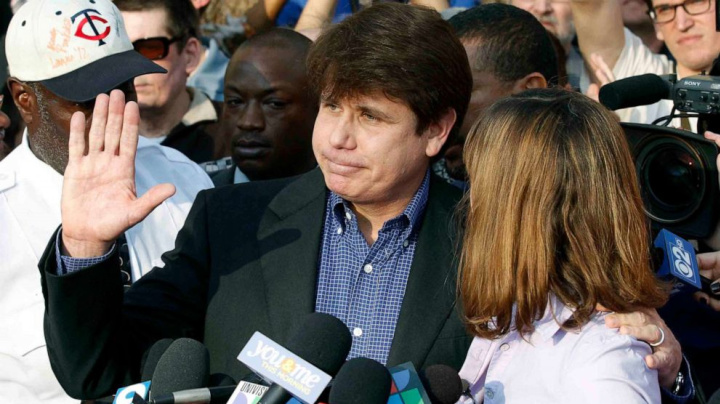
President Trump said he has commuted the 14-year prison sentence of former Illinois Gov. Rod Blagojevich, who was convicted of political corruption. 
Image result for kakistocracy

Friday, February 16, 2024


KKKakistocracy: The Texas Education System Has Daddy Issues


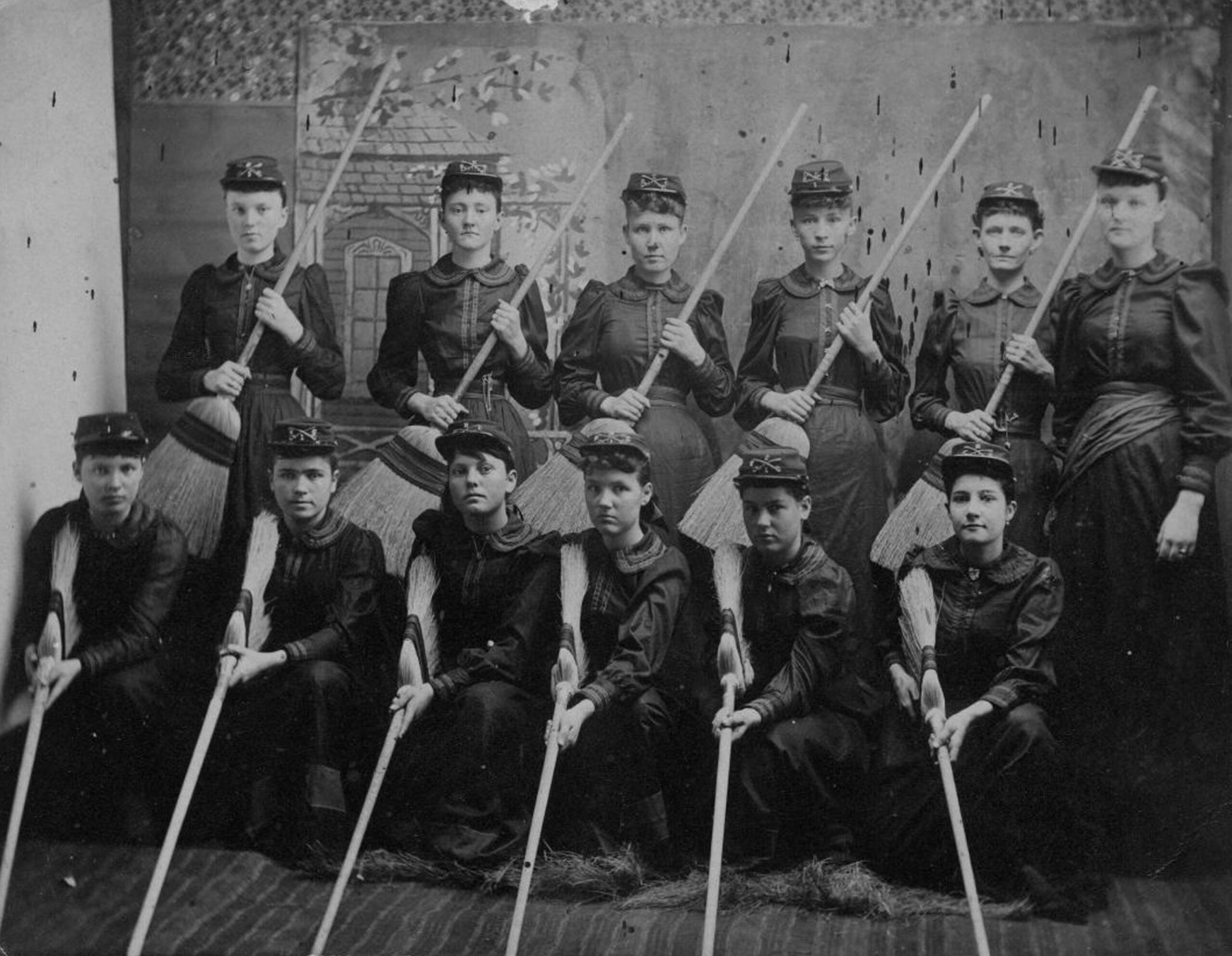
An undated photo of members of the Childress County Daughters of the Confederacy. Courtesy of the Childress County Heritage Museum in partnership with The Portal to Texas History, a digital repository hosted by the University of North Texas Libraries.

In 2022, a 15-year-old Virginia Beach girl named Simone Nied began a modest campaign to get the United Daughters of the Confederacy (UDC) removed from the list of nonprofit organizations afforded exemption from real estate, deed recordation, and personal property taxes in the state of Virginia. The “White House” of the Confederacy is located in Richmond, Virginia, and Confederate President Jefferson Davis lived there during the Civil War. Nied’s efforts seemed Sisyphean.

But early this month a bill stripping the tax breaks of the UDC was passed in the Virginia House of Delegates and, on Feb. 6—with two Republicans joining all twenty-one Democrats—the Virginia Senate agreed. Now the bill goes to Republican Gov. Glenn Youngkin’s desk for approval.

Will he sign it or veto it?

I await his decision with bated breath.

In the meantime, I also marvel at the preposterousness of the affair. How did the United Daughters of the Confederacy get tax breaks in the first place, and why have they been extended into the 21st century?

Is insurrection a religion? Didn’t the Confederacy’s insurrection comprise the exact opposite of a nonprofit campaign? Wasn’t the entire war waged to ensure the profits the Southern white aristocracy reaped from slave labor?

Does Texas have a chapter of the UDC?

I’m glad you asked.

I checked immediately and we do. And it’s also taxed just like a church. Here’s the first blurb on their site:

The United Daughters of the Confederacy is a non-profit organization formed by the joining of many local groups whose purpose was to care for Confederate Veterans and their families, in life and death, and to keep alive the memory of our Southern heritage.

The Texas Division UDC was officially organized in 1896.  Today, the Texas Division continues the work of our predecessors. We are dedicated to the purpose of honoring the memory of our Confederate ancestors; protecting, preserving and marking the places made historic by Confederate valor; collecting and preserving the material for a truthful history of the War Between the States; recording the participation of Southern women in their patient endurance of hardship and patriotic devotion during and after the War Between the States; fulfilling the sacred duty of benevolence toward the survivors and those dependent upon them; assisting descendants of worthy Confederates in securing a proper education; and honoring the service of veterans from all wars as well as active duty military personnel.

“… collecting and preserving the material for a truthful history of the War Between the States”?

“… assisting descendants of worthy Confederates in securing a proper education”?!

Talk about a prophetic “nonprofit”. Sounds like the perfect recipe for the current Texas state legislature.

But it begs a legitimate question. Do any brave teenagers reside in the Lone Star State?

And before any of you Bonnie (or Donnie) Rebs get your hackles up, take a wee gander of what the original incarnation of the UDC trotted out as a position statement on education in Texas in 1915:

Strict censorship is the thing that will bring the honest truth. That is what we are working for and that is what we are going to have. — Mrs. M.M. Birge, Chairwoman of the Textbook Committee, Proceedings of the Twentieth Annual Convention of the Texas Division, United Daughters of the Confederacy

An answer before a question.

A dictate to ensure denial.

A mandate for seditious ignorance.

The current Red state agenda around these parts was baked into the proverbial cake, and now it’s too late. A legislature full of conservative feebs is pushing for more voucher programs for institutes of Anglo-centric propaganda, and the Texas Division of the United Daughters of the Confederacy is getting a tax break for the Lost Cause indoctrination that they engineered.

The latent term is kakistocracy.

Thanks to the UDC, the conservative playbook has been the script for Texas education for over a century. Because Texas conservatives want to preserve “the honest truth.” Because Texas conservatives don’t believe “the honest truth” should include the monstrous atrocities they committed or the regime of inhumanity they perpetuated.

The UDC has serious “Daddy” issues, and our tax dollars have been helping them sweep the truth under the rug for decades.


E.R. Bills of Fort Worth is the author of The 1910 Slocum Massacre: An Act of Genocide in East Texas and Letters from Texas, 2021-2023. Read other articles by E.R..

Thursday, July 03, 2025


Inalienable Rights in an Age of Tyranny


The US Government Is Playing God


When a long train of abuses and usurpations… evinces a design to reduce them under absolute Despotism, it is their right, it is their duty, to throw off such Government.

—Declaration of Independence (1776)


We are now struggling to emerge from the wreckage of a constitutional republic, transformed into a kleptocracy (government by thieves), collapsing into kakistocracy (government by the worst), and enforced by a police state algogracy (rule by algorithm).

This week alone, the Trump administration is reportedly erecting protest barricades around the White House, Congress is advancing legislation that favors the wealthy, and President Trump is grandstanding at the opening of a detention center dubbed “Alligator Alcatraz.”

Against such a backdrop of government-sponsored cruelty, corruption and shameless profiteering at taxpayer expense, what, to the average American, is freedom in an age when the government plays god—determining who is worthy of rights, who qualifies as a citizen, and who can be discarded without consequence?

What are inalienable rights worth if they can be redefined, delayed, or revoked by executive order?

Frederick Douglass posed a similar challenge more than 170 years ago when he asked, “What, to the American slave, is your Fourth of July?

His question was a searing indictment not just of slavery but of a government that proclaimed liberty while denying it to millions—a hypocrisy that persists in a system still governed by institutions more committed to power than principle.

Every branch of government—executive, legislative, and judicial—has, in one way or another, abandoned its duty to uphold the Constitution. And both parties have prioritized profit and political theater over justice and the rights of the governed.

The founders of this nation believed our rights come from God, not government. That we are born free, not made free by bureaucrats or judges. That among these rights—life, liberty, and the pursuit of happiness—none can be taken away without destroying the very idea of government by consent.

And yet that is precisely what’s happening.

We now live under a government that has become judge, jury, and executioner—writing its own laws, policing its own limits, and punishing those who object.

This is not what it means to be free.

When presidents rule by fiat, when agencies strip citizenship from naturalized Americans, when police act as both enforcers and executioners, and when courts rubber-stamp the erosion of basic protections, the distinction between a citizen and a subject begins to collapse.

What do inalienable rights mean in a country where:

  • Your citizenship can be revoked based solely on the government’s say-so?
  • Your freedom can be extinguished by surveillance, asset seizure, or indefinite detention?
  • Your property can be taken, your speech censored, and your life extinguished without due process?
  • Your life can be ended without a trial, a warning, or a second thought, because the government views you as expendable?

The answer is stark: they mean nothing—unless we defend them.

When the government—whether president, Congress, court, or local bureaucrat—claims the right to determine who does and doesn’t deserve rights, then no one is safe. Individuals become faceless numbers. Human beings become statistics. Lives become expendable. Dignity becomes disposable.

It is a slippery slope—justified in the name of national security, public safety, and the so-called greater good—that leads inevitably to totalitarianism.

Unfortunately, we have been dancing with this devil for far too long, and now, the mask has come off.

This is what authoritarianism looks like in America today.

Imagine living in a country where government agents crash through doors to arrest citizens merely for criticizing government officials. Where police stop and search you on a whim. Where carrying anything that resembles a firearm might get you arrested—or killed. Where surveillance is constant, dissent is criminalized, and loyalty is enforced through fear.

If you’re thinking this sounds like America today, you wouldn’t be far wrong.

But this scenario isn’t new. It’s the same kind of tyranny that drove American colonists to sever ties with Great Britain nearly 250 years ago.

Back then, American colonists lived under the shadow of an imperial power and an early police state that censored their speech, surveilled their movements, taxed their livelihoods, searched their homes without cause, quartered troops in their towns, and punished them for daring to demand liberty.

It was only when the colonists finally got fed up with being silenced, censored, searched, frisked, threatened, and arrested that they finally revolted against the tyrant’s fetters.

The Declaration of Independence—drafted by Thomas Jefferson and signed on July 4, 1776, by 56 men who risked everything—was their response. It was more than a list of grievances. It was a document seething with outrage over a government which had betrayed its citizens, a call to arms against a system that had ceased to represent the people and instead sought to dominate them.

Labeled traitors, these men were charged with treason, a crime punishable by death, because they believed in a radical idea: that all people are created to be free. For some, their acts of rebellion would cost them their homes and their fortunes. For others, it would be the ultimate price—their lives.

Yet even knowing the heavy price they might have to pay, these men dared to speak up. They understood that silence in the face of tyranny is complicity. So they stood together, pledging “our Lives, our Fortunes, and our sacred Honor” to the cause of freedom.

Even after they had won their independence from Great Britain, these new Americans worked to ensure that the rights they had risked their lives to secure would remain secure for future generations.

The result: our Bill of Rights, the first ten amendments to the Constitution.

The Constitution and Bill of Rights were meant to enshrine the liberties they fought for: due process, privacy, free speech, the right to bear arms, and limits on government power.

Now, nearly two and a half centuries later, those freedoms hang by a thread.

Imagine the shock and outrage these 56 men would feel were they to discover that almost 250 years later, the government they had risked their lives to create has been transformed into a militaristic police state in which exercising one’s freedoms—at a minimum, merely questioning a government agent—is often viewed as a flagrant act of defiance.

In fact, had Jefferson and his compatriots written the Declaration of Independence today, they would almost certainly be labeled extremists, placed on government watchlists, targeted by surveillance, and prosecuted as domestic threats.

Read the Declaration of Independence again, and you’ll see the grievances they laid at the feet of King George—unjust laws, militarized policing, surveillance, censorship, and the denial of due process—are the very abuses “we the people” suffer under today.

Had Jefferson written the Declaration about the American police state in 2025, it might have read like a criminal indictment of the crimes perpetrated by a government that:

Polices by fear and violence:

Surveils and represses dissent:

Strips away rights:

Concentrates unchecked power in the executive:

  • bypassing Congress with executive orders, sidelining the courts, and ruling by decree;
  • weaponizing federal agencies to suppress opposition and silence critics;
  • treating constitutional limits as optional and the presidency as a personal fiefdom.

These are not isolated abuses.

They are the logical outcomes of a government that has turned against its people.

They reveal a government that has claimed the god-like power to decide who gets rights—and who doesn’t. Who counts as a citizen—and who doesn’t. Who gets to live—and who becomes expendable.

All along the spectrum of life—from the unborn child to the elderly—the government continues to treat individuals endowed by their Creator with certain unalienable rights as if they are criminals, subhumans, or enemies of the state.

That is not freedom. It is tyranny.

And it must be called by its true name.

The truth is hard, but it must be said: the American police state has grown drunk on power, money, and its own authority.

The irony is almost too painful to articulate.

On the anniversary of the signing of the Declaration of Independence—a document that rebuked government corruption, tyranny, and injustice—we find ourselves surrounded by its modern-day equivalents.

This week’s spectacle—protest barricades, legislation to benefit the rich, and Trump’s appearance at Alligator Alcatraz, a.k.a. “Gator Gitmo”—shows how completely we have inverted the spirit of 1776.

That a president would celebrate the Fourth of July while inaugurating a modern-day internment camp—far from the reach of the courts or the Constitution—speaks volumes about the state of our nation and the extent to which those in power now glorify the very forms of tyranny the Founders once rose up against.

This is not law and order.

This is political theater, carceral cruelty, and authoritarianism in plain sight.

It is what happens when a nation that once prided itself on liberty now builds monuments to its own fear and domination.

The spectacle doesn’t end with detention camps and barricades. It extends into commerce, corruption, and self-enrichment at the highest levels of power.

President Trump is now marketing his own line of fragrances—a branding exercise so absurd it would be laughable if it weren’t a flagrant violation of the Constitution’s Emoluments Clause. His investments are booming. And all across his administration, top officials are shamelessly using public office to line their pockets, even as they push legislation to strip working-class Americans of the most basic benefits and protections, while claiming to be rooting out corruption and inefficiency.

This is not governance. This is kleptocracy—and it is happening in plain sight.

In the nearly 250 years since early Americans declared their independence from Great Britain, “we the people” have worked ourselves back under the tyrant’s thumb—only this time, the tyrant is one of our own making.

The abuses they once suffered under an imperial power haven’t disappeared. They’ve evolved.

We are being robbed blind by political grifters and corporate profiteers. We are being silenced by bureaucrats and blacklists. We are being watched by data miners and digital spies. We are being caged by militarized enforcers with no regard for the Constitution. And we are being ruled by presidents who govern not by law, but by executive decree.

Given the fact that we are a relatively young nation, it hasn’t taken very long for an authoritarian regime to creep into power.

Unfortunately, the bipartisan coup that laid siege to our nation did not happen overnight.

The architecture of oppression—surveillance, militarism, censorship, propaganda—was built slowly, brick by brick, law by law, war by war.

It snuck in under our radar, hiding behind the guise of national security, the war on drugs, the war on terror, the war on immigration, political correctness, hate crimes and a host of other official-sounding programs aimed at expanding the government’s power at the expense of individual freedoms.

The building blocks for the bleak future we’re just now getting a foretaste of—police shootings of unarmed citizens, profit-driven prisons, weapons of compliance, a wall-to-wall surveillance state, pre-crime programs, a suspect society, school-to-prison pipelines, militarized police, overcriminalization, SWAT team raids, endless wars, etc.—were put in place by government officials we trusted to look out for our best interests.

The result is an empire in decline and a citizenry under siege.

But if history teaches us anything, it’s that the power of the people—when awakened—is stronger than any empire.

For decades, the Constitution has been our shield against tyranny.

But today, it’s under siege. And now we must be the shield.

Surveillance is expanding. Peaceful dissent is being punished. Judges are being targeted. The presidency is issuing decrees and bypassing the rule of law.

Every institution meant to check power is being tested—and in some cases, broken.

This is the moment to stand in front of the Constitution and defend it.

As I make clear in my book Battlefield America: The War on the American People and in its fictional counterpart The Erik Blair Diaries, the fight for freedom is never over. But neither is it lost—so long as we refuse to surrender, refuse to remain silent, and refuse to accept tyranny as the price of safety.

It is time to remember who we are. To reclaim the Constitution. To resist the march toward authoritarianism. And to reassert—boldly and without apology—that our rights are not up for negotiation.

John W. Whitehead, constitutional attorney and author, is founder and president of The Rutherford Institute. He wrote the book Battlefield America: The War on the American People (SelectBooks, 2015). He can be contacted at johnw@rutherford.orgNisha Whitehead is the Executive Director of The Rutherford Institute. Read other articles by John W. Whitehead and Nisha Whitehead.

Sunday, December 20, 2020


OPINION

How Huntington and Fukuyama got the 21st century wrong

A decided turn towards authoritarianism, to offset popular dissent, is arguably becoming a defining feature of politics in Asia, the Middle East, and South America, and indeed in the democratic West, as well.


Howard Brasted
Professor of History and Islamic studies at the University of New England

Shafi Mostofa
Assistant Professor at the University of Dhaka.

19 Dec 2020

ARYAN BRETHERN
India's Prime Minister Narendra Modi hugs US President Donald Trump as they give joint statements in the Rose Garden of the White House in Washington, US, June 26, 2017. [Kevin Lamarque/Reuters]


What is going on in the 21st-century world of international politics? With very few exceptions, national elections are revealing degrees of partisanship and ideological polarisation among voters never seen before. It seems not to be a rare occurrence these days that the losers are either claiming that they are actually the winners or that the results have been rigged by their opponents and can therefore be disregarded.

This is the farcical game outgoing President Donald Trump is currently playing in the United States, despite there being little or no evidence that President-elect Joe Biden and the Democratic party committed the widespread electoral fraud he wildly accuses them of. As Republican Governor Larry Hogan of Maryland has openly lamented, today the US risks being seen as a “banana republic” rather than as the leader of the democratic world.

Despite this, hordes of Republican supporters continue to rally behind the anti-democratic narrative that President Trump continually tweets. As one newspaper article pointed out, the “United” States has become the “Divided” States of America.

If the recent examples of Belarus and Myanmar are anything to go by as well, it would seem that opposition parties have little faith in the mechanism of democratic elections reconciling alienating differences or bringing citizens closer together. Creating divisiveness seems to be the order of the day, even in established democratic countries.

In India, the largest democracy in the world, for example, Prime Minister Narendra Modi secured a second term for his BJP government in 2019 with a campaign that demonised the Muslim minority as enemies. “Divider-in-Chief” was how Time magazine labelled him on one of its front covers.

Everywhere, the volatility of public opinion has confounded the pollsters and seen political scientists searching for explanations.

None of these developments was foreseen by two of the most prominent political scientists – Francis Fukuyama or Samuel P Huntington – in their respective grand theories of how the 21st century would unfold.

Following the ending of the Cold War, Fukuyama confidently predicted in an article titled, The End of History – and later in a book that liberal democracy would sweep through the world as the ultimate form of human government. In his view, the collapse of the Soviet Union meant that communism had failed as the obvious alternative, and political Islam as a political system was never likely to draw more than minority support.

Accordingly, the 21st century would experience, under America’s custodial guidance, the installation of a new world order based on a single global system of democracy, individualism, and free markets.

Although he drew on the same turn of events, the post-cold war world that Huntington conjured up in 1993 was very different. In his Foreign Affairs article titled, The Clash of Civilizations, he argued that international relations would be characterised not by consensus about liberal democracy, but by conflict between entire civilisations, particularly between Islam and the West. Huntington contended that substantial differences in culture and religion would propel the 21st century in the direction of inter-civilisational war. The fault lines between civilisations would specifically become the “battle lines of the future”.

As 2020 draws to an end, however, neither of these grand theories seems to be playing out the way their authors anticipated.

As early as 2006, when American forces were beginning to get bogged down in Afghanistan and Iraq, Fukuyama conceded that “liberal democracy” could not be imposed on people without their consent. By 2020, he was not even sure that “liberal democracy” existed in the US any more. For under Trump, he maintained, the US had become the epitome of “kakistocracy”, a government of the “worst”, not the best kind.

At a first glance, Huntington’s “clash of civilisations” theory may have been looked more successful. The 9/11 tragedy, the recurrent deadly lone-wolf attacks on non-Muslim targets, the ISIL’s (ISIS’s) proclamation of a new caliphate, and the “fault-line” tensions about the hijab and status of Muslim women in Western countries may lead some to think that there is indeed a major clash between the Islamic world and the West. In fact, even though Huntington died in 2008, his thesis has remained the standard reference point for thinking about the future direction of international relations and in just the past two years, it was cited more than 35,000 times on Google Scholar.

But a growing number of scholars (more accurate to say ‘the vast majority of scholars’. When thesis first came out it was roundly derided. It still is though less vehemently.) are simply not convinced that these happenings presage the kind of culturally-based religious conflict that Huntington foresaw breaking out on a cataclysmic. What collectively they take issue with is the reductionist basis of Huntington’s whole thesis. They part company with him over his key assumptions that Islam and the West constitute monolithic civilizations, that differences of religious culture will put them on a direct war footing, and that all Muslims will come to embrace the world order advanced by fundamentalist Islam. Niall Ferguson appears to be the only one prepared to countenance that Huntington’s prophecy could become “a real winner”.

Intra-civilisational fissures have undermined not only Fukuyama’s world system of liberal democracy, but also the cohesiveness of Huntington’s civilisational blocs. The erosion of the very hallmarks of American world order, such as open debate, the rule of law, and accountable government, have gradually devalued the currency of Western democracy, while bitter sectarian conflicts have set back any immediate prospect of a Muslim anti-West coalition forming.

What has arguably overtaken the envisaged ascendancy of “liberal democracy” and the placing of entire civilisations on a war footing has been the globalisation of neoliberal ideology and its concomitant by-product of populist reaction.

Neoliberalism, which nearly all capitalist societies have embraced since the 1980s, has verifiably resulted in the inequitable distribution of national wealth to the few who effectively exercise power and benefit most from the policies they promote. That the large majority of people acquiesces to a situation that ostensibly disadvantages them is due to the pervasiveness of neoliberal ideology and the difficulty of effectively questioning the global system it sustains.

Enter populism, a phenomenon that is changing political landscapes throughout the world, though in different ways. In the West, populism manifests itself as a groundswell of right-wing disaffection with liberal democratic governments and corrupt ruling establishments. Populism of this kind is driven by narratives that identify metropolitan elites and multinational outsiders as virtual enemies of the state.

In South Asia, populism has fed into top-down discourses that identify religious minorities as anti-national impediments to unity and development. In both Modi’s India and Mahinda Rajapaksa’s Sri Lanka, Muslims have been instrumentally targeted to garner populist support for policies that blunt opposition to their regimes and weaken constitutional checks on their use of power.

In Muslim Pakistan and Bangladesh, the omnipresence of India in their neighbourhood has always fed into populist narratives about the Hindu other and the role their respective armies play as the symbolic bulwarks of Islam.

While Huntington has been credited with incorporating a populist dimension into his “clash of civilization” thesis, he did not foresee that the trajectory populism might take would just as likely foment intra-state tensions as heighten inter-civilisational antagonisms.

A decided turn towards authoritarianism, to offset popular dissent, is arguably becoming a defining feature of politics in Asia, the Middle East, and South America, and indeed in the democratic West, as well. A political scientist looking into the crystal ball today might well project the remainder of the 21st century not in terms of looming civilizational war, but of increasing civil unrest.

The views expressed in this article are the authors’ own and do not necessarily reflect Al Jazeera’s editorial stance.


Howard Brasted
Professor of History and Islamic studies at the University of New England
Dr Howard Brasted is the Professor of History and Islamic studies at the University of New England, Australia.


Shafi Mostofa
Assistant Professor at the University of Dhaka.
Dr Shafi Md Mostofa is an Assistant Professor of World Religions and Culture at the University of Dhaka, Bangladesh, and an Adjunct Lecturer at the University of New England, Australia.

Monday, March 02, 2020

KAKISTOCRACY

Judge rules Ken Cuccinelli was unlawfully appointed to head U.S. immigration agency

Deputy Secretary of Department of Homeland Security Ken Cuccinelli makes remarks at the Conservative Political Action Conference (CPAC), Friday, February 28, 2020, in National Harbor, Maryland. Thousands of conservative activists, elected officials and pundits gathered to hear speakers on the theme "America vs. Socialism". Photo by Mike Theiler/UPI | License Photo

March 1 (UPI) -- A federal judge on Sunday ruled that Ken Cuccinelli was unlawfully appointed to his position atop the agency responsible for processing U.S. immigration requests and invalidated a pair of his directives.

Advocacy groups last year filed a lawsuit challenging Cuccinelli's role as acting director of the U.S. Citizenship and Immigration Services and asking that asylum policy he instituted after taking office be reversed.

The suit stated that Cuccinelli didn't satisfy legal requirements to serve in the role under the Federal Vacances Reform Act.

U.S. District Court Judge Randolph Moss ruled that Cuccinelli was not lawfully appointed as acting director of the USCIS in 2019 because the position of principal deputy he assumed before taking the role was not a "first assistant" job as outlined in the Federal Vacancies Reform Act of 1998.


"Under that commonsense understanding of the meaning of the default provision, Cuccinelli does not qualify as a 'first assistant' because he was assigned the role of principal on day-one and by design, he never has served and never will serve 'in a subordinate capacity' to any other official at USCIS," Moss wrote.

He added that the acting secretary created a position that is "second in command in name only."

"Cuccinelli may have the title of principal deputy director and the Department of Homeland Security's order of succession may designate the office of the Principal Deputy Director as the 'first assistant' to the director, but labels -- without any substance -- cannot satisfy the FVRA's default rule under any plausible reading of the statute," he wrote.

Cuccinelli currently serves as acting deputy secretary of the Department of Homeland Security, which oversees UCIS.

Moss also ruled that due to Cuccilenni's unlawful appointment he lacked authorities to issue directives reducing the time asylum-seekers in "credible fear" proceedings have to receive counsel from lawyers and barring asylum officers from granting extensions allowing migrants to prepare for interviews.


Tuesday, May 05, 2020

#KAKISTOCRACY
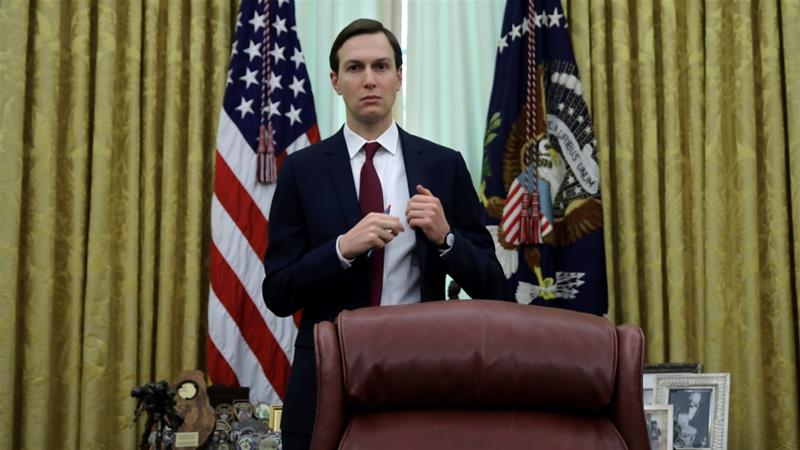
Fox News hosts Jeanine Pirro and Brian Kilmeade received priority treatment for PPE requests from Kushner's coronavirus team, according to a new report

Jake Lahut BUSINESS INSIDER 5/5/2020
Jeanine Pirro and Brian Kilmeade claim they did not know their queries were being prioritized. AP Photo
Jared Kushner's volunteer group charged with securing personal protective equipment (PPE) for hospitals nationwide reportedly prioritized inquiries from Fox News hosts Jeanine Pirro and Brian Kilmeade, according to the Washington Post.

Volunteers were told to fast-track any PPE queries from "VIPs" and conservative media personalities sympathetic to President Trump, according to a complaint filed by one of the volunteers.

Kilmeade passed on a lead to the administration on getting PPE "in an effort to be helpful," while Pirro kept vying for a specific New York hospital to get a "large quantity of masks," according to two sources familiar with the outreach who spoke to The Post.

The complaint was filed last month to the House Oversight Committee.

A Fox News spokeswoman told The Post Pirro and Kilmeade were unaware their tips were being prioritized.

Fox News hosts saw their PPE queries fast tracked by Jared Kushner's team of volunteers tasked with securing the equipment for hospitals nationwide, according to a Washington Post report on a complaint filed by one of the volunteers.

President Trump's senior advisor and son-in-law reportedly oversaw the team filled by consultants with no experience in health care or supply-chain procurement, according to The Post.

In a complaint filed by one of the volunteers to the House Oversight Committee, "VIPs" and Trump-friendly TV hosts are alleged to have gotten their tips on PPE fast tracked.

Fox News' Jeanine Pirro and Brian Kilmeade were named by two sources familiar with their outreach to the Kushner team.

Pirro "repeatedly lobbied the administration for a specific New York hospital to receive a large quantity of masks," while Kilmeade got in touch with the administration about where to get PPE, according to The Post.

A Fox News spokeswoman told The Post that neither host was aware their queries were being prioritized.

The report is another blow to Kushner in his outsize role dealing with the pandemic.

Kushner's loyalists have been mocked as the "Slim Suit Crowd" and a "frat party" by FEMA veterans.