Showing posts sorted by relevance for query LEGALIZE DRUGS. Sort by date Show all posts

Saturday, November 20, 2021

Guest View: Legalize drugs for everyone's sake


Charles H. Jones
Sat, November 20, 2021

It would be easy to read the article on Measure 110 (Oct 29) and think that drug criminalization was related to drug addiction. Let’s look at history to see if this is the case. In particular, let’s consider the science, or lack thereof, behind the implementation of drug laws.

A common argument for drug laws is that someone knows somebody who is grateful they were arrested and forced into rehabilitation. Well, I know a former addict that is grateful they were not arrested because a record would have significantly reduced the chances of them having the professional career they had. But such tit-for-tat anecdotal stories don’t represent scientific data. Going deeper, the absurdity of (the church-group financed) "Reefer Madness" – which, among other things, implied marijuana would make you a murderer – illustrates the lack of science in the 1930s when drug laws were being put in place. Further, the government continues to ignore its own study by the Shafer Commission which recommended decriminalizing marijuana in 1972.

So, what was the motivation? In the 1930s Randolph Hearst and other publishers associated marijuana with supposedly crazy and dangerous Mexicans, while "Reefer Madness’" use of parties featuring jazz helped associate marijuana with Black Americans. And there is the interview with John Ehrlichman (Nixon’s domestic policy chief) published in Harper’s magazine, where he says, "[The war on drugs] was authored by President Nixon not for reasons of health or science, but rather simple prejudice … We knew we couldn’t make it illegal to be either against the war or Black, but by getting the public to associate the hippies with marijuana and Blacks with heroin, and then criminalizing both heavily, we could disrupt those communities … Did we know we were lying about the drugs? Of course, we did.”

The consequences of this racist motivation have been huge. Studies consistently show that minorities have been disproportionately targeted and incarcerated for drug possession. A specific example was the longer sentences for crack (vs. powdered) cocaine possession in the 1980s. Incarceration contributes to multigenerational poverty. Not only does a person lose personal income by being incarcerated and paying related judicial costs, but also the entire family loses income and parental involvement.

We need better ways of helping people with addiction, but within the context of drug laws, addiction is a red herring misdirecting attention from much greater harm. Addiction also is used as a red herring for the unhoused (addiction is a symptom, not a cause). It’s harder to afford housing when you can’t get a job because of a drug arrest. Another red herring is violence. From Prohibition to drug cartels, the vast majority of drug-related violence is due to the illegality of drugs, not their use.

Mental health is another victim of drug demonization. In addition to the trauma of homelessness and incarceration (individually and to families) the understanding of the therapeutic benefits of psilocybin and similar drugs was delayed by decades because of the Reefer Madness hysteria around LSD in the 1960s.

Here are some questions relevant to Measure 110 and decriminalizing drugs. How many people will get jobs that they would not otherwise have gotten because of a drug arrest? How many more people will be able to afford higher education because their parents got those jobs? How many more people will be able to afford housing because of a decrease in stigma associated with drug use and arrest? Since many people can’t afford time off of work, what role does this cost in time and money play in people not showing up to court? Even though overprescription of opioids has increased addiction, not every user of opioids (or other drugs) is an addict. What role does this play in people not calling drug hotlines when cited for possession?

The harm from drug criminalization has accumulated over nearly a century. Undoing this harm by decriminalizing – or legalizing – drugs will take generations, not months. But the mere fact that fewer people are developing rap sheets or being harassed on the streets for harmless drug possession is already a positive step towards changing social and economic inequity.

It is unfortunate that even many proponents of decriminalizing or legalizing drugs are unaware of, or unwilling to acknowledge, the racist origins of the war on drugs or the far-ranging harm these laws have caused.

The evidence supports legalizing drugs for everyone’s sake.

Charles H. Jones, PhD is a retired mathematician. He organizes the Eugene Atheist Pub Social on Meetup.com and writes the Starting From Doubt blog.

This article originally appeared on Register-Guard: Guest View: Legalize drugs for everyone's sake

Wednesday, November 03, 2021

LEGALIZE DRUGS
B.C. applies to remove criminal penalties for possession of small amounts of drugs

VICTORIA — British Columbia is applying to the federal government to remove criminal penalties for possession of small amounts of illicit drugs in an effort to help more people get care in a health crisis that has claimed 7,700 lives over five years.
© Provided by The Canadian Press

Sheila Malcolmson, B.C.'s mental health and addictions minister, said Monday that substance use and addiction is a public health issue and not a criminal one, which is why the province believes removing the penalties will reduce drug-use stigma and convince more people to seek life-saving treatment.

She said B.C. is the first province in the country to request an exemption from Health Canada under the Controlled Substances Act, asking to decriminalize for personal use up to 4.5 grams of illicit drugs, including heroin, fentanyl, powder and crack cocaine and methamphetamine.

The province's application was applauded widely as a step forward in addressing the toxic drug crisis, but concerns on both sides of the issue were raised about the amount of drugs specified in the application.

"The B.C. Association of Chiefs of Police does not support the recommendations to decriminalize 4.5 grams of illicit drugs for personal use," said association president Howard Chow, deputy chief of the Vancouver Police Department, in a statement.

Instead, the association recommends a more measured approach that will see incremental increases as required and supported by evidence, Chow said in a statement.

Police are concerned drug dealers will exploit the threshold and it could lead to public consumption increases, he said.

The Pivot Legal Society, a legal advocacy group based in Vancouver's Downtown Eastside, said the possession threshold is too low and doesn't adequately protect people who use drugs.

"The threshold of 4.5 grams is cumulative, meaning it refers to the combined quantity of drugs allowed to be carried rather than the amount permitted of each individual substance," it said in a statement on behalf of about 10 groups and organizations, including the Vancouver Area Network of Drugs Users.

Malcolmson said B.C. is taking the next step toward helping people end the stigma of drug use and removing the threat of criminal penalty that keeps many from seeking treatment.

She said she is encouraged the federal government recently created a federal Mental Heath and Addictions Department, appointing Carolyn Bennett as minister.

"I hope this is the first item on her desk," said Malcolmson.

Figures released in September from the BC Coroners Service show there were 1,204 deaths from illicit drugs between January and the end of July, a 28 per cent jump over the same period in 2020.

The coroner says the first seven months of this year were the deadliest since a health emergency was declared in 2016, and July was the 17th straight month in which more than 100 B.C. residents died from a toxic drug supply.

B.C.'s provincial health officer Dr. Bonnie Henry said charging people criminally for possessing small amounts of illicit drugs creates a revolving door where people face the legal system but not their health issues.

"The time to make this change is now," she said. "This toxic drug crisis is not a criminal issue. It's a public health issue."

Sen. Larry Campbell, a former Vancouver mayor and B.C. chief coroner, said he supports decriminalizing small amounts of illicit drugs because he believes it will save lives.

"This is about keeping people alive," he said. "That's it. That's the bottom line. It drives me crazy that people can't get it through their heads that this is a health issue."

Chief coroner Lisa Lapointe said decades of criminalizing drug possession has not worked and a move away from a crime model to a health one has arrived.

"The goal of decriminalization is to reduce suffering and death," she said.

Last month, Toronto said it was also preparing to ask Health Canada for an exemption under the Controlled Drugs and Substances Act to decriminalize the possession of illicit drugs for personal use in the city, following a similar request made by Vancouver in May.

This report by The Canadian Press was first published Nov. 1, 2021.

Dirk Meissner, The Canadian Press

Sunday, November 08, 2020

B.C. must look to Oregon on recreational drug decriminalization, legalization of mushrooms: UBC expert

Srushti Gangdev

A UBC expert on drug policy says B.C. should carefully observe what happens in states south of the border that have just decriminalized some or all hard drugs — and see how those policies could hypothetically be applied here.
© (AP Photo/Richard Vogel, File) FILE - 
In this May 24, 2019, file photo a vendor bags psilocybin mushrooms at a pop-up cannabis market in Los Angeles. Oregonians voted Tuesday to legalize the psilocybin for therapeutic use, at regulated treatment centres.

People caught with small amounts of heroin, cocaine, LSD and other drugs will have the option of paying US$100 fines or attending a free addiction recovery centre instead of facing arrest and the possibility of time in prison after Oregonians voted to pass Measure 110 on Tuesday.

“Punishing people for drug use and addiction is costly and hasn’t worked. More drug treatment, not punishment, is a better approach,” reads a statement previously issued by the Oregon Nurses Association, the Oregon chapter of the American College of Physicians and the Oregon Academy of Family Physicians.

B.C. premier calls on federal government for decriminalization of drug possession


Mark Haden, adjunct professor at the UBC School of Population and Public Health, agrees wholeheartedly.

"The drug war needs to come to an end. We need to have a health approach to drugs, not a criminal justice approach," he told Global News.

"And so the more examples that we can see around the United States and Canada of how drugs could be regulated in a way that's helpful to us, the better it is."

Haden said criminalizing people who use drugs has the effect of disproportionately incarcerating people of colour. It also, he said, means governments have to foot the bill for that, and can't collect taxes on the revenue of drug sales as they would be able to if they were regulated.

"Slowly the drug war rhetoric is crumbling under the sheer weight of its own ineffectiveness and harm that it does to all of our society," he said.

Read more: Oregon to become first state to decriminalize hard drugs, other states adopt recreational pot

Oregon also voted Tuesday on Measure 109, which legalizes the psychotherapeutic use of psilocybin — otherwise known as psychedelic mushrooms.

Haden called that decision for state health authorities to therapeutically provide the drug to patients at regulated treatment facilities very exciting and said it's something we should watch very carefully here at home.

"How would it be — if our health authorities started to take psychedelic healing seriously — how would they actually integrate that into their services?"

Haden said the legalization in Oregon will make it much easier for observational research on what patients taking psilocybin would actually experience.

"Normally with research, you have to give somebody a medicine, and then you have to go through a huge number of regulatory hurdles in order to do that, and it can actually cost millions," Haden said.

Read more: B.C.’s top doctor urges province to decriminalize possession of hard drugs to address overdose crisis

"But to be able to just observe, without giving anybody anything — it's given by the health clinic that's currently being legalized — so it makes research a whole lot easier and quite frankly less expensive."

Studies out of New York University and Johns Hopkins University have found psilocybin can significantly improve symptoms of anxiety and depression.

Public health officials in B.C. have strongly voiced support for decriminalizing possession of small doses of drugs for personal use, as has the Canadian Association of Chiefs of Police.

In 2019, provincial health officer Dr. Bonnie Henry released a special report on the matter, which said stigma often leads drug users to hide their usage and creates barriers to accessing harm reduction and treatment services — often with tragic consequences.

Read more: B.C. premier formally asks federal government to decriminalize illegal drugs

In July of this year, B.C. Premier John Horgan formally wrote to Prime Minister Justin Trudeau asking the federal government to act on decriminalization.

“Criminal prohibitions are ineffective in deterring drug use, and criminalization of drug possession directly leads to both individuals and systemic stigma and discrimination that prevent people from seeking services,” Horgan wrote.

According to the B.C. Coroners Service, 1,202 people died of illicit drug overdoses from January to September 2020 — the highest number in at least 10 years.


B.C. declared a public health emergency in April 2016 in response to the opioid crisis.

— With files from Phil Heidenreich and Richard Zussman

Oregon to become first state to decriminalize hard drugs, other states adopt recreational pot

By Phil Heidenreich Global News
Updated November 4, 2020 
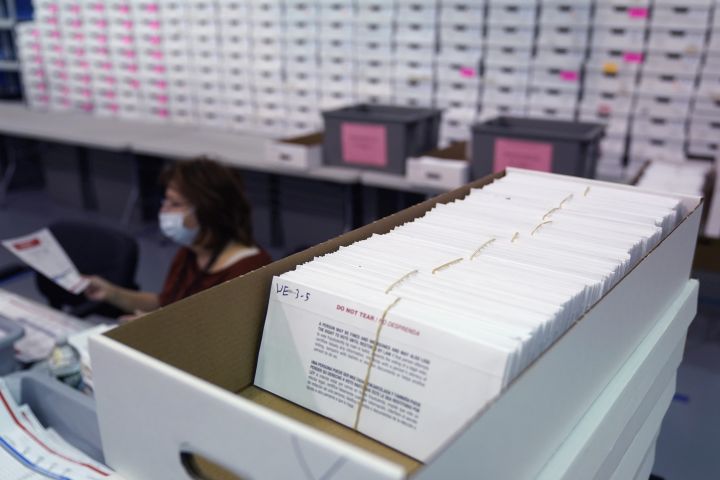
A Board of Election's employee works among stacks of mail-in ballots in Linden, N.J., Thursday, Oct. 29, 2020. AP Photo/Seth Wenig

The possession of small amounts of hard drugs will be decriminalized in Oregon after people in that state voted in favour of the initiative on Tuesday.

With the vote, Oregon will become the first state in the U.S. to adopt such a policy.


When the state implements the provisions included in Measure 110, people caught with small amounts of heroin, cocaine, LSD and other drugs will have the option of paying US$100 fines or attending a free addiction recovery centre instead of facing arrest and the possibility of time in prison.

Measure 110 proposed funding the recovery centres through tax revenue generated by the state’s legal cannabis industry.

The proposal to decriminalize the possession of such drugs was endorsed by several organizations that represent health professionals in the state.

“Punishing people for drug use and addiction is costly and hasn’t worked. More drug treatment, not punishment, is a better approach,” reads a statement previously issued by the Oregon Nurses Association, the Oregon chapter of the American College of Physicians and the Oregon Academy of Family Physicians.

While some district attorneys also backed the initiative, at least two dozen of their counterparts voiced opposition to it.

Oregonians also voted to move ahead with legalizing the therapeutic use of psychedelic mushrooms.

Oregonians voted in 2014 to legalize the recreational use and sale of cannabis.

Before Election Day, 11 U.S. states had fully legalized marijuana’s use for adults and on Tuesday, people in New Jersey and Arizona voted in favour of seeing those states become the latest in the U.S. states to legalize the recreational use of cannabis.

In both New Jersey and Arizona, recreational cannabis use will become legal for people 21 and older. New Jersey will need to pass legislation to set up the cannabis marketplace in that state.

Steve Hawkins, executive director of the Marijuana Policy Project, said the result in New Jersey “will undoubtedly have a rippling effect in the Northeast and add to the increasing pressure in neighbouring states to take action on marijuana legalization.”

The measure passed in Arizona also allows for people convicted of certain crimes related to cannabis to seek to have their records expunged.

Montana and South Dakota also voted on legalizing recreational cannabis. South Dakota, along with Mississippi, also saw people cast ballots on measures regarding the medical use of cannabis.

The legalization of cannabis use has gained momentum since 2012, when citizens of Colorado and Washington state voted in favour of the idea.

–With files from The Associated Press’ David A. Lieb and Andrew Selsky

Thursday, June 02, 2022

Alberta should follow B.C. in decriminalizing small amounts of drugs, advocates say

CBC/Radio-Canada - Yesterday 

As B.C. plans to decriminalize small amounts of drugs next January, some advocates say similar steps should be taken in Alberta.

Dr. Monty Ghosh, assistant professor at the University of Calgary and University of Alberta, is a clinical physician who researches addiction. He said B.C.'s move to legalize the carrying of small amounts of drugs like opioids, cocaine and MDMA is "a step in the right direction."

"We know that decriminalization decreases poor health outcomes and helps support people into treatment," said Ghosh.

He said if people are not afraid of getting arrested for drug use, they will access support and services more often.

Outgoing Alberta Premier Jason Kenney disagrees.

In a statement released Tuesday in response to B.C.'s decriminalization announcement, Kenney said this move to decriminalize will likely lead to an increase in drug addiction, violence and trafficking.

"We'd be happy to get into a more balanced discussion with the federal government about finding real solutions and not making a bad situation worse," Kenney said in a news conference Tuesday.

Kenney's statement also claimed Prime Minister Justin Trudeau said during the last election that his government would not decriminalize drugs.

While Trudeau did not explicitly say in the election that the Liberals would move to decriminalize drugs, he did say in September that his government would be open to working with provinces like B.C. that are interested in some form of decriminalization.
Creating a path for recovery

Chris Gallaway, executive director of Friends of Medicare, a non-profit based in Edmonton that defends universal public health care, agrees with Ghosh that B.C. is taking a positive step for harm reduction.

Gallaway called Kenney's response to B.C.'s decriminalization "offensive" and "outrageous."

"It felt like the premier chose to take political cheap shots … rather than do his job," said Gallaway.

According to Gallaway, concerns of increased drug use caused be decriminalization is just an example of fearmongering.


"We know that safe consumption sites, for instance, save lives," said Gallaway.

"There's all these kinds of myths around drug use, but really it's about removing stigma for folks who use drugs and actually creating a real path for people to be healthy, to be alive and potentially to seek recovery."

In 2021, Alberta recorded its deadliest year for drug overdoses with more than 1,700 deaths.

"You can't recover if you're dead," Gallaway said.

Gallaway also believes drug decriminalization is quite a widely accepted idea today even if Kenney disagrees with it.

The governments of B.C, Vancouver and Toronto have all filed exemption requests to decriminalize small amounts of drugs. Friends of Medicare also supported the City of Edmonton's call to look at decriminalization.

But Gallaway said part of the struggle with provinces and cities trying to implement decriminalization is that there's still no clear process that the federal government has outlined. He said Ottawa should make that process clearer or decriminalize drugs across the country.
Models for drug decriminalization

Ghosh said there are two main models for drug decriminalization.

One is the Portugal model: in 2000, the country decriminalized small amounts of drugs. Its model involves sending people caught with small amounts of drugs to a tribunal — not the same as a criminal court — where they meet with social workers and health-care workers. These workers decide whether to hand out fines, send people to treatment programs or release individuals with no consequences.

Portugal's approach also involves resources like methadone clinics, clean needle handouts and programs that encourage small businesses to hire people in drug treatment.


© Armando Franca/The Associated Press

Portugal's Institute for Drugs and Drug Addiction exchange used needles for new ones and try to direct drug addicts to treatment centres. Portugal decriminalized the use of all drugs in a groundbreaking law in 2000.

While this model has faced criticisms, Ghosh said that since Portugal implemented it, the country has seen a large decrease in overdose numbers, as well as rates of HIV and AIDS.

The model being introduced in B.C. is different from Portugal's. People caught with small amounts of drugs will simply not be charged by police nor have to access treatment services. Ghosh said this model gives people autonomy and allows them to decide what steps to take.

While B.C.'s model has not yet been tested, Ghosh said any form of decriminalization is a good idea. Additionally, the federal government will be able to study in the coming years how effective B.C.'s decriminalization turns out.

Gallaway said decriminalization is just one piece of the puzzle to help people struggling with drug use. Systemic change is also needed in the justice system, and the housing crisis is making it even more difficult for people to get back on their feet.

"There's layers of issues," he said.

Ghosh ultimately believes drug decriminalization is in the future for Alberta, but which model the province takes is something Albertans will have to decide.

With files from the Calgary Eyeopener and Colleen Underwood

Saturday, May 04, 2024

 DEA Agrees to Reclassify Marijuana as Schedule III Controlled Substance


From The Associated Press article


The DEA will move to reclassify marijuana as a less dangerous drug, The Associated Press has learned, a historic shift to generations of American drug policy that could have wide ripple effects across the country.

The proposal, which still must be reviewed by the White House Office of Management and Budget, would recognize the medical uses of cannabis and acknowledge it has less potential for abuse than some of the nation’s most dangerous drugs. However, it would not legalize marijuana outright for recreational use.

The agency’s move, confirmed to the AP on Tuesday by five people familiar with the matter who spoke on the condition of anonymity to discuss the sensitive regulatory review, clears the last significant regulatory hurdle before the agency’s biggest policy change in more than 50 years can take effect.


Currently, Marijuana is classified as more harmful than Schedule II narcotics including meth, fentanyl, and cocaine.

Once the White House signs off, the DEA will take public comments on the plan to move marijuana from its current classification as a Schedule I drug, alongside heroin and LSD. It moves pot to Schedule III, alongside ketamine and some anabolic steroids, following a recommendation from the federal Health and Human Services Department. 

After the public comment period and a review by an administrative judge, the agency would eventually publish the final rule.

“Today, the Attorney General circulated a proposal to reclassify marijuana from Schedule I to Schedule III,” Justice Department Director of Public Affairs Xochitl Hinojosa said in a statement. The DEA is a component of the Department of Justice. “Once published by the Federal Register, it will initiate a formal rulemaking process as prescribed by Congress in the Controlled Substances Act.”

Attorney General Merrick Garland’s signature throws the full weight of the Justice Department behind the move and appears to signal its importance to the Biden administration.

It comes after President Joe Biden called for a review of federal marijuana law in October 2022 and moved to pardon thousands of Americans convicted federally of simple possession of the drug. He has also called on governors and local leaders to take similar steps to erase marijuana convictions.

“Criminal records for marijuana use and possession have imposed needless barriers to employment, housing, and educational opportunities,” Biden said in December. “Too many lives have been upended because of our failed approach to marijuana. It’s time that we right these wrongs.”

The election-year announcement could help Biden, a Democrat, boost flagging support, particularly among younger voters.

Biden and a growing number of lawmakers from both major political parties have been pushing for the DEA decision as marijuana has become increasingly decriminalized and accepted, particularly by younger people. A Gallup poll last fall found 70% of adults support legalization, the highest level yet recorded by the polling firm and more than double the roughly 30% who backed it in 2000.

The DEA didn’t respond to repeated requests for comment.

Possible Impact

Schedule III drugs are still controlled substances and subject to rules and regulations, and people who traffic them without permission could still face federal criminal prosecution. Some critics argue the DEA shouldn’t change course on marijuana, saying rescheduling isn’t necessary and could lead to harmful side effects.

Jack Riley, a former deputy administrator of the DEA, said he had concerns about the proposed change because he thinks marijuana remains a possible “gateway drug,” one that may lead to the use of other drugs. “But in terms of us getting clear to use our resources to combat other major drugs, that’s a positive,” Riley said, noting that fentanyl alone accounts for more than 100,000 deaths in the U.S. a year.

On the other end of the spectrum, others argue marijuana should be treated the way alcohol is.

“While this rescheduling announcement is a historic step forward, I remain strongly committed to continuing to work on legislation like the SAFER Banking Act as well as the Cannabis Administration and Opportunity Act, which federally deschedules cannabis by removing it from the Controlled Substances Act,” Senate Majority Leader Sen. Chuck Schumer of New York said in a statement. “Congress must do everything we can to end the federal prohibition on cannabis and address longstanding harms caused by the War on Drugs.”

Federal drug policy has lagged behind many states in recent years, with 38 having already legalized medical marijuana and 24 legalizing its recreational use.

That’s helped fuel fast growth in the marijuana industry, with an estimated worth of nearly $30 billion. Easing federal regulations could reduce the tax burden which can be 70% or more for businesses, according to industry groups. It could also make it easier to research marijuana since it’s very difficult to conduct authorized clinical studies on Schedule I substances.

The immediate effect of rescheduling on the nation’s criminal justice system would likely be more muted since federal prosecutions for simple possession have been fairly rare in recent years. But loosening restrictions could carry a host of unintended consequences in the drug war and beyond.

Critics point out that as a Schedule III drug, marijuana would remain regulated by the DEA. That means the roughly 15,000 cannabis dispensaries in the U.S. would have to register with the DEA like regular pharmacies and fulfill strict reporting requirements, something that they loathe to do and that the DEA is ill-equipped to handle.

Then there’s the United States’ international treaty obligations, chief among them the 1961 Single Convention on Narcotic Drugs, which requires the criminalization of cannabis. In 2016, during the Obama administration, the DEA cited the U.S.’ international obligations and the findings of a federal court of appeals in Washington in denying a similar request to reschedule marijuana.

Sources AP News

Marijuana backers eye proposed federal

 regulatory change as an aid to legalizing pot

 in more states


A federal proposal to reclassify marijuana as a less


 dangerous drug has raised the hopes of some pot backers


 that more states will embrace cannabis


ByDAVID A. LIEB 
Associated Press
May 3, 2024, 


As the U.S. government moves toward reclassifying marijuana as a less dangerous drug, there may be little immediate impact in the dozen states that have not already legalized cannabis for widespread medical or recreational use by adults.

But advocates for marijuana legalization hope a federal regulatory shift could eventually change the minds — and votes — of some state policymakers who have been reluctant to embrace weed.

“It is very common for a state legislator to tell me, ‘Well, I might be able to support this, but ... I’m not going to vote for something that’s illegal under federal law,’” said Matthew Schweich, executive director of the Marijuana Policy Project, which advocates for cannabis legalization.

Although a proposal to reclassify marijuana would not make it legal, “it is a historic and meaningful change at the federal level that I think is going to give many state lawmakers a little less hesitation to support a bill,” Schweich added.

The U.S. Drug Enforcement Administration has proposed to shift marijuana from a “Schedule I” drug, which includes heroin and LSD, to a less tightly regulated “Schedule III” drug, which includes ketamine and some anabolic steroids. Federal rules allow for some medical uses of Schedule III drugs. But the proposed change faces a lengthy regulatory process, which may not be complete until after the presidential election.

In the meantime, the proposed federal change could add fresh arguments for supporters of ballot measures seeking to legalize marijuana. Florida voters will decide on a constitutional amendment allowing recreational cannabis this November. Public votes could also be held in several other states, including South Dakota, where supporters plan to submit signatures Tuesday for a third attempt at legalizing recreational marijuana.

Following two previous failed attempts, a Nebraska group is gathering signatures to get two measures onto this year’s ballot: one to legalize medical marijuana and another to allow private companies to grow and sell it.

In North Dakota, criminal defense attorney Mark Friese is a former police officer who is backing a marijuana legalization ballot initiative. He said the proposed federal reclassification could immensely help this year's initiative campaign. North Dakota voters rejected legalization measures in 2018 and 2022 but approved medical marijuana in 2016.

“The bottom line is the move is going to allow intelligent, informed discussion about cannabis legislation instead of succumbing to the historical objection that marijuana is a dangerous drug like LSD or black tar heroin,” Friese said.

Others aren't so sure the reclassification will make a difference.

Jackee Winters, chairperson of an Idaho group backing a ballot initiative to legalize medical marijuana, said it's tough to get would-be supporters to sign their petition.

“People are literally afraid to sign anything in Idaho that has to do with marijuana,” she said. “They’re afraid the cops will be coming to their house."

The proposed federal change may have little affect in 24 states that already legalized recreational marijuana for adults, or in an additional 14 states that allow medical marijuana. But advocates hope it could sway opinions in a dozen other states that either outlaw cannabis entirely or have limited access to products with low levels of THC, the chemical that makes people high.

Georgia has allowed patients with certain illnesses and physician approval to consume low-THC cannabis products since 2015. But until last year, there was no legal way to buy them. Eight dispensaries are now selling the products.

The Georgia Board of Pharmacy last year also issued licenses for low-THC products to 23 independent pharmacies, but the federal DEA in November warned pharmacies that dispensing medical marijuana violated federal law.

Dawn Randolph, executive director of the Georgia Pharmacy Association, said a federal reclassification of marijuana could open the way for pharmacists to treat marijuana products “like every other prescription medication.”

In other states, such as Tennessee, elected leaders remain hesitant to back either medical or recreational marijuana. Tennessee Senate Speaker Randy McNally, a Republican, previously said he wouldn’t support changing state law until the federal government reclassifies marijuana.

But after reports about the DEA’s recommended reclassification, McNally still held off on supporting any push to legalize medical marijuana.

Removing marijuana as a Schedule I drug “would only start the conversation in my mind. It would not end it. There would still be many issues to resolve if the downgrade to Schedule III happens as proposed,” he said Thursday.

A proposal to legalize medical marijuana died in a Kansas Senate committee without a vote this year, and an attempt to force debate in the full Senate failed by a wide margin. The strongest and most influential opposition came from law enforcement officials, who raised concerns that any legalization could invite organized crime and make it difficult to assess whether people are driving under the influence.

Kansas Bureau of Investigation Director Tony Mattivi considers the DEA effort to reschedule marijuana “misguided and politicized,” KBI spokesperson Melissa Underwood said.

The head of the South Carolina state police force also has opposed efforts to legalize medical marijuana, saying it opens the door to other drug use. A legalization bill backed by Republican state Sen. Tom Davis passed the Senate this year but has stalled in a House committee.

“It’s difficult to rewire a lot of people who have been conditioned to think of marijuana in a certain way,” said Davis, who vowed to push a medical marijuana bill again next year if reelected.

Although not fully embracing medical marijuana, Iowa and Texas both have laws allowing limited access to some cannabis products with low levels of THC. Some Texas cities have passed ordinances allowing small amounts of marijuana. But a similar effort in Lubbock, home to Texas Tech University, was derided in a Facebook post by Republican state Rep. Dustin Burrows as part of “nationwide effort by the left to undermine public safety.”

In Wyoming, a decade of pro-marijuana efforts through ballot initiatives and legislation has gotten nowhere. Gov. Mark Gordon, a Republican, has been ambivalent about legalizing medical marijuana and opposes legal recreational pot. The GOP-led Legislature didn’t even debate the latest bill to decriminalize marijuana and legalize medical marijuana.

Yet one organizer, who helped unsuccessful petition efforts in 2022 and 2023, hopes federal reclassification of marijuana nudges more lawmakers to support legalization.

“Resistance will be a lot less palpable,” legalization advocate Apollo Pazell said.

___

Associated Press writers Jeff Amy in Atlanta, Margery Beck in Omaha, Nebraska, Rebecca Boone in Boise, Idaho; Acacia Coronado in Austin, Texas; Jeffrey Collins in Columbia, South Carolina, Jack Dura in Bismarck, North Dakota, Hannah Fingerhut in Des Moines, Iowa, Mead Gruver in Cheyenne, Wyoming, John Hanna in Topeka, Kansas, and Kimberlee Kruesi in Nashville, Tennessee, contributed to this report.


Sunday, February 09, 2020

Rep. Tulsi Gabbard Wants to Legalize Drugs (As in All Drugs)

GOOD FOR HER I AGREE AS SHOULD ANY LIBERTARIAN LEFT OR RIGHT


Hunter DeRensis,The National Interest•February 7, 2020


The New Hampshire primary on Tuesday will prove a make or break moment for Rep. Tulsi Gabbard of Hawaii. After having collected no popular support from the questionable Iowa caucus results, the congresswoman is relying on what has been a consistent 4-5% base of support in the Granite State.

Gabbard, whose key platform issue is an overhaul of the U.S. foreign policy establishment and opposition to “regime change wars,” as also staked herself out as the most progressive 2020 Democratic candidate when it comes to drug legalization.

When asked by a New Hampshire voter what she would about the “unjust” War on Drugs, Gabbard agreed with the voter’s suggestion to “legalize and regulate narcotics.” To justify that position, Gabbard mentioned the country of Portugal, which legalized all drugs in 2001.

“I think that when you look at the statistics that come out of countries like Portugal that have taken that ‘extreme’ step…the fears, and the myths, and the stigma around taking that stuff should be set aside,” she said. “Because ultimately what you see is there are fewer and fewer people who are unnecessarily being incarcerated, and there are more people who need help who are actually getting the help that they need.”

---30---

Wednesday, February 26, 2020

Mexico president ties shootout dead to drug consumption

Associated Press•February 26, 2020

AMLO IS A NOT A LIBERAL OR A LEFTIST 
HE IS A NEOLIBERAL

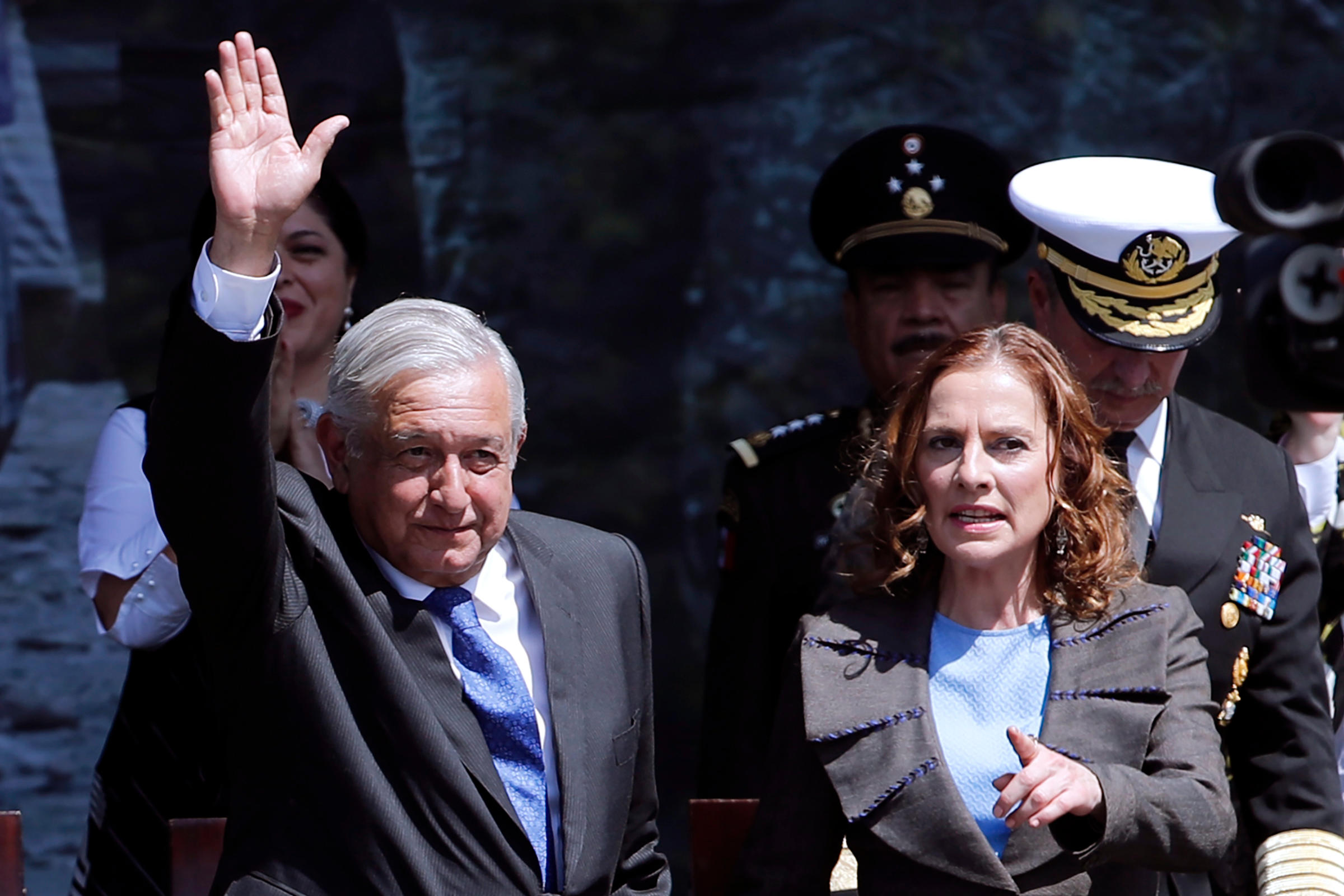
Mexico's President Andres Manuel Lopez Obrador waves during an event marking Army Day at the Zocalo, accompanied by first lady Beatriz Gutierrez Muller, in Mexico City, Wednesday, Feb. 19, 2020. (AP Photo/Marco Ugarte)More

LEGALIZE ALL DRUGS

MEXICO CITY (AP) — President Andrés Manuel López Obrador suggested Wednesday without offering evidence that most of those who die in Mexico's cartel- and gang-fueled firefights are high on drugs or intoxicated, prompting criticism and questions about whether the claim was accurate.

Speaking to journalists in his morning news conference, López Obrador said rising drug consumption rates must be reversed if the country is to guarantee peace and security after years of rising, record-setting homicide statistics.

“Just so you have the number, 60% of those who lose their life each day, 60% of those killed in clashes, it is shown that they are under the influence of drugs or alcohol, but primarily drugs,” the president continued. “Because of that, these ruthless crimes that cause such sadness.”

The comments revived a debate seen during the 2006-2012 presidency of Felipe Calderón, who first launched Mexico's militarized anti-drug offensive. Calderón used to say that the majority of those killed during the drug war were tied to cartels, also without offering evidence, but eventually backed off such rhetoric after criticism from activists and relatives of some victim.

A federal government official clarified later Wednesday that the figure came from López Obrador's closed-door morning meetings with his security Cabinet and is based on analyses of those killed in clashes between criminal groups and/or with security forces. That suggests he was referring to presumed criminals and not murder victims more broadly speaking. The official, who was not authorized to discuss the matter publicly and spoke on condition of anonymity, said documentation exists but is not publicly available.

But critics questioned whether there was any scientific basis for such an assertion. While it's true that sometimes cartel killers get high before doing their bloody business, they questioned whether it was fair to imply drug consumption is an underlying cause of gangland violence. And perhaps due to the ambiguity of López Obrador's words, many understood them to mean all homicides, leading to accusations of victim-blaming.

Security analyst Alejandro Hope wrote that usually drug consumption is used to characterize perpetrators of murders, not the dead, and that “there is zero evidence” for López Obrador’s assertion.

María Elena Morera, president of the NGO Causa en Comun, called the president’s comment “troubling” and said there is no data to back it up.

“So the president is confused, ill-informed or simply does it to reinforce his posture of revictimizing and not legalizing drugs,” Morera said.

López Obrador was asked at the news conference about possible legalization, for example the cultivation of opium poppies or the recreational use of marijuana, and suggested his administration is looking more at legalization for medicinal purposes.

The Supreme Court ruled in 2018 that prohibition of personal use, possession and private cultivation of cannabis was unconstitutional, though lawmakers have not codified decriminalization into law.

Data Civica, a stats-driven NGO working in human rights and citizen empowerment, also said it was concerned by López Obrador’s assertion.

“On the one hand, because drugs and alcohol do not justify a murder, on the other hand because there is no way of knowing that information,” Data Civica said via Twitter thread. “In this sense, either the president has access to a database that nobody knows of (and should be public) or he is repeating prejudices.”

Mexico recorded 35,588 murders last year, the most since comparable records began to be kept in the 1990s and the latest of multiple consecutive annual highs dating to before he took office in December 2018. The rate of increase in 2019 did slow significantly from that of previous years.

Since Calderón launched the anti-drug offensive in 2006, yearly killings are up more than threefold.

López Obrador espouses a strategy of addressing root causes like poverty and joblessness to try to reduce violence in the country.

“We must make clear that drugs, above all the modern drugs, the chemical drugs, are destructive,” the president said Wednesday.

Wednesday, July 06, 2022

LEGALIZE DRUGS END WAR ON DRUGS
‘Set of failures’: are Peru’s gains in the drug war a loss for the Amazon?

A 2015 aerial view of the Esmeralda Base in the VRAEM area, some 280km south east of Lima. 
Photograph: Cris Bouroncle/AFP/Getty Images

In Vizcatán, the last redoubt of militarily active Maoist rebels Shining Path, the army is cracking down on cocaine traffickers


Dan Collyns at the Valle Esmeralda base
THE GUARDIAN
Wed 6 Jul 2022 

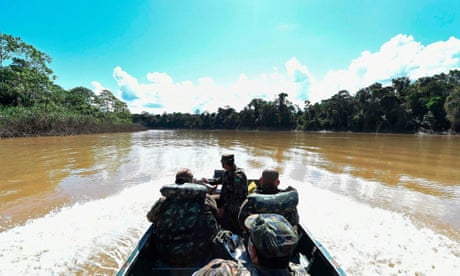
Sitting on a bluff overlooking the Tambo River, the Valle Esmeralda counter-terrorist base is only accessible by helicopter or a very long hike. It is strategically located to have a bird’s eye view of Vizcatán, the last redoubt of the only militarily active remnants of the Shining Path, the brutal Maoist rebels who terrorized Peru in the 1980s and 90s.


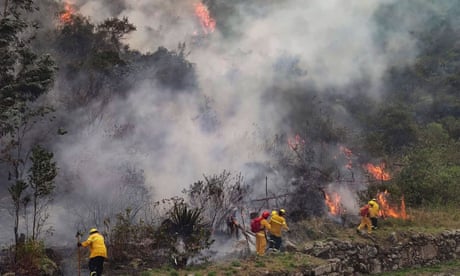
Peruvian firefighters contain blaze near Machu Picchu after three days

It is a rugged terrain of thickly forested mountains, steep canyons and fast-flowing rivers on the Amazon’s western edge which rises into the dry, treeless Andes. Its landscape and the Mantaro river which snakes away from jungle lowlands and through the mountains make it the ideal route for backcountry cocaine trafficking.

Vizcatán is one part of a huge stretch of jungle known as VRAEM (an acronym for the valley of the Apurimac, Ene and Mantaro rivers), and the centre of Peru’s drugs trade. Some 70% of the country’s coca, the plant used to make cocaine, is grown here, according to the Peruvian Observatory on Drugs.

Protected by a splinter group of Shining Path rebels, drug traffickers can shift tonnes of freshly made cocaine in kilo-sized bricks to the coast for smuggling out of Peru’s Pacific ports where shipping containers remain the principal vessels for the cargo.

The battalion of troops stationed at the base shout out battle cries, faces painted, guns at the ready, enveloped in swirling smoke for effect, as they receive a visit from Peru’s defence minister, José Gavidia, and the leader of the Joint Forces Command, Manuel Gómez de la Torre.

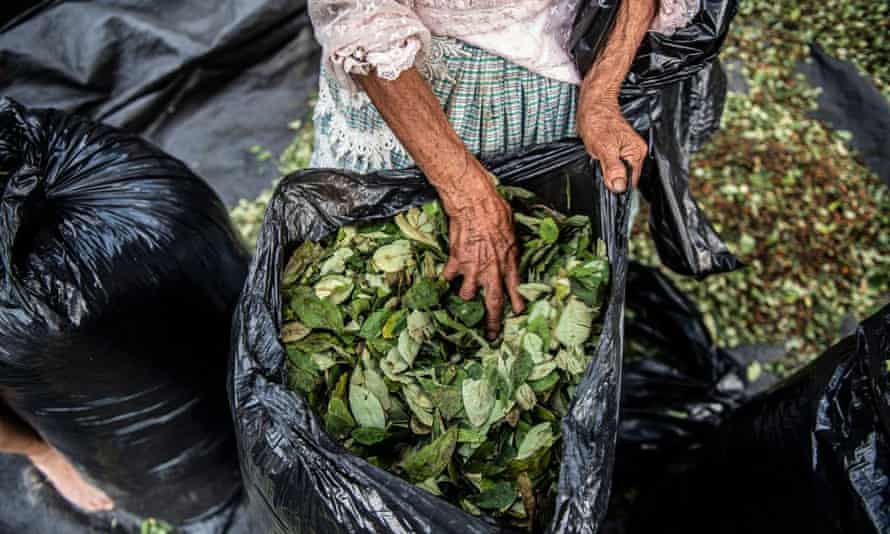
A coca farmer works with coca leaves in Rosario district, Ayacucho department, Peru. Photograph: Ernesto Benavides/AFP/Getty Images
The top brass is convinced the Shining Path remnants are on the back foot: Victor Quispe Palomino, ‘Comrade José’, is the last of three siblings which led the band. The US State Department has offered a reward of up to $5m for information leading to the 61-year-old’s arrest or conviction.

As a show of intent, journalists were shown a seizure of nearly two tonnes of refined cocaine piled in bricks at Los Sinchis army base in the frontier town of Mazamari – the result of a joint raid by police and army special forces.

The potential profit margin for smugglers is like that of no other product on earth. One kilo of cocaine hydrochloride worth around $1,000 in the VRAEM could be worth hundreds of times more if it reaches Saudi Arabia or China.

But coca represents an important income for the coca growers, who make up much of the valley’s 650,000 inhabitants. It provides easy money to pay for basic needs in a region which lacks sanitation, electricity and basic infrastructure.
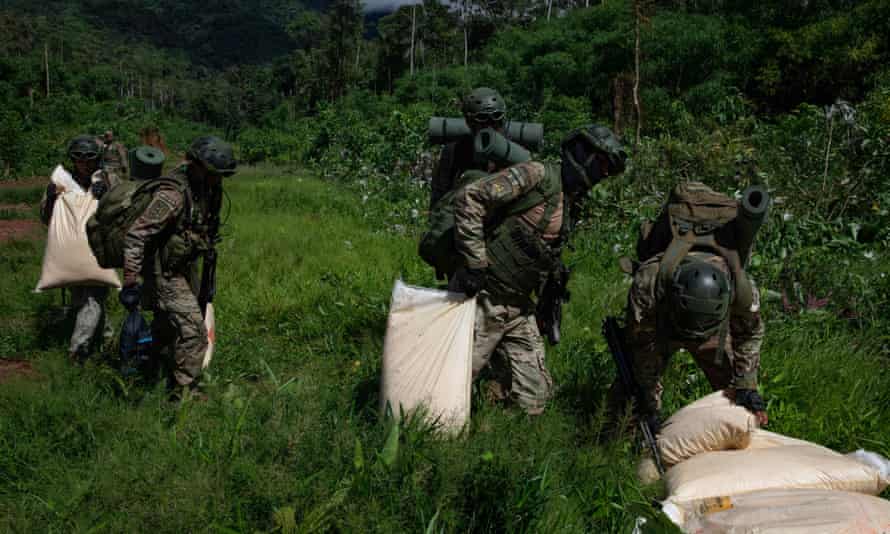
Members of the Peruvian Armed Forces destroy a clandestine airstrip in the VRAEM. Photograph: Sebastian Montalvo Gray/EPA

“But in no way does [coca] lift them out of poverty,” says Gustavo Gorriti, a Peruvian investigative journalist and a veteran of the country’s drugs war. “The traffickers want to keep them in it.”

The military advances in VRAEM mean traffickers are looking for new places to grow coca with less intervention from the state security forces. That has led to a balloon effect as drug traffickers and coca farmers are squeezed out in one area, then pop up in another.

That means Indigenous territories to the north of the VRAEM in Ucayali, Huánuco and Loreto regions are increasingly under threat as traffickers invade their lands.

“The balloon effect is going to happen anyway,” Gen Gómez de la Torre told the Guardian. “When we pacify the area our troops are going to have to leave the area. As in any part of the world, the military apparatus moves to where the threat is.”


Police losing narco war in deadly Amazon region where duo disappeared

Increasingly that threat is on Peru’s north-eastern frontier with Colombia and Brazil, the dangerous triple frontier where Dom Phillips and Bruno Pereira were murdered.

It also lies along Peru’s Amazon border with Brazil and Bolivia where drug flights are a daily occurrence.

Global manufacturing of cocaine reached a record high in 2020, according to the UN report, and of the three countries that grow coca bushes to make cocaine, Colombia showed a slight decline (-7%) which was more than offset by increases in Peru (13%) and Bolivia (15%). However, Colombia, with 61% of the total, continued to be the country in the world with the highest level of coca plantations.

A record 21.5 million people used the drug in 2020, the report estimated, an increase coupled with rising consumption in South America which doubled over the last ten years.

Without more backing and resources from consumer countries to interdict trafficking along Peru’s 10,000km land and sea border, little will change, said Gorriti.

“All Peruvian anti-drug strategies are, and with very few exceptions have been, a set of failures and counterproductive actions that have produced cosmetic results,” he added.

“They have not affected the growth and movement of drug trafficking and its effects.”

Sunday, September 02, 2007

Canada Goes To Pot


Canada is a nation of pot heads.
\Marijuana use in Canada is the highest in the industrialized world and more than four times the global rate, according to a report from the United Nations.

Forty per cent of Canadian cannabis is produced in British Columbia, 25% in Ontario and 25% in Quebec, the report noted.

 Health

- One in 10 Canadian women uses marijuana.


Experts and activists are not concerned about the high rate of Canadian marijuana use reported in 2007 UN World Drug report —even though young people are the largest users of the drug.

The report states that 16.8 per cent of Canadians between the ages of 16 and 64 used marijuana in 2004. Canada is ranked fifth in marijuana use and the country’s usage percentage is four times the world average of 3.8 per cent. To compare, the report found that 12.6 per cent of people in the United States and 6.1 per cent in Holland have used the drug.

Richard Mathias, a professor at the University of British Columbia’s faculty of medicine, said he is pleased with the results from the report and is not worried about the high numbers of young people using the drug.

“I think that marijuana is a safer drug than some other options and I know that youth is a difficult, highly stressful time and it is to be expected that youth will explore and that’s good,” he said. “I teach these kids. They’re not criminals.”

A study conducted in 2002 by Carleton University professor Peter Fried also concluded that only heavy pot smokers are negatively affected by marijuana use. Fried’s 70-person study found that only heavy marijuana users between the ages of 10 and 20 had a decline in their IQ scores. The rest saw an increase in their scores.

The study also found that those who smoked heavily and later quit returned to their former IQ level.

Eugene Oscapella, an Ottawa-based lawyer who specializes in drug policy issues, said the UN report shows that the legal status of marijuana in a given country seems to have little bearing on consumption rates.

The report found that only 6.1 per cent of people in the Netherlands, where marijuana use has effectively been decriminalized, reported trying pot.

This shows decriminalization has no bearing on rates of use, and Canada shouldn't be so afraid to follow the Dutch lead, Oscapella said.

"The criminal law does not prevent people from using marijuana, nor does legalization force people to use it," he said.

Jean Chretien's Liberals first introduced a bill to decriminalize small amounts of marijuana in 2003, but it was never brought to a final vote. Stephen Harper's Conservatives killed the bill when they came to office in January 2006.

Oscapella added that Canada should be focusing its resources on the root causes of drug abuse, rather than persecuting people for possession.

"It is a health and a social issue," he said. "The criminal law is not the appropriate mechanism for dealing with drugs in the vast majority of cases."


Marijuana and tobacco use among young adults in Canada

The authors characterized marijuana smoking among young adult Canadians, examined the co-morbidity of tobacco and marijuana use, and identified correlates associated with different marijuana use consumption patterns. Data were collected from 20,275 individuals as part of the 2004 Canadian Tobacco Use Monitoring Survey. Logistic regression models were conducted to examine characteristics associated with marijuana use behaviors among young adults (aged 15-24). Rates of marijuana use were highest among current smokers and lowest among never smokers. Marijuana use was more prevalent among males, young adults living in rural areas, and increased with age. Young adults who were still in school were more likely to have tried marijuana, although among those who had tried, young adults outside of school were more like to be heavy users. Males and those who first tried marijuana at an earlier age also reported more frequent marijuana use. These findings illustrate remarkably high rates of marijuana use and high co-morbidity of tobacco use among young adult Canadians. These findings suggest that future research should consider whether the increasing popularity of marijuana use among young adults represents a threat to the continuing decline in tobacco use among this population.

We have a large scale industry in producing illicit and licit marijuana. The latter for medicinal purposes. We have approved marijuana and its byproducts for medicinal uses.

Since the 1970's when the LeDain Commission recommended decriminalization to today when the right wing think tank the Fraser Institute recommends decriminalization for controlling grow ops and increased tax income.

Canadians favour decriminalization. However the Harpocrites ignored their old Fraser pals as they ignore 'polls' and once elected declared war on pot. Quietly without much fanfare, what had been Liberal policy waiting for a vote was squashed.


“We will not be reintroducing the Liberal government’s marijuana decriminalization legislation,” Harper announced at a Canadian Professional Police Association meeting. “I thought we might find a receptive audience here,” he added, according to a Reuters report.


The Harpocrites would rather pander to their regressive base with a phony war on drugs, blaming as they do the rise in crime and pot smoking on the Liberals, pathetic.

In view of the former Liberal government's determination to medicalize and legalize marijuana, it is not surprising that, according to a study of young people in Canada released in 2004, our youth now hold the distinction of topping all nations (Switzerland was second) in frequent marijuana use. The lead researcher for this study, Dr. William Boyce of Queen's University, stated that the increased use of marijuana in Canada was tied to the three As - affordability, availability and acceptability. He stated, "in Canada, I think all three of those things come together so that it's actually used quite a bit by kids here. It's not so expensive, it's definitely available and with the legislation introduced in the last Parliament - and perhaps again in this one - that decriminalizes marijuana use, it certainly provides a signal to kids that this is not a highly illegal activity."

Thank heaven, the Conservative government is now providing a different message to our youth on marijuana use.

Please write to Prime Minister Harper and Minister of Justice Toews to thank them for the planned enforcement of the present marijuana laws rather than legalizing its use. Their actions will make a significant difference to our nation's youth. Please also request that marijuana use for so-called medical reasons be stopped if and until such time that it can be scientifically determined that its use has in fact, medical benefits.

The Harpocrites have adopted the oh so successful American War On Drugs Policy. And they have included marijuana as a key element of their new anti-drug campaign. Look forward to more regressive stupidity in the fall sitting of the house as the Minister of Health declares a drug panic.

Clement to MDs: Get tougher on illicit drugs

Federal Health Minister Tony Clement delivered a tough, anti-drug message to doctors yesterday, saying young people need straight talk about the dangers of illicit drugs, including marijuana.

"The messages young people have received during the past several years have been confusing and conflicting to say the least," Clement told the annual meeting of the Canadian Medical Association in Vancouver.

"We are very concerned about the damage and pain that drugs cause families and we intend to reverse the trend toward vague, ambiguous messaging that has characterized Canadian attitudes in the recent past," he said.

Ottawa plans a campaign emphasizing the dangers of all illicit drugs in any quantity, Clement said. "We will discourage young people from thinking there are safe amounts or safe drugs."

Meanwhile the Police and Senate disagree with the Harpocrites new War On Drugs.

Victoria's No. 2 cop testified in B.C. Supreme Court yesterday that neither the Vancouver Island Compassion Society nor its distribution of medical marijuana has ever been the subject of a criminal investigation.

Deputy Chief Bill Naughton said the society's Cormorant Street office of the Vancouver Island Compassion Society has not generated any complaints, adding marijuana ranks behind drugs like cocaine, methamphetamine and heroin in terms of Victoria police priorities.

"The enforcement of federal laws against marijuana takes a back seat," said Naughton, who was subpoenaed by the defence in the trial of Michael Swallow, 41, and Mat Beren, 33.

Also testifying yesterday in Victoria was Senator Pierre Claude Nolin, who chaired the Senate Special Committee on Illegal Drugs, which called in 2002 for the legalization of marijuana in Canada.

Nolin told the court the regulations, as they currently exist, are an obstacle to Canadians who want access to medical marijuana.

He said the rules ask doctors to be "gatekeepers" for access to legal marijuana. It's a role doctors don't want, and so Canadians are being denied access to a medical product.

"[The] medical profession is reluctant, generally reluctant," he said. "They don't want to be the gatekeepers, they don't want that responsibility."

Heck even the da Judge disagrees with the Government.

Rolling a joint might require the removal of stems and seeds, but the legal limbo in which pot smokers in Canada find themselves is far from clear-cut.
On July 13, an Ontario Court judge in Toronto acquitted Clifford Long, who was charged with possession of 3.5 grams of marijuana.
The court held that Canada's marijuana possession laws are unconstitutional. Justice Howard Borenstein cited a seven-year-old Ontario Court of Appeal case, which also described the possession law as unconstitutional, due to its ambiguity on medical marijuana.
Long argued in court that since the government of Canada allowed for medicinal use, but did not change the law on marijuana to accommodate this policy change, then all possession laws should cease to exist.

While the Harpocrites declare a War On Drugs, including marijuana, at the same time they approve big pharma profiting off Medical Marijuana.

GW Pharmaceuticals plc (AIM: GWP) and Bayer Inc., a subsidiary of Bayer AG, announce that Health Canada has approved Sativex®, a cannabis derived pharmaceutical treatment, as adjunctive analgesic treatment in adult patients with advanced cancer who experience moderate to severe pain during the highest tolerated dose of strong opioid therapy for persistent background pain.


While local marijuana growers are limited in providing medical marijuana to one or two Canadians. Clearly the Harpocrites missed the point of the Fraser Institute Report. Local grow ops legally functioning can produce medical as well as recreational marijuana that then could be taxed. Quality and consumer protection, would be assured.

A Vancouver Island grower of organic marijuana is being inundated with pleas for pot from disease sufferers, but Health Canada says he can supply only one person, a provincial court trial has been told.

Eric Nash said he wrote to Canadian Health Minister Tony Clement with a list of 121 people, all approved by Health Canada to use marijuana as medicine and asking him to grow it for them. One of them was a former RCMP officer diagnosed with multiple sclerosis.

But Nash said regulations forbid him from growing for more than one person at a time. So his company, Island Harvest, can supply only two people, one each for him and his partner, although it could easily supply more.


And Tony's announcement of a new PR campaign in the War On Drugs looks suspicious in light of the governments failure to extend the license for the Vancouver Safe Injection Site.

The Canadian government is ramping up a massive anti-drug campaign, the first in 20 years, amid calls to keep open a Vancouver clinic that monitors heroin addicts as they inject themselves with the drug.

"Canada has not run a serious or significant anti-drug campaign for almost 20 years. The messages young people have received during the past several years have been confusing and conflicting to say the least," federal Health Minister Tony Clement said yesterday in a speech to the Canadian Medical Association in Vancouver.

Meanwhile, the Health Minister was vague about whether the Insite injection clinic in Vancouver would stay open. "There has been more research done, and some of it has been questioning of the research that has already taken place and questioning of the methodology of those associated with Insite," he said.

Isra Levy, president of the National Specialty Society for Community Medicine called for Insite to remain open in an interview with The Globe and Mail, stating that "illicit drug use is indeed a scourge, it's the cause of untold misery for those ill with addiction and their loved ones."

Is Harpers War in Afghanistan an excuse to expand his War On Drugs.....not only against opium but against the powerful Cannabis Indica and Afghani Hash....remember Afghani hash? It ain't been around in North America since the late Sixties and early Seventies when Hippies made their holy pilgrimage to Marrakesh and on to Afghanistan and back. It remains however a staple in Europe.

Hashish is produced practically everywhere in and around Afghanistan. The best kinds of Hash originate from the Northern provinces between Hindu Kush and the Russian border (Balkh, Mazar-i-Sharif). As tourist in Afghanistan it will be very difficult to be allowed to see Cannabis-Fields or Hash Production. The plants which are used for Hash production are very small and bushy Indicas. In Afghanistan Hashish is pressed by hand under addition of a small quantity of tea or water. The Hashish is worked on until it becomes highly elastic and has a strong aromatic smell. In Afghanistan the product is stored in the form of Hash-Balls (because a round ball has the less contact with air), however, before being shipped, the Hash is pressed in 100g slabs. Good qualities of Afghani are signed with the stem of the producing family. Sometimes Hash of this kind is sold as Royal Afghani. Color: Black on the outside, dark greenish or brown inside. Can sometimes look kind of grayish on the outside when left in contact with the air. Smell: Spicy to very spicy. Taste: Very spicy, somewhat harsh on the throat. Afghani can induce lots of coughing in inexperienced users.

Afghani
aka Afghanistan
Marijuana


Afghani Marijuana Strains - The origins of this seed strain come from Afghanistan and travel to Holland. Afghani has big round fat leaves and the same beautiful big fat buds. It usually has a rich smooth hash like heavy smoke taste. The Afghani marijuana plant tends to be very bushy and will yield large amounts of very sticky buds. Well known for excellent growth because it originated in mountainous conditions and over thousands of years a very stocky, sturdy and disease resistant plant was produced.


Well Cannabis in Afghanistan is back in a big way. As Canadian forces found last fall. Hey guys don't put that to the torch or ya' all will fall down.

Maj. Patrick Robichaud, commander of the operating base, this week characterized the security situation around Ma'sum Ghar as "fragile." He said Taliban insurgents appear to have taken advantage of a change in command among the Canadians and the Afghan National Army to slip back into the region. The insurgents are looking to strong-arm local farmers for a piece of the action in the impending marijuana harvest, said Maj. Robichaud.

Canadian troops fighting Taliban militants in Afghanistan have stumbled across an unexpected and potent enemy — almost impenetrable forests of 10-foot-tall marijuana plants.

Gen. Rick Hillier, chief of the Canadian defense staff, said Thursday that Taliban fighters were using the forests as cover. In response, the crew of at least one armored car had camouflaged their vehicle with marijuana.

"The challenge is that marijuana plants absorb energy, heat very readily. It's very difficult to penetrate with thermal devices ... and as a result you really have to be careful that the Taliban don't dodge in and out of those marijuana forests," he said in a speech in Ottawa.


IMAGE: Soldier and marijuana forest


The United Nations has conducted surveys of poppy crops, but has not done so for marijuana plants. The focus on poppies possibly reflects the view of international donors that highly addictive heroin is the more urgent problem.

Marijuana plants are widely grown in at least three of the 16 districts in Balkh province, which is home to Mazar-e-Sharif. Local authorities have sent letters to villages urging farmers to stop growing the illegal crop, but they have yet to decide how and when they will crack down.

"The farmers have planted this stuff like smugglers," said Saheed Azizullah Hashmi, head of the province's agriculture department. "We don't know how much there is out there."

He said many people associated with the hashish trade were linked to the Taliban and Osama bin Laden's al-Qaida network. But marijuana plants thrived well before they held sway over much of Afghanistan, and local commanders with large land holdings reportedly benefit from its cultivation.

Rouzudin and his fellow farmers made no effort to hide their plants, which loom over nearby cotton bushes. The two crops are interspersed along the road leading to Shibergan, the headquarters of Gen. Abdul Rashid Dostum, an ethnic Uzbek commander and powerful political figure in the north.

Farmer Majid Gul said he can get 5 million Afghanis, or about $100, for 2.2 pounds of hashish, 200 times more than he could earn for the same amount of cotton.

"When we're ready to sell, people in big cars will come from the bazaar in town," he said. "We don't know who they are, we just want the money."

. For the decade before the Soviet army invaded in 1979, the teahouses of Afghanistan were the toking tourist's hangout of choice. And even during 23 years of war, when the Afghans fought the Soviets and then one another, the hash trade thrived. "Afghan black" remained a staple sale for cannabis dealers across the world. Mazar-i-Sharif gave its name to a particularly potent variety. And last year, in the final weeks of the Taliban, Amsterdam's coffee-shop owners even boasted they were doing their bit for the war on terror by buying blocks stamped with a golden Northern Alliance stencil reading "Freedom for Afghanistan."

Now, as Afghanistan emerges from war, dope farming has never been so good�and the drought never so bad. The Taliban banned hash production, but in the postwar chaos of lawless fiefdoms that dot the land, growers and traders across the country are finding themselves free once again to cultivate and export hashish without fear, and often with warlord protection. Moreover, the international perception that cannabis is a relatively benign drug�prompting some authorities across Europe and Australia to decriminalize its use�has persuaded drug-policing agencies to largely ignore it. So, while opium cultivation is monitored to the acre, neither Interpol, the U.N. Office for Drug Control and Crime Prevention nor the U.S.'s Drug Enforcement Agency can offer even rough estimates for how much hashish Afghanistan produces or what the trade is worth. But around Mazar it's almost impossible to find a field where hemp is not being grown, either openly or poorly hidden behind watermelons or knee-high cotton plants. "Everybody's farming chaars now," says former Taliban fighter Faizullah, 27, watering a verdant six-hectare oasis of hemp surrounded by desert. Cannabis used to be outlawed by the Taliban. "But now," says Faizullah, "it's a free-for-all."

Harpers War On Drugs is doomed to fail, as has the American campaign. But this proves once again that he and his pals have abandoned any pretense to libertarianism, while embracing the traditional right wing screed of Law and Order Republicanism. Heck Canadians even support the medical use of opiates despite this governments opposition.

While in the U.S. Republican Presidential Candidate and Libertarian Ron Paul embraces his inner Canadian and calls for decriminalization, and an end to Americas war on drugs.
Why Is This Canadian Pot Dealer Campaigning for Ron Paul?


Also, a little known fact is that if Ron Paul got his way, there would be no federal war on drugs. He has called the war on drugs “as stupid as the war in Iraq”. He is uncompromisingly against federal laws banning medical marijuana, and completely opposed to the federal government coming in, when a state has legalized medical marijuana, and using force to nullify this legalization (such as has happened in California, where medical marijuana is legal, but the federal government uses force to effectively keep it criminalized. This would NOT happen under a Paul administration.)


Find blog posts, photos, events and more off-site about:
, , , , , ,,,,,,, ,