Showing posts sorted by relevance for query MOROCCO. Sort by date Show all posts

Saturday, January 10, 2026

Morocco boosts military ties with Israel despite tensions

DW

Five years after the Abraham Accords, Morocco and Israel are strengthening ties diplomatically, economically and militarily. The relationship has given Morocco strategic leverage in its Western Sahara dispute.


https://p.dw.com/p/56aBB

It has been just over five years since Israel and Morocco established diplomatic relations on the basis of the US-brokered normalization agreements, the Abraham Accords.

By signing the deal, Morocco effectively abandoned the conditions of the Arab Peace Initiative formulated by Saudi Arabia in 2002. That initiative had proposed a comprehensive peace treaty between Israel and the entire Arab world, albeit conditional on several requirements, such as Israel's withdrawal from the territories occupied since the Six-Day War in June 1967, as well as the establishment of an independent Palestinian state.

Drones and air defense systems

Along with the United Arab Emirates, Sudan and Bahrain, Morocco has cultivated normal diplomatic relations with Israel for half a decade, a process initiated by the first Trump administration.

Now, both countries are taking things a step further: at their third Joint Military Committee meeting in Tel Aviv earlier in January, they signed a joint military "work plan" for 2026.

Recent talks have focused on strategic discussions, IDF unit visits, and coordination on shared security objectives, according to a statement by the Israeli army on X.


According to Steven Höfner, head of the Konrad Adenauer Foundation's office in Morocco, the meeting focused on future technologies in addition to further technological deliveries from Israel to Morocco. "Both partners now want to develop not only drones but also joint air defense systems, including joint satellite technology," he told DW, adding that "this is a significant step forward in terms of quality."

Morocco has been one of the world's biggest arms importers for years. In the global ranking by the internationally recognized research institute SIPRI for 2024, the country ranks 31st, although total imports have fallen by a good quarter in recent years. Particularly noteworthy: between 2020 and 2024, Israel was Morocco's third-largest arms supplier after the US and France.

According to SIPRI, Morocco mainly imports armored vehicles, missiles, air defense systems, and military aircraft. While American and French deliveries mainly fall into these categories, Israel primarily supplies air defense and unmanned systems. At least 51% of the defense missiles supplied to Morocco are reportedly coming from Israel. In addition, Morocco is massively expanding its drone production with Israeli support.
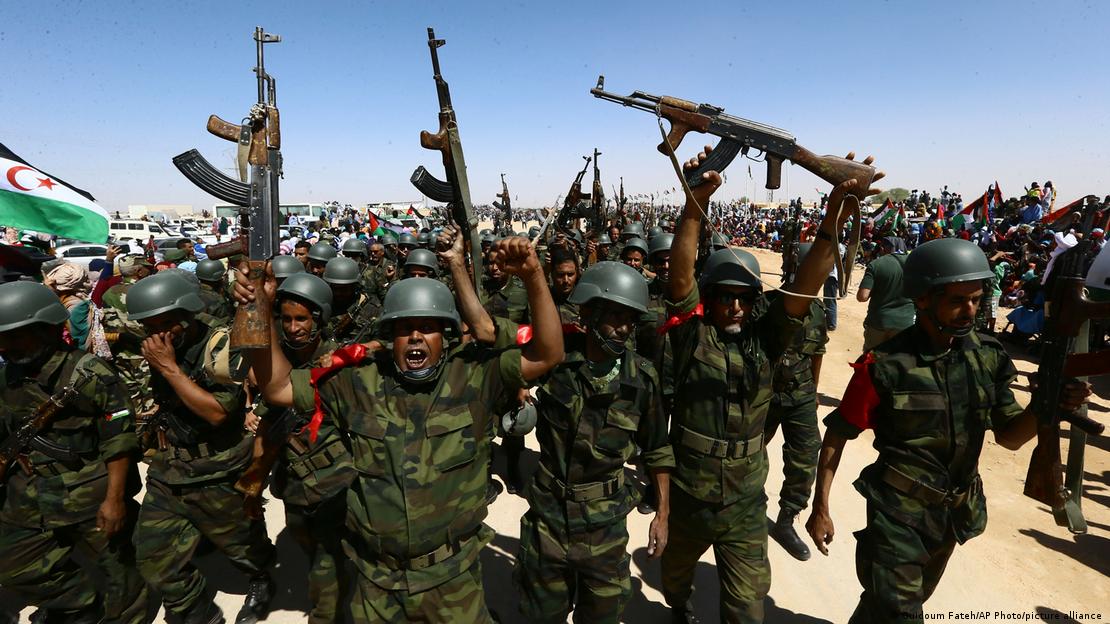

The Polisario Front is backed by Algeria in their quest for independence while Morocco's claim on the Western Sahara is increasingly backed by Western states, the UN, US and Israel
Image: Guidoum Fateh/AP Photo/picture alliance


Political and economic fallout

The cooperation between Morocco and Israel also has regional implications, says Simon Wolfgang Fuchs, an Islamic scholar at the Hebrew University of Jerusalem. He refers to the ongoing tensions between Morocco and Algeria, which are fueled by Morocco's claim on the Western Sahara region.

"Morocco consistently pursues the goal of asserting its claim to sovereignty over Western Sahara in its foreign policy," Fuchs told DW.

The Abraham Accords have dealt Rabat an important success in this regard. "The fact that Israel recognized this sovereignty, in addition to the US and several Western European countries, was an important success for Morocco," he said.

However, this has angered Algier, which supports the independence-seeking Polisario people in the Western Sahara.

Moreover, increased ties between Morocco and Israel also carry another significance, Fuchs points out. "Through imports from Israel, Morocco has also greatly modernized its military and is now clearly superior to the Algerian army," he said.

However, there are also reports that Algeria possesses Russian weapons that are intended to give the country a continued advantage over Morocco, including Iskander missiles and multi-role fighter jets.
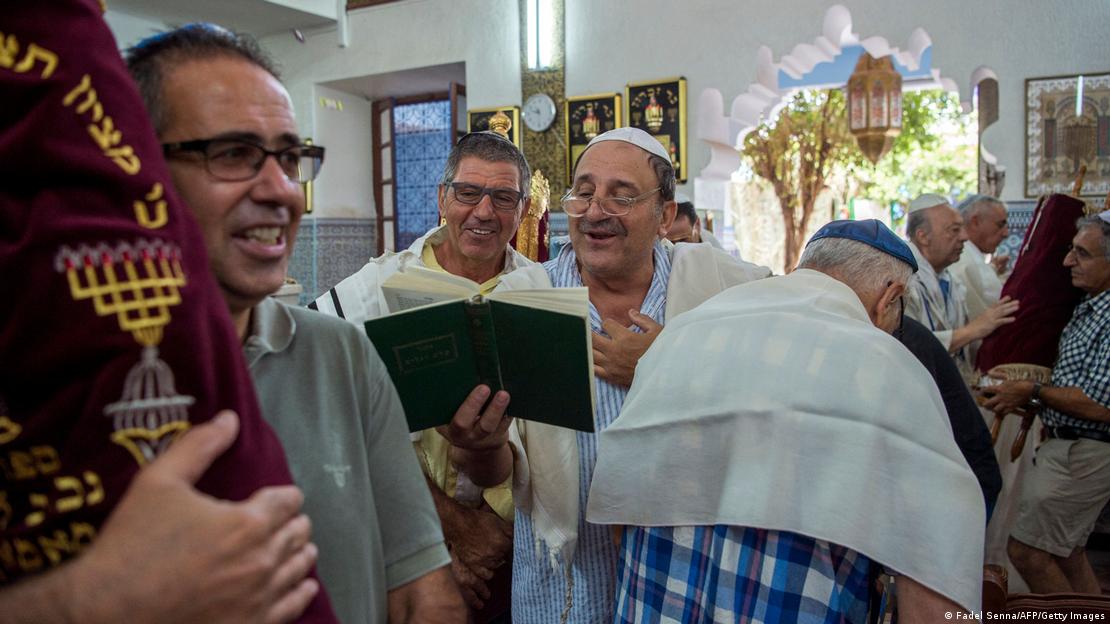
Despite support for the Palestinians, ties between Morocco and Israel were met with little resistance five years ago
Image: Fadel Senna/AFP/Getty Images


Palestinian support

Five years ago, the new ties were met with relatively little resistance in Moroccan society, Steven Höfner said. In part, this was due to Morocco's long-standing unofficial, intensive relations with Israel. "This is due to the fact that many Israelis have Moroccan roots," he told DW.

It is also due to the fact that Morocco, unlike other Arab states in the 1950s and 1960s, never conducted a large-scale systematic expulsion of Jews. "As a result, relations between the two societies have always been less strained than elsewhere in the Arab world," says Höfner.

Nevertheless, there have been repeated large-scale protests in Morocco against Israel's war in Gaza and notable levels of solidarity with the Palestinians among the general population. The ruling royal family has had to take these factors into account, he said.

The war in Gaza also left its mark on another level, Fuchs points out. "There were high expectations for Israeli tourists in Rabat but these expectations were not fulfilled," he notes. Since the Hamas attack on Israel on October 7, 2023, and the ensuing two-year war in Gaza, direct flights between the two countries have been suspended.

But still, Israel has significant economic interests in Morocco, Fuchs said. For example, in the agricultural sector. "Israeli irrigation techniques are in high demand in Morocco, as well as methods for growing crops even in extremely dry areas," he told DW, adding that these are attractive business opportunities for Israeli companies.

Moreover, Israel is interested in Morocco's phosphate deposits, which could play an important role in fertilizer production for Israeli agriculture.

This article was originally written in German.

Saturday, February 15, 2025

North Africa’s Regional Power Struggle

The conflict over Western Sahara is just one layer of the deep-rooted geopolitical battle for regional leadership between Morocco and Algeria.
February 12, 2025
Source: Africa Is a Country


2008 protest calling for the independence of the Western Sahara. Image credit Natalia de la Rubia via Shutterstock.

Too often, the Western Sahara conflict is viewed as the root cause of tensions between Algiers and Rabat. Analyzing Algeria-Morocco relations through the lens of this conflict is, however, not only incomplete but, more importantly, largely incorrect. As academic Yahia Zoubir underlines in his piece The Algerian-Moroccan Rivalry: Constructing the Imagined Enemy, “Algeria and Morocco’s strained relations are not solely the result of the Western Sahara conflict; they derive from a historical evolution of which the Western Sahara is only one aspect.” The dispute over the Western Sahara isn’t just about ownership of the land, rather, the conflict serves as a vessel for Morocco to gain regional hegemony at the cost of Algeria’s influence.

The nearly five-decades-long Western Sahara conflict between Morocco and the Polisario Front has contributed to the complicated relationship between Algiers and Rabat. However, this conflict is only the tip of the iceberg. In 1963, when the countries were then young independent states, the War of the Sands armed conflict resulted from Rabat’s claim that large portions of land, including Tindouf and Béchar regions in Western Algeria, belong to Morocco. In October of that year, with the backup of the United States, Morocco invaded Algeria over its irredentist territorial claims. For Morocco, borders inherited from the colonial era were artificial and had to be reviewed, while for Algeria, these borders must remain unchanged. This Moroccan attack, which took place just 12 years before the dispute over Western Sahara, has undeniably created an environment of profound mistrust between Rabat and Algiers, still tangible today. Since then, animosity from both Moroccan authorities and the Moroccan people towards Algeria’s authorities and Algerians has intensified.

These challenging relations didn’t stop Algeria and Morocco from reopening their borders to one another in 1988. However, the 1994 Marrakech bombing changed this. At the time, Moroccan authorities accused Algerian elements and intelligence services of being the masterminds of the attack. Morocco unilaterally imposed a visa for all Algerians who sought to enter Moroccan territory. In response, Algiers closed off the land border with Morocco, which hasn’t reopened since 1994.

More recently, in August 2021, Algeria ended its diplomatic relations with Morocco. Officials cited an array of reasons for this move, including accusations that Rabat spied on Algerian diplomats and politicians using Pegasus spyware, and a July push by the Moroccan ambassador to the United Nations for member states of the Non-Aligned Movement to recognize the independence of the Kabylie region of Algeria—a red line for Algiers. While such crises have popped up between the two neighbors, it has never led to direct conflict.

Indeed, contrary to popular belief, the difficult relations between Algiers and Rabat is mainly the result of unbridled ambition for regional leadership. As the pivotal state, Algeria is the natural regional leader par excellence, given its geostrategic position, economic weight, and military power. Therefore, Morocco understands that it can’t achieve its hegemonic goal without the annexation of Western Sahara. This dynamic, accompanied by a history of mistrust, has heightened tensions between the two countries.

Opposing political ideologies have also nurtured the rivalry between Morocco and Algeria. After gaining its independence in 1962, Algeria joined the Non-Aligned Movement (NAM), while Morocco, despite also being a member of NAM, embraced the West. While these two neighbors have much in common—such as language, religion, and even family ties (via thousands of intermarriages)—relations have been complicated since their respective independences.

Besides being a close geostrategic ally of France and the United States, and thus benefiting from their unconditional support since its independence in 1956, Morocco enjoys a very positive reputation internationally due to a well-applied communication strategy and its strategic use of diplomatic and political maneuvers, especially on the Western Sahara dossier. In 2018 alone, Morocco reportedly spent $1.38 million in lobbying against Algeria in the United States. Rabat also hired a consulting firm for US$75,000 per month to lobby in favor of Morocco.

The worldwide scandal involving Morocco’s attempts to spy on foreign journalists, politicians, and members of civil society using the spying software system Pegasus, which was developed by the Israeli company NSO Group, further emphasizes the obsessive surveillance and regional ambition of the Moroccan regime, which has been dubbed a North Korea–like dictatorship. For the United Nations, such spying on politicians is illegal and undermines their rights.

As I clearly underline in my work “Morocco’s Intelligence Services and the Makhzen Surveillance System,” Morocco is often presented as a modernist and progressive country. Such an idealistic portrayal is, however, erroneous. Indeed, as Yom argues, the Moroccan Makhzen looks like a democratic reformer when compared to some other states of the MENA region and the Gulf monarchies—which include some of the world’s most closed and coercive dictatorships. When plucked from this context and analyzed on its own terms, however, the trajectory of Morocco’s Alawite Dynasty does not look nearly so promising.

Moroccan media regularly portrays Algeria in a negative light on behalf of the Moroccan elite, and a large number of academics simply mimic the negative representation of Algeria that the media and decision-makers put forward. Moreover, in the event of a dispute, it is often the case that “Algeria ends up paying the cost diplomatically as all the [international] sympathy tends to be concentrated on Morocco.”

This attitude is even more pronounced in France, where the profound and visceral hostility of a large fringe of the political elite who have yet to accept Algeria’s independence—left and right alike—towards Algeria contributes to this negative image of Algeria and Algerians. Moreover, as the former French Prime Minister Dominique de Villepin underlines, Algeria is too often the scapegoat of France’s internal political illness. It is, therefore, through this Hegelian strategy, whereby a constantly repeated lie becomes the truth, that observers analyze the relations between Morocco and Algeria.

However, every communication strategy has its limits. In May 2021, following the Pegasus scandal, Morocco’s reputation was shaken by editorials from the Spanish El Mundo and the French Le Monde, characterizing Moroccan authorities as cynical and asserting that “it was time for Western chancelleries to review their naivety vis à vis Morocco.” As early as 2001, José Bono, the former defense minister of Spain, declared that Morocco was not a democracy but a covert dictatorship, a country dominated by a mafia.

The French recognition of Rabat’s sovereignty over the occupied Western Sahara territory may give more impetus to Rabat. But it will clearly not alter its rivalry (and animosity) towards Algeria. Indeed, due to the opposing nature of the two countries, compounded by a profound mistrust of each other and, more importantly, their regional leadership ambition, whatever the outcome of the Western Sahara conflict will eventually be, the battle for regional leadership will remain as fierce as ever.

Regarding the occupied Western Sahara, and regardless of Rabat’s external support, it is paramount to remember that Morocco’s illegal occupation of Western Sahara—the last colonized territory in Africa—is in direct violation of international law. In 1963, the UN included Western Sahara in a list of territories that sought self-determination. The notion of self-determination was enshrined in the UN Charter and is supported by UN Resolution 1514, which stipulates that “all people have the right to self-determination.” This was further supported by the International Court of Justice (ICJ) in a ruling on October 16, 1975, declaring that Western Sahara was not “land belonging to no-one” (terra nullius) at the time of its colonization by Spain. The ICJ judgment, therefore, declared that Morocco had no valid claim on Western Sahara based on any historic title and that, even if it had, contemporary international law accorded priority to the Sahrawi right to self-determination.

Meanwhile, the security situation in the Maghreb remains worrying, and Morocco’s fait accompli annexation of Western Sahara will only fuel deeper instability. Without a fair and honest solution for the Sahrawis through a referendum, instability will only grow in North Africa, further destabilizing the neighboring Sahel region. If a dreadful scenario results from this instability, French authorities—and all their blind—would surely be ill-advised to intervene in any way.


Abdelkader Abderrahmane is a policy adviser on peace and security in North Africa and the Sahel. He is the author of “Morocco's Intelligence Services and the Makhzen Surveillance System.”

Sunday, December 04, 2022

ANALYSE

'Riffians and Kabylians are merely disposable instruments in a higher-level geopolitical joust'

Algeria and Morocco's paradoxical support for independence movements


YASSIN AKOUH . (TRANSLATION BY KOMPRENO) . 22 NOVEMBER 2022


© Reuters

Are Morocco and Algeria using independence movements in a geopolitical joust for more power in the region? Polisario in Western Sahara has long enjoyed Algerian support, and now the Riffian movement is following suit. Conversely, Morocco supports the Kabylian cause in Algeria. ‘It is paradoxical for a country to support independence movements in a neighbouring country but fight them at home.’

This article was translated by Kompreno, with support from DeepL. Original Source, published in November 2022.

Western Sahara is a highly contested territory that has strongly influenced Moroccan and North African politics for decades. It is located on the north-west coast of Africa, north of Mauritania and south of Morocco. The latter still controls 80% of the area today.

For Morocco, Western Sahara has great symbolic and economic value. ‘The issue is the lens through which Morocco looks at the world’, King Mohammed VI said as recently as August, on the occasion of the 69th anniversary of the Revolution of the King and the People.

The Polisario independence movement has been fighting for the region’s independence since 1973. In 2007, Morocco proposed a plan to grant Western Sahara a far-reaching form of autonomy. But that plan was rejected by the independence movement. The kingdom would still retain control over foreign policy and defence.

Western Sahara was a Spanish colony until 1975. After Spain withdrew, a Polisario guerrilla campaign arose against the Moroccan and Mauritanian presence in the area. Mauritania soon withdrew and signed a peace agreement with the independence movement.Link


To give the journalism of MO* a future, the support of every reader is needed more than ever. Make a gift and support us in our mission.

Morocco, on the other hand, maintained that the area was Moroccan. But the Polisario, and its supporters, who did not identify themselves as Moroccan, continued to deny Morocco’s legitimacy over the area.


But Morocco cannot count on support everywhere and certainly not from neighbouring Algeria.

In 1991, a ceasefire agreement was reached between Morocco and the Polisario. The UN wanted to organise a referendum in which residents of Western Sahara could express their views on self-determination, but this still did not take place. Since 2007, Morocco has therefore been focusing on its autonomy plan.

In October, Antwerp mayor and N-VA president Bart De Wever announced that he considers the Moroccan autonomy plan a realistic solution. He did so following a working visit to Morocco where cooperation on the economy and security was discussed.

That same month, Belgian Foreign Minister Hadja Lahbib also announced during a working visit that Belgium supports the autonomy plan. In doing so, Belgium follows other European countries such as Germany, the Netherlands and Spain.
Self-interest

But Morocco cannot count on support everywhere and certainly not from neighbouring Algeria. It is no secret that there have been frustrations between the two countries for years. Algeria also openly supports the Polisario in the process.

‘That support dates back to 1975’, explains Khadija Mohsen-Finan, political scientist and author of the book Sahara occidental: Les enjeux d’un conflit régional (Western Sahara: the stakes of a regional conflict, TN). ‘The motivation for that support is essentially political. It wants to weaken Morocco.’

This is because both countries want to strengthen their grip on the region. Unlike Morocco, Algeria has no access to the Atlantic Ocean, which Western Sahara can offer. There is also a lot of phosphate to mine, one of the main synthetic fertilisers, which is important for agricultural production. A Moroccan state-owned company now mines and exports it.

That Algeria supports the Polisario weakens the Moroccan state’s position, and they know it in Rabat. So Morocco is doing the same by openly supporting an Algerian independence movement.

The Mouvement pour l’autonomie de la Kabylie (MAK, or Movement for the Autonomy of Kabylia, TN) saw the light of day in 2001, and seeks an independent Kabylia in northeastern Algeria. The movement was founded by Ferhat Mehenni, a former singer who made the underrepresentation of the Amazigh Kabylian identity the spearhead of his activism. He saw that the identity, culture and language of the original inhabitants were not given enough space by the Algerian state. And this was compounded by great socio-economic dissatisfaction among this population.
Paradox?

Initially, the MAK sought only autonomy, but meanwhile the movement dreams of independence. Moroccan support for the Kabylian cause began in 2015. Moroccan diplomat Omar Rabi then called at the UN to grant Kabylia self-determination rights.


‘It is paradoxical: supporting independence movements in a neighbouring country, while they are not tolerated at home and are fought by all means.’

That position was reiterated in 2021 by Moroccan UN ambassador Omar Hilale at a meeting of the UN Special Committee on Decolonisation. ‘More than anyone else, the people of Kabylia have the right to self-determination’, he affirmed.

Paolo De Mas calls this a striking paradox. ‘Supporting independence movements in a neighbouring country, while separatist and independence movements are not tolerated at home and are fought by all means.’ De Mas is a Morocco expert and former director of the Netherlands Institute in Morocco (NIMAR).

For Morocco, there is now the added risk that Algeria will support not only the Polisario but also Riffian independence movement. This is already happening in Algerian media and on social media.
Self-determination for Kabylia

Not long after Hilale’s statements at the UN in 2021, the Algerian Supreme Security Council indicated that relations between the two countries were in need of revision, due to ‘Morocco’s hostile actions against Algeria.’ That Security Council is a consultative body between the Algerian president, army and security forces.


‘In the struggle for regional hegemony, Morocco and Algeria are using all means, including propaganda, indoctrination and fake news.’

Algeria also accused Morocco and the MAK of starting fierce forest fires in Kabylia, although without any evidence. It also called the normalisation of relations between Morocco and Israel in 2020 problematic. Economically and militarily, the two countries now cooperate, while Algeria has strong solidarity with the Palestinian cause.

The issue is also heating up tempers this year. ‘You demand self-determination and the decolonisation of Western Sahara, but forget to end the colonisation of Kabylians, who have been living under Algerian occupation since as far back as 1962’, Moroccan UN ambassador Hilale said.

De Mas: ‘In the struggle for regional hegemony, Morocco and Algeria are using all means, including propaganda, indoctrination and fake news. Algerian support for the Polisario is countered by Morocco’s public support for the Kabylian movement in Algeria. Morocco repays Algeria with its own coin.’
Political strategy

Ferhat Mehenni, the MAK leader living in France, welcomes Moroccan support for the Kabylian cause. ‘Morocco can help us by opening a Kabylia diplomatic representation in Rabat’, he indicated in an interview with news site L’observateur.

Mehenni is also interfering on the Western Sahara issue. For instance, he thinks the Moroccan autonomy plan is more sensible than the Algerian stance. ‘That is a political strategy’, says Tashfin Essaguiar, an Amsterdam-based political science student, who closely follows political developments in North Africa related to Amazigh groups, as well as tensions between Morocco and Algeria. ‘Recognising Western Sahara as part of Morocco and thus taking a pro-Moroccan position is a strategic win-win situation for both sides.’

Moroccan support for the MAK, as a response to Algeria’s long-term support for the Polisario, may agitate Algeria psychologically. ‘Because of this Moroccan support, the MAK is high on the Algerian political agenda’, Essaguiar said. ‘And that makes it more difficult for MAK sympathisers in Algeria to promote the MAK in Kabylian regions.’

Support for the Riffian cause is also increasingly emerging. Polisario leader Brahim Ghali, for instance, spoke out clearly in an interview with television station Alhurra. ‘Let the Moroccan regime be generous and grant autonomy to the Rif’, he said.

Algeria classified the MAK as a terrorist organisation in 2021. Morocco did not yet make any official statements on the Riffian movements, such as The National Assembly of the Rif (NAR) or the Stichting Riffijns Republikeinse Congres (RRC, or the Riffian Republican Congress Foundation, TN).

NAR was founded in 2018 with coordinator Moussa Fathi living in Belgium. It aims to defend the human rights of Riffians worldwide, but does not officially seek an independent Riffian republic. However, many members and sympathisers are republican. In 2019, the RRC emerged in the Netherlands; unlike the NAR, the RRC focuses on the foundation of a Riffian republic.

‘Probably the government in Rabat does not yet see Riffian republicanism as a significant danger due to its amateurism, its small following and the movement’s lack of support and lack of growth’, Essaguiar says. But, he also stresses, that does not mean there is free rein for Riffian activists.
Disposable instruments


‘Riffians and Kabylians are merely disposable instruments in a higher-level geopolitical joust.’

De Mas considers it unlikely that support for independence movements could cause an escalation between Algeria and Morocco. ‘Propagandistic lip service’, he now calls it. But, he also nuances, ‘actual financial aid to separatist movements may well cause escalation again.’

Moreover, there is a big difference between Algerian support for the Polisario and Riffian movements. ‘Refugee camps in Tindouf (a town in Algeria, on the border with Western Sahara, ed.) are supported by Algeria. The support to the Rif is rather in words.’

With regards to accepting support from external players, Riffians and Kabylians should think carefully, stresses De Mas. ‘They are merely disposable instruments in a higher-level geopolitical joust.’

He also warns of the problems foreign support can create. ‘Secessionist movements are regarded in both countries as the ultimate high treason against which the government uses all means. Foreign support can be an additional pretext to strike down a movement and sentence leaders to severe punishments.’


This article was translated by Kompreno, with support from DeepL. Original Source, published in November 2022.

Saturday, November 28, 2020

WW3.0

The Latin American Parliament (Parlatino)
 Addresses Armed Conflict in Western Sahara

Polisario Front's soldiers, Western Sahara, Nov. 19, 2020 | 
Photo: Twitter/ @ed_peninsula

Published 27 November 20

"We join the concerns expressed by the international community and offer our vocation of dialogue and good offices," the Latin American Parliament said.

The Latin American Parliament (Parlatino) supported Friday international calls for a "political, lasting and just" solution to the conflict between Morocco and the Sahrawi Arab Democratic Republic (SADR), following weeks of military encounters.

Polisario Front Declares War on Morocco

"We hope that the work of the United Nations Mission for the Referendum in Western Sahara (MINURSO), and the commitment of the Kingdom of Morocco, and other actors such as the Polisario Front, Algeria, and Mauritania, will continue in the search for an agreement that implies a realistic, viable and lasting political solution to the situation in Western Sahara." Parlatino representatives stressed.

"From the Latin American and Caribbean Parliament, we join the concerns expressed by the international community and offer our vocation of dialogue and good offices,"

SADR declared "a state of war" early this month after the Moroccan government repressed a demonstration of Sahrawi activists in the bordering zone of Guerguerat.

SAHARA LIBRE ���� �� ✊�� We will not be silenced. My people, the Saharawi people of Western Sahara WILL be liberated from the occupation and colonial archaic actions of the Moroccan regime. ENOUGH IS ENOUGH!!!!! #FreeWesternSahara #AfricasLastColony #WesternSahara #BoycottMorocco pic.twitter.com/AOUdxXOFR3— Sahara trending (@TrendingSahara) November 27, 2020

SADR ambassador to Panama Sidahmed Darbal declared that the Moroccan army invaded the Guerguerat strip to unblock the road it illegally uses for land communication with Mauritania, thus violating the agreement to demilitarize the area and provoking an immediate military response from the Polisario Front.

Meanwhile, countries such as Russia, Algeria, South Africa, Germany, Turkey, Italy, and Cuba demand the application of UN resolutions that call for the right to self-determination of the Saharawi people.

Morocco is a permanent observer member of Parlatino since April 25, 2018.


Sahrawis determined to embark on new stage in their sacred struggle

SPS 28/11/2020 - 


Havana (Cuba), 28 November 2020 (SPS) - The president of the Sahrawi Arab Democratic Republic (SADR), Brahim Ghali, participated, at the invitation of Cuba's Communist Youth Union, in the "Pioneering Ideas" event held Havana, where he put forward the determination of Western Sahara people to enter into a new stage of their sacred and legitimate fight.

The president of the Sahrawi Arab Democratic Republic and secretary general of the Polisario Front, Brahim Ghali, was invited by the Communist Youth Union of Cuba to participate by videoconference at the "Pioneering Ideas" event organized in Havana, said the Saharawi news agency SPS.

At this event dedicated to both Africa and the Middle East and to the historic leader of the Cuban Revolution, Fidel Castro Ruz, marking the 4th anniversary of his death, President Ghali expressed his thanks to the Cuban youth and to all those who stand in solidarity with the legitimate struggle of the Saharawi people.

The Saharawi President informed the participants of the aggression launched by Morocco on 13 November against defenseless Saharawi civilians, who were peacefully demonstrating in front of the El-Guerguerat illegal breach.

"This is a violation of the international law and the ceasefire agreement signed with the Polisario Front under the auspices of the United Nations."

Western Sahara's leader added that "this irresponsible position left the Saharawi people no choice but to resume the armed struggle against Moroccan occupation forces." 


Solidarity with Sahrawi people: Algerian Journalists’ Association created in Algiers


SPS 28/11/2020 - 08:26


Algiers, 28 November 2020 (SPS) - The Solidarity National Association of Algerian Journalists with Sahrawi people’s struggle for independence was created Wednesday in Algiers.

Operated under the name of "Network of Algerian journalists in solidarity with the Sahrawi people," the association aims to fight against media blackout imposed by Morocco on the situation in Western Sahara, particularly after the resumption of armed actions last November 13 because of the aggressions by the Moroccan occupation army.

The association also seeks to supervise and direct the efforts of Algerian journalists in solidarity with the Sahrawi cause.

The strategy of the said association also includes the organization of conferences and symposiums to publicize the rights of the Sahrawi people, the establishment of relations with other associations for the development of content to support the struggle of the Sahrawi people, in addition to cooperative relations between the Algerian and Sahrawi media.

Aimed at enlightening world public opinion on the legitimacy of the rights of the Sahrawi people, the relations between Algerian journalists and their foreign colleagues in solidarity with the Saharawi cause, the association's action plan also includes "the creation of a non-governmental organization to advocate for the Sahrawi people's right to self-determination and independence." (SPS)

062/SPS/APS

French MP holds his country responsible for military tension in Western Sahara

SPS 27/11/2020 


Paris (France) November 26, 2020 (SAPS) - French deputy and the chairman of Western Sahara Study Group at French National Assembly, Mr. Jean-Paul Lecoq, has called the attention of his country’s foreign minister about the ongoing tension in Western Sahara, after Morocco violated the ceasefire agreement.

Questioning French foreign minister, MP Locoq held his country’s government responsible for the ongoing escalation in Western Sahara, criticizing France’s inaction to push for the referendum on self-determination, as being a permanent member of the UN Security Council and a friend of Morocco.

The French deputy denounced France’s silence on the ongoing human rights violations committed by the Moroccan Kingdom in occupied Western Sahara, including of which the cases of torture against the Saharawi political prisoners.

He, in the same context, criticized France for ignoring the repeated calls for allowing the MINURSO to monitor human rights situation in the occupied territories of Western Sahara. (SPS)

089/090/T

https://www.spsrasd.info/news/en


A Conflict That Time Forgot

INTISSAR FAKIR
Rising tensions between Morocco and the Polisario Front come at the worst time for parties to the Western Sahara conflict.

November 24, 2020


On November 13, a standoff over access to the Guergarat border crossing between the Western Sahara* and Mauritania broke a nearly three-decade ceasefire in the Western Sahara conflict between Rabat and the Polisario Front. Morocco says it fired on Polisario fighters in retaliation for what Rabat called their days-long blockade of the road, holding up some 200 trucks and threatening trade with Mauritania. Polisario, in turn, characterized the situation before the incident as locals peacefully protesting against Morocco’s presence in the area.

Parts of the road toward the crossing are under Morocco’s de facto control, while others fall in the thin buffer zone controlled by the United Nations Mission for the Referendum in Western Sahara. There is concern that the episode could reignite armed conflict between Morocco and Polisario. This would add to instability in North Africa and the Sahel after the war in Libya and the insurgency in Mali.

Following the skirmish, Polisario pointed out that Morocco’s actions violated the ceasefire and the group’s secretary general, Ibrahim Gali, declared war on the kingdom. Meanwhile, Morocco has given no sign that it seeks to escalate the situation. The Moroccan government framed its intervention as necessary to guarantee the movement of people and goods across the only access road to Mauritania. In that regard, Morocco received support from many traditional allies, including the Gulf monarchies. However, European partners, France, and the European Union have been cautious, indicating only tacit support for Morocco’s actions. That was likely to avoid alienating Algeria, the Polisario’s main backer, and to not antagonize activist groups in Europe that have grown more vocal about Morocco’s occupation of, and human rights violations in, the Western Sahara.

While the Guergarat crossing has long been a source of tension between the two sides, the strategically important road is not under complete Moroccan control, something that Rabat would like to change. But for many Sahrawis, what took place was a consequence of their broader disappointment over the failure of Morocco and Polisario, as well as the international community, to resolve the long-running Western Sahara conflict. The dispute over the former Spanish colony has been ongoing since 1975, when Morocco annexed the area ahead of Spain’s withdrawal.

Morocco and Polisario engaged in armed conflict between 1976 and 1991, when the United Nations brokered a peace agreement. This was based on the promise that a political process would follow—an integral part of which was a referendum of the Saharawi people to determine the territory’s fate. However, disagreements over who should be polled and from where provoked an impasse. In recent years, Morocco has abandoned the agreement to hold a referendum and instead pushed forward a plan that would allow greater autonomy for the provinces that make up the Western Sahara.

Morocco has tended to portray the issue as being frozen, with the two sides remaining far apart. Rabat will only accept autonomy under Moroccan rule, while Polisario will only consent to full independence. Such entrenched views harden the status quo, which for Morocco represents an acceptable solution.

Algeria’s support for Polisario has had both philosophical and practical benefits, and makes it an indirect party to the conflict, with an important role. For decades, Algeria’s anti-colonial stance predisposed it to sympathize with the Sahrawis’ cause and it views the Western Sahara as a decolonization issue. But for Algiers, Polisario has also functioned as useful leverage in the tense Algerian relationship with Morocco. Morocco’s monarchy, on the other hand, continues to present the Western Sahara conflict as source of legitimacy and popularity—the great struggle uniting Moroccans. Furthermore, the dispute has not prevented it from developing the area as it would any other part of its territory, in fact more so.

Polisario’s willingness to declare a war against Morocco now probably indicates a desire to create momentum to resolve the Western Sahara issue due to the front’s own internal challenges and changes in Algeria. Polisario’s leadership is facing dissatisfaction inside and outside the refugee camps it controls in Algeria. The population that Polisario governs in Sahrawi camps and those supporting it within Moroccan-controlled territory have faced years of hardship waiting for a political resolution, but nothing that Polisario has done has brought this any closer. In addition, Algeria’s domestic circumstances have changed substantially over the past year and it is difficult to assess if its support for Polisario will remain the same indefinitely.

Morocco, likewise, might see a moment of opportunity to gain a greater advantage in the conflict. Already the country has moved to secure control over the Guergarat crossing, and to build a barrier through the narrow corridor that connects Morocco to Mauritania—an extension of the sand berm it had built to separate Moroccan-controlled areas from those under Polisario’s authority.

Whether Morocco’s action is legal is a daunting question on which the UN has yet to publicly speak. With the international community focused on combating the Covid-19 pandemic, general fatigue over the long-running Western Sahara conflict, and a rocky political transition taking place in the United States, Morocco may see an opening to pursue its agenda. If the Trump administration pushes for agreements between Arab states and Israel before leaving office, for example, Morocco might be tempted to go along with this if it leads to U.S. recognition of Moroccan control over the Western Sahara.

While armed conflict threatens to resume between the two sides, the region continues to struggle with the impact of Covid-19, the economic pressures it has generated for already ailing economies, and the social and political weaknesses it has highlighted. Morocco faces its own social and economic challenges that would make a conflict less than ideal. The Algerian government, in turn, is facing significant economic pressures because of diminishing oil and gas revenues, and a lack of legitimacy among a population calling for widespread reform. While in certain cases such problems could make conflict more probable, for Morocco and Algeria today the costs would outweigh the benefits—especially since both gain from the status quo. Meanwhile, the fate of the Sahrawi people remains in limbo.

So far, the situation is looking increasingly like the sort of low-level conflict that it was during the 1970s and 1980s. On November 15, gunfire was reported in a few spots along the sand berm. However, there has been little information from the Moroccan Army about the attacks. A Polisario spokesman, Ould Salek, announced that his group was mobilizing “thousands of volunteers.” Morocco has indicated that it would not shy away from responding. Meanwhile, the Algerian military released a statement last week urging both sides to show restraint, a fairly subdued response compared to past statements.

Still, the border incident—and the whole conflict—is a reminder of the dangers of the unresolved problem in the Western Sahara. It also highlights the extent of the dysfunction in the relationship between Morocco and Algeria, and the lack of security or political coordination among states across North Africa.

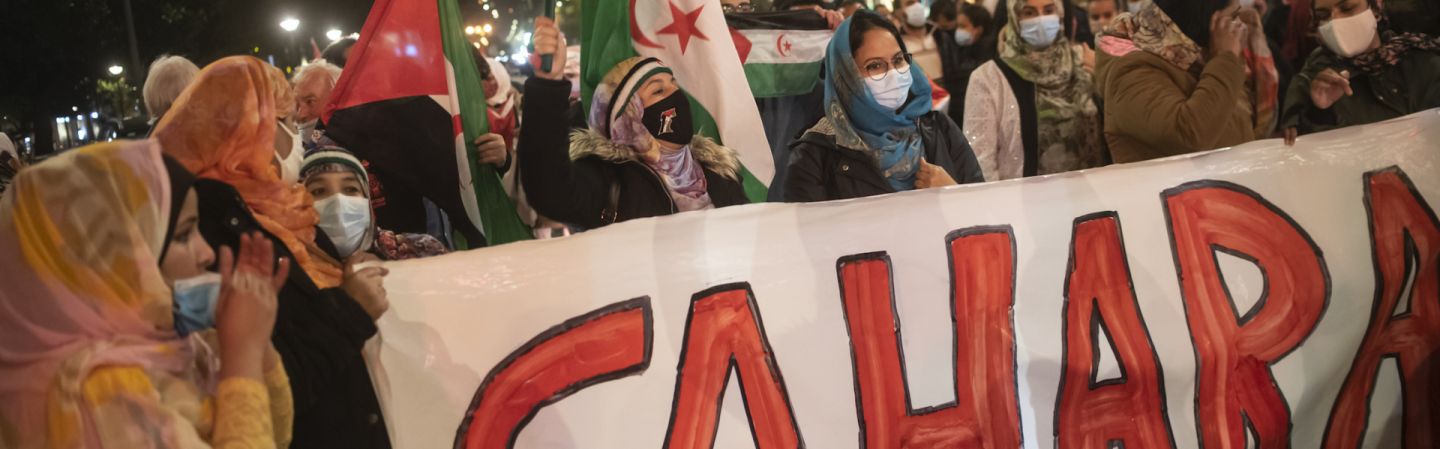
Women carrying Saharan flags take part in a demonstration in San Sebastian, Spain, to demand the end of Morocco's occupation in Western Sahara on Nov. 16, 2020.

(Gari Garaialde/Getty Images)

The Polisario Front announces the end of the ceasefire with Morocco
INTERNATIONAL 14 days ago REPORT

The Moroccan fence in the Guerguerat region, which sparked a severe crisis between Morocco and the Polisario


The leader of the Polisario Front, Ibrahim Ghali, issued a decree ending the commitment to the 1991 ceasefire agreement with Morocco, which could pave the way for a military confrontation between the two sides in the disputed Western Sahara.


In a statement carried by the Polisarios Sahara News Agency, today, Saturday, Ghali said that this comes in response to “Moroccos violation of the ceasefire and attacking civilian protesters in front of the buffer zone (Guerguerat).”


The statement called for “taking measures and measures related to implementing the requirements of a state of war,” and opening the door to “resuming fighting in defense of the legitimate rights of our people.”


The Polisario leader also condemned Morocco for “opening three other buffer zones on the Moroccan military fence,” considering that a “serious violation” of the military agreement sponsored by the United Nations between Rabat and the front calling for the independence of Western Sahara.


This comes one day after the Polisario government also described Moroccos move as a violation of the ceasefire.


Earlier in the day, Morocco said it had deployed forces in the buffer zone in response to the “provocation” of Polisario fighters, who had cut off the road to Guergarat, a gateway to neighboring Mauritania, since last October 21.


Morocco later announced that it had succeeded in securing the entire buffer zone.


Tensions have escalated in the region since 2016. The Front warned that the deployment of Moroccan forces would threaten the truce brokered by the United Nations in 1991.


The Polisario Front announced ending the peace agreement and preparing for war with Morocco

For three decades, the UN-monitored ceasefire has maintained a fragile peace in the disputed Western Sahara.


The situation worsened after Morocco deployed military engineers to expand its network of defensive walls to include the last stretch of the road across the Sahara to neighboring Mauritania.


Dozens of truck drivers were stranded for several days in Guergarat, the last stop currently controlled by Morocco on the road heading to the buffer zone guarded by the United Nations peacekeeping force (MINURSO), where the Polisario maintained a presence there.


The referendum on the future of the Sahara region has been postponed several times before, amid disagreements over the voter lists and the content of the referendum, and whether the referendum paper should include the word independence or only autonomy inside Morocco.


Why dispute about Carrots؟


Polisario spokesman Mohamed Salem Ould Salek said, “The road was not there when the peace agreement was signed in 1991. For the past three weeks, the Sahrawis have been organizing peaceful sit-ins to demand the closure of the illegal border crossing in Guergarat, in accordance with UN resolutions. And the pressure for the self-determination referendum, which was planned by the United Nations but has been repeatedly postponed. “


Hamdi Ould Errachid, mayor of the city of El-Ayoun, one of two regions established to administer the Moroccan-controlled areas of the region, replies, “Since the end of the eighties, Morocco has built a wall, which is a defensive measure protecting the Moroccan Sahara (from the infiltration of Polisario fighters).


“The entire area is closed, except for a loophole near Guerguerat that was not secured and that the Polisario took advantage of it by passing through Mauritanian territory,” he added.


“Morocco will fill this gap, making access to the region impossible.”


Do you is over cease-fire?


Polisario spokesman Mohamed Salem Ould Salek says, “Guerguerat is the last straw … it represents our aggression.”


He adds, “Sahrawi forces are engaged in legitimate self-defense and are responding to Moroccan forces that are trying to push the defensive wall that represents the line of contact” under the 1991 ceasefire.


And he declared it explicit: “The war has started, and the Moroccan side annihilated the ceasefire.”


The official of the Moroccan government in the region, Ould Errachid, said, “The actions of the Polisario are the real threat to the ceasefire. They are not new, but they are dangerous.”


He added: “What is happening is a threat. When you send civilians and armed people to a buffer zone, when the United Nations mission annoys MINURSO, and when it searches vehicles and prevents traffic, this is a threat.”


He stressed that Moroccos goal is “to maintain the ceasefire by preventing illegal interference” and “putting an end to provocations.”

These were the details of the news The Polisario Front announces the end of the ceasefire with Morocco for this day. We hope that we have succeeded by giving you the full details and information. To follow all our news, you can subscribe to the alerts system or to one of our different systems to provide you with all that is new.

It is also worth noting that the original news has been published and is available at eg24.news and the editorial team at AlKhaleej Today has confirmed it and it has been modified, and it may have been completely transferred or quoted from it and you can read and follow this news from its main source.

Wednesday, December 14, 2022

FIRST THEY HAVE TO BEAT FRANCE
Football fans are going wild for bizarre theory that suggests Morocco will win the World Cup

Story by Sam Torrance • Yesterday -
 Give Me Sport

A bizarre theory doing the rounds on social media has identified Morocco as the soon-to-be winners of the 2022 World Cup of Qatar.

The Northwest African nation have been the shock of the tournament so far after defying all odds to reach the semi-final stage.

Drawn in what looked a seriously tough group that contained Belgium, Croatia and Canada, the lesser fancied nation claimed some major scalps and triumphed as group winners.

Most notably, they beat Belgium, who were ranked as the second-best international team in the world by FIFA at the time, in style.

However, they also conceded just one goal, which came in their 4-1 demolition of Canada.

Although the success Morocco experienced in the group stage was expected to end right there, for in the round of 16, they were drawn against Spain.

Poor Spain. The European footballing superpower had no idea of the task that lay before them, and Morocco eventually dumped them out of the competition via penalty shootout after a hard-fought encounter.


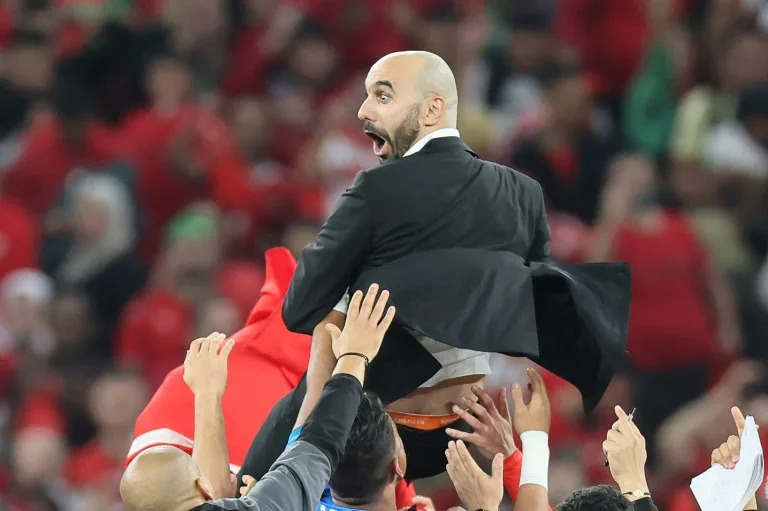
AL RAYYAN, QATAR – DECEMBER 06: Yassine Bounou of Morocco is thrown into the air following the FIFA World Cup Qatar 2022 Round of 16 match between Morocco and Spain at Education City Stadium on December 06, 2022 in Al Rayyan, Qatar. 
(Photo by Catherine Ivill/Getty Images)

Portugal were up next and they too fell at the hands of Morocco. And like every other nation bar Canada, failed to score in the process.

So, after all their victories, the team find themselves the first African nation ever to make it to the semi-final stage of a World Cup.

Now, though, one bizarre theory has predicted things to go even further for Walid Regragui and his men.


What is the theory?

The theory finds its basis in former Chelsea players and the shirt numbers they wore at the time

Strange? Absolutely, but stick with us.

Back in 2010, Juan Mata was donning the number 10 shirt for the Blues whilst representing the Spanish national team.

Remember who won the World Cup in 2010? That’s right, Spain.

Fast forward four years. Andre Schurrle is a Chelsea player wearing the number 14 at the club. He heads to Rio de Janeiro for the Brazilian World Cup and, yep, Germany wins it.

What a coincidence. But then in 2018, Olivier Giroud, now playing for Chelsea rather than Arsenal, wins the World Cup with France whilst using the number 18 at Stamford Bridge prior to the tournament.

It really is madness – and the most incredible thing: the current occupier of Chelsea’s number 22 shirt is none other than Morocco’s very own, Hakim Ziyech.

Now, we’re not saying it will happen but if it somehow does, then this theory could be even more crazy heading into the 2026 tournament.

Over to you, Morocco.

Morocco faces France in politically charged WCup semifinal

Yesterday 

RABAT, Morocco (AP) — Hind Sabouni bristles with pride as she recalls her country's history-making World Cup run as it eliminated one European soccer powerhouse and former Africa colonial power after another — Belgium, Spain and Cristiano Ronaldo's Portugal — to become the first African and Arab nation to reach the semifinals.


Morocco faces France in politically charged WCup semifinal© Provided by The Canadian Press

For the 26-year-old English teacher in Morocco's capital, and many of her countrymen both inside the North African nation and throughout the diaspora, it's about to get more complicated. Next up is France: Morocco’s former colonial ruler for much of the first half of the 20th century.

Wednesday’s match has political and emotional resonance for both nations. It dredges up everything that’s complex about the relationship in which France still wields considerable economic, political and cultural influence.

“This game is one of a kind,” Sabouni said. “Especially since France is next to beat.”

“We can show the rest of the world that Morocco is no longer France’s backyard."

For the former protectorate, the match against the defending champion is an opportunity to show that Morocco is a formidable foe — on the soccer pitch at least — even though immigration between the two countries has blurred the lines for many in France and Morocco about who to support Wednesday in Qatar.

Over the past decade, Morocco’s relationship with France has changed. Sabouni said her generation of Moroccans is tired of France’s dominance. Young Moroccans, she said, “speak English instead of French, they buy more American products than French ones and even those who want to seek a better life abroad try to avoid France.”

“Even though this is just a football game, some people view it as an opportunity for revenge,” Sabouni said.

But not everyone.

Kenza Bartali, a communications professional in Rabat, sees no political overtones to the match. She obtained her masters degree in France, and lived for two years in Paris and the southern cities of Nice and Toulon between 2016 and 2018. She made “wonderful friends" who are still her friends today. “Most Moroccan students were treated with respect," the 26-year-old said.

Related video: Defending champions France get ready for historic clash with Morocco (SNTV)
Duration 1:26   View on Watch


Still, there is no doubt which team she's supporting.

“I sincerely hope that Morocco advances to the final,” Bartali said. “I am aware that it will be difficult because France is a very good team, but we are hoping for the best.”

Sabouni's sentiments resonate with Moroccans and other North Africans in France. Although the younger generation of immigrants from Africa and Asia and their descendants appear to be more at ease with multiple identities and languages in France, they still face institutional discrimination, racial and ethnic prejudice in public life, economic hardship and lack of job opportunities.

Like in previous World Cups, France once again has turned to their national soccer team made up of players from diverse backgrounds as evidence that the country has indeed become a melting pot despite lurking prejudice, stoked against immigrants by elected right-wing politicians.

“Cultural changes and changes in life on the ground do have an effect and the team represents that,” said Laurent Dubois, a professor at University of Virginia in Charlottesville who has authored two books on French and international soccer.

“The way the players inhabit being French and don’t seem to have an issue with also being African or anything else at the same time is an antidote to the immigrant resentment on the right.”

In Morocco, people have embraced the team's foreign-born players as their native sons. They welcome the experience and professionalism they bring from Europe's top clubs and are proud they chose Morocco as their national team when they could have played for the countries of their births, from Spain to Canada to Belgium and beyond.

The Morocco national team depends heavily on the diaspora, with 14 of the squad’s 26 players born abroad, including their French-born coach, Walid Regragui, the highest proportion for any team at the World Cup.

Like Morocco’s supporters at home and an estimated 5 million scattered around Europe and beyond, many players grapple with family tales of colonial history, the challenges of immigration and questions of national loyalty. They want desperately to detach from the burdens of the past and win a place in the World Cup final — whether home for them is in France or Morocco, or Belgium, Canada, Tunisia, Algeria or elsewhere.

“Most of the Moroccan players, who were born abroad, chose Morocco as their national team because they feel they play for more than just to win a football match,” said Maher Mezahi, a Marseille-based Algerian journalist covering African football. “They play to elevate national pride and to make their family proud."

For Regragui, his and his player's dual identities are meaningless in the biggest match the squad has faced.

“I’m a dual national, and that’s an honor and a pleasure,” the Moroccan coach said. “And it’s an honor and a pleasure to face France. But I’m the Morocco coach and we’re going to be playing the best team in the world. The most important thing is to get through to the final.”

“When we play for the Moroccan national team, we are Moroccans,” Regragui said.

—-

Surk reported from Nice, France.

Tarik El Barakah And Barbara Surk, The Associated Press

History-makers Morocco eye France upset at World Cup

John WEAVER
Wed, December 14, 2022 


History-making Morocco look to pull off another upset against holders France in the World Cup semi-finals on Wednesday with Argentina and Lionel Messi lying in wait for the winner.

France know victory against surprise package Morocco would leave them just one win away from becoming the first team in 60 years to successfully defend the trophy.

Didier Deschamps' men are heavy favourites to win at the Al Bayt Stadium but face a Morocco team that have conceded just one goal in a remarkable giant-killing run that has seen them become the first team from Africa ever to reach the last four of a World Cup.


Morocco have already upset 2010 champions Spain and highly rated Portugal on the way to the semi-finals, a record that left France captain Hugo Lloris warning his team-mates against complacency.


"When a team is capable of beating Belgium, Spain and Portugal, and finish top of their group, it is because they have lots of quality on the field and undoubtedly off it too, in terms of cohesion and team spirit," Lloris said.

"They will be formidable opponents, and on top of that there will be a hostile atmosphere in the stadium."

Deschamps' team are closing in on a third World Cup triumph in seven tournaments but will be aware that no team have retained the World Cup since Pele's Brazil performed the feat in 1962.
- Fan factor -

Wednesday's game will have added spice given France was Morocco's colonial power and more than a million Moroccans live in the country.

Their not-so-secret weapon on Wednesday will be the incredible support from fans in the stadium and across the Arab world.

"There is a popular fervour behind them," said Deschamps. "It will be very noisy and my players have been warned about that. They know what to expect."

Morocco coach Walid Regragui, who was born near Paris and spent most of his playing career in the French league, believes his team have become the neutral's favourite.


But he is adamant his side are not just there to make up the numbers.

"If we are happy just to reach the semi-finals, and some see that as enough, I don't agree," said Regragui.

"If you get to the semi-finals and you are not hungry then there is a problem."

"The best team in the tournament, Brazil, is already out. We are an ambitious team and we are hungry but I don't know if that will be enough," he added.
- Dream final? -

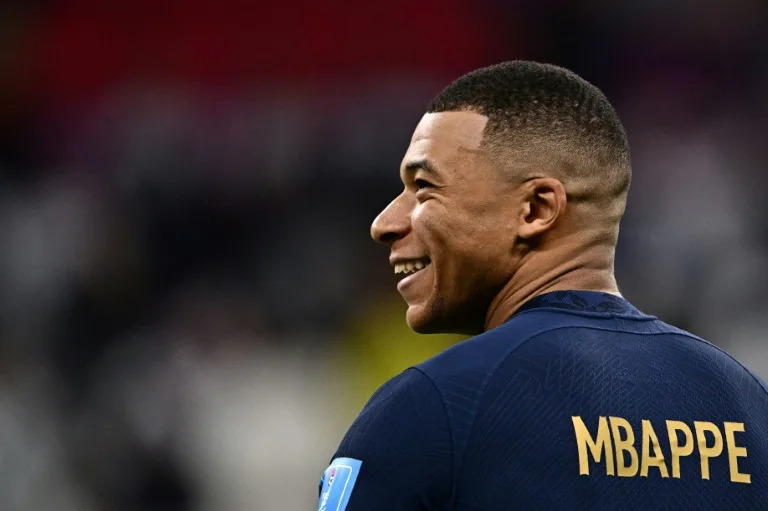
Morocco will be out to wreck the possibility of what many neutrals would see as a dream climax to the tournament, pitting Les Bleus' Kylian Mbappe against his Paris Saint-Germain team-mate Messi in a France-Argentina final on Sunday.

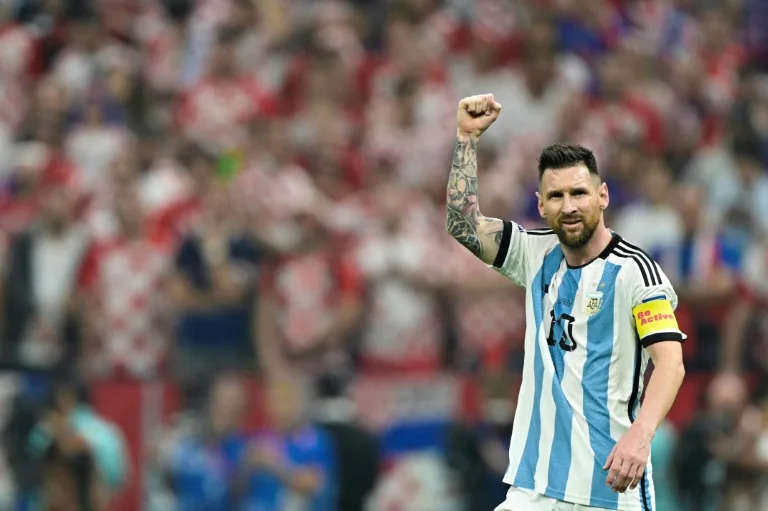
Messi, playing in his fifth World Cup, has been a man on a mission during the finals in Qatar, desperately hoping to crown his career by leading Argentina to their first World Cup crown since Diego Maradona inspired the South Americans to the title in Mexico in 1986.

On Tuesday, Messi produced flashes of genius at crucial moments to help Argentina to a convincing 3-0 victory over Croatia in the semi-finals in what was arguably the team's best performance of the finals so far.

Messi opened the scoring from the penalty spot and Manchester City forward Julian Alvarez doubled Argentina's lead shortly before half-time after bursting through the middle, aided by two fortunate bounces.

Messi then produced a moment of magic in the 69th minute to set up Alvarez for his second, which killed the game and set up the 35-year-old for another shot at history after he suffered a bitter defeat to Germany in the 2014 final.

Messi later confirmed that he expects Sunday's final to be his last appearance at a World Cup.

"Being able to achieve this, being able to finish my journey in the World Cups by playing my last game in a final, is something very exciting," the Argentine captain said.

jw-rcw/jw

Tuesday, September 12, 2023

CLIMATE KRISIS
World leaders offer solidarity after devastating Morocco earthquake

Leaders and diplomats the world over expressed condolences and offered their support for Morocco Saturday after a devastating earthquake struck the mountains southwest of Marrakesh.

Issued on: 10/09/2023 -
01:12
People gather next to a damaged building on a street in Marrakesh, following a powerful earthquake in Morocco, September 9, 2023. 
© Hannah McKay, Reuters


Video by: FRANCE 24


The 6.8-magnitude earthquake that hit late Friday killed more than 2,000 people and left more than 2,000 injured, many critically, according to Moroccan authorities.

Support has poured in from leaders across the world.
Europe

Prime Minister Pedro Sanchez, of Morocco's cross-strait neighbour Spain, expressed his "solidarity and support to the people of Morocco in the wake of this terrible earthquake... Spain is with the victims of this tragedy".

German Chancellor Olaf Scholz said "our thoughts are with the victims of this devastating earthquake. Our sympathy goes out to all those affected".

French President Emmanuel Macron said he was "devastated" and said that "France stands ready to help with first aid".

The pope expressed his "profound solidarity" with Morocco after the quake, according to the Vatican.

Italian Prime Minister Giorgia Meloni underlined "Italy's willingness to support Morocco in this emergency".

European Commission President Ursula von der Leyen expressed sympathy "with the Moroccan people in the face of the terrible earthquake".

And the European Union member countries, through the European Council said in a statement: "We are deeply saddened by the devastating consequences of this tragic event.

"As close friends and partners of Morocco, we are ready to assist in any way You may deem useful," said the statement, addressed to King Mohammed.
Russia, Ukraine

The leaders of both Russia and Ukraine also offered their sympathies.

Ukraine's President Volodymyr Zelensky expressed his "deepest condolences to HM King Mohammed VI and all Moroccans for the lives lost in the horrible earthquake".

"Ukraine stands in solidarity with Morocco during this tragic time," he said on social media.

Russian President Vladimir Putin expressed similar sentiments and said, in a message to Morocco's king, "we share the pain and the mourning of the friendly Moroccan people".
India, Turkey

Indian Prime Minister Narendra Modi, who is hosting the G20 summit this weekend, said he was "extremely pained by the loss of lives due to an earthquake in Morocco".

Turkish President Recep Tayyip Erdogan offered support to "our Moroccan brothers in every way in this difficult hour".
Middle East

Algeria, which broke off diplomatic relations with Morocco in August 2021 at the height of the crisis between the two countries, offered "its sincere condolences to the brotherly Moroccan people for the victims of the earthquake", said its foreign ministry.

Israeli Prime Minister Benjamin Netanyahu "instructed all government bodies and forces to provide any necessary assistance to the people of Morocco, including the preparations for sending an aid delegation to the area", his office said.

It is the latest show of support in the wake of the 2020 Abraham Accords that saw Israel normalise ties with a number of Arab countries, including Morocco.

The president of the United Arab Emirates, Sheikh Mohamed bin Zayed Al-Nahyan, said we "stand with the Kingdom of Morocco during this difficult time and wish a speedy recovery ahead to all those affected".

He also ordered an "air bridge to deliver critical relief" to the country, state news agency WAM reported.

Iran expressed its condolences for the "terrible earthquake".

Iraqi Prime Minister Mohammed Shia al-Sudani said he was "ready to provide any form of assistance to deal with the repercussions of the devastating earthquake". King of Jordan Abdullah II urged his government to provide all possible assistance to Morocco.
Africa

Nigerian President Bola Tinubu extended his heartfelt condolences to King Mohammed: "In the face of this adversity, Nigeria will continue to stand in solidarity with Morocco as they recover, rebuild and come out stronger than ever from this unfortunate event."

The head of the African Union Commission, Moussa Faki Mahamat, expressed his "sincere condolences" to the king, the Moroccan people and the families of the victims.
World bodies

A statement from the World Bank said: "Our hearts go out to the people of Morocco.

"Our sole focus at this stage is on the Moroccan people and the authorities who are dealing with this tragedy."

The secretary-general of the Jeddah-based Organisation of Islamic Cooperation, Hissein Brahim Taha, prayed for "mercy on the victims and a speedy recovery for the injured".

World Health Organization chief Tedros Adhanom Ghebreyesus described the quake as "heartbreaking", adding: "We stand ready to support the immediate health needs", a sentiment echoed by UN humanitarian chief Martin Griffiths.

The International Federation of Red Cross and Red Crescent Societies (IFRC) said the response to the devastating quake could take years.

UNESCO, the UN heritage organisation, said it would help Morocco draw up an inventory of damage to national heritage sites and a repair strategy.

(AFP)

Red Cross raising $100m to aid Morocco facing 'massive destruction unlike anything we have seen'

Issued on: 12/09/2023 - 

07:54
Video by:Tom Burges WATSON

The Red Cross appealed on Tuesday for more than $100 million to provide desperately needed assistance in Morocco, days after a powerful earthquake killed thousands of people. Friday's 6.8-magnitude quake was the most powerful in Morocco on record. As the International Federation of Red Cross and Red Crescent Societies (IFRC) seeks to provide "health, water, sanitation, hygiene, shelter relief items and basic needs", FRANCE 24's Tom Burges Watson is joined by Hossam Elsharkawi. Regional Director at International Federation of Red Cross and Red Crescent Societies - IFRC, Middle East & North Africa.


In the wake of the quake's devastation, Morocco's 'local civil society is really coming together'

Issued on: 12/09/2023 - 

05:51
Video by:Tom Burges WATSON

Morocco continues an incredibly challenging search and rescue mission, following the most powerful earthquake to hit Morocco in a century that has killed thousands of people, most of them in remote villages in the High Atlas Mountains. Search-and-rescue teams from the kingdom and abroad continue digging through the rubble of broken mud-brick homes, hoping for signs of life in a race against time following the 6.8-magnitude quake late Friday. In the tourist hub of Marrakesh, whose UNESCO-listed historic centre suffered cracks and other major damage, many families still slept out in the open, huddled in blankets on public squares for fear of aftershocks. As remote and poor mountain villages such as Missirat remain in dire need, awaiting urgent assistance, FRANCE 24's Tom Burges Watson is joined by Sara Almer, Humanitarian Director at ActionAid International.